



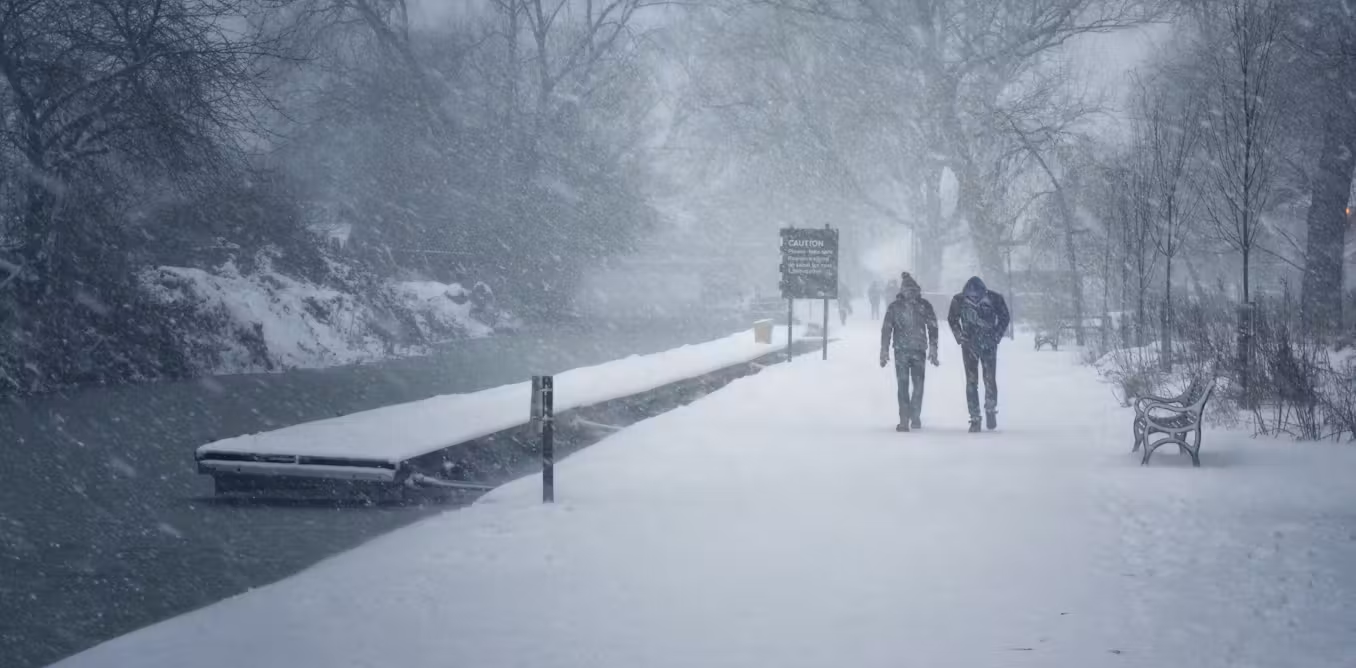
The Beast from the East ravaged much of the UK and Europe in February and March 2018, bringing severe storms, snow showers and bitter winds. But as the climate changes, rising average temperatures will affect the severity of extremely cold weather like this.
In our latest study, my colleagues and I have considered how cold spells – defined as extended periods of extremely low temperatures between November and March – have changed since 1980.
We found that cold spells such as the Beast from the East are becoming less frequent and intense across the northern hemisphere. We also found that certain regions are experiencing less persistent cold spells, or more localised cold spells.
Across the entire northern hemisphere, cold spell days have decreased by about 20 days per decade. In Europe, regional cold spells are declining in frequency by nearly one day every year.
Large-scale cold spells in the northern hemisphere occur as a result of cold air intrusions, caused by the meandering of the polar jet stream. Characterised by a flow of strong winds in the upper troposphere, this jet stream acts as a barrier containing the cold air within the polar regions.
However, when the polar jet stream meanders, the barrier is disrupted, allowing cold air to move towards the equator. This causes surface temperatures to drop.
Since the Arctic is more sensitive to climate change, with temperatures in this region rising at a faster rate than the rest of the world, many early theories suggested that this could lead to more frequent and intense cold spells.
Alexander Gold/Shutterstock
But our study shows the reverse effect. Across the northern hemisphere, cold spells are becoming milder as overall temperatures rise, with their intensity having decreased by 0.3°C per decade. In the same manner, cold spells in Europe are becoming 0.6 to 0.9°C warmer per decade. Similar warming rates are also found in North America and in East Asia.
The persistence of cold spells in northern North America and southern Europe is decreasing by about a tenth of a day each year. Likewise, the area covered by cold spells in northern North America is getting smaller every decade.
A change in temperature variability
We have also explored how these cold spells would be affected if the long-term temperature rise related to climate change were removed. Under this scenario, we considered how the leftover effects related to changes in temperature variability – calculated by removing the long-term temperature rise – are affecting cold spell behaviour.
In most cases, the cold spells showed no detectable change when the background temperature rise was removed. However, in northern North America under this scenario, cold spells were still found to become less severe.
So, our study reveals that in northern North America, cold spells are becoming significantly less frequent, intense and persistent even when the impact of climate change is removed from our calculations.
We suggest this is related to temperature variability decreasing in North America due to sea ice loss – an effect highlighted in previous studies. In other words, the sea ice loss is potentially causing the cold extremes to warm faster than hot extremes.
Our results show that as temperatures continue to rise, the cold spells experienced a few decades ago are becoming rarer across much of the northern hemisphere – and that cold, snowy winter days of the past are becoming increasingly uncommon for many people.




.png?quality=75&auto=webp&width=960)





















































You must be logged in to post a comment Login