Connect with us
DAPA Banner
DAPA Coin
DAPA
COIN PAYMENT ASSET
PRIVACY · BLOCKDAG · HOMOMORPHIC ENCRYPTION · RUST
ElGamal Encrypted MINE DAPA
🚫 GENESIS SOLD OUT
DAPAPAY COMING

NewsBeat

New evidence reveals extent of anti-fascist motives behind ‘insane’ aristocrat’s plot to assassinate Mussolini

Published

on

New evidence reveals extent of anti-fascist motives behind ‘insane’ aristocrat’s plot to assassinate Mussolini

Benito Mussolini stepped out onto the Piazza del Campidoglio at 10:58 in the morning of April 7, 1926. He had just delivered a speech prepared for him by his lover, the Jewish writer Margherita Sarfatti.

The speech had been a success, and Mussolini left satisfied, making his way through the cheering crowd.

Suddenly, a woman approached within a few meters of the Duce. She was holding a Lebel, a deadly revolver issued to the French army during the first world war. She pointed it at the dictator and fired.

Advertisement

Mussolini shortly after the assassination attempt which grazed his nose.
wikimedia

Mussolini was grazed on the nose by the bullet. The next day’s newspapers reported that he was saved by a sudden shift of his head while giving the Roman salute. The woman attempted a second shot, but the gun failed to fire.

Blocked and beaten by the crowd, the woman was immediately arrested and taken to the Mantellate prison (a Roman female prison), where she gave her personal details. She claimed not to remember the attack and appeared surprisingly calm and indifferent.

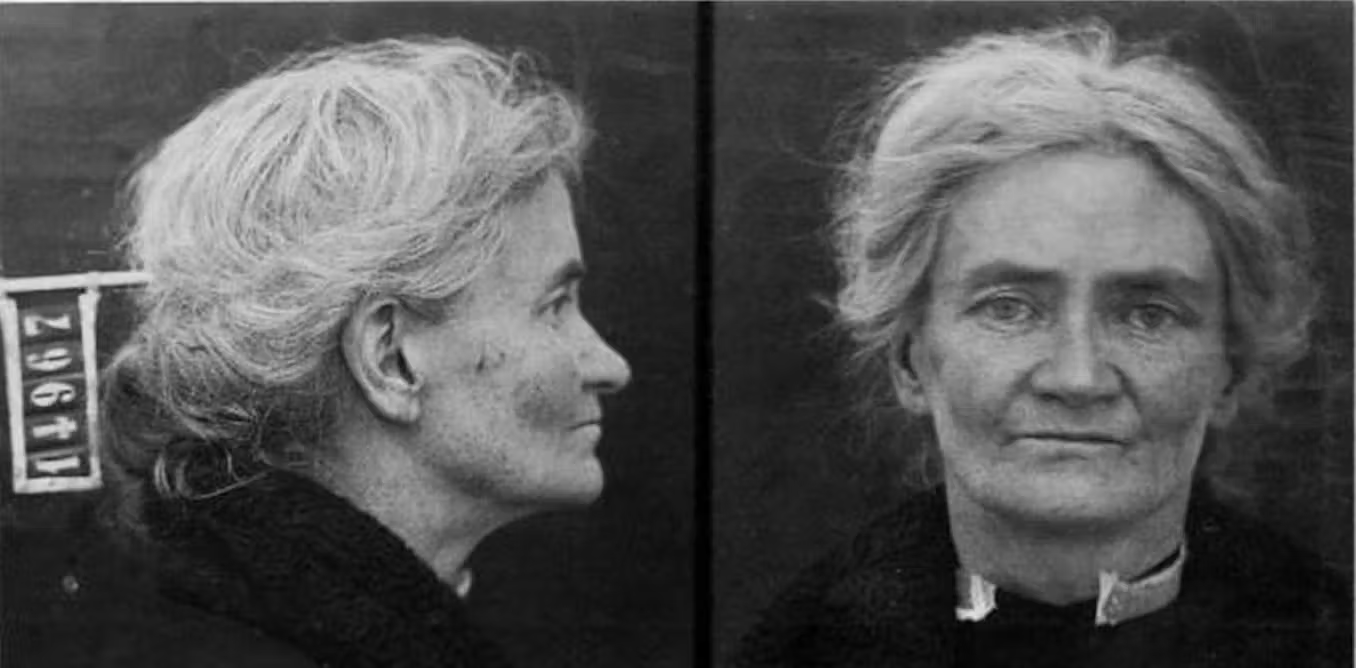
The woman in question was Violet Albina Gibson, the daughter of the 1st Baron Ashbourne Edward Gibson. The Baron was the Lord Chancellor of Ireland for almost 20 years (1885-1905), before its independence from Great Britain. Gibson was born in Dublin on August 31, 1876, into a pro-British Anglican family.

After the assassination attempt, Gibson was branded insane. The political motive behind the attack was hushed up to reduce the embarrassment of both British and Italian governments.

Advertisement

Only by downgrading the attack to the senseless behaviour of a madwoman – judicially certified by a court – could it have been possible, as indeed happened, to proceed with Gibson’s repatriation, as all parties hoped.


The Insights section is committed to high-quality longform journalism. Our editors work with academics from many different backgrounds who are tackling a wide range of societal and scientific challenges.


This version of history was believed for decades. It was only in 2014 that Gibson’s story was brought to a wider audience by the documentary, Violet Gibson, The Irish Woman Who Shot Mussolini, based on the work of historian Frances Stonor Saunders. Finally, in 2021, Dublin Council honoured her stand against tyranny with a plaque outside her childhood home.

Now, new evidence buried in a number of Italian archives, uncovered by one of us (Giovanni), further substantiates Gibson’s clear anti-fascist political motives and reveals how the attack was carefully planned. It shows how:

Advertisement
  • When Gibson moved to Rome, she lived next door to the Duke of Cesarò, an opposition leader, prominent anti-fascist and a man she would later claim was her lover.

  • Gibson’s acquaintance with the Duke was further corroborated by a new analysis of her psychiatric report.

  • Gibson moved to Italy after the murder of Giacomo Matteotti, the socialist leader kidnapped and killed by a fascist squad.

  • Gibson travelled to the small town where the trial of Matteotti’s murderers took place.

  • Evidence from several key witnesses was ignored or twisted.

Who was Violet Gibson?

At the age of 18, Gibson was a debutante in the court of Queen Victoria. Debutantes were young, upper-class women who were presented to the monarch to mark their official entry into high society and the marriage market.

Gibson was photographed standing next to the future King George V in 1897 during a visit to the Ashbourne family in Howth Castle, when he was Duke of York.

In conflict with her family, Gibson converted to Catholicism at the outbreak of the first world war and Scotland Yard registered her “anti-British pacifism”. Over the years, she would develop a Christian-socialist attitude that saw her sympathise with the poor.

She also had strong ties to Italy, a country she had visited frequently and for long periods as a young woman. Partly because of her father’s interest in Italian reunification, on which he had written extensively, she had always followed Italian politics with passion and apprehension as the country was falling towards right-wing extremism.

Advertisement

She was extremely worried about the rise of fascism, starting at least from the 1923 assassination by a fascist squad of the priest Don Giovanni Minzoni.

Then, according to her family, in August 1924 she reacted furiously to one of the first BBC news broadcasts reporting the discovery of the body of socialist leader Matteotti.

Matteotti’s murder, on June 10, 1924, is one of Italy’s most infamous cold cases which one of us (Andrea) has researched extensively.

Advertisement


À lire aussi :
The murder of Giacomo Matteotti – reinvestigating Italy’s most infamous cold case


The suspicions of Mussolini’s involvement in plotting his murder ushered in a long period of crisis that the Duce only managed to overcome in January 1925. It accelerated his authoritarian drift toward dictatorial power, with support he had won from King Victor Emmanuel III.

British reaction to Gibson’s arrest

There were violent reactions from the fascist movement following Gibson’s attempt. The fascists were by then a powerful force in the country and were calling for revenge against those who had dared to plot against the head of government.

George V’s embassy in Italy issued a statement the day after the assassination attempt. It said the embassy was unaware of Gibson’s presence in Rome, believing that she was interned in a nursing home in England. King George V himself, perhaps embarrassed by that old photo of himself, immediately condemned “the ignoble attack”.

Advertisement

British Foreign Secretary Sir Austen Chamberlain also expressed “horror” at the act committed by a woman belonging to the British aristocracy in a telegram to Mussolini.

We have also reviewed correspondence, stored in the UK’s National Archives, sent from Chamberlain in the aftermath of the attempt. In these messages he instructed Ambassador to Italy Sir Ronald Graham to help Italian investigators. The ambassador told Chamberlain he had “little doubt” that Gibson was “a tool of outside influence”. Nevertheless, Chamberlain instructed him to suggest she was mad and she should be in a mental institution in England. He said this would minimise repercussions on the hitherto good international relations between the two countries, reporting also that Churchill was “charmed by Mussolini”.

Almost in unison, Gibson’s family members also denied that there could be any political significance to her actions. They promised, if released, she would be properly cared for in a health facility in England.

Investigations

During the initial interrogations with the magistrate (which took place under the liberal penal code of Zanardelli) in four separate interviews in April, May and June 1926, Gibson continued to state, somewhat vaguely and confusingly, that she did not remember trying to shoot Mussolini.

Advertisement

Then, in mid-June, the defendant’s attitude suddenly changed.

On June 12 and 16, under the guidance of lawyer Enrico Ferri and assisted by Bruno Cassinelli, she confessed to being responsible for the attack and claimed she had an accomplice – the prominent anti-fascist politician, Duke Antonio Colonna, Duke of Cesarò (1878-1940).

She also claimed she was insane. This seemed to be enough to quell rumours of a conspiracy. It was all the work of a mad woman, acting alone.

But a question loomed: what was Gibson doing in Italy in the first place?

Advertisement

New evidence

Our fresh critical analysis of the trial documents shows that Gibson arrived in Italy with her lady-in-waiting Mary McGrath in October 1924 and lived in Rome at Via Gregoriana. This was just a few steps away from the Duke of Cesarò’s house in Via Gregoriana. But when she talked about her movements across Rome in subsequent interviews, she never mentioned this address.

This, together with the Duke’s admission of having met Gibson in 1912 in Munich at a conference of the Theosophical Society, suggests that – despite the Duke’s denials – he and Gibson had met in Rome prior to the attempted murder.

Furthermore, it is important to stress that Gibson’s companion in Italy, Mary McGrath, distanced herself from the prevailing family attitude that attributed Gibson’s mental infirmity as the cause of the attack.

Our archival research clearly shows that, when summoned by the Italian Consul in Dublin on May 19, McGrath maintained that she did not believe her mistress was insane, and even added that she suspected she used to meet many people every day during her stay in Rome.

Advertisement

When investigators in Rome approached McGrath after the shooting she showed heartfelt sympathy towards Gibson but she shied away from backing up the family’s theory about her lady’s insanity. She was, in fact duly paid and repatriated to Dublin by Gibson, just prior to the assassination attempt.

However, from the defendant’s somewhat extravagant and in our view quite intentional judicial behaviour (claiming to be both mad and responsible for the crime), an altered mental state emerged during interrogations that was used to suggest the existence of a cognitive bias.

By declaring herself insane, she denied full responsibility for the criminal act. Further doubts also arose from the fact that she told the experts she loved the Duke of Cesarò, yet continued to denounce him as an accomplice.

Under the liberal penal code in force at the time, admitting responsibility for the attack while simultaneously declaring herself insane (and therefore irresponsible for the act) forced the magistrate to order a psychiatric evaluation.

Advertisement

From the testimonies gathered during the police investigations and checks conducted by the experienced police commissioner, Epifanio Pennetta, other important aspects emerged.

Although they were willingly denied by Gibson, these findings confirmed instead the defendant’s clear premeditation of the attack, carried out with anti-fascist motivations.

Contrary to this perspective, erasures and misrepresentations would instead emerge, which can only be explained, historically, as prejudicially influenced by the Mussolini regime.

These aspects were not accepted as significant evidence in the Special Military Tribunal – which took over the case – and were not subsequently examined by historians, with the exception of some references in the book by American historian Richard O. Collin, who was the first to shed some light into the Gibson affair in 1986.

Advertisement

Attending Matteotti’s trial

A critical piece of evidence which was ignored by investigators at the time was the fact that several witnesses testified to having seen Gibson attend the trial against Giacomo Matteotti’s assassins in Chieti between March 16 and 24, 1926.

These testimonies are highly significant: only devout anti-fascists travelled to the small mountain town where the regime had moved the highly sensitive trial.

Travelling to Chieti was neither easy nor straightforward at the time – even now it takes three hours by coaches which didn’t exist at the time. It required a very serious commitment.

In contrast to these witness testimonies, Gibson would categorically deny having attended the trial.
Advertisement
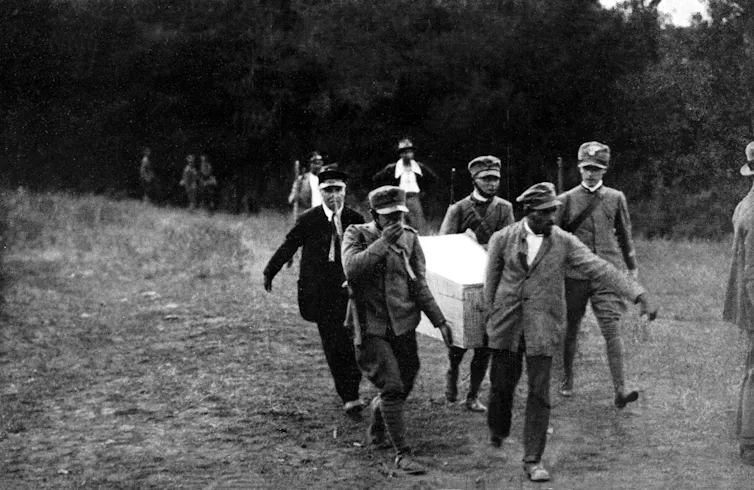
A group of uniformed men carry a coffin along a path out of woods
The body of socialist leader Giacomo Matteotti is discovered on the outskirts of Rome on August 16 1924, two months after his disappearance.
Archivio GBB/Alamy

Surprisingly, she was believed by the military magistrates despite their own affirmation in the ruling that her past, present and future statements should be prejudicially deemed false and unreliable.

Upon her return to Rome from Chieti, likely disappointed by the outcome of the legal proceedings, which had resulted in only light convictions for Matteotti’s assassins, Gibson would demonstrate her desire to implement a plan she had perhaps already conceived for some time. A plan that was kept secret.

Then, on March 28, 1926, witnesses interviewed during the preliminary investigation reported her presence at Villa Glori – at the anniversary of the founding of the Fascist Party, attended by Mussolini.

Gibson also denied being at this event and was, again, believed by the magistrates.

It’s important to highlight that this episode occurred a few days after the end of the Matteotti’s murderer trial and shortly before the events of April 7.

Advertisement

These testimonies, which the military judges did not credit, lead us to suspect that Gibson may have already been contemplating an attack on Mussolini on this occasion – suggesting clear premeditation and consistent anti-fascist motivation.

The psychiatric report and a lover

On July 8, 1926, psychiatrists were appointed. Sante De Sanctis and Augusto Giannelli were the family’s expert witness and the court-appointed expert witness, respectively. The experts were asked whether, “Miss Gibson was rationally aware and free of will at the time of the accused act”; if the accused was suffering from mental insanity, and “how the statements recently made to the investigating magistrate should be considered”.

In the expert report, Gibson reiterated that she had been influenced by the Duke of Cesarò, who however, she also claimed to “love very much”.

This came as a surprise to the experts who tried unsuccessfully to highlight the paradox she was falling into by declaring that she loved a man who she ended up damaging by her accusations.

Advertisement

Although declaring to have greatly loved the Duke of Cesarò, Gibson did not show any regret in accusing him, perhaps revealing the bitterness and resentment of some romantic delusion.

In August, the mental health experts’ unanimous verdict was that the defendant was partially insane and therefore could not be responsible for her crime.

The spy and the Special Military Tribunal

Meanwhile, Mussolini was pushing forward his authoritarian agenda. In Autumn 1926 there had been two more attempts on his life from the young anarchists Gino Lucetti and Anteo Zamboni (both of whom missed their target).

In a revealing moment, on hearing of Lucetti’s attempt, Gibson (who was in custody) confided to a nun that “it was a pity that he missed”.

Advertisement

The government took advantage of the situation by pressing on with its “hyper-fascist laws” which dissolved all political parties, ended Parliamentary democracy and introduced a Special Military Tribunal for crimes against the regime. Crucially, the new tribunal could inflict the death penalty, which was reintroduced 37 years after its abolition.

It is worth noting at this stage that, according to Italian historian Mauro Canali, one of Gibson’s lawyers, Bruno Cassinelli, was also an informant for Mussolini’s government, with the codename Brucassi.

He had already defended Giovanni Corvi, a communist that had killed the fascist MP Armando Casalini in September 1924 (shouting “Vendetta per Matteotti”), and who was also judged mentally insane.

It is easy to imagine that Gibson’s judicial strategy (defended by the same lawyer) was also aimed at obtaining the same declaration of insanity from the military judges. And unlike the original judges, the military judges were influenced by Mussolini who at that point was keen on maintaining good relations with the British government.
Advertisement
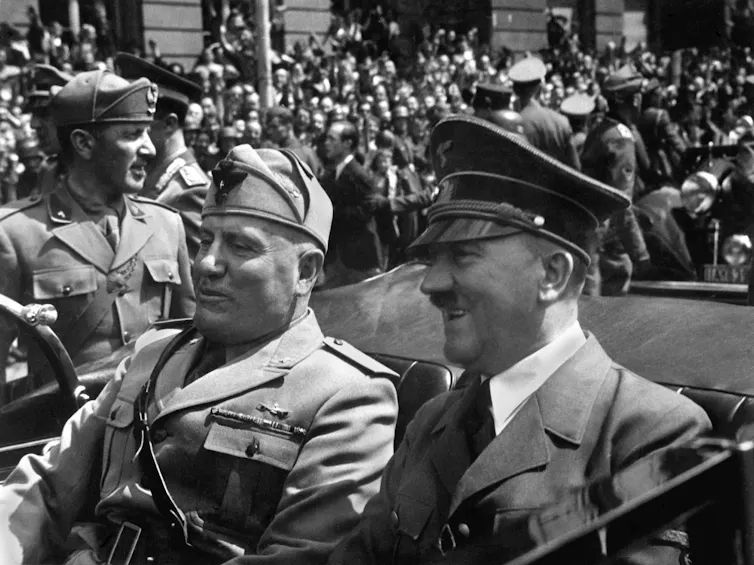
Mussolini with Adolf Hitler in  an open top car.
Mussolini with Adolf Hitler in Munich in 1940.
Shutterstock/Everett Collection

The first ruling of the newly operational Special Military Tribunal, was with the Gibson case.

The case was dealt with in a private hearing and a verdict was reached on May 6, 1927. The first point reiterated extensively by the military judges was that nothing but lies could be expected from Gibson.

It was therefore essential to prevent these scandalous lies from being uttered in a public hearing. The ruling therefore established that both her past and present statements and those that could have been made in a public hearing were to be prejudicially deemed false and unreliable.

The final decision on Gibson’s mental infirmity was taken, uniquely, by military judges, who based it on “legal-ethical” reasons.

The verdict

On this basis, the Special Military Tribunal, having ignored all politically relevant aspects of the previous investigation, on May 6, 1927, independently ruled that there was “no case to answer against Violetta Albina Gibson, regarding the crimes she was charged with, because she is not punishable by reason of mental illness”.

Advertisement

The verdict, which explicitly mentioned “the intervention of his excellency Benito Mussolini”, ordered her release in order for Gibson to be admitted to a mental asylum for treatment.

Yet, the police authorities, rather than delivering her to a Roman psychiatric hospital, as had happened in similar cases, released her, once again, on Mussolini’s orders.

Return to England

The regime handed Gibson over to her sister, Constance, On May 9, 1927, in a breach of the usual procedure. Three days later, the sister accompanied Gibson back to England on a long train journey. With them, undercover Italian police, one Italian nurse, three English nurses and a travel agency attendant. None of them were dressed in their usual uniforms and Gibson did not know what was about to happen to her.

Some family members and political figures expressed gratitude to Mussolini for freeing one of their compatriots who had “senselessly” attempted to kill him. In compliance with the ruling of the Special Military Tribunal in Italy, which had erased the political motivation and judicially certified the defendant’s insanity, a further psychiatric diagnosis was ordered to confirm her mental illness.

Advertisement

The “senseless” motivation for the attack was quickly confirmed with a certification of insanity rushed through by Maurice Craig and Bernard Hart, two doctors in Harley Street. Gibson was admitted to St Andrew’s Hospital in Northampton (a town around 60 miles north of London) where she would remain segregated for almost 30 years.

In April 1930, on the fourth anniversary of her assassination attempt, she tried to take her own life, but a nurse found her before she could. Only her sister Constance kept visiting in the hospital, while the rest of the family kept their distance.

Throughout her time at St Andrew’s Hospital, she repeatedly pleaded for her liberation in letters to her family, to the Queen and to members of the government, including Winston Churchill.

When the young Princess Elizabeth married Prince Philip, in 1947, Gibson wrote her a clear, kind and simple letter which read:

Advertisement

In the happiest period of your life, I make this request that you write to the Home Secretary saying that you would be glad if he would release me from this mental hospital so that I can go into a convent…In 1926, I shot at Mussolini and was shut up in this hospital for the course of His Majesty’s pleasure. I am feel quite sure that your kind-hearted grandfather would not take any pleasure in keeping me here any longer, twenty weary years and six months. I am now old, bed-ridden with very bad heart disease and other illnesses…You will not need to fear that I will ever shoot anyone again as I am old and ill and occupied in very quiet matters, especially prayers. So if you get me my freedom, I am sure that such a kind act will bring a blessing on your marriage…

As with most of the other letters, it was never sent and they lie in St Andrew’s Hospital archive.

Epilogue

Antonio Colonna, the Duke of Cesarò – the man Gibson professed to love – was forced to retire from politics after her arrest and the investigation over his role. He died in Rome, aged 62, in 1940 just a few months after fascist Italy had declared war on Great Britain.

Italian partisans eventually killed Mussolini on April 28, 1945. It is not known how Gibson received either piece of news.
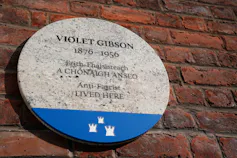
Marble plaque on a brick wall.
A commemorative plaque was unveiled for Violet Gibson at her childhood home on Merrion Square, Dublin, in 2022.
PA/Alamy

The collective memory of Gibson was for a long time shaped by the narrow conception of mental health in the early 20th century, the diagnostic conclusions of Italian and British psychiatrists and the international agreement between governments that had her confined in a mental institution.

Gibson died in St Andrew’s Hospital, on May 2, 1956, a few months before her 80th birthday. No friends or family attended her funeral.

Advertisement

In her will, she requested a requiem mass and to be buried in a Catholic cemetery – this final wish was ignored by her family.

Gibson came closer than anyone to killing Mussolini. Her attempt was well planned and executed. Had she succeeded, the history of the 20th century would have been very different.


For you: more from our Insights series:

To hear about new Insights articles, join the hundreds of thousands of people who value The Conversation’s evidence-based news. Subscribe to our newsletter.


Advertisement

Source link

Continue Reading
Click to comment

You must be logged in to post a comment Login

Leave a Reply

NewsBeat

Two London-bound trains collide with reports of severe injuries and major disruption to services

Published

on

Two 'London-bound' trains collide with reports of severe injuries and major disruption to services

Dave Calfe, general secretary of Aslef, the train drivers’ union, said: “We are deeply concerned by reports of a collision between two trains near Bedford. Our thoughts at this moment are with all the staff and passengers on board. Thank you to the emergency services for their ongoing work responding to this incident.”

Source link

Continue Reading

NewsBeat

Griddled chicken thighs with parsley and shallot vinaigrette recipe

Published

on

Griddled chicken thighs with parsley and shallot vinaigrette recipe

Griddled boneless chicken thighs are simple (and the thigh is the juiciest bit) and always more satisfying than you think they’ll be. You want a hot sandwich? Griddle a chicken thigh, pressing it down to get some char marks on the flesh, and stuff it into a roll with mayo (to which you’ve added gochujang, the Korean chilli paste) and some cold lettuce and cucumber. Pour a beer. You’ll be happy. 

Here, griddled thighs are dressed with shallots softened in white balsamic vinegar, oil and lemon juice.

Requires marinating time

Advertisement

Source link

Continue Reading

NewsBeat

Marcus Rashford saga takes fresh twist as Bayern Munich transfer stance is made clear

Published

on

Daily Mirror

Marcus Rashford’s future remains up in the air following his loan spell with Barcelona and the England forward has now been told his chances of sealing a blockbuster move elsewhere

Marcus Rashford remains an option for Bayern Munich in the summer transfer window — but the German giants are not actively considering a move at this stage.

Advertisement

The England star’s future remains uncertain following a productive loan spell with Spanish giants Barcelona. The Catalans had an option to sign Rashford permanently for £26m but chose not to activate that option, which has now expired.

However, it has been reported that they could yet still attempt to thrash out a fresh loan deal, although United are not expected to be receptive to another temporary switch.

In the meantime, Rashford sees his future away from Old Trafford, with talks set to be held with United chiefs following the end of the World Cup.

According to Bild, German giants Bayern Munich have had Rashford on their list of potential additions this summer. They had even made contact with his representatives after they were beaten to the signing of Anthony Gordon by Barcelona.

Advertisement

There are however concerns at the Allianz Arena. It is suggested that Bayern are currently prioritising a move for PSV forward Ismael Saibari. There are also worries over the wage that Rashford would likely demand in the Bundesliga, which makes a deal unlikely at this stage.

Speaking this month, United icon Rio Ferdinand has urged the Red Devils to re-consider their position on Rashford’s future. He said: “Manchester United might have to reevaluate Marcus Rashford’s situation.

“It seems like he has matured; the time away from the club may have done him the good that he needed, and it has cleansed both parties. Is it time to shake hands and come back?”

He also argued that Rashford’s time at Barcelona might have given him fresh perspective over his responsibilities. Ferdinand added: “He was given a role at Barcelona, told he would be an impact player at times, to come on and change games. At England, that is his role, and that’s a huge asset to the squad in this competition.”

Away from his future, Rashford enjoyed a dream start to the 2026 World Cup, having scored in England’s 4-2 win against Croatia. Speaking about the forward, Three Lions boss Thomas Tuchel said: “Marcus is pushing and pushing and pushing and training on the highest level.

“I’m very happy for [Rashford] that he got this relief and I hope he stays hungry for the next one and the next one because he was absolutely impressive through the last 17 days and really deserved his goal.”

Join our new WhatsApp community and receive your daily dose of Mirror Football content. We also treat our community members to special offers, promotions, and adverts from us and our partners. If you don’t like our community, you can check out any time you like. If you’re curious, you can read our Privacy Notice.

Advertisement

Source link

Continue Reading

NewsBeat

Two ‘London-bound’ trains collide with reports of severe injuries and major disruption to services

Published

on

Two 'London-bound' trains collide with reports of severe injuries and major disruption to services

Dave Calfe, general secretary of Aslef, the train drivers’ union, said: “We are deeply concerned by reports of a collision between two trains near Bedford. Our thoughts at this moment are with all the staff and passengers on board. Thank you to the emergency services for their ongoing work responding to this incident.”

Source link

Continue Reading

NewsBeat

Democratic socialists are winning major mayor’s races

Published

on

Democratic socialists are winning major mayor's races

WASHINGTON (AP) — As Janeese Lewis George paves a path to the mayor’s office in Washington, D.C., she’s told voters they could have it all.

Her unapologetically expansive, left-wing agenda includes subsidized or even free childcare, increased down payment assistance for homebuyers and community resources to reduce crime, plus a promise to aggressively confront President Donald Trump’s attempts to reshape the nation’s capital.

“People are tired of hearing what government can’t do. They want to hear what government can do,” Lewis George said in an interview before the city’s primary, where she defeated her Democratic opponents and positioned herself to win the general election in November in a city dominated by Democrats.

Lewis George’s victory signals a break with a quarter-century of centrist governance in Washington, and it puts her in the vanguard of democratic socialists who have ascended in urban politics over the last year. Zohran Mamdani toppled Andrew Cuomo, the scion of a political dynasty, on his way to becoming New York City mayor. Katie Wilson won an upset victory to lead Seattle last fall. And this month, Nithya Raman clinched a spot in the November runoff against Los Angeles Mayor Karen Bass.

Advertisement

All of them are members of the Democratic Socialists of America, or DSA. The political organization has seen its membership ranks swell from a few thousand to more than 100,000 nationwide over the last decade after an influx of younger Americans joined following the presidential bids of Vermont Sen. Bernie Sanders, also a self-described democratic socialist.

There’s little sign of national coordination among the candidates, and it’s unclear whether voters are gravitating toward their promises of improved government services, their vows to fight the Trump administration or their critiques of capitalism.

But from coast to coast, confrontational progressives are advancing in mayoral races. City leaders can draw outsized attention for their successes and failures, and democratic socialists will be under pressure from residents to deliver on their vows for a new kind of governance. Whether that translates to national politics is a next test for their movement.

“They are all channeling a displeasure with a status quo and a serious desire for economic populism that the establishment Democratic Party hasn’t been preaching,” said Eric Stern, a Democratic strategist with Fight Agency, a political consulting firm that strategized Mamdani’s mayoral campaign.

Advertisement

Stern added that Democratic voters appeared more willing to support the most progressive candidate in mayoral races rather than in contests for the U.S. House. Candidates like Mamdani and Raman, Stern said, are “daring voters to dream and fall in love not just with the individual candidates but also the political process as a whole.”

A rising left navigates America’s urban challenges

The trend of progressives surging in urban areas may have limits for its broader impact on Democratic politics. Democratic mayors in cities including Atlanta, Houston, Miami and San Francisco won on relatively moderate platforms in recent years.

Progressive have also faced noteworthy challenges. Chicago Mayor Brandon Johnson was endorsed by the city’s DSA chapter during his 2023 mayoral run but has since faced criticism from both moderate and liberal local leaders on issues such as immigration, the local budget and public safety. Recalls and public pressure ousted progressives elected to district attorney offices in multiple jurisdictions over the last five years, when criminal justice reform efforts ran into dissatisfaction over public disorder following the COVID-19 pandemic.

Trump’s hardline immigration and law enforcement tactics have also become a challenge for liberal cities. The president’s agenda poses an especially serious threat to Washington, D.C., because of its status as a federal territory.

Advertisement

“Maybe we take back Washington and run it on a federal basis,” Trump told reporters this month when asked about the potential election of a democratic socialist as the district’s mayor. “We won’t put up with it.”

But progressives hope the current wave of anti-Trump furor in deep blue cities across the country will help buoy the chances of those on the hard left.

“It’s not folks looking for the leftmost option so much as looking for a candidate who’s gonna be on their side,” said Ravi Mangla, speaking for the left-wing Working Families Party. The party often endorses the same candidates as the DSA and is readying to target more mayoral offices in the country’s biggest metropolises this fall and in 2028.

“It’s less about whether you are on the right or on the left so much as whether you are willing to punch up at the powerful,” he added.

Advertisement

Mamdani and Lewis George are both self-described “sewer socialists” who emphasize the need for responsive government services rather than critiques of market economics. The phrase recalls the socialist Gilded Age mayors whom critics derided as too preoccupied with managing public works projects.

The term’s revival is partly a strategic move to align leftist ideas with concerns over affordability and the economy, voters’ top concern in the midterm elections, and shift the public perception of democratic socialists from firebrands who support radical policies to independent-minded public servants.

“This is absolutely a change election and I’m excited to bring the change that people want, which is really putting people first in the city and having the moral clarity and courage to stand up to Trump,” Lewis George said.

For voters the ‘socialist’ label did not seem to matter

While conservatives have used the “socialist” label to attack Democrats as extreme or incompetent, some D.C. voters appeared ambivalent before Tuesday’s primary.

Advertisement

Several lifelong residents said they believed Lewis George was a “fighter” but didn’t think she’d have much of an impact on the local economy, given the city’s status as a federal district.

“I go back and forth on my own labels and whether I am supportive of that movement or not, but I am supportive of making D.C. more affordable,” Owen Fitzgerald, a University of Maryland graduate student, said of his support for democratic socialism.

Fitzgerald voted for Lewis George because she would stand up to Trump and said he’d first learned of her campaign from friends in his neighborhood. But he didn’t know she was a democratic socialist until he saw news reports describing her with the label.

“It sends a cultural message to this administration that the people who are surrounding them in the capital are opposed to their platform, opposed to their political agenda, and I think that it will send a message, both nationally and internationally,” Fitzgerald said.

Advertisement

Source link

Advertisement
Continue Reading

NewsBeat

US strike on an alleged drug boat kills 3 in eastern Pacific

Published

on

US strike on an alleged drug boat kills 1 in eastern Pacific

WASHINGTON (AP) — The U.S. military attacked a boat accused of smuggling drugs in the eastern Pacific Ocean on Thursday, killing three people, as the Trump administration wages a monthslong campaign against alleged traffickers in Latin America.

The latest attack brings the number of people who have been killed in boat strikes by the U.S. military to at least 211 since the Trump administration began targeting those it calls “narcoterrorists” in early September.

As with most of the military’s statements on strikes in the eastern Pacific Ocean and Caribbean Sea, U.S. Southern Command said it targeted the alleged drug traffickers along known smuggling routes. The military did not provide evidence that the vessel was ferrying drugs. A video posted on X showed a boat speeding through the water before being struck and bursting into flames.

President Donald Trump has said the U.S. is in “armed conflict” with cartels in Latin America and has justified the attacks as a necessary escalation to stem the flow of drugs into the United States and fatal overdoses claiming American lives. But his administration has offered little evidence to support its claims of killing “narcoterrorists.”

Advertisement

Critics have questioned the overall legality of the boat strikes as well as their effectiveness, in part because the fentanyl behind many fatal overdoses is typically trafficked to the U.S. over land from Mexico, where it is produced with chemicals imported from China and India.

Senators on Thursday demanded that the Pentagon release “unedited video” of the strikes. They have drawn intense scrutiny from some Democratic lawmakers and military legal scholars. The U.S. military’s first strike in early September drew particular concern from some lawmakers and those who study military law.

Two men on the boat initially survived the attack that killed nine others, and they were clinging to the wreckage when the vessel was struck again, killing them. The White House confirmed the follow-up strike, insisting it was done “in self-defense” to ensure the boat was destroyed and in accordance with the laws of armed conflict.

But some legal scholars said a second strike killing survivors would have been illegal under any circumstance, armed conflict or not.

Advertisement

The Pentagon’s watchdog said in May that it plans to look into whether the U.S. military followed an established targeting framework when carrying out the strikes. However, the evaluation is focused specifically on what’s known as the six-phase Joint Targeting Cycle and not on the legality of the strikes, the inspector general’s office said.

Source link

Advertisement
Continue Reading

NewsBeat

UK weather: Amber extreme heat warning issued as 35C heatwave approaches

Published

on

A man drinks from a water bottle with a sunny sky overhead and a blurred view of the Westminster skyline in the background

The Met Office has issued an amber extreme heat warning for parts of southern and eastern England and south Wales.

The warning, external is valid for Monday and Tuesday and warns of temperatures peaking at 35C (95F).

The nights will also be hot, remaining above 20C in some locations.

The developing heatwave is likely to have widespread impacts on people and infrastructure.

Advertisement

It brings the risk of impacts to health, especially for vulnerable people, and the danger of sunburn and heat exhaustion in the wider population.

People travelling to coasts, lakes and rivers are being warned to stay safe in and around water.

Some travel delays and disruption are also likely.

This is only the sixth amber extreme heat warning that has been issued by the Met Office since they were introduced in 2021 – and the first since August 2022.

Advertisement

A more severe red warning was also issued in the July of that year.

It is separate from the amber and yellow Heat Health Alerts that had already been issued by the UK Health Security Agency (UKHSA).

Those alerts, valid for regions of southern and eastern England until Tuesday, warn of significant impacts to health and social care services – with a likely increase in deaths among elderly and vulnerable people.

In contrast, this Met Office warning suggests that the heat will have effects on the general population.

Advertisement

Source link

Continue Reading

NewsBeat

Hay fever tips to ease your symptoms during the UK heatwave

Published

on

Hay fever tips to ease your symptoms during the UK heatwave

The Met Office has created a pollen forecast that shows the pollen count the next five days with it being very high in London, the South East, the East of England, and East Midlands today (Friday, June 19).

By Tuesday, June 23, the pollen count across all areas of England will be very high aside from in the North East and Northern Ireland as well as certain parts of Scotland where it will be high.

While there is no cure for hay fever and you cannot prevent it, there are a few tips you can use to try and help improve any symptoms you might suffer from.

What does the NHS recommending doing to help hay fever?

The NHS says: “Hay fever is a common allergy that causes sneezing, coughing and itchy eyes. You cannot cure it, but there are things you can do to help your symptoms, or medicines you can take to help.”

Advertisement

Keeping doors and windows closed in your home can help stop pollen getting in. (Image: Getty/seb_ra)

The NHS suggests that you should shower and change your clothes after you have been outside to get rid of any pollen.

If you are staying inside, you should keep your windows and doors shut and vacuum regularly or dust with a damp cloth.

If you are going outside, you can use Vaseline around your nostrils to help trap the pollen or wear “wraparound sunglasses, a mask or wide-brimmed hat to stop pollen getting into your nose and eyes”.


Recommended reading

Advertisement

Phil Spencer backs new rules to slash house sale delays cut number of failed deals

Celebrity guest stars for new Call the Midwife series revealed as filming begins

Waitrose to sell ‘rare’ food with only ’12-week summer window’ in ‘massive UK-first’


You can also speak to a pharmacist for advice on antihistamine drops, tablets or nasal sprays that might ease your symptoms.

Advertisement

The NHS says you should see a GP if “your symptoms are getting worse” or if “your symptoms do not improve after taking medicines from the pharmacy”.

How do you cope with hay fever throughout the spring and summer? Let us know in the comments below.

Source link

Advertisement
Continue Reading

NewsBeat

World Cup 2026: Folarin Balogun, the US star who would not be allowed under Trump’s plan

Published

on

Folarin Balogun celebrates after scoring

Until three years ago, there was no guarantee Balogun would end up playing for the United States.

Having appeared for the US and England at Under-18 level, he was at the heart of Lee Carsley’s England Under-21 plans – scoring seven goals in 13 appearances as they geared up for the 2023 Under-21 European Championship.

But his performances on loan at Reims from Arsenal during a prolific 2022-23 campaign – which earned him a £35m move to Monaco – had US officials circling.

There was also a huge swell of public support for him to commit to the US at a time the route map to England’s senior side appeared far more complicated.

Advertisement

Having withdrawn from an England Under-21s camp, a secret rendezvous to meet US Soccer officials was instead plastered all over social media and he was courted with NBA tickets and trips to Florida.

There was also reportedly an invite to the New York Yankees to watch training, and several senior US internationals were dispatched to take him out to dinner to convince him to make the switch.

“When I committed, and throughout the whole cycle, and the whole journey to me being at this point, I’ve always said the fans gave me so much motivation and showed me so much support,” Balogun said on Friday.

“For me, the most important thing has always been to be able to repay that. I just want to continue to show the fans I made the right decision.”

Advertisement

As much as Team US want to keep politics off the pitch and focus on their game, it’s hard to ignore the fact Balogun joining the team would’ve been impossible under President Trump’s proposed order.

If the Trump administration were to win the Supreme Court case, it would create uncertainty not just for Balogun but plenty of others, says Ilya Somin, George Mason University law professor and the chair in constitutional studies at the Cato Institute.

The administration has said they will not actually move to retroactively deprive birthright, but the logic of their argument – that those people are not actually citizens – will hang over them.

“Trump’s promises and guarantees often are not worth very much, but even if he were to stick to that resolution, a future administration might not,” said Somin.

Advertisement

Still, Somin believes the high court, which has a 6-3 conservative majority, will not rule in President Trump’s favour given their scepticism during oral arguments in April.

When the administration argued the ease of modern travel necessitated reinterpreting the constitution, Chief Justice John Roberts quipped: “It’s a new world. It’s the same constitution.”

It may be coincidence that the World Cup, the birthright Supreme Court decision and the country’s 250th anniversary are happening at the same time. But with international turmoil and domestic division on a range of polarising issues, the confluence of events is holding up a mirror to the American people.

A majority of Americans believe all babies born in the country should automatically be granted citizenship, according to a Reuters poll from April.

Advertisement

But there is a split along party lines. The poll found only 9% of Democrats agree with ending birthright citizenship compared to 62% of Republicans.

Balogun is hardly the only player on Team USA with a blended identity.

Marcos said fans were used to that, and the team is uniquely built to represent the nation’s melting pot.

“I think that’s what makes the team really unique in terms of the football landscape,” he said. “But it’s also what makes it special and it makes it very American.”

Advertisement

In 10 of the previous 12 editions of the World Cup, six goals would have been enough to win the Golden Boot.

On that basis, and only one game in, Balogun is already a third of the way to one of the most prized individual accolades in world football.

He may not be a household name in the country yet, but he’s well on his way to becoming a new talisman for US soccer fans to pin their hopes on.

Additional reporting by Pratiksha Ghildial.

Advertisement

Source link

Continue Reading

NewsBeat

Bedford train crash LIVE as two trains collide on railway and major disruption reported

Published

on

Manchester Evening News

Source link

Continue Reading

Trending

Copyright © 2025