

Connect with us
DAPA Banner

NewsBeat

New fossils provide snapshot of the beginning of complex animals that led to us

Published

on

New fossils provide snapshot of the beginning of complex animals that led to us

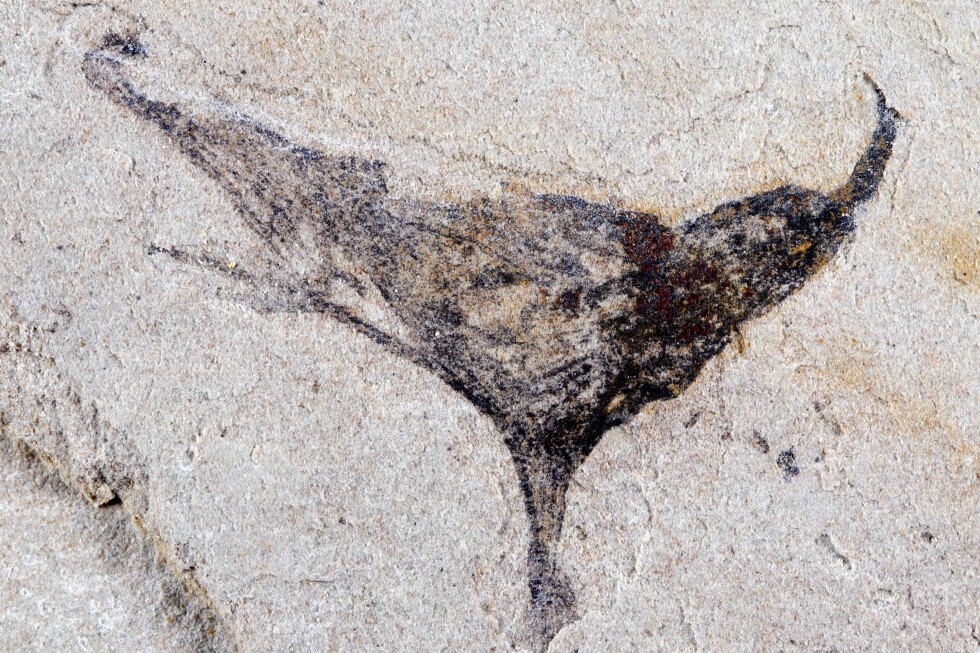
WASHINGTON (AP) — Newly discovered fossils have given scientists their first real glimpse of when Earth made a crucial transition from plants and unrecognizably simple animals to the complex creatures that took over the world and would eventually lead to us.

And it happened millions of years earlier than researchers thought.

More than 700 fossils found in southwestern China’s Yunnan province offer a window into life from 539 million years ago, during the waning end of the Ediacaran period, a time of simple but strange animals that lived two-dimensionally in the oceans, never going up or down, researchers said.

But a study in Thursday’s journal Science said many of the fossils in this trove are remnants of more complex animals that lived three-dimensional lives, traveling up through the water and eating. Those are traits that had been thought to only spring to life at least 4 million years later in the Cambrian period, during what was called the Cambrian explosion of complex and recognizable animal life.

Advertisement

“This really is the first window we have into how basically the modern animal-dominated biosphere was formed and developed and came through this weird Ediacaran transitional interlude,” said co-author and paleontologist Frankie Dunn of the Museum of Natural History at Oxford University. “We go from a two-dimensional world, and within the geological blink of an eye, animals have diversified. They’re everywhere. They’re doing everything, and they’re changing biogeochemical cycles. They’ve changed the world.”

The new finds were a short distance from a United Nations Chengjiang world natural heritage site for other fossils in an exposure along a roadside that’s not glamorous, but has different layers “where you can literally walk through time, geological time, in a landscape,” Dunn said. And one of those areas provides a “snapshot” where evolution brings forces together.

Complex animals with symmetry developed

In that spot, Dunn said, the group of fossils includes both bizarre examples of life that existed in earlier periods and disappeared, along with early examples of organisms that would evolve into modern animals. What’s important in those more modern animals are that their bodies are mostly the same on the left and right.

Nearly all of the animal life on Earth now have similar features on left and right sides, as well as a head and an anus. Before the fossils discovered in China, scientists saw traces of this symmetric body type in fossil tracks, but not the critters themselves.

Advertisement

“Now we know what’s making them because we have those fossils for the first time,” said study co-author Ross Anderson, also of Oxford’s Museum of Natural History.

Help in settling ‘rocks versus clocks’ debate

Until now, there was a conflict in the field of paleontology. Genetic analysis of how fast traits mutated and evolved suggested that humans and starfish had their earliest common ancestor in the Ediacaran period, but the fossils or rocks weren’t there to show it happening, Dunn said. It was called a debate of “rocks versus clocks,” she said.

“What our new fossil site tells us is that actually perhaps the rocks and the clocks are in closer agreement than we thought,” Dunn said.

Emily Mitchell, a paleontologist at the University of Cambridge who wasn’t part of the research, said the new study “makes a huge amount of sense because the Ediacaran contains animals, we know there must have been a transitional stage between them and the Cambrian fauna. But until now we didn’t really have any evidence of this.”

Advertisement

Some outside scientists, such as Jonathan Antcliffe at the University of Lausanne, questioned whether there’s enough evidence to call these fossils of complex animals, but most experts contacted by The Associated Press felt they were.

Trying to figure out how and why

Now that scientists know when this life explosion happened, they’ve got more questions and some theories.

“I’m really interested in understanding, not just when it happened, which is interesting, but how it happened and why it happened the way that it happened,” Dunn said. “So whether there are feedbacks that we can disentangle between Earth and life or between life and life. Once you have Ediacaran on the sea floor, is it inevitable that you’ll end up with something approaching a Cambrian explosion? They’re the kinds of questions that I find really interesting.”

Life on Earth started 3 billion years ago, but it took another 2.4 billion years before complex animals developed. Then they multiplied, diversified and took over rapidly, Dunn said.

Advertisement

That’s probably because Earth had to build up oxygen levels high enough and evolution had to kick in with genetic changes, said University of California at Berkeley paleontologist Charles Marshall, who wasn’t part of the research.

Marshall said, “The Cambrian explosion was sudden because of the already rich developmental system that was in place.”

“What fundamentally changed across this period is the way the animals on the planet interacted with each other,” said Duncan Murdock, curator of Oxford’s museum, where many of the authors work. “Once animals turned up and started eating each other and churning up the sediment, they changed the planet forever. And the planet that we live on is very much built on the foundations from the Ediacaran and Cambrian.”

___

Advertisement

Associated Press journalist Siobhan Starrs contributed from London.

___

The Associated Press’ climate and environmental coverage receives financial support from multiple private foundations. AP is solely responsible for all content. Find AP’s standards for working with philanthropies, a list of supporters and funded coverage areas at AP.org.

Advertisement

Source link

Continue Reading
Click to comment

You must be logged in to post a comment Login

Leave a Reply

NewsBeat

The unexpected pushback against America’s junk food culture – Positive News

Published

on

The unexpected pushback against America’s junk food culture - Positive News

Improbable guidance from Washington urging Americans to ditch ultra-processed food echoes the work of a British GP whose patients are reversing type 2 diabetes through diet

If I told you something not entirely awful has come out of the current US administration, you might start to worry about me. If I added that it was unveiled by Robert F Kennedy, the health secretary politely described as maverick (other much less polite terms are available), you’d think I’d taken leave of my senses.  

And yet… 

Advertisement

Earlier this year ‘RFK’ announced a new set of dietary guidelines, introduced with a simple message: ‘eat real food’. The advice urged Americans to move away from highly processed, sugary, additive-laden meals and towards “whole, nutrient-dense” options such as vegetables, fruit, dairy, protein, healthy fats and whole grains. From a figure better known for courting controversy, it amounted to an unexpected pushback against America’s junk food culture. 

Not everyone is convinced. Some cardiologists are uneasy about the enthusiasm for full-fat meat and dairy as part of the mix, a stance that has hardly endeared the message to vegetarians or environmentalists either. Others warn that romanticising older dietary patterns risks glossing over the health problems associated with mid-20th-century eating habits. 

Advertisement

But many see it as a welcome rejection of the ‘obesogenic’ diets which have hampered the Western world for decades. Among them, the UK’s Dr David Unwin, one of the leading lights in helping people overcome type 2 diabetes and other chronic health problems via dramatic changes in their diet – particularly cutting down on sugary carbs and processed food.  

Speaking at the Sustainable Foods Summit in London recently, Unwin gave a strong endorsement of the new US guidelines. Quick to stress that he was no fan of the Trump White House, he added that “nobody was more astonished than me when I discovered that the diet they were espousing was pretty well what I’d been advising for the past 13 years for my own patients”. 

As a GP in a working-class Liverpool suburb, Unwin has spent much of his career treating the steady rise of type 2 diabetes. When he joined his practice in 1986, just 56 patients were living with the condition. Today the number is around 570. The increase reflects a wider trend across the UK, where rates of diabetes have climbed sharply alongside diets increasingly dominated by ultra-processed food. 

Advertisement

From a figure better known for controversy, its an unexpected pushback against junk food culture

Speaking at the Sustainable Foods Summit in London recently, Unwin gave a strong endorsement of the new US guidelines. Quick to stress that he was no fan of the Trump White House, he added that “nobody was more astonished than me when I discovered that the diet they were espousing was pretty well what I’d been advising for the past 13 years for my own patients”. 

As a GP in a working-class Liverpool suburb, Unwin has spent much of his career treating the steady rise of type 2 diabetes. When he joined his practice in 1986, just 56 patients were living with the condition. Today the number is around 570. The increase reflects a wider trend across the UK, where rates of diabetes have climbed sharply alongside diets increasingly dominated by ultra-processed food. 

A sufferer from type 2 diabetes himself, which he puts down to half a lifetime of poor eating habits, like most doctors, Unwin once relied primarily on medication to manage the disease. Metformin remains the standard treatment, and newer drugs such as GLP-1 therapies have transformed care for many patients by helping control blood sugar and support weight loss.   

Advertisement

Rates of diabetes have climbed sharply alongside diets increasingly dominated by ultra-processed food. Image: iStock

Disarmingly, Unwin credits one of his own patients with his shift from drugs to diet. She’d spent time researching how the foods she ate affected her diabetes and subsequently made massive changes to her eating habits. She “came in hopping mad with me that I [hadn’t offered her this advice myself]”. How did he react? “I was interested, but sceptical.”  

Scepticism turned to surprise after tests showed that the woman’s condition had improved dramatically. He recruited a control group of 275 willing patients who had type 2 diabetes, put them on the same low-carb, low-sugar diet, and got the same results. As of this year, the approach has resulted in 150 of his patients going into remission – no longer needing drugs, and enjoying dramatically better health. They include Unwin, a living example of ‘physician heal thyself’. 

Advertisement

Nobody was more astonished than me to find that the diet they were espousing was what I had been advising for 13 years

One common objection is that healthy diets are out of reach for those on low incomes. Unwin says the opposite often proves true. When patients cut out sugary snacks, fizzy drinks and heavily processed foods, many find their weekly food bills fall rather than rise. With guidance on shopping and cooking, he says, people quickly learn practical ways to prepare simple, affordable meals as shown on his BBC documentary ‘The Truth About Carbs’. 

None of this means medication has lost its place. GLP-1 drugs have brought major advances in diabetes treatment, although doctors note that weight regain is common if treatment stops, and researchers are still studying the long-term effects of widespread use. 

His experience – and that of his patients – is a welcome reminder that we are, after all, what we eat. And if the new US guidelines – so close to those prescribed by Unwin – trigger that realisation among more Americans, then they will go down as a surprising silver lining indeed, spotted over Washington.

Main image: Julia Zolotova

Advertisement

Be part of the solution

At Positive News, we’re not chasing clicks or profits for media moguls – we’re here to serve you and have a positive social impact. We can’t do this unless enough people like you choose to support our journalism.

Give once from just £1, or join 1,800+ others who contribute an average of £3 or more per month. Together, we can build a healthier form of media – one that focuses on solutions, progress and possibilities, and empowers people to create positive change.

Support Positive News

Advertisement

Source link

Continue Reading

NewsBeat

Women’s Prize winner Rachel Clarke slams ‘empty and vacuous’ books that use AI: ‘How does that constitute art?’

Published

on

Women’s Prize winner Rachel Clarke slams ‘empty and vacuous’ books that use AI: ‘How does that constitute art?’

Women’s Prize for Non-Fiction winner Rachel Clarke has said that the idea of literature written by artificial intelligence is the “emptiest, most vacuous, object imaginable” – and warned that the challenge lies in distinguishing which works have used it.

Author and NHS doctor Clarke, who is delivering the annual State of the Nation Lecture at Cambridge Literary Festival, won the Women’s Prize last year for The Story of a Heart – the story of how one child received a heart transplant from another. Her memoir about working in the NHS at the start of the COVID-19 pandemic, Breathtaking, was adapted into a drama for ITV in 2024.

Fears about the use of AI in the literary world are on the rise. Mia Ballad’s novel Shy Girl was recently pulled by publisher Hachette over accusations that it was written with artificial intelligence, while over the last few years, Amazon has been flooded with hundreds of AI-written books, ranging from fantasy fiction to self-help.

Speaking to The Independent ahead of her lecture at the Cambridge Literary Festival, Clarke said that the concern around AI is “much deeper than just ‘will this take my job?’” – and that she doesn’t think readers would ever choose to read an AI-generated book over one written by a real author.

Advertisement
NHS doctor and author Rachel Clarke wrote ‘The Story of a Heart’
NHS doctor and author Rachel Clarke wrote ‘The Story of a Heart’ (PA)

“I think it’s about trust and authenticity and what really matters to each of us as individual human beings,” she said.

“And I think with works of art, whether literary or painting or whatever the form might be, we have a bond of trust with the artist. We believe that we are experiencing something that they have created themselves that is built on the edifice of their life.”

She added that what makes a painting by Vincent Van Gough significant is that it’s related to “his life and everything he’s suffered and endured”.

“If you strip away all of that, suddenly all you’re experiencing is the product of a very clever algorithm. How does that even constitute art at all? It’s not creative, it doesn’t stem from everything this human has experienced.

“It’s nothing. It’s just a crisp packet that doesn’t even contain any crisps. It’s the emptiest, most vacuous object imaginable – and I can’t imagine there is anybody who really wants to read a book written by a computer, even if they are unable to distinguish that book.”

Advertisement

Last year, a Cambridge University study found that almost half of UK novelists feared AI would displace their work – and in March, the UK Society of Authors even launched a logo to identify books written by humans instead of AI.

While the use of AI within the literary sector is on the rise, Clarke said that reading a book is “entering into a relationship with an author” and without that, she’s “not even sure I know what the point of reading is”.

“I suspect that most people feel exactly the same,” she said. “The challenge is how do we now distinguish the authentic works from the AI-generated works, particularly if we have authors who are perfectly willing to lie and say that they’ve written something when it just stems from AI. I don’t have the answer to that question but I hope that some of the very clever Silicon Valley minds are focusing on that problem.”

In Clarke’s State of the Nation Lecture on Saturday (25 April), the author will argue that there’s a crisis of care in this country, and as a nation we have become “kindwashed”, with institutions preaching performative kindness.

Advertisement

“Kindness and empathy are qualities that are fundamentally human and what make us the remarkable species we are,” she said. “They’re under assault from all manner of different directions – from the corporate realm that tends to judge value in terms of productivity.

“The political realm – big political narratives that are dominating the headlines at the moment are about conflict, domination, Iran, Ukraine, Lebanon, Gaza. There’s also a fundamental devaluing of care, treating it as though it’s a soft, weak, feeble, optional extra rather than something profoundly important to how we live – Elon Musk loves to trash empathy as though it’s synonymous with weakness.”

Musk said last year that empathy towards undocumented immigrants was destroying society, telling podcaster Joe Rogan: “The fundamental weakness of Western civilisation is empathy.”

The NHS doctor is urging people not to “flinch away” from other people’s suffering, adding that while it’s hard to keep on caring, “the alternative is deeply corrosive to our sense of self”.

Advertisement

“We need to tell stories, not only about the power of care but also what an absence of care really looks like,” she said. “Life is tough for everybody at the moment – we don’t really want to consider more of other people’s suffering but actually we need to do that. We need to discipline ourselves not to give up and not to stop caring because once we do that, our indifferent makes us part of the problem.”

Rachel Clarke is giving the State of the Nation Lecture at Cambridge Literary Festival on Saturday 25 April.

Source link

Advertisement
Continue Reading

NewsBeat

Netflix quietly drops ‘unmissable’ Sir David Attenborough documentary ahead of his 100th birthday

Published

on

Netflix quietly drops ‘unmissable’ Sir David Attenborough documentary ahead of his 100th birthday
A new David Attenborough documentary is now streaming on Netflix (Picture: Netflix)

Nearly 50 years ago Sir David Attenborough was making what would become his breakthrough TV series Life on Earth when he met a gorilla called Pablo.

By 1978 the broadcaster and natural historian had already presented a range of programmes, however the series Life on Earth would establish him as the foremost TV naturalist and kickstart his profile as a national treasure.

Released in 1979, the series had taken three years to film and had cost over £1million.  Shot in 100 locations around the world, one of those was in the Volcanoes National Park in the Virunga mountains of Rwanda.

When he was aged three, Pablo came across David filming his TV show, deciding the presenter would make for the perfect place to soak up the sun and used him as a personal lounger in scenes that are still remembered by many today.

Advertisement

As Sir David said at the time: ‘There is more meaning and mutual understanding in exchanging a glance with a gorilla than with any other animal I know.’

Get personalised updates on all things Netflix

Wake up to find news on your TV shows in your inbox every morning with Metro’s TV Newsletter.

Sign up to our newsletter and then select your show in the link we’ll send you so we can get TV news tailored to you.

Advertisement

‘It seems very unfair that man should have chosen the gorilla as a symbol of all that is violent and fearsome, when in fact, it is a peaceable and gentle creature.’

David Attenborough during the filming of the orginal Gorilla story documentary on bbc
A Gorilla Story: Told by David Attenborough sees Sir David reflect on his meeting with a gorilla called Pablo nearly 50 years ago (Picture: BBC)

To view this video please enable JavaScript, and consider upgrading to a web
browser that
supports HTML5
video

Advertisement

Decades later, and not long before his 100th birthday, Sir David has reflected on his relationship with Pablo and the long-lasting effect their encounter had on him.

These are detailed in the new Netflix documentary A Gorilla Story: Told by David Attenborough, which has been billed as an ‘intimate documentary’ on the ‘remarkable story of his first encounter with the baby gorilla Pablo, how that gorilla grew up to be a top Silverback and how Pablo’s direct descendants are doing today’.

Directed by James Reed (who won an Oscar for My Octopus Teacher) and with Leonardo DiCaprio as an executive producer, it’s also been teased of the release that it is: ‘Packed with extraordinary gorilla behaviour never filmed before, this is a story of hope and joy.’

Since quietly being released in the past few days, the documentary has soared up the Netflix charts and is now one of the most-watched films in the UK.

Advertisement

Reviews have already called it ‘unmissable’ and told viewers they will be ‘overcome with awe’.

A Gorilla Story: Told by David Attenborough. Cr. John Sparks / Nature Picture Library
It also follows his direct descendants (Picture: John Sparks/ Nature Picture Lib)

‘The actual plot of the film – and though I know it’s not a scripted drama, it almost feels like it – is so utterly engrossing…there are staggering character arcs and scenes that are both heart-warmingly tender and gut-wrenchingly tragic, including one of the most devastating betrayals you’ll see,’ Esquire wrote in its review, adding that it ‘packs an almighty punch’.

‘Attenborough’s tone is more upbeat than in some of his documentaries because the gorillas’ population has more than doubled in recent decades after poachers demolished their numbers. It is a conservation success story and a love letter to the gorilla, told beautifully by the undisputed silverback of natural history broadcasting,’ The Times declared.

‘Clearly Attenborough has no truck with nostalgia. This is the second new project he’s released in the space of a fortnight, which hints at a preference for forward momentum. But for those of us who grew up with him – which is to say all of us – this feels like one of the last chances we’ll get to sit at the feet of an adored relative,’ The Guardian added.

A Gorilla Story: Told by David Attenborough. Cr. Ben Cherry / Silverback Films / Netflix
One review has said it ‘packs an almighty punch’ (Picture: Ben Cherry/ Silverback Films)

Meanwhile fans of Sir David shared their excitement ahead of tuning in.

‘This is going to be the best documentary of 2026,’ charleswingfield380 posted on YouTube.

Advertisement

‘David Attenborough is a legend. And his non-ceasing love and advocacy for our natural world should serve as an example for action and change,’ LadyDi_ATX shared.

‘I just finished watching Gorilla Story on Netflix and it is an outstanding documentary I highly recommend it. I love those powerful majestic creatures and the family dynamics they portray. Very well done David Attenborough!’ moester75 added.

In an interview with CN Traveler ahead of the documentary’s release, executive producer Alastair Fothergill reflected on how the scenes of Sir David with Pablo in Life on Earth, which he said was ‘arguably the most famous sequence in wildlife filmmaking’.

David Attenborough during the filming of the orginal Gorilla story documentary on bbc
Sir David believes the original encounter with the gorillas in Life on Earth was the ‘most important sequence he has ever done’ (Picture: BBC)

‘David believes it’s the most important sequence he has ever done. Pablo grew up to be the most successful gorilla ever in Rwanda. He died about 10 years ago, but the group that we went to film for this documentary were all his direct descendants. Once we were there, we knew we’d filmed some pretty amazing behaviour – we’ve essentially found the parallel story of the original Pablo, told by David Attenborough, nearly 50 years later,’ he shared.

When asked what he hoped viewers would take away from the film, he replied: ‘I want them to take away a real respect for an animal that most people don’t really know. And I want them to recognise that there are positive conservation stories.

Advertisement

‘We’re living in a world where the news is not good, particularly for the environment and the natural world. And what’s happened in Rwanda is this amazing collaboration between scientists and the government. If you’re looking at a good example of ecotourism that really has helped the animals, but also really helps the people, it’s a perfect example.’

At the time that Sir David first visited Rwanda in the 1970s, gorillas were being poached to the point of extinction, but the population has now almost fully recovered.

A Gorilla Story: Told by David Attenborough is streaming on Netflix.

Got a story?

Advertisement

If you’ve got a celebrity story, video or pictures get in touch with the Metro.co.uk entertainment team by emailing us celebtips@metro.co.uk, calling 020 3615 2145 or by visiting our Submit Stuff page – we’d love to hear from you.

Advertisement
Advertisement

Source link

Continue Reading

NewsBeat

US stocks edge back from their records as oil prices swing higher

Published

on

US stocks edge back from their records as oil prices swing higher

NEW YORK (AP) — The U.S. stock market is edging back from its all-time high Thursday following mixed profit reports from Tesla and other big companies. Oil prices, meanwhile, are swinging higher on continued uncertainty about what will happen next in the war with Iran.

The S&P 500 slipped 0.1% following a big rally that erased all its losses because of the war and then carried it to records. The Dow Jones Industrial Average was down 71 points, or 0.1%, as of 10:15 a.m. Eastern, and the Nasdaq composite was 0.5% lower after setting its own record.

Tesla dragged on the market and fell 4.3% even though it reported better results for the latest quarter than analysts expected. Investors may be focusing instead on Tesla’s increased forecast for spending this year, as it builds factories to make robots and other products.

“You should expect to see a very significant increase in capital expenditures,” Elon Musk told investors late Wednesday, “but I think well justified for a substantially increased future revenue stream.”

Advertisement

ServiceNow dropped even more, 16.2%, even though its results for the latest quarter matched analysts’ expectations. The company has been under pressure, along with much of the broad software industry, because of worries that rivals powered by artificial-intelligence technology could undercut its business.

Analysts said investors may have also been underwhelmed by its forecast for a declaration in growth for an important measure of revenue.

Texas Instruments helped limit Wall Street’s losses after breezing past analysts’ expectations for profit in the latest quarter. CEO Haviv Ilan said the semiconductor company is benefiting from growth led by industrial and data center customers, and it gave forecasts for profit and revenue in the spring that cleared analysts’ estimates.

The 16.6% leap for Texas Instrument’s stock was the strongest single force pushing upward on the S&P 500.

Advertisement

In the oil market, prices swung higher as uncertainty continues about what will happen with the Strait of Hormuz. A ceasefire is still in place between the United States and Iran, but oil tankers aren’t able to get through the narrow waterway off Iran’s coast to exit the Persian Gulf and reach customers.

The U.S. military on Thursday seized another tanker associated with the smuggling of Iranian oil, ratcheting up the standoff a day after Iran’s paramilitary Revolutionary Guards took control of two vessels in the strait. President Donald Trump also said Thursday he ordered the U.S. military to “shoot and kill” small Iranian boats that deploy mines to gum up traffic in the strait.

The price for a barrel of Brent crude, the international standard, rose 1% to $102.97 after bouncing between roughly $101 and $106 overnight. It’s unclear whether U.S.-Iran peace talks, previously hosted by Pakistan, would resume anytime soon.

More expensive oil has hurt airlines in particular because of the industry’s already big fuel bills, and stocks diverged in the industry following the latest profit reports.

American Airlines Group rose 4% after reporting better profit and revenue for the latest quarter than analysts expected. Even though winter storms hurt its revenue during the first three months of the year, American said demand was strong for flights, and it saw the nine best weeks for revenue intake in its 100-year history.

Southwest Airlines, though, lost 2.2% after reporting weaker quarterly results than analysts expected. It said it would not give an updated forecast for profit this year because of “the ongoing macroeconomic uncertainty.”

Advertisement

Also on the losing end of Wall Street was IBM, which sank 9.7% despite reporting better profit and revenue for the latest quarter than expected. Analysts said investors were focusing on some potentially discouraging numbers underneath the surface, including decelerating growth in trends for its software business.

In stock markets abroad, indexes fell across much of Europe and Asia. Hong Kong’s Hang Seng fell 0.9%, and Japan’s Nikkei 225 sank 0.7% for two of the bigger losses.

South Korea’s Kospi climbed 0.9% after the government reported better-than-expected economic growth for the start of the year, boosted by strong exports, particularly of computer chips used in the AI boom. Semiconductor supplier SK Hynix said its revenue for the latest quarter jumped more than analysts expected largely because of AI-related demand.

In the bond market, the yield on the 10-year Treasury edged down to 4.29% from 4.30% late Wednesday.

Advertisement

A report in the morning said slightly more U.S. workers applied for unemployment benefits last week, but the number is still at a historically healthy level. A separate, preliminary report on U.S. business output from S&P Global also suggested growth is improving a bit from its near-stagnation seen in March.

___

AP Business Writers Chan Ho-him and Matt Ott contributed to this report.

Advertisement

Source link

Continue Reading

NewsBeat

Welsh icon leads new spin-off to the ‘best show currently airing’

Published

on

Wales Online

Apple TV+ has dropped the first trailer for Star City, a new historical drama set in the world of its acclaimed sci-fi series For All Mankind, starring Welsh star Rhys Ifans

A highly praised sci-fi series is preparing to unveil an alternative perspective on events.

Advertisement

Motherland actress Anna Maxwell Martin is embracing an entirely different character in a forthcoming alternative history science fiction drama.

Apple TV has recently released the inaugural trailer for Star City, a fresh historical drama situated within the universe of their blockbuster sci-fi series For All Mankind.

The widely watched streaming programme is set within a parallel timeline to ours, where the space race between the United States and Soviet Union continued indefinitely.

Following the Russians becoming the first nation to successfully land on the Moon, the US is spurred to advance space exploration even further, ultimately establishing colonies on Mars by the 2010s, reports the Mirror.

Advertisement
Content cannot be displayed without consent

Author avatarMeghna Amin

READ MORE: Tess and Claudia ‘tipped for Strictly return’ ahead of new hosts announcement

The forthcoming spin-off will transport audiences back to the 1960s and reveal the initial Moon landing from the Soviet viewpoint, with Martin playing senior KGB operative Lyudmilla Raskova.

Star City’s impressive ensemble cast also features Rhys Ifans (House of the Dragon) as the Chief Designer for the programme, alongside various astronauts and officials portrayed by Agnes O’Casey (Black Doves), Adam Nagaitis (A Thousand Blows), Alice Englert (Dangerous Liaisons), Josef Davies (Young Wallander), Ruby Ashbourne Serkis (Peaky Blinders: The Immortal Man), Solly McLeod (Tom Jones), and Priya Kansara (Bridgerton).

Anticipation for the forthcoming For All Mankind spin-off will be remarkably high, given that the original series — currently midway through its fifth and penultimate season — is widely regarded as one of the finest sci-fi productions of the decade.

One IMDb reviewer described it as “One of the best sci-fi series I’ve ever seen” in a glowing assessment.

Advertisement

“For All Mankind is one of my favourite sci-fi shows that I’ve ever seen and that’s not hyperbole,” they went on to say. “I really can’t get over how much I loved this show. It’s a sci-fi show where Russia beat us to the moon and the great space races never ended. It may start off a little slow for some but after a few episodes you’ll be hooked.

“It gets more exciting the further into the show you get. It’s a character driven show that takes you into the lives of NASA astronauts and their families. The visuals in this are amazing and how they take real footage and real life videos and intertwine them with fiction into the show is awesome.

“This is an intense sci-fi series that must be watched by any true sci-fi fan.”

Advertisement

A further enthusiast remarked: “Simply unbelievable, production on this is just amazing.

“First I want to start off with the fact that this truly is a hidden gem, way way underrated. It is not easy to produce a series with this many episodes portraying scenes in space – and doing it very very realistically as well. So that alone is amazing.

“It was never boring, every season came with something new, and they all delivered. As much in action, suspense and plot-twists.”

Advertisement

Watch Ted Lasso on Apple TV

This article contains affiliate links, we will receive a commission on any sales we generate from it. Learn more
Jason Sudeikis as Ted Lasso

7-day free trial, then £9.99/month

Apple TV

Buy Now on Apple TV

To watch Ted Lasso, avid TV fans can sign up for a seven-day free trial before committing to £9.99 per month.

One final viewer boldly declared it the “best damn show currently airing”, adding: “Actors are all bangin’ out performances of their lives. Music is tight, visuals are unmatched, drama is so engaging.

Advertisement

“Really, I don’t know if there is any complaint. I just want more. We all need more of this. Everyone needs to watch this!”

Star City premieres Friday, 29th May on Apple TV.

Source link

Advertisement
Continue Reading

NewsBeat

Liverpool FC vs Crystal Palace: Prediction, kick-off time, TV, live stream, team news, h2h results, odds

Published

on

Liverpool FC vs Crystal Palace: Prediction, kick-off time, TV, live stream, team news, h2h results, odds

Liverpool will aim to take another big step towards Champions League qualification when they face Crystal Palace this weekend.

A third win on the bounce could open up an eight-point gap to sixth-place with four games remaining, though the Reds will have eyes on finishing as high as possible with both Manchester United and Aston Villa in striking distance.

Date, kick-off time and venue

Liverpool vs Crystal Palace is scheduled for a 3pm BST kick-off on Saturday, April 25, 2026.

Advertisement

The match will take place at Anfield.

Where to watch Liverpool vs Crystal Palace

TV channel: In the UK, the game will not be televised live as it lands during the 3pm Saturday blackout.

Free highlights: The Sky Sports app and YouTube channel will show highlights from 5.15pm with Match of the Day broadcasting on BBC One at 10.30pm BST.

Advertisement

Live blog: You can follow all the action on matchday via Standard Sport’s live blog.

Liverpool vs Crystal Palace team news

Source link

Continue Reading

NewsBeat

Reform wins first Salford council seat after by-election slammed as ‘indefensible’

Published

on

Reform wins first Salford council seat after by-election slammed as ‘indefensible’

Reform UK has been accused of a “complete lack of respect” after a party candidate triggered a standalone by-election, expected to cost more than £20,000, for an area that will go to the polls again in just two weeks.

Residents of Barton and Winton, in Salford, voted on Wednesday to elect a new councillor following the death of David Lancaster, who had held the seat since 1965.

Michael Felse was duly elected and has become Reform UK’s first member on Salford City Council, winning with 676 votes to Labour’s 643 – a narrow 33 – to represent the ward.

But Labour sources have criticised Reform for triggering the by-election, describing the move as “unnecessary” and “indefensible”. The party, which lost the seat, points out that the event will have cost the local authority over £20,000, despite a third of the council’s seats being up for election on May 7, when it also could have been held.

Advertisement

The by-election was called by Lewis Croden, another Reform UK candidate in Salford, and a relative of his. Reports indicate that the pair were able to force the event under a rule from the Local Government Act 1972, where two local electors can trigger a by-election within 35 days of formally requesting by writing to a senior council officer.

Reform UK has won its first council seat in Salford in a ward which is due for election again in just two weeks
Reform UK has won its first council seat in Salford in a ward which is due for election again in just two weeks (PA Wire)

Mr Croden and his relative made the request less than two months after the passing of Barton and Winton Mr Lancaster, who was England’s longest serving councillor.

A local Labour spokesperson said: “The decision by Salford Reform UK to trigger an unnecessary early by‑election in Barton & Winton was entirely indefensible.

“The financial implications of this decision are significant. A stand‑alone by‑election costs the council over £20,000, when it could have been seamlessly incorporated into the citywide elections in May. In addition, the extension of the pre‑election period has disrupted other workstreams across the authority, potentially at a cost of tens of thousands of pounds.

“That a duly nominated Salford Reform UK candidate chose to trigger this by‑election before the late councillor David Lancaster (the longest‑serving councillor in the country, who served the people of Salford with distinction for over 60 years) had even been laid to rest demonstrates a complete lack of decorum and respect.”

Advertisement

Responding to the allegations, Mr Croden said: “Salford has been taken for granted by Labour for years. Public money is being wasted on a loss making stadium, £668 million in high interest PFI debt, and over £100 million wasted on a failed clean air charge zone. Time we fix our roads and fund essential services.”

Reform UK has been contacted for comment.

Source link

Advertisement
Continue Reading

NewsBeat

PM Keir Starmer visits Newcastle in wake of Mandelson scandal

Published

on

PM Keir Starmer visits Newcastle in wake of Mandelson scandal

The Prime Minister spent this morning (Thursday, April 23) at the Newcastle United Foundation, amid mounting speculation over his future in the wake of the Peter Mandelson vetting scandal.

Jonathan Brash, Labour’s MP in Hartlepool, told GB News that it was “not a case of if, it’s when” Sir Keir will leave Downing Street and that he did not think anyone “reasonably expects the Prime Minister to lead the party into the next election”.

Speaking at the foundation’s NUCASTLE community centre, the Labour leader rejected suggestions that cabinet members were losing confidence in his premiership.

Advertisement

Sir Olly Robbins was sacked as head of the Foreign Office for failing to tell the Prime Minister that officials had recommended against granting Lord Mandelson high-level security clearance for his post as ambassador to Washington.

Asked if the cabinet was 100 per cent behind him, Sir Keir said: “Let me deal with the issue head on, because last week my political opponents were saying it was inconceivable that a civil servant wouldn’t have provided the security vetting information to me. Turns out they were wrong about that.

“Then they accused me of dishonesty. Turns out they were wrong about that. Now my political opponents – by which I mean the Tories, Reform, and all those other parties – are going after any allegation they can.

“The real divide here is what is happening in politics.

Advertisement

“We are a government that has delivered the biggest investment to the NHS on record, which is bringing down waiting lists.

“The Employment Rights Act, which is giving people more rights at work, including statutory sick pay from day one, rights to time off for bereavement if it is a loved one, really important.

“And the Renters Rights Act is coming in just a few days time to give people in rented accommodation more rights. 

“I know why the Tories and Reform are opposed to all of that, but it is important we see it in that context.

Advertisement

“As for the cabinet, I can tell you what we are focused on in the cabinet is delivering – with a particular focus on the cost of living.

“The last few cabinet sessions have been discussing at some length the conflict in Iran. It is really important we do not lose focus on that while we are dealing with all these other issues.

“There is a huge conflict in Iran, it is having an impact on the cost of living, and so at cabinet level we have been discussing internationally what we can do to de-escalate the situation and domestically what we need to do to protect people in our country from the impact of that conflict.

“The cabinet is working really hard and together on that issue.”

Advertisement

Newcastle is one five Labour-run councils in Tyne and Wear staging local elections on May 7.

Like authorities in Sunderland, South Tyneside, and Gateshead, it also has ‘all out’ elections this year – meaning that every single council seat is up for grabs, instead of the usual one-third.

That could result in a dramatic power shift across our region, with Labour bracing for heavy losses across the country and both Reform UK and the Greens targeting massive gains.

Asked if he could remain in Downing Street if Labour lost control of councils in areas like Newcastle and Sunderland, Sir Keir told the Local Democracy Reporting Service: “We have excellent candidates.

Advertisement

“Not a single vote has been cast at the ballot box yet. I was with quite a number of the candidates and activists last night. They are in good spirits, we have great candidates, many of them have been serving their communities for some considerable time already.

“They have delivered real results across the North East and they are asking for permission to continue to serve their communities and to deliver those results.

“And I am absolutely with them and right behind them.”

Advertisement

Source link

Continue Reading

NewsBeat

‘Stonehenge of the Amazon’ reveal clues to who lived in the rainforest before colonisation

Published

on

‘Stonehenge of the Amazon’ reveal clues to who lived in the rainforest before colonisation

Road construction in the Amazon, a process often linked to deforestation, is also revealing a rich ancient history. Archaeological surveys along the BR-156 highway in Brazil’s northern state of Amapa have unearthed significant discoveries from long before European colonisation.

Among the findings from nine dig sites are pottery vases, potentially serving as funerary urns, alongside small artefacts crafted to resemble human faces. Lúcio Flávio Costa Leite, who manages the Archaeological Research Center at Amapa’s Institute for Scientific and Technological Research, described the complex nature of these projects, stating: “What we now about the region’s past is also tied to the opening created by these projects, which gives our relationship with them a somewhat ambivalent character.” He added this new knowledge compels closer attention and “permanent protection measures.”

These discoveries reinforce a growing understanding that the Amazon was far from a “human desert” before colonisation, but rather a landscape shaped by sophisticated, interconnected societies. The material unearthed along BR-156, for instance, includes pottery exhibiting multiple styles and techniques, reflecting cultural influences stretching from Brazil’s Para state to the Caribbean.

A team for the National Department of Transport Infrastructure meticulously cleaned and analysed the artefacts. Archaeologist Manoel Fabiano da Silva Santos described the excavated layers of Amazonian soil as a historical timeline. He explained that upper strata yielded items such as Portuguese porcelain and nails, indicative of European occupation, while deeper excavations uncovered “pottery and ceramics associated with earlier Indigenous presence, marking the site’s transition before and after the arrival of colonizers.”

Advertisement
Pottery vessels with anthropomorphic features believed to be urns are displayed at the Institute for Scientific and Technological Research in Macapa, Amapa state, Brazil, Sunday, March 8, 2026. (AP Photo/Eraldo Peres)
Pottery vessels with anthropomorphic features believed to be urns are displayed at the Institute for Scientific and Technological Research in Macapa, Amapa state, Brazil, Sunday, March 8, 2026. (AP Photo/Eraldo Peres) (Copyright 2026 The Associated Press. All rights reserved)

The artifacts will eventually go to Amapa’s state collection, overseen by Costa Leite, which includes about 530,000 pieces. The oldest piece is around 6,140 years old, confirming a long human presence across Amapa, he said.

The artifacts offer insight into how ancient Indigenous societies lived, died and interacted with the rainforest.

“Here is something I often debate with my students — we usually think of technology as computers and microchips,” Costa Leite said, walking through shelves of ancient pottery. “But all of this required careful reading of the landscape and deliberate choices of materials.”

Archaeologist Manoel Fabiano da Silva Santos shows an anthropomorphic artifact found at the Quintela archaeological site at the National Department of Transport Infrastructure in Macapa, Amapa state, Brazil, Saturday, March 14, 2026. (AP Photo/Eraldo Peres)
Archaeologist Manoel Fabiano da Silva Santos shows an anthropomorphic artifact found at the Quintela archaeological site at the National Department of Transport Infrastructure in Macapa, Amapa state, Brazil, Saturday, March 14, 2026. (AP Photo/Eraldo Peres) (Copyright 2026 The Associated Press. All rights reserved)

One of the most impressive historic areas in Amapa is in the city of Calcoene, where a 1,000‑year‑old stone monument made up of 127 carved monoliths arranged in a circle about 30 meters (98 feet) in diameter, set in open grassland amid the rainforest and bordered by a slow river.

Some have dubbed the Archaeological Park of the Solstice the “Stonehenge of the Amazon” for its resemblance to the British monument. Researchers found that the stones were positioned so that during the winter solstice in the Northern Hemisphere they marked the exact point where the sun rises, said archaeologist Mariana Petry Cabral, a professor at the Federal University of Minas Gerais who was part of the team that began digging at the site some two decades ago.

“It’s hard to say exactly what all the stones mean, but what we do know is that they are not from the site itself. They were brought from other nearby locations,” she said.

Advertisement

Subsequent research and excavations found the site also served as a burial ground. Radiocarbon dating showed it was occupied for hundreds of years, beginning around 1,100 years ago, she said.

The site, discovered by scientists in 2005, can be visited with prior approval from Amapa’s Institute for Scientific and Technological Research. At the same time, the site is going through the process to become a national park, which will allow more people to visit.

Such archaeological sites are protected by Brazilian law, which prohibits them being altered. That adds a layer of protection for surrounding rainforest.

An anthropomorphic ceramic figurine found during archaeological work in a state is displayed at the Institute for Scientific and Technological Research in Macapa, Amapa state, Brazil, Sunday, March 8, 2026. (AP Photo/Eraldo Peres)
An anthropomorphic ceramic figurine found during archaeological work in a state is displayed at the Institute for Scientific and Technological Research in Macapa, Amapa state, Brazil, Sunday, March 8, 2026. (AP Photo/Eraldo Peres) (Copyright 2026 The Associated Press. All rights reserved)

Modern archaeological and historical ecology research shows that Indigenous peoples not only lived in the Amazon for centuries but also shaped it. They managed and cultivated the landscape through long‑term, sustainable practices, said Eduardo Neves, an archaeologist professor at the University of Sao Paulo.

Neves has studied the Amazon rainforest for more than 30 years and, since 2023, has led the Amazon Revealed project, which uses satellite scans to identify archaeological sites hidden beneath the forest canopy.

Advertisement

Scans have revealed roads linking archaeological sites and buried patterns in the rainforest that point to repeated occupation and deliberate landscape modification. Together, Neves said, the features suggest large settlements.

Archaeologist Manoel Fabiano da Silva Santos shows a soil layer scale while explaining the historical timeline at National Department of Transport Infrastructure in Macapa, Amapa state, Brazil, Saturday, March 14, 2026. (AP Photo/Eraldo Peres)
Archaeologist Manoel Fabiano da Silva Santos shows a soil layer scale while explaining the historical timeline at National Department of Transport Infrastructure in Macapa, Amapa state, Brazil, Saturday, March 14, 2026. (AP Photo/Eraldo Peres) (Copyright 2026 The Associated Press. All rights reserved)

Archaeologists had long suspected such connections, Neves added, but technology has made it possible to see their broader geographic reach. The scans show networks of roads connecting clusters of settlements across the forest, most clearly in southern Amazonas state and Acre.

“When people think of an Indigenous tribe, they often imagine a small village isolated in the middle of the forest. But evidence shows a high degree of interconnectivity linking different settlements,” Neves said.

“Amapa is a key piece that helps us see how dynamic and active these populations were, and how they maintained networks of exchange that have been in place for millennia,” Cabral said.

Source link

Advertisement
Continue Reading

NewsBeat

BBC Radio 2 confirms Sara Cox as new Breakfast Show host

Published

on

BBC Radio 2 confirms Sara Cox as new Breakfast Show host

Sara, who has been announced as Scott Mills replacement, said it has “been a dream” to host the Breakfast Show since she joined the iconic station many years ago.

The 51 year-old radio DJ from Bolton, who currently hosts Radio 2’s weekday Teatime show (4-7pm), will launch her first show this summer.

Sara commented: “There are not enough adjectives to really sum up how I’m feeling about being trusted with such an iconic show but let’s start with ecstatic, honoured and incredibly chuffed.

Advertisement

“It’s been a dream to host the Breakfast Show since I joined Radio 2 and it feels like a bit of a full circle for me.

“I’ve had the most glorious seven years of my career on Teatime so thank you to my brilliant Teatime listeners who hopefully will join me at Breakfast for excellent music and all my usual nonsense plus some superstar guests.

“I honestly can’t wait to wake the nation up with the biggest most fun breakfast show ever.”

Helen Thomas, head of Radio 2 added: “I’m delighted that Sara Cox will be the new host of the prestigious Radio 2 Breakfast Show.

“Sara is adored by her millions of listeners at Teatime, and having regularly deputised in the slot, I already know she’ll build a brilliant rapport with the Breakfast audience and get the nation going each morning with her trademark warmth and humour.

Advertisement

“She captured the hearts of the country last November, raising a staggering £11.5m for Children in Need on her Great Northern Marathon Challenge and thoroughly deserves this gig. I can’t wait to hear her first show.”

Who is Sara Cox?

Sara kicked off her BBC radio career when she joined BBC Radio 1 in 1999 to present a Saturday lunchtime show, moving on the following year to present the Radio 1 Breakfast Show until December 2003.

Over the next 11 years Sara presented various shows on the network, including the weekday afternoon show, a weekend afternoon show and weekday mornings.

Sara joined Radio 2 in 2011, deputising for various presenters across the schedule.

She launched Sounds of the 80s on the station in 2013 and raised £1.2 million for Comic Relief by taking part in a non-stop 24-hour 80s Dance Challenge in 2017.

Advertisement

In May 2018, Sara began presenting a weekday 10pm-midnight show on the station, moving to host the Teatime (5-7pm) show later that year.


The show was extended to three hours (4-7pm) in 2022.

Meanwhile, in November 2025, Sara completed Sara’s Great Northern Marathon Challenge, walking and running 135 miles in five days from Kielder Forest in Northumberland to Pudsey in West Yorkshire.

Thousands of listeners lined the streets to cheer on and support the radio star, who raised £11.5 million for Children in Need, capturing the hearts of the nation along the way.

Advertisement

In March this year, Sara was honoured with the Audio Presenter of the Year prize at the Broadcasting Press Guild Awards.

On TV, Sara’s work includes The Big Breakfast (Channel 4), The Girlie Show (Channel 4), MTV, The Great Pottery Throwdown (BBC Two), Love in the Countryside (BBC Two), eight series of Between the Covers (BBC Two) and currently, The Marvellous Miniature Workshop (BBC One).

The presenter of the weekday 4-7pm slot on Radio 2, which Sara currently presents, will be announced in due course.

Are you pleased Sara Cox is the new host for Radio 2’s Breakfast Show? Let us know in the comments below.

Advertisement

Source link

Continue Reading

Trending

Copyright © 2025