We’ve long known obesity leaves people at a heightened risk of disease and premature death. Now, researchers say it could also impact how early breast cancer spreads in women.
Unique changes in the bodies of women with obesity are helping breast cancer to become invasive and typically more advanced, spreading into surrounding breast tissue, new Oklahoma University research says.
The changes were seen in cancer tumors and the surrounding cells. The researchers discovered higher levels of an enzyme known as Sulfatase 2 in tumor cells, too.
Although more work needs to be done to determine how these changes contribute to invasive breast cancer, the findings could help doctors better treat patients.
Advertisement
“This could be why women with obesity are at higher risk for invasive breast cancer,” Bethany Hannafon, an assistant professor at the university’s College of Medicine, explained in a statement. “The changes that the cancer cells are undergoing are allowing them to survive and thrive.”
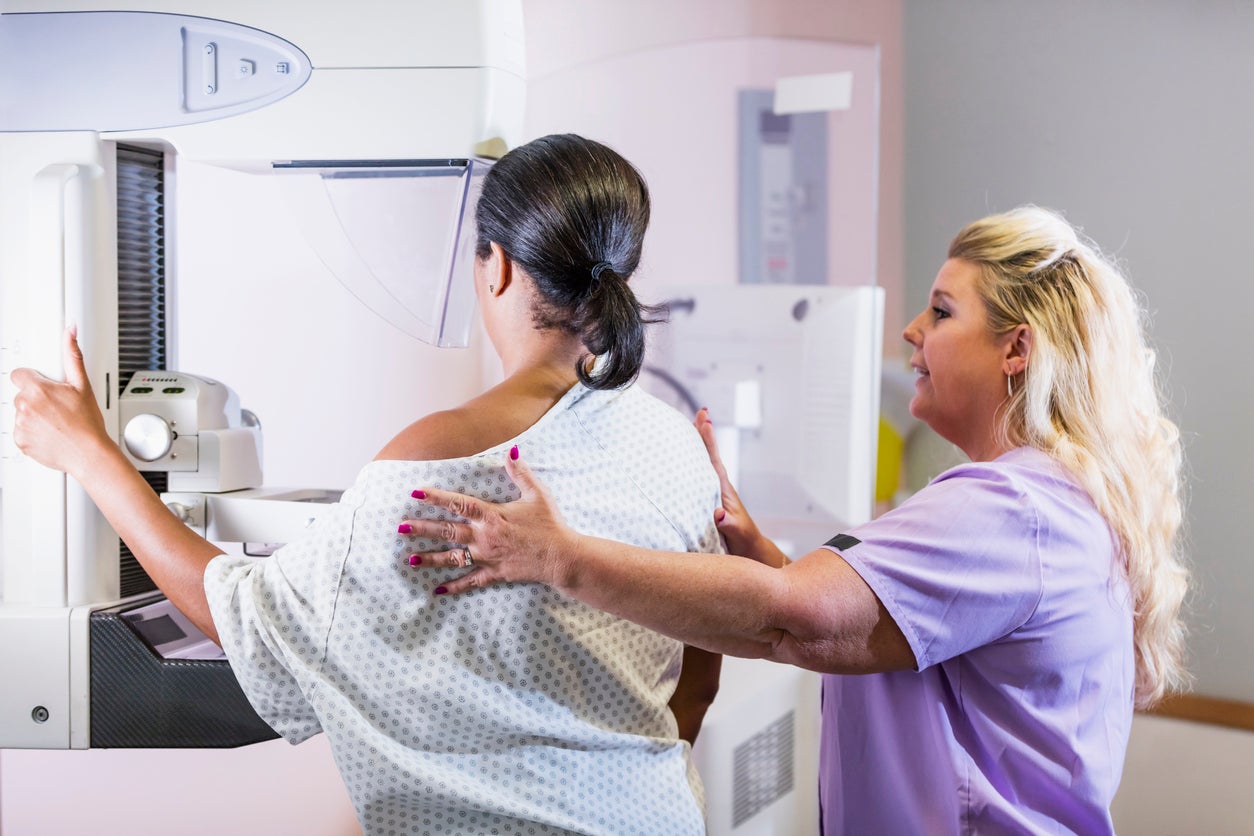
New research shows changes in the bodies of women with obesity may be contributing to breast cancer becoming invasive. Most breast cancers are invasive (Getty Images/iStock)
So, what are the changes?
First, the area surrounding the cancer was more inflamed in women with obesity, as immune cells arrived and sped up tumor growth.
And, the cells that make up their tumors seemed to be able to survive better under stress, and there were differences in the tumor cells and cells around them, the researchers said.
Future research will focus on its role in invasive breast cancer, the researchers said.
While breast cancer survival rates have improved over the past 20 years, the number of women diagnosed with invasive breast cancer has not declined.
About 321,910 new cases of invasive breast cancer will be diagnosed this year, the American Cancer Society estimates.
Advertisement
Most breast cancers are invasive, but there are two types that are most common: invasive ductal carcinoma and invasive lobular carcinoma.
Invasive ductal carcinoma is the most common type of breast cancer, and makes up 80 percent of invasive cases, according to the society.
This type spreads in cells that line the milk duct in the breast, breaking through the wall of the duct and growing into nearby tissue.
Invasive lobular carcinoma, which makes up 10 percent of invasive cases, start in the breast glands that make milk.
Advertisement
Breast cancer is is the most common cancer in women in the U.S., making up 30 percent of new cases each year (Getty Images/iStock)
There is currently no way of determining which women with noninvasive tumors later develop into invasive ductal carcinoma,
“As a result, many women with [noninvasive breast cancer] receive the same treatments used for [invasive ductal carcinoma], including surgery, radiation and sometimes hormone therapy,” Hannafon said.
“Overtreatment is a major concern, but if we had better ways of determining risk, unnecessary treatments could potentially be reduced,” she noted.
Breast cancer is the most common cancer in women in the U.S. – other than skin cancers. It accounts for about 30 percent of all new female cancers each year.
Obesity is a known risk factor for invasive breast cancer and other forms.
Advertisement
More than 100 million Americans live with obesity, some 40 percent of whom are women.
Two Illinois boys were airflited out of Matthiessen State Park Friday after a “roughhousing” incident during a school field trip turned dangerous.
Emergency crews responded to the park around 12:45 p.m. following a report that an adult chaperone began CPR on an unconscious juvenile near the Lower Dells area, Illinois Conservation Police Sergeant Phil Wire told Shaw Local.
The situation unfolded when an 11-year-old boy and a 12-year-old boy, part of the school outing involving more than 50 students, were “rough-housing and engaging in horseplay” in the water, Wire said. One of the boys inhaled water and briefly lost consciousness at the park, which is located about 90 miles southwest of Chicago.
First responders arrived about 15 minutes after the dispatch call and found both boys conscious and alert, though they were still showing signs of shock and distress, according to reports.
Advertisement
Out of an abundance of caution, the children were separately airlifted in two helicopters to OSF Children’s Hospital of Illinois for further evaluation.
“Roughhousing” in the water at Matthiessen State Park left one male student unconscious during a school field trip Friday (Google Maps)
Their injuries were not believed to be life-threatening, according to CBS News Chicago.
The Independent has contacted the Illinois Conservation Police for comment.
The pair paid tribute to her as ‘a force field of life and love’ and a ‘dearly beloved mother, grandmother and sister’ whose life had taken ‘a remarkable trajectory’
Ed and David Miliband have paid tribute to their mother after she died aged 91.
Advertisement
The pair announced the death of Marion Kozak, a Holocaust survivor, and left-wing campaigner on Saturday.
They paid tribute to her as “a force field of life and love” and a “dearly beloved mother, grandmother and sister”.
The siblings said: “She lived an extraordinary life with a spirit of the utmost kindness, warmth and generosity. Her life had a remarkable trajectory, from the childhood trauma of the Holocaust in Poland to safety and joy in Britain. She became a teacher, campaigner and a passionate advocate for justice. We will deeply miss her, but will carry her spirit and values with us always.”
Born Dobra Jenta Kozak in Poland in 1934, she escaped from the Czestochowa Ghetto in 1942 during the Nazi occupation along with her mother and sister.
She was sheltered by nuns and then a neighbour of her aunt in Warsaw, surviving the war thanks to what her son Ed told the 2012 Labour Party conference was “the kindness of strangers”.
On an official visit to Poland in 2009 while Foreign Secretary, David Miliband paid tribute to those who had protected his mother, saying her life was “saved by those who risked theirs sheltering her from Nazi oppression”.
Ms Kozak settled in the UK after the war, marrying left-wing academic Ralph Miliband and becoming a human rights campaigner and early activist for the Campaign for Nuclear Disarmament.
Advertisement
In his 2012 conference speech, his third as Labour leader, Ed Miliband said his mother “probably doesn’t agree with me”, but “like most mums is too kind to say so”.
But in the same speech he drew a link from her escape from the Nazis to his own political philosophy.
He said: “I believe we cannot shrug our shoulders at injustice, and just say that’s the way the world is. And I believe that we can overcome any odds if we come together as people.
“That’s how my mum survived the war. The kindness of strangers. Nuns in a convent who took her in and sheltered her from the Nazis, took in a Jewish girl at risk to themselves.”
ADLOUN, Lebanon (AP) — Israel’s air force and artillery struck areas close to a strategic mountain housing a Crusader-built castle in southern Lebanon Saturday as fighting raged in villages close to the southern city of Nabatieh.
Israel’s military issued evacuation warnings for more than a dozen villages in southern Lebanon, a day after Lebanese and Israeli military officials held their first direct talks in decades at the Pentagon.
The situation in southern Lebanon was discussed during a meeting Saturday between Lebanon’s president and prime minister who said in a statement later that they will intensify their contacts to make Israel stop demolition and bulldozing of homes and historical sites as well as its evacuation warnings.
Lebanon’s state-run National News Agency reported Israeli airstrikes and artillery shelling near the Crusader-built Beaufort castle that is about 15 kilometers (9 miles) from the Israeli border and overlooks wide parts of southern Lebanon. The strategic castle was held by Israeli troops for 18 years until they withdrew from Lebanon in May 2000.
Advertisement
Israeli troops have been advancing for days in villages close to the castle, including Yohmor and Zawtar al-Sharqieh near the city of Nabatieh after they crossed the strategic Litani River, which the Israeli military has used as a de facto boundary.
Large areas to the south are under Israeli military control, despite an April 17, U.S.-brokered ceasefire.
Israel and Hezbollah exchange strikes despite ceasefire
NNA reported airstrikes on different parts of southern Lebanon including in the village of Ansar that killed three people. A drone strike on a road linking the village of Ebba with Nabatieh wounded two Lebanese soldiers, the army said in a statement.
Hezbollah, meanwhile, said its fighters fired rockets at northern Israel’s largest city, Kiryat Shmona, on the border with Lebanon. The group said its attack was in retaliation for airstrikes that killed civilians in Lebanon. Hezbollah later said it also fired rockets toward the northern city of Safed.
Advertisement
Among those killed in southern Lebanon on Friday were a Syrian family — Qais al-Bakir, his pregnant wife and their six children — who died in an Israeli airstrike on the coastal village of Adloun, north of the city of Tyre.
The family, which belonged to Syria’s minority Alawite sect, had fled to Lebanon from the central province of Hama after the fall of Bashar Assad in Syria in December 2024. Some members of Assad’s Alawite sect have been subjected to revenge attacks by members of Islamist groups who removed the former president from power.
The family had been living in a sheep farm and they received no warning in advance of the strike on the village, said Ali al-Bakir the brother of the man killed. He said the family plans to send the bodies for burial in their hometown in Syria.
“He worked in farming and all he cared about was to feed his children,” his brother said.
Advertisement
The latest Israel-Hezbollah war started on March 2, when Hezbollah fired rockets into northern Israel two days after Israel and the U.S. attacked Iran.
It has left 3,350 people dead in Lebanon and over 1 million people displaced.
Further strikes in Gaza
In the Gaza Strip, a Palestinian nurse was killed in an Israeli strike Saturday, hospital authorities said, the latest death by Israeli fire since a shaky ceasefire halted major fighting in the enclave last year.
The strike late Saturday morning hit a Hamas-manned police point in the central city of Deir al-Balah. At least three other people were wounded, according to the city’s Al-Aqsa Martyrs hospital, which received the casualties.
Advertisement
The Israeli military didn’t immediately respond to a request for comment.
The dead nurse was identified as Jamal Abu Aoun, who worked at Yafa Hospital in Deir al-Balah. His funeral was held at noon in the Al-Aqsa Martyrs hospital’s courtyard.
He was the latest fatality among Palestinians in the coastal enclave since a fragile October ceasefire deal attempted to halt a more than two-year war between Israel and Hamas in Gaza.
While the heaviest fighting has subsided, the shaky ceasefire has seen almost daily Israeli fire. Israeli forces have carried out repeated airstrikes and frequently fire on Palestinians near military-held zones, killing at least 929 Palestinians, according to Gaza’s health ministry.
Advertisement
The ministry, which is part of the Hamas-led government, maintains detailed casualty records that are seen as generally reliable by United Nations agencies and independent experts. But it does not give a breakdown of civilians and militants.
Militants have carried out shooting attacks on troops, and Israel says its strikes are in response to that and other violations. Four Israeli soldiers have been killed since the ceasefire.
_____
Associated Press writers Bassem Mroue in Beirut and Samy Magdy in Cairo contributed to this report.
WASHINGTON (AP) — The U.S. military has stopped another merchant vessel trying to break through the American blockade of Iranian ports, a U.S. official with knowledge of the situation told The Associated Press on Saturday.
The Gambia-flagged bulk carrier Lian Star ignored multiple warnings from U.S. forces overnight as it tried to enter an Iranian port, the official, who spoke on condition of anonymity to discuss military operations, said. The ship was disabled by U.S. aircraft in the Gulf of Oman and remains adrift there, the official said, adding that U.S. forces have not boarded it.
The U.S. launched the blockade on April 17 in response to Iran effectively closing the strait after the war began with U.S. and Israeli strikes on Feb. 28. A fragile ceasefire has held since April 7. Now the region and wider world await word on whether a deal is being reached to extend it by 60 days while new talks would be held on Iran’s disputed nuclear program.
Advertisement
Events in the Strait of Hormuz between Iran and Oman have shaken the global economy, with shipments of significant amounts of oil, natural gas and related supplies like fertilizer largely stranded, increasing the strain on consumers and food producers.
The U.S. blockade seeks to limit Iran’s own shipments and further weaken its access to cash, creating more pain for its long-weakened economy.
U.S. President Donald Trump met with advisers on Friday but has yet to decide on whether to move ahead with a deal to extend the ceasefire and reopen the strait. Iran has said the deal had not been finalized.
Commercial traffic has quietly continued to flow through the strait, despite Iran’s assertions that it must approve any transits, though at a much lower volume than before the conflict.
Advertisement
“Any violation of these regulations will place the security of their passage at serious risk,” Iran’s joint military command said Saturday in a statement carried by state TV, warning that any military vessels trying to interfere with that would be targeted.
Iran has even charged tolls for transit as high as $2 million, which experts have called a violation of a principle of international maritime trade: freedom of peaceful navigation.
Qatar’s deputy prime minister, Sheikh Saoud bin Abdulrahman bin Hassan bin Ali Al Thani, on Saturday said the Gulf nation opposes charging fees to transit, “but for certain times when they say they are going to use it for mine clearing or some usage of the fees for a temporary time, this is something that is negotiable, and it could be something that will help the transit of the Strait of Hormuz to be back to normal stage.”
The U.S. official previously told the AP that the U.S. has not found or destroyed any mines in the strait.
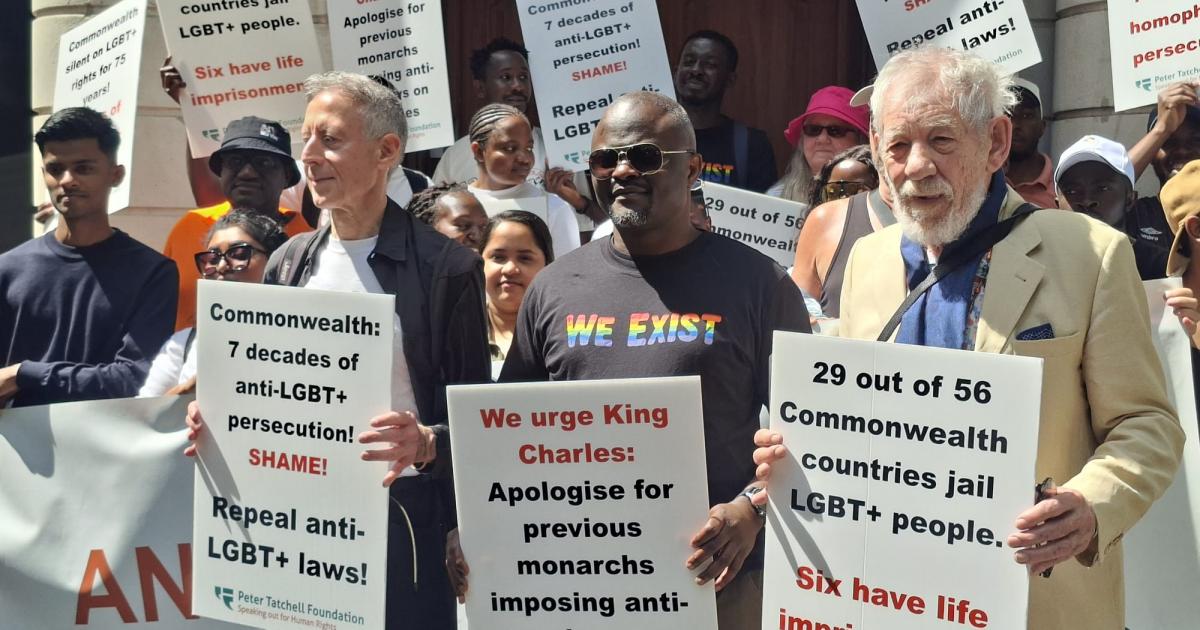
The Lord of the Rings star led the ‘Commonwealth Walk of Shame’ in London on Saturday, May 30, starting outside the Nigeria High Commission.
The movement was in protest against the criminalisation of LGBT+ people in 29 Commonwealth member states under colonial-era laws originally imposed by Britain.
Sir Ian who was born in Burnley, said: “No one should face prison, violence, or death simply for being themselves and loving another person.
Advertisement
“Yet across most of the Commonwealth, LGBT+ people are still treated as criminals.
“Many of these laws are relics of the British Empire.
“The least we in Britain can do is stand in solidarity with those fighting to overturn criminalisation.”
The protest highlighted colonial-era laws originally imposed by Britain that still criminalise same-sex relationships.
Advertisement
In six Commonwealth countries, the legal maximum sentence is life in prison, while in Uganda, Brunei, and parts of northern Nigeria, people could face the death penalty.
Many of those at the London march were LGBT+ refugees who fled Commonwealth countries because of such laws.
The Peter Tatchell Foundation organised the protest along with Out and Proud Africa LGBTI, Let Voice be Heard (Bangladesh), Gay Indian Network (GIN), and the African Equality Foundation.
Marchers protested outside the Nigerian High Commission and seven other Commonwealth High Commissions.
Advertisement
Deborah Birunji Nabisere, a lesbian and member of Out and Proud Africa LGBTI who fled persecution in Uganda, said: “I know what it means to live under laws designed to erase your humanity.
“We are marching because silence has protected persecution for far too long.
“Commonwealth leaders cannot celebrate unity while millions of LGBT+ citizens live in fear.
“For many LGBT+ people across Africa and the Commonwealth, these laws are not abstract.
Advertisement
“They shape every part of daily life: whether you can speak openly, whether you can find work, whether you are safe walking home.”
Peter Tatchell, human rights campaigner and founder of the Peter Tatchell Foundation, said: “For decades, Commonwealth leaders have failed to end the persecution of LGBT+ people.
“We urge the new Commonwealth Secretary-General, Shirley Ayorkor Botchwey of Ghana, to begin her tenure by making clear that anti-LGBT+ victimisation is incompatible with Commonwealth values.”
The Nigeria High Commission has been approached for comment.
Coronation Street actor Michael Le Vell, 61, has married his long-term partner Louise Gibbons, 50, with several of his Corrie co-stars in attendance.
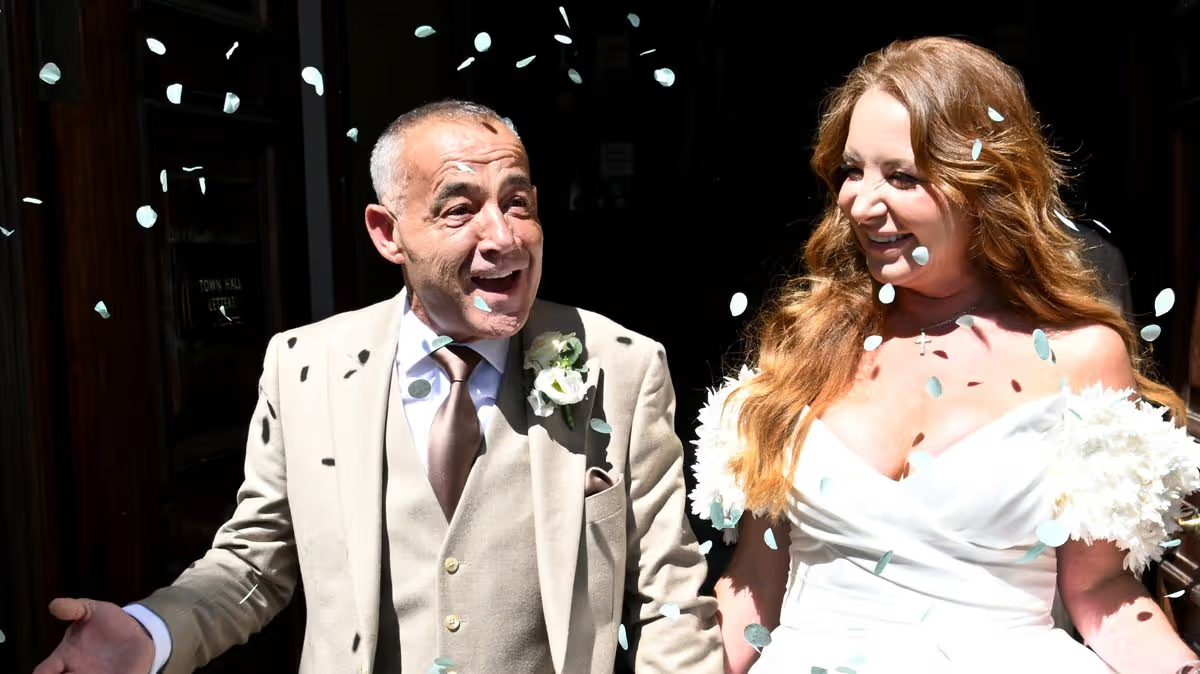
The 61-year-old, who plays Kevin Webster in the ITV soap, tied the knot to his partner of 12 years at Sale Registry Office in Trafford, Greater Manchester whilst the sun was shining on Saturday (May 30).
The Corrie legend, who first appeared on the cobbles in 1983, sported a beige suit with a white shirt and a brown tie, whilst his new wife looked beautiful in a traditional white frock with feathered sleeves.
Click here to sign up for more Coronation Street updates in our newsletter
Advertisement
Several of Michael’s co-stars were in attendance at the ceremony including Sally Dynevor, who plays his on-screen ex-wife Sally Metcalfe and Alan Halsall, who plays his best pal Tyrone Dobbs.
Joe Duttine, who plays Sally’s on-screen husband Tim Metcalfe, was also at the wedding alongside his wife Sally Carmen, who he wed in July 2022.
Michael’s on-screen younger sister Debbie Webster, played by actress Sue Devaney, was also there to show her support.
Away from Weatherfield, Michael often keeps his life private however Louise has remained a key source of support for the actor through periods in his life that included checking into a rehab facility in 2014.
Advertisement
The couple, who got engaged in 2017, do not have any children together, but Michael who was previously married for 25 years to actress Janette Beverley share two children with her.
Michael has been in Coronation Street for over 42 years. He made his first appearance on the show in October 1983 and has played the iconic character Kevin Webster ever since.
His tenure spans multiple decades, making him one of the longest-serving actors on the long-running ITV soap opera. His character has been through a lot during his time in Weatherfield, surviving various tragedies and affairs.
Advertisement
Some of Kevin’s biggest storylines include his affair with Molly Dobbs who gave birth to their son Jack before her tragic death, his relationship with Sally Webster coming to an end, and his heartbreaking prostate cancer diagnosis.
Families love this little zoo in a countryside setting, and an added bonus is that its neighbour is an award-winning ice cream farm
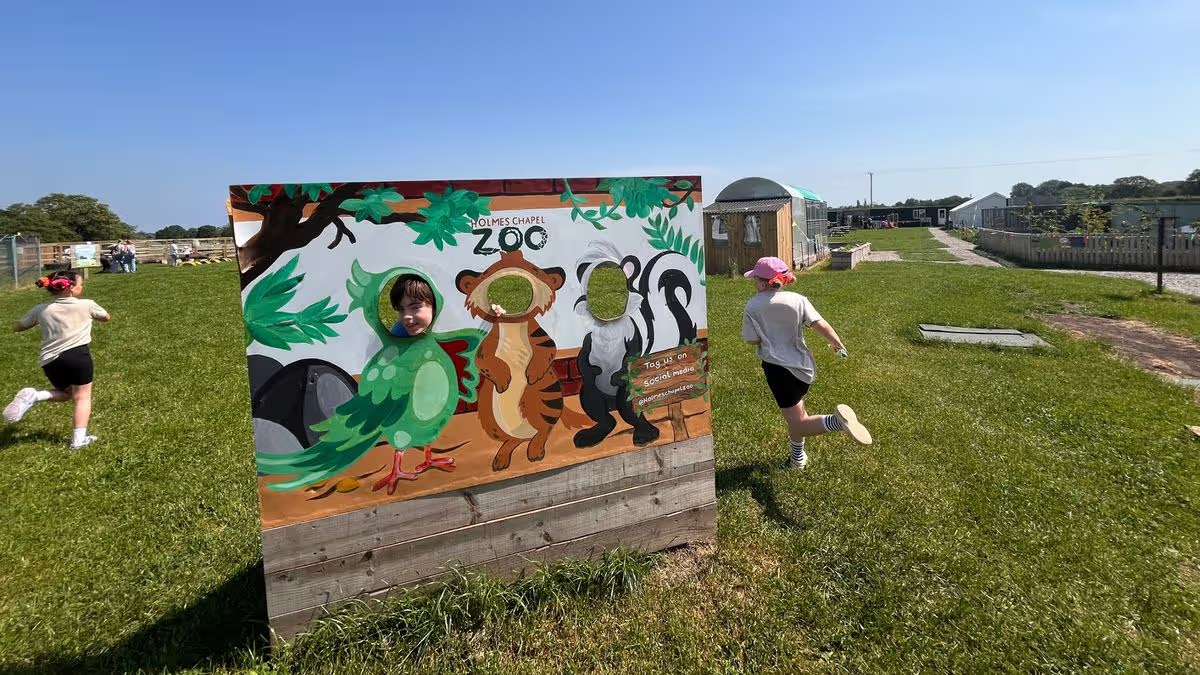
It’s the region’s newest zoo, but it’s already being hailed a “great day out” and “fantastic experience” by families who have visited its location in the heart of rural Cheshire. Holmes Chapel Zoo is a burgeoining animal centre set in a field right next door to another popular attraction in the area, the Bidlea Dairy Ice Cream Farm.
Advertisement
The zoo has only officially been open here for just over a year, but has big plans for expansion in the years to come. For now, it might best be described as a mini zoo with big ambitions.
It houses a host of animals in enclosures across its outdoor field site, including meerkats, tortoise, skunks, owls, deer and wallabies. There are also animal talks with the zoo’s team held across each day, and the chance for children to hold some of the creatures like lizards, guinea pigs and snakes during regular intervals each day.
Click here to keep up to date with the latest Family news in our newsletter
It’s a reasonably priced attraction for families, with adult tickets at £8.50 and child tickets and concessions for £6, while under-2s go free. There’s also a family advance saver ticket for two adults and up to three children for £26 if booked 36 hours in advance of your visit.
Advertisement
For those who want an even more hands on day at the zoo, you can also add on “Zoo Keeper Experiences” as well as more personalised meetings with the meerkats, skunks, birds or the reptiles (from £45 per person).
Owners have created a rustic play area at the site, using recylced tyres for them to bound over and crawl through.
There’s also a tent where children can colour in a host of pictures of the animals that they’ve just seen around the zoo, which they can then take home as a keepsake. On the way out you’ll walk through a gift shop with lots of cute animal toys too.
Advertisement
Despite the rural location, it’s only four miles off the M6 at Junction 18, and with a main line train station down the road at Goostrey, so it’s pretty accessible for people to get to.
It has won a number of rave reviews on Tripadvisor, and now ranks as the number one thing to do in Holmes Chapel.
Writing on Tripadvisor, pengwerns wrote: “Lovely experience. We visited the farm with our son, daughter-in-law and two grandsons and really enjoyed it.
Advertisement
“The zoo is fairly small but there were quite a few different animals to see. The staff were very friendly and informative and we learned quite a lot. There are different experiences to do.
“Our grandsons stroked a lot of the smaller animals and the older one held an owl – which was the highlight of his day.”
Joan R wrote simply: “Our youngest daughter ABSOLUTELY LOVED this experience!”
Advertisement
Katy G called it an “enjoyable afternoon” writing: “Lovely little zoo. Both my boys 13 and 10 had a lovely afternoon. The staff were very friendly and knowledgeable.”
Angela Allan headlined her review: “Do not hesitate to visit this new zoo, it’s so cool”, In the review she wrote: “This was such a brilliant experience. We took our grandchildren. (8+6) who absolutely loved it, as did we. We spent 4 hours there and made the most of the day. Went to some talks about the animals which were fantastic. The staff are obviously so keen and informative.
“Although the zoo is in its infancy, it has some interesting species that the bigger zoo doesn’t have, ie Kookaburras and skunks to name a few. Absolutely brilliant. The neighbouring cafe and facilities are excellent and just a couple of minutes walk away.”
Evelyn L wrote: “We didn’t know what to expect, the admission prices are very reasonable. The zoo is small but perfectly formed, the staff are very personable and well informed.
“Some zoos can be overwhelming for children by their sheer size and you only ever get a snapshot of the animals. There is a play area and you can take a picnic and also go to the Bidlea dairy for food and drink. All in all a great day out in the heart of Cheshire.”
Travellers169 described it as: “Lovely small zoo with a good selection of animals for its size! There are activities throughout the day but at the moment this is probably a couple of hours for the regular visit, but being next to Bidlea Dairy you have a nice cafe to visit as well.
“Loved the friendly staff and my daughter had such a good time meeting the animals. Can’t wait to see how it grows. More than happy to pay a bit extra for holding the animals to help that.”
Advertisement
The ice cream farm next door
As if the zoo were not exciting enough, there’s also the large Bidlea Dairy Ice Cream Farm next door too. It not only boasts an epic array of award-winning flavours of ice cream, but boasts a full cafe area with hot drinks, cakes and savoury treats like toasties and pie of the day too.
The ice cream farm first opened in 2021 and has expanded since then to now include big seating areas outside, including an upstairs terrace that boasts incredible views of one of Cheshire’s most famous landmarks, Jodrell Bank.
They open every day til 7pm, but are even able to cater for your dairy fix after hours too – as they have 24 hour milk and ice cream vending manchines at the farm.
Advertisement
The diversification into ice cream was a true turnaround story at The Orchards Farm, which is run by Ray and Jill Brown and their son’s Adam and Ryan and their wives, both called Becky.
Over a decade ago the Brown family were witnessing what looked like a critical decline for dairy farming with supermarkets offering their lowest ever price for their cow’s milk at 16p a litre.
So they decided to start processing and pasteurising their own milk with the creation of an adjoining dairy on Twemlow Lane – with milk pumped over the road by a supply line straight from the free range pedigree cows into the dairy to produce fresh milk 24 hours later, supplied to local farm shops and wholesalers.
Advertisement
It would be a fortuitous decision, and when lockdown came into force in March 2020, demand for fresh milk surged and Bidlea partnered with local delivery surfaces across Cheshire to get their product direct to customers.
And the idea to do ice cream came as another knock-on from lockdown. They invested in ice cream equipment and started to experiment with flavours before launching their product.
And just via word of mouth and social media, crowds began to flock to the farm for the artisan ice cream.
You can choose from a raft of daily changing flavours of ice cream, with 24 on offer each day from a full roster of 80. Expect the likes of Biscoff, turkish delight, bubblegum, gold top and mint choc chip – with single scoops from £3.30, double scoops for £4.30 or go large with a triple scoop for £5.30. They also offer the option of one or two of your choice of flavours blended into a bespoke milkshake topped with whipped cream for £6.25.
Advertisement
How to get there
Bidlea Dairy Ice Cream Farm is open every day from 9am to 5pm, on Twemlow Lane, near Holmes Chapel, Cheshire, CW4 8DS. It’s around a five minute drive from Junction 18 of the M6 motorway.
It’s free entry and free parking at the ice cream farm and cafe.
Holmes Chapel Zoo is just behind the ice cream farm, and is open 10am to 3pm on weekends, and from 11am to 3pm on weekdays. Tickets can be purchased online in advance which is recommended, although can also be bought on the door.
Advertisement
The nearest train station is at Goostrey, which is on the main line between Manchester Piccadilly and Crewe, which is then a one mile walk to the zoo and ice cream farm location.
This roundup of The Conversation’s environment coverage was first published in our award-winning weekly climate action newsletter, Imagine.
I’m thinking of painting my roof white. It’s not about making it look prettier, it’s because my bedroom is right underneath a flat roof and every summer it gets unbelievably hot. Last summer I ended up hugging a hot water bottle filled with cold water in bed, and even that was not enough to help me nod off.
As those who live in Mediterranean countries know, painting your home white helps keep it cooler by reflecting back the heat. A dig in our archives found a fascinating article by Rosa Schiano-Phan, reader in architecture and environment design at the University of Westminster, about why this works – as generations of people who live in stark-white villages in Spain and Greece will testify.
It might be worth giving it a go to get some cooler summer nights, and a tin or two of white paint is not a high price to pay.
Advertisement
The past few days of hot weather have been concentrating my mind on any simple (and cheap) steps I might take in my home to help keep cool. Another great find from 2025 has suggestions. Mehri Khosravi, an energy researcher at the University of East London, digs into ways to keep people cooler and avoid big energy bills. She suggests looking at shutters and shades as a cheaper alternative to air conditioning units, noting:
“In Rome … window shutters are so common you barely notice them, yet they dramatically reduce the need for mechanical cooling.”
Wildfire risks
Countries that have traditionally not sweltered in the summer are starting to understand what it feels like. Already in 2026, wildfire warnings have been issued in Ireland, Northern Ireland and Scotland. These nations are traditionally associated with soggy summers rather than sweltering ones, but all three – as Will Hayes, postdoctoral research associate in fire governance at Royal Holloway, University of London, notes – have already seen significant wildfires break out in 2026.
One reason for this is the changing patterns of those who tend farmland. Agricultural workers are getting fewer and older, which means far less clearing of vegetation is taking place. As in Italy, this has contributed to the growing risk of wildfires. While less grazing and natural regeneration of the landscape can mean more biodiversity, heavier vegetation can also be more flammable. As Hayes writes:
Advertisement
“These same changes may also increase wildfire risk where vegetation becomes dense, continuous and unmanaged. The challenge is therefore not choosing between farming or conservation, but finding ways to support landscapes that can sustain biodiversity, rural livelihoods and wildfire resilience together.”
As well as the heat, The Conversation’s environment desk has been very focused on bees recently, as World Bee Day came and went – and heat was a factor there as well.
Bees are being hit by heatwaves in a surprising way. In a University of Hull lab, a study recreated three days of heatwaves from July 2022. The team tracked how red mason bees in the study reacted, along with a control group that wasn’t subjected to these high temperatures. James Gilbert and colleagues initially thought all the bees were fine, and there was nothing to see there. But nine months later, it became clear that there was something significant to consider.
In the group of bees subjected to heatwave temperatures, sperm activity had dropped by half compared with the control group, and sperm counts by one third. In females, there was a 15% reduction in both the size and number of developing eggs.
Advertisement
The heatwave had wrecked their fertility. While this in itself was shocking for the trial bees, the long-term implications for bees more generally – and the humans that rely on their pollination – is immense. Until now, research on heatwaves and their impact on bees had just focused on fatalities. This new study shows that some bees will not even be born because of rising temperatures.
A bee collects pollen. Bildagentur Zoonar GmbH/Shutterstock
Meanwhile, in the Pennine hills in the north of England, there’s an unusual project taking place that is also about reacting to the changing climate. Hundreds of holes have been dug across the area, creating something of a moonscape effect.
This is part of a huge plan to return this area back to its boggy past. Industrial expansion in this region in the 19th century left the wetlands stripped of their moisture, as coal smoke from nearby mills left heavy metals behind that degraded and dried out the soil. But in the past few years, scientists have started to revive its sogginess, using the impressive qualities of Sphagnum moss – a sort of super moss which can hold up to 20 times its body weight in water. The moist, peaty wetlands will help protect the area from wildfires, as well as absorbing the CO₂ being created by industrial fossil-fuel use, which is warming the atmosphere.
Advertisement
Working in hot temperatures
Life generally doesn’t stop in heatwaves. Many people are required to continue with their jobs in high temperatures, without any respite or option to find a cooler space. Research across seven countries shows that governments need to do more to help people cope in extreme temperatures. Recommendations include creating maximum workplace temperatures, and creating more cool places where people can escape to during heatwaves, such as public buildings.
It seems almost impossible to ignore the relationship between extreme heat and our lives right now. But at least some academics are using innovation sparked by their scientific research to recognise – and help tackle – some of the problems these heatwaves are causing. And no doubt there will be more.
But according to psychologist Dr Bijal Chheda of Nos Curare, not feeling particularly motivated can be caused by a range of issues and conditions.
She said that demotivation is “one of the brain’s early responses to ongoing stress,” explaining, “As stress builds, the brain shifts into energy-saving mode, making focus and initiating tasks feel difficult, which can drain motivation.”
Advertisement
This can be common among those with ADHD, for instance, she added.
While many of us may try to will ourselves out of these periods, the psychologist said this is a mistake.
What should I do if I feel demotivated?
Sometimes, Dr Chheda said, the stress and self-blame you feel about not being productive can, ironically, take a lot of energy. “Overwhelm and perfectionism” are common culprits.
But believing you’re a failure when you don’t give everything 100% – and thinking you can will yourself back into an A-star performance – is a trap that can sap your motivation, she continued.
Advertisement
“If this sounds familiar, it can help to stop relying on willpower and instead lower the barrier to entry. Start with a messy first version, giving yourself permission to do it badly just to get it moving.”
I’ve seen success with half-assed workouts, which helped to keep me way more consistent than all-or-nothing exercise regimens I inevitably dropped out of. Science says that tiny shifts in our eating, sleep, and exercise routines – we’re talking two minutes more movement and grams more vegetables a day – can help you to live longer, too.
Actively deciding it’s OK to do a less-than-optimal version of whatever task you’re hoping to achieve “makes it easier to re-engage with the task, without feeling pressure to succeed the first time round,” the expert said.
Advertisement
Speak to an expert if demotivation lasts a long time
As we’ve mentioned before, feeling demotivated for a long time can be related to anhedonia or dysthymia.
“If you feel this is a consistent pattern, it may be worth exploring whether ADHD could be a factor with a qualified mental health professional,” Dr Chheda added.
The NHS says that low mood, which can include not enjoying things you used to, not being able to concentrate, and feeling helpless, can be signs of depression, for which you should consider speaking to a professional.
Arsenal may have already won their first Premier League title for 22 years, but that has made them hungrier for the Champions League, not complacent.
Mikel Arteta said: “The ambition is bigger. We have one, and now we want the second one. That’s all we’ve been talking about. There has to be a platform to reach bigger destinations and to aim for more.
“And the team is capable, because we’ve shown it in the last two seasons, in this competition. What we’ve done this season in the competition, and I want the players to be so confident that we’re going to win.
“I think it’s the opportunity to own the moment, because, as you said, it’s the second time in our history that we are here, and we have the opportunity tomorrow to write a new chapter in the history of this football club.”
Advertisement
Mikel Arteta is looking to lead Arsenal to a double(Image: David Price, Arsenal FC via Getty Images)







.png)





































You must be logged in to post a comment Login