

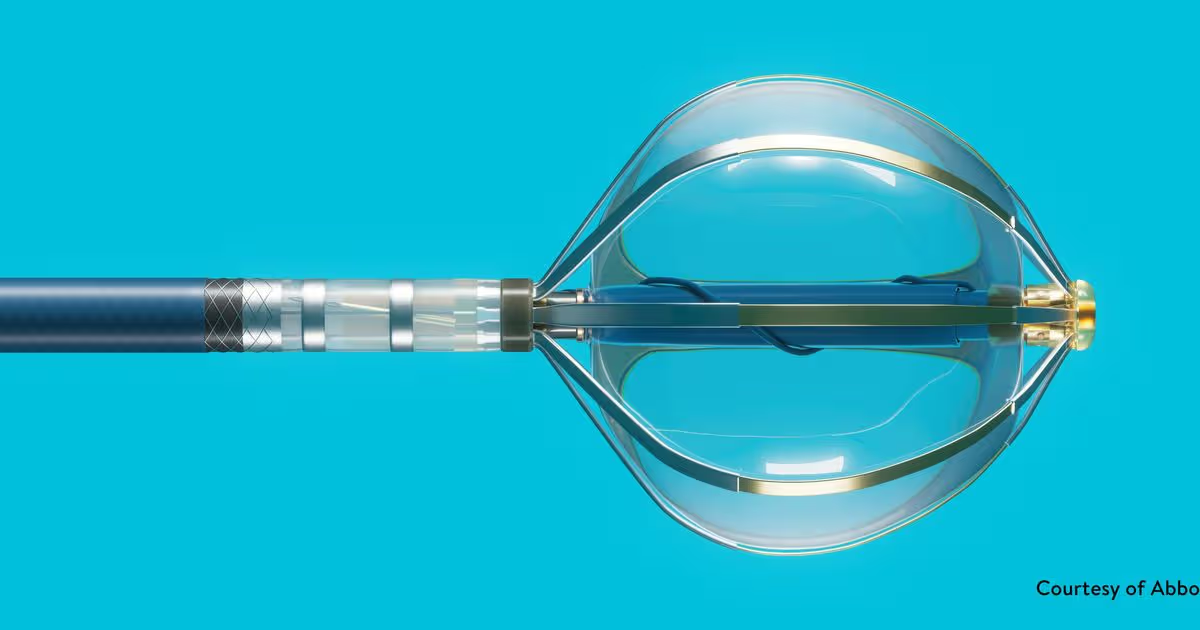
A Belfast hospital is to be one of the first to trial an innovative new treatment for people with a common heart condition. The device uses electrical pulses to target and destroy heart tissue and stop irregular heart rhythms caused by atrial fibrillation (AF).
It is inserted into the heart in a minimally invasive procedure during which patients can remain awake rather than under general anaesthetic.
It is estimated that about 1.5 million people in the UK have AF, which can put patients at a higher risk of stroke. Some 15 hospitals will trial the Volt Pulsed Field Ablation (PFA) System as part of the pilot, including Belfast’s Royal Victoria Hospital.
The device, developed by healthcare company Abbott, comprises a small catheter which uses high-energy electrical pulses to destroy targeted tissues in the heart to treat irregular rhythms.
Christopher Piorkowski, chief medical officer of Abbott’s electrophysiology business, said: “We heard the physician feedback that patients need an alternative to general anaesthesia during a PFA ablation procedure that doesn’t sacrifice strong outcomes.
“The Volt PFA System is an option for patients who prefer conscious sedation, which can also lead to faster recovery times and shorter procedures for millions of people who suffer from an abnormal heart rhythm across Europe.”
Ulster Unionist Health Spokesperson Alan Chambers welcomed the news, saying: “This is a hugely powerful reminder that Northern Ireland’s Health Service can lead from the front. Often, the narrative around our health system focuses solely on pressures and waiting lists. While those challenges are real, today’s announcement shows another side of the story – Northern Ireland’s expertise, innovation and ambition.
“Atrial fibrillation is a debilitating condition affecting 1.4 million people across the UK. It increases the risk of stroke and heart failure and can severely limit a person’s quality of life. The ability of our clinicians to adopt cutting-edge technology that delivers safer procedures, faster recovery times and same-day discharge is a major step forward for patient care.
“This new approach is not only good for patients, it is good for the system. Treating up to three patients per day instead of one, reducing reliance on anaesthetic support, and freeing up hospital beds demonstrates exactly the kind of smart reform we need: better outcomes and better use of resources.
“Credit must go to the dedicated clinical teams in Belfast who have delivered this UK-first. It also reflects the leadership and ambition of my Ulster Unionist colleague, Mike Nesbitt, as Health Minister. His focus on transformation, innovation and rebuilding confidence in our health service is beginning to bear fruit.
“Northern Ireland may be small, but we have the expertise and drive to compete with the very best. Our task now must be to build on this momentum and ensure patients across Northern Ireland benefit from a modern, forward-looking health service that delivers real results.”
Other hospitals among those to first use the device are Glenfield Hospital in Leicester, Leeds General Infirmary, the Royal Devon, Royal Papworth Hospital in Cambridge and University Hospital Southampton.
Stuart Crossland, 57, from Lincolnshire, was the first patient to undergo the procedure at Glenfield Hospital in Leicester.
He said: “I was going into atrial fibrillation around once a month, and each time it left me feeling exhausted and very unwell.
“On one occasion it was so bad that I went straight to the emergency department, which is when I was put on the waiting list for this procedure.
“I was happy to be the first person to have this new treatment, even though it was quite daunting knowing I would be conscious during the procedure rather than going under general anaesthetic.
“The team’s kindness and reassurance made all the difference.
“The procedure itself was quick, and I can’t thank the staff enough – from the nurses and cleaners on the wards to the team carrying out the treatment.
“Six weeks on, I’m already back running 5k, and knowing this could stop my atrial fibrillation for years to come is incredible.”
Dr Riyaz Somani, a consultant cardiologist at the University Hospitals of Leicester NHS Trust, was one of the first electrophysiologists in the UK to use the Volt PFA system.
He said: “By providing a treatment option that doesn’t require general anaesthetic, we hope to be able to deliver atrial fibrillation ablation not only safely and effectively but also more efficiently, allowing us to treat more patients and help reduce our waiting lists.
“Our initial experience has been overwhelmingly positive, with all patients tolerating the procedure very well with excellent acute success rates.”
Don’t want to miss the latest from Belfast Live? Making us your preferred source on Google means you’ll get more of our exclusives, top stories and must-read content straight away. To add Belfast Live as a preferred source, simply click here.


















































You must be logged in to post a comment Login