Connect with us

NewsBeat

Notting Hill Carnival police arrest 169 on day one of festival: Revellers held over drugs, weapons and sex offences

Published

on

Some 169 arrests have been made on day one of London's annual Notting Hill Carnival

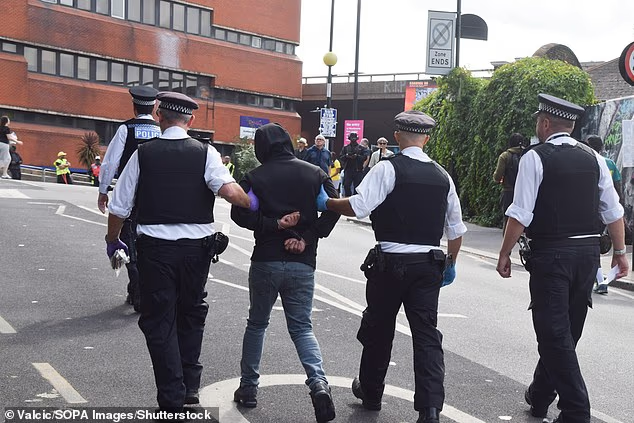
Police have made 169 arrests on day one of London‘s annual Notting Hill Carnival – with revellers held over possession of weapons, drugs and sex offences.

The Met Police confirmed the total number as of 7.45pm on Sunday, with the vast majority of arrests occurring within the event’s perimeter and 27 taking place on approaches to the site. 

The force said officers responded to two knife assaults at the carnival – which is Europe’s biggest street party – including a slashing to the leg and one to the hand.

Neither offence resulted in life-changing or threatening injuries.

Advertisement

The Met confirmed on Friday that more than 7,000 officers will be present at the carnival this bank holiday weekend, which is celebrating its 60th anniversary and expected to be bustling with live music, parades, street food and sound stages.

Police have set up numerous dedicated points where arrested and detained revellers are held. On Lancaster Road, a tent has been set up to detain people who have been arrested for serious offences before they are taken to a police station.

Between 3.30pm and 5pm, a spate of eight arrests occurred there.

One officer told the Daily Mail that people being arrested and taken to the tent were suspected of serious crimes. He gave possession of knives, sexual assault and upskirting as common reasons for arrest.

Advertisement

He said the tent was one of six in the area, and over the course of the day had been used to detain about 25 people.

Some 169 arrests have been made on day one of London’s annual Notting Hill Carnival 

Revellers have been held over possession of weapons, drugs and sex offences

Revellers have been held over possession of weapons, drugs and sex offences

Advertisement
The Met Police said officers responded to two knife assaults at the carnival (Pictured: A facial recognition van installed for the carnival)

The Met Police said officers responded to two knife assaults at the carnival (Pictured: A facial recognition van installed for the carnival)

An estimated two million people set to attend the event (Pictured: Revellers pack into Ladbroke Grove for day one of the carnival)

An estimated two million people set to attend the event (Pictured: Revellers pack into Ladbroke Grove for day one of the carnival)

Crowds were colourful for day one

Crowds were colourful for day one

He added a concern for officers is the risk of gang related violence, as rival gang members may encounter each other at the event.

Advertisement

Medics and ambulance workers were also spotted entering the tent.

In 2025, the Met said it made 528 arrests across the two main days of the carnival, including 167 for drug offences, 50 for possession of an offensive weapon, 21 for sexual offences, four for violence with injury and 49 for other violence.

In 2024, there were eight stabbings, including the murder of 32-year-old mother Cher Maximen, with the same number the previous year, and seven including a murder in 2022.

In a statement released on Sunday evening, the Met Police said despite the incidents, the mood is ‘overwhelmingly positive and celebratory’.

Advertisement

It read: ‘While officers responded to a number of incidents as would be anticipated at an event of this scale, the mood has been overwhelmingly positive and celebratory.’

Commander Claire Smart, who is in charge of the policing operation, added: ‘We have been working closely with Notting Hill Carnival Ltd and other partners for many months ahead of this weekend’s event.

‘The organisers have stepped forward significantly across the event, including crowd management, and we have seen the positive progress today.

‘While we have seen a significant number of arrests and interventions by officers, the result of that proactive approach is a welcome reduction in the levels of serious violence seen at the event in previous years.

Advertisement

‘Nobody involved in the delivery of the event is complacent, however.

Advertisement

 ‘There are still many officers deployed across the footprint to ensure crowds disperse safely.

‘We will have officers on duty through the night and tomorrow we will go again to ensure we can continue to tackle the minority who want to come to Carnival to spoil the celebration for the majority.’ 

But, it wasn’t all bad. Steel drums echoed across west London this morning as Notting Hill Carnival got off to a colourful start with revellers dousing each other in neon paint in the first street party of the two day event.

Images show people dancing in glittering outfits and playing steel drums to kick off the Families and Children’s Day parade.

Advertisement

Meanwhile, early birds arrived at the street party at 6am and began throwing body paint at each other and setting off colourful smoke flares as part of J’Ouvert, a vibrant pre-dawn ritual.

Some are fully covered in black paint and wearing horns to represent Jab Jab – from the French word diable, meaning devil.

The costume dates back to the 1838 abolition of slavery across the Caribbean when people took to the streets in all black to celebrate their freedom from devilish oppressors.

This year marks 60 years since Notting Hill Carnival began in 1966 and, while Saturday saw a quieter start with young performers taking to the stage at the traditional Panorama ticketed steelband competition, Sunday drew far bigger crowds as the carnival takes to the streets.

Advertisement

It is estimated that around two million revellers will attend the event with 7,000 Metropolitan Police officers and staff on duty.

More than 3,000 stewards – double the usual number – have also been deployed after crowd control responsibilities were transferred from Scotland Yard to the event organisers following an extra £4.66million grant announced by Sir Sadiq Khan in March.

But Susan Hall, leader of the Conservative group at the London Assembly, said she remained concerned about the security risks and called on the Mayor to ‘get a grip on this once and for all before more people are injured or die needlessly’.

Source link

Advertisement
Continue Reading
Click to comment

You must be logged in to post a comment Login

Leave a Reply

NewsBeat

The County Durham village which made cricket star Paul Collingwood

Published

on

The County Durham village which made cricket star Paul Collingwood

Born in Shotley Bridge on May 26, 1976, Collingwood grew up in a cricketing family and spent his childhood around the village club.

His father, David, was an opening batsman at Shotley Bridge Cricket Club, his mother Janet made teas, and summers for the family were spent at its ground beside the River Derwent.

For a player later known for relentless work-rate, athletic fielding and stubbornness under pressure, the club gave him an early foothold in the game.

He forced his way into Shotley Bridge’s under-13s side aged just nine, having been introduced to cricket on the playing fields of Blackfyne Comprehensive School in Consett.

Advertisement

Shotley Bridge. (Image: GOOGLE)

Where ‘Colly’ began

Shotley Bridge sits just outside Consett, on the edge of the Derwent Valley.

It is a place with a strong sporting identity, and its cricket club proved to be the setting for the first chapter of Collingwood’s rise.

In its tribute to the former all-rounder, Wisden described Collingwood’s father as a “stalwart opening batsman” at the village club and said the family spent much of their summers there.

The cricket magazine added that the young Collingwood was exactly the sort of local player Durham needed when it became a first-class county.

Advertisement

His early sporting talent was not restricted to cricket.

Collingwood also played football as a teenager, but his father persuaded him to focus on cricket — a decision that set him on course for an exceptional career.

He attended Blackfyne Comprehensive School, now Consett Academy, before breaking into Durham’s system.

He made his first-class debut for Durham in 1996, beginning an association with his home county that would last more than two decades.

Advertisement

Paul Collingwood with his daughters during the unveiling of the new Paul Collingwood Pavilion at the Emirates Riverside in Chester le Street. Photograph by Stuart Boulton.

From Shotley Bridge to England

Collingwood’s route from village cricket to international sport is one of County Durham’s great sporting stories.

He made his one-day international debut for England in 2001 and his Test debut against Sri Lanka in Galle two years later.

In all, he played 68 Tests, scoring 4,259 runs at an average of more than 40, while his 197 one-day international appearances remain an England record.

He was a three-time Ashes winner and scored a memorable double century — 206 — in the 2006-07 Ashes series in Australia.

Advertisement

But for many supporters, the defining moment was his role as captain when England won the ICC World Twenty20 in 2010, the men’s team’s first global limited-overs title.

At Durham, he became the club’s leading first-class run scorer and most successful player.

Across 304 first-class appearances, he scored 16,844 runs and took 164 wickets, while he captained the county to the 2013 County Championship title.

A lasting village connection

Collingwood retired from professional cricket at the end of the 2018 season, having represented Durham in 23 of the county’s first 26 years as a first-class side.

Advertisement

But his connection to Shotley Bridge has endured.

His success continues to offer a powerful example to young players at the club where it started: a local boy who traded football for cricket, developed at a village ground and went on to captain England to a world title.

For Shotley Bridge, Collingwood is more than a famous name on a scorecard.

He is proof that a child’s first innings at a County Durham cricket club can lead all the way to the international stage.

Advertisement

Source link

Continue Reading

NewsBeat

John Swinney vows to bring ‘radical change’ to Scotland’s public services

Published

on

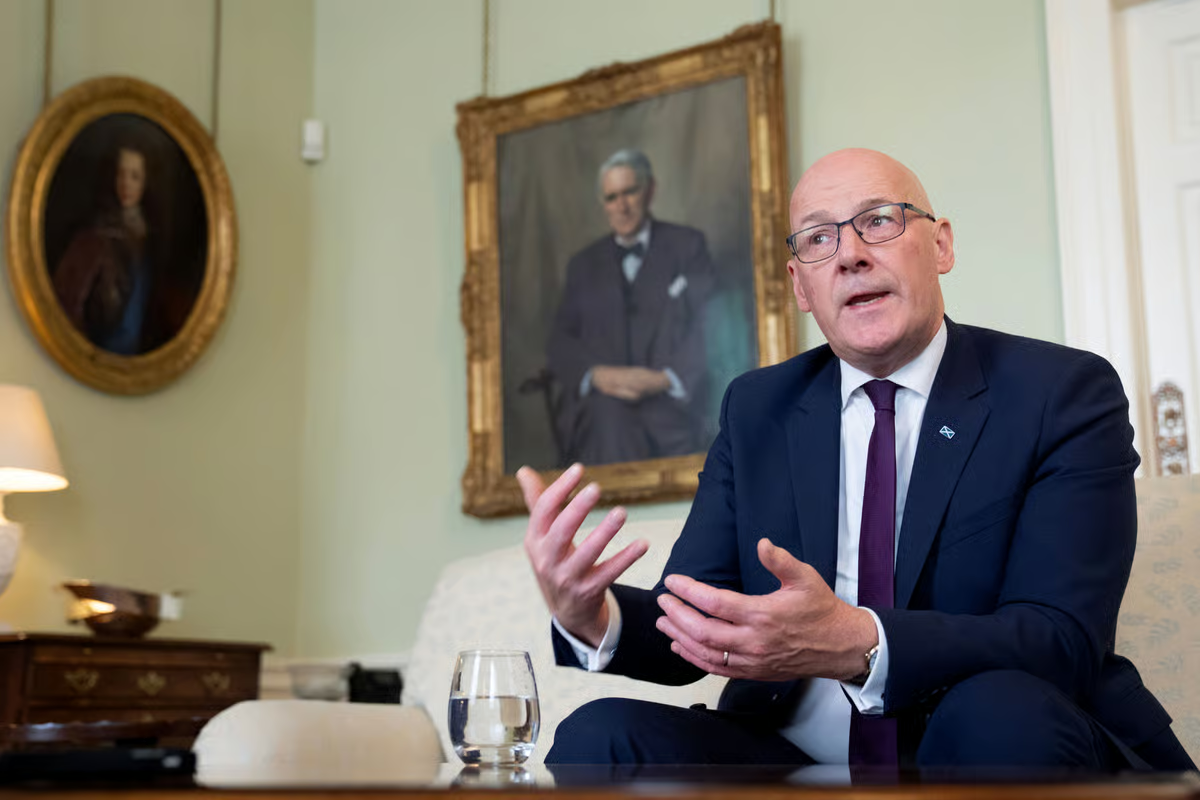
John Swinney vows to bring ‘radical change’ to Scotland’s public services

The First Minister added that that would see policies “about being ambitious for Scotland” being brought forward, as well as focusing on “key issues that matter in our society, around eradicating chid poverty, around ensuring we have a dynamic economy, that we take action on the climate and that we strengthen our public services”.

Source link

Continue Reading

NewsBeat

Community in ‘harder position than immediately after synagogue attack – rabbi

Published

on

A close-up photograph shows a man and a woman - both with brown hair - posing together outdoors and looking toward the camera. The man wears a white hat. The backdrop is a city street with a building façade, outdoor seating and an orange scooter visible in the background.

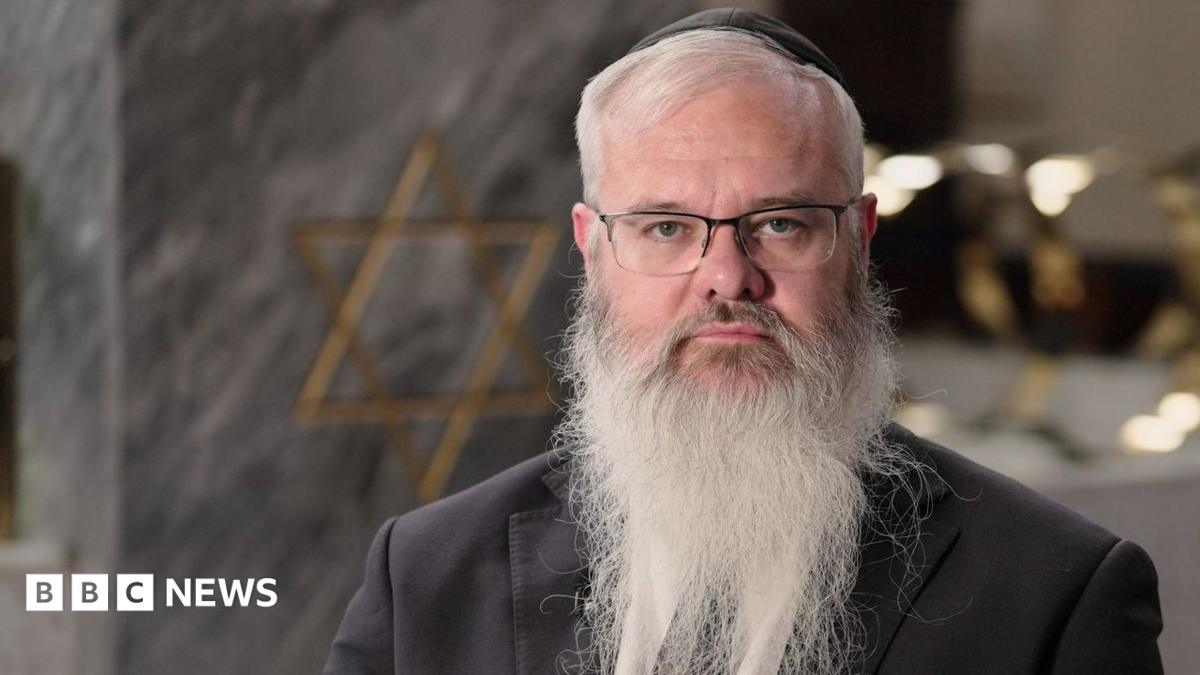
For the Heaton Park congregation, Rabbi Walker said a “year of difficulty and of grief and of pain” had been made even harder by the attacks elsewhere.

“Something has gone seriously wrong in our society,” he said.

“I think we’re dealing with symptoms. We’re extremely grateful for the increased security, but I don’t think there’s really any evidence of anyone dealing with the core problems.

“And on the contrary, in many ways, those may have become worse over the last months.”

Advertisement

Angela Rayner told the BBC the government would “not allow hatred to drive people from their communities, to make them afraid to live and practise their faith freely or to divide our country”.

“Antisemitism is a poison, and we won’t stop fighting it until every Jewish person can live their lives fully, and free from fear,” the cabinet minister for communities said.

A memorial service will take place at Heaton Park synagogue later to commemorate the victims and survivors.

Chief Rabbi Ephraim Mirvis and Mayor of Manchester Bev Craig will be among those attending.

Advertisement

For those affected by the attack, the physical and emotional consequences are still being felt.

Bernard Agyemang, a security guard, is still recovering from the severe injuries he suffered when al-Shamie drove a car into him before trying to get into the synagogue with a knife.

Source link

Advertisement
Continue Reading

NewsBeat

MORE dangerous criminals to be released early: Stalkers and abusers on ‘indefinite’ sentences up for release, as Labour minister tells Mail that Burnham ‘is not focused on risk’

Published

on

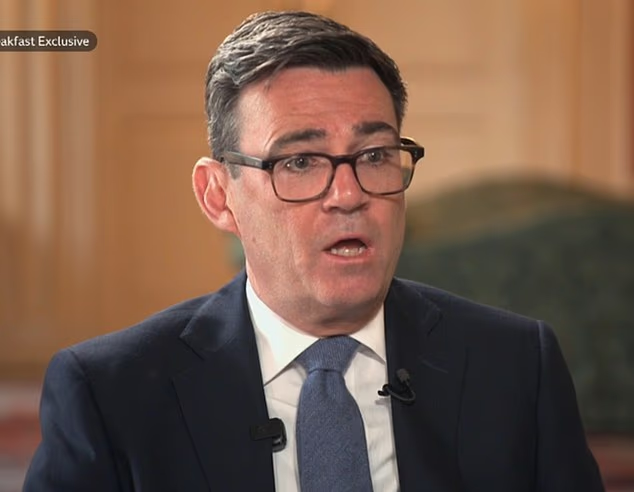
Andy Burnham tells the BBC that PC Harper's killers will not qualify for early release

Andy Burnham was last night accused of endangering the public over his latest change to the prison early-release scheme.

The Prime Minister is facing a new backlash after changing the policy to keep PC Andrew Harper’s killers behind bars, but at the same time opening the cell door to hundreds of dangerous offenders.

In yet another U-turn on the controversial scheme, Mr Burnham said anyone convicted of unlawful killing will be excluded.

It means Albert Bowers and Jessie Cole, who were convicted of the officer’s manslaughter in 2020, will no longer be eligible for early release next year, to the relief of PC Harper’s family and police leaders.

Advertisement

But to make the change, ministers are finding extra cell spaces by releasing inmates serving indefinite terms under imprisonment for public protection sentences (IPPs) – which were given to offenders considered a significant risk to the public between 2005 and 2012. 

Current and former ministers warned that the solution could pose a far higher risk to the public because many IPP prisoners have been assessed as too dangerous to release.

One of Mr Burnham’s own senior ministers condemned the plans, saying: ‘The Prime Minister has been too focused on media response rather than actual risk.

‘He’s bowed to public pressure over the reaction to PC Harper’s killers and not focused on the actual high-risk, high-harm perpetrators.

Advertisement

Andy Burnham tells the BBC that PC Harper’s killers will not qualify for early release

Mr Burnham speaking to TV personality Georgia Harrison about the possibility of making Georgia's Law

Mr Burnham speaking to TV personality Georgia Harrison about the possibility of making Georgia’s Law

Ms Harrison pictured at the BAFTA Television Awards at the Royal Festival Hall in London on May 10

Ms Harrison pictured at the BAFTA Television Awards at the Royal Festival Hall in London on May 10

Advertisement

‘Are those who’ve committed manslaughter likely to come out of prison and commit manslaughter again? No. But I can guarantee you that the obsessed stalker or domestic abuser will come out and relentlessly pursue their victim again.’

Mr Burnham also faced criticism from campaigners who said the exemptions to the scheme did not go far enough because any persistent offenders, such as domestic abusers and stalkers, will still be let out early, putting victims at risk.

Some 5,000 prisoners had been due to be released early from next month under plans to ease jail overcrowding, down from 6,000 after ministers intervened to exempt rapists and serious child sex offenders.

Yesterday Mr Burnham limited the scheme further, blocking all those convicted of manslaughter, death by dangerous driving, indecent assault and grooming gang perpetrators.

Advertisement

He said: ‘We will now not only be keeping offenders serving time for indecent assault locked up, but also those in prison for manslaughter and death by dangerous driving.

‘This means the awful criminals responsible for the killing of PC Andrew Harper will not have their sentence shortened.’

Dame Nicole Jacobs, Domestic Abuse Commissioner for England and Wales, said: ‘For victims of domestic abuse across the country, this announcement won’t bring reassurance. 

‘While it’s good to see more dangerous offenders exempt from this scheme, I remain deeply concerned about the number of abusers who will still be eligible for early release.

Advertisement
Thames Valley Police mugshots of Jessie Cole (left) and Albert Bowers who are no longer eligible for early release

Thames Valley Police mugshots of Jessie Cole (left) and Albert Bowers who are no longer eligible for early release

Thames Valley Police officer, PC Andrew Harper, was killed in the line of duty on August 15, 2019

Thames Valley Police officer, PC Andrew Harper, was killed in the line of duty on August 15, 2019

Bowers and Cole pictured leaving Reading Magistrates Court following an hearing in 2019

Bowers and Cole pictured leaving Reading Magistrates Court following an hearing in 2019

‘This decision does not change the fact that victims and survivors will still be forced to take measures to protect themselves from dangerous abusers because the Government and our criminal justice system cannot.’

Advertisement

Former justice secretary David Gauke warned that the release of IPP prisoners carried ‘much higher risks’, adding: ‘The reality is that the remaining IPPs are in prison for good reason. 

‘They have been assessed (repeatedly) as being high risk. I looked at their prison disciplinary records and in many cases it was clear why they’d not been released.

‘Caution is still needed. In terms of public protection, releasing IPPs comes with much higher risks than the categories excluded from the early-release scheme.’

Tory justice spokesman Nick Timothy said: ‘They’re among the most dangerous people in prison. Will they all be released? Just some? How many? And on what timescale? What about those who would have had a life sentence had IPP not existed?’

Advertisement

He added: ‘This is Andy Burnham’s fifth position on early release in less than six weeks since he became PM. There are serious questions about what he’s now proposing. 

‘Put plainly, Andy Burnham’s early-release policy will endanger the British public. He seems to be trying to stop the release of one set of dangerous criminals by releasing another set of dangerous criminals.’

Sir Robert Buckland, a former justice secretary, said: ‘I know first-hand the crisis facing the criminal justice system in Britain, but changing the early-release scheme from favouring one set of dangerous criminals to another set of dangerous criminals does very little to protect the public.

Richard Lloyd was convicted in May 2008 at Coventry Crown Court. He was 26 years old at the time of sentencing

Richard Lloyd was convicted in May 2008 at Coventry Crown Court. He was 26 years old at the time of sentencing

Advertisement
Tracey Connelly, the mother of Baby P, who died after months of abuse

Tracey Connelly, the mother of Baby P, who died after months of abuse

Nicholas Bidar became the first IPP prisoner to have his parole bid held in public after new laws came into force

Nicholas Bidar became the first IPP prisoner to have his parole bid held in public after new laws came into force

‘While Mr Burnham focuses on winning a PR battle, today’s announcement will still put decent law-abiding citizens in danger. The Government must get a grip and explain exactly how and when it will increase prison capacity, which is the only way to put a stop to this crisis once and for all.’

The PM has also met revenge-porn campaigner and former Love Island star Georgia Harrison to discuss her campaign for ‘Georgia’s Law’.

Advertisement

Stephen Bear was jailed in 2023 for sharing a sex tape of Ms Harrison on his OnlyFans page. But after his release from prison, Bear breached his order by posting degrading comments about Ms Harrison online.

She is calling for a social media ‘kill switch’ so posts are removed while they are reviewed.

IPP sentences were scrapped in 2012, but the abolition was not retrospective, leaving many IPP prisoners behind bars because they can be released only once the Parole Board is satisfied they no longer need to be confined for public safety.

As of June 30, 856 IPP prisoners were behind bars. Eight in ten of those have served at least ten years beyond the minimum term at which they can apply for parole.

Advertisement

A further 1,415 prisoners have been recalled after being handed IPP sentences.

A cross-party oversight group will be set up to look at the IPP system. Mr Burnham said spaces will also be created by deporting foreign prisoners.

Thames Valley Police boss Jason Hogg welcomed the guarantee that Bowers and Cole will remain behind bars. 

But he said many police leaders remain concerned about plans to release offenders early and jail fewer criminals by ditching shorter prison sentences.

Advertisement

He described a ‘criminal justice system in crisis’, warning that forces would have to shift resources from other policing priorities to deal with offenders released into the community.

Bowers and Cole were passengers in the car that dragged PC Harper to his death after he tried to stop a gang stealing a quad bike in Sulhamstead, Berkshire, in 2019.

Aileen O’Connor, the chairman of the Thames Valley Police Federation, started a petition that attracted more than a million signatures to keep them in prison. 

She said: ‘We are pleased the Government – despite what was, frankly, initial reluctance – has eventually listened, seen sense and made the right decision to keep these lowlifes behind bars.’

Advertisement

Source link

Continue Reading

NewsBeat

Nepal flood disaster survivor shares details of miraculous escape

Published

on

Daily Mirror

Almost 3,000 people remain missing five days after the disaster, while Nepali and Chinese authorities confirmed an updated death toll of at least 810 on Sunday, August 30

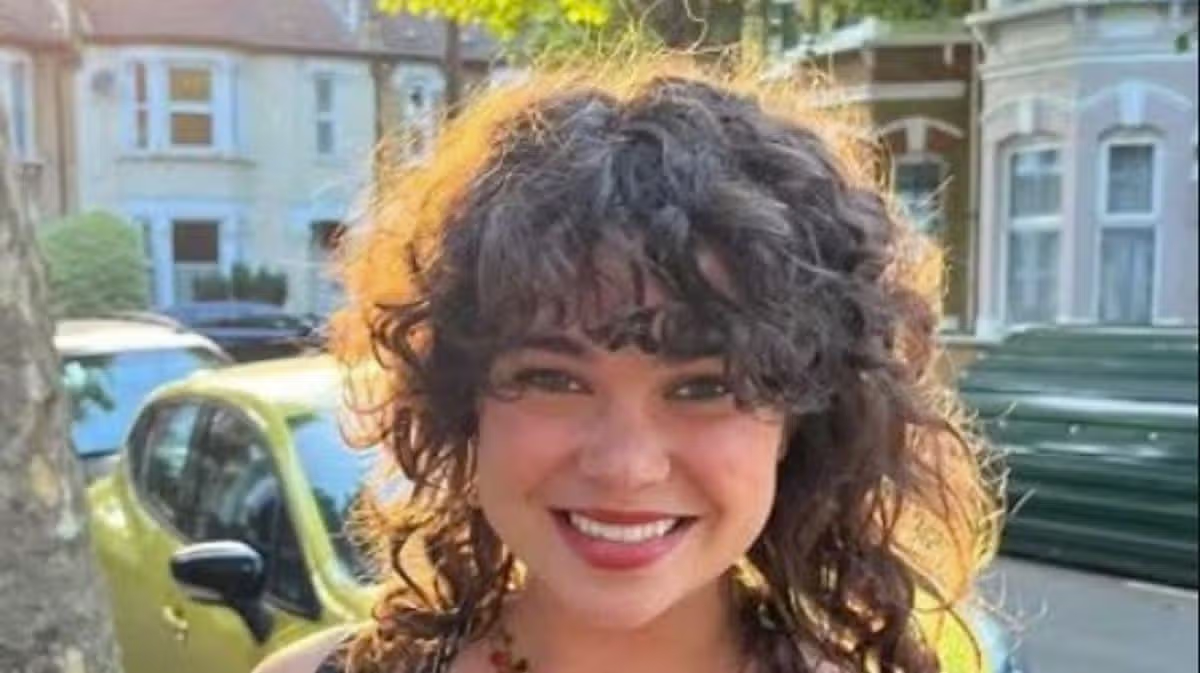
One miracle survivor of last week’s horror flash floods has told of her fight for survival after being caught up in devastating flash floods in Nepal.

Cara Severino, 26, is one of 42 Australians that were deemed missing following the disaster that struck at the Nepal-Tibet border last Wednesday. She is the only one to have been found.

Advertisement

The New South Wales woman had been hiking through the Himalayas when an ice avalanche triggered a huge deluge, sweeping through the region.

As floodwaters surged, Cara joined forces with other people trying to escape the deluge on a tractor. She was eventually rescued by Australian embassy officials, who came to her aid in a four-wheel drive days later.

Speaking about her ordeal, she paid tribute to the people who helped her survive. “Grateful to the crew we formed on that first day when we entered the national park on a tractor,” she said. “Sudha, Lucas, Samir, and Saugat – thanks to them I got out safely.”

Advertisement

She also spoke of the heartbreaking devastation she witnessed during her escape. “My heart goes out to all the Nepalese hikers who lost their life and towns,” she said.”We passed a guy hiking up to Thulu Safru who lost his whole family when their whole town was destroyed. It’s just so devastating and undeserving.”

She added: “I feel for the families of those still missing, I know how much my family and friends went through.”

While Cara managed to find her way to safety, thousands still remain missing as desperate search and rescue operations continue. Almost 3,000 people remain missing five days after the disaster, while Nepali and Chinese authorities confirmed an updated death toll of at least 810 on Sunday.

Advertisement

A total of 15 British nationals are reported to be missing in China. The missing Britons make up just a few of the 261 foreign nationals from 23 countries reported missing in the Tibet Autonomous Region, as per figures released by Chinese authorities.

Chinese authorities have said at least 16 people have died on their side of the border, but concerns have been raised about a lack of transparency as sharing footage from last Wednesday’s horror floods has been banned.

On the Nepal side of the border, 33 British people had already been declared missing. That brings the total number of missing British nationals between Tibet and Nepal to a total of 48.

Police in Nepal said 794 people in total had been confirmed dead and at least 2,742 injured.

Several areas remain at risk of further flooding, with people who have returned home warned to stay alert and be ready to evacuate again at short notice.

Source link

Advertisement
Continue Reading

NewsBeat

Aussie boy, 6, may be forced to leave the country and separate from his father due to tough visa rules

Published

on

Leah Wambui Sore is fighting to stay in Australia so that her son Thanasi can grow up here

An Australian father fears he will be separated from his son after battling the country’s complex and lengthy visa processes.

Six-year-old Thanasi Kuzeff was born in Kenya but is an Australian citizen due to his father Daniel Kuzeff’s heritage.

His parents, who are no longer in a relationship, have spent the past four years seeking a lawful way for Thanasi to grow up in Australia while remaining actively involved in his life. 

Thanasi arrived in Australia with his father in 2024 and quickly adjusted to his new life in far northern New South Wales, developing strong bonds with his stepmother and younger brother. 

Advertisement

He was separated from his mother Leah Wambui Sore, a Kenyan citizen, for more than a year as she had five visa applications rejected before she was eventually granted a visitor visa in January this year.

Ms Sore applied for a Subclass 143 Contributory Parent Visa, which allows parents of Australian citizens and permanent residents to live here indefinitely but there is a 15-year waitlist.

She was recently granted another visitor visa carrying a no further stay condition, meaning she can remain in Australia only until December 1.

In a desperate bid to keep the family together, Mr Kuzeff has urged Home Affairs Minister Tony Burke to intervene. 

Advertisement

Leah Wambui Sore is fighting to stay in Australia so that her son Thanasi can grow up here

Daniel Kuzeff may soon be separated from his son Thanasi due to Australia's visa rules

Daniel Kuzeff may soon be separated from his son Thanasi due to Australia’s visa rules

‘We’ve done everything possible but have reached a dead end,’ Mr Kuzeff told the Daily Mail.

Advertisement

‘It’s been one rejection after another. It will be shattering if we can’t find a way to overcome this obstacle.’

Ms Sore added: ‘For me, it’s really not about what staying in Australia would mean for me. It’s about Thanasi.

‘Daniel and I have separate lives, but when it comes to our son, we both want the same thing.

‘We want him to be happy and stable and to grow up knowing that both his parents are there for him.

Advertisement

‘I don’t want him to have to choose between having his mum in one country and his dad and siblings in another. I just want him to have a normal childhood with the people he loves around him.’

Despite being entitled to remain in Australia as a citizen, Thanasi will likely return to Kenya with his mother if she is forced to leave the country. 

‘What shatters me most about what may come is that there is no way we can separate Thanasi from his mother again; he will have to return with her,’ Mr Kuzeff said.

Thanasi will likely return to Kenya with his mother if she is deported later this year

Thanasi will likely return to Kenya with his mother if she is deported later this year

Advertisement
Thanasi spent more than a year separated from his mother Leah before the pair were reunited in Australia in January

Thanasi spent more than a year separated from his mother Leah before the pair were reunited in Australia in January

Thanasi has developed a close bond with little brother Finley (both pictured at an AFL game)

Thanasi has developed a close bond with little brother Finley (both pictured at an AFL game)

Mr Kuzeff said his son loves Australia and does not wish to return to Kenya. 

‘He recognised very quickly that the life he has here is very different to the one he would have back in Kenya,’ he said.

Advertisement

‘Australia is his home. His school, friends, dad, little brother Finley and baby sister are all here.’

Ms Sore does not want to spend another year watching Thanasi grow up via video calls from the other side of the world.

‘I just want to be there while he is still little enough to need his mum,’ she said.

‘If he stays here, he loses his mum again. If he comes with me, he loses having his dad and his siblings in his everyday life.’

Advertisement

‘I don’t want my son to have to make that choice.

‘More than anything, I just want Thanasi to be able to be a little boy, surrounded by the people who love him.’

'There is no way we can separate Thanasi from his mother again,' Mr Kuzeff said

‘There is no way we can separate Thanasi from his mother again,’ Mr Kuzeff said

Daniel Kuzeff (pictured) has urged Home Affairs Minister Tony Burke to intervene so that his son's mother can remain in Australia

Daniel Kuzeff (pictured) has urged Home Affairs Minister Tony Burke to intervene so that his son’s mother can remain in Australia

Advertisement

Ms Sore was granted a visitor visa after the Administrative Review Tribunal intervened and ruled for a previously rejected application to be reconsidered.

‘This situation has been handled by all sides in an adult fashion; they have worked through it,’ tribunal general member Michael Judd wrote in his April 2025 ruling.

‘These cases are about real people.’

Unless Burke intervenes, Ms Sore’s only current pathway to remain in Australia permanently is through a Subclass 143 Contributory Parent Visa, for which she faces a lengthy wait. 

Advertisement

‘His childhood is now,’ Mr Kuzeff said.

‘There are Australian kids with a foreign parent right now, whose parents aren’t together (and) who would face separation because there is no pathway. It’s indescribable how much stress this has caused for years.’

In 2023, then-Immigration Minister Andrew Giles exercised his public interest powers to grant Italian national Andrea Tindiani Australian permanent residency. 

After 12 years in Australia, Mr Tindiani had faced potential deportation and separation from his nine-year-old son following an amicable split from his Australian partner. 

Advertisement
Thanasi (left) will be separated from his father and younger siblings if he has to return to Kenya

Thanasi (left) will be separated from his father and younger siblings if he has to return to Kenya

'For me, it’s really not about what staying in Australia would mean for me. It’s about Thanasi,' Leah told the Daily Mail

‘For me, it’s really not about what staying in Australia would mean for me. It’s about Thanasi,’ Leah told the Daily Mail

‘That was three years ago. Why have no policies been implemented in that time to prevent the heartache and stress of Australian families and their children,’ Mr Kuzeff said.

The Daily Mail has contacted Burke for comment. 

Advertisement

A Department of Home Affairs spokesperson said that it does not comment on individual cases.

‘Australia’s migration system provides a range of visa options for family members seeking to live in Australia. All visa applications are assessed on their individual merits and against the requirements set out in Australia’s migration legislation,’ they told the Daily Mail.

Australian citizenship of a child does not, in itself, provide an automatic pathway to permanent residence for a parent. However, there are a number of family visa pathways within the migration program that may be available depending on an individual’s circumstances.

‘The Department recognises the importance of family unity and the interests of Australian citizen children. Decision-makers are required to consider all relevant legislative requirements and information provided in support of an application when assessing visa matters.’

Advertisement

Ms Sore urged Burke to consider the family’s situation and what it would mean for her little boy.

‘I understand Australia has immigration laws and I respect that. I’m not asking to be above the law,’ she said.

‘I’m just asking for some compassion and whether there is a lawful way for me to stay while I wait for my parent visa. 

‘Thanasi has already experienced being separated from his mum. Now he finally has both his mum and his dad in his everyday life. I just don’t want him to lose that again.’

Advertisement

An online petition calling for Ms Sore to remain in Australia has attracted more than 400 signatures. 

‘Despite the unusual circumstances of our family, the adults in Thanasi’s life have worked together for years with one shared goal: to give Thanasi the opportunity to grow up in Australia with meaningful relationships with his mum, his dad and his younger siblings,’ it states.

‘This is about adults putting aside the complexity of their circumstances because a little boy should not have to choose between his home in Australia and having his mum physically present during his childhood.’

Source link

Advertisement
Continue Reading

NewsBeat

DAN HANNAN: If a nation as small as Iceland can proudly go it alone, why would ANYONE want to reverse Brexit?

Published

on

Icelanders have voted by 52.8 per cent to 47.2 per cent not to restart accession negotiations with the EU

Advertisement

Why was anyone surprised? Iceland is a wealthy and successful country. It had nothing to gain from joining the declining EU.

A country with a proud and ancient parliamentary tradition does not lightly submit to a supranational technocracy. The nation with perhaps the best-managed fish stocks in the world does not surrender to a bloc that has drained its own seas.

Icelanders have voted by 52.8 per cent to 47.2 per cent not to restart accession negotiations with the EU. They made their first application in 2009, in the wake of the banking crash, which hit Iceland hard. 

But they dropped it in 2015, once it had become clear that Iceland had recovered from the financial crisis much faster than the EU had, largely because it was wise enough not to bail out its banks.

Advertisement

I was never in any doubt about the outcome. I know Iceland well, having been a regular visitor to that strip of cold black tundra since I was 19. I count the leaders of the ‘No’ campaign as good friends and I see the country as a second home.

I have stood many times at the site of their first parliament, the Thingvellir. Icelanders used to gather there from all over the island, riding their sturdy little horses over black lava fields and bright green moss, meeting as a free people.

They are unlike us in some ways. Few of them have surnames, they build their roads to avoid elf-mounds – said to be the dwellings of magical beings – and their language has barely changed in 1,000 years. But they resemble us in their stubbornness.

Advertisement

Icelanders have voted by 52.8 per cent to 47.2 per cent not to restart accession negotiations with the EU

Iceland's prime minister Kristrun Frostadottir speaking in Reykjavik after the results of the referendum were announced

Iceland’s prime minister Kristrun Frostadottir speaking in Reykjavik after the results of the referendum were announced

They hate being told what to do, especially by foreigners.

I was unusual in predicting a ‘No’. Opinion polls showed a narrow but consistent lead for the pro-EU side and, as the votes came in, wide-eyed Europhiles, buoyed by early results from Reykjavik, were getting excited.

Advertisement

Why? Because, deep down, they think European integration is inevitable, in the same way Marxists used to believe that socialism was inevitable. Take away the sense of inexorability and the flaws become painfully visible.

There is scant enthusiasm for EU membership other than among the impoverished states of south-eastern Europe, such as Montenegro, Macedonia and Moldova. Even Turkey has lost interest in joining. In Norway, polls suggest that opposition to membership has risen to around 70 per cent.

In these countries, EU membership is seen purely in cost-benefit terms. In Britain, a decade on from the 2016 referendum, it remains a culture war. A knot of Continuity Remainers who don’t know or care much about what is happening in the EU, are still obsessed with overturning our own referendum result.

Why? Because, for them, it is less about the EU than about defeating an imagined domestic enemy, a caricatured racist.

Advertisement

They have stuck to their rejoinery for a decade, despite the EU adopting much harsher immigration laws than Britain, because they are anti-Eurosceptic rather than pro-Brussels.

It is true that Iceland has a closer relationship with the EU than we do. Membership of the European Economic Area means that it is in the single market for everything except agriculture and fisheries – though, importantly, Iceland is outside the customs union and has signed several trade deals that the EU does not have, including with large economies such as China and Indonesia.

There is an argument for Britain moving closer to the single market. But it needs to be done in a ruthlessly calculating manner, signing up for things only when there are clear mutual benefits rather than approaching talks in a spirit of penitence and atonement. Sadly, as the reaction here to Iceland’s welcome decision shows, we are a long way from that.

Still, the question remains. If a nation with a population the size of Croydon’s is content to take its chances alone, what are we so scared of?

Advertisement
  • Lord Hannan of Kingsclere is an independent peer and director of the Institute of Economic Affairs.

Advertisement

Source link

Continue Reading

NewsBeat

Seven arrested in Sheffield after death of newborn baby girl

Published

on

Manchester Evening News

Police were called shortly before 6am on Sunday

Police have arrested seven people on suspicion of murder after the death of a newborn girl in Sheffield.

Advertisement

South Yorkshire Police said officers had received reports of a concern for the safety of a newborn baby in the Wincobank area at 5.58am on Sunday.

Officers searched a property on Holywell Heights where the baby girl was found.

Click here to get the biggest stories straight to your inbox in our Daily Newsletter

Despite the best efforts of officers and paramedics, the baby was pronounced dead at the scene, the force said.

Advertisement

Seven people have been arrested on suspicion of murder and remain in custody, the Press Association reports.

Senior investigating officer Detective Chief Inspector Emma Knight said: “We are aware news of this will be deeply concerning and I want to reassure our local communities that we have a dedicated team of detectives and officers hard at work to ensure justice is secured for the baby girl at the heart of this investigation.

“As part of our investigation seven people have been arrested on suspicion of murder. All of them remain in police custody at this time. We are working to determine the ages of some of those arrested.

“Our investigation is in its early stages and we would like to remind people to avoid speculating about this incident.”

Advertisement

Anyone with any information about this incident which could assist the investigation is asked to contact the force online or call 101, quoting incident number 194 of 30 August 2026.

Source link

Continue Reading

NewsBeat

AP Exclusive: US coaches Polish forces in a drone-focused drill based on lessons from Ukraine

Published

on

AP Exclusive: US coaches Polish forces in a drone-focused drill based on lessons from Ukraine

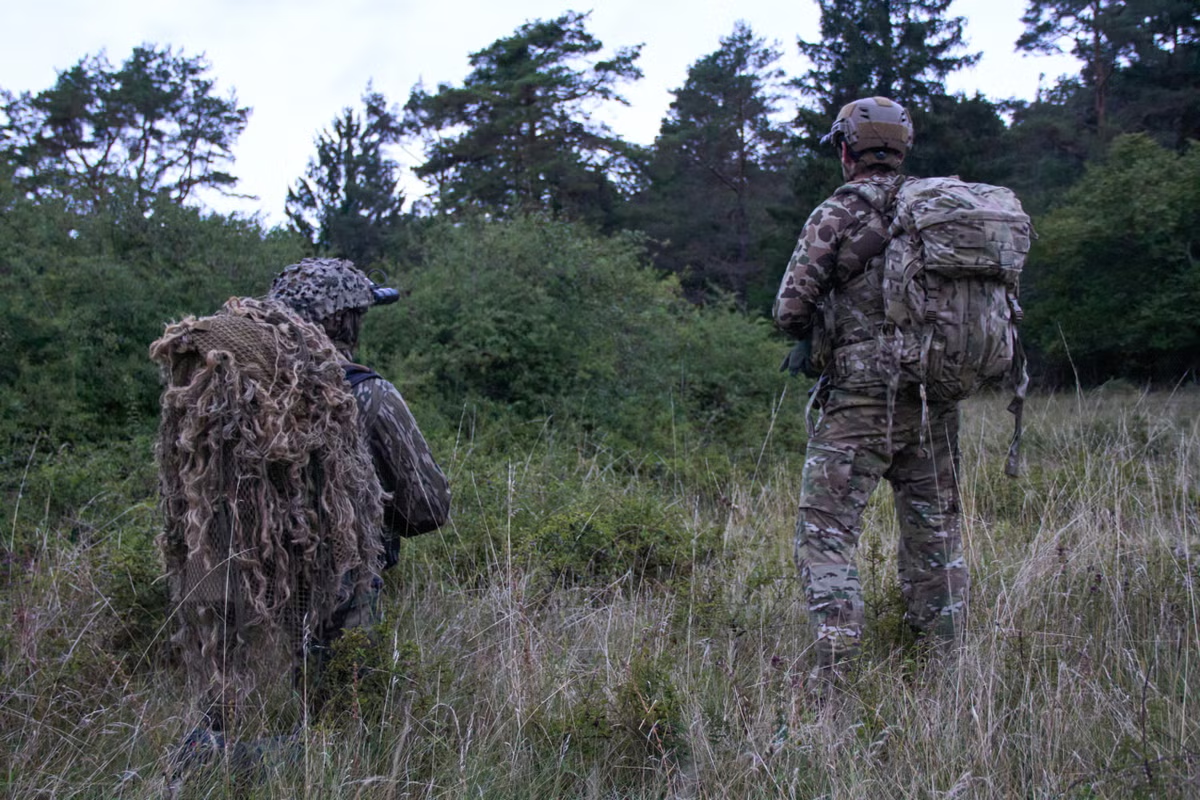
On a moonless and rainy night, a group of soldiers emerged from a ramshackle building meant to resemble a church. The alpine terrain loomed over them as they quietly set off for the tree line of the German countryside a short distance away.

The soldiers are members of the Polish special forces and are taking part in an exercise designed only months ago that simulates moving through enemy lines, traversing miles of enemy territory and launching a drone strike on a key enemy location.

Initially designed by the Army’s Green Berets for U.S. special forces, the exercise that began Friday is informed by and simulates many of the challenges that Ukrainian troops have experienced in their conflict with Russia. It is the first time a NATO ally like Poland has undertaken the training, and it comes at a time when tensions between Russian President Vladimir Putin and NATO countries have escalated.

“We’re using lessons learned from Ukraine,” an Army Green Beret officer assigned to the training complex said Thursday. “All of those effects that we’re seeing either Russia or Ukraine having to overcome — we’re doing our best to replicate.”

Advertisement

The Associated Press received rare access to both the training ground and the troops conducting the exercise, which has only been conducted twice before, both times this year, by two different Green Beret teams.

The drill highlights the focus that some parts of the U.S. military have on learning the latest techniques in drone warfare, pioneered by Ukraine during its 4 1/2-year effort to repel Russian forces. It also shows how the U.S., its NATO allies and Ukraine are working together to counter the threat of possible further Russian action in coming years even as the Trump administration has warned of troop drawdowns in Europe.

CIA Director John Ratcliffe went to Moscow this week to warn Russia not to attack NATO countries, The Wall Street Journal reported. Russia has the appetite to conduct sabotage and cyberattacks against NATO countries, but Putin wants to avoid a direct confrontation, according to three Western officials, who spoke Friday on condition of anonymity to discuss sensitive military matters.

How special forces are learning to sneak behind enemy lines to deploy drones

Advertisement

During the exercise in Germany, a senior enlisted soldier familiar with the training scenario at Joint Multinational Readiness Center Hohenfels — about an hour’s drive southeast from Nuremberg — said the plan is to run it several times a year. The officer said he expects most, if not all, of the 32 NATO nations to express interest in sending their troops to try the exercise.

Both spoke on condition of anonymity in line with the U.S. military’s longstanding policy of not publicly identifying individual members of special forces units.

The scenario, which runs for several days, takes place on a large, 1,100-square-mile (3,000-square-kilometer) plot of land nestled in the Bavarian countryside.

Poland’s special forces will be expected to sneak past a U.S. Army airborne infantry unit, whose soldiers will play the enemy. The U.S. airborne infantry unit will parachute into the closed-off training area at the Army’s Hohenfels base and set themselves up into a front line.

Advertisement

Assuming the Polish forces can make their way past the U.S. Army, they must then move north — through about 60 miles (100 kilometers) of German countryside — to another training area in the town of Grafenwoehr, where they are expected to destroy a simulated target.

In between lie German farms and villages, private and government cameras, as well as a city with a large population, all of which not only pose as obstacles but also create the potential for them to be spotted.

The senior enlisted soldier said that in previous instances of the exercise, the Army Green Berets removed their uniforms “so they can blend in” before adding that “blend in also means don’t get seen by civilians.”

German civilians in the area largely are not aware of the exercise and serve as a reasonable test of how well special forces can blend into the local population. If they fail, reports of suspicious people to police will make it back to the military, which will use them to pinpoint the team.

Advertisement

“This is supposed to be Russia and you’re going to stand out in Russia,” the enlisted soldier added.

Plus, the U.S. Army also will be looking for the Polish forces with drones of their own.

If they’re spotted, “now you have the entire Russian arsenal coming at you,” the enlisted soldier said.

The U.S. Army can either send a military police unit to hunt for the Polish special forces with dogs or direct more drones to the area. In previous versions of the exercise, the U.S. Army had access to more than a hundred drones, the enlisted soldier said.

Advertisement

Troops are able to be “captured or killed” as part of the training.

Countries seek help from Ukraine on drone warfare

While the exercise taps into drones and NATO teamwork, the message of collaboration and the value of drones has been somewhat mixed lately across the military.

President Donald Trump stirred confusion among NATO allies by going back and forth on drawing down U.S. troop levels in Europe, and the administration has launched a force review on next steps. And last week, the Army’s top officer shuttered a unit that specialized in drone warfare.

Advertisement

But overall, there is growing interest in tapping Ukraine for its expertise on modern warfare and, specifically, drones.

In March, Ukrainian President Volodymyr Zelenskyy said his country was helping five countries in the Middle East and Gulf region counter Iranian drone attacks launched during the war with the United States, while the U.S. and European countries were among those requesting support.

Meanwhile, the number of mysterious drone incursions in Europe have grown, including as recently as this month, when a pair of drones were spotted over a German military base and a drone carrying explosives was found at a key cargo airport in Germany.

___

Advertisement

Associated Press writer Emma Burrows in London contributed to this report.

Source link

Continue Reading

NewsBeat

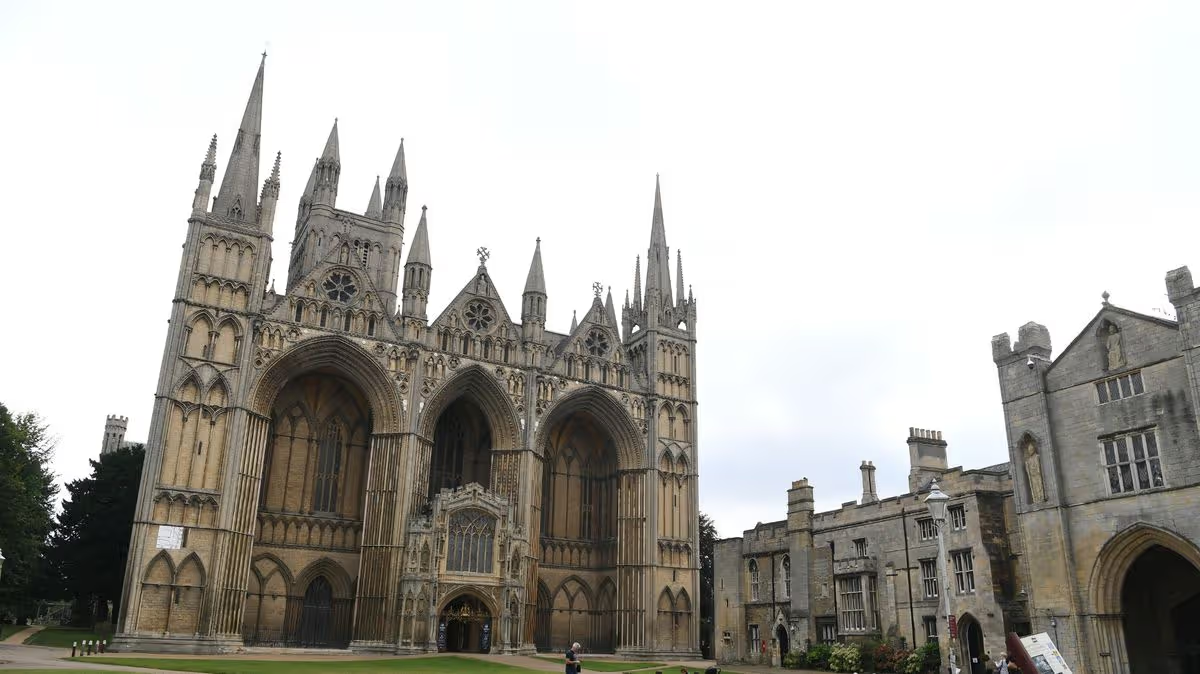
100 affordable homes to be built in Peterborough as part of huge development

Published

on

Cambridgeshire Live

Construction is due to begin in 2026

A Cambridgeshire city will see 100 affordable homes built as part of a wider expansion of thousands of new homes. Vistry has secured a contract with housing association Amplius for the sale of land for 100 homes at Great Haddon in Peterborough.

Advertisement

These 100 homes will be owned and managed by Amplius across tenures including affordable rent, social rent, shared ownership, and rent to buy. According to Vistry, the scheme supports the delivery of “much-needed affordable housing in Peterborough”.

The homes will form part of phase four of the Great Haddon development. Chief Development and Commercial Officer at Amplius, said: “We want to deliver the homes people want, where they’re needed most and we know that these 100 homes will address the need for affordable housing in this part of the county.

“By making the homes available on various tenures, we’ll be fostering a balanced community and creating a place that people are proud to call home. We’re really pleased to be working with Vistry once again and I’m looking forward to watching work progress and the homes taking shape.”

Construction is due to begin in November 2026, with the first homes expected to be completed by mid-2027 and the final homes due to be completed in January 2030. The development forms part of a wider masterplan that will ultimately provide more than 5,000 new homes.

Advertisement

The development will also include a district centre, two neighbourhood centres, new schools, community and health facilities, sports amenities, water features and substantial green spaces, including 7.5 hectares of amenity open space and 8.4 hectares of accessible natural green space.

Air source heat pumps (ASHPs) will also be installed in a number of the homes, while lower air permeability levels will help reduce heat loss. The scheme is part-funded by Homes England through its partnership with Amplius.

Source link

Advertisement
Continue Reading

Trending

Copyright © 2025