



Connect with us
DAPA Banner
DAPA Coin
DAPA
COIN PAYMENT ASSET
PRIVACY · BLOCKDAG · HOMOMORPHIC ENCRYPTION · RUST
ElGamal Encrypted MINE DAPA
🚫 GENESIS SOLD OUT
DAPAPAY COMING

NewsBeat

OnlyFans ‘agents’ exploit creators while taking half their earnings, BBC finds

Published

on

OnlyFans 'agents' exploit creators while taking half their earnings, BBC finds

OnlyFans has “strict onboarding processes, payment controls and ongoing account moderation”, the company spokesperson says. If concerns about an account are raised, OnlyFans will immediately restrict the account, investigate, and take action to ensure the creator is in control of their account, they added.

Source link

Continue Reading
Click to comment

You must be logged in to post a comment Login

Leave a Reply

NewsBeat

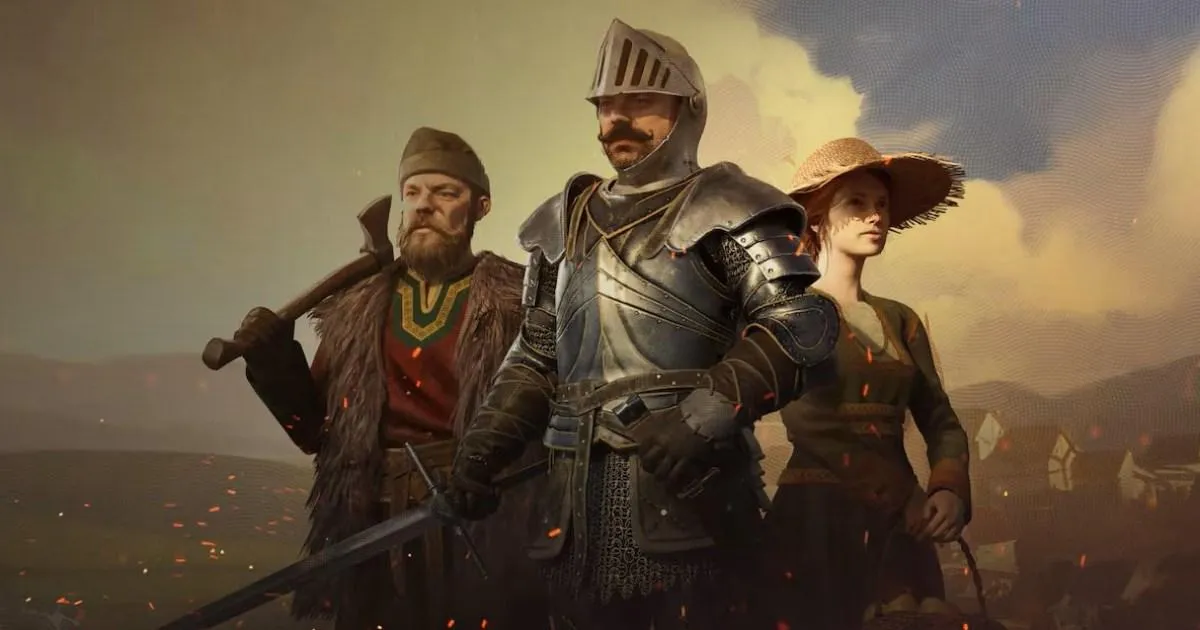
Bellwright PS5 review – build your own medieval community

Published

on

Bellwright PS5 review - build your own medieval community
Bellwright – it’s just a flesh wound, etc. (Snail Games)

Kingdom Come: Deliverance may have cornered the market on historical role-players but this new indie game takes a more strategic approach to a similar concept.

While there are countless games based on Tolkien’s vision of the Middle Ages, blending people living in primitive conditions with magic, fantastical beasts, and mythical evils, there’s another breed of role-playing game that ignores fantasy in favour of a more realistic and nuanced simulation. Kingdom Come: Deliverance is the most obvious example of that brand of historically authentic first person role-playing.

Another is Bellwright, which has just launched on PlayStation 5 and Xbox Series X/S after a successful spell in early access on PC. It shares much in common with Deliverance, from its emphasis on unvarnished realism to its Central European setting and historical time period, but it’s in the areas where they differ that Bellwright really gets interesting. While both cast you as an initially lowly peasant who has to work your way up from ragged insignificance, where Kingdom Come is all about you as an individual, Bellwright is a management game at heart.

Not that you won’t be fully involved in absolutely everything, from the mechanics of survival in a harsh winter to battles with brigands, wolves, and soldiers loyal to a corrupt monarch, but thriving in those scenarios is about far more than just forging stronger weapons and armour. In Bellwright, success is a team effort, but at the beginning of the game that team is just you and a grumpy hunter who’s been cast out by the local village elder.

Advertisement

Finding yourselves alone in a fairly hostile wilderness, you decide to pool your efforts and resources, building an encampment out of materials you scavenge from nature. Where plenty of games have you looting resources for construction, few match Bellwright’s dedication to accuracy, which has you adding each individual branch to your emerging building, assembling the wooden frame piece by piece, before finishing it with a covering of foliage.

You’re immediately encouraged to assign tasks to your new friend, who can be deployed as anything from labourer to mercenary: finding materials, bringing them to the site, and using them to build your camp, mining ore, or acting as a lumberjack. You can also set him to work at the research table, expanding your mastery of its medieval tech tree, a process that improves your ability to survive and fight, as well as letting you build more advanced structures.

Expert, exclusive gaming analysis

Sign up to the GameCentral newsletter for a unique take on the week in gaming, alongside the latest reviews and more. Delivered to your inbox every Saturday morning.

Advertisement

That’s also enabled by the living countryside around you. As you explore, the map automatically records the locations of useful building materials, bandit camps, and natural features. Bellwright is admirably short of mollycoddling, letting you work things out for yourself, wherever it makes sense. That includes where to strike camp in the first place, a decision that turns out to have innumerable ramifications.

The first of those is proximity to resources. If your assembly lines are close to trees, water, and seams of ore to quarry, you’re in good shape, but you also have to consider the territory of local packs of wolves and the location of brigand encampments. Initially, before you’ve researched and assembled serviceable weapons and armour, meeting either of those groups is instantly lethal, and ensuring your opening hours are spent without running into either one is essential to survival.

Advertisement

As your settlement grows, you’ll increasingly need to gain additional expertise. It’s simply not feasible to become expert in everything, which means you’ll need to recruit specialists in everything from forestry and farming to combat. To do that you need to liberate villages by gradually growing your reputation with them, partly through trading with their elders and partly through completing side quests for locals.

Once freed, you’ll have your pick of recruits from the population and that’s where you can really start laying down useful tradesmen for your operation. This is also key to the overarching story, which has you fomenting a rebellion against a monarch whose cruelty and murderous intentions have all the local villages on edge. Becoming powerful enough to do that forms the meat of the game.

Outside combat, you can staff different facilities, as well as assigning them a level of priority, which governs the order in which your minions undertake the many jobs available. Tinkering with those settings to make sure you enjoy a steady flow of necessary resources, alongside feeding everyone and gradually unlocking the tech tree, will also occasionally be interrupted by raiding parties sent from local bandit camps. It helps keep you on your toes and ensures you never lose your fighting edge, as you build and expand.

Bellwright screenshot of a battle
You can’t do everything on your own (Snail Games)

With so many complex interacting systems there are inevitably technical issues, mainly in the form of minor graphical artefacts – villagers with transparent torsos or followers wandering around waist deep in the ground. Anyone who remembers the state Skyrim was in when it launched won’t lose too much sleep over this sort of thing and Bellwright has already received post-launch patches, a process that’s likely to continue over the coming months.

The other area where you can sense budgetary constraint is the script and voice acting. There you’ll find a constant flow of peculiar English translations (developer Donkey Crew is Polish), spelling inconsistencies, and characters whose vocal delivery is more about getting the words out in the correct order than adding emotion, making the people you meet sound universally flat and unengaged. You do get used to it, but it’s a world away from the warmth and humanity of Baldur’s Gate 3 or The Witcher.

Advertisement

It does still manage to deliver a remarkably organic feeling world and overall experience, though. That starts with the lack of obvious structure, with all your learnings about the way systems work coming from direct experience, or via a well-timed quest. One discovery seems to lead perfectly naturally to your next task. In hindsight you will absolutely be kicking yourself for what seem like obvious errors in the opening hours, but looking back with a more seasoned eye, you rarely come across mistakes you can’t work your way around.

Your settlements can be rearranged to optimise efficiency and workers re-prioritised to make up for a lack of key ingredients. You also soon learn that taking on bandit camps solo is not a good idea and as you scale up to larger battles it’s in the overarching organisation and management that Bellwright really excels. It’s a shame a bit more thought hasn’t gone into redesigning its PC-orientated menu system, though, which has to be laboriously navigated using the D-pad, a process that never feels either intuitive or straightforward.

Despite its many moments of clunkiness both systemic and mechanical, Bellwright offers an intricate and subtle medieval life simulator that gradually shifts your attention from survival to construction, before finally moving to insurrection and nation building. It’s a fascinatingly orchestrated and long term process that requires endless learning and refinement as your efforts gain momentum, and while its rough edges are evident throughout, once you get into its flow few games feel so all consuming.

Bellwright screenshot of a landscape
The game can be quite pretty at times (Snail Games)

Bellwright PS5 review summary

In Short: An authentic and complex medieval life simulator that emphasises teamwork and management over individual achievement, and while it’s a slow burn the complexity of options more than makes up for a lack of polish.

Pros: Huge range of accurately modelled processes to learn and master, impressively organic feeling to the way you explore and educate yourself about the game world. A massive amount of content for the price.

Advertisement

Cons: Menus are a pain to navigate and there are noticeable minor graphical glitches. Inflection and emotion free voice acting is made worse by a dodgy English translation.

Score: 7/10

Advertisement

Formats: PlayStation 5 (reviewed), Xbox Series X/S, and PC
Price: £24.49
Publisher: Snail Games
Developer: Donkey Crew
Release Date: 9th June 2026
Age Rating: 16

Email gamecentral@metro.co.uk, leave a comment below, follow us on Twitter.

To submit Inbox letters and Reader’s Features more easily, without the need to send an email, just use our Submit Stuff page here.

For more stories like this, check our Gaming page.

Advertisement

Advertisement

Source link

Continue Reading

NewsBeat

Brooklyn Beckham LIVE: Brooklyn makes dig at family with new advert after brutal Harper snub

Published

on

Daily Mirror

Brooklyn posted on Instagram: “I have been silent for years and made every effort to keep these matters private. Unfortunately my parents and their team have continued to go to the press, leaving me with no choice but to speak for myself and tell the truth about only some of the lies that have been printed.

“I do not want to reconcile with my family. I’m not being controlled, I’m standing up for myself for the first time in my life. For my entire life, my parents have controlled narratives in the press about our family.

“The performative social media posts, family events and inauthentic relationships have been a fixture of the life I was born into. Recently, I have seen with my own eyes the lengths that they’ll go through to place countless lies in the media, mostly at the expense of innocent people, to preserve their own facade. But I believe the truth always comes out.

Advertisement

“My parents have been trying endlessly to ruin my relationship since before my wedding, and it hasn’t stopped. My mum cancelled making Nicola’s dress in the eleventh hour despite how excited she was to wear her design, forcing her to urgently find a new dress.

“Weeks before our big day, my parents repeatedly pressured and attempted to bribe me into signing away the rights to my name, which would have affected me, my wife, and our future children. They were adamant on me signing before my wedding date because then the terms of the deal would be initiated.

“My holdout affected the payday, and they have never treated me the same since. During the wedding planning, my mum went so far as to call me “evil” because Nicola and I chose to include my Nanny Sandra, and Nicola’s Naunni at our table, because they both didn’t have their husbands. Both of our parents had their own tables equally adjacent to ours.

“The night before our wedding, members of my family told me that Nicola was ‘not blood’ and ‘not family’. Since the moment I started standing up for myself with my family, I’ve received endless attacks from my parents, both privately and publicly, that were sent to the press on their orders.

Advertisement

“Even my brothers were sent to attack me on social media, before they ultimately blocked me out of nowhere this last Summer.

“My mum hijacked my first dance with my wife, which had been planned weeks in advance to a romantic love song. In front of our 500 wedding guests, Marc Anthony called me to the stage, where in the schedule was planned to be my romantic dance with my wife but instead my mum was waiting to dance with me instead. She danced very inappropriately on me in front of everyone.

“I’ve never felt more uncomfortable or humiliated in my entire life. We wanted to renew our vows so we could create new memories of our wedding day that bring us joy and happiness, not anxiety and embarrassment.

“My wife has been consistently disrespected by my family, no matter how hard we’ve tried to come together as one. My mum has repeatedly invited women from my past into our lives in ways that were clearly intended to make us both uncomfortable.

Advertisement

“Despite this, we still travelled to London for my dad’s birthday and were rejected for a week as we waited in our hotel room trying to plan quality time with him. He refused all of our attempts, unless it was at his big birthday party with a hundred guests and cameras at every corner.

“When he finally agreed to see me, it was under the condition that Nicola wasn’t invited. It was a slap in the face. Later, when my family travelled to LA, they refused to see me at all.

“My family values public promotion and endorsements above all else. Brand Beckham comes first. Family “love” is decided by how much you post on social media, or how quickly you drop everything to show up and pose for a family photo op even if it’s at the expense of our professional obligations.

“We’ve gone out of our way for years to show up and support at every fashion show, every party, and every press activity to show “our perfect family!” But the one time my wife asked for my mum’s support to save displaced dogs during the LA fires, my mum refused.

Advertisement

“The narrative that my wife controls me is completely backwards. I have been controlled by my parents for most of my life. I grew up with overwhelming anxiety. For the first time in my life, since stepping away from my family, that anxiety has disappeared. I wake up every morning grateful for the life I chose, and have found peace and relief.

“My wife and I do not want a life shaped by image, press, or manipulation. All we want peace, privacy and happiness for us and our future family.”

Source link

Advertisement
Continue Reading

NewsBeat

Residents outraged as west London flat block becomes fly-tipping hotspot

Published

on

Residents outraged as west London flat block becomes fly-tipping hotspot

While attending the properties, the LDRS witnessed a delivery driver walk down the path, unzip his trousers and urinate while still walking. He then turned around, looked at the residents and walked off again. This was despite public toilets being accessible just metres away.

Source link

Continue Reading

NewsBeat

Badenoch calls for PM to resign if he cannot prove defence plan protects UK

Published

on

Badenoch calls for PM to resign if he cannot prove defence plan protects UK

Later on Monday, Mr Pollard said Labour was ending the “hollowing out” of the armed forces that happened under the Conservatives, adding: “But of course, I want more money in the defence budget. It’s a case that we continue to make as the profile of defence spending increases.”

Source link

Continue Reading

NewsBeat

Fox strikes a $22B deal to buy Roku, aiming to supercharge its streaming reach

Published

on

Fox strikes a $22B deal to buy Roku, aiming to supercharge its streaming reach

Fox Corp. has agreed to buy the streaming pioneer Roku in a cash-and-stock deal valued at approximately $22 billion, including debt.

Roku will continue to be run as an open, partner-friendly platform, the companies said Monday, and there appears to be no immediate changes that customers will see. Fox and Roku said that the combined company will become the third-largest player in U.S. television by share of viewing.

Media reports had surfaced on Friday that Roku was looking at its strategic options, including a possible sale. Speculation was rampant as to which companies might be interested in an acquisition. Aside from Fox, names being tossed about as potential buyers included Netflix, Amazon, Comcast and Disney.

The deal will give Fox access to more than 100 million global households, along with the Roku channel and its first-party data. Fox oversees a massive sports, news and entertainment network, as well as Tubi, which it acquired in 2020.

Advertisement

Roku founder Anthony Wood had initially worked within Netflix in the early 2000s as that company attempted to make the seismic shift from renting DVDs, to streaming.

Roku was spun off by Netflix, however, and the company released its first set-top box in 2008.

Wood, who is Roku’s chairman and CEO, said his motivation in pursuing the technology was his desire to record and play his favorite show, “Star Trek.”

Fox Corp. CEO Lachlan Murdoch said in a statement that combining the businesses will bring together Fox’s live news and sports content with a streaming platform with large viewership. It will also give Fox more exposure to advertising and streaming subscriptions.

Advertisement

“The combination with FOX is an extraordinary opportunity to accelerate our vision, scale faster and innovate more aggressively for viewers, partners and advertisers,” Wood said in prepared remarks.

Mike Proulx, research director at Forrester, said in an emailed statement that advertising revenue is a critical component of the deal.

“The bigger play here is advertising revenue, something all the major streamers are now jockeying for,” he said. “This deal accelerates Fox into that shift with built-in audience scale. With 2026 shaping up as a defining year of streaming consolidation, the market shift is that streaming is no longer just about quality content slates. It’s about controlling the full stack. If this deal closes, Fox will control more of what viewers watch, how they discover it, and how it gets monetized.”

Wood will have an ongoing role at the company and will join the Fox board of directors after the transaction closes.

Murdoch said during a conference call that the combined company will be better positioned for the next decade of video than either company would’ve been alone.

“We are confident this is the right transaction, at the right moment, for all the right reasons,” he said.

Advertisement

Fox will pay $96 in cash and 0.9693 shares of its Class A common stock for each Roku Class A and Class B share outstanding. The transaction is valued at $160 per Roku share.

Existing Fox shareholders are expected to own approximately 73% of the combined company and Roku shareholders will own about 27%, once the deal closes.

The deal is expected to close in the first half of next year. It still needs approval from Fox and Roku shareholders and also regulatory approval.

Fox’s shares tumbled 15% on Monday and Roku declined nearly 2%.

Advertisement

Source link

Advertisement
Continue Reading

NewsBeat

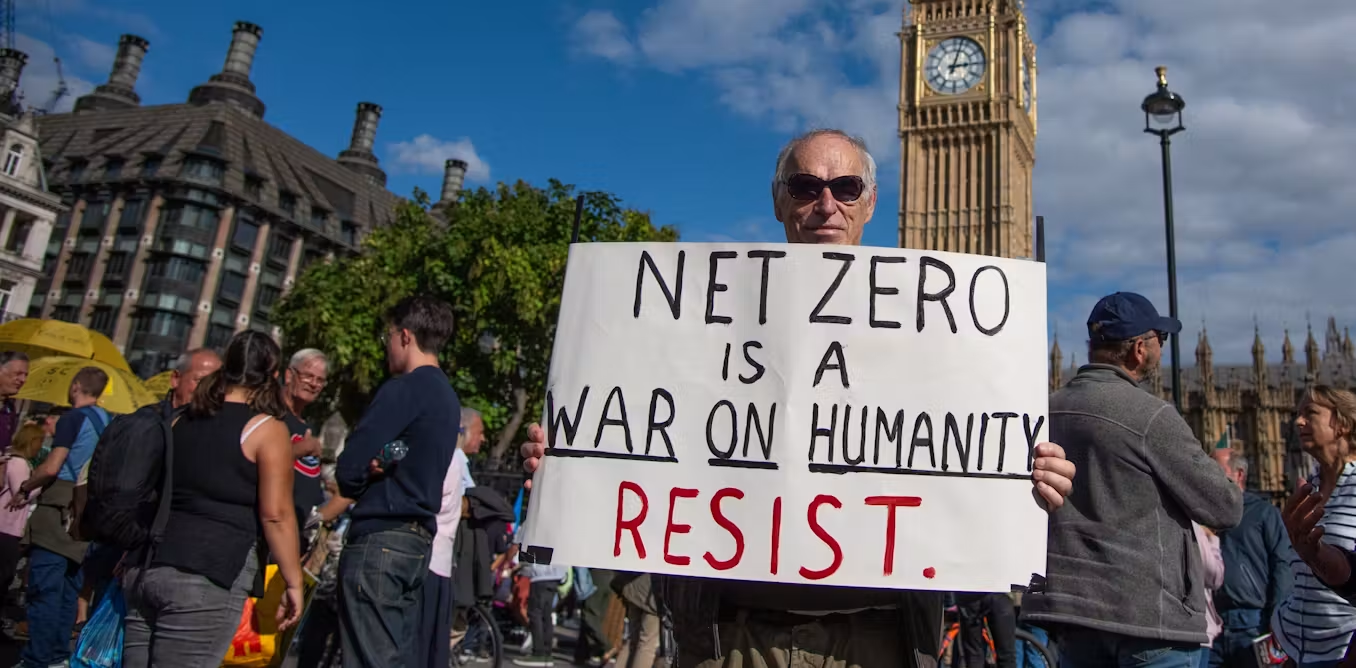
The UK has the means to avoid climate policy being driven by culture wars

Published

on

The UK has the means to avoid climate policy being driven by culture wars

Climate policy has become one of the principle casualties of America’s political polarisation. The Trump administration, for instance, recently announced it is dismantling a key ocean monitoring system, despite growing scientific concerns about the rise of a “Super El Niño” and the prospect of disruption to key Atlantic Ocean currents. This move is consistent with Project 2025, the conservative policy blueprint that explicitly calls for dismantling major elements of US climate science capacity.

As a British climate scientist and former chair of UCL’s Climate Action Unit, I am concerned that the UK should avoid following the same path.

For more than a decade, political scientists have documented the rise of what is known as affective polarisation: the tendency for supporters of different political parties not merely to disagree, but to view one another with deep and uncompromising animosity.

In a landmark 2015 study, researchers at Stanford and Princeton universities found that partisan identity in the US had become a powerful source of social polarisation, shaping attitudes and behaviour in ways that rivalled or exceeded many traditional social divisions.

Advertisement

The UK can still avoid that trap. Not because British politics is immune to division – it clearly is not – but because Britain’s distinctive institutional architecture, combined with resilient public support for climate action, provides a foundation for a different political outcome.

A different starting point

One reason for cautious optimism is that UK climate policy has historically enjoyed a degree of cross-party support. The Climate Change Act of 2008 passed with overwhelming backing from all major parties. Margaret Thatcher was among the first world leaders to warn publicly about the risks of global warming. Theresa May’s Conservative government embedded the net-zero target in law.

More importantly, Britain has built institutions designed to insulate climate policy and research from short-term political turbulence. The Climate Change Act, the official advisory status of the Climate Change Committee, legally binding carbon budgets, and the Higher Education and Research Act 2017 together form a framework that can survive changes of government. The latter constrains ministerial intervention in the selection of research grants under the principle that researchers should decide for themselves which projects are funded.

Unlike in the US, where climate policy and its execution has depended heavily on executive action, the UK’s approach relies on durable institutions and long-term planning – a form of democratic immune system against short-term political shocks.

Advertisement

Signs of strain

Yet that consensus is showing cracks. Conservative leader Kemi Badenoch has pledged to repeal the Climate Change Act. Reform UK has made opposition to net-zero a central part of its political platform, with deputy leader Richard Tice calling renewable energy a “massive con”.

Such attacks are real and consequential, but the crucial question is whether they reflect a genuine shift in public opinion.

The evidence suggests they do not.

Polling analysed by the Institute for Public Policy Research and YouGov shows that belief in the reality of climate change, and support for achieving net-zero emissions by 2050, remains remarkably resilient. Around six in ten voters continue to support the target. Support is highest among Green party voters, at 86%, with 76-79% of Labour and Lib Dem voters also in favour. Almost half of Tories likewise back the target (48%), although this lower level of support is also more lukewarm.

Advertisement

What needs to happen

If Britain is to avoid the climate polarisation that has captured American politics, three priorities stand out.

First, actively defending the institutions that have sustained long-term climate policy. The Climate Change Committee, the carbon budgets, and the legislation are all susceptible to attack by future governments. Securing them as essential democratic infrastructure – like an independent judiciary or a professional civil service – rather than as party-political tools is the first line of defence.

Second, building cross-party spaces where moderate voices can cooperate. The newly launched Council for the Future, chaired by former Conservative environment secretary Lord Deben, is a model. It provides a “neutral non-partisan space” to discuss climate policy away from the culture war.

Third, designing climate policy to include tangible household benefits. The government’s £15 billion warm homes plan – offering zero-interest loans for solar panels, batteries, heat pumps and social housing upgrades – is exactly the right model.

Advertisement

A choice, not a fate

Public support for climate action remains strong. The economic opportunities associated with the transition are increasingly clear. And the institutional foundations for long-term policymaking remain intact.

The question is not whether Britain must agree on every aspect of climate policy. Democracies rarely do. The question is whether climate change becomes another front in an ever-widening culture war, or whether sufficient political consensus can be preserved to address a critical long-term national and international challenge.

The American example vividly illustrates the cost of failure. The UK still has the institutions, the public support and the political space to avoid that fate.

Advertisement

Source link

Continue Reading

NewsBeat

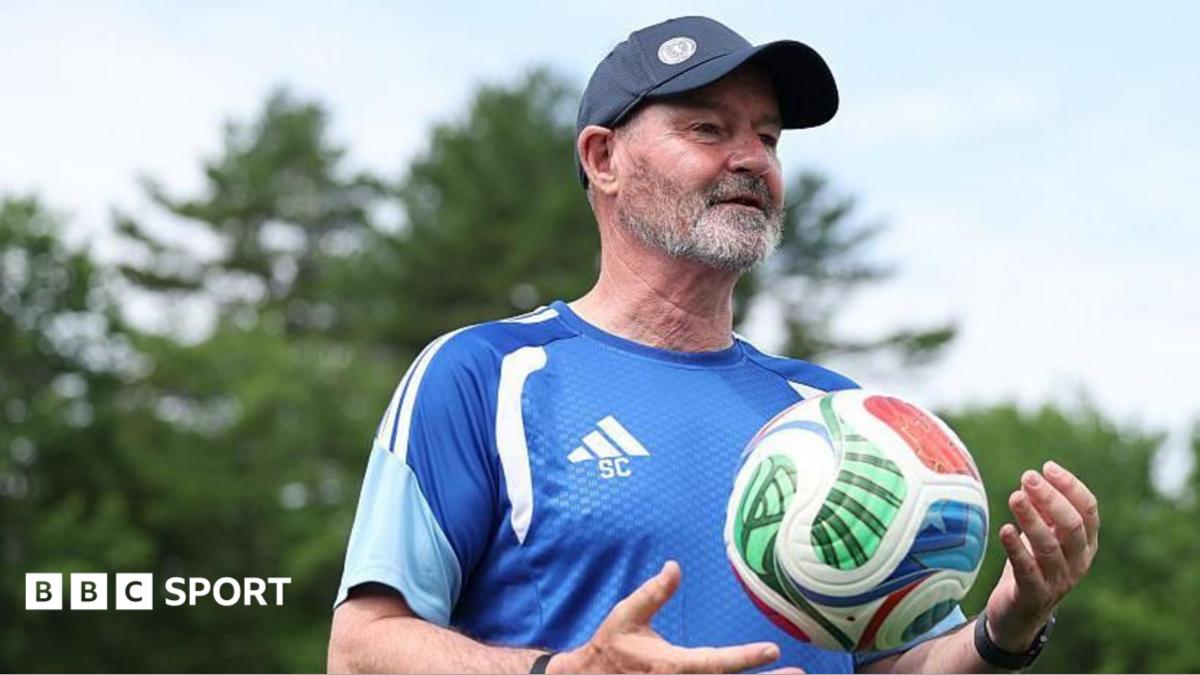
World Cup 2026: Steve Clarke’s ‘cartwheels at breakfast’ show Scotland culture shift

Published

on

Andy Robertson and Steve Clarke celebrate Scotland's win over Haiti at the World Cup

It’s impossible not to notice the shift in the ever stoic Clarke.

Down at Fort Lauderdale two weeks ago, at the squad’s pre-tournament camp at Inter Miami’s training centre, Clarke came over to the pitch-side media – unexpectedly – for a wee chinwag.

Such a relaxed nature can maybe be hoped for on day one of such a special period, but past experience would suggest that’s unlikely to last.

However, Clarke’s candid chat with Eilidh Barbour before his light pre-match news conference at the Boston Stadium on Friday – where he joked about what he learned from Euro 2024 was “don’t get humped” – is evidence of his more relaxed approach this time around.

Advertisement

“He’s been to two tournaments, he’s told you he’s not enjoyed them, he’s sat and reflected why and then it’s about what can he do to make it more enjoyable, firstly for him,” said Naismith, who failed to qualify for a major tournament as a player.

“Before the tournament, there was so much work done in terms of what the players want, what they need, what they didn’t like before.

“Bringing the families closer, having more family time, having periods of real hard work and then going to relax, taking that pressure valve off so you’re not constantly thinking of football.

“I think it’s worked well.”

Advertisement

Source link

Continue Reading

NewsBeat

France vs Senegal: World Cup 2026 prediction, kick-off time, TV, live stream, team news, h2h results, odds

Published

on

France vs Senegal: World Cup 2026 prediction, kick-off time, TV, live stream, team news, h2h results, odds

At the 2002 World Cup in South Korea and Japan, holders France were drawn in a group alongside Senegal, Denmark and Uruguay, and entered the tournament as strong favourites after winning the 1998 edition, plus Euro 2000.

France’s opening game was against tournament debutants Senegal in Seoul. To many, it was a foregone conclusion. But Senegal had other ideas, winning 1-0 thanks to the late Papa Bouba Diop’s goal.

Source link

Advertisement
Continue Reading

NewsBeat

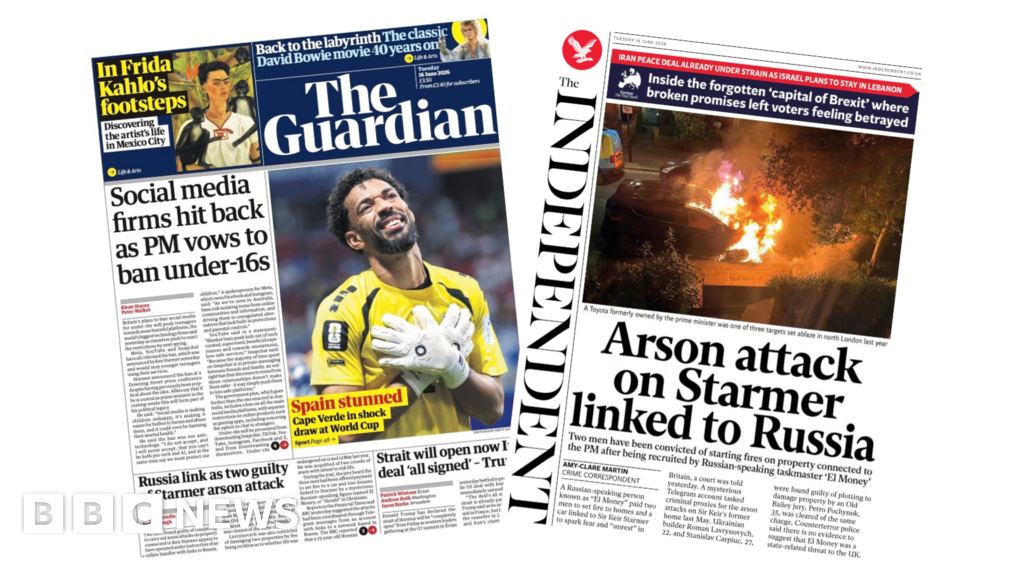
‘Social media firms hit back’ and ‘Arson attack on Starmer linked to Russia’

Published

on

'Social media firms hit back' and 'Arson attack on Starmer linked to Russia'
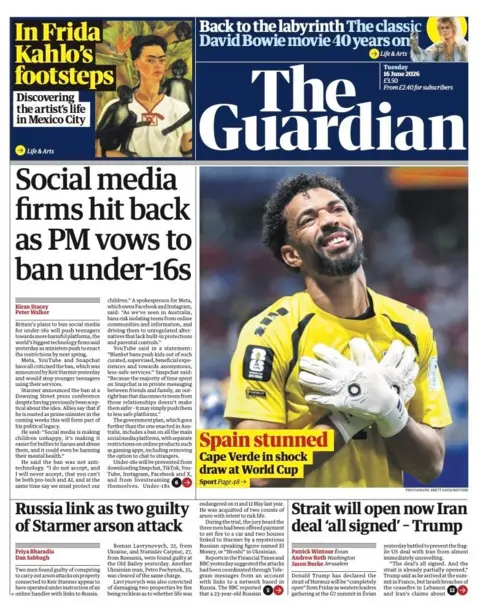
The headline on the front page of the Guardian reads: “Social media firms hit back as PM vows to ban under-16s”.

Several of Tuesday’s papers lead on Sir Keir Starmer’s plan to ban social media for under-16s, which was announced on Monday. The Guardian says social media firms have “hit back” at the prime minister, noting that Facebook and Instagram owner Meta, YouTube and Snapchat are among those criticising the move

Source link

Continue Reading

NewsBeat

Even with an Iran war deal, oil won’t immediately flow in Strait of Hormuz

Published

on

Even with an Iran war deal, oil won't immediately flow in Strait of Hormuz

FRANKFURT, Germany (AP) — The tentative agreement to end the war in Iran and reopen the Strait of Hormuz would be good news for the global economy. But even as the price of oil dropped Monday, many questions remained about when and how it would start flowing again through the world’s most vital artery for energy shipments.

Before the war, the strait carried a fifth of the world’s crude oil. Now, it will take time for hundreds of ships trapped in the Persian Gulf to exit through the narrow strait. And Gulf oil producers that throttled back production will need time to get the oil moving again. Analysts also say ship captains may take their time to decide if passage is safe and that the threat of attack from Iran has truly receded.

All told, oil prices, inflation and energy flows simply won’t see an immediate return to what they were before the war — not for weeks or even months. And that’s assuming the deal, set to be signed Friday, proves durable. Details hadn’t been released.

When will oil start moving again?

Even if the Strait is completely open, it will take time for tankers to enter, load, and make the journey to Asian countries — the chief customers for Gulf oil from Saudi Arabia, Iraq, Bahrain, the United Arab Emirates, Kuwait and Oman. A trip to Japan and back can take 45 to 50 days.

Advertisement

Captains, insurers and owners may take their time in attempting passage, given the volatile situation.

“Operationally, the sector is not rushing back,” wrote Richard Meade, editor-in-chief of shipping data and analysis company Lloyd’s List, noting that many warn mine clearance and a return to use of the internationally recognized transit lanes “are prerequisites for safe navigation. ”

Ships have been trickling out through an Iranian-run vetting lane in the north of the strait, while others have slipped out with lights and location systems turned off under U.S. forces’ guidance in a southern passage along the coast of Oman. Iran had threatened to attack ships using the internationally established mid-strait transit lanes that keep inbound and outbound ships out of each other’s way.

Some 500 commercial vessels remain in the Persian Gulf, according to maritime and energy intelligence firm Kpler, and they can’t all leave through the narrow strait at once.

Advertisement

Amena Bakr, head of Middle East energy and OPEC+ insights at Kpler, estimated that clearing mines would take six months, vessels leaving and returning to reload two to three months, and restarting production in some countries to prewar levels another three months.

What does an ‘open’ strait mean? It’s not clear that the US and Iran have agreed

Iran has demanded the right to collect money from ships using the strait, and in some cases has already exacted payment to let ships leave. Trump said on his social media platform Truth Social that the deal involved a “toll free opening,” but there’s been no confirmation from Iran.

The period between the deal’s announcement and signing “gives both sides scope for issuing conflicting statements on the agreement, especially on the extent to which Iran will manage traffic and demand fees,” said Torbjorn Soltvedt, principal Middle East analyst at risk intelligence company Verisk Maplecroft.

Paying tolls would present a quandary for ship owners, since the U.S. and EU have designated the Islamic Revolutionary Guard Corps a terrorist organization, and the U.S. Treasury has sanctioned the entity Iran has announced to run its collections. Unless those sanctions are modified, paying exposes shippers and banks to sanctions.

Legal experts say allowing Iran to control passage would violate international law on freedom of navigation as set down in the United Nations Convention on the Law of the Sea, which requires countries to permit peaceful passage through territorial waters. The strait’s waters are shared by Iran to the north and Oman to the south.

Oil producers need time to get operations underway again, too

Some producers in the Middle East paused extracting oil from the ground, known as a shut-in, when they ran out of storage space. Restarting those operations can be a slow process.

Advertisement

Countries such as Saudi Arabia and the United Arab Emirates, which were able to export some oil through alternate pipelines or routes besides the Strait of Hormuz, may be among the quickest to resume production, said Alan Gelder, senior vice president of refining, chemicals and oil markets at Wood Mackenzie, an analytics firm.

“Places like Iraq could be much more challenged because they’ve had a much bigger shut-in, their fields are more difficult … it may well take about a year before they get back,” he said.

Claudio Galimberti, chief economist at Rystad Energy, noted in an emailed comment that “sentiment has clearly improved. But sentiment is not the same as supply.”

“It will take time for production to ramp back up, for logistics to normalize, and for the risk premium embedded in crude prices to dissipate,” he said.

Advertisement

Countries won’t restart until they know there is a durably open strait and that a ceasefire will last more than 30 or 60 days, said Daniel Sternoff, senior fellow at the Center on Global Energy Policy at Columbia University.

Economists at Capital Economics estimate that energy flows would reach 80% of prewar levels by September.

Inflation will not drop immediately

Even if the deal reopens the strait immediately, that will not immediately send inflation lower, economists say.

Inflation is ”set to stay above target in most major economies throughout this year and the first half of next, even as growth remains relatively weak,” said Neil Shearing, group chief economist at Capital Economics.

Advertisement

Inflation could even rise when government measures aimed at easing the energy shock expire, Joachim Nagel, the head of Germany’s Bundesbank central bank said in a speech Monday.

That includes Germany’s temporary lowering of fuel taxes by 17 euro cents per liter, which runs through June 30.

“It will take months for the oil supply to return to normal,” Nagel said.

Advertisement

Source link

Continue Reading

Trending

Copyright © 2025