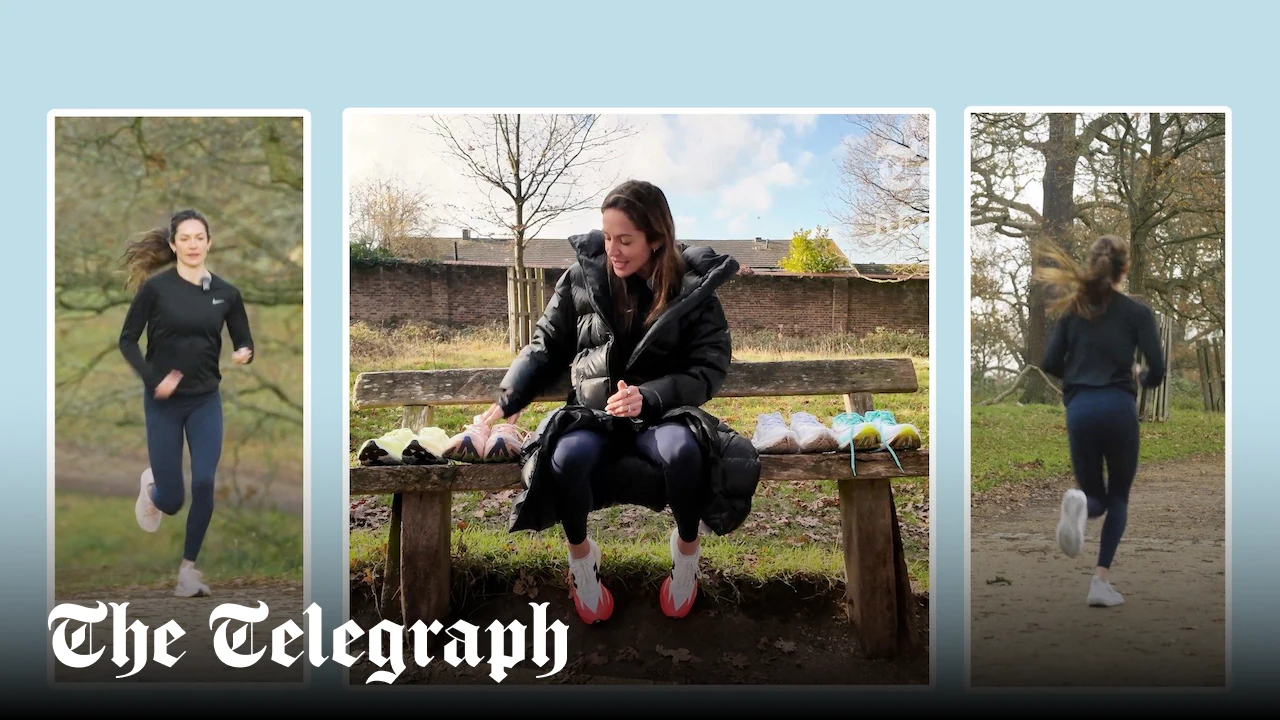
A pair of the best women’s running trainers can make all the difference to protect your joints, hit personal bests and feel comfortable on every run. As a personal trainer, runner and fitness journalist, I’ve tested countless pairs and I can confidently say that the right shoes can transform your performance, helping you to reach your fitness goals.
Whether you’re after responsive cushioning for long-distance comfort, lightweight speed for sprints, or even extra stability that will support feet and joints, there’s something in this list for every runner, with brands including Hoka, Brooks and New Balance. With running shoes now costing more than ever, I’ve been sure to include some more affordable options that offer good value for money too.
This guide is regularly checked and updated so you know you’re being recommended the best.
Advertisement
The best running shoes for women: At a glance
How to choose the best running shoes for women
The right pair of running shoes can enhance performance and reduce the risk of injury. When selecting shoes, comfort and support should be top priorities, as these directly affect stability and running form.
In addition, pay close attention to heel and arch support. These features help to keep the foot secure and prevent it from rolling inward or outward during movement. Proper stability is especially important for maintaining balance and avoiding strain on the ankles and knees.
Look for shoes that provide adequate bounce and shock absorption. Good cushioning reduces the impact on joints and can make longer runs more comfortable. Runners who are prone to knee or hip discomfort may find this feature particularly beneficial.
Ground feel, or in other words, the ability to sense the surface underfoot, also plays a role in choosing the right shoe. Some runners prefer a more natural stride with greater feedback from the ground, while others may prioritise extra cushioning for comfort over long distances.
Advertisement
Lastly, consider durability. Running shoes can be a significant investment, so it’s worth choosing a pair made from quality materials that can withstand many miles without showing early signs of wear.
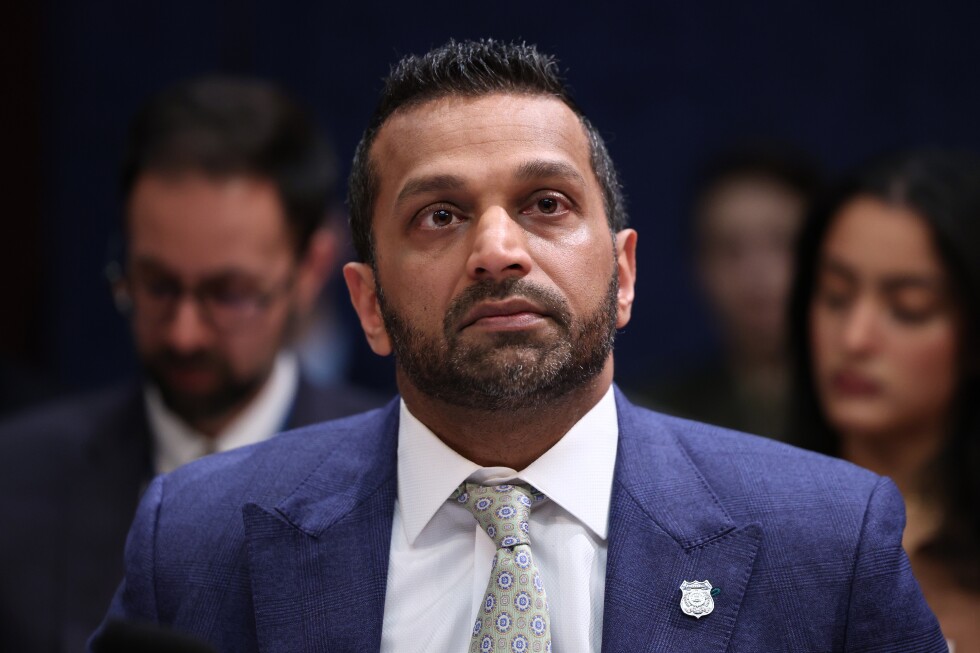
WASHINGTON (AP) — A pro-Iranian hacking group claimed Friday to have hacked an account of FBI Director Kash Patel and posted online what appear to be years-old photographs of him, along with a work resume and other personal documents dating back more than a decade.
“Kash Patel, the current head of the FBI, who once saw his name displayed with pride on the agency’s headquarters, will now find his name among the list of successfully hacked victims,” said a message posted Friday from the group Handala.
The message was accompanied by a collection of photographs of Patel, including ones of him standing beside an antique sports car and another with a cigar in his mouth. The group also said that it was making available for download emails and other documents from Patel’s account. Many of the records appeared to relate to his personal travels and business from more than 10 years ago
“The FBI is aware of malicious actors targeting Director Patel’s personal email information, and we have taken all necessary steps to mitigate potential risks associated with this activity,” the FBI said in a statement. “The information in question is historical in nature and involves no government information.”
Advertisement
The FBI statement did not identify the hackers believed responsible for the breach, but it noted that the Trump administration is offering a reward of up to $10 million for information leading to the identification of members of the Handala hacking group — an entity it said “has frequently targeted U.S. government officials.”
It was not clear when the hack claimed by Handala might have occurred. News reports from December 2024, before Patel was confirmed as director, said that Patel had been informed by FBI that he had been targeted as part of an Iranian hack.
Handala is a pro-Iranian, pro-Palestinian hacking group that earlier this month claimed credit for disrupting systems at Stryker, a Michigan-based medical technology company. Handala said the attack was in retaliation for suspected U.S. strikes that killed Iranian schoolchildren. They’re a prominent example of the proxy groups that carry out cyber attacks on behalf of Iran.
___
Advertisement
Associated Press writer David Klepper in Washington contributed to this report.
A classic period drama, one that popularised the genre globally, is still regarded as one of the finest to ever grace our screens. Period drama enthusiasts will be familiar with the show in question — Upstairs, Downstairs.
Upstairs, Downstairs laid the groundwork for Downton Abbey with a story that will be familiar with fans who have only seen the modern sensation. As the definitive period dramas of their era, the parallels between Upstairs, Downstairs and Downton Abbey are self-evident.
Advertisement
Both shows portray the personal struggles of an aristocratic family and their servants against a backdrop of social and political upheaval on an overlapping timeline.
Like Downton Abbey, it spans three decades, covering both World Wars and the roaring 20s through to the Great Depression. The classic show chronicled the turbulent lives of the aristocratic Bellamy family and their servants in the early 1900s.
They diverge in numerous ways, however, and one is immediately apparent.
The seventies programme is less high-end, a quality that can taken as nostalgic or a dealbreaker. Upstairs, Downstairs premiered in 1971 and ran for five years, predating Downton Abbey by a good 50 years.
In fairness, Downton’s setting is inherently more luxurious. The Bellamy family inhabit a London townhouse, a far cry from the Crawley family’s lavish country estate that was a character in its own right.
And while Downton’s visuals proved a triumph, a frequent criticism from audiences is that the programme descended into melodrama. In contrast, Upstairs, Downstairs has been likened to a stage play for its more understated visuals and plotlines.
Fans of both period dramas shared their preferences. One viewer sparked a debate on Reddit, asking: “If you have seen both shows, which show do you think is better?”
Advertisement
“Upstairs Downstairs without question,” replied one viewer decisively. Another agreed: “I like Downton Abbey better, but Upstairs, Downstairs is the better show.
“I have tried watching the Upstairs/Downstairs remake multiple times and I always end stopping after about two episodes,” commented a third. “It just doesn’t grab me like Downton.”
Upstairs, Downstairs is available to watch on ITVX.
One Pakistani national was arrested as an overstayer during the operation, and one Indian national was arrested for breach of immigration bail, while the mopeds and electric scooters were seized for allegedly being stolen, with others said to have been used in the theft of other vehicles.
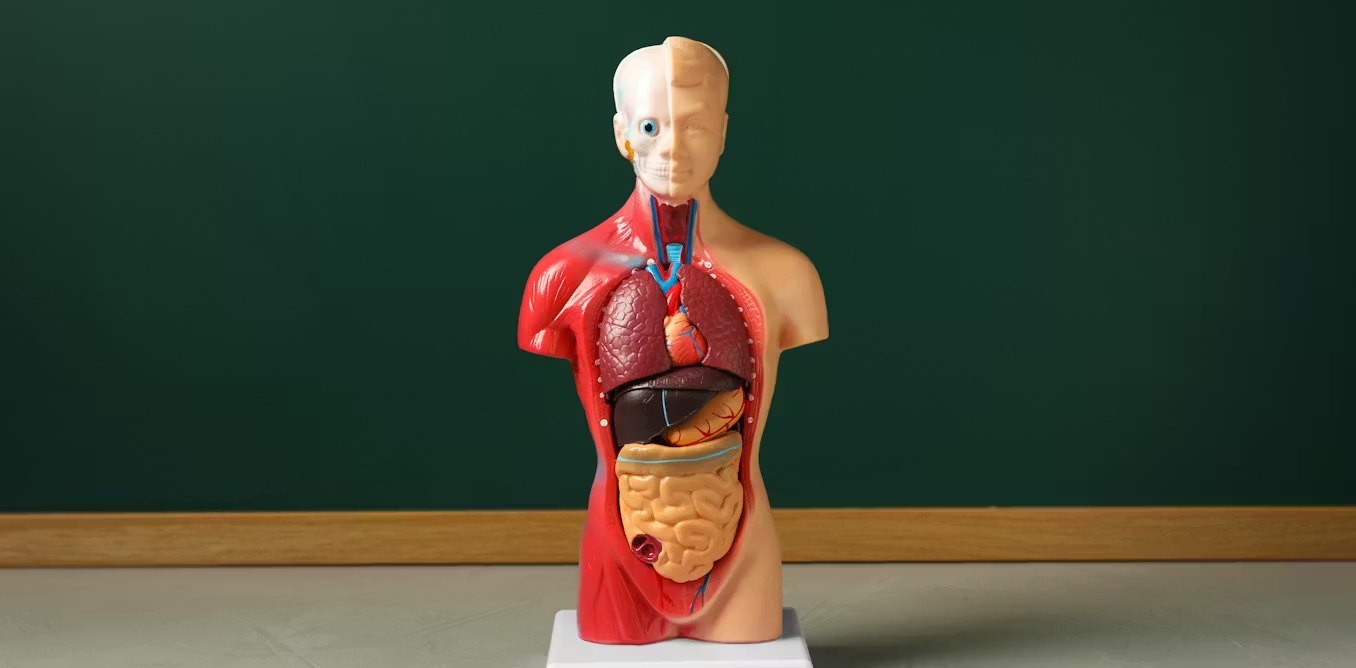
Leaf through a textbook, watch a wellness influencer or listen in at the gym, and it can feel as though the human body has already been mapped to exhaustion. Every muscle named, every nerve traced. Everything understood and readily available.
Most people recognise at least a few anatomical terms – “traps”, “glutes”, “biceps”. After centuries of dissection, microscopy and medical imaging, it seems reasonable to assume the work is done. Surely anatomy, as a discipline, must be complete?
It isn’t. Not even close.
Since the publication of De Humani Corporis Fabrica by Andreas Vesalius in 1543 – the first comprehensive anatomy book based on direct observation of human dissection – anatomy has carried an air of authority. Vesalius famously corrected centuries of inherited error, challenging the ancient physician Galen through direct observation of the human body. His work helped establish anatomy as an evidence-based science.
Advertisement
Three hundred years later, Gray’s Anatomy by Henry Gray reinforced the impression that the body had finally been catalogued, indexed and neatly organised – a system mapped and fully explained.
But textbooks create a misleading sense of certainty. They present the body as stable, universal and fully agreed upon. Real anatomy is messier than that.
The illusion of completeness
Much of early topographical anatomy – the careful mapping of structures in relation to one another – depended on cadavers obtained through grave robbery.
“Resurrectionists” – body snatchers – exhumed the recently buried, disproportionately targeting the poor, the institutionalised and those without family protection or the financial means to guard graves. These bodies were then sold to anatomists, who relied on them for dissection and teaching.
Advertisement
Working conditions for early anatomists were difficult, and the limitations considerable.
Lighting was poor. Bodies were often malnourished or diseased. Post-mortem change had already altered tissue planes. Sample sizes were small and opportunistic. Demographic information was largely absent, beyond what could be inferred from appearance. The bodies of women were sometimes dissected but rarely reported.
Yet it was under precisely these conditions that anatomists produced the observations that became the foundation of classical anatomical topography.
The anatomical “norm” that emerged from these studies was therefore constructed from a narrow and socially stratified sample.
Advertisement
None of this diminishes the extraordinary technical skill of early anatomists. Their observational ability was remarkable. But the conditions under which they worked inevitably shaped what they saw – and what they missed.
Complete? Far from it. VintageMedStock/Alamy
So when we ask whether anatomy is finished, we might also ask a more uncomfortable question: was it ever truly complete in the first place? This question matters scientifically as well as ethically.
For much of the 20th century, anatomical investigation slowed dramatically. By the 1960s, relatively few cadaveric studies were being published worldwide. The assumption was simple: the human body had already been mapped.
Medical education continued, of course, but much of it focused on teaching established knowledge rather than generating new anatomical observations. That apparent stability masked a deeper problem: much of the knowledge had been inherited rather than tested.
Advertisement
Improved imaging techniques, renewed cadaveric research and a growing awareness of anatomical variation have triggered something of a renaissance in anatomical study. Structures once overlooked or poorly described are being re-examined.
Far from being finished, anatomy is rediscovering just how incomplete its map of the human body may be.
Beyond the ‘standard’ human body
One of the most important shifts in modern anatomy has been recognising that variation is the rule rather than the exception. Textbooks present a “typical” body for teaching, but real human anatomy sits along a spectrum.
Human anatomy varies across several dimensions at once. Differences exist between males and females, across the lifespan as the body develops and ages, and between populations shaped by genetics and environment.
Advertisement
Beyond these broad patterns lies enormous individual variation: blood vessels may follow different routes, muscles may be absent or duplicated, and even the folding patterns of the brain differ from person to person. The “standard” anatomy shown in textbooks is therefore best understood not as a universal blueprint, but as a simplified reference point within a wide biological range.
This variation matters far beyond the operating theatre. Differences in nerves, vessels and joints can alter how diseases reveal themselves, influence how scans are interpreted and shape patterns of movement and injury.
Subtle differences in joint alignment may affect the risk of conditions, such as osteoarthritis, while variations in vascular anatomy can influence susceptibility to stroke or aneurysm. Understanding anatomical diversity is therefore central not only to surgery, but also to diagnosis, medical imaging, biomechanics and the study of disease itself.
Even after centuries of study, the human body continues to yield new anatomical insights. Structures once overlooked – from previously unrecognised lymphatic vessels around the brain to overlooked ligaments in the knee – are being re-examined. Familiar tissues are being understood in new ways, and the map of the body is still being revised.
Advertisement
People should know more about their bodies. Greater understanding helps people advocate for their own health and engage more confidently with care. But it is worth remembering that the canonical anatomy presented in textbooks is best understood as a teaching model, not a perfect representation of biological reality. The more closely we study the human body, the more we realise there is still much to learn.
Kevin Danso headed into Jonas Adjetey arms from close range, and Marcel Sabitzer converted from 12 yards after the referee pointed to the spot. That goal was the only difference come half-time, but Austria ran riot when they reemerged. Goals from Michael Gregoritsch and Stefan Posch put the result beyond doubt, before Jordan Ayew secured some consolation with a well-hit solo effort, but even that was matched as Nicolas Seiwald hit an even more impressive fifth from range for the hosts.
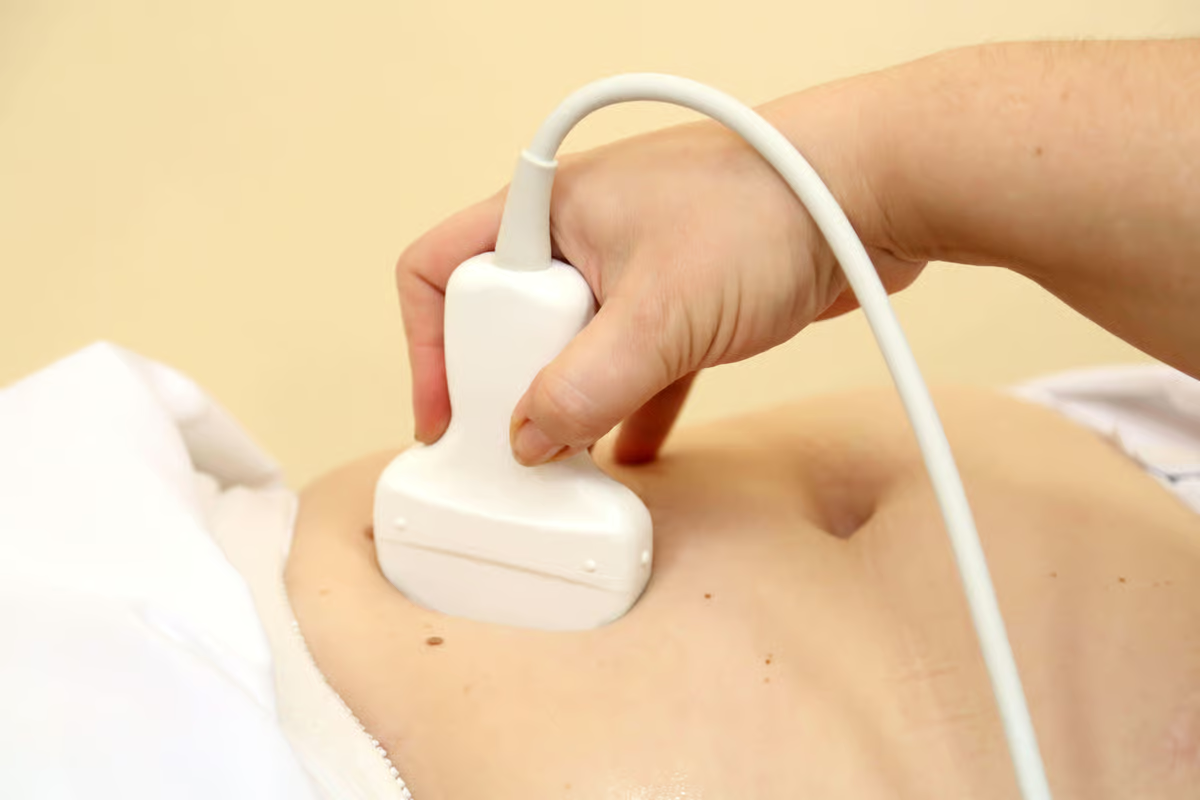
A Department of Health and Social Care spokesperson said: “We recognise the pressures facing diagnostic services, including the sonography workforce, and we are taking action to ensure the NHS has the skilled staff it needs to meet rising demand and deliver timely care to patients.
Brighten up someone’s day with a card full of you – for every reader
As Easter is getting closer, spread some smiles with this great offer. We have teamed up with Moonpig, to give every reader a FREE standard Easter card plus free delivery!
That’s not all – you can personalise your card with your favourite photos, fun Easter stickers, and a heartfelt message to make it extra special. Want to send it straight to their door or hand it over yourself? Either way, we’ve got you covered.
Advertisement
And Easter isn’t the only reason to reach out this month. With lighter evenings, bank holiday plans and more reasons to get together, it’s a great time to send a little something just because. A thinking-of-you for a friend, or a note to say “see you soon”, because sometimes the smallest gesture makes the biggest impact.
And if you’d like to make their surprise even sweeter, explore our huge range of gifts and tasty treats – perfect for turning a simple card into a moment they’ll remember.
How to claim: click hereand use the code APRILJOY at the checkout to claim your free card and free delivery. It’s easy! The offer is valid from 12am March 28 until midnight on April 1, 2026.
Make this Easter extra sweet, one free card at a time.
Advertisement
Terms and conditions
The offer entitles the reader to a free standard Easter card plus free delivery.
The offer is valid from Saturday March 28 until Wednesday April 1, 2026.
The offer is subject to availability. Redemptions limited to 50,000 cards.
The Federal Aviation Administration has issued ground stops for several airports in the Washington, D.C., area over an apparent odor in an air traffic control tower, according to Reuters.
The impacted airports include Ronald Reagan Washington National Airport, Dulles International Airport and Baltimore/Washington International Thurgood Marshall Airport, according to the FAA’s website.
The odor prompted the evacuation of Potomac Consolidated Terminal RADAR Approach Control in Virginia, Reuters reports.
This is a breaking news story. Check back for updates.
Police are looking to speak with this man in connection to the incident
Police are looking to speak with a man following an assault on pub door staff in Cambridge. Police say that the assault on a member of door staff took place outside The Cambridge Tap, St Andrews Street.
Advertisement
The incident happened just before 11.30pm on February 12. The victim was left with a facial injury.
It has also been reported that the attacker ran away. Police are now looking to speak with the man photographed in connection with the assault.
Anyone with information should call police on 101 quoting 35/11343/26 or visit www.cambs.police.uk/report. Alternatively, contact Crimestoppers, anonymously, on 0800 555111 or via www.crimestoppers-uk.org.
Beyond Paradise viewers were left shocked as Humphrey Goodman faces an impossible decision in series 4 of the BBC crime drama
Olivia Wheeler Content Editor Screen Time
23:15, 27 Mar 2026
Beyond Paradise viewers were left devastated during Friday’s opening episode of series four following a major revelation about Humphrey Goodman.
In the latest instalment, Humphrey, portrayed by Kris Marshall, and his colleagues investigated the death of a crime novelist, whose passing bore an uncanny resemblance to events in his most recent book.
Advertisement
Humphrey, an avid admirer of the crime writer, was tasked with determining whether this was mere coincidence or deliberate murder.
Meanwhile, The Lily Bond drifted away, leaving Humphrey and his new bride Martha Lloyd, portrayed by Sally Bretton, at home with Martha’s mother Anne Lloyd, portrayed by Barbara Flynn, before visiting an ideal renovation property with sea views.
Yet the investigation and The Lily Bond’s departure proved the least of Humphrey’s concerns as he shared some heartbreaking news with his wife Martha, reports the Mirror.
Discussing his difficult day, Humphrey revealed he’d been summoned to a meeting where he faced an incredibly tough choice.
He explained: “They’re saying I’ve got to lose someone at the station. Apparently there should only be three of us at the station so I need to lose one of either Esther, Kelby or Margo…”
To which Martha said: “That’s awful! What will you do?” with Humphrey admitting: “I’ve no idea!”
A preview of next week’s episode shows Humphrey being pressed for his decision as he says: “Mr Smith, he’s still hounding me on a decision on who I’m going to let go…”
Advertisement
This comes as a synopsis for series four teases: “Beyond the station, Humphrey and Martha launch into married life as they search for a new place to call home, all whilst Humphrey faces mounting pressure when tasked with an impossible decision that will change his team forever.”
Viewers took to Twitter, now known as X, wasting no time in sharing their reactions to the storyline and speculating about who Humphrey will let go.
One viewer posted: “#beyondparadise He can’t fire anybody. They are a team”, while another wrote: “#BeyondParadise Uh oh” and a third speculated: “Guessing Humphrey will pick himself as the one to be made redundant and his boss will let them all stay. #BeyondParadise.”
Advertisement
Beyond Paradise returns this Friday at 8pm on BBC One and BBC iPlayer.
















































You must be logged in to post a comment Login