Cheryl Bartley was charged with one count of gross negligence manslaughter after Robert Smith died in 2023.
Matthew Cooper, Press Association and Gemma Ryder Reporter
18:53, 08 Apr 2026
A 48-year-old pastor has been charged with gross negligence manslaughter following the drowning of a man at a baptism ceremony in Birmingham. In a statement issued on Wednesday, the Crown Prosecution (CPS) said the charge was linked to the death of 61-year-old Robert Smith, who drowned at an address in Erdington on October 8, 2023.
Cheryl Bartley was charged with one count of gross negligence manslaughter in relation to her role as a pastor during the baptism, the CPS said. Mr Smith, from Brixton in south London, died at the address on Slade Road.
Malcolm McHaffie, Head of the CPS’s Special Crime Division, said: “Our prosecutors have worked to establish that there is sufficient evidence to bring this case to court and that it is in the public interest to pursue criminal proceedings. We have worked closely with West Midlands Police as it has carried out its investigation.
Advertisement
“We remind all concerned that criminal proceedings against this defendant are active and that she has the right to a fair trial. It is vital that there should be no reporting, commentary or sharing of information online which could in any way prejudice these proceedings.”
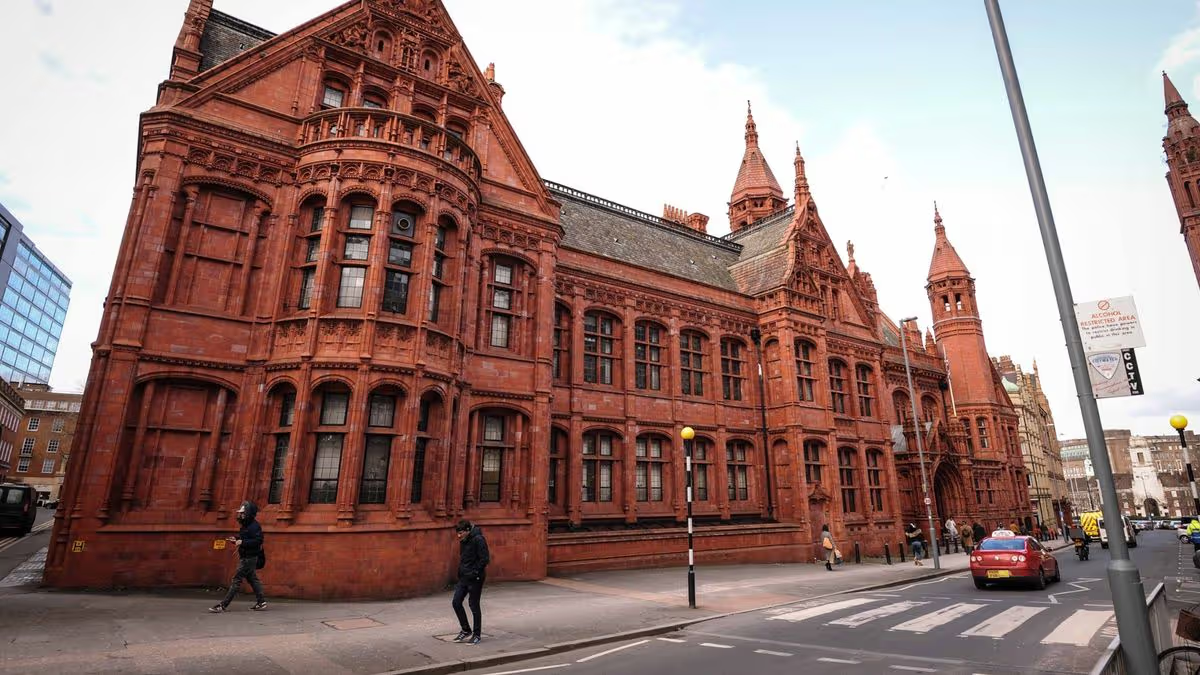
Bartley, from Erdington, will appear at Birmingham Magistrates’ Court on Thursday May 14, the CPS added.
Get more Daily Record exclusives by signing up for free to Google’s preferred sources. Click HERE
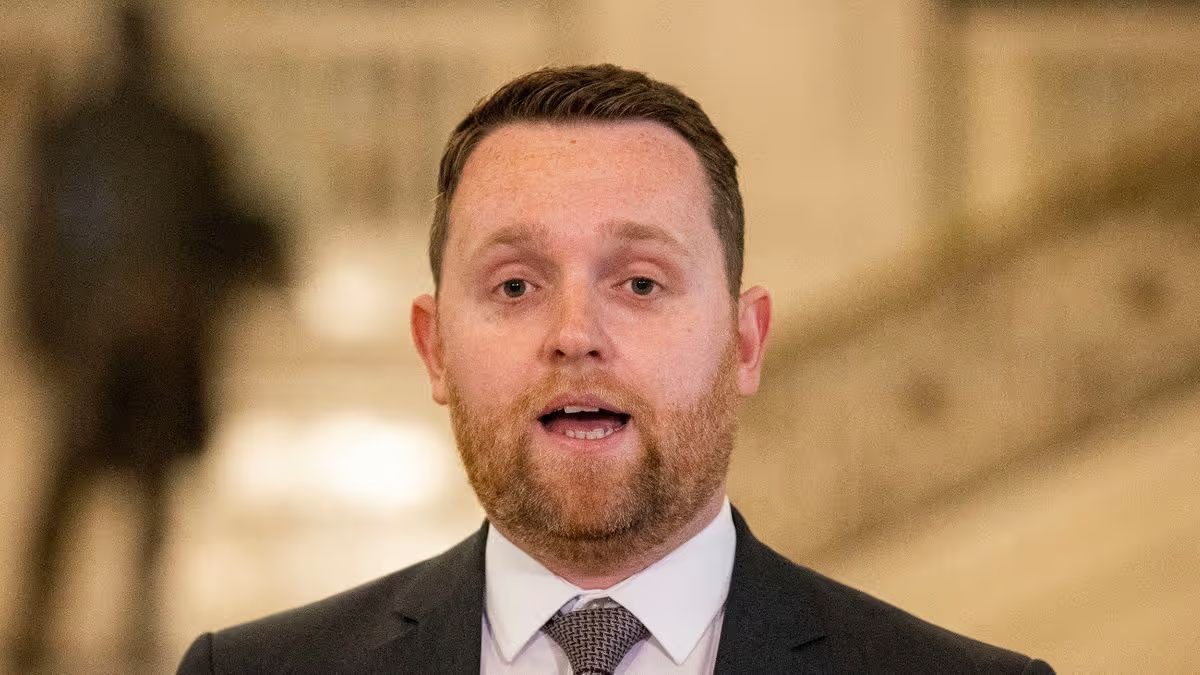
DUP MLA Gary Middleton is to step back from public life to deal with mental health challenges. The Foyle representative has said he will resign as an MLA on Friday.
Party leader Gavin Robinson has paid tribute to Mr Middleton, stating he had been a “dedicated and steadfast servant to people across the city of Londonderry and surrounding areas”.
Mr Middleton has been an MLA in the Northern Ireland Assembly since 2015, having previously been elected as a councillor.
In a statement released to the Press Association, Mr Middleton said: “Over the last few months, I have been suffering from a bout of ill-health which has significantly limited my ability to represent my constituents in the way I always have.
Advertisement
“I had hoped to be able to return to work and to recover, but I have come to the point of accepting that if I am to focus on getting back to full health, I cannot do this whilst remaining in public office.
“It would have been easier for me to withdraw from the political arena quietly and without explanation but I wanted my constituents and the wider community to understand that I am leaving public life because I am suffering significant mental health challenges.”
He added, “I am journeying through a difficult experience and have been for some time.
“I am receiving treatment thanks to the wonderful services afforded to me by our National Health Service.
Advertisement
“The support and encouragement from my family and friends, combined with the expert treatment I am receiving, has given me hope, and I can see a glimmer of light in what has been a very dark tunnel.
“In making this statement, I want to give encouragement to those who may be on a similar journey by highlighting that help is available.
“I have learned in recent times that it’s okay not to be okay.”
The statement concluded: “I want to thank all those who have supported me in Foyle over the years and who bestowed the privilege of electing me, first into local government and then to the Northern Ireland Assembly.
Advertisement
“Finally, I want to thank all my colleagues in the DUP for their support and friendship, to my staff for their loyalty and to my wife and family who have been my rock during this period.
“I will always be grateful for all the support shown to me.
“I will resign as a Member of the Northern Ireland Assembly tomorrow (Friday).
“As I depart the public stage, I want to wish all those who serve the public and with whom I have had the privilege to serve alongside, regardless of party affiliations, every best wish for the future.”
Advertisement
DUP leader Gavin Robinson said his party colleague had been a “consistent voice for unionism in Foyle”.
He said: “As the sole unionist MLA in Foyle, Gary Middleton has been a dedicated and steadfast servant to people across the city of Londonderry and surrounding areas.
“Since 2015, he has been a strong and consistent voice in the Northern Ireland Assembly and was never afraid to stand up for what he believed was right.
“Elected in May 2011 as a Councillor at just 20 years of age, Gary was often the youngest in the room but earned the respect of colleagues through his incredible ability to articulate the concerns of the people of Foyle.
Advertisement
“In being such a clear and consistent voice for unionism in Foyle, Gary has at times faced threats from republicans.
“That pressure never silenced him nor deterred him, he continued to stand firm for his constituents and his principles.”
Mr Robinson added: “While we deeply regret that Gary is leaving public service, we will do all we can to support him.
“Gary’s focus must now be on his recovery, and he will have the support of colleagues, both inside and outside our ranks, on his journey.
Advertisement
“On behalf of the Democratic Unionist Party, I want to sincerely thank Gary for his years of service and dedication.
“Many people in the Foyle constituency have been positively impacted as a result of Gary’s devotion to his community.
Michael Campbell was diagnosed with motor neurone disease in February 2023 and died at NI Hospice. Just weeks befor ehis tragic death he shared a heartbreaking “still lots to live for and lots planned” message
Game of Thrones star Michael Campbell shared a heartbreaking post just weeks before his death in which he said he had “lots to live for and lots planned”.
Advertisement
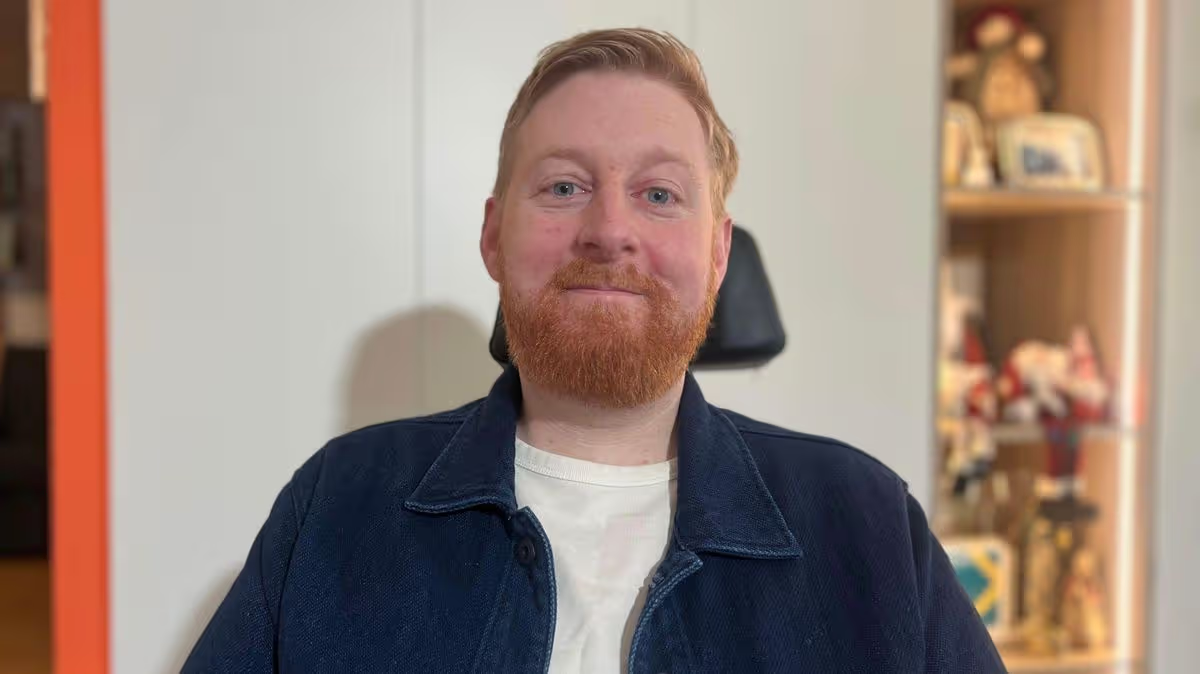
Actor Michael Campbell, who appeared in the TV drama Blue Lights and Game of Thrones , has passed away aged 35. The celebrated performer, who secured one of Britain’s most coveted drama awards for a “legendary” wheelchair-bound interpretation of Richard III, had been battling motor neurone disease (MND) prior to his death.
The star, also known as Michael Patrick, received the devastating terminal diagnosis in February 2023 and passed away on Tuesday at NI Hospice. His wife Naomi shared the heartbreaking news on social media saying: “He lived a life as full as any human can live,” she said.
Naomi added: “Mick was an inspiration to everyone who was privileged enough to come into contact with him, not just in the past few years during his illness but in every day of his life. Joy, abundance of spirit, infectious laughter. A titan of a ginger haired man.”
Taking to Instagram in February, in what was his final Instagram post, he wrote: ” 3 years of having mnd. Still shite craic. Health update: Basically me and @nomsheehan were in hospital for over a week there – speaking to doctors and getting tests done etc. Talking about risks and implications of getting the trache put in. What day to day life would be like after the operation.
“In short I’m not going ahead with the tracheostomy. I had confirmation from it would be around 6-12 months before I could get home due to lack of staffing resources. Thanks so much to everyone who helped push this – from senior social workers, to politicians, to the chief executive of the hospital. Everyone has tried so hard, but there just isn’t the staff.
“Also, my neurologist gave us the news that I likely have about 1 year left (obviously he can’t say for definite and we still have hope for the drug trial to buy some more time too). So I don’t want to risk a significant amount of that time being in a hospital bed.
Advertisement
“Thanks so much for all the donations to the GoFundMe, even though I didn’t go ahead with the trachesotomy – it will still go towards providing me with specialist care as I enter the final stages of life. I’m still overwhelmed by all your generosity.
“Anyway – still lots to live for and lots planned – here’s my wee godson Micheál visiting me in hospital.”
Augusta National is notoriously ruthless with its no-phones policy at the Masters, and a winner of The Open Championship found out the hard way during a practice round this week
The Masters’ no-nonsense policy on mobile phones has no exceptions, as major winner Mark Calcavecchia found out on Tuesday.
Augusta National says it enforces the policy “to maintain a traditional atmosphere,” and the patron guide on its website reads: “Part of what makes the Masters such a unique environment is the lack of cell phones on the grounds.”
Calcavecchia, who played in the Masters 18 times and finished second in 1988, was doubtless aware of the policy, but Golfweek reports that the 65-year-old was caught red-handed and shown the exit.
Advertisement
“I’ve got nothing negative to say about Augusta National Golf Club and the Masters, so I think we should literally hang up right now,” Calcavecchia said in a brief phone call when quizzed about the incident.
There are very few places at Augusta National where cell phones are permitted. Members of the press may use their devices in the media centre, but they must leave their phones at their desks when stepping onto the course or attending a press conference.
Calcavecchia was attending the 90th Masters as a guest of Augusta National, which sends invitations to major champions of years gone by, although Greg Norman was snubbed once again — a move that left the former LIV Golf boss furious.
Other notable names have fallen foul of the policy in the past. Charlie Rymer, formerly of Golf Channel, was working for Westwood One in 2011 when he had his credential revoked for stepping outside the media centre to take a call. A tearful apology did not help his cause.
One-time major champion Keegan Bradley’s sister was also caught with a phone in her possession one year, but she was given a reprieve after bursting into tears.
He said at the time: “They were going to kick her out and she cried, and they let her put her phone in a safe and stay.”
World No. 1 Scottie Scheffler, the bookies’ favourite to win this week, is a fan of the policy. He said: “Very peaceful. There are no people asking for selfies in the middle of the round. It’s very calm out there, and people follow the rules here. For us as players, it’s really an enjoyable experience.”
Ludvig Aberg agrees. He said: “It feels like the fans are a little bit more engaged in the golf. They’re a little bit more attuned to what’s going on. It’s a cool environment to play. It feels like good golf shots are being appreciated, in a different way.”
Metrocentre marketing manager Helen Atkinson said: “Now a firm favourite on the spring-summer calendar, our fashion and beauty weekender grows year on year – but never more so than in 2026, as we celebrate 40 years since opening.
“With support from our retailers and partners, we’re creating a weekend that truly reflects everything Metrocentre stands for – style, experience and something for everyone.”
Advertisement
Metrocentre Fashion & Beauty Weekender
Town Square will become a hub for live fashion and dance shows, highlighting the upcoming season’s key trends from high street and premium brands.
Metrocentre’s Fashion Weekend 2025, previously described as a success. (Image: NQ)
Students from Newcastle College will also present their latest work across make-up artistry, hair styling and photography as part of a showcase focused on emerging talent.
In nearby Exhibition Square, a dedicated beauty area will feature a pink carpet, cherry blossom trees and a 360-degree video booth.
The space will bring together boutique brands and offer visitors live demonstrations, interactive experiences and personalised consultations.
Advertisement
Work by Newcastle College fashion students, highlighting emerging design talent. (Image: NQ)
A VIP launch event will take place on Friday, April 24, with ticket proceeds going to The Daisy Chain Project.
Ahead of the weekend, the shopping centre is hosting donation points for pre-loved clothing to support the charity’s work with neurodivergent individuals and their families.
Organisers said further details and a full line-up of special guests will be announced shortly.
Metrocentre opened on October 14, 1986, and was developed by Sir John Hall as what was then billed as the biggest shopping centre in Europe.
Patrycja was only 19 years old when she found out she had cancer
A 20-year-old woman relied on a popular TV show and Google to understand her devastating cancer diagnosis. Patrycja Sobanska, from Peterborough, was just 19 years old when she was diagnosed with cancer in October 2024.
Advertisement
She first found a pea-sized lump on her neck, initially thinking it could be an infection. When it didn’t go away, she visited the GP four times before developing jaundice and insisted on a CT scan from the hospital.
After she had a CT scan, it was then revealed she had Diffuse large B cell lymphoma (DLBCL), a type of fast-growing non-Hodgkin lymphoma (NHL). “I just started bawling my eyes out – I think that was just the normal reaction, I just didn’t know what to do,” said Patrycja.
Patrycja didn’t understand what lymphoma was, but heard about it on Grey’s Anatomy. She added: “At the time I did watch Grey’s Anatomy a lot, it was Grey’s that made me think I was ill.
Advertisement
“It was when I had my potential diagnosis and they said you either have sarcoma or lymphoma, I was certain I then had cancer since there was an episode in Grey’s where a girl got diagnosed with lymphoma.
Patrycja was treated at Peterborough City Hospital, and then Addenbrooke’s Hospital in Cambridge. She underwent R-CHOP, a type of chemotherapy to treat lymphomas. While at Addenbrooke’s she was treated under the C9 ward, a Teenage Cancer Trust ward.
Patrycja said: “One of the junior sisters working on the day unit, Sandra, would always explain all of the chemotherapy and treatments I was having on the ward. It didn’t matter if it was my first time having chemo or my last, she remembered to take me through every step every time to ensure I was comfortable.”
Advertisement
Patrycja has praised the work of the Teenage Cancer Trust during her treatment. She added: “Teenage Cancer Trust’s youth support coordinator, Hannah helped arrange ringing the ‘end of treatment’ bell. She mentioned that the bell is located in the paediatric ward and how sometimes it can be hard to see others ring the bell.
“So, Hannah arranged with me to set-up my bell ringing in the garden of Addenbrooke’s Hospital. Hannah had put up bunting and letters that spelled out ‘Patrycja’s bell ringing’ wrapped around a tree.”
Patrycja is calling for better communication for 13 to 24 year olds when being diagnosed with cancer. Dr Louise Soanes, chief nurse at Teenage Cancer Trust, said: “The way in which we talk about and explain cancer is so important, but it’s a difficult subject and can be incredibly challenging.
“However, one conversation can change everything for a young person. The right words at the right time can make all the difference – and we must all do our best to get it right.
Advertisement
“Our expert nurses and youth workers across the UK support young people with cancer through all kinds of conversations. And whether you’re a health professional, a friend, or loved one of a young person who struggles to find the right words, or you don’t know what to say, you can find help and guidance about cancer conversations on the Teenage Cancer Trust website.”
Belfast actor Michael Campbell has died at the age of 35. An online death notice for the actor, also known as Michael Patrick, said he died on Tuesday at NI Hospice “surrounded by his loving family and friends”.
Advertisement
The award-winning actor has worked on stage, TV, film and radio productions. Recent theatre work includes his autobiographical play My Right Foot, and The Tragedy Of Richard II.
On television, he has appeared in This Town, Blue Lights, Krypton and Game of Thrones. He had been diagnosed with Motor Neurone Disease in early 2023 and later began to use a wheelchair.
In a social media post, his wife Naomi said: “Words can’t describe how broken-hearted we are.
Advertisement
“It’s been said more than once that Mick was an inspiration to everyone who was privileged enough to come into contact with him, not just in the past few years during his illness but in every day of his life.
“He lived a life as full as any human can live. Joy, abundance of spirit, infectious laughter. A titan of a ginger haired man.”
She added: “We are so grateful for every person who supported us through the last few years.”
The Lyric Theatre in Belfast also paid tribute to Michael, saying they are “devastated” to hear of his passing. A spokesperson for the theatre said: “Michael has been part of the Lyric family for many years, from performing his first one-man show, I, Banquo to the incredible The Tragedy of Richard III in 2024, where his portrayal of Richard III made it a legendary production & one of the greatest performances ever on the Lyric stage.
Advertisement
“His work as a writer and actor has been hugely impactful and the great strength and dignity he showed in light of his diagnosis with Motor Neurone Disease (MND) is a great inspiration to us all. We at the Lyric pay tribute to his remarkable talent and send our deepest condolences to his wife Naomi, his mother and sisters, and all his friends, family and colleagues at this sad time.”
In his funeral notice, Michael was described as the “beloved husband of Naomi, devoted son of Pauline and the late Michael, brother to Kate, Maurice and Hannah, uncle of Micheál.”
The notice added: “Michael will be reposing in O’Kanes Funeral Home, 2 St Jude’s Avenue, Belfast BT7 2GZ, from Thursday 9/4/26, those wishing to pay their respects, are welcome to call Thursday, Friday, between 9.00am and 5.00pm.
“Requiem Mass will be celebrated on Monday 13th April 2026, in Immaculate Heart of Mary Church, Knockbracken Drive, Carryduff, BT8 8EX at 11.00am, Mass can be viewed live at https://churchmedia.tv/parish-of-drumbo-and-carryduff.
Advertisement
“Followed by burial in Roselawn Cemetery at 1.00pm. Deeply regretted by his entire family circle.”
“As Attorney General, you are directly responsible for overseeing the Department’s collection, review, and determinations regarding the release of files pursuant to the Epstein Files Transparency Act, and the Committee therefore believes that you possess valuable insight into these efforts,” Comer said of Bondi last month.
ALBUQUERQUE, N.M. (AP) — There are faster ways to get from Chicago to Los Angeles, but none have the allure or cultural cachet of Route 66.
To John Steinbeck, it was the Mother Road that led poor farmers from Dust Bowl desperation to sunny California. To Native Americans along the route, it was an economic boon that also left scars. To Black travelers, it offered sanctuary during segregation. And to music fans, it was the place to get their kicks.
Route 66 marks its 100th anniversary this year. Despite losing its status decades ago as one of the nation’s main arteries, people from around the world still flock to it to take perhaps the quintessential American road trip and soak in its neon lights, kitschy motels and attractions, and culinary offerings.
Each town has its own history and magic, said Sebastiaan de Boorder, a Dutch entrepreneur who, with his wife, breathed new life into The Aztec Motel in Seligman, Arizona.
Advertisement
“It’s an essential part of American culture and history,” he said of the highway. “The historical aspect is just a very big important part of American culture, with its influence and its character.”
The dream
Route 66, which runs for roughly 2,400 miles (3,860 kilometers) from Chicago through Missouri, Kansas, Oklahoma, Texas, New Mexico and Arizona before ending in Santa Monica, California, was stitched together a century ago from a collection of Native American trading routes and old dirt roads with the goal of linking the industrial Midwest to the Pacific coast.
Oklahoma businessman Cyrus Avery, known as the Father of Route 66, saw it as more than just a way to cross the country efficiently. It was a chance to connect rural America and create new pockets of commerce.
Advertisement
A sign marking the beginning of historic Route 66 stands at the intersection of East Adams Street and South Michigan Avenue, in Chicago, Wednesday, Jan. 14, 2026. (AP Photo/Erin Hooley)
Advertisement
A sign marking the beginning of historic Route 66 stands at the intersection of East Adams Street and South Michigan Avenue, in Chicago, Wednesday, Jan. 14, 2026. (AP Photo/Erin Hooley)
Advertisement
Advertisement
Advertisement
Avery knew the number 66 would be ripe for marketing and could be seared into drivers’ minds, and he was right: Route 66 has been immortalized in movies, books, including Steinbeck’s “The Grapes of Wrath” and Jack Kerouac’s “On the Road,” and songs such as Bobby Troup’s “(Get Your Kicks on) Route 66,” which served as an anthem for post-World War II optimism and mobility.
Advertisement
Waves of migration
Since its November 1926 designation as one of the nation’s original numbered highways, the onetime Main Street of America has embodied the promise of prosperity.
It became a literal path of hope for migrants escaping drought-ravaged farms and poverty during the 1930s Dust Bowl and the Great Depression. And during World War II, it was used to move troops, equipment and workers out West.
Advertisement
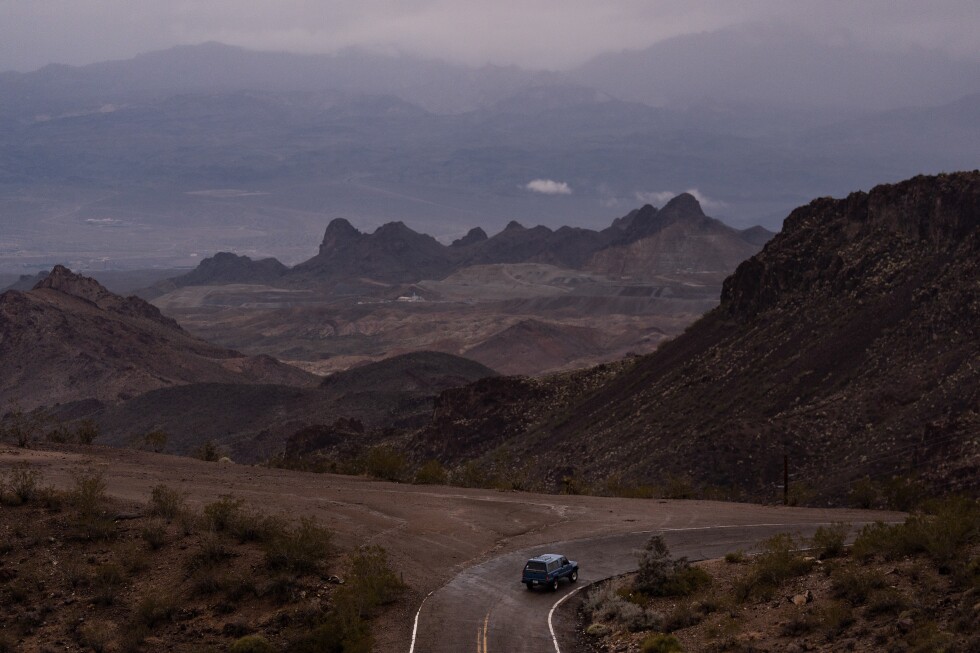
A car is driven along Oatman Highway, historic Route 66, near Oatman, Ariz., Friday, Nov. 21, 2025. (AP Photo/Jae C. Hong)
A car is driven along Oatman Highway, historic Route 66, near Oatman, Ariz., Friday, Nov. 21, 2025. (AP Photo/Jae C. Hong)
Advertisement
Advertisement
Advertisement
The postwar boom of the 1940s and 1950s were Route 66’s heyday, as it became a popular vacation route. Cars became more affordable, disposable income increased, and people began chasing freedom on the open road.
“People generally have a sense of adventure, a sense curiosity. And you can find that on Route 66. This is the road of dreams,” author and historian Jim Hinckley said.
Going mainstream
Roadside diners and motels thrived, as crafty entrepreneurs dreamed up ways to part motorists from their money. There were rattlesnake pits, totem poles, trading posts, caverns where Old West outlaws purportedly hung out, and modern engineering marvels like St. Louis’ gleaming steel arch.
Advertisement
Barns were painted with larger-than-life ads, billboards teased local attractions, and neon was everywhere.
The cherry on top? The food.
Advertisement
A person pulls up to a stoplight in Galena, Kan., Monday, Nov. 17, 2025. (AP Photo/Jeff Roberson)
A person pulls up to a stoplight in Galena, Kan., Monday, Nov. 17, 2025. (AP Photo/Jeff Roberson)
Advertisement
Advertisement
Advertisement
An astronaut figure is placed in front of a window opening at Meteor Crater, an attraction near historic Route 66, near Winslow, Ariz., Thursday, Nov. 20, 2025. (AP Photo/Jae C. Hong)
Advertisement
An astronaut figure is placed in front of a window opening at Meteor Crater, an attraction near historic Route 66, near Winslow, Ariz., Thursday, Nov. 20, 2025. (AP Photo/Jae C. Hong)
Advertisement
Advertisement
Advertisement
Advertisement
There were places to grab and go, but also to sit down and relish a slice of home. The Cozy Dog Drive In — famous for its breaded hot dogs on a stick — has fit both bills since 1949. Inside the dining room in Springfield, Illinois, travelers tell tales of life on the highway.
“The road wouldn’t be alive without the stories of all the places along it that kept it going from town to town,” third-generation owner Josh Waldmire said. “We just survive off each other. The road feeds us, and as long as we put our feelings and love back into the road, it will reverberate with the travelers and the stories of the people.”
A divided highway
Route 66 was an economic boon to the Native American tribes along the way. But although it brought tourists, it also left scars of eminent domain across tribal land and perpetuated stereotypes.
More than half of the highway crossed through Indian Country, and vendor signs often made casual references to tipis and feathered headdresses — symbols easily appropriated for marketing but not always representative of the distinct cultures found along the route.
Advertisement
At Laguna Pueblo west of Albuquerque, restaurants and service stations sprang up, some operated by military veterans from the pueblo who were masters at fixing everything from flat tires to busted radiators.
Pueblo women adapted too, turning utilitarian pottery vessels into works of art coveted by tourists. Homemade bread and pies sealed the deal.
Laguna leaders have long considered the road — or he-ya-nhee’ in the tribe’s language of Keres — as “the corridor of commerce,” said businessman and tribal member Ron Solimon. Capitalizing on that potential, the tribe has built a multimillion-dollar empire of casinos, burger stands and other businesses.
There were also dangers along the route, particularly during the Jim Crow era, when Black travelers had to rely on guides like the Green Book to find safe lodging and services.
Advertisement
“Especially for long-distance travel, segregation was a fact of life,” said Matthew Pearce, state historian for the Oklahoma Historical Society. “And so Black motorists needed to know a safe place to go.”
The Threatt Filling Station near the central Oklahoma community of Luther wasn’t listed in the Green Book, but it did serve as a safe haven between two sundown towns, where people who weren’t white needed to leave by sunset. The station offered barbecue and even baseball.
Edward Threatt, whose grandparents opened the station around 1933, recalled a TV program about travelers getting their kicks on 66. “By and large, the Black traveler didn’t get a lot of kicks on Route 66,” he said. “And if they got some kicks, it wasn’t the kind you would think of.”
A new direction
President Dwight Eisenhower’s vision for a modern interstate highway system eventually led to Route 66 being decommissioned as a federal highway in 1985. Some towns along the route died, and it fell to local governments, state historical societies, and private businesses to preserve their sections of the famed road.
Advertisement
A driving force was Angel Delgadillo, a barber who lobbied the Arizona Legislature to designate the road as a historic highway. He saved Seligman from turning into a ghost town and set the bar for preservation elsewhere.
In New Mexico, original sketches for neon signs have been preserved, Route 66-themed murals abound and developers in Albuquerque have restored motor lodges along the longest urban stretch of the road still intact.
Advertisement
A visitor poses for photos with the “End of the Trail” Route 66 sign on the Santa Monica Pier in Santa Monica, Calif., Saturday, Nov. 22, 2025. (AP Photo/Jae C. Hong)
A visitor poses for photos with the “End of the Trail” Route 66 sign on the Santa Monica Pier in Santa Monica, Calif., Saturday, Nov. 22, 2025. (AP Photo/Jae C. Hong)
Advertisement
Advertisement
Advertisement
More than 90% of the road is still drivable in California. Cadillac Ranch in the Texas Panhandle offers the chance to spray-paint half-buried cars. And at the Mississippi River, travelers can walk or bike across the old Chain of Rocks Bridge.
More than 250 of the route’s buildings, districts and road segments are listed on the National Register of Historic Places. But it’s more than bricks and asphalt that fuel the fascination.
“Some of the most interesting and fun things that happen to people when they travel the route is running into somebody they know or some happenstance thing that comes totally unexpected,” said author and historian Jim Ross. “And that’s a great part of the Route 66 experience.”
Advertisement
___
Associated Press writers John O’Connor in Springfield, Illinois, and Sean Murphy in Oklahoma City contributed to this report.
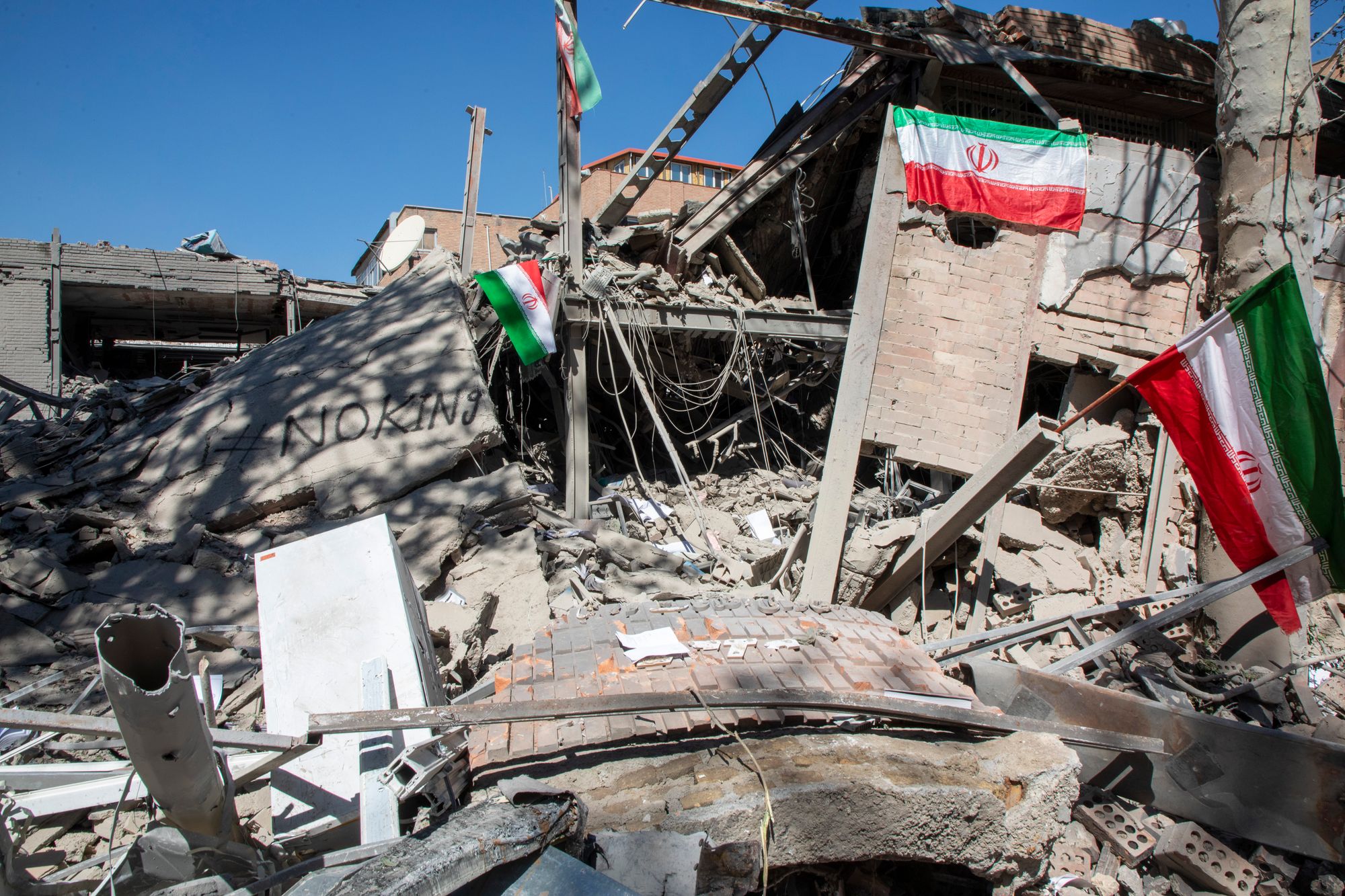
After more than five weeks of fighting between the U.S. and Iran, the two countries agreed to a two-week ceasefire as the sides attempt to negotiate an end to the deadly conflict in the Middle East.
Before Israel and then the U.S. began striking Iran’s nuclear sites last summer, Iran had enlarged its stockpile of uranium enriched to near weapons-grade levels, according to a confidential report by the United Nations’ International Atomic Energy Agency obtained by the Associated Press.
Advertisement
Vice President JD Vance has used an analogy about second lady Usha Vance to explain issues with the Iran war ceasefire (AFP via Getty Images)
While speaking to the press about the U.S.-Iran ceasefire on the tarmac in Budapest, Hungary, Wednesday, a reporter asked Vance, “Do you see a scenario in which the administration may be willing to agree to allow Iran to continue enriching uranium for civilian nuclear purposes?”
Nuclear energy isn’t just used for weapons-making, but can also generate electricity, provide drinkable water through seawater desalination, and is used in medical treatments.
“What the president has said is that we don’t want Iran to have the capacity to build a nuclear weapon. The president has also said that we don’t want Iran enriching towards a nuclear weapon and we want Iran to give up the nuclear fuel. Those are going to be our demands during the negotiation,” Vance said.
The vice president later mentioned that Mohammad Bagher Ghalibaf, the speaker of the Iranian Parliament, noted that his country’s 10-point proposal to end the war included “Iran’s right to enrichment.”
After more than five weeks of fighting between the U.S. and Iran, the two countries agreed to a two-week ceasefire (Getty Images)
“I thought to myself, you know what? My wife has the right to skydive, but she doesn’t jump out of an airplane because she and I have an agreement that she’s not going to do that because I don’t want my wife jumping out of an airplane,” Vance said in reaction to Ghalibaf’s comment.
“We don’t really concern ourselves with what they claim they have the right to do. We concern ourselves with what they actually do,” the vice president said.
Advertisement
Ghalibaf’s comment was part of a larger statement accusing the U.S. of violating parts of its peace plan, which the speaker said Trump had called a “workable basis on which to negotiate.”
Vance said his wife has ‘the right to skydive, but she doesn’t jump out of an airplane,’ in response to Mohammad Bagher Ghalibaf, the speaker of the Iranian Parliament, saying ‘Iran’s right to enrichment’ has been denied (Middle East Images/AFP via Getty)
A White House official told The New York Times Iran’s published plan does not match the framework Trump was referring to.
When asked for comment about Trump’s views on Iran’s proposal, White House spokeswoman Anna Kelly told The Independent, “As the White House has said, these are ongoing discussions and the United States will not negotiate through the press.
“President Trump believes that the current plan is a workable document that can lead to lasting peace in the Middle East.”
Vance will lead the U.S. negotiating team in peace talks in Pakistan’s capital of Islamabad starting Saturday, the White House has announced.
Tanner Horner made a chilling confession to police when he was first apprehended for the murder of Athena Strand, seven, who was discovered dead near Fort Worth, Texas
23:13, 08 Apr 2026Updated 23:15, 08 Apr 2026
A FedEx driver who murdered a seven-year-old girl told police he “kind of tossed her” into the woods when he was first detained.
The killer will appear in court later this month where he will either face the death penalty or life in prison. The prosecution had blasted his deceit, slamming his “lie upon lie, upon lie, upon lie”.
Advertisement
And the newly released bodycam footage shows police search Horner’s home for signs of Athena before demanding he tell them where she was. He told the officers: “‘I can show you.” One cop asks him: “Is she alive?” Horner responded: “She wasn’t alive when I put her in the truck.”
Horner had strangled the girl after delivering Christmas presents at her home in Fort Worth, Texas, in November 2022. Athena’s body was found two days later approximately seven miles from her home, beside a country road.
Initially, Horner told authorities he had accidentally struck the youngster with his truck, and then strangled her in a fit of panic. He continued to deny murder until the first day of his trial in Dallas, Texas, this week.
Proceedings heard grim details about Horner’s crimes, including how he told police he “just kind of tossed” Athena into the woods after she had died. He was, though, unable to identify the exact location of the youngster’s body.
The court was also shown a disturbing picture of Athena stood behind Horner in the vehicle as he drove her to her death. The nightmarish image was the girl’s final moments as, just minutes later, Horner attacked the child.
Advertisement
Addressing the jury, Wise County District Attorney James Stainton said: “You are going to hear what a 250lb man can do to a 67lb child. And when I say it’s horrible, I mean it… I’m going to put you as close as you can be without actually being there that day. We have video of it and we’re going to show it now.”
Jurors watched video and listening to audio files during the hearing on Wednesday. They were warned they would be faced with gruesome evidence, including horrific audio of Athena’s killing, during the proceedings.
















































You must be logged in to post a comment Login