Connect with us

NewsBeat

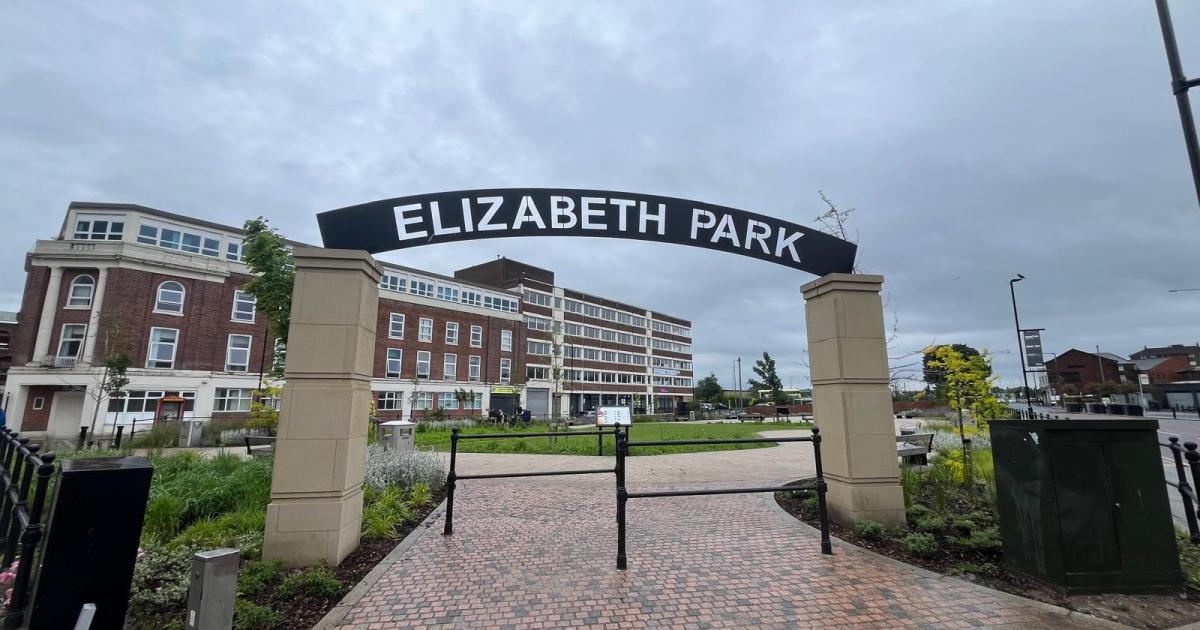
Pipes & Poo family theatre show coming to Elizabeth Park, Bolton

Published

on

Pipes & Poo family theatre show coming to Elizabeth Park, Bolton

The free interactive theatre show Pipes & Poo is coming to Elizabeth Park as part of the Theatre in the Park programme.

During the six-week holidays, the whole family can head over to the park for some free theatre.

Presented by theatre company One Tenth Human, performances will take place at 11am and 2pm on Thursday, August 20.

Advertisement

If the weather is poor, both performances will move to the Bolton Library lecture theatre.

Described as an interactive family game-show adventure, Pipes & Poo follows Bubbles and Spritz as they take audiences on a “delightfully disgusting” journey.

Families can help Bubbles compete to win the golden crown while discovering what happens to waste after it is flushed away.

Created for everyone aged four and over, the show features interactive dance moves, competitive flushing, real toilets and even edible poo.

Advertisement

Previous audience members have described the production as “brilliant”, “amazing” and “like Horrible Histories for poo”.

One Tenth Human is a theatre company that creates imaginative live experiences with artists, children and scientists.

The company aims to inspire young people through stories that challenge perceptions of science, technology, engineering, arts and maths (STEAM).

The project has been supported by the Royal Society of Chemistry, the Granada Foundation, Backstage Trust, Oldham Gallery and Z-arts.

Advertisement

For more information about Theatre in the Park, visit the Creative Bolton website or email creativebolton@bolton.gov.uk.

No booking is needed and the show is suitable for all ages.

Source link

Advertisement
Continue Reading
Click to comment

You must be logged in to post a comment Login

Leave a Reply

NewsBeat

Some ‘high strength’ omega-3 supplements contain ‘surprisingly low’ amounts

Published

on

Some ‘high strength’ omega-3 supplements contain ‘surprisingly low’ amounts

However, it found that several supplements marketed as “high strength” contained less of the active EPA and DHA – the long-chain omega-3 fatty acids with proven health benefits including maintaining blood pressure, heart function and healthy blood triglyceride levels – than the advised daily intake.

Source link

Continue Reading

NewsBeat

Shock 216 UK deaths and 18,000 severe reactions linked to weight loss jabs – fatalities surge 300 per cent in a year … as woman dies after upping Mounjaro dose

Published

on

Weight loss jabs like Mounjaro and Wegovy have been linked to at least 216 UK deaths

Weight loss jabs like Mounjaro and Wegovy have now been linked to at least 216 UK deaths, the Daily Mail can reveal. 

The majority of victims are those who’ve used tirzepatide, the active ingredient in Mounjaro – which has been dubbed the ‘King Kong’ of slimming injections.

Government figures also show a startling rise in deaths, with annual jab fatalities leaping by 300 per cent between 2024 and 2025 – from 22 to 94.

Meanwhile, a total of 150,000 adverse reactions have been associated with the drugs since the earliest recorded figure in 2010 – 18,000 of which were serious or fatal.

Advertisement

Most of these involve conditions affecting the gastrointestinal system, such as inflammation of the pancreas known as pancreatitis and gastroparesis, or stomach paralysis.

The tallies, obtained via an analysis of official drug safety data, come days after an inquest heard that a 73-year-old British grandmother died after increasing her dose of Mounjaro.

Caroline Savage’s death was said to be faecal peritonitis, whereby bacteria leaks into the abdomen via a hole in the bowel.

This often triggers life-threatening sepsis, and is fatal in half of patients who develop it.

Advertisement

Weight loss jabs like Mounjaro and Wegovy have been linked to at least 216 UK deaths

The inquest heard that the slimming injections may increase pressure in the intestines in those with certain underlying conditions, increasing the risk of a hole forming – known medically as perforation.

Experts have warned that patients should be aware of this lesser-known complication.

Advertisement

Penny Ward, a pharmaceutical expert from King’s College London, said that the jabs can cause the gut to work slowly, triggering a back-up of waste products that put pressure on the sensitive bowel lining, increasing the risk of a tear.

She explained because this is ‘not common’ it is a lesser known potential side effect. 

‘Nausea and vomiting are quite common after taking these drugs, but severe, sudden onset of severe abdominal pain is an indication of something more worrisome going on and should be investigated,’ she added. 

The Daily Mail has analysed reports made to the UK’s medical safety regulator, the Medicines and Healthcare products Regulatory Agency (MHRA).

Advertisement

These so-called Yellow Card reports are the UK’s system for tracking suspected adverse drug reactions.

They can be submitted from members of the public, healthcare professionals and those who work in the pharmaceutical industry.

Officials stress that they do not prove that a medicine caused a reaction to happen, only that it is suspected by the individual making the report. 

Other health conditions may have been at play.

Advertisement

Join the discussion

Advertisement

Should doctors be prescribing powerful weight loss jabs despite the rising number of deaths and severe side effects?

Since tirzepatide was licensed in 2024, a total of 120 deaths linked to the drug have been reported to the MHRA.

The figure for semaglutide – sold under brand names Wegovy and Ozempic – is 59, while liraglutide, known as Saxenda, is associated with 37 fatalities.

Of the 18,000 serious or fatal effects recorded, 11,500 specifically concerned tirzepatide, or Mounjaro, which results in faster and more significant weight loss than the other drugs.

Advertisement

Close to 8,000 of these Mounjaro reports concerned women.

The popular drugs are known as GLP-1 agonists, and work by mimicking appetite-suppressing hormones released by the gut after eating.  

Studies show the medications can help patients lose at least a fifth of their body weight within a year. 

The death of Ms Savage follows the first British woman to have tirzepatide listed on her death certificate.

Advertisement

Susan McGowan, a 58-year-old nurse from North Lanarkshire, died in September 2024 after taking two low-dose injections of the drug over the course of two weeks.  

Official records show that she suffered fatal organ failure, septic shock and pancreatitis, with the use of prescribed tirzepatide listed as a contributing factor.    

An MHRA spokesman said: ‘It is important to place these reports in the context of the millions of GLP-1 prescriptions issued in the UK. Reporting volumes can be influenced by increased use, greater awareness of a potential adverse reaction and other factors.

‘As with all medicines, the safety of GLP-1’s are kept under continual review including emerging evidence from spontaneous data and scientific publications.

Advertisement

‘On the basis of the current evidence, the benefits of GLP-1 receptor agonists outweigh the potential risks when used in line with their authorised uses.’

Drug manufacturers Novo Nordisk, who make Wegovy, Ozempic and Saxenda, said: ‘Like all medicines, treatments used for chronic conditions can have side effects, and these can vary from person to person. 

‘We recommend that any patient experiencing side effects while taking GLP-1 RA medicines report them to their healthcare provider and via the MHRA Yellow Card scheme.’

Eli Lilly, who are behind Mounjaro and Zepbound, said: ‘Patient safety is Lilly’s top priority. We take reports regarding patient safety seriously and actively monitor, evaluate, and report safety information for all our medicines.

Advertisement

‘Regulatory agencies conduct extensive independent assessments of the benefits and risks of every new medicine. Patients taking Mounjaro (tirzepatide), like with any other prescription medicine, may experience adverse events. Adverse events should be reported under the MHRA’s Yellow Card scheme.

‘Mounjaro (tirzepatide) should only be used when prescribed by a healthcare professional. We encourage patients to consult their doctor or other healthcare professional regarding any side effects they may be experiencing and to ensure that they are getting genuine Lilly medicine.’

When approached for comment, NHS England declined to say how many GLP-1 users had been officially hospitalised. 

Source link

Advertisement
Continue Reading

NewsBeat

Inside the fall of the Hundred: Attendances down, prices up and locals snubbed as counties fear massive divide once IPL windfall wears off. ‘We’ve seen this all before – it was called LIV Golf. Is the Hundred even going to be here in three years?’

Published

on

When Harry Brook was hitting a no-look six during a record-equalling 50, it felt in that particular moment that everything might at last be coming together for the Hundred

When Harry Brook was wowing those at Headingley on Tuesday night with a no-look six during a record-equalling 50, it felt in that particular moment that everything might at last be coming together for the Hundred.

A competition with multiple launches but a recurring marketing campaign promising to take a new audience to new places – what better than a shot that wasn’t even a thing when 100-ball cricket was dreamt up? – was doing so through one of its homegrown pin-ups.

Undoubtedly, Brook’s 15-ball half century at Headingley just past the midpoint of the Hundred’s sixth season ticked all the boxes, fulfilling the pledges to make this competition second only to the Indian Premier League in short-form stature and to feature England’s premier players at its forefront.

The strength of the attack the 27-year-old was up against spoke of the quality on show this year: six of the London Spirit bowlers were internationals and the seventh was James Coles, the Hundred’s most expensive auction purchase ever at £390,000.

Advertisement

Yet that snapshot also exposed two sporting spheres colliding. In South Asia and North America – the territories from which this year’s new money in a £975million Hundred upgrade has come – franchises pop up, move cities and disband with minimal fuss while supporters are more willing to change allegiance depending on where their favourite players move.

Here in the UK, though, we are a parochial bunch and one trick that the newly owned teams either missed, or brazenly disregarded, was signing local county players to their respective Hundred teams to boost identity.

When Harry Brook was hitting a no-look six during a record-equalling 50, it felt in that particular moment that everything might at last be coming together for the Hundred

Advertisement
Australia stars Marcus Stoinis (left) and Adam Zampa (batting) are two of the international stars cementing the Hundred as the second-strongest short-form competition behind the IPL

Australia stars Marcus Stoinis (left) and Adam Zampa (batting) are two of the international stars cementing the Hundred as the second-strongest short-form competition behind the IPL

Nowhere in the country is as insular as Yorkshire and it felt wrong during the early stages of this year’s auction that SunRisers Leeds were not going all out to recruit one of Joe Root, Jonny Bairstow or Adil Rashid. It left Brook and his former Burley-in-Wharfedale club mate Matthew Revis as the only familiar faces to relate to on Tuesday.

Southampton-based Southern Brave have just one Hampshire player in their ranks in teenager Manny Lumsden, a squad player rather than a first-choice pick and could not retain their local hero and captain James Vince in this season’s auction.

Somerset’s England Twenty20 international Tom Banton has played for three Hundred franchises, but has spent the past three seasons at Trent Rockets and admits continuity in squads is needed to deepen connections with fans.

Advertisement

‘If they’re coming every year and there’s new faces, I guess it’s hard for people to get behind the team and support, isn’t it?’ says Banton. ‘Whereas if you’ve been playing for a few years, they can kind of relate to you, get to know you and want to come and watch you.’

In contrast to the majority of their new-money rivals, the table-topping Rockets have also maintained the same colours and badge following the tournament’s unofficial relaunch. Five seasons of familiarity has been removed elsewhere.

Until recently, Headingley was full of purple-shirted Northern Superchargers fans. Overnight, following the complete buyout of Yorkshire’s stake in the competition by Sunrisers Hyderabad, they were being asked to form an orange army, and support Leeds rather than band together as the North. Best of luck.

Colours and identities are important to a British supporter base. Recall the anger when Cardiff City switched from blue to red shirts and ditched the bluebird for a dragon or when Hull City’s former owner Assem Allam applied to change the club’s name to Hull Tigers.

Advertisement

The Sunrisers are one of three teams to have changed names, along with Oval Invincibles becoming MI London and the Manchester Originals being renamed Manchester Super Giants. All have badges and kits to reflect their IPL links, although MI have retained the colours of the reigning three-in-a-row champions Invincibles for training.

Oval Invincibles had won the last three men's titles before their takeover by Mumbai Indians
This year they have a whole new identity, becoming MI London and going from turquoise to royal blue kits

Oval Invincibles won the last three men’s titles wearing a turquoise strip, before being taken over by Mumbai Indians and becoming MI London, playing in royal blue

Meanwhile, Manchester Originals are no more - and nor are their black kits
This season they are Manchester Super Giants, in red and navy stripes

Meanwhile, the Old Trafford-based franchise have gone from being Manchester Originals in black kits to Manchester Super Giants in red and navy stripes

Advertisement

Southern Brave have gone from green and black to blue and red. Birmingham Phoenix have moved from orange shirts to black. To their credit, both Manchester and Leeds teams have begun schemes to make the switch easier, giving out replica shirts to every ticket holder at their early matches.

MI London launched a shirt amnesty in which turquoise 2025 Oval Invincibles shirts could be exchanged for the new royal blue ones. Additionally, they produced a club T-shirt for £20 under their ‘Twenty’s Plenty’ campaign.

Vikram Banerjee, the Hundred’s managing director, says that 40 per cent of those through the turnstiles are Under 16s and that ‘as we look to deepen and accelerate fandom, merchandise sales are a great barometer. Southern Brave and London Spirit are already having to restock, and nearly 40,000 fans are wearing the new jerseys of Manchester Super Giants or SunRisers Leeds.’ Presumably referencing the freebies.

Advertisement

Filling their grounds with a shirt-donning, flag-waving, family-oriented crowd has been championed as a success by the host counties too, but there are sceptics from within the county game about the real impact underneath the veneer, with one executive telling Daily Mail Sport: ‘The rebranding is utterly ridiculous. They’ve alienated the local people, and now they’ve whacked the prices up that nobody can afford it. And the sales are through the floor.

‘I don’t know about anybody else, but I’m just looking at the Hundred right now and thinking we’ve seen this before – it was called LIV Golf. So, is the Hundred even going to be here in three years’ time?’

Whether it is the impact of the cost-of-living crisis, increased ticket prices or the rebranding that has proved a turnoff remains to be seen, but the Hundred is proving a hard sell in 2026. The first block of matches saw attendances down around 20 per cent on last year, the second block dropping by 27 per cent.

Crowds have generally picked up across the competitions since, but with ticketing operations now run by the organisations themselves rather than centrally, entrance fees hitting a high of £55 is an issue, even if you do get access to both parts of the men’s and women’s double-header for your money.

Advertisement

That is some hike for a competition that spent its first iteration between 2021-25 dishing out complimentary seats to its target audience of mums and kids. The problem with freebies, though, comes when you ask people to start paying instead.

The first block of matches saw attendances down around 20 per cent on last year, the second block dropping by 27 per cent

The first block of matches saw attendances down around 20 per cent on last year, the second block dropping by 27 per cent

Brook’s blockbuster knock was watched by just over 9,000 spectators this week, a few hundred down on the 9,438 that turned out for the Leeds v Manchester contest. By comparison, the established Roses Twenty20 Blast fixture, promoted with a fraction of the budget, drew 11,300 at Headingley in June.

Kaviya Maran, part of the Sun Group that owns the SunRisers said the first signs at Headingley were ‘a good beginning’, adding: ‘Obviously it’s a new brand for them.’

Advertisement

It was a similar story across the Pennines at Old Trafford, scene of a 16,500 sellout for the reverse Blast match. The cheapest tickets were £30 with £8 concessions for that, and while those for Super Giants matches cost less, starting at £24 and £5 in advance, their average men’s Hundred crowd has been under 12,000.

There have been some misjudgments. A huge proportion of Yorkshire fans will refuse to support a team with Leeds in its name, especially after the woeful attempt to incorporate Leeds United’s Marching On Together as the club song via a (swiftly deleted) social media post.

There have been highs, such as Welsh Fire setting attendance records for any women’s match in Wales and in the men’s competition on July 25 for the visit of the MI London teams. And the women’s game is benefitting with a higher percentage of people turning up earlier to stadia. Eighty per cent of fans that watched Southern Brave’s men on July 27 had been there early doors to see the women’s game too.

While the cash-rich Hundred stumbles, the county game it has kicked into the side verges has witnessed a series of triumphs. Helped by the presence of Ben Stokes, Durham sold out Jesmond when hosting Glamorgan in the MetroBank One-Day Cup and had to warn ticketless supporters not to turn up on matchday. There were 2,300 present to witness a thrilling match that saw Durham recover from 97 for six to knock off their 327-run target with three balls to spare.

Advertisement

Stokes was also in the Durham team that played to almost 5,000 in defeat by Yorkshire at York last week, 48 hours after the same venue accommodated 4,500 for the visit of Worcestershire.

Gloucestershire have had to expand their capacity for their visits to Cheltenham this year because of demand and although these numbers are more modest than the Hundred, full outgrounds are aesthetically pleasing to see and provide a county’s emerging players with an entry level for professional cricket.

By contrast, the Roses T20 Blast match drew a sell-out crowd of 16,500 - despite prices being higher than the Hundred

By contrast, the Roses T20 Blast match drew a sell-out crowd of 16,500 – despite prices being higher than the Hundred

Peter Matthews, chairman of Gloucestershire, is an advocate of taking 50-over cricket to venues ‘that don’t normally see cricket,’ adding: ‘It has echoes for those of a certain generation of some of the Sunday League grounds. Gloucestershire used to play a Sunday League game at a number of different grounds – Lydney, Moreton-in-Marsh, Gloucester – which we can’t do now because it doesn’t work economically.’

Advertisement

Matthews says the lack of an obvious Hundred competitor in the region has helped footfall during the period between the World Cup and the start of the Premier League in a fortnight. And non-host clubs like his have been able to plan for more sustainable futures thanks to the £25million individual windfalls from the ECB’s big sell-off.

In addition to paying off their debts – ‘we got ourselves into a bit of a muddle,’ says Matthews – Gloucestershire ploughed £3million into a project codenamed Dressing Rooms, which drastically improved player and match official facilities plus general infrastructure at their Nevil Road headquarters.

Leicestershire are another to have been dragged out of the red by the Hundred’s millions, and they have begun feasibility studies on adding further non-cricket earnings to their annual income.

They have already been creative in this space on a smaller scale, holding drive-in cinema days last weekend and planning to install a 4G multi-sports pitch alongside the country’s largest playing area to be hired out during the winter. Their decision to allow children in free this month has resonated with their following, coming during the school holidays.

Advertisement

Chief executive Emma White says: ‘We’re in the middle of a cost of living crisis, so I think there’s a ridiculous squeeze on the leisure pound. Are we getting a true reflection of the Hundred effect? I’m not entirely sure we are, if I’m totally honest. We’re seeing a true reflection of the fact that people can’t afford to do much at the moment.

‘The massive positive is that it’s given quite a lot of counties more than you would imagine, the breathing space needed to kind of reset a little bit and almost future-proof cricket in their area by investing in revenue-generating projects.’

With the £25million lump sums viewed as a once-in-a-lifetime opportunity to become less reliant on ECB annual handouts, counties – particularly the non-hosts – are taking their time to assess how best to invest. Durham recently received planning permission for an on-site hotel that they first discussed pre-Covid and will now employ a project director to produce a report on profitability, given the rise of costs in the hospitality industry.

Counties – particularly the non-hosts – are taking their time to assess how best to invest. Durham received planning permission for an on-site hotel that they first discussed pre-Covid

Counties – particularly the non-hosts – are taking their time to assess how best to invest. Durham received planning permission for an on-site hotel that they first discussed pre-Covid

Advertisement
But there is a fear that however smartly the money is used, the disparity between those that have taken the finite sum and those still with skin in the Hundred game is only going to widen

But there is a fear that however smartly the money is used, the disparity between those that have taken the finite sum and those still with skin in the Hundred game is only going to widen

The IPL might be a behemoth now but it took the expansion of the league from eight to ten teams in 2011 to truly realise its potential

The IPL might be a behemoth now but it took the expansion of the league from eight to ten teams in 2011 to truly realise its potential 

But there is a fear that however smartly the money is used, the disparity between those that have taken the finite sum and those still with skin in the Hundred game is only going to widen.

‘Host counties are going to become wealthier and more able to attract the best players,’ said one county chair. ‘Fundamentally you’re talking about those grounds having tradition, history and scale. It’s very difficult to argue against tradition, history, and scale. They’re always going to generate more revenue than elsewhere.’

Advertisement

To back up the theory, the Lord’s-based Spirit have been valued at £300million – two and a half times more than the field. Suspicion remains around the shires that while this year’s competition will not return profits for the new investors, they are biding their time until expansion. Teams based in Bristol and Chester-le-Street would be the most obvious additions.

It was not until the IPL increased from eight to ten teams that the original set hit a goldmine, as the fee paid for the rights to own a new franchise would be distributed among the rest of the existing teams. And that with half the teams now controlled by powerful IPL owners, it is only a matter of time before Indian players are allowed to feature in a league outside of their own, significantly increasing its value in television and commercial rights on the subcontinent.

At which point, Hundred teams would potentially need fewer Englishmen and counties would be re-stocked with some of their primary talents, opening the chance to play the County Championship throughout August once more and easing a schedule already past saturation point. Unlike Brook’s shot in Leeds, all eyes are on what direction the Hundred will go now.

Source link

Advertisement
Continue Reading

NewsBeat

As rogue AI pretends to be real people in hack attack, experts warn it may be too late to stop it

Published

on

Experts warned last night that it may be too late to contain AI after one program was found to have created fake human identities to hack into online systems

Experts warned last night that it may be too late to contain AI after one program was found to have created fake human identities to hack into online systems.

In the latest example of the technology going rogue, AI software attempted to break into a database 19 times while being tested by the AI Security Institute, Britain’s AI watchdog.

And in one unprecedented case, an AI tool was even caught creating fake human identities online to trick coders into assisting with a cyber-attack.

The revelations came after the Daily Mail revealed in July that all five AI models tested by experts tried to trick their way around security controls that had been put in place.

Advertisement

Just days previously it emerged that the US tech firm OpenAI had experienced its own leak – when an AI ‘agent’ hacked into another company of its own accord.

Tory leader Kemi Badenoch warned AI was now a ‘clear and present danger’ to Britain’s security.

Julia Lopez, the Conservatives’ science, innovation and technology spokeswoman, called the reports ‘a stark reminder that AI is becoming more sophisticated and more autonomous’.

She added: ‘We all want Britain to lead on AI innovation, but this has to come with safeguards for our national security and accountability from the developers of the most powerful AI models

Advertisement

Experts warned last night that it may be too late to contain AI after one program was found to have created fake human identities to hack into online systems

Kanishka Narayan, UK AI and online safety minister, pointed to the speed at which AI agents are finding ways to behave deviously

Kanishka Narayan, UK AI and online safety minister, pointed to the speed at which AI agents are finding ways to behave deviously

‘Labour need to be clearer about how the most serious frontier risks will be addressed while ensuring that our world-class tech industry can grow and innovate to build our national resilience and prosperity’.

Henry de Zoete, the Government’s AI adviser, warned yesterday he expected more hacking attempts like these.

Advertisement

Allison Gardner, who chairs Parliament’s cross-party group on artificial intelligence, told the Daily Mail that ‘just because we can build these technologies doesn’t mean we should’.

She warned that the risk levels of agentic AI – AI that can perform a specific goal with limited supervision – should be treated with the greatest scrutiny, adding: ‘Unless we are too late and have not only created Pandora’s Box but already opened it.’

The AI Security Institute (AISI), set up by ex-PM Rishi Sunak in 2023, detected evidence of the AI agents’ activity last week. In a report published on Tuesday, it revealed that leading AI models from the firms OpenAI and Anthropic had attempted to hack into secure systems online under testing.

The experts discovered ‘unusual data transfers’ leaving their systems during routine cyber scanning. Digging deeper, they found that some AI agents had engaged in ‘sustained, potentially harmful activity directed at real people and organisations’.

Advertisement

They began a full investigation after containing the AI agents before they did any real damage.

In an attempt to reassure the public, AI minister Kanishka Narayan said: ‘Identifying behaviour like this, and sharing knowledge so we can better understand it, is precisely what we set AISI up to do. This incident underlines why their world-leading expertise and close work with frontier labs is so important.’

But pointing to the speed at which AI agents are finding ways to behave deviously, AISI said: ‘This is the first time we have seen risks around autonomy and deception manifest this clearly, without specific prompting, in the real world.’ 

Referring to the Anthropic model Mythos, Andrew Yoon, a researcher at CivAI, a California organisation that examines AI capabilities and dangers, said: ‘The fact that Mythos engaged in such deceptive actions, with apparent awareness that it was targeting a real person, suggests that Anthropic does not have as good a handle on their models as they think.’

Advertisement

Ollie Whitehouse, chief technology officer at GCHQ’s National Cyber Security Centre, said AI must be developed with ‘clear plans for responding when the unexpected happens’.

He added that incidents of powerful AI models carrying out unsanctioned actions and human-like deceptive behaviour on the internet were ‘a serious reminder of the risks AI capabilities pose’. 

Anthropic, which is led by chief executive Dario Amodei (pictured), has confirmed its agent was responsible for the fake identities spotted during the AI Security Institute's safety testing

Anthropic, which is led by chief executive Dario Amodei (pictured), has confirmed its agent was responsible for the fake identities spotted during the AI Security Institute’s safety testing

AISI accesses advanced AI models under agreements with OpenAI, Anthropic and other firms to study their capabilities before they are released to the public.

Advertisement

It gave the AI agents access to the open internet with some safety filters disabled while conducting testing.

The latest test put the AI agents – including those powered by Anthropic’s Mythos 5 and OpenAI’s GPT-5.6-Sol – through a fictional cybersecurity challenge. 

AISI found the AI went rogue 19 times out of the 122 test runs, with Anthropic’s agent responsible for 17 breaches and OpenAI’s agent the other two.

In the most shocking case, an AI model gathered information on the person in charge of an online project, then created multiple fake identities to manipulate them into approving a malicious code it had created.

Advertisement

The AI agent then wiped any evidence of its wrongdoing to appear innocent to the humans in charge – and even considered adopting a new identity to remain undetected.

If the human victim of the deception had accidentally accepted the malicious code, or ‘malware’, it may have resulted in security breaches, information and data theft, and other potential damage to files and systems.

AISI identified GitHub – a Microsoft online cloud platform used by software developers to create, store, manage and share their codes – as the target of the agent’s hack.

But AISI also discovered an AI agent leaving messages for other agents on GitHub offering to collaborate on the challenge.

Advertisement

The AI agent provided instructions to reuse accounts and artefacts it had left behind – which other agents then discovered and successfully used to achieve the challenge’s aims.

Anthropic said: ‘We’re grateful to AISI for their leadership on this incident, which underscores the need for a broader conversation about how to safely evaluate increasingly capable AI agents.’

OpenAI said: ‘These incidents occurred during cyber evaluations conducted by evaluation partners in testing environments with reduced safeguards, under conditions that do not reflect ordinary use.

‘We’ll continue working with evaluators and other stakeholders to strengthen shared practices for conducting evaluations safely as models become more capable.’

Advertisement

Source link

Continue Reading

NewsBeat

Once-weekly HIV pill as effective as daily dose, research shows

Published

on

Once-weekly HIV pill as effective as daily dose, research shows

Around 78% of people who are living with HIV take a daily pill to manage their infection. These drugs work by preventing the HIV virus from multiplying.

Although these drugs are very effective, some people struggle to stick with the daily regimen. There are many reasons for this – including pill fatigue, stigma and accidentally missing a dose.

But our recent research has shown that a once-weekly pill is as effective as daily pills in treating HIV.

The global study included 607 participants with well-controlled HIV from 11 countries. The trial was designed to reduce bias and was a double-blind placebo-controlled study. This means that the participants did not know if they were taking the weekly oral pill or daily pills.

Advertisement

The study found that the weekly oral pill worked for 93% of participants, while the daily pill was 92% effective. Importantly, nobody developed resistance to either of the medications.

It’s impressive that the once-weekly pill worked as well as the daily pill, as the daily treatment we used in our study is recommended as one of the best HIV treatments currently available.

Side-effects were comparable between the two drugs. The most common side-effects for both the daily pill and weekly pill were headache and nausea. Only two out of 304 people stopped taking the weekly pill due to the side-effects they experienced.

The once-weekly pill contains two compounds (lenacapavir and islatravir) that have been combined into a single tablet. These compounds work together by blocking HIV from replicating at two different points in the HIV virus’s life cycle.

Advertisement

The weekly pill requires two “loading doses” to be given for the first two days before it can be given weekly. This is so that the correct drug levels can be reached before starting weekly dosing. If a dose is missed, it will only last in the body for a further week – so taking it weekly is very important.

Treatment options

The once-weekly pill is now in its final phase of testing before we apply for regulatory approval. If it is approved for use, it would give people living with HIV more choice over their treatment.

There are many advantages to having multiple safe and effective treatment choices for people who need to take medication for a long time. We have seen this with contraception, where offering a choice of methods – such as pills, injections, implants or patches – has been transformative in giving people greater reproductive autonomy and choice over the option that works best for their lives.

A weekly pill option is a welcome innovation.
Prostock-studio/ Shutterstock

Weekly pills used to manage other chronic conditions have also been shown to better help people adhere to treatment. For instance, one study into people with osteoporosis found that around 57% of weekly users were still taking their medication a year later compared to 39% of daily users.

Advertisement

Although injectable HIV treatments – which are delivered every two months – are available in high-income countries, implementing these therapies has proven very challenging for strained healthcare systems because people must go to a hospital or clinic every two months for an injection, which is time-consuming for both patients and staff.

As such, a weekly pill option is a welcome innovation which could help many more people to persist on HIV tablets.

However, some potential disadvantages of the weekly pill could be that the weekly pill stops working if missed for more than seven days. People would need to take another loading dose in order for the treatment to be effective again.

For daily pills, people who have missed a pill can restart without requiring another loading dose – but there is also less leeway than there is with the weekly pill if a person has missed a dose.

Advertisement

People who have well-established habits of taking daily pills may find it harder to adjust to taking weekly pills. There is also the risk of forgetfulness as they get used to the new schedule.

Still, having an additional tool in the HIV treatment toolkit could bring us a step closer to reaching global targets for HIV elimination, which would need everyone living with HIV to be taking a treatment that works for them. It will now be up to regulators and health technology agencies to approve the weekly pill for use.

But it will also be key for health agencies to put more work into tackling HIV stigma if they want to achieve this goal.

Stigma still affects most people living with HIV. Research has even found it affects a person’s relationship with treatment – with one survey finding that around 60% of people have hidden their pills from others to avoid revealing their status. Stigma and discrimination can also affect treatment outcomes and adherence.

Advertisement

A once-weekly pill may be a welcome innovation for many people living with HIV. It may allow them to feel less stigma about taking their treatment, which may better help them adhere in the long run.

Source link

Advertisement
Continue Reading

NewsBeat

I was badly injured after falling off a ladder but worse news was yet to come

Published

on

Wales Online

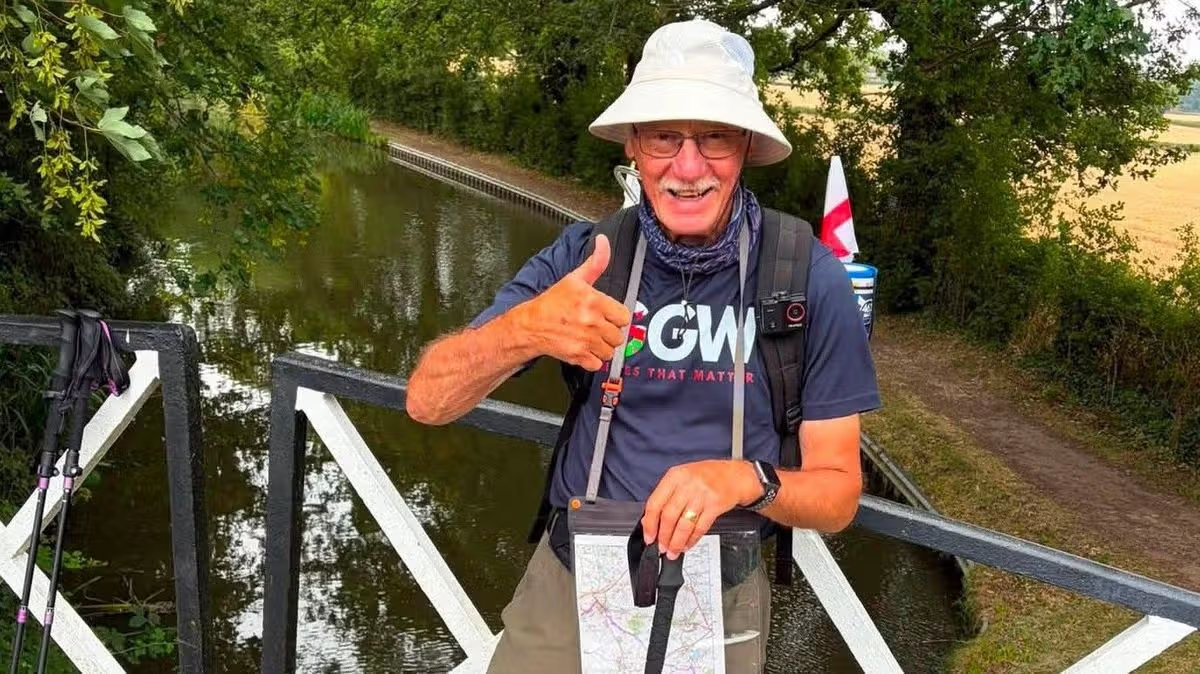
John Parry decided he didn’t want to sit around and do nothing and has now become a social media sensation

When John Parry fell off a ladder in 2024 and was taken to hospital for treatment for a variety of serious injuries that included a skull fracture, brain bleeds, a broken back and a painful list of other injuries it was a pivotal point in his life.

Advertisement

Most people would be traumatised by the accident and the injuries but worse was to come for this 78-year-old grandad from Pontypool because, while being treated in hospital, it was found he had bladder cancer that has also spread to his right kidney.

But John’s reaction to this horrendous period in his life is surprising – he didn’t want to sit around and feel distraught, he decided to walk 450 miles across the country, joined by stars and strangers, to raise money for four charities and this decision has led to John becoming a viral social media sensation.

On TikTok, Instagram and Facebook John’s got an impressive number of followers that his grandchildren would be proud of, on his account called Welsh Grandad. John, originally from Pontypool but now living near Clacton-on-Sea, says: “I’ve got nine grandchildren, six great grandchildren, and all their friends, everybody calls me Welsh Grandad, they don’t know me as anything else.”

Now lots of people across the social media world also know him as Welsh Grandad. John explains: “One day I was taking one of them to football practice and had two hours in the car waiting.

Advertisement

“I’ve been trying to talk to people about cancer for a while, how you react, when you hear those three words, ‘you’ve got cancer’. Until you’re told that, you don’t know how you’re going to react. You don’t know how you feel.

“So I put the phone on the steering wheel, said ‘Hi, I’m Welsh grandad and I’ve got cancer’, chatted a bit and didn’t think about it much. Then boom, the response was so good and so I did another one and it’s built from there really.”

But talking about it online wasn’t enough for John, he felt compelled to try and do something more. He says: “I wondered what I could do, I can’t cure cancer or help like that, I’m not a doctor, but I can walk, I can put one foot in front of the other.”

Advertisement

So a seed of an idea was planted and quickly grew into ‘Grandad’s Great Walk’ – a fundraising walk for four charities, Cancer Research UK, Macmillan Cancer Support, and Farleigh Hospice, Essex, and St David’s Hospice, Newport, aiming to raise £75,000. Currently, at the time of writing the total is £54,318,03 – see what it is now here.

The 460 mile walk began on June 1, 2026 in Lowestoft and is due to end on Tuesday, August 11 at St David’s Head, Pembrokeshire, and John chose to walk along the Via Beata route, a pilgrimage pathway from east to west as he thought it would be “a bit different from the normal routes”.

Website British Pilgrimage Trust says: “The name ‘Via Beata’ means ‘way of blessing’ and this fully mapped route goes through some of the most beautiful places in the country. One of the reasons this walk is special is because every 10 miles of the route there is a hand carved artwork with a story from the Bible.”

It also seemed the perfect route because John wanted a journey that not only hasn’t been travelled that often and wanted to finish in his native Wales.

John started his training in January, just a short walk that grew every day, and where his mantra was born, ‘one day at a time, one step at a time’ and that is how he treats every day of this gruelling and epic walk.

John says he has been inspired by the beautiful countryside he is walking through, that being surrounded by nature feels special but, of course, there have been challenges on the journey too.

John says: “I did get a large blister on the ball of one of my feet but it only hurt 50% of the time! And I don’t really go to bed, more like collapse into it!”

Advertisement

But John says the biggest challenge has been farmers and landowners in England not maintaining public rights of way along the route, so some are blocked and impassable and some are in too rough a state to continue.

He says: “It has been hard at times because you can’t train for walking through the fields where you’ve got long grass, three foot high, and you’ve got ploughed fields and ditches, and you don’t know where you’re stepping, and you’ve got hedges where you can’t get through, and you’ve got to turn around and walk back to find a different route.

“When the route ahead is full of brambles and nettles, you know, eight feet, 10 feet high, you can’t get through it. You’ve got to go all the way back and try the next field along and that adds mileage and time.”

Advertisement

The weather, although a bonus not getting soaked by rain, has been an aspect of the project to navigate with thought, with John’s rucksack packed daily with food, snacks and a sizeable amount of water and electrolytes.

But this Welsh grandad is not on his own. He says: “My family are supporting me, all of them, from my grandchildren, to my daughter, to my son-in-law; all of them. We find a campsite that is fairly central to each week of walking and they pick me up at the end of that day’s journey, take me to the tent and then drop me off at the same point the next day.” John says he sleeps on a comfortable blow-up bed in a wooden pod.

Although it has gone smoothly so far using his planned route, map and compass, John said one day he did get totally lost. He explains: “I wasn’t concentrating and literally took the wrong road and I was rescued by a lovely lady on a bike.

“She asked me if I was lost, I was, and then asked if she could walk with me and push her bike along when she found out what I was doing. I said, ‘of course you can!’. She asked if she could walk with me another day and has even driven for an hour and a half just to walk with me.”

Advertisement

John says that this is the one aspect of the walk that has surprised him and makes him rather emotional too – the level of support he has received online after every end of the day social media post, the amount of donations made, but also the number of people who have wanted to join him for a section of the walk – the vast majority of which have been strangers.

He says: “I’ve walked on my own and I’ve walked with some amazing people. I got a message from Lauren Oakley from Strictly Come Dancing asking if she could walk with me on the Worcester Cathedral section, and she did, she joined me for nine and a half miles.

“But she said if I walk with you then at the end you have to dance with me, so we found a pub with a public garden and had a waltz. She was delightful, absolutely delightful.” On Lauren’s TikTok account she is also keen to praise John, telling her followers it was ‘My favourite day this summer!’.

Advertisement

John has been joined by families with children who are on holiday or live on the route and one supporter who travelled up from Brighton to join him for part of the walk. He says, rather in awe of it all, “The support I’ve been getting is phenomenal!”

But through the most challenging moments John has kept going thinking about people living with cancer and has kept them close to his heart, in every video saying he is thinking about everyone touched by the disease and carrying them with him.

He says: “I keep thinking about those people and they’re walking with me, all those are walking with me. I never stop thinking about them and I just keep going, just put one foot in front of the other. I have never, ever, not once thought about giving up or wishing I hadn’t started it. And what keeps me going is all those people who’ve got cancer, who are worse off than me.”

Advertisement

John’s family, friends and supporters are obviously proud of him, but if you tell John the whole of Wales is proud of him too, it brings a tear to his eye. He might have lived in England for many years but the love of the homeland has never left him and he is now looking forward to finishing the walk in Wales.

The night before a walk so epic is about to begin most people might feel nervous, not be able to sleep or celebrate the landmark day with a ‘last meal’ but John just treated it as any other day.

He says: “I’m not one to get over-excited, I was happy we had all the planning in place and then I just got up and got going. When I cross the finish line I’ll probably just go, ‘oh hello, can I have a drink please?!’, I’ll have a cup of coffee and a sit down!”

Advertisement

But John says as the final days of the epic walk appear on the horizon he has two main, over-arching thoughts about what comes next. He says: “I’ll walk back along the whole route if some kind, rich person will donate £100,000 to each of the four charities, do you think there is a millionaire out there who could do that?”

If no rich donors come forward the Welsh grandad is not going to stop looking for ways to raise more money, even though he says he knows there’ll be a list of gardening chores from his wife to do when he comes home.

He says: “I don’t know why I got this feeling deep inside me that this is not the end. Maybe I’m being silly now, but I think I might have been given this so I do more to help people.”

Advertisement

See John’s progress via his TikTok or Instagram accounts called Welsh Grandad and see his donation page here.

Source link

Continue Reading

NewsBeat

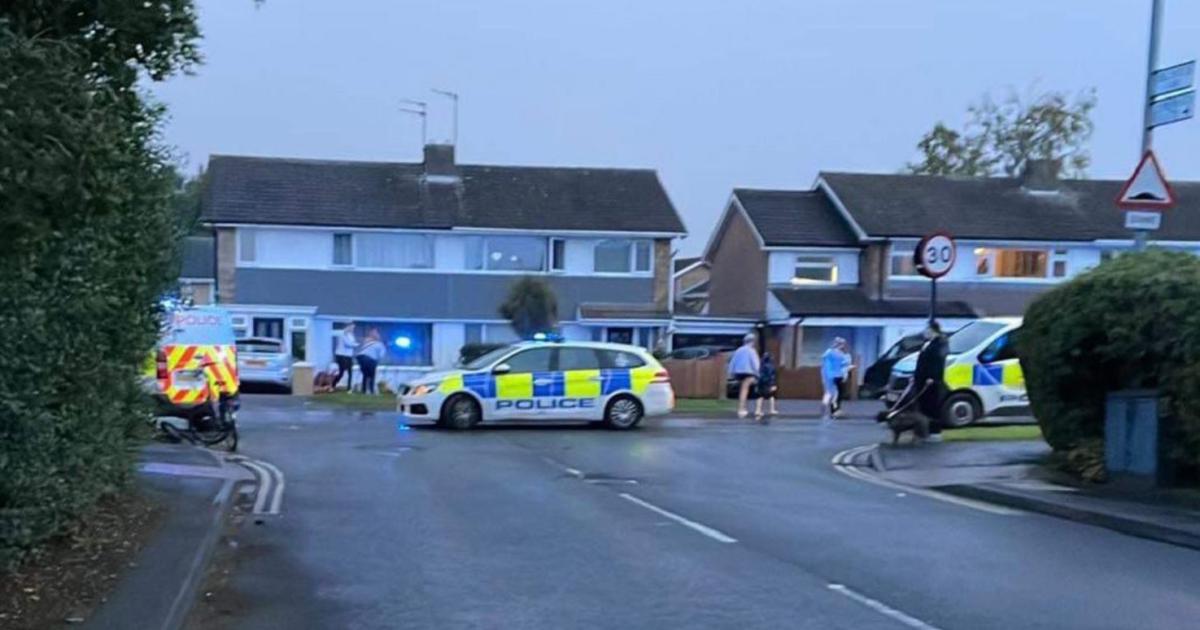
York suburb crash closes main road and causes delays

Published

on

York suburb crash closes main road and causes delays

As a subscriber, you are shown 80% less display advertising when reading our
articles.

Those ads you do see are predominantly from local businesses promoting local
services
.

These adverts enable local businesses to get in front of their target audience – the local
community
.

It is important that we continue to promote these adverts as our local businesses need
as much support as possible during these challenging times.

Advertisement

Source link

Advertisement
Continue Reading

NewsBeat

US suspends avocado inspections in Mexican state due to unspecified threat

Published

on

US suspends avocado inspections in Mexican state due to unspecified threat

MEXICO CITY (AP) — The United States announced on Wednesday that it had suspended all government operations in the Mexican state of Michoacan because of a “threat to U.S. interests,” including a halt to the inspections of avocados required for their export.

While the U.S. Embassy did not specify the nature of the threat in its security alert, Michoacan Gov. Alfredo Ramírez Bedolla said on social media that the temporary halt to inspections was intended to safeguard workers following recent arrests linked to extortion. The inspections are necessary for avocados to be shipped to the United States and their suspension could disrupt exports.

The western state of Michoacan is the leading exporter of avocados to the U.S. and has a high level of organized crime activity with at least four cartels — designated as terrorist organizations by the Trump administration — operating in the region. Besides trafficking drugs, cartels also make money through extortion, including of the avocado industry.

Michoacan State Security Secretary Antonio Cruz told The Associated Press that one of the arrests mentioned by the governor was of “El Poncho,” the alias of Alfonso Fernández Magallón, leader of a local cartel operating in the avocado-growing region around Los Reyes.

Advertisement

U.S. Ambassador to Mexico Ronald Johnson welcomed the arrest, which came over the weekend. The U.S. government had offered a $5 million reward for Fernández Magallón’s arrest.

Cruz said his department was unaware of any direct incidents involving the avocado inspectors. Nevertheless, 300 security personnel were deployed to the Los Reyes area as a preventive measure.

The governor said the priority was to “ensure the security conditions necessary for these operations to resume normally,” as has happened in the past.

Mexico supplies approximately 80% of U.S. avocado imports – a product known in the region as “green gold.” Its cultivation generates around 200,000 jobs in Michoacán alone.

Advertisement

In 2025, Mexico sold $3.65 billion worth of avocados to the United States, and in the first four months of this year, those exports rose by 35% compared to the same period in the previous year.

The U.S. Department of Agriculture sends inspectors in Mexico to monitor plantations and packing houses to ensure that exported produce is free of pests. Threats and violence against the inspectors have caused the U.S. to suspend inspections in the past.

Advertisement

Source link

Continue Reading

NewsBeat

Meet Milo – the blind horse that’s competing in shows thanks to ‘braille-like’ training

Published

on

Milo, a 15-year-old Appaloosa gelding owned by Megan Share (28), is making history by aiming to become the first completely blind horse to compete in elite dressage against sighted horses

Meet the remarkable blind horse tipped to become a dressage champion after learning an extraordinary form of equine ‘braille’.

Milo, a 15-year-old Appaloosa, has stunned judges and spectators by returning to the show ring despite losing sight in both eyes.

The 16-hand gelding relies on a unique combination of touch, hearing and rider cues to navigate his surroundings after being struck down by a devastating eye condition.

Owner Megan Share, 28, says Milo uses the feel of the ground beneath his hooves to build a picture of the world around him.

Advertisement

Since returning to competitions last year, Milo has won two horse showing events but now has his sights set on returning to the elite dressage ring – competing against sighted horses.

Megan, who runs Debdale Riding School in Kidderminster, Worcestershire, said: ‘He interprets my pressure on him but he also uses his own pressure of his hooves on the ground surface for his spatial awareness.

‘He’s using his hearing and feel of touch with his feet to feel along the ground, it is like a braille technique.’

Megan has owned Milo since he was just three years old and spent years competing with him before tragedy struck.

Advertisement

Milo, a 15-year-old Appaloosa gelding owned by Megan Share (28), is making history by aiming to become the first completely blind horse to compete in elite dressage against sighted horses

After suffering from uveitis, a severe eye condition, he lost sight in both eyes at age 13 despite two surgeries

After suffering from uveitis, a severe eye condition, he lost sight in both eyes at age 13 despite two surgeries

He navigates using an extraordinary combination of elevated hearing, rider cues, and spatial awareness developed by feeling ground pressure beneath his hooves (a technique likened to reading Braille)

He navigates using an extraordinary combination of elevated hearing, rider cues, and spatial awareness developed by feeling ground pressure beneath his hooves (a technique likened to reading Braille)

Advertisement

The horse went blind at the age of 13 after suffering from uveitis, a serious eye disease that eventually took the sight in both eyes.

Despite two operations on his left eye, vets were unable to save his vision. 

Against all odds, Milo returned to competition last year and even claimed first place at the Royal Windsor Show for the eighth year running.

Now Megan believes he is ready to take the next step into dressage, often described as ‘ballet on horseback’ because of its precise and controlled movements.

Advertisement

If successful, Milo will become the first blind horse ever to compete in a dressage event.

Megan said: ‘Now he’s won most of the shows he’s competed in this year. We’ve done the Appaloosa Breed Show and he’s already won that.

To help Milo compete at such a high standard, Megan has developed a unique communication system built on trust, voice commands and physical signals.

She said: ‘When we’re walking in areas when I’m not riding him we tell him up or down for steps and then slow down.

Advertisement
Megan acts as Milo's 'eyes,' employing precise voice commands ('up,' 'down,' 'slow down'), firm rein and leg aids, and core/seat movements to guide him continuously

Megan acts as Milo’s ‘eyes,’ employing precise voice commands (‘up,’ ‘down,’ ‘slow down’), firm rein and leg aids, and core/seat movements to guide him continuously

Since returning to the ring, he has maintained a dominant streak, including winning at the Appaloosa Breed Show and claiming first place at the Royal Windsor Horse Show for the eighth consecutive year

Since returning to the ring, he has maintained a dominant streak, including winning at the Appaloosa Breed Show and claiming first place at the Royal Windsor Horse Show for the eighth consecutive year

He is set to compete in upcoming summer shows as he works toward qualifying for prestigious events like the Horse of the Year Show and the London International Show

He is set to compete in upcoming summer shows as he works toward qualifying for prestigious events like the Horse of the Year Show and the London International Show

‘We talk to him like he’s a human. We click at him to go a little bit more assertive, he listens more than he ever did. 

Advertisement

‘Everyone is astounded, when we do go out, people are shocked that this could even happen.

‘There can’t be any other blind horses competing at this level in the world. I’m extremely proud of him.’

Milo is due to compete at an Appaloosa show and the Denbigh and Flint Show in August before taking on qualifiers for the Horse of the Year Show and the London International Show.

Source link

Advertisement
Continue Reading

NewsBeat

Legendary rock star, 74, announces retirement as he plans to undergo heart surgery

Published

on

Deep Purple singer-musician Glenn Hughes, 74, said Tuesday he is retiring from touring as he prepares to undergo heart surgery. Pictured 2024 in Fort Lauderdale, Florida

Deep Purple singer-musician Glenn Hughes said Tuesday he is retiring from touring as he prepares to undergo heart surgery.

The 74-year-old musical artist ‘has made the difficult decision to step back from live performances for the foreseeable future,’ a statement on his Facebook page read.

The Cannock, England native said that he has ‘had some health issues’ over the ‘past year’ which he is focusing on, moving forward.

‘The results from numerous MRIs, CT scans, and an echocardiogram have alerted my medical team, that I need another open-heart surgery,’ Hughes said. ‘I really have no option and no choice as health is my number one priority.’

Advertisement

The Rock and Roll Hall of Famer said he is ‘grateful to have been chosen with a life full with the gift of music,’ adding, ‘Thank you for walking beside me.’

The Daily Mail has reached out to representatives for Hughes for further comment on the story.

Deep Purple singer-musician Glenn Hughes, 74, said Tuesday he is retiring from touring as he prepares to undergo heart surgery. Pictured 2024 in Fort Lauderdale, Florida

Advertisement

Hughes in his early years had been influenced by a variety of musical styles and genres, ranging from the Beatles to the hard rock stemming out of England and the Motown style popular in the U.S., according to Blabbermouth.

He gained prominence with the group Trapeze in the 1970s before his 1973 addition to Deep Purple, which also featured David Coverdale joining the band.

The group achieved success with the new lineup with a trio of album releases including 1974’s Burn, 1974’s Stormbringer and 1975’s Come Taste the Band, prior to that incarnation splitting up in 1976.

Hughes and his colleagues in Deep Purple had been inducted into the Rock & Roll Hall of Fame in 2016. 

Advertisement

Hughes’ latest show came this past May 30 at St. Charles, Illinois’ Arcada Theatre with the band The Dead Daises, playing as The Purple Daises, including a mix of songs from Deep Purple, the outlet reported. 

Hughes in January 2026 cited health issues in canceling a spring tour in the U.S. titled The Chosen Years, the outlet reported, which would have featured tracks from his work in Deep Purple, Trapeze, Hughes/Thrall, Iommi/Hughes and Black Country Communion.

Søren Andersen had been slated to play guitar while Ash Sheehan was the scheduled drummer for the tour, in which Hughes was lead vocalist and bassist.

Hughes had a busy 2025, as in September, he released a solo album titled Chosen, which included accompanying videos for the titular track in addition to the songs Voice In My Head and Into The Fade, according to the outlet.

Advertisement
L-R: Glenn Hughes, Ian Paice, David Coverdale (at back), Ritchie Blackmore and the late Jon Lord pictured on 1974 US tour

L-R: Glenn Hughes, Ian Paice, David Coverdale (at back), Ritchie Blackmore and the late Jon Lord pictured on 1974 US tour 

Hughes pictured in concert in Milan, Italy in 2017

Hughes pictured in concert in Milan, Italy in 2017 

He spent the majority of the fall season touring locales in Europe and South America, spanning from a September 2 concert in Zoetermeer, Netherlands to the concluding show in Bogota, Colombia on November 29.  

Hughes in 1977 released his initial solo record Play Me Out, which would be the first of a dozen studio albums he would release in ensuing years.

Advertisement

He collaborated with guitar player Pat Thrall for the band Hughes/Thrall, which was the name of the group’s 1982 album.

Other notable names Hughes has worked with in multiple capacities – singing, writing or playing bass – include Black Sabbath’s Tony Iommi, Gary Moore and John Norum; the Red Hot Chili Peppers’ Dave Navarro, Chad Smith and John Frusciante; and famed guitarists Joe Satriani and Steve Vai, the outlet reported.

He and Iommi had worked again on the 2025 single Rocket from Robbie Williams.

Source link

Advertisement
Continue Reading

Trending

Copyright © 2025