Terry Paton, who lives nearby, told the LDRS: “Whilst I appreciate the need for homes, this whole development is out of character for this suburban area – currently made up of two-storey family homes. The sheer scale and density should be a reason to turn this scheme down, and something more appropriate considered.”
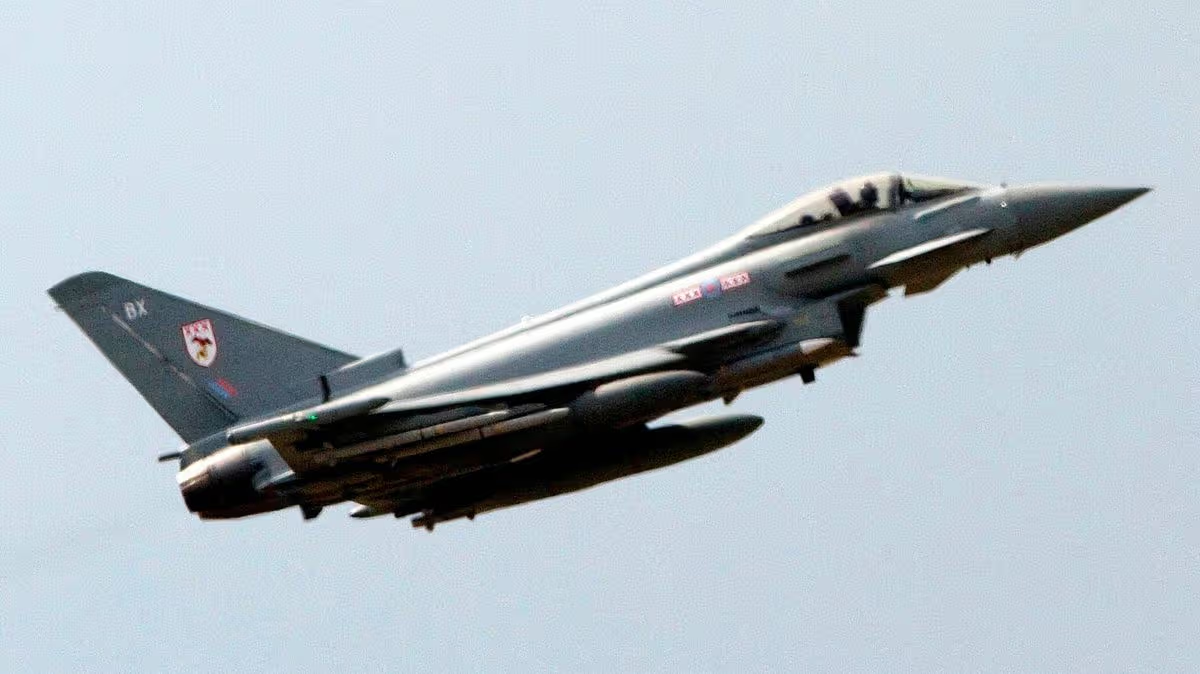
Two Royal Air Force Eurofighter Typhoons were scrambled from the Fetesti airbase in Romania
RAF fighter jets on a NATO patrol have for the first time shot down Russian drones over Ukrainian territory.
Advertisement
Two Royal Air Force Eurofighters were scrambled from Romania as Vladimir Putin’s forces launched attacks on ports along the River Danube in Ukraine.
The crew engaged and downed the Russian drones in Ukrainian airspace, according to the Romanian Ministry of National Defence. The strike over Ukraine, aimed at safeguarding NATO member state Romania, marks a significant new development in the four-year conflict.
Click here to get the biggest stories straight to your inbox in our Daily Newsletter
It came as Russia’s relentless overnight assault on Ukraine prompted NATO to scramble warplanes from both Romania and Poland.
Advertisement
“On the morning of Saturday, April 25, Russian forces resumed drone attacks on civilian and infrastructure targets in Ukraine, near the river border with Romania, in Tulcea County,” said the Bucharest statement, reports the Mirror.
“MApN radars detected drones flying near Romanian airspace. Two Eurofighter Typhoon aircraft of the British Air Force from the Reinforced Air Police combat service took off at 02:00 from the 86th Air Base in Fetești.
“The National Military Command Centre notified IGSU [General Inspectorate for Emergency Situations] regarding the establishment of measures to alert the population in the localities of Grindu and Isaccea, in Tulcea County, and at 02:14, a RO-ALERT message was transmitted.
“The Eurofighter Typhoon aircraft had radar contact with a target located 1.5 km from Reni, above Ukrainian territory. The pilots had authorisation to engage the drones.” The statement said multiple explosions were reported in Reni, Ukraine. It did not explicitly state how many drones were brought down by the RAF. There were reports of falling debris from drones over Romanian territory. “No casualties were reported,” it added.
Advertisement
Romania condemned the Putin regime over its strikes on the Odesa region — with targets just half a mile from NATO territory across the Danube.
“The Ministry of National Defence firmly condemns the irresponsible actions of the Russian Federation and emphasises that they represent a new challenge to regional security and stability in the Black Sea area,” said the report.
Such incidents highlight the Russian Federation’s disregard for the norms of international law and endanger not only the safety of Romanian citizens, but also the collective security of NATO.
“Romania remains firmly committed to fulfilling its obligations as a member state of the Alliance and will continue to work closely with partners and allies to monitor and defend national airspace.”
Advertisement
In Poland, French fighter jets backed by Dutch armed forces operating under the NATO alliance were scrambled as Russia unleashed a barrage of missiles and drones on Ukraine.
“Poland raised military aircraft due to the activity of long-range Russian aviation, which carried out missile strikes on Ukraine,” said a statement from air force operational command. Ferocious Russian strikes demolished a four-storey apartment block in Dnipro, leaving at least two dead and more than 20 injured. A further five people are feared to be trapped beneath the rubble.
The city endured bombardment for over ten hours, with strikes also hitting the Kharkiv, Mykolaiv, Kyiv, and Cherkasy regions. In Bila Tserkva [Kyiv region], a significant blaze broke out amid thick smoke, with residents urged to keep their windows shut.
In one of the most intense overnight assaults of the conflict, Russia unleashed a wave of missile and drone strikes on Ukraine. The attack comprised 47 missiles, of which 30 were intercepted. A total of 580 out of 619 drones were either shot down or suppressed.
Advertisement
Meanwhile, Ukrainian drones travelled vast distances of more than 1,100 miles to strike major Russian cities in the Ural Mountains for the first time. The Kremlin was rattled by hits deep within its territory, with long-range unmanned aircraft targeting the key hubs of Yekaterinburg and Chelyabinsk.
Liutyi drones struck an elite high-rise tower in Yekaterinburg, likely after being engaged by air defences. Windows on the upper floors were shattered and smoke was seen billowing from the building. More than 50 residents were evacuated from the multi-storey block, with numerous flats sustaining damage. At least six people were injured.
Reports indicate that Ukrainian long-range drones targeted the Chelyabinsk Higher Military Aviation School of Navigation in Chelyabinsk. Unconfirmed reports also emerged of explosions near the strategically significant Chelyabinsk Metallurgical Plant.
The defendant opened his jacket to show the victim his t-shirt, which declared “stop importing – start deporting”, before reaching into his backpack to pull out a red, black and white Nazi flag.
06:00, 25 Apr 2026
Advertisement
A man who wrapped a Nazi flag around his hand before punching a man in the face during a racist assault has been handed a suspended jail sentence.
Sentencing Jamie Taylor at Craigavon Magistrates Court, Deputy District Judge Gerard Trainor told the 36-year-old his attack was “racism through and through, naked.”
“Behaviour of this nature is unacceptable in any right-thinking society,” the judge declared and turning to Taylor demanded to know, “have you anything to say?”
“Sorry, Your Worship,” Taylor replied, “sorry to the injured party.”
Advertisement
“I am not convinced that you are,” Judge Trainor told him, adding that “the only question is whether you go to prison today, or the next day when you commit further offences.”
Taylor, from the Tandragee Road in Gilford, had earlier entered guilty pleas to charges of common assault, disorderly behaviour, criminal damage and resisting police, all committed on 27 February this year.
Today (Fri), a prosecuting lawyer outlined that it was around 08.30 am when the victim was standing outside the Baptist Church on Thomas Street when Taylor walked past.
The defendant opened his jacket to show the victim his t-shirt which declared “stop importing – start deporting” before reaching into his backpack to pull out a red, black and white Nazi flag.
Advertisement
After the victim called him a “racist c***,” Taylor told him “you have not seen f****** racism” and after wrapping the flag around his hand, punched him in the jaw.
The defendant left the scene but the court heard that when police arrived, they found that a Kia car had been covered in flour.
The prosecutor said there were “flour trails” which led police to the defendant.
During the arrest, Taylor resisted police, and the court heard that both the assault and the resisting police were aggravated due to hostility based on race.
Advertisement
Defence counsel Peter Canavan told the court that at the time, Taylor had been “heavily under the influence,” adding that “the context [of the offending] is accepted.”
Although he suggested the case could be met with a community-based disposal, Judge Trainor said, given the nature of the offending and the fact that Taylor had previously been on probation, any such option was out of the question.
Revealing that Taylor has 23 convictions, mainly for violence and disorderly behaviour, the judge said it was clear the defendant “had once persuaded probation that he is a reformed character and yet, here he is doing this.”
The victim was sitting in the public gallery and Mr Canavan conceded that his Victim Impact Statement made for “harrowing reading.”
Advertisement
“The injured party has articulated his concerns and what is a wider societal issue,” said the barrister, submitting that Taylor “has been pretty active in trying to address his issues.”
Judge Trainor said while he regularly dealt with defendants who were suffering from mental health or substance misuse issues, Taylor had acted in a “deliberate, pre-planned way, and that is not something that I can put down to mental health, for alcohol or anything.”
“This is racism through and through, naked,” the judge declared, outlining how the incident has had an impact on the victim and his family.
Imposing a six-month prison sentence, he added that given the contents of the report and the defence submissions, “I will suspend that for two years.”
Advertisement
In addition, Judge Trainor also imposed a two-year restraining order.
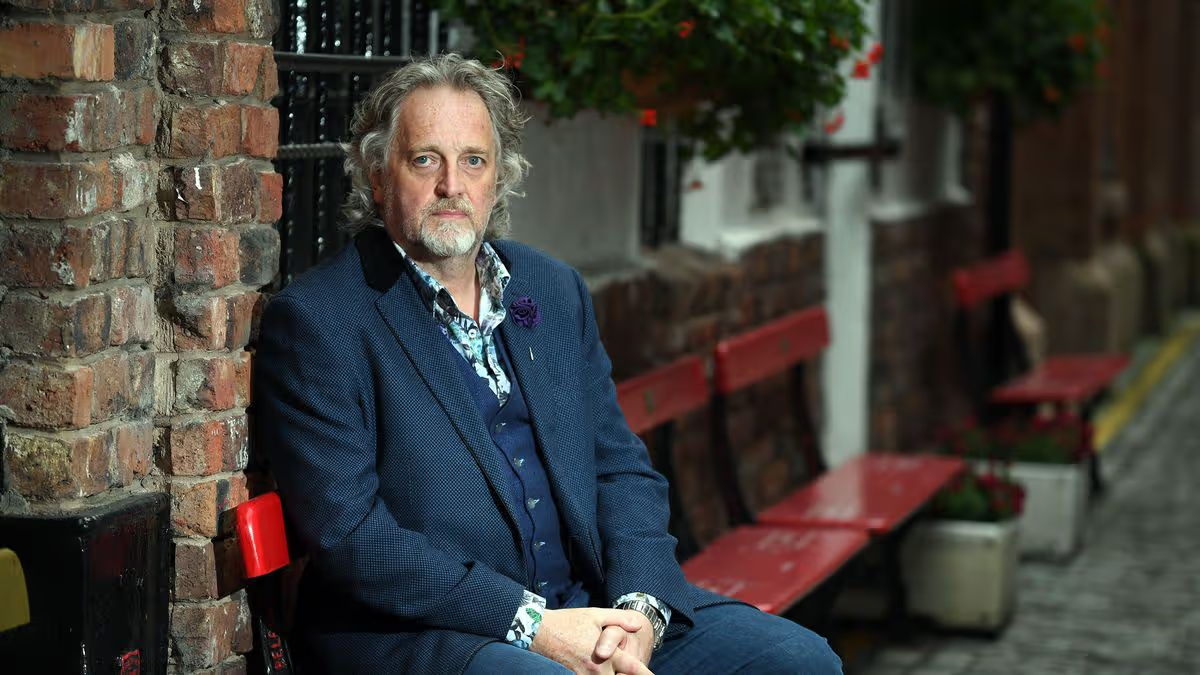
With almost four decades of working in hospitality under his belt, no one quite knows our local industry like Michael Stewart.
Director of Common Market, owner of a hospitality consultancy and training business and Belfast’s very first Night Czar, championing the city’s late-night economy, he explained passion has been the driving force for his long career.
From taking a risk returning home to manage a South Belfast bar to leading roles in some of the city’s most successful pubs, venues and clubs, Michael has seen the good, the bad and the ugly of what it means to work in hospitality in Northern Ireland.
Speaking to Belfast Live, the Belfast-born businessman reflected on how the industry has changed over his 39 years in the game, the realities of operating a hospitality business in 2026 and enhancing Belfast’s status as a late-night city.
Four decades on the scene
Having moved to London to work in the 1980s, little did Michael know that a phone call from his friend Pim Dalm, owner of The Clandeboye Lodge, would change the trajectory of his life.
Croft Inns were looking for someone fresh to run Bob Cratchit’s on the Lisburn Road and Pim had put his name forward – after interviewing on a Monday, Michael had moved home to start his role as General Manager of the bar by the Saturday, and his love affair with hospitality offically began.
“I ran Bob Cratchit’s for ten years – the price of a pint was £1, spirits were £1, we were selling wine out of a 10-litre box on draft.
Advertisement
“Ten great years before I jumped ship to join Jaz Mooney. We opened The Fly and I ran it for two years before moving into head office with Jaz where he would say I ‘went on the rampage’,” he laughed.
“We developed Apartment, McHughs, Madison’s, Ryan’s and I was Head of Operations for another brilliant five years.”
Michael’s portfolio working on Belfast’s nightlife hotspots continued to grow and he was eventually headhunted by Ultimate Leisure, operators of Beach Club, and stepped into the world of nightclubs.
But his career “actually kicked off” when he was made redundant back in 2003, forcing him to reevaluate and eventually leading to the creation of The Bar Czar, his successful hospitality sector solutions, project management and training company.
Advertisement
“I’ve actually been self-employed longer than I was employed,” Michael added.
“There’s a cliche where a lot of people say everyone should work in hospitality. I don’t think it is a cliche – I think it is true.
“You should work in hospitality, whether you think you are good, bad or different, and that’s where you’ll really start to find yourself. When you are in hospitality, so many situations are thrown at you.
“Covid taught us how vulnerable we are but it also proved to me that you cannot replicate hospitality. It’s in our DNA – it’s face to face, it’s interaction. The good, the bad.
Advertisement
“If you work in hospitality, you take that away with you and I think it sets you up for life.”
‘Harder than ever’
Reflecting on his “life sentence” in the industry, which he was “so glad” to have fallen into back in 1987, he stressed that it is more difficult now than it ever was to operate in NI’s hospitality industry.
Michael explained: “So many things have changed since 1987. I will say this and I stand over it – back then, hospitality was fun. Now, it is hard.
“And everyone knows that.”
It is no secret that prices of pints are on the rise and the cost of a night out in Belfast is now being compared to that of London and Dublin.
Where people believe greedy publicans are to blame for a £7 pint in the city, Michael stressed that the hospitality rate system is “not fit for purpose” and both businesses and customers alike will suffer as a result.
Advertisement
“The rate system here for hospitality does not fit for everyone. You are taxed on turnover, not square footage, so that is a nightmare.
“And that is before you even open the doors – then you have electric, gas, minimum wage, marketing, insurance, water, sewage, VAT.
“Employees’ rights have changed for the better over the past 39 years, which I totally support, but what is difficult is the rate at which minimum wage is rising every year. It’s beyond inflation and beyond the cost base and a lot of venues have to suffer.
“There are so many things like this that people don’t understand that goes into hospitality but let me tell you this, a lot of people do understand because if they didn’t, hospitality wouldn’t exsist.”
Advertisement
While a night out in Belfast may be seen as much more of a luxury now than it was during his days at Bob Cratchit’s and he can appreciate that more people are enjoying a drink at home, he said it is the experience of a night out in a hospitality venue that cannot be replicated and this is what keeps the industry fighting through the tough times.
“Northern Ireland is resilient,” he said. “We came through The Troubles, we came through the dot-com crisis, we’ve come through I don’t know how many financial crashes and we are still here.
“We will always find our way out, we are resilient people and sometimes our way out is just to go out and have a bloody good time.”
Common Market – the new age of a night out
It was in the aftermath of the pandemic that Michael joined forces to open his newest hospitality venue, Common Market, in the Cathedral Quarter – a buzzy food and drink market that has launched some of the city’s most exciting food ventures.
Advertisement
“The way I sum it up is informal formality – people want that informality but they want the formality of good service, good standards, quality drinks and good value.
“People don’t want a cheap night, they want good value for money and Common Market is all about the experiential.
“You can get a drink if you want a drink, get food if you want food or you can come in, get nothing and enjoy the live music. It’s dog-friendly, child-friendly.”
Advertisement
When asked what has kept him in hospitality and constantly developing new things for Belfast’s food and drink scene, Michael said it comes down to one thing – passion.
An Ulster University alum, he regularly goes back to talk to hospitality and business students, sits on the board reviewing final year dissertations and engages with students in his role as Night Czar, all things he does on his own time because he is passionate about hospitality in Northern Ireland.
“You’ve got to have passion, stamina and enthusiasm. I’ve got enthusiam and loads of passion – maybe getting less stamina,” he laughed.
“But the passion, you either love it or you don’t. Even when it is hard, you have to love it.”
Advertisement
Late-night economy and hospitality
Michael was appointed as the city’s first Night Czar in 2024 in a bid to improve its night-time economy.
His two-year role, which has been extended for another year, focuses on enhancing, coordinating, and advocating for the city’s night-time strategy in terms of safety, transport, and business.
The Night Czar’s responsibilities include acting as the central point of contact for night-time services including hospitality, venues, transport and policing as well as advocacy and lobbying for statutory agencies.
When asked on a radio interview after his appointment why he would take up this honorary role for only £12k, he replied: “Well the fact I am doing it for that sort of money tells you I am not doing it for the money.
Advertisement
“I am doing it for the passion and wanting to make a difference.”
He started with four key objectives when he became Belfast’s Night Czar: develop and enhance late-night transport, advocating for an end to violence against women, reinstate Culture Night and a common-sense approach to pavement café licensing.
One of the biggest impacts on the hospitality trade and the safety of both customers and workers was a year-long pilot scheme for late-night travel to and from Belfast.
Advertisement
Late-night buses operate across 11 Translink Metro routes and four Ulsterbus routes on Friday and Saturday nights and with fares costing under £3, Michael is proud to have lobbied hard to achieve this scheme and offer a safe way home from a night out in the city.
With hopes to extend the scheme for another six months when the pilot ends, he stressed that it is a “use it or lose it ” situation, with the benefits to the economy, hospitality industry and safety of the nightlife scene in Belfast far too important to lose.
With over half his life spent serving the hospitality industry in Belfast, there is not a corner of it he hasn’t worked in, consulted on or enjoyed himself.
Violence, pandemics, financial crashes – he has worked through them all and seen Belfast fight back to rise through the ashes despite the continued set backs the industry faces.
Advertisement
“We are in uncertain times, just on a world stage, but I think it will come good again at some point. It will have effects for everybody in every walk of life.
“But as I said at the begining, we in Northern Ireland are a resilent bunch and I think we will come through it, probably battered and bruised, but we will come through it.
“People will still, in some shape or form, want to go out – no matter the price of a pint, the price of meal or entry to a club, they will still want to experience it because you cannot replace that social interaction that is in our DNA.
“Habits may change, but people will still want to work in hospitality.”
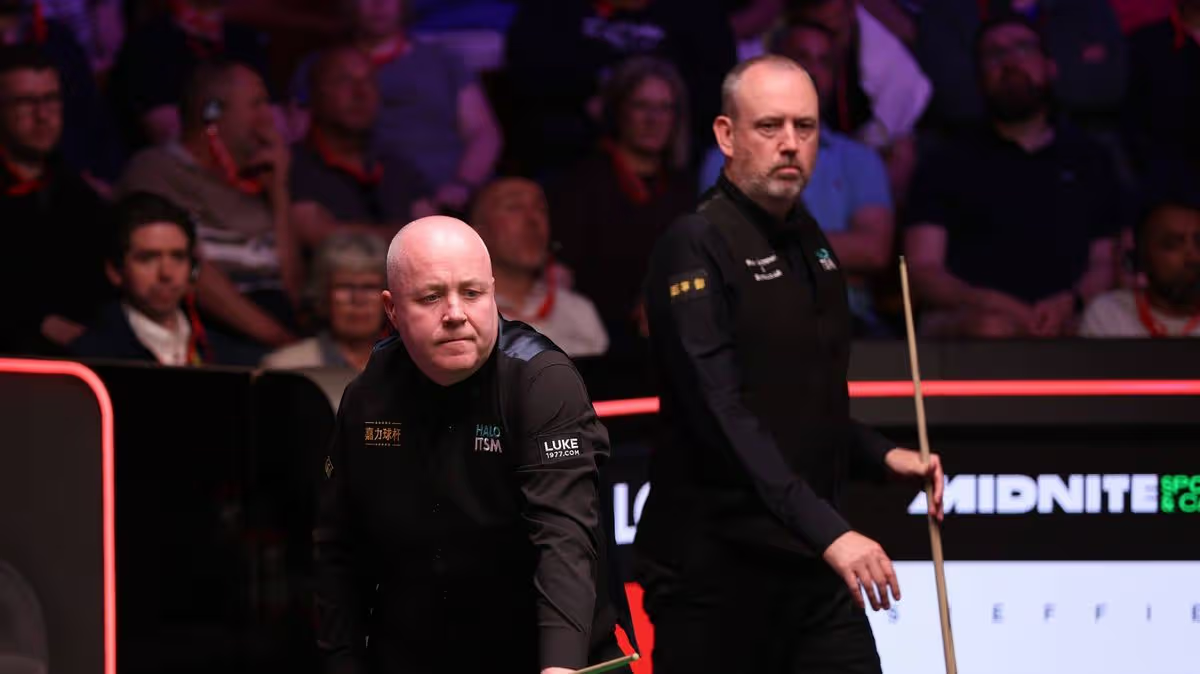
John Higgins faces Ronnie O’Sullivan in the last 16 of the World Snooker Championship at the Crucible on Saturday
John Higgins has admitted to not sharing a close relationship with the likes of Mark Williams or Ronnie O’Sullivan, despite their numerous encounters over the years. Higgins and O’Sullivan are set to meet at the World Snooker Championship on Saturday.
Advertisement
Part of the sport’s celebrated Class of ’92 alongside Williams Higgins and O’Sullivan, have been fixtures throughout each other’s 34-year careers. Their forthcoming last-16 clash at the Crucible will mark their 80th encounter, with the competitors having secured a combined 11 world championships and 74 ranking titles.
‘The Rocket’ arranged a showdown with Higgins after beating China’s He Guoqiang 10-2, while ‘The Wizard of Wishaw’ progressed to the second round with a 10-7 triumph over Ali Carter. Williams, meanwhile, has to overcome a 10-6 deficit against Barry Hawkins as their match resumes on Saturday.
Nevertheless, Higgins has acknowledged he would not regard O’Sullivan as a friend. At least not in the traditional sense.
“I get asked about that and it’s the same answer I give, I don’t really know Ronnie at all,” Higgins told the Talking Snooker podcast in 2023. “When you think all these years we’ve been on the tour, we’ve never really been that close, I could count on one hand the amount of meals we’ve had together.
“But I’ve got the utmost respect for him as a snooker player. Incredible player and I think it goes back to what I said about Mark Williams. Going for the same titles, you cannot be all that friendly with each other.
“Respect of course, but being friends, nah. We’re different characters as well, the three of us, totally different characters.
Higgins explained that competing for the same titles had strained his relationship with Class of ’92 icon Williams in the past. However, seven-time world champion O’Sullivan has shared a different reason for wanting to keep his distance from other players on the snooker circuit.
“I think Mark and John are better friends than I am with them,” O’Sullivan said to TNT Sports. “I don’t really get close to anyone on the snooker circuit, because I don’t really hang around tournaments.”
“No one sees me, I’d rather be down the gym or go running, or go to nice restaurants, while a lot of the players hang out with each other.”
Advertisement
He added: “I don’t want to talk about snooker, I get bored talking about rankings, about what world snooker is doing. I have zero interest in snooker as far as that’s concerned. I choose to separate work from my off time.”
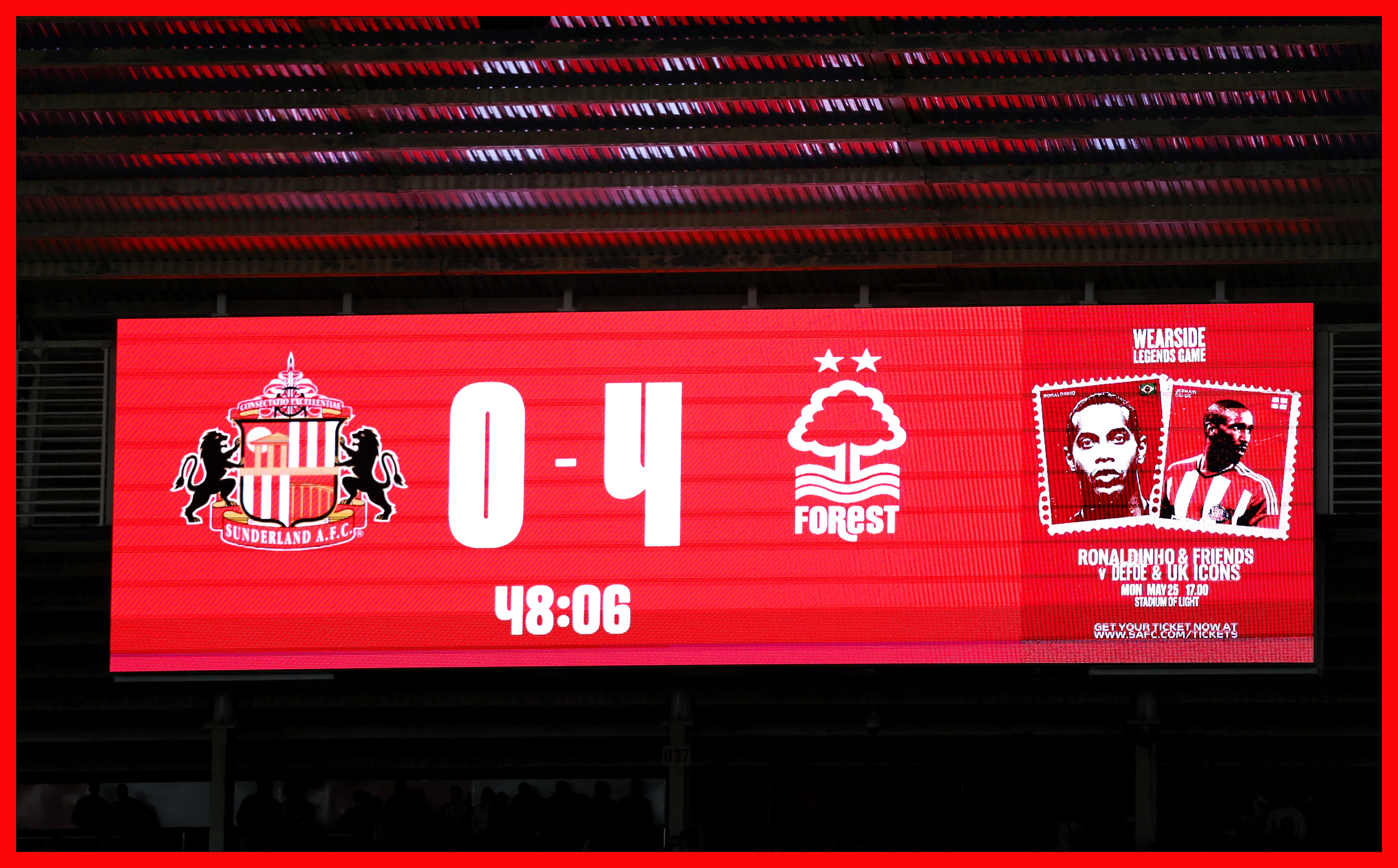
The 26-year-old, who scored a hat-trick in last weekend’s 4-1 win over Burnley, starred in a first-half rout as the Europa League semi-finalists established an eight-point gap to 18th-placed Tottenham, who only have five games left to play.
Aided and abetted by a shambolic defensive performance by Regis Le Bris’ men, Forest put the game to bed before the kettle for the half-time tea had even been filled with Trai Hume’s unfortunate own goal sparking a spectacular collapse amid which Chris Wood, Gibbs-White and Igor Jesus all scored inside six minutes before Elliot Anderson added a fifth at the death.
Forest were in fine scoring form (PA)
In the process, they extended their unbeaten run in all competitions to eight games and inflicted the Black Cats’ heaviest defeat since their return to the top flight as they conceded four in successive fixtures, prompting a rare, if mercifully short, chorus of boos at the break.
The visitors made the brighter start and Anderson saw his early strike blocked by Omar Alderete after Noah Sadiki had carelessly passed the ball straight to Omari Hutchinson, but Chris Rigg passed up a glorious opportunity to fire Le Bris’ side ahead when he shot tamely at keeper Matz Sels from Enzo Le Fee’s inviting through ball.
Advertisement
Sunderland keeper Robin Roefs had to dive to his right to palm away Hutchinson’s well-struck 13th-minute attempt after Alderete had gifted possession to Jesus, but Forest went ahead in slightly fortuitous circumstances with 17 minutes gone.
Hutchinson worked a short corner with Anderson and crossed for Jesus to head the ball against the back of Hume’s head, and Roefs could only look on in horror as it flew past him at his near post.
The visitors who continued to look extended their lead 14 minutes before the break when Roefs’ attempted clearance was half-intercepted by Wood, who was on hand to slide the ball into the unguarded net when Gibbs-White played it back to him.
Forest were 4-0 up inside 40 minutes (PA)
Forest were in dreamland three minutes later when Williams and Anderson worked another short corner for Jesus to head down for Gibbs-White, who thumped a first-time shot past the helpless Roefs.
It was 4-0 with 37 minutes gone when, after Hutchinson’s cross had been cleared and Ola Aina’s initial attempt blocked, Jesus smashed the rebound home to leave the hosts with a mountain to climb.
Advertisement
Le Bris sent on Reinildo for Rigg at the break and switched to a back three, and they thought they had reduced the deficit when Ballard headed home from close range with 61 minutes gone, only for referee Darren England to be sent to the monitor and ultimately rule out the goal for a foul by Nordi Mukiele on Sels.
It took a sunning one-handed save by Sels three minutes from time to deny Le Fee a consolation goal, and it was Roefs who was picking the ball out of his net once again deep into stoppage time after Anderson arrived perfect on cue to complete the job.
Today, Adam, Alex, James and Felicity look at the latest stories from the UK elections campaign trail.
Why are public services at the top of the campaign agenda?
What will it mean for Westminster if nationalist parties sweep the board?
Advertisement
And why is Eluned Morgan explaining how to vote for her though the medium of canned cocktails?
You can now listen to Newscast on a smart speaker. If you want to listen, just say “Ask BBC Sounds to play Newscast”. It works on most smart speakers.
You can join our Newscast online community here: https://bbc.in/newscastdiscord
Get in touch with Newscast by emailing newscast@bbc.co.uk or send us a WhatsApp on +44 0330 123 9480.
Advertisement
New episodes released every day. If you’re in the UK, for more News and Current Affairs podcasts from the BBC, listen on BBC Sounds: https://bbc.in/4guXgXd
Newscast brings you daily analysis of the latest political news stories from the BBC. The presenter was Adam Fleming. It was made by Anna Harris with Shiler Mahmoudi. The social producer was Jem Westgate. The technical producer was Philip Bull. The assistant editor is Chris Gray. The senior news editor is Sam Bonham.
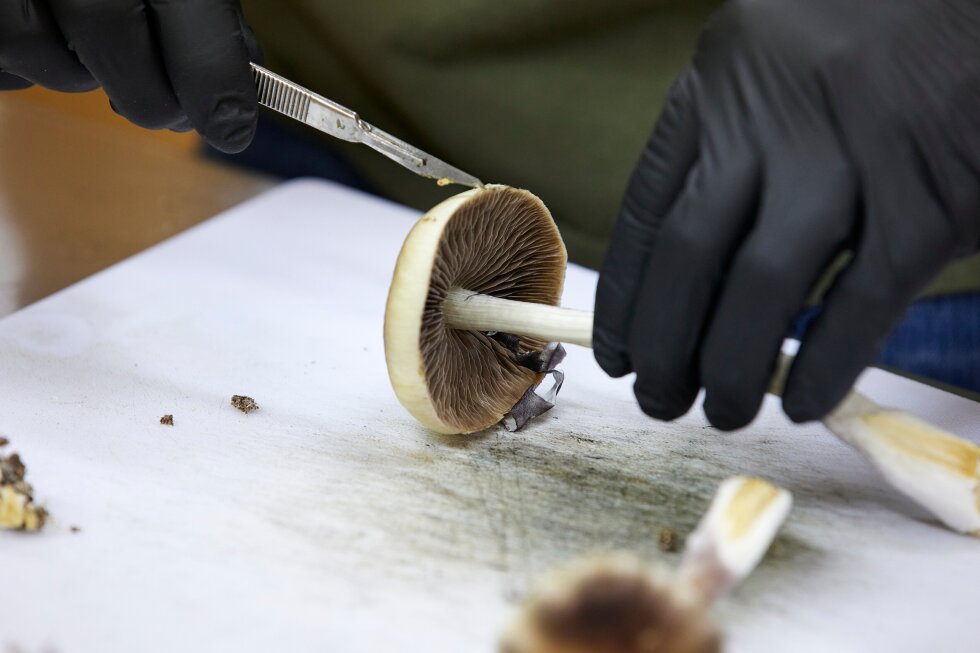
President Donald Trump signed an executive order last weekend directing the FDA and other federal agencies to speed research and loosen restrictions on psychedelics, a class of hallucinogenic drugs which remain illegal under federal law.
The FDA said it awarded priority review vouchers to two companies studying psilocybin — the active ingredient in magic mushrooms — for hard-to-treat forms of depression. A third company received a voucher for methylone, a drug related to MDMA, for post-traumatic stress disorder. The FDA did not name the companies in a press release announcing the news.
“We owe it to our nation’s veterans and all Americans who are suffering from these conditions to evaluate these potential therapies with urgency,” FDA Commissioner Marty Makary said in a statement.
Advertisement
The vouchers don’t guarantee approval, but instead mean that regulators will try to shorten their reviews from a period of months to weeks.
Last July, Kennedy told members of Congress his department aimed to make psychedelics available for hard-to-treat psychiatric conditions within one year. Some of Kennedy’s top allies and staffers are proponents of the drugs.
Calley Means, a former Kennedy campaign staffer now serving as a senior health adviser, has previously written about the “mind-blowing” power of psychedelics and his plans to invest in companies developing the drugs.
Advertisement
FDA’s special treatment for psychedelics is likely to renew scrutiny of its program for speeding up drug reviews, known as the Commissioner’s National Priority Voucher program.
Democratic members of Congress have noted that vouchers have gone to companies that are politically favored by the White House, including those that have agreed to cut prices on their medications.
In a separate move, the FDA authorized initial testing of a drug related to ibogaine, a powerful psychedelic made from an African shrub, for people with alcohol use disorder. Ibogaine is known to sometimes cause dangerous heart rhythms but has been embraced by combat veterans as a way to treat trauma and addiction.
The drugmaker, DemeRx, is led by a Florida-based researcher who first began studying ibogaine as a treatment for cocaine addiction in the 1990s, before federal health officials pulled funding for the work.
Advertisement
“Every grant proposal that I submitted to (the National Institute on Drug Abuse) was rejected,” Deborah Mash, a neurologist and founder of DemeRx, told The Associated Press. “I couldn’t get that funding and that’s why ibogaine didn’t advance in the 1990s.”
Ibogaine is known to cause intense hallucinations, nausea, vomiting, tremors and sometimes dangerous irregular heart rhythms. Mash says DemeRx’s drug is a metabolite of ibogaine, and doesn’t carry the same hallucinogenic effects or risks as the original drug.
Saturday’s White House event on psychedelics suggested Trump’s political allies had a role in pushing the drugs to the top of his agenda.
Joe Rogan, the podcaster who appeared at the Oval Office event, said he texted Trump about the psychedelic ibogaine, which he’s repeatedly discussed on his show. According to Rogan, the president quickly responded: “Sounds great. Do you want FDA approval? Let’s do it.”
Advertisement
Rogan’s endorsement of Trump days before the November 2024 election was seen by White House aides as a key factor in his election victory.
On his show earlier this week, Rogan said he learned about ibogaine from his friend Ed Clay, a mixed martial arts trainer and entrepreneur who runs retreats making use of it in Mexico.
Virtually all psychedelics, including LSD, psilocybin and MDMA are classified as Schedule I substances, a category for high-risk drugs that have no medically accepted use.
For decades, drugmakers steered clear of the substances due to the difficulties of studying drugs that are illegal under federal law.
Advertisement
But dozens of small drugmakers, many fueled by Silicon Valley investors, have recently jumped into the race to win FDA approval for various psychedelics. For example, tech billionaire Peter Thiel — who has made political donations to both Trump and Vice President JD Vance — has invested in AtaiBeckley, a company studying MDMA and other psychedelic compounds.
___
The Associated Press Health and Science Department receives support from the Howard Hughes Medical Institute’s Department of Science Education and the Robert Wood Johnson Foundation. The AP is solely responsible for all content.
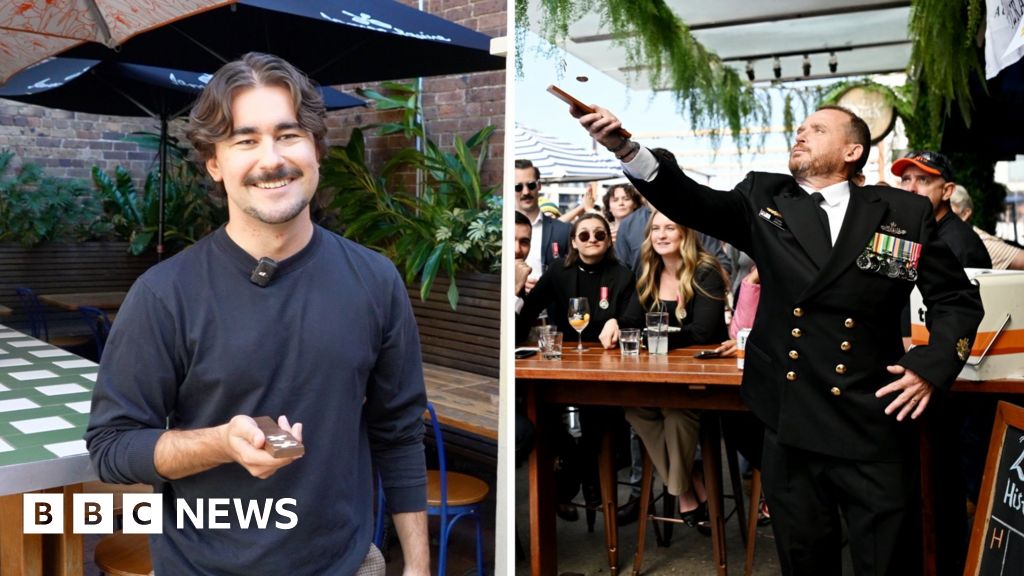
Two-up is a coin toss betting game, with two people betting against each other on whether they will land on heads or tails. Classified as unregulated gambling, the game is illegal in most parts of Australia. But on 25 April people rush to the pub to play, when it’s permitted across the country for a few hours. The BBC’s Harry Sekulich explains why the exception is made, and what people for and against it have to say.
Summer Robert, 28, from Glasgow, claims to have the “biggest boobs in the UK” and says she won’t cover up her cleavage just because it “offends people”. It comes after she faced body shaming and clothing criticism in public
While many may relish the thought of having a large bust, one woman’s breasts are so sizeable that she struggles to fit on an aeroplane. Summer Robert, 28, has previously confessed she’s proud to possess what she claims are the “biggest boobs in the UK”; however, she’s fed up with people telling her to “cover them up.”
Advertisement
Recently, she’s revealed that people often criticise her simply for having large breasts. As she struggles to find clothing that fits properly, her cleavage can sometimes become visible, but she refuses to conceal it purely because it appears to “offend” people in a way she simply cannot comprehend.
Summer, who boasts over 200,000 followers on Instagram, said: “More often than not they’ll say to my face to cover up, tell me I don’t have the body for the clothes I’m wearing. Some will call me an attention seeker. I get a lot of disgusted looks from women mainly.
“I just wish people could live my life for one day so they would understand. If I could get clothes that fit me, don’t you think I would wear that?
Advertisement
“I don’t think I should be punished for wanting to wear clothes that suit my age and style just because it shows a bit more cleavage than most. I can’t help it.”
Summer revealed she’s frequently singled out in the street simply for having large breasts. On one occasion she claims she even had a drink thrown over her as her boobs, which now measure a size 30R, caused such a stir.
“At the time, getting a drink thrown over me was super frustrating,” she added. “I definitely have cried over it and gotten angry but, after accepting faith into my life fully now when stuff like this happens, I just think of how sad it must be that women are so insecure over a young girl just trying to live her life.
Advertisement
“I don’t let it affect me too much anymore and feel empathy for them.” Though it has taken considerable time, Summer has learned to embrace her body, even though she still has to deal with unsolicited comments from strangers.
Despite this, it won’t deter her from being herself and wearing whatever she chooses. Time and experience have bolstered her confidence, and she now refuses to let anyone dictate what she can and cannot do.
Summer explained: “I used to let it affect me a lot more but, since accepting my body and realising that I can monopolise from it, it just makes me laugh. Obviously, if I’m in situations where I feel unsafe it affects me a lot more but the women aspect of it, I just feel sorry for them.
Advertisement
“They’ll be at home miserable and insecure whilst I’m on a plane flying somewhere hot.” When asked what message she’d like to convey to those who treat her so negatively, she added: “Look in the mirror, see one thing that you are insecure about and think ‘if someone judged me for this one thing that I can’t change, how would I feel?’
“Because that is exactly what you’re doing to me.” What her critics fail to appreciate is that Summer also endures considerable hardship as a result of her breasts.
The former restaurant manager has consistently had large breasts and they are only going to grow bigger. She suffers from a condition called Macromastia, which is the medical term for having abnormally large breasts, and it can lead to various complications like chronic back, neck and shoulder pain, headaches, bra strap grooving and difficulty carrying out daily activities.
Nevertheless, in recent years, she turned to producing adult content in an effort to bolster her confidence. She now considers it “amazing” that she manages to earn money as a consequence of something that people so frequently criticise her for.
Advertisement
Summer said: “I love that people’s bitterness just makes me richer.”
Looking back, clues to this final system had been there all season.
Doku’s one-against-one threat on the left had required teams to double up on him since August. O’Reilly’s runs began to bear fruit as early as September.
Silva’s intelligent pressing and build-up helped mitigate City’s areas of weakness from November onwards.
Haaland and Semenyo moving in-field as Nunes pushed up to provide width, supplied by the two-footed Cherki, gave City solutions teams were unable to prepare for.
Advertisement
Behind them, Khusanov’s pace provided City with a get-out-of-jail free card when they held their high line.
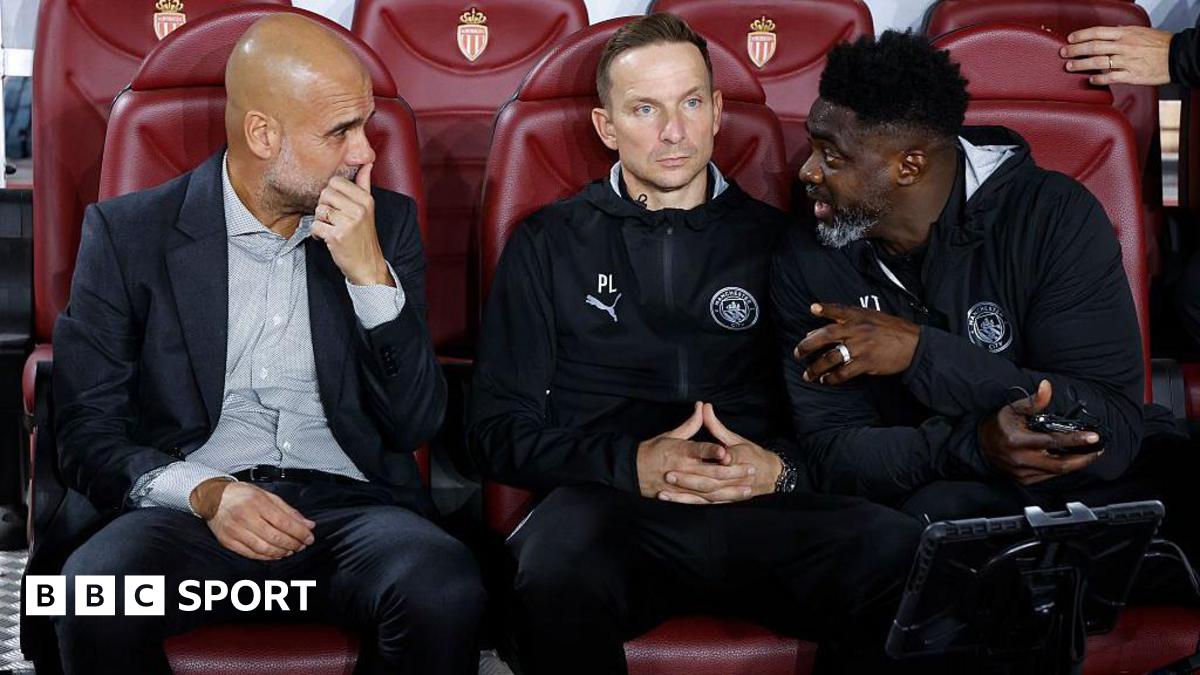
Their press evolved too. Guardiola tried several versions through the year before settling on one where the wingers pressed centre-backs while blocking passes wide, with Haaland and Cherki blocking the middle of the pitch. Those roles suited the more physical wingers and protected the less defensive Haaland and Cherki.
City were compact and Silva and Rodri swept up any second balls too.
A common myth in football is that “playing like Guardiola” is creating a side that looks like Barcelona did in 2009.
Advertisement
Guardiola has admitted that he wins because of the players he has which is partly down to City’s ability to spend big.
His ability to continually reinvent his squads in response to the players he has available and the tactical trends of the league, however, remains second to none.













































You must be logged in to post a comment Login