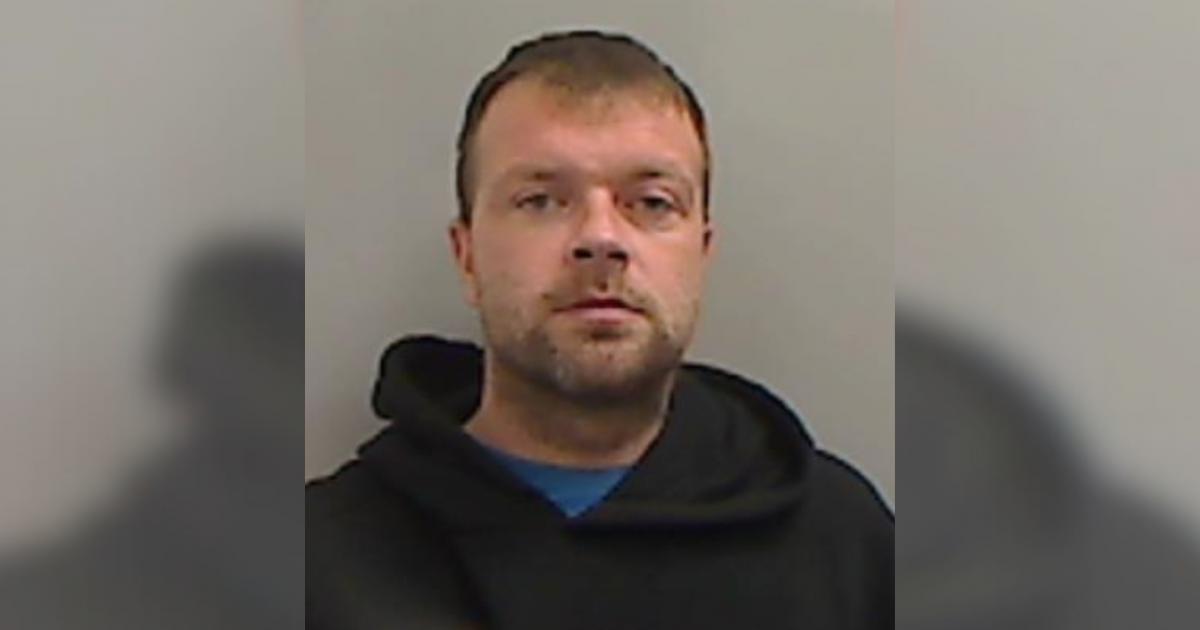
Robert Hayton was spotted by police as he drove around Hartlepool 12 hours after the car was stolen, after the owner had their keys taken from a Yarm pub.
The 36-year-old clipped a police car and raced around residential streets in a desperate attempt to shake off his pursuers, Teesside Crown Court heard.
Lucy Todd, prosecuting, said Hayton reached speeds in excess of 60 mph in 30mph zones and regularly went head-on with oncoming traffic to avoid arrest, even leaving the road at one point and going around a roundabout the wrong way.
“A stinger was deployed, causing a deflation of one of the tyres, causing it to slow down,” she said. “A police vehicle overtook the defendant and blocked its path but he has collided with the vehicle causing damage.
Advertisement
“The police vehicle prevented the car from passing and caused it to stop in some bushes.”
Miss Todd said a breathalyser test was carried out and the defendant was found to be over the drink-drive limit.
Robert Hayton (Image: Cleveland Police)
Hayton, of no fixed abode, pleaded guilty to dangerous driving, driving with excess alcohol, driving without insurance, driving without a licence and a bail act offence.
Kelly Clarke, mitigating, said her client was on a ‘perpetual wheel’ that he doesn’t seem able to get off.
Advertisement
She added: “His offending behaviour appears to be influenced by the fact that he consumes way too much alcohol and misuses drugs.”
Read more:
Judge Nathan Adams sentenced Hayton to 19 months in custody and banned him from driving for three years and nine months.
He said: “There was a high-speed police chase through residential areas involving multiple police vehicles and your utter unwillingness to stop or to have any regard to risk you were posing to other motorists or pedestrians.
Advertisement
“You were going at double the speed limit at times, you were swerving all over the road and there were members of the public who had to get out of your way.”
A border collie separated from her owner during a hiking accident was found alive at the base of a waterfall in a remote New Zealand region after nearly a week of searching, rescuers said.
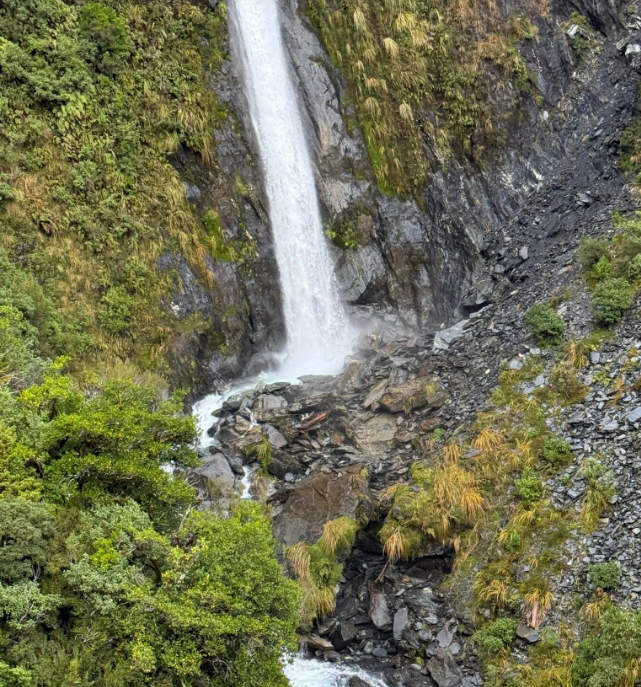
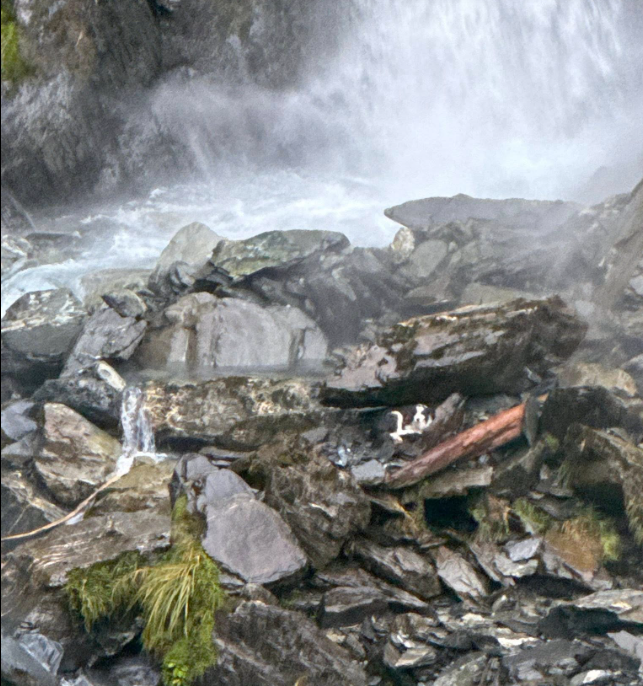
The dog, Molly, 4, was located on Tuesday near the Southern Alps, close to where she was last seen.
Molly had gone missing after her owner, Jessica Johnston, fell nearly 55m during a hike in rugged terrain in the Arahura Valley on 24 March near the town of Hokitika.
Ms Johnston survived the fall and was airlifted out with serious injuries, but Molly disappeared in the chaos, leaving little hope she could endure the harsh conditions alone.
Advertisement
Despite the odds, a small helicopter team – made up of experienced volunteers – decided to try.
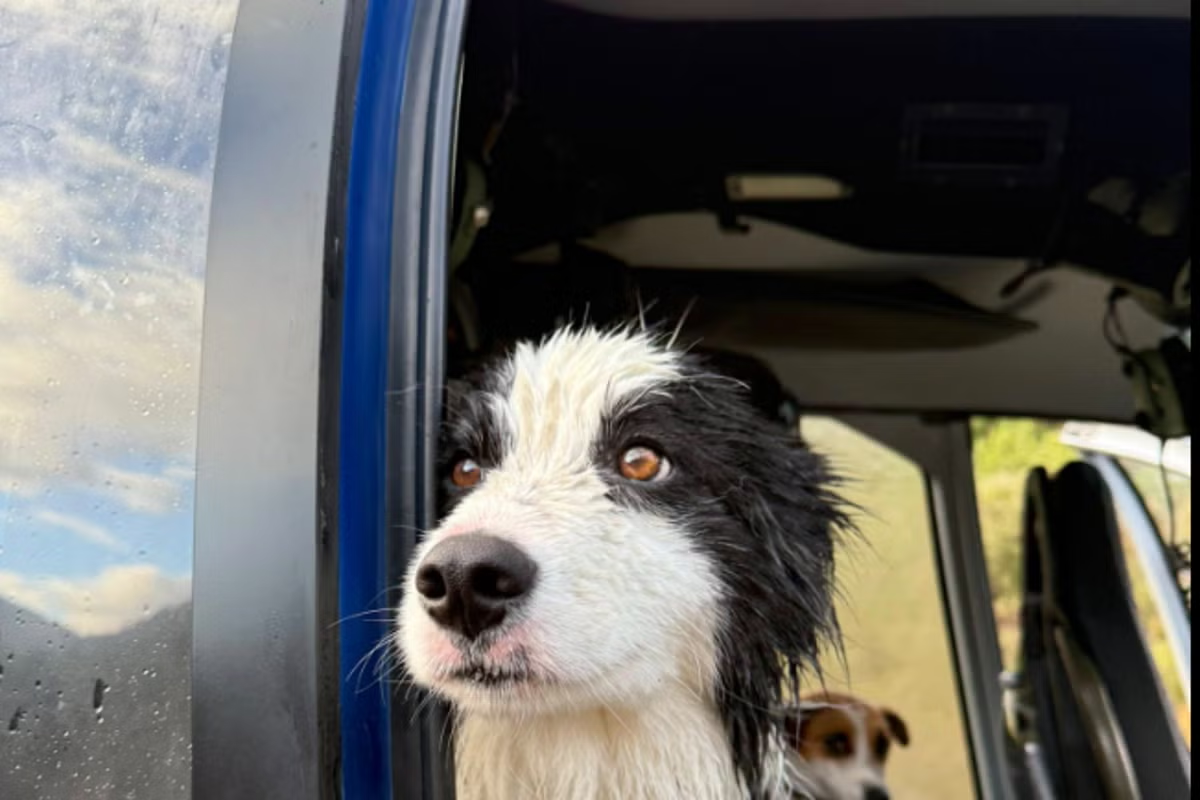
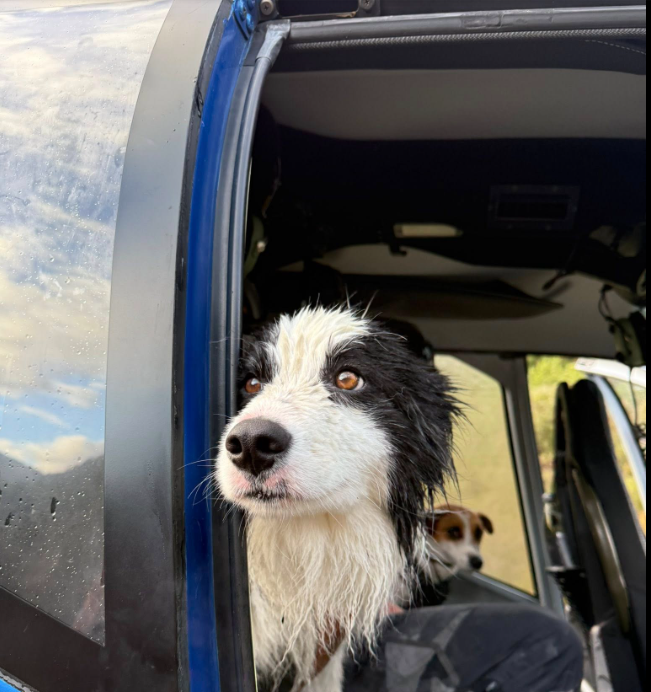
Four-year-old Molly was rescued after about a week alone in New Zealand’s remote backcountry (Precision Helicopters Ltd)
According to The Guardian, Lillian Newton, safety manager and pilot with Precision Helicopters, who helped coordinate the mission, said she couldn’t shake the feeling that the dog might still be out there. Ms Newton from Precision Helicopters said she had a “a gut feeling” that Molly was still alive.
Funding quickly became the first hurdle. Helicopter searches in such remote areas are costly, and there is no official system in place to cover animal rescues in the wilderness. So Ms Newton and her team turned to the public.
Precision Helicopters is not a formal rescue service and was not involved in the initial operation to evacuate Ms Johnston. However, after learning about her survival and the missing dog, Ms Newton moved quickly to organise a search.
Four-year-old Molly was rescued after about a week alone in New Zealand’s remote backcountry (Precision Helipcopters Ltd)
“We rang Jess and made sure she was okay for us to put it to the public,” Ms Newton said.
“The goal was to get $2,400 and some volunteers that were experienced to come along.”
Advertisement
Within hours, donations poured in from across the country, allowing the team to mobilise.
The terrain they were heading into was far from forgiving. As Ms Newton described it, the area was “extremely remote, rough, bushy and wet”.
Dense vegetation, constant rain, and steep alpine conditions made the search both technically demanding and physically draining.
“Looking for Molly was a bit like looking for a needle in a haystack. This terrain is extremely isolated, extremely rough. We have thick bush, and we have the most rainfall in New Zealand,” Ms Newton told Outside magazine.
Advertisement
Four-year-old Molly was rescued after about a week alone in New Zealand’s remote backcountry (Precision Helicopters Ltd)
“It’s wet, it’s cold, and it’s rugged and gnarly. We said dog prayers the night before flying with our own dogs.”
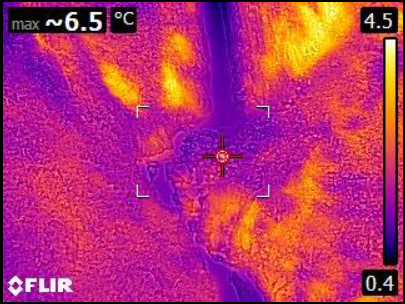
Using thermal imaging equipment and years of rescue experience, the team flew directly to the area where Ms Johnston had fallen. To their surprise, that instinct paid off.
“They went directly to the spot where the owner, Jessica, had fallen. And much to our surprise, Molly was there,” Ms Newton said.
The pilot, Matt Newton, who is the owner of Precision Helicopters, said the dog was finally identified through thermal scanning.
Molly was finally identified through thermal scanning (Precision Helicopters Ltd)
“We were just making our way up the river to the most likely location where we felt that she would be, which is where Jess, her owner had fallen two weeks ago. We had the thermal equipment, and she came up on the screen glowing red hot,” he said, according to RNZ.
“As we got closer, we could see it was actually her because other things can glow like possums and deer and goats and shammies and stoats and who knows, but it was the dog. We were stoked. Yeah, absolutely stoked.”
Advertisement
Molly had been stranded in a narrow, slippery area beneath the waterfall, surrounded by moss-covered rocks and constant spray. Reaching her required careful manoeuvring.
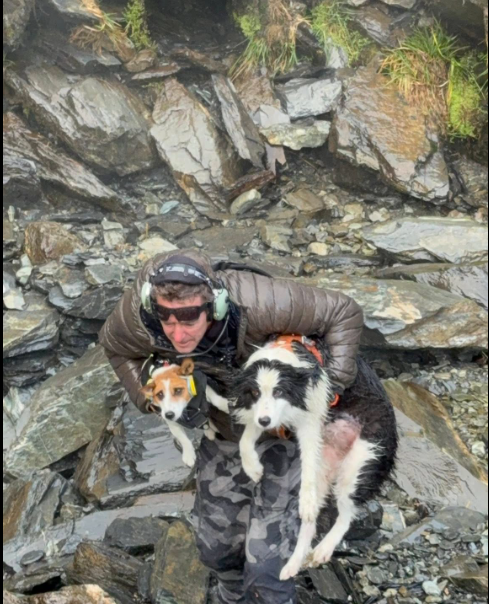
As the helicopter hovered low, a crew member climbed out to retrieve her. Food helped gain her trust, and within moments, she was safely lifted aboard.
(Precision Helicopters Ltd)
“I’d say she’d been scragging the odd possum and I’m sure she wouldn’t have killed any kiwis. She knows the rules there because she’s been kiwi trained. I’m pretty sure she’s been munching on the odd possum and she’s in pretty good condition, considering.”
Meanwhile, Ms Johnston – who had been recovering from serious injuries – was still grappling with the uncertainty of her dog’s fate. She had suffered a split elbow and extensive bruising from the fall, making the wait even more difficult.
In a message shared on social media, Ms Johnston expressed her gratitude to those who helped make the search possible.
Advertisement
“I’d like to give the biggest thank you to all that have taken the time to donate with both funding, volunteering and sharing her posts,” she said.
“I’m absolutely blown away with the support everyone has given her so far from the kindest of strangers. Obviously devastated I’m not in a physical state to provide help on the ground. But with the support that’s been given a lot can be achieved for those that can. Incredibly grateful for how much was raised in a short period.
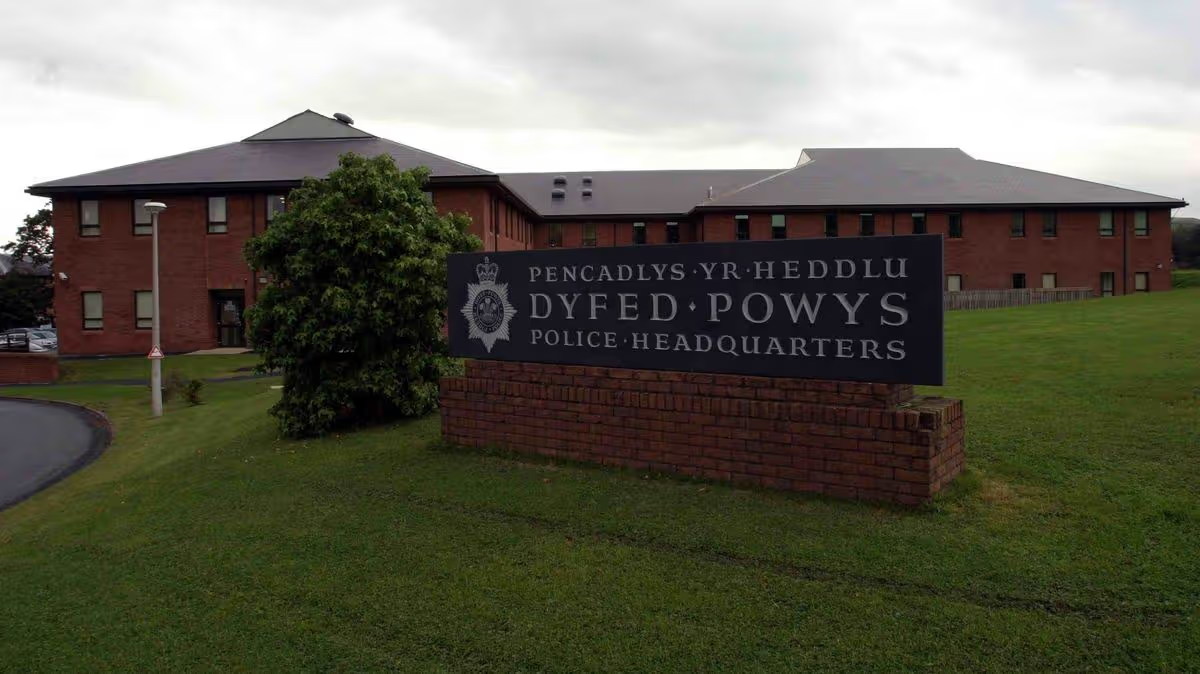
Dyfed-Powys Police had referred itself to the independent police watchdog following an incident involving a firearm in Milford Haven over the weekend
A Welsh police force will carry out an internal investigation despite referring itself to the police watchdog after an officer fired a gun in a residential street in Pembrokeshire, it has been confirmed.
Advertisement
The officer – from Dyfed-Powys Police – discharged a shot from a firearm while at the scene of an incident in Bunkers Hill, Milford Haven on Saturday evening, March 28. Police were in attendance after receiving reports of disorder in the area, and one person was arrested on suspicion of making threats to kill.
Police confirmed that “while at the scene an officer discharged a single shot from a firearm at 6.32pm”. They added: “The firearm was not directed towards an individual and no injuries were sustained by anyone present.”
Dyfed-Powys Police voluntarily referred the incident to the Independent Office for Police Conduct (IOPC). Read the biggest stories in Wales first by signing up to our daily newsletter here.
The IOPC confirmed that it was notified by the force about the incident and that it would assess whether further action was required.
Advertisement
On Wednesday, April 1, it was confirmed that Dyfed-Powys Police would itself carry out an investigation into the firing of the weapon, rather than it be investigated externally.
A spokesman for the IOPC said: “We received a referral from Dyfed-Powys Police in connection with this matter on Sunday (March 29).
“After assessing the information provided by the force, we have decided that an investigation is required and that it is appropriate for that to be carried out locally by Dyfed-Powys Police.”
According to the IOPC it is common for police forces in England and Wales to investigate complaints internally, even if those complaints are formally referred to the police watchdog.
Advertisement
Get daily breaking news updates on your phone by joining our WhatsApp community here. We occasionally treat members to special offers, promotions and ads from us and our partners. See our Privacy Notice.
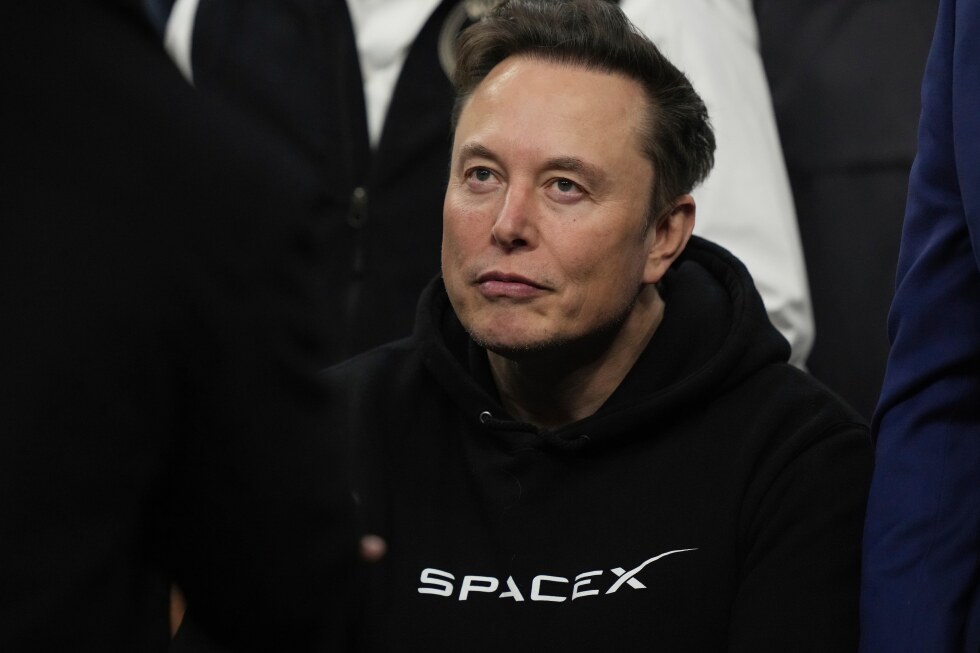
NEW YORK (AP) — Elon Musk’s space exploration company has filed preliminary paperwork to sell shares to the public, according to two sources familiar with the filing, a blockbuster offering that would likely rank as the biggest ever and could make its founder the world’s first trillionaire.
A SpaceX IPO promises to be one of the biggest Wall Street events of the year, with several investment banks lining up to help raise tens of billions to fund Musk’s ambitions to set up a base on the moon, put datacenters the size of several football fields in orbit and possibly one day send a man to Mars.
The sources spoke on condition of anonymity because they were not authorized to talk publicly about the confidential registration with the Securities and Exchange Commission.
SpaceX did not respond immediately to a request for comment.
Advertisement
Exactly how much SpaceX plans to raise has not been disclosed but the figure is reportedly as much as $75 billion. At that level, the offering would easily eclipse the $29 billion that Saudi Aramco raised in its 2019 IPO.
The offering, coming possibly in June, could value all the shares of SpaceX at $1.5 trillion, nearly double what the company was valued in December when some minority owners sold their stakes, according to research firm Pitchbook, before an acquisition that increased its size.
Musk owns 42% of the SpaceX now, according to Pitchbook, though that figure will change with the IPO when new owners are issued shares. In any case, he is likely to pierce the trillion dollar mark because he is already close, with a net worth estimated by Forbes magazine at $823 million.
In addition to making reusable rockets to hurl astronauts and hardware into orbit, SpaceX owns Starlink, the world’s largest satellite communications company. The company also recently brought under its roof two other Musk businesses, social media platform X, formerly Twitter, and artificial intelligence business, xAI, in a controversial transaction because both the seller and the buyer were controlled by him.
Advertisement
SpaceX has become the biggest commercial launch company in its industry, responsible for sending payloads into orbit for customers across the globe, but has also benefited from big taxpayer spending. That has raised conflicts of interest issues given that Musk was the biggest donor to President Donald Trump’s campaign and is still a big backer.
In the past five years, SpaceX won $6 billion in contracts from NASA, the Defense Department and other U.S. government agencies, according to USAspending.gov.
Among current SpaceX owners is Donald Trump Jr, the president’s oldest son. He owns a shares through 1789 Capital. That venture capital firm made him a partner shortly after his father won the presidency for a second time and has been buying up federal contractors seeking to win taxpayer money ever since.
The White House and Trump himself have repeatedly denied there are any conflicts of interest between his role as president and his family’s businesses.
Footage has emerged which appears to show a US journalist being kidnapped in Iraq.
The kidnapping occurred in Baghdad on Tuesday, according to Iraqi officials, who said efforts were now under way to locate the reporter and the perpetrators.
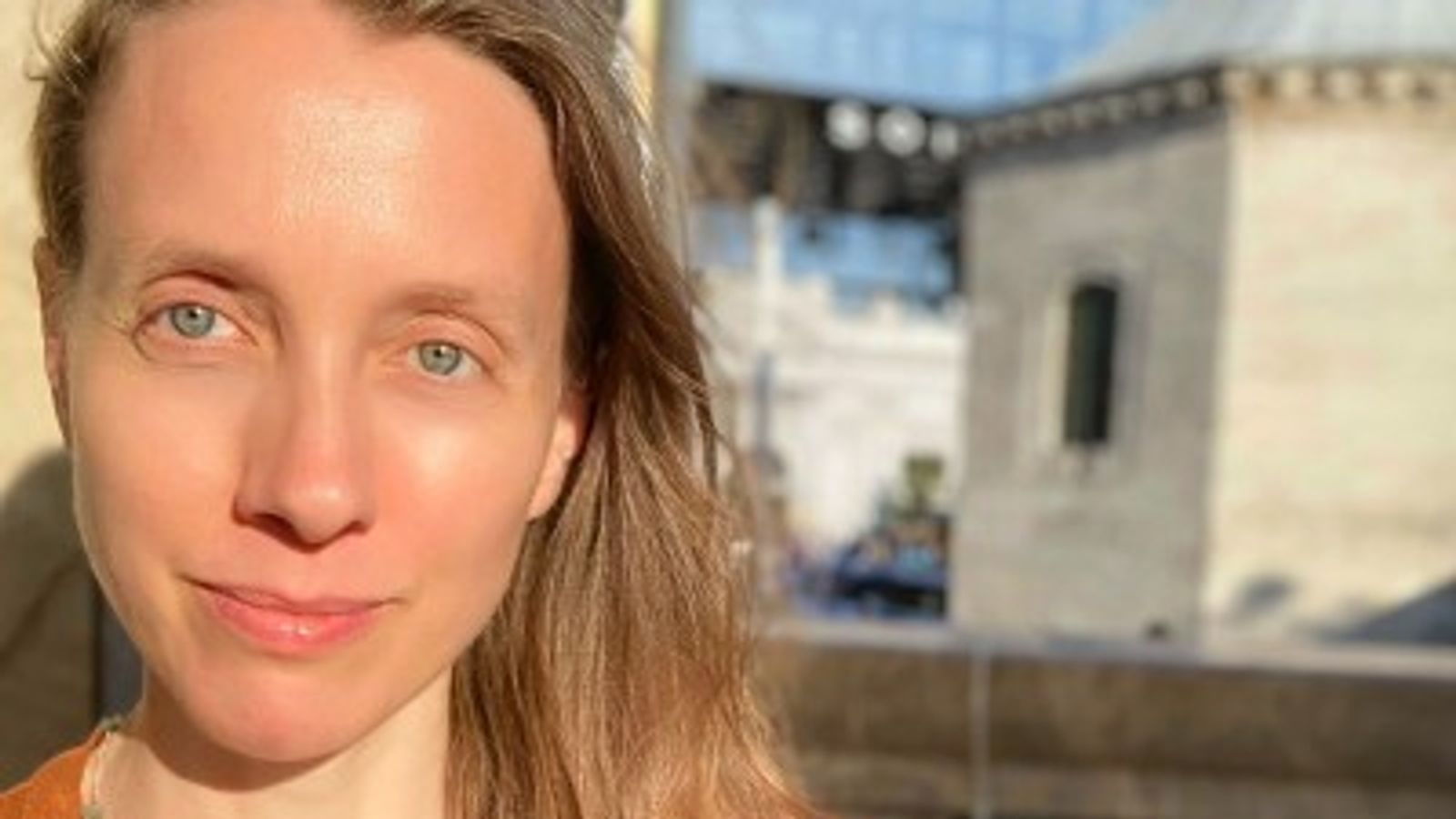
The journalist has been named as freelancer Shelly Kittleson by one of the publications she worked for.
Here is everything we know about the incident so far.
Image: Shelly Kittleson. Pic: LinkedIn
What happened?
The kidnapping took place on 31 March on Saadoun Street in central Baghdad, before the perpetrators headed southwest towards Babil province.
Iraqi security officials said two cars had been involved.
Advertisement
An alert was subsequently circulated to all checkpoints, leading to a pursuit during which one of the vehicles reportedly crashed near the town of al-Haswa.
The other car, carrying Ms Kittleson, fled the scene.
Footage appears to show a car pull up alongside Ms Kittleson as she stands on a street corner in central Baghdad.
She is approached by two men, one who gets out of the car and another who was walking alongside it.
Advertisement
There then appears to be a brief struggle as they bundle her into the back of a vehicle.
Moments later, the car speeds off.
Hussein Alawi, an adviser to Iraq’s prime minister, Mohammed Shia al-Sudani, said Ms Kittleson had been wanting to enter the country via the al-Qaim crossing from Syria on 9 March but was turned back because she did not have a press work permit and because of security concerns due to “the escalation of the war and aerial projectiles over Iraqi airspace as a result of the war on Iran”.
She later entered the country after obtaining a single-entry 60-day visa to Iraq issued to allow foreign citizens stranded in neighbouring countries to “transit through Iraq to reach their home countries via available transport routes,” Mr Alawi said.
Advertisement
Following the incident, Iraq’s ministry said one suspect had been arrested and efforts were now underway to locate Ms Kittleson and the kidnappers.
It said security forces had launched an operation “acting on precise intelligence and through intensive field operations”.
It is not immediately clear if the kidnapping is related to the ongoing conflict in the Middle East.
Who is Shelly Kittleson?
Advertisement
According to her X profile, Ms Kittleson is an award-winning journalist of more than 15 years, reporting on the Middle East and contributing to outlets such as Politico, Foreign Policy magazine and the BBC World Service.
One of the outlets she contributed to, Al-Monitor, released a statement on Tuesday saying they were “deeply alarmed by the kidnapping”.
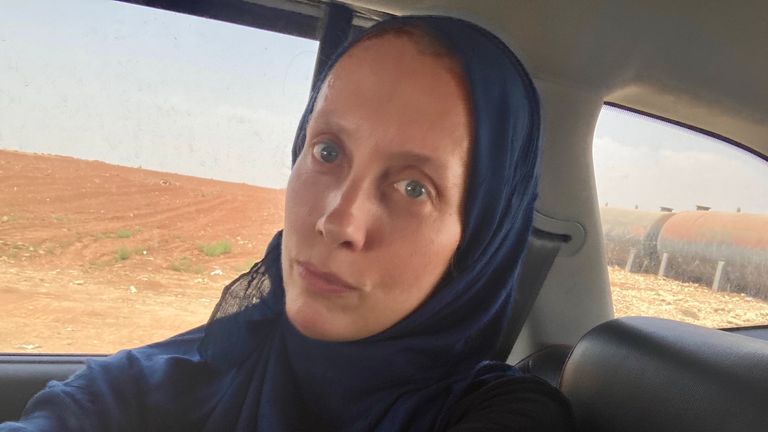
Image: Ms Kittleson has contributed to outlets including Politico and Foreign Policy magazine. Pic: X
In a short statement, the publication said: “We stand by her vital reporting from the region and call for her swift return to continue her important work.”
It went on to call for her “safe and immediate release”.
What has the US said?
Advertisement
In a statement, the US state department said it was aware of the incident and insisted “the Trump Administration has no higher priority than the safety and security of Americans”.
It added that “due to privacy and other considerations, we have nothing further to share at this time”.
Assistant secretary Dylan Johnson wrote on social media that the state department had previously warned “this individual of threats against them” and said it would “continue to coordinate with the FBI to ensure their release as quickly as possible”.
Mr Johnson, who blamed the Iranian-backed Iraqi militia Kataib Hezbollah for the kidnapping, added: “Iraq remains at a Level 4 Travel Advisory and Americans are advised not to travel to Iraq for any reason and to leave Iraq now.”
The BBC Radio 2 host was taken off air suddenly leaving colleagues and fans shocked
Husna Anjum, Tom Bryant and Husna Anjum Senior Live News Reporter
19:10, 01 Apr 2026Updated 19:14, 01 Apr 2026
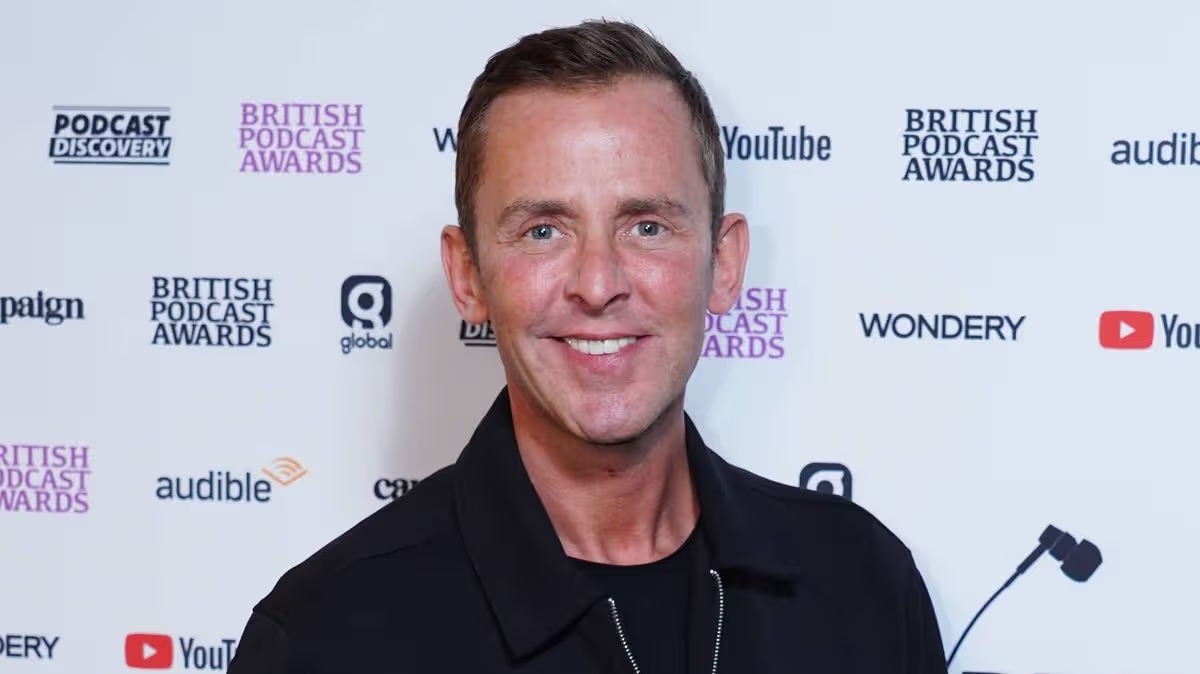
Scott Mills has released a statement addressing the historic ‘allegation’ against him.
This is after The Mirror revealed he has been sacked by the BBC over sexual offences against a ‘teenage boy’.
Advertisement
The DJ was taken off air last week suddenly after hosting his last show on Tuesday, 24 March. Colleagues were reportedly shocked including fellow BBC Radio 2 host Jeremy Vine, who was “taken aback” by the news.
The Mirror reports the statement, released through his lawyers, read: “The recent announcement that I am no longer contracted to the BBC has led to the publication of rumour and speculation. In response to this the Metropolitan Police has made a statement, which I confirm relates to me.
“An allegation was made against me in 2016 of a historic sexual offence which was the subject of a police investigation in which I fully cooperated and responded to in 2018. As the police have stated, a file of evidence was submitted to the Crown Prosecution Service, which determined that the evidential threshold had not been met to bring charges.
“Since the investigation related to an allegation that dates back nearly 30 years and the police investigation was closed 7 years ago, I hope that the public and the media will understand and respect my wish not to make any further public comment on this matter.
Advertisement
“I wish to thank from the bottom of my heart all those who have reached out to me with kindness, my former colleagues, and my beloved listeners, who I greatly miss.”
The Mirror revealed that the former BBC Radio 1 and 2 DJ was questioned in 2018 over the historical allegations of serious sexual offences, but the investigation – which began in 2016 – was closed in 2019 after the CPS deemed there was insufficient evidence to bring charges. The allegations are reported to have happened between 1997 and 2000.
The Metropolitan Police said that the teenage boy at the centre of the investigation was under 16. On Wednesday April 1, The Mirror revealed that the BBC was forced to terminate Mills’ contract after receiving compelling new information.
Advertisement
Bosses were left with “no choice” after being passed fresh details about the Radio 2 star’s alleged conduct. The BBC has since confirmed they knew of information relating to the police investigation.
They pledged that they were “doing more work to understand the detail of what was known by the BBC at this time.” In the last week, Mills was removed from top broadcasting role while the BBC assessed the information, and was then told his contract was terminated at the weekend.
The BBC have since claimed they knew about the investigation into Mills in 2017, the corporation admitted, but “acted decisively” after receiving “new information” in the weeks prior to his sacking.
Advertisement
A BBC spokesperson said: “Scott Mills had a long career across the BBC, he was hugely popular and we know the news this week has come as a shock and surprise to many. We also recognise there’s been much speculation in the media and online since Monday.
“We hope people understand that there is a limit to what we can say because we have to be mindful of the rights of those involved. What we can confirm is that in recent weeks, we obtained new information relating to Scott and we spoke directly with him.
“As a result, the BBC acted decisively in line with our culture and values, and terminated his contracts on Friday March 27.”
The BBC added: “Separately, we can confirm the BBC was made aware in 2017 of the existence of an ongoing police investigation, which was subsequently closed in 2019 with no arrest or charge being made. We are doing more work to understand the detail of what was known by the BBC at this time.”
Advertisement
Want to see more of the stories you love from Belfast Live? Making us your preferred source on Google means you’ll get more of our exclusives… To add Belfast Live as a preferred source, simply click here.
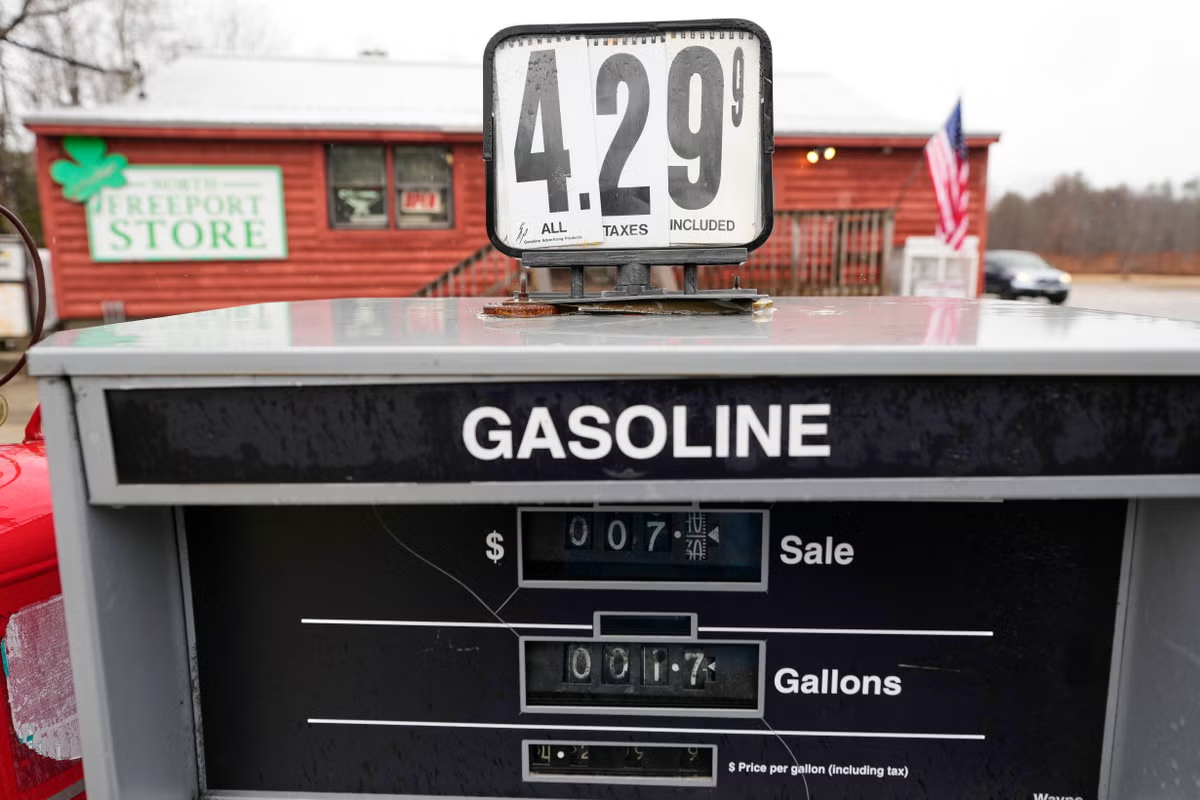
With the average price of a gallon of gas topping $4 nationally, some federal and state officials have talked of temporarily reducing motor fuel taxes to provide relief to motorists.
So far, Georgia and Utah are the only states to suspend all or part of their gas taxes as the war in Iran has pushed fuel prices higher. Others are considering it. But there are a variety of reasons that policymakers may not relax gas taxes, including concerns about government finances, doubts about the action’s effectiveness and uncertainty about how long the war will last.
Here’s a look, by the numbers, at the debate:
2 states
Advertisement
The two states to suspend gas taxes this year took significantly different approaches. Georgia’s 60-day suspension of its 33-cent-a-gallon gas tax took effect once Republican Gov Brian Kemp signed it into law on March 20, making it the first state to act since the war started. Three days later, Republican Utah Gov. Spencer Cox signed a law temporarily trimming 6 cents off the state’s 38-cent-a-gallon fuel tax. But the six-month reduction won’t begin until July 1.
38 cents
Retail gas stations have charged consumers an average of 38 cents per gallon above wholesale prices over the past five years, according to Jeff Lenard, a spokesperson for the National Association of Convenience Stores. Their profits after expenses often are less than half that, he said. Meanwhile, the daily price for a barrel of oil has swung dramatically during the war with Iran — sometimes by the equivalent of around 40 cents a gallon, Lenard said.
Why do those numbers matter? They highlight the complexity of setting gas prices. When a gas tax is suspended, motorists may not see an equivalent reduction in retail prices. That’s made Republican Florida Gov. Ron DeSantis hesitant to repeat a gas tax suspension he approved when prices last spiked in 2022.
Advertisement
“Our ability to influence the fuel prices are really marginal at best,” DeSantis said in March, adding: “I don’t think the consumer really felt relief.”
61 cents
California charges a nationally high gas tax of 61 cents per gallon, with additional fees on top of that. The tax contributes to California’s highest-in-the-nation gas prices, which averaged $5.89 a gallon on Wednesday, according to AAA. Several Democratic and Republican gubernatorial candidates have called for suspending the gas tax. But the proposal hasn’t gained traction in the Democratic-led Legislature, where some are concerned about how to make up for the lost revenue.
$100 million
Advertisement
Republicans in Maryland pushed for a 30-day gas-tax suspension. But their attempts were rejected by the Democratic-led General Assembly. A spokesperson for Democratic Gov. Wes Moore said a one-month suspension could have blown a $100 million hole in the state’s transportation budget even as officials already were cutting spending and shifting money to make up for a projected shortfall in the state’s overall budget.
A better approach would be to end the war, said Moore spokesperson Ammar Moussa, adding: “The best way to bring prices down is to address the source of the pain.”
Since the war began on Feb. 28, Trump has repeatedly has said it could be over soon while also threatening to widen the conflict.
$330 million
Advertisement
Whether states have the money to make up for lost fuel taxes is a pivotal question. Georgia is dipping into its surplus. In Connecticut, Democratic state Senate leaders have suggested that Gov. Ned Lamont could tap into the roughly $330 million remaining in an emergency fund meant to respond to federal government actions to help offset a proposed one-month suspension of the state’s 25-cent-a-gallon gas tax.
“The fund was created precisely for situations like this: when federal actions create hardship for Connecticut families,” Senate President Pro Tem Martin Looney and Majority Leader Bob Duff said in a statement.
A spokesman for the Democratic governor said Lamont is willing to work with lawmakers on “a smart and strategic pause to the state’s gas tax.”
$800 million
Advertisement
Gas taxes generally pay for building, expanding and repairing roads and bridges. Unless funds are shifted from elsewhere, suspending a gas tax means less money for transportation projects, including some that may already have been budgeted.
In South Carolina, the state gas tax provides about $800 million yearly, helping to fund nearly $7 billion of projects ranging from safety improvements on two-lane roads to a massive overhaul of interstate interchanges. Republican Gov. Henry McMaster worries that major projects would take longer and cost more if tax revenue were cut. He dismissed the suspension of gas taxes as a “sort of knee-jerk reaction.”
“We’d like them all to be lower and lower,” McMaster said, “but that’s one we should not take any money out of.”
___
Advertisement
Associated Press writers Jeffrey Collins, Susan Haigh and Brian Witte contributed to this report.
The ITV soap showed the events that caused Kim Tate to be poisoned at her dinner with the Dingles
Emmerdale has confirmed that it was Graham Foster behind Kim Tate’s dinner date poisoning this whole time.
Advertisement
As viewers will recall, Kim found herself in hospital after being poisoned during a dinner with the Dingles where her and Lydia hoped to build bridges between the two families.
While Kim suspected Joe Tate might have had something to do with it, viewers of theITV soap now know that Graham was the one responsible for poisoning her after the bombshell dropped in tonight’s (Wednesday April 1) episode.
Get MEN Premium now for just £1 HERE – or get involved in our WhatsApp group by clicking HERE. And don’t miss out on our brilliant selection of newsletters HERE.
While Kim remains unaware – believing her condition was simply an accidental overdose of her pain medication – the audience saw Graham make a mysterious phone call after tampering with her medicine cupboard. Referring to Kim as a “pain in the neck,” he suggested he would find another way to dispose of the problem after the “double dose” failed.
Advertisement
In her hospital bed, Kim was heard telling visitors Lydia and Chas, “This time, there was no enemy, no plotting, no poison plate. Just me moving too fast. So maybe – on this occasion I did do all this to myself…”
However, viewers saw that it was Graham’s gloves hands meddling with Kim’s medication as an act of revenge after overhearing Kim’s plans to kill him six years ago.
Andrew Scarborough explained: “Graham is clearly still incredibly angry that Kim tried to kill him six years ago. This resulted in him faking his own death to escape the hit she put out on him. He lost Rhona in this process, so he still hasn’t forgiven Kim for that.
Advertisement
“She took six years of his life away. That is why he just tried to kill her – for revenge. I am not convinced his whole heart was in it because their relationship is complicated. I think if his whole heart were in it, he would have actually made it happen.”
The actor returned earlier this year in an unexpected ending to Corriedale, with viewers having watched Graham die on-screen six years ago. However, he explained to ex Rhona Goskirk that he faked his death after he overheard Kim plotting to kill him.
He left behind a potential future of running off into the sunset with Rhona, and missed out on continuing to grow his bond with Joe, who he has always been a father figure to.
Since his return, Graham has been trying to reign Joe in after he’s been terrorising the village, and even though him and Kim share a rocky past, they also shared a moment of passion together.
Advertisement
Emmerdale airs on weeknights at 8pm on ITV1 and is available to stream on ITVX.
Good evening and welcome to our live coverage of Bayern Munich v Manchester United in the Women’s Champions League.
United head to the Allianz Arena tonight knowing they must overturn a 3-2 scoreline if they are to progress to the semi-finals of the competition for the first time in their history.
Marc Skinner’s side were second best in the opening leg last week at Old Trafford against the German giants, who have won all five of their previous European home meetings with English sides. Pernille Harder’s double was cancelled out by Maya Le Tissier and Hanna Lundkvist, before substitute Momoko Tanikawa restored Bayern’s advantage with an 84th-minute winner.
Advertisement
Victory tonight would be huge for United, who will be desperate to end a patchy run of results which has seen them record one win in their last six matches in all competitions.
They suffered consecutive defeats to Chelsea in the FA Cup fifth round and League Cup final last month and were also comprehensively beaten 3-0 at Old Trafford last weekend in a one-sided Manchester derby. That result saw them drop to fourth in the Women’s Super League table and mathematically end their title hopes.
Tonight at the Allianz Arena they will face another tough task against an in-form Bayern outfit who have not dropped points in Europe this season.
Jose Barcala’s side head into the second leg on the back of a 2-0 victory over Bavarian rivals Nurnberg, which saw them equal the club record of 18 consecutive home wins in the Frauen-Bundesliga. The seven-time German champions, though, have come unstuck at this stage of the competition in recent seasons, having failed to progress from each of their last four European quarter-finals.
The former socialist leader spoke at the Willie Maley Celtic Green And White Party in Newry on Saturday night where he spoke in front of an audience of 600 Celtic supporters
Fionnuala Boyle and Emma O’Neill Content Editor
19:36, 01 Apr 2026
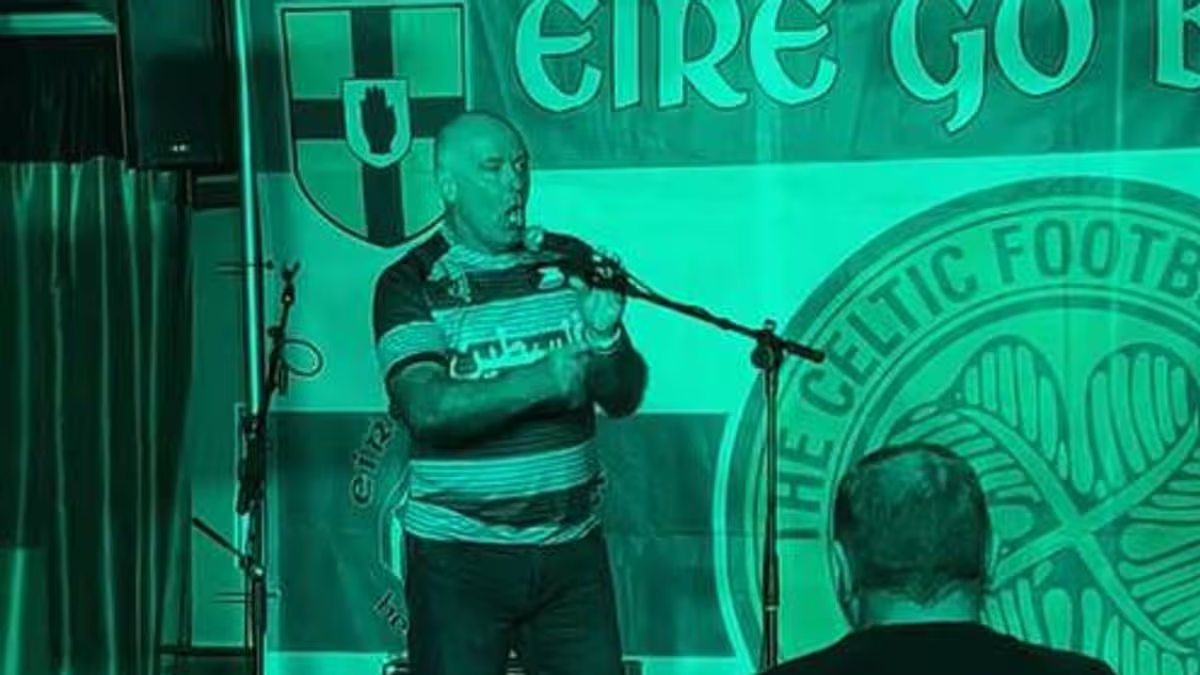
Police Scotland has received a complaint following comments made by Tommy Sheridan, in which he declared his support for “on the side of the IRA, Hamas, and Hezbollah” during a speech at an event in Northern Ireland.
The former socialist leader addressed the Willie Maley Celtic Green And White Party in Newry on Saturday night. Speaking to an audience of 600 Celtic fans, he also hosted a rapid-fire Q&A with ex-Hoops players Tommy Johnson, Joe Miller, Rab Douglas and Tosh McKinlay. This marked his fifth year speaking at the event, reports the Daily Record.
Advertisement
In his speech, the 62 year old labelled Israel and the US as “evil”, expressing his support for “on the side of the IRA, Hamas, and Hezbollah” due to their role in ‘doing the resistance’. He also stated his current alignment with Hamas and Hezbollah because “they are doing the resistance”. The IRA, Hamas and Hezbollah are all organisations proscribed under the UK Terrorism Act 2000.
A snippet of the speech uploaded to TikTok features Sheridan passionately stating: “What we have to do, is we have to choose a side. Whose side are we on? Are we on the side of those who are doing the oppressing or are we on the side of those who are doing the resistance?
“Brothers and sisters, we were on the side of the IRA because they were doing the resistance. We are on the side of Hamas in Palestine because they’re doing the resistance.
Advertisement
“We’re on the side of Hezbollah and Lebanon because they’re doing the resistance. And we’re on the side today of the Iranians and Yemen because they’re standing up against the twin pillars of evil in our society today – the United States of America and Israel.”
“They epitomise evil in our planet. When somebody says to me, ‘Tommy, whose side are you on?’ I say I am not on the side of those that murder children, that torture children, that steal the land that belongs to the Palestinians.”
He adds: “I’m on the side of those who resist repression and if that means you don’t vote for me, then tough f****** t****.”
In conversation with the Record, Mr Sheridan explained he was delivering a speech about taking sides in life “between those who resist repression and those who do the repressing,” and stood by his position on the terror organisations.
Advertisement
He said: “I refuse to accept the false narrative of the powerful in society who always cast those fighting for freedom and basic human rights as terrorists.
“Resisting tyranny and oppression is what the poor and dispossessed are forced to do. Hezbollah and Hamas were created by Israeli oppression and illegal invasions and occupations. I choose their side.
“I believe in a free Palestine. I believe in a united Ireland. I believe in an independent Scotland. Some will agree with me and some won’t. That’s life.”
Advertisement
Tommy is standing as the lead candidate on the Glasgow regional list for the Alliance to Liberate Scotland, which was established in February. His wife Gail is also standing as a candidate on the party’s Glasgow list.
This development follows news that the late Alex Salmond’s pro-independence Alba Party is set to dissolve and deregister after becoming financially unsustainable during a police investigation into suspected financial “irregularities”.
Sheridan had previously been amongst a group attempting to assume leadership and rescue Alba, but he confirms his future now lies squarely with Alliance.
Police Scotland stated: “A complaint has been received and is currently under assessment.”
Bosnia & Herzegovina made history, defeating Italy in a dramatic penalty shootout to secure their place in the 2026 World Cup.
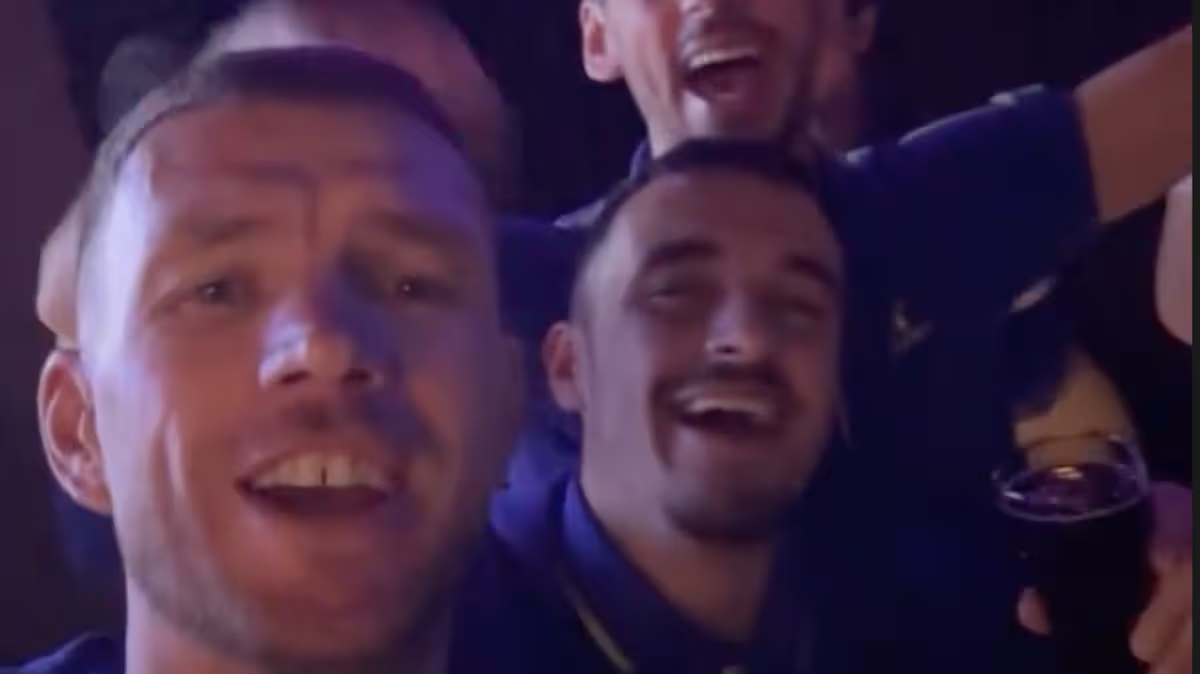
Former Manchester City striker Edin Dzeko led jubilant celebrations with the Bosnia & Herzegovina squad after they secured a dramatic World Cup qualification. The team triumphed over Italy in Zenica, winning 4-1 in a penalty shoot-out following a 1-1 draw after extra time.
This marks Bosnia’s second-ever World Cup appearance, the first since Brazil 2014. Despite suffering a shoulder injury in the final seconds of extra time after being hacked down by Davide Frattesi and receiving treatment, Dzeko battled through the full 120 minutes but was unable to take part in the shootout.
Advertisement
He watched from the sidelines with his arm in a sling. Bosnia coach Sergej Barbarez said afterwards: I hope that it is not a great injury to Edin Dzeko and that he will be able to be with us at the World Cup because he does not have much time.”
That didn’t stop the 40-year-old from partying through the night, dancing and singing in a bar. He later shared footage on Instagram, showing the squad enjoying their historic achievement.
He also shared photos from the packed streets of Sarajevo, where the Bosnia squad celebrated atop a rooftop bus surrounded by thousands of fans.
Advertisement
Despite being unable to take a penalty for his country, the striker said it felt like destiny.
“I keep saying it must have been fate, for it to happen in the last second of the match, and then for me not to be able to take a penalty,” he said.
“Someone else stepped up instead of me, scored, and in the end we won. Who knows, maybe if I had taken it, I wouldn’t have scored, so it all feels like it comes from above.”
England and Nike have launched the new home, away and goalkeeper kits to be worn at this summer’s FIFA World Cup. You can get free delivery on all orders with the code: ENGFREEDEL
Meanwhile, Italy failed to return to the World Cup and have become the first former champions to miss back‑to‑back tournaments, having failed to qualify for Russia 2018 and Qatar 2022.









































You must be logged in to post a comment Login