






Police continue to search for missing 18-year-old Declan Berry
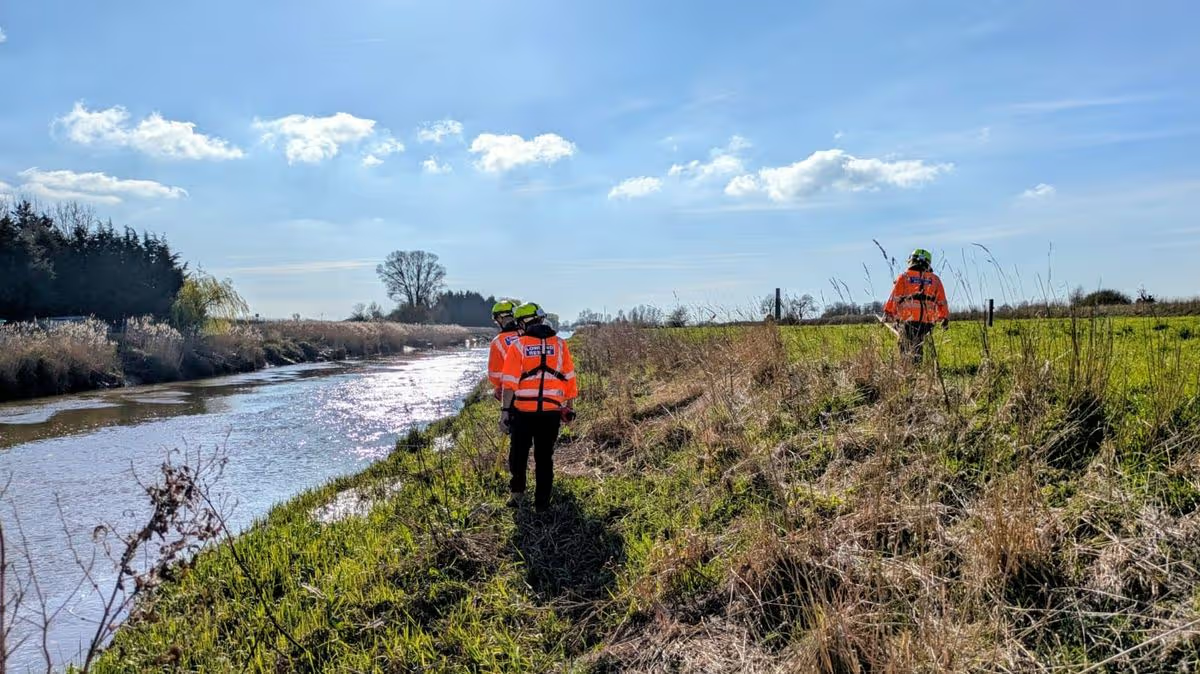
Potholes at the site of a fatal car crash were filled in within 40 hours of the tragedy, locals said, describing the road as “deteriorating into a mess”. A teenager died, one is missing and three were taken to hospital after a car mounted a riverbank on North Brink, Wisbech, and plunged into the River Nene at about 8.20pm on Tuesday, March 17.
A resident who lives next to the crash site in Cambridgeshire said she was stunned at the sight of two council vehicles arriving before 9am on Thursday to fix potholes. She said one area was so bad that motorists had been driving on the wrong side of the road to avoid it.
“There was a huge pothole in the middle of the road, which is now filled in,” she told the Express. “I’m guessing if you’d hit that at speed, it really would not have done your car any good whatsoever, and it’s not that far away from where the car hit the bank. But that’s completely filled in now.”
The resident said the whole lane was closed and full of police officers on the Wednesday because it was a crime scene, adding: “It was terrible.” Eden Bunn, 16, from Sutton Bridge, Lincolnshire, died in the crash and her body was recovered a day later.
Police are searching for 18-year-old Declan Berry, believed to have been driving the Volkswagen Polo, which has been recovered from the river. Two 16-year-old girls and an 18-year-old boy managed to escape and were taken to hospital.
But on Thursday before 9am, the council had “suddenly managed” to get two large tarmac-spraying vehicles onto North Brink, the resident said. “All the cordons were still up because the road was closed, but the council had got in to fill in the potholes, which is really odd because they’re not filling potholes in anywhere else,” she said.
“It is just dodgy. It just seems unreasonable that they should suddenly rush these two vehicles in to fill in the potholes after such a horrific accident.”
While residents had reportedly been informed in advance about fibre optic works, which would cause road closures, the woman said they were given no warning about works to fill in potholes. The neighbour said the road has deteriorated due to long-running closures on the main A-road, Barton Road, which had diverted traffic onto country lanes for over a year.
“So, all the traffic’s been going down this little tiny country track that’s down the side of the river, and of course, the road’s just completely disintegrated,” she said. She claimed the “huge potholes” were between six to eight inches deep.
“I’ve seen people changing tyres and things like that on the side of the road,” she said. “The road’s just broken away, and you can see where cars pull up onto the banks to get around each other. The whole road was just deteriorating into a mess.”
Cambridgeshire Council said it carries out regular inspections and it has previously repaired a number of potholes along the route. It said to minimise disruption, the council carried out further repairs last week while the road was closed, as soon as it was appropriate to do so, and that since the road was already closed, there was no requirement to notify residents.
A Cambridgeshire County Council spokesperson said: “Following the tragic incident on North Brink in Wisbech St Mary our thoughts and sympathies remain with the families and friends of those involved. Whilst there is an ongoing police investigation, it would be inappropriate for us to comment further. We’re assisting the police with their investigation.”
Cambridgeshire Police declined to comment given that an investigation is ongoing.











































You must be logged in to post a comment Login