Connect with us

NewsBeat

Predator used nickname ‘Epstein’ to force more than 100 girls to self-harm online | News UK

Published

on

Predator used nickname 'Epstein' to force more than 100 girls to self-harm online | News UK
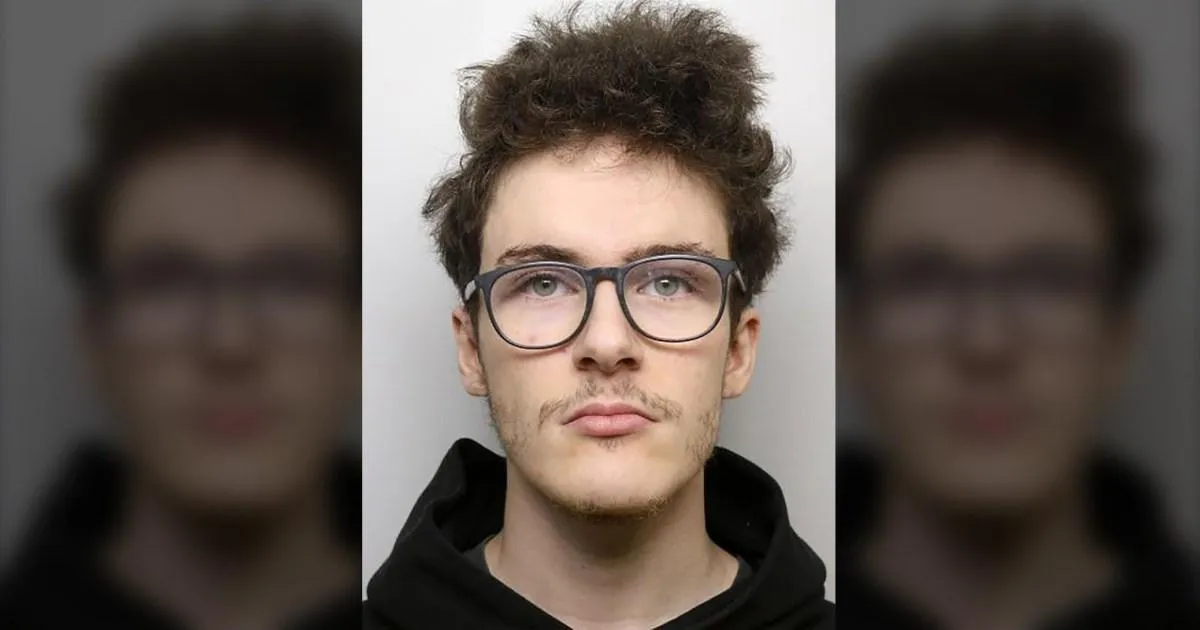
Some of his victims had self-harmed and carved his aliases on their skin (Picture: NCA)

A 17-year-old forced girls to self-harm and perform sex acts in a campaign against more than 100 victims, the National Crime Agency has said.

Justin Swaddle, now 20, was operating in a Com group, which are loose online communities that share extreme graphic material and manipulate victims to allow them to commit both sexual and violent child abuse.

Members are mainly teenage boys driven by a desire for status, rather than sexual desire or money. Notoriety is achieved by sharing more extreme content and committing increasingly serious crimes.

Swaddle’s devices were found to contain images of victims with self-harm injuries, including of his aliases carved into their skin, the NCA said.

Advertisement

He was 17 years old when he groomed girls across the world on Discord, Telegram and Snapchat, operating under the usernames ‘Epstein’, ‘Rugen’ and ‘Moscow’, it added.

Sign up for all of the latest stories

Start your day informed with Metro’s News Updates newsletter or get Breaking News alerts the moment it happens.

Advertisement
Teenage predator used nickname 'Epstein' to target 117 underage girls online Justin Swaddle Picture: NCA METROGRAB
Justin targeted the young victims and threatened them (Picture: NCA)

‘Justin Swaddle targeted young and vulnerable victims all over the world to abuse and scare them into carrying out shocking self-harm and sexual activity, purely to gain popularity with his peers online,’ Danielle Pownall, Operations Manager at the NCA said.

Swaddle, of Meanwood, Leeds, was jailed for two years on Monday after an investigation revealed he had communicated with 117 female victims aged 13 to 17, eight of whom were in the UK.

He gained the trust of his victims before collecting private information about them to threaten them.

One victim, aged 17, said she met him on social media platform Discord in November 2022 and they then moved to Snapchat.

On Snapchat, the conversation became sexual and escalated into discussions of self-harm.

Advertisement

Swaddle requested nude images of her, and that she carve his username in her body, the NCA said.

He obtained her name, address and school details. She also learned he had recorded calls where sexual activity had taken place and shared them with a group.

Swaddle threatened to use her personal details if she did not provide further images and videos.

Other Telegram messages showed he had attempted to incite a child to sexually abuse a young child and record it for him, according to the NCA.

Advertisement

His devices contained indecent images of children in categories A to C, with A being the most severe. Detectives estimated the images on his devices showed children aged between three and 17, with several indicating he had directed or encouraged the acts.

Swaddle was first arrested by West Yorkshire Police in October 2023 for offences including the possession, making and distribution of indecent images.

The NCA started their investigation in January 2024 and uncovered hundreds of conversations, all sexual and involving young females.

Investigators worked with law enforcement partners in the USA, Canada, Australia, Norway and New Zealand to speak to and safeguard victims.

Advertisement

According to the NCA, Swaddle admitted two counts of inciting a girl aged 13 to 15 to engage in sexual activity without penetration; inciting a girl aged 13 to 15 to engage in sexual activity with penetration; and blackmail.

He also pleaded guilty to making an indecent photograph of a child in categories A, B and C, as well as possessing an extreme pornographic image and possessing a prohibited image of a child.

Get in touch with our news team by emailing us at webnews@metro.co.uk.

For more stories like this, check our news page.

Advertisement

Source link

Advertisement
Continue Reading
Click to comment

You must be logged in to post a comment Login

Leave a Reply

NewsBeat

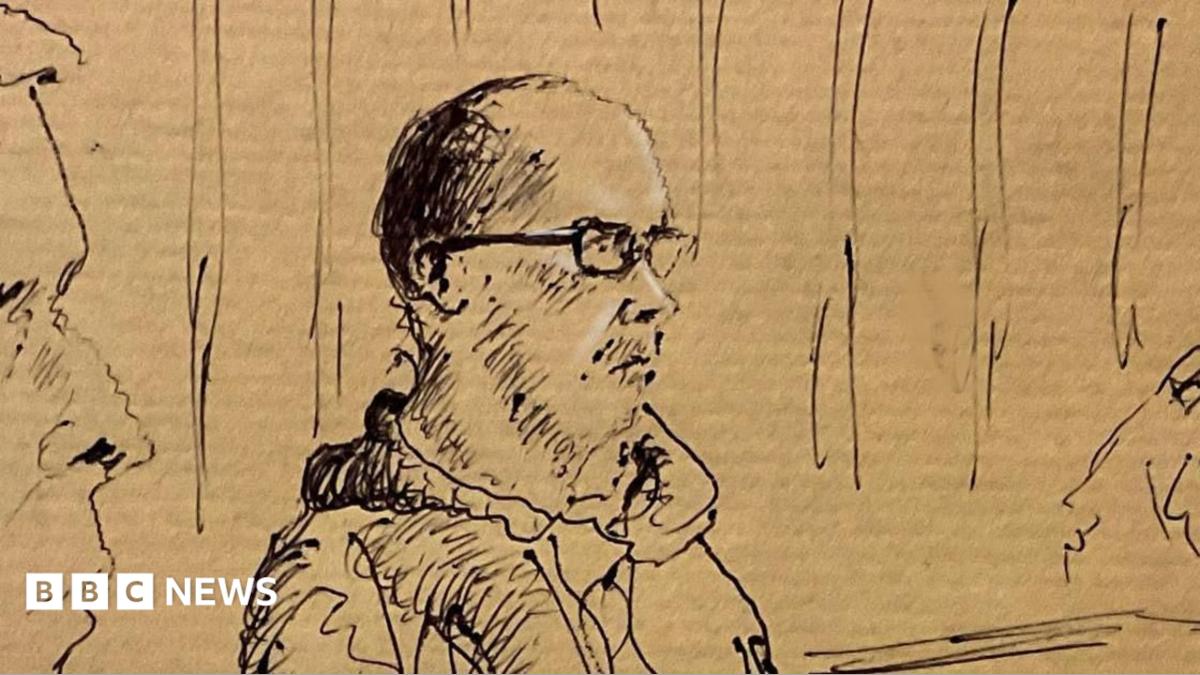
How alleged cartel leader Daniel Kinahan returned to Ireland

Published

on

A dark grey plane comes into land near a field of hay bales and green trees, the sky behind the aircraft is blue.

Law enforcement agencies on both sides of the Atlantic believe he is a leading figure in the Kinahan Organised Crime Group.

The gang began as a street drug dealing operation in Dublin in the 1980s. From there, it became an international player in organised crime.

It has been linked to drug trafficking, money laundering, and murder.

The former deputy director of the UK’s National Crime Agency, Roy McComb, said the group had grown globally because it had the “ambition and drive” to do so.

Advertisement

McComb told BBC Radio 4’s Today programme that the Kinahan group had created links with other organisations from South America, Eastern Europe, Pakistan and Afghanistan, who were involved in the “wholesale distribution” of drugs.

He said the cartel became “the go-to organised crime group to move large quantities of narcotics around Europe”.

McComb explained they were “seen to be a threat to the stability of the US dollar”, because they were trading in the currency.

In 2022, the US offered a reward of $5m (€4.3m; £3.7m) for information about Kinahan, his father Christopher Senior and brother Christopher Junior.

Advertisement

The organisation had previously come to more widespread global media attention in 2016, as the result of a vicious feud with another Irish gang known as the Hutch organisation.

During that year, Kinahan was targeted by gunmen at a boxing weigh-in at a hotel in north Dublin.

Mobile phone footage of the shooting captured the chaos and brutality of the violence.

One man was murdered in that incident. During months of gangland violence, 18 people were killed.

Advertisement

Kinahan left Ireland shortly after the attempt on his life.

Source link

Continue Reading

NewsBeat

Robins will stay healthy in the summer heat if you leave 1 food staple outdoors in August

Published

on

Wales Online

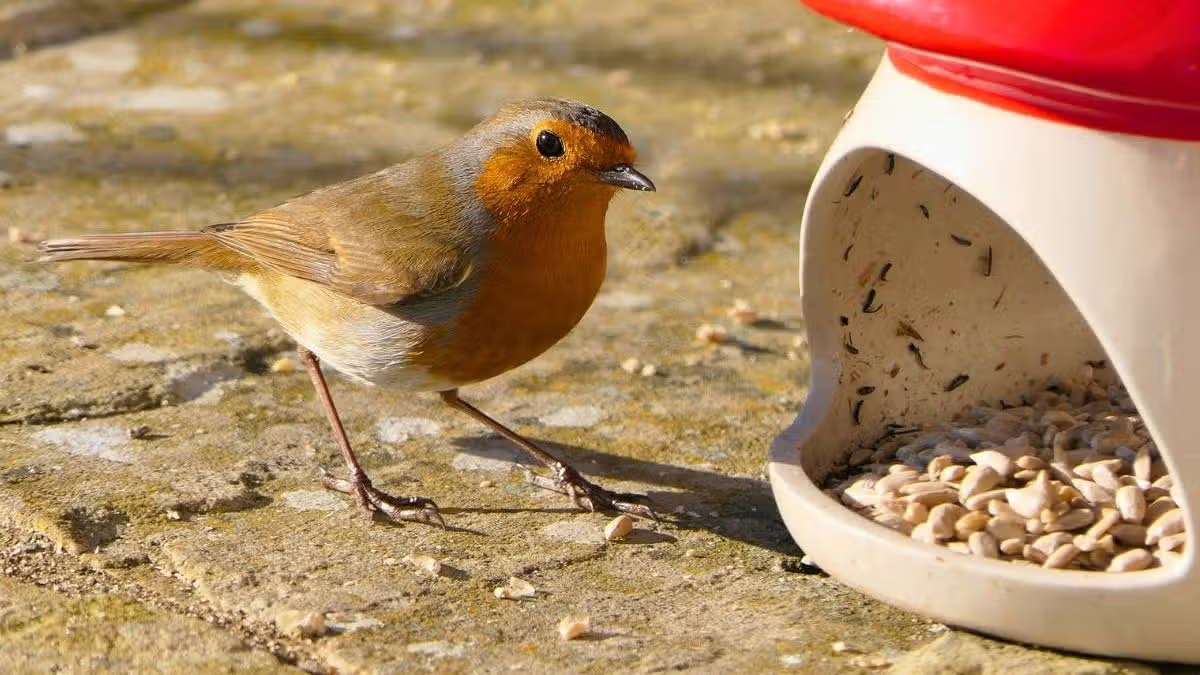
August is actually the best time to feed robins as a lot of their natural food sources have dried out

Many gardeners tend to put away their bird feeders once the warmer months arrive, yet right now, in August, robins are in particular need of all the help they can get. While robins predominantly forage for insects on the ground, this summer’s prolonged dry spell has forced worms to burrow deeper into the soil in search of moisture.

Advertisement

This makes it virtually impossible for robins to reach them, while other natural food sources, such as berries, are likely to wither and become increasingly scarce due to the lack of rainfall. Late summer represents a critical period for robins — not only must they consume more food to build up reserves ahead of the autumn chill, but they also typically raise several broods throughout their breeding season.

With robins currently expending considerable energy foraging for chicks, protecting their nests and growing new feathers, leaving food out in your garden could significantly improve their chances of survival.

What can you feed robins from your kitchen?

Fortunately, garden wildlife specialists at Home & Roost have revealed a straightforward way to help feed robins, as the birds can actually consume a surprisingly wide range of leftovers that might otherwise end up in your bin.

Advertisement

They said: “There are lots of things in your kitchen that robins will love, and adding these to your feeding routine adds variety, saves money and saves food waste.”

One particularly easy option that robins will relish is soft fruit such as apples, pears, or bananas — though these should be cut into small pieces before being left outside.

Robins have particularly small beaks and are unable to break down food in the way humans can, meaning large chunks of fruit could pose a choking hazard or prove dangerous to their young.

Grated cheddar cheese and chopped grapes are also suitable options, though these should only be offered as an occasional treat due to their high fat and fructose content.

What else should you know about feeding robins?

It is absolutely vital to highlight that bread, cakes and leftover baked goods should never be given to robins, despite being one of the most commonly offered scraps to garden birds.

Many people across the UK assume birds enjoy bread, largely due to its association with feeding ducks, but it fills them up while providing none of the essential nutrients they require to thrive.

Should robins become accustomed to eating bread, their bodies will struggle to accumulate sufficient fat reserves ahead of the colder months, leaving them far more vulnerable once winter sets in.

Advertisement

It is worth noting that while offering food scraps can be beneficial, robins currently require a high intake of protein and fat to build up their energy stores — so investing in proper bird food where possible is strongly advisable.

What bird food should you buy for robins?

Crushed peanuts are a suitable option for robins, though many supermarket varieties contain salt or added flavourings that can be harmful. Bird-friendly peanuts are always the safer choice.

Birds are unable to process salt in the same manner as humans, meaning salty snacks can prove toxic if consumed in sufficient quantities and may place considerable strain on their kidneys.

Advertisement

The ideal food for robins is mealworms, as these mirror their natural diet closely and deliver many of the nutrients required to build up energy reserves ahead of autumn.

They’re also partial to sunflower hearts, nyjer seeds and suet balls — all of which are rich in fat and will help their bodies get ready for the colder months to come.

That said, exercise caution with suet balls, as they have a tendency to melt rapidly in warm conditions. It’s advisable to steer clear of them during warmer periods, as the grease can soil bird feeders and coat the feathers of visiting birds.

Advertisement

Source link

Continue Reading

NewsBeat

Car washes and gym pools could be closed under drought-triggered water rationing

Published

on

Daily Mirror

Southern Water company has applied for permission to extend the scope of restrictions to preserve supplies for households amid the ongoing drought

Car washes could be ordered to shut and health club swimming pools closed under a potential wave of water rationing.

Advertisement

Southern Water has applied for permission to impose what is called a “non-essential use ban” in Hampshire and the Isle of Wight. The company already has a hosepipe ban in place in the two areas. A consultation closes on Tuesday and if approved by the government, it would ban businesses from activities such as washing cars and windows with hosepipes or other devices, and filling swimming pools. It would be the first time the Government has authorised such a measure since 2006.

A spokesperson for Southern Water, said: “These are precautionary measures and making an application does not mean they will be introduced. However, we must follow the regulatory process to protect water supplies and the environment if dry conditions persist.”

Hampshire and the Isle of Wight were among seven English regions declared to be in drought conditions, last month. Given the the widespread use of hosepipe bans across England and Wales, it is possible other companies could also apply to the Department for Environment Food and Rural Affairs for wider restrictions.

Advertisement

Regulator Ofwat describes a non-essential use ban (NEUB) as a “more serious step” that water companies can take if dry conditions continue after a hosepipe ban has been introduced. While hosepipe bans mainly affect households, NEUBs specifically target businesses. Businesses use around a third of all water supplied in the UK, so restrictions on commercial water use can make a significant difference to overall demand, it says.

If a NEUB is put in place, businesses must stop using water for the likes of watering outdoor plants on commercial premises, filling or topping-up a non-domestic swimming pool,filling or maintaining a pond, operating a mechanical vehicle washer, cleaning any vehicle or boat, cleaning non-domestic premises, “suppressing dust”, or operating cisterns in unoccupied buildings.

A government spokesperson said that public swimming pools were not included in the restrictions, that generally do not trigger any right to compensation. If it were granted it would be the first time the Government has authorised such a measure since 2006.

Advertisement

Source link

Continue Reading

NewsBeat

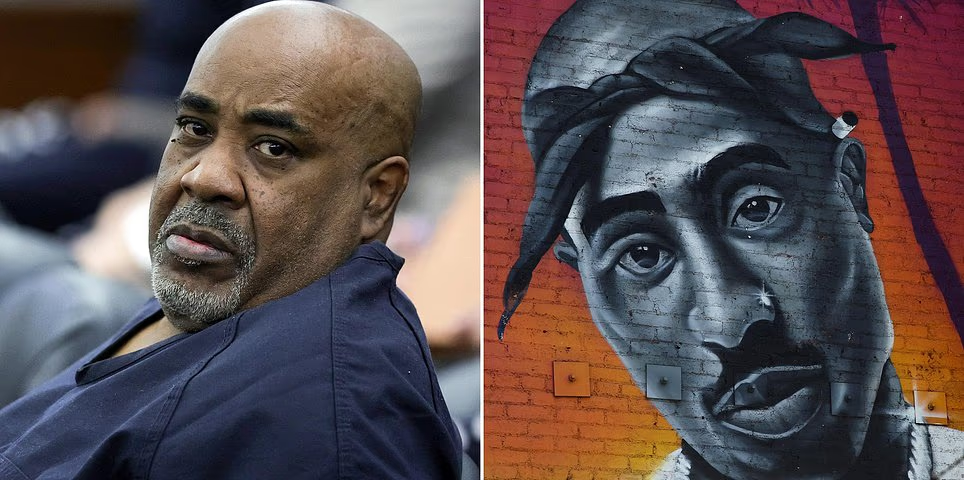
Tupac murder trial begins with Suge Knight refusing to testify as ex-Crips boss Duane ‘Keffe D’ Davis stands accused of ordering killing: Live updates

Published

on

Tupac murder trial begins with Suge Knight refusing to testify as ex-Crips boss Duane 'Keffe D' Davis stands accused of ordering killing: Live updates

Advertisement

Former Death Row Records boss Suge Knight has refused to testify in legendary rapper Tupac Shakur’s murder trial despite being the only living eyewitness to the 1996 assassination.

‘This trial has nothing to do with me and if somebody brings me there, it’s gonna hurt whoever brings me there. I promise you that,’ Knight said in an interview last week with ABC News.

Duane ‘Keffe D’ Davis, 63, is standing trial for the murder of Shakur nearly thirty years to the day that the Hit ‘Em Up rapper was gunned down in the passenger seat of a BMW in Las Vegas. The musician was in the city to see a Mike Tyson boxing match before he was fatally shot. 

While it is unclear who fired the rounds that struck the 25-year-old musician in the chest, prosecutors will argue that Davis, a former leader of the South Side Compton Crips, ordered the killing and provided the gun used to murder Shakur in the drive-by shooting.

Advertisement

The proceedings, which begin today and are expected to last over a month, will see Davis facing life in prison without parole if convicted. He has pleaded not guilty in the case. 

Follow the Daily Mail for more updates… 


Suge Knight insists he won’t testify against Tupac murder suspect, despite being with rapper when he was murdered

Marion ‘Suge’ Knight has insisted on several occasions that he won’t be testifying against Tupac’s murder suspect despite being with the rapper when he was killed.

Advertisement

Duane ‘Keefe D’ Davis was arrested by Las Vegas detectives in October 2023 and was charged with murder with use of a deadly weapon in Shakur’s case.

Knight, the 61-year-old Death Row Records co-founder, told TMZ in 2023 that he believes police have arrested the wrong man for Tupac’s murder, and stated that he would not be taking the stand in court.

He was injured during the 1996 shooting, and despite being the only living witness, said: ‘1000% I wouldn’t go. I wouldn’t testify, none of that.’

Last week, he doubled down on his defiant statements to ABC News, saying: ‘This trial has nothing to do with me and if somebody brings me there, it’s gonna hurt whoever brings me there. I promise you that.’

Advertisement

Knight is currently serving a 28-year jail sentence for a hit-and-run crash in 2015.

Death Row Records co-founder, Marion "Suge" Knight, appears at a pretrial court hearing on May 15, 2018 in Los Angeles, California. - Knight is charged with several crimes, including attempted murder and hit-and-run for allegedly ramming his pickup truck into two men, killing one of them, after a dispute on the set of the movie "Straight Outta Compton." (Photo by DAVID MCNEW / AFP)        (Photo credit should read DAVID MCNEW/AFP via Getty Images)

Previously unseen Tupac lyrics foreshadowing his tragic death emerged in 2025

Previously unknown recordings and lyrics from Tupac Shakur that featured strangely foreshadowing lyrics emerged in March 2025.

The three unreleased songs featured Tupac as the lead were part of a shelved project from the early 1990s with a group called Jesse and the Kidz.

The discovered cassette tape lists the tracks ‘Leave Us Kidz Alone,’ ‘Streetz got ya Babies’, and ‘Bedtime Storiez’.

Notably, ‘Streetz got ya Babies’ contains some eerie lyrics that could almost have foreseen Tupac’s own violent death as they allude to fearing someone was after him.

Advertisement

They read: ‘Mama told me to watch my back and that’s what I’m gonna do’ and ‘traded in my zip gun got me a .22’.

Additionally, handwritten lyrics for a song titled ‘Daze,’ reflecting on Tupac’s childhood and parental lessons, have also been revealed. Both the recordings and lyrics are now available for private sale through MomentsInTime.com.

Rapper Tupac Shakur (Lesane Parish Crooks, name later changed to Tupac Amaru Shakur) performs at the Regal Theater in Chicago, Illinois in March 1994.  (Photo By Raymond Boyd/Getty Images)
CHICAGO - MARCH 1994:  Rapper Tupac Shakur performs at the Regal Theater in Chicago, Illinois in March 1994.  (Photo By Raymond Boyd/Getty Images)

Haunting footage of Tupac talking about Diddy’s involvement in shooting at Quad Studios two years before he was killed resurfaces

Haunting footage of Tupac talking about P Diddy’s involvement in a shooting two years before he was killed has resurfaced online.

The legendary rapper was shot five times during a robbery at Quad Studios in Times Square on November 30, 1994, and in an April 1995 interview with Vibe magazine, he claimed Sean ‘Diddy’ Combs was the mastermind behind the set-up.

In footage from the interview, reposted last week by YayAreaNews on X, formerly Twitter, Tupac, who died aged 25 in September 1996, was asked: ‘Do you think Puffy was involved in the shoot?’

Advertisement

REVEALED: Tupac’s friends and family smoked his ashes after rapper’s death at 25

New details about the aftermath of Tupac Shakur’s death were revealed by former Death Row Records CEO Suge Knight.

The rapper signed with Death Row in 1995, and they put out his fourth studio album, All Eyez On Me, released in February 1996, just seven months before his death.

Knight was driving a black BMW 750iL with Tupac in the passenger seat when a late model Cadillac pulled up to the car and fired several shots, with Shakur struck four times, twice in the chest.

Shakur – born Lesane Parish Crooks – was put on life support and underwent emergency surgeries, but ultimately succumbed to his injuries on September 13, 1996, six days after the Las Vegas shooting.

Knight, 61, currently serving a 28-year prison sentence for a fatal 2015 hit-and-run accident, revealed in a new phone interview with People a bizarre ritual that took place, months after detailing a conspiracy against him with Daily Mail.

Advertisement

Tupac Shakur died at the height of his success

Shakur’s death came as his fourth solo album, ‘All Eyez on Me,’ remained on the charts, with some 5 million copies sold.

Nominated six times for a Grammy Award, Shakur is largely considered one of the most influential and versatile rappers of all time.

He was feuding at the time with rap rival Biggie Smalls, also known as the Notorious B.I.G., who was fatally shot in March 1997.

At the time, both rappers were in the middle of an East Coast-West Coast rivalry that primarily defined the hip-hop scene during the mid-1990s.

Shakur accused Biggie and Sean ‘Diddy’ Combs, of being behind another shooting in 1994.

Advertisement

He was shot in a hotel lobby and was seriously injured, but survived the attack, accusing both of the rappers of being linked to the attack.

FILE - Rapper Tupac Shakur attends a voter registration event in South Central Los Angeles, Aug. 15, 1996. Duane "Keffe D" Davis will ask a judge next week of June 23, 2024, to let him out of jail pending trial on a murder charge of Tupac Shakur. Duane "Keffe D" Davis wants to be allowed to post $750,000 bond to be freed to house arrest at home in suburban Henderson pending trial in November. :eyes: 1    (AP Photo/Frank Wiese, File)

Tupac Shakur’s step-brother slammed Las Vegas murder detectives for taking so long to arrest Keffe D: ‘He’s been running his mouth for years’

In September 2023, Mopreme Shakur, Tupac’s step-brother, called Keffe D’s arrest 27 years after the death of the rapper ‘bittersweet’.

‘We have been through decades of pain,’ he told CNN at the time, ‘They have known about this guy, who been running his mouth, for years.

‘So why now? For us, this is not over. We want to know why, and if there were any accomplices.’

What happened on the night of Tupac Shakur’s murder?

Shakur was 25 years old when he was shot four times in the chest on September 7, 1996 while he was in Las Vegas. He died on September 13.

The rapper was in a BMW driven by Suge Knight in a convoy of about 10 cars.

Advertisement

They were waiting at a red light when a white Cadillac pulled up next to them and gunfire erupted.

Cops say that Duane ‘Keffe D’ Davis started to ‘devise a plan’ to kill Shakur and Knight after they attacked his nephew at a Mike Tyson boxing match.

Mandatory Credit: Photo by Bei/REX/Shutterstock (5145936n) Tupac Shakur "Sunset Park" Premiere April 23, 1996: Los Angeles, CA Tupac Shakur "Sunset Park" Premiere Photo ® Berliner Studio/BEImages
FILE - This undated photo provided by the Las Vegas Metropolitan Police Department shows the bullet-riddled car in which rapper Tupac Shakur was fatally shot in September 1996, in Las Vegas. (Las Vegas Metropolitan Police Department via AP, File)

Duane ‘Keffe D’ Davis will see day in court three years after arrest

Davis has spoken openly about being at the scene of the drive-by shooting 27 years ago, and admitted handing the murder weapon that killed Tupac Shakur to a fellow gang member. Davis is the only one who was in the car that night who is still alive.

Davis was arrested in Henderson, Nevada, after he was indicted by a grand jury in October 2023. He was charged with murder with a deadly weapon with a gang enhancement.

Witnesses in the case pointed to Davis as being a member of the South Side Crips and a known drug trafficker. Shakur was affiliated with gangs, including the Bloods and Mob Piru, but was not considered a member.

Advertisement

For years, Davis has spoken about his apparent role in the death of the rapper in numerous interviews, including in a memoir about his life on the streets.

Tupac Shakur’s final moments are revealed in never-before-seen images that show him fleeing the MGM Grand after a fight and the bullet-riddled BMW he was gunned-down in when ‘shot-caller Duane ‘Keffe D’ Davis ordered the hit’

Investigators have released never before seen photos and videos showing the last moments of rap star Tupac Shakur’s life following the first ever arrest made in the murder.

Cops released new details surrounding the arrest of Duane ‘Keffe D’ Davis, the man charged in connection with the rapper’s death in September 1996.

The new video shows Shakur and Death Row Records CEO Marion ‘Suge’ Knight leading an entourage of dozens to attack rival gang member Orlando ‘Baby Lane’ Anderson in the lobby of the MGM Grand just hours before the shooting.

Advertisement

The clip goes on to show Shakur and others kicking Anderson as he lies on the ground. Security guards surround the melee but do not intervene. Shakur and Knight then leave the building before the police arrive.

Advertisement

Source link

Advertisement
Continue Reading

NewsBeat

Former SNP MP Joanna Cherry says she is ‘not obsessed’ with Nicola Sturgeon

Published

on

Former SNP MP Joanna Cherry says she is ‘not obsessed’ with Nicola Sturgeon

Speaking about Ms Sturgeon, the former MP – who has now left the SNP – continued: “I would like to reassure her I have no interest in her, beyond thinking it’s very important for Scotland and my former political party and the independence movement to analyse what has gone wrong over the last 10 years, to look carefully at the various scandals that have happened, and to address them so we can all move on.

Source link

Continue Reading

NewsBeat

The secret behind a Lancashire restaurant’s 30-year Michelin star run

Published

on

The secret behind a Lancashire restaurant's 30-year Michelin star run

Some are earning their first Michelin stars, beaming in front of the cameras.

Their march up the steps is the summation of years of hard work and dedication.

For one Lancashire restaurant, that walk has become muscle memory.

On a cold Dublin night, Northcote retained its Michelin star for a 30th consecutive year, a Ribble Valley restaurant mixing it with the world’s elite.

Advertisement

In February, Northcote retained its Michelin star for 30 consecutive years (Image: Northcote)

Yet it was not so long ago that this night had seemed impossible.

Lisa Goodwin-Allen is the embodiment of the modern head chef in gastronomy’s elite.

In hospitality, as in sport, chefs have shifted away from the stereotype of the free-wheeling, hard-drinking bon viveur, an image that is part reality, part misty-eyed nostalgia for “golden days”.

A slight eccentricity in her appearance, white hair tinged with pink, purposefully frayed on one side, has become a calling card for the Lancaster-born chef, who began her remarkable career at Lancaster & Morecambe College, before stints at Holbeck Ghyll in the Lake District and the two-Michelin-starred Le Champignon Sauvage in Cheltenham.

Advertisement

When you work hard and things are not evolving, it kind of suppresses you.

She arrived at Northcote as a wet-behind-the-ears 20-year-old in 2001; her drive and talent saw her named head chef just three years later, in 2004, at the age of 23.

Two decades on, a seismic shock rippled through the Ribble Valley when Goodwin-Allen announced in March 2025 that she was leaving Northcote after 23 years.

The decision was reversed just one month later, when she returned to Northcote as Chef Patron-Director.

Sitting in the conservatory, she is reluctant to dwell on that period.

Advertisement

Chef Lisa Goodwin-AllenLisa Goodwin-Allen, Chef Patron-Director at Northcote (Image: Northcote)

“When you work hard and things are not evolving, it kind of suppresses you,” she says, choosing her words carefully.

“You think, maybe I should look elsewhere.”

The answer is brief, but it reveals something fundamental about her character: a restless desire to push boundaries, both her own and those of the kitchen walls around her.

So, what changed her mind?

Advertisement

The new owners, Alf and Clare Ellis, who built one of Britain’s most successful kitchen manufacturing businesses through Ultima Furniture Systems and DIY Kitchens, bought Northcote, and Goodwin-Allen was tempted back into her pursuit of excellence, reassured she would have the support and investment to match her ambition.

It was an acknowledgment that a chef is only as strong as the team and structure around them.

For those who appreciate a sporting analogy, apologies to those who do not, the difference between the most successful clubs and the ones who outspend their rivals yet under-deliver is rarely just the manager.

There is usually a structure in place that allows them to do their best work.

Advertisement

For Pep Guardiola at Manchester City, that meant an ownership group willing to invest, plus key lieutenants like director of football Txiki Begiristain and chief executive Ferran Soriano.

For Goodwin-Allen, that structure is the new ownership and Craig Bancroft, better known as Mr B.

With a nickname reminiscent of the unseen voice in Charlie’s Angels, he sits with a calm authority that belies the scale of his responsibilities.

He is the man who keeps the wheels greased and Northcote’s garden watered, literally and figuratively.

He looks after the wine, oversees training, and makes sure every department runs in sync.

Advertisement

Bancroft’s journey to that role has been anything but smooth.

“I failed everything at school,” he says.

“I started an apprenticeship scheme that was five years long, which you would never get anyone to do today.”

There was a year-long stint as a chef, including six months in Paris and six back in England, working in some of the best hotels in London, not a bad grounding.

Advertisement

More than four decades on, it is no surprise that Mr B is a living encyclopaedia of Northcote.

Before the five years were up, he arrived at Northcote in December 1983, the place he would become synonymous with.

More than four decades on, it is no surprise that Mr B is a living encyclopaedia of Northcote.

In truth, his influence stretches far beyond the Ribble Valley.

Widely regarded as one of the most respected figures in British hospitality, Bancroft is an industry titan, literally, having been named among the Industry Titans in Boutique Hotelier’s Power List 2026.

Advertisement

The accolade merely formalised what many in hospitality already knew.

A table set for service in Northcote's Michelin-starred restaurantA table set for service in Northcote’s Michelin-starred restaurant (Image: Northcote)

Few individuals have shaped northern fine dining, wine education and talent development quite like Mr B.

Under his watch, countless talents have risen through the ranks and many have gone on to pastures new.

Bancroft has overseen the qualification of two Master Sommeliers, with Magdalena Sleziak, Northcote’s Head Sommelier and Food & Beverage Manager, on her way to becoming the third.

Advertisement

“What excites me,” he says, “is the development of the business, but I love developing the people we have.”

“The Northcote family is worldwide and in 42 years we have also produced marriages,” he smiles.

“Lisa met her husband here and I met my wife here.”

Goodwin-Allen and Mr B’s personalities and ambitions dovetail neatly.

Advertisement

They share a desire to make Northcote bigger and better than ever while keeping its roots firmly grounded in Lancashire.

Part of that is using nearby suppliers and a largely local workforce.

“We are employing 87 people and most of those are locals,” says Mr B.

“Most of Lisa’s suppliers are within a 30-40 mile radius.

“When you look at the little economy that is, it is a really, really important part of where we live.”

Advertisement

Lisa strikes a similar note.

“It is not about going somewhere else and getting it cheaper,” she says.

“It is about giving a good price and good quality whilst stamping the DNA of what Lancashire has to offer.

“As much as we can, whether that is a nostalgic nod, a traditional dish or an ingredient, we will always feature Lancashire in some way.”

Advertisement

More than just a restaurant, as the Catalans might say.

The duo see it as Northcote’s responsibility to tell the stories of their producers, to reveal the unseen work and passion that goes into what appears on the plate.

If that emphasis on local products and charming stories makes this sound like a postcard restaurant, it could not be further from the truth.

Under Lisa’s stewardship, the menu is a case study in constant experimentation, invention and reinvention.

Advertisement

Take the eel dish, which Goodwin-Allen reverse-engineered.

Guests enjoy the terrace at Northcote, overlooking the Ribble Valley countryside (Image: Northcote)

In the development kitchen, the eel is slow-cooked, long-cooked, fried, left raw.

Flesh, bones and head are used to build a stock.

The fat was stripped out once the team realised it masked the palate, and the percentage of cream was dialled back with it.

Advertisement

Micro and macro changes followed until they reached a dish they were happy with.

“The public do not realise how much effort it takes to create one dish,” she says.

“The work, the effort and the creativity, there are so many layers.”

Is it frustrating?

Advertisement

“Exciting,” she replies.

“You have to really challenge yourself and we are always looking at new techniques and new ingredients.

Customers at high-end establishments not only recognise but expect good service.

“What our idea is when we say, ‘We are going to make this dish,’ might turn out completely different in reality.

“That is the beauty of development.”

Advertisement

If it sounds like hard work, that is because it is.

Goodwin-Allen admits her success has not come without sacrifice.

A head chef at 23, there were inevitably things she missed out on that her peers were enjoying.

“Massively, you miss everything.”

Advertisement

Like the rest of the world, hospitality was upended by Covid.

“Covid was horrific, it devastated people,” says Goodwin-Allen.

Lisa Goodwin-Allen and the Northcote team during service (Image: Northcote)

“But it also changed people.

“After that, everyone had to think about working hours and their work-life balance.

Advertisement

“Family is everything; we work to provide for them.

“As an establishment this size, we cannot do a four-day week because we would have to nearly triple our workforce.

“But what we can do is watch the hours and make it more workable.”

Hospitality has long been associated with a churn-and-burn staff culture, but Northcote’s approach is based on the belief that if you look after your workforce, they will look after you.

Advertisement

Customers at high-end establishments not only recognise but expect good service.

Familiar faces in the Ribble Valley help deliver that.

Staff are moved around, picking up skills from different departments and finding the role that suits them best.

There is an understanding that their future is not constantly teetering on a knife-edge.

Advertisement

“We are a much better business to work in than people think,” says Mr B.

“If you have a young family with a child, you can be off Monday and Tuesday so you can do the childcare, then your partner is off Wednesday and Thursday.

“We can make things work around families and everybody is bloody well paid.”

For chefs, the balance is more fraught than for most.

Advertisement

For every single person who comes through the door, you will learn something, be it a technique or an ingredient.

Success hinges on the extra hours and there is probably not an hour, let alone a day, when Goodwin-Allen’s mind does not drift back to work.

The word that keeps surfacing when you speak to her is “obsession”.

Look at the world’s leading chefs, athletes and entrepreneurs and you will struggle to find many who do not share that tunnel-vision approach to success.

They are also constantly scanning the horizon, picking up ideas from rivals, magpies for inspiration.

Advertisement

That spirit helped spawn Northcote’s now-famous food festival, Obsession, founded in 2001.

Chefs from across the UK and around the world travel to the Ribble Valley to cook, collaborate and, increasingly, record podcasts and talks.

More than an event, it became a chance for cross-pollination: the world’s best chefs leaving behind the tiniest details and tricks of the trade, as Lancashire quietly soaked up their knowledge.

Advertisement

“A culinary university,” is how Goodwin-Allen describes it.

“When people come to us, they are coming into our home, with our hospitality, with amazing ingredients, and they walk away desperate to come back.

“For every single person who comes through the door, you will learn something, be it a technique or an ingredient.”

Her presence on social media, where you might find her son helping to prep onions or taste new dishes, is another window into that constant evolution beyond the pass.

Advertisement

Appearances on shows such as Great British Menu and MasterChef: The Professionals have stitched Northcote and Goodwin-Allen into Britain’s culinary fabric.

“It is very good for business, but the biggest thing for me is that I am a beast who likes to learn,” she says.

“The TV is also about giving back.”

To stop learning, in her world, is to stop altogether.

Advertisement

If Northcote’s eye is fixed on the future, what does it want to become?

“We want people to stay with us,” says Lisa.

Rather than enjoy a meal and go home happy, she hopes guests will linger and enjoy the serenity Northcote offers.

A gym, swimming pool, stunning hotel rooms and another eating space in the works are all part of that plan.

Crucially, the Ribble Valley offers something London and Paris do not.

Advertisement

“Dining in the countryside is very different to dining in the city,” says Bancroft.

“We have a bar, a lounge, a garden and terrace,” not to mention the rolling hills and sweeping fields behind him.

Lancashire’s industrial and working-class roots run deep.

In parts of England like this, aspiration is not always seen as respectable, and a hotel with plush rooms and tasting menus can feel jarring to those struggling with the weekly shop.

Advertisement

There are some who see Northcote as a symbol of distance from that world.

Goodwin-Allen understands that tension better than most.

Fiercely proud of her background, she spent much of her childhood in her father’s scrapyard, a far cry from the luxury enjoyed by some of her guests.

Far from pulling up the ladder, she continues to work on projects such as the Lisa Goodwin-Allen Academy at Blackburn College, helping young people gain practical hospitality skills and opening doors into careers that might otherwise feel out of reach.

Advertisement

The initiative reflects her belief that hospitality can be a vehicle for social mobility, just as it was for her when she left Lancaster & Morecambe College and entered an industry that would eventually take her to the very top of British gastronomy.

Prices at Northcote are undeniably a luxury for many.

But perhaps a Lancashire institution that hires and looks after its own, buys local and pours money and training back into the county, deserves celebrating.

It might be a rose in Lancashire’s garden, but few institutions can claim to enrich the soil in which it sits as much as Northcote does.

Advertisement

That, as much as any Michelin star, may be its greatest achievement.

Source link

Advertisement
Continue Reading

NewsBeat

Huge Welsh rugby talent unearthed in Australia as five major teams scout him

Published

on

Wales Online

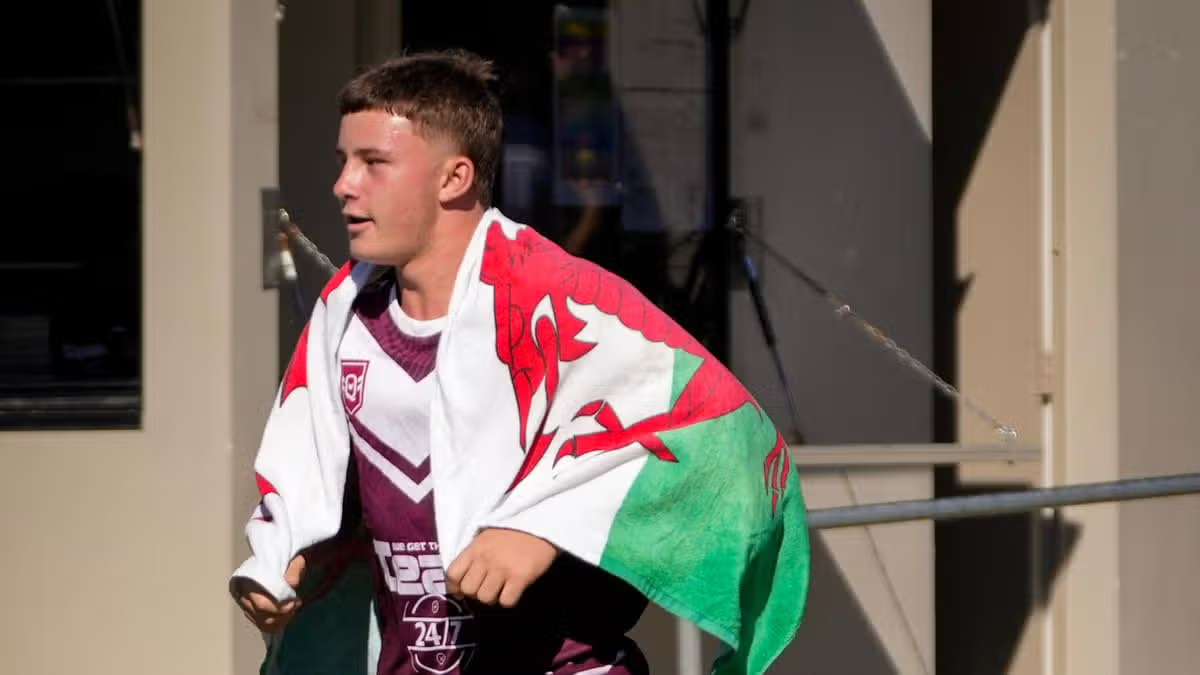
When Jaxson Collins moved to Australia’s Gold Coast at the age of three, his father, Ross, was very much a rugby union man.

The Cardiff native had played alongside Sam Warburton for Cardiff Schools in the DC Thomas Cup, as well as for Ely, Glamorgan Wanderers and Llandaff North.

Now, at 14, Jaxson is making a name for himself in rugby league and is regarded as one of Australia’s most promising young talents.

JOIN OUR WALES RUGBY FACEBOOK PAGE Latest news, analysis and much more

Advertisement

He attends Keebra Park State High School on Queensland’s Gold Coast, one of Australia’s leading rugby league schools. The school has produced 82 players who have gone on to play in the NRL.

Its alumni include dual-code international Benji Marshall and Brisbane Broncos, Queensland and Australia star Reece Walsh.

Jaxson is already well on the path to following in their footsteps.

The 14-year-old is a member of no less than five NRL academies — Brisbane Broncos, Gold Coast Titans, Dolphins, Canterbury-Bankstown Bulldogs and South Sydney Rabbitohs.

He has also been selected again for the South Coast Rugby League representative team and will compete at the Queensland State Championships for the third season in a row while he has also played for Gold Coast Cyclones Rugby Union, and Queensland Rugby Union.

His ambition is clear.

Advertisement

“My long-term goal is to be one of the best players in rugby league in the NRL,” he tells WalesOnline.

“I’m determined to make it. I’ve got to keep up the hard work and hopefully I’ll get there.

“In league I play second-row/lock and in union I play in the back row or inside centre.

“I’d say my strengths are my line running, and my defence is pretty good while my effort is good as well.

Advertisement

“I’m a big admirer of Patrick Carrigan who plays for the Brisbane Broncos and I’m a similar type of player.”

His father, Ross, and mother, Lori, have sacrificed a great deal to give Jaxson the best possible chance of fulfilling his ambition of playing in the NRL.

That commitment includes spending long hours on the road to make sure he gets to training sessions and has every opportunity to develop his talent.

Content cannot be displayed without consent

“You get one training session each month and different days for training for each academy,” Ross tells WalesOnline.

Advertisement

“This week he had Broncos training and next week he is with the Dolphins.

“Brisbane Broncos is around the corner. The Dolphins will be the furthest and that’s three to four hours.

“Jaxson is in all of these academies and they are all looking at him.

“The year you turn 15 you are allowed to legally get signed by a club like the Broncos or the Gold Coast Titans.

Advertisement

“You then concentrate on that one club and they look after you then.

“Next year in January we will look to get Jaxson signed up to one of these five clubs.”

The NRL is widely regarded as the highest standard of rugby in either code in the world.

If Jaxson does reach the top, he would not be the first Welshman to make his mark in the competition, with Jonathan ‘Jiffy’ Davies and Allan Bateman both having enjoyed successful careers in Australia.

Advertisement

And there is already plenty of evidence of Jaxson’s ability to perform when the pressure is on.

One of his proudest achievements came in the Under-13 Division 1 Grand Final for his club Burleigh, when he struck a 43-metre penalty goal on the full-time siren to secure the premiership for his team.

More recently, he played a starring role as Keebra Park State High School won the Queensland Schools Rugby League Broncos Cup Grand Final, scoring two tries in the final.

“Last year in the U13s grand final for my club we got a penalty right on the buzzer from 43 metres out,” he said.

Advertisement

“It was probably 15 metres from the sideline and the fans were all yelling.

“There was heaps of pressure on me but I got it to win the game.”

Jaxson Collins kicks last minute goal

With the NRL firmly in his sights, there is another possibility that could one day bring Jaxson back to his father’s rugby union roots: Wales.

Would he consider representing his father’s country?

Advertisement

“Yeah, I’d play for Wales,” he said.

“But in 10 years’ time hopefully I’ll be playing in the NRL for the Broncos.”

His father, Ross, has his own hopes for his son.

“I would love for Jaxson to go home on a gap year and play in Wales,” he said.

Advertisement

“My mother has never been out to Australia so I’d love Jaxson to be able to play a local game in front of my mum.

“I’d love it if Jaxson played for Wales in the future. That would be very special.”

For now, though, the Gold Coast remains home and the NRL is firmly in Jaxson’s sights.

But with Welsh rugby in his blood and a family dream waiting for him on the other side of the world, there may yet come a time when the journey that began in Australia leads him back to Wales.

Advertisement

Follow all of our channels to ensure you stay up to date with the latest Welsh rugby news. Sign up to our free daily newsletter here and our WhatsApp channel here for all the breaking news.

Source link

Continue Reading

NewsBeat

More than 120 firefighters still tackling ‘devastating’ New Forest blaze

Published

on

More than 120 firefighters still tackling ‘devastating’ New Forest blaze

“We know that the A31 is a crucial part of our road network, and in these summer months, many of you will want to go out to enjoy the New Forest, but we ask that you continue to avoid this area, with road closures still in place, whilst our teams work to save this part of our beautiful countryside.”

Source link

Continue Reading

NewsBeat

Benjamin Netanyahu’s rejection of Trump’s 15-point Gaza plan unlikely to be final word

Published

on

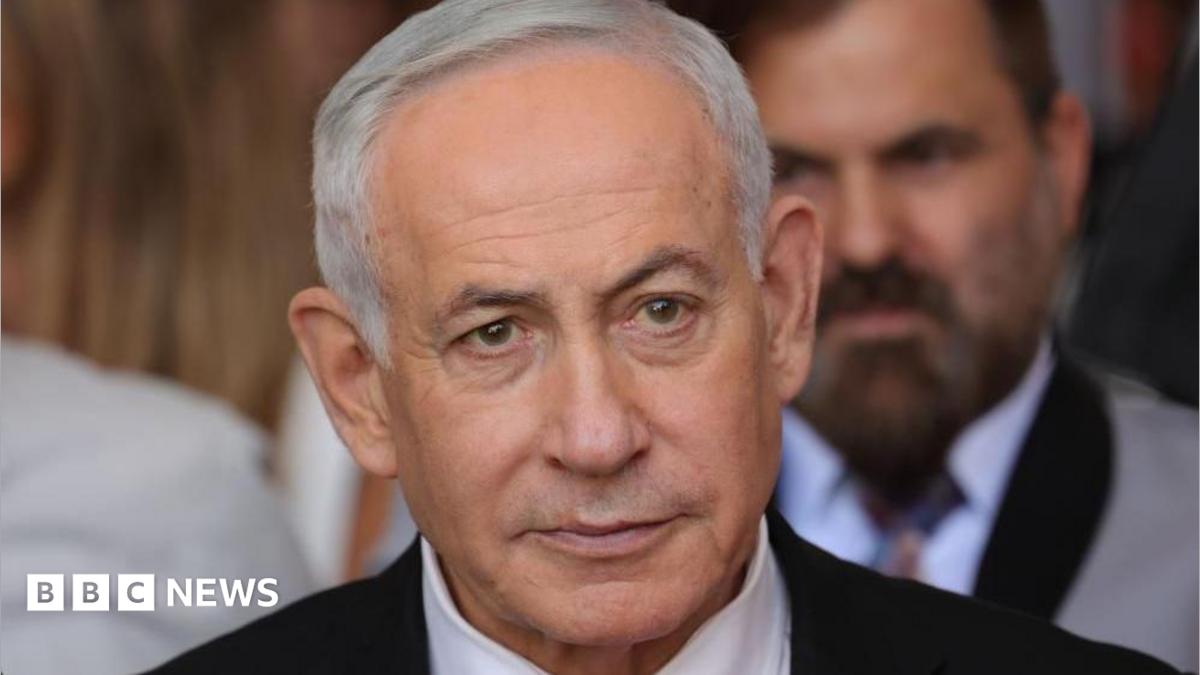
Close up of Benjamin Netanyahu from the shoulders up. He has short, grey hair and is wearing a shirt, tie and suit.

In July, after months of delicate negotiations, Trump announced a “major milestone” in the implementation of his plan to end Israel’s war in Gaza.

Writing on his Truth Social platform, Trump said that the Board of Peace had reached an agreement for the complete disarmament of Hamas and other Palestinian armed groups in the territory.

The deal is meant to be carried out in phases, with all weapons decommissioned and stored by a new Palestinian administration in Gaza – which reports to the Board of Peace – and Israeli forces withdrawing from the more than 60% of Gaza they currently control.

Senior Hamas officials confirmed that they had agreed to the new framework, conditioning it on mutual compliance by Israel. This was widely viewed as a major potential breakthrough in the conflict. The UK welcomed it and the European Union hailed it as a “crucial step”.

Advertisement

However, for more than a week, Israel did not give its formal response.

An Israeli spokesman said only that the roadmap did not “reflect Israel’s positions.” A far-right member of the government, Itamar Ben-Gvir, wrote on X that the deal was “unacceptable.”

Increasingly, mainstream Israeli opposition politicians also raised doubts. They questioned whether all small arms would be decommissioned and the sequencing of the plan.

Finally on Sunday, Netanyahu told his cabinet, “I wish to be precise here: Israel does not accept the 15-point document.”

Advertisement

He added: “The IDF [Israel Defense Forces] will not carry out any withdrawal until Hamas is disarmed. And when I say the disarming of Hamas, it means heavy weaponry, lighter weaponry, all weaponry. And we are talking about genuine disarmament, not fictitious disarmament.”

In the same statement, the prime minister described President Trump as “the greatest of our friends in the White House” but said that Israel knew “how to stand firm” against unacceptable ideas.

In Israel, there is widespread scepticism that Hamas intends to follow through on its commitments.

The Islamist movement has long seen “armed struggle” as a core precept, its legitimate response to Israeli occupation of Palestinian lands. In recent months, there had been signs of it reasserting its authority in Gaza.

Advertisement

“Israel can certainly never agree to retreating anywhere where the terrorist group that caused the worst massacres since the Holocaust is still there and is still ruling the Strip,” Fleur Hassan-Nahoum, an Israeli commentator and former deputy mayor of Jerusalem told the BBC.

She stressed that the “trauma of the Israeli people” from the deadly Hamas-led attacks on 7 October 2023, which ignited the devastating Gaza war, should not be underestimated.

Source link

Advertisement
Continue Reading

NewsBeat

What Andy Burnham means for the arts

Published

on

What Andy Burnham means for the arts

Beyond the rapid turnover of prime ministers in recent years (seven in the last 15 years), there’s been an even higher churn in other roles, notably that of culture secretary – 12 in the same period, and 18 since the post was first introduced in 1997. Of these, Andy Burnham is the first to achieve the top post in British government.

Recent years have also not generally been favourable for the arts in terms of policy, with a general drop in real-terms spending through both Arts Council England and local authorities from 2010-2022 (apart from the Culture Recovery Fund during the pandemic). Culture is, in any case, largely devolved to the UK’s constituent nations – Westminster’s direct reach runs mainly to England, plus reserved heavyweights like broadcasting, digital and media regulation.

While there’s been an upturn since the last general election, this has leaned towards capital investment in buildings and infrastructure, with uneven gains for the recurrent, day-to-day funding that sustains programming, jobs and artists’ livelihoods.

So, what might the sector expect from a government led by a former holder of the culture brief, given Treasury habits of treating culture as a second-order priority, rather than a key part of the national fabric?

Advertisement

More than the Haçienda

Burnham’s more recent record as mayor of Greater Manchester suggests a commitment that goes beyond club anecdotes about the Haçienda and his well-documented indie music fandom. As mayor, Burnham commissioned an independent Greater Manchester Music Review with UK Music, launched in 2018 and published in 2019. This considered financial and equalities barriers, leading to a regional Music Commission with artists, venues, and industry brought into the room with civic decision-makers.


This article is part of our State of the Arts series. These articles tackle the challenges of the arts and heritage industry – and celebrate the wins, too.


He also explicitly backed a £1 ticket levy on major arena-scale events to support grassroots venues, and a VAT cut for music venues, along with supporting the “agent of change” principle, which shifts the cost of soundproofing buildings on to developers making changes to an area, rather than pre-existing venues.

Advertisement

This suggests the application of a relatively consistent understanding of culture beyond a decorative add-on – as economic and civic infrastructure through jobs, the nighttime economy and a touring pipeline.

But translating that into engagement with the sector will be a longer process. Culture secretary Lisa Nandy – retained in the cabinet reshuffle – has faced some scepticism from the sector. She is seen as better at diagnosis than delivery and had previously been mooted for a move.

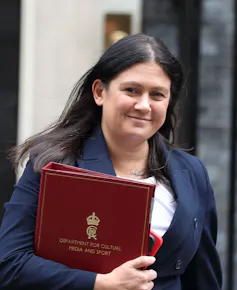
A woman with long dark hair outside number 10 Downing Street.
The current culture secretary Lisa Nandy has been criticised for per perceived lack of interest in the role.
Repic / Shutterstock

Keeping Nandy in post, though, could be read less as inertia than alignment. The two are political allies, with broadly similar instincts, and Burnham’s reconfiguration of the Department for Culture, Media and Sport (DCMS) to include “digital” – introduced during Theresa May’s government before it lost the brief in 2023 – reflects a deliberate framing that “culture and technology are inseparable drivers of our modern economy”.

The devolution wager

At tech and culture festival SXSW London in June, Nandy spoke publicly about the government’s course correction on AI, rowing back on the “opt-out” plan for AI training on copyrighted work and acknowledging the need for a more nuanced approach to the competing demands of different parts of the creative industries. Retaining Nandy while fundamentally restructuring her department suggests Burnham’s bet is primarily on institutional change and the machinery itself helping to determine outcomes.

The test will be in the execution. Nandy’s publication in July of Turn It Up, the government’s first comprehensive music plan, offers a preliminary gauge.

Advertisement

Its ten priority areas include £45m in targeted grassroots investment, licensing reform and agent-of-change protections. A further £150m of creative funding is devolved through mayoral strategic authorities. Taken together, this suggests a focus on infrastructure policy that moves beyond cultural cheerleading. Whether that machinery accelerates delivery, or simply redistributes the familiar frictions across new layers of bureaucracy, will take longer to establish.

Turn It Up predates Burnham’s premiership, but its devolutionary impetus of funding, routed through mayoral hands, runs with the grain of his wider agenda. Rewiring the State, published within his first fortnight, extends the same logic to the whole of government. Devolution, in this case, refers to England: decisions and funding are shifted from Whitehall to local leaders, with mayors retaining a share of locally raised revenue.

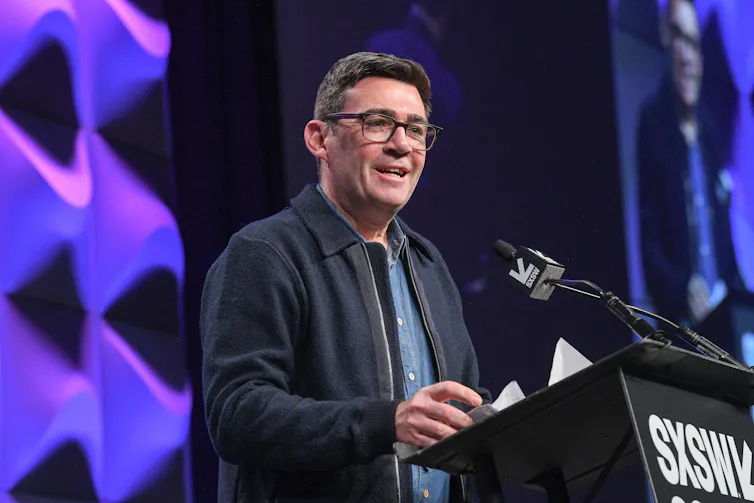
A man smiling as he stands at a podium at a conference.
Andy Burnham introduces New Order after speaking at the SXSW culture and technology festival in Austin, Texas in 2023.
John Anderson / Alamy

Cautious optimism

There are limits to reading Greater Manchester as a template. What worked there rested on conditions not necessarily replicable nationwide: a large conurbation with an established music economy, strong civic institutions, and a mayor with personal capital in the sector. Devolving decisions on culture to mayors relies on the will to prioritise it and, crucially, on authorities having the capacity and revenue base to act.

For smaller cities and towns outside the combined authority framework there’s a chance that “Manchesterism” could be something of a spectator sport. The talent pipeline is also under pressure from a direction the plan barely touches – arts provision in higher education is contracting as the universities’ financial crisis bites, with courses closing across the country.

Nor does devolution resolve the underlying settlement: day-to-day funding for programming and livelihoods still depends substantially on Treasury decisions, and a first fortnight dominated by the cost of living, social care and the BBC Charter is a reminder of how quickly governmental bandwidth is absorbed.

Advertisement

Even so, there’s cause for cautious optimism. A prime minister who has held the culture brief, run a music review, and defended grassroots venues in planning disputes seems not to need persuading of the basic case.

The structural approach – building culture into how places are funded and governed, rather than leaving it to plead its corner in Whitehall – is at least a plausible wager. Whether it pays off remains to be seen. But for once, the arts seem not to be starting the argument from scratch.

Source link

Advertisement
Continue Reading

Trending

Copyright © 2025