Connect with us

NewsBeat

Psychologist explains why good luck superstitions can actually work

Published

on

Wales Online

More than 90 per cent of people say they follow one lucky superstition

People in the UK re-wear ‘lucky’ underwear, salute magpies, touch wood and even refuse to wash in a bid to generate ‘good luck’, according to research. The study by tombola arcade found one in 12 admit they’ve avoided showering or bathing for ‘several days’ because they believed it could bring better luck.

A previous YouGov survey found that 34% of people in the UK describe themselves as either ‘very’ or ‘somewhat’ superstitious. 92% in the new study said they follow at least one luck-chasing superstition. Touching wood is the most commonly followed good-luck ritual followed by crossing fingers and avoiding walking underneath a ladder.

One in six refuse to throw away an item they associated with good fortune, while one in seven said they’d changed their route to an important event.

Advertisement

Psychologist Dennis Relojo-Howell at Psychreg, said: “High pressure moments strip away our sense of control. Superstition offers a way to feel like we’re doing something, even when the outcome is genuinely out of our hands.

“It’s less about magical thinking and more about managing anxiety. Believing you’re lucky often works like a placebo for confidence. If you walk into an interview or a test convinced things tend to go your way, you’re likely to appear calmer and more composed, which can genuinely shape how others respond to you.

“Rituals like touching wood or crossing fingers survive because they’re comforting and low effort. They give people a small sense of urgency before big moments, and because they’re shared culturally, they also connect us to something familiar, even in a society that’s otherwise become quite secular and rational.”

Micala Sansom, social and community manager at tombola arcade said: “While luck means different things to different people, our findings show many superstitions are so deeply ingrained in our culture that we no longer think of them as superstitions at all. From wishing for a smooth journey to hoping for success in a job interview, it seems many of us would welcome a little extra luck when the stakes feel highest.

Advertisement

“At their core, superstitions are attempts to make sense of uncertainty or gain a feeling of control over situations that are largely beyond our influence. They often stem from age-old fears, beliefs or gaps in our understanding of the world.”

TOP 10 SUPERSTITIONS PEOPLE FOLLOW TO IMPROVE LUCK

  • Touched wood – 38%
  • Crossed fingers – 37%
  • Avoided walking under ladders – 24%
  • Avoided saying something for fear of jinxing it – 16%
  • Carried a lucky charm – 16%
  • Saluted to a magpie – 16%
  • Wished on a star – 15%
  • Avoided cracks in the pavement – 12%
  • Worn a lucky item of clothing – 10%
  • Avoided crossing on the stairs – 10%

Source link

Continue Reading
Click to comment

You must be logged in to post a comment Login

Leave a Reply

NewsBeat

FAI to investigate alleged racist abuse of Swansea City star during Israel clash

Published

on

Wales Online

The incident happened during a controversial contest in Debrecen

The Football Association of Ireland has confirmed it’s to launch an investigation into alleged racist chants aimed at Adam Idah during the Republic of Ireland’s tense UEFA Nations League clash with Israel on Sunday.

Advertisement

However, the incident will not be investigated by UEFA themselves as their protocols into racist abuse had not been followed on the night.

According to the Irish Times, Jayson Molumby claimed he heard racist chants towards the Swansea City striker, who was on target in a 3-0 win for his side.

JOIN US ON FACEBOOK! Follow Wales Online’s Swansea City FB page for more news and analysis

Molumby had allegedly told officials to listen out for the chants, but because he hadn’t actually stated a racist incident had occurred, and because the officials hadn’t heard anything themselves, the governing body won’t be launching an investigation.

Advertisement

Nevertheless, the FAI has pledged to review the video evidence from the game, and will present any findings to UEFA.

“We’re going to review the video evidence from the game and try and determine if there is any evidence of racism,” said an FAI spokesperson.

“If we believe that to be the case, we will send [the evidence] to UEFA demanding an investigation into the incident.”

It’s claimed Idah himself was unaware of any abuse.

Advertisement

Ireland’s clash with Israel has been in sharp focus all week, with Idah and his team-mates holding a meeting on Friday to decide whether they would even go through with the fixture, amid widespread protests against Israel from Irish fans and politicians.

The FAI voted to play both Nations League games against Israel, but they were moved to neutral venues.

Sunday’s clash was held in the Hungarian city of Debrecen, with some 300 Israel supporters admitted, and no tickets sold to ‘away’ Irish fans.

The return game this weekend is set to be held in Backa Topola in Serbia, and there is still some pressure on the Irish side to boycott that game.

Advertisement

It’s claimed further discussions are likely around whether the team decides to play the upcoming fixture.

Asked directly whether his team would fulfil the game, Irish boss Heimir Hallgrimsson had no update.

“It was a tough enough decision to play this game,” he said.

“You know the story, everything seems to leak from private player meetings. You probably know more than me.”

Advertisement

*Follow all of our social channels to ensure you stay up to date with the latest Swans news. Sign up to our daily newsletter here and our WhatsApp channel here. Our Swansea City correspondent Tom Coleman is also on social media. He can be found on his X account here, on Instagram, on TikTok and on Facebook.

Source link

Advertisement
Continue Reading

NewsBeat

Derry disorder sees police attacked with ‘cans of paint, petrol bombs and glass bottles’

Published

on

Belfast Live

Fires were lit on roads and fireworks were let off in the area too, police said.

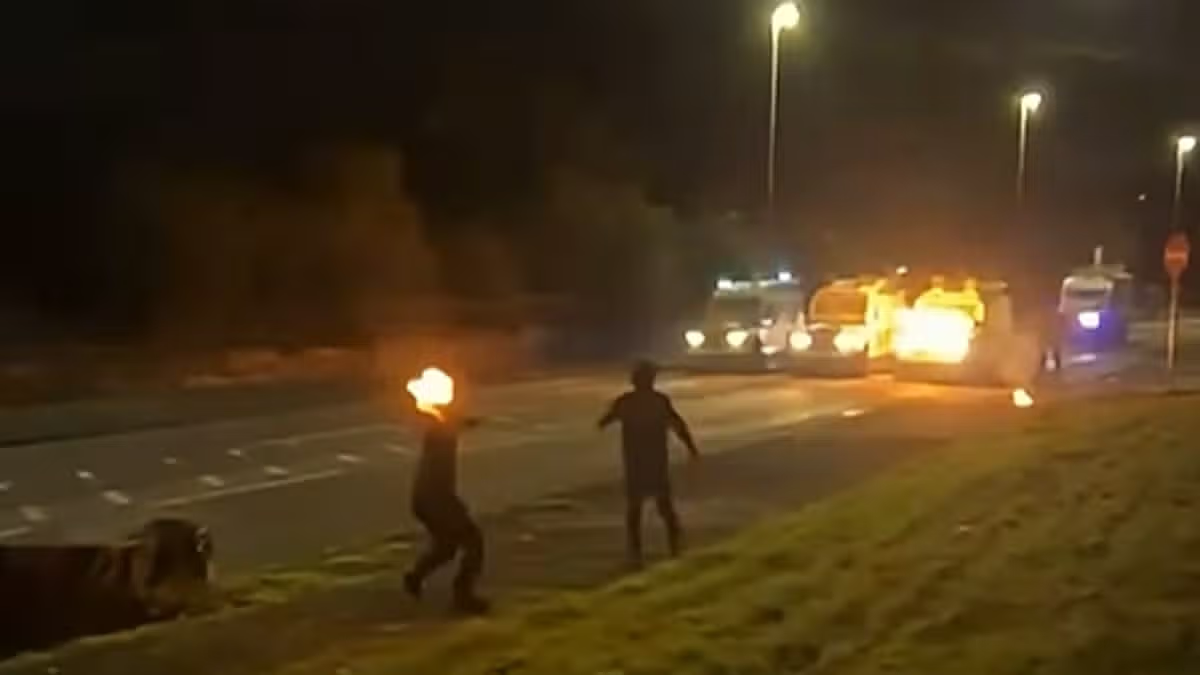
Petrol bombs, glass bottles, and cans of paint were thrown at police during disorder in Derry on Sunday night.

Advertisement

Police dealt with “sporadic disorder” in the Waterside area of the city from shortly after 7.30pm on September 27, with fires lit on roads and fireworks let off in the Strabane Old Road/Irish Street area.

Some of those involved in attacking police in the area had their faces covered, a police spokesperson said.

A PSNI spokesperson added: “A large number of people gathered in the area, watching on. Irish Street was closed as officers worked to bring the situation under control.

“By 11pm, the area had returned to normal, however, police maintained a presence for a time to ensure no further incidents occurred.

Advertisement

“While some police vehicles were damaged, fortunately, there were no injuries reported to police officers, or to members of the public, or properties. An investigation is underway to identify all those involved.”

Area Commander of Derry City & Strabane, Chief Superintendent Gillian Kearney said: “Our courageous and dedicated officers put themselves in harm’s way to protect the local community.

“Valuable police resources were used to deal with this situation last night, resources which should have been available to help victims of crime. It is completely unacceptable.”

Anyone with information, including dash-cam, CCTV or other footage, can contact police on 101, quoting reference number 1245 of 27/09/26.

Advertisement

Alternatively, you can submit a report online using the non-emergency reporting form via http://www.psni.police.uk/makeareport/ or contact Crimestoppers anonymously on 0800 555 111 or online at http://crimestoppers-uk.org/.

For all the latest news, visit the Belfast Live homepage here and sign up to our daily newsletter.

Source link

Advertisement
Continue Reading

NewsBeat

Cheapest fuel in your area as prices hit all-time high

Published

on

Cambridgeshire Live

Drivers are now paying the highest ever recorded prices at the forecourt

The average price of diesel in the UK has hit an all-time record high. Standard diesel climbed to an average cost of 199.18p per litre this weekend as forecourts around the country continue to hike up prices.

Advertisement

According to the RAC, that is the highest price ever recorded in the UK, beating the previous high of 199.09p per litre in June 2022. The price of diesel has risen by 20 per cent since the middle of July as the pressure on global oil markets caused by the Iran war caused a second spike in UK prices.

The average price of standard unleaded petrol is now at 174.1p per litre, and while this has also risen sharply in recent weeks, it has not reached the same record levels as diesel. Following the invasion of Ukraine, the price of unleaded peaked in July 2022 at 191.5p per litre.

The price of standard unleaded is also rising, and could break through the £2 barrier with more than 50 forecourts at motorway service stations now charging 199.9p per litre.

You can find the cheapest petrol prices in your area by using our postcode interactive here:

Advertisement

According to the latest Fuel Finder data published by the government and based on figures supplied by retailers, the highest price being charged for diesel around the country today is 219.9p per litre. That price is being advertised at more than 100 motorway service station garages mostly operated by BP and Welcome Break.

RAC head of policy Simon Williams said: “The average price of a litre of diesel has now reached the highest level in UK history, in what will be a financial blow to households and businesses that use their vehicles regularly.

“The cost of filling up an average family car is now almost £110, £31 more than it was at the start of the US-Iran conflict.

“This spells pain not only at the pumps for drivers, but for everyone who buys goods or services that rely on diesel lorries and vans; undoubtedly, these increased costs will be passed on to consumers. Only a sustained lower oil price – over several weeks, not days – will lead to cheaper prices at the pumps.”

Advertisement

Source link

Continue Reading

NewsBeat

Britain cannot afford a spending spree, warns Burnham’s Chancellor as he pleads for realism at Labour conference

Published

on

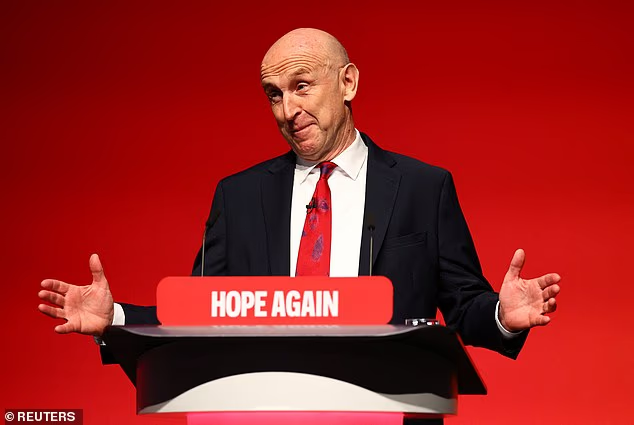
Chancellor John Healey made his first address to Labour conference in Liverpool amid mounting alarm at the state of the public finances

John Healey warned Labour cannot afford a Tony Blair-style spending splurge today as he tried to cool nerves about Budget tax hikes.

In a plea for realism from Left-wing activists at the party’s conference in Liverpool, the Chancellor said the money that was poured into the public sector under New Labour is ‘simply not there now’.

Mr Healey insisted that he will stick to the fiscal rules, again fuelling speculation that taxes will need to rise at the Budget.

He also argued that it is ‘not progressive’ to run up a ‘bigger and bigger benefits bill’ – and suggested that Labour would focus on getting young people into work rather than giving them welfare.

Advertisement

The Chancellor claimed there was still room for ‘new hope’ despite ‘everything we face’, unveiling a new local apprenticeships push overseen by mayors.  

But the Government is facing an increasingly bleak backdrop as surging inflation from the Middle East crisis and sluggish growth wreaks havoc with the finances.

Ironically, lower immigration forecasts from the Treasury’s Office for Budget Responsibility watchdog could also deal a blow to Mr Healey’s ‘headroom’ against the fiscal rules – potentially as much as £7billion – by reducing expected revenues.

Meanwhile, Prime Minister Andy Burnham has made a series of big spending commitments, including a pledge yesterday to introduce an NHS-style social care service after the next election that could cost £18billion a year. 

Advertisement

There is speculation that could be partly funded by downgrading the state pension ‘triple lock’ – which sees the payments rise by the highest out of inflation, earnings and 2.5 per cent. 

Capital gains tax is among the levies floated for the Chancellor to bring in more cash and reassure markets that the Government will balance its books.

Chancellor John Healey made his first address to Labour conference in Liverpool amid mounting alarm at the state of the public finances

Advertisement
Andy Burnham was on the stage to watch his Chancellor's speech today

Andy Burnham was on the stage to watch his Chancellor’s speech today 

Renewed Iran war tensions have seen Brent Crude hit $108 a barrel overnight.  

And the pain for Brits could be about to get worse as Donald Trump has said he is ‘seriously’ looking at a US diesel exports embargo. 

That would curb prices for Americans, but push them up dramatically in the rest of the world. 

Advertisement

Mr Healey said: ‘I know the 90s is having a bit of a revival. To Andy’s excitement, Oasis is going back on tour, to Angela’s joy Gladiators is back on TV. But I have to level with you conference, the money New Labour had in the 90s is simply not there now.

‘Economic growth under Gordon (Brown) was more than double the Tory years that followed, and Britain has it harder now.’

Mr Healey blamed ’14 years of flatlining Tory growth and living standards’.

He said the Government wanted to restore confidence in the economy and help boost family finances.

Advertisement

‘Labour isn’t just here to cut the cake in a different way, we have to bake a bigger cake and make sure that it’s fairly shared,’ he said.

‘So whether it’s the cost of business or the cost of living, the only long-term answer is growth.’

Nodding to soaring interest costs on the Government’s borrowing, Mr Healey said: ‘The cost of the nation’s debt is not just a number in a Chancellor’s budget. It’s the money that we can’t spend on the NHS, on schools, on housing, on social care, on policing our streets, on controlling our borders, on defending our country.

‘I tell you, these levels of debt are an assault on our common sense. They’re an affront to our values, and that’s why the Prime Minister and I are in lockstep, that we will meet the fiscal rules, that we will maintain control of Britain’s finances.’

Advertisement

The Tories and Reform have been demanding Labour slashes benefits to fund more spending in areas such as defence, instead of hiking taxes. 

Mr Healey said: ‘Conference, it is not progressive to allow a bigger and bigger benefits bill, and a system which offers an income but doesn’t offer a future.

‘So once again, as a Labour government, it falls to us to act. And this is more than just an economic must. This is a moral duty.

‘I refuse to write off a million young people like the Tories have done.’

Advertisement

He added: ‘I see a generation born this century, digital natives, whip-smart, questioning, ambitious, brave, I see the best asset we have in our young people, and I believe this generation has the potential to be a great generation.

‘And I believe we can help this generation move from generation jeopardy to generation hope.’

Mr Healey tried to strike an upbeat note, saying Britain can enter a ‘new age of industrialisation’.

The Chancellor argued that the UK cannot return to the coal mines of its past.

Advertisement

Describing his politics as ‘shaped by the industrial heartlands of South Yorkshire’, he pointed to the example of the former Orgreave mine, now the site of Rotherham’s Advanced Manufacturing Park. 

‘Our coal mines are not coming back,’ he said.

‘But this is how Britain’s industrial past is being remade now for the modern world.

‘This is the new age of industrialisation. A new confidence in Britain.’

Advertisement

Mr Healey, who quit as Sir Keir Starmer’s defence secretary in a row over funding for the military, confirmed more support for Britain’s shipbuilding industry, with investment in the Royal Navy’s Scottish submarine base at its heart.

He said three new floating docks at HM Naval Base Clyde, Faslane, will be procured through a UK-only competition.

Known as Programme Euston, plans for the new docks were first set out in 2023 and are expected to upgrade Faslane’s facilities for the next generation of British submarines.

The Ministry of Defence has previously said they are expected to come into service in the early 2030s, and the docks form part of a wider £15billion upgrade programme for the Royal Navy’s shipyards.

Advertisement

The announcement follows a commitment by Louise Haigh, the First Secretary of State, who said on Sunday the Government would commission a new marine research vessel as part of plans for a ‘new era of reindustrialisation’.

Mr Healey announced £115million in funding for the ship, which is also set to come into service in the early 2030s.

Ahead of his speech, he said: ‘By backing British shipyards, we are not only boosting national security but also securing resilience in the industries that will drive growth today while building the capabilities the country needs for the future.’

Plans for a new age of industrialisation echo Prime Minister Andy Burnham’s pledge to prioritise ‘reindustrialisation’ as a way of boosting Britain’s sluggish growth.

Advertisement

But the Chancellor’s conference speech coincides with more gloomy economic news from the Confederation of British Industry (CBI).

A survey by the business group found private sector firms saw falling activity in the three months up to September, and expect activity to continue to decline for the rest of the year.

Much of that decline was driven by retail and services, with manufacturing declining more moderately.

CBI deputy chief economist Alpesh Paleja said rising energy and employment costs combined with weak demand were continuing to put pressure on profit margins.

Advertisement

He added: ‘Uncertainty ahead of next month’s Budget is also holding back activity in some sectors.

‘Against the backdrop of renewed fiscal pressures, the Budget must draw a clear red line under any more rises in the cost of hiring, investing and doing business.’

The pain for Brits could be about to get worse as Donald Trump has said he is 'seriously' looking at a US diesel exports embargo

The pain for Brits could be about to get worse as Donald Trump has said he is ‘seriously’ looking at a US diesel exports embargo

Shadow chancellor Andrew Griffith said: ‘These are more reheated announcements without clarity on where the money is coming from. Additional docks were announced months ago in the defence investment plan, which still has a £4.7 billion black hole.

Advertisement

‘John Healey resigned warning that Labour’s failure to fund defence was making Britain unsafe. Now that he is Chancellor, he still won’t fund the 3% target he walked out over.

‘Labour are running scared of making the tough choices needed to pay for Britain’s defence. All they can offer is reannounced docks and more hot air from Healey. Only the Conservatives will cut the welfare bill to fund defence.’

John O’Connell, chief executive of the TaxPayers’ Alliance, said: ‘The chancellor offered next to nothing to defuse the benefits bomb sitting under Britain’s economy. 

‘The plans he did announce are little more than taxpayer-funded make-work schemes and bungs to trade unions dressed up as welfare and work reforms, all the while refusing to acknowledge the damage done to businesses and employment by his predecessor.

Advertisement

‘If the chancellor is serious about getting young people back into work, he needs to reduce the burdens on businesses and cut welfare spending.’

Source link

Continue Reading

NewsBeat

Charity legend Kevin Sinfield reveals heartbreaking moment he said final goodbye to MND hero Rob Burrow

Published

on

Daily Mirror

Rugby league legend Sir Kevin Sinfield kissed Rob Burrow on the forehead and told him that he loved him; they both knew ‘it was the last time’

Kevin Sinfield on his last MND challenge

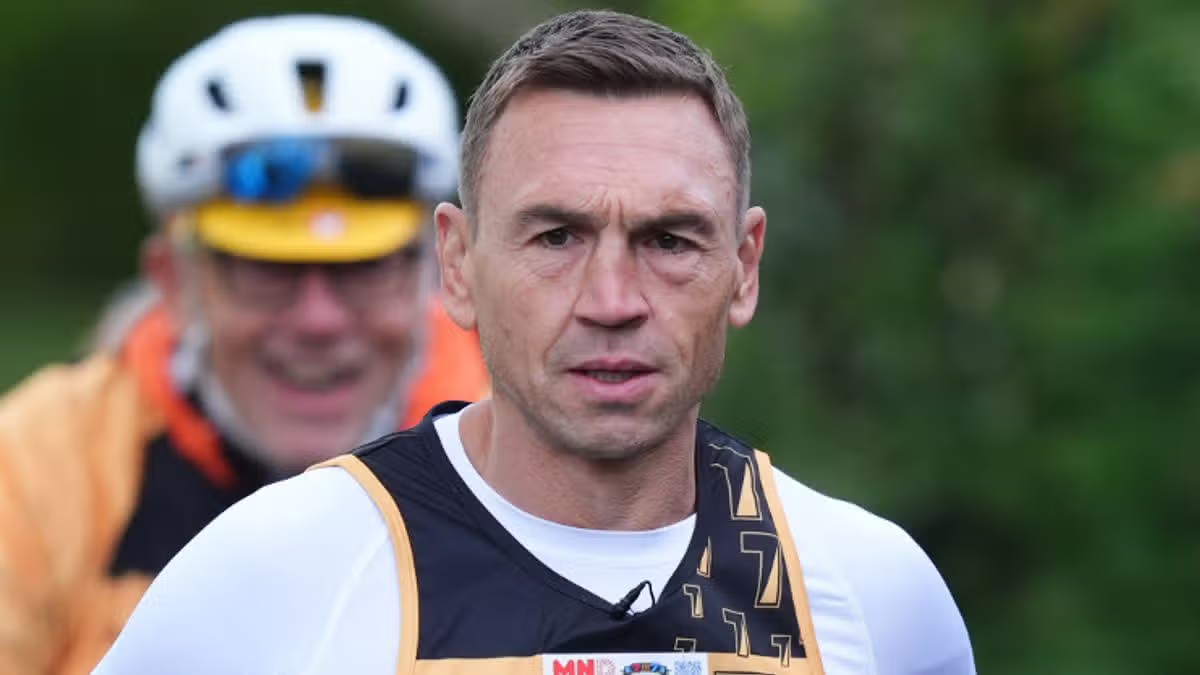
Sir Kevin Sinfield has described his final farewell to his best friend Rob Burrow on the day before he died.

The rugby league legend kissed Rob on the forehead and told him that he loved him because they both knew ‘it was the last time’. He said the emotional encounter was ‘sad, but beautiful’.

Sinfield, 46, met former England captain Lewis Moody on Day Two of his ‘Grand Finale’ 7 in 7 epic fundraising venture.

Moody put his arm around the shoulder of Sinfield as they ran side by side.

Advertisement

And Sir Kev was also given a huge morale boost when he met with the Princess Royal in York.

He has already raised more than £500,000 for Motor Neurone Disease research, taking the total raised so far to more than £14.6m with Gift Aid. It means Sir Kevin and Rob, who died in 2024 after being diagnosed with MND, have raised more than £35m between them.

Sir Kevin told how Burrow was nicknamed ‘Stevie Wonder’ because he would keep his sunglasses on and fall asleep while people spoke to him.

Sir Kevin told the High Performance podcast: “The last day I saw him was the day before he passed and it was tough. I was in an England rugby camp and got the message. I knew all week he’d been poorly and got the message he was close.

“So I got back up north and went to see him. And as I looked through the little window to his private room he was fast asleep with breathing apparatus on.”

Sinfield continued: “Anyway I crept in and saw his mum and his sister and I sat with him and he woke up. So I did what I normally did: I tried to make him laugh and told him what I was up to. It was really sad. Sad, but beautiful.

“We both knew it was the last time. I knew, I was pretty sure and I’m pretty sure he did too. The minute he opened his eyes he had the biggest smile. I always got a smile regardless of what was going on.”

He added: “It was his way of saying that everything’s alright and no matter what’s going on in life, what’s weighing heavy on you, what you’re mulling over, it doesn’t matter.

“It was his way of saying to just get on with living and loving and taking some risks. In the final interaction I kissed his forehead and told him I loved him.

“As I was leaving, I looked back one last time and he was looking back at me with a smile, which was what he always did.”

He added: “Throughout all that time he couldn’t speak he would always smile at the start and smile when I left. Even his most difficult moments when I’m sure he knew, he still found the energy for a smile.

“I only saw him upset twice, when he was first diagnosed. After that he was so positive about life.”

Advertisement

The moving interview came as Rob’s son starred in a rugby match in honour of his late father.

Seven-year-old Jackson Burrow came on to score a winning try at the end of the fundraiser between Team Burrow, made up of rugby league legends, and Team Ed Slater, a team of rugby union icons. He was hoisted in the air at the end of the charity match, supporting Motor Neurone Disease research.

A teammate handed him the ball before the youngster set off on a mazy run from the halfway line, dodging his older opponents along the way. He rose elated after diving across the line to score, and his teammates lifted him into the air and patted his head.

Advertisement

A delighted crowd at Welford Road, home of Leicester Tigers, applauded every step of the way, and players from both teams clapped and congratulated Jackson.

“This is quality,” commented rugby fan Andrew Forde. “What an absolute joy to see. Truly remarkable,” said another, Mike Marsh.

Rob Burrow died aged 41 but not before raising the then total of more than £30m for MND charities alongside Sir Kevin.

Advertisement

Both were awarded CBEs for their efforts in raising awareness of the disease. Ed Slater, who was also represented at the charity match, is a former rugby union star diagnosed with MND in July 2022, aged 33.

He played for Gloucester and Leicester Tigers. Details of Sir Kevin’s latest challenge at https://www.therhinos.co.uk/the-club/sinfield-grand-finale

Source link

Advertisement
Continue Reading

NewsBeat

Residents fear being ‘ankle deep in sewage’ as more homes set to be built in Cambridge South

Published

on

Cambridgeshire Live

Readers have slammed the plans with overpopulation and water fears

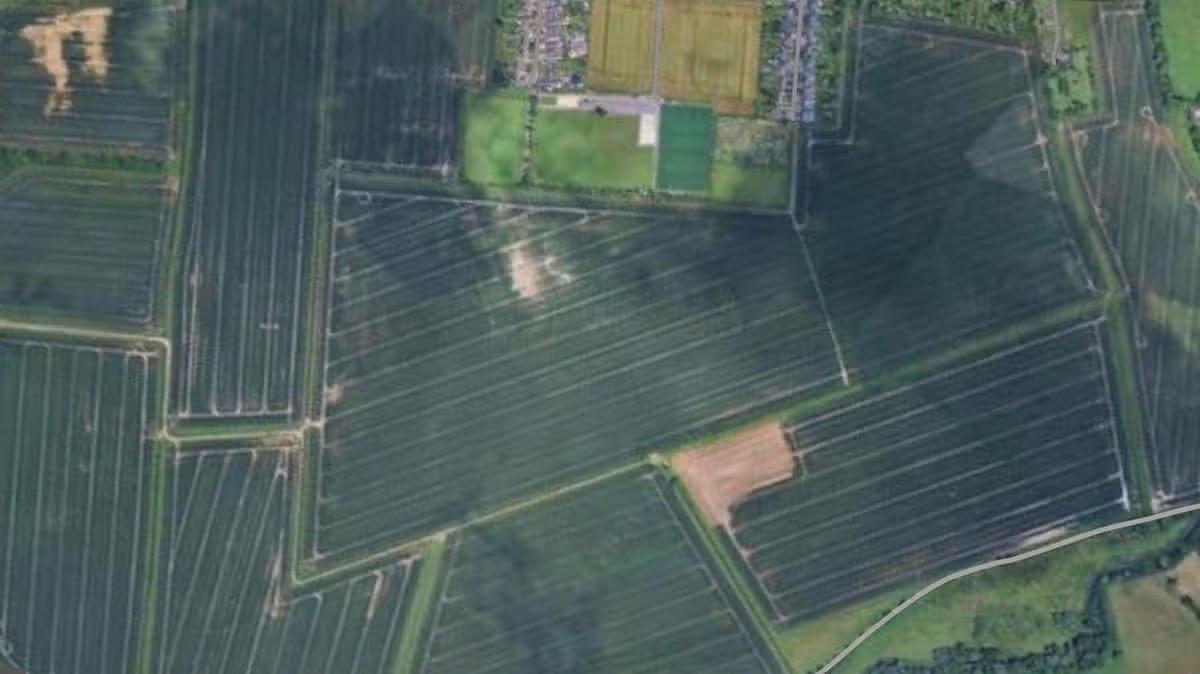
Residents have raised fears people could be left “ankle deep in sewage” if more homes continue to be built. Readers have slammed plans to build more homes in a a Cambridgeshire area which already has “too many people” and is “slowly becoming a suburb of Cambridge”. These comments come after proposals for thousands of new homes, a new country park and local amenities south of Cambridge were submitted.

CambridgeshireLive readers have shared their views on housing development and expansion around Cambridge, with opinion divided over the way forward and who stands to gain. Pigeon and Lands Improvement are advancing proposals for ‘Cambridge South’ for the site which covers approximately 190 hectares and is bounded by the M11 to the west, the Cambridge railway line to the south, Great Shelford to the east and Trumpington to the north.

Advertisement

The proposed site sits within a 15-minute walk of Cambridge South station, the Cambridge Biomedical Campus (CBC) and the Cambridgeshire Guided Busway. According to the new Cambridge South website, the development would deliver a “mixed-use community located to the south of Cambridge”.

One of our readers, Poppythecat wrote: “We should be deconstructing as many houses as possible. Not building new ones!” Calumen Nomen adds: “You can see the master plan for Greater Cambridge taking form now, aided by the malign Development Corporation with its nonsensical talk of ‘partnerships’ and ‘consultations’. These apparently random plans for thousands of houses here, there and everywhere may look like developers attempting to cash in on the government’s brainless pursuit of ‘growth’. They are not. Greater Cambridge will encompass Sawston in the south-east, Cambourne in the west and Fulbourn, Teversham and Quy in the east. In the North, Waterbeach and Northstowe will ooze into Cambridge. The plan is for Cambridge to equal Birmingham in size.”

Almatt agreed saying: “Same the whole world over, 70 years ago world population was just under 3 billion, today heading toward 8.5 billion souls.” Southernvillager asks: “In what respect has the area been earmarked for development? It is not in the existing Local Plan and is not in the new, almost final one. It was submitted in response to the call for sites for the new one and was rejected by the planning authority due to the level of harm to the Green Belt, landscape and biodiversity. The planning authority also rejected the developer/land owners’ attempt to have the land classified as grey belt. This is speculative. It is also not within 15 minutes walk of Cambridge South station.”

Calumen Nomen replied: “Labour is an urban party. They neither understand nor care about the Green Belt or biodiversity. Look what they have already done to agriculture and farming, and, closer to home, the proposed bulldozing of Coton Orchards and many more acres of green belt to accommodate a bus service no one will use. They have an election promise to keep, and they are advised by nincompoops. I wish none of this was true, and I wish there was an opposition that thought otherwise – but there isn’t.

Advertisement

Feelgood66 added: “Wait until East West rail comes, then watch it fall apart.” with Aljan saying: “So 50% affordable homes then wait for the developers to come back with a statement that they a only afford to build a couple of hundred and the council will agree to let the reduce the number. We have seen it all before.”

Others felt the situation was inevitable and that there is nothing residents can do to stop it. Cogwheel said: “No place is how it used to be. Building has been going on everywhere ever since it began. No good being a nimby, it will still eventually happen, but if you can slow down the building, then good luck to you!

Over on our Facebook page, Keith M said: “Surely it has been a suburb of Cambridge for some time now?”

Some readers were particulaly concerned with the water situation. Alice H added: “The water situation is critical. And also if there are houses built, they should be medium density, not the silly tiny boxes on Wort’s Causeway/Babraham Road.”

Advertisement

Lynda F asked: “What happens when we are ankle deep in sewage on the roads and no water runs when we turn on the tap?” and Jacqueline F said: “Not just great Shelford, Waterbeach also, overpopulated.”

Do you think more homes are needed, and where would you build them? Comment below or HERE to have your say.

Source link

Advertisement
Continue Reading

NewsBeat

We’re at a ‘tipping point’ as costs piled on by Labour risk sending jobs and investment into reverse, warns high street chief

Published

on

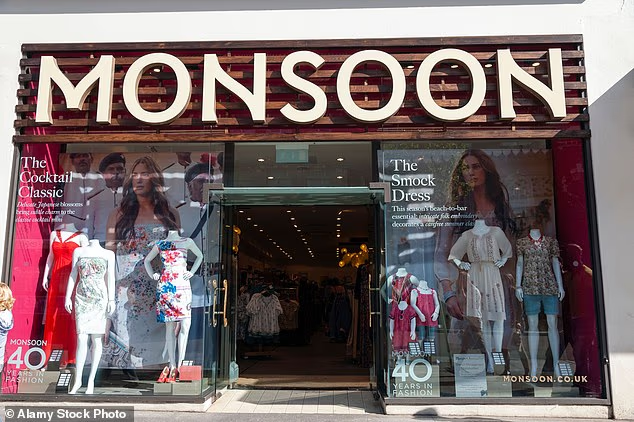
The company behind Monsoon and Accessorize invested in fewer stores this year

Business is at a ‘tipping point’ as costs being piled on by Labour risk sending jobs and investment into reverse, the boss of high street chains Monsoon and Accessorize has warned.

Nick Stowe said the company behind the two brands had already cut the number of new stores it is investing in this year to 10, from 25 last year.

Writing for the Daily Mail, Stowe said: ‘It’s because rising costs mean the investment case doesn’t add up.’

It comes after Labour hiked employer national insurance and minimum wages as well as enacting a botched business rates reform. Firms are also facing a sharp rise in energy bills.

Advertisement

Stowe said: ‘Retailers are not asking to be insulated from every increase in the cost of doing business. We have already navigated significant shocks and cost increases, and are paying more tax than ever.

‘But Government does need to recognise the cumulative impact its decisions have on whether businesses invest and hire and recognise when those decisions reach a tipping point and employment and investment goes into reverse. We’re at that point.’

The company behind Monsoon and Accessorize invested in fewer stores this year

The company behind Monsoon and Accessorize invested in fewer stores this year

The comments come after figures last week from the British Retail Consortium showing a fall in consumer confidence, which will add to pressure on the high street.

Advertisement

Separately, a survey from the Confederation of British Industry (CBI) revealed that a persistent downturn in sales had prompted retailers to cut back order volumes at the fastest pace on record since the poll began in 1983.

Stowe urged Chancellor John Healey to use next month’s Budget to cancel business rate hikes next year. And he echoed a calls from across the sector to spare larger stores from a shake-up of the rates system that is designed to level the playing field between physical retailers and online rivals.

Many fear that a reform targeting larger premises – that is designed to target huge warehouses used by the likes of Amazon – could backfire on big ‘anchor’ stores.

Stowe said: ‘Larger stores are significant investments in town and city centres, they are the anchors around which other retailers build their businesses.

Advertisement

‘Making them disproportionately more expensive risks discouraging exactly the kind of investment Government says it wants and threatens the core of our high streets.’

It comes after the bosses of B&Q owner Kingfisher and department store chain John Lewis also urged Labour to avoid targeting larger stores.

Mike Ashley, the billionaire behind Frasers Group, has said the Government would be ‘simply delusional’ to heap more pressure on big retailers.

We are already seeing what happens when costs go up 

By Nick Stowe, chief executive of Monsoon and Accessorize

Advertisement

Andy Burnham has made reviving Britain’s high streets a priority for his Government. But unless next month’s Budget tackles the rising cost of running a store, that ambition is going to be very hard to achieve. 

For retailers deciding whether to open stores, invest or walk away from locations where the numbers no longer add up, cost is the make-or-break factor.

So to help revive the high street, there is one obvious place where the Government can have an immediate impact: business rates.

Monsoon chief executive Nick Stowe

Monsoon chief executive Nick Stowe

Advertisement

At Monsoon and Accessorize, we want to keep investing in physical retail. 

We are continuing to open stores because we believe in the high street and know that, when the right ingredients are there, everyone wins: our business grows, we create jobs, and we play our part in creating thriving town centres.

But every decision to open a store ultimately comes down to whether the numbers add up. And in too many parts of the country (mainly those most in need of jobs and investment) that calculation is becoming harder.

We’re now rejecting more stores than we’re moving forward with. Last year we invested in 25 new stores; this year we’ll invest in 10.

Advertisement

That isn’t because we don’t have the capital to invest. It’s because rising costs mean the investment case doesn’t add up.

Retailers have already shouldered £6.5 billion in additional employment costs over the past two years, alongside rising energy bills and spiralling transport costs. With business rates rising as well, the cumulative cost burden is becoming unmanageable.

At the same time, customers are becoming more cautious. Latest BRC figures show consumer confidence weakening ahead of the Budget.

Confidence in the economy fell six points in September, with people more pessimistic about their own finances and expecting to spend less as a result. As spending declines while costs increase, retailers are squeezed even harder.

Advertisement

Business rates are particularly difficult because they are a fixed tax on having a physical presence. Whether a store is thriving or struggling, the bill still needs to be paid.

Rates are also set centrally, so mayors and local authorities have no say in the level of tax, and no way to encourage businesses into their area to support jobs and redevelopment.

What can be done now? Most important: stop the situation from getting worse. The Chancellor should cancel next year’s inflation-linked increase and freeze the business rates multiplier, ensuring no shop sees its bill rise in April simply because of inflation.

The Government should also remove shops from the higher multiplier, the higher level of rates that ratchets up the tax.

Advertisement

Larger stores are significant investments in town and city centres, they are the anchors around which other retailers build their businesses.

Making them disproportionately more expensive risks discouraging exactly the kind of investment Government says it wants and threatens the core of our high streets.

We are already seeing what happens when costs become too difficult to absorb. Retail has lost 122,000 jobs in just two years, while the number of part-time retail jobs is now at its lowest level on record.

Retail remains Britain’s largest private sector employer and, for many people, provides that vital first step into working life. When stores disappear, jobs and opportunities disappear with them.

Advertisement

Retailers are not asking to be insulated from every increase in the cost of doing business. We have already navigated significant shocks and cost increases, and are paying more tax than ever.

But Government does need to recognise the cumulative impact its decisions have on whether businesses invest and hire and recognise when those decisions reach a tipping point and employment and investment goes into reverse. We’re at that point.

Freezing the multiplier and removing shops from the higher multiplier would provide some immediate breathing room. We then need the hard work on meaningful reform of a system that places too much of the tax burden on retailers simply because they have a physical presence.

That reform must reduce the overall burden without leaving individual stores paying more as a result.

Advertisement

Andy Burnham has been clear that he wants to breathe new life into Britain’s high streets. Retailers are ready to play their part, investing across the country and creating good jobs.

But ambition alone is not enough: the Government needs to prove that it is committed to providing the breathing room it talks about, in this case by not making the rates burden worse.

Next month’s Budget is the moment for the Government to show that it really wants to partner with businesses, that it understands how to help revive local communities, that it is committed to creating jobs.

Source link

Advertisement
Continue Reading

NewsBeat

Armed police train weapons on house in quiet residential street as woman arrested

Published

on

Wales Online

Police issued a statement after the incident in Pont Aur, Ystradgynlais

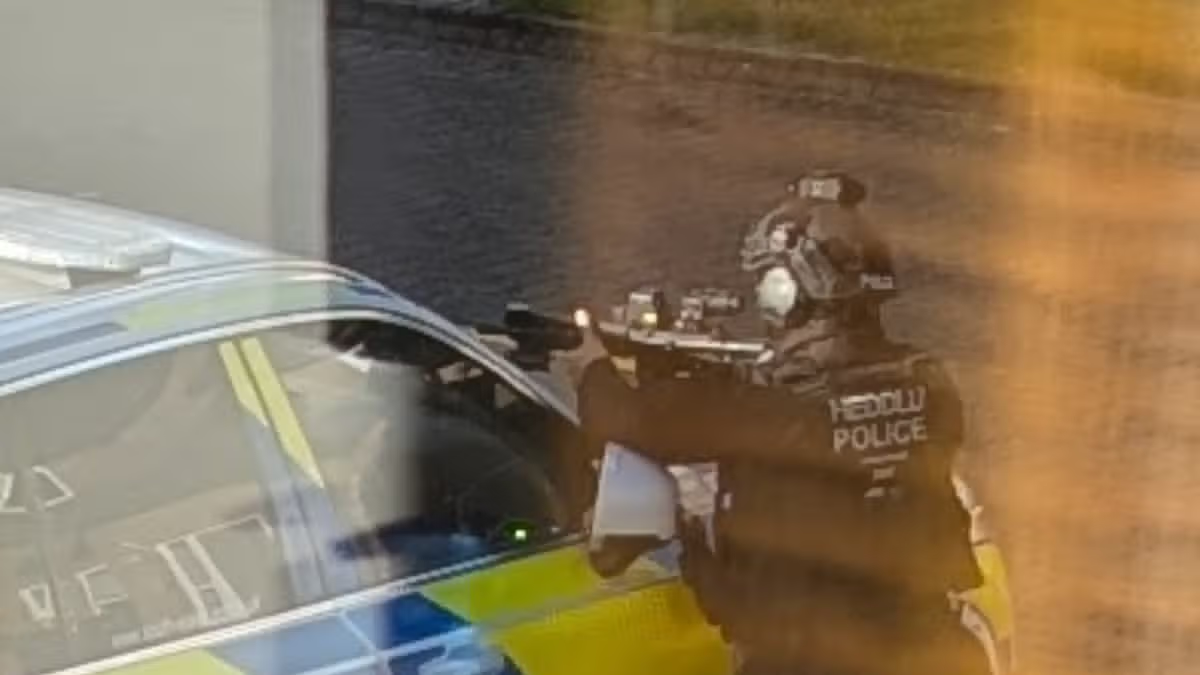
Armed police descended on a quiet residential street in Ystradgynlais after officers received a report that a firearm had allegedly been pointed in the direction of an individual.

Dyfed-Powys Police were called at around 4.25pm on Sunday, September 27, following an allegation that a firearm had been pointed towards a person outside an address in Pont Aur.

Armed units attended the address and arrested a woman on suspicion of possessing a firearm with intent to cause fear of violence.

Advertisement

Images from the scene show armed police outside a residential property as officers dealt with the serious allegation. For the biggest stories in Wales first sign up to our daily newsletter here

However, following further enquiries, police found no supporting evidence to substantiate the allegation.

The woman was subsequently released from custody with no further action.

Get daily breaking news updates on your phone by joining our WhatsApp community here. We occasionally treat members to special offers, promotions and ads from us and our partners. See our Privacy Notice

Advertisement

Source link

Continue Reading

NewsBeat

Music Matters: Wallowing in 1990’s nostalgia

Published

on

Music Matters: Wallowing in 1990’s nostalgia

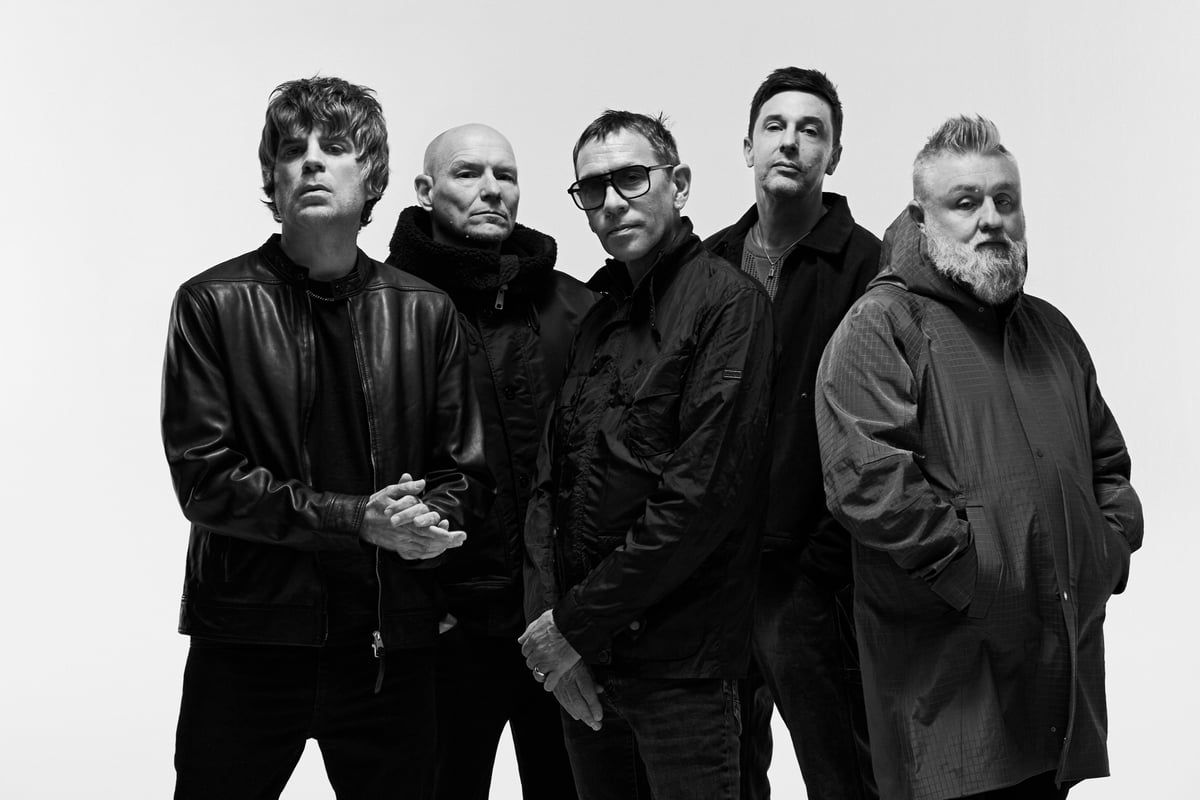
 The 1990s were a musical decade that gave us everything from the Spice Girls to rave music and much more besides including glorious Britpop. One of the top local bands that celebrate Britpop is Honeypark that were originally active in the Chichester and Bognor Regis areas in the late 1990s.

Source link

Continue Reading

NewsBeat

Appeal to find missing 61-year-old last seen in Yorkshire village

Published

on

Appeal to find missing 61-year-old last seen in Yorkshire village

Humberside Police said missing 61-year-old Alison was last seen in the area of Dolegate, near Skirpenbeck, a village close to the A166.

The force described her as white, with short dark hair and around 5ft 5in tall.

The force said anybody with information which can help to locate Alison, or have seen her, should call 101 quoting the log 466 of Sunday, September 27.

Advertisement

Source link

Continue Reading

Trending