Connect with us
DAPA Banner

NewsBeat

research shows it fluctuates and may be an unreliable predictor of future success

Published

on

research shows it fluctuates and may be an unreliable predictor of future success

Wolfgang Amadeus Mozart is arguably the most celebrated child prodigy in history, composing his first pieces of music aged five, his first symphony at eight and his first opera at 11. After a study in 1993 found that listening to Mozart could improve spatial IQ – prompting headlines such as “Mozart makes your brain hum” – he became a symbol for intelligence and brain training.

The study was no doubt interesting. The scientists found that performance on spatial ability tests was improved when their study participants had listened to a Mozart sonata, compared with a relaxation tape or silence. The increase in performance translated to an astounding difference of up to nine spatial IQ points.

Although the effects were temporary, lasting less than 15 minutes, the idea exploded in popular culture. The “Mozart Effect” ignited a lucrative empire of parenting books, self-help manuals and CDs promising to harness the power of Mozart’s music to foster children’s cognitive development. That was despite the fact that the study had been carried out in adults and the evidence for the effect was later overtuned.

The hard fall for the Mozart Effect ultimately highlights the value that society places on intelligence as measured by cognitive tests (like the IQ test). The global market for cognitive assessment and training was valued at about $6.87 billion in 2024 (£5.18bn) but is projected to rise to $35.30 billion by 2032.

Advertisement

Mozart went on to compose over 600 outstanding works in his brief lifetime. But can we reliably predict future success from a child’s performance? Today, IQ tests are often used to spot early academic talent. But are they a good measure? A growing number of scientific studies suggest that IQ measured in childhood might tell us less than we think. Scientists are discovering that children’s IQ scores aren’t as stable as adults’ – they fluctuate substantially.

So why are schools using cognitive assessments? And what other factors can help predict children’s future success?

The rise of cognitive tests to identify potential

Fostering talent is central to human progress. Exceptionally talented individuals drive scientific and cultural innovation and push the boundaries of human knowledge. For over a century, scientists have therefore sought to understand and measure intelligence. This has been partly driven by countries gradually shifting away from mass production and towards becoming knowledge economies.


Advertisement

The Insights section is committed to high-quality longform journalism. Our editors work with academics from many different backgrounds who are tackling a wide range of societal and scientific challenges.


One of the largest and longest running studies of giftedness, the Study of Mathematically Precocious Youth, has followed the lives of intellectually gifted people for over half a century. Over 1,600 talented 13-year-olds were invited to take part in the study if they had scored in the top 1% of ability on a standardised test, the SAT, widely used for US college admission. And indeed, four decades later, many of these young talents had achieved outstanding accomplishments. Some 4.1% had achieved tenure at a major university and 2.3% were top executives at Fortune 500 companies. They had published 85 books and secured 681 patents.

However, it is worth noting that these children were fairly old, already teenagers – and at the absolute top end of achievement. Cognitive tests, however, are taken by a much wider range of children today. Since the 1980s, cognitive ability tests have gradually replaced traditional academic subject exams as school entrance screeners. This was motivated by the idea that a cognitive test could be a more objective assessment of aptitude and potential than a child’s knowledge of the curriculum. Performance on cognitive tests is viewed by many as independent of external influences, such as a more resourceful school or a nurturing home environment.

Schools worldwide, from the US and the UK to Singapore and Vietnam now use standardised tests of cognitive abilities to select students at intake. Admission to many prestigious independent and selective high schools in the UK is often at least partly based on a cognitive ability test, such as the infamous CAT4, that hopeful ten-year-olds sit in the autumn term of their last year of primary school. The CAT4 test is also used in many state secondary schools to help determine sets, predict grades and allocate support and provisions.

Advertisement
One kind of IQ test item, modelled after items in the Raven's Progressive Matrices test.
One kind of IQ test item, modelled after items in the Raven’s Progressive Matrices test.
wikipedia, CC BY-SA

The CAT4 takes around 2.5 hours to complete and is divided into four sections. There is verbal reasoning (thinking with words), non-verbal reasoning (thinking with shapes), quantitative reasoning (thinking with numbers) and spatial ability (thinking with shapes and space). Children who score exactly as expected for their age group would be given a score of 100. Scoring between 89 and 111 is considered to reflect “average” performance, while scores of 112 and above or 88 and below indicate above and below average performance, respectively.

Child IQ fluctuates

We know that the human brain is plastic, or changeable, particularly in childhood. It is the only organ in our body that isn’t fully developed when we are born. A newborn’s brain is about a quarter of the size of an adult brain, doubling in the first year of life. By age seven, it reaches 90% of its adult size. Beyond physical growth, our brains refine and consolidate the network of connections between neurons during this time.

Refining and whittling these connections is key to supporting cognitive and behavioural developmental milestones. Recent research shows that it’s possible to identify key “eras” of brain structural change over the life course. The first milestone – the transition from childhood to adolescence – happens at around age nine. From a brain perspective, adolescence lasts for a little over two decades and is defined by greater efficiency of connections across regions. This coincides with a steady increase in cognitive functions, including vocabulary, complex reasoning and learning.

We’ve known for some time that there is a link between intelligence, as measured by cognitive tests, and school achievement. Research from 2015 that combined data from over 100,000 students across 240 different studies did find a substantial association between intelligence and school grades. However, the magnitude of the link differed depending on children’s age. Intelligence was a much better predictor of school performance in secondary school than it was in primary school. This suggests that cognitive abilities might not be stable during the first decades of life, but vary significantly.

A 2024 analysis that combined data from 205 different studies including over 85,000 participants across 29 countries supports this view. The researchers set out to investigate how stable cognitive abilities are (whether they fluctuate) across the human lifespan and whether stability changes with age.

Advertisement

They discovered that the stability of cognitive abilities increased exponentially with age – and was low in the first decade of life. This means that each child’s positioning compared to their peers changes significantly in childhood. So a child’s IQ score might indeed change substantially during this time. The stability, however, increased throughout childhood and adolescence, plateauing around age 20 and remaining high throughout adulthood and old age.

But even when IQ starts stabilising, in adolescence, it can still fluctuate by up to 20 points. Somebody increasing their IQ score from 100 to 120 would move from the 50th percentile to about the 91st percentile – a 41% improvement. Indeed, one study, albeit with a small sample of students, could link such fluctuations to physical changes in the brain over time.

This means that it can be tricky to infer long-term consequences, such as later grades, from cognitive tests. Basing school intake, or more broadly selection into educational programmes on a single, unstable metric is likely to lead to systematic errors and unreliable decisions.

Worryingly, it may also result in attempts to manipulate the metric, potentially perpetuating systemic inequalities. This may be true of other tests too, but IQ tests are often seen as an exception. But research shows that you can actually train yourself to boost your IQ test score by roughly eight IQ points, for example by retaking the test. Parents with a lot of resources might be better placed to help prepare their children.

Advertisement

The myth of the child prodigy

Recent research has backed all this up by questioning the widely accepted myth of the child prodigy as someone destined for greatness, like Mozart. One 2025 study, which combined data from over 34,000 elite performers, from Nobel laureates and chess players to music composers and athletes, found that exceptional performance in childhood was a limited predictor of elite performance in adulthood.

In fact, about 90% of those who achieved elite performance in youth did not achieve equivalent adult status. Similarly, 90% of top performing secondary school students were no longer top performers at university. And even more strikingly, several Nobel laureates and elite athletes actually had lower childhood performance than their peers.

Warm sunset over Mozart monument in front of Palmenhaus, near Neue Burg and Hofburg Palaces garden, in historical downtown of Vienna.

Mozart might have gone from strength to strength, but research shows that is unusual.
neurobit/Shutterstock

The routes leading children and adults, respectively, to world-class performance also differed. Exceptional talent early in development was associated with intensive, discipline-specific progress at a young age. But adult world-class performance was more often achieved through extensive multi-faceted practice and gradual advancements.

This means that educational and talent programmes that prioritise early identification of intelligence may overlook a large proportion of future world-class innovators.

Advertisement

Environmental exposure

The idea behind identifying talent as early as possible so that it can be nurtured is founded on the belief that exposure to an enriched environment can impact ability and vice versa. Half a century of scientific discovery supports this proposition. Perhaps the most famous example is a study published in 1979 by paediatrician Herbert Needleman and his colleagues. This study provided the first robust evidence that exposure to the metal lead, even at levels previously considered negligible, could significantly impair a child’s cognitive performance.

By comparing children with high and low lead levels in baby teeth, while controlling for potentially confounding factors – such as the mother’s IQ and socio-economic status – the study showed that children with higher lead levels scored roughly four points lower on IQ tests. The evidence presented influenced major public health policies, including the removal of lead from gasoline and interior paint in the US.

A large number of other environmental exposures have been positively linked with cognitive development, from walking in nature to exercise and nutrition, albeit with mixed results. However, arguably the most successful environmental intervention to improve cognitive ability is administered every year to more than 85% of children worldwide: education.

Advertisement

By combining data collected across multiple studies from over 600,000 individuals, researchers found that education has a direct effect on the development of cognitive abilities. The study found that each year of education results in a gain of about one to five IQ points. These effects were remarkably robust, appearing across different cognitive domains and persisting throughout the lifespan. In fact, significant benefits were still measurable into people’s 80s and 90s. While a few IQ points per year may seem small, their cumulative impact at a societal level has been shown to be of great consequence.

Environmental factors that shift population IQ even modestly — like lead exposure, nutrition or education — carry enormous economic consequences. Economists have calculated that each gained IQ point is associated with roughly a 2% increase in lifetime earnings.

In the year 2000, a single IQ point gained or lost across the US population translated to between $110 and $319 billion in aggregate economic output. More recent analysis of the global economic impact of lead exposure on childhood IQ estimated the total cost of IQ loss at US$1.4 trillion globally in 2019, mainly affecting low and middle-income countries.

The role of parents

From the moment a child is born, parents invest vast amounts of energy, time and resources to promote their children’s physical and cognitive development. Not all parenting practices are supported by scientific evidence, nor is the Mozart Effect the sole parenting myth that has been busted. However, research has shown that parenting can nevertheless have profound effects on children’s early cognitive development.

Advertisement

Studies have found that the environment that parents provide for their children by reading to them, engaging them in stimulating activities and conversation, and maintaining a warm and organised household, has a significant positive effect on early cognitive development. This is particularly the case for the first five years of life. What makes early investment especially powerful seems to be that the benefits compound. Fostering a child’s early cognitive competence makes it easier for children to acquire new skills down the line.

However, the pathways to parental investment are complex. Reflecting on my own childhood illustrates this point. I was born in the mid-80s to parents in their early twenties. At the time, my mother was in medical school and my father designed and produced bespoke furniture. As a child, I had several ear infections which meant that I had to have regular checks with a specialist. One warm, sunny morning in early April, my mum and I set off for my otolaryngologist appointment, just the two of us. As the eldest of four children, this was a rare and special occasion.

After my check-up, we took a tram to Milan’s State University, where we attended a conference on HIV infections in vulnerable populations – the topic of my mother’s thesis. I remember sitting in the beautiful auditorium, admiring the frescos on the ceiling, and slowly adjusting a pair of disposable headphones to listen to the real-time translation of the talks. The panel of female scientists discussed the topic so eloquently and clearly that even a ten-year-old girl could grasp their main message.

I was hooked. It must be the best job in the world, I thought. It was only a quiet thought then, one that I never had the courage to privately contemplate or publicly share. That came much later, when I found the confidence to admit that a career in scientific research was for me. But this specific episode in my childhood was not an isolated peak. It was the pinnacle of many simpler, everyday moments when my parents invested time and effort to provide us with a nurturing and stimulating environment.

Advertisement

However, seeing these as merely environmental exposures would only provide part of the picture. Perhaps, the science-enriched environment that my mother created for us depended, at least in part, on her own, partly genetically driven, scientific aptitude.

The nature of nurture

Scientists have named this amalgamation of nature and nurture gene-environment correlation, or more intuitively, the nature of nurture. Parents who provide their children with intellectually stimulating environments may also pass on a greater disposition to doing well in school or performing well in cognitive tasks. Research has shown that accounting for genetic effects shared between mothers and children resulted in a reduction in the effect of parenting on educational attainment.

However, cognitively stimulating parenting remained a significant predictor of children’s educational outcomes beyond direct genetic inheritance and socio-economic status. It ultimately contributes to channelling children’s dispositions and translating them into academic outcomes.

The important role of the family environment is also highlighted by decades of twin studies. These show that environmental exposures that are common to siblings, including growing up in a more resourceful home, school and neighbourhood, explain about a third of differences between children in cognitive ability.

Advertisement

Randomised control trials have demonstrated that early interventions are likely to lead to the greatest returns. Investing in children early — through parenting, stimulating environments and good nutrition — pays back far more than trying to catch up later. Every year of delay makes it harder to close the gap.

Child expressing awe and curiosity at a lake.
Curiosity can also affect children’s educational attainment.
explorewithinfo/Shutterstock

Interventions created to bridge this gap in groups of disadvantaged children through high-quality preschool education, such as the Perry Preschool Project, can lead to meaningful gains in cognitive performance. Interestingly, while the benefits on children’s cognitive performance faded over time, their long-term educational, economic and social benefits were remarkably far-reaching. So a high quality school education could indeed lead to better job prospects and higher salaries, regardless of IQ.

It follows that boosting cognitive ability may not be the only way to lasting educational, economic and health benefits. Non-cognitive skills — such as motivation, curiosity, self-regulation and social skills — are equally important.

What IQ tests fail to capture

Cognitive tests have never been viewed as instruments to capture the entire set of skills necessary for succeeding in school and life. In 1916, Alfred Binet and Theodore Simon, the inventors of the first IQ test, wrote that things other than intelligence also mattered to academic success, arguing “one must have qualities which depend especially on attention, will and character”.

Decades of research have shown that children who are emotionally stable, motivated and capable of regulating their attention and impulses do better at school, regardless of their level of cognitive ability. These important characteristics have been broadly described as “non-cognitive skills”.

Advertisement

Recent research by my own team shows that the importance of non-cognitive skills for learning also changes over the school years. We analysed data collected from over 10,000 children born in England and Wales who were followed throughout compulsory education, from age seven to 16. Non-cognitive skills not only predicted academic achievement at every developmental stage, but their role increased as the children got older. Still, at all ages, skills such as curiosity, creativity, motivation and self-efficacy predicted success in school in addition to what was predicted by cognitive abilities.

Similar to cognitive ability and learning, differences in non-cognitive skills are a complex product of nature and nurture. Partly based on their genetic dispositions, children encounter and select environmental experiences that contribute to the development of their motivation and curiosity. This in turn leads to differences in school achievement.

Ultimately, cognitive tests are thought to offer an objective measure of a child’s natural ability, one that is largely unaffected by upbringing or circumstances. But research shows that a range of factors, from environmental exposures to toxic agents, nutrition, differences in parenting and educational interventions, can change cognitive performance, particularly as the brain develops.

During childhood, when the brain is rapidly growing, cognitive test scores can fluctuate considerably from one year to the next. This means that a single test taken on a single day in primary school is not a reliable enough indicator for decisions as consequential as which school a child attends or which academic track they are placed on. These are decisions that can shape the entire course of their education.

Advertisement

Even later on, cognitive tests only capture part of what it takes to do well in school and in life. Curiosity, motivation and the belief that you can improve with effort are crucial to educational success, yet most education systems pay them little attention. Rather than treating a test score as a fixed marker of a child’s future, mounting evidence invites us to treat it as one factor among many. The best approach would be to invest in all children’s cognitive and non-cognitive development alike.

So don’t read too much into Mozart’s journey. He may have been a child prodigy destined for greatness, but chances are he was an exception rather than the rule.


For you: more from our Insights series:

To hear about new Insights articles, join the hundreds of thousands of people who value The Conversation’s evidence-based news. Subscribe to our newsletter.


Advertisement

Source link

Continue Reading
Click to comment

You must be logged in to post a comment Login

Leave a Reply

NewsBeat

Peter Kay announces four hometown shows in Bolton – and there’s only one way to get tickets

Published

on

Manchester Evening News

Comedy legend Peter Kay has made a huge announcement that he is set to play four special hometown gigs in Bolton this summer. And there will be only one way for fans to get tickets.

Peter will return home to Bolton to the town’s famous Albert Halls for four very special shows in July 2026, his first performances at the venue in over 20 years. They include three evening performances and one matinee at the hall.

Taking to the very stage where he recorded the UK’s biggest-selling stand-up DVD, promoters today said: “it marks a truly unique and nostalgic hometown homecoming for one of Britain’s most beloved comedians”.

Click here for the latest on Manchester’s food & drink scene, gigs and more in our CityLife newsletter

Advertisement

The gigs will all be in aid of charity, supporting Bolton Hospice. And it has been announced that tickets will be STRICTLY limited to Boltonians only.

Only those who can prove they have a Bolton (BL) postcode, will be able to buy tickets for the new shows. A poster was issued today for the new gigs, titled “Peter Kay Live in Bolton”.

Advertisement

It shows Peter holding up his “Better Late Than Never” tour placard, with the addition of “Again” beneath, a jokey reference to the tour extension over recent years such has been its success across the British Isles.

A statement announcing the new Bolton shows issued today by promoters said: “This is a rare chance for local fans to be part of something incredibly special, a hometown celebration like no other.”

Tickets for the four Bolton gigs will go on sale on Friday, April 24 at 10am. They will be available via this website link issued by Peter today.

Dates announced today

The Albert Halls, Bolton – 2026 Dates:

Advertisement
  • Thursday 9th July (Evening)
  • Friday 10th July (Evening)
  • Saturday 11th July (Matinee)
  • Saturday 11th July (Evening)

Source link

Continue Reading

NewsBeat

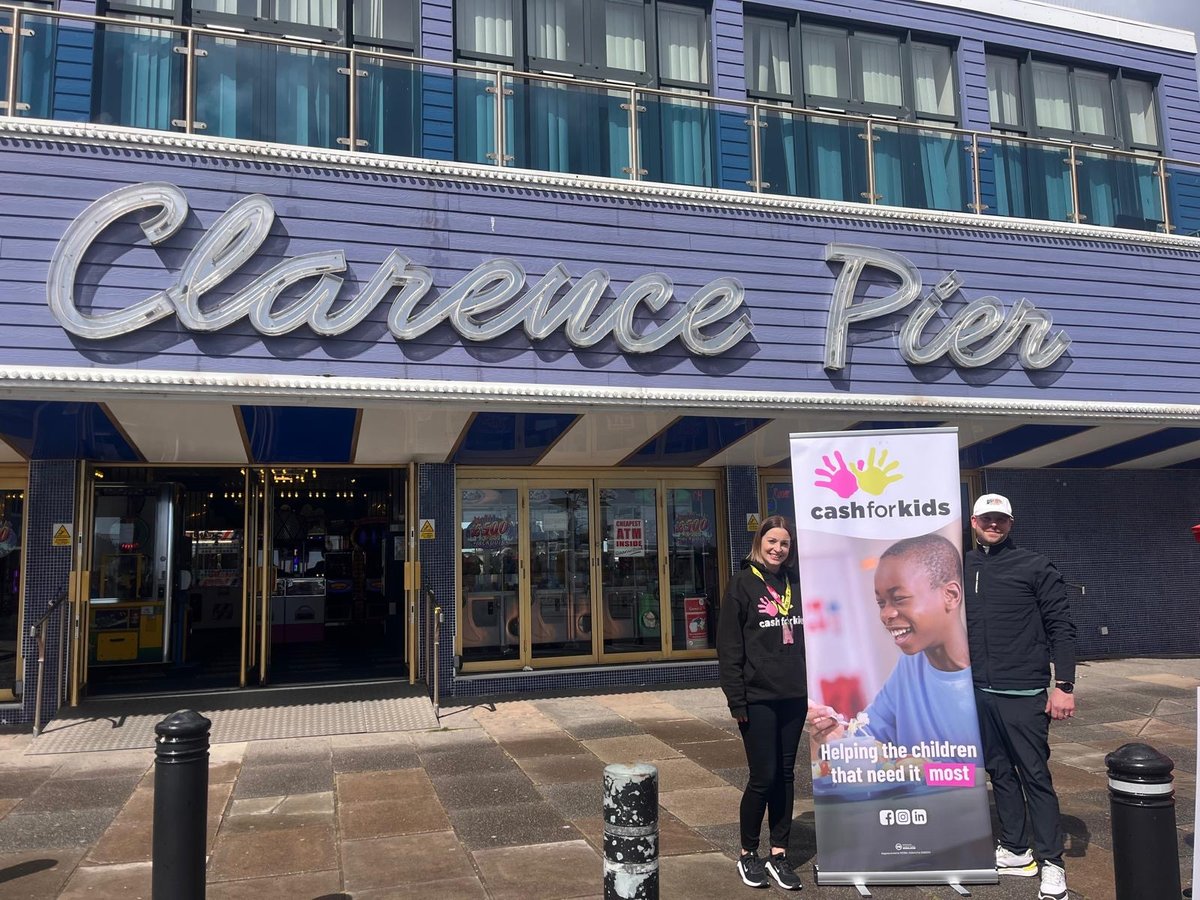
Clarence Pier makes major donation to Cash for Kids South Coast in tribute to Portsmouth's children

Published

on

Clarence Pier makes major donation to Cash for Kids South Coast in tribute to Portsmouth's children

Clarence Pier, one of Portsmouth’s most beloved landmarks and recently celebrating its 80th anniversary, has made a generous donation to Cash for Kids South Coast. The donation was inspired after seeing the charity’s Portsmouth100 campaign in The News, which sought 100 Portsmouth businesses, schools and community groups to raise £1,000 each for vulnerable children.

Source link

Continue Reading

NewsBeat

Skydiver crashes into jumbotron at US football game

Published

on

Skydiver crashes into jumbotron at US football game

A skydiver crashed into the massive scoreboard at Virginia Tech’s stadium, dangling from a parachute before first responders carried out a rescue without injury.

Footage from inside Virginia Tech’s Lane Stadium shows two skydivers descending into the arena before one of them hits an electronic scoreboard above the stands and becomes entangled.

Emergency crews were seen using an aerial ladder to reach the skydiver.

Virginia Tech said in a statement that the skydiver was safely brought to the ground without injury.

Advertisement

Source link

Continue Reading

NewsBeat

Drink driver hit 142mph in police chase along A64 and A1(M)

Published

on

Drink driver hit 142mph in police chase along A64 and A1(M)

Ashley Parr, 35, was more than twice the legal alcohol limit and had illegal traces of cocaine in his body during the 23-mile pursuit from the York Outer Ring Road to Junction 42 on the A1(M), said Brooke Morrison, prosecuting.

He tried to evade police by going across a hatched area as he suddenly changed direction, weaving between lanes, clipping the central reservation and swinging straight across three lanes of traffic before taking a slip road.

Ashley Parr suddenly changes direction at the last minute (Image: North Yorkshire Police)

The site manager of a housing development hit 142mph during his 10-minute flight along the A64 and A1(M) after police signalled him to stop at Copmanthorpe on the York Outer Ring Road, said Ms Morrison.

There was moderate traffic on the roads.

Advertisement

Defence barrister Phil Morris said the crash that ended the chase left Parr unconscious and injured him so badly he was off work for nine weeks. He had a broken shoulder bone and broken ribs among other broken bones.

“He comes before the court remorseful and apologetic,” he said. “This was a prolonged period of madness.”

Judge Simon Hickey said he had never encountered a case involving such a high speed in his entire career.

“For such driving on two arterial roads that run through our county, major roads, and driving in such a manner there can only be one sentence and that is immediate custody,” he said.

Advertisement

Ashley Parr drives onto a roundabout at Junction 42 of the A1(M) (Image: North Yorkshire Police)

Parr, of Moorland Drive, Guiseley, Leeds, pleaded guilty to dangerous driving, drug driving and drink driving and was jailed for 16 months.

He was banned from driving for 44 months and must take an extended driving test before driving alone again.

Traffic Constable Nick Simpson from North Yorkshire Police said: “This was extremely dangerous driving that could easily have resulted in the death of other road users, as well as the driver himself.

“We are relentless in our approach to making North Yorkshire’s roads safer for everyone. Removing individuals who drive in this manner sends a clear message that this behaviour will not be tolerated.

Advertisement

“I would also like to thank the member of the public who reported this driver. If you witness driving that poses an immediate danger to others, please call 999.”

Ashley Parr’s BMW 3 series airborne at Junction 42 of the A1(M) (Image: North Yorkshire Police)

Police first heard of Parr’s BMW driving erratically on the A166 at Garrowby Hill shortly before 9pm on July 21. Traffic officers were alerted to be on the lookout for him and TC Simpson spotted him at the Fulford interchange heading west and followed him.

Ms Morrison told the court the police officer signalled Parr to pull over. The drink driver slowed down and appeared to be about to take the Copmanthorpe slip road. But at the last second, he swerved across the hatched marking, sped off towards Leeds and the chase began.

It ended when he lost control at the A1(M) and A63 junction, drove onto a roundabout and his car catapulted into the air.

Advertisement

Ashley Parr's BMW 3 series somersaulting at Junction 42 of the A1 (M)Ashley Parr’s BMW 3 series somersaulting at Junction 42 of the A1 (M) (Image: North Yorkshire Police)

Mr Morris said Parr had no explanation for his actions. He handed in references showing a different side to Parr, who had no previous driving convictions.

Source link

Advertisement
Continue Reading

NewsBeat

‘An unusual form of development’: Accommodation for a dozen Buddhist monks planned near Bolton

Published

on

Manchester Evening News

A Buddhist monastery operating from a former golf course in Kearsley plans to welcome monks visiting from Thailand

Plans have been submitted for blocks to house monks at a Thai Buddhist temple on the outskirts of Bolton. The Wat Sriratanaram temple and monastery, Moss Lane, Kearsley, was created in 2016 at the former clubhouse of Manor Golf Club.

Advertisement

Recently submitted, retrospective plans published by Bolton council, seek to formalise the erection of ‘temporary monk accommodation, including people visiting from Thailand’.

A design and access statement, published in support of the plans, said: “The proposal will provide temporary overnight accommodation for up to 12 monks at any one time.

Click here to get the biggest stories straight to your inbox in our Daily Newsletter

“The accommodation has been formed from the conversion of three metal steel storage containers which have been linked together in a u-shape to form basic overnight accommodation for visiting monks including showers and toilets.

Advertisement

“The buildings are situated on a raised plinth with doors and windows cut out of the steel to form openings.”

The supporting documents said the building is single storey formed from metal storage containers with a central communal area.

Five separate sleeping areas and six separate toilets and five shower units are provided in the building.

Advertisement

In 2016, permission was granted to use the golf club as a Buddhist temple with four monks residing at the property on a full time basis. The plans also included an indoor meditation and ceremony area.

The latest application states that the development use is consistent with the land being in the green belt.

The supporting statement, produced by Ashall Town Planning said: “The proposal which is to provide basic overnight monk accommodation including people visiting from Thailand, ancillary to the existing Wat Sriratanaram temple is considered to conform with relevant planning policies.

“While an unusual form of development, no material harm is caused to the general surrounding area.”

Advertisement

Bolton council will make a decision on the plans in the coming weeks.

Source link

Continue Reading

NewsBeat

Teenager put in induced coma after serious crash ‘like an episode of Casualty’

Published

on

Cambridgeshire Live

Deryck Thake’s son was involved in a serious car crash but made a quick recovery thanks to the East Anglian Air Ambulance.

Deryck Thake’s son made a quick recovery thanks to East Anglian Air Ambulance

A Cambridge man, whose son was involved in a crash that left his car in a ditch, says his son’s “quick recovery” was made possible by the air ambulance team. Deryck Thake’s 19-year-old son Andrew was involved in a serious car crash that left him in a coma.

Two crew members from the East Anglian Air Ambulance were able to reach the scene in just 18 minutes after receiving the 999 call. Mr Thake was able to reach his son where the crash had happened and said the crew remained ‘calm’ while looking after Andrew.

He said: “Unusually for a parent, I was actually able to get to the scene myself rather than meeting my son in hospital. So I could see the work they were doing. Frankly, it was like an episode of Casualty but there was an oasis of calm in the middle where the paramedic and doctor were working. They put Andrew in an induced coma so I had the unsettling experience of seeing my son on the trolley with tubes in his face.”

Advertisement

Mr Thake said the crew were completely in control of the situation even when they arrived at A&E. He continued: “He was then put into a land ambulance and taken to Addenbrooke’s Hospital accompanied by someone from the East Anglian Air Ambulance, who took complete control when the ambulance arrived at A&E.

“They were telling everyone what to do in an authoritative but calm and respectful manner. It was fascinating to watch. He got attended to at the scene very quickly, which gave them more time to work at the scene so there’s less urgency to get to the hospital.”

He continued: “When he was at the hospital, there were various CT scans and things. He stayed in an induced coma for a day or so and was then brought out of the coma and made a very quick recovery. He was discharged from hospital in just under two weeks. I attribute that speed of recovery due to the quality and speed of the care he got at the scene.”

Mr Thake said the “service actually pays for itself” by helping to get hospital-level care to patients while still at a scene, which gives them a greater chance of recovering quicker and leaving the hospital sooner.

Advertisement

He decided to walk 63 miles when he turned 63 to raise money for the charity. He signed up to the Cambridge Half Marathon and walked the remaining 50 miles around Cambridge and Ely over the following two days.

Mr Thake was able to raise over £2,000 for the East Anglian Air Ambulance, much more than his original target of £500. The charity is now trying to raise £8.2 million to be able to build its new air base in Fulbourn, as Cambridge Airport is set to close in 2030.

For people thinking of getting involved in fundraising for the air ambulance, Mr Thake wanted people to know that “anyone could need” the service. He said: “There are obviously lots of good charities. But anyone of us in this room could need the services of the air ambulance.

“We may or may not be involved in a road traffic collision at some point. We could just fall on the high street or collapse while out walking in a field and need the service of the air ambulance. That seems to me a very good reason to keep the service going and support it.”

Advertisement

You can donate to the cause by texting BASE10 or BASE20 to 70480 or by calling the donation hotline on 03450669999. You can also donate via the East Anglian Air Ambulance website or by using the appeal envelopes that will be sent to households across the region.

If you have been inspired by Mr Thake, you can also raise money through events or challenges like bake sales or skydives.

Source link

Advertisement
Continue Reading

NewsBeat

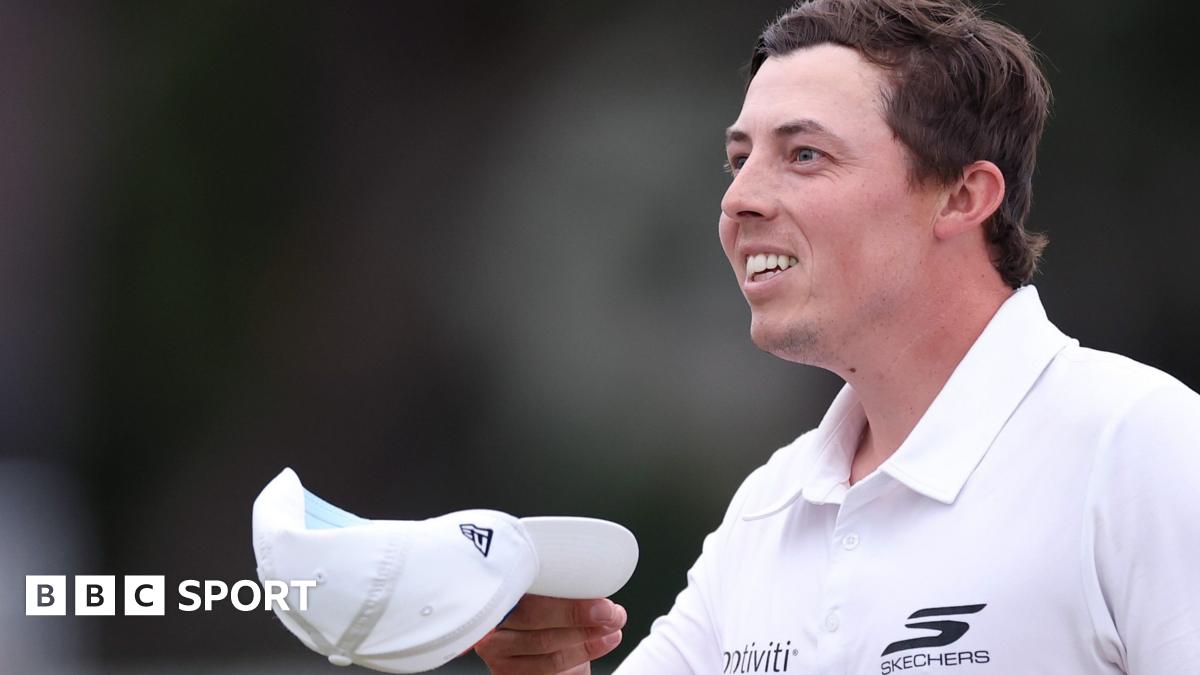
How Matt Fitzpatrick’s PGA Tour win turned up volume in week where money talked

Published

on

The Cage

At least the climax to the PGA Tour’s RBC Heritage provided a gripping finale to follow the previous week’s thrilling Masters. The past fortnight has shown why pro golf can be a very attractive sporting product.

On both occasions Scheffler banked multiple millions despite the frustration of finishing second on bogey-free weekends.

But credit Fitzpatrick for withstanding last Sunday’s charge from the American four-time major champion. Sheffield steel shone through as partisan US support brought a Ryder Cup atmosphere to Hilton Head.

“I’m paid so much money to be out there in front of those crowds,” Fitzpatrick said. “Having them chanting at you every week, it’s a great feeling.

Advertisement

“However, there’s no better feeling than coming out on top against that.”

Fitzpatrick had been on the receiving end of similar noise when Cameron Young hunted him down during the Players Championship in March.

He withstood even louder vitriol to grab a crucial half against a spirited DeChambeau fightback in the Bethpage Bearpit at last year’s Ryder Cup.

And after the brilliant shootout birdie that beat Scheffler for his most recent win, Fitzpatrick borrowed an analogy from his other sporting passion, football.

Advertisement

“It’s kind of winning away against your biggest rival,” said the avid Sheffield United fan. “Nothing to do with Scottie or the players; it’s the fans that have spurred me on there.”

It was a sporting spectacle that was well worth watching, although whether it justifies such inflated rewards is open to debate. PGA Tour purses would not be so grand had Saudi not pumped so much cash into the rival LIV tour.

Oil money has driven rampant inflation that has made millions for so many golfers, especially in the men’s game. But it has also benefited, to an admittedly much lesser extent, the female side of the sport.

The Ladies European Tour’s PIF Global Series includes five events in three continents, with tournaments in England, Las Vegas, Seoul, Shenzhen and Riyadh where prize funds total $15m.

Advertisement

And this week a Texas oil giant dips into its reserves to fund the Chevron Championship in Houston, the first women’s major of the year, to the tune of $8m.

Loose change to the likes of Rahm and DeChambeau, but perhaps more realistic sums than those that have made so much noise in the men’s game in recent years?

Source link

Advertisement
Continue Reading

NewsBeat

No 10 refuses to say whether PM will correct the record on Mandelson appointment

Published

on

No 10 refuses to say whether PM will correct the record on Mandelson appointment

The Prime Minister said: “The fact that I wasn’t told that Peter Mandelson had failed his security vetting when he was appointed is astonishing. The fact that I wasn’t told when I said to Parliament that due process had been followed is unforgivable, and that’s why I intend to set out in Parliament on Monday the facts behind that, so there’s full transparency in relation to it.”

Source link

Continue Reading

NewsBeat

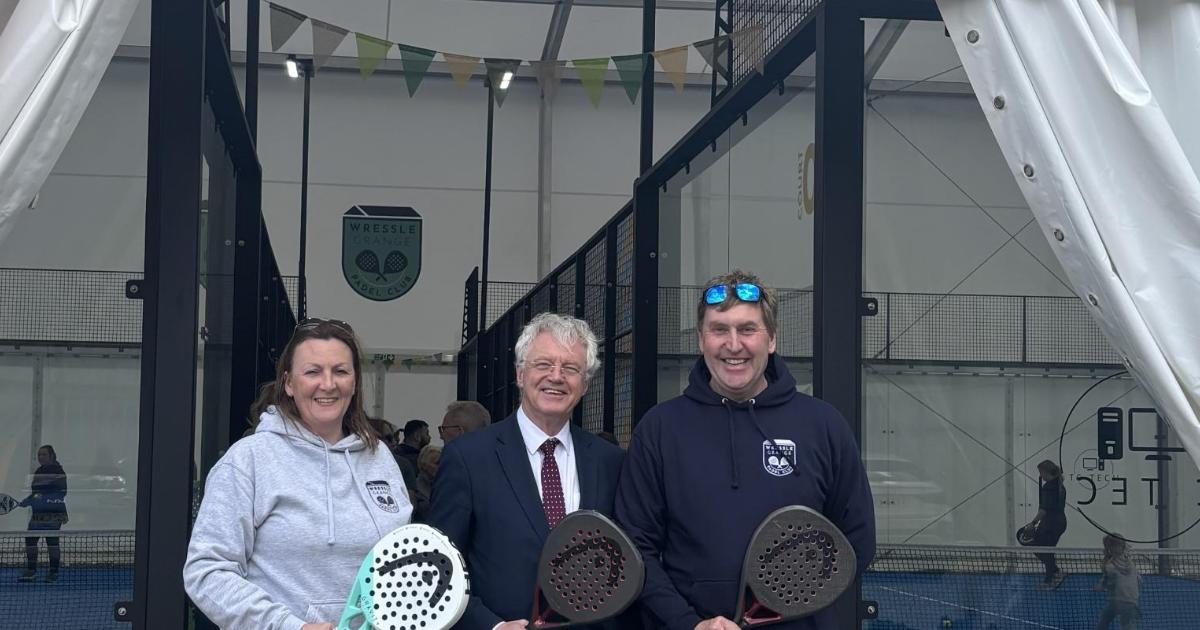
Hundreds turn out for launch of Wressle Grange Padel Club

Published

on

Hundreds turn out for launch of Wressle Grange Padel Club

The area’s newest sporting venue, Wressle Grange Padel Club, celebrated its official launch on Saturday (April 18).

The purpose-built facility, set in the heart of the countryside, welcomed over 300 visitors from Wressle and surrounding villages, many of whom were trying padel – the world’s fastest-growing sport – for the first time.


Recommended reading:


The club boasts two all-weather padel courts – equipped with full-coverage canopies and underfloor heating.

Advertisement

Padel ClubHundreds of people turned out to try padel for the club’s launch (Image: Wressle Grange Padel Club)

Families were able to play together in taster sessions throughout the day, with many older visitors commenting on how quickly they were able to pick up the sport and enjoy full rallies.

Emma, who travelled from Holme-on-Spalding-Moor to attend the launch, said: “I can’t believe what an amazing, social and fun environment Wressle Grange Padel Club is.

“It’s very friendly, with a huge range of ages playing. I can’t wait to join a group and come back and play again.”

Club owners Graham and Claire Foster, fourth-generation farmers at Wressle Grange Farm, were present throughout the day welcoming visitors and helping new players navigate the digital booking system via the Playtomic app.

Advertisement

Graham said: “We are incredibly grateful for the support we’ve received from our neighbours and the wider community since we first opened our doors in March.

“Seeing the courts full of people from across the generations is exactly what we envisioned. From the fast-paced challenges with Amy from HEAD Padel to families playing together, the energy was incredible.

“We wanted to create a space that feels welcoming for everyone, and the turnout shows padel has a very bright future here in East Yorkshire.”

Wressle Grange Padel Club is now open seven days a week from 8am to 10pm.

Advertisement

Courts cost £24 during off-peak hours and £40 at peak times, with racquets available to borrow free of charge.

The site also offers free parking, changing facilities and showers.

Bookings can be made through the Playtomic app.

Membership is available for £12 per month or £120 per year, offering priority booking and a 20 per cent discount on court hire.

Advertisement

Source link

Continue Reading

NewsBeat

Aer Lingus cancels 500 flights due to mandatory maintenance

Published

on

Aer Lingus cancels 500 flights due to mandatory maintenance

The ongoing conflict in the Middle East between the US, Israel, and Iran has resulted in a recent spike in fuel prices.

Several major airlines have already responded to this spike by increasing fares, adding or increasing fuel surcharges, and cutting flights.


Aer Lingus cuts 500 flights – see the services affected

Now, Aer Lingus has cut 500 flights from its schedule due to “mandatory maintenance”, according to the Sunday Independent.

Advertisement

The cuts are set to cause travel disruptions for “tens of thousands of passengers” over the coming weeks.

The airline is axing a select number of transatlantic flights, internal Aer Lingus documents seen by the Sunday Independent have revealed.

Services to and from Seattle, San Francisco, Minneapolis-St Paul, and Toronto will be impacted by the cancellations, according to the documents.

Advertisement

Departures from Dublin to many European airports, including Berlin, Zurich, Athens, Faro, and Amsterdam, will also be removed from the Aer Lingus schedule, on select dates.

A “small number” of cancellations will affect passengers travelling from Shannon and Cork airports.

Flights to London Heathrow, ­Manchester, Newcastle, Birmingham, and Edinburgh will also be cancelled, with passengers rebooked onto other services, the Sunday Independent said.

An Aer Lingus spokesperson said: “Aer Lingus has commenced operating its planned summer schedule.

Advertisement

“A number of recent cancellations have been required due to mandatory maintenance on aircraft, along with a limited number of schedule adjustments.

“Schedule changes apply to approximately 2% of Aer Lingus’ overall schedule.

“Where schedule adjustments are being made, the vast majority of customers are being reaccommodated on same day services.”

Spanish Airport to close for a month with all flights cancelled

Meanwhile, Santiago-Rosalía de Castro Airport in Spain is set to close for an entire month due to resurfacing work on the runway.

Advertisement

These works will see all flights cancelled, affecting thousands of British travellers.

When will Santiago-Rosalía de Castro Airport be closed?

Santiago-Rosalía de Castro Airport will be closed from April 23 to May 27 due to runway resurfacing work.

Its website continues: “During this period, the airport will be closed to all air traffic, and no takeoffs or landings will take place.

Advertisement

“If you have any questions about your flight status, schedule changes, or possible rebooking, we recommend contacting your airline.”

How does this closure affect British travellers?

Around 30 flights run each week between the UK and Santiago-Rosalía de Castro Airport.

Most of the flights operate out of London-based airports, including Heathrow, Gatwick, and Stansted, while there are also non-direct flights to Santiago-Rosalía de Castro from Manchester.

The major Airlines that operate flights between the two include Vueling, Ryanair, British Airways, Aer Lingus, and KLM.

Advertisement

All these flights will be cancelled for nearly five weeks while the airport is closed, affecting thousands of Brits travelling to southwest Spain.

For those still looking to travel to the area, the two closest alternatives to Santiago-Rosalía de Castro Airport are:

  • A Coruña Airport (around 75 km away)
  • Vigo Airport (100 km)

Do these Aer Lingus flight cancellations impact your travel plans? Let us know in the comments below.

Source link

Advertisement
Continue Reading

Trending

Copyright © 2025