Connect with us

NewsBeat

Residents of the UK’s most unhealthy town blame the Government for their problems… while Britain’s healthiest claim they do it on their own

Published

on

Residents of the UK's most unhealthy town blame the Government for their problems... while Britain's healthiest claim they do it on their own

Reading books, walking and bike riding are among the secrets of a long and healthy life, say residents in the English neighbourhoods with the longest life expectancy.

But people in the worst place, Blackpool – where men die an average of 10 years earlier – bemoaned drug abuse, cheap booze and fast food, as well as poor housing.

In the areas where people lived longest, residents told the Daily Mail how there are more activities and facilities such as leisure centres and libraries to keep people active physically and mentally as they got older.

There were also better shops selling a good range of healthy food, as well as easy access to medical services and GP appointments.

Advertisement

Locals in the healthiest places praised green space, parks and countryside giving opportunities for exercise and spending time outdoors in pleasant environments.

Analysis by The King’s Fund published this week found the Lancashire seaside resort has the lowest life expectancy of anywhere in the country, at 73.7 years for men and 79.1 years for women.

The health and social care think tank’s study also found there was low life expectancy across the former industrial and urban areas of northern England – although life expectancy shot up in rural and more affluent parts of the North.

Meanwhile, in Hampshire’s prosperous Hart district – which has previously been voted the best place to live in a national survey – life expectancy averages 83.7 years for men and 86.2 years for women.

Advertisement

Blackpool: Analysis this week found the Lancashire seaside resort has the lowest life expectancy of anywhere in the country, at 73.7 years for men and 79.1 years for women

Kensington: In the London borough, women can expect to live even longer, averaging 87.1 years, while the figure is 82.2 for men

Kensington: In the London borough, women can expect to live even longer, averaging 87.1 years, while the figure is 82.2 for men

In Hart, life expectancy averages are 83.7 years for men and 86.2 years for women. Jane Nicholson, 60, said there were plenty of active spaces, a golf club, leisure centres - and great healthcare

In Hart, life expectancy averages are 83.7 years for men and 86.2 years for women. Jane Nicholson, 60, said there were plenty of active spaces, a golf club, leisure centres – and great healthcare

In the London borough of Kensington and Chelsea, women can expect to live even longer, averaging 87.1 years, while the figure is 82.2 for men.

Life expectancy is also very high in areas such as the Uttlesford district of rural Essex, where it averages 86.4 years for women.

Residents of Britain’s top borough for living a long life praised the area’s green spaces, places for walking and cycling – as well as good healthcare and opportunities for older people to keep active.

Advertisement

Hart, centred around the town of Fleet, has been ranked near the top of the Halifax Quality of Life Survey on several occasions, coming top in 2012 and third in 2020.

Much of the area remains rural – despite large-scale housebuilding – and facilities for sport and leisure have been rated ‘excellent’.

Residents of the district also reported higher than average levels of life satisfaction – 8.2 out of 10, compared to 7.8 for the UK in general. Employment levels were also significantly higher for Hart at 87.2 per cent, compared to 75 per cent for the rest of the country.

In data from the 2021 census, 54.8 per cent of people reported being in ‘very good health’, placing Hart in the top 20 per cent for local authority areas across the UK.

Advertisement

But the cost of buying a home in the district is 4.5 times that of Blackpool, with provisional Office for National Statistics data from May showing the average home in Hart cost £487,000, compared with £134,000 in Blackpool.

Adrian Mann, 79, moved to the Hart area from London 18 months ago. He said: ‘When we moved to Fleet, we really noticed the difference. 

‘There are always people in their 80s walking around the town centre. The cemetery is also full of people who have lived well into their 90s – a good age.

‘I think this is down to the clean air. There are also lots of walks, parks and also the pond. There are quite a lot of churches, the library as well – it has the facilities for older people.’

Advertisement

Mr Mann’s partner, who wished to remain anonymous, said: ‘I hadn’t been well before we moved here and then suddenly after living in the area, my symptoms completely went.

‘I put it down to the clean air. With the number of trees, it is basically the countryside. People are encouraged to get out and about in Fleet.

‘The medical care is good and there are a lot of organisations for older people which get them out of their houses.’

Retired solicitor Robert Cook, 79, and his wife Linda, 84, have lived in Fleet for 35 years during which they say it has undergone a huge population increase and independent retailers have closed – but it remains ‘very pleasant’.

Advertisement

Mr Cook said: ‘To stay healthy, we try to go out most days; we don’t stay at home watching the telly all day. We often go out to Waitrose, M&S and some of the other shops.

‘You see a lot of the older population around the town. People come to retire here. Hart in general is very pleasant.’

Mrs Cook added: ‘The healthcare in the area is excellent. There are a few practices in Fleet and you can get an appointment often on the same day or the following day.’

Charlotte Dando, 44, moved to Hart with her mother Christine Swain, 82.

Advertisement

She said: ‘I love living here. We’ve been here seven years, and we moved from Camberley. The schools are great. We are in walking distance from the town.

‘My mother moved here too and she lives in an annex in our garden. We are not surprised at all that people here live the longest in the UK. There’s lot going on – all the parks, there are also really good cycle paths. You can cycle down the canal. My husband cycles to work. There are just a lot of outdoorsy things on your doorstep.’

Blackpool: Analysis this week found the Lancashire seaside resort has the lowest life expectancy of anywhere in the country, at 73.7 years for men and 79.1 years for women

Blackpool: Analysis this week found the Lancashire seaside resort has the lowest life expectancy of anywhere in the country, at 73.7 years for men and 79.1 years for women

Retired solicitor Robert Cook, 79, and wife Linda, 84, have lived in Fleet for 35 years

Retired solicitor Robert Cook, 79, and wife Linda, 84, have lived in Fleet for 35 years

Advertisement
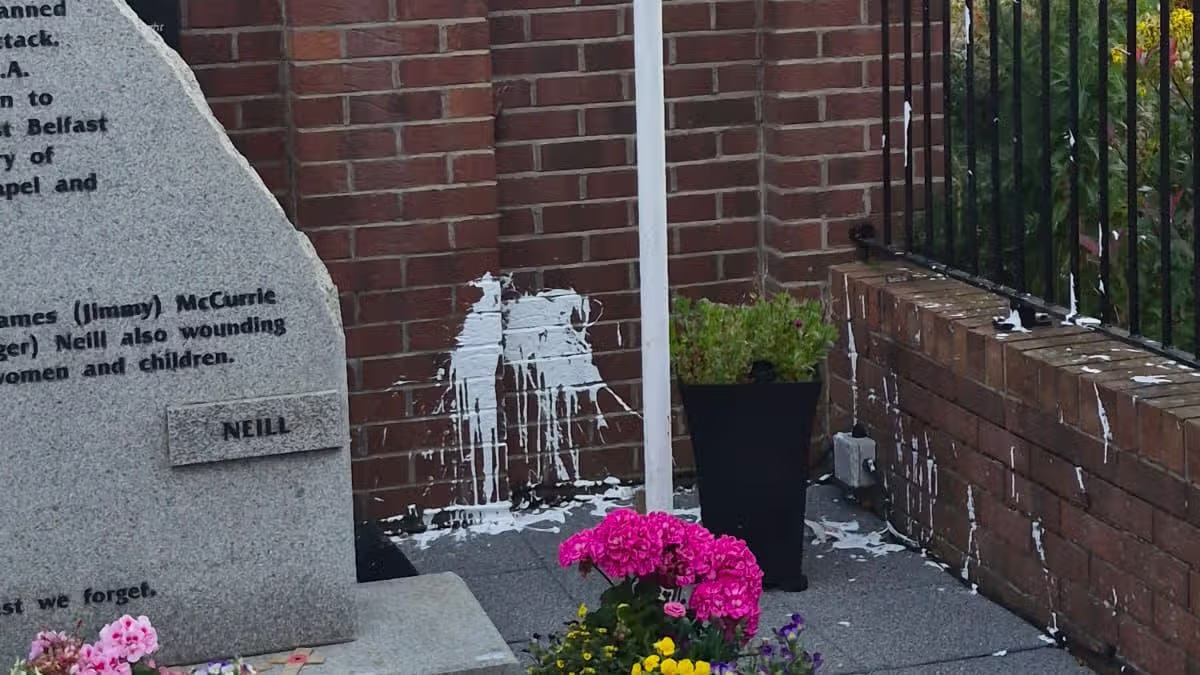
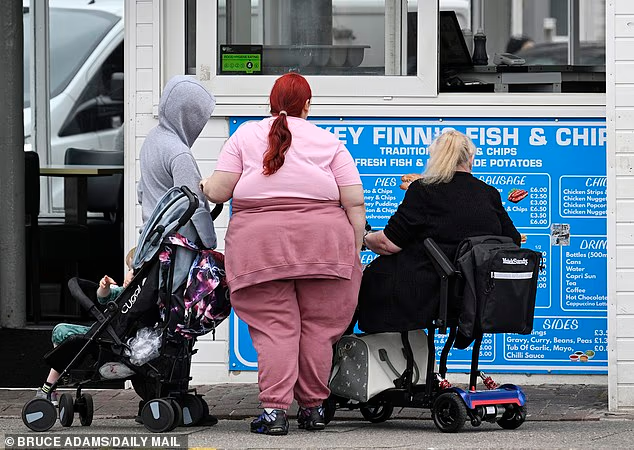
Residents in Blackpool bemoaned a 'shocking' string of social problems for contributing to low life expectancy

Residents in Blackpool bemoaned a ‘shocking’ string of social problems for contributing to low life expectancy

Hart, centred around the town of Fleet, has been ranked near the top of the Halifax Quality of Life Survey on several occasions, coming top in 2012 and third in 2020

Hart, centred around the town of Fleet, has been ranked near the top of the Halifax Quality of Life Survey on several occasions, coming top in 2012 and third in 2020

Kensington: Residents of Britain's top borough for living a long life praised the area's green spaces, places for walking and cycling ¿ as well as good healthcare and opportunities for older people to keep active

Kensington: Residents of Britain’s top borough for living a long life praised the area’s green spaces, places for walking and cycling – as well as good healthcare and opportunities for older people to keep active

Mrs Dando said she believes diet and exercise help keep people healthy, with walking ‘massively important’. She also praised the availability of health food shops and places selling fresh and organic foods.

Advertisement

Jane Nicholson, 60, said: ‘Hart is a lovely area to live in and it’s been known to be so for quite a long time.

‘In terms of active spaces, there is North Hants golf club just down the road. There are also leisure centres. The healthcare is also great. I have always had a good experience.’

In contrast, residents in Blackpool bemoaned a ‘shocking’ string of social problems for contributing to low life expectancy.

Locals claimed to have seen drug addicts shooting up heroin in the street as well as drunk homeless people passed out.

Advertisement

The area also has a chronic shortage of NHS dentists – with one man admitting he had to pull out four of his own teeth.

Cheap fast food shops in the Lancashire tourist mecca sell burgers for £1, while pubs advertise pints of beer for as little as £1.69.

Expectant mother-of-one Tegan Milner, 23, said: ‘Some of the things you see are shocking.

‘There’s a lot of drunk people fighting in the street which has led to stabbings.

Advertisement

‘I don’t feel safe going out at night. I just go out in the day.’

The former hotel worker added: ‘You also see a lot of drug taking.

‘I saw one druggie take out a needle and inject himself with heroin right in the middle of the street in the middle of the day.

‘You don’t want to see that and I don’t want my kids around it.’

Advertisement

Plasterer Jamie Hornby, 54, who was out walking his dog Skye, said: ‘It doesn’t surprise me the life expectancy is so low here.

‘There’s a lot of drug taking and homeless people drunk in the street.

‘They have cleaned up the sea front but you see a lot of druggies around the public toilets.

‘And having lots of cheap fast food doesn’t help.

Advertisement

‘I keep fit taking the dog for a walk every day but a lot of people don’t look after themselves.’

Pensioner Colin Stead, 65, said: ‘You see a lot of poverty here but is pretty devastating.

‘A lot of people can’t afford to buy healthy food or they just buy cheap stuff.

‘Prices have gone up all the time and people have struggled to make ends meet.’

Advertisement

Retired John Ellis, 66, said: ‘Blackpool has a lot of problems.

‘There are a lot of cheap drugs and alcohol sold which doesn’t help. Some of the housing is very poor – it’s also very cheap.’

The health of the local population has not been helped by a dearth of NHS dentists.

Father-of-four Andrew Abernethy, 45, revealed he had been forced to pull out four of his own teeth.

Advertisement

He said: ‘I couldn’t get a dentist and so I just did it myself. I just got a pair of pliers and pulled them out.

‘Fortunately, I have a high threshold for pain but you don’t really want to have to do it yourself.

‘There’s a lot of problems in Blackpool – I blame the government for a lot of it.’

Some 250 miles south, people on the streets of Kensington espoused the benefits of exercise, keeping mentally active and a healthy diet.

Advertisement

Chrissie Fraser, 77, said: ‘I continue with my healthy outlook like going out walking, being careful with my diet, and I don’t really drink.

‘Probably the secret for everybody is if they go and read a few more books.

‘(For) every individual person, it’s nothing to do with access, it’s to do with what’s going on in your head.

‘You can now access the most fantastic information that I didn’t have as a girl. It was the library and my bicycle, I think the answer is a book and a bike.

Advertisement

‘It’s cheaper to eat well, isn’t it? I think it’s to do with who you think you are, I think it’s a bit more about the individual.’

She added: ‘I would be happier mentally [in the north] because it’s cheaper to live there. If I sold my flat in Kensington, I could buy something spectacular in Newcastle. So my mental well-being would probably be quite good, the only thing is I don’t want to go to Newcastle.’

Some people in Kensington were surprised northerners weren’t more healthy given their better access to outdoor space.

The health and social care think tank's study also found there was low life expectancy across the former industrial and urban areas of northern England ¿ although life expectancy shot up in rural and more affluent parts of the North. Pictured, Blackpool

The health and social care think tank’s study also found there was low life expectancy across the former industrial and urban areas of northern England – although life expectancy shot up in rural and more affluent parts of the North. Pictured, Blackpool

Advertisement

Marion Bennett, 70, said: ‘They should be healthier (in the North) shouldn’t they?’

She said she would have expected northerners to be healthier because of ‘better access’ to outdoor space.

Ms Bennett, who used to play netball, tennis and go skiing, added: ‘I do a tremendous amount of walking, I think it stands you in good stead for your later life.

‘Make sure you get your vegetables every day, I’m not so good at drinking water though.’

Advertisement

A healthy diet was important for Francis Ley, 79, who said: ‘I would recommend organic stuff, apples, pears, oranges, blueberries, potatoes, tomatoes, everything that’s organic.

‘Years ago, everything used to be organic before pesticides, and then that came but now they’re going back to organic.

‘But they’re having to pay more now because the earth now is saturated with the so-called chemicals. It’s fast living.

‘That’s why a lot of people are ill and sick because when you go into fast food restaurants, it’s all fried.’

Advertisement

But Lawrence Oji, 73, admitted he could improve his lifestyle as he ‘hardly exercises’ which he knows is ‘not good’.

He said: ‘Only my youngest daughter is particular about what she eats. She’s in a boarding school and she’s so concerned about it. She drinks up to two litres of water every day, I don’t.

‘I’m shocked to hear that people in London live longer because (in the North) you get less pollution, you get more greenery, you get more trees and all that so I would’ve thought it was the other way around.’

And Matthew Martin, 62, who lives in a housing association flat in Earl’s Court but was homeless at one time, said that even with a ‘very small amount of money’ a healthy diet is possible.

Advertisement

He said: ‘I’ve been homeless myself and I know with a very small amount of money you can buy eggs, pasta, tomatoes, you can make soup. It’s not a grand living but you can live reasonably well.’

Paul Edwards, 53, a father of two from Maidstone, Kent, who was visiting Kensington, said he paid attention to his health.

He said: ‘I take supplements, go to the gym and try to avoid saturated fats, salts and all that.

‘My mum’s family’s from Cumbria so I’m quite aware of the difference between housing and lifestyle between northern and southern communities.

Advertisement

‘When I visit there I know exactly the difference and I feel really fortunate to live in south-east, though it feels crowded and overpopulated at times, the standard of housing is better and the awareness of healthy lifestyles, in my opinion, is more prevalent in the southeast than it is up there.’

The King’s Fund said life expectancy in England in 2025 reached the highest levels ever recorded, but the gains in longevity were not shared equally.

It said geographical inequalities reflect socio-economic inequalities and greater levels of deprivation in northern regions – and called the problem a ‘mark of shame’.

People living in the most deprived 30 per cent of areas experienced a fall or no improvement in life expectancy in the decade to 2022-24. And geographical and socio-economic inequalities in life expectancy have been widening since 2010, and people in all regions spend fewer years in good health.

Advertisement

Veena Raleigh, Senior Fellow at The King’s Fund said: ‘That people in our northern and deprived communities have seen little or no improvement in longevity over a decade, in contrast to the health gains in their southern and more well-off counterparts, is a mark of shame for an affluent country. 

‘Addressing this inequity in the nation’s health is not just a matter of social justice, it would reduce pressures on the NHS and the high economic costs of ill health.’

Source link

Advertisement
Continue Reading
Click to comment

You must be logged in to post a comment Login

Leave a Reply

NewsBeat

Man seriously injured after blows to head as police called to ‘large-scale disturbance’

Published

on

Cambridgeshire Live

The victim was punched in the head during an assault

A man suffered serious injuries after being punched in the head during an assault. Lincolnshire Police were called to a “large-scale disturbance” in the Sheep Market area of Stamford, near Peterborough, at around 9.50pm on Saturday, July 25.

Advertisement

Police are trying to piece together the events that led to the assault. A police spokesperson said: “We are now appealing for the public’s help to identify the two men, as we believe they may have vital information that could assist our investigation.

“The first man is described as being of stocky build, with dark hair and stubble. He was wearing grey knee-length shorts and a tight white t-shirt, with a grey man-bag with black strap. The lower halves of his left arm and left leg are heavily tattooed and he was wearing black trainers with a white marking on them.

“The second man is described as being of slim build, with ‘slicked back’ neck-length mid-brown hair. He had a moustache and goatee beard of a similar colour. He was wearing a white t-shirt and light beige cargo-type shorts.”

Anyone with information should contact Detective Sergeant Mike Hanson or call 101 and quote incident 559 of July 25.

Advertisement

Do you want more of the latest Cambridgeshire news as it comes in from across the county? Sign up to our dedicated newsletter to make sure you never miss a big story from Cambridge or anywhere else in the county. You can also sign up to our dedicated Traffic and Crime newsletters for the latest updates on the topics you are most interested in.

Source link

Advertisement
Continue Reading

NewsBeat

Six of history’s most dangerous fashion trends

Published

on

Six of history’s most dangerous fashion trends

Staying on top of the latest fashion trends can sometimes mean sacrificing your own health and comfort for style.

Modern fashion trends including suffocating shapewear, flimsy ballet flats and oversized tote bags have caused misery for many wearers. But these trends are tame in comparison to many of history’s fashion fads — some of which were even lethal.

1. Vertiginously volatile shoes

The 1950s invention of the stiletto heel was met with mixed reviews. While for wearers it became a symbol of femininity and empowerment and many enjoyed the extra height it gave them, some women found the stiletto uncomfortable to walk in.

Concerns were soon raised over the heels’ potential to cause harm. In 1953, British photojournalism magazine Picture Post ran a feature titled The Hazards of the Stiletto Heel, which cited concerns from doctors about the impending dangers that wearing these shoes could bring, from turned ankles to broken bones.

Advertisement

Decades later, concerns over the harmful nature of high heeled shoes still continue. Studies have shown there’s a direct relationship between high heel wearing and musculoskeletal injuries.

However, it’s not only the act of wearing stilettos that causes harm. In 2016, The Telegraph reported that stilettos had been used as weapons in hundred of assaults. In 2013, US citizen Ana Trujillo, nicknamed the “Stiletto Killer”, received a life sentence for stabbing her boyfriend 25 times with a blue suede stiletto heel.

2. The deadly corset

The corset has had a long and often controversial history, one which can be traced back centuries. From the 16th century, it was an undergarment made either from whalebone and sometimes steel that was used to shape the waist.

But over the years, concerns were increasingly raised about the potential harms of wearing corsets – particularly from the practice of “tight lacing.”

Advertisement

For instance, in 1793 the German medical doctor and anatomist Samuel Thomas von Sömmerring published a book discussing his concerns over prolonged tight lacing. In it, he writes that the practice could compress the ribs and other internal organs and inflict deformities on the rib cage.

In June 1890, The Lancet also published an article illuminating the devastating effects of tight lacing – including causing broken ribs, damaged organs, breathing difficulties, deformities and even death.

While the trend for tight corset wearing may have subsided, there are still concerns over the impacts that more modern versions in the form of shapewear can have on the body. Research has shown that wearing tight clothing, such as shapewear, can have detrimental effects on breathing.

3. Poison gowns

During the Victorian era, a deadly trend emerged for a particular shade of emerald green which became popular for fabrics, furnishings and fashion. But green was a challenging colour to produce. So to achieve this vibrant and fashionable hue, Victorian dressmakers would use a particular dye called Scheele’s green which was laden with arsenic.

Advertisement

The public wasn’t aware of how harmful these arsenic-laden dresses were until renowned chemist AW Hoffman published an article in 1862 called The Dance of Death which exposed the dangerous toxicity of the green dye. The following week, the popular satire publication Punch Magazine featured a cartoon titled The Arsenic Waltz which featured a skeleton in a ballgown.

To achieve the emerald hue, dresses were coloured with arsenic-laden dye.
Wellcome Collection

The lethal effects of wearing these dresses included ulcers, organ failure and eventual death. The young women who made these gowns in factories also experienced symptoms such as open sores, convulsions, vomiting and even death.

4. Toxic cosmetics

Queen Elizabeth I was known for her porcelain complexion, which was seen as a mark of beauty and status at the time. But the makeup Queen Elizabeth I used to achieve this look was also a mask which covered the smallpox scars on her skin.

The Queen achieved her pale complexion through the use of Venetian Ceruse, a lead-based makeup which is believed to have caused her eventual death. Recent research has found that Queen Elizabeth I’s white makeup was actually a combination of lead and white vinegar, which would allow lead to pass through the body in higher quantities than other recipes of Venetian Ceruse.

Advertisement


À lire aussi :
Dying for makeup: Lead cosmetics poisoned 18th-century European socialites in search of whiter skin


As with many other fashion trends, lead-based makeup has a long history. The Egyptian queen Cleopatra used a lead-based kohl eyeliner – which more recent research shows may have actually prevented illness.

5. Hazardous hair

Hair, so often the mark of fashion, has been the subject of many toxic trends through the years.

For example, the 1900s Pompadour hairstyle – named after 18th-century French courtier Madame de Pompadour – achieved its volume through the use of highly fashionable but toxic lead pomades.

Advertisement

The early 20th century also witnessed an unusual and hazardous trend for radium-infused products – including radium hair tonics and oils. Some products claimed that radioactivity would help with hair growth and cure dandruff. In some instances, radium was also brushed into the hair so it would glow in the dark. Yet long-term exposure to radium had many detrimental effects, including on the bones and blood – even years after use.

6. Flammable fibres

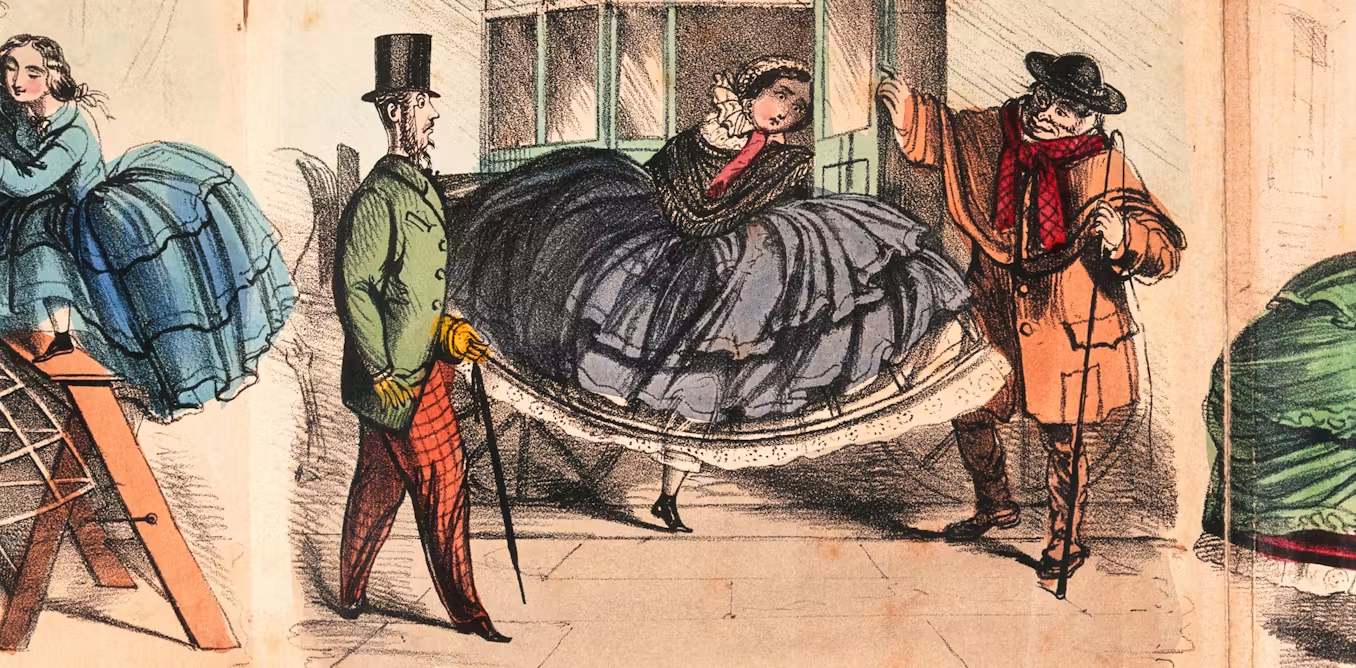
In 1871, Oscar Wilde’s young half sisters attended a Halloween party in Ireland. As society figures, they were both dressed in the height of fashion, wearing voluminous hooped crinoline skirts. But as they danced, their huge skirts caught light from a candle and both sadly perished.

Their tragic story was not unique. During the Victorian era, over 3,000 women reportedly met the same fate.

The crinoline was favoured for its lightness and freedom of movement, yet it was unwieldy and highly flammable. In 1858, the New York Times reported an average of three deaths per week, making the crinoline one of history’s most hazardous trends.

Advertisement

Just as fashion trends change, so too do the hazards that can come from wearing them. But we might consider ourselves much more fortunate than our predecessors that today’s fashion trends are largely less lethal than many used to be.


This article features references to books that have been included for editorial reasons, and may contain links to bookshop.org; if you click on one of the links and go on to buy something, The Conversation UK may earn a commission.


Source link

Advertisement
Continue Reading

NewsBeat

Demolition of ‘Clockwork Orange’ estate in London paused as residents celebrate legal win

Published

on

Demolition of 'Clockwork Orange' estate in London paused as residents celebrate legal win

A Peabody spokesperson said: “We’re investing in communities in and around South Thamesmead, supporting people, improving public areas and providing much-needed new homes. The majority of local residents backed our proposal to redevelop the Lesnes Estate, which will help us expand our work and create an even better place for local people to live. 

Source link

Continue Reading

NewsBeat

Nearly 3,000 people in UK die from extreme heat in two months | News UK

Published

on

Nearly 3,000 people in UK die from extreme heat in two months | News UK
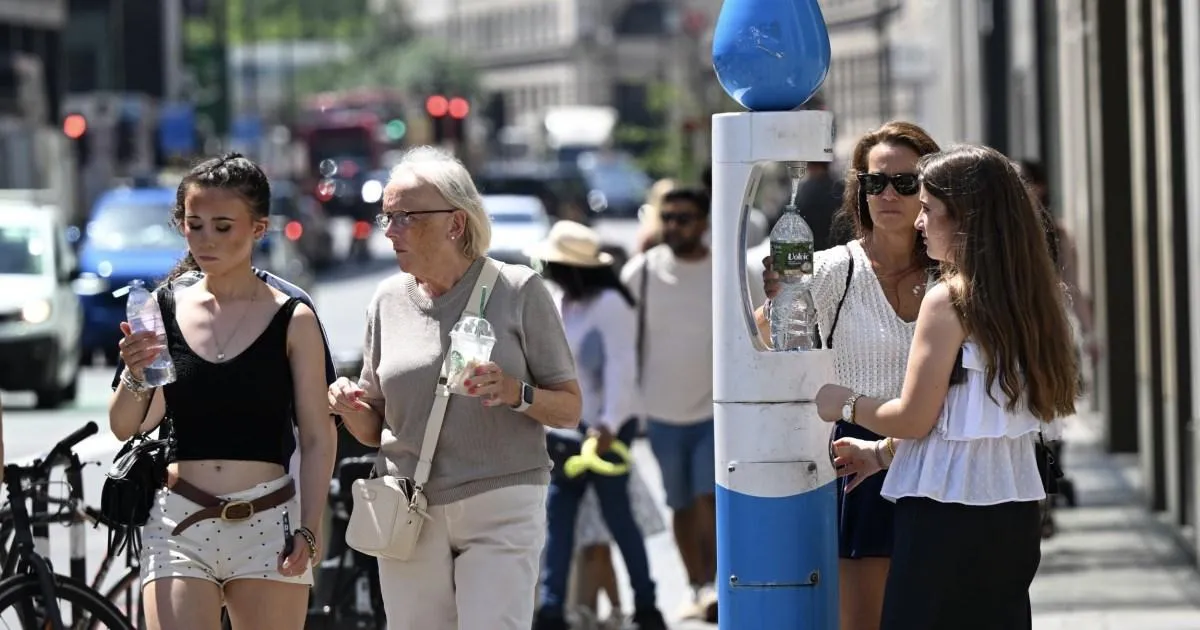
Women fill up water bottles in London in the heat (Photo by Rasid Necati Aslim/Anadolu via Getty Images)

An estimated 2,877 deaths were associated with excessive heat in May and June this year – almost double the number of casualties compared to last summer.

The UK Health Security Agency (UKHSA) said the figure represented a significant increase on 2025’s heat-related death toll, which was 1,504.

Approximately 753 deaths were linked to the heatwave from 24 to 27 May, while  2,124 were associated with a second period of unusually hot weather between 21 and 28 June.

The health body stressed that these figures are interim and an official number has yet to be determined.

Advertisement

But they are already approaching the annual record for heat-related deaths set in 2022.

Sign up for all of the latest stories

Start your day informed with Metro’s News Updates newsletter or get Breaking News alerts the moment it happens.

Advertisement
LONDON, UNITED KINGDOM - JULY 23: A man practises his ball control on the drought-damaged grass of Hackney Marshes on July 23, 2026 in London, United Kingdom. According to the the National Drought Group, eight areas across southern, central, and eastern England are verging on drought, following a period of
There have been four distinct heatwaves in the UK this summer (Picture Leon Neal/Getty Images)

UKHSA’s principal environmental public health scientist and author of the report, Dr Ross Thompson, said: ‘These figures highlight the significant danger that very hot weather can pose to people’s health.

‘This is particularly true for those who are more vulnerable including older adults and people with underlying medical conditions.

‘While the figures are interim, they suggest that, if we experience more periods of hot weather this summer, we could see the highest number of heat-associated deaths on record.’

The figure only accounts for deaths in May and June, covering just two of the four heatwaves the UK has experienced this summer. 

A third heatwave in early July saw multiple yellow and amber health warnings issued by the UKHSA.

Advertisement
People in the water at The Thames at Ham, which was recently designated as London's first official river bathing water site on the River Thames. This was after campaigners gathered evidence to show thousands of people use the river for swimming throughout the year at the site. The fourth heatwave of the year is set to peak on Wednesday with temperatures of up to 35C, as experts warn wildfires could be ???exceptionally severe???. The UK Health Security Agency (UKHSA) has issued an amber heat-health alert for the East Midlands, the East, South East and London.Picture date: Wednesday July 29, 2026. PA Photo. Photo credit should read: Jordan Pettitt/PA Wire
This year’s heat-related deaths could be record-breaking (Picture: Jordan Pettitt/PA Wire)
Smoke rises from a wildfire at Dunwich Heath, near Leiston, as major incident has been declared as firefighters battle a large heathland blaze on the Suffolk coast. Picture date: Thursday July 30, 2026. PA Photo. Photo credit should read: Joe Giddens/PA Wire
A major incident was declared after the wildfire broke out(Picture: Joe Giddens/PA Wire)

A fourth heatwave currently underway has seen wildfires break out across much of the country, the most recent of which saw holiday homes and residential properties evacuated near a nuclear plant in Suffolk.

More than half of England is also experiencing drought as a result of the hot, dry conditions.

The Environment Agency (EA) said much of central, eastern and southern England is affected and that further restrictions on water use – like a batch of hosepipe bans brought in over the past few weeks – may be introduced.

Farmers have also warned the sweltering conditions mean they face depleted crop levels.

TOPSHOT-BRITAIN-ENVIRONMENT-CLIMATE-WILDFIRE
A wildfire at Cairngorms National Park in Scotland earlier this year (Picture RSPB Scotland / AFP via Getty Images)

Gavin Lane, president of the CLA (Country Land and Business Association) – which represents 28,000 farmers – said: ‘Farmers are telling us this is the worst harvest in years.

‘A sodden winter followed by drought has left wheat at half its usual height and some crops not worth harvesting.’

Advertisement

Health and Social Care Secretary, Yvette Cooper, said of the report: ‘The sweltering heat has had a serious impact this summer on people’s health and on our NHS.

‘For many years, we have been used to winter pressures in our NHS and the need to support those who are vulnerable in the coldest weather.

‘But now we are seeing the summer heat have an increasingly serious impact on the health of thousands of people, and on the pressures facing our NHS too.

‘As we move through the summer, it is so important for people to be able to look out for their health and help those who are more vulnerable to the hot conditions.

Advertisement

‘Please don’t hesitate to seek help if you’re worried about your own wellbeing, or anyone else’s. A little care could make a lifesaving difference.’

Advertisement
Advertisement

Source link

Continue Reading

NewsBeat

Shaun Wright-Phillips is the tenth celebrity announced for Strictly Come Dancing as ex England football star says show is ‘completely out of his comfort zone’

Published

on

Shaun Wright-Phillips is the tenth celebrity announced for Strictly Come Dancing as ex England football star says show is 'completely out of his comfort zone'

Former England football star Shaun Wright-Phillips was the tenth celebrity announced for Strictly Come Dancing on Thursday. 

The sportsman, 44, whose father is retired footballer Ian Wright, said the show is ‘completely out of his comfort zone’, but that he was ‘looking forward to the challenge.   

The news was announced on Thursday 30th July via @bbcstrictly’s official social channels on Instagram, TikTok, Facebook and YouTube. 

Shaun is a former footballer with 36 caps for England, across a professional career that also saw him play for Manchester City, Chelsea, Queens Park Rangers, and the USA’s New York Red Bulls and Phoenix Rising FC. 

Advertisement

Now a football pundit and broadcaster, Shaun has worked with the likes of the BBC, Sky Sports, ITV, and the Premier League and he has been a Manchester City club Ambassador since 2020. 

Shaun Wright-Phillips was the tenth celebrity to be announced for Strictly Come Dancing on Thursday as the ex England football star said the show is ‘completely out of his comfort zone’

Shaun said: ‘Dancing is in my blood—but mainly at family events! Strictly is definitely outside my comfort zone, but I’m super excited to get started and really looking forward to the challenge!’

Advertisement

He will be joining Lacey Turner, Dani Dyer, Delta Goodrem, Chris Appleton, Cach Mercer, Will Best, Dame Sarah Storey, Jaime Winstone and Bethany Antonia in the Strictly line-up. 

Further news will be revealed throughout the summer ahead of the brand-new series getting underway on BBC One and BBC iPlayer this September. 

EastEnders star Lacey was the first contestant announced as she is currently on an extended break from playing her iconic character Stacey Slater in the soap and is keen to use her time to train for the BBC competition, which will start in September.   

In a video shared to Instagram, Lacey admitted she is ‘terrified’ to be taking part in the BBC show, which will return to screens in September, and can’t wait to ‘learn a new skill’.

Advertisement

She said: ‘Hello it’s Lacey Turner I can’t quite believe that I’m actually saying this but I want to let you in on a little secret.

‘This September I will be taking my little toes onto the dancefloor to do Strictly Come Dancing.

Shaun said: 'Dancing is in my blood—but mainly at family events! Strictly is definitely outside my comfort zone, but I’m super excited to get started and really looking forward to the challenge!'

Shaun said: ‘Dancing is in my blood—but mainly at family events! Strictly is definitely outside my comfort zone, but I’m super excited to get started and really looking forward to the challenge!’

‘I can’t believe it. I’m so excited and terrified at the same time but I’ve had so many friends do Strictly and I thought it was about time that I plucked up the courage and made my way onto that dance floor. So, there you go the secret is out, see you there in September.’

Advertisement

It comes after it was revealed Dani is also making her Strictly comeback.

The TV star has been confirmed as the second celeb to take part in the 2026 series of Strictly Come Dancing one year after she was forced to quit the 2025 run after fracturing her ankle during rehearsals.

Dani said: ‘I am so excited to be back in the ballroom this September!’

‘I just cannot wait to get my dancing shoes back on and hopefully this time around I can actually make it to week one! I’m just over the moon and cannot wait to find out who else is doing it!’

Advertisement

Upon her exit last year, BBC bosses confirmed the door would be left open for ‘heartbroken’ Dani to return for the 2026 series as they said they ‘hope to welcome her back to the ballroom in the future’.

Elsewhere, on Monday the returning Strictly professional dancers shared a glimpse inside day one of rehearsals for the 2026 series on Instagram. 

Amy Dowden, Dianne Buswell and Jowita Przystal are among the stars returning to the dancefloor this year after the BBC show underwent a major shake-up.

The stars were also joined by returning pro Carlos Gu, 33, who scooped the coveted Glitterball Trophy with footballer Karen Carney.

Advertisement

As well as Katya Jones, Kai Widdrington, Aljaž Škorjanec, Lauren Oakley, Nancy Xu, Neil Jones, Nikita Kuzmin, Alexis Warr, Julian Caillon and Vito Coppola.

Five new faces were recently announced to the pro line-up, months after the Strictly axe ‘bloodbath’ saw bosses ditch stars Michelle Tsiakkas, Karen Hauer, Nadiya Bychkova, Luba Mushtuk and Gorka Marquez.

Making their Strictly dancer debut this Autumn will be Ukrainian Aleksandra Isaeva, Italian hunk Cristian Priori, South African latin champion Lethabo Monametsi as well as Canadian dancer Mark Karmalita and UK National Ballroom Champion Maddie Ingoldsby.

Source link

Advertisement
Continue Reading

NewsBeat

Same Day Flower Delivery UK: Best Last-Minute Gifts For August Birthdays & New Parents

Published

on

Same Day Flower Delivery UK: Best Last-Minute Gifts For August Birthdays & New Parents

We hope you love the products we recommend! All of them were independently selected by our editors. Just so you know, HuffPost UK may collect a share of sales or other compensation from the links on this page if you decide to shop from them. Oh, and FYI — prices are accurate and items in stock as of time of publication.

It happens to the best of us. That present you’ve been meaning to buy for your loved one slips further down your to-do list until the big day arrives – you’re on your way to the birthday dinner, even – and you realise: fuck. I forgot to get them anything.

Whatever you do, don’t panic. Least of all, because any reasonable friend or family member will understand, but more importantly, because there’s always a way to dig yourself out of this hole.

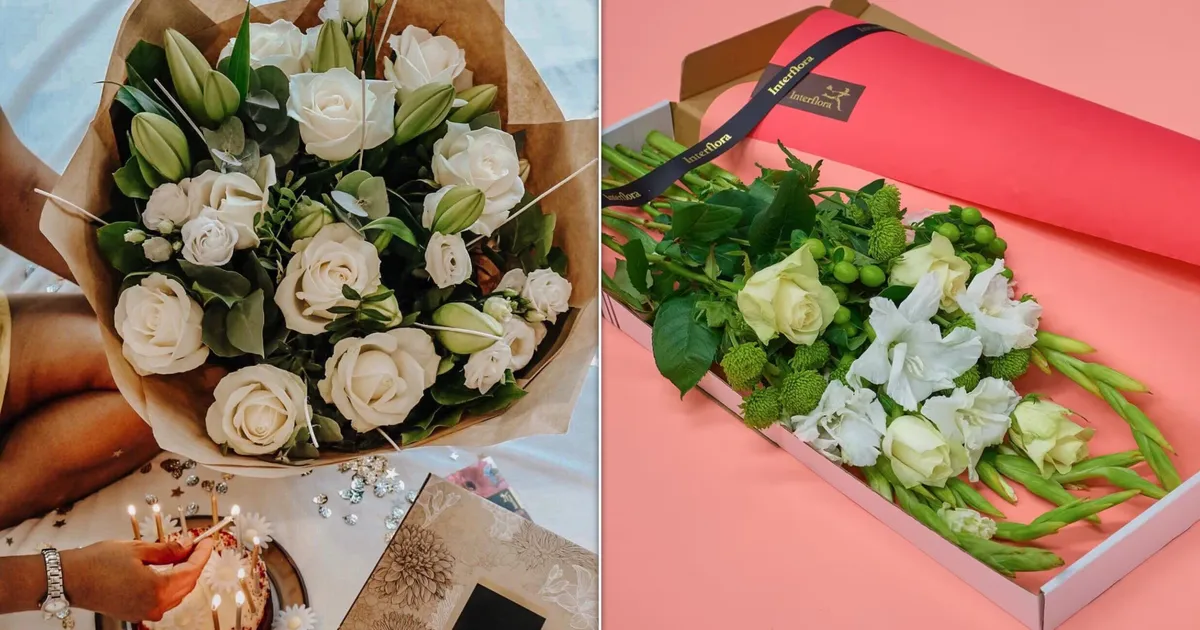
For those moments when you find yourself in a pinch, flower delivery service Interflora works with local florists all over the country to design custom bouquets that can be delivered in under a few hours.

Advertisement

With hundreds of thoughtfully designed bouquets to choose from, all you have to do is select your favourite, add custom notes, and if you order before 3pm your creation will be delivered the very same day.

You can even choose from bouquets with a vase or a gift bag of your choice – and of course add a customised note.

And I know what you’re thinking: no, delivery doesn’t cost an arm and a leg. Actually, it’s between £10-£15 for same day delivery.

We see you panic reading, so to save you time, we’ve rounded up the best birthday flowers for August birthdays and new parents.

Advertisement

Source link

Continue Reading

NewsBeat

East Midlands Railway workers announce strike amid ongoing issues with new fleet

Published

on

East Midlands Railway workers announce strike amid ongoing issues with new fleet

East Midlands Railways services could be disrupted across numerous weekends in August as workers set to strike over train safety concerns.

The National Union of Rail, Maritime and Transport Workers (RMT) has announced 24-hour strike action on three consecutive Saturdays: 1, 8 and 15 August.

East Midlands Railways (EMR) is advising its customers only to travel if their journey is essential and to check journey statuses before travelling.

On strike days, EMR will be operating a significantly reduced timetable between 7am and 7pm on its Intercity and Connect routes.

Advertisement

There is likely to only be one train per hour between London St Pancras and destinations such as Nottingham, Sheffield and Corby.

Regional services are unlikely to be affected by the strike action and will operate as normal.

In addition to the strike action, the RMT has also notified the train company that members will be taking “action short of strike” from Sunday 2 to Friday 7 August (inclusive), Sunday 9 to Friday 14 August (inclusive) and from Sunday 16 August until further notice.

This usually means that workers will carry on working, but may limit some of their duties. EMR says trains may be subject to short-notice alterations or cancellations.

Advertisement

RMT says the strike action is taking place after the train company refused to withdraw faulty trains and the collapse of talks.

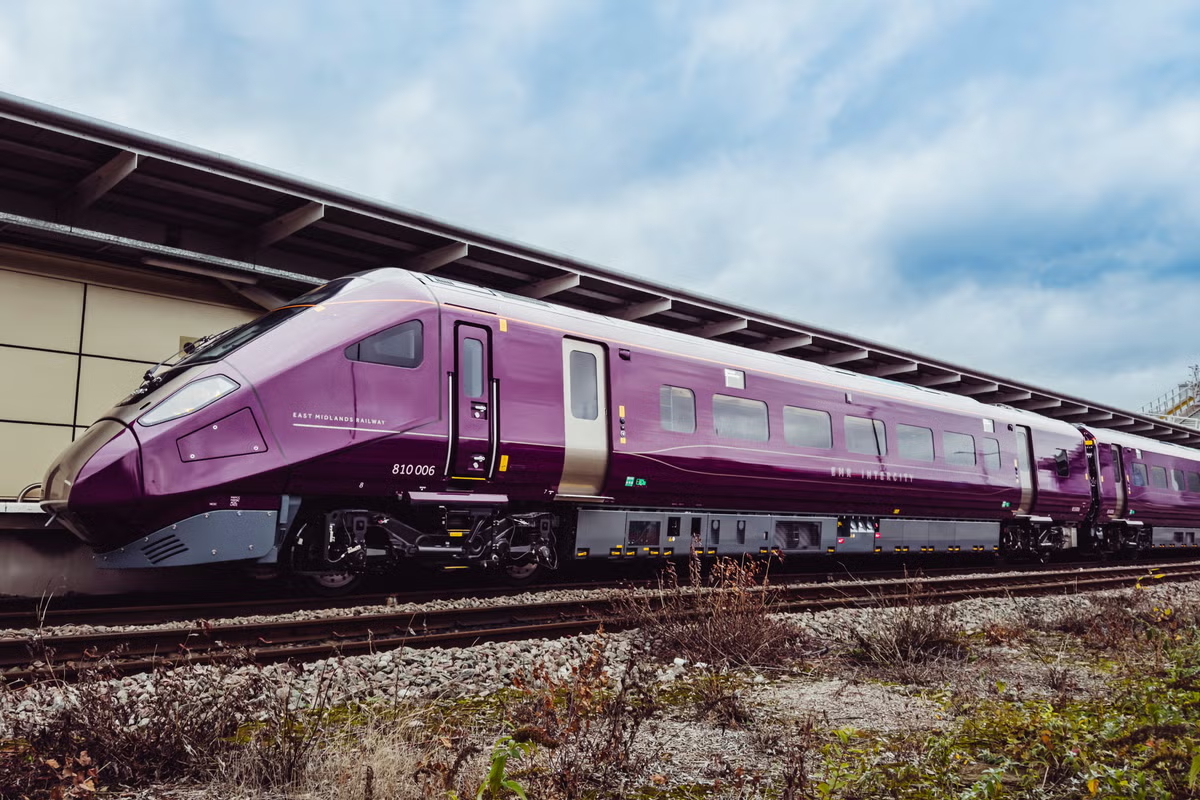
The union’s dispute centres around the roll-out of the Class 810 Aurora fleet, built by Hitachi, which it argues has been operating with a significant number of dangerous faults.

“EMR has been sending trains into service that are likely to fail and require a full reset which leaves the train with no active safety systems including loss of communication between train drivers, dispatchers, and trackside which has occurred at least three times in the last week alone,” the union said.

“Despite numerous attempts to resolve the dispute through talks, EMR will not remove the 810s from service therefore the strikes will go ahead, and we remain available for further talks,” RMT general secretary Eddie Dempsey said.

Advertisement

The operator previously announced a temporary reduction of its Intercity timetable due to service reliability and maintenance issues with the 810 fleet that “significantly impacted upon EMR’s ability to run a consistent service”.

As a result, hundreds of services were cancelled on the Midland mainline, including around 20 fast trains a day connecting London, Sheffield and Nottingham.

On Monday, EMR’s managing director, Will Rogers, stepped down from his role amid the ongoing problems.

Regarding the strikes, Philippa Cresswell, customer experience director at EMR, said: “We’re sorry to customers whose journeys will be affected by this industrial action.

Advertisement

“EMR continues to engage in constructive discussions with the RMT in the hope of resolving this dispute as quickly as possible.”

Ms Cresswell continued: “The dispute relates to concerns raised about the introduction of our new Class 810 Aurora fleet. Any suggestion that the trains do not meet the required safety standards is incorrect.

“The Class 810 fleet entered passenger service only after successfully completing all required testing and meeting the rigorous safety standards required by the independent regulator.”

Read more: London Gatwick becomes first UK airport to offer robotic parking. Here’s how it works

Advertisement

Source link

Continue Reading

NewsBeat

East Belfast memorial attack an ‘insult’ to murder victim’s 96-year-old wife, cllr says

Published

on

Belfast Live

The incident has been condemned by local politicial representatives

An attack on a memorial garden in East Belfast has been described as an “insult” to the 96-year-old wife of a murder victim.

The garden, which is close to a sectarian interface with the Short Strand on the Lower Newtownards Road, was built to commemorate Jimmy McCurrie and Bobby Neill, who were shot dead by republican snipers in June 1970.

The memorial, which has been previously attacked, most recently in 2024, had paint thrown over it in the latest incident at around 10.35pm on Wednesday, July 29. It is being treated as a hate crime by police.

Advertisement

DUP councillor Bradley Ferguson condemned the attack, adding: “The McCurrie family made me aware of the latest attack on the memorial, which is not just an insult to those commemorated on it, but particularly to the families, including Jimmy McCurrie’s wife who is now 96 years old and is having to deal with being retraumatised by yet another sectarian attack on this memorial.

“It is important there is leadership from across the community to condemn this attack. Also, anyone with information should contact the police to assist with identifying those responsible.

“Attacks on this memorial, and on the families who take comfort from it must stop.”

Titanic councillor Ruth Brooks added: “The community on the Newtownards Road continue to stand with the McCurrie and Neill family and this attack is felt by all those in the area.

Advertisement

“The paint will be removed and the damage restored, but it is the mindset of those who carried out this damage which is in most urgent need of change.”

PSNI Inspector Connolly said: “We received a report at around 10.35pm on Wednesday, 29th July that a memorial park in the Newtownards Road area had been paint-bombed.

“This is being treated as a hate crime and our enquiries are ongoing.

“We would appeal to anyone with information to contact police using our witness appeal form at https://reporting.psni.police.uk/appeals, quoting reference 2066 of 29/07/26, or call us on 101.”

Advertisement

Alternatively, you can call Crimestoppers anonymously on 0800 555 111 or contact them online at http://crimestoppers-uk.org/.

For all the latest news, visit the Belfast Live homepage here and sign up to our daily newsletter here.

Source link

Advertisement
Continue Reading

NewsBeat

Man dies after crash near tiny Cambridgeshire village

Published

on

Cambridgeshire Live

The road was closed for around 12 hours after the crash

A man has died after a car crash in the early hours of Wednesday morning (July 29). Police were called to Cambridge Road in Littlebury, near Ickleton, at around 1.10am.

Advertisement

A number of emergency services attended the scene. The road reopened at around 12.30pm on Wednesday afternoon after being closed for around 12 hours.

Essex Police has confirmed that a man died after the crash. The force is the public to get in touch if they have any further information.

A spokesperson from Essex Police said: “We can now confirm that, sadly, a man died at the scene of a single vehicle collision in Littlebury in the early hours of yesterday morning (Wednesday 29 July).

“Emergency services were called to Cambridge Road at around 1.10am after receiving a report of a collision. Our enquiries are ongoing and we would appeal to anyone with any information to contact us and quote 42/120245/26.”

Advertisement

Source link

Continue Reading

NewsBeat

Ebola outbreak in Congo claims over 1,500 lives, official data reveals

Published

on

Ebola outbreak in Congo claims over 1,500 lives, official data reveals

BUNIA, Congo (AP) — The fastest-growing Ebola outbreak in history has killed more than 1,500 people in eastern Congo, according to official data released Thursday, a 50% spike in around a week that shows the outbreak continues to outpace response efforts.

The latest update from Congo’s government shows that as of Tuesday, 3,442 cases have been recorded in the latest outbreak, and 1,521 people have died.

The outbreak declared on May 15 is unlike most previous Ebola outbreaks because the Bundibugyo virus responsible for it has no approved vaccines or treatments.

It has also killed more people at a quicker rate than any previous outbreak, including the 2014-2016 outbreak that was considered the worst on record with over 11,000 deaths out of at least 28,000 cases. That outbreak took about eight months to reach 1,000 deaths.

Advertisement

Ebola is rare, but highly contagious and can be contracted via bodily fluids such as vomit, blood or semen. The disease it causes is severe and often fatal.

Source link

Advertisement
Continue Reading

Trending

Copyright © 2025