But, as of Monday, May 4, Royal Mail has said there are “no deliveries or collections” today. Due to the Early May Bank Holiday, there will be no postal service.
Royal Mail said: “There will be no deliveries or collections of mail on Monday, 4 May.” Over the weekend, its service ran as usual on Saturday, May 2 and Sunday Parcel deliveries took place yesterday.
It added: “We deliver and collect your mail on most days of the year, including Saturdays. However, we don’t usually deliver or collect on public or local holidays.”
The delay to mail is in place across England, Wales, Northern Ireland and Scotland today. Normal service will resume from Tuesday, May 5.
Royal Mail has faced criticism over late deliveries and its owner faced questions from MPs. Daniel Kretinsky previously told MPs: “Of course I am deeply sorry for any letters that arrive late.”
Speaking to the Commons Business select committee, Mr Kretinsky added: “It is not perfect, but it is not catastrophic.”
The changes will mean it will axe Saturday Second Class deliveries and move to alternate weekdays – three days one week, and two days the next.
Royal Mail said the changes and planned investment will see it improve First Class Next Day delivery to around 85% within nine months of the reforms being brought in, before reaching the 90% target set by regulator Ofcom within a year.
The firm also vowed to deliver 93% of Second Class letters within three days over the course of nine months, and to hit the 95% target by May next year.
Royal Mail was fined £21 million by Ofcom in October for missing targets after it delivered 77% of First Class post and 92.5% of Second Class post on time in 2024-25.
Advertisement
From April 1, Ofcom lowered the delivery targets for First Class post to be delivered the next day from 93% to 90% and Second Class to be delivered within three days from 98.5% to 95%.
Alistair Cochrane, chief executive of Royal Mail, said: “We recognise our service hasn’t always been the standard our customers rightly expect and we’re determined to do better.
“The plan we’ve set out today shows how we’ll make a step change in performance across the UK, backed by £500 million of investment over the next five years.”
Molly-Mae Hague and Tommy Fury have welcomed their second child together
20:16, 03 Jun 2026Updated 20:16, 03 Jun 2026
Love Island stars Molly-Mae Hague and Tommy Fury have announced the arrival of their second child together, sharing the joyful news with fans via an Instagram post.
Molly wrote: “….and then there were 4,” with a white love heart. The post was met with huge congratulations in the comments section.
The couple’s announcement was met with an outpouring of well-wishes from fans, with one commenting: “Congratulations to yous this is amazing,” while another enthused: “Ahhhhh congratulations.”
Advertisement
Although the pair kept the gender of their newborn under wraps, one eager fan speculated: “Am going to guess BOY xx”
Molly-Mae had initially surprised followers in February when she announced her pregnancy, having already quietly shared the news with close family and friends. At the time she disclosed she was already six months along, posting a throwback snap from her L’Oreal catwalk appearance the previous September, reports the Mirror.
And Molly-Mae captioned her post: “Little baby with me in this moment… and I didn’t even know.” Resharing her pregnancy announcement, she added: “Nearly 6 months on… and it still hasn’t sunk in.”
Advertisement
The couple’s three year old daughter Bambi featured prominently in the announcement, appearing in a touching black and white family photograph shared by Molly-Mae.
The pair have been an item since their appearance on Love Island back in 2019, aside from a brief period apart in 2024.
City have long been admirers of Newcastle academy graduate Anderson. The player is currently preparing for the tournament in the US, Canada and Mexico, but club-to-club talks can continue to take place.
Captain Bernardo Silva’s exit means City are looking to bolster their midfield and Anderson tops the list of potential targets.
Newcastle midfielder Sandro Tonali is another player understood to be highly rated by City, with reports, external suggesting the Italy international has been monitored as a long-term target.
Nico Gonzalez, who missed out on a place in the Spain squad for the World Cup and also fell out of favour under Pep Guardiola last season, may depart if the right offer comes in.
Advertisement
Sources indicate City are also looking to sign a right-back to supplement Matheus Nunes, 28, who excelled in the position this season after being converted from midfield.
City are eyeing the profile of a young full-back and one who is a natural in that position that can grow into the role in the future.
Tata carried out a controlled demolition of a gas holder earlier on Wednesday evening. There is no suggestion that the earlier demolition of the gas holder, which the company said was done safely, is linked to the ongoing incident at the site.
Earlier on Wednesday local residents said their homes “shook” as a result of the demolition of the gas holder. The company apologised for any inconvenience caused.
They said: “People working and living in the Port Talbot area may have just heard a loud noise emanating from the Port Talbot steelworks.
“This was the result of the planned demolition of the empty, redundant coke ovens gas holder, which has been completed safely as part of the ongoing engineering works on the site. The gas holder ceased operation with the closure of the site’s heavy-end in September 2024.
Advertisement
“This demolition was required to make space for future raw materials handling areas for the new three million tonne per year capacity electric arc furnace.
“Our thanks goes to the whole team involved from Tata Steel and our contractor partners Thompson of Prudhoe and PDC, in what was a complex programme of work. We apologise for any inconvenience caused.”
The new Call of Duty season adds a multiplayer map inspired by the Backrooms.
00:00, 04 Jun 2026Updated 00:00, 04 Jun 2026
Advertisement
It’s shaping up to be a big week for Call of Duty fans, as Activision releases a brand new season of content on PlayStation, Xbox and PC.
Call of Duty Black Ops 7 and Warzone Season 4 adds a ton of new content in both games, including new maps, new modes, new Endgame content, new weapons, new gameplay features and a new Battle Pass with a variety of rewards.
If you’ve been itching for some new content to enjoy in Black Ops 7, Warzone, or both, then the good news is that you don’t have long to wait before Season 4 makes its debut.
Black Ops 7 and Warzone Season 4 has a June 4 release date on consoles and PC. The new content will officially go live at 5pm BST UK time.
Advertisement
That’s 9am PST / 11am CST / 12pm EST on June 4 for fans living in the US, or 6pm CET for European players.
To make sure you don’t miss a second of the action, fans can actually download and install the update ahead of schedule.
Pre-loading the update is most certainly worth doing, because the update weighs in at a whopping 45GB.
Leipzig Zoo in central Germany is a world-leading centre of great ape research. Recent studies have seen chimpanzees there using touchscreen controls to navigate virtual forests and locate food rewards – applying similar techniques to what they would use in the wild.
Other research (of which I was part) has investigated chimpanzees’ social curiosity. We discovered they actively seek out information about others’ interactions, even if it means forgoing food rewards. Keeping track of their peers’ latest social developments appears central to these great apes’ social wellbeing.
But in my decade working with Leipzig Zoo’s chimpanzees and bonobos, one question came up repeatedly. Were differences in how each great ape would cooperate and resolve conflicts simply down to its mood on a particular day? Or were there longer-term explanations – deep-rooted personality traits, for example, or their relationship history with other apes?
Long-term questions like this are very difficult to tackle in single studies, which often draw on just a handful of participants. So, my colleagues and I have developed EVApeCognition: a standardised database of 18 years’ worth of great ape experiences, decisions and relationships.
Advertisement
This lays the groundwork for answering many more questions about these extraordinary creatures’ cognition, intelligence and social behaviour. If a bonobo showed striking generosity towards a partner in 2008, for example, we can piece together whether that behaviour was linked with their stable disposition, a particular relationship, or some other factor.
Changing how we study great apes
In all, EVApeCognition comprises 262 experimental datasets from 150 scientific publications between 2004 and 2021. These were all overseen by the Wolfgang Köhler Primate Research Centre, headquartered at Leipzig Zoo. Eighty-one great apes participated in these studies, with the vast majority (78) taking part in more than one.
In the wild, great apes are social animals who live in stable groups with histories, hierarchies and relationships that change over time. In contrast, a large majority of the studies in our database were with apes in pairs that imposed strict control conditions.
So, moving to larger-groupstudies could offer a more ecologically relevant window on their cognition and social behaviour. Group settings can present apes with different problems that map more closely on to the social challenges they face every day in the wild.
Our most recent study, led by Kirsten Sutherland at the Max Planck Institute for Evolutionary Anthropology, found that great ape quartets maintained access to a pool of yoghurt for significantly longer than pairs did. Social tolerance played a key role, with more tolerant quartets maintaining access to the yoghurt for longer periods.
We found that cooperation was strongest when the highest-ranking individual showed restraint, emphasising the importance of tolerant leadership.
Advertisement
The new database also highlights an imbalance running through captive great ape research: chimpanzees dominate the record, while bonobos, gorillas and orangutans remain comparatively underrepresented.
Experimental performance does not occur in a social vacuum. A great ape’s willingness to cooperate on a task on a given Tuesday may not only reflect its intelligence, but whether it groomed its partner that morning, or if its status had changed within the group.
Providing this context is essential to understanding how everyday experience and social relations shape their cognitive development. Fortunately, the field is moving in promising directions, with the EVApeCognition database one piece of a larger picture.
Advertisement
The global ManyPrimates project, established in 2017, has already produced the most comprehensive overview of primate short-term memory. This shows that genetic lineage has played a larger role than ecology or sociality in the evolution of their short-term memory.
At the level of higher-order reasoning, we now know that chimpanzees update their beliefs by considering all sources of information before making a choice. A 2025 study showed they remained committed to an initial belief when counter-evidence was weaker, but revised this when the supporting evidence became stronger – a pattern long thought to be distinctly human.
Perhaps most ambitiously, the divide between captive and wild settings is also beginning to close. Research led by Sofie Forss at the University of Zurich, for example, has found a systematic “captivity effect” when presenting the same new stimuli to both wild and captive orangutans. The wild individuals responded far more cautiously to novelty than their zoo-housed counterparts.
Taken together, these efforts point in a common direction: toward an understanding of great ape cognition that is at once broader in scope, richer in context, and more faithful to the complexity of their social lives.
The Hampshire police chief has apologised for his officers’ actions surrounding the arrest of dying student Henry Nowak but has insisted he won’t resign.
Advertisement
Bodyworn camera footage shows Henry Nowak telling police ‘I’ve been stabbed, I can’t breathe’ before an officer replied ‘I don’t think you have, mate’.
Police read Henry his rights and put him in handcuffs as the 18-year-old bled to death from a 7cm knife wound to his chest.
His killer, Vickrum Digwa, 23, insisted that he was the victim, telling officers he had a bruised eye and lied, saying that Henry had not been knifed.
Digwa has been jailed for life with a minimum term of 21 years for the murder of the University of Southampton student.
Advertisement
Sign up for all of the latest stories
Start your day informed with Metro’s News Updates newsletter or get Breaking Newsalerts the moment it happens.
Despite one of the arresting officers resigning, a protest march turned violent ending in 11 police officers being injured as men tried to get to the spot Henry was killed.
Advertisement
Demonstrators attack a Police van following a protest march in Southampton, southern England (Picture: AFP)
The day after the riots, Alexis Boon, head of Hampshire and Isle of Wight Constabulary apologised for his officers’ actions.
Asked what he would now say to the family, Boon told the BBC: ‘I’m so sorry you’ve had to go through this.’
A bleeding demonstrator reacts after being pushed to the ground (Picture: AFP)
A man flashes police as violent clashes erupt(Picture: Christopher Walls/SOPA Images/Shutterstock)
He said: ‘I am clear we are sorry for handcuffing and arresting Henry, but I don’t know if that is cutting through for people. We understand it and are genuinely sorry.’
He called the student’s death a ‘tragedy from start to finish’ but added: ‘I don’t accept the term of two-tier policing, I don’t recognise it.’
He added that those involved in the disorder had been ‘determined to spark fear and division’.
Advertisement
He said: ‘What we, as a society, cannot accept is the violent scenes we saw in Southampton last night.
‘Some clearly arrived intent on causing disorder and trouble. We saw bottles thrown, makeshift weapons used, damage caused to the homes and vehicles of innocent residents and threats and violence directed towards our officers.
‘As a result, 11 officers and one police dog were injured, while trying to do their job to protect the communities that we serve.’
Mr Boon added: ‘It is not for me to tell politicians what to say. Politicians have a platform and a responsibility to ensure that they support the police and that violence does not ensue and I don’t think any politician wants to see violence spark out on the streets of Southampton or anywhere else.
Advertisement
‘I think everyone would condemn what happened last night.’
Southampton community leaders have accused the far right of bussing people into the city to ‘fuel’ violence to further their own agenda following the murder.
Members of the far-right were seen flashing Nazi salutes to police before flaming bins were pushed at them.
John Savage, a Labour representative for the Portswood ward of Southampton City Council where the disorder took place, described the violence as ‘absolutely outrageous’.
Advertisement
He added: ‘Mark Nowak, Henry’s father, clearly stated that he didn’t want anything to cause further division and tension in the area and that’s exactly what has happened it seems they are doing it for their own aims, their own agenda and it’s not welcome here.’
People with the highest levels of exposure to the microscopic particles over nearly 20 years scored lower on memory tests asking them to remember facts, words and general knowledge than others exposed to lower levels of pollution, researchers at U.C. Davis Health and the health care company Kaiser Permanente said Wednesday.
The results were similar to what researchers would expect from 10 years of normal aging and affect semantic memory: a crucial type of memory for everyday life.
“Semantic memory is essential for communication, comprehension and navigating everyday life,” the study’s senior author Kathryn Conlon, an associate professor in the UC Davis Department of Public Health Sciences, explained in a statement.
Advertisement
“Our findings suggest that long-term exposure to air pollution doesn’t just affect physical health — it may also shape how the brain ages, particularly in ways that matter for independence and quality of life,” she said.
Exposure to particle pollution emitted by wildfires and fossil fuel-burning power plants may be affecting your memory, researchers say. Adults who had inhaled the highest levels of PM2.5 scored lower on fact, word and knowledge tests (Getty Images)
There wasn’t the same impact for all types of memory.
Tests of verbal episodic memory, or the ability to recall certain events and experiences, and executive function, which helps with focus and remembering instructions, did not show an impact related to PM2.5 pollution, the type emitted from coal-burning plants, vehicles and industrial sources.
The researchers say that suggests there are declines in specific and distinct areas of memory, rather than to a person’s overall intellect.
The data for the study came from Kaiser Permanente’s 2017 Study of Healthy Aging in African Americans, including the majority of the study’s 750 adult participants who live in California’s Bay Area.
Advertisement
The researchers worked out the participants’ level of exposure to the pollution by determining estimated levels at their homes over the course of 17 years.
They assessed their cognitive performance using tests at the five, 10 and 17 years marks.
Disproportionate disease
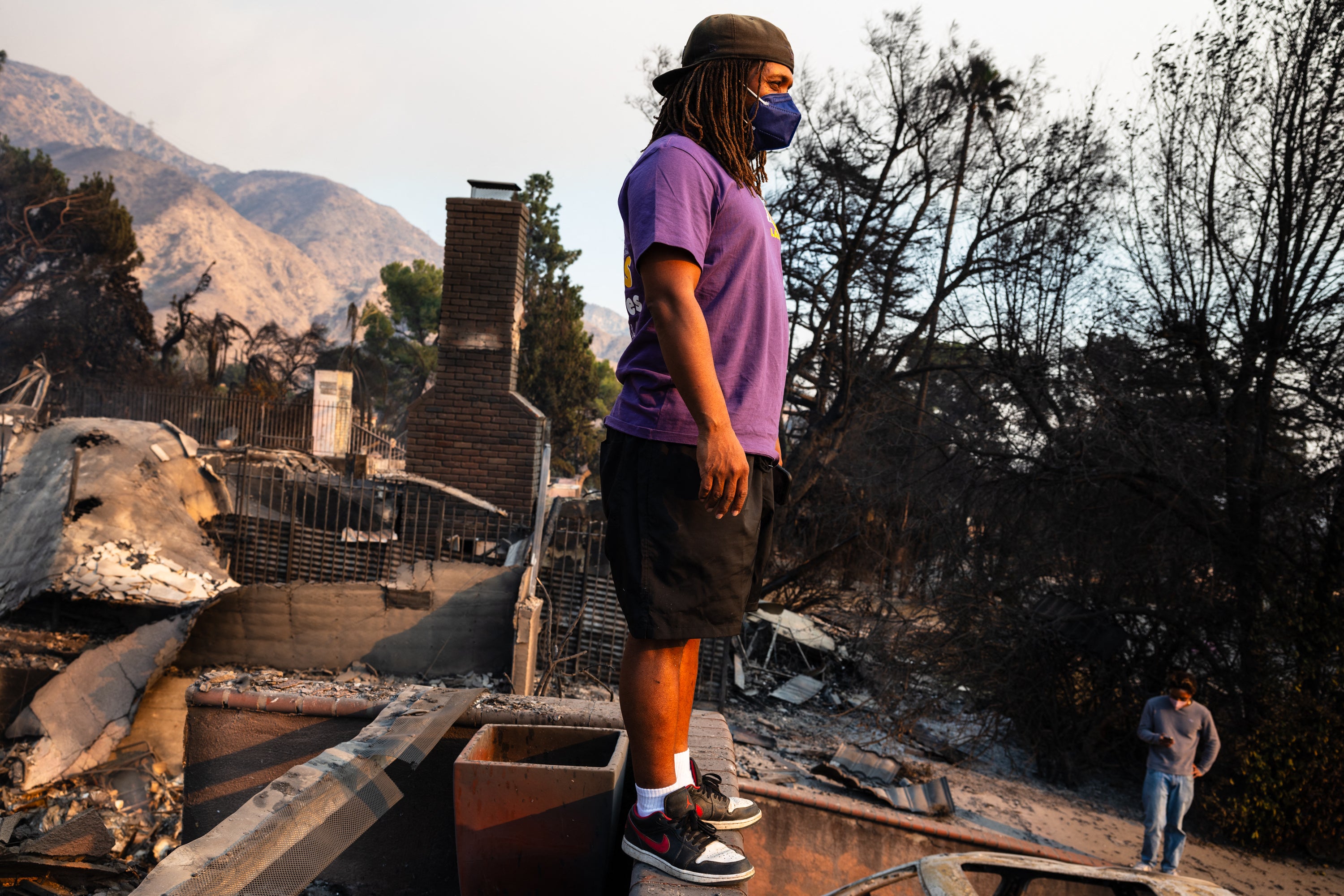
A young man looks out across the destruction from his family’s home burned in the Eaton Fire in Altadena, California, in January 2025. Black Americans are at a higher risk of developing dementia (AFP via Getty Images)
Black Americans are twice as likely to develop Alzheimer’s disease and other forms of dementia compared to their white counterparts, according to the Alzheimer’s Foundation.
Black Americans have a higher risk of premature death in these communities, the American Lung Association reports, and show higher rates of cognitive impairment likely because they are not seeking treatment until the disease advances, Alzheimers.gov explains.
“Many Black older adults tend to seek medical treatment when they encounter neuropsychiatric symptoms such as hallucinations, delusions and personality changes, but delay help for memory problems, which are often viewed as a normal part of aging,” the site says.
A longstanding modifiable harm
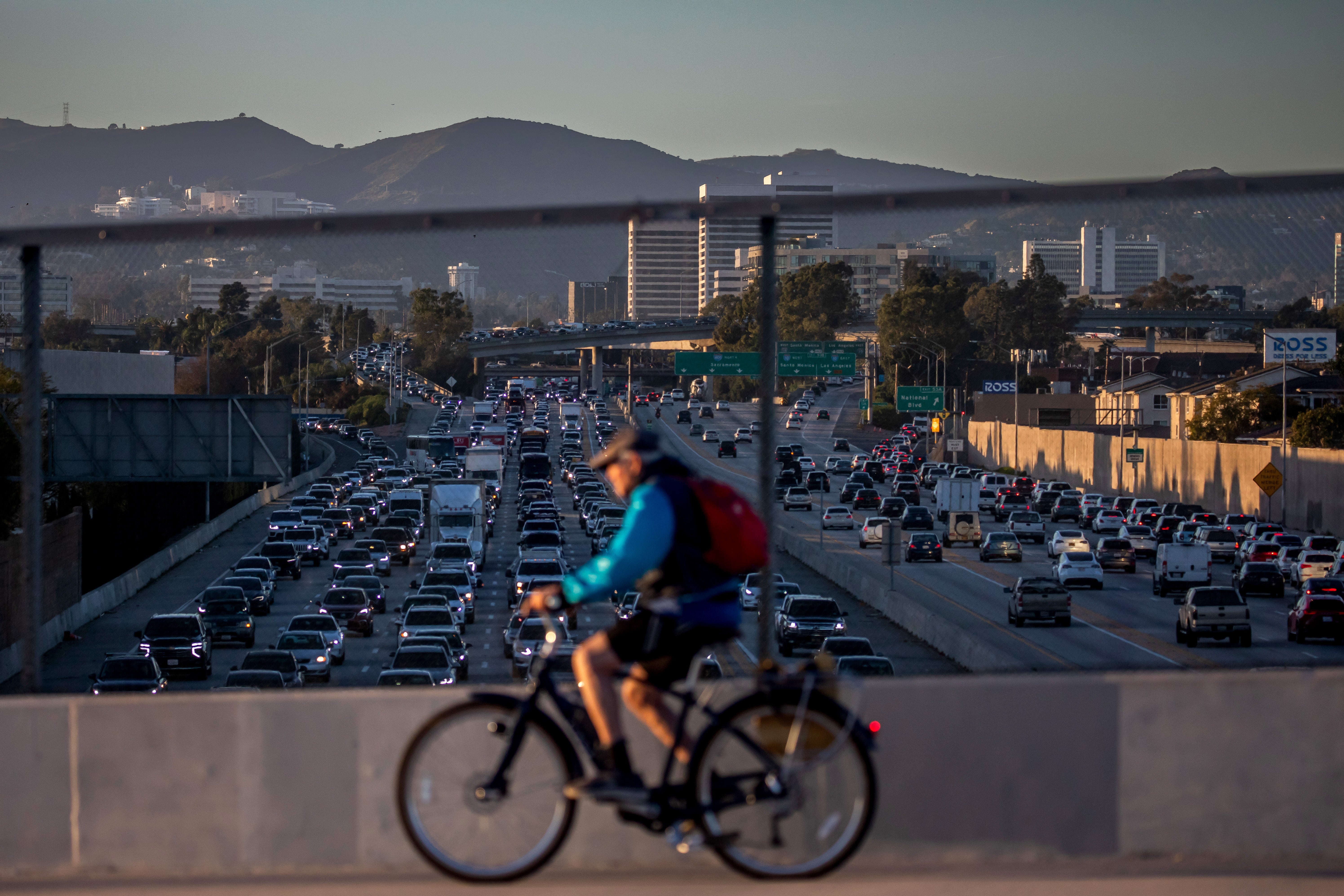
Exposure to PM2.5 particle pollution also raises the risk of cancer and cardiovascular disease. People can avoid exposure by exercising in areas away from busy roads (Getty Images)
The new research also builds on years of past research showing the possible harms of PM2.5 particulate matter, including an increased risk of premature death, cancer and cardiovascular disease.
A study from earlier this year found that air pollution raised the risk of amyloid plaques – clusters of proteins that are a hallmark of Alzheimer’s disease – in older Americans with cognitive impairment.
“Understanding environmental contributors to cognitive decline is critical for addressing disparities in dementia risk,” Rachel Whitmer, co-author of the new study and the co-director of the Alzheimer’s Disease Research Center at UC Davis Health said. “Air pollution is a modifiable exposure. That makes it a powerful target for prevention — both at the individual level and through public policy.”
People can reduce their risk of exposure by limiting outdoor activity on days with high air pollution levels, using air filters indoors, keeping windows closed and avoiding exercising near busy roads.
During this difficult period Konate was also carrying the burden of knowing his father was seriously ill.
“I didn’t know what to do. I didn’t know whether I should go home and stop playing, because the team needed me too,” he added.
“I didn’t know who to talk to about it, so I kept it all to myself. And this is the advice I’d give to everyone: when you’re feeling down or something’s going on, you need to talk to those around you.
“It can help you and do you good. I didn’t talk about it and kept it to myself.
Advertisement
“The doctors then told us he didn’t have long to live, but we didn’t know it would happen so quickly.”
Konate returned early from compassionate leave to help Liverpool avert an injury crisis at the end of January but the centre-back conceded that things were never quite right.
He made 51 appearances across the 2025-26 campaign, 49 as a starter, but was unable to consistently produce the best form he had displayed across his previous four seasons on Merseyside as Liverpool finished fifth in the Premier League.
“There was never a moment when I felt like I was on the mend,” he added.
“All of these tragic events happened so quickly and as soon as I felt like I was getting my head above water, something else happened.
“I had the support of all these fans, who are exceptional at Liverpool, my team-mates and especially my family but I also had to learn how to get back on my feet on my own because the team needed me more than ever and I know that my father would have wanted me to get back.”
If you have been affected by any of the issues raised in this story, information and support can be found at the BBC’s Action Line.
City of York Council data showed every part of the city where air quality is monitored showed nitrous oxide (NO2) emissions were below legal limits for the second year running.
Cllr Jenny Kent, the council’s Labour environment spokesperson, said the figures were something to celebrate and reflected a huge collective effort across the city to get emissions down.
Council public health lead Peter Roderick said meeting the targets was a significant step towards reducing the risk of respiratory, heart and brain conditions.
The comments follow monitoring data showed maximum yearly concentrations of NO2 were at their lowest level in York for 15 years.
Advertisement
RECOMMENDED READING:
It also comes as the council has received funding from the York and North Yorkshire Combined Authority to monitor air quality indoors in homes across York.
Council environmental protection lead Mike Southcombe said there was currently no information about indoor air quality which could be affected by appliances including gas cookers.
The official told a meeting on Tuesday, June 2 the project would monitor changes in air quality inside homes which have been retrofitted to improve energy efficiency.
Advertisement
Monitoring of air quality recorded the highest concentration of NO2 emissions near the Gillygate and Bootham junction, with a level of 29.9 micrograms per cubic metre (µg/m3).
National limits for average NO2 emissions across a year are 40µg/m3.
City of York Council’s Labour Environment Executive Member Cllr Jenny Kent at an air quality monitor in Holgate Road (Image: City of York Council)
The Gillygate and Bootham junction was followed by that of Holgate and Blossom Street where the second-highest maximum concentration of NO2 representative of long-term exposure in 2025 was recorded, 29µg/m3.
NO2 pollution fell year-on-year at every York monitoring station except at the Fishergate and Paragon Steet junction where it rose by 2.5 per cent.
Advertisement
York’s NO2 levels remained above the World Health Organisation (WHO) guidelines of 10µg/m3-a-year which is typical for much of the UK, according to the council.
Levels of particulate matter (PM10 and PM2.5) were at three-year highs but remained below the target mean of 10µg/m3.
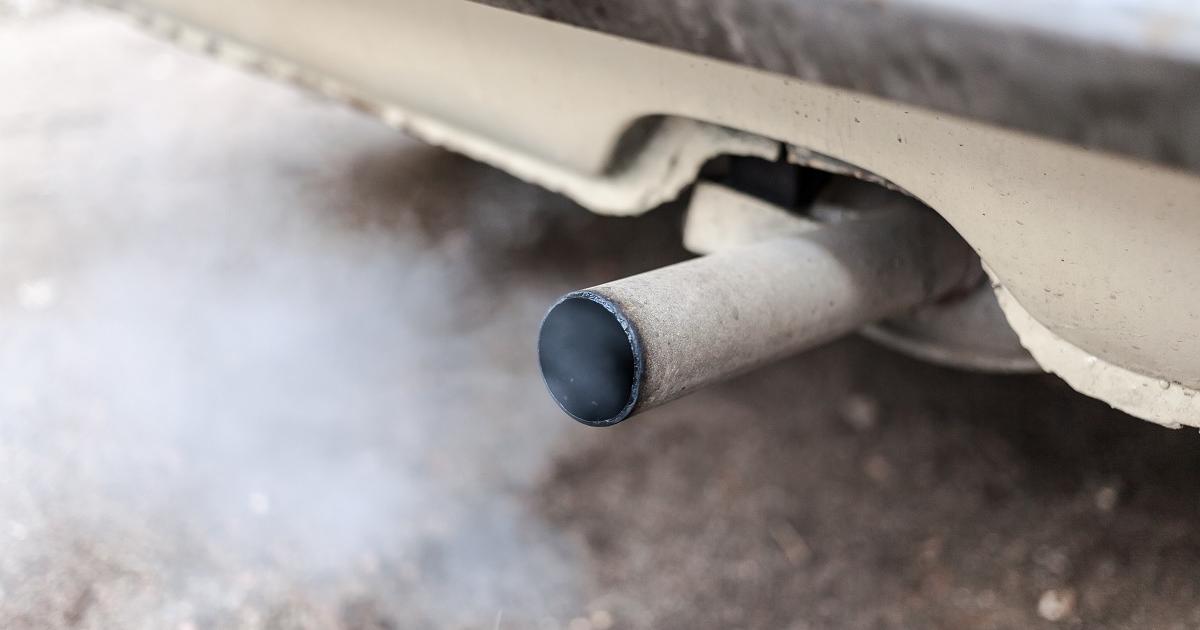
Vehicles are the single-largest source of NO2 emissions which tend to be more localised when monitored.
PM10 and PM2.5 particles can come from elsewhere, with Tuesday’s council decision session hearing they could travel from as far away as continental Europe and North Africa.
Advertisement
Environment Executive Member Cllr Kent said York should celebrate its emissions figures ahead of national Clean Air Day on Thursday, June 18.
She added the electrification of the council’s vehicle fleet, encouraging bus use and smoke control measures set to come into force this year were helping to cut emissions.
Cllr Kent said: “Having walked past the Holgate Road monitor for almost 30 years alongside generations of neighbours and children on their way to school and work, I am especially pleased to see that it’s showing the largest improvement of 9.6 per cent NO2 reduction between 2024 and 2025, on top of the reductions the previous year.
“Every act each of us takes- choosing walking, cycling and catching the bus rather than using the car, switching to electric cars, heat pumps and solar and away from gas cookers and fossil fuels will ultimately cost less, make us healthier, and our air cleaner for everyone.”
Advertisement
Public Health Director Mr Roderick said air pollution was invisible but its effects were very real.
The official said: “We are now working towards even more ambitious standards to give every resident the best possible chance of a long and healthy life.
“Every step we take is an investment in the city’s future wellbeing.”
A handful of Republicans joined Democrats on Wednesday and bucked President Donald Trump and House Speaker Mike Johnson to rein in the president’s power to further prosecute his war in Iran.
The House passed the War Powers Act resolution 215-208. The move came after four Republicans defected to the Democratic side.
House Republican Conference Chair Lisa McClain (R-MI) speaks during a press conference with Republican House Leadership, as U.S. House Speaker Mike Johnson (R-LA) and Representative Mary Miller (R-IL) stand, on Capitol Hill in Washington, D.C., U.S., June 3, 2026. REUTERS/Nathan Howard (Reuters)
Previous attempts to rein in the president on Iran have failed because they mostly fell along party lines. House Speaker Mike Johnson has said that “we’re not at war right now” in Iran. Even as the White House sent troops to the region, Johnson said that the United States did not have “boots on the ground.”
Two weeks ago, the House was set to vote on a War Powers Act resolution to rein in the president on Iran. But Republicans dragged out a vote on a separate piece of legislation for a women’s history museum as it attempted to prevent the passage of the resolution.
But as time has progressed, some Republicans have become restless. During the last War Powers Act resolution, three Republicans broke with House GOP leadership: Reps. Brian Fitzpatrick (R-Penn.), Tom Barrett (R-Mich.) and Thomas Massie (R-Ky.). On Wednesday, a fourth member joined them: Rep. Warren Davidson of Ohio.
“It’s a big deal, overdue,” Rep. Ro Khanna (D-Calif.), an ally of Massie’s who previously pushed other War Powers Act resolutions, told The Independent.
In addition, Rep. Jared Golden (D-Maine) flipped his vote after he had previously opposed War Powers Resolutions.
“I also think people should understand that this is, for me, a matter of separation of powers and the law,” he told The Independent. “We’re past 60 days now. If the president wants the authority to continue the operations, then I think he’s got to come to Congress and make the case.”
Rep. Thomas Massie (R-Ky.) lost his primary thanks partially to his criticism of President Donald Trump’s war in Iran. (Getty)
Republicans ultimately ran out of options to block the resolution. During the last War Powers vote, Rep. Frederica Wilson (D-Fla.) was out recovering from eye surgery and Rep. Teresa Leger Fernandez (D-N.M.) was not present. But Leger Fernandez attended and voted in the affirmative on Wednesday.
By contrast, Rep. Tom Kean (R-N.J.) has gone missing and has missed almost 90 days of work. Kean has said he has been dealing with health complications, but refused to disclose them.
Advertisement
At the same time, some Republicans returned who were not previously available. Rep. Julia Letlow (R-La.) returned since she is no longer campaigning in Louisiana’s Senate primary after she made the runoff election. It would not be enough though.
In the same respect, Trump’s decision to endorse Letlow to replace Sen. Bill Cassidy (R-La.) might facilitate the War Powers Act resolution’s passage in the Senate.
Before the Senate let out two weeks ago, Cassidy voted to allow the resolution to allow the resolution to proceed, which led to a 50-47 “yes” vote.
The vote is just the latest sign of Republicans becoming restless with a White House increasingly less focused on the cost of living and more dedicated toward the president’s personal vendettas, erecting Trump’s desired ballroom and tidying up various locations throughout Washington.
Advertisement
But some Republicans have become exasperated with it. Shortly after the vote, a handful of Republicans including Fitzpatrick, Rep. Joe Wilson (R-S.C.), Mike Lawler (R-N.Y.), Michael McCaul (R-Texas) and Max Miller (R-Ohio) voted with Democrats on a discharge petition to put in place sanctions on Russia and send more aid to Ukraine.
In addition, many Republicans in the Senate balked at the Trump administraiton’s announcement of an “anti-weaponization” fund through the Justice Department, through which allies of the president could be financially compensated if they claim the Biden or Obama administration unfairly targeted them.
Other Republicans criticized Trump’s nomination of Bill Pulte, who currently leads the Federal Housing Finance Agency, to become interim director of National Intelligence.



















































You must be logged in to post a comment Login