Connect with us

NewsBeat

Russell Watson reveals his pituitary gland has miraculously repaired itself in a ‘one in a million chance’ health development after battling two brain tumours

Published

on

Russell Watson has revealed his pituitary gland has miraculously repaired itself in a 'one in a million chance' health development after battling two brain tumours

Russell Watson has revealed his pituitary gland has miraculously repaired itself in a ‘one in a million chance’ health development after battling two brain tumours.

The opera singer, 59, was told the devastating news he had a brain tumour the size of two golf balls after noticing his peripheral vision had become blurry in 2006.

Following a trip to LA, he underwent a five-hour emergency operation to remove the eight-centimetre tumour at St George’s Hospital in Tooting – before overcoming a second diagnosis and surgery a year later.

The tumour, which sits at the base of his brain, caused significant damage to his pituitary gland, and for years he had been told the damage to the gland would not recover.

Advertisement

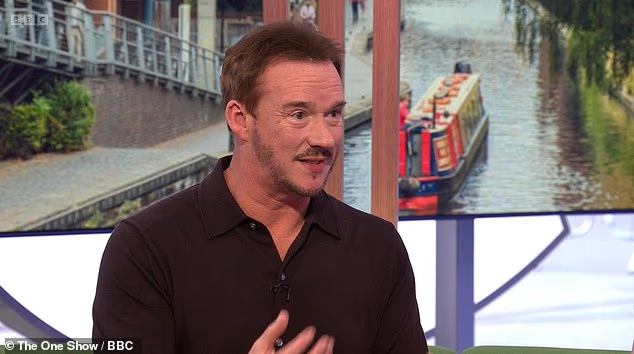
However, appearing on The One Show on Monday evening, Russell was back on the famous couch to share some ‘brilliant news’ to hosts Alex Jones and Roman Kemp.

He said: ‘Basically, I have to take steroids to stay alive, so I did a bit of research, rang my endocrinologist, and told them I was really struggling with keeping weight off, and is there a test I can do to find out whether I am taking too much of the steroids.

Russell Watson has revealed his pituitary gland has miraculously repaired itself in a ‘one in a million chance’ health development after battling two brain tumours

Advertisement
The opera singer, 59, was told the devastating news he had a brain tumour the size of two golf balls after noticing his peripheral vision had become blurry in 2006 (pictured in 2007)

The opera singer, 59, was told the devastating news he had a brain tumour the size of two golf balls after noticing his peripheral vision had become blurry in 2006 (pictured in 2007)

‘In a nutshell, she rang me up and said that this is like a one-in-a-million chance, but you have started to produce your own cortisol, which is the body’s stress hormones.’

Continuing, Russell said: ‘So I’ve cut my steroids in half, I went back for another test this week, and I have been told I can cut those in half… it may end up, at the end of it, that I might not need to take the steroids anymore.’

The singer then added: ‘I am really pleased. Some good health news; it’s about time!’

Advertisement

Last year, Russell revealed he briefly considered suicide as he struggled with the agonising pain of a brain tumour.

The tenor said he contemplated jumping from a hotel balcony and admitted it was only the thought of his two young daughters being left without a dad that pulled him back from the brink.

Speaking to Kaye Adams on her How To Be 60 podcast, the singer – the UK’s best-selling classical artist of all time – said: ‘My whole world came crashing down and the pain got worse – everything was exacerbated with the news of what he’d just told me.

‘I was staying in a hotel in Beverly Hills and I was on the eighth floor and it was the first time I’d ever felt this way.

Advertisement

‘I can’t explain the pain – I’ve never felt anything like it before or since – it was like a dagger being pressed into the centre of my head and twisted.’

Appearing on The One Show on Monday evening, Russell was back on the famous couch to share some 'brilliant news' to hosts Alex Jones and Roman Kemp

Appearing on The One Show on Monday evening, Russell was back on the famous couch to share some ‘brilliant news’ to hosts Alex Jones and Roman Kemp

Russell described the recovery of his pituitary function as rare, given that such recovery was not thought of as a possibility

Russell described the recovery of his pituitary function as rare, given that such recovery was not thought of as a possibility

He added: ‘It was excruciating and for one moment I stood on my hotel balcony. I literally just thought: “f**k this, I’ve had enough.” And I felt like jumping.

Advertisement

‘And then the thought of the children entered my head and they were little girls then – they’re not going to manage without me. Back in the room. Went and lay on the bed, rinsed my face with cold water and took the pain on.’

Russell has openly spoken about his brain tumour battle over the years.

His 2024 book Encore: My journey back to centre stage, talks about his return to the limelight following the terrifying battle. 

In the years following his diagnosis, he battled crippling treatment, lifesaving operations, HRT therapy and mental health struggles – before being told he would likely never sing again.

Advertisement

He said: ‘My diagnosis changed everything – all I could think about was how my wife and daughters would survive without me. 

‘It was difficult to see beyond my illness at the time, but to be alive and healthy 15 years later is something I’m eternally grateful for. 

‘Often when we are writing wills we think about those closest to us. But a will, much like a piece of music, has the power to touch the lives of so many more. 

‘I want others to receive the kind of life-saving treatment that I did, to give that gift of time for which I’m so grateful every day.’

Advertisement

And in 2018, he spoke candidly about his harrowing experience, admitting he has to take a ‘cocktail of drugs’ every day to keep himself alive.

The performer admitted he used to ‘panic he would die in his sleep’, after doctors discovered a tumour had returned on his pituitary gland back in 2007.

‘Initially it was a minefield, because I was taking this whole cocktail of drugs to stay alive,’ he told Best Magazine. 

‘It used to get me down, I would get very depressed. 

Advertisement

‘I’d go to bed at night but wouldn’t be able to get to sleep – I’d panic because I thought I would die if I fell asleep.’

The previous year, Russell told This Morning that while he was in the midst of conquering the second tumour, he believed he’d died.

He said: ‘When I came round after the second op, I remember my eyes flickering open and I saw two white shadows and thought, I did make it to heaven that’s nice. 

‘Then I realised it was the kids and there were tears streaming down my face.’ 

Advertisement

For confidential support, call Samaritans on 116 123, visit samaritans.org or visit https://www.thecalmzone.net/get-support 

WHAT IS A BENIGN BRAIN TUMOUR? AND HOW CAN YOU LIVE WITH IT?

A benign brain tumour is a mass of non-cancerous cells that grows relatively slowly.

Non-cancerous brain tumours tend to stay in one place and do not spread.

Advertisement

If the tumour can be completely removed in one surgery, it will not usually return.

If not, there is a risk it can grow back. 

Although brain tumours grow slowly, there is limited space inside the skull and the brain occupies most of it. 

Overtime, the mass can grow into the spinal cord or press on surrounding nerves.

Advertisement

Treatment may not be necessary if the tumour is growing at a controlled pace.

Surgery can also damage the nerves that surround the tumour, as well as putting patients at risk of stroke and swelling when the mass is removed.

Controlled doses of radiation, such as gamma knife treatment, can target a hard-to-reach tumour, without harming surrounding tissue. 

<!- – ad: https://mads.dailymail.co.uk/v8/de/tvshowbiz/none/article/other/mpu_factbox.html?id=mpu_factbox_1 – ->

Advertisement

Source link

Continue Reading
Click to comment

You must be logged in to post a comment Login

Leave a Reply

NewsBeat

Infrastructure Minister plans Belfast pedestrianisation consultation after Fleadh

Published

on

Belfast Live

Liz Kimmins said the week-long festival “clearly demonstrated the benefits of pedestrianisation”.

Stormont’s Infrastructure Minister has committed to unveiling plans for more pedestrianisation of Belfast city centre in wake of the success of the Fleadh.

Sinn Fein minister Liz Kimmins said the week-long festival “clearly demonstrated the benefits of pedestrianisation”.

Advertisement

A section around City Hall was closed to traffic last week during the first Fleadh Cheoil na hÉireann, which saw more than 1.5 million visit the Northern Ireland capital.

I went to every day of the Fleadh and the lasting impact will be felt for years

Footfall cameras across the city centre put attendance at 1,653,999 from Sunday August 2 to Sunday August 9, with Saturday recording the busiest day of the year to date with 289,560 visitors.

The event has been described by the chief executive of Visit Belfast Gerry Lennon as a “watershed moment” for the city, which “placed it firmly on the global stage in spectacular fashion”.

Ms Kimmins said now is the “perfect opportunity” for the public to weigh in on whether increased pedestrianisation of the city will take place moving forward.

Advertisement

“When I came into office, I set out my department’s seven foundations for a better future,” she said.

“These included creating cleaner, greener, town centres through a person-centred approach to all we do over the next decade.

“The huge success of the Fleadh has just shown us exactly what that can look like and how we can build on this success for next year, with an even bigger event.

“The measures introduced for Fleadh Cheoil na hÉireann clearly demonstrated the benefits of pedestrianisation and has led to calls for a more permanent solution.

Advertisement

“This has shown how we can make Belfast a nicer place for people and their families to live, to work and to visit.

My department has already been working diligently behind the scenes to prepare a new transport plan for the Belfast area.

“In the next few weeks, I will bring forward a consultation which includes proposals for the expansion of pedestrianisation in Belfast city centre.”

Ms Kimmins added: “It is my ambition to reshape our town and city centres to put people first, creating more attractive, accessible, and vibrant places while reducing car dependency and encouraging sustainable travel choices.

Advertisement

“I want to hear everyone’s views on these proposals to ensure that everything we do is accessible for all.”

Sinn Fein MP for North Belfast, John Finucane said the the Fleadh “showed us what Belfast can be when we put people first”.

“For a week, our city centre was transformed into a vibrant, welcoming space where families, visitors and communities could come together and enjoy Belfast without being dominated by traffic.”

He added: “The success of the Fleadh has shown that people want this change.

Advertisement

“The public have seen what is possible when our city centre is designed around people rather than cars.”

For all the latest news, visit the Belfast Live homepage here and sign up to our daily newsletter here.

Source link

Advertisement
Continue Reading

NewsBeat

Why California is failing to build the homes it needs

Published

on

Why California is failing to build the homes it needs

Once every eight years, housing regulators in California issue local municipalities an obligatory task: construct a detailed proposal to build new residential properties.

The administration of Gov. Gavin Newsom sets specific goals for local governments across four separate tiers of affordability. Combined, these targets represent state officials’ projections of how many homes are required to absorb projected population growth while addressing a multi-decade shortage of affordable places to live.

Because these quotas are distributed on a rolling schedule, a significant portion of California—including the whole of Southern California—passed its midway milestone this summer.

So how are these local jurisdictions faring when evaluated halfway through the process? The results for California are far from ideal. Evaluated on an academic grading scale, municipalities across the state would receive predominantly low marks.

Advertisement
The state’s total planning target adds up to nearly 2.5 million units over eight years, a reduction of the even more ambitious 3.5 million target Newsom set for his administration during his 2017 election
The state’s total planning target adds up to nearly 2.5 million units over eight years, a reduction of the even more ambitious 3.5 million target Newsom set for his administration during his 2017 election (Heather Diehl/Getty Images)

Data provided by local governments to the state housing department reveals that under a third of cities and counties are currently on pace to authorize enough “above moderate” units, the standard designation for market-rate housing.

The progress report for more affordable types of housing is even bleaker. Only 32 jurisdictions — less than 6% — are on track to hit their “very low” targets. That refers to housing within financial reach of anyone earning less than half the typical local income.

After years of nudging, political trolling and litigating, most cities and counties now have state-approved plans in place. But as the production numbers show, it’s one thing to plan and another to build. Almost nowhere in the state is actually seeing the new construction necessary “to meet the housing needs of all Californians,” as housing regulators have described these targets.

Only five jurisdictions in the entire state are permitting at a pace to hit all four income targets. Four are the lightly populated unincorporated bits of small, mostly rural counties: Plumas, Napa, Yolo and Mono. The fifth is Placerville, a town of roughly 11,000 people in the Sierra foothills east of Sacramento.

To be “on track,” a city or county needs to issue permits at a clip that, if sustained, would allow it to hit its state targets by the end of its planning cycle. State housing regulators told the city of Irvine in Orange County, for example, to plan for 8,671 market-rate units by 2030. Now halfway there, the city has issued more than 6,000, making it one of the minority of cities to be on pace to reach its target for above-moderate housing.

Advertisement

But for more affordable digs, Irvine, like most California cities, is far behind. The city has permitted just 9% of the very low-income housing needed to reach its target by the end of the decade. For the next most affordable category, which refers to units priced for those earning up to 80% of the regional median, it’s at a mere 3%.

What’s the housing hold up?

For anyone who has been monitoring the pace of new residential development in California over the last half century, the disconnect between housing planned and housing permitted won’t come as a surprise. The state’s total planning target adds up to nearly 2.5 million units over eight years, a reduction of the even more ambitious 3.5 million target Newsom set for his administration during his 2017 election. That 2.5 million figure works out to 312,500 new homes per year. Even during the state’s boomingest boom years in the early 1960s and mid-1980s, construction figures never reached such lofty heights.

This decade, despite a blizzard of state legislation and policy changes aimed at boosting the construction of new homes, the number of new homes built annually is still just north of 100,000.

Advertisement

Critics of the state’s planning process have long stressed that California’s targets are unrealistic and that local governments can only do so much.

“Cities cannot require developers to develop and cities don’t build housing,” said Jason Rhine, a lobbyist with the League of California Cities. You can lead a developer to a rezoned plot of land, in other words, but you can’t make them build.

Critics of the state’s planning process have long stressed that California’s targets are unrealistic and that local governments can only do so much
Critics of the state’s planning process have long stressed that California’s targets are unrealistic and that local governments can only do so much (Justin Sullivan/Getty Images)

Pro-development advocates counter that the uninspiring production numbers suggest that cities still aren’t doing enough to welcome more housing.

“Cities can argue that they don’t directly control production, but they do control fees, zoning and permitting,” said Laura Foote, executive director of YIMBY Action. The housing needs allocation process “is only as good as we have the political will to actually hold cities accountable.”

Foote directed some of the blame at state housing regulators for failing to compel cities to adopt more development-friendly policies.

Advertisement

In a written statement, housing department spokesperson Jennifer Hanson said regulators are “actively monitoring and enforcing” the commitments each jurisdiction has made in its housing plans. She also pointed to a couple of recent laws exempting many urban housing developments from environmental litigation and requiring local governments to allow for taller buildings near major public transportation stops. Both have already been used to “advance approved projects representing thousands of proposed homes,” she said.

There are many reasons that developers may or may not choose to build in a particular location. Some are in the power of local and state governments, like zoning and building codes, permitting timelines and fees. But many are not, said Hanson.

“Whether a project moves forward depends on interest rates, construction and land costs, access to capital, insurance and expected rents or sale prices,” she said.

Affordable housing construction faces an additional hurdle: A lack of public money. With very few exceptions, building homes that are affordable to those making below average incomes in California requires public subsidies, philanthropic capital or other lenders and investors willing to take a loss. Taxpayer support provided by the state has been in short supply after a voter-approved bond from 2018 that provided funding for California’s signature affordable development subsidy ran dry. That explains why the affordable production numbers are so much lower.

Advertisement
Affordable developers and other housing advocates are hoping voters will back an $11.25 billion state bond in November to replenish the coffers
Affordable developers and other housing advocates are hoping voters will back an $11.25 billion state bond in November to replenish the coffers (Frederic J. Brown / AFP via Getty Images)

Affordable developers and other housing advocates are hoping voters will back an $11.25 billion state bond in November to replenish the coffers.

Meanwhile, “moderate” income housing is especially tough to build, facing the financial worst of both worlds. It often doesn’t qualify for affordable subsidy programs that prioritize projects serving people further down the income ladder. But rents affordable to those earning median incomes are often too low for unsubsidized developers hoping to turn a profit.

An escape valve

The state may force local governments to lay the groundwork for new development — identifying potential sites, rezoning to allow for denser housing, changing local laws that make construction more economically feasible. But historically, local governments haven’t faced any consequences if nothing actually gets built.

That changed in 2017, when state lawmakers passed a landmark housing bill aimed at boosting new housing production where it was most needed. In jurisdictions that are halfway through their planning process but have yet to permit at least half their housing targets for above-moderate, low- and very low-income housing (housing affordable to a “moderate” income level isn’t included), the law requires local governments to fast track most apartment and condo projects. In exchange, developers have to set aside a certain number of affordable units and pay their workers more.

Advertisement

Of the 212 Southern California cities and counties that crossed the halfway point this year, all but four failed to hit those numbers and are now subject to the streamlining law.

But if history is any guide, that alone isn’t likely to trigger a building boom.

Private developers have insisted that the affordability requirements and higher wage standards written into the law make projects infeasible everywhere but in the highest rent neighborhoods. Since 2018, the law has been used to green light 27,961 units, according to the state’s housing department. That’s a significant sum, but it’s far from enough to close the gap.

Source link

Advertisement
Continue Reading

NewsBeat

what is the best way to grow food in a changing climate?

Published

on

what is the
best way to grow food in a changing climate?

When most people picture British farming, they probably imagine fields of wheat,
potatoes or vegetables stretching across the countryside. But some of the food on supermarket shelves is produced in environments that look very different.

A tomato might spend its entire life inside a glasshouse, growing more than 20 metres tall with water and nutrients delivered directly to its roots. A lettuce could be grown inside a building, stacked on shelves under LED lights without ever seeing natural sunlight.

These systems – open fields, greenhouses and vertical farms – are sometimes presented as competing visions for the future of food. But they operate at completely different scales and, importantly, offer very different levels of control over the environment.

This matters as the climate changes. Moving crops indoors can protect them from
drought, heat and unpredictable weather. But that control comes at a cost.
The UK has around 17 million hectares of utilised agricultural land, with approximately 6.1 million hectares classified as croppable. Around 3 million hectares are used for cereals alone.

Advertisement

By comparison, the UK’s horticultural crops (ranging from tomatoes and peppers to cucumbers and strawberries) occupy only around 147,000 hectares, and glasshouses account for a small fraction of that (approximately 850 hectares).

Vertical farming is smaller still, and not separately recorded in national agricultural land-use statistics. I estimate that these farms only occupy 0.0001% of the UK’s total agricultural land (around 10-30 hectares).

Yet the amount of land occupied by a farming system does not necessarily reflect its importance to our food supply.

Fields provide scale, but are more vulnerable to the climate. If you eat a slice of bread, the wheat used to make it was almost certainly grown outdoors. The same applies to barley, oilseed rape, potatoes and many vegetables.

Advertisement

The great advantage of open-field agriculture is scale. Sunlight and rainfall provide two of the most important inputs for plant growth without farmers having to manufacture either of them. Growing millions of tonnes of wheat inside illuminated buildings would make little economic or environmental sense.

The trade-off is control. Farmers cannot decide when it rains or how hot a field
becomes. This becomes particularly important during drought. Irrigation can
compensate for a lack of rainfall, particularly for key crops such as potatoes and many other vegetables, but access to water differs considerably between farms.

A hosepipe ban does not automatically mean that farmers must stop irrigating. Domestic restrictions are different from the rules governing agricultural abstraction from rivers and groundwater.

But during prolonged drought, abstraction can also be restricted to protect water supplies and the environment. Agriculture therefore faces a difficult problem: crops often require the most irrigation precisely when water resources are under the greatest pressure.

Advertisement

Greenhouses offer control, but require a lot of resources. Walk from a field into a modern tomato greenhouse and the level of environmental control changes dramatically.

Plants may grow without soil while computers regulate irrigation, nutrients, ventilation, humidity and temperature. Modern systems can deliver water directly to the root zone and collect drainage water to be treated and reused. This means they can be up to 90% more efficient in using water.

Many crops are grown inside huge greenhouses where this is greater protection from extreme weather.
Noi Pattanan/Shutterstock

That makes greenhouse production potentially very water-efficient. It also allows large quantities of crops such as tomatoes, cucumbers and peppers to be produced from a relatively small area. But water efficiency is not the same as water security.

Advertisement

The Netherlands, home to one of the world’s most advanced greenhouse industries,
illustrates this problem. Recent dry conditions have increased pressure on surface and groundwater supplies, affecting the availability of water for agriculture, including greenhouse horticulture.

A greenhouse can recycle water extremely efficiently, but it still needs an original source. Capturing rainfall from greenhouse roofs, increasing water storage and recycling irrigation water will therefore become increasingly important as drought risk increases.

Temperature creates another challenge. Greenhouses provide protection from the
outside environment, but they are not isolated from it. If tomatoes grow best within a particular temperature range, maintaining that range becomes harder as outdoor conditions become more extreme. When it becomes hotter outside, growers may need more ventilation, shading or cooling. During cold periods, additional heating is required.

This means that the way we operate greenhouses today may not be how we operate
them in the future. Climate change could require greater intervention simply to
maintain the same growing conditions. And intervention costs money.

Advertisement

Vertical farms sit at the other end of this spectrum of control. Crops such as lettuce, herbs and leafy vegetables can be grown on multiple stacked layers inside buildings – even several kilometres underground – with light, water, nutrients, humidity and temperature all tightly controlled.

rows of lettuce growing

Crops such as lettuce can be grown in vertical farms at scale.
Sergey_Bogomyako/Shutterstock

They can use remarkably little land and recycle much of their water. They are also largely protected from drought, storms and other extreme weather. But the greater the control, the greater the dependence on infrastructure and energy.

Even vertical farms are not completely independent of outdoor temperatures. LEDs and other equipment generate heat that needs to be removed. Maintaining an optimal indoor climate can require more energy as external temperatures move further away from the conditions required by the crop.


À lire aussi :
Four myths about vertical farming debunked by an expert

Advertisement

This exposes a fundamental trade-off in controlled-environment agriculture. The more we separate food production from the natural environment, the more energy and infrastructure we need to replace the services that nature previously provided for free.

The economics can become difficult. Vertical farming has demonstrated that crops can be produced using very little land and water, but the sector has also experienced numerous business failures. High energy requirements, substantial infrastructure costs and narrow profit margins have made it difficult for some technically impressive systems to become financially sustainable.

Resilience has a price

There is no simple answer to whether fields, greenhouses or vertical farms are the most resilient way to produce food.

Fields require comparatively little infrastructure but are highly exposed to weather. Greenhouses provide greater control but require investment, energy and secure water supplies. Vertical farms offer even more control, but with greater dependence on electricity and expensive infrastructure.

Advertisement

Climate change makes this trade-off increasingly important. The future will require smarter, rather than simply more controlled, agriculture: better water management in fields, greater rainwater capture and storage in greenhouses, more efficient heating and cooling, and increased use of renewable energy and waste heat from other industries.

We will need fields, greenhouses and vertical farms – for different crops in different places. The challenge is finding the right balance between exposure to a changing climate, and the increasing cost of controlling it.

Source link

Advertisement
Continue Reading

NewsBeat

2026 is on course to become the hottest summer on record | News UK

Published

on

2026 is on course to become the hottest summer on record | News UK
Parts of the UK are facing their fifth round of intense temperatures (Picture: EPA)

The UK is on course for its hottest summer on record, with only average conditions needed for the rest of August to beat the record set just last year, the Met Office said.

Some parts of the country are facing a fifth round of intense temperatures, with amber ‘extreme heat’ warnings in place for parts of England on Thursday when temperatures could hit 38C in some spots.

Nearly three-Quarters of England and the whole of Wales are in drought, after a record dry July and dry start to August have combined with high temperatures to put pressure on water resources for households, agriculture and the environment.

To equal the 16.12C in 2025, the UK’s warmest summer on record, the rest of August would only need to be 0.21C below the long-term average.

Advertisement

Any warmer than this would establish a new record for the country, the Met Office said.

Sign up for all of the latest stories

Start your day informed with Metro’s News Updates newsletter or get Breaking News alerts the moment it happens.

Advertisement
An exposed water inlet pipe for a stream at a dried up pond, after Britain's Environment Agency declared over seventy per cent of England to be in drought, with the fifth heatwave of the year expected this week, in Richmond Park, London, Britain, August 11, 2026. REUTERS/Toby Melville
Ponds, lakes, rivers and creeks have dried up (Picture: Reuters)

And for England and Wales, which have seen temperatures more than 2C above average so far this summer, it is even more likely that June to August 2026 will be record-breaking.

And in a summer that has been marked by extreme weather, temperatures are to spike again this week.

The Met Office has issued an amber warning for extreme heat for London and parts of the South East, East Midlands, East of England, West Midlands and South Yorkshire from 9am to midnight on Thursday.

Met Office chief forecaster Chris Bulmer said: ‘While the peak heat will be more short-lived than recent heatwaves, temperatures widely into the mid-30s Celsius on Thursday bring the potential for impacts for some, which is why a Met Office warning has been issued.

‘High pressure is now becoming dominant and temperatures will build day by day. Southerly and south-easterly winds will also tap into the hot conditions over Europe, which helps develop this further notable heat in what has been a hot and dry summer so far for many in the south of the UK.’

Advertisement

Amber health heat alerts are already in place for most of England including the Midlands, South East, North West and South West, and a yellow alert is in force for the North East from Tuesday morning until Friday evening.

Officials have urged people to take simple steps to stay safe, such as drinking plenty of water, checking on vulnerable friends and family, and avoiding the sun at the hottest part of the day.

Cyclists ride past a dried up stream and pond, after Britain's Environment Agency declared over seventy per cent of England to be in drought, with the fifth heatwave of the year expected this week, in Richmond Park, London, Britain, August 11, 2026. REUTERS/Toby Melville
Most of the UK’s landscape is a dead colour (Picture: Reuters)

The UK is battling with the growing spectre of worsening extreme weather fuelled by climate change, which is mostly driven by burning fossil fuels for power plants, vehicles, home heating and industry.

Record-breaking heatwaves in May and June led to the deaths of more than 2,800 people, while parts of the country were hit with further heatwaves last month as England and Wales endured their driest July since records began in 1836.

The Environment Agency said 71.3% of England is now experiencing ‘flash drought’, as a dry start to August followed the country’s driest July on record.

Advertisement

Flash drought is one which develops very quickly because of a combination of very low rainfall and high temperatures.

Fire chiefs have warned of sustained fire risk in the hot, dry conditions, with July the busiest on record for wildfires and firefighters responding to 185 wildfires in the first 10 days of August.

Get in touch with our news team by emailing us at webnews@metro.co.uk.

For more stories like this, check our news page.

Advertisement

Source link

Advertisement
Continue Reading

NewsBeat

Angelina Jolie’s reaction to ex Brad Pitt falling off the wagon ‘revealed’… 10 years after star’s alleged drunken plane attack

Published

on

Angelina Jolie was 'not surprised' that Brad Pitt has broken his sobriety, after the actor stunned fans worldwide by revealing he was off the wagon after seven years. Above in 2015

Angelina Jolie was ‘not surprised’ that Brad Pitt has broken his sobriety, per an insider, after the actor stunned fans worldwide by revealing he was off the wagon after seven years.

The actor, 62, first went sober after splitting from Jolie, 51, amid accusations that he poured booze on her and their children during a volatile flight on board a private jet in 2016.  He denied the claims.

The winery owner subsequently announced he had turned his back on drink and had been working through inner demons at Alcoholics Anonymous meetings – but revealed in an Esquire UK interview on Monday that he had ‘gotten back off the wagon.’

The former Hollywood power couple, whose acrimonious divorce took eight years to settle, have been besieged by drama ever since, with many of Pitt’s children publicly siding with Jolie and choosing to drop his last name.

Advertisement

A source close to Jolie claimed to Rob Shuter’s Naughty But Nice column after Pitt’s booze revelation: ‘Angelina is not surprised. She tried to warn people. She knew this was always a possibility.’

They claimed that Jolie had ‘long believed that sobriety did not necessarily mean the underlying problems [Brad had] had disappeared.

Angelina Jolie was ‘not surprised’ that Brad Pitt has broken his sobriety, after the actor stunned fans worldwide by revealing he was off the wagon after seven years. Above in 2015

Advertisement
The actor first went sober after splitting from Jolie amid accusations that he poured booze on her and their children during a volatile flight on board a private jet in 2016. Above, at the Cannes Film Festival in 2009

The actor first went sober after splitting from Jolie amid accusations that he poured booze on her and their children during a volatile flight on board a private jet in 2016. Above, at the Cannes Film Festival in 2009

‘She doesn’t believe Brad has fundamentally changed. She believes Brad is who Brad is, and no amount of sobriety or reinvention changes that,’ the insider added.

The Daily Mail has contacted representatives for Jolie and Pitt for comment and has yet to hear back.

In the wide-ranging interview with Esquire, the actor admitted he had gotten ‘back off the wagon’ after the interviewer noticed the star had offered him a glass of wine. 

Advertisement

When asked if the beverage was for guests, Pitt responded: ‘No, I got – I was sober for seven years. And then I got back off the wagon,’ he said, offering a little laugh.

‘In a more restrained manner. I got overconfident a couple times, went, “Yep, nope, not good for me.” Not in big quantities.’

Pitt clarified he was now able to ‘have a few’ glasses of wine but is unable to indulge any further.  

‘Yeah. Well… I can have a few. But I can’t have a lot. I have to be professional about it,’ Pitt said. 

Advertisement

‘He likes mornings now anyway, and you can miss a lovely morning when you drink too much the night before, and it’s just not as interesting,’ the profile noted of Pitt. ‘Mornings are interesting, and he doesn’t want any more of them to go by unseen.’

The revelation that Pitt has started drinking again comes amid his painful family drama. 

The actor, who is now dating jewelry executive Ines de Ramon, has been embroiled in a bitter legal battle with his ex, Angelina Jolie, for years, and the split has seemingly exposed his fractured relationship with their children.

Join the discussion

Advertisement

Do you think moderation is realistic after long-term sobriety?

Pitt is drinking again but at a reduced rate. Pictured at the SAG Awards in 2009

Pitt is drinking again but at a reduced rate. Pictured at the SAG Awards in 2009

Pitt has had a complicated relationship with alcohol that is alleged to have been the source of issues he has suffered with his family

Pitt has had a complicated relationship with alcohol that is alleged to have been the source of issues he has suffered with his family

Last month, their daughter Vivienne, 18, followed in the footsteps of her three older siblings and filed a petition in Los Angeles County Superior Court to drop Pitt from her name.

Advertisement

The reason behind the teenager’s name change is listed as ‘personal,’ according to court documents obtained by the Daily Mail. An official court hearing is scheduled for November 2.

Their daughter Zahara and son Maddox also published notices revealing their intentions to drop Pitt from their last names.

The advertisements were both published in the Los Angeles Daily Journal throughout June and July.

Last year, Shiloh, who was born Shiloh Nouvel Jolie-Pitt, legally changed her name to Shiloh Jolie. Aside from Pax, Vivienne’s twin brother Knox is the only other sibling who has yet to formally drop the actor’s surname.

Advertisement

Pitt has had a complicated relationship with alcohol that is alleged to have been the source of issues he has suffered with his family. 

His marriage with Jolie ended after a volatile plane incident in 2016 in which the actor was accused of being physically abusive towards both his wife and two of their children. 

In a 2022 court filing, Jolie alleged Pitt had been drinking during the flight and poured alcohol on herself and the children, according to CNN.

‘At one point, he poured beer on Jolie; at another, he poured beer and red wine on the children.’

Advertisement

Pitt denied the allegations and he was never charged in connection with the alleged incident following an FBI investigation.  

A source close to Pitt told CNN at the time the court filing was released: ‘All parties have had this information for nearly six years and was used in previous legal proceedings. There is nothing new here and serves no purpose other than being a media stunt meant to inflict pain.’ 

A year after his split from Jolie, self-proclaimed ‘professional’ drinker Pitt was sober.

Pitt and Jolie's family drama has come to light since their split. Pitt is pictured with Maddox in 2010

Pitt and Jolie’s family drama has come to light since their split. Pitt is pictured with Maddox in 2010

Advertisement
Zahara and Maddox have both taken steps to legally drop 'Pitt' from their name; Pax, Jolie, Zahara and Maddox pictured in 2024

Zahara and Maddox have both taken steps to legally drop ‘Pitt’ from their name; Pax, Jolie, Zahara and Maddox pictured in 2024

Pitt said he was now drinking in a more 'restrained manner' during his interview with Esquire

Pitt said he was now drinking in a more ‘restrained manner’ during his interview with Esquire

‘I enjoy wine very, very much, but I just ran it to the ground,’ he told GQ in 2017. ‘I had to step away for a minute. And truthfully I could drink a Russian under the table with his own vodka. I was a professional. I was good.’ 

For a year and a half, Pitt was in Alcoholics Anonymous, confiding in other men about the ‘ugly sides’ of himself. 

Advertisement

‘You had all these men sitting around being open and honest in a way I have never heard,’ he told The New York Times. ‘It was this safe space where there was little judgment, and therefore little judgment of yourself.’

‘It was actually really freeing just to expose the ugly sides of yourself,’ he said. ‘There’s great value in that.’

Pitt’s relationship with alcohol went beyond personal and into business.

During their marriage, Pitt and Jolie bought the French winery Chateau Miraval, a property that is now at the center of their legal ordeal.

Advertisement

Jolie sold her stake in it in part because of Pitt’s ‘acknowledged problem of alcohol abuse on their family.’

Pitt has been dating jewelry executive Ines de Ramon since 2022. They're seen together  in July

Pitt has been dating jewelry executive Ines de Ramon since 2022. They’re seen together  in July

During their marriage, Pitt and Jolie bought the French winery Chateau Miraval, pictured in 2023. The exes are now locked in a bitter legal battle over it

During their marriage, Pitt and Jolie bought the French winery Chateau Miraval, pictured in 2023. The exes are now locked in a bitter legal battle over it  

Jolie was motivated to sell her stake in the winery in part because of Pitt's 'acknowledged problem of alcohol abuse on their family'

Jolie was motivated to sell her stake in the winery in part because of Pitt’s ‘acknowledged problem of alcohol abuse on their family’

Advertisement
For a year and a half, Pitt was in Alcoholics Anonymous, confiding in other men about the 'ugly sides' of himself. He's pictured in a 2020 promo photo for his wine

For a year and a half, Pitt was in Alcoholics Anonymous, confiding in other men about the ‘ugly sides’ of himself. He’s pictured in a 2020 promo photo for his wine

Pitt addressed the ‘family stuff’ during his Esquire interview, admitting he battled suicidal thoughts amid his estrangement from his children with his ex-wife.

The actor explained how the pain he felt was so ‘oppressive’ and, while he would never act on it, he struggled to see a way out.

He told Esquire UK: ‘I was never suicidal in any way. It just was not my makeup. In fact, if I have any afflictions, it’s probably being a congenital optimist. Which has helped many times, and it’s also gotten me – I’ve walked foolishly head-on into a Mack truck because of my optimism.

Advertisement

‘Or, as my forever-funny friend David Fincher will say, “Yeah, you see the glass as half full, but it’s half full of urine.”

‘Anyway, I’ve never been suicidal except for one little period. And in that one little period, I just thought – I just couldn’t – just didn’t see a way out. The pain was so oppressive that – I wasn’t going to act on this, but I could feel – I could feel the cold steel of the bullet in my head, and it felt like relief.

‘And I thought, “Oh, okay, now I understand” – I understand suicide, in the sense that it’s just relief. It’s just looking for relief from the pain.

‘But I also think we have incredible survival instincts. And for me, that immediately kicked in, but it was just…Yeah. Like, listen: This s**t ain’t easy…And you’re talking to a guy who won the lottery.’

Advertisement

When quizzed by the interviewer, Pitt confirmed he was talking about ‘family stuff.’

Now in his sixties, Pitt shows no signs of slowing down. His next film, Heart of the Beast, a man-and-his-dog story, will be coming out this fall, followed by Quentin Tarantino’s The Adventures of Cliff Booth, in which he stars as a Hollywood stuntman.

He just wrapped up the thriller The Riders a few weeks ago.

But Pitt says he longs to be in his fifties again.

Advertisement

He told Esquire: ‘God, I want my fifties back…I would do more. Your fifties are just – man, anything that’s on your mind, go. Go attack it. Go attack it now.’

If you or someone you know needs help, please call or text the confidential 24/7 Suicide & Crisis Lifeline in the US on 988. There is also an online chat available at 988lifeline.org. 

Source link

Advertisement
Continue Reading

NewsBeat

Van driver caught smuggling cannabis into NI on ferry claimed he was delivering hot tub

Published

on

Belfast Live

When officers searched the vehicle, a purpose-built hide was discovered in the roof containing 27.5 kilos of herbal cannabis

A van driver who claimed he was delivering a hot tub but was actually smuggling cannabis worth £220,000 into Northern Ireland and across the border to the Republic of Ireland has been jailed after a National Crime Agency investigation.

Advertisement

NCA officers arrested Lithuanian national Paulius Andrulis, 37, at Belfast port on 15 June 2025 after he arrived on a sailing from Cairnryan port in Scotland.

Border Force officers questioned Andrulis about his movements, and he told them he was delivering a hot tub to an address in Mullingar in the Republic of Ireland.

When officers searched the vehicle, a purpose-built hide was discovered in the roof containing 27.5 kilos of herbal cannabis, a class B drug. The hide ran the length of the van’s roof, with access through the top of the van’s rear doors.

Andrulis was arrested the following day on suspicion of possessing a controlled drug with intent to supply. In interview, he claimed he was asked to drop the van at the address and it would then be returned to him hours later with the hot tub removed.

Advertisement

He denied any knowledge of drugs and said he had been asked to make the delivery by a man he knew as ‘Sprite’.

Andrulis appeared at Laganside Crown Court on 29th June, where he admitted the offence.

He was sentenced to two years and two months in prison at the same court today (11 August).

Advertisement

NCA Branch Commander David Cunningham said: “Paulius Andrulis went to great lengths to hide this haul of drugs in his van, with a specialist hide running the length of the roof.

“He denied any knowledge of these drugs but our investigation showed he had likely been involved in a number of previous smuggling runs and his account at interview lacked credibility.

“We are grateful to our partners at Border Force who discovered these drugs. The NCA will continue to do all we can to stop drugs being smuggled into Northern Ireland and across the border.”

John-Jo Oldham, Assistant Director, Border Force Northern Ireland said: “This expert interception demonstrates that Border Force is relentless in combatting drug smuggling.

“These drugs destroy lives, inflicts misery on our communities and fuels further offending.

“We continue to work round the clock to pursue criminality, protect the UK’s borders and keep these dangerous drugs off our streets.”

For all the latest news, visit the Belfast Live homepage here and sign up to our daily newsletter here.

Advertisement

Source link

Continue Reading

NewsBeat

Derry school leads tributes following passing of ‘highly respected’ music teacher

Published

on

Belfast Live

“Fionnuala was a truly beautiful person in every way, and the many tributes paid to her are a testament to this.”

A Co Derry school has led tributes to its former Head of Music who has passed away, praising her “gentleness, clarity and expertise”.

Advertisement

Fionnuala Deane (née Doherty) passed away peacefully at her home in Derry on August 9 surrounded by her loving family.

She was the beloved wife of Damien; loving mother of Andrew, Mark and Emmett; dear mother-in-law to Niamh; devoted daughter of Josephine and the late Giles; and a cherished sister of Andrew, Deirdre and Giles.

Her funeral took place on Tuesday morning at Our Lady of Lourdes Church, Steelstown followed by interment in the City Cemetery.

Mrs Deane worked in Music Department at St Mary’s College in Derry and paying tribute the school said on social media: “It was with great sadness that the community of St Mary’s College learned of the passing of our esteemed and much-loved colleague, Fionnuala Deane.

Advertisement

“Fionnuala was a truly beautiful person in every way, and the many tributes paid to her are a testament to this. She was deeply committed to the Music Department, both as a classroom practitioner and as a subject leader. Through her dedication and passion, countless past pupils were inspired and encouraged to continue their studies in music.

“But Fionnuala’s legacy extends far beyond her contribution to music. She brought a gentleness, clarity and expertise to all aspects of her work and commitment to the school.

“She was highly respected across the musical community and beyond by everyone who was fortunate enough to work with her, and she leaves an indelible mark as a kind, loving and supportive teacher on all of the pupils she taught.

“We keep Fionnuala’s husband, Damien, her children, Andrew, Mark and Emmett, and the entire family in our prayers at this very difficult time. May Fionnuala’s gentle soul rest in peace.”

Advertisement

Also paying tribute was Steelstown Brian Og’s GAC who said in a statement: “Everyone at Steelstown Brian Ógs is deeply saddened to hear of the passing of Fionnuala Deane. Fionnuala was the much-loved mother of our former players Emmett and Andy Deane.

“We will always remember the pride Fionnuala had watching Emmet score a goal in Croke Park at the All-Ireland Final, a very special moment she was so incredibly proud of.

“We extend our heartfelt condolences to Emmett, Andy, Mark, Damien and the entire Deane family at this incredibly difficult time. Our thoughts and prayers are with you all.”

For all the latest news, visit the Belfast Live homepage here and sign up to our daily newsletter here.

Advertisement

Source link

Continue Reading

NewsBeat

Russia releases former US Marine reported in poor health

Published

on

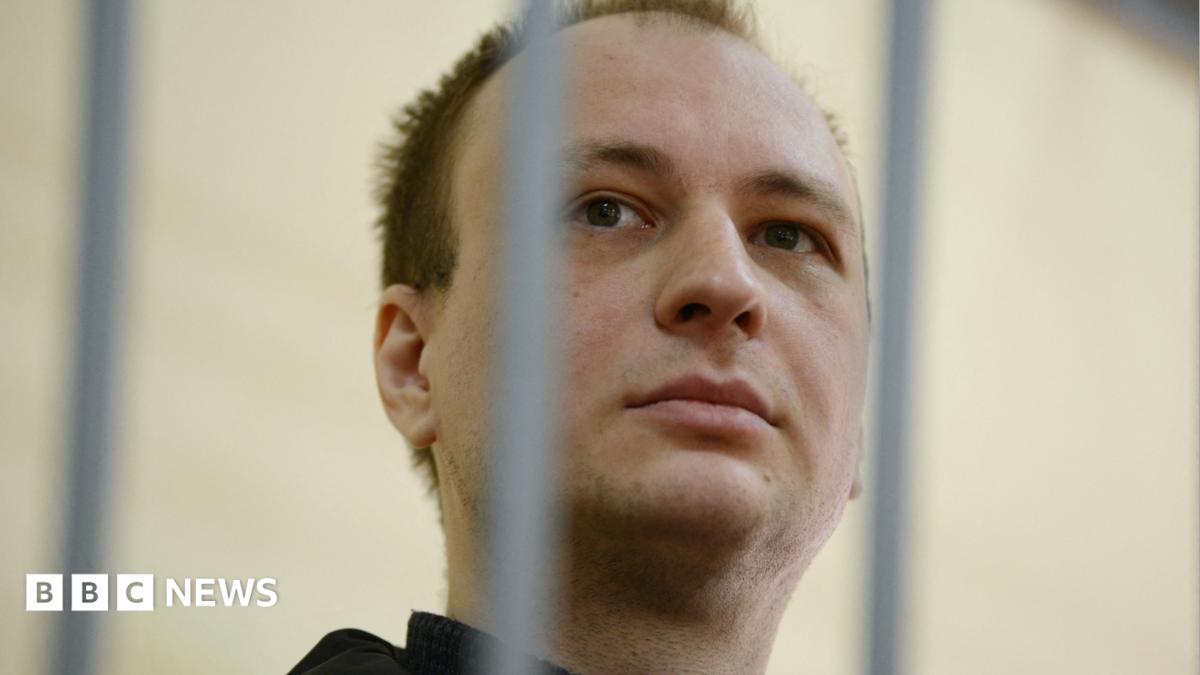
Robert Gilman in a prison in Russia in April 2026

President Donald Trump said a US Marine held in a Russian prison, whose health was reportedly in extremely poor condition, has been released.

“After my discussions with President Vladimir Putin, Russia has agreed to release him, very much on a Humanitarian Basis,” Trump wrote on Truth Social, adding that no prisoner swap took place.

In 2022, Gilman, who is from Massachusetts, was arrested for kicking a police officer while drunk aboard a train to Moscow. He had recently been moved from prison to a civilian hospital in Russia after going into a catatonic-like state.

Trump said the 32-year-old was on a flight back to the US accompanied by his mother, doctors, and members of the administration.

Advertisement

According to a statement from his family, Gilman is expected to later arrive at a US military hospital in Texas where he will be assessed and treated.

His health was in “life-threatening condition” after he was subjected to “harsh and abusive treatment”, the family said.

“The Russians treated my brother so badly. They hurt him for no reason, other than that he was both and American and a Marine,” his sister, Lexi Hudson, said in the statement.

“I am so grateful to President Trump for saving my brother’s life,” she added.

Advertisement

Massachusetts Senator Ed Markey also helped secure her brother’s release, she said.

In a statement, Markey said: “Approximately 50 days ago, Robert was diagnosed with a dissociative stupor – a condition where he is non-responsive and unable to interact or eat. ”

In Russian confinement, Gilman was subject to repeated harassment, including forced exercise training sessions that lasted up to 16 hours and the administration of psychotropic drugs, Eric Lebson, who advocated for Gilman’s release as part of the group Global Reach, told CBS News, the BBC’s media partner.

The abuse was so severe that at one point Gilman had required a feeding tube in his nose, according to Lebson.

Advertisement

Gilman served in the US Marines from August 2019 to August 2020.

He was arrested for kicking a police officer while drunk aboard a train to Moscow in January 2022 and was initially given a sentence of three and a half years.

He was later found guilty of assaulting prison guards, after he allegedly attacked a prison inspector during a cell check. His sentence was then increased to 10 years.

Lebson said five other Americans remain in Russia, each contending with medical issues. Their names are Aleksandr Antonov, David Barnes, Olga Jezler, Andre Khachatoorian, and Chuck Zimmerman.

Advertisement

Source link

Continue Reading

NewsBeat

Anne Hathaway appears as haunting author in eerie new psychological thriller

Published

on

Anne Hathaway appears as haunting author in eerie new psychological thriller

The pair star in the upcoming film based on Colleen Hoover’s 2018 novel of the same name, which follows struggling writer Lowen Ashleigh (Johnson) as she is hired to complete a bestselling book series after its original author, Verity Crawford (Hathaway), is left unable to continue due to an accident.

Source link

Continue Reading

NewsBeat

UN says over 16,000 civilians held by Russia during war

Published

on

UN says over 16,000 civilians held by Russia during war

UNITED NATIONS (AP) — The United Nations estimates that more than 16,000 civilians detained by Russia during its war in Ukraine are still being “deprived of their liberty,” many held incommunicado and on grounds that don’t comply with international law.

“Widespread and systematic torture and ill-treatment” of both Ukrainian civilian detainees and prisoners of war by Russia are continuing, including sexual violence, said Claudia Fuentes Julio, the U.N. assistant secretary-general for human rights.

She spoke at an informal meeting of the U.N. Security Council called by Latvia and the United Kingdom on Monday to spotlight the plight of civilians and soldiers taken during the war that Russia launched with a full-scale invasion of its neighbor in February 2022. The council, which counts Russia as a permanent member, heard the accounts as both Russia and Ukraine have escalated attacks in the four-year conflict.

Since the invasion, Julio said, U.N. human rights staff have interviewed 910 Ukrainian prisoners of war and 403 civilian detainees following their release. The U.N. has not been able to visit detention facilities in Russia, and its estimated figure of those held does not break down how many are adults or children.

Advertisement

More than 95% of the Ukrainian prisoners of war and 85% of the civilian detainees reported being tortured or ill-treated, often repeatedly, the U.N. official said. They also reported sexual attacks and inhumane conditions, including food deprivation and inadequate medical services.

The Geneva-based human rights office “has documented the execution of 129 Ukrainian prisoners of war at the beginning of their captivity, and the deaths of 48 Ukrainian prisoners of war in custody, resulting from torture, denial of medical care, or other inhumane conditions of detention,” Julio said.

Former detainees share their accounts with the United Nations

The U.N. Security Council also heard emotionally wrenching accounts from Crimean Tatar human rights activist Leniie Umerova, who called herself a “political prisoner” of the Russians for almost two years, and Khuan Leyva Garsiya, a Ukrainian soldier who was among the hundreds that held out for months at the Azovstal steel plant in the besieged city of Mariupol before turning themselves over to the Russians in May 2022.

Garsiya, who was born in Mariupol to a Ukrainian mother and Cuban father, spent 1,183 days as a POW. He said he weighed 55 kilograms (120 pounds) when he was freed, pulling out a picture of his emaciated body to show the council.

Advertisement

He said he was tortured, beaten harder and humiliated more than other prisoners because the Russians suspected that he was a foreign mercenary due to his Cuban ancestry or an American spy because he went to college in the United States.

“Russians were outraged that someone with a connection to Cuba, whom they consider an ally, would fight against their occupation army,” said Garsiya, who is still in the Ukrainian military.

He said the Russians tried to break the prisoners mentally and force them to confess to falsified crimes through tortures including freezing, beatings, electrocution and sexual abuse, he said.

“Two of my friends were beaten to death in detention centers in the Donetsk region,” Garsiya said. “Two of my friends died because of the conditions they were put in in Russian prisons and were returned in plastic bags to the homeland.”

For Umerova, her captivity began when she tried to enter Russia from Georgia to visit her seriously ill father in Crimea, which is part of Ukraine but has been occupied by Russia since 2014.

She said she was placed in detention on “fabricated charges.” But unlike many others, she was able to contact an attorney. In the third month, she said, her attorney obtained her release through a court order.

Advertisement

“But as soon as the prison gates opened, a bag was put over my head and I was taken away again.” In six months, she said she was moved to seven different facilities, calling it “a carousel of repression.”

What happened to her, Umerova said, is part of a system Russia uses to unlawfully detain, isolate, torture and fabricate charges against civilians. She named half a dozen women in Russian prisons today and said at least 84 women have faced criminal prosecution.

U.N. also said Russian detainees reported abuses

U.N. human rights experts also interviewed 816 Russians and 57 third-country national prisoners of war from over 45 countries who were members of the Russian armed forces in Ukraine, said Julio, the assistant secretary-general.

About half reported torture or ill-treatment, primarily during the initial stages of captivity and interrogation by Ukrainians, she said. But U.N. monitors reported that once they arrived in Ukrainian detention facilities, “the conditions generally comply with international humanitarian law and have improved since 2022.”

Advertisement

Russia’s deputy U.N. Ambassador Maria Zabolotskaya told the council the Russian armed forces are complying with international humanitarian law, which includes the treatment of prisoners. She claimed Russian prisoners in Ukraine faced “torture and degradation, and moral and physical abuse.”

She called the Security Council meeting part of “a disinformation campaign against Russia,” funded by NATO countries involved in the Ukraine conflict. The aim, she said, “is to derail efforts towards a peace settlement and to justify strikes on the territory of Russia and against civilians.”

Ukraine’s deputy U.N. Ambassador Volodymyr Pavlichenko said he was struck that during Monday’s meeting, Russia was not ready to discuss the return of POWs — “including their POWs” — and all civilian detainees including abducted children.

Advertisement

Source link

Continue Reading

Trending

Copyright © 2025