Once every eight years, housing regulators in California issue local municipalities an obligatory task: construct a detailed proposal to build new residential properties.
The administration of Gov. Gavin Newsom sets specific goals for local governments across four separate tiers of affordability. Combined, these targets represent state officials’ projections of how many homes are required to absorb projected population growth while addressing a multi-decade shortage of affordable places to live.
Because these quotas are distributed on a rolling schedule, a significant portion of California—including the whole of Southern California—passed its midway milestone this summer.
So how are these local jurisdictions faring when evaluated halfway through the process? The results for California are far from ideal. Evaluated on an academic grading scale, municipalities across the state would receive predominantly low marks.
Advertisement
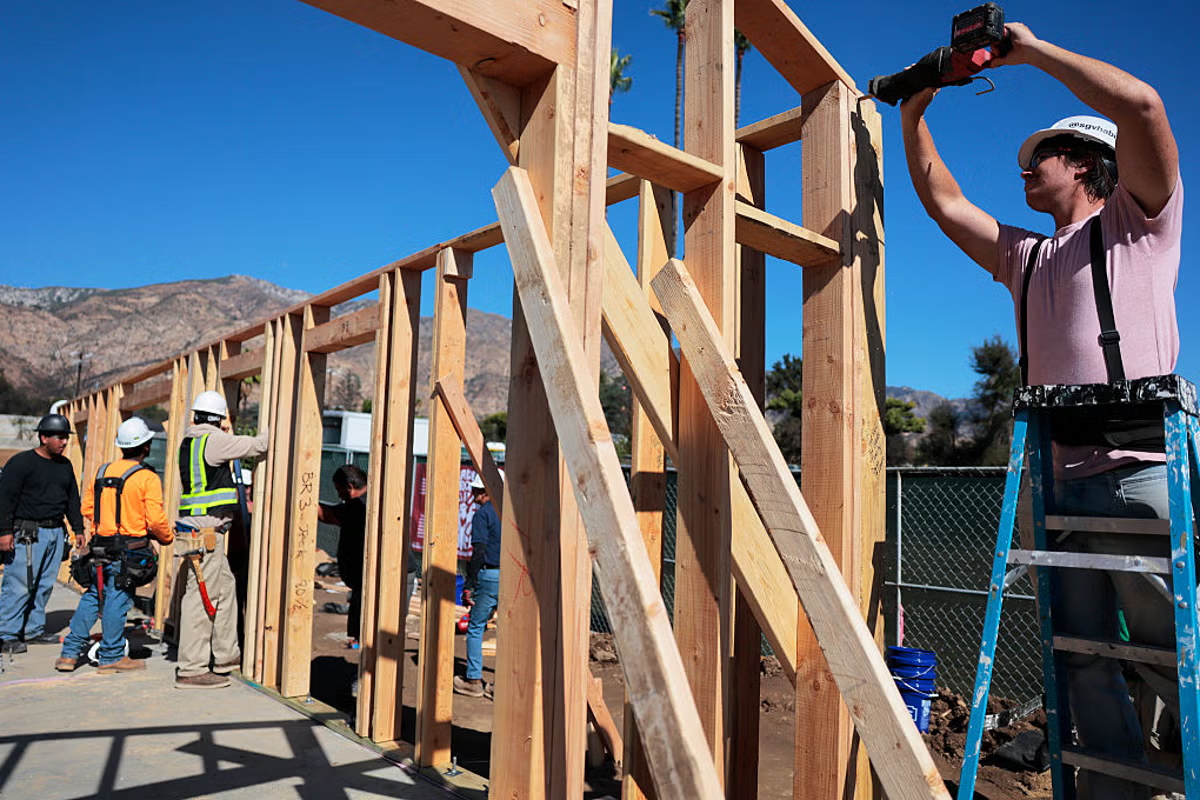
The state’s total planning target adds up to nearly 2.5 million units over eight years, a reduction of the even more ambitious 3.5 million target Newsom set for his administration during his 2017 election (Heather Diehl/Getty Images)
Data provided by local governments to the state housing department reveals that under a third of cities and counties are currently on pace to authorize enough “above moderate” units, the standard designation for market-rate housing.
The progress report for more affordable types of housing is even bleaker. Only 32 jurisdictions — less than 6% — are on track to hit their “very low” targets. That refers to housing within financial reach of anyone earning less than half the typical local income.
After years of nudging, political trolling and litigating, most cities and counties now have state-approved plans in place. But as the production numbers show, it’s one thing to plan and another to build. Almost nowhere in the state is actually seeing the new construction necessary “to meet the housing needs of all Californians,” as housing regulators have described these targets.
Only five jurisdictions in the entire state are permitting at a pace to hit all four income targets. Four are the lightly populated unincorporated bits of small, mostly rural counties: Plumas, Napa, Yolo and Mono. The fifth is Placerville, a town of roughly 11,000 people in the Sierra foothills east of Sacramento.
To be “on track,” a city or county needs to issue permits at a clip that, if sustained, would allow it to hit its state targets by the end of its planning cycle. State housing regulators told the city of Irvine in Orange County, for example, to plan for 8,671 market-rate units by 2030. Now halfway there, the city has issued more than 6,000, making it one of the minority of cities to be on pace to reach its target for above-moderate housing.
Advertisement
But for more affordable digs, Irvine, like most California cities, is far behind. The city has permitted just 9% of the very low-income housing needed to reach its target by the end of the decade. For the next most affordable category, which refers to units priced for those earning up to 80% of the regional median, it’s at a mere 3%.
What’s the housing hold up?
For anyone who has been monitoring the pace of new residential development in California over the last half century, the disconnect between housing planned and housing permitted won’t come as a surprise. The state’s total planning target adds up to nearly 2.5 million units over eight years, a reduction of the even more ambitious 3.5 million target Newsom set for his administration during his 2017 election. That 2.5 million figure works out to 312,500 new homes per year. Even during the state’s boomingest boom years in the early 1960s and mid-1980s, construction figures never reached such lofty heights.
This decade, despite a blizzard of state legislation and policy changes aimed at boosting the construction of new homes, the number of new homes built annually is still just north of 100,000.
Advertisement
Critics of the state’s planning process have long stressed that California’s targets are unrealistic and that local governments can only do so much.
“Cities cannot require developers to develop and cities don’t build housing,” said Jason Rhine, a lobbyist with the League of California Cities. You can lead a developer to a rezoned plot of land, in other words, but you can’t make them build.
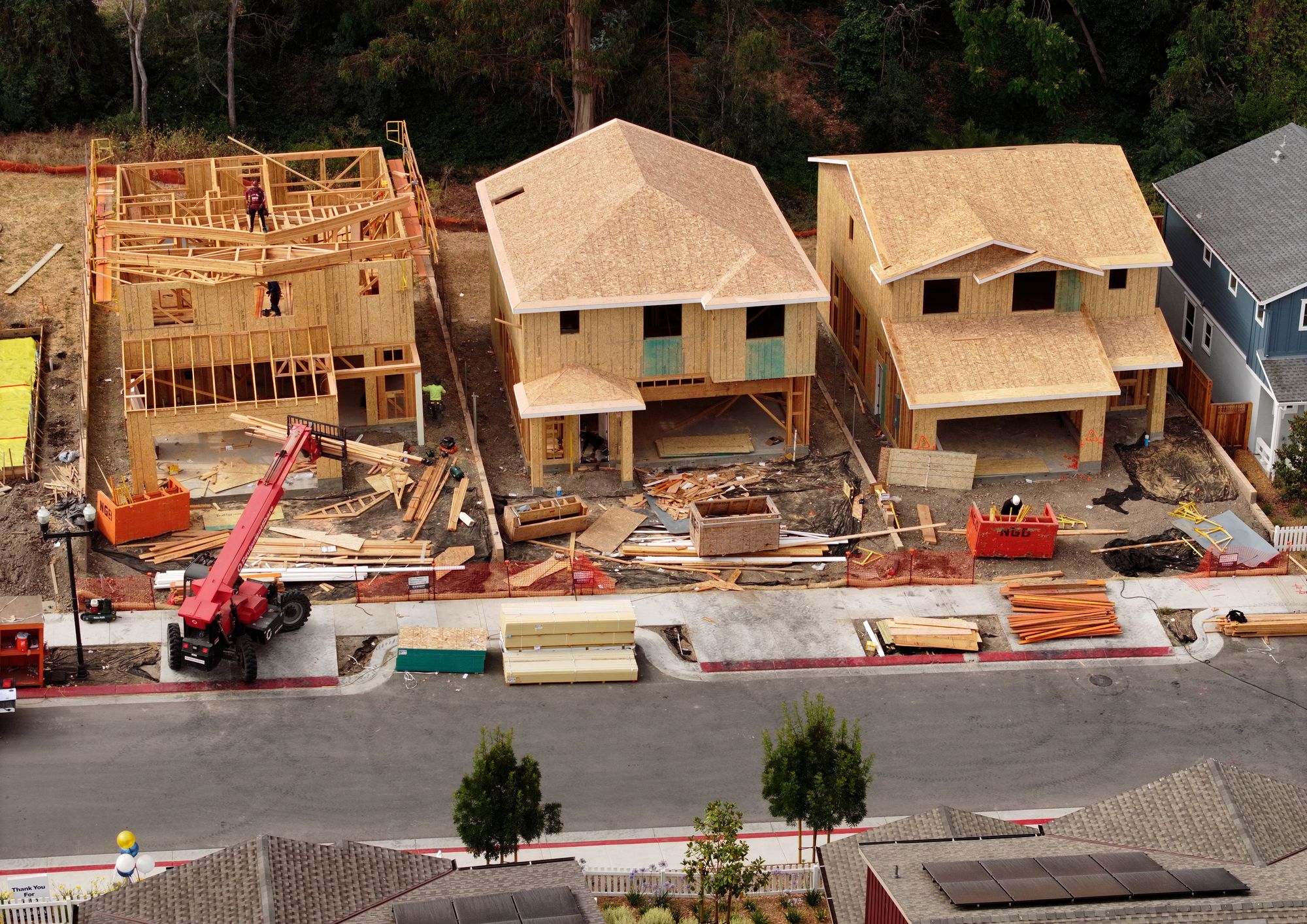
Critics of the state’s planning process have long stressed that California’s targets are unrealistic and that local governments can only do so much (Justin Sullivan/Getty Images)
Pro-development advocates counter that the uninspiring production numbers suggest that cities still aren’t doing enough to welcome more housing.
“Cities can argue that they don’t directly control production, but they do control fees, zoning and permitting,” said Laura Foote, executive director of YIMBY Action. The housing needs allocation process “is only as good as we have the political will to actually hold cities accountable.”
Foote directed some of the blame at state housing regulators for failing to compel cities to adopt more development-friendly policies.
Advertisement
In a written statement, housing department spokesperson Jennifer Hanson said regulators are “actively monitoring and enforcing” the commitments each jurisdiction has made in its housing plans. She also pointed to a couple of recent laws exempting many urban housing developments from environmental litigation and requiring local governments to allow for taller buildings near major public transportation stops. Both have already been used to “advance approved projects representing thousands of proposed homes,” she said.
There are many reasons that developers may or may not choose to build in a particular location. Some are in the power of local and state governments, like zoning and building codes, permitting timelines and fees. But many are not, said Hanson.
“Whether a project moves forward depends on interest rates, construction and land costs, access to capital, insurance and expected rents or sale prices,” she said.
Affordable housing construction faces an additional hurdle: A lack of public money. With very few exceptions, building homes that are affordable to those making below average incomes in California requires public subsidies, philanthropic capital or other lenders and investors willing to take a loss. Taxpayer support provided by the state has been in short supply after a voter-approved bond from 2018 that provided funding for California’s signature affordable development subsidy ran dry. That explains why the affordable production numbers are so much lower.
Advertisement
Affordable developers and other housing advocates are hoping voters will back an $11.25 billion state bond in November to replenish the coffers (Frederic J. Brown / AFP via Getty Images)
Affordable developers and other housing advocates are hoping voters will back an $11.25 billion state bond in November to replenish the coffers.
Meanwhile, “moderate” income housing is especially tough to build, facing the financial worst of both worlds. It often doesn’t qualify for affordable subsidy programs that prioritize projects serving people further down the income ladder. But rents affordable to those earning median incomes are often too low for unsubsidized developers hoping to turn a profit.
An escape valve
The state may force local governments to lay the groundwork for new development — identifying potential sites, rezoning to allow for denser housing, changing local laws that make construction more economically feasible. But historically, local governments haven’t faced any consequences if nothing actually gets built.
That changed in 2017, when state lawmakers passed a landmark housing bill aimed at boosting new housing production where it was most needed. In jurisdictions that are halfway through their planning process but have yet to permit at least half their housing targets for above-moderate, low- and very low-income housing (housing affordable to a “moderate” income level isn’t included), the law requires local governments to fast track most apartment and condo projects. In exchange, developers have to set aside a certain number of affordable units and pay their workers more.
Advertisement
Of the 212 Southern California cities and counties that crossed the halfway point this year, all but four failed to hit those numbers and are now subject to the streamlining law.
But if history is any guide, that alone isn’t likely to trigger a building boom.
Private developers have insisted that the affordability requirements and higher wage standards written into the law make projects infeasible everywhere but in the highest rent neighborhoods. Since 2018, the law has been used to green light 27,961 units, according to the state’s housing department. That’s a significant sum, but it’s far from enough to close the gap.
The existing building will be made into flats and a bungalow and two masinettes will be built on the grounds
A Grade II listed building is set to undergo a major transformation after conversion plans were approved by Peterborough City Council. The historic property at 63 Church Street in Stanground, which is currently used for both commercial and residential purposes, was purchased by Simon Dann and Edel Lynch in 2014.
According to planning documents, despite not being responsible for the destruction of the historic features prior to their ownership, Mr Dann and Mrs Lynch have spent more than £400,000 restoring the building so far. They have now been given the go-ahead to convert the building into flats, as well as build two new maisonettes and a three-bedroom bungalow on the property grounds.
Advertisement
“As demonstrated over the years by trying to bring back lost features, the applicants are dedicated to further enhancing the building to its potential as a Grade II listed building,” the design and access statement reads.
It was argued in the application that the proposal would create a range of different property types which would provide essential accommodation to contribute to the housing need within the area.
In 1969 the Grade II listed building became a Polish gentlemen’s club and in 1970 extensive building works were carried out which resulted in the loss of some original features.
Advertisement
Planning permission and listed building consent was later granted in 2014 to demolish the extension and carry out restoration works in order to change the building into a chiropractic clinic and residential accommodation.
“The site is a unique opportunity to bring back historic features and allow them to be further enhanced and appreciated whilst promoting a community feel within the site area,” planning documents stated.
Peterborough City Council’s highways team raised concerns around a shortfall of two parking spaces, but planning officers determined this would not result in an adverse highway safety issue.
The development must begin within three years, with a number of conditions listed in the officer’s report.
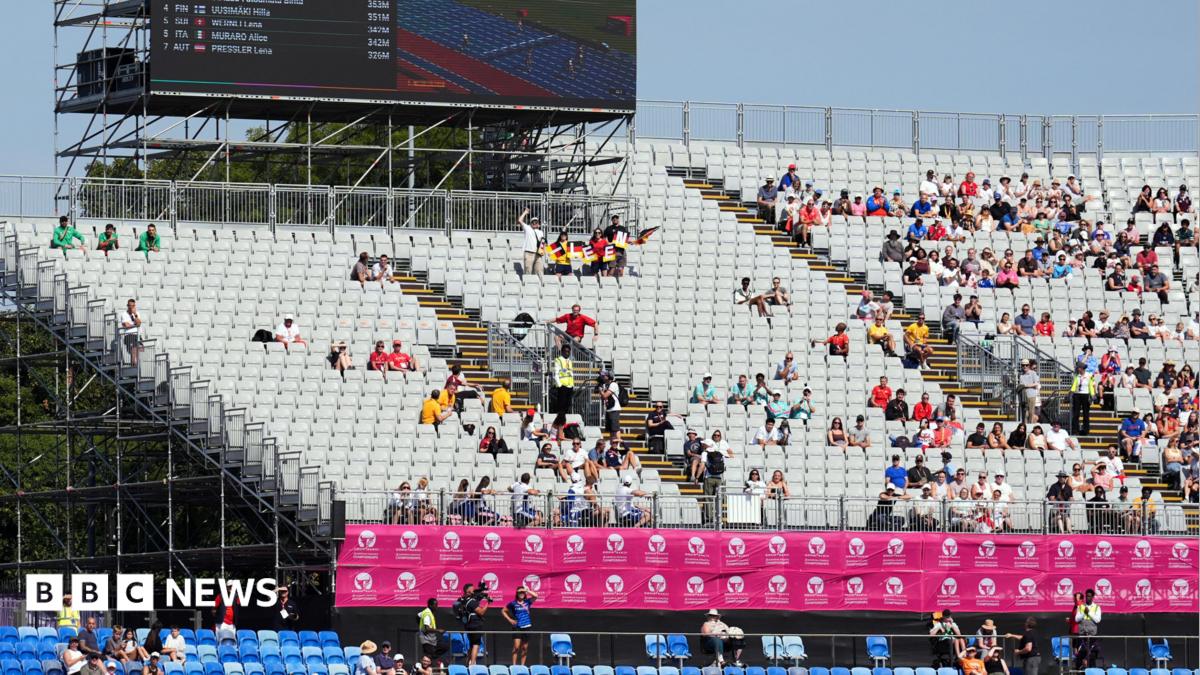
One athletics fan urged organisers on social media to “fill the place” with “cheap door tickets”.
Another said they decided against buying tickets as it would cost his family “more than a holiday” when travel and accommodation for one night was factored in.
Culture Secretary Lisa Nandy said she expected attendances to increase as the championships continued.
“It is true that over the past few days we haven’t sold out the stadiums but we are seeing those numbers rising steadily,” she said.
Advertisement
“We have some amazing events coming up, the men’s 100m final, people like Keely Hodgkinson competing and I think you will see that really rise in the next few days.”
She added she thought organisers have “pretty good job here” over ticket prices with “half of all the tickets for the events here in Birmingham are under £30”.
A Birmingham 2026 spokesperson expressed delight at the ticket sales which “have far surpassed our targets”.
“Friday, Saturday and Sunday evening sessions are approaching sell-out, with several other sessions close to capacity,” they added.
Advertisement
“There are still opportunities to be part of the championships at incredibly good value.
“After a fantastic opening day of competition, we’re looking forward to welcoming many more spectators to Alexander Stadium throughout the week and sharing more memorable moments of world-class athletics.”
A woman with Down syndrome said American Airlines had denied her from getting on a plane to visit her family, but the company has insisted that it had a logical reason.
Jennifer Jaspers was dropped off by her mother at Eppley Airfield in Omaha, Nebraska, on July 23.
The 52-year-old had planned to take her yearly solo trip to North Carolina to see her father and cousins, as well as celebrate her birthday.
But during the check-in process, she was apparently asked a question that took her by complete surprise, according to WOWT.
Advertisement
Jaspers’s mother, Cindy Garrett, said a staff member queried ‘whether she could get herself out of a building by herself’ and her daughter had responded, ‘I don’t know.’
After that, American Airlines determined that Jaspers required a safety assistant to get on the plane in order to adhere to their procedures.
Jaspers recalled that she began crying after being denied a boarding pass, with Garrett adding that her daughter had traveled alone dozens of times before.
‘I can fly by myself,’ Jaspers told the outlet.
Advertisement
Jennifer Jaspers, 52, who has Down syndrome, said American Airlines denied her a boarding pass on July 23 before her yearly trip from Omaha to North Carolina
Cindy Garrett (left), Jaspers’s mother, said her daughter was thrown off and did not know how to answer a question about ‘whether she could get herself out of a building by herself’
Her mom offered an explanation for her daughter’s response at the check-in gate.
Advertisement
‘Because it threw her [off],’ Garrett told WOWT. ‘She didn’t know how to answer that.’
Garrett said her family had previously used a different procedure during Jaspers’s travels to ensure everything went smoothly.
‘To transfer airplanes, we have it set up that they walk her to the next gate,’ Garrett said.
She claimed that she told American Airlines that ‘there’s never been a problem’ with her daughter’s travel plans.
Advertisement
‘She has a phone in her purse all the time,’ Garrett said. ‘She knows how to use it.’
Garrett added that a supervisor got involved in the situation before her daughter’s boarding pass was denied.
American Airlines said that passengers who are unable to follow safety instructions must travel with a safety assistant
Jaspers’s mom said her daughter had been scheduled to travel in first class (stock image)
Advertisement
In response to the incident, American Airlines said that passengers who cannot follow safety instructions need to travel with a safety assistant, per the outlet.
Jaspers was offered that option for free but turned it down, the airline said in a statement.
‘To support those who need special assistance, customers who are unable to follow safety instructions during their journey are required to travel with a safety assistant,’ American Airlines told the outlet.
‘Upon review, our team followed established procedures to determine that a safety assistant would be required to travel with the customer – and that option was offered at no cost,’ the statement continued.
Advertisement
Jaspers’s ticket was subsequently refunded, according to the company.
Garrett said that Jaspers is still planning to fly to North Carolina, albeit with a couple of twists.
‘She had a first-class ticket, so she won’t be able to go first class anymore,’ Garrett said.
The incident happened at Eppley Airfield in Omaha, Nebraska (file photo)
Advertisement
Instead, Jaspers’s father has spent about two weeks planning a round trip flight that costs about $1,800.
He would come to Omaha and serve as her travel assistant.
Garrett said the family would ask American Airlines if the offer for the safety assistant to be cost-free still applied.
Advertisement
‘If they’re the ones demanding that there needs [to be] a second person there, [then] at least half of it, they should pay,’ she told the outlet.
The Air Carrier Access Act states that airlines cannot refuse transportation to people on the basis of disability and that airlines may not require a person with a disability to travel with another person.
However, there are exceptions for ‘certain limited circumstances’ where the airline can require a safety assistant.
‘If a passenger with a disability and the airline disagree about the need for a safety assistant, the airline can require the assistant, but cannot charge for the transportation of the assistant,’ the rule continues.
Advertisement
The Daily Mail has reached out to American Airlines for further comment.
Extreme heat affects almost every aspect of an emergency response. For the close to 7,000 people in 130 evacuation shelters and in temporary accommodation across the Kumamoto region, on the southernmost of Japan’s four main islands, hot and humid conditions increase the risk of dehydration, heat exhaustion and heatstroke.
Older adults, infants and people with chronic illnesses are particularly susceptible. It is suspected that one older woman has already died of heatstroke while sheltering in her car.
Advertisement
Heat also makes it harder for people to sleep, especially when air conditioning is unavailable or electricity supplies have been interrupted. Poor sleep can worsen stress, impair decision-making and slow recovery following traumatic events. Emergency responders are similarly affected.
Rescue work, debris removal and infrastructure repairs are physically demanding activities. High temperatures reduce physical performance, increase fatigue and require more frequent rest breaks, potentially slowing recovery operations.
Temperatures in Kumamoto during and after the earthquake
Temperatures peaked in the high 30s a few days after the earthquake, but throughout July both maximum and minimum temperatures were well above the long-term average. Glenn McGregor
The effects extend beyond health. Damaged water infrastructure increases demand for drinking water precisely when supplies may be constrained. Electricity demand for cooling rises at the same time as power outages. Some medicines require refrigeration. Businesses face longer interruptions. Schools and community facilities may remain closed for longer. This creates a complex web of interacting risks.
Water supplies have been disrupted in some areas and electricity outages have limited access to cooling equipment, leaving evacuation centres very hot. These conditions create a second emergency that receives far less attention than the earthquake itself but can have profound consequences for public health and recovery. This is an example of what hazard scientists call a compound event.
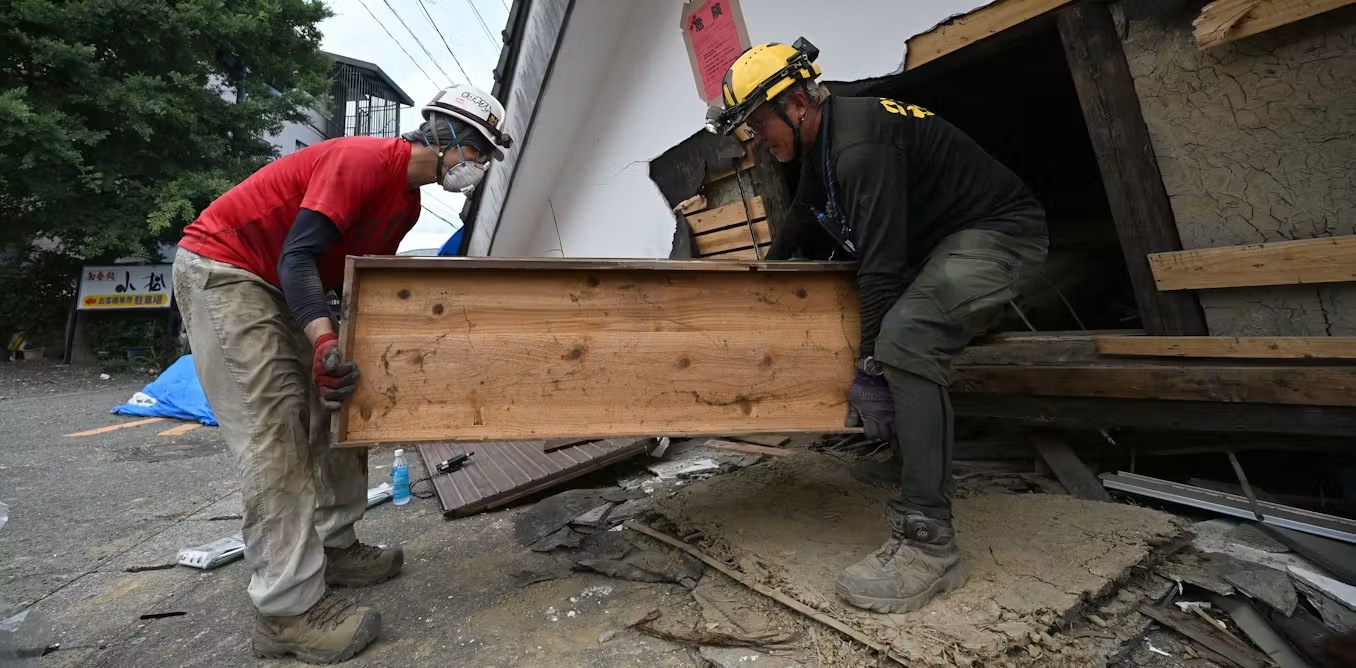
Emergency workers are still battling to cope with the recovery.
The second emergency
Often natural hazards are thought of as isolated events, but they frequently interact with one another, so that their combined impacts are greater than the sum of each individually. Sometimes the interaction is between different weather extremes, such as heatwaves followed by drought or wildfire. In other cases, climate hazards combine with other geophysical hazards such as earthquakes.
Advertisement
The conditions in 2026 are very different to those when Kumamoto last experienced large earthquakes, in April 2016.
Comparison of temperatures: 2016 and 2026 earthquakes
Temperatures in 2016 (left) vs 2026 (right). Days in 2016 were warm, about 25°C, but in 2026 temperatures rarely fell that low, even at night. Glenn McGregor; data: Japan Meteorological Agency data
The 2016 Kumamoto earthquake caused widespread destruction. However, the April temperatures were relatively mild. The recent earthquake occurred during one of the hottest parts of the Japanese summer. Although rescue priorities remain the same, the environmental conditions are fundamentally different.
As the climate changes, the impact of any disaster will increasingly depend not only on the primary event but also on the climatic conditions in which it unfolds. The Kumamoto earthquake shows how extreme heat can become a powerful disaster risk multiplier. A similar lesson emerged after the catastrophic western Japan floods of 2018, when a record-breaking heatwave, subsequently shown by research to have been virtually impossible without human-induced climate change, compounded the disaster, increasing health risks and hampering recovery efforts.
Advertisement
Together, these events demonstrate how heatwaves following other disasters can amplify the consequences.
Planning ahead
The Kumamoto earthquake shows that disaster resilience is no longer just about building stronger infrastructure or improving earthquake-resistant design. It also means preparing communities for multiple interacting hazards.
As climate change increases the frequency and intensity of extreme heat, those planning for emergencies will have to factor this in.
The question is no longer simply how societies respond to earthquakes or heatwaves separately, but how they prepare for all of these circumstances.
Advertisement
As the world experiences more heatwaves, extreme temperatures will pose new challenges for disaster recovery during the hottest parts of the year.
EAGAN, Minn. (AP) — The Minnesota Vikings have chosen Kyler Murray as their starting quarterback over J.J. McCarthy, according to a person with knowledge of the decision.
The person spoke to The Associated Press on condition of anonymity on Tuesday because the team had not yet made the announcement.
Vikings coach Kevin O’Connell pledged to supervise a true competition for the job between the newcomer Murray and the incumbent McCarthy. While Murray had the majority of the turns with the first team, McCarthy had plenty of opportunities in open-to-the-public practices as well.
With Murray learning a new system and staff after spending his first seven NFL seasons with the Arizona Cardinals, an earlier decision on the starter was always going to be ideal for him to maximize his time in training camp running the offense.
Advertisement
McCarthy was the 10th overall pick in the 2024 draft. He mostly struggled in his debut last year, when a variety of injuries limited him to 10 starts. Carson Wentz was also re-signed for veteran depth.
The squad have become familiar with those principles following a draining training camp in Spain last week, which culminated in a 2-1 win against Valencia.
Goalkeeper Lukas Hornicek said Newcastle want to “show the opponents that they will have a hard time against us”, while defender Malick Thiaw has spoken about the intensity under Jaissle being “really high”.
Season ticket holder Adam Stoker feels the club still need further additions, but he believes Jaissle’s playing style will be a “huge positive” as the German looks to build on Howe’s legacy.
“Eddie did look a bit tired and didn’t quite look the same manager as when he started,” Stoker said. “Some of that energy had been lost and it correlated with the performances of the team.
Advertisement
“We have seen a tiny bit of Jaissle’s ideas now and they seem to be very much in keeping with Newcastle in 2022-23, which was a hugely exciting team to watch.
“That playing style makes the crowd feel involved because the fans want to watch a high tempo.
“Playing front-foot, high-intensity football is something the crowd at Newcastle has always been on board with.”
Jaissle now has little time to catch his breath before the season opener against Liverpool on Tyneside on 23 August.
Advertisement
This is a manager who, like all of the club’s young signings this summer, has never experienced the Premier League before.
That brings the unknown, particularly after Newcastle lost key players Anthony Gordon, Sandro Tonali and Bruno Guimaraes this summer, which Jaissle said has left a “vacuum”.
But he also sees it as an opportunity.
“We are ambitious,” he added. “That is the most important thing.
Advertisement
“It is why I decided to come here, but this will not happen overnight, especially when you have such a big transition phase now.
“You need to have a clear goal and wish of where we want to go to. That starts from the decision-makers, the management and the board.
“Then, if you have that synergy with the fans, the players and the staff to go there, I’m pretty sure it will be a successful story. But we need time now.”
Liz Kimmins said the week-long festival “clearly demonstrated the benefits of pedestrianisation”.
Claudia Savage Press Association
18:50, 11 Aug 2026
Stormont’s Infrastructure Minister has committed to unveiling plans for more pedestrianisation of Belfast city centre in wake of the success of the Fleadh.
Sinn Fein minister Liz Kimmins said the week-long festival “clearly demonstrated the benefits of pedestrianisation”.
Advertisement
A section around City Hall was closed to traffic last week during the first Fleadh Cheoil na hÉireann, which saw more than 1.5 million visit the Northern Ireland capital.
Footfall cameras across the city centre put attendance at 1,653,999 from Sunday August 2 to Sunday August 9, with Saturday recording the busiest day of the year to date with 289,560 visitors.
The event has been described by the chief executive of Visit Belfast Gerry Lennon as a “watershed moment” for the city, which “placed it firmly on the global stage in spectacular fashion”.
Ms Kimmins said now is the “perfect opportunity” for the public to weigh in on whether increased pedestrianisation of the city will take place moving forward.
Advertisement
“When I came into office, I set out my department’s seven foundations for a better future,” she said.
“These included creating cleaner, greener, town centres through a person-centred approach to all we do over the next decade.
“The huge success of the Fleadh has just shown us exactly what that can look like and how we can build on this success for next year, with an even bigger event.
“The measures introduced for Fleadh Cheoil na hÉireann clearly demonstrated the benefits of pedestrianisation and has led to calls for a more permanent solution.
Advertisement
“This has shown how we can make Belfast a nicer place for people and their families to live, to work and to visit.
“My department has already been working diligently behind the scenes to prepare a new transport plan for the Belfast area.
“In the next few weeks, I will bring forward a consultation which includes proposals for the expansion of pedestrianisation in Belfast city centre.”
Ms Kimmins added: “It is my ambition to reshape our town and city centres to put people first, creating more attractive, accessible, and vibrant places while reducing car dependency and encouraging sustainable travel choices.
Advertisement
“I want to hear everyone’s views on these proposals to ensure that everything we do is accessible for all.”
Sinn Fein MP for North Belfast, John Finucane said the the Fleadh “showed us what Belfast can be when we put people first”.
“For a week, our city centre was transformed into a vibrant, welcoming space where families, visitors and communities could come together and enjoy Belfast without being dominated by traffic.”
He added: “The success of the Fleadh has shown that people want this change.
Advertisement
“The public have seen what is possible when our city centre is designed around people rather than cars.”
When most people picture British farming, they probably imagine fields of wheat,
potatoes or vegetables stretching across the countryside. But some of the food on supermarket shelves is produced in environments that look very different.
A tomato might spend its entire life inside a glasshouse, growing more than 20 metres tall with water and nutrients delivered directly to its roots. A lettuce could be grown inside a building, stacked on shelves under LED lights without ever seeing natural sunlight.
These systems – open fields, greenhouses and vertical farms – are sometimes presented as competing visions for the future of food. But they operate at completely different scales and, importantly, offer very different levels of control over the environment.
This matters as the climate changes. Moving crops indoors can protect them from
drought, heat and unpredictable weather. But that control comes at a cost.
The UK has around 17 million hectares of utilised agricultural land, with approximately 6.1 million hectares classified as croppable. Around 3 million hectares are used for cereals alone.
Advertisement
By comparison, the UK’s horticultural crops (ranging from tomatoes and peppers to cucumbers and strawberries) occupy only around 147,000 hectares, and glasshouses account for a small fraction of that (approximately 850 hectares).
Vertical farming is smaller still, and not separately recorded in national agricultural land-use statistics. I estimate that these farms only occupy 0.0001% of the UK’s total agricultural land (around 10-30 hectares).
Yet the amount of land occupied by a farming system does not necessarily reflect its importance to our food supply.
Fields provide scale, but are more vulnerable to the climate. If you eat a slice of bread, the wheat used to make it was almost certainly grown outdoors. The same applies to barley, oilseed rape, potatoes and many vegetables.
Advertisement
The great advantage of open-field agriculture is scale. Sunlight and rainfall provide two of the most important inputs for plant growth without farmers having to manufacture either of them. Growing millions of tonnes of wheat inside illuminated buildings would make little economic or environmental sense.
The trade-off is control. Farmers cannot decide when it rains or how hot a field
becomes. This becomes particularly important during drought. Irrigation can
compensate for a lack of rainfall, particularly for key crops such as potatoes and many other vegetables, but access to water differs considerably between farms.
A hosepipe ban does not automatically mean that farmers must stop irrigating. Domestic restrictions are different from the rules governing agricultural abstraction from rivers and groundwater.
But during prolonged drought, abstraction can also be restricted to protect water supplies and the environment. Agriculture therefore faces a difficult problem: crops often require the most irrigation precisely when water resources are under the greatest pressure.
Advertisement
Greenhouses offer control, but require a lot of resources. Walk from a field into a modern tomato greenhouse and the level of environmental control changes dramatically.
Plants may grow without soil while computers regulate irrigation, nutrients, ventilation, humidity and temperature. Modern systems can deliver water directly to the root zone and collect drainage water to be treated and reused. This means they can be up to 90% more efficient in using water.
Many crops are grown inside huge greenhouses where this is greater protection from extreme weather. Noi Pattanan/Shutterstock
That makes greenhouse production potentially very water-efficient. It also allows large quantities of crops such as tomatoes, cucumbers and peppers to be produced from a relatively small area. But water efficiency is not the same as water security.
Advertisement
The Netherlands, home to one of the world’s most advanced greenhouse industries,
illustrates this problem. Recent dry conditions have increased pressure on surface and groundwater supplies, affecting the availability of water for agriculture, including greenhouse horticulture.
A greenhouse can recycle water extremely efficiently, but it still needs an original source. Capturing rainfall from greenhouse roofs, increasing water storage and recycling irrigation water will therefore become increasingly important as drought risk increases.
Temperature creates another challenge. Greenhouses provide protection from the
outside environment, but they are not isolated from it. If tomatoes grow best within a particular temperature range, maintaining that range becomes harder as outdoor conditions become more extreme. When it becomes hotter outside, growers may need more ventilation, shading or cooling. During cold periods, additional heating is required.
This means that the way we operate greenhouses today may not be how we operate
them in the future. Climate change could require greater intervention simply to
maintain the same growing conditions. And intervention costs money.
Advertisement
Vertical farms sit at the other end of this spectrum of control. Crops such as lettuce, herbs and leafy vegetables can be grown on multiple stacked layers inside buildings – even several kilometres underground – with light, water, nutrients, humidity and temperature all tightly controlled.
They can use remarkably little land and recycle much of their water. They are also largely protected from drought, storms and other extreme weather. But the greater the control, the greater the dependence on infrastructure and energy.
Even vertical farms are not completely independent of outdoor temperatures. LEDs and other equipment generate heat that needs to be removed. Maintaining an optimal indoor climate can require more energy as external temperatures move further away from the conditions required by the crop.
This exposes a fundamental trade-off in controlled-environment agriculture. The more we separate food production from the natural environment, the more energy and infrastructure we need to replace the services that nature previously provided for free.
The economics can become difficult. Vertical farming has demonstrated that crops can be produced using very little land and water, but the sector has also experienced numerous business failures. High energy requirements, substantial infrastructure costs and narrow profit margins have made it difficult for some technically impressive systems to become financially sustainable.
Resilience has a price
There is no simple answer to whether fields, greenhouses or vertical farms are the most resilient way to produce food.
Fields require comparatively little infrastructure but are highly exposed to weather. Greenhouses provide greater control but require investment, energy and secure water supplies. Vertical farms offer even more control, but with greater dependence on electricity and expensive infrastructure.
Advertisement
Climate change makes this trade-off increasingly important. The future will require smarter, rather than simply more controlled, agriculture: better water management in fields, greater rainwater capture and storage in greenhouses, more efficient heating and cooling, and increased use of renewable energy and waste heat from other industries.
We will need fields, greenhouses and vertical farms – for different crops in different places. The challenge is finding the right balance between exposure to a changing climate, and the increasing cost of controlling it.
Parts of the UK are facing their fifth round of intense temperatures (Picture: EPA)
The UK is on course for its hottest summer on record, with only average conditions needed for the rest of August to beat the record set just last year, the Met Office said.
Some parts of the country are facing a fifth round of intense temperatures, with amber ‘extreme heat’ warnings in place for parts of England on Thursday when temperatures could hit 38C in some spots.
Nearly three-Quarters of England and the whole of Wales are in drought, after a record dry July and dry start to August have combined with high temperatures to put pressure on water resources for households, agriculture and the environment.
To equal the 16.12C in 2025, the UK’s warmest summer on record, the rest of August would only need to be 0.21C below the long-term average.
Advertisement
Any warmer than this would establish a new record for the country, the Met Office said.
Sign up for all of the latest stories
Start your day informed with Metro’s News Updates newsletter or get Breaking Newsalerts the moment it happens.
Advertisement
Ponds, lakes, rivers and creeks have dried up (Picture: Reuters)
And for England and Wales, which have seen temperatures more than 2C above average so far this summer, it is even more likely that June to August 2026 will be record-breaking.
And in a summer that has been marked by extreme weather, temperatures are to spike again this week.
The Met Office has issued an amber warning for extreme heat for London and parts of the South East, East Midlands, East of England, West Midlands and South Yorkshire from 9am to midnight on Thursday.
Met Office chief forecaster Chris Bulmer said: ‘While the peak heat will be more short-lived than recent heatwaves, temperatures widely into the mid-30s Celsius on Thursday bring the potential for impacts for some, which is why a Met Office warning has been issued.
‘High pressure is now becoming dominant and temperatures will build day by day. Southerly and south-easterly winds will also tap into the hot conditions over Europe, which helps develop this further notable heat in what has been a hot and dry summer so far for many in the south of the UK.’
Advertisement
Amber health heat alerts are already in place for most of England including the Midlands, South East, North West and South West, and a yellow alert is in force for the North East from Tuesday morning until Friday evening.
Officials have urged people to take simple steps to stay safe, such as drinking plenty of water, checking on vulnerable friends and family, and avoiding the sun at the hottest part of the day.
Most of the UK’s landscape is a dead colour (Picture: Reuters)
The UK is battling with the growing spectre of worsening extreme weather fuelled by climate change, which is mostly driven by burning fossil fuels for power plants, vehicles, home heating and industry.
Record-breaking heatwaves in May and June led to the deaths of more than 2,800 people, while parts of the country were hit with further heatwaves last month as England and Wales endured their driest July since records began in 1836.
The Environment Agency said 71.3% of England is now experiencing ‘flash drought’, as a dry start to August followed the country’s driest July on record.
Advertisement
Flash drought is one which develops very quickly because of a combination of very low rainfall and high temperatures.
Fire chiefs have warned of sustained fire risk in the hot, dry conditions, with July the busiest on record for wildfires and firefighters responding to 185 wildfires in the first 10 days of August.























































You must be logged in to post a comment Login