

Connect with us
DAPA Banner

NewsBeat

Russia and Ukraine announce rival ceasefires as deadly strikes continue

Published

on

Russia and Ukraine announce rival ceasefires as deadly strikes continue

Ahead of its own midnight ceasefire on Wednesday (Tuesday 22:00 GMT), Ukraine also launched a series of aerial attacks on Russia, hitting an industrial area in Kirishi in the Leningrad region and a factory that produces military components in Cheboksary, in the Chuvash Republic.

Source link

Continue Reading
Click to comment

You must be logged in to post a comment Login

Leave a Reply

NewsBeat

this quirky Bob Odenkirk caper is Die Hard meets Fargo

Published

on

this quirky Bob Odenkirk caper is Die Hard meets Fargo

Ulysses, a mild but disillusioned police officer, arrives in icy Minnesota to start an eight-week stint as substitute sheriff in the surprisingly prosperous small town of Normal. The previous sheriff has died in mysterious circumstances.

As he recovers from a traumatic episode in his own career, his aim is to serve out his time as quietly and uneventfully as possible and then leave the town pretty much as he found it. Unsurprisingly, events swiftly take a very different, not to mention ultra-violent, turn.

The snowbound setting, quirky but amiable inhabitants and swift intimations of a darker criminal hinterland all give off unmistakable Fargo vibes. Not least because the sheriff is played by Bob Odenkirk, an alumnus of Noah Hawley’s TV spin-off of the Coen Brothers’ classic 1996 picture. (In an obvious nod, Ulysses’ deceased predecessor, Gunderson, shares his surname with Frances McDormand’s cop in the film.)

The silent apparitions of the town’s near-legendary moose and much discussion of coffee also lend these sequences a certain Twin Peaks (1990-1991) flavour. Later on a severed ear is an obvious shout-out to another David Lynch project, Blue Velvet (1986).

Advertisement

Midway through director Ben Wheatley’s new thriller, however, the stylistic reference points shift from the Coens and Lynch to Quentin Tarantino and John Carpenter. A farcically botched Bonnie and Clyde-style bank heist hurls the film into a spiral of chaotic and very bloody violence which barely lets up for the remainder of the film.

The townsfolk, it transpires, have saved Normal from the blighted fate of other midwestern towns by striking an improbable Faustian bargain to warehouse piles of loot for the Japanese mob – the Yakuza.

Big body count

Once Ulysses stumbles across this dirty little secret, he finds himself pitted against virtually every single inhabitant of Normal as they battle to keep it quiet. An arsenal of guns, explosives, light artillery and a variety of improvised weapons overnight reduce the town’s main street into a blood-soaked, body-strewn wreckage.

Advertisement

Ulysses, along with the hapless pair of amateur bank robbers caught up in the crossfire, fights off hordes of opponents in the fashion of Tarantino’s From Dusk To Dawn (1996). And once the black-suited Yakuza reinforcements arrive, it resembles Kill Bill (2004). The gory violence, mostly played for blackly comic effect, has a comparably weightless feel.

The army of townsfolk stalking the beleaguered, outgunned trio recalls the zombie-like gang in John Carpenter’s B-movie classic Assault on Precinct 13 (1976). Or perhaps even more the demented small-town denizens of George A. Romero’s The Crazies (1973).

As this string of allusions might suggest, Normal makes no great claims on originality. Written by Derek Kolstad, creator of the John Wick franchise – and also 2021’s Nobody, the vehicle for Odenkirk’s late-career swerve into action hero – the film delivers on its simple premise without any great care for complex plotting or plausibility. It serves up modestly inventive pyrotechnics in a businesslike, and at just 90 minutes, very concise fashion.

Fans of Wheatley’s previous efforts in this vein will enjoy his trademark, though not especially unique, combination of humour and extreme violence. Others may feel he does himself few favours with the constant overt nods to far superior filmmakers and risks making his film feel even more derivative and predictable than it confesses itself to be.

Advertisement

Vertigo Releasing UK

There’s certainly little here in the rendering of upstate Minnesota to compare with Roger Deakins’ crystalline cinematography in Fargo. Nor can Wheatley’s energetic but prosaic action choreography ever approach the stylisation of Kill Bill.

Violence aside, then, the film rests heavily on some apt casting and happily the performers are reliably engaging. Odenkirk’s trademark battered decency largely carries the film. But there are also deft supporting turns, notably from Henry Winkler as Normal’s oleaginous mayor and Lena Headey as a tough-dame barkeep. Reena Jolly and Peter Shinkoda are also endearing as the dishevelled slacker bandits (and solicitous dog parents). They vaguely recall the shambolic outlaws of One Battle After Another (2025).

Many of Normal’s influences have serious things to say about modern American life. Normal too gestures in passing to larger issues. The mayor presents the community’s turn to crime as a morally if not legally legitimate reaction to the desperate plight of “flyover states” devastated by industrial decline and corporate predation.

But really this is just window dressing. There isn’t a great deal more to the film than meets the eye, and there probably doesn’t need to be. In its rapid pacing, terse characterisation, brief run time and propulsive, hard-boiled action, Normal positions itself as a latter-day B-movie and mostly delivers on the unpretentious pleasures of that time-honoured form.

Advertisement

Source link

Continue Reading

NewsBeat

Man dies in crash with lorry which left Cambridgeshire road closed for hours

Published

on

Cambridgeshire Live

A 45-year-old man was pronounced dead at the scene

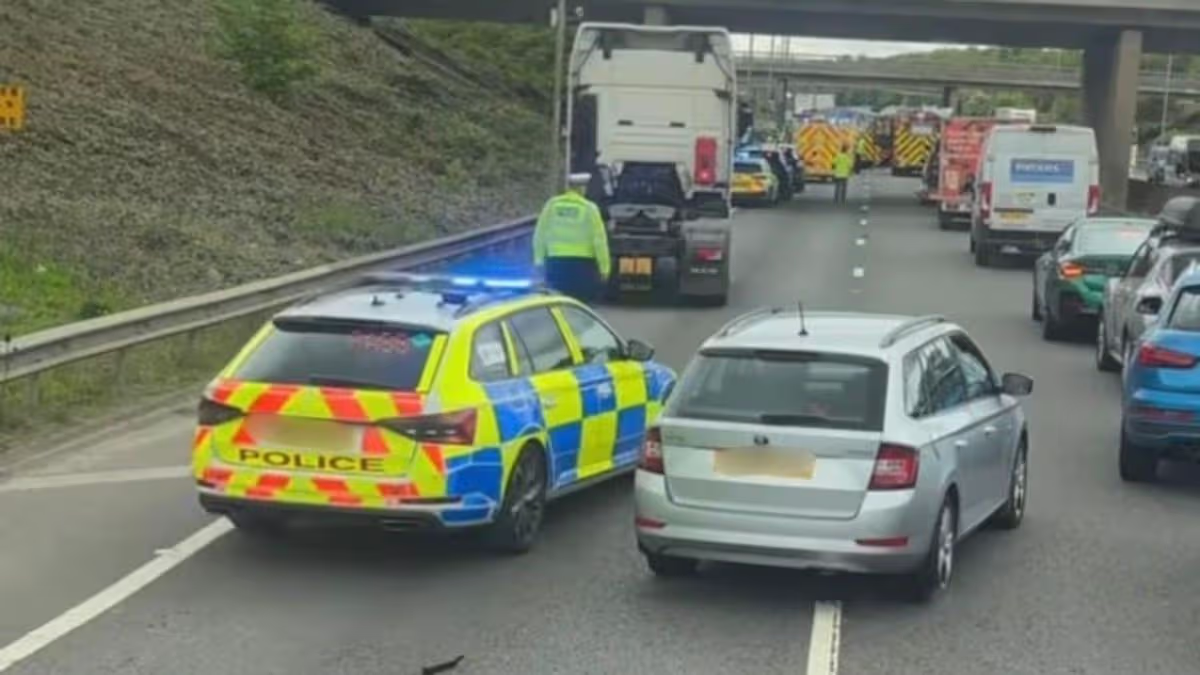
A man has died in a crash involving a car and a lorry in Peterborough yesterday (Wednesday, May 6). Cambridgeshire Police were called to the eastbound carriageway of the A1139 Fletton Parkway at around 11.50am.

The collision involved an HGV and a white Xpeng G6 and happened near the exit from the A1(M). Police, paramedics and fire crews attended the scene and the road was closed for around five hours.

The driver of the car, a 45-year-old man from Peterborough, died at the scene. Officers are now appealing for anyone with information about the crash to come forward.

Advertisement

Anyone who saw the crash or has dashcam footage of the collision or the vehicles leading up to the incident should contact the police. You can report any information through the Cambridgeshire Police website quoting Operation Braddock. You can also call 101 if you do not have access to the internet.

To get more news and top stories delivered directly to your phone, join our new WhatsApp community. Click this link to receive your daily dose of CambridgeshireLive content.

We also treat our community members to special offers, promotions, and adverts from us and our partners. If you don’t like our community, you can check out any time you like. If you’re curious, you can read our Privacy Notice .

Source link

Advertisement
Continue Reading

NewsBeat

Arsenal v PSG in the Champions League final is a battle of contrasts, with a much deeper significance

Published

on

Arsenal v PSG in the Champions League final is a battle of contrasts, with a much deeper significance

Arsenal, if you listen to some at the club, may now have their chance at “revenge”. They felt they were actually better than Paris Saint-Germain in last season’s semi-final, which may still baffle many people who’ve watched the Qatari project since.

The rest of Europe might just want a better crescendo than the semi-final ultimately offered, and perhaps that the Champions League final has been due for some time. There hasn’t been a great final in years, arguably since 2005, despite claims from 2008, 2012 and 2017.

That has meant the semi-finals have often represented the absolute peak of club football, even if this year’s didn’t reach the heights that had been anticipated.

There were joyous celebrations as Arsenal reached their first Champions League final since 2006
There were joyous celebrations as Arsenal reached their first Champions League final since 2006 (Getty)

It’s not an exaggeration to say that the expectation after the Bayern Munich-PSG first leg was that we would all be sitting here on Thursday morning trying to make sense of another sensation.

That didn’t really happen. PSG were just too good. This time, Bayern just couldn’t get close enough when it mattered.

Advertisement

That poses another question, relevant to Arsenal’s lingering frustration from last season, relevant to where European football goes next.

If PSG put in a very modern display of excellence in the first leg, the second leg was a more classically continental display.

They shut Bayern out, where they had previously opened them. There were no concerns about defending here.

It further fosters the sense of a truly complete team, arguably the best that Europe has seen since Pep Guardiola’s Barcelona when performing at their top level.

Advertisement

There are of course caveats. PSG benefit from all of the advantages of being a Qatari sportswashing project, at the same time that power has trampled Ligue 1.

Luis Enrique’s PSG could emulate the Real Madrid side that became the first in the modern era to defend the Champions League
Luis Enrique’s PSG could emulate the Real Madrid side that became the first in the modern era to defend the Champions League (AP)

The new darlings of the competition do bring darker discussions.

PSG would not just become the first side since Real Madrid in 2018 to retain the trophy, and just the second in the Champions League era.

They would ensure a state-owned club has won the competition for the third time in four years, a development that would be all the more conspicuous when the conflict in Iran has raised questions about future strategies from such Gulf autocracies. There’s an extra layer to this, given that Viktor Orban – characterised as “a competitive authoritarian” – is no longer the premier of Hungary, having been voted out weeks before this prestige fixture in Budapest he had long desired.

Advertisement

Such concerns, as has been said before, reflect a lot about football in 2026.

Arsenal, themselves owned by a classic US billionaire capitalist, find both of these state-owned clubs – PSG and Manchester City – standing in their way in the season’s two major trophies.

If Mikel Arteta’s side were to win the league, it would make this final the first meeting between domestic champions since 2020.

Arsenal and PSG met in last season’s semi-finals, with the Gunners now bidding for ‘revenge’ in Budapest
Arsenal and PSG met in last season’s semi-finals, with the Gunners now bidding for ‘revenge’ in Budapest (PA Wire)

That prospect does speak to something else about this final. It might end up a rare final that is definitively between the best teams in Europe. That arguably hasn’t been seen since 2020 either, and before that you probably have to go back to 2014 or 2009.

There’s even the symmetry of how Arsenal were undeniably the best team of the first half of the season, given how they finished top of the group stage, and PSG again the best team of the second half and the knock-outs.

Advertisement

The most pertinent question, however, is whether Arsenal can really be as good as PSG for the final – or whether they even need to be.

The football both sides play also plays into many other contrasts.

Khvicha Kvaratskhelia’s direct dribbling and speed are emblematic of how PSG want to play
Khvicha Kvaratskhelia’s direct dribbling and speed are emblematic of how PSG want to play (Getty)

While PSG are self-assuredly looking to perpetuate their dominance and win a second Champions League, Arsenal are striving to finally claim their first, and properly begin their own era.

Duly, Luis Enrique’s side constantly look like they are expanding the pitch, while Arsenal play within the margins.

That contrast from the two semi-finals is set to become even more acute.

Advertisement

Stellar attack against collective structure; imagination against order.

The reality of it is unlikely to be quite so simple, as Enrique would himself warn.

After the entire European season seemed to be going the same way as a coruscating Kvicha Kvaratshkelia run – surely a contender for Ballon d’Or – how susceptible are PSG to one Gabriel Magalhaes set-piece header settling it?

Gabriel, meanwhile, sums up Arsenal’s strength in defence and from set-pieces, which could make the difference in a one-off game against PSG
Gabriel, meanwhile, sums up Arsenal’s strength in defence and from set-pieces, which could make the difference in a one-off game against PSG (Getty)

Or, after a season when Arteta’s side constantly played on the line, will PSG blow them off it?

Or is this already a new Arsenal, elevated to the Champions League final and consequently having had a weight lifted?

Advertisement

The temptation will be to cast this as some kind of battle for the soul of football given the contrasting styles, but the wider context makes it a lot more complicated than that.

In the most immediate and simple sense, it is an enticing match between arguably Europe’s two best sides.

The hope is it leads to the final the competition has long been due.

Source link

Advertisement
Continue Reading

NewsBeat

Women’s Six Nations 2026: Eve Higgins returns in one Irish change for Wales game

Published

on

A Good Girl's Guide To Murder

Ireland head coach Scott Bemand has made one change to his starting XV for Saturday’s Women’s Six Nations home game against Wales at the Affidea Stadium.

Eve Higgins replaces Nancy McGillivray, who is not involved in the matchday squad, at centre in the sole alteration from the 26-7 defeat against France in Clermont two weeks ago.

Higgins started the opening 33-12 defeat against England before she came off the bench in the big 57-20 win over Italy and the defeat in France.

Following the tournament’s fallow week, Ireland will look to get back on track and pick up their second home victory in the campaign.

Advertisement

Wales are looking for their first win of the campaign after defeats by Scotland, France and England.

Stacey Flood continues at full-back with Beibhinn Parsons at right wing and Robyn O’Connor on the opposite side.

Aoife Dalton is partnered by Higgins in midfield with Dannah O’Brien and Emily Lane – who has three try assists in this year’s tournament – remaining in the half-backs.

Ellena Perry, Cliodhna Moloney-MacDonald, who scored Ireland’s only try against France, and Linda Djougang form an unchanged front row, with Dorothy Wall partnering Fiona Tuite, who has played every minute of the tournament, in the second row.

Advertisement

Aoife Wafer, captain Erin King and Brittany Hogan are in the back row for the fourth game in a row, while Bemand has made a number of changes to the bench in opting for a 6:2 split.

Sadh McGrath and Grace Moore are back among the replacements, while 20-year-old full-back Niamh Gallagher is set to make her debut off the bench.

Source link

Advertisement
Continue Reading

NewsBeat

The ‘100-day cough’ that adults often miss

Published

on

The ‘100-day cough’ that adults often miss

Whooping cough, medically known as pertussis, is a highly contagious bacterial infection that affects the airways. It gets its common name from the “whoop” sound that some infected children make when they take a deep, gasping breath after a severe coughing fit.

The infection is caused by the bacterium bordetella pertussis, with research suggesting that as few as 140 bacterial cells may be enough to cause infection. The bacterium spreads through infected droplets, which are released when an infected person coughs or sneezes. These droplets can then settle on the lining of another person’s nose, throat or airways.

Doctors usually describe whooping cough in three stages. The first is the catarrhal phase, when symptoms resemble a cold. In this stage, many of the symptoms are similar to other respiratory infections. A person may have a stuffy or runny nose, a low-grade fever and a mild, occasional cough that gradually becomes more severe. This phase typically lasts one to two weeks.

The second stage is the paroxysmal (sudden and intense) phase. During this stage, people experience repeated bouts of uncontrolled coughing. The classic whooping sound is common in infants, but it is often absent in adults. This may be partly because adults have more control over their cough reflex and partly because a child’s larynx, or voice box, is shaped differently from an adult’s. A child’s larynx sits higher in the neck, is funnel-shaped rather than cylindrical and narrower, and has softer cartilage.

Advertisement

The cough can last so long that pertussis is sometimes called the “100-day cough”. It can also cause exhaustion and vomiting, which is one of the most common symptoms reported in adults. One study found that the average duration of coughing was 54 days. The final stage is convalescence, when coughing episodes become less frequent and less severe.

Because pertussis is caused by bacteria, antibiotics can be helpful, especially in the early stages of infection. They can reduce how long a person remains infectious and may reduce the severity of illness if given early enough. The infectious period usually ends 48 hours after starting appropriate antibiotics, or 21 days after the onset of coughing if treatment is not given.

Vaccination remains important because it reduces the risk of severe disease. However, vaccination does not always prevent infection, and protection can weaken over time. This means vaccinated people can still catch pertussis, although symptoms are often milder.

Advertisement

Pertussis cases tend to rise and fall in three to five-year cycles, with increases reported in England and other countries. Possible factors include pandemic disruption to vaccination, mutations in bordetella pertussis, waning immunity and vaccine differences.

Many countries have moved from whole-cell pertussis vaccines to acellular vaccines. A whole-cell vaccine contains killed bacterial cells, while an acellular vaccine contains selected proteins from the bacterium rather than the whole organism. Many countries have shifted to acellular vaccines because they tend to cause fewer side effects. However, they may also provide a shorter period of effective immune protection.

For many adults, whooping cough is unpleasant but manageable. For others, it can be serious. Secondary complications occur in nearly 30% of infected adults. One of the most common is pneumonia, an infection that inflames the air sacs in the lungs.

Pneumonia can develop because bordetella pertussis can directly damage the airway lining, partly by paralysing the cilia, tiny hair-like structures that clear mucus, dust and germs. Damaged cilia make the lungs less able to clear harmful bacteria, including those that cause pneumonia.

Advertisement

The repeated force of coughing can also damage the body. Severe coughing may cause vomiting, exhaustion, disturbed sleep and urinary incontinence. Nearly one-third of women over the age of 50 report urinary incontinence associated with pertussis infection.

Severe coughing can also lead to rib fractures, especially in older people or those with weaker bones. Repeated strain usually affects the fifth to tenth ribs. In rare cases, lung tissue can tear, causing a pneumothorax: air escapes between the lung and chest wall, causing part or all of the lung to collapse. The larynx and vocal cords can also become damaged or dysfunctional from repeated coughing.

Very rarely, severe coughing has been linked to spinal fractures, damage to the discs between vertebrae, organ herniation between the ribs and under the skin, and arterial tears that may interrupt blood supply and lead to stroke.

Some people are at higher risk of secondary complications, including those with respiratory conditions, obesity or weakened immune systems. People who smoke or have asthma may have a longer cough, a higher risk of sinus infection and more disturbed sleep.

Advertisement

Delayed diagnosis can be a problem because early whooping cough overlaps with many other respiratory infections, including respiratory syncytial virus, or RSV, flu and COVID. RSV is a common virus that usually causes cold-like symptoms, but it can be more serious in babies, older adults and people with underlying health conditions. One study has estimated that the misdiagnosis rate may be as high as 95% in some cases.

Although early symptoms can look similar, there are clues that may help distinguish whooping cough from other infections. Once the cough develops, whooping cough is often worse at night and can be severe enough to cause vomiting. RSV more commonly causes shortness of breath and wheezing rather than prolonged coughing bouts. Whooping cough also usually causes a low-grade fever or no fever, while RSV, particularly in high-risk adults, can cause a high fever. Timing can help too. RSV is most prevalent from late autumn to early spring, peaking in December and January.

Vaccines are available for both conditions. But antibiotics only work for whooping cough because it is bacterial rather than viral, and they are most useful when given early enough.

Advertisement

The main warning sign is a cough that comes in severe bouts, lasts for weeks, gets worse at night or causes vomiting. Anyone with these symptoms should seek medical advice, especially if they live with or care for babies, pregnant women, older adults or people with weakened immune systems.

Source link

Advertisement
Continue Reading

NewsBeat

Man strangled and repeatedly punched security guard in ‘disgusting’ attack

Published

on

Cambridgeshire Live

The man also intimidated another resident and pulled their hair

A drunk man strangled and repeatedly punched a security guard at a Cambridgeshire hotel in a “disgusting” attack. Christopher Allgood, 53, was at the The White Lion Hotel in South Brink, Wisbech at about 2pm on April 16 when he was challenged by a security guard about his behaviour.

Allgood responded by punching the man to the chest. In a second incident, Allgood again punched the man, damaging a chest rig holding his body worn video. Later in the day, the 53-year-old attacked the man again, this time strangling and repeatedly punching him.

On the same day, Allgood also intimidated another resident and pulled his hair. Police were called and described Allgood as appearing heavily intoxicated. Cambridgeshire Police said he was unable to walk in a straight line and was talking incoherently.

Advertisement

When they attempted to arrest Allgood, he became abusive and punched one of them to the nose. Once arrested, he spat in the back of the van.

Allgood, of no known address, admitted intentional strangulation, two counts of criminal damage, assaulting a constable in the execution of their duty and two counts of common assault. On Tuesday, May 5 at Peterborough Magistrates’ Court he was jailed for a year.

DC Chris Herring said: “Allgood’s behaviour was disgusting as he attacked people and it was a distressing experience for the security guard and member of the public. We will also not tolerate attacks on our officers for simply doing their job and we will always seek to prosecute those responsible.”

Source link

Advertisement
Continue Reading

NewsBeat

Locals say village is ‘back of the queue’ as polls set to open in local elections

Published

on

Cambridgeshire Live

Some locals feel their village is ‘left behind’ by a district council

Cottenham locals say their village is at the “back of the queue” in local politics, ahead of elections this week. People across Cambridgeshire, including South Cambridgeshire, will cast their vote in local elections on Thursday (May 7).

Advertisement

Several Cottenham residents have shared what they’d like to see from those elected to South Cambridgeshire District Council. All seats are up for re-election across the district council. You can see a full list of candidates here.

Paul Whitcombe would like to see more of a focus placed on the village, as he feels that Cottenham is treated as being at the “back of the queue”. He added: “I think Cottenham is not well-served by South Cambridgeshire. It’s frustrating.”

Paul would also like to see more work done on the village roads. He said: “More needs to be done for the potholes. To give you an idea, I had to get a new tyre because I hit a pothole. You can’t talk to the district council about it because it’s a highway issue.”

Paul also feels it’s “difficult” to navigate local government in Cambridgeshire as a whole. He added: “We have an elected mayor, we have a combined authority, we have several district councils and we have a county council. This is a county of around 700,000 people, and we have so much governance.”

Advertisement

From those elected, Paul also wants to see improvements to village broadband, transport, and access to green spaces. He added: “There are no benefits to the guided busway. We have a declining bus service. It’s also hard to get to the countryside. There is one place called Les King Wood.

“You need to drive to get to it. Also with the broadband, I used to have Virgin but that was too expensive. I then went to BT. I’m right in the centre of the village, but the broadband is patchy. There is an absence of speed. There is a sense the village is back of the queue when it comes to things like this.”

One woman, who wished to remain anonymous, similarly said that she feels the village is “forgotten about”. She added: “For any problem there is, it feels like we are always last for sorting things like potholes. I know that is a problem everywhere, but it feels like it takes ages for one small pothole to be filled.”

Advertisement

The woman also feels broadband is a problem. She added: “The broadband in the area needs sorting. We have been promised faster, but we still don’t have top speeds. I just want to see more of a focus on the village and for it to not be left behind.”

Other villagers would also like to see elected district councillors push the county council to improve Cottenham’s roads. Adam McDermott said: “The roads have bumps everywhere. I hate driving down some roads because I worry my tyre is going to pop.

“It would just be nice for those elected to do more for the village. It feels like sometimes we are missing out or are the last to get benefits.”

Source link

Advertisement
Continue Reading

NewsBeat

Do you need your polling card to vote in today’s Scottish Parliament election?

Published

on

Daily Record

With polls open across Scotland, voting in person is simpler than many realise

Polling stations across Scotland are open today (May 7) from 7:00 am until 10:00 pm, giving voters all day to cast their ballot in the Scottish Parliament election. If you’re registered to vote, you should already have received a poll card in the post telling you when to vote and which polling station to attend.

But despite what many people assume, you do not need to bring your poll card with you in order to vote in person. As official guidance from the government website clearly states: “You can still vote if you’ve lost your poll card. You do not have to take your card with you to vote.”

The key thing is that you can only vote at the polling station listed on your card. If you are unsure where to go – or never received your card – you should contact your electoral registration office to confirm your polling place. If you need to do this, the number for your electoral registration office can be found here on the government website.

Advertisement

For Holyrood elections, voting in person is extremely straight forward, as all you need to place a vote is yourself. Additionally there is no requirement to present photo ID in Scottish Parliament or local government elections, unlike UK general elections.

This means that when you arrive at your polling station, the process is simple. You just need to give your name and address to the staff inside, who will check your details and hand you a ballot paper. You can then head to a booth, follow the instructions on the ballot paper and cast your vote.

Do you need to bring a pen?

The quick answer is no as all polling stations will provide what you need.

Advertisement

The Electoral Commission says pencils are handed out at the polling stations. They say pencils are usually supplied for practical reasons including cost and reliability, and stress that “there’s no reason to be concerned” about vote tampering if you vote in pencil.

In a video posted last year, the Electoral Commission also warned that using a pen can sometimes create problems if the ink smudges.

“Ink from a pen might smudge when you fold your ballot paper in half, causing your vote to be unclear, or your cross might have rubbed into a second box in an election where you can only vote for one candidate which would then disqualify your vote,” a spokesperson for the organisation said.

That being said, voters are able to bring their own writing equipment if they prefer and “you don’t have to use the pencil that the polling station provides”.

The most important thing is simply getting there before polls close at 10:00 pm – with or without your polling card.

Advertisement

Source link

Continue Reading

NewsBeat

Livingston charity secures funding boost from Scotmid

Published

on

Daily Record

Team Jak Foundation provides emotional, social and practical support to children and young people from birth to the age of 25 with cancer and related illnesses, as well as their families, friends and those who have been bereaved, across Scotland.

A Livingston-based charity has secured a further £5,000 after receiving the highest number of votes from Scotmid members at the Society’s AGM in Edinburgh, having already been awarded £5,000 through in-store member voting.

Advertisement

Team Jak Foundation provides emotional, social and practical support to children and young people from birth to the age of 25 with cancer and related illnesses, as well as their families, friends and those who have been bereaved, across Scotland.

Team Jak was awarded the funding through Scotmid’s Member Choice Awards, which give Scotmid members a direct say in how community funding is distributed in their local area.

READ MORE: Supermarket giant calls on West Lothian shoppers to take on Supermarket Sweep

The funding will support resources, crafts and activities for the charity’s Teen sessions, helping create a supportive space for young people to connect with others going through similar experiences.

Advertisement

The Member Choice Awards sit alongside Scotmid’s wider community grants and donations, which together support more than 1,000 organisations every year

Learn more about Scotmid’s community funding at https://scotmid.coop/community-funding

READ MORE: West Lothian town may soon have its own dental practice

Don’t miss the latest news from the West Lothian Courier. Sign up to our free newsletter

Advertisement

Source link

Continue Reading

NewsBeat

Firefighters attend Tyldesley farmhouse blaze

Published

on

Firefighters attend Tyldesley farmhouse blaze

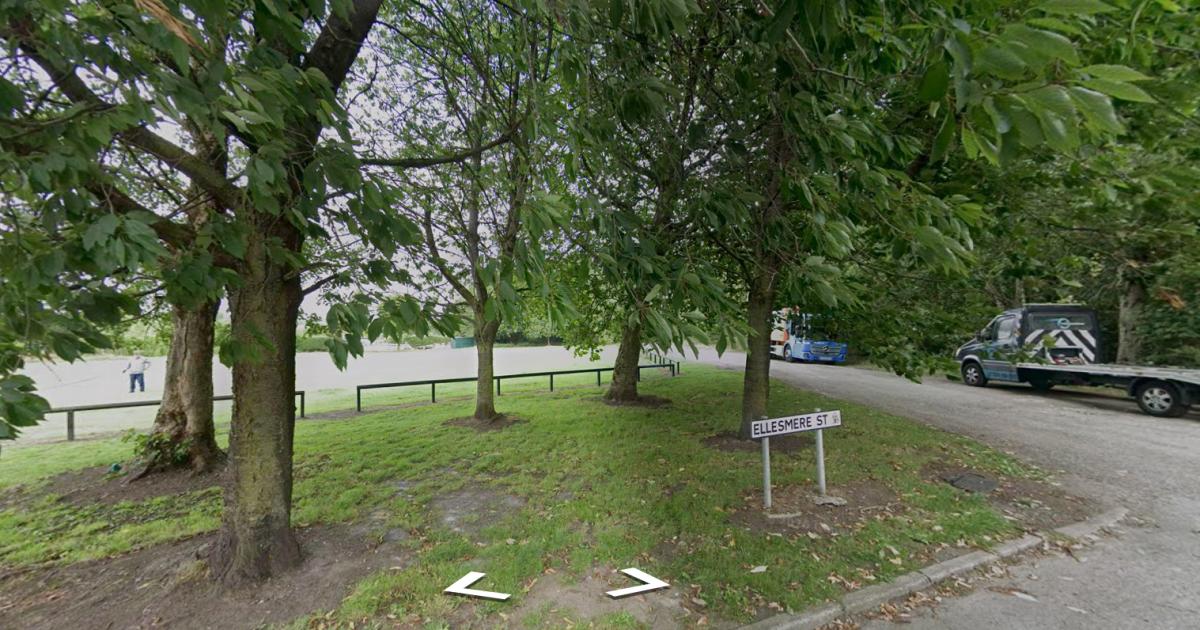
Greater Manchester Fire and Rescue Service (GMFRS) said five fire engines were called to the blaze at around 6.20pm on May 6 at the junction of Common Lane and Ellesmere Street in Tyldesley.

Crews from Atherton, Hindley, Leigh and Farnworth fire stations attended and worked to bring the fire under control.

A GMFRS spokesperson said: “At around 6.20pm on Wednesday 6 May, five fire engines from Atherton, Hindley, Leigh and Farnworth fire stations attended a derelict building at the junction of Common Lane and Ellesmere Street, Tyldesley.

Advertisement

“Firefighters were on the scene extinguishing a fire involving a derelict farmhouse using hose reel.

“Operations have been scaled back but fire crews remain at the scene at this time.”

Firefighters used hose reels to tackle the blaze, with operations later reduced as the situation improved.

However, crews continue to remain in attendance as they deal with the aftermath of the fire.

Advertisement

Source link

Continue Reading

Trending

Copyright © 2025