Connect with us
DAPA Banner
DAPA Coin
DAPA
COIN PAYMENT ASSET
PRIVACY · BLOCKDAG · HOMOMORPHIC ENCRYPTION · RUST
ElGamal Encrypted MINE DAPA
🚫 GENESIS SOLD OUT
DAPAPAY COMING

NewsBeat

Russian soldier loses control of mounted machine gun nearly killing several of his fellow troops

Published

on

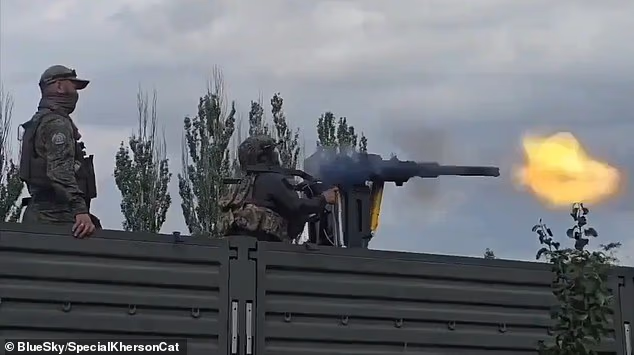
A video circulating online appears to show a Russian soldier losing control of a mounted rotary machine gun during a training exercise

Advertisement

A Russian military training exercise descended into chaos after a soldier lost control of a powerful rotary machine gun.

It sent the weapon spinning wildly and forced nearby troops to dive for cover as bullets appeared to spray unpredictably across the range.

The dramatic incident was captured on video and has since spread widely across social media, where viewers described it as a spectacular training failure and questioned how the weapon had been mounted.

The footage, which the Daily Mail has not been able to independently verify, including when or where it was filmed, is described online as showing a Russian mobile fire group training exercise involving a YakB-12.7 rotary machine gun.

Advertisement

The weapon was originally developed for use on the Mil Mi-24 ‘Hind’ attack helicopter.

The video begins with a soldier positioned behind the mounted machine gun while another serviceman stands just a few feet away.

At first, the exercise appears routine as the gunner opens fire but within moments the enormous recoil generated by the weapon appears to overwhelm the mounting system.

Instead of remaining fixed on its target, the heavy machine gun suddenly begins rotating violently around its support.

Advertisement

A video circulating online appears to show a Russian soldier losing control of a mounted rotary machine gun during a training exercise

The video's description claims the weapon is a YakB-12.7 rotary machine gun originally developed for the Mil Mi-24 Hind attack helicopter. Another soldier ducks, left, just in time!

The video’s description claims the weapon is a YakB-12.7 rotary machine gun originally developed for the Mil Mi-24 Hind attack helicopter. Another soldier ducks, left, just in time!

The footage appears to show the gun beginning to rotate violently shortly after the soldier opens fire. The operator appears unable to control the weapon as it spins around its mounting

The footage appears to show the gun beginning to rotate violently shortly after the soldier opens fire. The operator appears unable to control the weapon as it spins around its mounting

Advertisement

The soldier clinging to the weapon is pulled with it, desperately trying to maintain control as the entire assembly spins faster and faster.

As the gun continues firing, the operator is whipped around the mount before being violently hurled over a nearby barrier.

The weapon appears to continue rotating under its own momentum while still discharging rounds.

Nearby troops can be seen ducking and scrambling away as the machine gun swings through wide arcs.

Advertisement

The footage appears to show bullets continuing to fire while the uncontrolled weapon rotates.

Eventually another serviceman rushes toward the spinning gun and manages to stop it moving.

Moments later, he reaches toward the barrel but immediately pulls his hand away, apparently after discovering just how hot the metal had become following the sustained burst of automatic fire.

No information has been released about whether anyone was injured during the incident.

Advertisement
The soldier is flung over a nearby barrier while still attempting to hold onto the machine gun

The soldier is flung over a nearby barrier while still attempting to hold onto the machine gun

The soldier cannot hold onto the weapon any longer and it flung over a fence

The soldier cannot hold onto the weapon any longer and it flung over a fence

Join the discussion

What does this training disaster say about the state of Russian military preparedness today?

Advertisement

The exact location, date and circumstances surrounding the exercise also remain unclear.

According to the video’s online description, the training involved a Russian mobile fire group using a YakB-12.7, a four-barrel rotary machine gun designed for helicopter use rather than ground-mounted firing positions.

The footage has prompted a flood of commentary online, with many viewers focusing on what they believed may have caused the spectacular loss of control.

One person wrote: ‘Physics is cool. Instructor grabbing hot barrel after? Chef’s kiss.’

Advertisement

Another suggested the mounting arrangement itself may have been flawed.

‘In the end you can see they mounted it off-bore. So once the recoil starts turning the barrel it will just accelerate…’ the commenter wrote.

Another serviceman eventually approaches and appears to stop the machine gun from rotating.

Another serviceman eventually approaches and appears to stop the machine gun from rotating.

A third viewer speculated that the balance of the weapon may have been compromised.

Advertisement

‘Yeah, it looks like they used the mount for a second barrel to hold the ammunition box rather than the second barrel to balance it.’

Others could not believe one of the soldiers appeared to touch the barrel moments after the sustained burst of fire.

‘Even after that spectacular display of stupidity, the guy with the bandana feels the need to one up him and touches the searing hot gun barrel. (That’s gonna leave a mark.)’ another commenter joked.


Advertisement

Advertisement

Source link

Continue Reading
Click to comment

You must be logged in to post a comment Login

Leave a Reply

NewsBeat

How much microplastic are we actually breathing in? Here’s what we do and still don’t know

Published

on

How much microplastic are we actually breathing in? Here’s what we do and still don’t know

You’ve already inhaled thousands of microscopic particles today. Some will be dust, pollen or soot, and some are plastic. Microplastics – tiny fragments shed from clothes, tyres or packaging – have been found pretty much everywhere. They’re in oceans, soils, wildlife, remote mountaintops and deep-sea trenches and the atmosphere is no exception.

But how much plastic are we really breathing in? And should we be worried?

A modelling study published in the journal Nature earlier this year suggests the answer may be more complicated – and perhaps less alarming – than previously thought. Measuring this atmospheric microplastic remains difficult, however, and scientists haven’t yet agreed on exactly how to do it.

The particles come from many different sources, including road dust generated by tyre wear, sea spray, or agricultural soil dust, disturbed by wind and farming activities. Indoors, the major source is textiles, particularly synthetic fabrics. Your fleece or your leggings will shed fibres during everyday use.

Advertisement

As plastics fragment into ever smaller pieces, detection becomes increasingly difficult. Current methods struggle to identify the smallest particles, meaning they are probably underestimated and, in the very smallest cases, remain largely theoretical.

Estimating microplastics in the air

Scientists can’t measure every microscopic particle directly, so they rely partly on computer models that estimate how much plastic enters the environment, how it breaks down into smaller pieces, and how these particles move through the atmosphere. Different models led to different estimations of anywhere between 324,000 tonnes and around 10 million tonnes entering the air each year.

The larger end of microplastics are visible to the naked eye.
Svet / Alamy

But real-world measurements didn’t find as much plastic in the atmosphere as these models predicted – not even close. After adjusting the flawed models to match the real-world measurements, the scientists behind the Nature paper came up with a much lower estimate: around 4,500 tonnes per year.

Advertisement

Why were the earlier estimates so much higher? The authors argue that previous models probably overestimated emissions from land-based sources such as car tyres or textiles. Those models had to make assumptions about how much plastic difference sources released and the sizes of the particles they produce – two things scientists still don’t know with confidence.

The Nature modelling study uses revised assumptions that better match what’s actually being found in the atmosphere. But this research is unlikely to be the final word. In a few years, with better data and more understanding, we may find ourselves having a similar conversation about another more refined estimate.

Different researchers looking at different things

The scientists behind the new study emphasise the lack of a “universal sampling protocol” for microplastics, including those found in the atmosphere. Different studies collect different particles in different ways, and this makes comparisons between them difficult. Some sample particles suspended in the air using pumps, while others collect particles that settle onto surfaces over time.

The samples are then examined under a microscope to identify features like colour and size, before chemical tests confirm whether the particles are actually plastic and if so which polymer they are made from.

Advertisement

Because studies use different equipment, focus on different size particles, and have different reporting methods, the results are often not directly comparable. This makes it much harder to estimate how much plastic people are actually breathing in.

Should we be worried?

Microplastics have been found throughout the human body, including in the blood and lungs. This naturally raises questions about the health effects. However, detecting microplastics is not the same thing as demonstrating they are harmful.

For now, researchers cannot say that the levels of airborne microplastics people typically inhale are causing diseases. What we can say is that evidence from laboratory experiments increasingly shows that these particles are linked to inflammation and a risk of damage to DNA and cells, though these experiments don’t necessarily reflect everyday life.

What needs to be done next

A few simple changes would help researchers make progress on atmospheric microplastics. We should have internationally agreed standards for sampling, analysis and reporting, for instance. This would mean the data generated is better quality and more easily comparable.

Advertisement

We’ll need studies that track the health harms of exposure over the long-term – not just on us, but on plants, animals and ecosystems too. And we need more research looking at the original sources of this microplastic and how it gets into the environment. This will help us develop better strategies for mitigating the problem.

Atmospheric microplastics are out there, and people are inhaling them every day. But we still don’t know exactly how much is in the air or what effect it will have on our health. Better measurements will help us answer that question. For now, the evidence does not support panic, but it does justify concern.

Source link

Advertisement
Continue Reading

NewsBeat

Great Yorkshire Show hears food production investment calls

Published

on

Great Yorkshire Show hears food production investment calls

The Harrogate showground was busy from early morning, as farmers, school groups, traders and exhibitors turned out in numbers.

Tickets, which are only available in advance, were a sell-out, with 150,000 people and 8,500 livestock due to attend across the four days.

NFU president Tom Bradshaw was among the industry leaders present, and speaking at a briefing chaired by NFU North regional board chairman William Maughan, who farms near Darlington, spoke of the importance of building more resilient farm businesses through innovation and long-term investment from government.

Mr Bradshaw said he will be looking to speak to Prime Minister-in-waiting Andy Burnham early in his premiership about food security, and the economic benefits of a thriving food and farm sector for every constituency in the UK.

Advertisement

The NFU press conference at the Great Yorkshire Show, with president Tom Bradshaw, right (Image: HANNAH CHAPMAN)

The panel also examined the growing role of Artificial Intelligence (AI) and other innovative technologies in improving productivity, supporting sustainable farming practices and helping businesses adapt to future challenges.

Mr Bradshaw said: “Investment in food production is critical to the nation’s future.

“Everyone, whether they live in rural Yorkshire or in one of our towns and cities, depends on a resilient food system.

“The resilience of our farms will determine our ability to produce food, manage inflation, protect national security and support economic growth. But resilience starts with profitable businesses that have the confidence to invest for the future.

Advertisement

“Profitability is not a dirty word. It is the foundation of sustainable farming, economic growth and long-term food security.”

A key part of that future, the NFU says, will be the adoption of new technology and AI-driven innovation.

Panel member Steve McLean, chief executive of The Agri-Tech Centre, said: “Yorkshire is home to world-class farming businesses which are already embracing new technologies to improve productivity and sustainability.

Cattle judging on the first morning of the 2026 Great Yorkshire Show (Image: SARAH CALDECOTT)

“Artificial intelligence, robotics, precision farming and data-led decision making all have an important role to play in helping farmers manage risk, improve efficiency and build resilience in an increasingly uncertain world.

Advertisement

“With the right support, Yorkshire can continue to lead the way in agricultural innovation while producing high-quality food and supporting rural economic growth.”

Elsewhere on the showground, York and North Yorkshire mayor David Skaith formally launched his rural action plan, which includes commitments on affordable housing, improved digital connectivity, transport and access to healthcare, announcing it would be backed with £1m of funding.

Washing off ready for showing – and keeping cool – at the Great Yorkshire Show (Image: SARAH CALDECOTT)

A huge audience packed out the Ariat GYS stage to hear from Liz and Kelvin Fletcher, of popular ITV show Fletchers’ Family Farm, which has been recommissioned for a further two series.

The couple, who had earlier presented rosettes in the Zwartbles sheep classes and visited the Forestry section, spoke of the reasons behind their decision to change tack from a planned move to California to buying a farm in the Peak District, and how it has changed their lives.

Advertisement

Liz and Kelvin Fletcher on the Ariat GYS stage (Image: SARAH CALDECOTT)

They told host Christine Talbot they were honoured to be asked to give out the prizes, and proud of how their four young children have embraced the farming life.


Strictly Come Dancing winner and former Emmerdale star Kelvin added: “So many people from within the farming community, the way they have been so helpful and so giving with information.

“You can do farm visits and farm tours, you can go on someone else’s farm and just have a nosy around. People are so open with their systems, I’ve never known an industry like it.”

Providing another talking point was the world’s largest combine harvester, the New Holland CR11 from Russells, on the President’s Lawn, while on display for the first time at a UK farming show was Toyota’s hydrogen powered Hilux prototype which is being developed with cutting-edge hydrogen fuel cell technology developed in the UK by the firm.

Advertisement

Source link

Continue Reading

NewsBeat

How apocalyptic worldviews are moving from the fringes to the corridors of power

Published

on

How apocalyptic worldviews are moving from the fringes to the corridors of power

It recently emerged that tech billionaire Peter Thiel is running a secret society that brings together fellow CEOs and billionaires with political leaders. Members reportedly include figures like Nato supreme commander Alexus Grynkewich and son-in-law of US President Donald Trump, Jared Kushner.

Thiel, a German-American entrepreneur and activist, was a co-founder of PayPal and software firm Palantir. Revelations about the society – known as “Dialog” – have attracted widespread attention. And Thiel himself gave a confidential lecture series in San Francisco this year, in which he framed issues of politics and technology in biblical terms.

Thiel has said he believes that humankind faces existential threats from nuclear war or runaway artificial intelligence (AI) that could lead to “Armageddon”. In such an end-times era, so the thinking goes, only the most ingenious – like those in the secret society – would survive.

Thiel is an extreme, but by no means isolated, case. Other powerful people in politics and technology are viewing today’s world through a lens of civilisational crisis and impending catastrophe.

Advertisement

Politics of the end times

Over the centuries, political leaders have often invoked fears of decline and collapse. In ancient times, Augustus, the first Roman emperor, championed the narrative that Rome faced moral collapse to justify concentrating power in his own hands. Yet the current moment of “end-times politics” is different on several fronts. Threats, both real and imagined, spread faster than ever, diffused through social media algorithms that favour hysteria and conspiracy.

In Silicon Valley, influential figures routinely discuss AI as either humanity’s salvation or an extinction event. Palantir CEO Alex Karp has described the AI race as “our Oppenheimer moment”, when the world’s rich nations must decide whether to halt the development of a dangerous technology or tip the balance of power in its favour.

Yet the phenomenon extends beyond eccentric tech circles. End-times narratives have made their way into the halls of power, as political figures seize the opportunity to propagate radical politics.

US military personnel have filed a large number of complaints, stating that their commanders have been using biblical end-times rhetoric to justify the US attacks on Iran. Their leadership reportedly made reference to the Armageddon, viewing the war in Iran as a necessary step in bringing about the return of Christ.

Advertisement

Weaponising Jesus.

This occurs in a context where the Trump administration has been catering to the Christian right, particularly evangelicals, as a major constituency for its “spiritual warfare”. The US secretary of war, Pete Hegseth, in particular has been portraying himself as an instrument of god in an existential civilisational battle for Christianity.

Hegseth and other central figures have reportedly been stacking their departments with evangelicals and Christian Zionists. These instances can be viewed as elements of a larger shift, where political and corporate leaders mix their interpretation of Christianity with beliefs about US supremacy.

Radical minds, radical politics

Trump’s threats towards Iran, including his decree in April that “a whole civilisation will die tonight, never to be brought back again”, indicate the consequences of this myth-making. It paves the way for radical politics in the US, and also beyond.

Advertisement

The Trump administration has claimed that Europe is facing continental decline and “civilizational erasure” due to immigration and European integration. In the same vein, Nigel Farage, leader of Reform UK, has sounded the alarm about the UK facing “societal collapse”.

Research has shown that people are more willing to support extraordinary measures when they believe they face an existential threat. It has also been shown that political leaders’ psychological dispositions matter more in times of uncertainty. The unforeseeable effects of technological and environmental transformation create risks and anxiety – and the danger is that leaders treat opponents, social movements or minority groups as mythical foes.

End-times politics then becomes a struggle over the definition of the ultimate threat to humankind. We are in a time when humans face multiple risks. These worldviews eventually determine how national politics and geopolitics evolve.

There is another reason to pay attention. For much of the modern era, the most influential people were elected leaders and state officials. Today, a novel type of leader has emerged: technology executives with wealth and media influence. Their influence can extend deep into the state – symbolised by Elon Musk’s role in the US Department of Government Efficiency and the critical role of SpaceX in US global strategy.

Advertisement

For a long time, scholars explained global politics in terms of institutions and structural relations, and globalisation through business interests. Now, the future of both increasingly depends on the psychology of a small political and corporate elite.

End-times leaders will exaggerate certain threats while downplaying others. Often, technology executives will establish links between a prosperous future and the necessity of disruptive innovation. US venture capitalist Marc Andreessen has been a proponent of “technological accelerationism” – the idea that unregulated technological development is the only way to overcome the world’s existential problems.

The challenge is distinguishing between genuine threats and narratives that amplify fear while obscuring more pressing problems. At a time when the debate is saturated with predictions of collapse, it may be more important than ever to focus on the risks that are supported by evidence – the climate crisis and an erosion of democratic systems, for example.

On the question of whether technology can overcome climate change and bring world peace, it might be wise not to take the word of tech billionaires. After all, Thiel has recently been hedging his bets between a bunker in New Zealand and a refuge in Javier Milei’s Argentina.

Advertisement

Source link

Continue Reading

NewsBeat

Grassroots sports clubs on the South Coast invited to join Cash for Kids Sports Challenge 2026

Published

on

Grassroots sports clubs on the South Coast invited to join Cash for Kids Sports Challenge 2026

Hundreds of grassroots sports clubs, schools and community groups across the South Coast are being invited to sign up for the Cash for Kids South Coast Sports Challenge 2026, the charity’s annual fundraising competition that has channelled more than £5.6 million into grassroots sport across the UK since it began in 2018.

Source link

Continue Reading

NewsBeat

Trump abruptly kills his Strait of Hormuz toll after just one day… and reveals what Gulf states must do instead

Published

on

In a stunning twist, President Donald Trump has executed a breathtaking U-turn on his threat to slap a 20% toll on cargo passing through the strategic Strait of Hormuz

Advertisement

President Donald Trump has announced a U-turn on his threat to slap a 20 percent toll on cargo passing through the Strait of Hormuz.

The President said on Tuesday that the US will instead agree ‘massive’ investment deals with the ​Gulf states.

Trump wrote on Truth Social: ‘Based on highly productive conversations with Middle East leadership, I have decided to replace the 20% United States Reimbursement Fee with Trade and Investment Deals that the various Gulf States will be making into the United States,’ Trump said on social media. 

He said the investments will be significant though it’s unclear if these would be new commitments relative to what Trump announced after a visit last year to the Middle East. 

Advertisement

This comes after another round of strikes exchanged with Iran overnight. The US launched strikes earlier in the day, and Iran responded by attacking American allies in the region.

The latest exchange of fire has shattered an interim agreement designed to pause hostilities, reopen a vital global energy waterway and allow time for permanent peace talks. 

Instead, renewed fighting has engulfed the region, threatening the global economy and triggering warnings for commercial airlines.

Advertisement

In a stunning twist, President Donald Trump has executed a breathtaking U-turn on his threat to slap a 20% toll on cargo passing through the strategic Strait of Hormuz

Vessels at the Strait of Hormuz, pictured off the shore of Musandam, Oman, July 13

Vessels at the Strait of Hormuz, pictured off the shore of Musandam, Oman, July 13

Advertisement

Source link

Advertisement
Continue Reading

NewsBeat

Delays in replacing eyesore gap on High Street branded ’embarrassing’

Published

on

Cambridgeshire Live

Fenland District Council’s cabinet said it was ‘not acceptable’ the building was left ‘rotting for 20 years’

A delay in plugging an eyesore gap on Wisbech High Street has been branded “embarrassing” after the council were not told about issues with the plans.

Advertisement

Fenland District Council’s Conservative cabinet were told a full planning application was submitted for 11-12 High Street, two properties which were demolished in 2020 after lying vacant for years.

Cllr Samantha Hoy, of Wisbech South, said: “I’m sorry, it’s just really not acceptable – this building has sat there decaying for 20 plus years and this district council is responsible. It’s under our ownership and we must not let it carry on.”

She said it had also taken “so long” to redevelop 24 High Street and they “need to get the work started”.

Cllr Steve Tierney, also of Wisbech South, said it is “just not acceptable for this building to have sat rotting for 20 years”. He said if the work is not complete before the council is abolished after local government reorganisation, it “will be remembered, rightly, as a failure of ours”.

Advertisement

He said: “It’s not good enough, we should be getting it done by summer like we said we would.”

Cllr Christopher Seaton, the portfolio holder for Wisbech High Street projects, said the new mayor had asked for a “proper business case”, done by real estate agents Avison Young.

He said: “In all honesty, the officers said to me they did not have the sufficient experience to put forward a business case.”

Cllr Hoy said it had been “ten weeks” since the application was validated on May 13, after being received on April 10 and said “the whole thing is embarrassing”.

Advertisement

She said: “I know there’s a process, but we’ve had other applications – more controversial applications – that have not only been validated but decided and a decision notice issued in six weeks. When we want to do things within the time frame, we can, and this has sat there for ten weeks and we are not any further along on this at all.”

Cllr Dee Laws said the planning application had been rejected and there was an “issue regarding the bat survey, and we can’t overrule ecology”. She confirmed the proposal would be put before September’s planning committee.

Cllr Tierney said: “Having just been told that officers didn’t feel they had enough experience to write a business plan for this building – I think most members of the public watching this meeting will say, what sort of officers are we employing if they can’t make a business plan for something like that?”

Cllr Boden said: “My disappointment is that we’re only now, as members of the cabinet including the portfolio holder, hearing about this bat survey problem and what happened. I’m amazed it hasn’t been referred back to us prior to this.”

Advertisement

Cllr Seaton said: “I’m extremely concerned to find out during a meeting that the planning application is in this position because I haven’t been told that information. That is, to me, extremely bad – it makes me look stupid and it makes us all look a little foolish about it.”

Council leader Chris Boden said it was “astonishing” that there had been a failure to communicate “over such a long period of time”.

He said: “We must have an explanation about how this has ended up happening. It’s embarrassing to the council, to be quite honest, that we should be put in this position.”

Source link

Advertisement
Continue Reading

NewsBeat

Five Guys Bolton launches brand new kid meal that rivals McDonald’s

Published

on

Five Guys Bolton launches brand new kid meal that rivals McDonald's

The burger chain’s new ‘Big Kids Combo’ is designed as a limited-edition meal deal aimed at families.

This new offering, available until September 1, starts at £15.50 at participating dine-in restaurants across England, Scotland, and Wales.

Unlike McDonald’s iconic ‘Happy Meal’, the Five Guys combo won’t come with a toy.

Advertisement

Instead, the restaurant, which has a branch in Middlebrook, has decided to focus primarily on the food, presenting it as its contribution to the Great British Summer Savings initiative.

Five Guys launches new kid meal that rivals McDonald’s

The new combo offers a regular hamburger (as opposed to the single-patty burger in its existing kids’ menu), with a pick from Five Guys’ range of 15 free toppings.

Mini Fries, available both Cajun and salted, are included in the meal.

To pair with the food, customers have the choice of a Big Kids Soft Drink or a Little Shake.

There is also an option to upgrade to a larger shake at an extra charge.

Advertisement

Furthermore, customers can add cheese and bacon to their burger for an additional cost.

The chain’s intention behind this offer is to make the Five Guys experience appealing for families during the summer holidays, ensuring that quality is not compromised.

John Eckbert, chief executive of Five Guys UK, described the Big Kids Combo as the perfect way to share the Five Guys experience, as well as a way of making Five Guys a more accessible treat in the summer.

The new meal option complements the chain’s existing build-your-own kids’ menu, which includes a choice of a Little Hamburger, Hot Dog or Grilled Cheese Sandwich, all of which come with Mini Fries and a choice of a Mini Soda or Little Shake.

Advertisement

The new Big Kids Combo is available exclusively to dine-in customers while stocks last.

What’s your go-to Five Guys order? Let us know in the comments.

Source link

Advertisement
Continue Reading

NewsBeat

Police say Ann Widdecombe was killed in ‘targeted attack’

Published

on

Police say Ann Widdecombe was killed in 'targeted attack'

The 78-year-old was found dead at her home in Haytor, Devon, on Thursday (July 9), with “serious injuries.”

A 28-year-old man was arrested on suspicion of her murder on Saturday and has since been rearrested on suspicion of the commission, preparation or instigation of acts of terrorism.

Shabana Mahmood, the Home Secretary, confirmed the suspect was not known to the Government’s Prevent anti-extremism programme.

Advertisement

Speaking in the House of Commons on Monday, she paid tribute to Miss Widdecombe, describing her as a “unique figure” in UK politics and a “devoted public servant.”

Ms Mahmood said: “She was a unique figure in our politics, a distinctive and devoted public servant, the likes of whom we will rarely, if ever, see again.

“Ann had a profound faith. Her journey in this life has ended too soon.”

Counter-terrorism police are now leading the investigation following the discovery of new evidence.

Laurence Taylor, head of UK counter-terrorism policing, said: “Building on the progress made by our colleagues in Devon and Cornwall Police, we now have new information and evidence that means Counter Terrorism Policing is now leading the investigation.

“We are pursuing multiple lines of inquiry to establish the motivation for this attack.

Advertisement

“Our priority is progressing this investigation quickly, with all the capabilities we have available to us.”

He urged anyone with information to contact police and thanked the public and media for their support and patience.

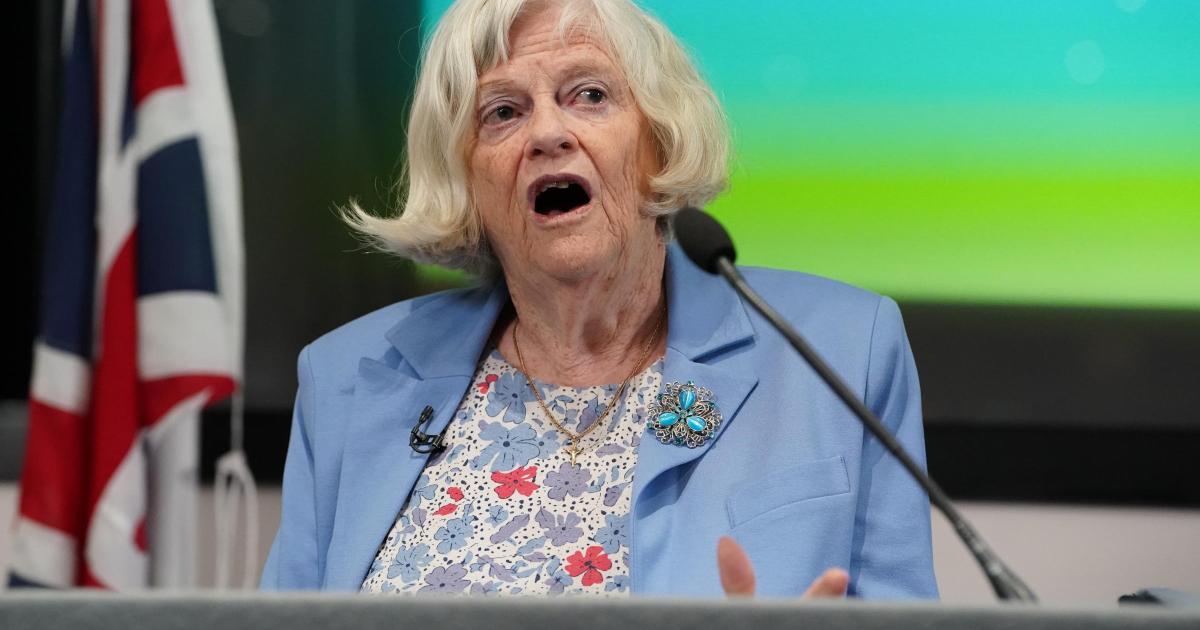
Counter terrorism police are now leading the investigation into the death of Ann Widdecombe (Image: Zoe Head-Thomas/PA Wire)

Miss Widdecombe, who was a former Conservative MP, Brexit Party MEP, and most recently a Reform UK spokeswoman, was found dead at about 11.40am on Thursday at her remote bungalow on Dartmoor.

Police believe she was attacked around 12.30pm on Wednesday, shortly before she was due to appear on Channel 5’s Matt Allwright show.

Advertisement

ITV News reported that Miss Widdecombe stopped responding to WhatsApp messages from a TV producer after the time police believe the attack took place.

Nigel Farage has been offered a meeting with the head of a parliamentary security body following Reform UK’s concerns about the safety of its MPs, Ms Mahmood confirmed.

The Home Secretary said she would also review security guidance for former MPs and members of political parties without representation in Parliament.

Footage published by media outlets showed a shirtless man being arrested in Rotherham, South Yorkshire, on Saturday (July 11).

In cases such as this, investigators will examine the suspect’s devices for evidence of terrorist material and consider factors including mental health.

Police have said that if the investigation continues under terrorism legislation, they could be permitted to detain the suspect for up to 14 days for questioning.

Advertisement

Miss Widdecombe first entered Parliament as the Conservative MP for Maidstone in 1987.

She later served as an MEP for the Brexit Party and became a spokeswoman for Reform UK.

Outside of politics, she became a familiar face in popular culture, appearing on Strictly Come Dancing and Celebrity Big Brother.

Following her death, there were calls for caution from Reform UK figures after Devon and Cornwall Police initially ruled out a political or terrorist motive for the killing.

Advertisement

Richard Tice, deputy leader of Reform UK, said it would be “wise, when considering motivation” for police to keep an open mind “as opposed to ruling things out too quickly that may then end up being ruled back in”.

Gawain Towler, a board member for the party, said changing the line of inquiry risked undermining trust in the police.


Recommended reading:


Mr Towler said: “In a time when trust in the police is at an all-time low, this just plays into that they are trying to massage public opinion rather than do the job of investigating a brutal murder.

Advertisement

“By appearing to rule something out and then a few days later bringing it back in, they look manipulative and that’s a shame.”

Miss Widdecombe was widely respected across the spectrum for her public service and outspoken character.

Source link

Advertisement
Continue Reading

NewsBeat

Scarborough Railway Station to close car park for repairs

Published

on

Scarborough Railway Station to close car park for repairs

​A passenger hub on the North Yorkshire coast is scheduled to close its car park as part of essential maintenance works taking place next week.

​TransPennine Express (TPE) has asked passengers not to use the car park at Scarborough Station on Monday, July 20.

​The rail operator said that essential maintenance works would be taking place and that vehicles could not be parked at the coastal station’s car park.

Scarborough Station, Current Frontage. Align Property Services

​“It is important that no vehicles are parked overnight from Sunday 19th July into Monday 20th July,” TPE noted.

Advertisement

​It added: “Thank you for your cooperation.”

​The company did not specify what the maintenance works are set to involve.

​Earlier this year, a £14 million project to preserve the Grade II-listed building’s historical character, including a new roof, drainage systems and restored stonework, was completed.

​Roof repairs at Scarborough Station were started after a glazing failure in 2021.

Advertisement

The station was made safe and, after funding constraints were overcome, the full restoration began in spring 2025.

Scarborough’s coastal location meant Network Rail had to take into account local constraints.

Hawks were employed to prevent seagulls nesting during the main roof work last summer, and specific types of tile, paint and timber were used because of the salt-heavy sea air.

Advertisement

Source link

Continue Reading

NewsBeat

Counter terror cops say Ann Widdecombe was killed in a ‘targeted attack’ after police initially denied it was ‘politically motivated’

Published

on

Ms Widdecombe appeared on Talk TV on Wednesday before her death

Ann Widdecombe was the victim of a ‘targeted attack’, the Head of Counter Terrorism Policing has said.

Assistant Commissioner Laurence Taylor said police are still looking into any ‘motivation’ behind the 78-year-old’s death.

Police believe she was killed in her remote Dartmoor home on Wednesday lunchtime.

A 28-year-old remains in custody.

Advertisement

Mr Taylor said this afternoon: ‘It is clear that this was a targeted attack.

‘We are still working to understand the extent of any planning or preparation, and the motivation that sits behind that attack.

‘I don’t want to comment further on that motivation or preparation at this stage of our inquiries.’

It came as the boss of Devon and Cornwall Police has defended her embattled force over the way it has handled the Ann Widdecombe murder investigation.

Advertisement

Police and Crime Commissioner Alison Hernandez hit back at criticism after her officers spent days insisting the Tory former minister’s death had no link to terrorism.

But counter-terror officers were called in yesterday to take over from local detectives as the investigation escalated.

It prompted claims from Reform UK that police misled the public over the death of the party’s immigration and justice spokesman at her home on Dartmoor last Wednesday.

In a robust statement today, Ms Hernandez said: ‘There’s been some commentary about the way Devon and Cornwall police have communicated during the early stages of this case.

Advertisement

‘But, as the Home Secretary (Shabana Mahmood) said yesterday, it is not unusual that in a fast-paced investigation, more information comes to light that changes the nature or the character of what the police are dealing with.’

Counter-terror officers took over running the investigation on Monday following the discovery of the former MP’s body at her home on Dartmoor on Thursday.

Ms Widdecombe appeared on Talk TV on Wednesday before her death

Advertisement
The suspect was captured on CCTV leaving his property shortly before 8am on Wednesday with what appears to be a pole in the pocket of his shorts

The suspect was captured on CCTV leaving his property shortly before 8am on Wednesday with what appears to be a pole in the pocket of his shorts

Forensic officers were seen heading into the house in Rotherham after the arrest on Saturday

Forensic officers were seen heading into the house in Rotherham after the arrest on Saturday

Home Secretary Ms Mahmood confirmed yesterday that the British white suspect arrested on suspicion of murder and terror offences, who the Mail is not naming for legal reasons, was not known to the Government’s deradicalisation programme, Prevent. 

Devon and Cornwall Police has faced significant criticism over its initial handling of the inquiry and the fact it was five days in before counter terror officers took over.

Advertisement

Local officers waited more than 24 hours to announce a murder investigation, before Assistant Chief Constable Matt Longman said on Friday night: ‘The incident is not being treated as terrorism’, and later said there was no evidence to suggest the crime was politically motivated.

Devon and Cornwall Police also arrested a local labourer in error on Friday before detaining a 28-year-old suspect nearly 300 miles away in Rotherham, south Yorkshire, on Saturday night.

He remains in police custody.

The Mail has learnt that items of varying political ideology, including Russian material, have been found at the suspect’s home and on electronic devices.

Advertisement

In her statement, the Police and Crime Commissioner paid tribute to Ms Widdecombe ‘an exceptionally likeable character’.

A huge cordon remains in place near Ms Widdecombe’s remote home, but Ms Hernandez hinted at an imminent return to normality.

Floral tributes continue to grow near a police cordon in Haytor Vale, Dartmoor, where Ms Widdecombe was killed

Floral tributes continue to grow near a police cordon in Haytor Vale, Dartmoor, where Ms Widdecombe was killed  

She said: ‘When I visited the scene on Sunday, I was impressed by the efforts being made by the police to speak to residents and address their very understandable concerns.

‘I am sure the impact of this major operation has meant that some people have had to wait longer than they would expect for routine services, or have not yet had their issues resolved.

Advertisement

‘I have been assured officers and staff will be returning to business as usual over the coming days, which are also expected to be particularly busy with two final legs of the World Cup and the start of school holidays.’

Reform UK board member Gawain Towler led the initial criticism of the police, saying: ‘In the past, they’d have said all avenues of investigation are open but this time they tried to close out avenues of the investigation. In a time when trust in the police is at an all-time low, this just plays into that they are trying to massage public opinion.’

The killing has reignited fears about MPs’ safety following the murders of Sir David Amess and Jo Cox.

Source link

Advertisement
Continue Reading

Trending

Copyright © 2025