


Connect with us

NewsBeat

Russian strike tears apart a Ukrainian couple’s home on the eve of their wedding

Published

on

Russian strike tears apart a Ukrainian couple's home on the eve of their wedding

KYIV, Ukraine (AP) — On the eve of her wedding, Liudmyla Ryzhak pressed her delicately embroidered dress, laid out a full white tulle skirt and her husband’s traditionally patterned shirt, then hung them on the bedroom door.

After repeated delays caused by the war with Russia, she was only hours away from marrying her partner, a Ukrainian soldier, in a ceremony in the capital.

But as the couple slept, a Russian strike hit a warehouse across the street from their building, sending a blast wave through the apartment and threatening to stop the wedding scheduled for Tuesday morning.

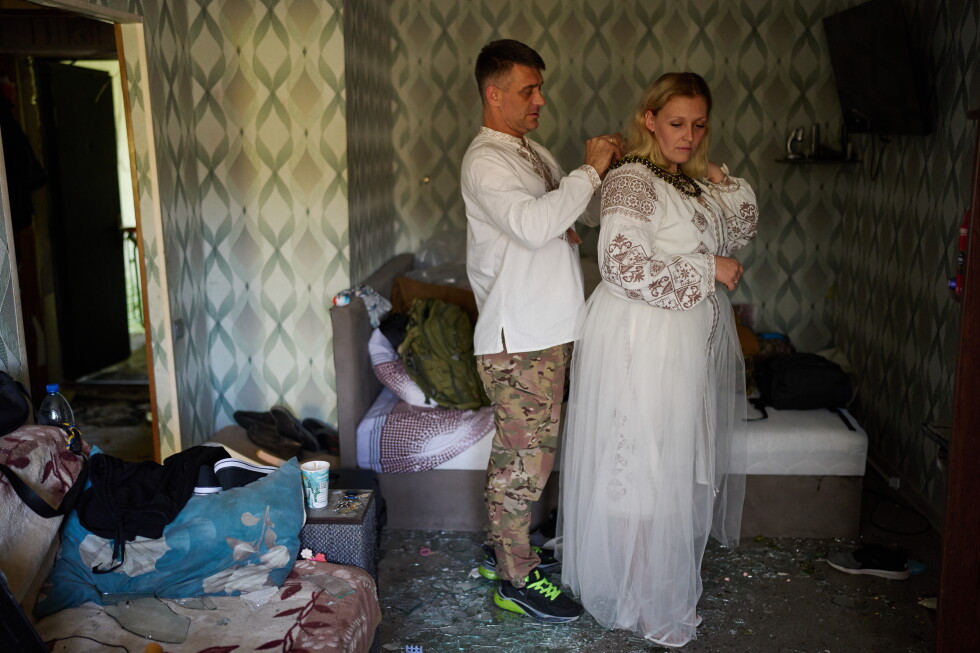
The pair was soon digging their wedding clothes out of the rubble. Ryzhak had to pull her skirt from beneath the debris, shaking off pieces of broken glass.

Advertisement

Strike followed visit by US envoys

The strike came soon after U.S. envoys visited Ukraine on Sunday, a trip that brought a lull in Russian attacks. The assaults then resumed with drones and missiles. Explosions were heard in Kyiv for almost five hours overnight. Strikes continued during the day Tuesday.

Like many others in Kyiv, the couple decided the attacks would not derail their lives and forged ahead with the ceremony. It had taken a long time for her fiance, Leonid Ryzhak, to make it back from the front lines in eastern Ukraine.

“If God gave me a continuation of life, then why should I put it off?” the bride said. “For someone, it ended. And who can guarantee this won’t happen again tomorrow? That tomorrow won’t come for us? At least for now, I have the right to be happy. Both him and me.”

Liudmyla and Leonid awoke from the blast, which blew out the apartment’s windows and scattered its furniture. A burned curtain hung in shreds.

Advertisement

Their ears deafened by the explosion, the couple’s only immediate thought was the risk of a second strike. They fled to a shelter with Liudmyla’s 6-year-old daughter and two guinea pigs but without the cat, which had hidden in fright and could not be found.

They were lucky: By the time the second strike hit, they were already safe. The apartment was rendered uninhabitable until repairs are made.

A friendship deepened into love

The two met three years ago through mutual friends, coming together as adults who weren’t looking for anything serious. Both had children from previous marriages.

But the friendship deepened. She supported him through his deployments to the front, and slowly the relationship grew into love. Leonid Ryzhak, who serves as part of a team that deploys bomber drones in the Pokrovsk area, arrived in Kyiv for a long-awaited vacation a week and a half earlier, just as near-constant air-raid alerts and daytime attacks began disrupting life in the capital.

Advertisement

For six days straight, the couple went to the registry office but could not submit their documents because of constant air-raid sirens.

When they finally succeeded, they were assigned Sept. 8. Nobody could have predicted that their apartment would be badly damaged on the same day.

Advertisement

It wasn’t the first time for Liudmyla. She had already lived through one attack, on Aug. 20, when a strike cut the gas lines and shattered windows in her home. She was badly frightened and for a time was afraid to go back.

Eventually, ordinary life pulled her back in: The wedding was coming, and the children had to go to school.

More attacks hit as they wait at registry office

Eventually, the two put on their wedding clothes and headed to the registry office.

Leonid tried to keep their spirits up. What mattered most to him, he said, was for his bride to be smiling.

Advertisement

“It’s fine. We’ll get through it,” he said.

When they stepped outside their apartment, the courtyard looked almost apocalyptic, with a column of black smoke rising behind a brightly colored children’s playground. Neighbors clearing debris stopped to congratulate the couple.

“We should all be celebrated, that we survived,” Liudmyla replied.

The couple arrived at the registry office on time, at 10:40 a.m.

Advertisement

Leonid wore an embroidered vyshyvanka, a traditional Ukrainian shirt, with a pattern that matched the one on Liudmyla’s dress.

In place of black dress pants, he wore army trousers — he couldn’t dig his own out of the rubble — and black sneakers with fluorescent yellow soles and laces, for the same reason. Liudmyla’s white tulle overlay had tiny, barely visible holes that were torn as she pulled it out from the rubble and broken glass.

Shortly after they arrived, a siren sounded: Another attack had begun, and the registry office closed for safety. The couple waited in the courtyard, unsure how long it would last.

Explosions echoed nearby as strikes hit surrounding districts and fires broke out. Almost three hours passed before the alert finally ended, and the couple hurried back inside.

Advertisement

Against all odds, they became husband and wife

Just before entering the hall for the ceremony, they paused, trading nervous jokes.

“I didn’t even get to finish the repairs at home,” Leonid joked about their now-wrecked apartment.

“I’ve never had such a spectacular day,” his bride replied.

The ceremony went ahead as the officiant told them, “Love is when two people become a team.”

Advertisement

Moments later, the two were officially married.

“We’re gaining a new life, because we survived,” Liudmyla said. “You could probably call (it) a new life because it could have ended today, and none of this would happen.”

In a different scenario, “I wouldn’t be wearing this dress. Someone would be picking out something else for me instead, something darker.”

Advertisement

Source link

Continue Reading
Click to comment

You must be logged in to post a comment Login

Leave a Reply

NewsBeat

Girl, 8, infected with dangerous bacteria after swallowing sea water | News UK

Published

on

Girl, 8, infected with dangerous bacteria after swallowing sea water | News UK
Keeva Hollow, eight, began very ill after a swimming in the sea in Dorset (Picture: Cover Media)

An eight-year-old girl had to be rushed to hospital after she was infected with dangerous bacteria during a family trip to the beach.

Keeva Hollow was swimming with her twin sister at Dorset’s Avon Beach when she was hit by a wave and swallowed sea water.

The next day she was lethargic, with a high temperature and no appetite, and her mum realised something was wrong.

Aisling Mccarthy said: ‘It has been a terrible time; Keeva was so ill. She used to swim all the time, a real water baby. But now I can’t see her ever going in the sea again; she is so scared of becoming sick again.’

Advertisement

‘To be honest, I don’t want her going back into it anyway until I know it is totally safe.’

Sign up for all of the latest stories

Start your day informed with Metro’s News Updates newsletter or get Breaking News alerts the moment it happens.

Aisling had taken Keeva and her twin sister Cornelia to Avon Beach on August 3.

‘I was watching the girls swim when I saw a wave hit Keeva and she started spluttering,’ she said. ‘She came out and said she had swallowed a lot of water. Cornelia had not at all, and I didn’t worry too much at the time.

Advertisement

‘But the next morning Keeva would not eat her breakfast. We were going to London, and she slept the whole journey. Her temperature was going up, and she just was not herself.

‘We were supposed to be going to Ireland to see my mother who was ill. But the next morning Keeva would not get out of bed, and her temperature was really high.

‘She had declined really fast. I found an out-of-hours doctor and took her to him. He asked for a urine sample; by then Keeva had really bad diarrhoea and I noticed there was blood in it.’

‘I had seen a documentary about sewage pollution in water, and I realised that Keeva’s symptoms were similar to those of a girl who died from polluted seawater. I told the doctor I was taking her to A&E and rushed there.

Advertisement

‘Keeva was put on a drip while tests were carried out. She was so ill by then, she had deteriorated so quickly it was frightening.’

Keeva spent two days in hospital where she was diagnosed with a campylobacter infection.

Aisling said: ‘The hospital said it can be food poisoning as well but Keeva does not eat meat which is one of the main sources of that bacteria.

‘Her illness happened straight after the sea-swallowing incident at Avon Beach, and Cornelia has not been ill at all.

Advertisement

‘I have a very clear memory of that moment when the wave hit Keeva, seeing her spluttering from swallowing the water. I am convinced that was what caused her to become so ill.’

Aisling says Keeva is still not back to full health. ‘She was always a very sporty girl but she now gets out of breath quickly. She used to keep up with me on a 5km run, but now she struggles to do 1km,’ she added.

‘She has lost a ton of weight, and her clothes are hanging off her. But the saddest thing is her fear of going into the sea.’

Aisling contacted Wessex Water, which manages wastewater and environmental protection for the River Stour, notifying them about Keeva and asking for any information on recent sewage leakages. But she has not received a reply yet.

Advertisement
Aisling Mccarthy said her twins Keeva and Cornelia are ‘real water babies’ and love swimming (Picture: Cover Media)

BCP Council sent a letter to Aisling, having been notified by the hospital of Keeva’s infection.

‘But the letter was all about food poisoning and was asking where Keeva had eaten,’ she said. ‘I replied saying I believed it was seawater, not food, but they claimed they had had no other reports of people becoming ill from swimming in the sea.

‘I was shocked by their attitude because surely, as a huge tourism area due to its beautiful beaches, BCP should be concerned about what has happened to Keeva. But they don’t appear to be.’

‘I want Wessex Water and BCP Council to be completely upfront with people and tell us if the water is safe.

‘I am very angry, it was awful to see my child suffering and I don’t want anyone else to become ill. I have lost my trust in the people responsible for our sea and waterways.’

Advertisement

Recent tests of the River Stour, which flows into the sea at Christchurch, showed ‘extremely unsafe’ levels of E. coli.

Martin Stewart, managing director of Stewarts Garden Centres and chair of the Christchurch Harbour & Marine Society, said testing on August 19 showed E.coli levels of 300,000 – the safe bathing level is 1,000.

He also found several other ‘concerning’ levels of bacteria in his samples.
Aisling says her family’s idyllic life of living by the ocean has now been shattered.

‘My husband is from this area and has always loved the sea,’ she explained. ‘We moved here from London to be by the ocean a week after the twins were born.

Advertisement

‘We bought a house within walking distance to the beach, and the sea has been our life – but now I’m too scared to let the girls in it.’

Councillor Andy Hadley, BCP Council Cabinet Member for Climate Response, Environment and Energy, has now met with the family and said he was pleased to see that Keeva had recovered.

‘Very many people regularly use local rivers and coastal waters for recreation,’ he said. ‘We encourage everyone to follow public health guidance, which is to avoid swallowing water and to practice good hygiene after water-based activities. 

‘If you see any evidence of pollution in these waters, please contact the Environment Agency on 0800 80 70 60 as soon as possible to report it. This helps them to investigate the source.

Advertisement

‘If you have been in the water and subsequently feel unwell, you should seek advice from your GP or NHS 111. Where appropriate, healthcare professionals may request further testing to help identify the cause of illness.

‘We cannot comment on individual cases, but it is very difficult to trace back the cause of infection. We have had no notification from the UKHSA of other cases.’

Councillor Andy Hadley, BCP Council Cabinet Member for Climate Response, Environment and Energy, said:  “I did meet the family last night, and I’m pleased that Keeva has recovered from her illness.

‘Very many people regularly use local rivers and coastal waters for recreation,’ he said. ‘We encourage everyone to follow public health guidance, which is to avoid swallowing water and to practice good hygiene after water-based activities. 

Advertisement

‘If you see any evidence of pollution in these waters, please contact the Environment Agency on 0800 80 70 60 as soon as possible to report it. This helps them to investigate the source.

‘If you have been in the water and subsequently feel unwell, you should seek advice from your GP or NHS 111. Where appropriate, healthcare professionals may request further testing to help identify the cause of illness.

‘We cannot comment on individual cases, but it is very difficult to trace back the cause of infection. We have had no notification from the UKHSA of other cases.’

Advertisement

Source link

Advertisement
Continue Reading

NewsBeat

Trump Curiously Silent Over UK Sanctions For Israeli Settlers

Published

on

Trump Curiously Silent Over UK Sanctions For Israeli Settlers

Donald Trump has remained remarkably silent over the UK’s decision to impose sanctions on Israeli settlements in the West Bank.

Ed Miliband announced on Tuesday that Britain, along with 11 other western nations, would impose a ban on goods and services from the illegally occupied territory.

The foreign secretary claimed the Israeli government has been “turning a blind eye” to the Israeli settlers’ “ethnic cleansing” of Palestinians.

The announcement is part of a wider plan to “reset” the UK’s relationship with Israel

Advertisement

It comes after the Israeli government unveiled a plan to develop 1,200 more homes in the West Bank, which critics say would erase the possibility of a two-state solution.

Tensions have also been rising between Israeli settlers and Palestinians in recent months, with frequent violent skirmishes.

The Israeli government has furiously hit back by closing the UK consulate in Jerusalem, accusing Miliband of “outrageous lies” and banning 12 back bench MPs from entering their country.

The US president is an ardent supporter of Israel and typically posts his unfiltered opinions on his social media website, TruthSocial, as soon as news breaks.

Advertisement

He has also not been slow to criticise the actions of the UK government, most notably over Keir Starmer’s refusal to allow US jets to launch offensive attacks on Iran from RAF bases.

But Trump has still not spoken up about Miliband’s pivotal statement in the Commons on Tuesday afternoon.

The president was informed by prime minister Andy Burnham about the UK’s plans over the phone on Monday, so has had plenty of time to respond.

According to Axios, Trump did not push back on the proposals or ask the PM to change his mind.

Advertisement

Of course, Trump could still speak up during his next public appearance at the Republican Party’s Midterm Convention in Dallas tonight.

But the US secretary of state Marco Rubio suggested that the White House would not be weighing in on Tuesday.

He told reporters: “I would say the president has not commented on this, neither have I at this point. We were made aware of that they [the UK] were going to make this decision.

“We heard their arguments as to why. We share the goal of stability. We don’t want to see some uptick of violence or an uptick of conflict or tensions in the West Bank, it’s a tenuous time… in the regions, it’s always tenuous times…

Advertisement

“As of this moment we don’t have any further comment on the UK decision.”

However, another high-profile Trump ally did slam Britain over the move.

Mike Huckabee, the US ambassador to Israel, accused the government of “Jew hate” after the Foreign Office published a video of Miliband condemning the “horrific” situation in Gaza.

Advertisement

That led to a condemnation of his remarks by Burnham’s official spokesman.

But Huckabee reignited the war of words on Radio 4’s Today programme on Tuesday.

He said Britain had not thought through the “implications” of the sanctions plan, which could see some US states ban all trade with the UK.

Huckabee said he was aware that Miliband is Jewish, but said: “This is an irrational action, that’s what I’m saying.

Advertisement

“I don’t understand what it’s supposed to achieve. If the UK is really interested in dealing with issues they feel are wrong, where are the sanctions against North Korea, China, Russia. Where are the sanctions against many other nations in the world?”

He added: “I feel it is a discrimination against the Israeli government, it’s a discrimination against the Jewish people, and I don’t understand the rationale of it.

“I don’t know if they have thought [this] through. It’s like throwing a stone and not knowing where it’s going to land.”

Jewish leaders have also condemned Miliband over the sanctions.

Advertisement

Chief Rabbi Ephraim Mervis said it was “truly a dark day for British Jews” while the Jewish Leadership Council said the sanctions risk “becoming a de facto boycott of Israel, giving legitimacy to those who reject Israel’s very existence”.

Listen to Commons People, the podcast that makes politics easy. Every week, Kevin Schofield and Kate Nicholson unpack the week’s biggest stories to keep you informed. Join us for straightforward analysis of what’s going on at Westminster.

Source link

Advertisement
Continue Reading

NewsBeat

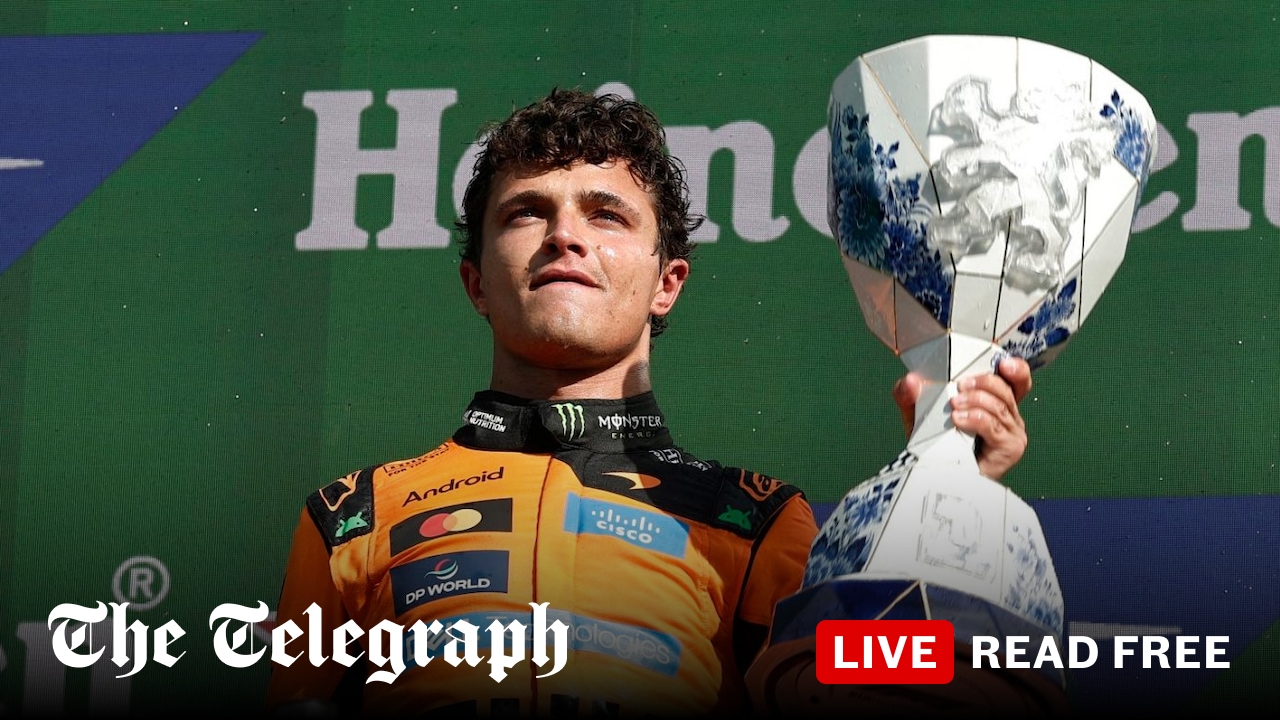
Frustrated George Russell fails to make up ground as Lando Norris wins incident-packed Dutch GP

Published

on

Frustrated George Russell fails to make up ground as Lando Norris wins incident-packed Dutch GP

This was a fitting race with a thrilling finale to end Zandvoort’s six-race stint on the F1 calendar, though home hero Verstappen’s participation ended before he crossed the finish line at the end of the first lap.

Exiting the final corner, still damp from a heavy shower 30 minutes before, he put a tyre onto the white lines on the inside. He lost control of his Red Bull, smashing into one barrier at the top of the track before rolling to a standstill, destroyed, at the bottom of it. The race was stopped for more than 30 minutes.

As for the championship leader? This was arguably Antonelli’s poorest weekend in recent memory, yet he managed to find a way to finish ahead of Russell for the eighth time in 12 rounds in 2026. That, too, sums up his season. His hopes of a home victory at Monza, though, will be dented by the news that he will take a hefty grid penalty for a power-unit change.

Advertisement

“In theory our calculations say that’s the best track to take it – obviously algorithms do not take nationality into consideration, but we are here to fight for the championship and not get the most PR,” Toto Wolff, the Mercedes team principal, joked after the race.

The way this season has gone, the final two races in Qatar and Abu Dhabi will be cancelled, and, as rumoured, the finale will be held in Imola. It could be that Antonelli is crowned champion – or enjoys a victory lap – at a track just 25 miles from his Bologna birthplace. How fitting that could be.


Verstappen ‘caught out’ by conditions in front of home crowd

Source link

Advertisement
Continue Reading

NewsBeat

Carlos Alcaraz’s vomit-stained 3.33am nightmare in New York! Defending champion throws up into a towel as he’s knocked out of US Open by Ben Shelton in latest ever finish to a match

Published

on

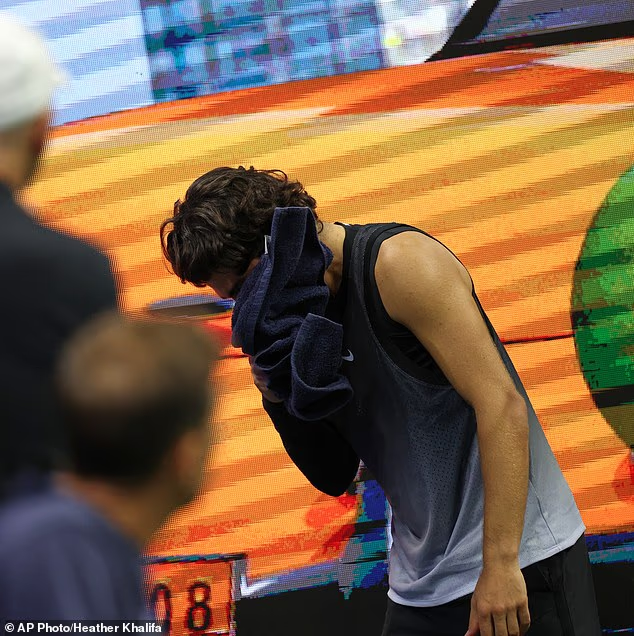
Carlos Alcaraz was seen throwing up into a towel as he was knocked out of the US Open

Behind the baseline inside Arthur Ashe Stadium, the clocks ticked beyond 2:50am. It was Wednesday morning. A school day. Sunrise was only a few hours away. And yet? With the help of several thousand New Yorkers – some drunk, some asleep, the rest simply delirious – Carlos Alcaraz and Ben Shelton dragged the US Open into uncharted waters.

Never in history had a match here finished this late. Never before had these two put on such a spectacle. But after four and a half sets and nearly four hours, the curtain refused to fall on this quarterfinal. 

It was exhausting. It was intoxicating. And for Alcaraz, it was sickening. Before the start of the deciding set, the defending champion appeared to vomit into his towel. But still it went on. All the way until road’s end: a fifth-set tiebreak. 

All the way until 3:33am, when after four hours and 28 minutes, Ben Shelton fired down an 146mph ace, stuck out his tongue, pulled Alcaraz into a long embrace and then – at long, long last – soaked up the biggest moment of his young career. 

Advertisement

The scoreline – 6-7 6-1 6-3 1-6 7-6 – spoke to the undulating chaos of the occasion: as night gave way to morning, this match swung back and forth between two of the most electrifying talents in tennis. In the end, it was Shelton and his hammer serve that won out.

What a player. What a night. What a shame someone had to lose. And what a travesty most of the world slept through it. Forget, for a moment, the incredible theater on this long night in New York. What are we doing? Who wins from starting a game after 11pm – beyond a few insomniacs, TV viewers on the other side of the world, and Shelton’s semifinal opponent Frances Tiafoe? 

Carlos Alcaraz was seen throwing up into a towel as he was knocked out of the US Open

Advertisement
Alcaraz was clearly struggling during the match - which ended in defeat at 3.30am local time

Alcaraz was clearly struggling during the match – which ended in defeat at 3.30am local time

An ecstatic Ben Shelton celebrates beating Alcaraz in the latest ever finish at the US Open

An ecstatic Ben Shelton celebrates beating Alcaraz in the latest ever finish at the US Open

‘I am just hoping that my best friend and my sister over there don’t have to be at work at 6am – in three hours,’ Shelton said. ‘It would be huge for their employers to let them have the day off today.’

The American added: ‘I am so grateful, so blessed. God has blessed in so many ways… sharing the court with Carlos is an absolute honor and I cherish every moment I have out here.’

Advertisement

Alcaraz has now played in the two latest finishes in US Open history. Back in 2022, en route to his first title in New York, the Spaniard beat Jannik Sinner at 2:50am. How we missed him over those four months when his wrist betrayed him. 

With this defeat, Alcaraz’s title defense is over. With this win, Shelton ended a run of 17 matches without victory over a top-three player. He has ensured an American will be in the final and a new name will be on the trophy.

It was at 11:05pm local time – after more than 13 hours of action and a final plea to influencers not to use Arthur Ashe Stadium for a personal photoshoot – Shelton and Alcaraz were finally ready to bring the curtain down on Day 11.

They had just over three and half hours to wrap this up or risk breaking new ground. They failed. Of course they failed. This showdown with Shelton had all the ingredients to be a blockbuster, another marathon tug of war.

Advertisement

But the 23,000 fans who forked out for this night session – including Seal, Simone Biles and Kevin Hart – knew the risk they ran. Unlike at Wimbledon, there is no 11pm curfew here. Only last week, Venus Williams’ first-round match kicked off at 12:13am – a US Open record – and on his way to the quarterfinals, No 1 seed Alexander Zverev has already clocked off at 1:55am and 2:15am.

Shelton had played beyond 2am in the second round and there was nothing sleepy about the way he began this match. 

For 12 games and most of a breathless first-set tiebreak, the American went toe-to-toe with Alcaraz. Time and again, this contest delivered on its promise of swagger and vicious shot-making.

And yet it felt so predictable, so ominous, when – at 5-5 – Shelton was broken to love. How often do we see the very best find a way just when a set teeters on a knife edge? This time, though, Shelton did not yield. At least not immediately. He broke back before taking control of the tiebreak. 

Advertisement
Shelton's girlfriend Trinity Rodman stayed until the bitter end as her partner beat Alcaraz

Shelton’s girlfriend Trinity Rodman stayed until the bitter end as her partner beat Alcaraz

But some members of the crowd were less engaged with the late finish in the quarter-final

But some members of the crowd were less engaged with the late finish in the quarter-final

One astonishing rally, in which the American pulled Alcaraz from back to a front like a yo-yo, sent Arthur Ashe into a frenzy. Only one member of the crowd was not lost in rapture: Shelton’s father, Bryan, who gestured for his son to calm down.

The 23-year-old heeded his advice and looked set to steal the set when he led 5-3 in the tiebreak. But then, Alcaraz found something from somewhere. Four points later, he had drawn first blood.

Advertisement

That was the trigger for many inside Arthur Ashe to call it a night. Who could blame them for thinking the dye was cast? Thankfully Shelton didn’t see it that way – even after squandering four break points in the opening game of the second set.

The American’s pressure finally told two games later and, this time, Alcaraz had no immediate answer. So Shelton turned the screw, breaking three times in succession to take the set 6-1. It was 12:56am, we had a game on our hands and the stadium speakers blasted out Jay Z’s reminder that this ‘city never sleeps.’

You’d do well to doze off in earshot of ‘DJ Mode’ at the best of times. Let alone with this quarterfinal so finely poised. 

And yet, by the time Alcaraz and Shelton climbed out of their chairs, more and more fans were on their way home. At this point, nowhere was more sparsely filled than courtside where a single seat can cost up to $5,000.

Advertisement

Those who remained in the posh seats were treated to more majesty at either end of the third set: first, a remarkable rally that saw Shelton stretch and contort every fiber of his 6ft 4in frame. 

After 18 shots, Alcaraz eventually claimed the point before cupping his hand behind his ear. And then, half an hour later, the Spaniard won a battle of touch around the net. Even Shelton’s girlfriend – soccer star Trinity Rodman – rose to her feet to applaud.

With this win, Shelton ended a run of 17 matches without victory over a top-three player

With this win, Shelton ended a run of 17 matches without victory over a top-three player

Alcaraz recovered from two sets to one down to force a decider, only to lose on a tiebreak

Alcaraz recovered from two sets to one down to force a decider, only to lose on a tiebreak

Advertisement

Unfortunately for Alcaraz, neither made a difference as Shelton held firm to take the third set. This time, his father was his biggest hype man. At the other end, Alcaraz bent at the waist. It was 1:43am and those four-and-half months off appeared to be catching up with the No 2 seed. He was grimacing and chuntering and soon Alcaraz faced more break points.

This time, though, he saved them and then, out of nowhere, he put dent after dent in Shelton’s serve. Alcaraz won five of the next six games to send this to a decider. It was 2:20am and we were headed toward more history on Arthur Ashe.

How much had that taken out of the defending champion? As thousands of fans – many of whom had migrated from the nosebleeds to the lower bowl – bayed for more, Alcaraz appeared to vomit into his towel.

And yet, as this match ticked towards a fifth hour, the Spaniard seemed to find a second – third? fourth? – wind. He opened up a break-point opportunity and repelled Shelton as the American banged at the door. By the time Alcaraz sent this to a tiebreak, it was 3:21am. At long, long last. Something had to give. In the end, it was Alcaraz who broke and Shelton who marched into a second US Open semifinal. After this, who would bet on him stopping there?


Advertisement

Source link

Continue Reading

NewsBeat

Compulsory grammar tests in England’s schools aren’t improving children’s writing

Published

on

Compulsory grammar tests in England’s schools aren’t improving children’s writing

For over a decade, children in year six – the final year of primary school in England – have taken the grammar, punctuation and spelling test as part of their Key Stage 2 Standard Assessment Tests (Sats). This GPS test has shaped how grammar is taught in primary schools.

It is mostly a multiple-choice questionnaire test with some short answer questions. It tests pupils’ knowledge of grammar, punctuation and spelling rather than their ability to write.

The GPS test was introduced in 2013 as part of wider curriculum reforms to raise writing standards. It focuses on a vast array of grammatical terms, and uses decontextualised examples that do not represent the complexity of everyday language. For example: “The lion approached silently as the zebra rested in the grass.”

This test has been criticised for narrowing the curriculum. Because the results affect how schools perform in league tables, teachers prioritise GPS content, rather than teaching grammar in context to reading and writing.

Advertisement

It also risks encouraging “teaching to the test” – children learn how to answer test questions, rather than the wider uses of grammar. This finding is supported by a number of studies including my recent thesis.

Rote learning

While the GPS test improves pupils’ ability to talk about grammar and spot grammatical features, it does not necessarily improve the quality of their writing. Pupils are not applying their grammar knowledge in writing.

This is important, given the government’s proposal to change the test. The Department for Education’s 2025 review of the the national curriculum and assessment states that the GPS should include “new tasks to more effectively assess writing composition and the use of grammar and punctuation”. The government therefore accepts that the GPS test isn’t doing its job.

Spanning a ten‑year period, my research adds to the limited amount of analysis on the GPS test. It explores the gap between what pupils can identify about language and what they can do in writing, highlighting the wider tension between policy expectations and classroom reality.

Advertisement

I analysed 29 pupils’ GPS scores, alongside a sample of their writing, at Key Stage 2 (age 10-11) and Key Stage 4, before they took their GCSEs. While the test boosts pupils’ knowledge of grammar and punctuation, this doesn’t automatically lead to better writing. I found common errors in pupils’ writing, such as basic errors with full stops, capital letters and commas.

Both samples included many run-on sentences and sentence fragments. This shows that pupils have a lack of understanding of clauses and sentence structures, despite the same pupils having little difficulty answering questions related to these aspects in the test.

Children aren’t putting grammar knowledge into practice.
Lima das Artes/Shutterstock

One way the GPS test has been successful is in bringing grammar back into the curriculum. Teaching grammar can no longer be avoided – which is what previously led to the “grammarless generation” after the 1960s, when grammar disappeared from the English curriculum due to research at that time calling its usefulness into dispute. This led to decades of confusion over the usefulness of grammar teaching.

Training needed

Despite the requirement to teach grammar, training for teachers is lacking. Many have reported being self-taught since the implementation of the test.

Advertisement

PGCE programmes are not obliged to teach grammar, unlike phonics, despite its statutory requirement. Subject knowledge enhancement courses, designed to help trainee teachers gain skills before beginning a teacher training course, are not currently available in English language. The system assumes trainee teachers have mastered this knowledge before they start their training.

Teachers have gained skills as a result of the GPS test, but the test itself is not an effective means of helping pupils to become better writers. It leads to teaching for the test and teaching grammar in isolation, taking away opportunities for teaching grammar in context to reading and writing through exploration, discovery and playing with language.

The government’s call for evidence has found that the content at primary level is too “theoretical”. More advanced content could be covered at secondary level.

This suggestion was supported by linguist Michael Halliday, who was a major proponent of the idea that grammar should be a source of “making meaning” – a creative tool for making linguistic choices, rather than a set of prescriptive rules to be learnt by rote.

Advertisement

Primary education should focus on discovering grammatical features through a process of exploration and experimentation. Pupils would be introduced to the basics at meaningful and relevant points.

Ten years of the GPS test has shown that pupils can learn grammar without becoming better writers. As the government rethinks how grammar and writing should be tested, it has an opportunity to bridge the gap between knowledge and application.

It is not enough to test knowledge. Pupils must understand how to apply the tools of grammar to crafting a piece of writing.

Advertisement

Source link

Continue Reading

NewsBeat

England to make major change to kit after striking sponsorship deal with Lloyds Bank

Published

on

England to make major change to kit after striking sponsorship deal with Lloyds Bank

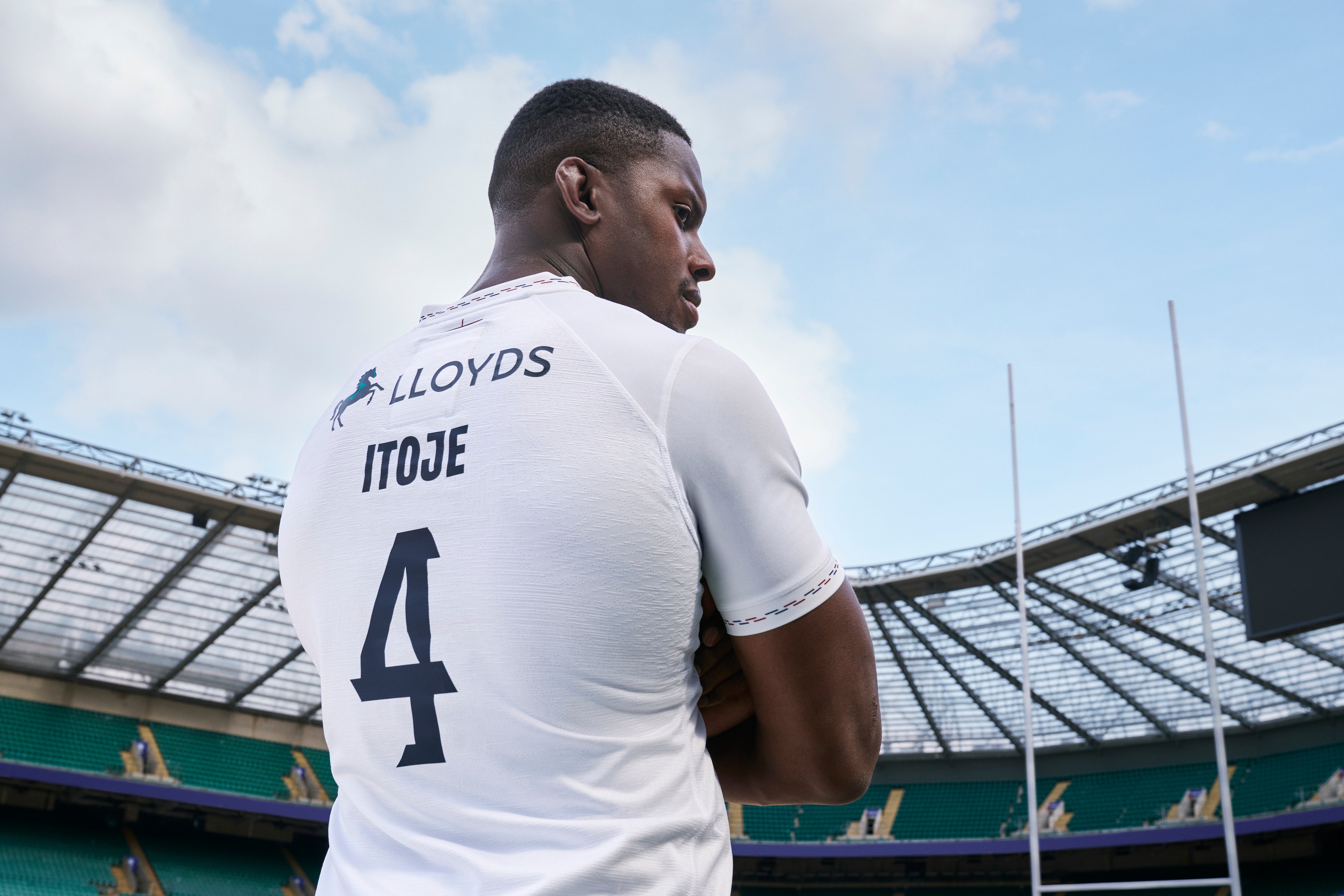
The back of England rugby’s shirts will carry a sponsor’s name for the first time after Lloyds Bank struck a lucrative new partnership with the Rugby Football Union (RFU).

The multi-million pound per year deal will see the bank’s famous black horse logo and name emblazoned above the player names on the kits of England’s men and women, beginning with the Red Roses’ clash with Australia in Manchester this weekend.

The agreement will see Lloyds becomes one of the RFU’s leading partners, with significant investment expected into the community game, and is another significant boost to the union’s finances.

England captain Maro Itoje
England captain Maro Itoje (England rugby)

O2 have been England’s front-of-shirt sponsor for 30 years, while Allianz took the naming rights to Twickenham in 2024 in a 10-year sponsorship deal.

“This is a truly significant partnership for the RFU and marks an important moment for rugby in England. Lloyds is one of the country’s most recognised and proudly British brands, and their commitment extends far beyond visibility on the England shirt,” RFU chief executive Bill Sweeney said.

Advertisement

“Together, we have a shared ambition to grow the game from the grass roots up, creating more opportunities for people of all ages and backgrounds to play, enjoy and be part of rugby. What makes this relationship particularly exciting is its potential to make a real difference across every level of the game, from local clubs to our England teams.

“Lloyds shares our belief in rugby’s power to bring communities together, and we are delighted to welcome them into the rugby family as we deliver our vision for the future together.”

Many other nations already have back-of-shirt sponsors, while Lloyds will also feature prominently on England’s anthem jackets and training bibs. As per long-term competition regulations, England’s match kit at next year’s World Cup will be shorn of sponsors.

In a further boost to the RFU’s coffers, all three of their warm-up games ahead of that tournament are expected to be held at Twickenham’s Allianz Stadium.

Advertisement

Source link

Continue Reading

NewsBeat

How ‘egalitarian’ Sweden became more comfortable with wealth

Published

on

How ‘egalitarian’ Sweden became more comfortable with wealth

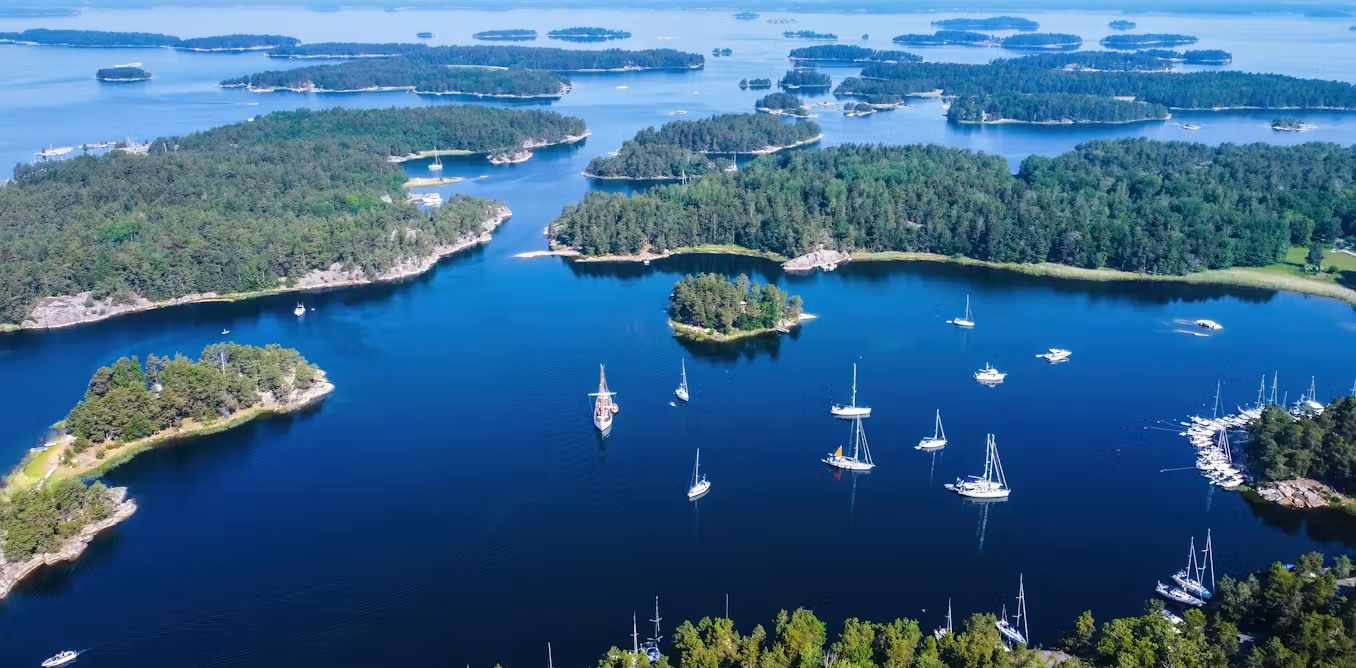
Sweden is imagined as the land of equality, modesty and Jantelagen – the unwritten rule that no one should think they are better than anyone else. But there has also been a fascination within Sweden with its billionaires, especially those who abide by these dominant cultural norms.

In the case of Ingvar Kamprad, the founder of furniture giant IKEA, Swedes appreciated that he drove an old car (a Volvo, of course), engaged with employees working on the floor in his stores, and every year personally handed out Christmas gifts. His (some would say strategic) display of ordinariness made people overlook the fact that Kamprad was one of the world’s richest people and had moved to Switzerland to avoid Sweden’s high taxes.

But things have changed. The Wall Street Journal has written about Sweden’s surprising “capitalist makeover” and the Financial Times has reported on the idea the country is “overflowing with billionaires”. And in 2024 The BBC broadcast a documentary podcast called Super-rich Swedes. There are good reasons for their interest.


Advertisement

We think we know Sweden – a peaceful nation grounded in social democracy, natural beauty, IKEA and Abba. But in 2026, is this still the real Sweden? Ahead of the country’s general election on September 13, The Conversation UK has teamed up with its Swedish partner universities for a series of articles examining why this small nation remains so fascinating.


While for a long time Sweden was a country with some of the world’s highest taxes, this no longer applies to capital taxation. For instance, it no longer has a wealth tax, an inheritance tax or a property tax. The ideal of egalitarianism doesn’t seem to align with patterns of wealth accumulation, especially at the very top.

Forbes calculates more than 50 US-dollar billionaires in Sweden. This becomes even more extraordinary in a country of just 10.6 million people.

We used Forbes and UN data and found that in 2025 Sweden ranked fourth globally, with 4.7 dollar billionaires per million people. When excluding micro-states (fewer than one million people), Sweden is outnumbered only by Singapore (9.9), Hong Kong (9.1) and Cyprus (7.3), but before Switzerland (4.6) in fifth place. It ranks much higher than some of the world’s largest economies like the US (2.7), Germany (2.1), Canada (2.0) and the UK (0.8).

Advertisement


À lire aussi :
‘We got lazy and complacent’: Swedish pensioners explain how abolishing the wealth tax changed their country


It is difficult to say for sure whether changes in regulation and wealth concentration have altered cultural norms, but there are clear indicators. Younger generations are now expressing strong materialistic values. When they rank what matters in life, earning money comes second to being with friends and far more important than being with family or getting an education.

Young Swedes and adults alike dream of building a “money machine” by investing in stocks so they can exit the labour market long before retirement. This might be surprising to some, since Sweden has long been shaped by a strong work ethic, both politically and culturally.

In research for a yet-to-be published paper, we found Swedish tabloids and business magazines show a remarkable rise in reporting about billionaires. This includes a fascination with their personal lives and framing them in positive terms such as “entrepreneurs”, “investors” and “philanthropists” (rather than “capitalists”, for example).

Advertisement

Awe and suspicion

This does not mean that wealth is no longer a sensitive topic in Sweden. When studying articles about billionaires in one of the country’s leading tabloids, we found an ambivalent form of “wealth porn”. In Sweden “wealth porn” tends to oscillate between celebrating it and questioning the luxurious lifestyles of billionaires.

The articles tempt readers with drone images and descriptions of lavish mansions – but they also repeatedly point out how reluctant the billionaires are to display and talk about their wealth. This frames the topic as socially sensitive and sometimes even dangerous to the billionaires’ personal safety. Readers are invited to fantasise about life as a billionaire – the transgressive act of breaking Jantelagen adds spice to the fantasy.

This kind of “wealth porn” remains focused on the moral issues around conspicuous consumption. Even though Sweden has long been a model of social democracy, the processes through which billionaires accumulate fortunes, and the political influence such wealth can generate, largely escape scrutiny.

Advertisement
black bentley parked at the side of a road in gothenburg, sweden, with a tram approaching in the distance.

Swedes don’t mind admitting they’d like to get rich – but are conflicted about those who are already ultra-wealthy.
nrqemi/Shutterstock

Swedes’ ambivalence towards billionaires is also illustrated in a recent survey we conducted with a representative sample of the population. We asked people a set of questions about their views on money and wealth – it turned out that many find money a strong personal motivator. These people supported statements like “to have a lot of money is an important driver for me”. This suggests there is no social taboo around trying to get rich.

People also said money matters socially, as they largely supported statements like “money gives status and respect”. This indicates that hiding personal wealth may not be so important. In fact, displaying it might bring social benefits – being seen as a successful entrepreneur and someone to look up to, for example. We also asked about caps on wealth, but found strong support for statements like “one can never have too much money”.

While this indicates that Swedes value wealth, they still hold an ambiguous relationship with the super-rich. People reacted strongly against seeing the rich as “good role models for others”.

Striving to get rich seems to have become more socially acceptable in Sweden. Perhaps it always has been the way, but Swedes just never spoke about it (at least not in public). Actually being rich remains a contested topic. If Jantelagen still exerts any influence, it seems to be centred on shaping attitudes towards the wealthy themselves – rather than as a force to discourage the pursuit of wealth.

Advertisement

Source link

Continue Reading

NewsBeat

The ex-oil executive trying to wean us off fossil fuels

Published

on

The ex-oil executive trying to wean us off fossil fuels

Samantha Cooper once helped power the oil industry. Now she’s fighting to end its hold on our future

If it’s tough for a society to transition away from oil, it’s tougher still for those whose entire livelihood is tied up with the stuff. Yet as the costs of our addiction to it begin to bite – on our pockets and our planet – an increasing number are doing just that. And giving up a lucrative career as they do so.

Samantha Cooper’s one of them. Back at university in the ’90s, her career aims were simple: get a job in London where she could continue a studenty social life – and get paid for it. Out of the so-called ‘milk round’ of companies who came calling for bright young graduates, she picked oil giant Mobil, and soon found herself just where she wanted to be.

Advertisement

The pay was good, there was a chance to travel, “it was hard work, but it was also fun.” Early on, she was in charge of scheduling barges delivering fuel oil for the Tube network – nice, practical stuff. “Occasionally I’d be sitting with my friends in a pub by the river, and one of my barges would go by – it was rather exciting!”

Solutions every Saturday
Uplift your inbox with our weekly newsletter. Positive News editors select the week’s top stories of progress, bringing you the essential briefing about what’s going right.
Sign up

The appeal more or less held, too, as she won promotion – more responsibility, but a lot more rewards. After BP entered into a joint venture with Mobil’s European fuels business, Cooper went on to become a senior executive, running global trading strategies: a vital cog in a machine that, in her “bubble of ignorance”, as she now describes it, was wrecking the climate

So what changed? No sudden Damascene conversion, but rather the combination of personal pressure and dawning awareness. The Deepwater Horizon oil spill in 2010, oil traders in America going to prison for price fixing, hearing that the crew on a ship whose cargo she was trying to sell had run out of water – “I thought, ‘Oh, there’s people on the boat.’ Which sounds ridiculous. Of course there’d be people…” But her surprise was a measure of just how disconnected she’d become from the real, physical world.

Advertisement

Meanwhile, “I felt I was on a treadmill, and I couldn’t get off.” Metaphorically and literally: she’d be up at six, on the treadmill in the gym, before a pressure-packed day. Work bled into all areas of life. Even over Christmas, every news headline triggered one thought in her head: “What’s that going to do to the oil price?”

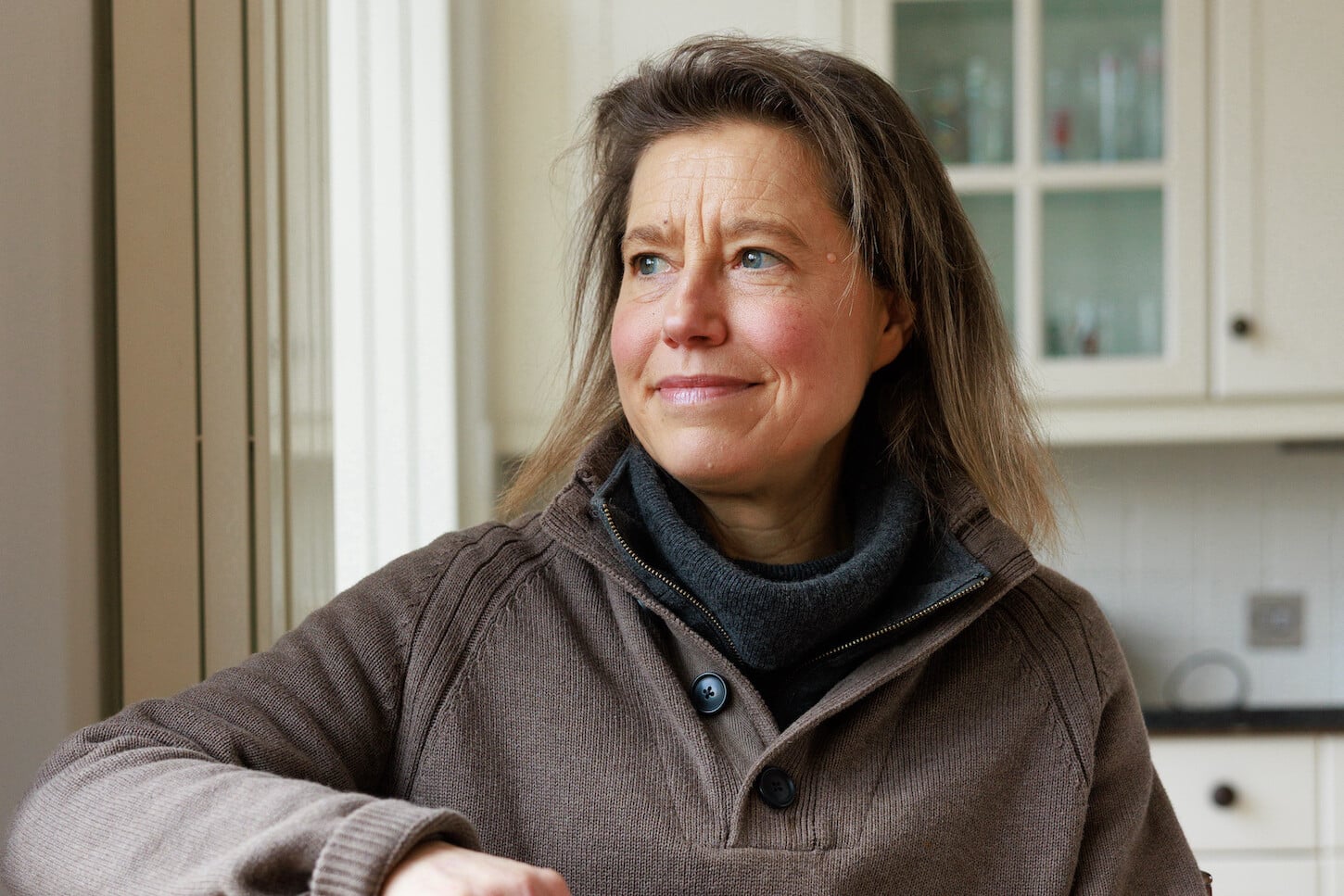
After 20 years in the oil industry, Cooper is now the director of Business Declares, which aims to inspire corporates to address the “polycrisis” brought about by the climate, ecological and social emergency

Advertisement

“However much money you made, your [sales] targets were always going up, year after year.” One year, she recalls, she hit her target, and thought,“‘I should be on top of the world. Why don’t I feel that?’ I just felt empty.”

Shocked into reviewing her life, she explored mindfulness, finding solace in Buddhist meditation. She was able to take some time out to volunteer with women’s and environmental groups. Ostensibly mentoring them on building partnerships with business, and on raising funds, she quickly found that “they were mentoring me! I had such an education from some amazing people, on social issues, equality, ecology and climate.”

The things she learnt, combined with the personal toll the job was taking on her, made it impossible to go back. So in 2015, after 20 years in the oil industry, she left and, with the same energy and drive that had made her such a successful oil trader, threw herself into a new career tackling the challenges which, inadvertently, she’d helped to exacerbate through her work.

I took a risk in leaving but I found such freedom by doing so. And I’m an awful lot happier with a lot less

She’s now the director of Business Declares, which aims to inspire corporates to address the “polycrisis” brought about by the climate, ecological and social emergency. And she’s lent her weight to Life After Oil – a new network of former oil executives who are determined to prove to colleagues still in the industry that, like Cooper, they can leave too.

Advertisement

It commissioned research by the University of Bath, which showed that a wave of oil and gas workers are either leaving the industry, or considering doing so, in part because of concerns over climate change and their company’s glacial speed of response to the threat. According to the research lead, associate professor Grace Augustine, many of those who’ve left feel “a lightness, a sense of relief” at not having to perform the “mental gymnastics” required to square their growing awareness of the threat with the requirements of their day job.

It’s a sentiment echoed by Cooper. “People ask if I took a risk in leaving but I found such freedom by doing so. And I’m an awful lot happier with a lot less. The biggest risk is to stay put.”

Photography by Joanne Crawford

Advertisement

Source link

Continue Reading

NewsBeat

M60 diversions in place due to police incident leading to delays

Published

on

M60 diversions in place due to police incident leading to delays

Just before 07:30 this morning, National Highways Traffic Officers were dispatched to assist Greater Manchester Police with a police-led incident on the M60.

The M60 clockwise is currently closed between J10 and J11 while police investigations and vehicle recovery are carried out.

At this stage, it is not known when the carriageway will reopen.

Advertisement

Diversion – follow the Solid Square (■) symbol

  • Leave the M60 clockwise at J9.
  • At the M60 J9/B5158 Lostock Circle Roundabout, take the third exit and follow the A5081 northbound for 1.8 km.
  • At the A5081/B5214 Parkway Circle Roundabout, take the second exit and follow the A576 northbound for 0.8 km.
  • At the A576/Moonings Road Tenax Circle Roundabout, take the first exit and follow the A576 westbound for 0.2 km.
  • At the A576/Guinness Road Guinness Circle Roundabout, take the third exit and follow the A576 northbound for 0.6 km.
  • At the A576/Coronet Way Centenary Circle Roundabout, take the first exit and follow the A576 westbound for 0.3 km.
  • At the A576/Lankro Way Canal Circle Roundabout, take the second exit and follow the A576 northbound for 0.6 km.
  • At the A576/M602 J2 Gilda Brook Roundabout, take the first exit and follow the M602 westbound for 2.7 km.
  • Rejoin the M60 at J11.

If this closure impacts on your planned route, please allow extra journey time.

Plan ahead; you may wish to re-route or even delay your journey.

Further information is available from National Highways via our regional X (Twitter) feed. National Highways’ 24/7 contact centre team is also available to provide up-to-the-minute information on 0300 123 5000

Source link

Advertisement
Continue Reading

NewsBeat

England bosses make decision on Steve Borthwick’s future as announcement made

Published

on

Wales Online

The England head coach found himself under mounting pressure earlier this year

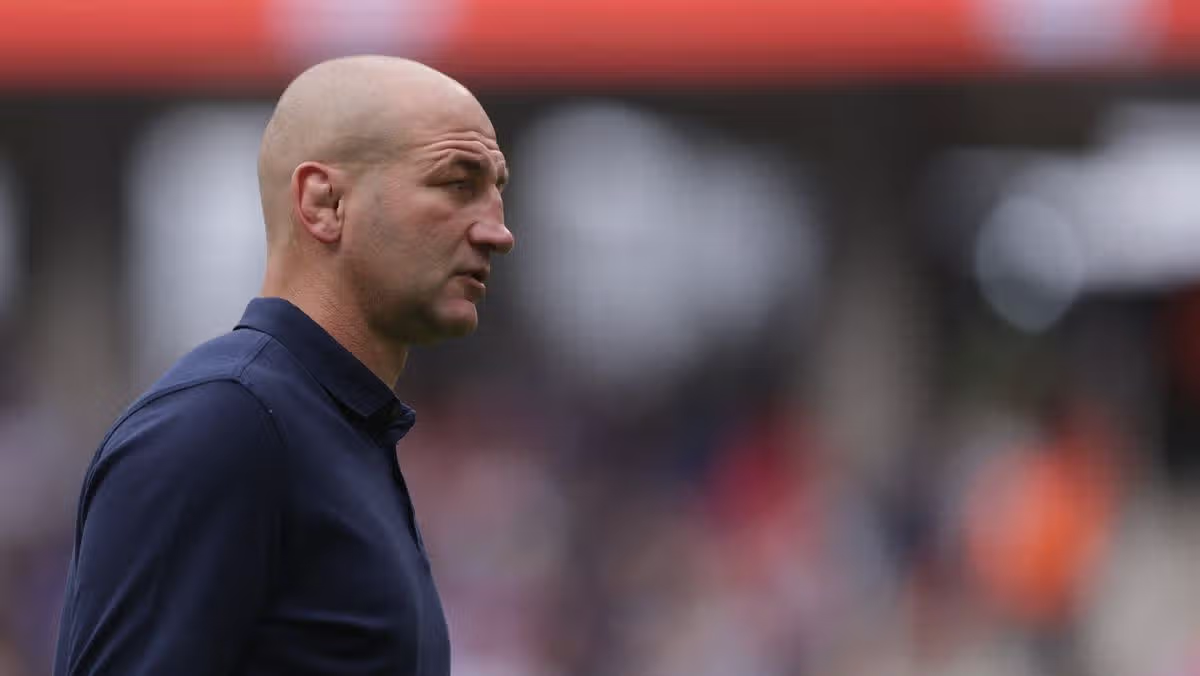
England head coach Steve Borthwick’s contract will be extended past the 2028 Six Nations, with the Rugby Football Union taking action to clear up any uncertainty over his future.

Advertisement

Borthwick found himself under mounting pressure earlier this year as a dismal Six Nations campaign saw his side fall to their worst finish since the tournament expanded from the Five Nations in 2000. Despite coming into the competition billed as potential Grand Slam winners, England followed an opening-round win over Wales with a run of four defeats, including a first-ever loss to Italy.

After the defeat to Italy, it was indicated that the head coach would be given the summer’s Nations Championship block to save his job, but an RFU investigation into their Six Nations disaster led to him being backed to stay on until next year’s Rugby World Cup.

JOIN OUR WALES RUGBY FACEBOOK PAGE Latest news, analysis and much more

Now, following a mixed Nations Championship run, England rugby bosses have gone one step further by extending Borthwick’s current contract beyond the World Cup, as well as the Six Nations in 2028.

Advertisement

The decision has been made to not only ensure that the 46-year-old and his staff have clarity over their positions heading into the World Cup, but also to allow the RFU time to decide on a successor.

Explaining the situation to the BBC, RFU performance director Conor O’Shea said he could not see a scenario where Borthwick isn’t in charge in Australia next year, as he added: “You don’t want them looking for a job going into [a World Cup].

“Everyone knows it will be judged on the World Cup, but you can’t have a group of coaches going in with that uncertainty, especially when you look at the timing. So we will give that certainty, and that will give us time to look properly.”

England followed up their brutal Six Nations run with an inaugural Nations Championship campaign that saw them suffer a bruising defeat to the world champion Springboks, before bouncing back with a thrashing of Fiji and a narrow win over Argentina.

Advertisement

Looking ahead to the World Cup, O’Shea added that he believes England could replicate the success of 2003 and become world champions again, with the talent “100 per cent there”.

“I see in Steve someone who bleeds England, and wants England to succeed more than anything you can imagine,” he said.

“This England team is unequivocally one of probably five teams who can win the World Cup next year. I believe this team can win a World Cup.

“Is the talent there? 100 per cent,” O’Shea added. “If over this next 12 months this England team shows the best version of itself, I know it can beat anyone in the world.”

Advertisement

Follow all of our channels to ensure you stay up to date with the latest Welsh rugby news. Sign up to our free daily newsletter here and our WhatsApp channel here for all the breaking news.

Source link

Continue Reading

Trending

Copyright © 2025