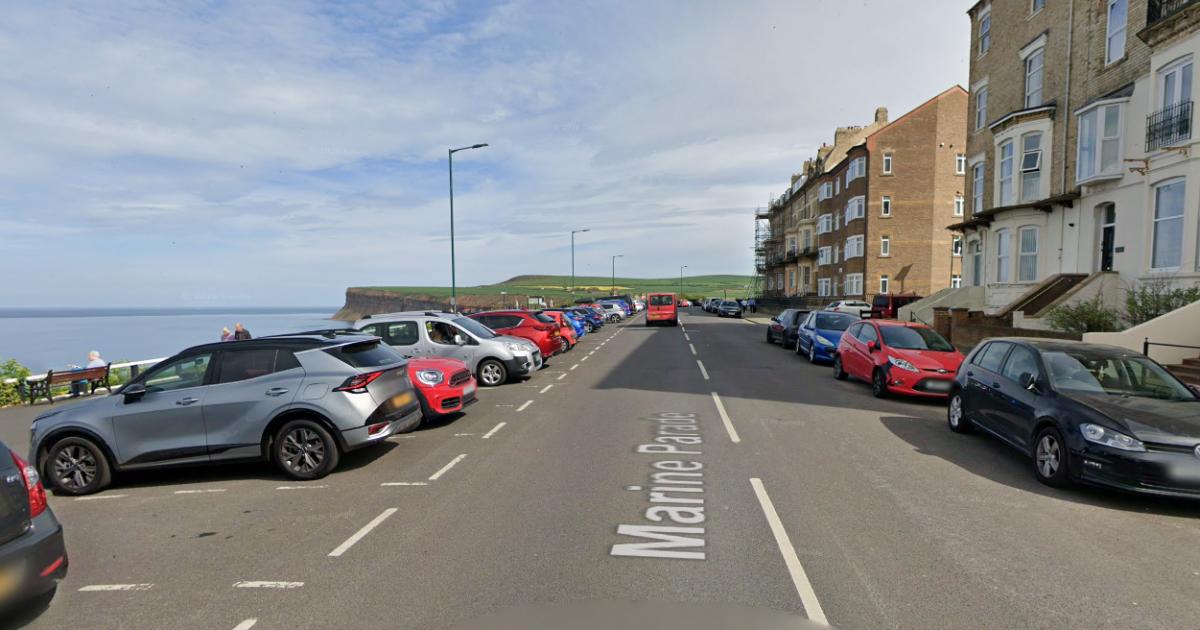





The restrictions will take effect on Marine Parade from Saturday (July 6) under an Experimental Traffic Regulation Order (ETRO) introduced by Redcar and Cleveland Borough Council.
They aim to address concerns about long-term motorhome parking while balancing the needs of residents and visitors.
Carl Quartermain, cabinet member for highways and transport at Redcar and Cleveland Borough Council, said: “We have listened to feedback from both householders in Saltburn and motorhome owners who wish to spend time visiting the town.
Advertisement
“The new restrictions will provide an area for motorhomes to park while introducing a time limit on how long they can stay, helping to ensure parking spaces remain available for residents and visitors alike.
“We recognise that people hold strong views on this issue and that is precisely why we are introducing the measures through an Experimental Traffic Regulation Order.
“We will continue listening to residents, businesses and visitors throughout the trial period, carefully considering any comments, concerns and evidence before deciding on the long-term future of the scheme.”
Under the new rules, motorhomes will only be allowed to park in marked bays on the north side of Marine Parade.
Advertisement
These bays will be limited to a four-hour stay, with no return permitted within the following four hours.
The restrictions will apply from Monday to Saturday between 9am and 5pm.
Outside these hours and on Sundays, no time restrictions will apply to the designated bays.
Motorhomes will be banned at all times from parking on unmarked sections of Marine Parade, both north and south.
Advertisement
These areas will be marked with single yellow lines and signage. Other vehicles will still be able to use these sections without restriction.
The restrictions stop short of an outright ban on overnight parking. However, they do limit where motorhomes can park and for how long.
No new parking charges are being introduced as part of the scheme.
The ETRO will remain in place for a maximum of 18 months.
Advertisement
During this time, the council will gather feedback and monitor the scheme before deciding whether to make it permanent.
Formal objections can be submitted within the first six months of the order coming into effect.
In addition to the motorhome restrictions, a residents’ parking permit scheme is being introduced.
Eligible properties on Marine Parade, between Garnet Street and Saltburn Road, can apply for a permit.
Advertisement
Permit holders will be allowed to park in marked bays without a time limit. Eligible residents will be contacted by letter with details on how to apply.
Applications must be made within four weeks of receiving the letter.
They can be submitted by post or in person at any Redcar and Cleveland Borough Council library.
Each residential property can apply for one permit per registered vehicle and up to two visitor permits.
Advertisement
Businesses can apply for one business permit.
Enforcement officers from the council will monitor compliance with the new parking rules. The council has confirmed that no disabled parking bays will be removed as part of the scheme.
Disabled badge holders can continue to park for free in council car parks.
On Marine Parade, badge holders who are not in motorhomes can also use the areas marked with single yellow lines.
Advertisement
Full details of the scheme, including maps and frequently asked questions, are available on the Redcar and Cleveland Borough Council website under the Saltburn ETRO section.
“I think there is no need to be overly disappointed and to carry it into the World Cup campaign,” Tuchel said of the Premier League champions after their penalty loss to PSG a week ago.
“I don’t see that. I will see them tomorrow, and I think it will be no issue to lift them if needed.”
Alan Smith6 June 2026 19:25
Advertisement
Missing stars and new faces
England have arrived in Tampa with a 27-man squad, including uncapped training group members Alex Scott, Rio Ngumoha, Josh King and Ethan Nwaneri along with training goalkeeper Jason Steele.
Alan Smith6 June 2026 19:18
Advertisement
Tuchel on Florida surface
“I just saw it now,” the England boss said on Friday night. “It will not affect my team selection because what I have heard until now is that it should be OK and we want it, of course, to be OK.
“I saw just a photo from your colleague that made me a little bit worried and concerned, but let’s decide when we are there.
“If there are any issues, we can always react to it. The plan is tomorrow to play 45, 45 minutes with two complete teams, to expose everyone to the same amount of minutes.
“Then we can continue the next three days with the same load of training. That is the plan, and at the moment we stick to the plan.”
Advertisement
Alan Smith6 June 2026 19:12
Special report – Inside the world of Gianni Infantino: ‘The ass-kissing of Trump got us nowhere’
The Fifa president looks excited. The hand is often extended from the heart, in that classic gesture of the evangelising Blair-like statesman. Trump smiles on, two leaders together. Those who have been close to such meetings say it is a mix of “fawning and adoration” from Infantino, which is also why there is increasing disquiet among numerous senior Fifa figures. They don’t like how this has been going.
The relationship is one of a few areas where even someone as brazen as Infantino might now be caught in a bind.
Advertisement
Miguel Delaney6 June 2026 19:05
Are big name coaches right for a World Cup?
(PA)
Alan Smith6 June 2026 18:59
Advertisement
Thomas Tuchel concerned over patchwork pitch for England’s World Cup warm-up
Mike Jones6 June 2026 18:48
Latest odds
Betting sites have England as the big favourites to win this World Cup warm-up match with preparations for the tournament underway ahead of the first match on June 11.
New Zealand to win – 33/1
Advertisement
The Independent vets betting sites for useability, security and responsible gambling tools. Please read the terms.
New Zealand may welcome back Joe Bell who missed their previous outing with a leg injury but Ryan Thomas is set to remain absent.
Advertisement
Tim Payne, the World Cup’s so-called “least known player” who has since gone mega-viral, is set to start.
Mike Jones6 June 2026 18:30
England’s early team news
Thomas Tuchel’s squad is yet to be at full strength with Arsenal quartet Declan Rice, Bukayo Saka, Eberechi Eze and Noni Madueke being given more time to recuperate after the Champions League final.
Advertisement
Kobbie Mainoo could start in Rice’s absence while Morgan Rogers may operate on the right, allowing him to share the pitch with Jude Bellingham ahead of their battle for the central role.
Restaurant Number 20, in Port Mulgrave between Staithes and Runswick Bay, currently holds a 4.9-star rating on TripAdvisor.
Located in a former village pub just a short walk from the Cleveland Way, the restaurant is run by chef Jason Davies and his wife, Sue.
The couple is well known to many food lovers in the region, having previously run the acclaimed Fox and Hounds at Goldsborough before opening Restaurant Number 20 in 2018.
Restaurant Number 20, in Port Mulgrave (Image: TRIPADVISOR)
Since then, the restaurant has built a reputation for high-quality seafood, locally sourced ingredients, and a simple menu focused on seasonal produce.
Advertisement
The intimate restaurant seats just 24 diners and features an open kitchen, allowing guests to watch food being prepared.
Jason specialises in fish and shellfish dishes, with menu items regularly featuring sea bass, turbot, sea trout, crab and other locally sourced ingredients.
Steaks cooked on the restaurant’s Josper charcoal grill are also among the most popular choices.
Visitors regularly praise both the food and the atmosphere.
Advertisement
One reviewer described it as “the most amazing restaurant I have ever been to”, adding: “The food was divine. Service was unbelievable, and it’s a beautiful family-run business.”
Another called it a “hidden gem”, praising the location, food and hospitality.
Many diners highlight the restaurant’s deliberately small menu, which typically offers a choice of three starters, three mains and three desserts.
One visitor said: “There’s a very small set menu but no limit to the quality of the dishes on offer.”
Advertisement
Several reviews mention seafood dishes, including crab risotto, turbot, sea bass, John Dory and brill, while others praise the restaurant’s steaks and desserts.
The panna cotta has become particularly popular among customers.
One reviewer described it as “world beating”, while another said all three desserts on offer were “delicious”.
The restaurant’s atmosphere also receives regular praise.
Visitors frequently mention the open kitchen, roaring fire and attentive service from Sue, who manages front of house and curates the wine list.
Advertisement
One customer described the experience as “an intimate dining room with excellent unfussy service”, while another said it felt like “a private dining experience with friends”.
Although not inexpensive, many diners say the quality justifies the price.
One reviewer wrote: “Worth every penny.”
Another added: “What the team have created here is nothing short of sensational.”
Advertisement
The restaurant’s location also adds to its appeal.
Port Mulgrave is one of the quieter corners of the North Yorkshire coastline, sitting between the popular destinations of Staithes and Runswick Bay.
Many visitors combine a meal at Restaurant Number 20 with walks along the Cleveland Way or visits to the surrounding coastline.
With dozens of five-star reviews and a growing reputation among food lovers, Restaurant Number 20 has become one of North Yorkshire’s standout dining destinations, according to online reviews.
Emmerdale star Amelia Flanagan was sent birthday love from her fellow soap star siblings as she celebrated a personal milestone.
Advertisement
The 18-year-old actress made her soap debut as April Windsor back in 2014 – the daughter of Marlon Dingle and the deceased Donna Windsor.
Over the last two years in the ITV soap, Amelia has found herself at the centre of some of the biggest and darkest storylines as of late.
It wasn’t until February last year that viewers saw what had happened to April in a special episode dedicated to her life on the streets. Throughout the flashbacks, April was pregnant but hid it from her family to avoid causing any more upset.
Soon, she ran out of money and her friends kept letting her down as she had nowhere to stay. She began sleeping rough and sadly had a still birth before being taken into hospital.
Advertisement
After returning home with Dylan whom she met on the streets, the pair got themselves involved with the villainous Ray Walters and Celia Daniels.
With their drug lord and modern slavery business ruining lives across the village, the pair eventually met a deadly end. Since then, April and Dylan have been desperate to rebuild their lives away from the darkness.
During last year’s British Soap Awards, Amelia took home the win for Best Young Performer which was Emmerdale’s second win with EastEnders sweeping the awards.
Amelia has two younger twin siblings Isabella and William, who play Hope Stape and Joseph Brown respectively in rival soap Coronation Street.
Advertisement
On Saturday (June 6), Amelia celebrated turning 18 and on an Instagram account for all three siblings ran by their parents, a tribute gushed: “Happy 18th birthday to our wonderful girl @ameliaflanagan08 At this exact time 18 years ago you made us into a family, You continue to amaze us with everything you’ve already achieved, today’s about you our love enjoy every second”.
Her soap star siblings then also shared their love for Amelia, with Isabella posting a selection of snaps over the years as she wrote: “happy 18th birthday mealie moo my big sister I love you so much and have always looked up to you! Have fun adulting even though you’ve been parenting me since forever xxx”.
William then added his own story and penned: “Happy 18th birthday mealie! Have the best day love you lots xx”. Co-star Lisa Riley also wished Amelia a happy birthday, adding: “we love you”.
Advertisement
Emmerdale airs on weeknights at 8pm on ITV1 and is available to stream on ITVX and YouTube from 7am.
Since the Punch Bowl Inn re-opened in the posh village of Marton Cum Grafton, just south of Boroughbridge, a month ago, it has been receiving five star reviews.
As part of a small collection of Gastropubs owned by Simon Wade of Boroughbridge, the Punch Bowl certainly has high standards to meet to fit in with his others.
They are the excellent Blue Bell Inn at nearby Arkendale, the always popular and lovely Grantham Arms in Boroughbridge; plus the Fox and Hounds at Langthorpe, which I have yet to try.
Until recently, Simon owned the Tapp and the Tutt in Boroughbridge, which he sold to a pubco last month, having turned around the former Three Horse Shoes.
A most enjoyable and magnificent and nice looking fish pie (Image: Darren Greenwood)
Turning around pubs seems to be Simon’s speciality and he is certainly repeating his success at the Punch Bowl Inn.
Until he bought it this year, that too was owned by a pubco and it seemed to have gone a bit downhill. And early this century, the pub was also well known as being part-owned by tv actor Neil Morrissey.
Mum loved her scampi and had a piece or two before I’d chance to take a picture of it. (Image: Darren Greenwood)
Anyway, after a brief closure in the Spring, the Punch Bowl has undergone a major makeover, with rustic style fabrics and décor that ooze class and tradition, giving a very appealing look.
Advertisement
There are several dining areas, a main bar, and outside is an impressive beer garden.
I arrived with mum and dad one Friday evening and Dad’s Volvo fitted in well with the cars packing the car park. Luckily there were still a few places available and the venue was quite busy, with many enjoying the warm sun outside.
Fish and chips on a Friday! (Image: Darren Greenwood)
We hadn’t booked, but fortunately, there were still a few tables available and we were shown to our table.
A young girl on her first night took our drinks order but she did not know what beers there were. She returned a few minutes later and rattled off a decent list most enthusiastically.
Advertisement
Dad had a pint of Theakston’s Best (£5.20), mum half of Guinness (£3.40) and I had a pint of Kirkstall IPA (£6.60). The beers were well kept and good.
We ordered three of the Yorkshire Tapas (£10 each or 3 for £25), choosing the Gin Cured Salmon, Smoked Haddock Croquette and King Prawns, as a starter to share between us.
The rustic and classy interior on opening day in May (Image: Darren Greenwood)
The salmon came with fennel and dill, which contrasted each other beautifully and was enjoyed by all.
We all sampled a little of the smoked haddock croquette, which came with a curried mayo and spiced mango coulis. Again the flavours complemented each other well and this too was enjoyed by all.
Advertisement
But best of all were the Chilli and Garlic Sauteed King Prawns, which had been sauteed in Yorkshire rapeseed oil and served with charred lemon. Again, a fine complement of flavour, with the charred aftertaste a great delight. We all enjoyed sharing the prawns.
As it was Friday, Dad ordered Fish, Chips and Peas (£20), mum her usual Scampi (£18.50), and I settled for Fish Fie (£22).
Now, Dad thought the haddock was a little lacking in flavour, but he enjoyed the chips and the mushy peas. I tried a piece of his fish and thought it was fine, though maybe the batter was a little too crispy. The hand cut chips were fine too, with a soft centre as if done nicely in the oven.
The rustic and classy interior on opening day in May (Image: Darren Greenwood)
Mum loved her scampi and there were a couple of pieces more than in the photo and both of us agreed the Scampi was also very good.
Advertisement
I thoroughly enjoyed my fish pie, which was presented well, looking very colourful due to the Cheddar cheese, which boosted the flavour of a lovely, smooth mash. Underneath were plenty of king prawn, white fish and salmon, which I soon polished off.
The pie came with seasonal vegetables- namely lovely and soft large pieces of carrot, some delightfully (steamed?) cabbage. Dad also polished off my broccoli, as I’m not into broccoli.
Whilst we were more than satisfied with our meal, it was different at the table next door. They had all ordered steak and after initially saying how lovely they looked as they arrived, two complained soon after saying they had ordered them to be cooked ‘medium’ and they came out more ‘medium-rare’.

The Punch Bowl Inn enjoying some evening sun (Image: Darren Greenwood)
One persevered with the steak but another asked for it to be taken back, and the server said they would replace it. It was replaced without any fuss and later I heard the diner tell the server her new steak was ‘perfect.’ Apart from the one who did not send her steak back, the three other diners also seemed very happy with their steaks.
Advertisement
Now, we were quite full so we did not bother with dessert. But there is an extensive range. There’s a pizza menu too. The pub serves sandwiches and there is also Sunday Roast. Plenty of choice for everyone, vegans, vegetarians, coeliacs, etc.
The bill came to £100.70, and though not the cheapest, we had enjoyed a fine meal in beautiful surroundings. The history and charm of this 16th Century village pub is a sight to see and treasure.
A most lovely beer garden on a fine Friday evening (Image: Darren Greenwood)
The service was still very good, warm and friendly, and staff will do their best to put things right should they go wrong, as seen with the table next door.
We left feeling very satisfied and we look forward to trying other things on a future visit.
Advertisement
It was about 7.30pm and there were still plenty sat outside enjoying the beer garden.
Should the warm weather return, sitting outside in the sun sounds most excellent, perhaps with a pizza. or a meat dish.
The Punch Bowl is punching very nicely and is a highly recommended pub well worth the ride out.
Owner Simon Wade can once more be proud of what his staff are achieving and in such a short time.
Advertisement
Reviews are independent and all meals paid for by The Press
NEW YORK (AP) — The World Cup, a 48-team, 104-match behemoth kicking off next week across 16 cities in the United States, Mexico and Canada, presents an unprecedented security challenge, with more countries, games and a larger footprint than ever before.
It also comes against the backdrop of the U.S. and Israel’s war with Iran, mounting political violence in President Donald Trump’s orbit and growing fears of artificial intelligence-fueled disruptions, creating a complex threat environment for authorities.
Overseeing the sprawling security apparatus is a legion of federal agencies, state and local police departments and private entities. Their responsibilities range from securing stadiums and fan zones to escorting teams and protecting dignitaries.
Their tools include hunter drones that can shoot nets over objects in restricted airspace, bag-inspecting robot dogs, giant X-ray trucks and thousands of AI-powered cameras trained on public spaces soon to be thronged by fans.
Advertisement
In the U.S., it’s “78 Super Bowls over 39 days,” said Andrew Giuliani, executive director of Trump’s World Cup task force, which is overseeing the multiagency effort.
“There’s never been a summer like this in American history from a security angle,” said Giuliani, son of former New York City Mayor Rudy Giuliani.
“We’re as prepared as we can be.”
An unprecedented security collaboration
The tournament has the same high-level federal security designation as the Super Bowl, just below a presidential inauguration or a national political convention, ensuring federal, state and local coordination. It coincides with other major events linked to the 250th anniversary of America’s founding.
Advertisement
So far, Giuliani said, there are no credible threats.
The Department of Homeland Security, focused on Trump’s immigration enforcement crackdown and hit by a funding lapse only recently resolved, estimates up 7 million people will visit the U.S. for the World Cup.
The U.S. Secret Service, under scrutiny after security breaches and attempts on Trump’s life, is in charge of protecting world leaders who show up to cheer on their countries. Trump has expressed interest in attending a match.
“I feel very comfortable where we’re at, and we feel like we have a zero-fail mission,” Homeland Security Secretary Markwayne Mullin told Congress this week, noting that the Secret Service was understaffed by about 860 agents. “But it’s going to be complicated.”
Advertisement
Officials have indicated they are confident they can keep Trump safe because they will be integrating his usual security into the robust World Cup plan on days he may watch a match.
The FBI has spent two years developing its security plan, incorporating lessons from other major events such as the Macy’s Thanksgiving Day Parade and New Year’s Eve ball drop in New York and testing them at smaller ones, including last week’s Israel Day parade in the city.
“We prepare for the worst day,” FBI Special Agent in Charge Amit Kachhia-Patel in New York told The Associated Press. “And that’s how we go into any single event.”
To help cover security costs, the Federal Emergency Management Agency has distributed $625 million to the 11 U.S. host cities. An additional $250 million is being directed toward tracking and neutralizing suspect drones.
Advertisement
The disbursement of those funds was held up by the department’s funding delay, which the Republican administration has argued hindered security planning.
Others involved in the planning effort said the federal government could have played a more hands-on role even before the shutdown.
John Cohen, a former senior DHS official who has been briefing state leaders before the matches, said the government was largely absent from planning meetings last year and did not begin sharing threat intelligence with host regions until recently.
“With an event of this magnitude, one would expect the federal government would’ve played a more active role,” Cohen said. “It felt like a missed opportunity to showcase that collaboration.”
Advertisement
Evolving threats from drones and AI
In January, thousands of officials involved in World Cup security gathered for exercises simulating crowd surges, vehicle attacks and mass shootings.
A month later, the U.S. and Israel launched a war with Iran.
“The security picture fundamentally changed,” said Stefano Ritondale, chief intelligence officer at Artorias, a defense intelligence company not involved in the security preparations. “There’s a major difference in preparing for a lone wolf radical who rams his car into a public place and a terrorist who is bankrolled by a foreign country we’re at war with.”
Among the greatest concerns are drones.
Advertisement
Since the last World Cup in Qatar in 2022, drones have become a prominent weapon in conflicts including Russia’s war in Ukraine and Hamas’ attack on Israel on Oct. 7, 2023.
“If there is one threat that keeps me up at night, it is from drones,” said New York City Police Commissioner Jessica Tisch, whose department is partnering with the FBI on drone mitigation.
Drones are prohibited over stadiums and fan zones, and Kachhia-Patel said the FBI has a “full suite of options” to thwart incursions. They include agents monitoring the sky and a “variety of means” to safely down the devices, he said without elaborating.
Before this year’s World Cup, the growing sophistication of AI videos was a particular concern, with officials warning that state actors can harness the technology to sow misinformation and panic.
Advertisement
On match days, the FBI will activate joint operations centers in each host city, bringing together local, state and federal law enforcement agencies to monitor and investigate threats.
“If there’s a video that shows an explosion going off at a site, and it’s AI generated, we have people on the ground who can validate whether or not that’s true,” said Kachhia-Patel.
A scoring opportunity for private tech
Some AI companies have pitched themselves to police departments in host cities, promising to comb through data and surveillance on game days to prevent threats, including unruly fan behavior.
“We know sports fanaticism around here in terms of the NFL and baseball to some extent, but nothing like international soccer,” said Jake Becchina, a police spokesperson in Kansas City, Missouri, which is hosting six matches.
Advertisement
The department has contracted with Peregrine Technologies, which promises to sift through police data and publicly available information such as team practice locations and the country affiliation of popular bars, to get ahead of possible conflict.
In Dallas, a recent $120 million tech upgrade will give local police body cameras capable of real-time translations, helping law enforcement communicate with international visitors soon to descend on the region.
Several drone detection and mitigation companies are joining efforts to help federal agencies secure the skies.
One of those companies, Fortem, has claimed to have signed a multimillion-dollar contract with DHS before the World Cup for an unusual drone mitigation strategy: quadcopters that can shoot nets at encroaching drones to trap them in midair. A spokesperson for DHS declined to discuss the contract.
Advertisement
Just as the teams will aim to perform their best on the pitch, Giuliani said the security planning was a unique chance to “show off American exceptionalism.”
“If we do our job right,” Giuliani added, “nobody will be talking about security at the World Cup.”
____
Santana reported from Washington. Associated Press writer Alanna Durkin Richer in Washington contributed to this report.
An American college student, who went missing eight days ago during a vacation in Japan, has been found dead, his heartbroken family revealed Saturday.
James “Weston” Higginbotham, a 20-year-old Auburn University student from Alabama, disappeared May 29 while traveling in Japan with his parents and younger brother to celebrate his sibling’s high school graduation.
Weston, an experienced hiker, was last seen on surveillance footage around 8 p.m. walking alone in a mountainous area of Yamashina ward, near Kyoto, just before a storm moved in. Search teams had concentrated on the heavily forested area before calling off efforts, which were hampered by high winds and heavy rain.
His mother, Nancy Higginbotham, shared the devastating news in a Facebook post Saturday.
Advertisement
“Our family is heartbroken to share that Weston was found deceased by a volunteer search-and-rescue group in a mountainous area outside of Kyoto,” she wrote. “The grief we feel is impossible to put into words. We are forever grateful for the time we had with our sweet, precious Weston, but cannot begin to understand what life without him will be like.”
James ‘Weston’ Higginbotham has been found dead after going missing in Japan, his family announced Saturday (GoFundMe)
Nancy Higginbotham’s statement continued: “We are deeply grateful to the countless people across the United States, Japan, and around the world who shared Weston’s story, prayed for our family, offered encouragement, and helped in the search efforts. The outpouring of kindness and support has carried us through the darkest days of our lives. We shared our story here and in the media in the hope of finding Weston. We now ask for privacy as we begin to navigate this unimaginable loss.”
She concluded: “Thank you for your thoughts, prayers, and support. We will need them now more than ever. We will always love you, Weston.”
The mom had earlier told CBS News that she feared her son had been hurt and become stuck somewhere in the area.
On the evening of May 29, his parents saw through Life360, a GPS tracking app, that his phone was still moving around the city and sent him text messages, but he never responded.
Advertisement
“My fear is that he doesn’t have enough food because there is plenty of water, and that he’s lost. Those mountains, that forest goes for a very long time and … it’s extremely dense,” she said.
The Higginbotham family was in Japan to celebrate Weston’s younger brother’s high school graduation (GoFundMe)
The initial search had reportedly taken place over three days and included 100 police officers, K9 dogs and helicopters but found no trace of the 20-year-old.
Nancy Higginbotham also told CBS News Friday that the pair had argued about the use of ChatGPT on the trip, which had become “a sore subject” with her son, an environmental engineering student.
“I was using a little bit too much ChatGPT. Japan is a country that I’ve had a hard time navigating,” Nancy Higginbotham told the outlet. “Weston is very anti-AI because, you know, he’s into sustainability engineering, and AI uses a lot of water and is depleting a lot of water resources.”
The family had planned to hire a private Japanese search-and-rescue team and previously said they would not leave Japan until Weston was found.
Advertisement
“We have complete confidence that we are going to find him,” Weston’s dad, Keith Higginbotham, earlier told CBS News.
A Rotherham primary school teacher admitted he falsely called in sick to attend a stag do in Lisbon
A primary school teacher “pulled a sickie” to jet off on a stag do in Portugal with his mates, then attempted to cover his tracks by tearing pages from his passport, a tribunal has found.
Advertisement
Joe Wilson told his headteacher at Listerdale Junior Academy in Rotherham, South Yorkshire, that he was too ill to attend work as he was “up all night being sick” on 18 May 2023, reports the Mirror.
The following day, the Year 6 teacher claimed he was unable to “keep any food or water down”, taking a second day off while promising to keep his managers informed.
Mr Wilson later admitted that both sick days were an elaborate cover story concocted to allow him to attend a friend’s stag do in Lisbon — a deception he attempted to bolster by ripping out the passport pages that revealed he had flown to the Portuguese capital.
Advertisement
A Teaching Regulation Agency (TRA) panel was told that Mr Wilson embarked on the clandestine trip between Thursday 18 May and Friday 19 May 2023. He set his plan in motion at around 5am on the first day, messaging his boss: “I’m not going to be in school today. I’ve been up all night being sick and have got a really bad headache.”
The following morning, he sent a further message reading: “I’m still no better so won’t be in school today. Can’t keep any food or water down. I’ll keep you updated.” The disciplinary panel was informed that Mr Wilson was exposed by an anonymous member of staff, who brought attention to photographs showing the teacher at an airport holding a pint of beer. One image, shared by another individual at 5.23am on the morning of Mr Wilson’s departure, appeared online with the caption: “Early start for… stag do, few beers with the Portugal gaffer”.
Initially, the teacher maintained the photographs were from an earlier journey, but subsequently confessed to the TRA in October 2025 that he “agreed to attend a stag do in Lisbon”.
He stated that he “made a huge error of judgement but (felt) the situation at the time influenced (him) to make this poor decision” and that he “accepted full responsibility” for his conduct, including “falsifying a sickness”. In February, he emailed the agency acknowledging he “pulled a sickie to go on (his) mates stag do”. Mr Wilson also tore pages from his passport in an attempt to conceal that he had travelled abroad.
He informed the TRA he “made a huge mistake of taking out a page of (his) passport” following “an informal chat with (his) headteacher” as she “encouraged (him) to show something ‘to get them off my case’”.
He also admitted he was “ashamed” of his actions. An investigation report revealed Mr Wilson surrendered his passport to a school representative in June 2023, with photocopies showing pages 9, 10, 27 and 28 had been removed, the tribunal heard. The panel determined it was proven that Mr Wilson was away from school without legitimate justification, falsely claimed he was off sick when this wasn’t true, and tore out passport pages that would have contained stamps proving he was abroad on the dates concerned.
Ensure our latest stories always appear at the top of your Google Search by making us a Preferred Source. Click here to activate or add us as your Preferred Source in your Google search settings.
Advertisement
In its judgement, the panel stated: “In falsely reporting his sickness absence and providing an altered document during an investigation, Mr Wilson was intentionally misleading the school and concealing the truth.
“The panel considered that Mr Wilson’s behaviour fell below the ethical standards expected of a teacher and was contrary to the manner in which the profession professes to serve the public.”
It also concluded his conduct demonstrated a lack of integrity, was dishonest, and that his actions may bring the profession into disrepute.
However, the panel ruled that imposing a prohibition order, which would have barred Mr Wilson from teaching, was disproportionate and that publishing the findings would suffice.
Americans lost close to a billion dollars to AI scams in one year – and cybersecurity experts fear this is only the beginning.
Nearly $900 million was stolen in scams that incorporated AI in 2025, according to the first report of its kind from the FBI. The bureau also received more than 22,000 reports about such schemes to its Internet Crime Complaint Center.
One woman in California lost more than $5,000 when a scammer used AI to impersonate her daughter’s voice. Another woman in Ohio lost $1.5 million after fake FBI agents convinced her to drain her bank accounts.
Internet scams are not new; they’ve been around as long as people have been logging on. Fake Nigerian prince emails, phishing schemes and all types of malware have long been digital landmines for people surfing the web. But AI is now changing the cyber con game and costing Americans millions in the process — a number that is only going to grow as AI improves, which it does by the nanosecond.
Advertisement
Michael Machtinger, deputy assistant director of the FBI Cyber Division, told the Wall Street Journal that AI-created fraudulent communications “can look very official and very legitimate to even the most trained individuals.”
An FBI report found that Americans lost nearly $900 million to scammers using AI in 2025. That figure is expected to rise (AFP/Getty)
‘Today’s AI is the worst AI you will ever use’
As AI companies pitch the public on the urgency of adopting their technology, criminals have been more than willing to heed that advice.
Like everyone else playing around with Claude, Gemini, Grok, and ChatGPT, scammers are still figuring out exactly what they can pull off using the chatbots, according to Jake Braun, executive director of the Cyber Policy Initiative at the University of Chicago’s Harris School of Public Policy.
He told the WSJ that as AI continues to improve, the means by which criminals can use it to bilk people out of their money will likely only get more sophisticated too.
Advertisement
“The AI companies like to say that today’s AI is the worst AI you will ever use. What’s also true is that these are the lowest number of AI complaints we are ever going to see,” he told the paper.
Bob Sullivan, host of AARP podcast The Perfect Scam, explained in March that AI has helped scammers flood the internet with fraudulent offers and malicious schemes.
“We’re getting deluged,” Sullivan said. “A couple of years ago, you might have encountered one or two AI-generated scams a year. Now scammer call centers are sending out tens of thousands of scam messages per minute.”
Wide range of grifts
Advertisement
Consumer protection agencies have collected long lists of all the various ways scammers are using AI to try to rip people off. Both California’s Department of Financial Protection and Innovation and New York City’s Consumer Worker and Protection agency have compiled lists of the methods criminals are using.
A new spin on an old grift is the use of deepfakes to convince people they’re talking to someone they trust — or someone they want to trust like a celebrity or a public figure — in order to convince them to send them money. AI scammers might deepfake a photo or a video of a relative in a tough situation or a celebrity as a means of establishing credibility.
Romance schemes follow a similar tack, using fake images or videos — or even voices — of attractive people or celebrities to convince a victim that they’re interested in them. Once trust has been secured, that’s when the scam hits. The account will then ask the person for money or assistance, and with people’s emotions clouding their judgment, they have been known to fork over thousands of dollars.
While some criminals seek to exploit concern for loved ones or a desire for romance, others appeal to greed.
Advertisement
Criminals are using AI voice cloning, deepfake images and video generation to pose as celebrities or loved ones in an effort to steal from unsuspecting people (Getty/iStock)
According to law enforcement agencies, some scammers have created entirely fictional influencers to convince people to invest in fake businesses or to support their non-existent work.
The student told Wired that he used Google’s Gemini AI to create the fictional influencer and raked in thousands off the “super dumb” — in his words — MAGA crowd who ate up the rhetoric.
But it’s not just so-called “super dumb” people falling for AI scams. Advice, especially online, has typically been aimed at older Americans who may be less fluent in technology and unaware of the red flags associated with fraud. However, the new FBI report suggests broader messaging may be needed to teach a much younger group of Americans how to keep criminals out of their wallets.
Targeting teens
Advertisement
According to the FBI, teens have become a prime target for scammers in recent years. The bureau reports that it received 31,000 complaints to its crime complaint center from people under the age of 20 last year. That’s up 74 percent from 2024 and is nearly triple the number of complaints it received from the same demographic in 2015.
Ade Clewlow, associate director and senior adviser at cybersecurity consulting firm NCC Group, told the WSJ that teens who have grown up online are more likely to trust what they encounter on the internet and “are just as susceptible as anyone else” to fraud.
Social media sites are especially useful for scammers because they allow them to peer into a target’s network of friends and family and search for vulnerabilities they can exploit.
Focusing on a target’s family was exactly how scammers managed to steal more than $5,000 from Deborah Del Mastro of San Francisco.
Advertisement
Earlier this month, Del Mastro answered a phone call and received terrifying news; a voice on the other end of the call told her they had kidnapped her daughter, Sarah, and demanded a ransom.
She told Good Morning America that the voice told her there was “someone here that you need to talk to” before she heard her daughter’s panicked voice.
“I hear my daughter’s voice — sobbing, trying to breathe, having a panic attack,” Del Mastro said. “And [the voice] says, ‘I’m so sorry, Mom. I am so scared. I’m so sorry.’”
The kidnappers demanded she send $5,400 to multiple locations in Mexico if she wanted to see her daughter again. She obliged, fearing for her daughter’s safety. Once she had hung up with the kidnappers, she called her daughter only to find that she was fine.
Advertisement
Del Mastro realized then she’d been scammed, likely by an AI clone of her daughter’s voice.
Scammers have already used deepfakes and voice cloning to steal thousands — and in one Ohio case, more than a million dollars — from victims (Getty/iStock)
Erin West, founder of Operation Shamrock, an organization focused on combating scammers, told KGO that even seconds-long audio clips of a person’s voice — like what might be included in a video shared to Facebook or Instagram — can be used to create believable voice clones.
“What they can do with just a few seconds of your voice [is] they can clone it, and they can essentially produce sound that sounds exactly like you,” she told the broadcaster, adding that AI voice cloning is “only getting worse, and it will only continue to get worse with the use of AI and deepfake technology.”
Another woman in California fell victim to a similar scam. When Abigail — no last name given — received a Facebook message from someone claiming to be Steve Burton, a longtime star of the legendary “General Hospital” soap opera, she readily accepted the message.
The two chatted, moving their conversation from Facebook to WhatsApp. Their conversations continued, and eventually Abigail received a video from the person claiming to be Burton. The man in the video — who looked and sounded just like the soap star — called Abigail “my queen” and promised to love her.
Advertisement
Abigail’s daughter, Vivian Ruvalcaba, told Fox News that she saw the video and warned her mother it was AI, but her mother was convinced it was real.
Before she realized it was all a lie, Abigail had sent the fake Burton $81,000 and sold her condo — at $200,000 under its estimated value — on a promise that she and the faux celebrity would run away together to live in a beach house.
If impersonating loved ones or celebrities isn’t bad enough, fraudsters have also used AI to more convincingly impersonate government workers.
Scammers and disinformation peddlers can use deepfakes — enhanced by AI technology — to make convincing clones of politicians, celebrities, and even loved ones with as little as a few photos or video clips posted online (AFP/Getty)
Fake government officials
The FBI’s report found that government impersonation schemes are becoming not only more prevalent but more sophisticated. The bureau’s complaint center received more than 32,000 calls last year about government impersonation schemes, up from around 17,000 in 2024.
Advertisement
“What began as clumsy phone calls from fake IRS agents demanding gift cards has evolved into something far more sophisticated and far harder to dismiss,” Judson Dressler, director of the risk operations center at cyber risk company Resilience, told the WSJ.
Fraudsters use spoofing to make their calls appear legitimate on caller ID systems; lift official seals and logos off agency websites; and employ AI deepfake audio and video to create convincing fakes of public officials, Dressler said.
One 93-year-old woman in Ohio reportedly lost $1.5 million to a government impersonation scam when a fake FBI official convinced the woman that criminals were targeting her assets. They warned her she needed to drain her bank accounts and deposit the money into crypto ATMs for safety. The thieves took the money, with no means for her to recover her savings.
In 2025, Consumer Reports delivered a petition signed by 75,000 Americans to the Federal Trade Commission asking it to hold companies that produce products capable of AI voice cloning accountable for the scams made possible by the technology.
Advertisement
Staying safe in the age of AI
As AI improves, it will become increasingly difficult to know not only what information is real, but whether the people you’re talking to online even exist.
In an effort to better educate the public on the latest methods fraudsters are using, the FBI has bolstered its resources available on IC3.gov.
One way Americans can protect themselves from digital scams is to always verify that the person they’re communicating with is legitimate. If someone calls or messages from a government agency, for example, it’s good practice to call the agency directly to verify the identity of the person.
Advertisement
There’s almost never a time when an agency or company needs immediate payment. If someone contacts you demanding money immediately, that’s a good time to pause and verify, according to the FBI.
According to Navy Federal Credit Union, which released guidance for avoiding AI scams earlier this year, Americans may also want to limit how much of themselves they share online. AI needs very little — a few photos, a few seconds of voice — to create a compelling clone that can be used against your loved ones.
If you suspect you’ve been a victim of a scam, you should act quickly and notify your bank, as well as file a report on IC3.gov. Machtinger told the WSJ that reporting is crucial to stopping fraudsters.
“It could help you and prevent numerous other individuals from falling prey to similar kinds of criminal activity,” he said.
Downing Street has hit out at outside actors “trying to interfere in our democracy” after JD Vance claimed the “invasion of migrants” in Europe is to blame for the murder of Henry Nowak.
The US vice-president said the 18-year-old, who was fatally stabbed by Vickrum Digwa, would still be alive if Europeans “stood their ground” against “politics of self-hatred”.
No 10 slammed the remarks as “seeking to stir up division on our streets” and urged people to “respect the wishes” of Nowak’s family, who said they did not wish his death to be used to create division.
Bodycam footage from the night Nowak was killed by Digwa shows police handcuffed him as he lay on the ground, despite his repeated pleas that he could not breathe, after his killer falsely claimed he had been the victim of a racist attack. He died shortly after.
Advertisement
In the latest intervention by the Trump administration over the murder, Mr Vance said: “Henry Nowak died the same way a civilisation dies: abandoned, handcuffed by authorities who neither trusted nor cared for him, and accused of hate crimes he did not commit.
“His murder is as tragic as it is enraging.
“He should still be alive today, and he would be if the last few generations of European elites had stood their ground against the politics of self-hatred and the mass invasion of migrants, many of whom despise the West and the people who love it.”
Henry Nowak, 18, died after suffering a stab wound to the chest while on a night out (PA)
In response to Mr Vance’s comments, a No 10 spokesperson said: “In recent days we have seen people trying to interfere in our democracy and seeking to stir up division on our streets.
“The Nowak family are grieving after Henry’s horrific murder.
Advertisement
“They have said they do not want his death to be used to create further division, hatred or tension. We should be respecting their wishes.
“Our politics should bring people together even in the most terrible of circumstances. That is who we are as a country.”
Mr Vance’s comments come after the Trump administration called for an end to “two-tier” policing in the wake of Nowak’s murder.
In a post on X, the US state department wrote: “Ideological conditioning and two-tiered policing are glaring symptoms of civilisational decline. They must be rejected across the West.
Advertisement
“The United States sends our condolences to the family of Henry Nowak and the people of the United Kingdom at this troubling time.”
Downing Street rejected “any suggestion of two-tier policing across the United Kingdom”.
The Trump administration has repeatedly been critical of the UK government over its immigration policies. Mr Vance urged anti-immigration activists to “keep on going” after tens of thousands attended a London rally last month.
Plus, at the United Nations in New York in September last year, Mr Trump said Britain and Europe are “going to hell” because of immigration and dismissed climate change as “the greatest con job ever perpetrated on the world”.
Advertisement
Mr Nowak’s family have also called on politicians to rebuild trust in the police as they stressed they “do not want anger to tear communities apart” in the wake of their son’s murder.
Liberal Democrat leader Sir Ed Davey stressed that the UK needs to resist attempts to “divide the country”. He said in a post on X: “We all need to resist attempts like this to politicise Henry Nowak’s death and divide our country – whether they come from Maga politicians like Vance or their cronies here in the UK.”
Digwa was given a life sentence with a minimum of 21 years in prison for stabbing Nowak with a knife with a 21cm blade.
The Independent Office for Police Conduct is investigating Hampshire Police’s response in Nowak’s case.
Given the grim nature of the weather forecast, even the small amount of play that was possible on Saturday could be viewed as a bonus.
Perhaps more could have taken place. Lord’s appeared dry and ready during an early lunch taken at 12:20 BST before play eventually began at 13:00.
The players yo-yoed on and off the field over the course of the next 70 minutes, with two delays before the weather had the final say at 14:10.
Just as in his 5-39 in the first innings, Robinson revelled in the conditions in his first Test for more two years. The damp conditions under the floodlights exacerbated the difficulty of batting on a surface that has been uneven for most of this match.
Advertisement
After New Zealand resumed on 37-3, Ravindra and Mitchell were the most likely of their remaining batters to dig in and made England’s task harder. Robinson dealt with them both.
Left-hander Ravindra was undone by a beauty. Robinson, from round the wicket, angled the ball in, then nipped it away off the surface and up the Lord’s slope. It defeated Ravindra’s defensive stroke and kissed the off stump. Almost unplayable.
Ravindra, the heir to Kane Williamson as New Zealand’s leading batter, has had an awful Test. Batting returns of nought and eight are added to two bad drops, which have been important in the context of a low-scoring match.
Knowing conditions were in their favour and time on the field was short, England crowded the bat with as many as seven close catchers.
Advertisement
And the Mitchell wicket went against a theory held by this England regime that a certain style of cricket cannot be successful in the Test arena.
“This 75mph, keeper up, dobbing it on a length – we know that doesn’t work in Test cricket, wherever you are,” was once the view of England director of cricket Rob Key.
One ball after England keeper Jamie Smith came up to the stumps, Robinson struck Mitchell on the pad. The review could not save Mitchell, who was frustrated to see the ball was shaving leg stump – another umpire’s call that has gone against the Black Caps in this match.
Two overs later, the weather made a terminal intervention, with the day abandoned at 17:30.
You must be logged in to post a comment Login