
Connect with us
DAPA Banner
DAPA Coin
DAPA
COIN PAYMENT ASSET
PRIVACY · BLOCKDAG · HOMOMORPHIC ENCRYPTION · RUST
ElGamal Encrypted MINE DAPA
🚫 GENESIS SOLD OUT
DAPAPAY COMING

NewsBeat

San Diego police say threat has been ‘neutralized’ after reports of mass shooter at Islamic center: Latest updates

Published

on

San Diego police say threat has been ‘neutralized’ after reports of mass shooter at Islamic center: Latest updates

Shooting threat has been ‘neutralized,’ SDPD says

Police have “neutralized” the reported shooting threat at a San Diego mosque, officials said Monday afternoon.

We’re still waiting for more details about the nature of the threat, potential victims, and deaths or arrests.

Josh Marcus18 May 2026 21:16

Advertisement

PHOTOS: Police swarm scene of reported shooting at San Diego Islamic center

(Reuters)
(Reuters)
(Reuters)

Josh Marcus18 May 2026 21:09

‘Active shooter’ reported at San Diego Islamic center with police rushing to scene

Police are responding to reports of an active shooter near a mosque in the Clairemont neighborhood of San Diego on Monday.

“SDPD is on scene at the Islamic Center of San Diego in the 7000 block of Eckstrom Ave for a reported active shooter,” the San Diego Police Department wrote on X at 3:03 pm ET. “Please avoid the area. Updates to follow.”

Advertisement

In an update 40 minutes later, police said the scene is “still active but contained,” adding that “significant resources” had been deployed and that a reunification area had been established nearby.

At least one individual was killed, according to KGTV.

Brendan Rascius will be following this story live and passing on the latest updates.

Josh Marcus18 May 2026 21:04

Advertisement

Governor briefed on shooting

“Gavin Newsom has been briefed on an evolving situation in Clairemont community of San Diego, near the Islamic Center,” the governor’s office wrote on X. “The Governor’s Office of Emergency Services is coordinating with local law enforcement. We are grateful to the first responders on the scene working to protect the community and urge everyone to follow guidance from local authorities.”

Josh Marcus18 May 2026 20:50

Advertisement

Scene of shooting is ‘active but contained’

The scene of Monday’s shooting is “active but contained,” according to San Diego police.

“We have significant resources on scene at this time,” the department wrote on X.

Josh Marcus18 May 2026 20:49

Advertisement

A reported shooting at a mosque in San Diego

San Diego police are responding to the scene of a reported shooting at a large mosque in the area.

We’ll be covering all the latest news about this incident live.

Josh Marcus18 May 2026 20:46

Source link

Advertisement
Continue Reading
Click to comment

You must be logged in to post a comment Login

Leave a Reply

NewsBeat

France’s heatwave ‘desert’: River is reduced to giant sandbank as Western Europe suffers record-breaking temperatures

Published

on

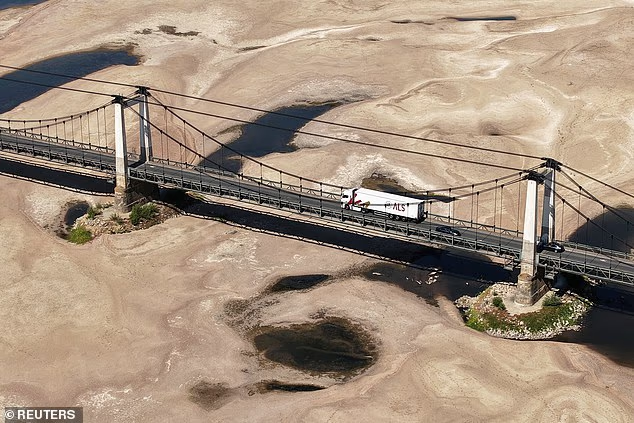
Drought conditions are worsening in France as shocking images from today show a completely barren Loire River in Montjean-sur-Loire

France’s longest river has been reduced to a sandbank as deadly temperatures have soared across Western Europe amid a record-breaking heatwave.

As Europe experienced its most severe ever recorded heatwave in June, drought conditions are worsening in France as shocking images show a completely barren Loire River in Montjean-sur-Loire.

The dry river, which is 625 miles long, has been transformed into a desert-like landscape with only stagnant puddles that remain. 

The Doubs River in the Maisons-du-Bois-Lièvremont commune is also devoid of water as a result of the blistering conditions.

Advertisement

The extreme temperatures have shut schools, knocked out power to tens of thousands of households and has claimed more than 2,000 lives across the country.

Water reserves have been destroyed by the soaring temperatures and almost a dozen departments had at least one commune under the highest ‘crisis’ level for tap water.

Households have been advised to restrict their water use and avoid watering plants, washing cars and filling private swimming pools.

Last month was also the second-warmest June globally, and the planet experienced the highest June sea surface temperatures since records began, the EU’s Copernicus Climate Change Service (C3S) said in a monthly bulletin.

Advertisement

Drought conditions are worsening in France as shocking images from today show a completely barren Loire River in Montjean-sur-Loire

A drone view shows a bridge with sandbanks of a branch of France's longest river

A drone view shows a bridge with sandbanks of a branch of France’s longest river

The Doubs River in the Maisons-du-Bois-Lièvremont commune is also devoid of water as a result of the soaring heat (pictured on Thursday)

The Doubs River in the Maisons-du-Bois-Lièvremont commune is also devoid of water as a result of the soaring heat (pictured on Thursday)

Advertisement

The average temperature in Western Europe last month was 20.74 degrees Celsius (69.3 degrees Fahrenheit), more than 3C above the average for June during 1991-2020, the data showed.

France recorded its hottest day since records began nearly 80 years ago, when temperatures peaked at 44.3C in the south-western town of Pissos on June 24 and the nation was placed under a red heat alert. 

It comes as ‘catastrophic’ wildfires ravaged Southern France on Monday, while poisonous clouds swept through Greece and Costa Brava in Spain was put on alert as temperatures across Europe are predicted to reach 40C.

Hundreds of firefighters were battling blazes that have devastated more than 19,000 hectares (42,000 acres) of land – an area more than twice the size of Manhattan – across Portugal, Spain, France and Greece.

Advertisement

In southwestern France near the city of Perpignan, 700 firefighters backed by special aircraft battled to control a ‘gigantic’ blaze spreading in a hard-to-reach remote area, with more than 10,000 local residents evacuated.

Fanned by wind, intense heat and exceptionally dry air, the fire has nearly tripled in size since early Sunday, devouring 4,600 hectares and leaving a firefighter and a resident injured, local authorities said.

The extreme weather is being driven by a persistent pattern that traps hot air over the region for days, allowing temperatures to keep rising. Scientists say such events are being intensified by global warming.

‘Climate change is here, we are living the consequences and it is only the start of July,’ said French fire service Colonel Eric Belgioino as he appealed to people near the Pyrenees inferno to take precautions to avoid starting fires.

Advertisement

‘The season is going to be long for the soldiers fighting fires. You have to help us,’ he pleaded.

Western Europe has now suffered three intense heatwaves in as many months, with countries including Spain and Portugal in the grip of another this week.

‘June 2026 underscored how profoundly the climate is changing,’ said Samantha Burgess, strategic lead at the European Centre for Medium-Range Weather Forecasts. 

‘The result is increasingly intense heatwaves, a persistently warm ocean, and growing risks for people, ecosystems and infrastructure across Europe and beyond.’

Advertisement
The Loire River pictured just days before on Saturday, though the water levels were considered very low

The Loire River pictured just days before on Saturday, though the water levels were considered very low

Advertisement
A farmer stood in his field of dried out corn crops today as the heatwave hit Saint-Dolays in north-western France

A farmer stood in his field of dried out corn crops today as the heatwave hit Saint-Dolays in north-western France

A wildfire burning in the Aspres region seen from Millas, in the Pyrenees-Orientales department, southern France on July 5

A wildfire burning in the Aspres region seen from Millas, in the Pyrenees-Orientales department, southern France on July 5

People cooled off in the Trocadero Fountain near to the Eiffel Tower on June 24

People cooled off in the Trocadero Fountain near to the Eiffel Tower on June 24

National authorities reported more than 4,700 excess deaths in France, Belgium, Spain and the Netherlands during the June heatwave – with the total across other countries likely to be higher – while the intense heat also fueled wildfires in Iberia and France and exacerbated drought conditions.

Advertisement

Greenhouse gas emissions, mostly from burning coal, oil and gas, have increased the planet’s average temperature to around 1.4 ‌C ⁠above pre-industrial times in the 19th century, according to the World Meteorological Organization. 

That higher baseline means temperatures can now hit higher peaks during heatwaves.

‘The relationship between heatwaves and global warming is about as straightforward as it gets: on a hotter planet, there will be more heatwaves, and they will become more intense,’ said Joeri Rogelj, a climate scientist at Imperial College London.

The ⁠spike in temperatures is also being driven by a mass of hot air moving north from the Sahara, fuelled by a strong high‑pressure ​system known as the ‘African anticyclone.’

Advertisement

Meteorologists say the system is creating a so‑called ‘heat dome,’ trapping hot air over western and central Europe and ​allowing temperatures to build day after day.

The freak Saharan heat dome is causing chaos across the rest of Europe including in Germany, the Netherlands, Belgium, Italy and in Spain where at least 212 died in three days. 

Globally, C3S said other factors were at play in driving sea surface temperatures to a record high for June – including the development of a strong El Niño weather pattern in the Pacific Ocean.

C3S’s temperature records go back to 1940, and are cross-checked with global temperature records dating back to 1850.


Advertisement

Source link

Continue Reading

NewsBeat

Trump: No Idea On McConnell's Health

Published

on

Trump: No Idea On McConnell's Health

!function(n){if(!window.cnx){window.cnx={},window.cnx.cmd=[];var t=n.createElement(‘iframe’);t.display=’none’,t.onload=function(){var n=t.contentWindow.document,c=n.createElement(‘script’);c.src=”//cd.connatix.com/connatix.player.js”,c.setAttribute(‘async’,’1′),c.setAttribute(‘type’,’text/javascript’),n.body.appendChild(c)},n.head.appendChild(t)}}(document);(new Image()).src=”https://capi.connatix.com/tr/si?token=19654b65-409c-4b38-90db-80cbdea02cf4″;cnx.cmd.push(function(){cnx({“playerId”:”19654b65-409c-4b38-90db-80cbdea02cf4″,”mediaId”:”2d3fea29-dc5b-4255-9141-e5246ac238a5″}).render(“6a4fabe1e4b0360f1cd6e746”);});

Source link

Continue Reading

NewsBeat

Andrew Cairns: Family of Eleventh Night bonfire murder victim ‘deserve justice’ as police issue appeal

Published

on

Belfast Live

“A number of people were involved, they know who they are and they are going to have to live with that for the rest of their lives.”

The murder of a man at an Eleventh Night bonfire in Co Antrim has had a “devastating effect” on his family police say as they continue their hunt for the culprits 26 years on.

Advertisement

Detectives from Legacy Investigation Branch are appealing for information on the 26th anniversary of the murder of Andrew Cairns in Larne on 12 July 2000.

The 22-year-old was attending a bonfire at Boyne Square in Larne on 11 July ahead of the annual Twelfth of July celebrations when he was attacked and shot by a group of men in the vicinity of Greenland Drive. Andrew was taken to the nearby Moyle Hospital but died in the early hours of 12 July as a result of a single gunshot wound to his head.

A PSNI spokesperson said: “Andrew became involved in an altercation with a number of men at the Rangers Supporters Club while attending an Eleventh Night bonfire. This altercation became violent and Andrew was viciously beaten by up to ten men close to the bonfire before being shot.

“After Andrew was shot a number of the men continued to kick Andrew as he lay on the ground. All of his attackers then made off on foot. One of those involved was driven away from the scene in a red coloured Vauxhall Calibra car.

Advertisement

“This was a vicious attack on a young man who was out enjoying the evening. Even more so as it took place in full view of several hundred people who were attending the bonfire, including many young children.

“While a number of people were arrested as part of the original investigation and found guilty of offences linked to Andrew’s murder no one has been convicted for his murder. Andrew’s family deserve justice and answers to what happened to Andrew that night.

The officer added: “I am appealing to anyone who was at the bonfire that evening either before or after the murder; Did you witness any altercation before the attack on Andrew? Did you see the men attack Andrew? Did you observe anyone else involved in this attack? Do you know who these individuals were? Did you see them make good their escape after the attack?

“26 years have now passed since Andrew’s murder. A number of people were involved, they know who they are and they are going to have to live with that for the rest of their lives.

Advertisement

“I would appeal directly to them to think about the devastating effect this has had, and continues to have, on Andrew’s family and to come forward and make themselves known to police.”

Anyone with information, no matter how small, can contact detectives in Legacy Investigation Branch on 101, Extension 67258 or L&DSec@psni.police.uk quoting reference RM05001334. You can also submit a report online using our witness appeals form via https://reporting.psni.police.uk/appeals. Alternatively, call Crimestoppers anonymously on 0800 555 111 or online at http://crimestoppers-uk.org/.

For all the latest news, visit the Belfast Live homepage here and sign up to our daily newsletter here.

Source link

Advertisement
Continue Reading

NewsBeat

UK bakes in 35C highs as heatwave to continue next week

Published

on

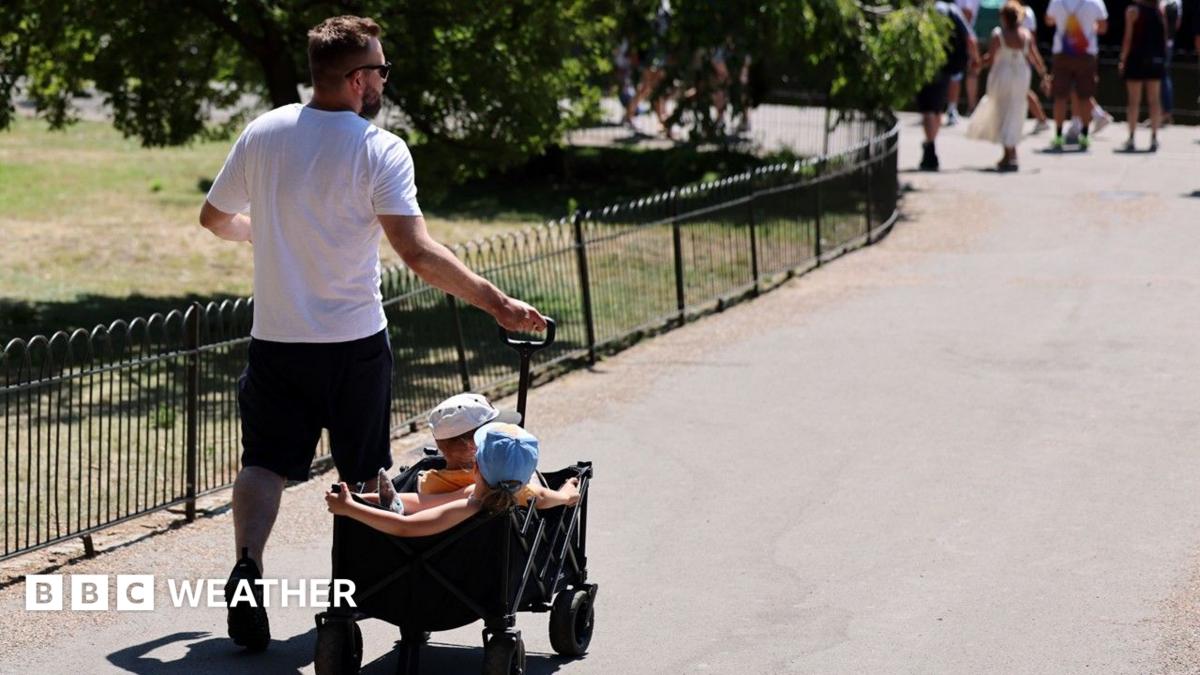
A man in a white shirt and dark shorts pulls two children through a park in a trolly

The current heatwave is not expected to break any daily temperature records, however, on Thursday the Met Office announced there have been eight days in 2026 where the heat has reached or exceeded 34C.

There were two in the May heatwave, four in June’s and so far two in this one, which is a record for the calendar year, surpassing 1976 and 2020. A further 34C plus reading is anticipated on Friday.

During June’s heatwave, temperatures peaked at 37.7C in Lingwood, Norfolk, smashing the previous June record of 35.6C.

Wales also recorded its hottest June day with 35.9C in Cardiff, while Northern Ireland equalled its June record with 30.8C in Castlederg, County Tyrone.

Advertisement

Scotland fell just slightly short of hitting its all-time June record which was 32.2C set in 1893. In June its top temperature was 31.2C at Threave, in Dumfries and Galloway.

In this July heatwave the highest temperature so far this time has been 35.5C at Wisley in Surrey, on Thursday.

Although temperatures will drop off a little into the weekend, many places will still reach the official heatwave thresholds through much of next week.

People may be drawing comparisons with 1976, where the UK saw 16 consecutive days above 30C, but this record is not likely to be broken.

Advertisement

The highest temperature recorded in the UK was during the unprecedented heatwave of 2022, when an astonishing 40.3C was recorded in Coningsby, Lincolnshire.

Source link

Continue Reading

NewsBeat

how plants fight back against salty soils

Published

on

how plants fight back against salty soils

To people, salt is a kitchen staple. But to crops, too much of it can be devastating.

Across coastal regions and irrigated agricultural land, salt is accumulating in soils, making it harder for plants to absorb water and reducing harvests. Scientists estimate that around half
of the world’s irrigated farmland is now affected by salinity to some degree.

The problem is only expected to grow. Rising sea levels can push saltwater into coastal farmland, while changing rainfall patterns and more frequent droughts are increasing reliance on irrigation. Poor-quality irrigation water and the overuse of fertilisers can worsen the problem, leaving salts behind in the soil year after year.

This is an issue because the global population is expected to approach 10 billion by the middle of the century, while demand for food continues to rise. Finding ways to grow crops in increasingly difficult conditions is becoming one of agriculture’s biggest challenges.

Advertisement

But plants are not passive victims. Beneath the surface, their roots are engaged in a constant battle with their environment. They sense danger, adapt their growth and deploy sophisticated strategies to survive.

Underground intelligence network

Roots do far more than anchor plants in the ground. They are the plant’s frontline, constantly gathering information about the soil around them. Every day, roots assess water availability, nutrient levels and environmental threats. When salt levels begin to rise, they are the first part of the plant to detect the change.

For plants, excess salt creates a double challenge. First, it makes it harder to draw water from the soil, almost as if the plant is trying to drink through a blocked straw. Second, sodium can build up inside tissues, damaging cells and interfering with essential biological processes.

Roots can detect these changes remarkably quickly. As salt concentrations increase, cells in the root begin sending warning signals through the plant. These signals trigger a cascade of responses, including shifts in hormone levels and the activation of emergency survival mechanisms designed to protect growth.

Advertisement
Saline soil in a wheat crop field.
RUPESH_ROY/Shutterstock

One of the most remarkable things about roots is their flexibility. Unlike the branches above ground, roots can continually reshape themselves in response to changing conditions. Faced with salty soil, they may alter how deeply they grow, how many side branches they produce and even the direction they travel.

In effect, roots can steer themselves away from trouble. Research has shown that plants can bend roots away from highly saline patches of soil while continuing to search for water and nutrients elsewhere. Growth may slow in certain areas, helping the plant avoid pushing vulnerable new tissues into harmful conditions.

This hidden reshaping of the root system can make a difference to the chances of survival. By avoiding the saltiest parts of the soil, plants can reduce the amount of sodium they absorb while continuing to access the resources they need.

At the same time, roots are working to control any salt that does enter the plant. Excess sodium is dangerous because it can damage proteins and cell membranes. To prevent this, root cells actively move sodium into storage compartments where it can do less harm, or pump it back into the surrounding soil.

Advertisement

The result is a carefully managed balancing act that helps protect the more sensitive tissues above ground.

Can plants ‘remember’ stress?

Perhaps the most surprising area of research is the idea that plants may be able to learn from experience. Scientists are increasingly finding evidence that previous exposure to environmental stress can influence how plants respond in the future. In crops such as rice, for example, plants that have encountered salt before can sometimes cope better when exposed to it again.

Rather than involving memory in the human sense, these experiences appear to leave lasting chemical marks on DNA and associated structures within cells. These marks can influence which genes are switched on or off when stress returns, allowing plants to respond more quickly or effectively.


À lire aussi :
How plants are able to remember stress without a brain

Advertisement

Similar effects have been observed in responses to heat and drought stress. It suggests that plants may possess a surprisingly sophisticated ability to prepare for future challenges.

Some studies even suggest that aspects of these stress responses could be passed to the next generation, potentially helping offspring cope better with harsh environments. While many questions remain unanswered, the possibility that plants can retain and pass on information about past stresses is opening up an exciting new area of research.

But what does this mean for future food supplies? As salt levels in soil increase, crops face mounting pressure. Salinity can stunt growth, reduce yields and leave plants less able to cope with other challenges such as drought and extreme heat. In reality, these stresses often arrive together. That’s why understanding roots has become such an important scientific priority.

The better researchers understand how roots detect, avoid and tolerate salt, the better equipped breeders will be to develop crops that can thrive in difficult conditions. By identifying the root traits that help plants survive saline environments, scientists may be able to breed or engineer varieties capable of maintaining yields on land that would otherwise become less productive.

Advertisement

Much of this battle is invisible, unfolding centimetres below our feet. But the decisions that roots make underground could have profound consequences above ground. In a future where climate change is making agriculture increasingly unpredictable, the key to protecting food supplies may lie in understanding how plants wage their quiet war against salt.

Source link

Advertisement
Continue Reading

NewsBeat

Peter Kay back in Bolton and delights fans with his homecoming gig

Published

on

Peter Kay back in Bolton and delights fans with his homecoming gig

Playing to an audience restricted to those with a Bolton postcode and in aid of Bolton Hospice, he delighted the packed hall.

David Pye, who was one of the lucky ones to have got a ticket said: “It was so good to see Peter back where it all began in his home town to a crowd made up of fellow Boltonians – and he didn’t disappoint.

“After announcing it was his first time back performing at The Albert Halls for 22 years, the first half of his show had a distinctly local feel.

Advertisement

“For anyone who has seen his latest show on his record-breaking tour, the first part of this show was different and without wanted to spoil it for anyone going, it takes a trip down a local Memory Lane.

“I have seen Peter loads of times, from big arenas to intimate warm-up shows and conversation fundraisers and this was as funny as ever. Peter was on top form on home turf.”

And even The Bolton News and local gets a mention as part of the act!

Those with tickets can book a Phoenix Nights themed meal at The Albert beforehand.

Advertisement

The Albert Halls is a venue he last performed at in 2003, recording the iconic Peter Kay: Live at the Bolton Albert Halls, which to this day is the biggest-selling stand-up DVD of all time in the UK.

And for those who are going to see the comic, you will be in for a treat as no one other than Boltonians would really get it.

Last year he appeared with fellow Boltonian Sara Cox at The Lowry Theatre for an ‘in conversation with’ and that was again for Bolton Hospice and also The Crescent Foodbank.

Advertisement

Source link

Continue Reading

NewsBeat

Canada’s Carney defends his trip as he visits Saudi Arabia

Published

on

Canada's Carney defends his trip as he visits Saudi Arabia

TORONTO (AP) — Canadian Prime Minister Mark Carney defended his trip to Saudi Arabia despite its poor human rights record and said on Thursday, during his visit to the kingdom that publicly condemning countries from afar is “an ineffective strategy.”

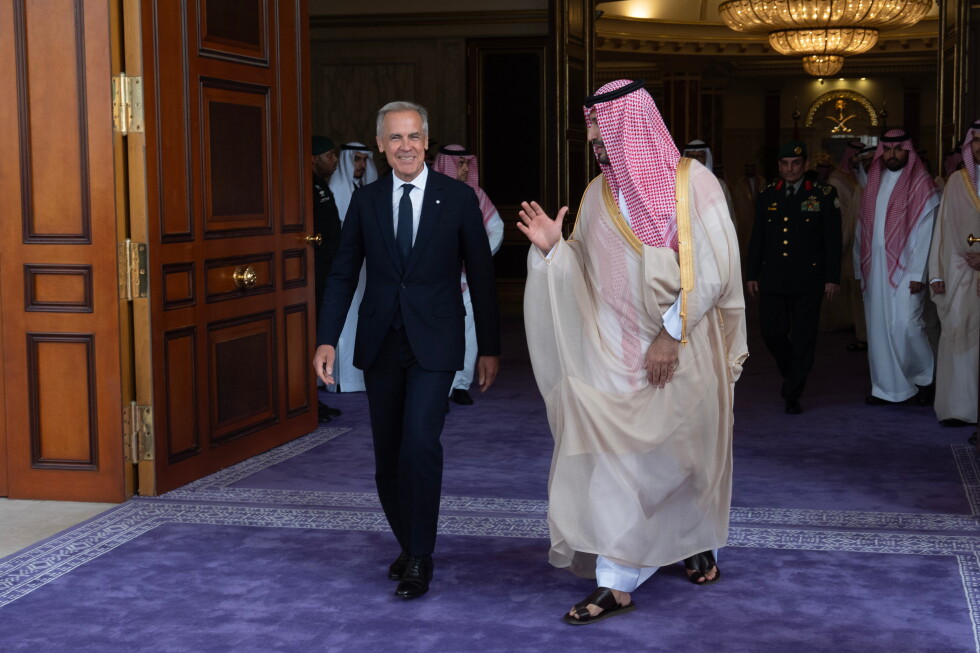
During the visit — the first by a Canadian leader to Saudi Arabia in 26 years — Carney met with Saudi Crown Prince Mohammed bin Salman, the kingdom’s de facto ruler.

Carney has been seeking to expand his country’s economic ties beyond its heavy reliance on the United States, and diversify trade and attract investments against the backdrop of U.S. President Donald Trump’s tariffs and threats to the U.S.-Mexico-Canada trade agreement.

“Lecturing countries from afar is an ineffective strategy,” Carney told reporters in the Saudi city of Jeddah. “It’s satisfying, but it’s ineffective.”

Advertisement

He stressed that engagement “doesn’t mean that we agree with everything that a country is doing.”

Saudi Arabia’s human rights record drew global scrutiny after the 2018 killing of Washington Post columnist Jamal Khashoggi. A U.S. intelligence assessment concluded Prince Mohammed likely approved the operation, which Saudi Arabia denies.

In Jeddah, Carney also said that the world is becoming more dangerous and divided and that Canada must expand its partnerships elsewhere, beyond the U.S., its largest trading partner.

The visit contrasts with the approach by former Canadian Prime Minister Justin Trudeau, whose government publicly criticized Saudi Arabia’s human rights record in 2018, triggering a diplomatic rift that lasted five years.

Advertisement

The criticism prompted Riyadh to expel Canada’s ambassador, suspend new trade and investment and recall thousands of Saudi students. The countries restored full diplomatic relations in 2023.

Carney said he cares deeply about human rights and Canadian consular cases, citing a case he said he raised with Turkish President Recep Tayyip Erdogan during a meeting on the sidelines of the NATO summit in Ankara, Turkey’s capital this week.

“Because I was with the president, it was addressed favorably. If I sat in Ottawa … I wouldn’t have had that conversation. I wouldn’t have had that impact. That’s a small example,” Carney said.

Canada’s Foreign Affairs Minister Anita Anand, who accompanied Carney to Saudi Arabia, said she also raised human rights and consular cases during her meetings.

Advertisement

For its part, Saudi Arabia has sought to attract foreign investment as Prince Mohammed pursues an ambitious plan to diversify the kingdom’s economy beyond oil

Saudi Investment Minister Fahad Al-Saif called Canada “a trusted long-term partner” and said Saudi investors offer “patient capital.”

Advertisement

Also Thursday, Carney attended a ceremony for 13 commercial agreements and memorandums of understanding between Canadian and Saudi companies and institutions, including engineering firms Hatch and AtkinsRéalis — agreements the prime minister’s office said are worth more than 1 billion Canadian dollars ($710 million).

Nelson Wiseman, a professor emeritus at the University of Toronto, highlighted the practical side of Carney’s policies.

“Carney says he is taking the world as it is,” Wiseman said. “It doesn’t mean looking beyond human rights; it means being realistic about what preaching about it to authoritarian leaders can accomplish.”

Carney flies back to Canada on Friday.

Advertisement

Source link

Advertisement
Continue Reading

NewsBeat

Decision on bridge at 1,300-house Scarborough project

Published

on

Decision on bridge at 1,300-house Scarborough project

​Kebbell Developments wanted to relax the “trigger for the delivery” of a connecting road and bridge in Eastfield, Scarborough, but coastal councillors said they were not convinced by the company’s arguments.

​Planning officers had recommended allowing the construction and occupation of dozens more houses to avoid pausing construction works. However, members of the Scarborough and Whitby Area Committee said they were minded to refuse the application following concerns from residents and the division councillor.

​Cllr Eric Broadbent said: “I think the Channel Tunnel is probably easier to build than this bridge.

Advertisement

“I can’t support this application, and the developers should get their heads together, get it built, and do the residents of Deepdale a favour.”

​However, officers said that plans for the construction of the bridge were underway and were “satisfied that developers are fully committed to the bridge and we expect a formal application in the very near future”.

​Committee members said they remained sceptical, but instead of refusing the delay, they agreed to postpone a decision until “substantive” plans for the bridge were provided.

​​The site, on land north of Eastfield, received outline planning permission in 2013 for up to 1,350 properties.

Advertisement

​In 2023, a hybrid application was approved for around 657 dwellings on land east of Deepdale, and it is the conditions attached to that permission for which a change was sought.

​The new scheme would allow for 693 houses to be occupied “prior to construction of the link road and bridge to allow construction of the current phase to be completed”.

​Speaking at the meeting, a planning officer said a “compromise solution had been proposed by the applicant” and that the revised proposal was “a reasonable and sensible compromise”.

​Officers added that “a specialist bridge design company has been engaged by the company, with a formal submission to be made later this year”.

Advertisement

​Eastfield councillor Tom Seston said: “The issue with the link road and the bridge was raised with me as soon as I was elected and it’s been a sore spot for many residents on the development.

​“The lack of delivery of basic infrastructure in certain parts of the development and developers not fulfilling their promises has been a long-running issue, while I appreciate that not all the issues are linked to one single developer.

​“The behaviour of various companies has left a bad taste in residents’ mouths, and they feel neglected by these companies.”

​Councillors were advised that the issue was complicated by different developers working simultaneously at the site.

Advertisement

​Officers noted that there had been “a previous allowance, three or four years ago, to delay the construction of the bridge”.

​“Denying Kebble this application may not result in the bridge being delivered any sooner, and this situation is not entirely of Kebble’s making, as there are several companies at work here.”

​The planning committee agreed to postpone a decision until September and instructed officers to seek clarification on the developer’s plans for the bridge.

Advertisement

Source link

Continue Reading

NewsBeat

QUENTIN LETTS: The bureaucrats bamboozled by talking about triangulation, full decant… and upticks. Eh?

Published

on

Charlotte Simmonds, ¿managing director at R&R client team¿ and ¿senior responsible officer¿. What curlicues to flourish on LinkedIn, writes Quentin Letts

To Planet Glue, that far-flung place where life-forms with exalted titles discuss a project to repair the Palace of Westminster.

It could cost £39billion and will not start until 2032 at the earliest. Some officials have already toiled on it for 14 years.

In that time they have developed their own language, burrowing so far into the bureaucratic subsoil that normal bodily functions have withered.

The blind cusk eel swims at such dark depths that its eyes no longer work.

Advertisement

Likewise, officials attached to parliamentary ‘R&R’ (restoration and renewal) have lost all sense of scepticism about costs. Yesterday’s event was a meeting of the public accounts committee, one of Parliament’s better outfits. 

What a feast R&R has become for officials and prospective contractors. For more than a decade the Establishment has accepted that the palace needs a fortune spending on its crumbling towers and tangled pipes; as the years pass it becomes hard to remember how many billions of pounds are involved.

Thus the figures rise, like the girl in the old Nimble bread adverts, and no one complains.

Before the committee sat two of the project’s current managers: Charlotte Simmonds, ‘managing director at R&R client team’ and ‘senior responsible officer’, plus Russ MacMillan, ‘chief executive of the R&R delivery authority’. What curlicues to flourish on LinkedIn!

Advertisement

Charlotte Simmonds, ‘managing director at R&R client team’ and ‘senior responsible officer’. What curlicues to flourish on LinkedIn, writes Quentin Letts

Charlotte and Russ – the committee uses Christian names, please – both spoke the lingo: resilience, full decant, EMI (enhanced maintenance and improvement), strategic estates, design maturity, next levels, retiring the risks, consent groups, iterate, sub-boards, external dependencies, mitigations, moving into delivery, upticks, following due process, granular level, delegation levels, escalating up to the clerks, triangulation, scenario planning and, naturally, best practice.

Charlotte did a lot of hand-waving. She may have thought this helped to convey a sense of executive purpose. To me it simply suggested a bluffer. They had come to try to frighten the MPs into approving phase one of the works, which would be capped at £3billion. Peanuts! If parliamentarians did not agree to this by the end of the year there was going to be terrible trouble. Things were going to become more expensive, just you see.

Advertisement

Holiday companies use a similar tactic when you start booking a trip and the message flashes up, ‘only two rooms left at this price’. You panic and press the button and wrongly think you have bagged a bargain.

Sir Geoffrey Clifton-Brown (Con, N Cotswolds), 73, who chairs the committee and who is a chartered surveyor, was curious how the £3billion figure for phase one had been reached.

Charlotte rattled through some of the costings: £320million on designers, £90million on surveys, £70million on a temporary jetty on the Thames, £328million for storing ‘heritage works’, by which she meant either oil paintings or perhaps Sir Geoffrey himself. Just clearing the scaffolding and clutter from the palace’s current spine road was going to cost £30million. These were astonishing sums, produced almost with pride.

Planning permission alone was going to take a year. Nothing moves slowly in officialdom, you see. The longer they delay, the longer their class stays in a job.

Advertisement

Catherine McKinnell (Lab, Newcastle N) suggested that it all sounded rather vague. ‘There’s lots of potential for elasticity in there.’ Russ’s eyes bulged, not so much in indignation, I think, as surprise. It was as if no one had ever put such a point to him. Sarah Hall (Lab, Warrington S) expressed mild doubt about the supervision of costs. Charlotte, with a wave of the hand: ‘It would obviously be profiled.’ Eh?

‘Experts’ were invoked a lot. ‘We draw in independent experts,’ yacked Charlotte. ‘We have also utilised consultancy support.’ Now the prices perhaps started to make more sense. She insisted phase one was ‘a really pragmatic way to get momentum on this programme’.

Translation: once MPs have swallowed this initial £3billion there will be no turning back and we can really open the gold taps.

Source link

Advertisement
Continue Reading

NewsBeat

Charlie Sheen’s child support battle ENDS with Two and a Half Men star on hook for stunning amount of back pay

Published

on

Charlie Sheen, pictured last September, has been ordered to pay $500,000 to his second ex-wife Brooke Mueller as their legal battle draws to an end

Charlie Sheen has been ordered to pay $500,000 to his third ex-wife Brooke Mueller as their legal battle finally draws to an end.

Mueller sued Sheen for over $15 million this past December, insisting he owed her back child support with interest for their 17-year-old twins Bob and Max.

In her initial complaint, Mueller argued that Sheen had been ordered to furnish her with a monthly $55,000 from April 2010 onwards, but alleged that in July 2011 he began making either partial or no payments.

Sheen’s representative argued that Mueller was ‘not entitled to any child support’ because he had cared for the children while she battled addiction.

Advertisement

Now, in court documents obtained by the Daily Mail, the pair have arrived at an arrangement in which he will pay her far less than the amount she first demanded.

Under the terms of their agreement, Sheen owes Mueller a total of $500,000, half of which is due by July 10, with the remainder to be paid by September 1.

The Daily Mail has contacted Sheen and Mueller’s representatives for comment.

Advertisement

Charlie Sheen, pictured last September, has been ordered to pay $500,000 to his second ex-wife Brooke Mueller as their legal battle draws to an end

Mueller sued Sheen for over $15 million this past December, insisting he owed her back child support for their 17-year-old twins Bob and Max; she is pictured with her sons in 2016

Mueller sued Sheen for over $15 million this past December, insisting he owed her back child support for their 17-year-old twins Bob and Max; she is pictured with her sons in 2016

Mueller and Sheen exchanged vows in 2008, commencing a turbulent marriage buffeted by their respective substance abuse struggles until they divorced in 2011; pictured 2009

Mueller and Sheen exchanged vows in 2008, commencing a turbulent marriage buffeted by their respective substance abuse struggles until they divorced in 2011; pictured 2009

Mueller and Sheen exchanged vows in 2008, commencing a turbulent marriage buffeted by their respective substance abuse struggles until they divorced in 2011.

Advertisement

In 2013, Sheen’s second ex-wife Denise Richards stepped in and temporarily cared for the twins after the government took them from Mueller because of her drug use.

Sheen has retained his sobriety since 2018, while Mueller relapsed in 2023 and has confessed to another ‘slip’ since but remains committed to staying on the wagon.

The agreement they have just struck over child support covers the period from March 1, 2011 to July 1, 2026, after which any financial responsibility for Bob and Max rests with whichever parent has ‘physical custody’ at the time, per court documents.

Although Mueller and Sheen technically have joint custody, the exact terms are contingent on Mueller’s ability to remain sober.

Advertisement

When Mueller first sued Sheen this past December, she demanded an eyewatering sum of $15,386,243, comprised of $8.9 million in back child support from March 2011 to December 2025 and a further $6.4 million in interest.

Mueller insisted that her ex-husband provide her with the sum stipulated – plus $25,000 in attorney’s fees – within 30 days.

Sheen’s representative retorted: ‘Brooke has been in and out of rehab for the past 15 years, while Charlie has had 100% custody of the kids, which is why she is not entitled to any child support,’ according to TMZ.

Earlier last year, Mueller remarked that Sheen remained 'my first call for help,' saying: 'He's always there to help me and pick up the pieces'; pictured 2008

Earlier last year, Mueller remarked that Sheen remained ‘my first call for help,’ saying: ‘He’s always there to help me and pick up the pieces’; pictured 2008

Advertisement
She explained that they held dramatically different views of sobriety, which he appeared to attribute more to willpower than she did; Mueller and Sheen pictured at the 2008 Emmys

She explained that they held dramatically different views of sobriety, which he appeared to attribute more to willpower than she did; Mueller and Sheen pictured at the 2008 Emmys

Earlier last year, Mueller remarked that Sheen remained ‘my first call for help,’ saying: ‘He gets it. He’s always there to help me and pick up the pieces.’

Nevertheless she explained that they held dramatically different views of sobriety, which he appeared to attribute more to willpower than she did, via People.

‘He knows his whole addiction history, and [thinks]: “If I can just stop without one AA meeting or without needing any whatever, then why can’t you?”‘ she said.

Advertisement

‘I think he thinks it’s more about just making a choice, and then with the addiction [mindset], sometimes we don’t have a choice,’ Mueller added.

‘But if I look back at our marriage, he was always one that could shut it off and turn it off and go to sleep, and I would be taking the car sneaking out to Skid Row.’

She allowed that the circumstances were ‘unfair’ to her sons, whom she said had gotten ‘used to’ the ‘sad reality’ that ‘Mommy is going to relapse again one day.’

Along with the twins he had by Mueller, Sheen shares two daughters with Richards – Sami, 22, an OnlyFans model, and Lola, 21, a born-again Christian.

Advertisement

Source link

Continue Reading

Trending

Copyright © 2025