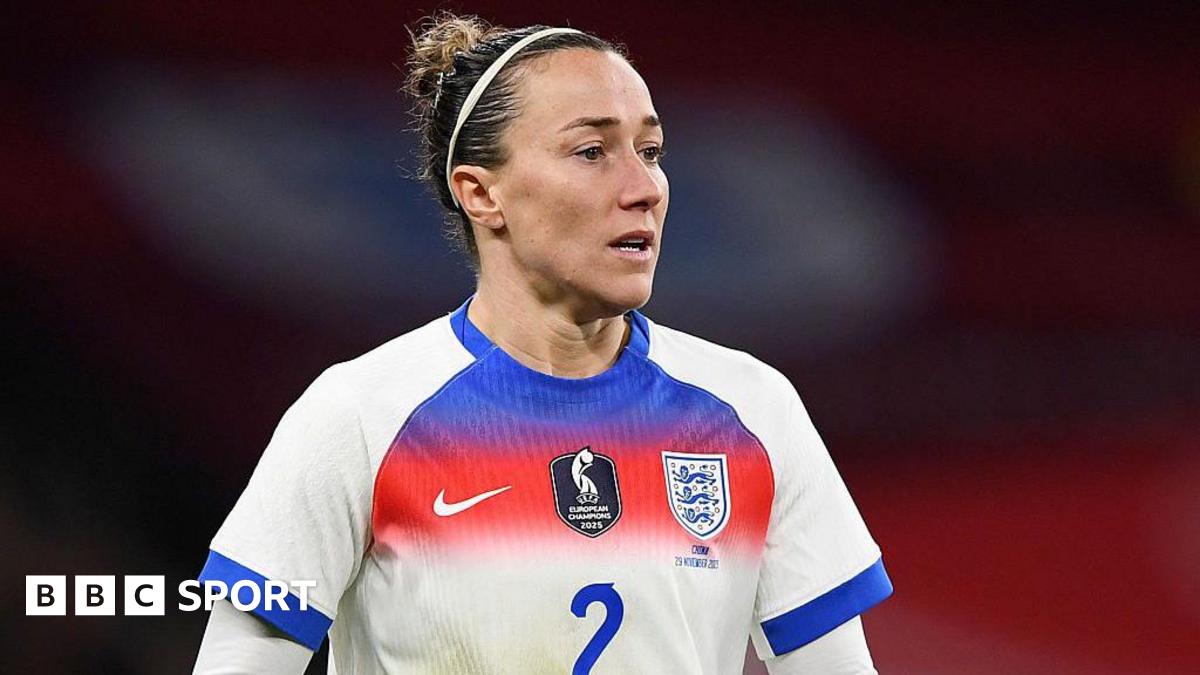

In England’s four friendly matches to end 2025, manager Sarina Wiegman started three different players at left-back, and Bronze and Maya Le Tissier at right-back.
The Dutchwoman has made it clear she believes Le Tissier is the current back-up option for Bronze despite captaining Manchester United at centre-back.
Versatile Washington Spirit defender Esme Morgan, who impressed at centre-back during Euro 2025, is also capable of playing on the right.
Speaking about her role in October, Morgan said: “I can fill in in different positions and I think that’s something that over my career has allowed me to get a lot more minutes than I might now have otherwise done if I was just rigid in one position.
Advertisement
“When I was at Manchester City, I played the vast majority of my minutes at full-back and that was really valuable in terms of being exposed [to playing] against world-class wingers. It’s all part of your development.
“Versatility is a huge strength but I think my best attributes probably serve me to be most useful at centre-back.”
In Le Tissier, Morgan and Gotham FC defender Jess Carter, Wiegman has players who can switch positions across the back four, despite centre-back being their preferred role.
The same can be said for Manchester City captain Alex Greenwood, who has been one of England’s most consistent performers under Wiegman.
Advertisement
She was overlooked at centre-back in Euro 2022 with Wiegman selecting Millie Bright and Leah Williamson, and started five of the six matches at Euro 2025 at left-back after the failed trial of playing play Carter there in the defeat by France.
Greenwood, 32, has been a solid solution but England have been exposed by pace more recently, so Wiegman needed to expand the search.
She called up Bay FC defender Anouk Denton in October, who is primarily a right-back but can play left-back, and persuaded Arsenal’s Taylor Hinds to switch allegiances from Jamaica to England at the end of last year.
Hinds started victories against Australia and Ghana at left-back in October and December respectively, while Chelsea’s Niamh Charles has struggled with injuries but has also played in the position.
Advertisement
The most recent option is London City Lionesses left-back Poppy Pattinson, who has been called up for the World Cup qualifiers against Ukraine and Iceland in March.
“[Pattinson] plays at left-back, is very proactive and takes a lot of initiative. She likes to go forward and she can cover the whole wing on the left side,” said Wiegman.
“She is looking for passes forward which I thought was really good. Although she is not the tallest, she does use her body well in defence.
“You have seen different options. [Pattinson] is now one of them and Taylor [Hinds] has played there. In both the left full-back and right-back position, we are figuring out what’s best for the team.”

Wales have called in reinforcements ahead of the final two Six Nations games against Ireland and Italy
Dragons youngster Ryan Woodman has been called into Wales’ Six Nations squad ahead of the final two matches of the tournament. The 22-year-old back rower is one of two new call-ups alongside Cardiff’s Keiron Assiratti, who is fit again after initially missing out on selection.
Plumtree’s Six Nations was finished just 10 minutes into the match against Scotland after he suffered a shoulder injury that is set to keep him out until the last couple of games of the season.
Ensure our latest sport headlines always appear at the top of your Google Search by making us a Preferred Source. Click here to activate or add us as Preferred Source in your Google search settings
Scarlets team-mate Sam Costelow remains with the squad despite suffering a nasty ankle injury that left him on crutches in the aftermath at the Principality Stadium. There is still some hope he could be available for the final match of the tournament against Italy on March 14.
Advertisement
Tighthead Assiratti will now challenge Tomas Francis and Archie Griffin for a place in the matchday squad.
Wales’ players and coaches met up in full today after nine players returned from regional duty following their temporary release last week.
Steve Tandy is due to name his side to face the Irish on Wednesday ahead of Friday night’s fixture. There are unlikely to be many changes, with James Botham currently in pole position to start in place of Plumtree after a generally impressive 70 minutes against the Scots.

Dan Edwards or Jarrod Evans will replace Costelow at outside-half.
The famous chocolate cake has depth and a ‘resonant, ferrous tang’ thanks to one strange yet popular addition.
Nicola Roy Spare Time writer
12:07, 01 Mar 2026
There’s no better way to spend a dreary afternoon than by whipping up a sweet treat. You can’t go wrong with a sumptuous chocolate cake, and there are so many fantastic recipes out there just waiting to be tried.
But sometimes, you just can’t beat the classics, and when it comes to those foolproof recipes, Nigella Lawson is hard to beat. She’s known for her indulgent, rich creations and boasts an impressive array of chocolate cake techniques.
Advertisement
However, perhaps her most famous recipe features an unexpected yet popular ingredient that lends an extra layer of depth and flavour to the mix.
Featured in Nigella’s book Feast, this luxurious chocolate cake calls for around half a can of Guinness in the batter. This much-loved beverage is smooth, dark and full-bodied, making it a natural fit for a chocolate cake recipe, reports the Express.
The recipe notes read: “This cake is magnificent in its damp blackness. I can’t say that you can absolutely taste the stout in it, but there is certainly a resonant, ferrous tang which I happen to love. The best way of describing it is to say that it’s like gingerbread without the spices.”
To balance out the richness, the cake is crowned with a light yet luxe cream cheese frosting. That said, you can leave it bare if you prefer, and it’ll still taste ‘gorgeous’.

Here’s everything you need to recreate this recipe.
Make sure our latest lifestyle and travel stories always pop up at the top of your Google Search by setting us as a Preferred Source. Click here to activate or add us as Preferred Source in your Google search settings.
Nigella Lawson’s Guinness cake
Ingredients – for the cake
Advertisement
250 millilitres Guinness
250 grams unsalted butter
75 grams cocoa powder
400 grams caster sugar
150 millilitres sour cream
2 large eggs
2½ teaspoons vanilla extract
275 grams plain flour
2½ teaspoons bicarbonate of soda
For the topping
300 grams cream cheese
150 grams icing sugar
2 teaspoons cornflour
125 millilitres double cream (or whipping cream)
Method
Heat your oven to gas mark 4/180°C/160°C Fan/350oF, and grease and line a 23cm springform tin.
Tip the Guinness into a large, wide saucepan, chuck in the butter and warm until it’s melted. Then, whisk in the cocoa and sugar. Beat the sour cream with the eggs and vanilla, then pour this into the pan, and finally whisk in the flour and bicarb.
Pour the cake batter into your prepared tin and bake for 45 minutes to an hour. Allow it to cool completely in the tin on a cooling rack.
Advertisement
Once the cake’s cooled down, place it on a flat platter or cake stand and prepare the icing. Gently whip the cream cheese until smooth, sieve over the icing sugar and cornflour and then beat to combine.
If you’re using double cream, add it and beat until you achieve a spreadable consistency. If using whipping cream, whisk first to soft peaks, add a couple of spoonfuls into the cream cheese mixture, and once this is combined, fold in the rest.
All you need to know as Ian Huntley’s daughter speaks after killer attacked – The Mirror
Need to know
Soham child killer Ian Huntley was left fighting for his life after being brutally attacked in prison, and his daughter Samantha Bryan has now broken her silence
Ian Huntley, pictured in 2006, was attacked in prison(Image: Andy Stenning/Daily Mirror)
Everything you need to know as Ian Huntley’s daughter breaks her silence after the Soham child killer was left fighting for his life.
Ian Huntley’s daughter has broken her silence after the Soham killer was brutally attacked in prison, saying she was “glad” to learn he was fighting for his life.
Samantha Bryan, 27, revealed she felt “overwhelming relief” when told the ex-school caretaker had been smashed across the head with a metal pole. Huntley, 52, was given just a five per cent chance of survival and remains in critical condition.
“I started crying because I thought he was dead – it was an overwhelming sense of relief,” Samantha told The Sun on Sunday. “Being his daughter has been a heavy burden.”
The beautician from Cleethorpes only discovered Huntley was her father at age 14 during a school crime project. Her mum Katie, 45, fled Huntley’s brutality after becoming pregnant at 16.
Katie said: “I think he got what he deserves. I hope he burns in hell.”
This marks the third brutal attack on Huntley in prison – he previously had his throat cut in 2010 and faced another attempt in 2018. The prime suspect is Anthony Russell, 43, a whole-life prisoner who reportedly claimed “I’ve killed him” after the attack.
Police are continuing their investigation into the assault on the killer of Holly Wells and Jessica Chapman, both 10, in 2002.
Ensure our latest headlines always appear at the top of your Google Search by making us a Preferred Source. Click here to activate or add us as your Preferred Source in your Google search settings.
The demonic animal has sometimes been reported to walk upright on its hind legs, while at other times it’s seen running on all fours
Cambridgeshire is well equipped with strange mythical creatures, interesting facts, and bizarre stories. You may have heard of some of them before, from the Fen Tiger, a mysterious big cat said to roam the Fenlands, or a lantern man described as an atmospheric ghost light.
Advertisement
One Cambridgeshire village is believed to be haunted by a demonic creature described as half dog, half monkey. Reported sightings, apparently dating back more than 100 years, have been spotted around one particular road near the village of West Wratting.
The creature is known as the ‘Shug Monkey’. It is said to have the body of a jet-black shaggy sheepdog and the face of a monkey with staring eyes.
The road reportedly once haunted by ‘Shug Monkey’ can be found on a street that leads from the village of West Wratting to nearby Balsham called Slough Hill Lane. Sometimes the demonic animal is reported to walk upright on its hind legs, while other times it’s seen running on all fours.
According to Mysterious Cambridgeshire, by Daniel Codd: “Children would avoid the place after dark in the 1900s, but quite what this shaggy-haired monstrosity’s exact status was is unclear; it does not appear to have been thought of as an animal such as a Yeti-type creature, or even an escaped primate.”
Advertisement
The Shug Monkey is thought to have origins in Norse or Viking mythology, like many other ghostly creatures from the region. The fascinating creature also shares characteristics with another folkloric creature of East Anglia called Black Shuck.
Tales of Black Shuck describe a ghostly black dog seen roaming coastlines and countryside in the region.
In addition to Khamenei, several other senior officials were killed in US/Israeli airstrikes too.
They include Iran’s army chief of staff, General Abdol Rahim Mousavi, and defence minister General Aziz Nasirzadeh.
Advertisement
Also killed was Major General Mohammad Pakpour, who took over as the Revolutionary Guard’s top commander after Israel killed its last commander last June, and Ali Shamkhani, a top security adviser to Khamenei.
Iranian media said Khamenei’s daughter, grandchild, son-in-law and daughter-in-law were killed as well.
Image: Clockwise from top left: Mohammad Pakpour, Aziz Nasirzadeh, General Abdol Rahim Mousavi and Ali Shamkhani. Pics: Reuters
What happens now?
A three-person temporary leadership council has been formed to govern the country, in line with Islamic Republic law.
Advertisement
It includes Iran’s reformist president, Masoud Pezeshkian, and the hard-line head of the judiciary, Gholamhossein Mohseni Ejei.
There will also be a jurist, Alireza Arafi, who is a member of Iran’s Guardian Council and head of the Basij, a volunteer paramilitary force.
Ali Larijani, Iran’s head of security, said the council would be set up on Sunday.
“We had prepared for such moments and have plans in place for all scenarios, even for the time after the martyrdom of revered Imam Khamenei,” said Mohammad Bagher Qalibaf, Iran’s parliamentary speaker.
Advertisement
Advertisement
Iran vows ‘terrifying blows’
He added: “You’ll see that after the leadership council is formed, the power and integrity of officials, defensive forces and the people will be beyond imagination.”
Who chooses the new leader?
While the leadership council will govern in the interim, an 88-member panel called the Assembly of Experts will pick a new leader. Under Iranian law, that must happen as soon as possible.
Advertisement
The panel is made up of Shiite clerics elected every eight years and whose candidacies are approved by the Guardian Council.
Advertisement
US military releases videos of fresh strikes
The Guardian Council is known for disqualifying candidates. It barred former Iranian president Hassan Rouhani from election to the Assembly of Experts in March 2024.
A relative moderate, he struck the JCPOA nuclear deal with world powers in 2015, from which the US, under Donald Trump, later withdrew.
Advertisement
Advertisement
Appointed for life, Khamenei led by divine right
Who could be the new supreme leader?
Under Iran’s system of vilayat-e faqih – guardianship of the Islamic jurist – the supreme leader must be a cleric.
Khamenei’s power was often wielded through close advisers. But it is unclear how many have survived, and he was never publicly recorded as naming a successor.
Advertisement
His son, Mojtaba Khamenei, a 56-year-old cleric, has been seen as a possible successor. He has never held government office, however.
That said, he has been described as a gatekeeper to his father.
He studied under religious conservatives in seminaries of the city of Qom, and is described as a hardliner with close ties to the Revolutionary Guard.
Image: Mojtaba Khamenei, son of the now late supreme leader, in 2019. File pic: AP
It had been thought that former president Ebrahim Raisi might seek the leadership, but he died in a helicopter crash in May 2024.
Before the Iranian revolution Iran was ruled by a monarchy, with the king called the “shah”.
Reza Pahlavi, the US-based son of the shah who was deposed in the 1979 revolution has said: “With (Khamenei’s) death, the Islamic Republic has in effect reached its end and will very soon be consigned to the dustbin of history.”
Any attempts to appoint a successor to Khamenei are “doomed to fail from the outset”, Pahlavi added, claiming they will have neither longevity nor legitimacy.
Advertisement
He has urged Iran’s military, law enforcement and security forces to take their “final opportunity to join the nation”.
Stretcherz Toys, which are manufactured by HTI Toys, have been withdrawn from the market.
They are stretch toys filled with sand-like material, which may be contaminated with trace levels of asbestos.
Retailers including Asda, Aldi, Argos, B&M, Home Bargains, Smyths Toys and The Works have all issued recalls for various Stretcherz toys.
Advertisement
The recall was initially issued on Tuesday, February 17, but has been extended to other retailers over the rest of the month.
A notice on the government website said: “The product presents a risk to health as the sand included in the set may be contaminated with a quantity of asbestos.”
It is advised to stop using these products immediately and keep them out of the reach of children.
Advertisement
They add: “If the sand is still in its packaging, place in a heavy-duty plastic bag, double tape it securely, label it clearly and store in a secure location out of the reach of children.
“If the sand has been used, clean up sites where the product was used using wet cloths to avoid generating dust.
“Wear gloves and a mask.
“Double bag the sand, gloves, mask and cloths.”
Advertisement
From here, people can return the product to the place of purchase for a refund.
If you are unable to get to the shop where you purchased the item, it is advised to “dispose of the product in your general household waste” after following the initial instructions for what to do with the packaging.
It adds: “Contact the distributor you purchased from for a full refund.”
Which specific products have been recalled?
The specific products that have been recalled by all the retailers can be found below, with details on their barcodes and when they were sold.
Aldi
Stretcherz Twin Pac (Barcode: 855055)
Skulls – Pink & Blue (Barcode: 5050839102142)
Skulls- Green & Blue: (Barcode: 5050839102241)
Skulls – Green & Red (Barcode: 5050839102340)
Electro, White & Red (Barcode: 5050839102449)
Electro, Blue & Yellow (Barcode: 5050839102548)
Electro, Aqua & Orange (Barcode: 5050839102647)
Argos
Stretcherz Stretch Squad Dino – pack of four (Product code: 7832350, Item Number: 1350092.00)
KABUL, Afghanistan (AP) — Afghanistan said Sunday it had thwarted attempted airstrikes on Bagram Air Base, the former U.S. military base north of Kabul, while cross-border fighting between Pakistan and Afghanistan stretched into a fourth day.
The fighting has been the most severe between the neighbors for years, with Pakistan declaring it is in “open war” with Afghanistan. The conflict has alarmed the international community, particularly as the area is one where other militant groups, including al-Qaida and the Islamic State group, still have a presence and have been trying to resurface.
Pakistan accuses Afghanistan’s Taliban government of harboring militant groups that stage attacks against it and also of allying with its archrival India. Border clashes in October killed dozens of soldiers, civilians and suspected militants until a Qatari-mediated ceasefire ended the intense fighting. But several rounds of peace talks in Turkey in November failed to produce a lasting agreement, and the two sides have occasionally traded fire since then.
On Sunday, the police headquarters of Parwan province, where Bagram is located, said in a statement that several Pakistani military jets had entered Afghan airspace “and attempted to bomb Bagram Air Base” at around 5 a.m. The statement said Afghan forces responded with “anti-aircraft and missile defense systems” and had managed to thwart the attack.
Advertisement
There was no immediate response to the claim from Pakistan.
Bagram was the United States’ largest military base in Afghanistan. It was taken over by the Taliban as they swept across the country and took control in the wake of the chaotic U.S. withdrawal from the country in 2021. Last year, U.S. President Donald Trump suggested he wanted to reestablish a U.S. presence at the base.
The current fighting began when Afghanistan launched a broad cross-border attack Thursday night, saying it was in retaliation for Pakistani airstrikes the previous Sunday.
Pakistan had said its airstrike had targeted the outlawed Pakistani Taliban, or TTP. Afghanistan had said only civilians were killed.
Advertisement
The TTP militant group, which is separate but closely allied with Afghanistan’s ruling Taliban, operates inside Pakistan, where it has been blamed for hundreds of deaths in bombings and other attacks over the years. Pakistan accuses Afghanistan’s Taliban government of providing a safe haven within Afghanistan for the TTP, an accusation Afghanistan denies.
After Thursday’s Afghan attack, Pakistani Defense Minister Khawaja Mohammad Asif declared that “our patience has now run out. Now it is open war between us.”
In the ongoing fighting, each side claims to have killed hundreds of the other side’s forces — and each side puts its own casualties at drastically lower numbers.
Afghan officials said fighting had continued overnight and into Sunday in the border areas.
Advertisement
The police command spokesman for Nangarhar province, Said Tayyeb Hammad, said anti-aircraft missiles were used from the provincial capital of Jalalabad and surrounding areas on Pakistani fighter jets flying overhead Sunday morning.
Defense Ministry spokesman Enayatulah Khowarazmi said Afghan forces had launched counterattacks with snipers across the border from Nangarhar, Paktia, Khost and Kandahar provinces overnight. He claimed two Pakistani drones had been shot down and dozens of Pakistani soldiers had been killed.
Deputy government spokesman Hamdullah Fitrat said Pakistani drone attacks hit civilian homes in Nangarhar province late Saturday night, killing a woman and a child, while a mortar killed another civilian when it hit a home in Paktia province.
There was no immediate response to the claims from Pakistani officials.
Explosions reverberated across parts of the Afghan capital in the early hours, followed by bursts of gunfire. It was not immediately clear what had been struck or whether there were casualties.
Zabihullah Mujahid, spokesperson for Afghanistan’s Taliban administration, said the blasts were the result of Afghan forces engaging Pakistani jets above the capital. “Air defence attacks were carried out in Kabul against Pakistani aircraft. Kabul residents should not be concerned,” he said.
There was no immediate statement from Pakistan’s prime minister’s office, information ministry or military.
Pakistani army trucks carrying ammunition arrive near the Torkham border between Afghanistan and Pakistan on 28 February 2026 (AFP via Getty Images)
The latest clashes follow Pakistani air strikes inside Afghanistan last Sunday. Islamabad said it was targeting infrastructure linked to Tehreek-e-Taliban Pakistan (TTP), an outlawed militant group fighting an insurgency inside Pakistan that is closely allied with Afghanistan’s ruling Taliban.
Kabul said the strikes killed only civilians and denounced them as a violation of its sovereignty, announcing retaliatory operations along the shared border.
Advertisement
Pakistan’s defence minister, Khawaja Mohammad Asif, declared on Friday: “Our patience has now run out. Now it is open war between us.”
Pakistani information minister Attaullah Tarar said on Saturday that more than 331 Afghan forces had been killed and over 500 wounded in ongoing strikes inside Afghanistan. He said Pakistan had destroyed 102 Afghan posts, captured 22 and destroyed 163 tanks and armoured vehicles at 37 locations.
A vendor walks past the closed Landi Kotal Bazaar near the Torkham border between Afghanistan and Pakistan on 28 February 2026 (AFP via Getty Images)
Kabul dismissed those figures as inaccurate. Afghanistan’s defence ministry said Afghan forces had killed 110 Pakistani soldiers and captured 27 Pakistani posts, reported the Associated Press.
Advertisement
Enayatullah Khawarazmi, a ministry spokesperson, wrote on X that the operations were continuing. There was no immediate response from Islamabad to that claim.
Pakistan’s army spokesperson, Lt Gen Ahmed Sharif Chaudhry, said on Friday that 12 Pakistani soldiers had been killed in the fighting. On the same day, Mr Mujahid said 13 Afghan forces were killed and 22 wounded, and that 55 Pakistani soldiers had died.
Neither side’s casualty figures have been independently verified.
Afghanistan’s deputy government spokesperson, Hamdullah Fitrat, accused Pakistan on Saturday of striking civilian areas in the provinces of Paktika, Khost, Kunar, Nangarhar and Kandahar, as well as refugee camps in Torkham and Kandahar. He said 52 people had been killed, most of them women and children, and 66 wounded.
Advertisement
In eastern Afghanistan, the department of information and culture said Pakistani attacks had destroyed homes and killed at least 11 civilians. Pakistan has said it is targeting only military installations.
The United Nations wrote on X that major Afghan cities were reportedly bombed by the Pakistani military on Friday, calling it a new escalation and warning of risks to civilians already living under Taliban rule.
Pakistan’s state-run media reported that its air force had carried out strikes on key military installations in eastern Afghanistan. Afghan officials said their forces launched overnight attacks on Pakistani bases in Miranshah and Spin Wam, destroying installations and inflicting heavy casualties in response to Pakistani air strikes.
Mullah Taj Mohammad Naqshbandi, a commissioner on the Afghan side of the Torkham crossing, said in a statement that the “brave forces of the Islamic Emirate destroyed the Pakistani military regime’s commissariat, military units, and three important security towers”.
Advertisement
Mr Mujahid said Afghan attacks on Pakistani military targets were intended as “a message that our hands can reach their throats and that we will respond to every evil act of Pakistan”. He added: “Pakistan has never sought to resolve problems through dialogue.”
Pakistan’s army spokesperson said the Afghan government must choose “TTP or Pakistan.”
Afghan supporters cheer as they surround a vehicle of Taliban security personnel amid the ongoing clashes between Pakistan and Afghanistan, on the outskirts of Jalalabad on 28 February 2026 (AFP via Getty Images)
Islamabad has long accused Kabul of harbouring TTP militants, an allegation both the group and Afghanistan’s Taliban authorities deny. Afghanistan says it does not permit its territory to be used against other countries and describes Pakistan’s security challenges as an internal matter.
Advertisement
The fighting has displaced civilians near the northwestern Torkham border crossing, with Pakistani authorities saying hundreds of residents have fled. In recent days, Pakistan has also deported dozens of Afghan refugees to Torkham.
Ejaz Ul Haq, an Afghan refugee stranded near the crossing with his family, said he could not return to Afghanistan because of the clashes. He said many were struggling to secure food during the fasting month of Ramadan.
Tensions between the two countries have simmered for months.
In October, border clashes killed dozens of soldiers, civilians and suspected militants before a Qatar-mediated ceasefire halted intense fighting. Subsequent peace talks in Turkey in November failed to secure a lasting agreement, and sporadic exchanges of fire continued despite the truce largely holding until last week’s Pakistani strikes.
Advertisement
Since the latest escalation, Saudi Arabia, Russia, China, the European Union and the United Nations have urged restraint and called for talks. Turkey, Saudi Arabia, Qatar and China are among the countries offering mediation.
The United States has said it supports Pakistan’s right to defend itself.
Afghanistan’s interior minister, Sirajuddin Haqqani, said the conflict would be “very costly” and that only front-line forces had so far been engaged, adding that the country had yet to fully deploy its military.
Advertisement
Operation “Ghazab Lil Haq”, meaning “Wrath for the Truth”, is ongoing, according to Pakistani security sources, who say Afghan posts and camps have been destroyed.
For meteorologists, spring is the three months of March, April and May. This means we have fixed periods of time to make comparisons and record what has happened during the season.
In the astronomical calendar, spring is marked by the equinox which falls on 20 March this year. This is when the northern hemisphere starts to tilt back towards the Sun and gains more solar radiation.
So in early spring, North Africa and the Mediterranean start to warm up quicker than the rate at which the Arctic gets milder.
For the UK in the mid-latitudes, the direction of the wind becomes even more noticeable throughout March.
Advertisement
Winds from a southerly direction will send warm air our way and can boost temperatures into the low or even the mid-twenties. The highest March temperature was 25.9C, recorded in Cambridgeshire in 1968.
If the weather patterns bring wind from the north or east, we tap into that cold Arctic air and could see a spell of wintry weather. The lowest daytime temperature in the UK in March, was minus 4.7C, in Tredegar, south-east Wales back in 2018.
And, it was early March 2018 when the infamous ‘Beast from the East’ hit the UK. A strong east to north-easterly wind brought particularly cold air from Siberia and the Arctic leading to widespread snowfall.
Farage said postal voting has turned the UK into a ‘laughing stock’ (Picture: Getty)
Reform UK has unveiled plans for electoral reform, including a proposal to significantly restrict postal voting and remove the right of Commonwealth citizens to vote.
Nigel Farage claimed postal voting has turned the UK’s elections into a ‘laughing stock’, and that allowing non-British citizens to vote is ‘absurd’.
Currently, anyone eligible to vote in UK elections can choose to do so by post, but under Reform UK’s plans, this would be limited to the elderly, disabled, serving armed forces personnel and those working overseas during an election.
Under the proposals, Commonwealth citizens, who can currently vote in all types of UK elections if they qualify as residents, would lose their right to go to the polls.
Advertisement
A spokesperson for Reform UK confirmed the changes would not affect Irish citizens, who also have the right to vote in parliamentary elections.
Sign up for all of the latest stories
Start your day informed with Metro’s News Updates newsletter or get Breaking Newsalerts the moment it happens.
Advertisement
The policy was born out of Mr Farage’s belief that allowing Commonwealth citizens to vote ‘undermines national sovereignty’ and leads to elections being fought over international rather than domestic issues, Reform UK said.
(Picture: Shutterstock)
In 2012, the Office for National Statistics (ONS) estimated there were around 1.2 million Commonwealth nationals living in the UK.
Farage said: ‘For too long, postal voting has allowed our elections to be turned into a laughing stock, riddled with fraud, intimidation and outright cheating. It’s been allowed to go on for years and has poisoned trust in our democracy.
‘Meanwhile, allowing non-Brits – people with zero connection to this country – to vote on our future is absurd. It is right that only British citizens should be able to vote in British parliamentary elections.’
The announcement comes after Reform UK asked the police to investigate allegations of election fraud in the Gorton and Denton by-election this week.
Advertisement
Election observer group Democracy Volunteers warned it had witnessed ‘concerningly high levels’ of ‘family voting’ – an illegal practice where two voters use one polling booth and potentially direct each other on voting.
Farage promised to take action after the next general election if nothing is done about the allegations, adding: ‘If this is what was happening at polling stations, just imagine the potential for coercion with postal votes.’
Tory party chairman Kevin Hollinrake said allegations of family voting taking place in the Gorton and Denton by-election are ‘deeply concerning’ but branded Reform UK’s plans a ‘headline-grabbing’ exercise.
He said: ‘Rushing to impose sweeping bans on postal voting is a kneejerk reaction that risks disenfranchising pensioners, disabled people and overseas British citizens who rely on postal ballots to have their say.
Advertisement
‘We must safeguard our elections with proportionate, evidence-based reforms, not headline-grabbing measures that could lock law-abiding voters out of our democratic process.’
The Reform UK leader has frequently complained about postal voting when his parties have lost by-elections.
When his former party, Ukip, lost the Oldham West and Royton by-election in 2015, Farage alleged postal votes had been abused, saying the result raised questions about the conduct of elections in constituencies with large ethnic minority communities.
When his Brexit Party lost the Peterborough by-election in 2019, Farage again criticised the postal vote system.
Advertisement
The Brexit Party candidate challenged the result in court but later withdrew the challenge and was ordered to pay the winning Labour candidate’s legal costs.