Connect with us

NewsBeat

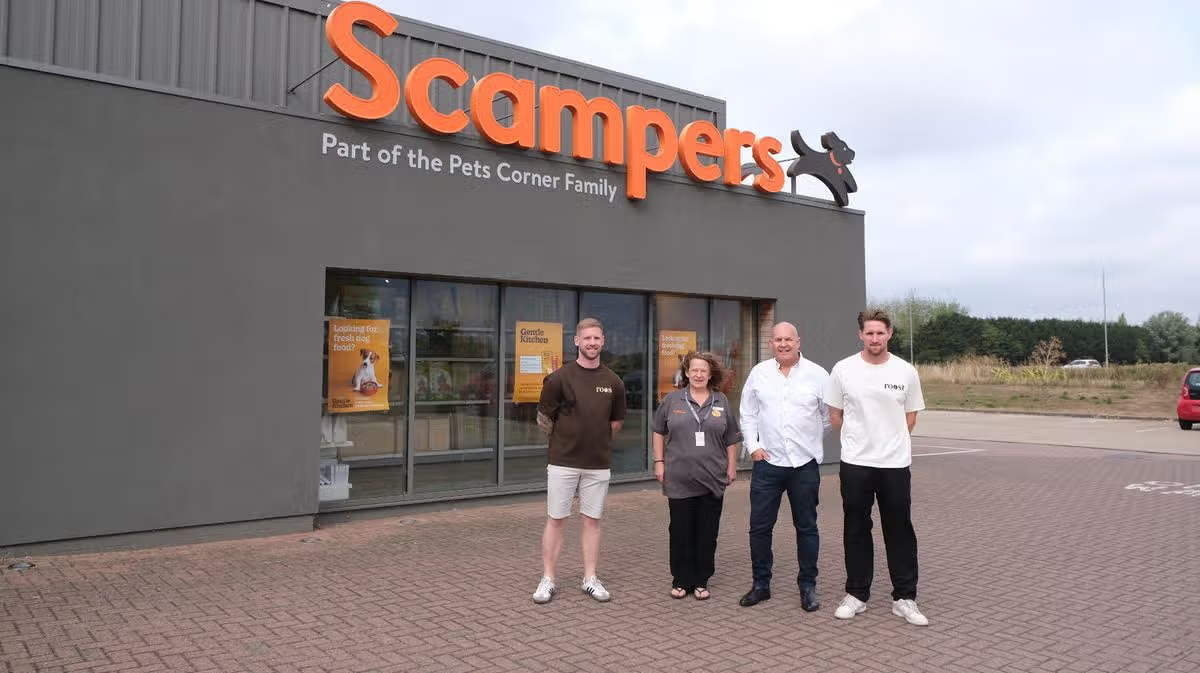
School friends to open new branch of ‘cosy’ coffee shop in Soham

Published

on

Cambridgeshire Live

The branch will open later this year

A new specialist coffee shop is set to open in a Cambridgeshire town following requests from locals. Alistaire Ryan and Dan Heath will be opening the new Roost Coffee House branch at Scampers Natural Pet Store in Soham this year.

Advertisement

The business, which launched its first branch in Fordham late last year, has seen great success since its opening. The owners of Roost Coffee House have been friends since they met at secondary school. The idea for the business came about when the pair decided that “Fordham really did need a specialist coffee shop” as well as a “space for the community”.

Following the success of the business’s first branch, the pair decided to embark on an expansion. According to co-owner Mr Heath, 36, a location in Soham had been highly requested by locals, with the location being in the “pipeline for quite a while”. He said that “before we even launched, we had people email asking us to open up a branch in Soham”.

Scampers is on the Northfield Business Park, just off the A142 bypass. Talking about its location, Mr Heath said: “Soham is somewhere that we looked at as a really good opportunity for us firstly because of the size of it. It has a population of nearly 13,500 people and we felt the demographic of people there really fitted our brand at Roost.”

Advertisement

He said that it has ended up being “the perfect location” to enable their expansion. He said the pair are “very happy to say that we cater to all, whether that’s kids all the way up to senior citizens”. Mr Heath said the “inclusivity is what we pride ourselves on”.

Since the public launch, the 36-year-old co-owner said the reaction has been “amazing”. The coffee offered at the business is locally roasted in Littleport and he said the quality of their food is “fantastic”.

The new site is four times larger than the Roost store in Fordham, meaning more tables, space and opportunities for the business. As part of the expansion, Roost Coffee House will be offering breakfast and lunch menus alongside its well-approved cakes, bakes, pastries, milkshakes, and of course, coffees.

Describing what he feels makes Roost Coffee House so special, Mr Heath said: “Roost is warm, welcoming, inclusive and we cover something for everybody whether that’s drinks, food and atmosphere, it’s a place for all and we’re really excited to take our brand into a new place, new town and hopefully continue to grow.”

Advertisement

Roost Coffee House will open its store in winter 2026 but an official opening date is yet to be confirmed. Scampers Natural Pet Store offers everything from natural pet foods, treats, toys, grooming and an in-house veterinarian. Being pet lovers themselves, the owners will be making the café dog-friendly.

The operating branch in Fordham has built a strong reputation, with an almost perfect rating of 4.9 stars out of five on Google. One customer described it as a “cosy” place that serves “smooth, aromatic” coffee and bakes which are a “constant temptation”.

Source link

Advertisement
Continue Reading
Click to comment

You must be logged in to post a comment Login

Leave a Reply

NewsBeat

AI vs reality: What ‘delicious’ takeaways being sold on Uber Eats, Deliveroo, and Just Eat REALLY look like – as apps are overcome with fake food photos

Published

on

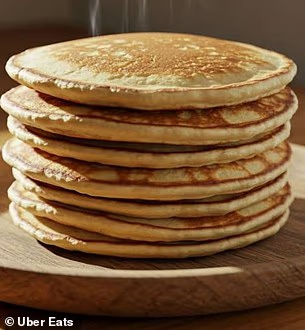
This AI-generated image of pancakes was so far from the actual product that it was genuinely laughable

If you’re fond of a cheeky takeaway, you might have noticed something strange happening on your favourite delivery app.

Deliveroo, Uber Eats, and Just Eat are being flooded with seemingly delicious dishes that are really nothing more than AI–generated fakes.

Unnaturally perfect burgers, strangely spherical rice, and physics–defying snacks are popping up on restaurant menus all over the country.

But what do these artificial fakes really look and taste like?

Advertisement

The Daily Mail’s reporters put their stomachs on the line to order food from some of the worst offenders.

And some of the dishes that arrived were barely recognisable compared to the glossy images that looked so enticing on the menu.

Although a disappointing lunch break might not be the end of the world, experts say that this growing trend threatens to undermine trust in the entire restaurant industry.

Some food photographers have even called the practice ‘dishonest’ and accused the restaurants involved of ‘false advertising’.

Advertisement
A rather sad, plastic bag of duck pancakes was what we received instead

This AI–generated image of pancakes was so far from the actual product that it was genuinely laughable. Left: AI–generated menu. Right: The food as delivered

The Daily Mail's reporters put their stomachs on the line to order food from some of the worst offenders

The Daily Mail’s reporters put their stomachs on the line to order food from some of the worst offenders 

What is striking about some of the AI–generated images clogging up our favourite delivery apps is just how obviously fake they are.

Advertisement

Although I assessed each image with an array of ‘AI checker’ tools to be sure, it didn’t take an expert eye to spot that these couldn’t be real food.

Scrolling through a selection of food apps, the first pictures that caught my eye were the mozzarella sticks from a restaurant called Pasta Bowl and Feast.

At first glance, they looked like a standard deep–fried snack you might find on any menu, but even a moment of examination revealed that something was deeply wrong.

What was meant to be a satisfying pull of oozing cheese was strangely looped in on itself like a mind–bending twist in an M.C Escher painting.

Advertisement

This is such a classic tell of AI interference that most modern image generators are sophisticated enough to avoid it, making its appearance on a delivery menu even more surprising.

When the food arrived, it wasn’t wildly different from the image that appeared on the menu and wasn’t even all that bad – it was still mozzarella sticks after all.

However, the food that we received simply looked blander, less crisp, and less appealing than the image that had first grabbed my attention.

Some of the food items had clear AI 'artefacts' such as physics-defying cheese
The real food wasn't far off the original, just a little less delicious-looking

Some of the food items had clear AI ‘artefacts’ such as physics–defying cheese. Left: AI–generated menu. Right: The food as delivered 

Advertisement

The same pattern was repeated with a nearby Chinese restaurant named Mimi Noodle and Tap.

Although the total lack of reviews was slightly unnerving, I was amazed at just how good all the food appeared to be in the photos on Uber Eats. 

Sauces were glistening, the vegetables chopped to an almost impossible uniformity, and everything looked steaming hot and freshly made.

And, when my ‘Chinese Pork Ragù Rice Bowl’ arrived, it wasn’t miles off the AI–generated image (and was actually a very nice lunch), but it just looked less polished than what I’d been sold on.

Advertisement

In other cases, however, my disappointment was significantly more severe.

Although the picture of my rotisserie chicken burger, ordered from Five Rivers Rotisserie, already looked like a bit of an AI–generated mess, the actual product was far worse.

The burger was flat, floppy, and came wrapped in the single wettest piece of bread I have ever touched, almost like someone had dropped the food in a mayonnaise–flavoured puddle along the way.

In fact, as we looked through more and more restaurants across the most popular delivery apps, it became clear that the AI–generated images often looked far tastier than the real food ever would be.

Advertisement
The AI-generated menu items were always just a little too perfect to be believed
Often the food was always that bad and sometimes matched the AI-generated image quite closely

Often the food was always that bad and sometimes matched the AI–generated image quite closely. Left: AI–generated menu. Right: The food as delivered 

How to tell if a food photo is AI-generated

Use an AI checker

  • Download an image and put it through an online tool like SightEngine.

Look at the details

  • AI-generated images often make mistakes on the small details and finer points.

Ask if it looks too perfect

  • Artificial images tend to exaggerate natural qualities and create idealised versions of the real thing, especially for food.

Check the lighting

  • Even good AI tools struggle with even, consistent lighting and ensuring that all the shadows line up. 

Examine the background

  • If the background seems oddly stretched, warped, or unusually indistinct, it could be a sign of AI manipulation.  

<!- – ad: https://mads.dailymail.co.uk/v8/de/sciencetech/none/article/other/mpu_factbox.html?id=mpu_factbox_1 – ->

But this isn’t just a quirk of my own personal taste, as studies now show that people actually prefer fake food to the real deal.

Advertisement

Dr Giovanbattista Califano, a behavioural scientist from the University of Naples Federico II who has investigated this effect, told the Daily Mail: ‘AI–generated food images are consistently rated as more visually appealing than real photographs.

‘The reason is that generative models tend to idealise food: images come out glossier, more symmetrical, better lit and more flawless than a real dish photographed under normal conditions.

‘So an AI image can look “better than real” simply because it strips out the imperfections a camera would normally capture.’

Researchers say that AI images are something called a ‘superstimuli’, meaning they possess exaggerated characteristics that amplify the effects of their real counterparts.

Advertisement

Dr Alexander Diel, a psychologist and cognitive neuroscientist from the LVR University Hospital Essen, told the Daily Mail: ‘Food superstimuli have been used for food advertising long before AI, via photo editing.

‘But AI has the potential to create such images with ease.’

However, there is a stark difference between editing an image of real food using AI–powered tools, and dreaming up a food item that never existed.

There was something very strange going on with the sauce on this chicken burger
The real food was far less appealing and significantly soggier than the picture suggested

The food that arrived was far soggier and much less appealing that its picture on the menu implied. Left: AI–generated menu. Right: The food as delivered

Advertisement

‘An AI–generated image of a food served by a specific restaurant will likely not correctly represent the actual food dish, as the AI is not trained on that restaurant’s food images,’ says Dr Diel.

‘So what the customers see will not be the dish actually served.’

In some cases, this leads to some AI–generated menus being not just disappointing, but outright misleading.

For example, I was very intrigued by a restaurant boldly named ‘SPARTA!!!’ which offered a dish called ‘Falafel Bombs’.

Advertisement

While I wasn’t expecting to be blown away, the food that was delivered simply looked nothing like the picture on Just Eat.

Rather than round, herby balls that are ‘golden on the outside, soft inside’ as promised, I received a cardboard cup filled with brown, cardboard–like pucks.

And yet, that still wasn’t the worst AI mixup out of the restaurants operating across popular apps.

The fact that ‘Taste of China’ operated out of a pizza restaurant probably should have been my first red flag.

Advertisement
Although some of the AI images were harder to spot, they were obvious in comparison with the real food
These falafel weren't even remotely the same shape as their picture

Although some of the AI images were harder to spot, they were obvious in comparison with the real food. Left: AI–generated menu. Right: The food as delivered

However, its menu was such a baffling mix of obviously AI–generated mashups that I simply couldn’t resist seeing what the food was really like.

Dishes looked as if they had been carved out of wax, and the menu was packed with mysterious spheres of all shapes and sizes.

But the most wonderfully incongruous item of all was the pancakes; listed as an accompaniment to roast duck, and yet proudly showing a steaming stack of fluffy, American–style pancakes.

Advertisement

Ever the optimist and in need of some dessert, I ordered myself a stack of suspiciously cheap pancakes and some ‘Sweet and Sour Prawn Balls’ that looked like Ikea meatballs stuffed with cake batter.

I knew I was probably in for a disappointment, but I did not anticipate just how bad it would be.

After an hour of calling to try and track down my errant delivery, the food finally arrived.

I received a bag of deep–fried prawns so greasy that oil literally poured onto my desk when I opened the bag and – worst of all – a small, sad plastic bag of plain duck pancakes.

Advertisement

It might be easy to laugh this off as the stupid consequences of deliberately ordering dodgy takeout, but people in the food industry are genuinely concerned.

The fact that these 'pancakes' were listed as a side for roast duck should have been a hint that something was wrong

The fact that these ‘pancakes’ were listed as a side for roast duck should have been a hint that something was wrong 

What are the delivery apps’ policies on menu pictures?

Uber Eats

  • Photos must ‘accurately represent a single item from your Uber Eats Menu’.
  • AI–generated images are prohibited for pictures uploaded by customers.  

Deliveroo

  • Pictures may be rejected due to ‘obvious signs of image editing’.

Just Eat 

  • Restaurants must ‘use real photos owned by you. Don’t use AI–generated images’.

<!- – ad: https://mads.dailymail.co.uk/v8/de/sciencetech/none/article/other/mpu_factbox.html?id=mpu_factbox_2 – ->

Advertisement

Brent Herrig, a New York–based commercial food and drink photographer, says that restaurants are being driven to use AI due to ‘cost and appetite’.

He told the Daily Mail: ‘Social platforms want new images constantly, and a restaurant running on thin margins can’t shoot every week. It’s a rushed phone snap versus AI, and AI wins that fight easily.’

Mr Herrig says he has nothing against using AI to enhance aspects of an image such as lighting or expanding the background, but says there is a ‘clear’ line that shouldn’t be crossed.

‘The problem is when the image depicts a specific dish the customer is being asked to buy, and that dish was never cooked,’ says Mr Herrig.

Advertisement

Just Eat, Deliveroo, and Uber Eats all have guidance for restaurants advising that menu images should accurately represent the dish.

Just Eat and Deliveroo both specifically forbid pictures that are entirely made by AI and use an automated tool to filter out fakes, but as my disastrous lunch clearly shows, that isn’t always easy to enforce.

Meanwhile, the UK Food Standards Agency requires that food businesses label, advertise and market food accurately, and not mislead people about the quality, ingredients or processes used, but don’t specifically prohibit using AI.

Food photographers like Mr Herrig aren’t worried that AI will put them out of a job, but rather that these sorts of AI–generated images will undermine the whole basis of having pictures on a menu.

Advertisement
These mysterious spheres were advertised on the menu as sweet and sour prawn balls
The final disappointment was a bag of fried prawns greasy enough to pour oil onto my desk

These mysterious spheres were advertised on the menu as sweet and sour prawn balls. Left: AI–generated menu. Right: The food as delivered

‘Food photography works because there’s an implied promise behind it: someone stood in that kitchen, that plate existed, a person made it. Take that away at scale and the whole category gets discounted,’ Mr Herrig said.

Likewise, Lindsay Kreighbaum, Los Angeles–based food photographer and director, told the Daily Mail that using an AI image was ‘totally misleading if it’s not a photo’.

She adds: ‘I am worried about the false advertising and the implications that come with that.

Advertisement

‘I don’t think customers should have to use their imaginations when deciding on a meal. They should know what they’re getting without question.

‘It’s dishonest, and it’s going to sever any trust between customer and business if they’re not receiving what is pictured.’

A Just Eat spokesperson told the Daily Mail: ‘We support our tens of thousands of independent restaurant partners to ensure the images they use accurately represent to customers the food they sell, including by funding local professional photographers. 

‘We don’t currently allow partners to upload AI images and the examples shared with us have been removed.’

Advertisement

Uber Eats and Deliveroo did not give a statement in response to the Daily Mail’s questions, and all referenced restaurants were approached for comment.  

Source link

Continue Reading

NewsBeat

The Cambridgeshire policeman whose been missing for 150 years

Published

on

Cambridgeshire Live

Police Constable Richard Peak failed to show up to work and hasn’t been found since

More than 150 years ago, PC Richard Peak left his late night duties but failed to return to work; never to be seen again. The sudden disappearance came as quite a shock in the Burwell, Wicken, Soham and Fordham areas.

Advertisement

According to Capturing Cambridge, on the evening of August 17, 1855, the Wicken Police Constable had performed his duty according to the usual routine. PC Peak’s job was to police a crop auction at the Red Lion Inn in Wicken, which was due to finish at 9pm.

However, at the end of the sale, between 40 to 50 people were left in the pub so PC Peak remained there until the early hours of the next morning. He was helping to make sure there was no disturbance.

At about 2am on August 18, PC Peak, known as the ‘village bobby’, asked to go home but the landlord pressed him to continue on duty as he feared a disturbance among the people inside the inn, Capturing Cambridge said. Following the landlord’s pleas, PC Peak stayed to keep watch for rowdy residents and eventually kicked out two ‘parties’ who were being noisy.

The Red Lion was cleared at about 3.15am. PC Peak reportedly said to the landlord: “Good morning; I’ve got an hour and a half’s walk, and then I will go to bed”. Sadly, this is the last that was ever heard of him.

Advertisement

During the evening, the officer was spotted getting drinks at the bar out of uniform. Although, it is thought that the drinks were consumed over an extended period of time and that he was “perfectly sober when he left”, reports Cambridge Chronicle and Journal.

When PC Peak left Wicken, he was dressed in a brown straw hat, a brown coat, a check coat, dark cloth vest and a pair of coarse uniform trousers with a black neck tie and wellington boots. The officer was reportedly supposed to attend a neighbouring police conference at 4am that morning but failed to report to work.

Rumours soon spread that he must have met with foul play due to the circumstances under his disappearance and the strenuous exertions of the other members in the force. As the weekend passed, the mystery grew and PC Peak hadn’t uttered a word.

Residents in towns and villages in the area searched for the missing officer but there was no success. Even stranger, in 1880, a skeleton was pulled from a pond in Wicken which appeared to have a damaged skull. Later, another skeleton was recovered during renovation work at the Anchor in Burwell. However, neither of these remains belonged to PC Peak.

Advertisement

PC Peak was from Caxton and he joined the police force in 1851, aged about 20. He was stationed at Burwell and was given the responsibility of keeping order in Wicken village. Cambridgeshire Police described him as the “village bobby” for Wicken.

Source link

Continue Reading

NewsBeat

William and Harold were friends before they were enemies

Published

on

William and Harold were friends before they were enemies

They weren’t always enemies. Before William of Normandy and Harold Godwinson were deadly adversaries on the battlefield at Hastings in 1066, vying for the throne of England, they were comrades and brothers in arms.

It’s a tragic journey from unlikely allies to mortal enemies. And it’s one of the lesser-known stories in the Bayeux tapestry, which opens for viewing at the British Museum in London this September.

As a medieval historian, I’ve seen the tapestry several times in Bayeux, and this is the often-overlooked story that brings me to tears. At its heart, there’s an extraordinary episode near Mont Saint-Michel in Normandy, where Harold and William once stood shoulder to shoulder.

The year is 1064 and Harold Godwinson, one of the most powerful nobles in early medieval England, is shipwrecked at Ponthieu in northern France. William, Duke of Normandy, immediately demands that Harold is handed over to him.

Advertisement

There’s already a dispute about who will take the English crown after the death of the reigning King Edward, who has no children of his own. William’s motives, no doubt, are bound up with his ambitions for the throne.

But then the story takes a surprising turn.

Edward the Confessor, King of England from 1042 until his death in 1066, sending young Harold to Normandy in 1064.
Wikimedia

William and his warriors ride out on a military campaign against Duke Conan of Brittany, taking Harold with them. It’s an uneasy position for Harold: a tense and complicated mix of hostage, guest and fellow fighter.

Near Mont Saint-Michel, William and Harold reach the border between Normandy and Brittany. The Bayeux tapestry depicts Mont Saint-Michel as a stylised abbey on top of a craggy hill. The river Couesnon itself is the border – notorious for its treacherous, shifting mud and quicksands.

Advertisement

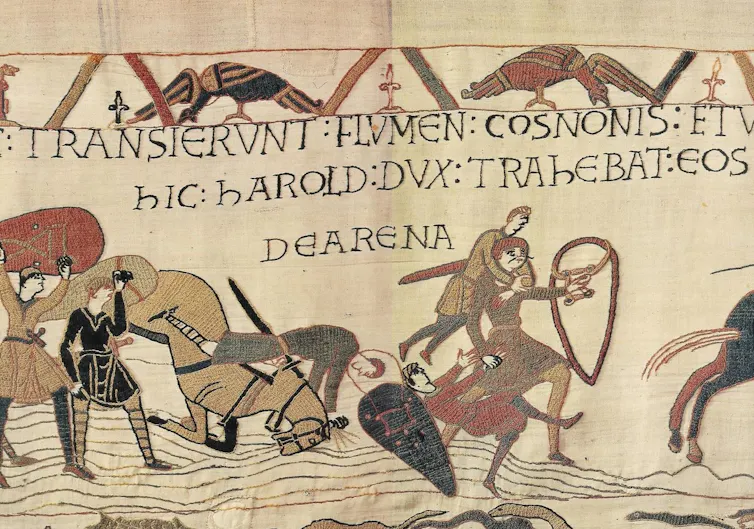
Next, disaster. The tapestry shows the Norman army floundering in the quicksand. Men wading through the stream, their shields hoisted over their heads, then stumbling into the water and mud. A horse sinking, throwing its rider. Panic and chaos.

Astonishingly, it’s Harold who comes to the rescue. “Here, Duke Harold dragged them out of the sand” (“hic Harold dux trahebat eos de arena”), the tapestry tells us. Harold – distinguished from William’s men by his luxuriant moustache (the Normans preferred to be clean-shaven) – grips his shield with one hand, with the other pulling a wretched soldier out of the quicksand. Another Norman foot-soldier clings to Harold’s back as he’s carried to safety. Harold is the hero of the hour.

This summer, I followed in the footsteps of William and Harold, retracing their journey across the Bay of Mont Saint-Michel at the mouth of the river Couesnon, from the mudflats to the quicksand. Even today, it’s too risky to walk without an expert guide: the tides and sands are capricious and deadly.

Our guide told us to “dance” or paddle our feet to awaken the quicksand. As it began to shift and open, swallowing my legs and tugging me down, I understood how the tramping feet of the Norman soldiers would have been exactly what it took to set the “sables mouvants” (quicksands) in motion. All too fast, the quicksand has you in its grip, and you can’t get out.

Advertisement
Harold drags Norman soldiers from the quicksand.
The British Museum

The Norman chronicler Orderic Vitalis later wrote that Harold was “very tall and handsome, remarkable for his physical strength, his courage and eloquence, his ready humour and acts of bravery”. But it’s not all praise. Orderic adds: “But what were all these gifts to him without honour, which is the root of all good?”

If you want to know what’s really going on in the Bayeux tapestry, always look at the borders. These decorative edges, at the top and bottom, include bird and animal motifs, details from moral fables, narrative sub-plots, and symbols that offer wry and pointed comment on the action in the main embroidered panel.

In the borders of the quicksand scene, there are birds and fish – just like the rich natural life of the Bay of Mont Saint-Michel that I saw this summer. But there’s something more. The edges are alive with writhing, twisting eels. The figure of a man reaches out, trying to grasp them, but they slip through his fingers. Is this a comment on Harold Godwinson? Charismatic and charming, but as slippery as an eel? Next to the eels, eagles and a wolf hint at violence and predation. In the midst of Harold’s heroism, there’s a chilling premonition.

The Bayeux tapestry tells the quicksand story with the benefit of hindsight. All that conflict is still to come. On the Brittany campaign, Harold helps William defeat Duke Conan, chasing him from the fortified town of Dol to the clifftop citadel of Dinan, where Conan surrenders the keys to the city, held out on the tip of a lance (another wonderful detail in the tapestry).

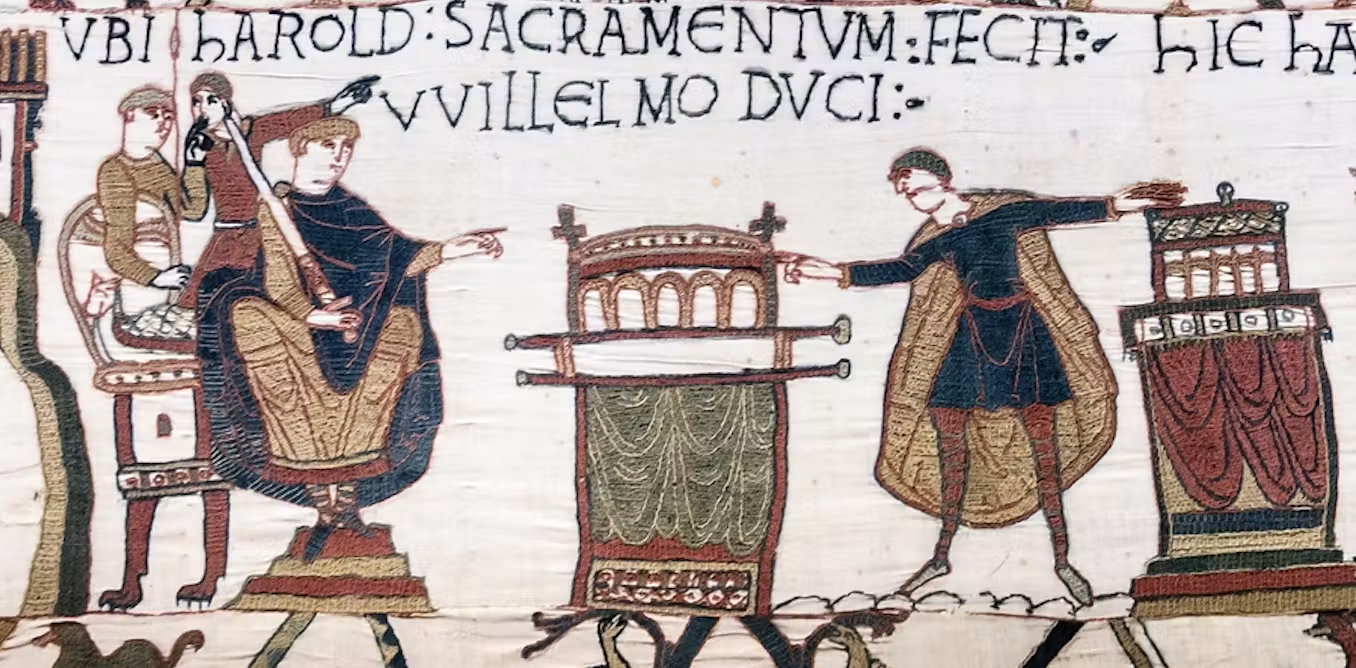
Harold is rewarded richly for his bravery and service: the tapestry shows the two men in a near embrace as William gifts him arms. But that’s not all. William brings Harold back to Normandy (Bayeux) to celebrate – and to extract that momentous oath of loyalty. The tapestry shows Harold swearing on holy relics (though there’s still controversy about whether he knew exactly what he was promising, or what he was swearing on). It’s the moment that seals the future conflict between the two men, and sows the seeds for the Battle of Hastings.

Advertisement

The brutal aftermath of the Battle of Hastings is what I focused on in my book A History of England in 25 Poems. But don’t forget this tale of surprising friendship, courage and shared endeavour. When you reach the end of the Bayeux tapestry – the arrow in the eye, the stripped and mutilated corpses, the English fleeing in defeat – remember the remarkable backstory and that lost comradeship between William and Harold: once, two brothers in arms.

This article features references to books that have been included for editorial reasons, and may contain links to bookshop.org. If you click on one of the links and go on to buy something, The Conversation UK may earn a commission.

Source link

Advertisement
Continue Reading

NewsBeat

I’ve been to 28 countries in Europe, and found its most underrated beach escape

Published

on

I’ve been to 28 countries in Europe, and found its most underrated beach escape
Many travellers don’t even realise that Lithuania has a coastline (Picture: Visit Neringa)

I have travelled to 28 European countries, and I’m not sure I have been rewarded with such inviting beaches, beautiful nature and consistently good food as on my recent visit to the Baltic coast of Lithuania.

A most wonderfully underrated place.

This discovery started in the UK, where I found regular flights to Palanga, from £88 return. Yet many don’t even realise that Lithuania has a coastline.

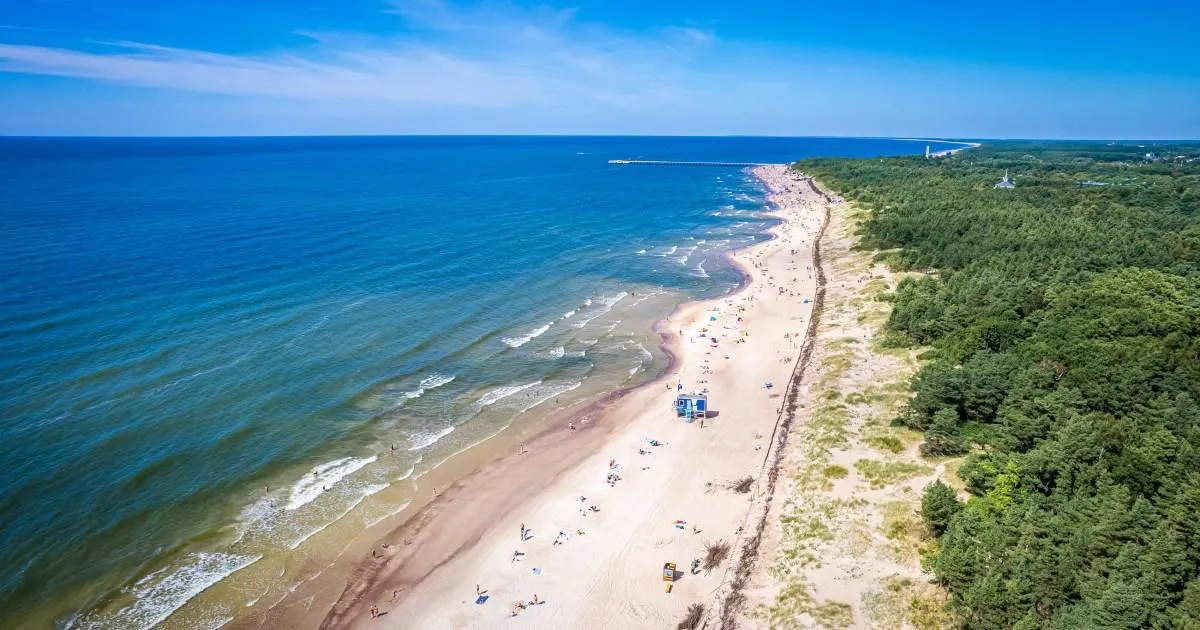
Granted, it’s small (just over 90km in total). But once there, I could see that the town’s sweeping stretch of immaculate white sand just sells itself.

Advertisement

There are several charming sea view bars, a public toilet and access is via paths with wooden planks, so shoes do not get full of sand.

Of course, it doesn’t get the heat of the Mediterranean.

But summer temperatures of a pleasant 23°C attracts local crowds, though even at the height of the season I am told it is easy to find quiet spots on the sand.

An aerial view of Palanga beach in Lithuania on a bright sunny day with a blue sky. The resort pier stretches out into the Baltic sea.
Lucy Daltroff found breathtaking beauty and some of the best-value in Europe on the shores of Palanga (Picture: Andrius Pelakauskas)

The main pedestrian drag, Jonas Basanavičius Street, is alive with cafes and bars, especially in the summer from late May to September.

Palanga itself has the feel of a classic seaside resort with a distinctly Baltic twist.

Advertisement

Ask Metro


Use AI to go deeper into the stories you care about – powered by Metro and trusted publications.

Elegant wooden villas are ensconced among trees, flower-filled streets lead towards the sea and a long pier draws revellers at sunset.

Advertisement

Understandably, Palanga was a favourite holiday destination for 19th century aristocrats, whose legacy is still found in some of the architectural highlights.

One of these, Tiškevičiai Palace, a grand Neo-Renaissance style building, is now an Amber Museum and is surrounded by Birute Park’s botanical gardens which is free to visit.

Elegant Tiškevičiai Palace (Picture: Visit Neringa)

Inside, the magnificent displays include pieces that are over 50 million years old, some with insects trapped inside.

Huge prehistoric forests, ancient river systems and a unique geological quirk, means that even today in the colder months, pieces of amber can float right into the hands of beachcombers.

Locals tell me that after storms, amber hunters head to the beaches at first light hoping to find newly deposited treasures among the seaweed and driftwood.

Advertisement

Still, what really caught my attention about this stretch of the Baltic coast was the cost.

Sand dunes at the Nagliai Nature Reserve in Lithuania, captured at dusk
The Nagliai Nature Reserve is home to spectacular dunes that offer commanding views of the wild landscape (Picture: Andrius Kundrotas)

At a time when many European destinations seem determined to empty your wallet before you’ve even unpacked, Lithuania feels wonderfully affordable.

A cup of coffee: £3.50, and it is quite possible to get a hearty restaurant meal under £10.

The speciality here is a cold pink soup known as Šaltibarščiai made with kefir, shredded beetroot, cucumbers, fresh dill, and hard-boiled eggs, usually served with a side of warm, buttered boiled potatoes, all for about £5.

Unsurprisingly, fresh fish is eaten everywhere.

Advertisement

I tasted a delicious fillet of sturgeon for the first time in restaurant Melynasis Karpis, surrounded by its own fishponds.

Šaltibarščiai, Lithuania’s famous pink soup (Picture: Leva Jūraitė)

Lithuania declared independence from the Soviet Union on March 11, 1990, becoming the first Soviet republic to break away.

Today, it seems to be flourishing as a spirited country.

It has a lot of pride in itself for many things, including fast internet connections which can be a real boon for tourists.

The largest city in this area, Klaipėda has one of the few ice-free ports in northern Europe.

Advertisement

Because of this, it has been fought over many times and has a complicated history, becoming first part of Prussia, but more recently forging its Lithuanian identity.

Known for its German-influenced architecture, its ancient castle and tower built as early as 1252 had been totally destroyed, but it’s just been restored.

I was lucky enough to visit before it officially opened.

Klaipėda Castle, built by Teutonic Knights in the 13th Century (Picture: Klaipėda Tourism Information Centre)

It is beautifully constructed with modern materials but maintaining the dimensions of the original. The plan is for it to be used for cultural events.

Next door and an excellent museum explain the city’s dramatic and fascinating past.

Advertisement

My favourite part of our whirlwind tour was the Curonian Spit, a 60-mile finger of land separating the Baltic Sea from the Curonian Lagoon.

This UNESCO-protected strip forms a narrow ribbon of dunes, forests and traditional fishing villages.

It’s just a 10-minute car ferry ride from Klaipeda but seems like another world.

It is mostly a National Park and the whole district goes by the name ‘Neringa’.

Advertisement

The writer Thomas Mann, author of ‘Death in Venice’ was so captivated by its beauty that he and his wife built a house overlooking the sea.

As he explained, ‘this fantastic world of shifting dunes, the birch and pine tree groves with grazing elk between the lagoon and the Baltic, the wild magnificence of the beach’ struck such a chord that they decided to build a permanent residence.

The house is now the Thomas Mann Museum.

I joined a National Park ranger for a walk across some of the largest shifting sand dunes found on this continent at the Nagliai Nature Strict Reserve.

Advertisement

Climbing up a viewpoint, we were rewarded with extraordinary views: vast waves of sand rolling towards the horizon with the Baltic shimmering in the distance.

It felt more like a desert than a part of northern Europe.Over hundreds of years, 14 villages have been totally lost by shifting sands.

More lesser-known Europe inspiration

Bird-watching paradise

If recent statistics about Gen Z’s interest in bird-watching are to be believed, the Curonian Spit could see an influx of young travellers in the next few years.

Advertisement

Millions of migratory birds pass through this narrow corridor every year, making it one of Europe’s most important routes.

Our captain, Egidijus, took some of us in a small boat on a bird-watching trip across to the Nemunas Delta, where we were able to spot bearded tits, terns and eventually, white tailed eagles, among an immense wetland landscape of rivers, reed beds and flooded meadows.

It was a special experience.

Afterwards, at the Ventė Cape Ornithological Station, I met one of the most memorable characters of the trip, Vytautas Jusys, a cheerful, ornithologist who bore an uncanny resemblance to the comedian Bob Mortimer.

Advertisement
A birdringer holds a tiny migratory bird in the middle of a crowd of people in Palanga, Lithuania
Vytautas Jusys is one of the world’s most prolific bird ringers (Picture: Lina Vaičekauskienė)

Jusys is recognised as one of the most prolific bird ringers in the world, having worked with over a million during his remarkable career and his work has significantly contributed to the development of ornithology in Lithuania and beyond.

Watching him gently examine tiny migrants before releasing them back into the sky was really fascinating.

Even for someone who wouldn’t normally describe themselves as a dedicated birdwatcher, it was impossible not to be captivated by his enthusiasm.

By the end of my trip, I was left wondering why Lithuania’s coast remains such a secret.

For British travellers searching for somewhere different this summer, it may just be Europe’s best-value, varied and most enjoyable, beach escape.

Advertisement

This article was originally published June 6, 2026.

Advertisement
Advertisement

Source link

Continue Reading

NewsBeat

Bristol City 2 Portsmouth 1: Jordan Cross’ verdict – time for Portsmouth 2.0 in hunt to become serious Championship operators

Published

on

Bristol City 2 Portsmouth 1: Jordan Cross’ verdict - time for Portsmouth 2.0 in hunt to become serious Championship operators

A familiar feeling as Pompey fell to defeat at the venue touted to become John Mousinho’s home this summer – but this frustrating Ashton Gate disappointment highlighted different factors in his side’s Championship evolution. Here’s Jordan Cross’ match report, as the Blues head coach bids to make his team credible second-tier operators.

Source link

Continue Reading

NewsBeat

Iceland votes to stay out of European Union as public rejects closer ties with Brussels amid fishing and Trump fears

Published

on

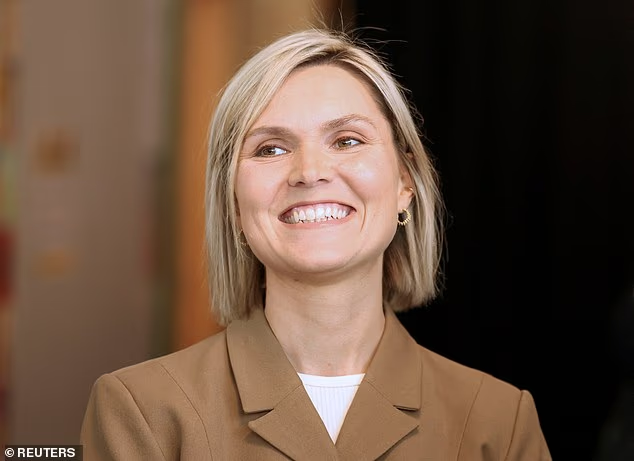
Iceland has voted to stay out of the European Union amid fears over its fishing industry and Donald Trump (Icelandic Prime Minister Kristrun Frostadottir is pictured)

Iceland has voted to stay out of the European Union in a major blow to Brussels’ expansion plans. 

With just a few referendum ballots left to be counted, the island’s 400,000 people rejected the chance to join the 27-strong bloc despite government claims it was a ‘now or never’ moment that would shield it from trade wars and Arctic rivalry.

The EU was said to have been keen to welcome a new ‘wealthy member’ and had even outlined a willingness to compromise on thorny issues to facilitate accession, including access to Iceland’s productive fishing waters.

Officials in Brussels viewed the island as a low-risk case which could have helped to ease scepticism toward EU enlargement and strategically strengthen the bloc when Arctic security is in focus. 

Advertisement

But early this morning the country’s ‘No’ camp had accrued 52.5 per cent of the vote with just a few ballots left to be counted in one of the six voting districts. 

The key points of contention ahead of the referendum centred around Iceland’s sovereignty and fishing, over which Reykjavik wanted to retain exclusive control.

The war in Ukraine and President Trump’s ambitions for neighbouring Greenland – a nation which he has confused for Iceland on multiple occasions – also featured in discussions. 

Reform leader Nigel Farage was among those who congratulated Icelanders for voting ‘to keep their independence’.

Advertisement

Iceland has voted to stay out of the European Union amid fears over its fishing industry and Donald Trump (Icelandic Prime Minister Kristrun Frostadottir is pictured)

Icelanders gathered across the country on Sunday morning as the results of the vote came in

Icelanders gathered across the country on Sunday morning as the results of the vote came in

Early this morning the country's 'No' camp had accrued 52.5 per cent of the vote with just a few ballots left to be counted in one of the six voting districts

Early this morning the country’s ‘No’ camp had accrued 52.5 per cent of the vote with just a few ballots left to be counted in one of the six voting districts

Advertisement
The key points of contention ahead of the referendum centred around Iceland's sovereignty and fishing, over which Reykjavik wanted to retain exclusive control

The key points of contention ahead of the referendum centred around Iceland’s sovereignty and fishing, over which Reykjavik wanted to retain exclusive control

As a member of the European Economic Area the country is already in the EU Single Market which allows freedom of movement.
‘Yes’ campaigners claimed joining Brussels could ease interest rates and offer the island greater security, while voters of the conflicting persuasion were keen to maintain Iceland’s independence. 

However, barring a major last-minute turnaround, it appears as though the country will remain out of the EU.

Advertisement

Prime Minister Kristrun Frostadottir told voters in August that a ‘no’ would put all EU speculation aside. 

Ms Frostadottir said ahead of a government press conference later on Sunday: ‘This is a great day. We’ve been waiting years to have a vote.’ 

Iceland first applied to join the EU in 2009 when a financial crisis hit its small, exposed economy. A Eurosceptic government later called a halt to talks in 2013. 

The EU was however said to have been keen to add another wealthy member, and even appeared willing to compromise in a bid to facilitate Iceland’s accession. 

Advertisement

The fisheries sector had been fiercely opposed to joining the bloc – 90 per cent of companies in the industry are against the idea – and the EU had tried to woo them with a conciliatory approach ahead of the vote. 

‘Iceland’s unique specificities on fisheries and agriculture are well known. They would have to be carefully considered,’ EU Enlargement Commissioner Marta Kos had said.

‘I’m confident that, together with EU member states, we would find creative solutions.’

Only months ago Trump’s special envoy Jeff Landry touched down in Greenland for talks amid the US’s push to acquire the Arctic outpost. 

Advertisement

Trump had, however, confused Iceland for Greenland on a number of occasions, sparking fears over the nation’s sovereignty.

Iceland has a 1951 Cold War-era defence treaty with the US, guaranteeing its security in return for access to military bases but some worry Trump’s unpredictability could threaten its survival. 

President Donald Trump has confused Iceland for Greenland on more than one occasion

President Donald Trump has confused Iceland for Greenland on more than one occasion

Brussels had hoped to be able to present Icelandic membership as an example of positive enlargement that could also make it more palatable for member states to agree to take in poorer countries like Montenegro.

Advertisement

It would also have enabled it to enlarge its presence in the strategic Arctic region, and perhaps helped change some minds in ultra-wealthy non-EU member Norway.

Yet the impending result means that Iceland will stay out of the EU until at least 2028, when the current Prime Minister’s mandate comes to an end. 

The country of 400,000 is already a member of the European Economic Area and part of the free-movement Schengen zone, both of which will remain unchanged by the vote.

Though the referendum was non-binding, Ms Frostadottir’s coalition government – led by her pro-EU Social Democrats – promised to respect the result.

Advertisement

The government will hold a press conference on Sunday at 1pm to present its plans.

Source link

Continue Reading

NewsBeat

Met Office – North East weather warning for thunderstorms

Published

on

Met Office - North East weather warning for thunderstorms

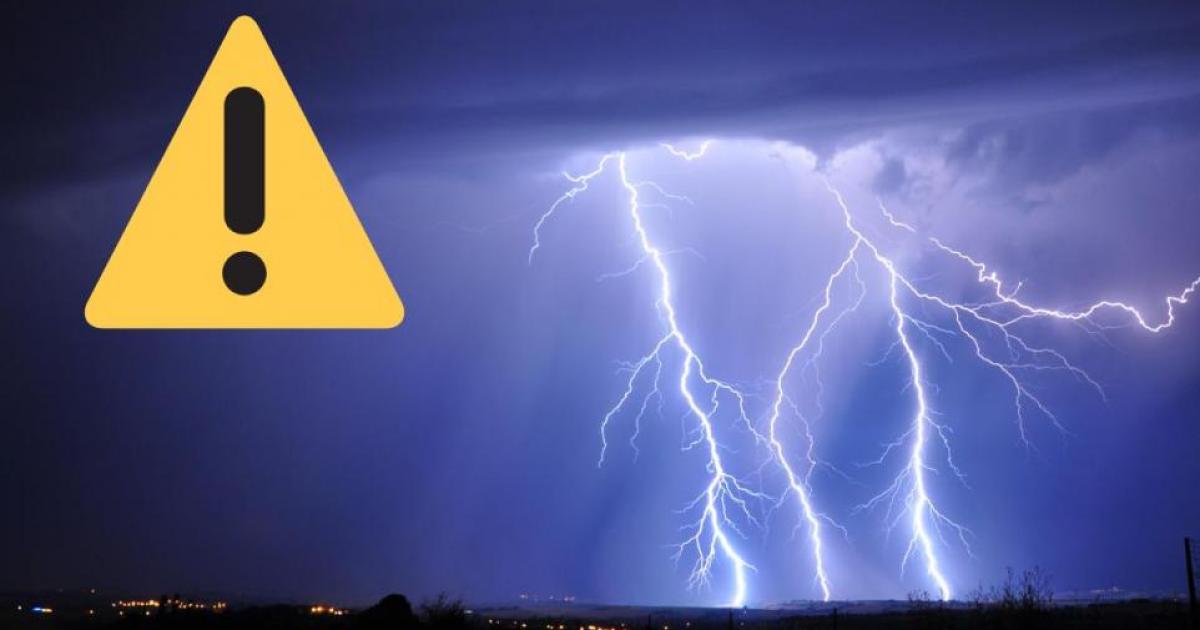
The Met Office has put the warning in place for Darlington, Durham, Tyne and Wear, Northumberland and Teesside from 11 am until midnight.

According to the Met Office: “Showers will become widespread, heavy and thundery later Sunday morning, lasting through the afternoon and into Sunday evening.

“While some areas may miss the heaviest showers, where they do occur, 10-15mm of rain is possible in an hour or so, with 25-35mm possible in several hours. Lightning and hail will be additional hazards.

“Heaviest of the showers will ease from the west through the evening.”

What should people expect?

  • There is a good chance driving conditions will be affected by spray, standing water and/or hail, leading to longer journey times by car and bus
  • Delays to train services are possible
  • Some short-term loss of power and other services is possible
  • Some flooding of a few homes and businesses is possible, leading to some damage to buildings or structures

Advice from the Met Office

According to the Met Office: “Give yourself the best chance of avoiding delays by checking road conditions if driving, or bus and train timetables, amending your travel plans if necessary.

“If you find yourself outside and hear thunder, protect yourself by finding a safe enclosed shelter (such as a car). Do not shelter under or near trees, or other structures which may be struck by lightning. If you are on an elevated area, move to lower ground.

“People cope better with power cuts when they have prepared for them in advance.

Advertisement


“Be prepared for weather warnings to change quickly: when a weather warning is issued, the Met Office recommends staying up to date with the weather forecast in your area.”

What is the forecast for today and tomorrow?

Today: Outbreaks of showery rain at first, perhaps heavy in places, and some drier intervals. Perhaps briefly becoming drier more widely around midday. Further heavy showers and thunderstorms then developing through the afternoon with a risk of hail. Maximum temperature 22 °C.

Tonight: Showers and thunderstorms continue during the evening, before easing into Monday. Staying rather cloudy, with hill fog across the Pennines. A few showers remain possible by dawn. Minimum temperature 11 °C.

Monday August 31: Early cloud breaks, with sunny spells but also a few showers developing, the odd one perhaps heavy and thundery. These easing through the afternoon, but turning rather cloudy and breezy. Maximum temperature 21 °C.

Advertisement

Source link

Continue Reading

NewsBeat

Mum said I’d be lonely after coming out – then I met my wife

Published

on

Mum said I'd be lonely after coming out - then I met my wife
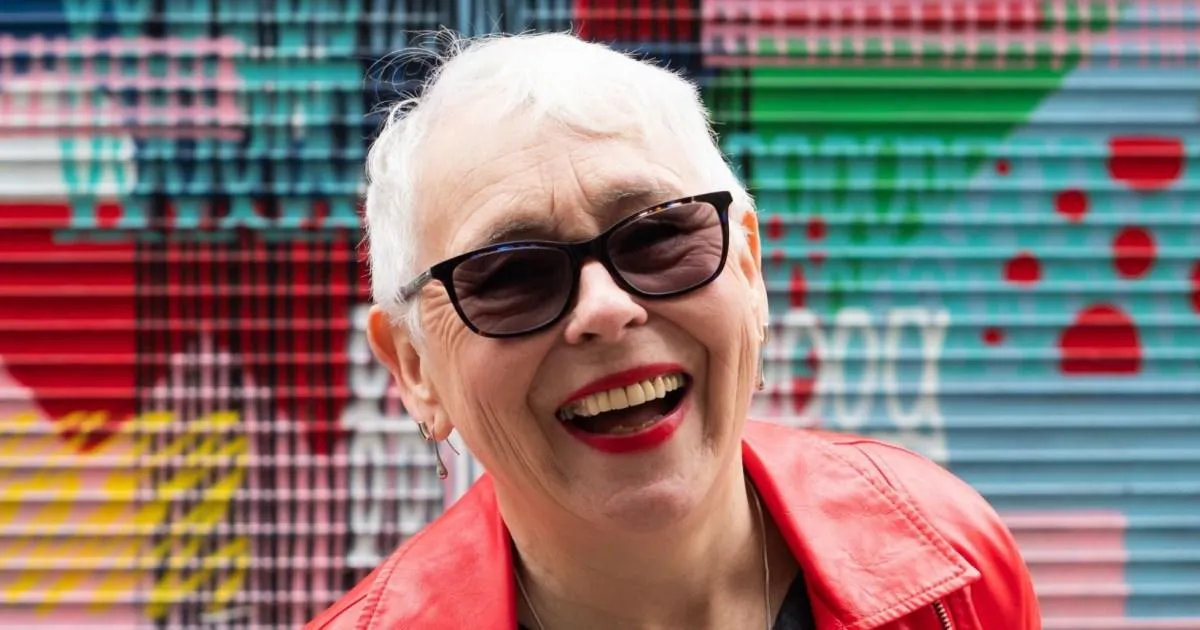
The last thing I am is lonely (Picture: Gemma Taylor)

‘You’re going to be a very lonely woman if you do this’, my mother said to me, as I sat with her at my newly painted home.

It was 1981 and at 30, I had come out as a lesbian after ending a five year marriage with a man.

It was painful to hear her words. She really didn’t believe I could be happy.

‘You’re not a lesbian, if you were, I would know’, she added, and over the following weeks there were more comments like this, as she continued to pressure me to just move past what she assumed was a phase.

Advertisement

I’m glad I didn’t listen to her, because 45 years later, at 75, I’m still very much a lesbian and I’ve been with my partner Linda for over three decades.

The last thing I am is lonely, and while my mother is no longer with us, my relationship with her wasn’t scarred by this moment.
I had married my ex-husband in 1976, and we had been friends before getting together. It wasn’t an easy marriage – we were trying to have a baby and had to go down the route of IVF

It took 12 weeks from the end of my marriage to come out, and that’s when I finally started to feel freer (Picture: LGBT Foundation)

That ruptured our relationship, and unfortunately, ending us felt right. 

Join Metro’s LGBTQ+ community on WhatsApp

With thousands of members from all over the world, our vibrant LGBTQ+ WhatsApp channel is a hub for all the latest news and important issues that face the LGBTQ+ community.

Advertisement

Simply click on this link, select ‘Join Chat’ and you’re in! Don’t forget to turn on notifications!

I thought I was heterosexual my entire life and had only been with men, but before my ex-husband and I married, I remember saying to him that I would like to have felt what being with a woman was like. We ignored it, and I never scratched that itch.

Advertisement

Ask Metro


Use AI to go deeper into the stories you care about – powered by Metro and trusted publications.

It took 12 weeks from the end of my marriage to come out, and that’s when I finally started to feel freer.

Advertisement

When I left my husband I walked away from a whole social network too – meaning I didn’t get to have any conversation with anyone else about how they felt about my sexuality. 

Queer Hope & Joy

Metro is sharing stories of Queer Hope & Joy, where we are centring stories that platform the vibrancy, diversity and resilience of the LGBTQ+ community.

This is running alongside LGBT Foundation’s Hope Starts Here campaign, and will represent as many LGBTQ+ identities as possible, while spreading hope and joy at a time it is very much needed.

Find out more about LGBT Foundation’s campaign here.

Advertisement

To submit your story of your Queer Hope & Joy send your pitches to: sharan.dhaliwal@metro.co.uk

I moved out of the world I shared with him and entered a whole new, giddy and totally absorbing world full of lesbians. 

Advertisement

Luckily, I managed to maintain a relationship with my mother, and while she didn’t understand my life completely, she loved me endlessly.

After she unleashed all those daggers, stabbing me with her words one after another – telling me what a terrible mistake I made – we sat in silence. She understood in that moment how much she hurt me, and we started to mend our relationship straight away.

It took a few years to get back to where we were – we both stumbled at various times, but we became close again soon enough.

I locked eyes with her and said: I’m in the phone book, call me’ (Picture: LGBT Foundation)

However, coming out in the 80’s wasn’t an easy decision to make, and there were a few things on the line for me like my career as a teacher, which I felt I had to give up due to discrimination. 

I wasn’t sure what my future held, but I was still determined to make it work. 

Advertisement

Then, I met Linda.

When we first met, we instantly hit it off.

We were at a party, stood in the kitchen, talking about music, and I just knew then that there was something between us. 

Initially, I didn’t do anything, but after finding out Linda was interested in me, when standing outside a nightclub one night, I locked eyes with her and said: I’m in the phone book, call me’. 

Advertisement
Mum thought I would be lonely, and then she was cracking jokes with my new girlfriend (Picture: LGBT Foundation)

Since then, my life hasn’t been the same. 

I had just turned 40 when we started dating in 1991 and things moved quickly. 

In an unexpected turn of events, I even introduced Linda to my mum and they got on brilliantly. 

Mum thought I would be lonely, and then she was cracking jokes with my new girlfriend.

At one point she even said: ‘I have to say, I’ve never seen you so happy’. 

Advertisement

Up until she passed, she remained close to Linda and myself, accepting and loving us both.

Find out more about the LGBT Foundation

LGBT Foundation is the UK’s leading LGBTQ+ health and wellbeing charity. Get involved with their ‘Hope Starts Here’ campaign today at https://lgbt.foundation/hope-starts-here/

Advertisement

In 1994, Linda and I moved to Manchester for my job and haven’t looked back since. We still live in the house we moved into when we got here, and we wouldn’t want to live anywhere else.

The lively gay scene in the city was a pull for us, and we revelled in growing our community.

It was in the late 90s that I started volunteering at what was then known as the Lesbian and Gay Foundation (now the LGBT Foundation), and signed up to a counsellor training course to become a therapist, and couples counsellor.

Linda and I have a great relationship and we do this by staying committed to each other’s happiness and care (Picture: Gemma Taylor)

In 2007, Linda and I had a civil partnership and she became my wife. It was a beautiful day – we had around 80 family and friends come together to celebrate us, in a townhouse just outside of Manchester. 

My mum came to our civil ceremony and, although she had started to become ill around that time, she still managed to flirt with some of our lesbian friends.

Advertisement

In 2009, mum died and my world crumbled. But I’m glad she got to see me happy, and got to see that I could never be lonely. 

Now, 35 years on, Linda and I have a great relationship and we do this by staying committed to each other’s happiness and care.

And importantly – lots of cuddles.

Looking back at what my mum said to me when I came out, I felt sad at first. But we grew from that moment, and became stronger.

Advertisement

Now, I could not be happier and full of life.

Do you have a story you’d like to share? Get in touch by emailing Ross.Mccafferty@metro.co.uk. 

Share your views in the comments below.

Advertisement

Source link

Advertisement
Continue Reading

NewsBeat

Why do some people react so badly to mosquito bites? The answer lies in mosquito saliva

Published

on

Why do some people react so badly to mosquito bites? The answer lies in mosquito saliva

Two people spend an evening in the same garden and receive roughly the same number of mosquito bites. By morning, one barely notices them – while the other is covered in large, swollen, intensely itchy welts that linger for days.

Most of us have experienced this, or know someone who has. But why is it that mosquito bites affect some people so differently? The answer lies in the way a mosquito’s saliva interacts with our unique immune system.

When a mosquito bites you, they inject saliva into your skin. The immune system recognises the saliva as foreign and releases histamine – an immune cell chemical that causes allergy symptoms such as redness, swelling and itchiness.

But this only partly explains what’s going on. A mosquito’s saliva also contains a range of other biologically active compounds that interact with the immune system in more complex ways than once assumed.

Advertisement

For instance, a mosquito’s saliva also contains proteins that prevent blood clotting and keep blood flowing so they can feed undisturbed.

These same salivary proteins influence the immune response that occurs at the bite site. Rather than acting solely as a feeding aid, mosquito saliva can alter the local immune environment within minutes of a bite.

In plain terms, the saliva nudges the immune system toward a particular kind of response (called a “Th2” response) that’s more associated with allergy-type reactions than with fighting infection. This makes nearby blood vessels temporarily “leakier” which helps draw extra immune cells to the area.

For a simple bite, this mostly just means more redness, swelling and itching. But researchers think this same immune shift may also make it easier for viruses carried by the mosquito to get established in the skin and spread through the body.

Advertisement

Why some people react more strongly

One of the most striking features of mosquito bites is the enormous variation in how people respond.

A large genetic study of over 84,000 people backs this up. People reported experiencing everything from small, mild bumps to large, swollen ones. Even the same person’s reactions to mosquito bites changed over time.

Children often react more strongly than adults, and people exposed to unfamiliar mosquito species may also respond differently because saliva varies between species. The reason for this is largely due to exposure.

Reactions tend to be strongest the first few times someone is exposed to a particular mosquito species. They tend to settle down with repeated exposure as the immune system adjusts – a bit like gradually building tolerance.

Advertisement

Because children simply haven’t been bitten as many times yet, they’re more likely to still be in that stronger-reaction phase. The same logic explains the “unfamiliar species” effect: an adult who reacts mildly to their local mosquitoes can react strongly on a trip somewhere with different mosquito species, since their immune system hasn’t encountered those particular saliva proteins before.

Genetics probably contribute too, with inherited differences in immune regulation influencing how strongly a person responds.

But the key reason that people react so badly to mosquito bites comes down to having a mild hypersensitivity to mosquito saliva.

Children often react more strongly to mosquito bites.
leungchopan/ Shutterstock

A much smaller number of people develop exaggerated local reactions, sometimes called Skeeter syndrome, where swelling extends well beyond the bite itself and is often mistaken for bacterial cellulitis (a skin infection that causes redness and swelling).

Advertisement

There is no single known cause of hypersensitivity. However, Skeeter syndrome is thought to result from an unusually strong immune response to the proteins in mosquito saliva, involving mosquito-specific antibodies and other inflammatory immune responses.

Why some people develop this exaggerated response is not fully understood – although age, previous exposure to mosquitoes and individual susceptibility may all play a role. Fortunately, severe allergic reactions to mosquito bites are extremely uncommon.

If you’re someone that reacts badly to mosquito bites, applying a cold compress soon after a bite may help reduce swelling. Oral antihistamines and mild topical corticosteroid creams can also relieve itching and inflammation, particularly when used early.

Avoid scratching as this can prolong inflammation, damage the skin and increase the risk of infection. People who develop unusually large reactions, worsening pain or fever should seek medical advice.

Advertisement

Preventing bites remains the best strategy. Using insect repellents, covering exposed skin and sleeping under insecticide-treated bed nets where mosquito-borne diseases occur can all reduce the risk of being bitten.

Mosquito saliva and disease

The implications of mosquito saliva extends beyond the annoying, itchy bites they leave behind.

Researchers are increasingly recognising that these salivary proteins may influence what happens when pathogens are transmitted from mosquitoes to humans.

Specifically, the same immune changes that cause the itchy bites in the first place appear to help mosquito-born viruses such as dengue, Zika and West Nile virus establish a stronger initial infection and spread through the body faster than if the virus were injected without saliva alongside it.

Advertisement

Another intriguing discovery comes from malaria research. A landmark study found that children infected with Plasmodium falciparum, which is the parasite species responsible for the most severe form of human malaria, produced altered body odours compared with uninfected children. Several chemical compounds were present at higher levels, and mosquitoes were attracted to some of these odours.

These findings suggest malaria parasites may alter host odours in ways that could increase mosquito attraction, potentially improving their chances of transmission.

It’s for these reasons that scientists are currently exploring vaccines that target mosquito saliva itself, not just the pathogens it carries.

A mosquito bite may seem like a minor summer irritation, but it reflects a complex interaction between mosquito saliva and the immune system.

Advertisement

Source link

Continue Reading

NewsBeat

Pastor, 41, killed by falling sign at Big Church Festival named

Published

on

Pastor, 41, killed by falling sign at Big Church Festival named

A 41-year-old pastor who died after a heavy sign fell onto people at a Christian festival has been named by his church.

Robert Guanco, 41, from Eastbourne, was pronounced dead at the scene following the incident at the Big Church Festival.

Jesus the Living Water Church Eastbourne announced the father’s death on social media, describing him as “a faithful servant of God.”

“We are mourning, grieving, praying, and trusting in the Lord during this incredibly difficult time.

Advertisement

Pastor Robert was a faithful servant of God, a loving husband to Isay, a devoted and caring father to Ellie, and a blessing to so many people whose lives he touched. His life, his faith, his love, and his service to God will never be forgotten.”

A fundraising page has been set up by the church to raise £18,000 for his wife Isaeli and their daughter Ellie.

More on this breaking news story…

Source link

Advertisement
Continue Reading

Trending

Copyright © 2025