Connect with us

NewsBeat

Science uncovers how the brain interprets artistic beauty

Published

on

Science uncovers how the brain interprets artistic beauty

Stand in front of Turner’s Sun Rising Over Water (1825-30) and something odd tends to happen. The painting holds you, even though observers might struggle to say why. Maybe it is the colour, the balance, the composition, or the strange stillness the artwork seems to carry.

Whatever it is, you feel it long before you can explain why. And the stranger next to you, looking at the same canvas with the same awe in their eyes, very likely feels it too.

We often say that beauty is in the eye of the beholder. Yet show almost anyone a
misty Chinese Song-dynasty mountain landscape, or the softly brushed figure of the Mona Lisa, and nearly everyone agrees that something striking is unfolding before them.

Beauty feels intensely private, and, at the same time, we keep discovering that we
collectively share it. That contradiction is one of the longstanding puzzles in
“neuroaesthetics” – the science of how the brain responds to art and beauty. How does our sense of beauty actually take shape in the brain?

Advertisement

In our latest study, published in Nature Communications, we tried to map that shared
experience. We found that instead of representing it as a single entity, the brain
instead splits aesthetic experience into two major strands. One strand handles what
an image shows, whether a landscape, an object or a figure.

Some artworks exert a hold over people, even if they struggle to say why. Pictured is JMW Turner’s The Sun Rising over Water (1825-30).
Album

The other tracks how much pleasure it gives us, drawing on the same circuits that respond to food or money. These two separate neural systems combine to shape every judgment of beauty we make when viewing visual artworks.

Neuroscientists have long argued about this question, from positions that compete
as often as they overlap. One camp focuses largely on perception, on how the brain
takes in composition, contrast and form.

Another emphasises evaluation and reward, placing beauty in the brain’s value circuitry. A third looks to the brain systems behind imagination and self-reflection. Each account captures something real, but they had rarely been tested together in a single study.

Advertisement

Algorithms for art

We asked 34 volunteers to look at 96 traditional Chinese watercolour paintings inside a 7T MRI scanner, powerful enough to pick up the small shifts in blood flow that track the brain’s activity. Once they were out of the scanner, each participant rated how the paintings made them feel.

Instead of working straight from those raw ratings, however, we borrowed a tool from somewhere less obvious: the recommendation engines that power services such as
Netflix and Spotify.

Known as collaborative filtering algorithms, these tools excel at detecting patterns of agreement buried in people’s preferences. When applied to our aesthetic ratings, they pulled out two dimensions running underneath everyone’s responses.
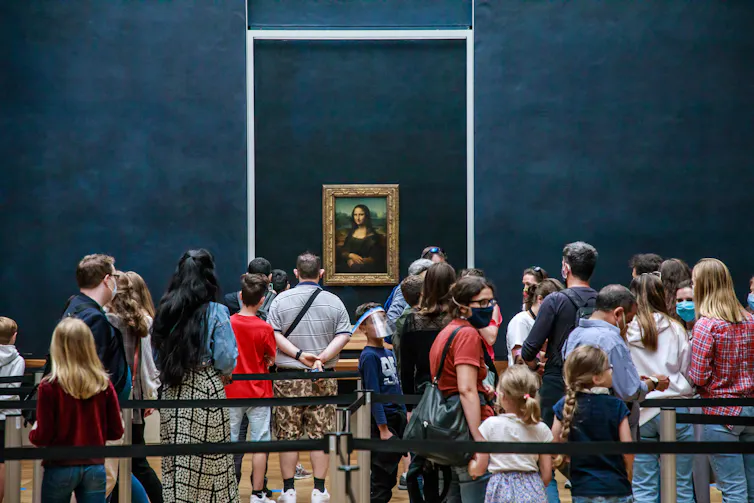
Mona Lisa, Louvre
While there is a subjective element to art, it elicits common reactions too.
Christophe Petit Tesson

The first sorted the paintings from most figure-like to most landscape-like, a measure of what each picture conceptually depicts. The second sorted them from most disliked to most liked across all participants, a measure of emotional value, or hedonic value (the sensory enjoyment someone gets from an experience).

Despite their complementary contribution to the overall aesthetic experience, the
brain kept these two dimensions remarkably separate. Visual content was read out
along the visual pathways, the familiar circuits that let us tell a face from a scene.

Advertisement

Hedonic value, on the other hand, was decoded somewhere else, within deeper
regions that handle reward and pleasure. Put simply, the brain seems to judge a
visual painting with much the same machinery it uses to judge the rest of the world
around us.

Changing the brain

We also found that how strongly the brain encoded this two-dimensional aesthetic
landscape depended on a person’s expertise in visual arts. In particular, the
difference showed up in the default mode network, a system of connections in the brain tied to imagination, consciousness, self-reflection and meaning-making that several leading theories place at the heart of aesthetic experience.

These results suggest that, beyond mere exposure, training in visual arts appears to change how the brain represents beauty in the first place.

This last point carries significant weight. If aesthetic experience has a measurable structure in the brain, and if making and viewing art can reshape it, then arts education starts to look less like enrichment and more like a kind of training that alters how perception, emotion and meaning are wired together. The clinical implications run along the same line.

Advertisement

Art-based therapies for depression, trauma and dementia have long been valued on instinct and anecdote. A clearer neural account gives us a way to test and sharpen them. Finally, as more of the images around us, in advertising, in design and on our screens, are generated by machines, knowing what beauty looks like inside the human brain matters more than ever.

Most often, we tend to treat beauty as something purely personal and assume that
asking scientific questions about it misses the point. Building on pioneering work in the field of neuroaesthetics, our results suggest otherwise.

Beauty has a structure, and that structure says something about the kind of creature we have become over countless years of evolution. We do not simply look at the world, instead we cannot seem to stop judging it for its beauty.


Advertisement

Source link

Continue Reading
Click to comment

You must be logged in to post a comment Login

Leave a Reply

NewsBeat

Chimps once used for hepatitis B vaccine research receive care

Published

on

Chimps once used for hepatitis B vaccine research receive care

ABUJA, Nigeria (AP) — A group of chimpanzees that were once used for hepatitis B vaccine experiments in laboratories have received health checks at their new home in Liberia, in hopes of giving them a second chance at a normal life.

The West African chimpanzees received checks ranging from teeth cleaning to X-rays and pedicure at the Humane World for Animals’ Second Chance Chimpanzee Refuge in central Liberia, Liliana Pacheco Ricote, director of the sanctuary, told The Associated Press.

More than 400 of the chimpanzees had been used by American researchers in Liberia in the hepatitis B vaccine experiments from the 1970s until early 2000s, Ricote said, many of them captured in the wild as infants.

Liberia has the second-highest number of chimpanzees in West Africa, after Guinea. The West African chimpanzees are classified as critically endangered species because of their rapidly declining numbers.

Advertisement

“They were used in very invasive research … (and) went through a lot of experiments and pain,” Ricote said.

Humane World for Animals said that in 2015, it assumed permanent responsibility for 60 of the chimpanzees that were remaining at the end of the research program. The chimps now mostly live at the sanctuary on a series of mangrove forest-covered islands.

The checks carried out under anesthetic gave the chimpanzees head-to-toe exams to assess their long-term health, detect any early signs of disease and tailor care plans for individuals as they age, Humane World for Animals said in a statement to the AP.

The tests included dental examination, the heart, lungs and nervous system as well as blood. They get booster vaccinations and fingernail trims, it said, adding that plans are in place to carry out the checks on the remaining ones.

Advertisement

“The health checks are a vital part of caring for these chimpanzees who have been through so much,” said Belen Perez Hernando, the sanctuary’s veterinarian.

The extent of the impact of the experiments on the chimps, whose average age is 30 to 35, is unclear, as findings from the assessments are yet to be concluded. However, “for those who were under experiments, you could still feel the hurt and the pain that they went through,” Ricote said.

“Seeing how much they hurt about what we’ve done, it gives me a lot of pleasure … to give them this second chance to live with dignity the life that they deserve,” she added.

Advertisement

Source link

Continue Reading

NewsBeat

US Open 2026: No British players left in the singles – but are there reasons to be positive?

Published

on

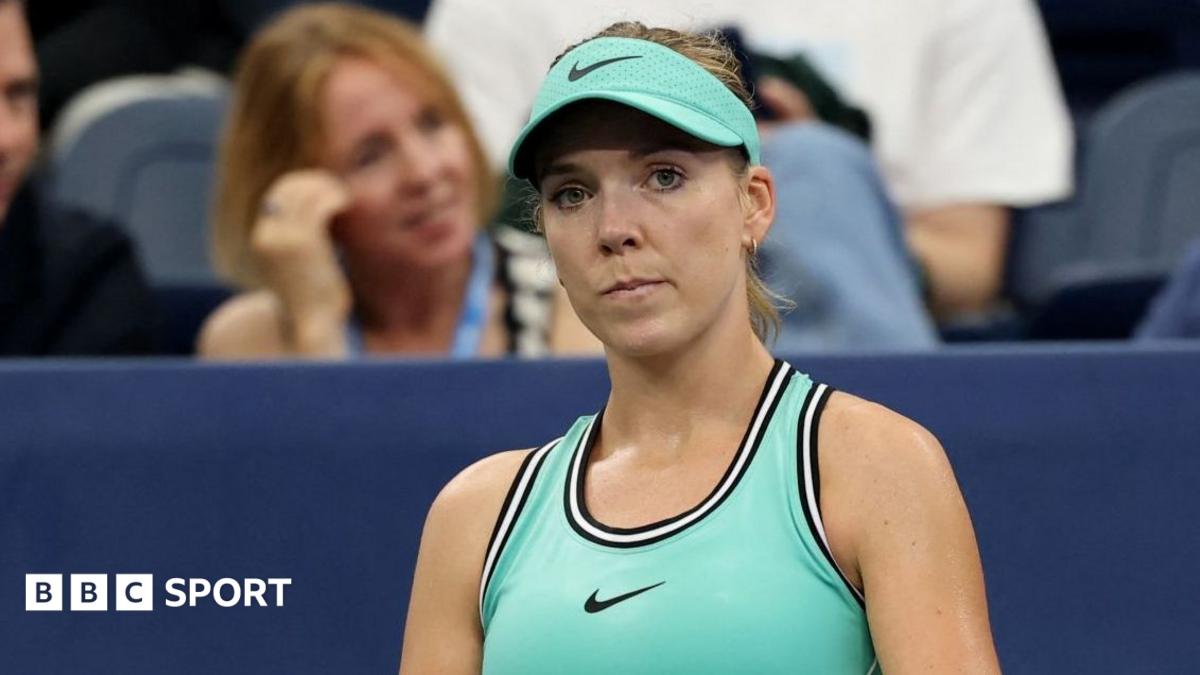
Katie Boulter looks glum at the US Open

But Britain cannot simply “pick up a plan” of what others are doing as every country has its own “tennis ecosystem”, says Bourne.

Lloyd adds: “We’re competing in one of the most internationally elite sports out there and the landscape is vastly different to 40 or 50 years ago in terms of the number of countries which have representation at the top.

“We’re ambitious, we want to drive for more, but we honestly believe the indicators are positive. We’re moving in the right direction and stronger than where we have been historically.”

Encouraging more British children to pick up a racquet from an early age is crucial to developing the next generation of stars.

Advertisement

Draper, Raducanu and Fery – who entered the LTA system at a young age – provide the blueprint.

There are 4.3m juniors playing tennis annually with 1.9m playing every month, which Lloyd says are both all-time records.

But there is a concern that a lack of high-level coaching is stunting the development of many more promising talents.

Bourne admits the UK needs a “higher base” of coaches, adding that one of the LTA’s key strategies is “spending time and effort” on developing them.

Advertisement

Chris Marshall, a senior performance coach with over 25 years’ experience, fears many youngsters are being priced out of tennis because parents cannot afford quality coaching.

“To fund a 12-year-old at county level right now requires anywhere from £500 to £1,000 a month for coaching, travel, and tournament fees,” Marshall, who founded the Young Champs programme to provide free and discounted coaching for children, told BBC Sport.

“It is a massive, stressful financial barrier that makes the sport a non-starter for the vast majority of British families.

“We can’t sit around lamenting the lack of British interest in the second week when we are restricting the pipeline that feeds it.”

Advertisement

Source link

Continue Reading

NewsBeat

What Is A ‘Shivery Bite’? The Centuries-Old Beach Ritual Perfect For Cold Water Dips

Published

on

What Is A 'Shivery Bite'? The Centuries-Old Beach Ritual Perfect For Cold Water Dips

Now that we have some cooler months ahead, you may think it’s time to leave the beach behind until next summer but here in Scotland, our weather is often quite ‘dreich’; dull, gloomy, wet, and overcast, that we can’t really afford to put things off until sunnier days. Plus, the dramatic seascapes you see on dark, gloomy days are not to be missed.

Of course, beachy days in December are not quite the same as beachy days in July. Wrapping up is essential, as is lip balm and a hot drink to keep you going. If you’re brave, though, taking dips in the water can be a year-round joy.

Then, once you’ve returned to land, you can treat yourself to something called a ‘shivery bite’ to nourish yourself.

Why we all need to start enjoying ‘shivery bites’

Advertisement

According to research by Walker’s Shortbread, over a third of Brits love going for a 20-30 minute paddle at the beach but hardly anybody has heard of this centuries-old Scottish tradition.

They say: “For centuries, Scots have perfected the answer to a post-swim ritual: the ‘Shivery Bite’ – a warm, sweet snack enjoyed immediately after a cold swim. Yet new research uncovers that more than two thirds (68%) of UK beachgoers have never encountered the cherished custom.”

Over the past five years, people are increasingly interested in wild swimming and the health benefits it can offer but people seem mostly interested during warmer months, perhaps understandably. What if you felt those benefits year-round?!

Bryony Walker, Commercial Director at Walker’s Shortbread, said: “As a 128 year old family business based in the Scottish Highlands, we have plenty of customs that have been passed down through generations.

Advertisement

“The ‘Shivery Bite’ is one of those – the playful expression describes a tradition for families across many seaside locations.”

Brb, I’m off to the beach.

Source link

Advertisement
Continue Reading

NewsBeat

Strictly Come Dancing first look: Hosts Emma Willis and Josh Widdicombe get glammed up as they make their dancing debut alongside Johannes Radebe in new series trailer

Published

on

Strictly Come Dancing first look: Hosts Emma Willis and Josh Widdicombe get glammed up as they make their dancing debut alongside Johannes Radebe in new series trailer

Advertisement

It’s officially that time of year again as the BBC released their first trailer for Strictly Come Dancing 2026 on Saturday. 

With the countdown on until 15 new celebrities hit the dancefloor, they aren’t the only ones who will be nervous as new hosts Emma Willis and Josh Widdicombe also take to the floor for the first time. 

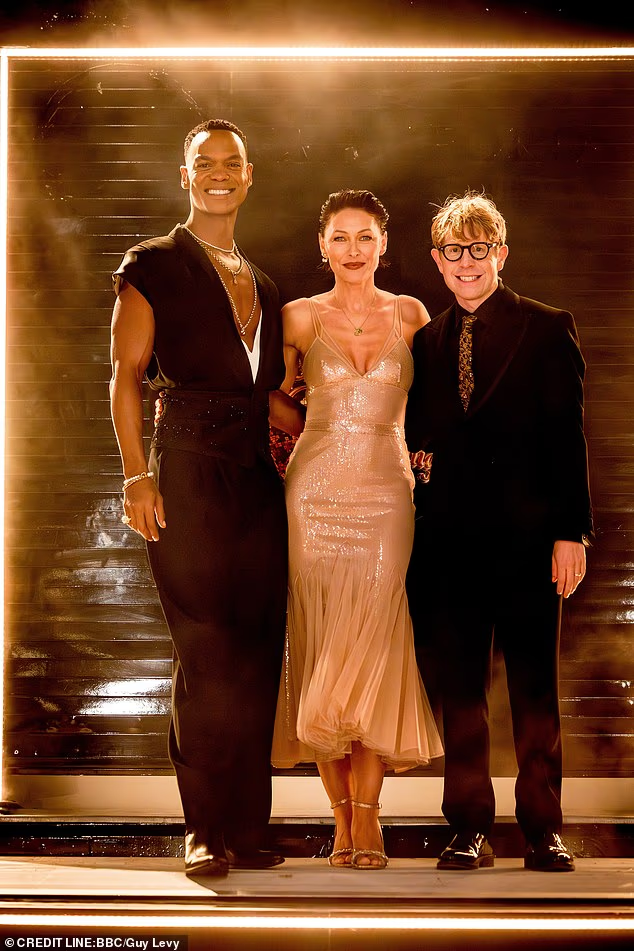
Making their debut in the all singing all dancing trailer, the pair looked positively ‘Strictly-fied’ as they emerged out of a golden Strictly trailer alongside their fellow host Johannes Radebe

After Tess Daly and Claudia Winkleman stepped down at the end of last year’s series – the BBC are now trialling a three host format for the first time. 

Advertisement

After Johannes assured fans they would still get to see him dancing, the trailer sees him performing alongside his fellow professionals and much-loved judges Shirley Ballas, Motsi Mabuse, Craig Revel Horwood and Anton Du Beke

As the professional dancers perform a high-energy routine on a studio backlot, Josh, Emma and Johannes are then unveiled in a burst of golden light as they emerge out a Strictly trailer. 

Performing a few moves themselves, it is all gold and glamour ahead of this year’s series which will launch on September 19. 

Advertisement

Strictly Come Dancing first look: Hosts Emma Willis and Josh Widdicombe get glammed up as they make their dancing debut alongside Johannes Radebe in new series trailer

It is all gold and glamour ahead of this year's series which will launch on September 19 (pictured Anton Du Beke dancing with Katya Jones)

It is all gold and glamour ahead of this year’s series which will launch on September 19 (pictured Anton Du Beke dancing with Katya Jones) 

However the couple pairings will work slightly differently this year. 

While in the past the celebrity has had their professional dancer unveiled to them in a pre-filmed clip, this year the stars will discover the identity of their partner in front of the Strictly studio audience via three specially-choreographed group dance routines.

Advertisement

The full routine will open this year’s Strictly launch show – which will feature more dancing than ever before.

The launch show will also take viewers behind the scenes as the celebs begin their dance rehearsals.

Plus the return of last year’s champion Karen Carney, who will dance her iconic football jive with Carlos Gu.

The professionals returning this series are Amy Dowden, Dianne Buswell, Carlos Gu, Katya Jones, Neil Jones, Nikita Kuzmin, Jowita Przystał, Aljaž Škorjanec, Alexis Warr, Kai Widdrington , Nancy Xu, Lauren Oakley, Julian Caillon and Vito Coppola.

Advertisement

It was revealed earlier this year that Nadiya Bychkova, 37, Karen Hauer , 43, Michelle Tsiakkas, 30, Luba Mushtuk , 36, and Gorka Marquez, 35, have all been given the boot.

Meanwhile the line-up itself has come under fire as many of the celebrities have been deemed unrecognisable to viewers.

Some of the best known of the line-up are Dani Dyer , Delta Goodrem , Jaime Winstone, Will Best and Gavin & Stacey actress Melanie Walters.

Stars such as Kim Kardashian’s hair stylist Chris Appleton might not be a household name, but he does boast a huge social media following with four million fans on Instagram.

Advertisement

John Nellis has an even bigger fanbase, with 15.7 million YouTube subscribers.

Indeed, while bosses may be keen to attract Gen Z (14 to 29 years old), the majority of Strictly viewers are currently Gen X (46 to 61 years old) and Baby Boomers (62 to 80 years old).

STRICTLY COME DANCING 2026: MEET THE CONTESTANTS

LACEY TURNER 

Advertisement

AGE: 38

BEST KNOWN FOR?: Playing Stacey Slater on BBC’s EastEnders 

WHY STRICTLY?: ‘I’m so excited and terrified at the same time but I’ve had so many friends do Strictly and I thought it was about time that I plunked up the courage and made my way onto that dance floor.’

Advertisement

DELTA GOODREM

AGE: 41

BEST KNOWN FOR?: Played Nina Tucker in Neighbours and has released eight music albums

Advertisement

WHY STRICTLY?: ‘I’ve been incredibly honoured to perform on many different stages throughout my career – from tv, theatre, film sets, to touring my own shows around the world, there is however one stage I’ve never stepped onto and that is the ballroom floor!’

CACH MERCER

AGE: 25

Advertisement

BEST KNOWN FOR?: Won Love Island 2025 and is a TikTok influencer

WHY STRICTLY?: ‘I have grown up watching the show with my family and am so excited to now be part of the cast. Dancing is a huge passion of mine and I can’t wait to learn Ballroom and do the Foxtrot for the first time!’

DAME SARAH STOREY

Advertisement

AGE: 48

BEST KNOWN FOR?: Britain’s most successful Paralympian 

WHY STRICTLY?: ‘Embarking on a new challenge so soon after stepping down as an athlete is hugely exciting.’

BETHANY ANTONIA 

Advertisement

AGE: 28

BEST KNOWN FOR?: Plays Lady Baela Targaryen in House of the Dragon

WHY STRICTLY?: ‘I have grown up watching Strictly, and I am so excited to take the challenge on and (hopefully!) learn a new skill.’

Advertisement

GRAEME ‘THE DOGFATHER’ HALL

AGE: 59

BEST KNOWN FOR?: Hosts Channel 5 series Dogs Behaving (Very) Badly

Advertisement

WHY STRICTLY?: ‘I have watched the show for years, so to be a part of it feels like a very exciting challenge, albeit more than a bit nerve-wracking!’

TABBY STOECKER 

AGE: 25

Advertisement

BEST KNOWN FOR?: Olympic champion skeleton racer

WHY STRICTLY?: ‘I’ve had the wildest year of my life so far, so to be rounding it off with a childhood dream of dancing in the Strictly ballroom is surreal and I can’t wait to get stuck in!’

MELANIE WALTERS 

Advertisement

AGE: 64

BEST KNOWN FOR?: Playing Gwen West in BBC sitcom Gavin & Stacey

WHY STRICTLY?: ‘Performing in Pantomime for the last 15 years, my Strictly ‘fix’ has always been watching in a dressing room rather than my front room.’

DANI DYER

Advertisement

AGE: 30

BEST KNOWN FOR?: Winning Love Island and being the daughter of actor Danny Dyer

WHY STRICTLY?: ‘I am so excited to be back in the ballroom this September! I just cannot wait to get my dancing shoes back on and hopefully this time around I can actually make it to week one!’

Advertisement

CHRIS APPLETON

AGE: 43

BEST KNOWN FOR?: Hairdresser to the stars – including Kim Kardashian and Jennifer Lopez

Advertisement

WHY STRICTLY?: ‘I’m thrilled to be joining Strictly and coming home to the UK for this incredible experience. I’ve always believed that the best things happen when you take a chance and try something new.’

WILL BEST

AGE: 41

Advertisement

BEST KNOWN FOR?: Hosts Big Brother and previously TV

WHY STRICTLY?: ‘I’ve been lucky to do lots of live telly before, but absolutely nothing like this. And I cannot wait!’

JAIME WINSTONE

Advertisement

AGE: 41

BEST KNOWN FOR?: Starring in films such as Kidulthood and Tomb Raider

WHY STRICTLY?: ‘I am no stranger to a dance floor, but the ballroom is a whole new world for me.’

SHAUN WRIGHT-PHILLIPS 

Advertisement

AGE: 44

BEST KNOWN FOR?: Footballer who played for the likes of Chelsea and Manchester City

WHY STRICTLY?: ‘Strictly is definitely outside my comfort zone, but I’m super excited to get started and really looking forward to the challenge!’

Advertisement

LAWRENCE ROBB

AGE: 34

BEST KNOWN FOR?: Plays Mackenzie Boyd on ITV’s Emmerdale

Advertisement

WHY STRICTLY?: ‘I can’t quite believe that I am going to be getting my dancing shoes on this September on one of my favourite shows of all time!’

JOHN NELLIS 

AGE: 33

Advertisement

BEST KNOWN FOR?: Face of a popular football-focused YouTube channel

WHY STRICTLY?: ‘I can’t wait to meet everyone, learn a new skill and, hopefully, be much better at family parties by the end of it!’


Advertisement

Advertisement

Source link

Continue Reading

NewsBeat

Shambles: the story behind York’s famously wonky street

Published

on

Shambles: the story behind York's famously wonky street

They may not tilt in quite the same way, but the famously wonky, timber-fronted shops of this ancient street continue to attract visitors and residents alike – and have caused people to crane their necks for centuries.

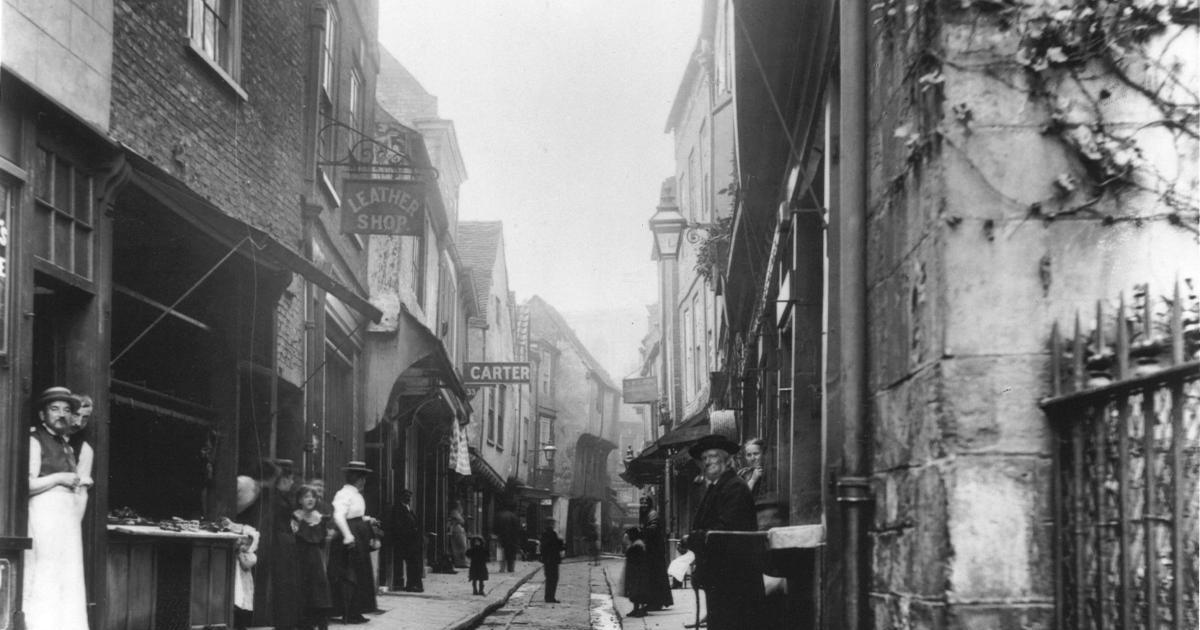
Children turn Shambles into a playground in this early photograph of York's famous medieval street, long before it became one of the city's biggest attractions.Children turn Shambles into a playground in this early photograph of York’s famous medieval street, long before it became one of the city’s biggest attractions.

After the heat of July and August, York was an obvious staycation choice, with plenty to enjoy, whether food and drink or the city’s rich culture was the main attraction.

Undated

Locals will be all too familiar with the crowd-pulling appeal of Shambles, one of York’s great photo stops.


Recommended reads:

Advertisement

Why locals still smile at this York street name the Victorians cleaned up

Why it is called Whip‑Ma‑Whop‑Ma‑Gate in York city centre

How historic York street has changed since 1800s – 10 old photos

7 old photos – how many of these York bars and nightclubs do you remember?

Advertisement

The narrow, bustling lane is packed with quirky shopfronts, overhanging upper floors and queues of people in search of a little medieval magic – or perhaps something closer to Harry Potter’s Hogwarts.

Undated

The street is often linked with Diagon Alley, although J.K. Rowling has said she had not visited Shambles when creating the wizarding shopping street. That has done little to lessen the connection in visitors’ minds, or the appeal of the Harry Potter-themed shops.

Yet Shambles had a far more pungent past than its glossy, Instagram-ready present might suggest.

Shambles was recorded as early as 1086, when the area appeared in the Domesday Book as in macello – Latin for “at the market”. It developed into York’s butcher’s quarter, with meat sold from open-fronted premises and slaughtering often carried out behind the shops.

Advertisement

The shelves beneath several windows, still visible today, once displayed cuts of meat rather than wizarding treats, souvenirs and sweet jars.

The leaning buildings of Shambles are almost touching in this undated photo from The Press archive.

Leaning – by design

Those upper floors that appear to lean into the street were not simply the result of medieval builders having a bad day. They were deliberately built to project over the lower storeys, a technique known as jettying – also seen elsewhere in York, such as Goodramgate.

A scene from 1974. A scene from 1974.

Jettying gave householders extra room above without taking away valuable space at street level. On Shambles, where the timber-framed buildings stand so close together, the result is especially striking as it can feel as though the houses are conspiring to meet overhead.

Advertisement

Deliveries in bygone years when vans still made their way down cobbled Shambles to supply the shops lining the historic thoroughfare.

The overhangs also helped shelter stalls, shoppers and goods from rain and sunshine, particularly useful when this was a working meat market, long before refrigerated display cabinets.

What’s in a name?

The formal street name is Shambles although many refer to it as “the Shambles”. Its name comes from an old word for a bench or stall and later became closely linked with places where meat was sold.

These delivery drivers, pictured in 1986, are in a tight spot as they navigate the famously-narrow street.These delivery drivers, pictured in 1986, are in a tight spot as they navigate the famously-narrow street.

It has had other names over the centuries, including Haymongergate and Nedlergate, before the “Great Flesh Shambles” appeared in the 15th century.

Advertisement

By 1830, 25 of York’s 88 butchers were based there.

The butchers have gone, the sights and smells have changed, and the street is now a global visitor favourite. Yet Shambles remains defiantly crooked and a medieval survivor still leaning into the future.

Source link

Advertisement
Continue Reading

NewsBeat

Katie Taylor vs Flora Pili Croke Park fight time, TV channel and undercard details

Published

on

Belfast Live

Katie Taylor will make her final ring walk to take on Flora Pili

Katie Taylor is set to make her final ring walk in what promises to be a highly emotional night at Croke Park.

The 40 year old boxing icon takes on Flora Pili as she bids to become an undisputed world champion for a third time. Taylor puts her WBA, WBO and IBF super-lightweight world titles on the line, while the vacant WBC belt and Pili’s IBO title are also up for grabs.

Taylor delivered an outstanding performance in her previous encounter with Amanda Serrano last July and enters the bout with a record of 25-1, her only defeat coming against Chantelle Cameron in May 2023 before securing revenge six months later.

Advertisement

As for Pili, she remains unbeaten, having secured victory in all 12 of her professional contests to date, with two coming by way of knockout. This marks only the third occasion she has competed outside her home nation of France.

A host of Irish fighters feature across the nine-bout card, alongside musical performances from Westlife and The Mary Wallopers. Here’s everything you need to know about the event:

Start time

The opening bout on the card is scheduled to begin at 4.10pm, featuring an all-Irish middleweight clash between Dublin’s Paul Ryan and Belfast’s Paddy Gallagher. The main card gets underway at 7pm.

Main event time

The ring walks for the headline bout are scheduled to take place after 9.45pm. This timing will be dependent on how the undercard progresses.

Advertisement

TV channel information

The eagerly anticipated bout will be broadcast live on both DAZN and RTE (only in the Republic of Ireland), with DAZN’s coverage kicking off at 7pm and RTE following an hour later at 8pm.

Full card

Katie Taylor vs Flora Pili – Undisputed Super Lightweight Championship for the WBC, WBA, IBF, WBO, IBO and Ring Magazine Titles.

Dave Allen v Thomas Carty – heavyweight.

Paddy Donovan v Tyrone McKenna – welterweight.

Advertisement

Taylor Bevan vs Emmet Brennan – super-middleweight.

Molly McCann vs Sylwia Doligala – bantamweight.

Joe McGrail vs Matthew Boreland – super-bantamweight.

Adam Olaniyan vs Matej Hudak – heavyweight.

Advertisement

Bobbi Flood vs Jack Swallow – super welterweight.

Paul Ryan vs Paddy Gallagher – middleweight.

Quotes

Katie Taylor: “I have a very tough challenger in front of me but I’ve built a reputation of always taking the tough fights and why make my last fight any different.

“This is a very tough challenge, I have no doubt, but this is what I was born for, this is what I’m made for.

Advertisement

“God has put this gift in me since I was a kid, I have one last time to go in there and just display the gift that God has put in me.

“What a privilege!”.

Flora Pili: “I have nothing to lose and everything to win. I am the underdog for the fight.

“For that reason there’s less pressure on me, and for that reason I’m going to be giving 200% from round one right to the end.

Advertisement

“I’m going to give everything I can and hopefully take home all of these wonderful belts.”

Betting odds

Katie Taylor win: 1/25

Flora Pili win: 13/1

Draw: 33/1

Advertisement

Click here to sign up to our sport newsletter, bringing you the latest sports news, headlines and top stories

Source link

Continue Reading

NewsBeat

‘I re-watched West Brom 1-0 Man United – Mike Dean doesn’t blow his whistle for 19 minutes’

Published

on

Manchester Evening News

Former referee Mike Dean controversially claimed he used to play “mini games” while officiating matches – and footage from an old Manchester United fixture raises some very uncomfortable questions

There are few things more likely to send football fans into a conspiracy theory spiral than a referee admitting he used to play games with himself during Premier League matches – and Mike Dean has now given them plenty to work with.

Advertisement

The former Premier League referee caused a storm this week after appearing on Jamie Vardy’s Having a Party podcast and revealing that he and fellow officials would set themselves little challenges while refereeing.

One was seeing how long they could stay in the centre circle. Another was seeing how long they could go without blowing the whistle.

Dean claimed he had managed to go 20 to 25 minutes without blowing his whistle “a few times” during his top-flight career, adding that it was something they did “for a laugh.” Unsurprisingly, though, his comments weren’t particularly well received by football fans, many of whom have accused Dean of compromising the integrity of matches.

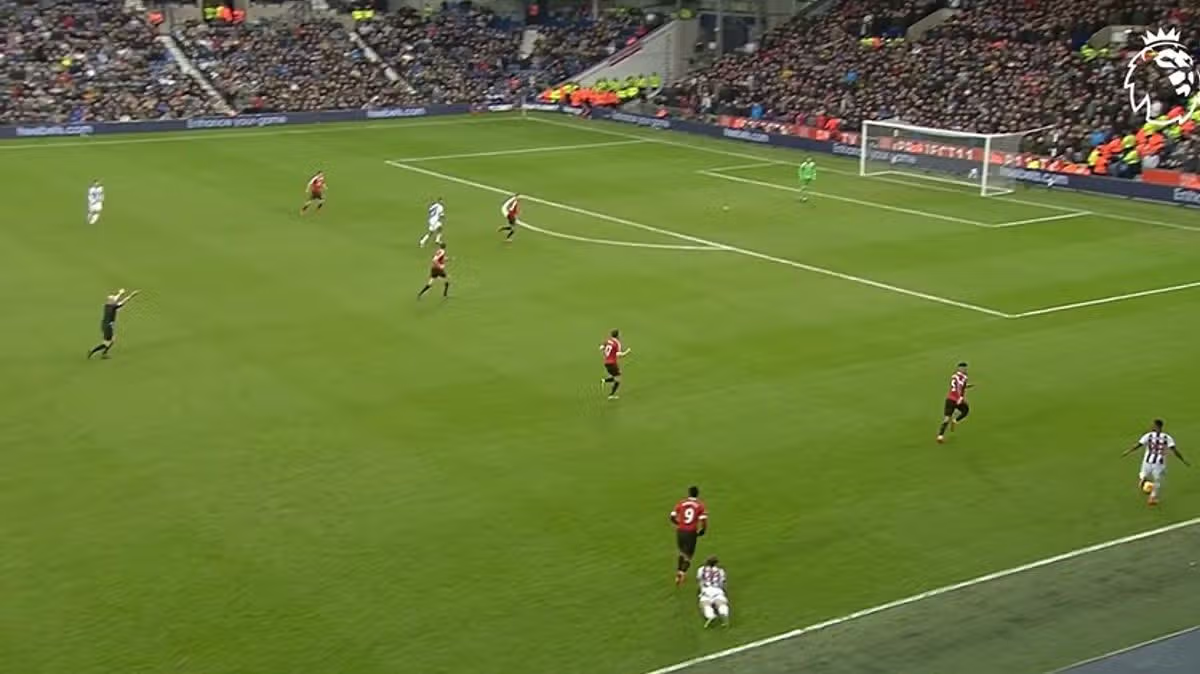
To investigate, MEN went back and watched the full footage of one particular Premier League match – and it’s difficult not to raise an eyebrow. The game in question was West Brom’s 1-0 victory over Manchester United at The Hawthorns on March 6, 2016.

It was hardly an obscure game in Dean’s career. United were downed by Salomon Rondon’s goal, Juan Mata was sent off before half time, and Louis van Gaal’s side suffered a damaging defeat in their pursuit of Champions League football.

It was also a game in which Dean did something rather unusual. He didn’t blow his whistle once during the opening 19 minutes.

That, in itself, is not evidence of wrongdoing. Referees are not required to blow their whistles a certain number of times during a match. Games can flow, players can stay on their feet, and officials can quite reasonably allow contact that falls below their threshold for a foul.

And, importantly, none of the incidents in those opening 19 minutes can reasonably be described as an outrageous, stonewall foul that Dean inexplicably ignored. But there were several moments when you would ordinarily expect a Premier League referee to intervene.

There were around half a dozen challenges or incidents, which, while hardly career-defining refereeing blunders, looked like the sort of infringements that would normally result in a free kick. But Dean waved play on. Again. And again. And again.

There was another particularly odd incident involving Anthony Martial and Craig Dawson. Martial clattered into the back of the West Brom defender, but with the ball falling to his team-mate Stephane Sessegnon, Dean signalled for advantage.

That advantage, however, was short-lived. Sessegnon was immediately dispossessed, yet instead of pulling play back for the foul on Dawson, Dean simply waved play on.

It was another moment where, having chosen not to blow his whistle, the referee appeared content to let the game continue regardless of what happened next.

On the stroke of 19 minutes, Dean finally blew for a foul. It was unavoidable, since Daley Blind had raised a boot close to Saido Berahino’s face. In fairness to the official, it was the first stone wall foul of the game – but what followed was a little bizarre.

Having swallowed his whistle for a quarter of the match, he suddenly started blowing it with wild, frantic regularity, penalising players for the most innocuous, softest offences imaginable. This does not prove he was playing his alleged “mini game,” but it is an awfully uncomfortable coincidence.

What happened next was equally eyebrow-raising. Juan Mata, not exactly known for his aggressive streak, was sent off. First, the Spaniard was booked on 23 minutes for preventing a quickly-taken free kick, before being shown a second yellow just two minutes later for a mistimed challenge.

Neither decision looked particularly controversial when viewed in isolation. The first booking was justified, with Mata deliberately stopping West Brom from restarting play quickly, while the second challenge was reckless enough to warrant a second yellow.

Advertisement

Yet the red card became another part of the story because it came just minutes after Dean had finally started blowing his whistle.

And that is precisely why this match is worth revisiting now. Not because it proves that Dean cheated. It doesn’t. Not because every decision he made in the opening 19 minutes was wrong. It wasn’t. And certainly not because Manchester United were somehow robbed of victory by a referee determined to set himself a personal record. There is no evidence for that.

What the footage does show is a referee who went an unusually long time without awarding a single free kick – followed by a marked increase in whistle-blowing once he finally did.

After his comments this week went viral, Dean attempted to draw a line under the controversy. In a statement posted on Instagram, he insisted that throughout his 25-year career, he had always applied the Laws of the Game to the best of his ability.

He explained that his refereeing philosophy was to allow matches to flow and operate with a high threshold for contact – something he said players liked. And he made clear that whenever he saw a foul that required action, he would give it.

“At no stage was it my intention to question, criticise or undermine the integrity of refereeing in this country,” the 58-year-old wrote. “I have always respected the profession and the responsibility that comes with being a referee.”

Perhaps the simplest explanation is also the most innocent one. Dean was joking. He was trying to entertain Vardy and his audience, embellishing an old refereeing anecdote and never allowing a personal challenge to influence his decisions on the pitch.

Advertisement

That would certainly explain why some people who know him believe he was simply playing to the room. But there is an obvious problem with that defence.

Dean didn’t merely say referees joked about how long they could go without blowing their whistles. He said he did it himself in Premier League matches, and claimed to have gone 20 to 25 minutes without blowing on several occasions.

Now one of those occasions appears to have been found. Nineteen minutes. Manchester United. Half a dozen challenges that might ordinarily have prompted a whistle. Then, suddenly, the whistle starts going.

Maybe it’s a coincidence. Maybe Dean was having a laugh. Maybe his famously high threshold for contact simply meant the opening 19 minutes were exactly what he says they were: a game allowed to flow.

Advertisement

But if Dean really was telling the truth about his little refereeing games, this is exactly the sort of footage you would expect people to go searching for. And having watched it back, it certainly does not make his original claim look any less extraordinary.

Source link

Continue Reading

NewsBeat

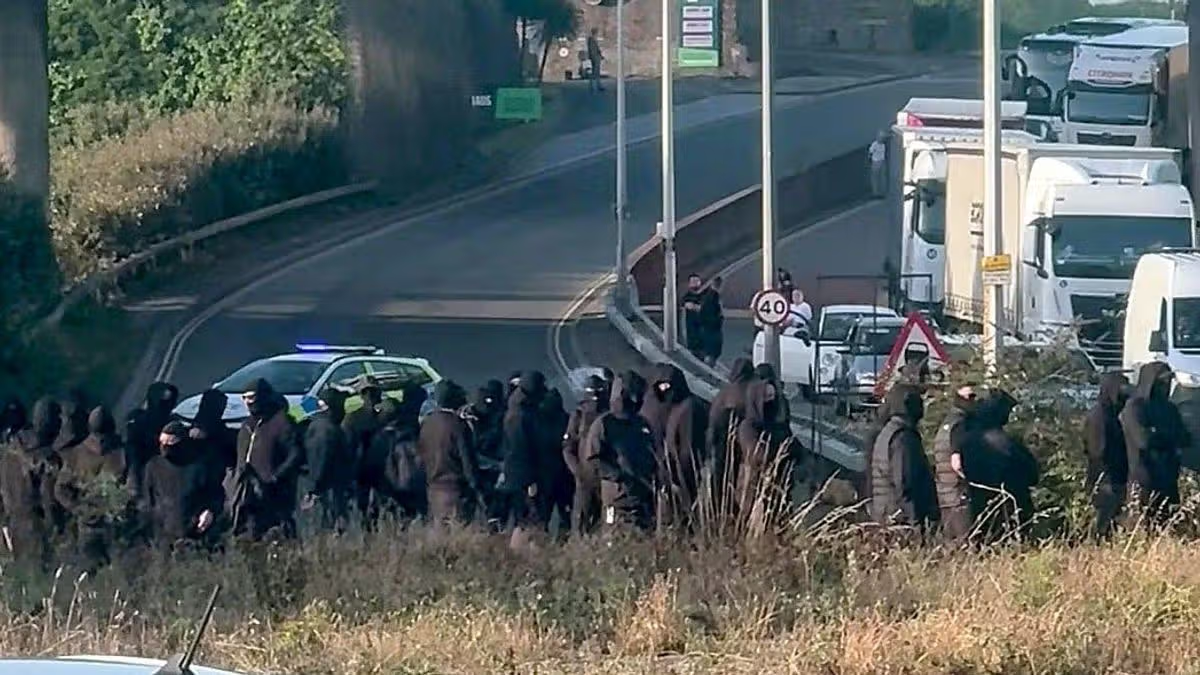
Dover protest LIVE as ‘hundreds of men in black balaclavas’ block ferry port

Published

on

Manchester Evening News

Paul King, the Reform UK councillor for Dover West, said he has been told the demonstration is a “stop the boats protest”.

He wrote on Facebook: “Avoid the port area, large number of men have blocked the A20. I’ve been told it’s a stop the boats protest speaking to local women, they felt frightened by such a large group of men walking up the street.

“We don’t condone causing public disturbance by protest. But it’s a very good example of what is happening daily with the boats coming in.”

Advertisement

Source link

Continue Reading

NewsBeat

Power cut left Bury and Bolton residents without electricity

Published

on

Power cut left Bury and Bolton residents without electricity

People living in parts of Radcliffe and Ainsworth have woken up to find their power is out.

According to Greater Manchester electricity distribution network operator, SP Electricity North West, 70 homes have been affected.

Engineers have been sent to fix the problem, and a team is currently on the wa

Advertisement

A fault with an underground cable is being blamed. It is estimated that power will not be restored to those homes affected until around 2pm.

The fault was reported just after 8am

One resident, who contacted The Bury Times, said: “I woke up to grab a coffee to find the electricity was off yet again! Now according to the website it won’t be on until 2pm.

“What is it with the electricity in Ainsworth, I don’t know how long it’s been off! It’s just so annoying as we seem to experience a power cut so often.”

Advertisement

Source link

Continue Reading

NewsBeat

Loneliest house in the world on isolated island where your only neighbour is the ocean

Published

on

Daily Mirror

This island has been the subject of a lot of rumours

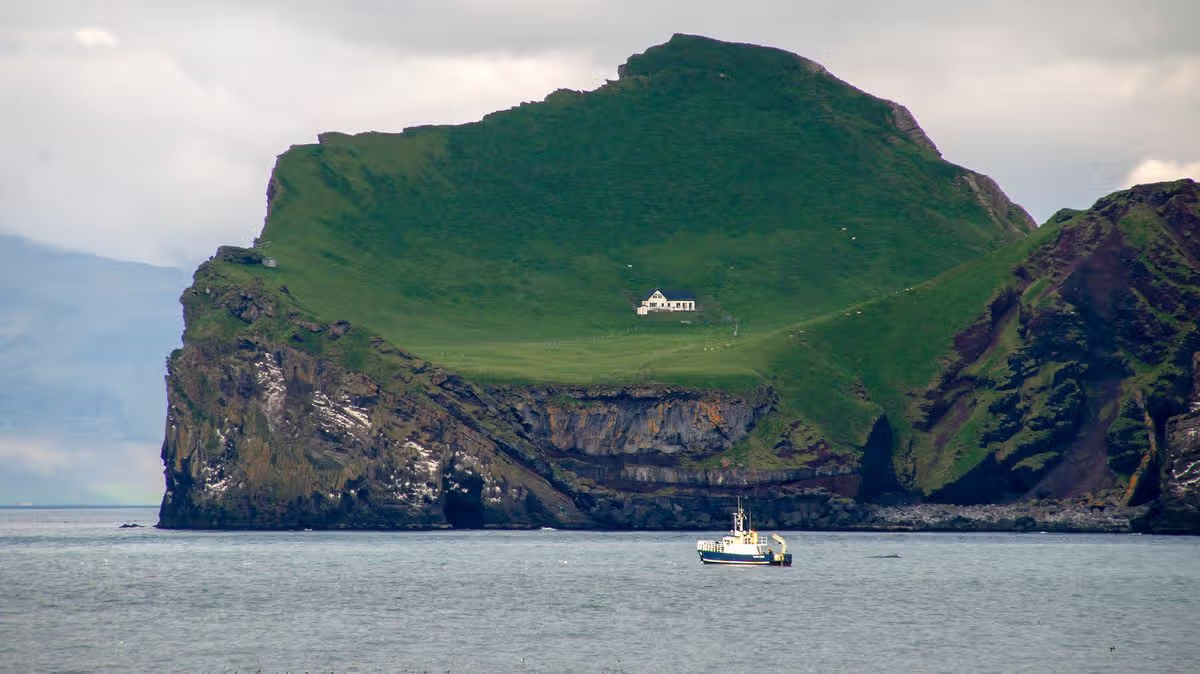
You’ve likely seen the photograph at one point or another – a lone house, tucked inside a great sloping hillside on an abandoned island. Behind the house, an expanse of lush green hillside rises to the sky, and in front of it the grass falls away to the ocean below.

Advertisement

It’s the subject of plenty of urban myths, from zombie bunkers to being Björk’s home – but the real truth is the house is not a house at all. The building sits on the island of Elliðaey, the northernmost island in the Vestmannaeyjar archipelago.

This group of islands is located about five miles south of Iceland’s mainland.

The lone building is actually a hunting lodge, built in 1953 by the Elliðaey Hunting Association.

There is a second building on the island, but this is used as a storage hut, the island has no permanent population, except for the large number of puffins which call the island home.

Advertisement

There have been several rumours about the lodge.

One was that it was built by an unnamed eccentric billionaire to escape a zombie apocalypse, another was that it was constructed as a place to isolate during Covid.

A third rumour, which was a little more realistic, was that it was home to Björk, the famous Icelandic singer.

This started way back in 2000 when The Miami Herald reported that Björk had been granted the exclusive use of the uninhabited island because she had done so much for the country.

However, this was a mistake. In fact, the reporting was about a different island, also called Elliðaey (Ellidaey) in the west of Iceland.

According to the Irish Examiner, the singer rejected the offer as she didn’t want the island to become a tourist attraction.

Now, tourists are not permitted on the island without the express permission of the owners, but plenty of boats pass it by and offer a spectacular view of the isolated island.

Advertisement

Source link

Continue Reading

Trending

Copyright © 2025