
Connect with us
DAPA Banner
DAPA Coin
DAPA
COIN PAYMENT ASSET
PRIVACY · BLOCKDAG · HOMOMORPHIC ENCRYPTION · RUST
ElGamal Encrypted MINE DAPA
🚫 GENESIS SOLD OUT
DAPAPAY COMING

NewsBeat

Senate works overnight as Republicans debate limits on Trump settlement

Published

on

Senate works overnight as Republicans debate limits on Trump settlement

WASHINGTON (AP) — The Senate is working overnight to pass legislation that would fund President Donald Trump’s immigration enforcement agencies as Democrats and some Republicans have tried to add language to permanently block Trump from creating a $1.776 billion settlement fund.

Earlier in the day, Republicans turned back a Democratic effort to block the fund, which would compensate the president’s allies who say they have been politically persecuted. But there were potentially more amendments to come overnight as Republican Sen. Bill Cassidy of Louisiana has said he will try again to block the settlement.

The amendments were a test of party unity and a threat to the immigration spending bill, as some Republicans have repeatedly voted to block the fund. The first vote on the settlement was held open for around three hours as several GOP senators decided whether to support it.

“I feel optimistic that we’ll get there in the end,” Senate Majority Leader John Thune, R-S.D., said Thursday evening, while acknowledging he was not sure how the votes would turn out.

Advertisement

Thune has been pushing GOP senators for weeks to keep the bill focused on the funding for Immigration and Customs Enforcement and Border Patrol, which Democrats have blocked since early this year, and to avoid adding new provisions that could complicate its passage.

If an amendment limiting the settlement were to pass, Thune said, it would be “problematic” when they send the bill to the House. It could also mean a White House veto of the immigration spending bill, which has otherwise unified Trump and Republicans.

The last time the Senate abruptly changed a Homeland Security funding package, in March, the House simply refused to accept it and left town.

Settlement fund roils Senate GOP conference

Trump’s judgment fund, which was part of a settlement that resolves his lawsuit against the IRS over the leak of his tax returns, has angered many Republican senators.

Advertisement

Acting Attorney General Todd Blanche said this week that the fund would not move forward. But Trump, who has been at odds with Senate Republicans in recent weeks, raised new doubts about the settlement’s future Wednesday afternoon — just after the Senate had voted to start debate on the immigration bill — when he told reporters that the settlement is “very important” and said “I don’t know” whether it is dead or on hold.

“I’d have to ask the lawyers,” he said.

The Senate rejected a second amendment from Republican Sen. Thom Tillis of North Carolina on Thursday that would also have banned the settlement fund but would have moved the money to a separate anti-fraud fund at the Department of Justice. Most Democrats voted against the amendment, guaranteeing its defeat, but more than 10 Republicans supported it.

Tillis said the settlement fund, some of which could potentially go to Trump supporters who beat police and attacked the Capitol on Jan. 6, 2021, is a political liability for the party.

Advertisement

“If Blanche says this is largely inoperative, why not use this moment to codify that?” Tillis said. “Otherwise, you’re exposing every one of our members who are in cycle to having to deal with this between today and Election Day, and that makes no sense for something that the DOJ says they’re not moving forward with.”

Amendments will be offered late into the night

It was unclear how Republicans would vote on additional amendments.

Cassidy, who lost re-election last month after Trump endorsed his primary opponent, said he still planned to offer an amendment to ban payouts from the settlement. He told reporters he may also offer an amendment to block a separate part of the settlement that would grant Trump and his family immunity from IRS audits.

Several Republican senators said they supported the idea but would have to see the final language before they decide. Sen. John Cornyn, who also lost reelection last month after Trump endorsed his opponent, said he agrees with the “thrust of it” but would wait to see the amendment. Republican Sen. John Curtis of Utah said the same.

Advertisement

Thune said he believes the final bill should pass without language to prohibit the settlement.

“This is about border funding,” Thune said. “It’s about law enforcement, it’s about ICE and CBP. So I’m trying to, you know, keep it about the main thing.”

Democrats continued to offer amendments through the night, including on Trump’s tariffs, his war with Iran and his immigration enforcement campaign.

“Amendment after amendment, vote after vote, Republicans are going to have to answer to the American people,” Senate Democratic leader Chuck Schumer said at the beginning of the day.

Advertisement

ICE and Border Patrol money has been delayed for months

Passage of the roughly $70 billion bill to fund ICE and the Border Patrol would end the blockade by Democrats who demanded policy changes after the fatal shootings of two protesters by federal agents in January. The bill would fund the agencies for three years, through the end of Trump’s term.

Senate Republicans are using a complicated procedural maneuver to get around the filibuster and pass the budget legislation with no Democratic votes. But it has taken weeks to get the bill to the Senate floor as Republicans navigated various obstacles to passage created by Trump and the White House — including a $1 billion proposal for White House security and Trump’s ballroom that they eventually scrapped and the fierce bipartisan backlash to the settlement fund.

Democrats say any funding bill for the Homeland Security Department should place restraints on federal immigration authorities, including better identification for federal officers and more use of judicial warrants, among other asks.

After federal agents shot Renee Good and Alex Pretti in Minneapolis, Trump agreed to a Democratic request that the Homeland Security bill be separated from a larger spending measure that became law. But bipartisan negotiations went nowhere, and the department funding lapsed in mid-February with no agreement on changes to the Trump administration’s immigration enforcement tactics.

Advertisement

Congress eventually funded the rest of the Homeland Security Department at the end of April with Democratic support, but ICE and Border Patrol remained without regular funding.

___

Associated Press writers Kevin Freking and Lisa Mascaro contributed to this report.

Advertisement

Source link

Continue Reading
Click to comment

You must be logged in to post a comment Login

Leave a Reply

NewsBeat

Wales mum who ‘had IBS for decades’ now has months to live

Published

on

Wales Online

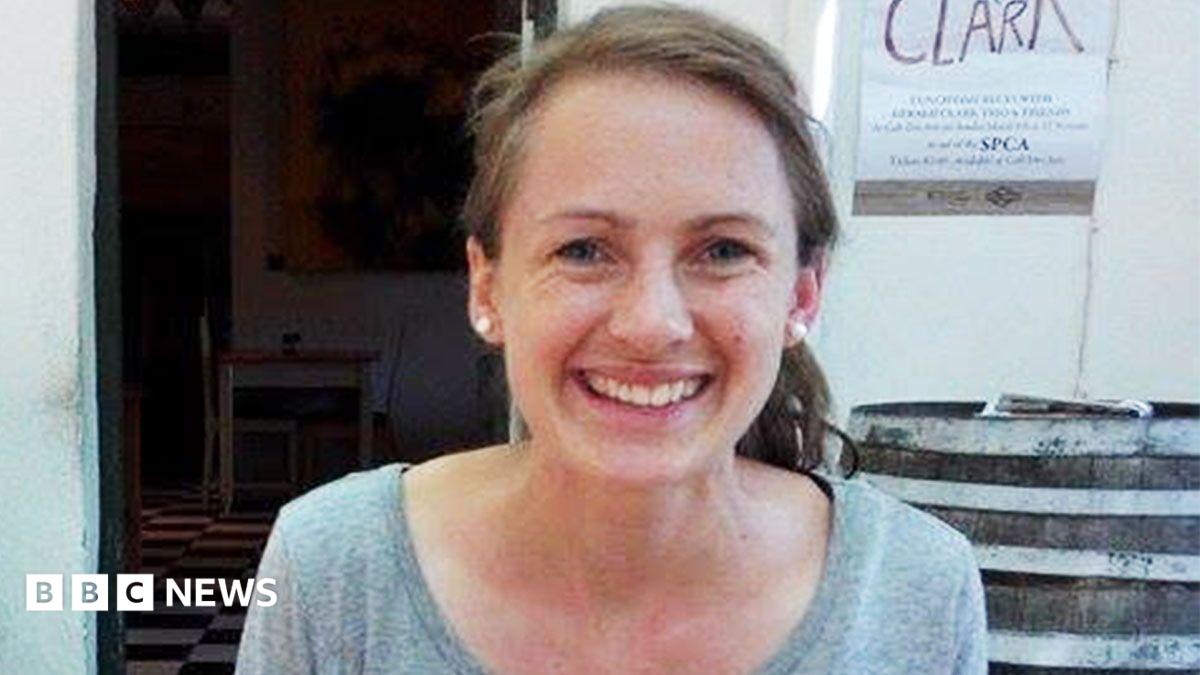
Ruth Lloyd-Williams, from Llandudno, was first diagnosed ‘by chance’

A mother who had IBS for decades before receiving a terminal bowel cancer diagnosis has said she is determined to outlive her prognosis and is manifesting a “miracle” as she believes “cancer hates positivity”. Ruth Lloyd-Williams, 61, a businesswoman who lives in Llandudno, was first diagnosed with bowel cancer “by chance” in February 2025 after spontaneously booking a GP appointment for a check-up.

One month later, she was told she needed a stoma and had “five years” to live and, one year later, after various treatments including chemotherapy and radiotherapy, she was given the news she only had “months to live”. Despite this prognosis, Ruth refuses to be a statistic and is determined to see her grandson born in September – and she is currently receiving a new treatment which she hopes will prolong her life.

If “the worst happens”, she has decided she would like to be cremated in her wedding dress to avoid the “pain and heartbreak” of her family having to dispose of it, and she would like to have her ashes scattered in her back garden, so she “never misses out on a family BBQ or a garden party”.

Advertisement

Speaking about her advice to others with terminal cancer, she told PA Real Life: “Don’t just sit there and be the statistic. It doesn’t matter how old you are because, unfortunately, cancer doesn’t care how old you are, or what your life plans are or whether you’re going on holiday next year.

“But if you can do anything, be as positive as you can. Cancer hates positivity. I am full of hope and do believe that miracles do happen.”

Ruth has had symptoms of irritable bowel syndrome (IBS) – a common condition which affects the digestive system and can cause stomach pain or cramps, bloating, diarrhoea and constipation – ever since she can remember. She recalls having “tummy ache” from the age of five and being taken to hospital during primary school, but she said doctors “never knew what to do about it”.

Advertisement

As she reached adulthood, she said she just “learned to live with it” – but her symptoms of excruciating abdominal pain, frequent or infrequent bowel movements and anxiety were “debilitating” at times.

“You get to the point where it’s just part of your life,” Ruth said. “I was just left to get on with it, so every time it flared, I either treated it myself or I just saw myself through the process.”

Ruth said her symptoms were never fully investigated – she just had “this IBS label” – and her flare-ups continued over the following years. In January 2025, however, while at her GP surgery booking an appointment for her husband Paul, now 67, she enquired about booking a check-up for herself.

She had been experiencing some discomfort and noticed a recent change in her bowel movements, so she thought: “I’ll go and ask, I’ve not been for years.” After an initial appointment, Ruth was referred for a colonoscopy on February 5, 2025, which she said was “fairly painless and all over in a flash”.

Advertisement

Within an hour, she said she was given the “bombshell” news that she had bowel cancer and a 6cm tumour had been found. “It was almost like an out-of-body experience – you’re out there watching somebody else get this news that’s going to change their life,” she said.

The following month, in March, her consultant told her the cancer was “treatable and not curable” and she would need a stoma – an opening on the surface of the abdomen which has been surgically created to divert the flow of faeces or urine.

She added: “I could hear this wailing noise and it wasn’t until I stopped to think that I realised that wailing noise was me.”

Advertisement

On the day of the stoma procedure on March 19, 2025, Ruth said she arrived at hospital in silver sequin trousers to “make a statement”. However, just two days later, she was given further “out of the blue” news.

“The consultant came along to see me and said, ‘I’ve got some news for you. Unfortunately, we’re going to have to upgrade your diagnosis’,” she said.

“I said, jovially, ‘Oh, an upgrade to me is extra leg room and a glass of champagne, so what is it?’ He said, ‘No, unfortunately, the scan showed that you’ve got mets (when cancer spreads) in your liver, you’ve got five years and there’s nothing we can do’.”

Ruth subsequently underwent chemotherapy from April to September, followed by 25 sessions of radiotherapy, and she had her liver resectioned and ablated – a treatment which uses extreme temperatures to destroy cancer cells – on February 6, 2026. However, she then suffered an infection and another follow-up scan in March this year revealed the tumours had increased in size again and her liver was “riddled”.

Advertisement

“I went to see the consultant after it had all calmed down and I was told I’d only got months to live,” she said. “But my answer to that was, ‘Well, I can’t go anywhere because I’ve got a grandson due in September’.”

Ruth, who built a community support resource for women called Network She, was offered a new treatment called Breakwater. She currently receives this intravenously once a fortnight and takes tablets every day. While she said she suffers side effects of fatigue, nausea, mouth abscesses and peripheral neuropathy, a type of nerve damage, she is responding well to the treatment and hopes it will prolong her life.

“It’s very easy to have a diagnosis and think, ‘Oh, I’m dying, I may as well just sit on the couch and wait for it to happen’… I’m not doing that,” she said. “I’m now on something that wasn’t available to me when I was first diagnosed, so one year down the line, two years down the line, there might be something else.”

Ruth, who also runs a medical education business for healthcare professionals called HCP Ed-UK, is now writing a diary-style book about living with bowel cancer, featuring characters named after her tumour, stoma and PICC line, which is used to give chemotherapy or other treatments. She named her tumour Billy because, at first, she hoped he would have “no mates”, her stoma Prada after the luxury brand and its bags and her PICC line Lilli after the food piccalilli.

She has worked with an illustrator called Michelle Webster to create an animation of her tumour, basing the character on one of “the ugliest fish in the world”, a blue hairy frogfish, and her stoma.

“This all comes from dealing with imposter syndrome,” she explained. “I’ve found over the years that when you’re dealing with something that is big and uncomfortable, or just unpleasant, if you name it and you give it a personality, it’s easier to deal with.”

Ruth hopes to release the book later this year, titling it, Ruth vs Billy – One Woman’s War Against Billy The Hairy Blue Face Frog Fish, and she has set up a Facebook group in the same name, where she posts regular updates. She is encouraging everyone to advocate for themselves when it comes to their health, do their own research and remain as positive as possible.

Advertisement

“Cancer hates positivity, so I hate cancer, so therefore I am being as positive as I possibly can – and that alone makes you feel better,” Ruth said. “Your diagnosis doesn’t have to be the end of your life. It might be eventually, but it also might be the reason for living.

“I’ve very much learned you have to live in the moment and I often think of the phrase: ‘Don’t count the days, make the days count’.”

To find out more, visit Ruth’s Facebook page.

Source link

Advertisement
Continue Reading

NewsBeat

Road closures to impact Bolton in the next two weeks

Published

on

Government invests £3.3bn to improve roads in North West

The Borough Council of Bolton has announced that several roads will be closed for the Ironman events until June 8.

The restrictions are expected to remain in place until 9am on June 9.

Diversion routes will be signposted to assist motorists during this period.

Advertisement

In Horwich, Winter Hey Lane will be closed on June 20, from St John Street to Lee Lane for the Horwich Rox event.

This closure will be in effect all day or until the event concludes.

Drivers should plan alternative routes to avoid delays.

Lastly, Guido Street will be temporarily closed from Horace Street to Darwin Street for approximately five days from  June 9 to 13 due to water works.

Advertisement

The restrictions will prohibit all vehicular and pedestrian traffic in this area. An alternate route will be available via Darwin Street, Halliwell Road, and Horace Street.

Motorists are advised to stay updated and plan their journeys accordingly.

Source link

Advertisement
Continue Reading

NewsBeat

Cristiano Ronaldo and Lionel Messi – a rivalry that shaped football

Published

on

Cristiano Ronaldo and Lionel Messi

“There is no doubt being in the same league changed everything,” says Txiki Begiristain, director of football at Barcelona between 2003 and 2010.

Ronaldo’s world record £80m move to Real Madrid in 2009 thrust the pair right into the centre of one of football’s most intense club rivalries – Barcelona v Real Madrid.

And by the time Ronaldo left for Juventus in 2018, the pair had won five Ballons d’Or apiece. In the nine seasons the pair were together in Spain, Ronaldo had scored 450 goals in 438 games for Real. Messi, 471 in 476 games for Barca.

But it had become far more than just numbers. By now, it was personal – and the growth of social media meant the world was watching.

Advertisement

“For Cristiano it was Lionel Messi and for Lionel Messi it was Cristiano. ‘I need to beat this guy’,” said Begiristain.

“The Mourinho – Guardiola rivalry was like a mirror for the Ronaldo – Messi rivalry. And, as players, they knew that game-winning goals were their route to one-upmanship,” added Spanish football writer Sid Lowe.

“We could watch it all on our phones. And in turn, the global exposure for the Messi – Ronaldo rivalry was now sky high, absolutely off the charts. Everything they did was must-see.

“It was on everyone’s lips in the press box, newspapers and social media comments, Cristiano and Leo were hell bent on outdoing each other on the pitch. Their personal battle for supremacy was symbolised by the ongoing trophy battle between the clubs.”

Advertisement

And what a battle it was. Messi and Barcelona undoubtedly won the La Liga honours, but the Champions League was dominated by Real Madrid and Ronaldo.

In 2012, Ronaldo inspired Real to their first La Liga title in four years but it was Messi who picked up his fourth straight Ballon d’Or award – much to his rival’s disgust. He went to win four of the next five.

“There is a genuine animosity that begins to grow,” says Robinson. “They didn’t acknowledge each other that much, they hated comparisons.

“They could not tolerate if they were the greatest of all time, there could be another in their era, in their football league.”

Advertisement

Deco adds: “I don’t think there is something similar to what happened with Messi and Ronaldo at this moment because at the same time the two clubs, Barcelona and Madrid, were at the same level and fighting for the big trophies.”

When Messi scored a 92nd-minute winner for Barcelona at Real Madrid in 2017, he removed his jersey and held it up the crowd.

“In the popular narrative, Cristiano had been the diva and Messi had been the humble servant of Barcelona, but this was the moment of Messi reasserting himself on the rivalry, saying maybe for the first time in his career ‘look at me’,” says Robinson.

Just a few months later, Ronaldo mimicked the celebration when he scored in the Spanish Super Cup at Barcelona.

Advertisement

Balague added: “If you needed proof of how much it meant to beat each other, those are the pictures.”

Source link

Continue Reading

NewsBeat

Friarage Hospital, Northallerton, offers vitreo surgery

Published

on

Friarage Hospital, Northallerton, offers vitreo surgery

Eighty-one people have received vitreo-retinal surgery at the Friarage Hospital in Northallerton since the service began in October 2025, bringing advanced ophthalmic care to the Hambleton and Richmondshire areas.

Carri Ramsbottom, from Friends of the Friarage, said: “Friends of the Friarage believe that every patient deserves high-quality care closer to home and this service is a shining example of our commitment to achieve this.

“It has been incredible to see how much of a difference the new service has made to our patients in such a few short months.

Advertisement

“We all want to return to the comfort of our own homes as quickly as possible following surgery, and it has been an honour to help make that a reality for our patients.”

The charitable group raised more than £200,000 to fund new surgical equipment, making the specialised eye surgery possible.

Vitreo-retinal surgery treats serious eye conditions such as retinal detachment, macular holes and complications from diabetic eye disease.

Before the service launched, patients in the area had to travel to The James Cook University Hospital in Middlesbrough, often requiring multiple appointments and assistance getting home, due to being unable to drive after receiving eye drops or injections.

Advertisement

The first to benefit was Andrew McDonald, a software engineer from Northallerton, who underwent vitreo surgery at the Friarage Surgical Centre in October 2025 after experiencing leakage in his eye caused by complications from uveitis; inflammation of the eye, which was significantly impacting his day-to-day life.

Mr McDonald said: “As the Friarage Hospital is within walking distance from my house, I was able to walk in, have my operation and walk home.

“It doesn’t get any better than that.

“I would like to say a huge thank you to Mr Saad and his wonderful team for their ongoing compassion and support from my initial appointments right through to my operation.

Advertisement

“They are all so kind and caring and I would recommend anyone thinking about going for vitreo surgery at the Friarage to just do it – the team will really look after you.

“As for the fundraisers and supporters of Friends of the Friarage, they are unsung heroes and a very special group of people, who helped make this possible.

“Eight months on, my eye is improving really well and is making a huge difference to my quality of life.”

He was under the care of Mr Ahmed Saad, consultant ophthalmologist and vitreoretinal surgeon.

Advertisement

Mr Saad said: “The introduction of vitreo-retinal surgery at the Friarage is already having a huge impact on our patients, like Andrew.

“Previously, our patients had to travel to other hospitals for this type of specialist treatment but now they can receive sight-saving treatment closer to home, reducing travel and waiting times, and making care more accessible and convenient for them and their families.

“We are extremely grateful to Friends of the Friarage for their generosity and support.

“Their contribution is directly helping us preserve and restore sight for people in our community, and we truly appreciate their continued commitment to supporting patient care at the Friarage.”

Advertisement

Source link

Continue Reading

NewsBeat

47 Skin secures place in Sunday Times growth rankings

Published

on

47 Skin secures place in Sunday Times growth rankings

47 Skin, a business based in York, ranked fourth in Yorkshire and the Humber and 83rd nationally in The Sunday Times 100, a list of the UK’s fastest-growing private companies.

The ranking, now in its fifth year, recognises entrepreneurial businesses making significant growth outside the technology sector.

Jon Yeomans, business editor of The Sunday Times, said: “Celebrating five years of The Sunday Times 100 shows the amazing variety of British businesses, led this year by the media producer Goalhanger taking the number one spot.

Advertisement

“The biggest trend over the last five years is the rise of consumer brands, with food, drink, fashion, and beauty companies now making up nearly half the list.

“Several businesses who have featured in the past, such as Huel and Applied Nutrition, have continued to grow and find huge success, from launching on the stock market to being bought out by global giants.”

This year’s Yorkshire and the Humber entries also include health supplement brand Vidrate in West Yorkshire, which topped the regional list (28th nationally); Sheffield’s Blend Family (40th); Leeds-based Wilson Power Solutions (76th); and Slick Gorilla, another Leeds company (95th).

47 Skin, which recorded £12.8 million in sales and 62.7 per cent annual growth over three years, produces skincare products aimed at managing acne and other skin concerns.

Advertisement

The highest-ranking company in the region, Vidrate, achieved £5.7 million in sales with a 120.3 per cent average annual growth rate.

The Sunday Times 100 companies averaged 108 per cent annual sales growth over three years, generating a combined £4 billion in revenue and employing 13,700 people.

The ranking excludes companies selling their own technology, which are listed separately in The Sunday Times 100 Tech.

To be included on the list companies have to be registered in the UK and be independent, unquoted and ultimate holding companies.

Advertisement

They must also have recorded at least £5 million in sales in the most recent year and have been profitable in that period.

This year, 45 of the 100 companies are based in London, while five are from Yorkshire and the Humber.

Four businesses are headquartered in Wales, three in the South West, two in Scotland, and one in the North East.

The research for The Sunday Times 100 was conducted in partnership with Beauhurst, a source of private company data.

Advertisement

Source link

Continue Reading

NewsBeat

Why can’t you get good fish and chips in London?

Published

on

Why can't you get good fish and chips in London?

True, fish and chip shops have been hit harder than many strands of hospitality by rising prices for fish and oil. And London is the least affordable place in the country to run a restaurant. But the point about fish and chips is that it is the UK’s original street food, popularised in the 19th century as an affordable hit of protein and carbs for the working class, parcelled up in newspaper with change from a £10 note and eaten on the way home from the pub or, ideally, harbourside as a stiff easterly whips in off the North Sea. Swap the wooden fork on the pavement for silverware in Mayfair and the soul (sole?) of the dish is lost.

Source link

Continue Reading

NewsBeat

What went right this week: life-changing inventions, plus more

Published

on

What went right this week: life-changing inventions, plus more
England unveiled its first Dutch-style cycle street

England’s first Dutch-style “cycle street”, which gives cyclists and pedestrians priority over motorists, has opened in Cambridge.

Adams Road, a key route into the city, is painted to look like a bike lane, and treats motorists as “guests”. It is already being used by around 3,000 cyclists a day, officials say – a figure likely to rise as people feel more confident about cycling into the city. 

Common in Belgium and the Netherlands, where they are known as a fietsstraats, the roads have started appearing in Germany, Canada and even the US.

Advertisement

While the intervention was welcomed by many in Cambridge, some have scoffed at the £2m price tag, which, councillors pointed out, also covered the construction of rainwater gardens to mitigate flooding.

Anna Williams, head of campaigns at Camcycle, a local charity, said she hoped the cycle street will be “the first of many in the city”.  

“Providing more space for people walking, wheeling and cycling will improve safety, encourage more people to choose active travel for their everyday journeys and create a nicer street for everyone who uses it,” she added.

Image: Greater Cambridge Partnership
Main image: European Inventor Award

Advertisement

Source link

Continue Reading

NewsBeat

French Open 2026: Zverev, Mensik, Cobolli and Arnaldi reach Grand Slam semi-finals

Published

on

Alexander Zverev celebrates at the 2026 French Open

Heavy favourite Jannik Sinner’s shock loss in the second round meant what was expected to be a one-horse race became a free for all.

German second seed Zverev took over as the clear front-runner to claim the Coupe des Mousquetaires – but he has scar tissue from three previous Grand Slam final defeats.

The 28-year-old missed a golden opportunity in the 2020 US Open final when he blew a two-set lead against Austria’s Dominic Thiem.

In the 2024 French Open final, he came up against a better opponent in Carlos Alcaraz – whose emergence alongside Sinner meant many thought Zverev had missed his chance to land a major.

Advertisement

Zverev was also undone in last year’s Australian Open final by Sinner, who produced a merciless performance which led to the German saying he felt mentally “empty” a few months later.

With Alcaraz, Sinner and 24-time major champion Novak Djokovic out of the way, Zverev will arguably never have a better opportunity to land the Grand Slam he has long been predicted to win.

Will Zverev keep his composure? He claims he “doesn’t care” he is considered the favourite.

“I focus on the next match and on the opponent as they cross the net, and that’s the only thing that I can control,” he said.

Advertisement

“If I win those matches, then that’s great.”

Source link

Continue Reading

NewsBeat

Transfer news LIVE: Liverpool’s Yan Diomande talks, Arsenal get Kroupi boost, Man Utd statement

Published

on

Daily Mirror

Manchester United CEO Omar Berrada says the Reds will look to replicate last summer’s transfer business and they have a clear plan for the window after securing a return to the Champions League.

He said: “I think the template for what we did last summer will be replicated in many ways. You always go into a window, you don’t know how you’re going to come out of it, but you have to be really prepared.

“You have to have a clear plan. You have to know exactly what positions you’re looking to strengthen. And you also have to be prepared for any eventuality, there could be exits that we’re not expecting, there could be opportunities in the market that perhaps weren’t there at the beginning of the window. So, we have to be ready.

“We have to be agile and flexible, but we have a clear plan. Jason Wilcox and his team are very well set up to to execute that plan. And I do think that what we saw last season is a good way forward for us, which is we want a mix of experience and youth.

Advertisement

We want a mix of players that have demonstrated they can perform in the Premier League and perhaps also with players that are doing very well outside the Premier League. But we will always do it within our terms and ensuring that whatever decision we take is not just for the short term but also for the long term.”

Manchester United CEO Omar Berrada(Image: Getty Images)

Source link

Advertisement
Continue Reading

NewsBeat

Who can carry a kirpan in the UK? Religion, law and the question of risk

Published

on

Who can carry a kirpan in the UK? Religion, law and the question of risk

The murder of 18-year-old Henry Nowak by Vickrum Digwa in Southampton in December 2025 is a profound tragedy that has left a family grieving and deeply affected the wider community. Any discussion that follows must keep that loss clearly in view.

Following Digwa’s conviction and sentencing, Nowak’s father said the family did not want his death “to be used to create further division, hatred or tension. We want his story to help make our streets safer for everyone.”

Local and national Sikh organisations expressed deep sorrow and offered condolences, while unequivocally condemning the killing and stating that Digwa’s actions were “in direct contradiction to Sikh teachings and values” and wholly unrepresentative of Sikhs.

In court, the judge noted that Digwa was carrying a kirpan – a ceremonial blade that is typically worn in a small, discreet form – as well as a larger bladed weapon, which was used in the attack.

Advertisement

Wider questions have since been raised about religious exemptions. Should Sikhs be allowed to carry kirpans in public? And, given this horrific case, are existing legal protections for religious bladed instruments still justified?

What is the kirpan and who carries it?

The kirpan is a blade worn as part of the Five Ks – the five markers of identity adopted at initiation into the Khalsa (the community of initiated Sikhs).

These are kesh (uncut hair), kangha (a wooden comb), kara (an iron or steel bangle), kachera (specific undergarments) and kirpan. The term kirpan combines kirpa, meaning compassion, and aan, meaning honour or dignity.

There is a widespread misunderstanding, reinforced in some media reporting, that all Sikhs wear a kirpan. In practice, only Amritdhari Sikhs, those formally initiated into the Khalsa and committed to its teachings, are required to do so. They represent a small proportion of the global Sikh population.

Advertisement

UK law treats the kirpan through a “good reason” provision, allowing it to be carried for religious purposes in a specific context – typically as part of an ongoing commitment to the Five Ks – rather than as a standalone item.

Within Sikh tradition, the kirpan is understood as a gift from the Guru and is linked to a duty to protect the vulnerable, resist injustice and stand against oppression. It is carried as a reflection of the ideal of the “saint soldier”, combining spiritual discipline with societal responsibility and a commitment to protect others.

What does the law say?

In UK law, carrying a knife or bladed article in public is an offence under the Criminal Justice Act. But the law allows the carrying of a bladed article where there is a good reason to do so, including religious practice and national dress – as in the case of a sgian dubh, worn as part of traditional Scottish Highland dress.

Crucially, the law distinguishes between carrying and use. The “good reason” justification applies only to possession. If a blade is used to harm others, any justification falls away and it is treated as a weapon. This means the law permits the carrying of the kirpan as a religious article, but never its use for harm.

Advertisement

Unlike most religious exemptions, which do not involve objects associated with risk in public space, the kirpan also sits within criminal weapons law that aims to address knife crime. Because knife laws focus on potential harm rather than intention, the kirpan occupies an unusual position: both a religious obligation and an object associated with risk. The law does not remove this tension, but manages it.

Different legal systems respond to the kirpan in different ways. Where Sikh communities are long established, accommodation is more common. Where they are smaller or less visible, the kirpan is more likely to be understood primarily as a risk.

In Canada, courts have emphasised accommodation, allowing kirpans in schools while accepting proportionate safeguards to manage risk. In Italy, courts have taken a stricter approach, treating the kirpan under general weapons law regardless of its religious meaning.

In Australia, a school incident prompted a temporary ban that was later reversed after consultation with Sikh organisations. Elsewhere, the kirpan is managed through broader frameworks of public order or justified possession.

Advertisement

India’s constitution explicitly recognises the kirpan as part of Sikh religious practice.

There is little evidence that blanket bans reduce harm. Instead, most legal systems manage the issue through safeguards and negotiation. The challenge lies in balancing religious freedom with perceptions of risk, rather than attempting to resolve that tension entirely.

Balancing religion and risk

Courts generally recognise the kirpan as a genuine religious obligation while also acknowledging its potential for harm. Within Sikh tradition, the kirpan is linked to the duty to protect others. In law, however, this does not create a right to use force.

Advertisement

Any use of a kirpan as a weapon falls outside legal protection, even in defence of others. The law manages this tension by allowing possession in defined circumstances while maintaining clear limits on harm.

Henry Nowak’s murder raises a difficult question: would restricting possession of the kirpan prevent incidents of this kind? The short answer is no. Violence using a blade is already illegal.

Restricting the exemption would affect who can carry a kirpan, not the legality of violence itself. It would place Amritdhari Sikhs in conflict with the law, without addressing the underlying causes of violent acts.

A more productive approach would be to clarify the terms of the exemption. Shared expectations already exist within Sikh communities about how the kirpan is to be worn in everyday contexts, reflecting longstanding practices. These are increasingly developed and clarified through engagement with schools, employers and policymakers.

Advertisement

Initiation into the Khalsa is intended to establish how the kirpan should be worn and the responsibilities it entails. But these expectations are not always clearly understood outside Sikh communities, or consistently applied.

As Mark Nowak, Henry’s father, has said, the aim should be to make change for the better, not to create further division. The challenge is how to respond to violence in ways that improve safety without deepening misunderstanding.

Source link

Advertisement
Continue Reading

Trending

Copyright © 2025