The shop owner said receiving the letter made his morning
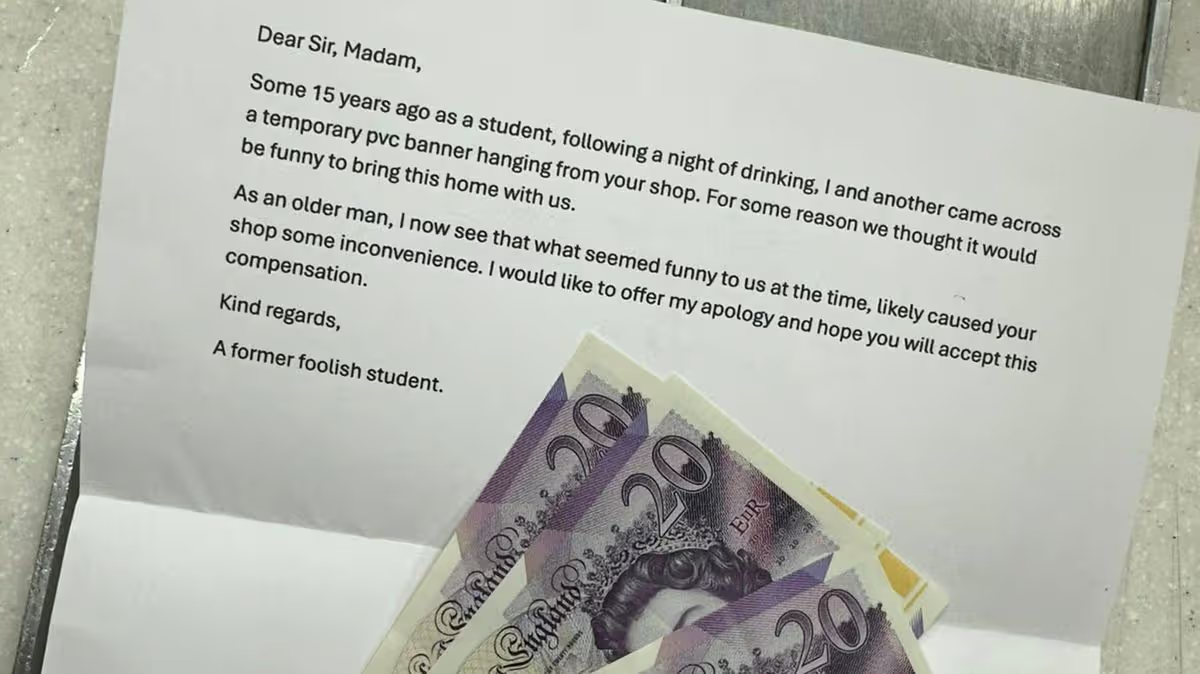
A Welsh shop owner was left stunned after receiving cash and an apology for a theft that happened outside his shop years ago. Exotica Foods in Swansea received a letter from an anonymous sender who confessed to stealing a sign from the shop on a night out 15 years ago.
Advertisement
In the letter, they confessed that they and another student took a temporary PVC banner hanging outside the shop on St Helen’s Road after a night of drinking. The former student had a guilty conscious over the theft which happened over a decade earlier and sent the apology as well as five £20 notes.
The note reads: “Some 15 years ago as a student, following a night of drinking, I and another came across a temporary PVC banner hanging from your shop. Never miss a Swansea story by signing up to our newsletter here
“For some reason we thought it would be funny to bring this home with us.“As an older man, I now see that what seemed funny to us at the time likely caused your shop some inconvenience.“I would like to offer my apology and hope you will accept this compensation.”The envelope also contained five £20 notes, totalling £100. The apology was signed simply: “A former foolish student.”The well-known international food store shared the note on social media after it was delivered to the shop.
Shop owner Imran Ashraf joked about the long-delayed confession. “This has made my morning – thank you to whoever you are,” he wrote.His message attracted dozens of comments from locals praising the gesture.Many said it showed that “it’s never too late to do the right thing.”One commenter wrote: “Better late than never – well done!”Another added: “We’ve all done stupid things when we were younger. Fair play to him for making it right.”And one joked: “That must have been one hell of a guilt trip.”
The Ryanair pilot had to abort his landing because the passenger refused to sit down and fasten his seatbelt
19:43, 07 Apr 2026Updated 19:43, 07 Apr 2026
A drunken aircraft passenger has been jailed for 10 months for his aggressive and abusive behaviour on a flight returning to the UK from Poland. Stephen Blofield, 61, was so intoxicated on the Ryanair flight that both crew and fellow holidaymakers feared for their safety.
Bristol Crown Court heard Blofield became disruptive as the plane travelled from Krakow to Bristol on November 11 last year.
He had started drinking doubles at the airport to calm his nerves ahead of the flight and carried on while on board – becoming abusive towards the Polish cabin crew, WalesOnline reports.
Advertisement
As the flight was on approach to Bristol Airport, the British pilot had to abort his first attempt at landing because Blofield refused to sit down and fasten his seatbelt.
An earlier hearing was told he screamed ‘I’m savage, I drink JD” and “You can’t tell me what to do, I’m English”.
When the plane finally landed, the police were waiting to arrest him.
Ian Fenny, prosecuting, said: “When the officers boarded the flight and approached him, they found him to be drunk, aggressive and confrontational.
Advertisement
“Because of the confined space within the fuselage of an aeroplane, they were concerned that he might strike out and inflame the situation where they noticed that other passengers were already agitated.
“Eventually he was arrested and handcuffed and indeed during this process he struck out, narrowly missing the passenger to his left.
“The principal officer describes the defendant’s abuse as effectively the worst that he had to endure in 20 years as a police officer.”
Mr Fenny said Blofield’s behaviour was “so alarming and potentially dangerous” that he had to be removed from the plane using an ambulift, which is normally reserved for disabled passengers.
Advertisement
“As a consequence of the defendant’s behaviour, passengers were effectively marooned on board as the police, and most particularly cabin crew, tried to evacuate the plane quietly and safely,” Mr Fenny said.
“Because of the defendant’s behaviour and because of where he was actually sitting within the plane, that proved very difficult.
“Thus, a number of the passengers had no option but to be further exposed to what was described by the police as the defendant’s vile verbal aggression.”
At a previous hearing, Blofield, of Goshawk Road, Haverfordwest, pleaded guilty to being drunk on an aircraft, using threatening or abusive language to cabin crew, failing to comply with the pilot’s instructions, and an offence under the Public Order Act of using threatening abusive words or behaviour likely to cause harassment, alarm or distress.
Advertisement
Sam Louwers, defending, explained the defendant had lost his medication for back pain, depression and anxiety ahead of the flight to Poland and turned to alcohol for the trip home.
“Ultimately, Mr Blofield was a man who has come from a difficult background and eventually found himself in Poland due to tracing of family roots,” he said.
“When he found himself in Poland without his medication, he went into a form of withdrawal, confining himself to his hotel room and decided on that basis that he needed to return to the UK earlier than planned.
“When he got to the airport, his anxiety, depression, pain levels were sky high and he became incredibly nervous of flying and so foolishly decided that now would be the right time to settle his nerves, as many do, with a drink at the airport.”
Advertisement
He said the defendant had “no recollection” of the incident but had seen videos posted on social media of his behaviour.
“He’s never denied his behaviour, he’s never denied his actions, and as he explained to the police the reason he was struggling so much was because of that medical withdrawal,” Mr Louwers said.
“Mr Blofield is distressed by his behaviour, he’s distressed as to what he has witnessed in these videos.
Advertisement
“He is also distressed as to the fact that he has found himself before you today.
“He understands that his behaviour could have easily, and has, disrupted other passengers and the airline.
“He understands that it could have caused distress to other people, and most importantly, he understands that his behaviour is nothing short of unacceptable.”
Judge Euan Ambrose jailed Blofield, who is on benefits and has a lengthy criminal record, for 10 months.
Advertisement
“This is a case where only a custodial sentence can be justified,” he said. “It is so serious that no other form of sentence would be appropriate.
“You were drunk when you got on board and you continued to drink whilst on board, becoming increasingly drunk during the flight.
“Your behaviour deteriorated, you became disruptive and aggressive and refused to follow basic safety instructions from the crew, such as being asked to sit down, fasten your seatbelt and matters of that sort.
“You caused great concern and fear amongst fellow passengers and also fear and alarm to the crew.
Advertisement
“Your behaviour was such that the first attempt at landing into Bristol had to be aborted and when the plane finally did manage to land, police were called and boarded the plane.
“When they approached you, they found you drunk, aggressive, confrontational and extraordinarily abusive towards them.”
It was the first moonship-to-spaceship radio linkup ever. NASA’s Apollo crews had no off-the-planet company back in the 1960s and 1970s, the last time humanity set sail for deep space.
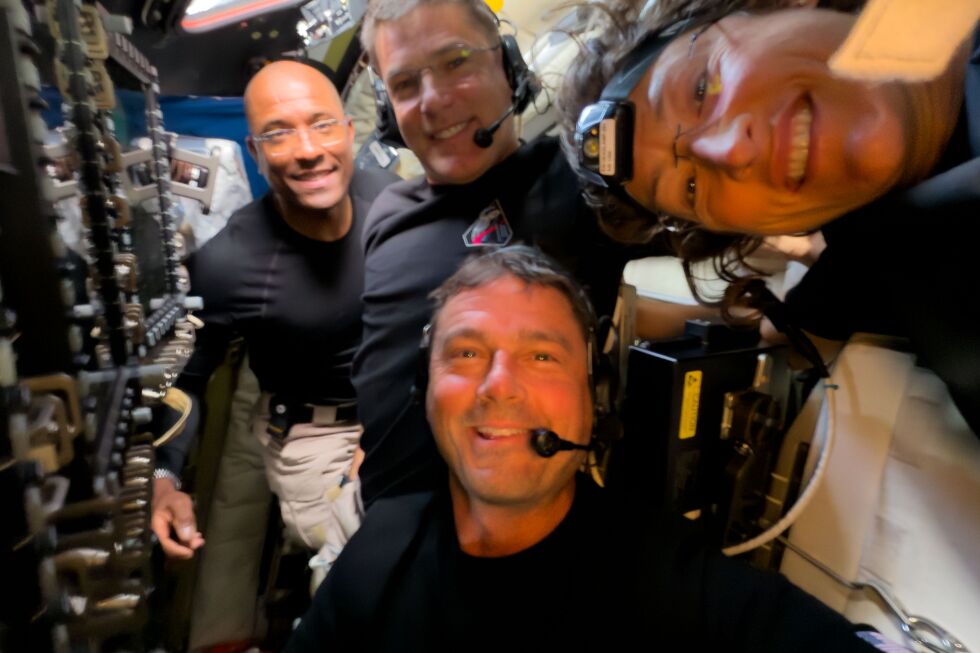
“We have been waiting for this like you can’t imagine,” Artemis II commander Reid Wiseman called out.
For Christina Koch on Artemis II and Jessica Meir aboard the space station, it marked a joyous space reunion despite being 230,000 miles (370,000 kilometers) apart. The two teamed up for the world’s first all-female spacewalk in 2019 outside the orbiting lab.
Advertisement
Koch told her “astro-sister” that she’d hoped to meet up with her again in space “but I never thought it would be like this — it’s amazing.”
“I’m so happy that we are back in space together,” Meir replied, “even if we are a few miles apart.”
Houston’s Mission Control arranged the cosmic chitchat between the four lunar travelers and the space station’s three NASA and one French residents.
As Tuesday dawned, Wiseman continued to beam back pictures of the previous day’s lunar rendezvous, which set a new distance record for humanity. The highlight: an Earthset photo reminiscent of Apollo 8’s Earthrise shot from 1968.
Advertisement
Koch described being awe-struck by not just the beauty of Earth, “but how much blackness there was around it.”
“It just made it even more special. It truly emphasized how alike we are, how the same thing keeps every single person on planet Earth alive,” she told the space station crew. “The specialness and preciousness of that really is emphasized” when viewing the home planet from the moon.
The first lunar explorers since Apollo 17 in 1972, Wiseman and his crew are aiming for a Friday splashdown off the San Diego coast on Friday to wrap up the nearly 10-day test flight.
It sets the stage for next year’s Artemis III, a lunar lander docking demo in orbit around Earth. Artemis IV will follow in 2028 with two astronauts attempting to land near the lunar south pole.
Advertisement
As for the Orion capsule’s pesky potty, Mission Control assured the astronauts that no repairs were required Tuesday. The toilet has been on-and-off limits to the crew ever since last week’s launch, prompting them to rely on a backup bag-and-funnel system for urinating.
NASA Administrator Jared Isaacman told the crew following the lunar flyby Monday night: “We definitely have to fix some of the plumbing” ahead of the next Artemis mission.
___
The Associated Press Health and Science Department receives support from the Howard Hughes Medical Institute’s Department of Science Education and the Robert Wood Johnson Foundation. The AP is solely responsible for all content.
As for Bayern, Vincent Kompany’s men are nine clear in the Bundesliga, and are set to retain their German title at a canter once more. How did both sides get here? Real Madrid pieced up Manchester City, beating Pep Guardiola’s side 5-1 on aggregate, while Bayern decimated Serie A outfit Atalanta, emerging 10-2 victors on aggregate.
Mikel Arteta has said “the most beautiful period of the season” is ahead of his side, though there will need to be an improvement in results and performances in the next 12 days in order to get over the line. Arsenal have been boosted by the returns of Declan Rice and Leandro Trossard, while Gabriel has shaken off a knock to feature but Bukayo Saka, Eberechi Eze and Jurrien Timber remain sidelined.
Councillors have called on the Government to ensure patients and the public continue to have a robust, trusted and truly independent mechanism to voice concerns if Healthwatch is abolished.
City of York Council’s Labour health spokesperson Cllr Lucy Steels-Walshaw said proposals to take the body’s functions in house risked removing the independence which allowed patients to raise concerns about services openly.
Opposition Liberal Democrat health spokesperson Cllr Carol Runciman said some of the worst failures in the NHS and other services were caused by people not being listened to.
The comments come after Labour Health Secretary Wes Streeting said listening to patients must be the core business of the NHS, not an arms-length body.
Advertisement
RECOMMENDED READING:
Mr Streeting spoke in January in defence of proposals to scrap Healthwatch put forward as part of wider reforms to the way the NHS is run.
The secretary of state first unveiled the plans for the watchdog as part of his 10-year plan for the health service in June.
Current proposals would see the functions of Healthwatch, which launched in 2013, rolled into the Department for Health and Social Care under a new Patient Experience Directorate.
Advertisement
Local Healthwatch functions would be brought into local authorities and NHS bodies.
The Government has said the changes would reduce complexity and bureaucracy in health services and make them more directly accountable.
But local Healthwatch branches and the national body have called on the Government to reconsider the plans.
The King’s Fund health charity said marginalised voices were at risk of being excluded if the plans go ahead.
Advertisement
It also warned people’s voices had been ignored in cases of recent high-profile failings including in maternity care.
The Government would need to pass new laws to scrap Healthwatch and the national body and 153 local ones are set to continue operating as normal.
Speaking at York council’s full meeting on Thursday, March 26, Cllr Steels-Walshaw said the concerning proposals represented a profound shift in health services.
The Labour health executive member said: “For more than a decade Healthwatch has been a trusted independent group for people to share their experiences.
Advertisement
Concerns have been raised about the Government’s plans to scrap Healthwatch (Image: Healthwatch Dorset)
“That independence isn’t a luxury, it’s the foundation that allows people who feel unable to raise concerns directly to do so openly and honestly and it’s what enables transparency.
“We recognise new standards are needed but we must do everything in our power to maintain independence.”
Liberal Democrat Cllr Runciman said there was a risk that patient voices would not be heard if Healthwatch is abolished.
The opposition health spokesperson said: “The Government isn’t tweaking Healthwatch, it’s abolishing it.
Advertisement
“Some of the worst failings in health services didn’t happen because people weren’t speaking, it’s because people weren’t listened to.
“Not everyone knows how to navigate the system or feels safe speaking to the organisations responsible for their care.”
Donald Trump has given Iran a deadline and threatened to send the country back to the “Stone Ages” if it does not comply by attacking power plants and bridges.
Crucially, Mr Trump has said the US would hit civilian infrastructure, something that is widely considered a war crime under international law, which sets out what is and isn’t permitted during war.
The Geneva Convention, which the UK is a signatory to, but the US is not, states, “civilian objects shall not be the object of attack or of reprisals”.
Image: DonaldTrump threatened to send Iran back to the ‘stone ages’ in a press conference on Monday. Pic: Reuters
However, the US president said in a news conference on Monday that “the entire country” could be taken out in “one night, and that night might be tomorrow”.
Advertisement
He added: “We’re giving them till tomorrow, 8pm EST (1am UK time), and after that, they’re going to have no bridges, they’re going to have no power plants. Stone ages.”
When asked, Mr Trump said he was “not at all” concerned that such an act could be classified as a war crime, before adding, “I hope I don’t have to do it”.
In a Truth Social post on Tuesday, the president went further, saying: “A whole civilisation will die tonight, never to be brought back. I don’t want that to happen, but it probably will.”
“Any targeting of civilian infrastructure… is illegal”
Advertisement
The possibility of targeting civilian infrastructure has been condemned by European leaders, including EU Council president Antonio Costa.
On Monday, Mr Costa wrote that “Any targeting of civilian infrastructure, namely energy facilities, is illegal and unacceptable”.
X
This content is provided by X, which may be using cookies and other technologies.
To show you this content, we need your permission to use cookies.
You can use the buttons below to amend your preferences to enable X cookies or to allow those cookies just once.
You can change your settings at any time via the Privacy Options.
Unfortunately we have been unable to verify if you have consented to X cookies.
To view this content you can use the button below to allow X cookies for this session only.
The possibility of concerted US strikes against civilian infrastructure marks a significant departure from Washington’s previous stance on war crimes and what constitutes them.
Four years ago, it was the US that was accusing Russia of war crimes over the targeting of civilian infrastructure in Ukraine, with president Joe Biden calling Russian President Vladimir Putin a “war criminal”.
Despite Russia not being a signatory to the Geneva Conventions, alleged Russian actions in Ukraine still led to the International Criminal Court (ICC) issuing an arrest warrant for Mr Putin.
The Kremlin said at the time that Russia, which does not recognise the ICC, found the questions raised by the court “outrageous and unacceptable”.
Advertisement
In the past, those found guilty of war crimes, such as former Bosnian Serb general Ratko Mladic, dubbed the “Butcher of Bosnia”, have been sentenced to life in prison.
Mr Costa has said that the same principle of not targeting civilian infrastructure “applied everywhere,” in the same way that it “applies to Russia’s war in Ukraine”.
Advertisement
The head of the UN, Antonio Guterres, has openly raised the idea that such an attack, by any party, could be counted as war crimes.
In an interview with Politico in late March, Mr Guterres said: “If there are attacks either on Iran or from Iran on energy infrastructure, I think that there are reasonable grounds to think that they might constitute a war crime.”
Image: Iran has been firing missiles and drones at Israel (pictured) and neighbouring countries in the region. Pic: Reuters
Previous power threats
Iran, Israel and the US have all been attacking energy infrastructure since the outbreak of the current conflict.
Responding to those attacks in March, Heba Morayef, Amnesty International’s regional director, said: “There is a substantial risk such attacks would violate international humanitarian law and, in some cases, could amount to war crimes”.
Advertisement
However, a coordinated campaign targeting power plants, as the US has threatened, would be a significant escalation.
This is not the first time that Mr Trump has threatened to hit Iranian power plants.
On 22 March, the president wrote on Truth Social that the US would “hit and obliterate” Iranian power plants if Tehran did not reopen the Strait of Hormuz within 48 hours.
Advertisement
Image: During Operation Epic Fury, the US struck Iran’s B1 bridge. Pic: Reuters
Iran responded by saying it would attack crucial infrastructure across the Gulf in response to any US attack, including desalination plants.
On Sunday, Kuwait accused Iran of launching an attack which put a water desalination station out of service – such moves may also pass the threshold of being deemed a war crime.
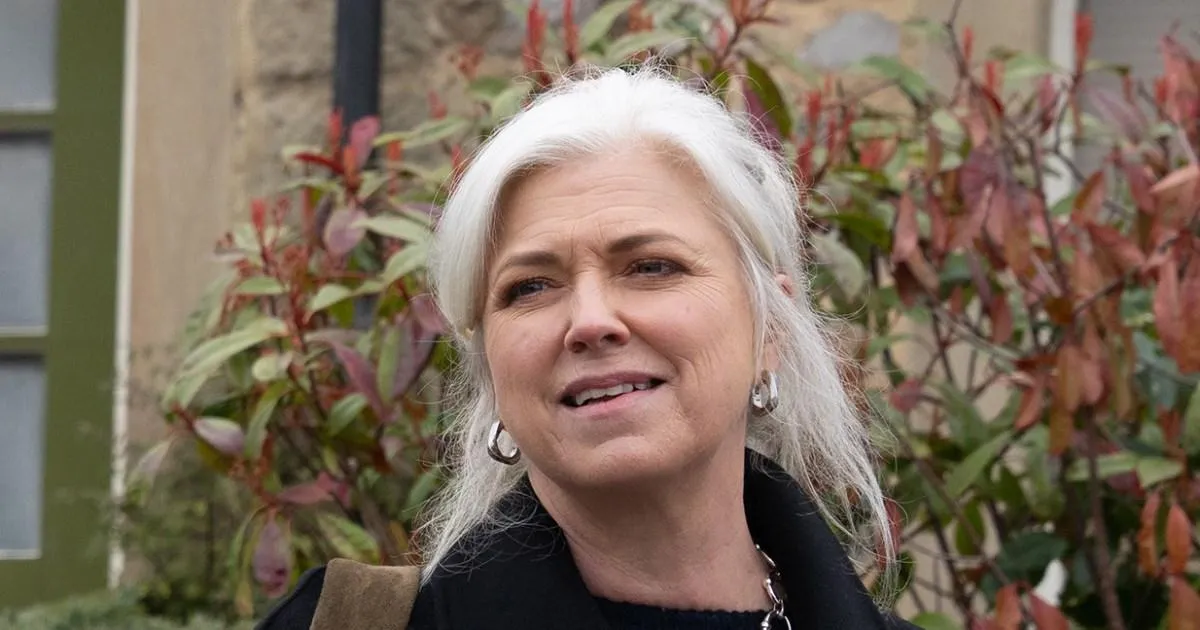
Jacob Gallagher (Joe-Warren Plant) has got himself a bully for a boss in Emmerdale, the formidable Dr Todd (Caroline Harker), and she has plans for her protégé. None of them good.
Her bullying has so far been subtle; undermining his confidence, showing him up in front of others, taking credit for his research, putting him on bedpan duty.
But it’s been enough to make him sick with anxiety. She dropped him in it when she told him she thought Kim Tate (Claire King) had been poisoned by mushrooms, which he relayed to the Dingles and triggered a chain of accusations, only for test results to prove her wrong and her to lay the misinformation blame at Jacob’s door.
He called her out for it, which has only served to enrage the beast. Not that he knows it yet. In fact, he thinks things are pretty hunky dory after they found common ground when she opened up about her dad’s dementia and he his granddad’s Parkinson’s.
Advertisement
Jacob’s struggling to express his issues with Doctor Todd (Picture: ITV)
Things took a nosedive when Todd’s dad’s health plummeted, and Jacob stepped in to keep the guy alive, only to find out he had a Do Not Resuscitate order. Todd was once again given cause to hit the roof. But they managed to sort it out and Dr Todd reassures him everything is fine. But is it?
He believes her because he wants to, but she is concealing the fact that she is recording their conversation and preparing to accuse him of obsessive behaviour.
Doctor Todd claims that Jacob is obsessed with her (Picture: ITV)
Jacob can’t cope with the mind games and arranges a shift swap with Rich to get away, only to discover he’s accidentally switched onto her shift the next day. This surely adds fuel to her fire that he’s obsessed.
It seems though that Todd is just getting started. She manipulates Manpreet (Rebecca Sarker) into believing that Jacob is obsessed with her. It’s moving beyond workplace bullying and seems to be a weird throwback to the days young Jacob was manipulated by Maya.
Will anyone spot the signs and rescue him before Todd shatters his career?
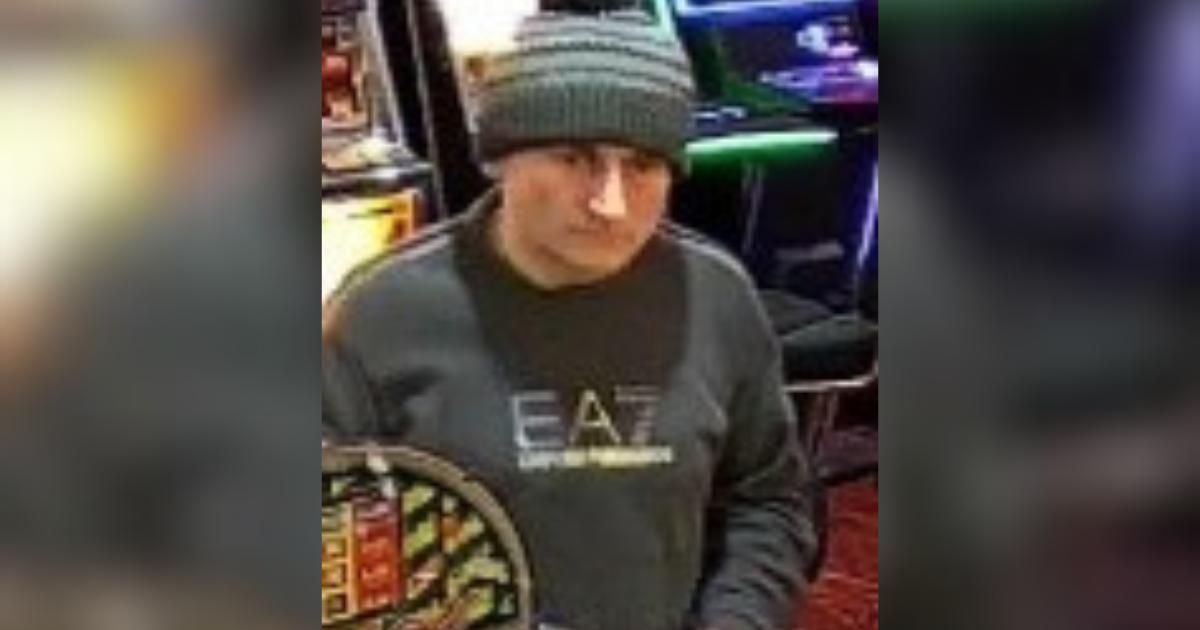
North Yorkshire Police has released an image of a man it would like to speak to following a theft at an arcade in Scarborough last month.
It happened at Shaws Amusement Arcade in Newborough at approximately 8.45pm on March 17.
RECOMMENDED READING:
Advertisement
“It involved an unknown implement being used to manipulate a games machine to pay out money,” said a spokesperson for the force.
Please contact the police if you recognise the man pictured, as he may have information that will assist their investigation.
If you can help, please email Ian.Butterfield@northyorkshire.police.uk, call North Yorkshire Police on 101 and ask for Ian Butterfield, or contact Crimestoppers anonymously on 0800 555 111 or via their website.
Please quote reference 12260048095 when passing on information.
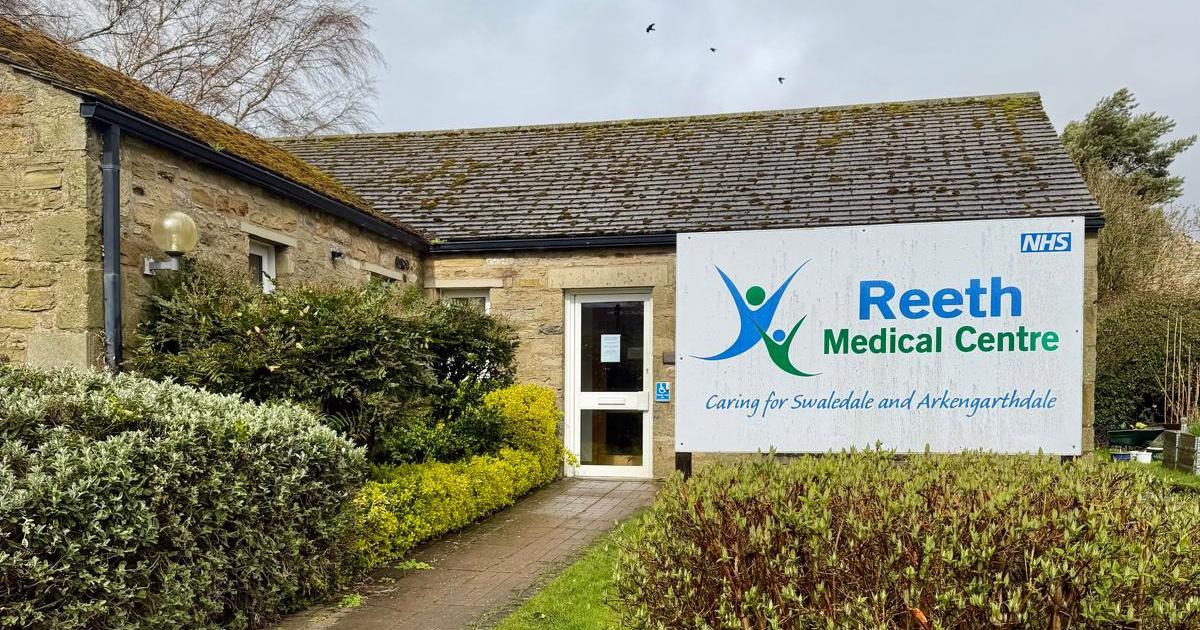
Patients have been informed that Reeth Medical Centre will shut on May 29 after Dr Mike Brookes, who runs the centre with wife Marie, announced his retirement.
Officials from the NHS Humber and North Yorkshire Integrated Care Board (ICB), which commissions NHS services, said efforts to find a GP to take on the Swaledale practice had failed.
The ICB has stressed that no residents would be left without a doctor, with patients set to transfer to neighbouring practices, including the Central Dales Practice, in Hawes and Aysgarth, and Leyburn Medical Practice, as well as practices in Richmond.
Advertisement
An ICB spokesperson told the Local Democracy Reporting Service: “The partners at Reeth Medical Practice have formally notified NHS Humber and North Yorkshire Integrated Care Board (ICB) of their intention to retire.
“Regrettably, despite comprehensive efforts to secure a successor provider, and following a detailed expression of interest exercise, no organisation has been able to come forward with a sustainable way to continue running the practice.
“The GMS contract will therefore end on May 31, 2026, and the practice will close.”
The ICB said a range of factors meant that finding a GP to run the centre had proved unsuccessful, including the high fixed costs and operational pressures combined with a small patient list.
Advertisement
Officials said there had been a lack of interest from local providers to take over the facility, while some providers, who initially expressed interest, had later withdrawn due to “workforce, premises and financial constraints”.
The spokesperson added: “Despite exhaustive attempts to explore alternatives – including direct engagement with local practices, the Primary Care Networks and GP Federation, region-wide expressions of interest circulation, and discussions with providers across neighbouring ICBs – no viable solution has emerged.
“The ICB has therefore concluded that the contract must be ‘handed back’ and the practice closed.
“This decision has been reached reluctantly and only after all alternative options have been fully explored.”
Advertisement
But Richmond and Northallerton MP Rish Sunak said he was working with Upper Dales councillor Yvonne Peacock to find a solution.
The MP has written to the ICB to ask what arrangements were being put in place for the end of May and to find out the extent of efforts to find a GP to take over the practice.
He said: “I know what a shock the Brookes’ announcement has been. Both I and Cllr Peacock have been contacted by many people over the weekend who are concerned about what this means for services in the future.
“Dr Brookes, Mrs Brookes, and the practice team have provided an outstanding service over many years and are well-loved in the local community.
Advertisement
“It is disappointing, and surprising, that it has not been possible to find a replacement and that is an issue I wish to get to the bottom of.”
Cllr Peacock met representatives of six Swaledale parishes on Easter Sunday to discuss their concerns.
She said: “We are trying to establish the circumstances that led to this situation and I am pleased to say that everyone is committed to find a solution.
“It is clear how valued the service provided at Reeth is and we want to maintain a locally-based GP service.”
Advertisement
Reverend Canon Caroline Hewlett, vicar of Swaledale with Arkengarthdale, has voiced her concern about the closure.
“I am sure that we all wish our excellent GP, Dr Mike Brookes, a happy and healthy retirement, but it is of great concern to hear that he is not going to be replaced.
“I call on the Integrated Care Board, our MP Rishi Sunak and others who have influence in this situation, to work quickly to find a real solution to this issue, in the form of a replacement GP for this area.
“This is very urgent, because in a deeply rural area like Swaledale and Arkengarthdale, the presence of services such as shops, a bus and a reliable GP can quickly tip the balance between a thriving community and one that becomes unsustainable.”
Advertisement
In a letter to the ICB, Richard Good, president of Richmond & Northallerton Liberal Democrats, said there was “significant concern” in Swaledale and Arkengarthdale about the closure.
He added: “Residents have received no clear information about what options are being considered to retain local provision and have not been involved in any discussion, finding out instead via a Facebook post from the practice.
“I do not believe it is acceptable to assume that patients should simply be dispersed to other practices without proper engagement or exploration of alternatives.”
Lauren Lawler fumed her dogs ‘would still be alive now’ if victim John McColl – who was killed in a horror mauling – ‘didn’t take it upon himself’ to enter her garden
The girlfriend of an XL Bully breeder says her life has been “ruined” after her dogs were shot when one of them mauled and killed a pensioner who accidentally wandered into her garden.
Advertisement
Lauren Lawler said “(her) dogs would still be alive now” if victim John McColl “didn’t take it upon himself to go into (her) garden”. Her partner, Sean Garner, 31, was found guilty of owning a dangerously out of control dog, causing death, at Liverpool Crown Court last week.
The horror attack unfolded on Bardsley Avenue in Warrington on February 24 last year when Mr McColl mistakenly entered Garner’s driveway while walking home from the pub.
One of the dogs, called Toretto, launched at the 84-year-old as neighbours who heard McColl’s screams tried using a brush, golf club and spirit level to fight off the banned breed.
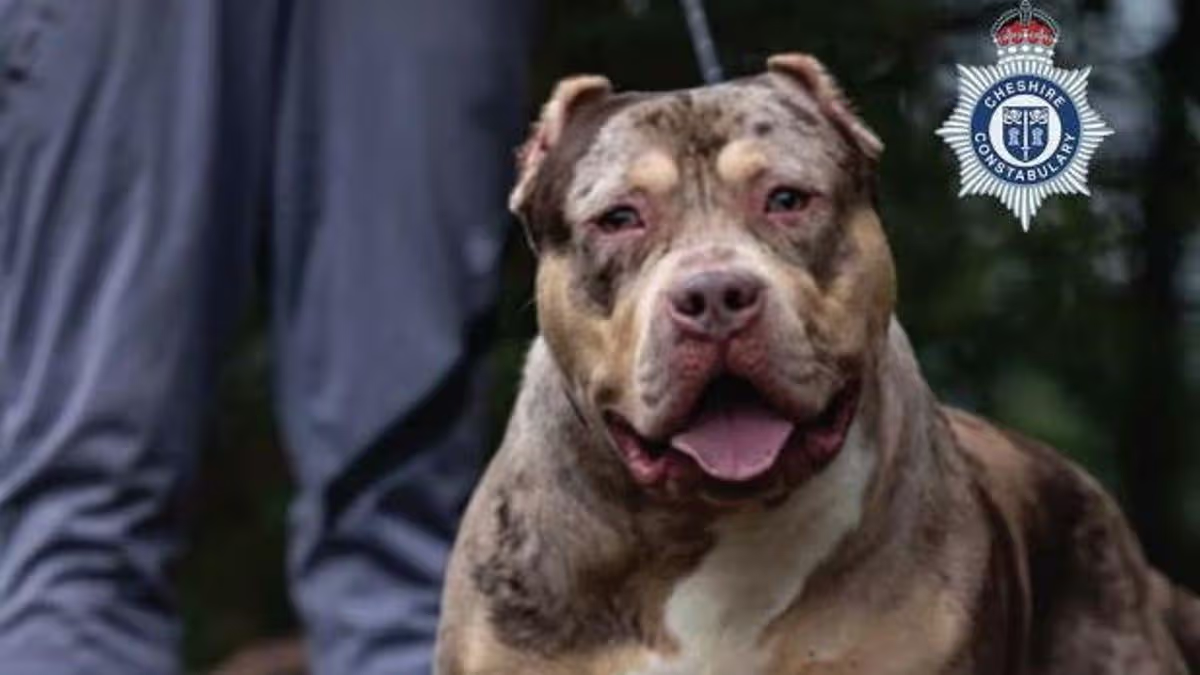
Armed police were called to the scene, and one officer shot the XL Bully nine times with a pistol while another blasted the dog with a shotgun. Officers also shot dead a second XL Bully, a female called Malibu, which was found on the property so as to “not to take any chances,” reports the Liverpool Echo.
Advertisement
After Garner was found guilty, his girlfriend Lauren Lawler wrote a series of posts on Facebook calling police and government “the biggest load of vile corrupt people I’ve ever come across.”
In a post containing pictures of both Malibu and Toretto, she wrote: “Does Malibu or Toretto look slightly under fed or neglected in any sort of way! That picture of them together is one month before they was both shot dead!
“This is how Cheshire Police think they can treat an innocent dog that had nothing to do with attacking the man outside, they said all our doors were secure so knew they didn’t need to enter and went inside and shot Malibu about nine times for absolutely nothing!
Advertisement
“She had no involvement whatsoever, they are an absolute disgrace and people have the cheek to moan about a few dog poos on a patio but think that this is OK for police to do to a innocent dog!,” she added.
“Both our dogs were our family pets and have been brought up with kids all their lives, we had only lived in this house for three weeks and the dogs had been with us for about 10 days. […] That poor man didn’t deserve to die but my dogs were never ever once mistreated or under fed! And my dogs would still be alive now if he didn’t take it upon himself to go into my garden and shed!
“Malibu was shot in the face and neck right where her collar was, her collar was left on the floor and could see where the bullet had gone through it and she had teeth on the floor!”
Lauren, who was herself arrested following the attack after “cowardly” Garner allowed her to go to the scene in his place, posted showing broken glass on the floor of the house and bloodstains in the kitchen where Malibu was said to have been shot.
Challenging her Facebook rant, one person said: “It’s f***ing disgusting that you’re on here blaming that poor man…it was clearly only a matter of time till your dog did something like this…I wonder if you would be on here blaming the victim of it were your child.
“That dog wasn’t even registered, you had him illegally…if your dogs were treated so well then that’s proof that it’s not the owner, it’s the breed.” Lawler shot back: “My life and kid’s lives have been ruined thanks to his actions that day, and the dog had never ever once shown aggression towards anyone or I wouldn’t have had him, we had him from four months old.”
But another woman said: “If you want someone to blame, blame yourselves for not getting the dogs registered or neutered. There was clearly a reason you lied to your new landlord about the dogs. Have some respect for a man who’s died, someone has lost their dad, grandad because you cba following the law.”
Advertisement
In court, a jury heard Toretto had gone without food for up to 10 hours before the attack and had gone weeks without being walked. Garner claimed he had locked the unregistered XL Bully – who had its ears illegally cropped in an act of “mutilation” – in a shed before leaving home that day.
Neighbour Victor Ferrier, who tried fighting off Toretto with a brush, said: “I could see the dog was chewing on his face. The man was howling and screaming.”
PC Chris Cunliffe, one of the first officers to arrive at the scene, said: “I can only describe the dog’s behaviour as if guarding its toy that it had just ripped apart. The sound of Mr McColl’s screams was horrific. I don’t believe he even knew we were there. He couldn’t see or hear us.
“These were the worst injuries I’ve ever seen in my policing career. I’ve been in policing eight years and have never seen or heard of an incident so horrifying, and I don’t think I ever will.”
Advertisement
Dog breeder Garner, who ran an Instagram page called “Little and Large Bullies”, maintained Toretto’s behaviour was “brilliant” and said McColl must have deliberately let the dog out of the shed – a suggestion described as “ludicrous” by the prosecution.
Garner, of Belle Vale, was remanded in custody and is due to return to Liverpool Crown Court for sentencing on April 17.


















































You must be logged in to post a comment Login