Connect with us
DAPA Banner

NewsBeat

Sunderland’s new Blackies Park proves hit with families

Published

on

Sunderland's new Blackies Park proves hit with families

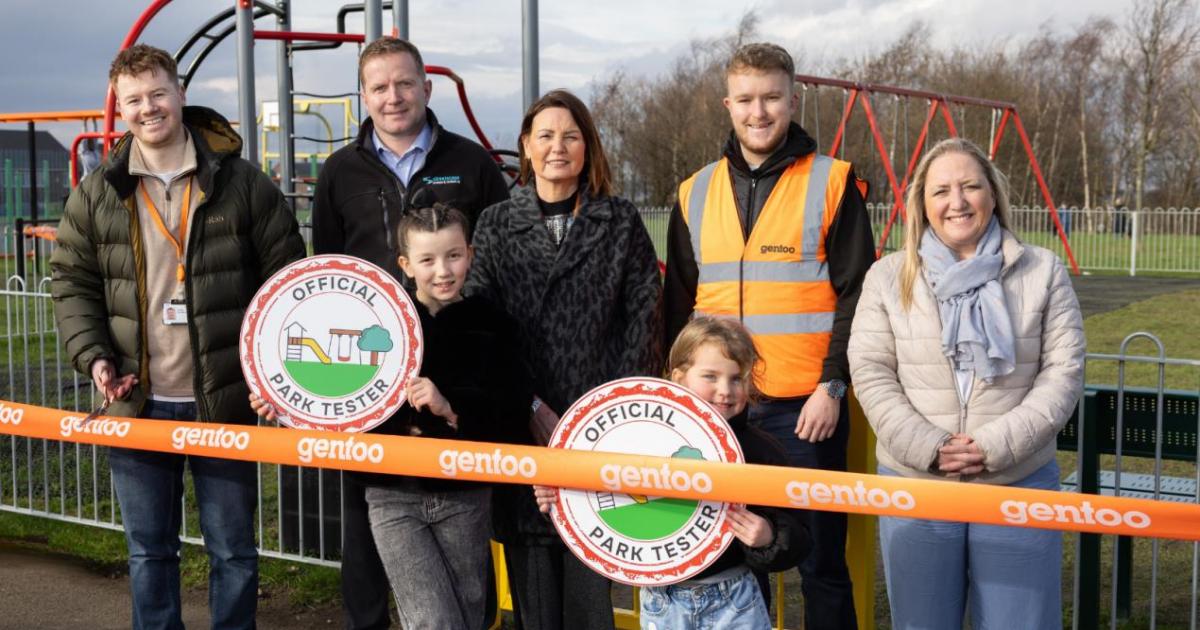
Located at Blackies Park on Fordfield Road in Sunderland, the new facility was created after residents were invited to choose between designs during a public consultation – and more than 55 per cent backed the winning proposal from play specialist Streetscape.

Gentoo acted as the housing and community partner that helped get the Blackies Park project off the ground and delivered on the ground for residents.

Feedback from families has already been positive. (Image: Gentoo)

Chris Roberts, director of customer at Gentoo, said: “The opening of Blackie’s play park is a fantastic addition to the area.

“Projects like this have a real and lasting impact on the whole community.

Advertisement

“By creating safe, vibrant and inclusive spaces, we’re not just improving facilities, we’re helping to strengthen community pride, encourage healthier lifestyles, and bring people together.

The park is designed to encourage climbing, swinging, sliding and exploring. (Image: Gentoo)

“This investment is a reflection of what local residents told us they wanted, and it’s fantastic to see it becoming a reality.”

The park, designed to encourage climbing, swinging, sliding and exploring, was funded through Section 106 funding provided by Sunderland City Council.

Cllr Lindsey Leonard, cabinet member for environment, transport and net zero at Sunderland City Council, said: “I’m delighted to see section 106 funding being put to such good use, to develop this fantastic new play area.

Advertisement

Residents were invited to choose between designs. (Image: Gentoo)

“We know how much families really value having fun, safe and accessible play parks to take their children to and it’s great that they have been involved in helping shape this new play area to the needs of their community.”

Feedback from families has already been positive.

One resident who visited the park with his grandson, said: “Before the park we just played football on the field, but since the park has been built, my grandson is out from 8am in the morning playing on the park.

“The new park is a godsend for the area.” (Image: Gentoo)

“The new park is a godsend for the area.

Advertisement

“It’s absolutely the best thing Gentoo has ever done.”

Another visitor said: “I’m happy we have something like this in the area because, before the park was built, we would usually have to take them to a park further away and now we have one in our neighbourhood.”

Source link

Advertisement
Continue Reading
Click to comment

You must be logged in to post a comment Login

Leave a Reply

NewsBeat

EasyJet passengers say they’re being ‘set up to fail’ by new hand luggage trial

Published

on

EasyJet passengers say they're being 'set up to fail' by new hand luggage trial
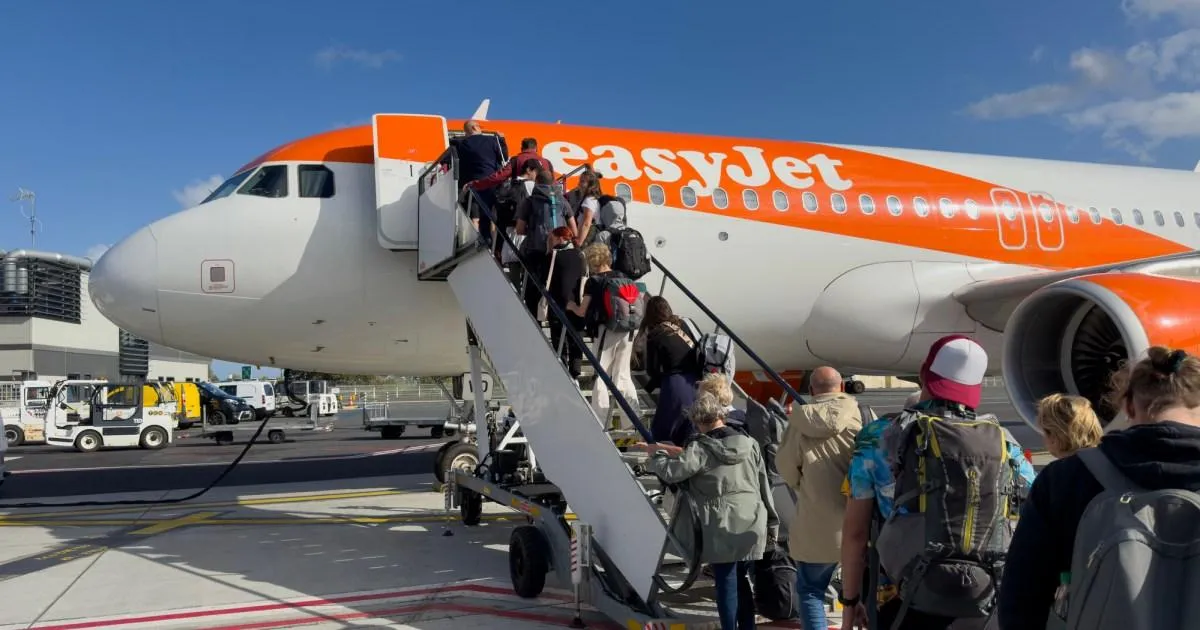
EasyJet has been trialling a new style of hand luggage sizers (Picture: Getty Images)

EasyJet passengers are divided over a new method for checking hand luggage dimensions at the boarding gate.

A passenger flying from London Gatwick claimed their cabin bag ‘fit perfectly’ in the airline’s standard sizing cage.

But when they arrived at the gate, staff ‘suddenly switched’ to a handheld sizer which ‘almost guarantees’ that bags won’t slide in cleanly.

‘It honestly felt like passengers were being set up to fail,’ the passenger wrote anonymously in a post on Facebook.

Advertisement

‘Especially since this sizer only appeared at the gate after [EasyJet’s] display sizers everywhere at the airport fit just fine.’

The passenger accused ground staff of being uninterested in helping travellers comply with sizing rules and said they were only interested in payment.

Best of Metro Deals

Get exclusive discounts with Metro Deals – save on getaways and spa days. Powered by Wowcher

Bannatyne Spa: Spa day for two with treatments, lunch & prosecco — save up to 57% off.

Advertisement

Get deal now

Mystery Escape: Hotel stay with return flights from as low as £92pp — save on worldwide holiday packages.

Get deal now

Beach Retreat (Lanzarote): 4* Lanzarote beach holiday with flights — save up to 58%.

Advertisement

Get deal now

This photo shows a ground handler using a handheld sizer to measure a cabin bag at London Gatwick (Picture: Facebook)

‘We were a group and had bags with plenty of spare space overall, some of us even had large cabin/priority. We clearly suggested just reshuffling items between bags to comply if they are so insistent, which should be the obvious first step, but staff ignored that and kept insisting on extra charges,’ they wrote.

It is not clear when the incident took place.

Advertisement

However, an easyJet spokesperson told Metro that the handheld sizers were part of a limited trial on ‘a small number of flights at Gatwick’, and that the dimensions were the same as standard sizers.

The airline told us: ‘This was a limited trial on a small number of flights from London Gatwick and there are no plans to roll it out across our network.

‘Ground crew check bags to ensure they fit safely onboard and in fairness to customers who have paid to bring additional bags.

‘Only if a bag is outside a customer’s booked allowance will they be charged and we remind customers of their bag allowance, including dimensions, before they travel.’

Advertisement

EasyJet allows all passengers to bring one small cabin bag for free, measuring a maximum of 45 x 36 x 20cm, including handles and wheels.

The bag must fit underneath the seat in front of you and weigh no more than 15kg.

If your hand luggage exceeds your booked allowance at the boarding gate, you will be charged a fee to have it placed in the hold. 

This fee is generally £48 per bag, though it can vary depending on the route.

Advertisement

Should people be charged for bringing oversized hand luggage on planes?

In July 2025, a leaked email revealed that airport staff are earning cash bonuses for every easyJet passenger they spot travelling with an oversized bag.

Advertisement

Staff at Swissport, an aviation company that operates passenger gates at airports, are ‘eligible to receive £1.20 (£1 after tax) for every gate bag taken’, according to the message sent to staff at seven airports in the UK and the Channel Islands, including Birmingham, Glasgow, Jersey and Newcastle.

The payments are to ‘reward agents doing the right thing’, according to the email explaining the ‘easyJet gate bag revenue incentive’ scheme.

It also emerged that ground handlers employed by another aviation firm, DHL Supply Chain, at Gatwick, Bristol and Manchester airports are also paid extra for identifying non-compliant easyJet bags. 

Swissport ground handlers earn about £12 an hour. One former passenger service manager, speaking on condition of anonymity, said they had no choice but to police the line on oversized baggage.

Advertisement

And while some criticised easyJet for their strict luggage rules, many saw things from the airline’s point of view.

‘It pisses me off when people try to take hand luggage that’s larger than allowed. You are given the measurements before travelling, it’s not that difficult,’ one person wrote.

Another said: ‘Stop cramming too much in your flight bag. Just pay to put it in the hold.’

Others noted that when one passenger brings excessive hand luggage, it causes trouble for everyone else.

Advertisement

‘Passengers with heaps of hand luggage drive me mad!’ one woman wrote.

‘It takes an age for them to fit their bags in the overhead, and often it’s not above their seat so it blocks boarding. I’m all for this [new policy], don’t bring massive bags as carry on.’

Advertisement

Source link

Continue Reading

NewsBeat

168 children killed in Israeli strikes in Lebanon during war with Hezbollah

Published

on

168 children killed in Israeli strikes in Lebanon during war with Hezbollah

BEIRUT (AP) — Jawad Younes, 11, and his cousins were playing soccer in the lot between their houses, as they often did. His little brother, 4-year-old Mehdi, had joined them but grew tired, so Jawad took him home and handed him off to their mother before returning to the game. Minutes later, an Israeli strike came.

The target was Jawad’s uncle’s home. The blast shook neighboring buildings and threw Jawad’s siblings at home to the ground. As their mother, Malak Meslmani, scrambled to help them up, she could think only of Jawad.

“I was pulling my children off the floor in the house, but as I was running to pick them up, I screamed, ‘Jawad,’” she said. ”My heart told me.”

Her son was instantly killed in the March 27 Israeli strike in Saksakieh. So was one of his cousins — so close they were more like brothers. Several other children were wounded.

Advertisement

Jawad’s uncle also was killed. He was an interior design engineer; Jawad wanted to be an engineer like him. Meslmani called him a civilian. But like many Shiite families in southern Lebanon, the family were loyal supporters of the militant group and political party Hezbollah, which formed in the 1980s to fight Israel’s occupation of the area.

Jawad and his cousin are among 168 children killed — of more than 2,100 people in all — by Israel’s strikes in the six weeks of renewed war between the country and Iran-backed Hezbollah.

Israel has often struck alleged Hezbollah militants or officials in their homes without warning, frequently in areas far from the front line when they are with their families, in apartment buildings surrounded by uninvolved neighbors. The Israeli military rarely names the targets of its strikes but says it takes measures to minimize civilian casualties — including children — and blames Hezbollah members for mixing with the general population. The families of children killed accuse Israel of committing war crimes because of the large number of civilian casualties.

At least two Israeli civilians — both adults — and 13 soldiers have been killed in the current war with Hezbollah, according to figures from Israel. One of the civilians was killed by mistaken Israeli fire.

Advertisement

In response to Associated Press questions, the Israeli military didn’t deny that children have been killed in its Lebanon strikes but said it has targeted Hezbollah facilities and militants. The army says it’s killed hundreds of Hezbollah operatives but has provided little evidence to support the claim.

Under international law governing armed conflict, it’s never legal to directly target civilians, but collateral damage — harm to civilians when striking a military target — is allowed if it is proportional to the anticipated military gains of any given strike.

The Israeli military told AP in a statement that its strikes follow the law, including “the principles of distinction, proportionality, and the taking of precautions.”

Charles Trumbull, an assistant University of South Carolina law professor who studies the law and ethics of armed conflict, said it’s difficult to assess whether the proportionality threshold was met without knowing the strike targets and whether the military knew children were present.

Advertisement

“To the extent that they knew that children were likely to be harmed or killed in these strikes, and as an ethical matter, absolutely I think that should affect the calculus,” he said. “Just because certain strikes might not violate the law on conflict doesn’t mean that they’re not concerning or problematic or that they are morally justified.”

Children crushed under their own homes

At 2 a.m. March 12, Taline Shehab — who would have turned 4 last month — was sleeping when missiles tore into an apartment above hers in the family’s building in Aramoun, about 20 km (12 miles) south of Beirut, causing it to collapse. Taline and her father died; her mother was critically wounded.

Aramoun is a religiously mixed area that was generally considered safe, though it had been targeted by airstrikes in the previous Israel-Hezbollah war, in 2024.

Taline’s father, Mohamad, was a drone operator and video producer who often worked with the Lebanese army and on high-profile television productions. He and his wife, Nathalie, ran a fashion company; Taline appeared regularly on its social media.

Advertisement

“They were a very close family. Their daily life revolved around their daughter,” said Ali Shehab, Mohamad’s brother.

Taline “was full of personality,” he said. “She was very attached to her father. She loved being around him and didn’t like to share him with anyone.”

He comforts himself with the thought that “maybe Mohammed and Taline, because they are so attached to each other, God chose them both.”

Dr. Ghassan Abu Sitta, who’s worked extensively in Gaza and Lebanon and runs an initiative treating some of the most seriously war-wounded children at the American University of Beirut Medical Center, said that, like Taline, most of the cases he has seen are “children being crushed underneath the rubble of their own homes.”

Advertisement

A lifetime shadowed by war and loss

Ten-year-old Zeinab al-Jabali used to tag along wherever her father went: the corner store, the mountains around their village in Lebanon’s Bekaa Valley.

Now, he sleeps in the Beirut hospital where doctors are treating his wife and three older daughters, all wounded in the strike that killed Zeinab.

War has shadowed most of Hassan al-Jabali’s life. In 1982, his brother — then 10, like Zeinab — was killed by an Israeli missile.

Al-Jabali made a living selling mouneh, or preserved foods such as raisins and dried herbs, and worked for his cousin’s factory producing laban, or yogurt.

Advertisement

On March 5, al-Jabali’s wife and daughters were preparing for iftar, the meal ending the daily fast during the holy month of Ramadan, at his wife’s sister’s house when the airstrike hit it.

Al-Jabali acknowledged his brother-in-law — who was killed — “in the past was with the resistance,” referring to Hezbollah.

“But they struck him at home, in a house full of children, full of girls,” said al-Jabali, who heard the blast from elsewhere in the village and found a scene of carnage when he rushed to check on his family.

He said his wife still doesn’t know Zeinab is dead; he’s afraid the grief would endanger her recovery.

Advertisement

Families grieve: “I remember everything”

In response to questions about the strikes that killed Jawad, Taline, and Zeinab, the Israeli military didn’t give details about the intended targets beyond that they were related to Hezbollah.

The military’s statement said Israel regrets any civilian harm but that it’s operating against Hezbollah, “which attacked the State of Israel under Iranian backing.”

Many Lebanese have blamed Hezbollah for pulling their country into the war when it fired missiles across the border March 2, two days after the U.S. and Israel attacked Iran. But for others, the devastation from Israeli strikes has strengthened their support.

“We are now holding onto the resistance more than any time before,” said Meslmani, Jawad’s mother.

Advertisement

Despite Israeli army notices for residents in large swathes of southern Lebanon to flee, many in their town of Saksakieh stayed. Displaced people from farther south took refuge there. Life felt almost normal before the strike that killed Jawad.

Now, Meslmani visits his grave in a small cemetery overlooking a mountain vista, where she can hear warplanes roar overhead.

“I remember everything,” she said. “How he used to eat and drink, how he used to play, how he would get dressed and fix his beautiful hair.”

Since he was killed, the planes no longer bother her.

Advertisement

“The most precious thing, my heart, is gone,” she said. “What more can they do?”

___

Associated Press journalists Malak Harb in Beirut and Koral Saeed in Abu Snan, Israel, contributed to this report.

Advertisement

Source link

Continue Reading

NewsBeat

What ‘Gurt’ Really Means And It Isn’t What You Think

Published

on

What 'Gurt' Really Means And It Isn't What You Think

Most days, you feel like you need a translator to understand half of what kids are saying.

Thanks to the popularity of social media sites like TikTok, every week children and teens are finding new phrases and memes to share and say to each other – much to the befuddlement of their parents.

From the latest baffling trend of saying “and a Black Santa napkin!” to the rise of “six-seven” and the bizarre world of brainrot characters like Ballerina Cappuccina, it can be exhausting work for parents and teachers trying to keep up with what it all means.

One of the other expressions kids are coming out with currently is “gurt”.

Advertisement

But what does ‘gurt’ mean?

In some parts of England, gurt means very large or great. But this isn’t what kids mean when they’re saying it.

In his weekly videos on the words kids are using in class, school teacher and TikTok creator Philip Lindsay said the meaning of gurt is “confusing”, as people seem to use it in two different ways.

The first way refers to a joke where someone says “Yoghurt” and a character called Gurt replies: “Yo”.

Advertisement

According to Know Your Meme (KYM), this actually dates back to 2012, but only recently took off thanks to videos on TikTok.

Mr Lindsay explained in his TikTok explainer that “in this scenario, the proper response to someone saying ‘gurt’ is ‘yo’ and vice versa, if somebody says ‘yo’ you say ‘gurt’”.

So, kind of like a greeting. Makes sense.

But that’s not where this all ends. The teacher explained that the term seems to have evolved, however, and now has “more meaning to it”.

Advertisement

There’s a series of videos known as “What They’re Doing Is Very Smart But Also Very Dangerous” which show cute animals “doing something very smart but also very dangerous”, as per KYM.

For example, penguins jumping from high off a massive iceberg into the sea.

So now, according to Mr Lindsay, “the meaning of gurt or gurting is to do something smart yet dangerous”.

Ultimately, though, there’s no agreed meaning.

Advertisement

The teacher continued: “There are a bunch of definitions flying around right now on the internet about what gurt actually means, so we’ll see how this unfolds in the coming months.”

Source link

Advertisement
Continue Reading

NewsBeat

The 10-minute method to fix your pesky back pain

Published

on

The 10-minute method to fix your pesky back pain
One osteopath has a 10-minute method for easing back pain (Picture: Metro)

About 80% of Brits will get back pain at some point in their lives. For context, that equates to roughly 55 million men and women.

And yet, most of this back pain isn’t due to any serious damage. It’s from slouching at our desks or being couch potatoes, according to renowned osteopath James Davies.

‘Most of the back pain I see is lifestyle driven, minor, and very fixable – I see it everyday in clinic,’ he tells Metro.

It’s so rampant among his clients that James has developed a 10-minute method to transform your back. This 10-minute block needs to be repeated for 10 days straight and at the end of it, you should notice a difference.

Advertisement

Given we have 144 10-minute blocks in our day, and this requires you to give up just one of them, it’s hardly a sacrifice for most.

‘I only have two hands, I can’t treat everyone,’ James explains. ‘I wanted to give people something they could do for themselves.’

A quick disclaimer

Before attempting James’ method, there are certain types of back pain that will need more serious medical attention.

‘The 10-minute method is for mild to moderate, lifestyle-related pain,’ he says. ‘If your pain is eight out of 10 or higher, or stopping you from moving, get it checked.

Advertisement
Mature man working from home. He suffers from back pain
A lot of our back pain stems from sitting for long periods of time (Picture: Getty Images)

‘If you have numbness, tingling, weakness, or pain travelling down the leg, don’t ignore it. If there’s loss of bladder or bowel control, or numbness in the saddle area, that’s urgent. If it came from a fall or injury, or it’s getting worse and not improving, speak to a professional.’

Identify your pain

The most common pain is muscle related, which refers to the tight, achy lower back you can wake up with for feel after a long day.

‘This usually comes from sitting too long, not moving enough, or doing more than your body is ready for,’ James explains.

You might feel you have postural pain. ‘This one creeps up on you,’ he adds. ‘Hours at a desk, looking down at your phone, slouching on the sofa. It’s not one big moment, it’s what you do every day.’

Joint stiffness is another big one. The osteopath explains that if you’re not moving your back enough, it will tighten up. That’s why you feel stiff when you stand up after sitting for a long time.

Advertisement

Lastly, there’s mild disc irritation. ‘The name sounds scary, but most of the time it isn’t,’ James says. ‘It’s just your spine under pressure from poor movement or posture over time, and it improves when you start moving properly again.’

The 10-minute method

If you tick any of the above boxes, set your timer, and follow James’ instructions closely.

Start with 2–3 minutes of movement.

Lie on your back and gently bring one knee into your chest, then the other. Add small twists side to side or any light movement that feels comfortable. This helps take stiffness out and prepares your back.

Advertisement

Then move into 2 minutes of decompression.

Lie on your back with your legs up on a chair or sofa, or hug both knees into your chest. Slow your breathing and let your back relax. This takes pressure off the spine.

Next, spend 3 minutes on strength.

Keep it simple. Hold a plank if you can, or lie on your back and lift your hips off the floor. You can also go onto your hands and knees and lift opposite arm and leg. This builds support around your spine.

Advertisement

Finish with 2 minutes of release.

Gently massage your lower back or hips with your hands, or just lie still and take slow breaths. This helps reduce tension and reset your body.

Then simply repeat this for 10 days.

Woman in home office suffering from back pain sitting at computer desk
Back pain tends to build up over time, rather than suddenly developing overnight (Picture: Getty Images)

Don’t have back pain? Here’s how to prevent it

As James explains, back pain doesn’t just appear overnight, it tends to build up gradually. If you haven’t fallen victim to a sore back, there are ways to keep it at bay too.

‘Prevention is everything,’ he explains. ‘Firstly, move your body every day. Your back is built to move. The biggest issue I see is people staying in one position for too long, whether that’s at a desk, on the sofa, or in the car.

Advertisement

‘You don’t need a full workout, just get up, walk, stretch, and change positions regularly. That alone goes a long way.’

The next step is to strengthen your spine. ‘It’s not just about your back,’ James adds. ‘Your glutes, core, and hips all support it. If they’re weak, your back ends up doing too much.

‘A few simple strength exercises done consistently will protect your back long term.’

Lastly, you need to be paying attention to the small things. This means being conscious of how you sit, sleep, carry your bag and even how you use your phone.

Advertisement

For example, scrunching up your shoulder towards your ear and bending your neck for a prolonged period of time to hold the phone in place hands-free is never going to bode well for your poor back.

‘Most people don’t realise their daily habits are slowly feeding into back problems,’ James adds.

Do you have a story to share?

Get in touch by emailing MetroLifestyleTeam@Metro.co.uk.

Advertisement

Source link

Advertisement
Continue Reading

NewsBeat

Belfast’s Jamie Dornan to play Aragorn in LOTR spin-off as fans make same comment

Published

on

Belfast Live

Belfast actor Jamie Dornan will play Strider/Aragorn in The Lord of the Rings: The Hunt for Gollum, releasing December 2027, with fans all making the same comment about the casting on social media

Film enthusiasts were already eagerly awaiting The Lord of the Rings: The Hunt for Gollum. However, excitement has soared even higher following the announcement of the cast for the upcoming picture.

Set for cinema release on December 17, 2027, the film is understood to fill the narrative space between The Hobbit and The Fellowship of the Ring. It’s believed to centre on the concurrent quests of various significant groups attempting to track down Gollum, whose understanding of the One Ring renders him the most perilous figure in Middle-earth. While numerous specifics are still coming to light, a number of major cast roles have been verified or formally revealed.

Advertisement

Andy Serkis will not only direct the production but will also return as the title character, Gollum.

Ian McKellen is set to reprise his part as the wizard Gandalf, while Elijah Wood will once again portray Frodo Baggins.

Lee Pace is also coming back as the Elvenking of Mirkwood, yet the revelation that’s particularly thrilled LOTR devotees is that Jamie Dornan will take on the role of Strider, who’s subsequently unveiled as Aragorn in the original novel.

Advertisement

Following this week’s cast announcement, Lord of the Rings supporters took to Reddit with glowing praise for Dornan, 43, and his acting abilities.

Dornan, hailing from Holywood in Northern Ireland, has enjoyed a varied spectrum of roles throughout his career, spanning intense psychological thrillers and period dramas to more lighthearted comedies.

While broadly recognised for the Fifty Shades franchise, his performances in television dramas such as The Fall and films including Belfast have garnered considerable critical praise and substantial award nominations.

One enthusiast raved following the announcement: “Genuinely, the man is excellent. Go watch The Tourist for an idea of his range. He’s way more than 50 Shades and I’m a dude who doesn’t like 50 Shades type stuff haha. I feel awesome about these castings.”

Advertisement

Another concurred: “He was fantastic in The Tourist, hope it gets a third season.”

A third contributed: “He was impressive in The Fall also, that’s where I first became aware of him,” while someone else reflected: “He was also hauntingly good in The Fall. If he can channel that same intensity and quiet brooding into a younger, more ‘hunted’ Strider, he might actually pull this off.”

Offering additional commendation, another LOTR devotee penned: “I’m alright with this, hope he pulls it off,” as someone else responded: “He will, he has so much depth as an actor. He was great in Robin Hood, The Fall, The Tourist, Fifty Shades trilogy, and The Siege of Jadotville, and he’s not hard to look at either, girls.”

Advertisement

One more remarked: “That’s actually not a bad choice at all. It has renewed my faith.”

The film was initially scheduled for release this year, but the project has been pushed back to accommodate a thorough six-to-seven-month pre-production phase ahead of filming commencing in New Zealand this May.

Source link

Advertisement
Continue Reading

NewsBeat

Ryanair and easyjet bag rules could be about to change

Published

on

Wales Online

Big changes could be coming to airlines like Ryanair

Passengers flying with airlines like Ryanair and easyJet may soon see changes to cabin baggage rules. New EU proposals aim to give passengers more generous and standardised hand luggage allowances at no extra cost.

Advertisement

If the EU law is fully adopted, expected to be finalised by mid-2026, it will standardise minimum free allowances across all EU-based airlines, such as Ryanair, easyJet, and Wizz.

This means budget airlines like Ryanair, which usually charge for extra cabin bags, will have to let passengers bring two free cabin bags starting in mid-to-late 2026, if the law is approved.

In January 2026 the European Parliament voted for new rules that guarantee all passengers can bring both a personal item and a small cabin case for free.

Ryanair has already increased the size of its free personal item to match these new standards. However, the rule for a second free bag still needs final approval from EU member states, which could happen by mid-2026.

Advertisement

At the moment, if you book a standard fare with airlines like Ryanair and Easyjet, you can only bring one small underseat bag measuring 40 x 30 x 20 cm.

This bag, like a handbag, backpack, or laptop bag, must fit under the seat in front of you. If it is too big, including wheels and handles, it may be refused at the gate or put in the hold for a fee. Bringing an extra cabin bag for the overhead locker also costs extra and prices vary by airline.

Ryanair’s previous cabin bag sizes were smaller than those of easyJet and Wizz Air allowances; however, after changes to EU law, Ryanair had to allow larger personal bags.

Advertisement

The new rules allow passengers to bring hand luggage up to 40 x 30 x 20cm, which is 20 per cent larger than Ryanair’s old limit of 40 x 20 x 25cm.

More EU rule changes could soon let travellers bring both a cabin bag up to 100cm and a personal bag for free. In January the European Parliament strongly supported allowing all passengers to carry a small case and a free underseat bag for no extra cost.

The new proposals would allow passengers to bring a personal item and a small piece of hand luggage for free, provided the combined dimensions are up to 100 cm, and the combined weight is up to 7 kg.

These changes still need approval from the European Council, likely by mid-2026, before they take effect. They would affect anyone flying to or from an EU airport on an EU airline, including most short-haul flights from the UK.

Advertisement

However, this change could have an unexpected effect on passengers. Airlines have said that allowing people to bring free cabin bags beyond a small underseat item takes away a key source of income and could lead to higher ticket prices.

While this would remove surprise fees, travellers who usually bring only a free personal item might end up paying more for tickets than they do now, affecting low-budget travellers.

The proposed changes, which require approval from the European Council to become law, have not yet taken effect, so for now, you should follow your chosen airline’s current baggage rules, which are typically listed on its website. Make sure to follow our senior travel reporter, Portia Jones, on TikTok for the latest travel news.

Stay in the know by making sure you’re receiving our daily newsletter

Advertisement

Source link

Continue Reading

NewsBeat

Work in progress. What to expect in the new issue of Positive News magazine

Published

on

Work in progress. What to expect in the new issue of Positive News magazine

I came of age when tuition fees were negligible, jobs felt abundant and a night out didn’t cost the equivalent of a month’s rent. Working-class heroes created Britpop and the Young British Artists movement, and it felt like anything was possible as I looked out from high school to the optimistic and democratic world in front of me.

Taking the first steps from the sanctuary of school to the big wide world has always been unnerving, but I am sure for those taking their first steps into the outside world today, it is even more daunting.

We hear it constantly – that the young are losing faith. Polls suggest that growing numbers feel disillusioned with democracy with some polls even saying they would rather see strong, authoritarian leadership. University fees remain daunting, degrees no longer carry the certainty they once did, graduate schemes are thinning out, and more than a third of UK teenagers worry that artificial intelligence will shrink the job market before they have even entered it.

Advertisement

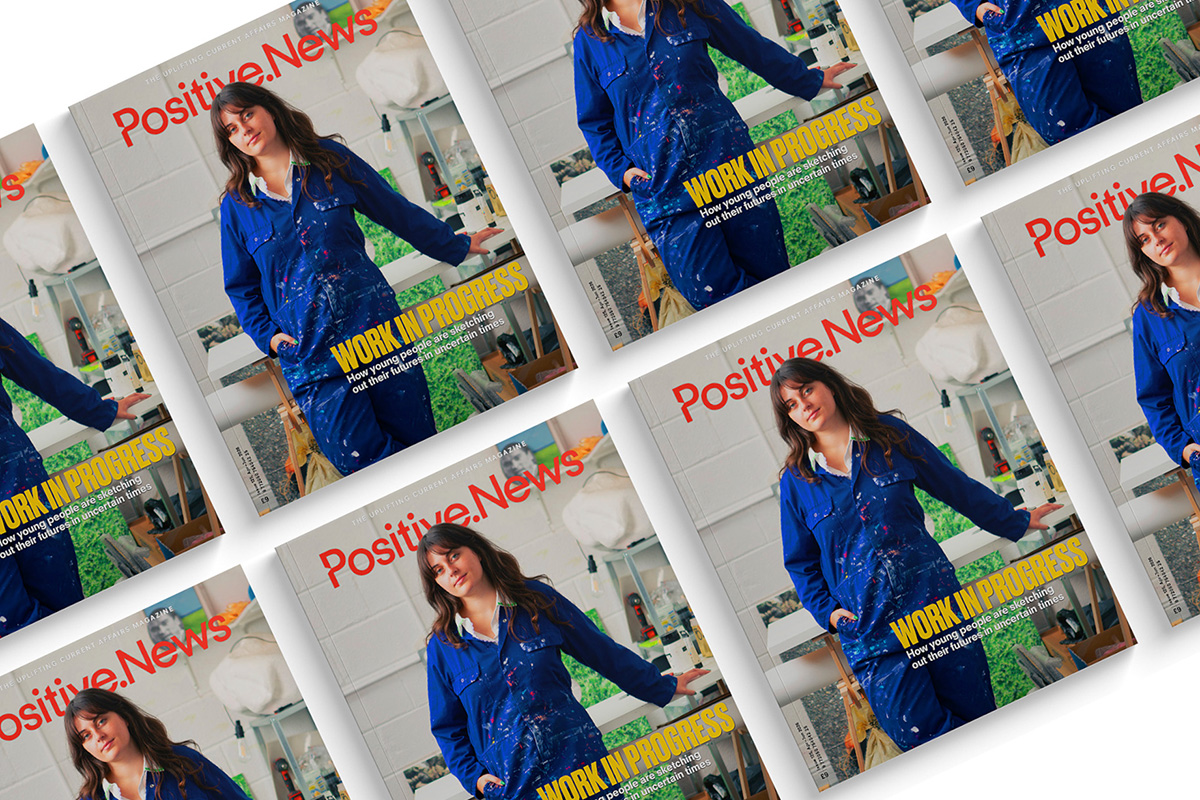
The Apr-Jun issue of Positive News magazine is about the long, uneven journey from childhood to adulthood and the people and ideas helping to light that path.

In schools, there are projects that go beyond teaching the mechanics of democracy and instead encourage pupils to practise it. Having a say. Disagreeing well. Understanding that a voice carries responsibility as well as rights. Alongside this are programmes that widen horizons early – overseas volunteering, community arts initiatives, mentoring schemes – initiatives to enable people not shy away from the outside world but to engage with it in a constructive and positive way.

It’s surely no coincidence that we are seeing a return in popularity of the most traditional of businesses in the age of AI. Market stall retail is re-emerging as an appealing career path for youngsters, one that engages with the inner entrepreneur. And with 34% of 16 to 24-year-olds reportedly running a side hustle, this generation is proving remarkably entrepreneurial. For some, a trestle table and a card reader are the first steps towards independence.

Creativity, too, is at a crossroads. Funding pressures, rising living costs and the rapid advance of AI risk turning the arts into a pursuit only the financially secure can afford. Our cover story looks at schemes across Europe offering a form of universal basic income to artists – not as charity, but as recognition that creative work needs time and stability to develop.

Advertisement

We are all at different stages of that journey, but wherever we sit it is important that we don’t just protect our own futures and that there is support for the next generation. To not just ensure they are contributing to society but to help it grow, flourish and blossom into one we want to live in.

Cover image: Denis Vahey

Source link

Advertisement
Continue Reading

NewsBeat

More joy, less juggle? Why workplaces should get on board with the value of care

Published

on

More joy, less juggle? Why workplaces should get on board with the value of care

The core premise of feminism is this: women can do anything. And yes, these days in developed economies, women without children earn about the same as men. The problem is not the opportunities available to them. It’s the opportunities that disappear as women become mothers.

This disconnect between paid work and care work is evident. In my research on work and motherhood, I have often found that organisations give little thought to the tensions that arise between women’s work and care identities.

A 2025 overview of how care is understood in feminist economic debates recognises the fundamental value of unpaid and underpaid care. But it doesn’t discuss how to reconcile paid work and care.

The unpaid work women do in the home alongside their paid work leads to reduced participation in the workforce, income inequality between the genders, time-poverty, and increased stress for women.

Advertisement

The challenges and constraints that women encounter in the workplace have long been recognised. But caring is also often viewed in a negative way – something that interrupts and stymies their participation in paid work. Motherhood is frequently framed as something that curtails ambition and income.

In contrast, paid work is valued because it generates financial resources. These perspectives speak to the outdated concept of the “ideal worker”, and the capitalist priorities of productivity and efficiency that underpin this idea.

Across academic research, financial resources are often seen as a means to buy exemption from some aspects of motherhood. Other research concedes that caring for older relatives can be rewarding, but then cites all the problems that caregivers may experience.

In short, it is almost impossible to find caring for children framed in a positive way. One paper positions care work as “responsibilities” and “obligations” that fall on women. But this framing is directly at odds with how the women I have spoken to understood their role as mothers: they talked fondly of their children, attended their needs and enjoyed spending time with them.

Advertisement

Rediscovering the value of care

The problem for both feminism and capitalism is that mothers must routinely combine paid work and caring responsibilities in order to make a living. This reflects the tensions that the research identifies but does not resolve: women are navigating systems that position care as a disruption rather than an important and valued form of work and identity.

Older women often recount their career success through a lens of sacrifice, while many younger parents resist long-hours cultures, experimenting with ways to share work and care. What this suggests is that there is a need for employers to have a more nuanced appreciation of parenting identities.

However, work structures often still rely on outdated breadwinner/caregiver identities – dictating how parents juggle paid work and care, and limiting the space for more flexible hybrid roles.

A model where the mother becomes the breadwinner and the father the caregiver is not ideal either. It may appear progressive, but in practice care work continues to be pressed to the margins and the financial precarity it leads to is not acknowledged or fixed. It is simply transferred to the male caregiver.

Advertisement

Breadwinner/caregiver norms are just not suited to society and family dynamics any more. But they can be dismantled and replaced by hybrid roles that allow people to combine work and care identities.

Flexible working arrangements can help parents to do a good job at work and at home.
Andrey_Popov/Shutterstock

While the tensions of work and motherhood have not disappeared, other groups have emerged and are developing momentum. For example, fathers who understand and value their parenting role are prompting a groundswell of change.

In the UK, campaigns such as Parenting Out Loud, as well as demands for extended, government-funded paternity leave (for example, six weeks of leave paid at 90% of income), seek to enable fathers to care and bond with their children without worrying about work pressures. These movements imagine a future where care is equally valued and recognised for its importance to society.

Advertisement

Governments, employers and trade unions have an opportunity to create work cultures that enable parents to do their jobs well at the same time as caring. Structures that value both work and care will allow everyone to contribute to the economy while actively participating in their caregiving roles.

Acknowledging an employee’s care identity needs to extend far beyond workplaces begrudgingly accommodating a mother working from home to care for a sick toddler. It involves enabling and trusting parents to respond to routine parenting challenges in an appropriate way – without penalty or judgment. For example, a dad being able to take emergency leave to respond to his child’s sickness, or a mum arriving late to work after supporting a teenager who is stressed by exams.

Funded, high-quality and reliable care infrastructure is essential, alongside flexible working. The persistent motherhood wage penalty is a good barometer to see how things are changing: interventions that normalise combining work and care will narrow this pay gap, and give a clear indication of what works.

Advertisement

Source link

Continue Reading

NewsBeat

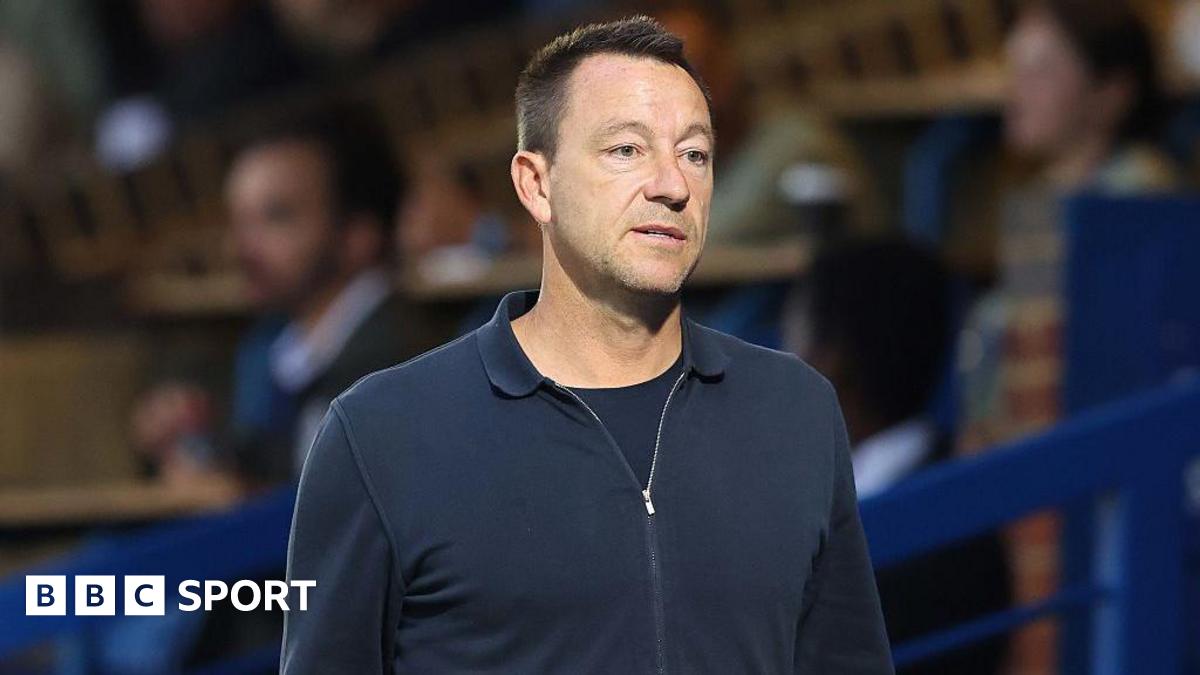
John Terry Colchester takeover: What’s in it for him?

Published

on

Former Chelsea player John Terry walks along the touchline at Stamford Bridge ahead of a Premier League 2 youth match in 2025

Some of the most high-profile players of the 21st century have opted to purchase stakes in clubs rather than committing to full-time coaching, a marked difference from previous generations.

Perhaps Terry would aim to follow in the footsteps of another former team-mate, Cesc Fabregas, by taking on a dual role.

The Spaniard bought shares in Serie A side Como in 2022, before being made manager in 2023.

Terry’s former England team-mate David Beckham is a co-owner of MLS side Inter Miami, having negotiated the rights to founding a club as part of the contract he signed when he joined Los Angeles Galaxy in 2007.

Advertisement

Beckham is also a part owner of Colchester’s League Two rivals Salford City, alongside Gary and Phil, Neville, Nicky Butt, Ryan Giggs, and Paul Scholes.

Others including Ronaldo (Real Valladolid), Kylian Mbappe (SM Caen), and Gerard Pique (FC Andorra), all of whom are majority shareholders in clubs based in countries where they spent significant portions of their careers.

The likes of Luka Modric (Swansea), Thierry Henry (Como), Zlatan Ibrahimovic (Hammarby), and Cristiano Ronaldo (Almeria) have also become part owners of clubs outside the European elite in recent years.

When former players invest in clubs, they are often buying a much smaller amount of shares and stumping up far less than their business partners.

Advertisement

Adding a household name from within the game to a group of investors can lend star power and authenticity to a takeover.

“The opportunity has been created for ex-pros to stay in the game in a way that wasn’t possible before, because of the way football has evolved on a commercial level,” says Dan Plumley, professor of sports finance at Sheffield Hallam University.

“There are clear positives to combining business acumen with people who have lived and breathed football – it gives you a diverse range of opinions.

“Being part of a consortium also spreads the financial risk across the group of investors, rather than it all being on one owner.

Advertisement

“History tells us you don’t make money out of owning football clubs, so there can be wider leverage for the former pro too – it can be a way for them to take on different roles in football, learn from them, and make professional progress.

“If you invest lower down the pyramid and build am project that you’re a part of. That can return some gain depending on how far up the football ecosystem you can take it.”

The excitement when a former star joins forces with a lower league club can pay almost immediate dividends.

“This takeover hasn’t even been confirmed yet but you can see the story is all across the media and there is extra attention on the club already.

Advertisement

“As the game continues to move forward at pace in a business sense, we can expect to see more of this kind of model in the future.”

Source link

Continue Reading

NewsBeat

Back button hijacking to be penalised in Google crackdown

Published

on

Back button hijacking to be penalised in Google crackdown

Adam Thompson, director of digital at BCS, the Chartered Institute for IT, told the BBC: “Practices like back button hijacking undermine the basic user experience and break the expectations people have of how the web should work, so it’s understandable that Google views this as a harmful behaviour and [is] taking action.”

Source link

Continue Reading

Trending

Copyright © 2025