The Covid variant BA.3.2 has been detected in 23 countries, including the UK
A new Covid-19 variant has been detected in the UK, health officials have confirmed. The BA.3.2 variant, dubbed the ‘Cicada’ variant, is currently being monitored, according to the UK Health Security Agency (UKHSA).
The latest UKHSA data, which looks at positive Covid tests between February 16 and March 1, shows two per cent of cases in England are the BA.3 variant. However, experts warn the new strain is ‘expected to become the dominant strain’ in the UK.
Advertisement
The latest variant has been confirmed in 23 countries since it was first detected in November 2024, according to the US Centers for Disease Control and Prevention (CDC). It was declared a ‘variant under monitoring’ by the World Health Organization (WHO) on December 5, 2025.
Get MEN Premium now for just £1 HERE – or get involved in our WhatsApp group by clicking HERE. And don’t miss out on our brilliant selection of newsletters HERE.
According to the WHO, a ‘variant under monitoring’ needs prioritised attention due to characteristics that may pose an additional threat compared to other strains of the virus. Despite this, officials say it is not believed to cause more severe disease or different symptoms to currently circulating Covid strains.
How concerning is the ‘Cicada’ Covid variant?
BA.3.2 is descended from the Omicron variant, which emerged in late 2021. It also carries 70 to 75 genetic changes in its spike protein, the part of the virus that helps it get into cells, according to the CDC, suggesting that the it might evade immunity or that the vaccine may not be as effective against it.
However, the WHO says ‘currently approved COVID-19 vaccines are expected to continue providing protection against severe disease’, despite its differences to circulating strains.
“Overall, available evidence suggests that BA.3.2 poses low additional public health risk compared with other circulating Omicron descendent lineages,” the WHO report added.
It said in December last year that ‘there are no clinical or epidemiological data to suggest that BA.3.2 infection is associated with increased disease severity, diagnostic failure or reduced susceptibility to available antivirals compared with other Omicron descendent lineages’.
Advertisement
It added that the new variants ‘pronounced immune-escape profile’ – its potential ability to evade immunity – warrants continued monitoring from Covid experts.
Will Covid cases rise in the UK?
The latest UKHSA data shows Covid is currently circulating at baseline levels, with positive tests and hospital admissions remaining stable.
Prof Ravi Gupta, of Cambridge University, who advised the UK government during the pandemic, told The Mirror: “This is different from the [Covid-19] viruses we have been dealing with for the last two years.”
Advertisement
Prof Gupta said: “It has been found in the UK, has been increasing in prevalence and I would expect it to become the dominant strain. BA.3.2 is undergoing testing right now. We have been looking at it in terms of immune evasion and the immunity that we’ve all got.”
He added: “Some people have done analysis on this suggesting it may be more prevalent among young children. Children get infections all the time but this might be something to do with the fact that they have never been exposed to Covid vaccines.
“So this is something we’re looking at in the lab to try and work out why. The problem with this is that it is an infection that spreads fast. Eventually it ends up in someone who is vulnerable.”
Symptoms of the new variant are expected to be the same as circulating Covid strains. According to the NHS, these include:
Experts from the World Health Organisation has shared some ‘effective measures’ to prevent the spread of the virus.
Samantha Leathers and Eilidh Farquhar Trainee Trends, Showbiz and Lifestyle Writer
22:48, 11 May 2026
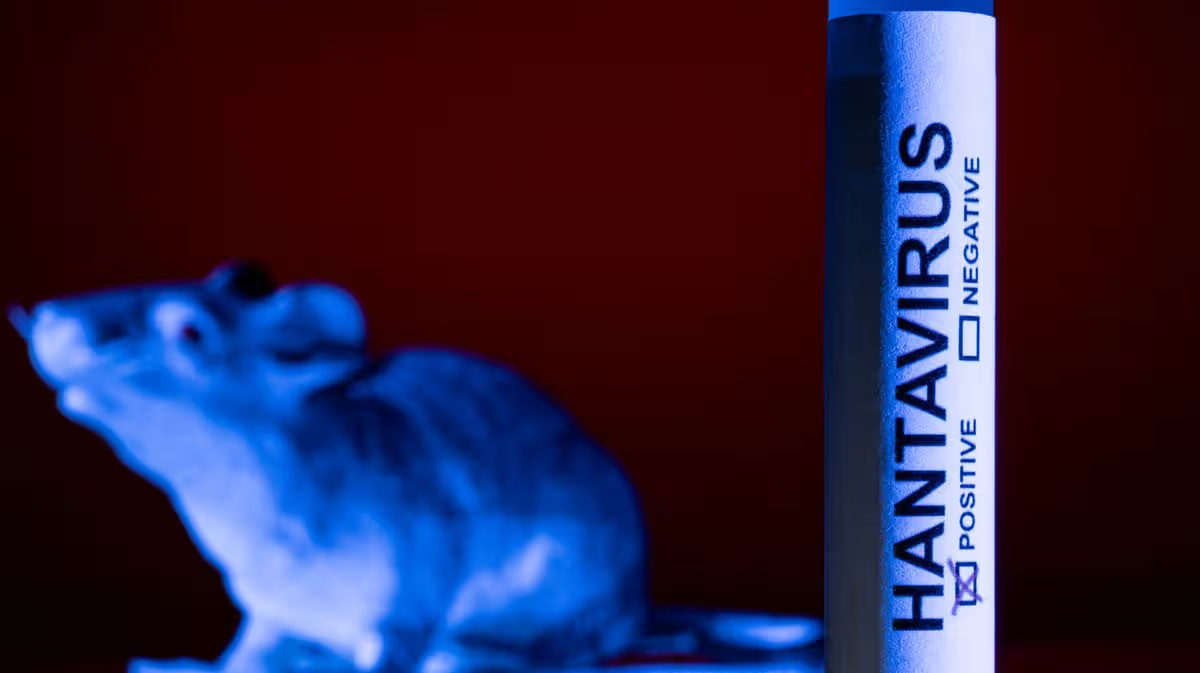
Over the last few weeks concern has grown following the news of a disease outbreak on a luxury cruise ship that has resulted in multiple confirmed cases and deaths. Since the hantavirus was discovered on the MV Hondius, multiple passengers are now quarantined at Arrowe Park Hospital in Wirral to closely monitor and test the disease.
The World Health Organisation (WHO) has recently reassured Brits the public health risk is “low”, however it has said more cases could be possible. Hantavirus is usually transmitted only through infected rodents, however this specific strain on the ship has had human to human transmission previously reported.
In the past, getting the disease from another human would require close and prolonged contact, with people living in the same house and intimate partners being the most likely to be affected during the earliest phases of the illness, reports the Mirror.
Advertisement
Hantavirus symptoms can include fever, extreme fatigue, muscle aches, stomach pain, nausea, vomiting, diarrhoea and shortness of breath. In more severe cases, breathing difficulties can develop and require hospital treatment.
In a new update, WHO has shared several “effective measures” to prevent the hantavirus. However, the most important one is to avoid contact with infected people and rodents. According to the experts, other methods to consider include:
keeping homes and workplaces clean
sealing openings that allow rodents to enter buildings
storing food securely
using safe cleaning practices in areas contaminated by rodents
avoiding dry sweeping or vacuuming rodent droppings
dampening of contaminated areas before cleaning
strengthening hand hygiene practices
In most cases, the virus is said to be spread to humans when they come into contact with contaminated urine, droppings or saliva of infected rodents.
According to WHO, this exposure can happen when cleaning poorly ventilated spaces, sleeping in rodent-infested dwelling or occupations in forestry and farming.
Advertisement
In the latest WHO update, director-general Dr Tedros Adhanom Ghebreyesus said: “While this is a serious incident, WHO assesses the public health risk as low. It’s possible that more cases may be reported.”
Additionally, the UKHSA has reassured strict infection control measures are in place for the passengers who are completing their isolation. Along with regular testing and care by the NHS and UKHSA, passengers could be quarantined for up to 45 days.
A total of three people have died due to the outbreak, with 22 passengers currently completing their isolation in Wirral – 20 British nationals, one German national who stays in the UK and one Japanese passenger at the request of the Japanese government.
Professor Robin May, chief scientific officer at UKHSA, said: “Throughout this incident, we have worked closely with government departments including FCDO, DHSC, MHCLG and MOD alongside international partners to support the safe repatriation of British passengers.
Advertisement
“The safety and wellbeing of those passengers remains our priority. The risk remains very low for members of the general public.”
Long term isolation is key as hantavirus symptoms can take weeks to appear after the first exposure, with the symptoms being dismissed as the flu. However, as the virus develops, it can progress to cause fluid to accumulate in the lungs, bleeding disorders or kidney failure. This is dependent on the strain the person has fallen ill with.
Public Health Minister Sharon Hodgson said: “I want to thank all those who have worked to bring our British nationals home and the NHS workers now caring for them at Arrowe Park Hospital – their dedication and professionalism show our NHS at its very best.
“None of the passengers are symptomatic but we will monitor them closely over the next 72 hours at the hospital, as part of a precautionary isolation period. With no cases or symptoms among them and our stringent monitoring and isolation measures, the risk to the public remains extremely low.”
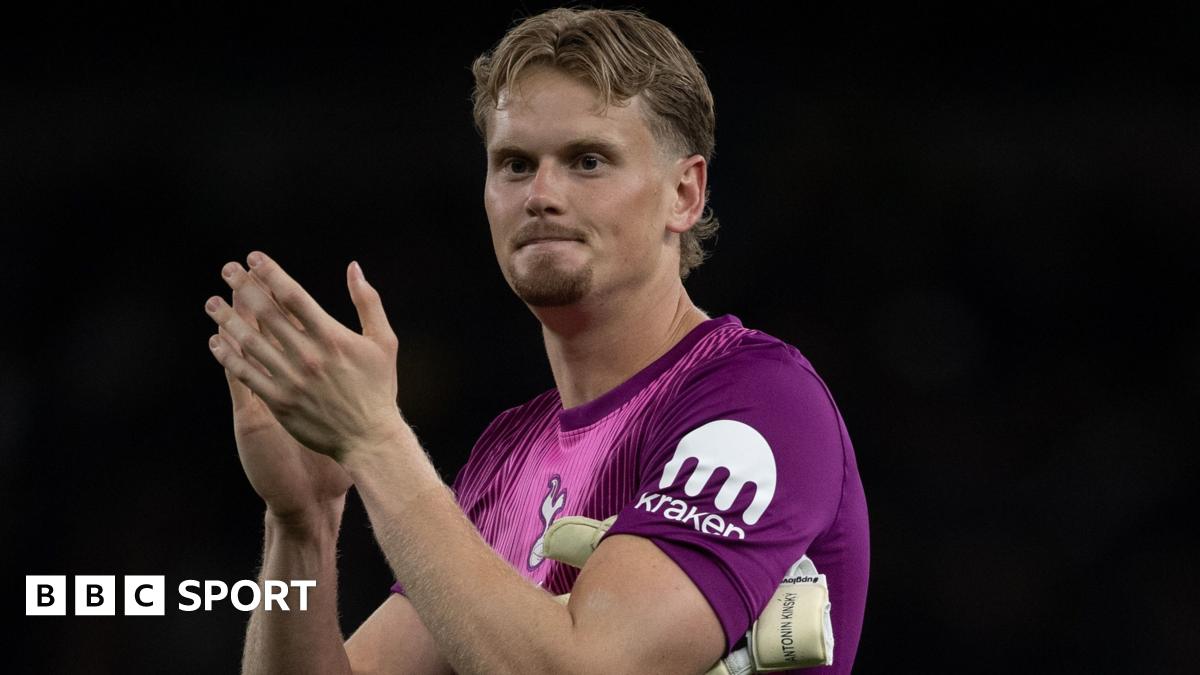
Two months ago questions were raised as to whether Tottenham goalkeeper Antonin Kinsky would ever play for the club again.
The Czech Republic international endured a nightmare 17 minutes in their Champions League last-16 match against Atletico Madrid in March which saw him concede three goals before being substituted off by then-manager Igor Tudor.
But after making one of the saves of the season to deny Leeds a late winner on Monday – ensuring Tottenham earned a point towards potential Premier League survival – the 23-year-old may just have gone some way to redeeming himself.
Mathys Tel’s 50th-minute strike had put Spurs ahead but the forward conceded a penalty for a high boot on Ethan Ampadu 24 minutes later and Dominic Calvert-Lewin converted from the spot to level at Tottenham Hotspur Stadium.
Advertisement
Both sides probed for a winner in 13 minutes of added time and Leeds thought they had found it in the 99th minute when James Justin played Sean Longstaff through and the midfielder unleashed a powerful strike at the near post from close range.
Enter Kinsky, who stretched to get fingertips to the ball and ensure it clattered off the crossbar and not into the roof of his net.
It is impossible to say how important that save could be come the end of the season but for now it leaves Spurs two points clear of West Ham in the relegation zone with two games remaining.
“That save is one of the saves of the season,” said former Liverpool defender Jamie Carrager on Sky Sports.
Advertisement
“Football is an absolute rollercoaster and who would have thought he would ever play for Tottenham again – and then he does that.
“You would have to have a heart of stone if you weren’t delighted for him. Everyone thought his career was over but that save can be the moment that keeps Tottenham in the Premier League.”
‘I hope lessons have been learned. I will be keeping my eye on it’
Former city centre offices in Lisburn are to be redeveloped into apartments despite concerns about anti-social behaviour.
Advertisement
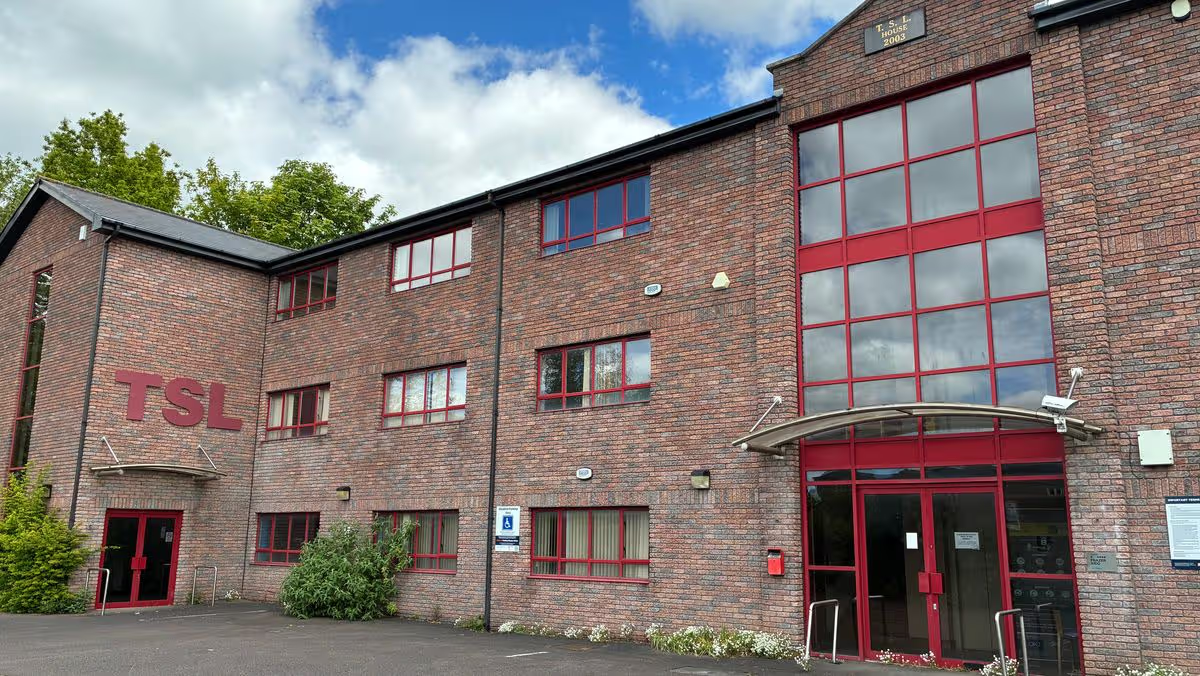
Lisburn and Castlereagh City Council’s planning committee this week unanimously signed off for the change of use of the former TSL House offices built in 2003.
The Bachelors Walk site, which is to be regenerated by ‘Ballard Developments Ltd’ is nestled in behind businesses on the main street close to the city’s railway station.
Lisburn North DUP councillor Jonathan Craig said:”I would have concerns that a former business area will now be used by residents, who could have two or three cars.
“I trust this application has met all requirements.”
The elected member alluded to anti-social behaviour previously reported at another city centre apartment blocks at nearby Graham Gardens.
Issues ove r drug dealing and other crime in the area have been publicly highlighted over a number of years, including violent incidents.
Advertisement
Councillor Craig added:”I would like to put on the record about housing procedures and I have deep concerns about how some of it is done very poorly.
“I hope lessons have been learned. I will be keeping my eye on it.”
The chamber also heard Northern Ireland Water had initially objected to the plans due to capacity concerns for its waste-water network.
However, it was said that older data from the previous office use had been used with 53 staff identified at the building.
Advertisement
When the data was updated to the planned nine new apartments, the water authority withdrew its objection.
Castlereagh East Alliance Alderman Martin Gregg added: “Would there be a way for the council to test the internal sound proofing of such a building that was previously abandoned for some 20 years?
“I would have concerns that it might not meet today’s standards. Is there any way we can verify that?”
Lisburn North SDLP councillor Pat Catney said: “My understanding is that there are two social housing units with this application.
Advertisement
“I would have concerns that some housing associations could be coming in through the back door to get schemes through.
“I do welcome this application, but I would be wary of anti-social behaviour.”
A council officer responded: “Parking on this site is pretty good compared to other areas in the city centre. We could look to make new home owners aware that car parking is restricted.
“In regards to sound proofing, that is a matter for building control. There would be insulation required in the walls. Though, we do have equipment for testing internal sound. The planning policy requires a minimum of 20% social housing, but the developer could provide more.”
Police are investigating after the woman was bitten
13:49, 11 May 2026Updated 13:56, 11 May 2026
A woman has been bitten by a dog in a Cambridgeshire village. Cambridgeshire Police called to the incident at around 8.30pm on Saturday (May 9) in Nunns Way, Sutton.
A police spokesperson said: “We were called at about 8.30pm on Saturday after a woman had been bitten by a dog on Nunns Way, Sutton. She was taken to hospital for treatment.
“A crime has been raised for allowing a dog to be dangerously out of control and an investigation is ongoing.” Cambridgeshire Police is appealing for information into the incident.
Advertisement
Anyone with information should contact police online or call 101 and quote reference 35/34463/26.
A passenger that had been on board the virus-stricken cruise ship the MV Hondius is now officially showing symptoms after returning home after the deadly outbreak on board.
Rachel Vickers-Price UK and World News Reporter
23:24, 11 May 2026Updated 23:24, 11 May 2026
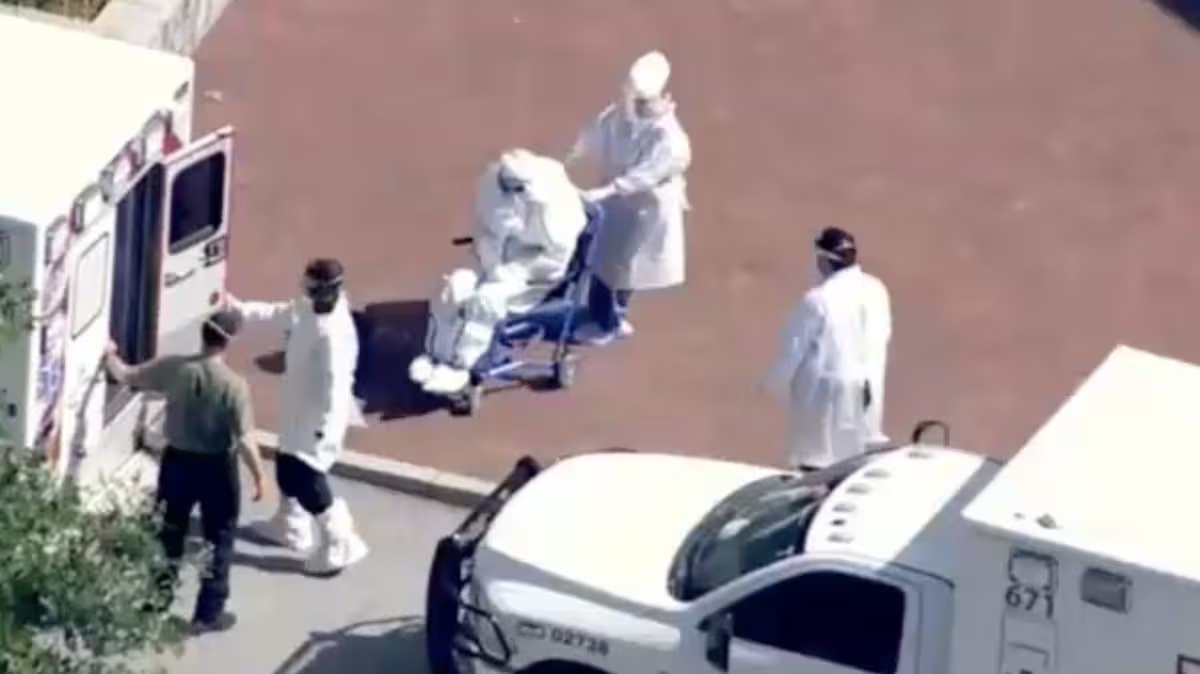
Two hantavirus-infected cruise passengers have been rushed to hospital after returning home, with footage capturing healthcare workers dashing them into intensive care dressed head-to-toe in hazmat gear and PPE. The pair, who had just returned to the US after a five-week stint on board the MV Hondius, the vessel stricken with the deadly rat-borne virus that prompted an international incident after three passengers died while aboard the ship. Shocking video footage captures healthcare workers rushing out to ambulances in hazmat gear, stretchering off the two patients into critical care at Atlanta’s Emory University Hospital. The Georgia hospital has since confirmed that both passengers arrived from the MV Hondius cruise ship following the deadly outbreak at sea. One of the two patients is symptomatic and receiving care in Emory’s biocontainment unit, and the other is asymptomatic, undergoing evaluation and monitoring. The two had disembarked the virus-plagued cruise ship at the centre of the hantavirus outbreak at the Canary island, and have now been transported to Emory University’s Serious Communicable Diseases Unit in Atlanta, the Centres for Disease Control and Prevention told the Georgia Department of Public Health on Monday.
Content cannot be displayed without consent
A spokesperson from the Department of Public Health (DPH) said: “Federal health care workers are taking every precaution needed in each of these cases, and there is no risk to the public at this time.” Early symptoms of hantavirus infection include fever, chills, myalgia (muscle aches), headaches, and gastrointestinal symptoms and can become complicated by acute respiratory distress syndrome, respiratory failure and shock. DPH officials confirmed the US case fatality rate sits at about 35 per cent.
Advertisement
There are nearly 40 strains of hantavirus found all over the world, and different strains cause different illnesses, but the rare Andes strain is the only one known to pass between humans. More often, spread occurs from rat faeces, saliva, and urine. But the symptomatic patient on US soil is no cause for alarm, officials have said.
Emory University epidemiologist Dr Jodie Guest has revealed that fewer than 900 cases of hantavirus have ever been recorded in US history, with the medical expert dubbing the disease a “dead-end virus”.
“Normally, we consider the hantavirus a dead-end virus, meaning one person gets it from a rodent, and then that is the only person who will get it,” Dr Guest said.
Advertisement
“This will not become a global pandemic. The transmission does not work effectively that way.” Other health experts have echoed Dr Guest’s sentiment in an attempt to allay American fears of a second pandemic. University of Florida Health Shands Hospital chief epidemiologist and an infectious disease expert Dr Nicole Iovine explained that the hantavirus transmits from person to person is not the same as the flu or coronavirus. “These viruses affect the upper airways, mainly, so speaking and coughing can easily transmit it,” Dr Iovine said. “The hantavirus and the Andes virus tend to infect very deep in the lungs, so it is not as easily transmitted through the air.” There is no vaccine for the hantavirus infection, as perv the World Health Organisation.
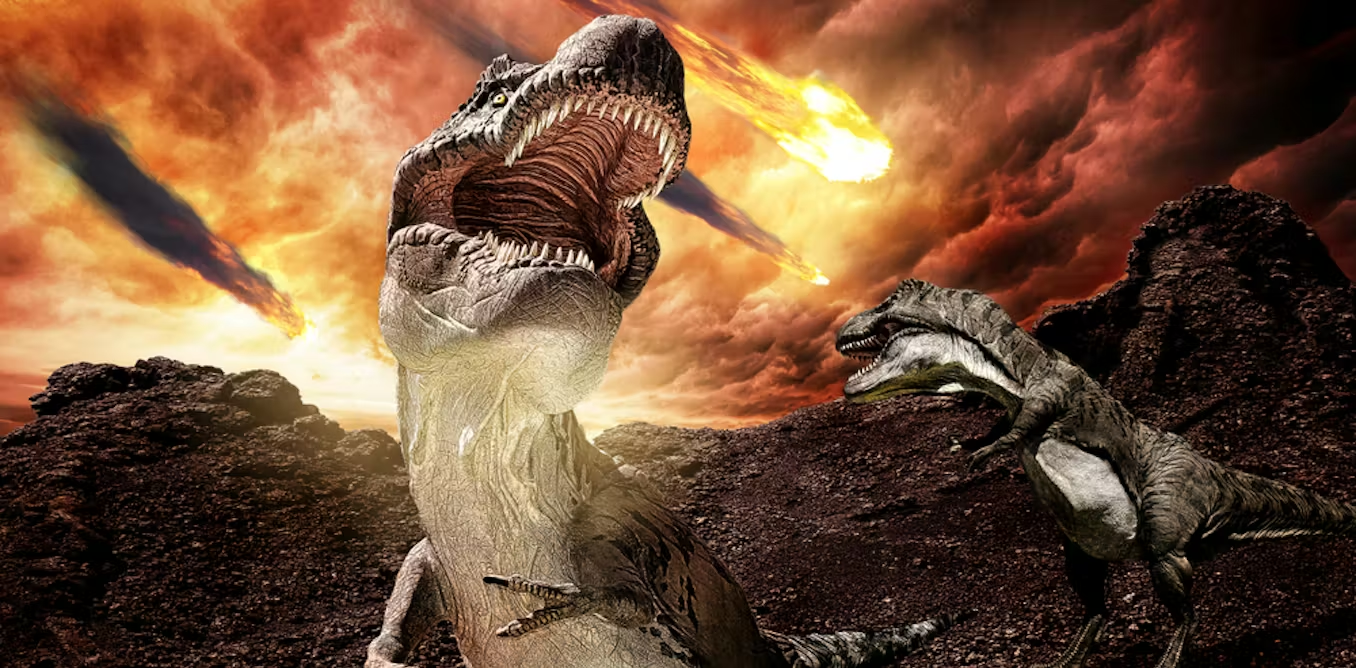
A great Tyrannosaurus rex strides through the conifer trees of her territory, sniffing the air. She picks up the scent from the carcass of a dead horned dinosaur, Triceratops, that she was feeding on yesterday. She walks over and strips off some more shreds of meat, but the smell is foul even for her.
She goes down to the lake to drink and small crocodiles and turtles scuttle into the water. But she hardly sees them. Of more interest is an armoured dinosaur, Ankylosaurus, lurking nearby. However, she knows this dinosaur won’t be an easy kill and she isn’t desperate enough for food to risk a fight. Little does she know there are bigger dangers ahead. She looks up and sees a bright light racing downwards accompanied by faint crackling and sizzling noises.
Our T. rex has excellent hearing for low frequency sounds and she is disturbed by the vibrations she can feel. But her upset only lasts for a moment. In a flash, she has been burnt to a crisp and her world changed forever.
This all happened 66 million years ago, when a huge asteroid famously hit the Earth in the area of what is now the Caribbean. At the end of the Cretaceous period, sea levels were 100–200 metres higher than today, so the shores of the Caribbean lay far inland over eastern Mexico and the southern United States. The impact happened entirely within these waters.
Advertisement
The event triggered instant changes to our planet and its atmosphere and led to the extinction of the dinosaurs and about half Earth’s other species. But what would it have been like to experience such a gargantuan impact? What would you have seen, heard or smelled? And how would you have died – or survived?
The Insights section is committed to high-quality longform journalism. Our editors work with academics from many different backgrounds who are tackling a wide range of societal and scientific challenges.
As experts on meteoritics and palaeontology, respectively, we’ve created a detailed timeline, based on decades of research, to take you right there. So let’s start by travelling back in time to the very last day of the Cretaceous.
Advertisement
T-minus one day
All is calm and the Cretaceous day proceeds as usual. In what will soon be ground zero, it is pleasantly warm, about 26°C, and wet. It often is. For about a week, the asteroid has been visible only at night. Because the giant rock is heading straight towards Earth, it looks like a motionless star. There is no dramatic tail; this is a rocky asteroid rather than a comet.
The dinosaurs were enjoying nice weather before the big impact. Orla/Shutterstock
In the last 24 hours, the light becomes visible during the daytime. But it still looks like a star or planet, getting brighter in the final few hours before impact.
T equals 0: the impact
If you were close by, you would first have experienced a brief light and sound show. Minutes to seconds before the impact, you’d have seen the bright fireball, and its accompanying crackling or fizzing noises. This sizzling sound is a result of the photo-acoustic effect: the intense light of the fireball warms the ground, which then heats the air above it, causing pressure waves, or sound.
Next, a deafening sonic boom, which occurs because the asteroid is travelling faster than the speed of sound. But the asteroid is so huge, perhaps 10km in diameter, that it almost certainly hits the ground before any living creature near the impact zone has time to run for cover.
Advertisement
The asteroid’s enormous energy forms a crater through a series of processes that together take only a few seconds. As the asteroid collides with the surface, its kinetic (movement) energy is instantly transferred to the surface as a combination of kinetic, thermal (heat) and seismic energy (released during earthquakes). This results in a series of shock waves that heat and compress both the asteroid and its target.
As the shock waves propagate, rocks fracture, break up and are ejected, producing a bowl-shaped depression, or transient cavity, about ten seconds after impact. The heat and compression also melt and vaporise large volumes of material, including the asteroid itself, releasing a fountain of incandescent vapour (its temperature is more than 10,000 K, or 9726.85°C).
Over the next few seconds, the cavity increases in size to many times the diameter of the original asteroid. Simulations suggest that around 20 seconds after impact, the transient cavity is at least 30km deep – deeper than the deepest depth currently known on Earth, the 11km Challenger Deep valley, part of the Pacific Ocean’s Marianas Trench. The rim of the crater is over 20km high – more than twice the height of 8,900m Mount Everest.
But this enormous feature lasts for less than a minute before it starts to collapse. Within three minutes of the impact, the centre of the crater has rebounded to form a peak several kilometres high. The peak only lasts about two minutes before collapsing back into the crater.
Advertisement
Whether a dinosaur or a dung beetle, if you were near the transient cavity you would have been incinerated instantly by the blast. But even if you were up to 2,000km from the epicentre, you’d likely have been killed quickly by the thermal radiation and supersonic winds now spreading out from the impact site.
T-plus 5 minutes
Five minutes after the impact, the winds have “eased” to those of a category 5 hurricane, flattening everything within about 1,500km of the impact. Destroying everything, that is, which has not already been burnt. Atmospheric temperatures in the region rise to over 500K (226.85°C). This would feel like being inside an oven – causing burns, heatstroke and death. Wood and plant matter ignite, creating fires everywhere.
Because the asteroid struck the sea, the atmosphere is also filled with super-heated steam, making the hurricane-force winds even deadlier.
Next come the tidal waves, triggered by the vast quantities of displaced rock and water. These 100-metre megatsunamis first strike the shores of what is now the Gulf of Mexico, engulfing the land before depositing huge amounts of debris as they retreat.
By now, the crater has almost reached its final dimensions – 180km across and 20km deep. But making an enormous hole in the ground isn’t the only outcome of the impact. All the rock and vapour displaced during the collision has to go somewhere. Several locations in Northern America show that metre-sized blocks of debris from the impact were thrown distances of hundreds of kilometres.
So if you were 2,000km to 3,000km from the epicentre and survived the first few seconds, you’d most likely die from overheating, earthquakes, hurricanes, fires, tsunami-driven floods or being hit by impact melt.
But what is happening much further away? In the first five minutes after impact, dinosaurs roaming the Cretaceous forests of what are now China or New Zealand are so far undisturbed.
But it won’t be long before that changes.
T-plus one hour
Shockwaves on land and sea are only minor inconveniences compared with the fire that is still radiating down from the sky. Some of the impact energy has been transferred into the atmosphere, heating the air and dust to incandescence.
An hour after impact, a belt of dust has circled the globe. Deposits of solidified molten droplets (impact spherules) and mineral grains have been found in numerous locations from New Zealand in the south to Denmark in the north. In these locations, you would not have been aware of the tsunamis around the Americas or the wildfires, but the skies would certainly have begun to darken.
T-plus one day
By now, huge tsunamis are moving east across the Atlantic and west across the Pacific, entering the Indian Ocean from both sides.
They are still around 50m high – causing death and destruction across many coasts around the world. By comparison, the 2004 Boxing Day tsunami reached heights of up to 30 metres. Tsunamis kill fishes and marine life that are washed high on the shore and then dumped, just as they kill coastal trees and drown land animals. But the tsunamis gradually fade away and probably don’t wipe out any entire species – at least on their own.
The hurricane force winds have also died down, but tropical storm strength winds are whipping up debris and causing further chaos and destruction across the tsunami-affected areas. The burning sky is also triggering wildfires across the globe – which, in turn, carry ever more soot into the atmosphere. The sooty signature of these wildfires has been found deposited as carbon particles in sediments from the K-Pg boundary – a 66-million-year-old thin clay layer.
Further away, in what is modern Europe and Asia, the skies continue to fill up with dust and soot, as they do everywhere. Temperatures start to drop as sunlight is blocked. Trees and plants in general, including phytoplankton, close down as if for winter, unable to photosynthesise. Any animals that rely on warm conditions ultimately hunker down and die.
Advertisement
T-plus one week
It’s getting darker and darker. Simulations of solar radiation reaching the Earth’s surface following the impact indicate that, after about a week, the solar flux (the amount of heat and light per a certain area) is just one thousandth of that prior to the impact. This is caused by particles of dust and soot in the atmosphere.
The continued decrease in light levels is accompanied by a global drop in surface temperatures of at least 5°C. This means that most of the dinosaurs and other large flying and swimming reptiles probably die from freezing within the course of this first week (smaller reptiles with slower metabolisms or more flexible diets could survive longer). Cooling temperatures and cloud cover also lead to rain. But not just any rain. Storms of acid rain fall across the Earth.
Two separate mechanisms generate acid rain. The first is down to the geology of the impact region. The asteroid happened to hit an area of sediments rich in sulphur, which vaporised and caused sulphur oxides (acidic and pungent gas compounds composed of sulphur and oxygen) to be part of the plume of plasma blasted into the atmosphere. Second, the energy of the collision was sufficient to turn nitrogen and oxygen into nitrogen oxides – highly reactive gases that can form smog.
The dropping temperature ultimately allows water vapour to condense into drops, and the sulphur and nitrogen oxides dissolve to form sulphuric and nitric acids. This is sufficient to generate a rapid drop in pH. Early models suggest that the pH of the rain might be as low as 1 – the same acidity as battery acid.
Advertisement
At this point, Earth is not a great place to be. Rotting vegetation, choking smoke and sulphur aerosols combine to make the planet stink. Plants and animals on land and in shallow seas that have survived the darkness and cold succumb to the corrosive acid rain and ocean acidification. Acid rain also kills trees by leaching nutrients such as calcium, magnesium and potassium from the soil. Shallow marine shellfish, crustaceans and corals also die as acid seawater destroys their skeletons.
T-plus one year
Winds die down, wildfires are extinguished and the oceans are once again calm. It might appear that the asteroid collision is just a scar on the ocean floor. But its effects are still destructive. The atmosphere is still filled with dust and the Sun hasn’t shone for a year. Temperatures have continued to drop, with the average surface temperature now 15°C lower than before the impact. Winter has come.
Any dinosaurs or marine reptiles that survived the first week of freezing conditions would have died very soon after. A year after the impact, only rotted skeletons of these behemoths remain. Here and there, smaller animals like mammals the size of rats and insects would be nestling in crevices, barely surviving on their reserves and decaying plants.
While most plant groups and many of the modern groups of insects, fishes, reptiles, birds and mammals recover reasonably rapidly, things don’t look great for other species. Dinosaurs and pterosaurs living on land are extinct, as are many marine reptiles, ammonites, belemnites and rudist bivalves in the oceans. Ammonites and belemnites are high in their food chains, and so suffer not only from the cold and acidification but also from the loss of abundant food resources, such as smaller marine organisms.
T-plus ten years
The Earth is still in the grip of a fierce winter. Although most of the sulphur has rained out of the atmosphere, dust and soot particles remain. The average surface temperature is still about 5°C lower than before the impact. The main oceans have not frozen, but inland lakes and rivers around the world are iced over.
Clearly, there were no humans about at this time – there weren’t even any larger mammals. But given the only species that survived were those that could burrow or live below water, it is unlikely that you could have survived this long.
Surviving plant and animal groups such as turtles, smaller crocodiles, lizards, snakes, some ground-dwelling birds and small mammals repopulate the Earth at this point. But they are forced back to limited areas of relative safety a long way from the impact site. These areas are now receiving sufficient sunlight for plants and phytoplankton to photosynthesise again. As leaves and seeds provide the basis for the food chains on land and in the sea, life begins to rebuild.
Advertisement
Eventually, life returns to the devastated landscapes, but ecosystems are very different and the dinosaurs are no more.
T-plus 66 million years
Today, 66 million years after the impact, the scars of the collision are hidden within geological strata – and scientists have started deciphering them. It was in 1980 that researchers first reported evidence of the impact. In their classic paper, Luis Alvarez, a Nobel-prize-winning physicist, and co-authors, described a sudden enrichment in the element iridium in a specific clay layer in Denmark and in Italy.
Iridium is rare in surface rocks because most of it was sequestered in Earth’s core when the planet first formed. However, iridium is found in meteorites, and Alvarez and colleagues inferred that the rate of accumulation of the metal in the sediments was so high that it could only have been produced by impact of a gigantic meteorite.
Because the scientists had only observed the iridium spike in two locations, the impact hypothesis was rejected by many scientists at the time. However, through the 1980s, iridium spikes were identified in clay layers at more and more locations – in muds laid down on land, in lakes, in the sea.
Advertisement
Support for an impact hypothesis strengthened when a crater of the correct age was found in 1991. The crater is buried beneath younger rocks, but clearly visible in geophysical surveys, lying half on land in the Yucatán Peninsula of Mexico, and half offshore. Since 1990, evidence for the impact has increased, not least when scientists discovered that there was indeed a sharp cooling event at the end of the Cretaceous.
Possible T rex footprint from New Mexico. Wikipedia, CC BY-SA
In total, it is estimated that half the species of plants and animals alive at the end of the Cretaceous disappeared. It was once thought that surviving groups such as many plants, insects, molluscs, lizards, birds and mammals somehow escaped unscathed. But detailed study shows that this is not the case – they were all hit hard.
But, by chance or luck, enough individuals and species were able to survive the cold and absence of food, or were in parts of the world where the effects were less extreme. As the world returned to normal, they had the opportunity to expand rapidly into their old niches, but also to occupy the space vacated by extinct groups. In fact, one important consequence of the extinction of the dinosaurs, apex predators in their heyday, was the successful spread and evolution of mammals.
When Alvarez and colleagues first described the drop in temperature following the impact, they called it a “nuclear winter”, reflecting the political climate of the early 1980s. Now we might be more inclined to describe the effects as a global climate change – similar events are currently resulting from increased carbon dioxide in the atmosphere (flooding, temperature fluctuations).
Advertisement
It is salutary to think that without the asteroid collision, primates might never have reached the level we are at today. But it is equally salutary to consider that modern humans are causing some of the same changes to the atmosphere that ultimately killed our reptilian forbears and may one day also lead to our own demise.
To hear about new Insights articles, join the hundreds of thousands of people who value The Conversation’s evidence-based news. Subscribe to our newsletter.
Today, more Labour MPs have called for Keir Starmer to step down, but is an actual leadership challenge imminent?
In a speech on Monday morning Keir Starmer vowed to prove his “doubters” wrong, but the number of Labour MPs calling him to go continues to rise. Dozens of MPs have urged Starmer either to step down immediately or set out a timetable for his departure.
Adam, Chris and Alex discuss.
Advertisement
You can now listen to Newscast on a smart speaker. If you want to listen, just say “Ask BBC Sounds to play Newscast”. It works on most smart speakers.
You can join our Newscast online community here: https://bbc.in/newscastdiscord
Get in touch with Newscast by emailing newscast@bbc.co.uk or send us a WhatsApp on +44 0330 123 9480.
New episodes released every day. If you’re in the UK, for more News and Current Affairs podcasts from the BBC, listen on BBC Sounds: https://bbc.in/4guXgXd
Advertisement
Newscast brings you daily analysis of the latest news stories from the BBC. The presenter was Adam Fleming. It was made by Jack Maclaren with Jem Westgate. The social producer was Joe Wilkinson. The technical producer was Philip Bull. The assistant editor is Chris Gray. The senior news editor is Sam Bonham.
Video footage appears to show Donald Trump with his eyes closed and barely moving for a prolonged period during an Oval Office health briefing, prompting critics to question his fitness to serve
23:20, 11 May 2026Updated 23:22, 11 May 2026
Donald Trump has been labelled “unfit to serve” as President following fresh accusations that he was “falling asleep” during a meeting at the Oval Office.
Video footage appears to capture Trump with his eyes shut and barely moving for an extended period during a formal health briefing.
The incident occurred while Dorothy Fink, Deputy Assistant Secretary for Women’s Health, was presenting figures on reductions in maternal mortality rates, specifically noting that the Perinatal Improvement Collaborative hospitals reduced maternal mortality by 41.5% (compared to a 5.9% decline in benchmark hospitals).
Advertisement
However, many online users were instead distracted by Trump’s conduct.
One user wrote: “Trump is about to hit REM sleep on camera in the Oval Office.”
Another commented: “Trump fell asleep with his face drooping in the Oval Office during a meeting today. This is a real video that should concern every American. He’s not fit to serve.”
Advertisement
A third remarked: “Trump appears to fall asleep while a doctor discusses maternal mortality.”
While a fourth observed: “Today is Monday. That means trump falls asleep at yet another high profile event with cameras rolling.
“Imagine what happens when there are no cameras.”
The official White House Rapid Response account hit back at the allegations, declaring: “He was blinking, you absolute moron,” though the footage does not appear to show any blinking.
Advertisement
This follows Trump’s recent claim that the month-long ceasefire between the US and Iran is on “massive life support”. Speaking to reporters in the Oval Office on Monday, he described the ceasefire as “unbelievably weak” despite it remaining in place.
Iran set out its conditions for ending the conflict and reopening the Strait of Hormuz in a counter-proposal delivered to the US on Sunday. Trump dismissed the offer, branding it “totally unacceptable” and a “piece of garbage”.
Iranian foreign ministry spokesperson Esmail Baghaei hit back, insisting Tehran’s proposals were “responsible” and “generous”.
According to Iran’s semi-official Tasnim news agency, Tehran’s proposal includes an immediate cessation of hostilities across all fronts — a nod to the ongoing Israeli strikes against Iran-backed Hezbollah in Lebanon — along with a halt to the US naval blockade of Iranian ports and assurances against any further attacks on Iranian soil.
This full-time, permanent post carries a salary of £26,522.50, with applications closing at 5pm on Friday, May 22.
The collections assistant will take charge of maintaining and improving the museum’s collections records, supporting a database migration, and ensuring documentation is accurate and accessible.
Advertisement
The role also involves coordinating loans, supporting object movement, and contributing to the care and management of the museum’s works.
(Image: STUART BOULTON)
Curator (co-production)
This is a part-time role on a fixed-term contract until 2029, with an annual salary of £18,708.50 (based on three days per week).
The curator (co-production) will help embed co-production practices across the museum’s work as part of the Art Fund’s Going Places programme, backed by the National Lottery Heritage Fund and The Julia Rausing Trust.
The Bowes Museum is part of the Founding the Future network, working alongside Watts Gallery in Guildford and Russell-Cotes Art Gallery & Museum in Bournemouth.
Advertisement
The post will play a key role in a collaborative touring exhibition programme running from 2026 to 2029, leading community co-production for planned exhibitions in 2027 and 2028/9.
Welcome team supervisor (temporary cover)
This fixed-term, six-month position offers 34 hours per week at a rate of £13.27 per hour (£23,461.36 per annum, pro rata).
Candidates must be enthusiastic, self-motivated, and comfortable working in a visitor-facing, customer service environment.
Strong people-management skills and a passion for developing others are essential.
Advertisement
Applications close on Friday, May 22, with interviews scheduled for Thursday, May 28.
Chef
The museum is seeking a chef for its catering team to help deliver a high-quality, locally sourced menu for the museum café and events.
This permanent role is for 32 hours per week (four days), with a salary of £22,481.44.
The chef’s work will help create a warm, memorable experience for visitors through food.
Advertisement
Applications close on Friday, May 29, with interviews taking place on Thursday, June 4.
Middlesbrough could make the Championship play-off final even if they lose their semi-final second leg, should rivals Southampton be removed from the postseason
23:00, 11 May 2026Updated 23:01, 11 May 2026
An independent disciplinary commission could kick Southampton out of the Championship play-offs if they are found to have filmed and observed a Middlesbrough training session. The Saints are charged with breaching two EFL regulations around acting in good faith and watching other teams train in the days before they are scheduled to play against them.
Boro complained to the league about their alleged unauthorised filming on private property. It is said that the club’s hierarchy will push for their expulsion.
Any hearing would only happen after Tuesday’s semi-final second leg. There would then be 11 days until the final at Wembley Stadium.
Advertisement
The Mail claims that the North East club will continue training even if they exit the post-season, because Boro may still replace their under-investigation opponents. They want Southampton to receive a ‘sporting’ sanction rather than a financial one, as Marcelo Bielsa paid for Leeds United seven years ago.
Their coach, Kim Hellberg, said of potential punishments for their opponents: “Who will get the fine? Should they just pay (it) to the EFL?
Advertisement
“So, they see everything we do, and that’s OK? I just think it’s weird (that) they do that and try to cheat in this type of game.
“I know Bielsa paid £200,000, but that was not the law then. I think a lot of clubs will pay that amount to try to get an advantage by seeing you in the two sessions before a game.
“If it’s a game of this magnitude, clubs would pay that, but it’s not legal, so they should not do it. What the punishment should be, that is not my decision to make.
“It’s not the players that have done anything, it’s not the fans that have done anything. So, it’s not my decision to make. I’m just telling you the facts, and you can see the facts too. We will see what happens.”
“We can confirm that we will be fully cooperating with the League throughout this process. Given the ongoing nature of the matter, the club is unable to comment any further at this time.”
Their head coach, Tonda Eckert, has refused to expand on what the club have said publicly. He repeatedly referred to their statement when facing questions before and after the first leg on Saturday, which finished 0-0.
Advertisement
The Guardian reported this week that other clubs have approached Middlesbrough to speak of their own suspicions of being spied on by Southampton. The Saints finished the season with a remarkable 19-match unbeaten run that helped propel them to a top-six finish.
Sky Sports, HBO Max, Netflix and Disney+ with Ultimate TV package
This article contains affiliate links, we will receive a commission on any sales we generate from it. Learn more
Sky has upgraded its Ultimate TV and Sky Sports bundle to now include HBO Max, Netflix, Disney+, discovery+ and Hayu, as well as 135 channels and full Sky coverage of the Premier League and EFL.
Sky broadcasts more than 1,400 live matches across the Premier League, EFL and more with at least 215 live from the top flight alongside Formula 1, darts and golf.





















































You must be logged in to post a comment Login