

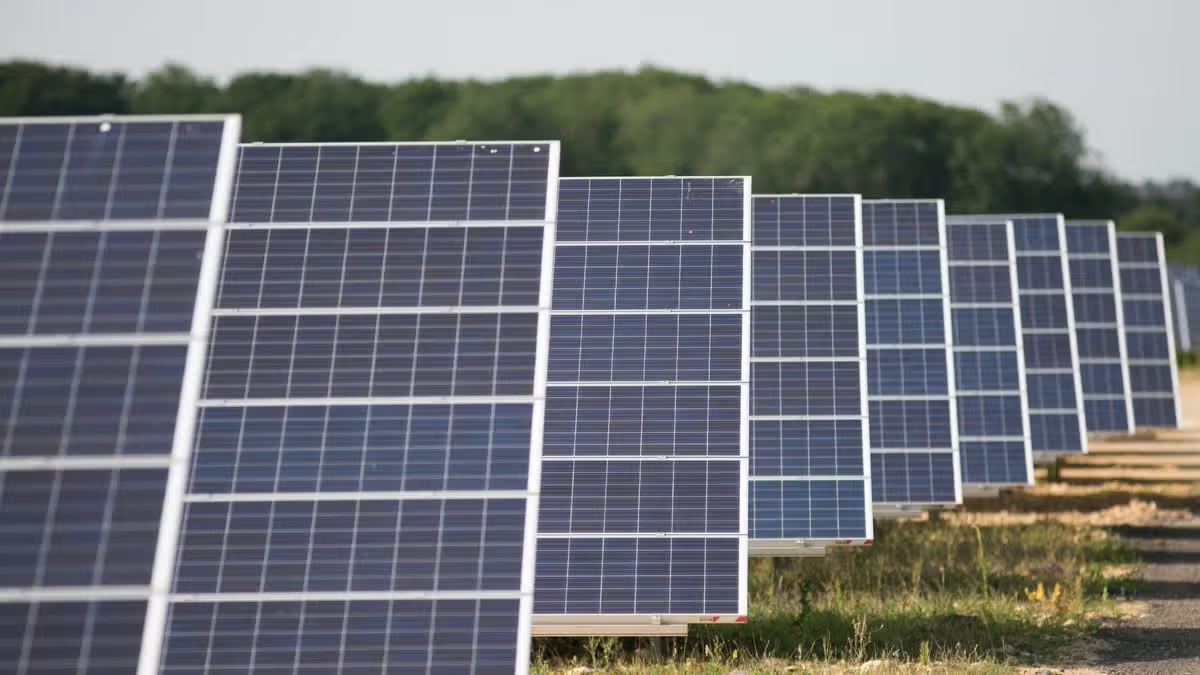
South Cambridgeshire approved the solar farm, which is expected to provide power for thousands of homes
A temporary solar farm has been approved in the Cambridgeshire countryside despite fears it will harm the green belt. The development would also include a battery energy storage facility and developers Innova Renewables said it could power around 13,422 homes annually.
They said the panels would deliver up to 49.99MW of renewable energy and 10MW could be stored. South Cambridgeshire District Council’s planning committee considered the application for a 40-year operational period, after which the site would be restored to agricultural use.
Concerns had been raised about the 74 hectare site off Low Fen Drove Way in Horningsea’s impact on nearby Grade-II listed Biggin Abbey.
The proposal is also next to a site where the sewage treatment works in Cambridge was set to be relocated – but the future of this is unclear after the government withdrew funding.
The application was recommended for approval by council officers who said it would be “temporary and low scale” and considered the land to be grey belt – a site considered to make only a limited contribution to the green belt.
John Hughes, from the National Trust, said that “significant opportunities” were missed in the application to improve biodiversity and nature recovery. He said: “With a close proximity to Cambridge and other local populations, an opportunity to better connect with people and nature has been missed along with the varied social benefits it would provide.”
Although the scheme “substantially exceeds” the requirement for biodiversity net gain, Mr Hughes said this was largely through “passive measures” like the conversion of arable land to grassland. He said: “For a development of this scale on green belt land we would have expected a more ambitious and integrated approach to nature recovery.”
An agent for the developer said the scheme had “significant benefits” and would support “both local and national renewable energy and decarbonisation targets”.
She said: “South Cambridgeshire Council declared a climate emergency in 2019 and this year’s climate and nature strategy committed to a 50 per cent reduction by 2030 and net zero by 2050 for area wide emissions. This is well evident in the climate conditions we’re seeing across the UK and Europe this week.”
Councillor Anna Bradnam, speaking as ward councillor for Milton and Waterbeach, said that although the scheme is described as temporary, “40 years is half a lifetime”.
The Liberal Democrat councillor said: “I respect the officer’s view but regret that the green belt protections which used to be so strong have been eroded by this concept of grey belt. I believe this development would have a degrading and industrialising impact on the countryside in this area – how can 74 hectares of glass and metal for 40 years be considered a minor adverse impact?”
Cllr Vivien Biggs, of Swavesey, said that the development couldn’t be argued to enhance the area, but they had to consider balance.
The Liberal Democrat councillor said: “I think we have to be pragmatic, and obviously anybody having something like this in their back yard is not going to be particularly happy. It’s not beautiful, but we also know we don’t own the view unless we own the land.”
Cllr Heather Williams, of The Mordens, also said that planning was about “trade-offs” and there will never be a “perfect solution”.
The Conservative councillor said: “There’s merit for it in its objectives but, in my view, there’s a lot of policies it comes into conflict with. I think we need more renewable energy and I 100 per cent understand why farming communities are looking to things like solar in the current situation – but there are alternative places.”
The solar farm was approved with four voting in favour and one against.

















































You must be logged in to post a comment Login