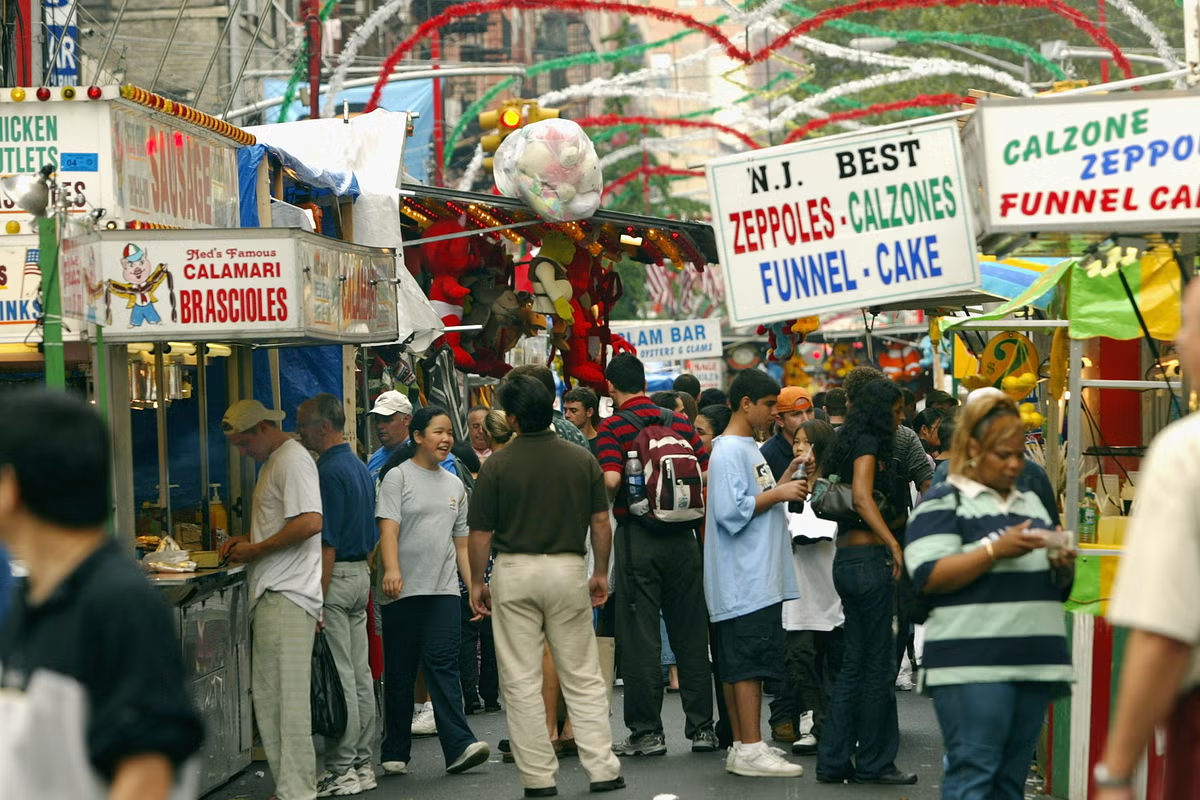
For two weeks in September, everyone wants to be Italian – at least judging by the crowds at the annual Feast of San Gennaro in New York City’s Little Italy.
Founded in 1926, the largest and longest-running Italian festival in the United States celebrates its 100th anniversary this year, with locals and tourists alike descending upon Mulberry Street in Manhattan to celebrate Italian American culture.
To be sure, there’s plenty that’s commercialized: Frank Sinatra impersonators croon “New York, New York,” while vendors hawk shirts with quotes from The Godfather and The Sopranos at astronomical prices. Classic Italian American fare like chicken parm subs and sausage and peppers fly off food carts.
And yet in my work as a medievalist, I’ve explored how this festival champions traditions that go back thousands of years.
Advertisement
That first Feast of San Gennaro in 1926 gave Italian immigrants a rare opportunity to publicly profess the cultural identity they had left behind in Italy (Getty Images)
If anything, the fact that centuries-old rituals coexist with sweet Italian sausages and big, floppy pizza slices speaks to a lengthy, strenuous and beautiful process of cultural assimilation.
From the Bay of Naples to Little Italy
Between 1881 and 1920, over 4.5 million Italians immigrated to America. Thousands, most of whom hailed from southern Italy, settled on Manhattan’s Lower East Side to form what became Little Italy.
These “huddled masses” faced all sorts of difficulties: overcrowded tenements, trouble finding work, racial discrimination and suspicion of their southern Italian Catholic practices, particularly from Irish Catholics. The Italian procession of religious statues and the street parties that followed, the Irish argued, looked far too pagan and idolatrous to be considered “real” Catholicism. Irish suspicion of such practices were also shared by local Protestants.
But by the early 20th century, Italian communities had grown so large that they could fund their own Italian-speaking churches.
Advertisement
One such parish was the Church of the Most Precious Blood, built in 1904 on Baxter Street. In 1926, a group of parishioners led by Alexander Tisi organized a tribute to one of the most popular holy figures from southern Italy: St. Januarius, known in Italian as San Gennaro.
An early Christian bishop, Gennaro was brutally beheaded outside of Naples on Sept. 19 in AD 305 on account of his faith. His execution was one of several that took place during the Diocletian Persecutions, a systematic campaign against Christians by the Roman Empire.
Since then, southern Italians have attributed all sorts of miracles to his intercession, including extinguishing the volcanic fires of Mount Vesuvius in 1631.
Clare Whitton is a PhD Candidate in Medieval History, University of Oxford. This article is republished from The Conversation under a Creative Commons license. Read the original article .
Advertisement
He is also seen as something of a prophet. Since at least 1389, two vials purportedly containing the saint’s blood have been venerated in Naples because of their inexplicable ability to liquefy on his feast days. The liquefaction has long been interpreted as a sign of the saint’s protection. On the other hand, Italians viewed the blood staying solid as the sign of a looming catastrophe. The Allied bombings of Naples in 1943, for example, occurred after the blood failed to liquefy.
Since the later Middle Ages, Gennaro’s feast on Sept. 19 has been one of the most important dates on Naples’ calendar.
During medieval and Renaissance celebrations, pork was the meal of choice, with pigs often awarded to the winners of street games. Young men might wrestle a greased-up pig inside the Naples Cathedral, with the victor cooking the animal for supper.
The road to cultural assimilation
Advertisement
Centuries of devotion transformed San Gennaro into a symbol of Neapolitan identity. New York’s festival was designed to preserve those traditions.
That first Feast of San Gennaro in 1926 gave Italian immigrants a rare opportunity to publicly profess the cultural identity they had left behind in Italy.
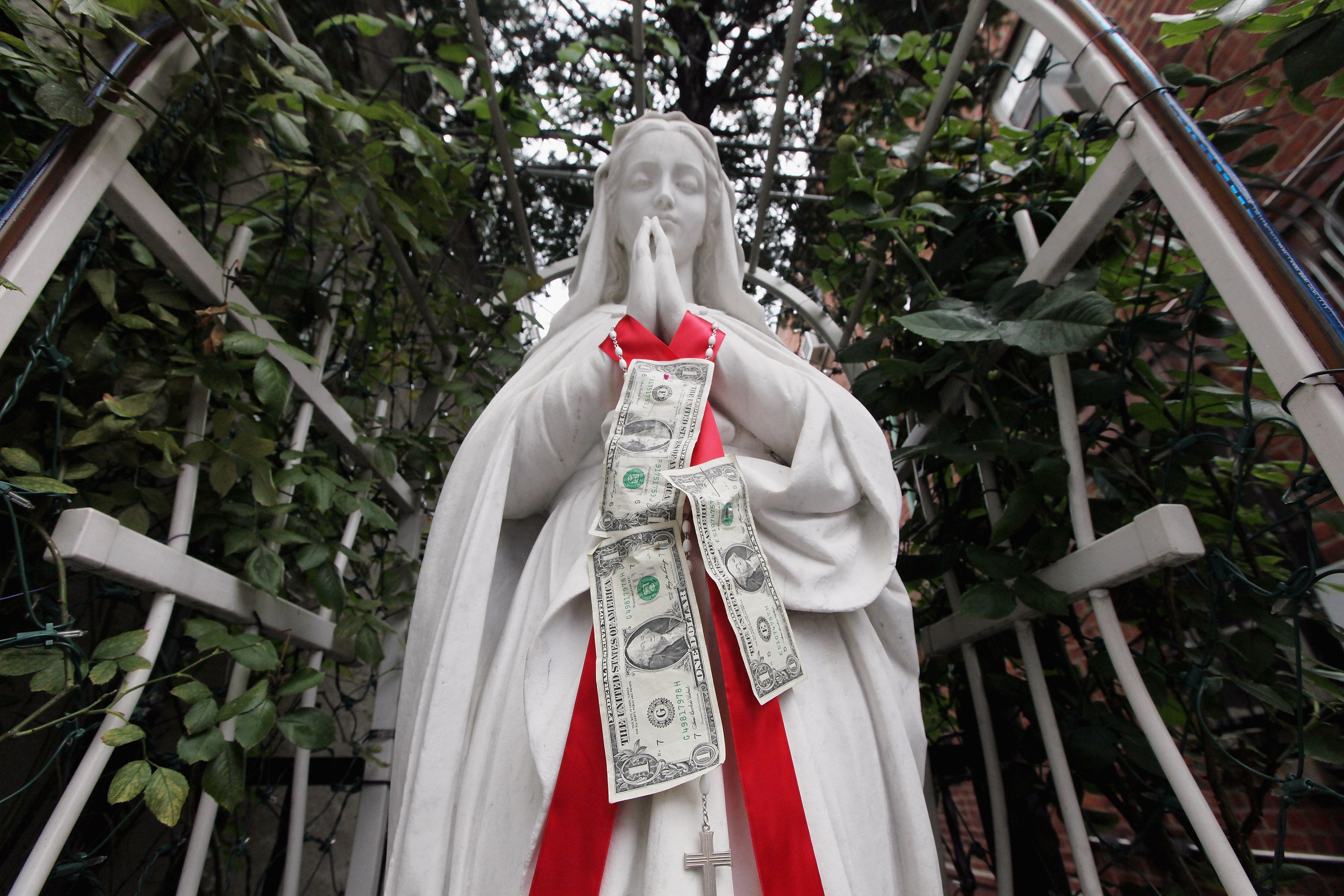
It began with a procession featuring a 3-foot statue of San Gennaro. Hoisted upon men’s shoulders, the saint traveled around the church and the surrounding streets. While en route, devotees tacked dollar bills to his body, as many still do today. There was no blood relic, but there was a purported bone fragment of Gennaro’s specifically donated for the occasion. The chip of bone was placed in a circular container called a reliquary and hung around the saint’s neck. Afterward, the Italians of Little Italy gathered around plates of roasted chicken to toast to their shared heritage and traditions.
The event was a big success. Just two years later, in 1928, The New York Times reported that thousands of ex-Neapolitans were congregating for a festival that had already extended from one day to a full week.
Advertisement
But with triumph came trouble. That same year, New York Police Commissioner Joseph Warren prohibited the procession, arguing that the dollar bills pinned to the statue represented the “profanation of sacred religious symbols.” The decision was ultimately reversed by a New York Supreme Court judge, on the grounds that Warren violated the populace’s religious liberties.
Over the years, the feast has faced its own challenges from within the Italian community (Getty Images)
Warren’s attempt to suppress the procession exemplifies the sort of religious prejudices plaguing Italian communities during that period. But it was not the only form of discrimination Italians faced.
The darkness of southern Italians’ skin subjected them to discrimination, birthing derogatory slurs like “guinea” or “swarthy.” The suspicion that Italian immigrants were prone to criminal behavior was reinforced by real mafia organizations, such as the infamous Black Hand.
These prejudices, combined with the establishment of Italian churches and feasts, led to the belief that Italian immigrants clung too strongly to the traditions of their homeland and refused to assimilate into American culture.
Non-Italians join the party
Advertisement
It was not until after World War II that outsiders no longer hesitated to participate in Italian culture and festivities.
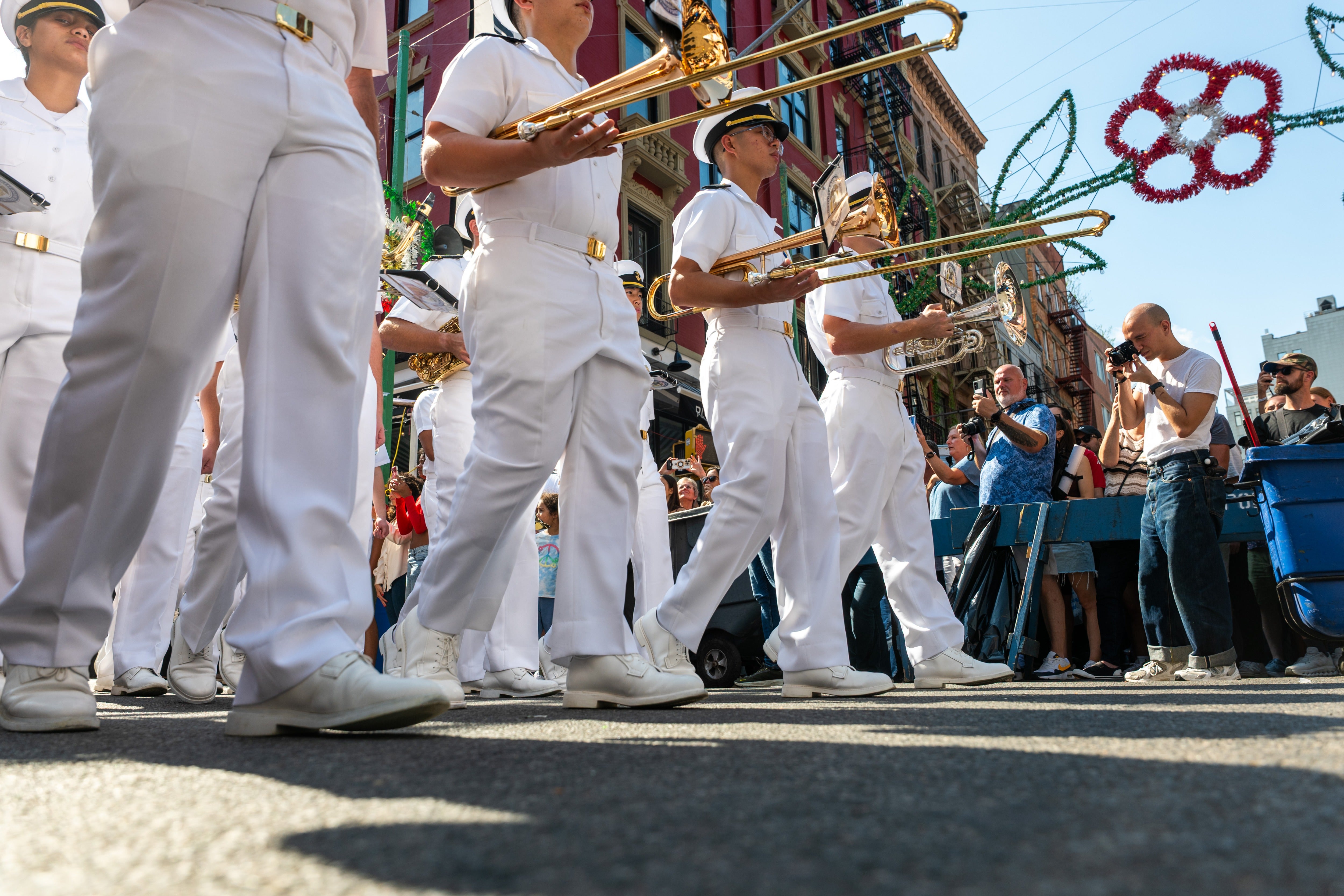
In 1949, local newspapers reported that thousands of people of various ethnic backgrounds attended the riotous feast, where they watched Italians dance to folk songs in the streets and symphonic bands parade through the neighborhood beneath a new innovation: colored string lights casting pops of green, white and red along the city streets. Food played a big role: Stalls piled high with fresh clams, pasta and pastries promised non-Italians an authentic taste of Italy.
From there, attendance ballooned. In the 1960s, chartered buses ushered in Italians from states as far away as Maine and Ohio. By the 1970s, the feast had some 3 million visitors a year. Many locals today still recall how, in the 1960s and 1970s, young men climbed greased-up steel poles set out in the street in hopes of claiming a cash prize. The oily affair was squashed over safety concerns in the 1980s.
Over the years, the feast has faced its own challenges from within the Italian community.
Advertisement
In 2007, some inhabitants of Little Italy petitioned Mayor Michael Bloomberg to cancel the festival, citing the strain that tourists placed on the local neighborhood and mafia interference. In 1996, for example, 19 members of the Genovese crime family were arrested for gambling, collecting dues from vendors and even stealing money off Gennaro’s statue.
Nevertheless, Bloomberg declined to interfere. The event, he said, was a part of New York itself.
No one understands this more than the organizers of this year’s feast. When discussing the plans for 2026, the committee declared that this event was not just an Italian festival, but a tribute to New York’s cultural melting pot.
The 100th festival is dedicated to the Italian Americans who contributed to the city’s birth, an honor that arrives at a moment of controversy. Two months prior, Mayor Zohran Mamdani omitted Little Italy from a map of the city’s immigrant enclaves, sparking immediate backlash. While Mamdani vowed to reinsert the neighborhood, some argued that the omission accurately reflected the dwindling number of Italians living along Mulberry Street.
Advertisement
The controversy underscores the question fueling the centenary: How should the immigrants who built the city of New York be honored, even as the descendants of many of those immigrants have left their old neighborhoods for different parts of the country?
Perhaps the answer is this year’s grand marshal, San Gennaro himself, who continues to serve as a bridge between the children of the Italian diaspora and their forefathers, just as he did in 1926.
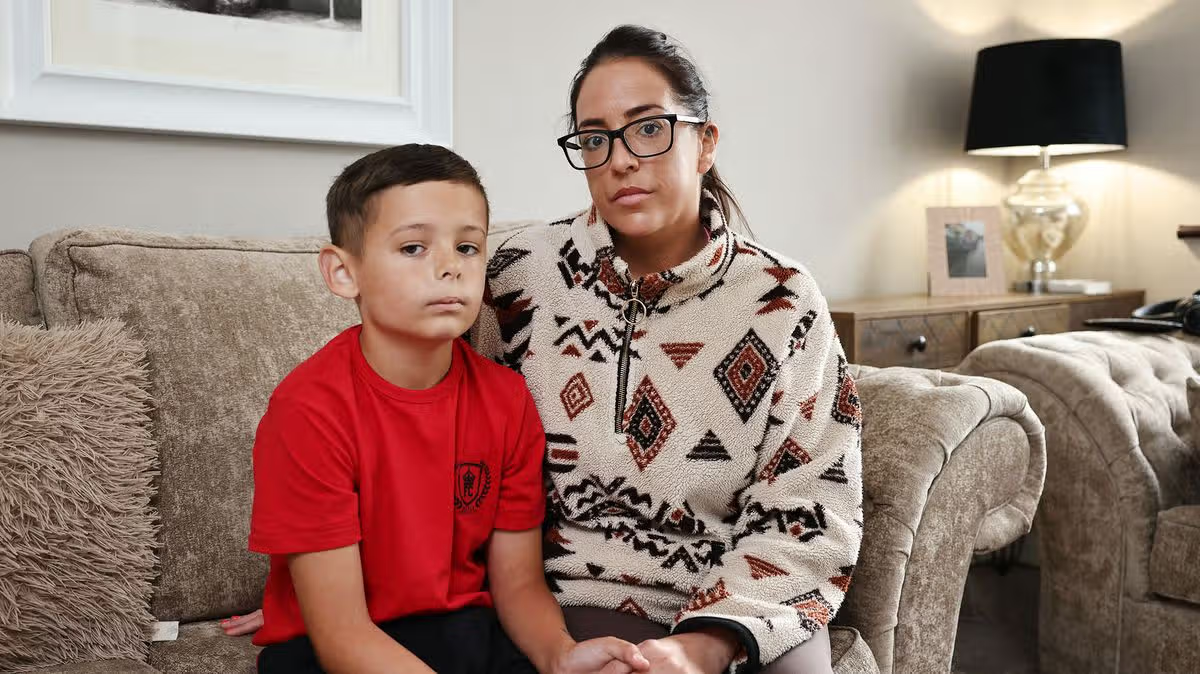
A Belfast mum has spoken of her frustration and concern as her nine-year-old son has been left without a school place after being told his current one is no longer suitable.
Parker McGreevy, 9, has a number of additional needs but had been attending a primary school up until the end of last term. A SEN provision had been made available to him at the school but he struggled when there was an increase in the number of other children who began attending it.
His mum Louise McCrory says that at the end of the last school term a meeting was held where it was deemed that Parker would develop better at a dedicated special school and his SEN statement was updated to reflect this.
Parker then left his previous school after Louise was told it did not have the resources to meet his needs, and she believed he would get a new place based on the meetings that had taken place. However, three weeks into the new school year Parker is still without a place in school – with Louise claiming the Education Authority (EA) has told her there are no places available for him.
Speaking to Belfast Live, she said: “Parker had been going to a school in West Belfast since nursery and it had been very good at doing what it can to support him. He has had a statement of special educational needs throughout his time in school and had been in his own unit where he was doing very well.
Advertisement
“Last year things got a bit more challenging for Parker and as other children joined the SEN unit he found it difficult and his behaviour became harder to manage.
“At the end of last term there was a meeting and it was decided that Parker would do better in a dedicated SEN school and his statement was updated to say so. We agreed that it would be better for his development and I was led to believe that as he would no longer be attending his previous school there would be a place lined up for him. But it turns out there wasn’t.
“The EA has said Parker still has a place at his old school, but I have emails saying that it does not have the resources to meet his needs so he is stuck in limbo at home. We have been told there is only one school that would be suitable for him but there are no places there.
Advertisement
“After the meetings that we had at the end of last term it is disappointing that the new school year has started and Parker doesn’t have a school he can go to.”
An EA spokesperson said: “EA has repeatedly highlighted the urgent need for significant investment to increase special school capacity and expand specialist provision in mainstream schools. We fully recognise the family’s concerns and understand how important it is that their child receives the right support at the start of the school year.
“Capacity limits on special schools remain a serious concern, with rising demand meaning much of the estate is close to, or at, capacity. This means there will be cases where the available placement is not the family’s preferred option.
“Provision is based on a child’s assessed needs and current capacity. Where required, EA will provide schools with additional support to meet the needs of individual learners. We remain committed to doing everything possible to ensure pupils can access supported education within this challenging context.”
A British mother who was kidnapped in Malawi has made a safe return home following a daring rescue mission.
Nusrat Osman, 47, was abducted in the Mount Pleasant area of Blantyre last Friday.
The mother-of-two has now been found safe and returned home, her brother Shobi Jiwa confirmed.
Mrs Osman, from Leicester, had been working in Malawi as an auditor after moving to the country for her husband’s job.
Advertisement
Jiwa said a senior police officer was shot during the operation to rescue his sister.
Deputy Inspector General of Police Noel Kayira was shot during the operation to find Mrs Osman but survived and was said to be out of danger.
He did not disclose where the shooting occurred or identify the people who were allegedly holding Mrs Osman.
‘We are deeply grateful to Noel Kayira, Deputy Inspector General of the Malawi Police, who took a bullet to his body and bravely saved our sister Nusrat,’ he said.
Advertisement
The development comes six days after police reported Mrs Osman had been abducted.
Police said four men believed to have been using a grey Nissan Dualis snatched the mother off the street as she did the school run.
Nusrat Osman, a mother of two young children, is from Leicester and was working in Malawi as an auditor
Advertisement
The Malawi Police Service had offered a K30 million reward for credible information leading to Mrs Osman’s rescue and the arrest, prosecution and conviction of the perpetrators.
Jiwa said is sister is is ‘smiling’ and, miraculously, ‘not too shaken’ after the terrifying capture.
Speaking before she was found, Jiwa described the ‘traumatising’ moment of the kidnapping, saying four armed men dragged Mrs Osman out of her car and took her away.
‘My sister has been missing for five days with no trace or call,’ he said.
Advertisement
Asked if he had any idea about the motive, he added: ‘There is nothing we can think of.’
Local outlet Nyasa Times spoke to her husband, who said: ‘I don’t know where she is or how she is. My wife is an auditor and I have no issues with anyone.’
Water companies say that despite the rain, reservoir levels are still low
Cambridgeshire water companies have provided a major update on hosepipe bans – as the county continues to recover from a record-breaking summer. This summer was one of the hottest on record, with temperatures exceeding 30C and a drought officially declared.
Advertisement
As a result, Cambridge Water and Anglian Water put hosepipe bans in place. The water companies have both said that despite recent rainfall, the bans will remain in place.
Anglian Water anticipates the ban to last for “several months”. An Anglian Water spokesperson said: “Our region is on course to experience its driest spring and summer period since records began in 1899, and this summer is also likely to be the hottest on record for England.
“The Environment Agency declared a drought for the East of England at the end of July, with the rest of the Anglian Water region being moved to drought status on August 10.
“After no significant rain for the last few months – with our region seeing just three per cent of the usual rainfall in July – it will take a long time, probably several months, to recover from this drought.”
Advertisement
Cambridge Water said the task of replenishing water sources is just at the “start of the recovery process”.
A spokesperson added: “Hosepipe restrictions remain in place for Cambridge Water customers. Water sources take much longer to replenish than it takes for the rain to fall, so while the recent wet weather has helped, it is just the start of the recovery process.
“We’re monitoring conditions every day and will remove the restrictions as soon as it is responsible and safe to do so. In the meantime, we’d like to thank customers for their ongoing support and efforts to use water wisely.”
Manchester City manager Enzo Maresca spoke about Brazilian winger Allan after he got a goal and an assist on debut
Enzo Maresca thinks that Brazilian winger Allan will be better after discovering what English football is about in the Carabao Cup win over Norwich. The 22-year-old summer signing endured a tough start, repeatedly being outmuscled by Norwich defender Darlin Yongwa in the first 20 minutes.
Advertisement
However, he shrugged that off to set up fellow debutant Floyd Samba for the opening goal and followed that up with a confident run and finish after the break to score his first goal. Sporting director Hugo Viana has already warned that Allan will take some time to settle at the club, and Maresca has more experienced options in Antoine Semenyo, Jeremy Doku, Iliman Ndiaye, Rayan Cherki and Phil Foden.
But the Manchester City coach was still happy with what he got from the player on his first appearance – and the fans have already given him his own song. “It was a good performance. It was not easy for him, first time 90 minutes, first minutes here at home so it’s always complicated,” said Maresca.
“It was important for him to play 90 minutes and to see a little bit the English competition that is a bit different from South America so overall was good. He scored a goal, one assist, so I think he’s happy.
“We have different competitions. We have many games and we are just at the beginning of the season. The ones that play tonight are going to play Premier League or Champions League games because the season is long. We have him, Jeremy Doku is close to being back, Antoine, Ili, Ryan McAidoo. We have different kinds of wingers and hopefully we can use all of them.”
Wendy Sobeck said she and her husband were at their rural home, just minutes from the crash site, when they heard a “very loud crash” down the road.
“We thought there was a car accident outside our house,” she said. “We saw big billowing black smoke. We couldn’t tell what it was, so my husband got into his pickup truck and saw what happened.”
She said they could see debris from the aircraft in the field, adding: “Explosions kept happening.”
Smoke seen rising from the crash site(Image: Fox2)
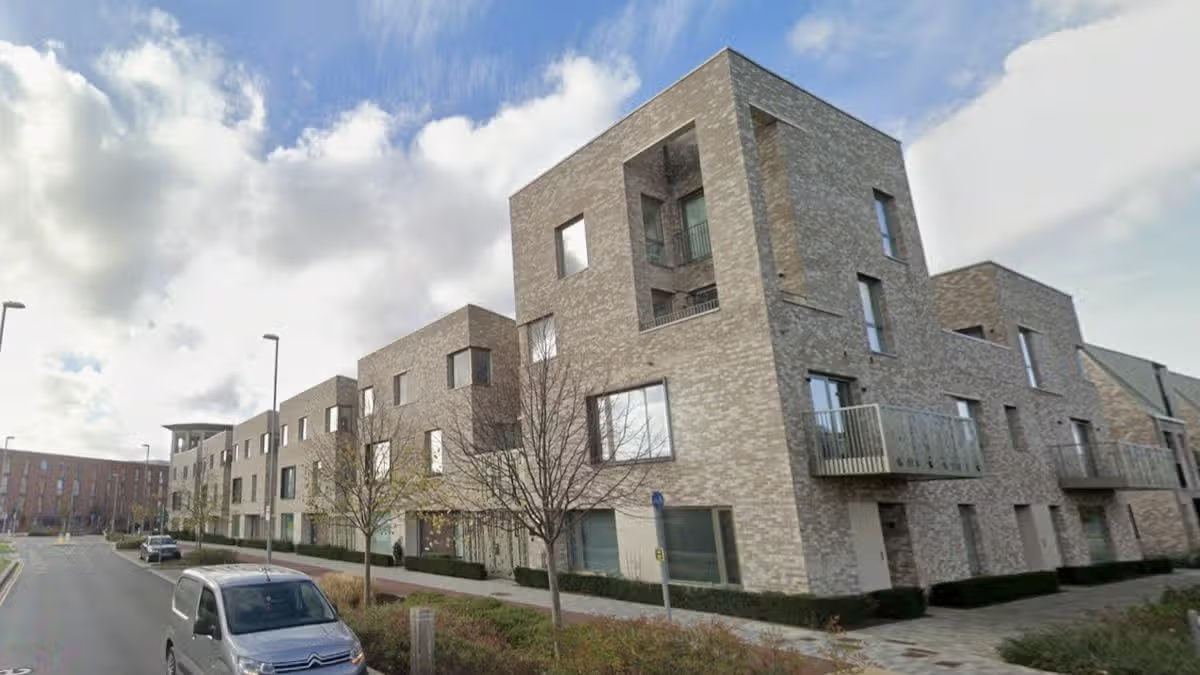
Cambridge City Council and South Cambridgeshire District Council jointly approved the scheme
A proposal to expand a new housing development by thousands of homes has been given the green light. The University of Cambridge applied for up to 3,800 homes to be added to the Eddington development, which was built over the last decade.
Advertisement
Cambridge City Council and South Cambridgeshire District Council’s joint development management committee met to discuss the next phase of the plans for the area between Huntingdon Road, Madingley Road and the M11.
A representative of the Storey’s Way Residents Association said the scheme would have a density “about three times that of Cambridge City”.
He said: “We’re also not confident that the infrastructure will cope with this level of development. There should always be sufficient essential services for the residents of Eddington and the surrounding areas, but this has not been the case so far.
“An 11-year-old boy, a resident of Storey’s Way, came to leave the primary school in Eddington last year and the only secondary schools available to him to apply to were in Bottisham, nine miles away, and St Ives, 14 miles away. This seems to be absurd.”
Advertisement
Matt Johnson, speaking on behalf of the university, said that 50 per cent of the new homes would be affordable housing for key workers at the university.
He said: “For many of the people the university needs to recruit, finding a suitable and affordable home in Cambridge is a significant barrier. Addressing that challenge is essential to the university’s continued success and, in turn, to Cambridge’s wider economy.”
The plans also include accommodation for up to 1,675 students, bringing the total amount of student accommodation in Eddington to 2,000 homes. Over a third of the development will be kept as green and open space and the plans include new community facilities and pedestrian and cycle connections.
A total of 3,000 homes were approved in 2013 with 1,848 of these built during the first phase of the development. The 3,800 proposed in the latest phase would take the total number of homes in Eddington to 5,648 – an increase of 2,648 from what was originally approved.
Advertisement
Cllr Anna Bradnam, vice chair of the joint committee, said: “That looks like quite a startling uplift at first sight.”
But the Lib Dem councillor said the government’s recent changes to planning policy, and recognition that “substantial housing growth is necessary to sustain Cambridge’s economic success”, creates a presumption in “favour of sustainable development”.
She said: “Indeed that includes maximising dwelling numbers in specific areas”.
Cllr Bradnam said she felt the application was “managed very thoughtfully” and said she would support the plans.
Advertisement
The outline planning application was approved by the joint committee, with detailed proposals for each part of the development still to be decided. Professor Anna Philpott, pro-vice chancellor for resources and operations at the University of Cambridge said she was “delighted” with the decision.
She said: “Eddington has already demonstrated how sustainable, well-planned development can create a thriving and inclusive community. These future phases will build on that success, delivering much-needed homes for University staff and students, alongside employment space, community facilities and green spaces that will benefit the whole city.”
The university said they expect detailed proposals to be brought forward from early 2027.
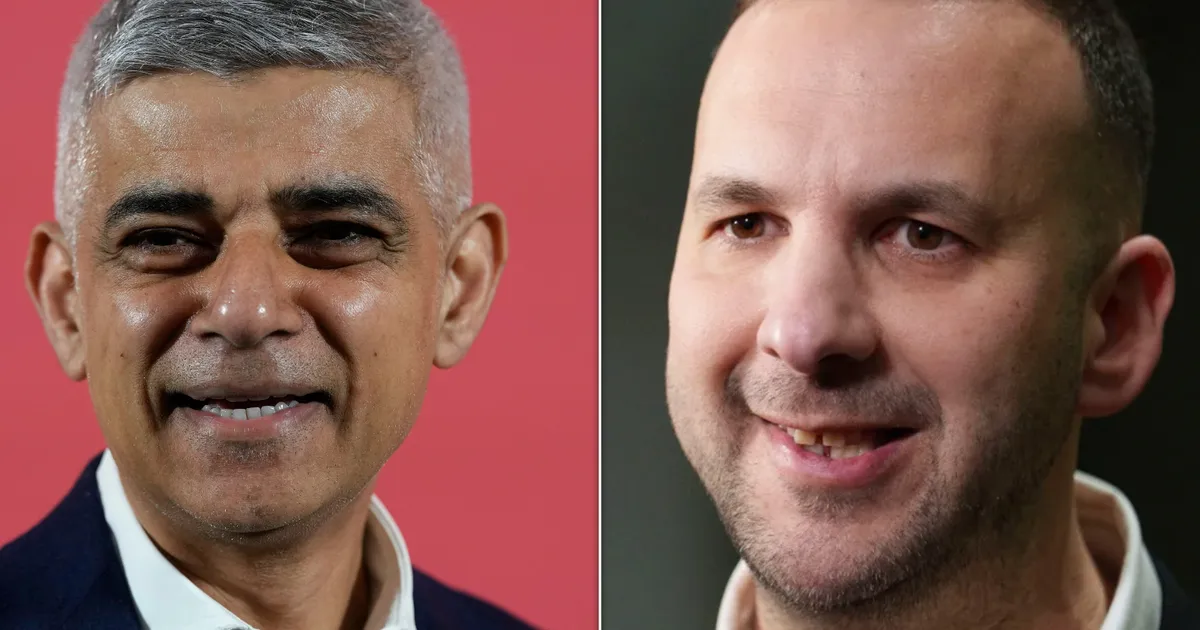
It came after the Green Party leader, who is a member of the London Assembly, was criticised for posting a campaign video in the national language of Pakistan.
Business secretary Jonathan Reynolds said it made him feel “uncomfortable”.
Tory shadow communities secretary Katie Lam went even further by describing Polanski’s video as “poisonous” and said campaigning in a foreign language should be banned.
Advertisement
In the video, Polanski introduced himself and encouraged voters to back him in the Holborn and St Pancras by-election on October 8.
At mayor’s question time in the London Assembly on Thursday, Polanski asked Khan a question about data centres.
In a nod to the Green Party video, Khan answered in fluent Urdu.
According to a translation provided by the mayor’s office, he said: “Peace be upon you. I was worried that you would ask the question in Urdu, but you asked your question in English.
Advertisement
“I’ll be spending time in Holborn and St Pancras this week and I’m going to be there. Maybe we will meet there.”
Responding to the controversy over Polanski’s video, a Green Party spokesman said: “The Greens believe that democracy doesn’t discriminate by languages spoken. Many people are bilingual.
“Holborn and St Pancras is a true reflection of the diversity of London and of our country and we choose to embrace and celebrate that.
“If we want to speak to people who speak Urdu, it makes sense to speak to them in Urdu. We’re proud to reach voters in as many languages as possible”
Advertisement
Listen to Commons People, the podcast that makes politics easy. Every week, Kevin Schofield and Kate Nicholson unpack the week’s biggest stories to keep you informed. Join us for straightforward analysis of what’s going on at Westminster.
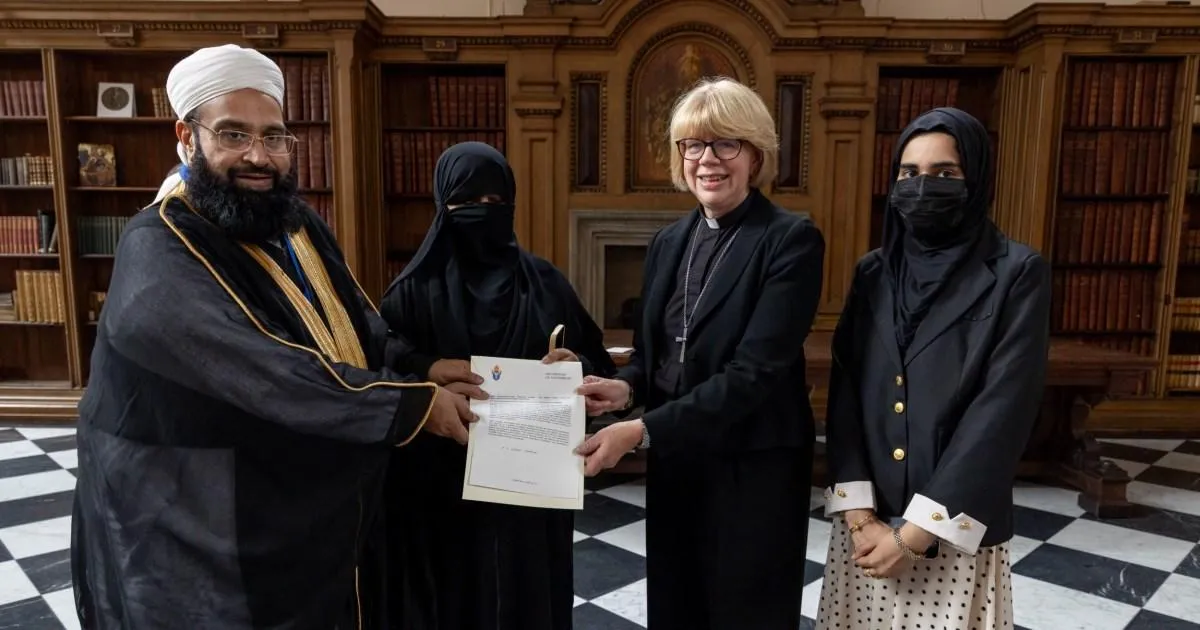
A Muslim cleric has had an award revoked by the Archbishop of Canterbury’s office (Picture: Neil Turner/Lambeth Palace/PA Wire)
The Archbishop of Canterbury’s office has revoked an award given to a Muslim cleric on the 25th anniversary of 9/11 due to Osama bin Laden comments.
Hafiz Muhammad Tahir Mehmood Ashrafi was given The Hubert Walter Award on Friday by Dame Sarah Mullally for reconciliation and interfaith co-operation.
However, in 2007, when serving as head of the Pakistan Ulema Council group of Islamic clerics and scholars, he had said Bin Laden should be given the title Saifullah.
This means ‘Sword of God’, which he said would be for ‘serving Muslims by waging jihad against infidelsserving Muslims by waging jihad against infidels’.
Advertisement
Ashrafi was pictured at Lambeth Palace, the Archbishop’s London home, as he was recognised ‘for his outstanding work as an ambassador of interfaith harmony in Pakistan.’
Sign up for all of the latest stories
Start your day informed with Metro’s News Updates newsletter or get Breaking Newsalerts the moment it happens.
However, the National Secular Society (NSS) criticised the award after previous comments about Osama bin Laden resurfaced.
He previously said Osama Bin Laden should recieve an honourary title (Picture: Getty Images)
The society called it ‘obscene, and almost beyond parody’, especially on such an important anniversary of the World Trade Center tragedy.
The terror attacks in New York in 2001 killed almost 3,000 people, including 87 British citizens, when Al Qaida flew two planes into the Twin Towers.
Advertisement
‘Previous comments made by Imam Ashrafi have come to light that have led Lambeth Palace to reconsider this award and we can now confirm today that the award has been withdrawn,’ Lambeth Palace stated.
At the time of the award, the palace had said: ‘It is a longstanding principle of interfaith dialogue and co-operation that we must engage with one another across deeply-held differences, and that remains the case.’
A representative for Ashrafi has since said the remarks were taken out of context and he had originally said them at a protest against Salman Rushdie’s knighthood.
He explained to the Press Association that he was ‘giving an example’ to show the scale of the offence caused to Muslims by the Satanic Verses author receiving that honour.
Advertisement
His spokesperson said: ‘Regarding Osama bin Laden, Ashrafi’s remarks have been presented without their proper context. His comparison was not an endorsement of bin Laden; it was made in the context of explaining the hurt felt by many Muslims over the British honour given to Salman Rushdie.
‘His longstanding record against terrorism and violent extremism should be considered when assessing such remarks.’
No title was ever given to Osama bin Laden, who was killed on May 2, 2011, during a US military operation.
The award was given on the 25th anniversary of 9/11 (Picture: Lonnie Schlein/Getty Images)
Ashrafi’s spokesperson added that criticism was aimed at his wife and daughter, who wear traditional religious attire.
He said: ‘The decision of Ashrafi’s wife and daughter to observe hijab is their personal and religious right. Ashrafi also dedicated his recent Hubert Walter Award to his wife, acknowledging her support and contribution throughout his work.’
Advertisement
The NSS executive Stephen Evans said: ‘We welcome the withdrawal of this award, but it is astonishing that it was given in the first place – on the anniversary of 9/11, no less.
‘This episode reveals not only appallingly poor judgement and inadequate due diligence, but a dangerous naivety about the religious figures legitimised through interfaith engagement.
‘A Church capable of such a serious failure of judgement should not enjoy constitutional privilege, including 26 bishops making our laws. It is time the Church of England was disestablished.’
Ashrafi was awarded alongside 26 other individuals who had made ‘extraordinary contributions to the Church of England, the Anglican Communion and wider society’.
According to the latest report from the administrators HM Revenue & Customs will also receive nothing towards its £2.4 million claim in unpaid VAT, PAYE and National Insurance.
Earlier this year, US beverage and medical cannabis firm Tilray took over the craft brewer in a deal worth about £33 million after the company collapsed with debts of more than £500 million, leading to hundreds of job losses.
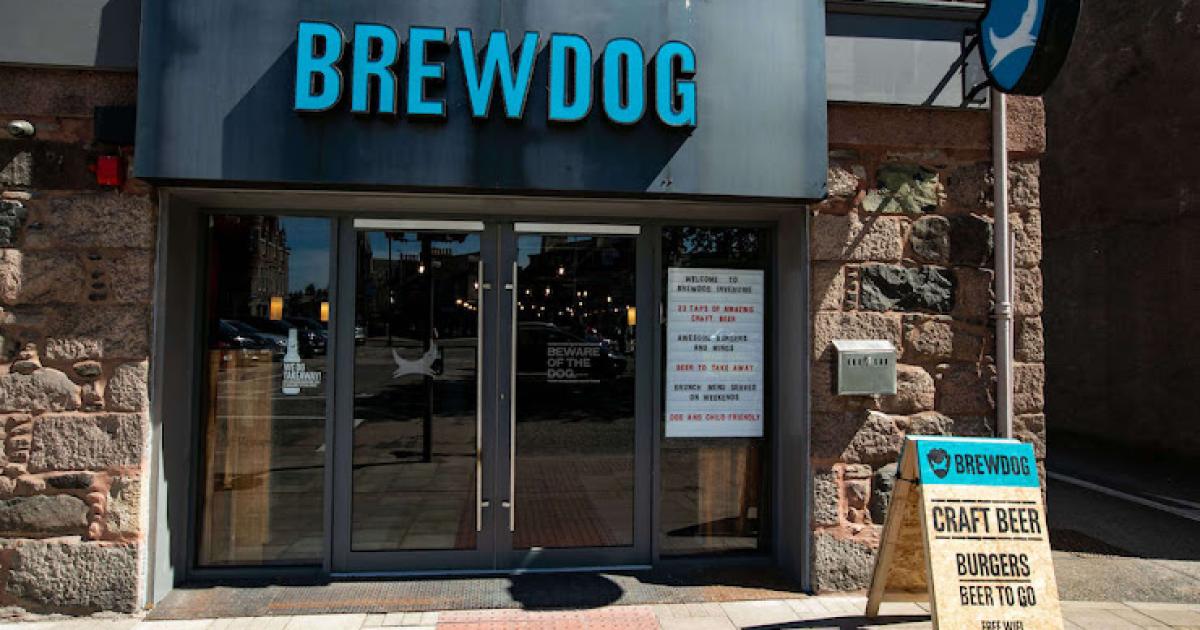
The administration process saw BrewDog close 38 bars while the pre-pack sale rendered the holdings of about 200,000 crowdfunding “Equity Punk” investors worthless.
Tilray bought BrewDog’s brand, intellectual property, UK breweries and 11 bars, safeguarding 733 jobs while 484 redundancies were made across the shuttered pub network.
Advertisement
James Watt, who co-founded the brewer, stepped down as chief executive of BrewDog in 2024 (Image: BrewDog)
The progress report, filed by AlixPartners at Companies House and covering March 2 to September 1, 2026, reveals a sharp deterioration in returns to preferential creditors of BrewDog Retail Limited compared to initial proposals published in March.
At that stage, redundant workers, who are owed around £489,000 in wage arrears and accrued holiday pay, had been told to expect a dividend.
The latest report confirms there are now “insufficient funds” for any distribution to either the workers or HMRC. Unsecured creditors of BrewDog Retail, owed an estimated £207.6m, will also receive nothing.
Administrators blamed the shortfall on the collapse of deals to transfer leases to third-party pub operators, several of which had “progressed significantly” before failing at a late stage.
Advertisement
The administrators had initially expected leases could be assigned within six months of a licence to occupy being granted, allowing premises to be handed over cleanly. Instead, negotiations dragged on, racking up substantial legal, property and site-management expenses.
“The combined effect of increased costs and lower-than-anticipated property realisations has resulted in substantially lower net property realisations for Retail than originally forecast,” the report states. “As a consequence, fewer funds are currently expected to be available for distribution to any class of creditor of Retail.”
The report also reveals that administrators had to call in legal advisers and security teams after “unauthorised occupiers” broke into several closed BrewDog bars.
“During the Period, the Administrators became aware of a number of instances in which unauthorised occupiers had gained access to certain properties, notwithstanding the steps taken to secure the sites following appointment,” the report states.
Advertisement
Administrators had to deal with squatters in shuttered pubs (Image: BrewDog)
Administrators said they worked alongside landlords and agents to remove the squatters, but the unexpected security and court measures directly reduced net funds available from the retail estate.
By contrast, parent company BrewDog PLC is still expected to pay its preferential creditor, HMRC, in full, covering £3.66m in tax liabilities at 100p in the pound. Unsecured creditors of the PLC may also share in a statutory “prescribed part” fund capped at £800,000, though this represents less than one penny in the pound against total unsecured claims of £189.8m.
Senior lender HSBC faces an estimated shortfall of £16.76m across its main facilities, though administrators noted this could be reduced through asset realisations in the United States and government loan guarantee schemes.
Private equity backer TSG Consumer Partners, which took a 22% stake in the brewer in 2017, faces a total wipeout on its debt. TSG holds £27.6m in second-ranking secured loan notes backed by charges over group assets and the Ellon headquarters, with administrators confirming an expected return of nil.












































You must be logged in to post a comment Login