Breaching the order will carry an unlimited fine or a potential prison sentence
From October new ‘Respect Orders’ – also being described as ‘adult ASBOs’ – will come into force, in a major crackdown on antisocial behaviour.
Advertisement
The new ‘Respect Orders’ have been billed as a “modernised” form of the antisocial behaviour orders (ASBOs) created by the last Labour government. They have been issued to tackle behaviour which causes harassment, alarm or distress to members of the public including littering, vandalism, public drunkenness, aggressive dogs or noise nuisance.
They are designed to disrupt and deter persistent offenders of antisocial behaviour. Breaching an order will be a criminal offence and will carry an unlimited fine or a potential prison sentence.
Click here to get the biggest stories straight to your inbox in our Daily Newsletter
Policing minister Sarah Jones said: “Respect Orders will ban perpetrators from the places they blight, force them to confront the causes of their behaviour and make breaching one a criminal offence with serious consequences, including prison.
Advertisement
“This sends a clear message that repeat offenders cannot be allowed to make life a misery for local communities any longer.”
‘Respect Orders’ will be available to police officers, councils, social landlords and a range of other public authorities from October 26. Below is an overview of the new ‘Respect Orders’ which will come into force later this year.
How are Respect Orders different to ASBOs?
While ‘Respect Orders’ are being described as ‘adult ASBOs’, there are a number of key differences between them and ASBOs.
One of the main differences is that ‘Respect Orders’ will only apply to adults who display antisocial behavior.
Advertisement
They will also have the ability to attach positive requirements to the order, prompting the offender to undertake activities which will address the underlying causes of their behaviour. This may include offenders attending anger management courses or drug and alcohol rehabilitation treatment.
How are Respect Orders different to existing antisocial behaviour powers?
The original ‘ASBO’ was replaced in 2014 by the civil injunction and the Criminal Behaviour Order (CBO). These are ancillary orders, meaning they can only be made when the offender has been convicted of a criminal offence.
Civil injunctions are civil court orders which cover antisocial behaviour that does not meet the criminal threshold, however breaching them is not a criminal offence and they do not usually have the power of arrest. This means that antisocial behaviour that does not necessarily meet the criminal threshold for a CBO, and is subject to a civil injunction, cannot be easily enforced by arrest under the current legislation.
‘Respect Orders’ will change this as a breach will be a criminal offence, and therefore arrestable. They will combine the flexibility of the civil injunction with the ‘teeth’ of the CBO to give local agencies a powerful new tool to tackle persistent antisocial behaviour.
Advertisement
What powers will police have under ‘Respect Orders’?
With ‘Respect Orders’ police will have the power to immediately arrest those who are flouting the order. This means people who breach a ‘Respect Order’ could be arrested and face a wide range of penalties at court, including community sentences and potentially prison time.
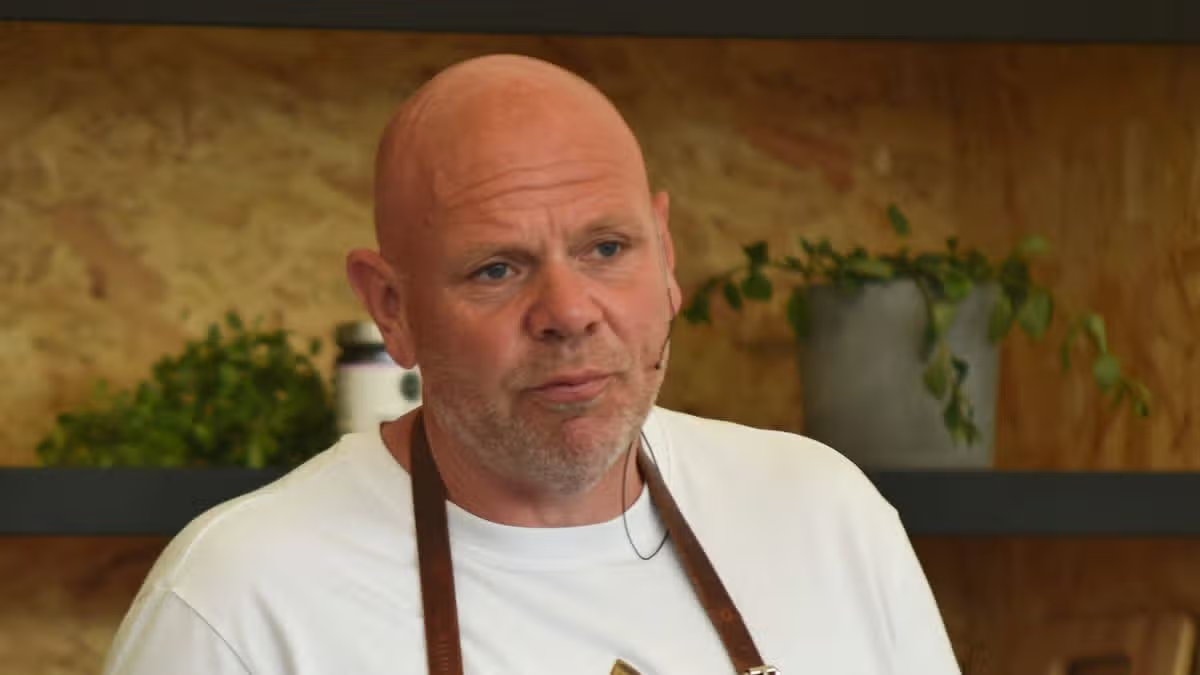
Celebrity chef Tom Kerridge has been in the food and hospitality industry for over 30 years, but he has now named the worst thing he’s eaten
Celebrity chef Tom Kerridge has discussed what he considers the worst meal he’s consumed. Tom, 52, has more than 30 years’ experience working in the food and hospitality sector.
Advertisement
Despite his dedication to work, he has from time to time taken a break, and it was during one overseas trip that he came across a dish he would later describe as the worst he’s ever had.
Speaking on the Good Food Tasted podcast hosted by comedian Patrick Spicer, he was asked by the presenter what the worst food he’d ever tasted was.
At that moment, Tom responded without hesitation. He knew precisely the dish in question and where he had consumed it, reports Gloucestershire Live.
He said: “It was a burger in a, it was 100 percent the worst thing I have ever eaten, in a waterpark somewhere in Portugal and it was beyond. It was the most rotten thing I’ve ever put in my mouth.”
“It was just the worst because it was just like. It was so bad, without doubt. Now, I’ve eaten lots of daft, bad things, like century egg or…like fermented fish and I mean shark fin and all of that sort of stuff.
“This is something that you buy going ‘Yeah, great, I’m going to have burger and fries at a water park somewhere in Portugal’ and it was the worst the thing. It was so bad.”
Meanwhile, when it comes to the very survival of hospitality, Tom has been vocal in his support of the industry despite the numerous economic challenges that have impacted it in recent years.
Advertisement
He has consistently campaigned for greater assistance to be provided, but lately he has been outspoken as he advocates for a VAT cut for hospitality firms; a measure that could save some businesses millions.
If it were reduced, Tom and others have suggested this could offer a valuable slice of relief as businesses continue to battle to stay open.
While England’s involvement during the World Cup has provided a boost, with trading hours stretching into the early hours on some occasions, the tournament concludes this weekend.
Advertisement
With this in mind, figures within the hospitality sector have called for more enduring measures. Speaking to City AM about his latest proposal, Tom contended that businesses were not simply entities which paid taxes and that small enterprises should also receive support.
He said: “No successful business has ever been built on the accountant. Businesses are not built on tax experts. Communities don’t operate on tax experts. And that’s not even a pleasant title, that shows you what that sort of person is.
“Without allowing small businesses to grow, you’re never going to get to that point. So yes, their profit margins will be bigger, but it isn’t about them […] it’s about the survival of your local pub.”
Olivia Attwood has said she has warned Katie Price off her husband Lee Andrews after he was ‘arrested again’ last week.
Back in May, the TV personality, 35, joined Katie, 48, for a fun Instagram as they joked about the whereabouts of their husbands following Olivia’s split from Bradley Dack and Lee’s mysterious disappearance.
Meanwhile, last week Lee, 43, hit out at Vogue Williams and Joanne McNally in an Instagram rant after they discussed his antics on their podcast.
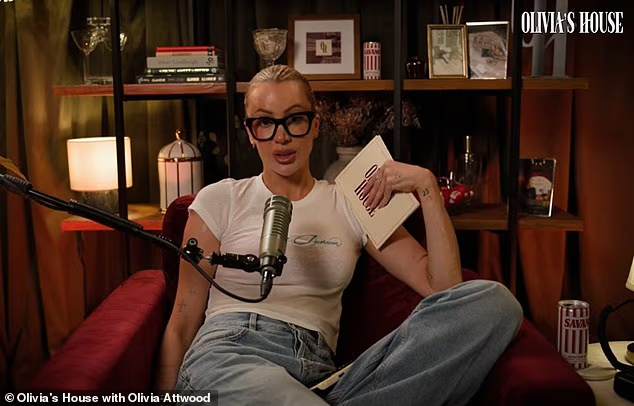
And now Olivia has commented on the situation on her latest episode of Olivia’s House.
Advertisement
She told fans: ‘Lee Andrews is coming for Vogue Williams and my sweet angel, Joanne McNally. What the hell?’
The star continued: ‘Lee Andrews needs to just absolutely get in the bin.
Olivia Attwood has said Katie Price needs to put Lee Andrews ‘in the bin’ and has warned her off him after they poked fun at him in silly Instagram video back in May
Advertisement
Olivia told fans: ‘Like Katie’s a friend of mine. N o one can make me hate Kate, but this guy, I told her to her face when I seen her the other month, it’s bad vibes’
‘Like Katie’s a friend of mine. No one can make me hate Kate, but this guy, I told her to her face when I seen her the other month, it’s bad vibes.’
In May Katie filmed an Instagram video with Olivia during the time of Lee’s first arrest as the two said they are ‘two gals with not a husband in sight’ (sic).
Chatting to the camera, Katie said: ‘We’re missing something’, as Olivia replied: ‘Yeah, well I have looked for him but…’
Advertisement
‘Well mine is missing so at the moment it doesn’t look good does it’, Katie said.
‘No we’ll keep looking I guess’, Olivia replied.
‘We’re missing our husbands’, added Katie as the pair started to laugh.
In a second photo, Katie and Olivia held their hands over their faces looking shocked as they penned: ‘2 gals. Not a husband in sight @katieprice’ (sic).
Advertisement
Meanwhile last week Vogue responded to Lee‘s Instagram rant about her, in a hilarious exchange on her podcast which saw him send a bizarre message back in return.
The unlikely celeb feud has been going on for weeks with Vogue calling out Katie’s husband and his outlandish antics, prompting Lee to respond on Instagram insisting he had never heard of the TV star.
During the latest episode of her My Therapist Ghosted Me podcast with Joanne McNally, Vogue decided to message Lee directly to ask about his online rants directed at her.
On previous episodes of her podcast Vogue initially said she was reluctant to talk about Lee because she has a problem with the fact he is trying to ‘make people seem stupid’ by feeding them fabricated stories.
Advertisement
‘He’s taking the p**s out of everybody. This is why I have such a problem with it, I’ve likened it to being really stupid. He’s trying to make people seem stupid and think that we actually believe his b******t and I can’t bear it.
In May Katie filmed an Instagram video with Olivia during the time of Lee’s first arrest as the two said they are ‘two gals with not a husband in sight’ (sic)
Meanwhile last week Vogue responded to Lee’s Instagram rant about her, in a hilarious exchange on her podcast which saw him send a bizarre message back in return
She added: ‘I feel like he doesn’t even have two brain cells to rub together, that’s how I feel about him and I hate being dragged down to his level.’
Advertisement
Vogue has also said she feels sorry for Katie, and called him a ‘con artist’.
Lee then posted on Instagram, promising to ‘name and shame the 58, the 60 people from the celeb world that actually basically slating me’.
Lee continued to the camera: ‘[Everyone] everything bad about me, saying all these things that are not true. I’m gonna call them out individually because why not, they’ve dubbed me their Britain’s Bad Boy, might as well play into that now.’
He went on to accuse the I’m A Celeb star of being a ‘clout chaser’ and claimed he had ‘never even heard of Vogue Williams’ and ‘had to google who she actually was’.
Advertisement
On the latest episode of her podcast with Joanne, Vogue laughed off the comments, telling listeners: ‘Lee tagged me and said that I was clout chasing after his name and his 150 million followers!’
Joanne jumped in and said ‘the absolute hypocrisy of a man who lives to chase clout. He literally set up a cameo two weeks after marrying Katie Price. I’ve never seen clout chasing like it.’
‘He tagged me again I’m getting it in the neck again tonight at 10:00 p.m. UK time,’ Vogue then said.
A child-friendly ride into the world of finance. This premiere from experimental theatre-makers Nigel Barrett and Louise Mari uses an interactive voting system, a mischievous clown and a DJ set to get young heads spinning with thoughts about how money works. Developed in consultation with financial experts and supported by the Bank of England, it’s a must for budding financial whizz-kids.
Can NT boss Indhu Rubasingham crack Rudyard Kipling’s beloved family tale? It’s her first big festive show on the Olivier stage. Set in the Indian mangrove forest of the Sundarbans, Hiran Abeysekera (Olivier-winning for Life of Pi) leads as man-cub Mowgli, who must discover where he belongs. Anupama Chandrasekhar adapts, with puppetry from Nick Barnes and Finn Caldwell; will the original score from Spanish composer Fernando Velázquez rival that familiar Disney magic?
Olivier Theatre, National Theatre, London, Nov 13-Feb 6 2027
The former First Minister’s statement was issued by her lawyer Aamer Anwar.
17:07, 16 Jul 2026Updated 17:07, 16 Jul 2026
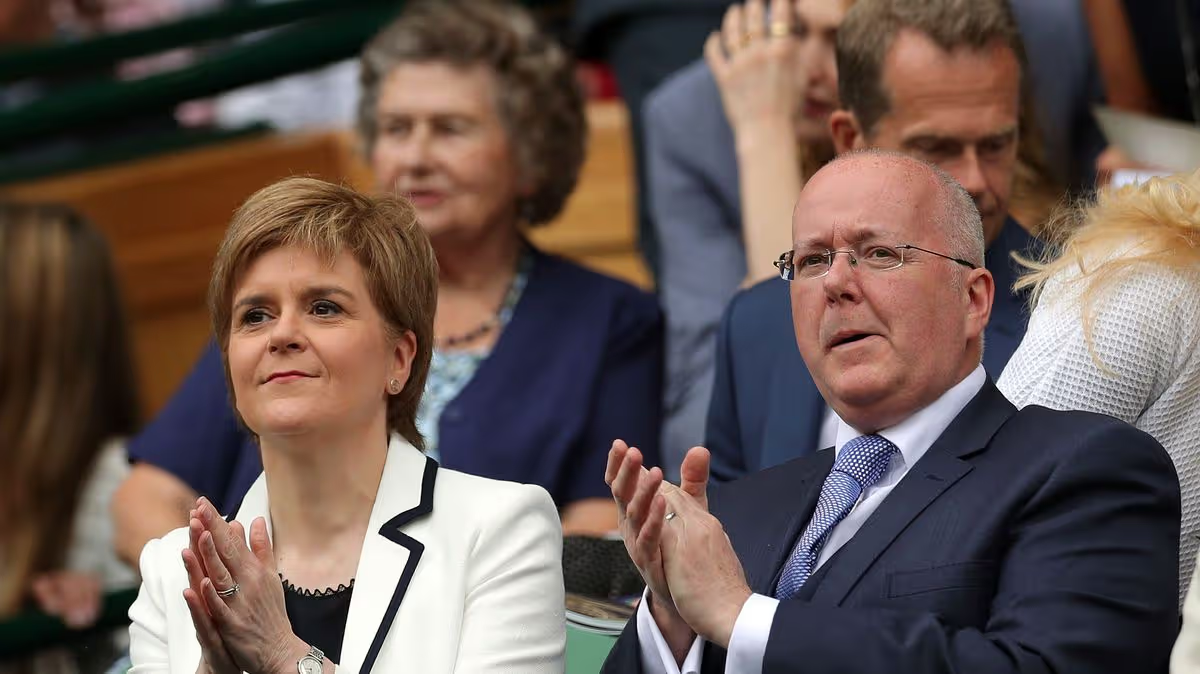
Nicola Sturgeon has claimed a Tory MP who accused her of knowing about husband Peter Murrell’s crimes is a “coward”.
The former First Minister said David Davis is a member of an “Old Boys’ Club” who has told “lies” about her.
Sturgeon’s statement came after Davis, an ally of the late Alex Salmond, used parliamentary privilege to make shocking incendiary claims.
Advertisement
Her estranged husband, Peter Murrell, was jailed last month after embezzling more than £400,000 of SNP funds when he was chief executive of the party.
She has denied any knowledge of his crimes, but Davis said:
“My view on her denials is clear. She is lying. She knew full well what her husband was doing and how those luxury purchases were funded.”
He also accused her of the “evil act” of “stitching up” Alex Salmond to “hide the truth”.
Advertisement
Salmond faces allegations of sexual assault in 2019, but he was cleared after a trial.
Davis said: “It now appears clear that these actions to destroy a man’s reputation and life were motivated by a desire to hide their own crimes.”
A statement by solicitor Aamer Anwar, on behalf of his client Sturgeon, said of Davis: “This member of the ‘Old Boys Club’ has been spreading conspiracy theories on behalf of the late Alex Salmond since 2021 – and now he is telling more lies about me.
“The fact that he hides like a coward behind the legal privilege of Westminster says everything we need to know about him.”
Advertisement
Using parliamentary privilege allows an MP to speak in the House of Commons without being sued.
Davis also said: “There’s a clear pattern of secrecy, obstruction, and power used to protect power, a pattern started by Sturgeon.
“Scotland needs a fresh start.
“That starts with a judicial inquiry into this entire sordid scandal because it’s a scandal that cost Alex Salmond his life.”
New cars sold in Britain will not be required to be fitted with equipment that easily allows the installation of in-built breathalysers, the government confirmed today.
Following a consultation that closed in May, officials said on Thursday that Alcohol Interlock Installation Facilitation (AIIF) – one of 18 active safety features being considered for mandatory fitment on new models to mitigate crashes – will not be a legal requirement.
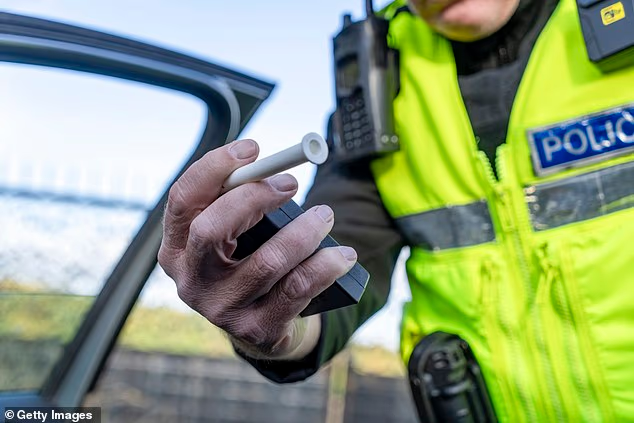
AIIF is a standardised interface, wiring system and connection that allows any aftermarket alcohol breathalyser – also known as an ‘alcolock’ – to be installed in vehicles owned by drivers with previous drink-drive convictions.
Systems that are now set to become mandatory in new models include blind-spot warnings, tyre-pressure monitoring, drowsiness and attention monitoring cameras, and emergency braking technology designed to protect pedestrians and cyclists.
Advertisement
Also mandated will be controversial Intelligent Speed Assistance (ISA), which is speed-limiter technology that warns motorists when they are over the limit and can – in some cases – actively slow a speeding vehicle.
The government said it will keep AIIF under review as broader policies regarding alcohol interlocks develop.
However, vehicles already on sale in Britain – and many of those sold in the future – are likely to have AIIF fitted by manufacturers that do not want to incur the additional cost of producing UK-specific models that differ from those sold in the EU.
The government’s decision has been labelled ‘disappointing’ by road safety organisations after studies showed support for technology that can be used to prevent repeat drink-drive offenders from reoffending.
Advertisement
Alcohol Interlock Installation Facilitation (AIIF) technology will not be made mandatory for cars at this time, the government has ruled following a vehicle safety consultation
The ruling comes as part of the outcome of a safety consultation published by the Department for Transport (DfT).
The consultation was launched because road traffic collisions remain a major cause of death and serious injury on British roads, while progress in reducing the number of people killed or seriously injured has slowed.
Advertisement
Collision data shows that human factors, including distraction and excessive speed, remain major contributors to road casualties.
Evidence also suggests that advanced vehicle safety technologies – from blind-spot monitoring to drowsiness warnings – can help prevent collisions, reduce their severity and better protect vulnerable road users.
Views were sought on alcohol interlock interface facilitation technology as well as the mandatory introduction of 18 vehicle safety technologies.
AIIF facilitate for in-car breathalysers to be installed in vehicles driven by people with previous drink-driving convictions.
Advertisement
The devices effectively block the car’s engine from starting until the driver provides a legal specimen of breath.
Yet more respondents, across both individuals and organisations, agreed than disagreed with the proposal not to mandate alcohol interlock interface facilitation at this stage.
The number of road deaths involving at least one drink-driver fell between 2022 and 2023, but fatalities remain higher than they were a decade ago
Respondents were asked: ‘Do you agree or disagree with our proposal not to mandate this technology at this time?’
Advertisement
Of the 220 responses received, 55.5 per cent agreed with the proposal not to mandate AIIF at this stage.
Those who agreed with not mandating AIIF referred to proportionality and timing, regarding it as a lower priority than the wider package of vehicle safety technologies, and did not want to see AIIF delay the implementation of those measures.
Others pointed to the safety benefits of AIIF being dependent on a future alcohol interlock programme, meaning requiring the interface at this stage was unnecessary.
Respondents also raised concerns about costs and implementation burdens, particularly as some felt AIIF would be unnecessary for most vehicles.
Advertisement
Technology readiness, the current evidence base and the need for further policy, and legislative development were also cited as reasons not to make AIIF mandatory at present.
However, those in favour of mandatory AIIF, including the RAC, argued that the technology is a crucial component that could support the future use of alcohol interlocks, particularly in rehabilitation or offender programmes.
Responding to the DfT’s conclusion, RAC senior policy officer Rod Dennis said: ‘Given the Government has also consulted on introducing an alcohol interlocks programme for drink-drivers as part of its consultation on the Road Safety Strategy, it’s disappointing that it has decided alcolock interfaces should not have to be fitted to vehicles as standard.
Advertisement
‘It feels like a missed opportunity because it would have made it easier to fit alcolocks to the vehicles of repeat offenders in the future.
‘This is not about alcolocks being fitted to all vehicles; it’s about making it easier to install these devices in the vehicles of repeat drink-drive offenders so they cannot get behind the wheel drunk again.
‘RAC research shows there is strong support among drivers for alcolocks being used in this way.’
A Department for Transport spokesperson said: ‘Driving under the influence of alcohol puts everyone at risk, and every drink‑drive collision represents a preventable tragedy.
Advertisement
‘Through our Road Safety Strategy we have sought views on a range of measures to tackle drink driving. While we’re not mandating the use of alcohol interlocks, we have consulted on their potential use as part of a rehabilitation process for offenders. We are now analysing responses and will set out next steps in due course.’
Does the public want alcolocks to be introduced?
Motoring organisations such as the RAC have called for their introduction after statistics showed that tens of thousands of convicted drink-drivers go on to reoffend.
A Freedom of Information request submitted to the DVLA by the Press Association found that 27,000 individuals were convicted of multiple drink-driving offences in the 11 years leading up to July 2024.
Last year, 53 per cent of drivers polled by the RAC said they wanted the Government to allow courts to order anyone convicted of drink-driving to have alcolock breathalysers installed in their vehicles.
Advertisement
Support for alcolock devices is not unanimous, however. Some 23 per cent of motorists told the RAC they did not believe alcolocks would reduce drink-driving, while a further 23 per cent said they were unsure about the idea.
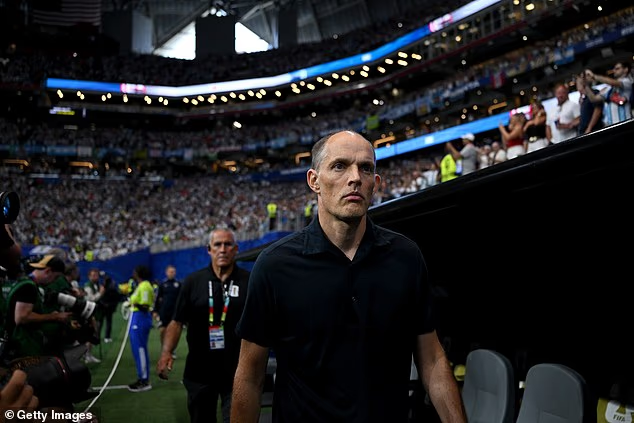
Thomas Tuchel was supposed to be the man who would turn water into wine. That was what the Football Association told us. That was the rationale for turning its back on the work that Gareth Southgate had done with the England team and paying big money for a quick-fix super-coach who would win the World Cup.
When Southgate left after the 2024 European Championship, the FA chose not to build on what he achieved. They did not have the courage to do what the Spanish Football Federation did when they promoted Luis de la Fuente, a successful coach of its youth teams, to the senior job when Luis Enrique left after the 2022 World Cup.
Lee Carsley had won the European Under-21 Championship with England – and won it again last year – but was deemed not good enough by the FA, who abandoned their principles of a coaching pathway for English talent by appointing a foreign manager.
The rationale for deviating from a path that had brought significant steps forward in the evolution of the England team – England reached the final of the European Championship in 2021 and 2024 and the semi-finals of the World Cup in 2018 – was that England needed a coach of Tuchel’s proven talent at club level to take them over the final step.
Advertisement
It was a high-stakes gamble and on Wednesday night, that gamble failed. When England lost to Argentina in the Atlanta Stadium, blowing a 1-0 lead, the tactical sophistication that Tuchel had promised was replaced with neanderthal football.
England invited wave after wave of Argentina attacks. They gave Lionel Messi, the greatest player the world has ever seen, time and space. They seemed surprised when Messi laid on two goals in seven minutes in the dying stages of the game.
Thomas Tuchel was supposed to be the man who would turn water into wine. But he couldn’t live up to that reputation
Advertisement
Not only did England lose to Argentina, but they lost playing neanderthal football
‘I found it absolutely unfathomable,’ former England striker Gary Lineker said after the match, ‘that, if your tactic is to sit everyone deep, you do that against the greatest player ever to play football.’
From Anthony Gordon’s goal in the 55th minute until the Lautaro Martinez winner in the 92nd minute, England had just 12 per cent possession. Twelve per cent. Let that sink in. It felt as if England were playing with 10 men. Or nine men. And for all his attempts at excuses about sloppy technique and different football cultures, that was on Tuchel. That was squarely on Tuchel.
What really hurts is this: the single most obvious truth from Wednesday night is that Tuchel was outcoached by Lionel Scaloni. Comprehensively outcoached. Scaloni’s substitutions were positive and proactive for a start. Tuchel’s were overwhelmingly negative and cautious. They handed the momentum to an Argentina team that was there for the taking.
Advertisement
Scaloni, another coach, like De la Fuente, promoted from his country’s youth system, spoke after the game about the period following England’s goal, when England should have pressed home their advantage but instead, led by Tuchel’s negative substitutions, played as if they were scared of victory.
He and his players sensed Tuchel’s hesitation. They sensed his uncertainty. They sensed his lack of faith in his players’ technical ability. ‘There was blood in the water,’ Scaloni said, ‘and we went for it.’ Blood in the water? England had just gone 1-0 up and there was blood in the water. What an indictment of Tuchel’s coaching that is.
And if there is seething anger among England fans at falling one hurdle short of a first World Cup final for 60 years, it is because they have seen this movie before. We have all seen this movie before. England always find a way to lose the big games at major tournaments. We were told it would be different this time because of Tuchel. But it wasn’t different. It was almost exactly the same. If anything, it was worse.
Tuchel’s uncertainty and lack of faith in his players invited Argentina to go for the jugular
Advertisement
Once again, England took the lead in a big game, and once again they blew it. That’s on Tuchel
That is one of the reasons why there is so much disillusion with the manner of England’s capitulation. It fits a pattern: England have often led in the match in which they are eventually knocked out. It was the case in 1996 against Germany, 1998 against Argentina, 2002 against Brazil, 2004 against Portugal, 2016 against Iceland, 2018 against Croatia and 2021 against Italy. It is a cruel way to lose. Now, it has happened again.
Tuchel did his best to avoid the blame in Atlanta. He blamed almost everything else instead. Without naming individuals, he had criticised his players for ‘sloppy’ technical mistakes after the fortunate win over Norway in the quarter-finals and he hinted at similar issues after the semi-final defeat.
But England’s World Cup failure was on him. Not the players. If anything, the players bailed him out at this tournament. Jude Bellingham and Harry Kane bailed him out. It doesn’t wash for Tuchel to start criticising his players’ technical abilities. He knew their abilities when he signed on to win the World Cup.
Advertisement
And, by the way, the England player with the best technique, a player who can change games with his awareness and his ability, is Cole Palmer. And Tuchel didn’t even include Palmer in his squad.
Tuchel did not turn water into wine. He turned it into vinegar. He led England to the semi-finals of the World Cup but his part in the capitulation to Argentina has soured everything. England were in sight of their first World Cup final for 60 years but instead of helping them to the line, Tuchel brought them to their knees.
The FA will not sack Tuchel because they have just given him a two-year extension to his contract but the manner of England’s exit from the World Cup and the disillusion it has spread means that they are stuck with a lame-duck manager to lead them into a home Euros in 2028.
Tuchel’s substitution of Anthony Gordon for Ezri Konsa will go down in infamy
Advertisement
Tuchel’s history suggests that when things start to go south for him in a job, they go south very quickly. The worry for the FA, and for England fans, is that Wednesday’s semi-final defeat will be the prelude to a period when the coach’s relationship with them and his players goes downhill fast.
Whatever happens, he will be remembered as the coach who took off Anthony Gordon and replaced him with Ezri Konsa in the 72nd minute.
As substitutions go, it will stand there in infamy alongside Sir Alf Ramsey’s decision to take off Bobby Charlton when England led West Germany in the quarter-finals of the 1970 World Cup.
Whether he makes it through to the Euros or whether he departs then, there will be no escaping his legacy. When England had their best chance of reaching the World Cup final for 60 years, Tuchel blew it.
Sadiq Khan has been handed a peerage alongside 15 other Labour figures, in one of Keir Starmer‘s final acts as PM.
The London Mayor is entering the House of Lords in the latest batch of honours nominated by Sir Keir.
Broadcaster June Sarpong and former Unison general secretary Christina McAnea are also on the list.
In a potentially controversial move, Sir Sadiq will not give up his role as mayor – although it is understood he would not accept a ministerial role under incoming PM Andy Burnham.
Advertisement
Sir Sadiq and the 25 other new peers will be entitled to £390 tax free for every day they attend a sitting in the Lords. Aides did not immediately say whether the mayor – who already has a £170,000 salary – would take the payment or donate it to charity.
It is also unclear what Mr Burnham, who is set to take over in No10 on Monday, thinks of the appointments.
He has long argued for reform of the Upper chamber, insisting last month that ‘half of our national legislature being unelected’ was ‘quite scandalous’ and that he would not ‘rule out quite an early change’.
Advertisement
Sadiq Khan is entering the House of Lords in the latest batch of honours nominated by Keir Starmer
The list is separate to any resignation honours that Sir Keir might present
The Tories have nominated three new peers, including former army chief General Patrick Sanders and Carphone Warehouse founder David Ross.
The Lib Dems have been granted five, but there were no spots for Reform.
Former Appeal Court judge Sir Brian Leveson, author of the Leveson Report into media standards, becomes a crossbench peer.
Advertisement
The list is separate to any resignation honours that Sir Keir might present.
He has pointedly refused to rule out a set of farewell nominations, despite promising while in Opposition that he would never do one.
A spokesman for Sir Sadiq said: ‘London gave Sadiq the opportunities to go from a council estate to being Mayor of London, and his focus will continue to be ensuring that all Londoners get the same shot at reaching their full potential that London gave him and his family.
‘Serving as mayor of the greatest city in the world continues to be the privilege of Sadiq’s life.
Advertisement
‘He is excited about what more can be delivered in the years ahead and he will devote his time and energy to standing up for our city and building a fairer, safer and greener London for everyone.’
Allies insisted Sir Sadiq will ‘continue to devote the same time and energy as Mayor building a fairer, safer and greener city for every Londoner’.
He has yet to decide whether to stand for a fourth term in the job.
A Government source said: ‘Sadiq has been a brilliant Mayor who has transformed London for the better, so this is thoroughly deserved.
Advertisement
‘He has cut violent crime to record lows, cleaned up the capital’s air, delivered the Elizabeth Line, and got London building council homes again.’
Mr Burnham, a former Greater Manchester Mayor, has previously backed turning the chamber into an elected senate of regions and nations, and is reportedly considering plans to appoint metro mayors to the red benches as a first step towards a more representative body.
The Lib Dems have nominated agricultural economist Julia Aglionby, former Barnsley councillor and physiotherapist Hannah Kitching, economist Tim Leunig, Lib Dem campaigns director Dave McCobb and offshore wind entrepreneur Mark Petterson for the Lords.
Party leader Ed Davey said: ‘I am absolutely delighted that Julia, Hannah, Tim, Dave and Mark will be joining our brilliant Liberal Democrat team in the House of Lords.
Advertisement
‘Each of them has the right skills, experience and values to help us hold the Government to account, deliver the change people need, and fix our broken politics, including reforming the House of Lords.’
Sir Keir has been under pressure to stand by his promise not to hand out honours to mark his resignation.
Broadcaster June Sarpong has been installed in the Lords. She is a long-time Labour supporter and campaigned for Sir Keir (pictured in 2024)
Prime Ministers typically compile a list of gongs when they quit, often rewarding close aides and political allies.
Advertisement
In the past even relatively junior staffers have received OBEs, while others have been granted a peerage in recognition of their dedication.
However, Sir Keir has been scathing about the convention in the past, and flatly ruled out issuing one.
In 2023, when Boris Johnson‘s list emerged, he was asked on BBC Radio 4’s Today programme whether he would hand out resignation honours.
‘No. There are other opportunities,’ he replied. ‘Tony Blair didn’t have a resignation list. It’s very hard to justify…
Advertisement
‘There are other avenues for that and I think it’s easier to be clean about this and simply say, no, I wouldn’t do it.’
No10 has yet to clarify whether Sir Keir will issue a list, which often emerge many months after a premier’s departure.
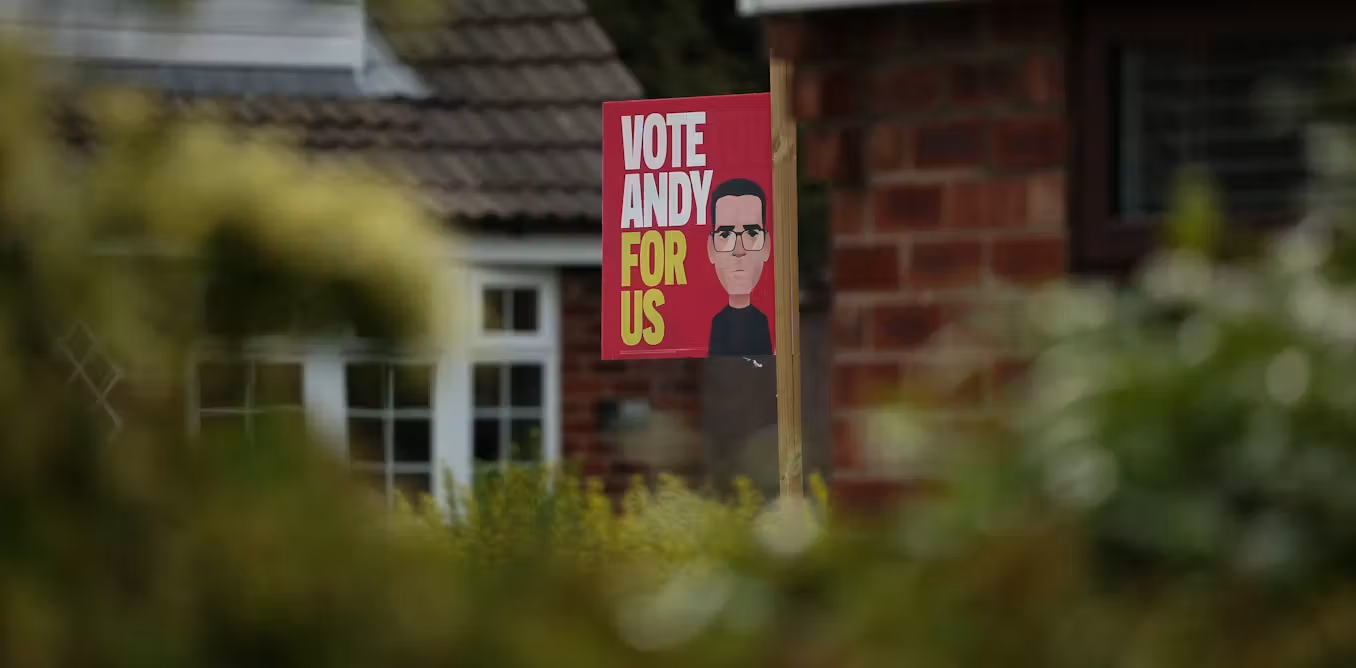
Almost ten years ago – just weeks before he was elected as Greater Manchester’s first metro-mayor – I sat down with Andy Burnham and interviewed him for The Conversation.
Back then he was making the transition from Westminster cabinet minister to regional politician, swapping the shadow front bench for a role that most people at the time considered a consolation prize.
Looking back over our conversation, a few things stand out. Firstly, he saw Brexit coming – but not quite in the way people remember.
Before he had been elected mayor, Burnham was already framing the Brexit result as a symptom of England’s hyper-centralisation around London and the M25. Policies made in Westminster, he argued, simply did not speak to communities in Bolton, Leigh or Oldham.
The northern English city of Manchester has played a critical role in the development of Andy Burnham’s political and social outlook. This series considers what some have dubbed Manchesterism and what it might mean for the future of the UK.
Advertisement
That analysis has aged well. Look at the geography of the 2024 Reform surge. The communities that swung hardest away from Labour – post-industrial towns like Wigan, where Reform took 24 of the 25 available seats, and Tameside, where they took 18 of 19 – map more or less neatly onto the pattern Burnham described in 2017. He was identifying the problem that would define the next decade of English politics, while others were focused on trade deals.
Andy Burnham Q&A in 2017
His answer at the time was devolution: as a practical mechanism to make policy that worked for specific places. That framing also sat at the core of his pitch for the Labour leadership.
Bus operators Stagecoach and Rotala fought the franchising plans through the courts. He won in the High Court in 2022. By September 2023, Greater Manchester became the first place in England to reverse bus deregulation after nearly four decades.
The Bee Network was launched. It boasted integrated fares, capped £2 adult single fares, and free travel for 16-18-year-olds. Burnham flagged this in our original interview as a tool for social inclusion.
National satisfaction survey data shows that Greater Manchester saw the largest increase in passenger satisfaction of any area in England in the first full year of the Bee Network, with value for money perceptions rising sharply. It is probably his clearest policy success.
The record since has been mixed. Numbers fell from a peak of 268 in 2017 to a low of 89 in 2021, which should be celebrated.
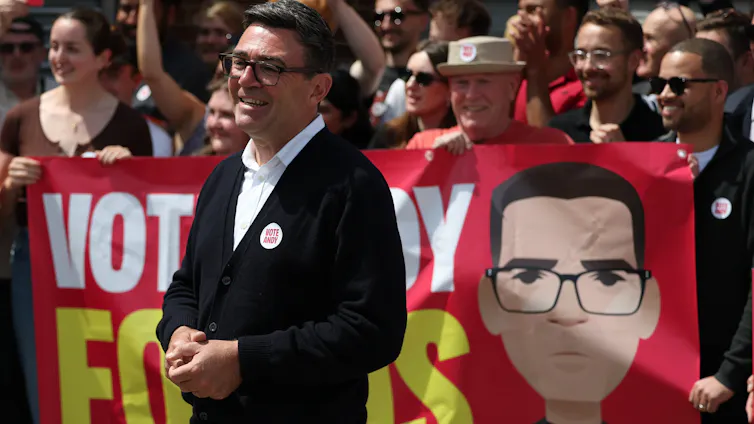
Andy Burnham with his supporters at the party headquarters in Wigan in June 2026. EPA/ADAM VAUGHAN
This was driven partly by the national pandemic-era Everyone In policy and partly by Burnham’s own A Bed Every Night scheme, which provides emergency shelter across all ten boroughs.
The Housing First programme, which gives rough sleepers a permanent home immediately with wraparound support – rather than making housing conditional on sobriety or compliance – has supported 426 people since its 2019 launch. Around 78% of those housed were still in their homes 18 months later; a huge outcome for people who tend to have highly complex needs and experiences.
But that trajectory has since reversed. Rough sleeping has risen for four consecutive years, reaching 197 on the official autumn 2025 count. That’s more than double the 2021 low, and edging back toward the 268 recorded when Burnham took office.
Those structural explanations play a huge role, but four years of rising figures may lead some to see Burnham’s record of success in more binary terms.
On housing, his powers ran out
Burnham spoke in 2017 about the need for truly affordable homes to rent and criticised the decades-long national obsession with owner-occupation. He wanted to use Greater Manchester’s housing fund to regenerate post-industrial towns in the north of the city region through high-quality residential development. He wanted to target towns like Leigh, his own previous constituency.
But progress was limited for most of his mayoralty. The 2023 Trailblazer devolution deal brought meaningful new powers, £150 million in brownfield funding, local control of the affordable homes programme, and new rights to act against poor-performing private landlords.
Advertisement
But these powers came six years into his tenure. By 2023/24, there were 13,422 social lettings across Greater Manchester, half the number available a decade earlier. There were also over 5,400 households (including nearly 8,000 children) who were living in temporary accommodation.
His pledge to build 10,000 new council homes only came after his third election victory in 2024. The housing crisis deepened on his watch, even if the causes were largely national.
COVID was the making of him nationally
The interview predates the pandemic, but any assessment of Burnham’s mayoralty has to reckon with the Tier 3 stand-off in October 2020. When the government attempted to impose the tightest restrictions on Greater Manchester without adequate financial support, Burnham refused.
Advertisement
He held press conferences outside Manchester Town Hall. He made the argument publicly, repeatedly and in plain English that what was being offered was insufficient and that the city region was being treated as an afterthought.
He was publicly told via social media, mid-press conference, that restrictions would be imposed regardless. It was a textbook illustration of precisely the centralisation problem he had identified in our 2017 interview. That moment did more to build his national political profile than anything else in his nine years as mayor.
Did he make Greater Manchester great?
The Conversation interview we had was never about grand promises. What he spoke about was inclusive growth, economic progress felt across all ten boroughs, not concentrated in the city centre, and a politics of place that could speak to communities London had forgotten.
Greater Manchester’s economy grew faster than the national average throughout Burnham’s mayoralty, though that trajectory was already established before he took office in 2017.
Advertisement
His contribution was to sustain it and to articulate a more explicit theory of inclusive growth, culminating in the £1 billion Good Growth Fund launched in late 2025, which directs investment to priority projects across all ten boroughs. It is too early to assess its impact.
The honest assessment is that Burnham leaves Greater Manchester in a stronger position than he found it on economic and transport measures, and with a clearer policy framework than existed before.
Whether growth has genuinely reached the towns he spoke about in 2017 – places like Bolton, Oldham and Leigh – is a harder question. Although the Good Growth Fund is implicitly an admission that it has not.
None of this provides a perfect or complete record for Burnham. The housing crisis remains, inequality within the city region persists, the northern towns he spoke about in 2017 still face structural challenges that no metro-mayor can solve alone.
Advertisement
But the question he implicitly posed in that interview was whether devolution could be a vehicle for a genuinely different kind of politics, one that starts from the needs of places rather than the priorities of Whitehall.
On that, his answer was yes. The question now is whether Manchesterism can survive the journey to Westminster and whether he can unpick the structural challenges holding the regions back.
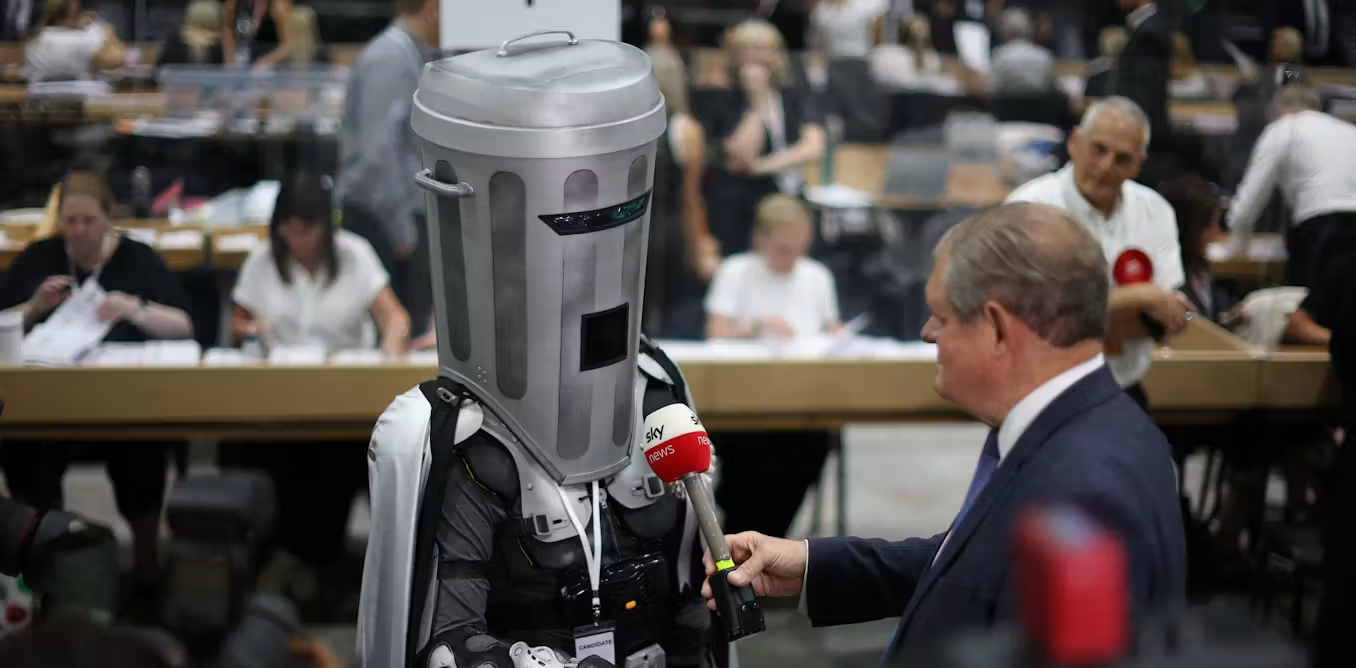
Pollsters recently asked a sample of adults in Britain who they would prefer to win the byelection in Clacton. The rather surprising answers showed that 33% favoured “comedy” candidate Count Binface, compared to just 21% who would back Reform UK leader Nigel Farage.
The resignation earlier this month of Farage as MP for the Essex seat triggered the byelection on August 13. According to the Ipsos poll, Count Binface (writer and comedian Jon Harvey is the man under the bin) has nearly a 60% advantage over Farage. But more to the point, 45% of the respondents either want neither candidate to win or don’t know who they prefer.
A separate question asked about satisfaction with the performance of various political leaders. Farage turned out to be rather unpopular. He came second behind Keir Starmer as the most unpopular leader, with 26% of respondents satisfied and 63% dissatisfied with his leadership.
In relation to voting intentions, the Ipsos survey shows that Reform is on 26%, two points ahead of Labour on 24% and eight points ahead of the Conservatives on 18%. The survey also asked about Andy Burnham – 30% thought he would make the best prime minister, while 16% thought this about Farage and 13% about the Conservative leader Kemi Badenoch.
Advertisement
Comparing these ratings with those from another Ipsos survey conducted in June 2025 shows a dip in support for Reform. At that time, Farage scored 34% satisfied and 49% dissatisfied on the leadership question. And the party scored 34% in voting intentions, with Labour on 25% and the Conservatives on 15%.
So it looks like Burnham could put Labour in prime position in voting intentions when he enters Downing Street. But what might be responsible for this decline in support for Reform?
Four reasons for the Reform slide
Some key issues stand out when it comes to explaining why Reform and its leader are losing support. First, there is the scandal over the party’s finances. The party has received large donations from Bitcoin billionaire Christopher Harborne, who lives in Thailand, including £5 million given to Farage personally. He failed to report the latter to the parliamentary watchdog when he won the Clacton seat in 2024. Farage has stated that it was a personal gift and therefore did not need to be declared.
The regulations state that new MPs “must register all their current financial interests, and any registrable benefits (other than earnings) received in the 12 months before their election within one month of their election”.
Advertisement
This has undoubtedly damaged the party and its leader. It is a stretch to imagine that working-class voters in the north of England who voted for Reform in the general election will sympathise with a party leader who accepts large sums of money from such sources.
A second problem is that Reform’s narrative that it opposes the “crooked” establishment is looking threadbare. According to the Ipsos poll on Clacton, the party is seen by many voters as being part of the establishment rather than an alternative to it. The poll asked: “Do you think the following political parties are more on the side of the people or more on the side of the establishment?”
Looking at respondents who thought that parties were on the side of the people, 27% thought this about Labour, 13% about the Conservatives, 33% for the Liberal Democrats, 39% for the Greens and 28% for Reform. In contrast, 36% thought that Reform was on the side of the establishment. The party does better than its main rival, the Conservatives, but it is seen as being similar to Labour and more part of the establishment than either the Liberal Democrats or the Greens.
Most of the people polled thought Farage should not be standing again in Clacton. EPA/ANDY RAIN
The third reason for Reform’s decline is Farage’s mistake in triggering the byelection in the first place. Voters were asked about this, and altogether 16% thought he was right to resign as an MP and to stand in the contest. But while a further 16% thought he should not have called it, 54% thought he should have resigned and left parliament.
Farage has been accused of calling the byelection to halt the parliamentary investigation into his undeclared gifts. Farage has said it is because he wants the people of Clacton to judge him.
In the survey, respondents were asked if the parliamentary standards committee should investigate whether he broke rules by not declaring the £5 million gift. A total of 74% thought the investigation should continue, with only 14% opposing this.
Finally, there is Farage’s miscalculation about what the other mainstream parties would do in the byelection. From his point of view, the best outcome would have been for them to stand and for Reform to defeat them all. This would have allowed him to argue that the “people” support him even if the “establishment” does not. But the fact that the mainstream parties withdrew, leaving Reform up against what the Telegraph newspaper has called “joke parties” is embarrassing, particularly if they do well.
Advertisement
There is a long history of eccentric candidates standing in byelections as a joke. They differ from small parties and independents by making fun of the whole exercise while seeking publicity. In the 2024 general election Count Binface got 308 votes in the Richmond and Northallerton constituency when he stood as a candidate. He is likely to do better in Clacton and may even win – although this is a long shot, despite Farage’s woes.
The leader of the Official Monster Raving Loony party, Howling Laud Hope, also plans to stand. His party is much older than the Binface party and fielded 22 candidates, winning nearly 6,000 votes in the 2024 general election. It will be interesting to see if he wins more votes than Count Binface.
Politics is no joke, but the participation of these candidates in elections adds to the gaiety. When Reform – which has its sights set on winning the next general election – loses votes to them it suggests that the party is on the slide.
Hair salons must also comply with general business regulations, including health and safety requirements
A disastrous haircut can leave customers frustrated, but many people are surprised to learn that hairdressers in the UK are not subject to any statutory regulation.
Advertisement
Unlike professions such as doctors or dentists, there is no legal requirement for hairdressers or barbers to hold specific qualifications before offering their services.
According to a House of Commons Library briefing, there have been various attempts in Parliament to introduce legislation to regulate hairdressers, but without success.
Instead, registration is voluntary through the Hair Council, which maintains a register of qualified hairdressers under the Hairdressers (Registration) Act 1964.
Hairdressers and barbers can choose to join the register if they can demonstrate they have been trained to an approved standard. However, only around one in 10 hairdressers is registered.
Advertisement
The Hair Council does not receive Government funding and is financed through registration fees. It also has no legal powers to act on behalf of consumers who have complaints about a haircut or other service.
While the industry itself is unregulated, hairdressers are still required to comply with consumer protection laws because they are providing a service.
Under the Consumer Rights Act 2015, consumers are entitled to expect services to be carried out with reasonable care and skill. The legislation also provides rights to redress where services fall below the required standard.
Hair salons must also comply with general business regulations, including health and safety requirements, while some local authorities may impose additional rules through local byelaws.
Advertisement
What should you do if you get a bad haircut?
The House of Commons Library says the first step is to raise the issue directly with the salon that carried out the work.
Many complaints can be resolved by discussing the problem with the business, which may offer to correct the haircut or provide another form of compensation.
If an agreement cannot be reached, consumers may be able to use an alternative dispute resolution (ADR) service. ADR typically involves an independent mediator helping both parties reach a compromise without going to court.
However, neither the customer nor the salon is legally required to take part in ADR.
Advertisement
If all attempts to resolve the dispute fail, the final option is to pursue legal action through the courts using the rights available under the Consumer Rights Act 2015.















































You must be logged in to post a comment Login