

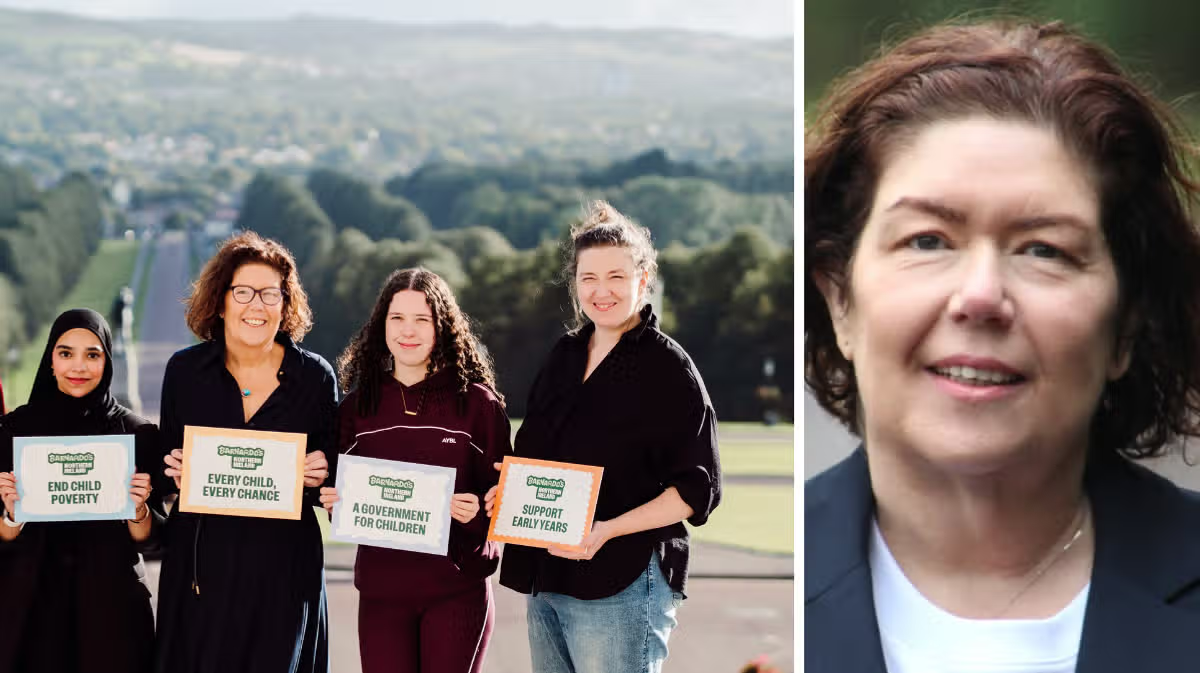
Writing for Belfast Live, Michele Janes, Director of Barnardo’s Northern Ireland, argues that the next Executive must be judged by whether it delivers for children
As Northern Ireland looks ahead to next year’s election, political parties will make many promises about the future. But for children and young people, their futures are being formed in the present – and too many are being asked to wait for support they desperately need now.
Barnardo’s Northern Ireland works alongside 18,000 children, young people and families through 45 services. Every day, I see their resilience and potential, but also the pressures they face.
Around 73,000 children in Northern Ireland are living in poverty. More than 4,000 children are now in care – the highest number since 1995. Demand for mental health support continues to grow.
Despite what some people would have us think, I know that these challenges are not inevitable. We can make different choices.
That is why Barnardo’s Northern Ireland is asking parties to put three priorities at the heart of their plans for government: ending child poverty, transforming how government works for children and families, and giving every child the best start in life.
First, we need tangible action on poverty. Poverty is corrosive, affecting every aspect of a young person’s life. It affects what they eat, where they live, and whether they can participate fully in school and community life. Gerard, 19, described poverty as something that can “eat you from the inside”. No young person should feel this way. That’s why we are calling for a Northern Ireland Child Payment. Modelling by the Joseph Rowntree Foundation suggests a targeted payment could reduce overall child poverty to 20 per cent, benefiting around 150,000 children.
We also want expanded eligibility and automatic enrolment for Free School Meals, alongside a Participation Fund so children do not miss out on sports, school trips, music and other opportunities simply because their families cannot afford them.
But improving children’s lives cannot be the responsibility of one department. Poverty, housing, education, mental health, family support and social care are deeply connected.
That is why our second priority is transforming how government works for children and families.
On 31 March 2025, 4,188 children and young people were in care – the highest number since the Children (Northern Ireland) Order 1995, and an increase of more than 21 per cent since the 2022 Independent Review of Children’s Social Care Services.
Northern Ireland already has much of the evidence and expertise it needs to reform the system. What we need now is politicians and departments working together, with shared responsibility for improving children’s lives. Children do not experience their lives in departmental silos, and government cannot continue to respond to their needs in silos either.
The proposed Arm’s-Length Body for children’s social care could help support this transformation, but structural reform alone will not be enough. We need a genuinely joined-up approach across government, focused on what children and families need, rather than expecting them to fit around government structures.
Crucially, children and young people must help shape that change. As 17-year-old Shahbano put it, “young people do not need politicians simply to speak to them – they need politicians willing to speak with them”.
And this cannot mean another strategy sitting on a shelf. It must mean families getting support earlier, foster carers receiving the help they need, and care- experienced young people being properly supported into adulthood.
Our third priority is giving every child the best start in life. Too often, support arrives only once a family has reached crisis. The estimated cost of late intervention in Northern Ireland is £536 million every year – but the human cost is greater.
Through the Sure Start programmes Barnardo’s leads, we support around 3,000 families with children under four in areas of high deprivation. Sheena, who has been supported by Barnardo’s SureStart in Strabane since pregnancy, told us how help with breastfeeding, nutrition and communicating with her baby built her confidence as a parent.
Her wish is simple: that every parent could access that kind of support. Right now, access to Sure Start depends too heavily on postcode. The next Executive should expand it according to need, alongside an inclusive early years system focused on the first 1,001 days, better support for infant mental health and emotional wellbeing, and a properly funded Early Learning and Childcare Strategy.
Because the best time to help a child or family is before a problem becomes a crisis.
These issues are all connected. A child experiencing homelessness needs more than somewhere to sleep. A young person leaving care does not stop needing support when they turn 18. A child who comes to Northern Ireland seeking sanctuary needs safety, education, healthcare and belonging.
Our manifesto therefore also calls for action on family homelessness, continued priority for ending violence against women and girls, better support for refugee children and young people, and stronger cooperation across government.
The next Assembly term will shape the lives of a generation. So as parties ask for our votes next May, we should ask what they are promising the thousands of children who have no vote of their own.
And when the next Executive takes office, we should judge it not simply by the strategies it publishes or commitments it makes, but by whether children’s lives actually improve.
Are fewer children growing up in poverty? Are families getting help before they reach crisis? Are children safer and healthier? Are they being heard? Do they have the opportunities they need to thrive?
This election should be judged by what it promises our children – and the next government must be judged by whether it delivers.
For all the latest news, visit the Belfast Live homepage here and sign up to our daily newsletter here.












































You must be logged in to post a comment Login