We can all be guilty of getting in our own way (Picture: Getty Images)
We all say we want happiness and contentment, and yet our behaviour often sabotages that, with unconscious habits and tics and urges that propel us into chaos or conflict.
And according to astrology, your zodiac sign may reveal the exact emotional blind spot, coping mechanism or mindset quietly standing between you and the life you actually want.
Yes, we can blame our star signs once again!
Here’s the one thing secretly blocking each zodiac sign from happiness — and how to break through to transform your life for the better.
Advertisement
Looking for deeper insight?
My truthful direct tarot reading lets you ask any three questions and get an answer within 24 hours. Or, come join my magical, mystical tarot club, free for a whole month when you sign up using this link.
Aries
March 21 to April 20
Advertisement
Take a breath, Aries (Picture: Getty/Metro.co.uk)
What’s blocking Aries’ happiness: Believing you must always win and be seen as invincible.
Vulnerability is a tough look for you to master, and yet it’s often what is expected, needed and wanted by others. They know you don’t always deal with things like the way you present. They want to be let in.
You often equate happiness with achievement and winning, but the constant pressure to ‘push through’ leaves little room for emotional honesty. Rest, support, and sensitivity are not weakness.
Loyalty and comfort don’t trump true happiness (Picture: Getty/Metro.co.uk)
What’s blocking Taurus’ happiness: Hanging in there far too long.
You find it very hard to let go, even when what you’re holding onto is fading, false or deeply hurtful. Whatever you once possessed, you struggle to release. You remain emotionally attached to things that no longer make you happy simply because they feel familiar.
Accelerate towards releasing dead weight far faster, your happiness begins the moment you stop confusing familiarity with fulfilment.
Sit with your feelings before making sense of them (Picture: Getty/Metro.co.uk)
What’s blocking Gemini’s happiness: Rationalising your feelings.
You can talk the talk about emotions and sound very convincing, like you’ve got your s*** together. But you’re actually only intellectualising your feelings. Truly sitting with them? Much harder.
Distraction, avoidance and humour are your go-to weapons in this battle against drowning in emotion. But you’d never drown, Gemini. You will always surface, and you’ll do so far faster if you let it all wash over you. Stop trying to outsmart your true feelings. Let them surface.
You can’t pour from an empty cup (Picture: Getty/Metro.co.uk)
What’s blocking Cancer’s happiness: Putting others first too often, for too long, in too big a way.
Your instinct to nurture others can leave you emotionally depleted. You spend so much energy protecting and caring for others that there’s often very little left for you. And, then, on top of that, you start to feel resentment and frustration but have nowhere for it to go. Festering.
The truth? Resentment mounts up and poisons wherever self-sacrifice becomes constant. Your happiness depends on learning that caring for yourself isn’t selfish. Self-care is your homework. Boundaries are your protection.
You are the glowiest, most outgoing and externally confident sign of the zodiac… but secretly rely too heavily on external approval to feel worthy. Attention and admiration are what you pursue, even unconsciously, until criticism or rejection knocks your confidence completely.
Never let success go to your head nor failure to your heart. Learn to balance and ground yourself in your own victories and benchmarks, not those set by others. Other people’s opinions are not your business.
Virgo, you can be your own harshest critic (Picture: Getty/Metro.co.uk)
What’s blocking Virgo’s happiness: Thinking that you have to be perfect to be happy.
Virgos can be brutally hard on themselves. Always in pursuit of the next achievement, self-improvement goal or perfectly organised plan, and often feeling like happiness exists just over that horizon, vs here and now. Almost like you don’t deserve it ‘until’…
But life isn’t a constant project. You are not an issue to be fixed. You are good! Work on things, sure, but enjoy the journey, the ride, the experience. Relax. Be in the here and now and let yourself enjoy it all.
Libra craves peace, harmony and connection and can shapeshift to keep the peace even when it flies in the face of your true feelings or needs. You smile through disappointment, stay quiet to avoid tension and tell yourself it’s ‘easier this way’.
But it’s not sustainable because then you feel pushed out, ignored, or resentment festers. Don’t disguise suppression and self sacrifice as diplomacy. Speak your mind, listen well, find compromises. If not, walk away and let it settle down. Don’t feel it’s all on your shoulders to heal, mend and make nice.
Let go of those reins (Picture: Getty/Metro.co.uk)
What’s blocking Scorpio’s happiness: Control.
Scorpio is intensely emotional and deep, and therefore vulnerability can feel terrifying. In order to avoid that feeling, Scorpios will focus on through control: controlling emotions, situations, relationships or expectations before anyone can hurt you.
But it doesn’t work. People don’t play ball, circumstances change, moods rise and fall, s*** happens, basically! So trust that you can handle it, whatever happens, and let everything outside of your direct personal circle of influence take care of itself. You will be fine, you are very strong.
You can be flighty at times (Picture: Getty/Metro.co.uk)
What’s blocking Sagittarius’ happiness: Restlessness, always seeking the better option.
Sagittarius loves possibility, freedom and adventure, but this can overtip into a selfish quest for the better option, always feeling like you’re missing out and need to be out hunting again. This can impact work, money, family, relationships… folk come to think you don’t really care for or prioritise them, because you struggle to appreciate what already exists in front of you.
Not every uncomfortable feeling means you need to escape. Consciously practice patience. Make yourself push through discomfort to show loyalty or commitment to the things, people and places that truly matter to you.
You know what they say about all work and no play (Picture: Getty/Metro.co.uk)
What’s blocking Capricorn’s happiness: Basing your self-worth on material status.
Capricorns are ambitious, capable and resilient but you often tie self-worth directly to your success, responsibility or usefulness. This can lead you into burnout and exhaustion, and rack up hollow victories that you don’t, emotionally, truly enjoy.
Rest is essential. You’re not a machine, you don’t owe people anything, you are allowed to just be. Stop tying yourself to material gains. Relax and rest and be in your own realm without worrying what you’re delivering or earning or gaining.
It seems easier to detach, but it’ll hurt you in the long run (Picture: Getty/Metro.co.uk)
What’s blocking Aquarius’ happiness: Detachment and distance.
Aquarians are great company — very funny and smart and unique. And yet, emotional closeness can feel overwhelming for you and you’d rather just detach and go off on a new pathway than stay with feelings that have become too intense or vulnerable.
Being independent and self sufficient is a virtue, until it thwarts your relationships or isolates you. Your happiness grows when you stop treating emotional intimacy like a threat to your freedom.
What’s blocking Pisces’ happiness: Escaping your issues instead of changing them.
You feel everything fully and deeply, which can make reality overwhelming at times. And, if given a choice, you often prioritise fantasy, avoidance, nostalgia or distraction over having to face down and deal with what’s right in front of you.
Trust yourself enough to actively create the reality you deserve. You are clever, imaginative, loving and loved. You have many allies, an army of folk who’d help you, no questions asked. Lean on them, ask for advice, create allies in different life areas. You can do this!
Kerry King has been reading, teaching and creating tarot for 30 years. Join her magical, exclusive Tarot Club for forecasts, predictions, lessons and readings straight to your inbox. Enjoy one month free for all Metro readers (no lock-in or commitment) over on Patreon.
Advertisement
Your daily Metro.co.uk horoscope is here every morning, seven days a week (yes, including weekends!). To check your forecast, head to our dedicated horoscopes page.
WARNING: DISTRESSING CONTENT Three friends were making their way home when a misstep caused them to fall into a pit of boiling water
An ordinary evening of fun took a dark twist as it became one of the most tragic accidents in Yellowstone National Park’s history.
Advertisement
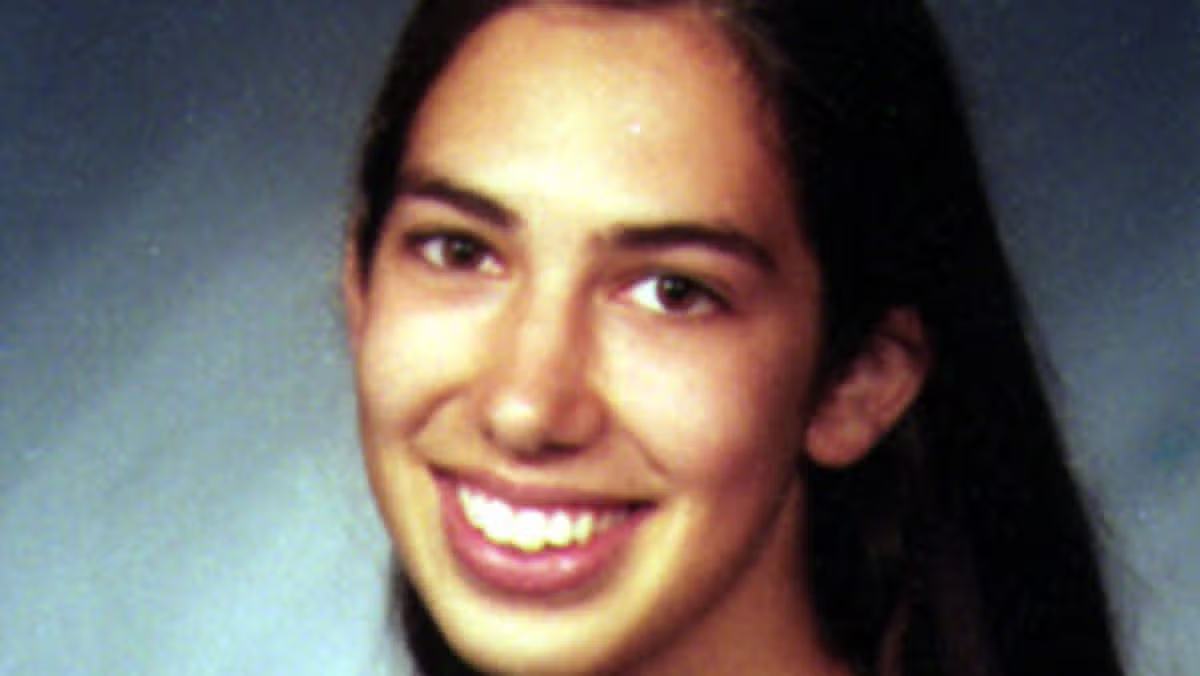
Sara Hulpers, 20, and her two 18-year-old friends, Lance Buchi and Tyler Montague, were working as seasonal staff at the park in the summer of 2000 and were walking back home from swimming in the Firehole River with other friends that fateful day.
As they journeyed along their familiar route home, cutting through the Lower Geyser Basin and following a worn path used by locals with no official signage, they jumped into the small streams known to be safe.
Until the three of them misjudged one of the bodies of water. The friends believed they were jumping into a shallow freshet but instead plunged into the crust surrounding Cavern Springs, an off-limits feature known to reach temperatures as high as 87 degrees Celsius.
Lance and Tyler managed to keep their heads out of the water following the fall, and crawled out of the water on their own, while Sara had to be helped by the group of friends that was walking ahead of the trio, who had all returned after hearing their agonising cries.
Advertisement
In later reports, Lance’s family said he remembered feeling the ground beneath them was solid before he fell a second time while trying to escape the boiling water.
The damage was already catastrophic – the young woman had suffered third-degree burns all over her body, and heartbreakingly died the next day in a Salt Lake City burn unit.
The two surviving friends were airlifted to Idaho Falls and then to the University of Utah’s burn centre, both with burns ranging from 95% of their bodies. Their survival rate was low, but not impossible, said doctors, who estimated they had a 30-40% chance of making it through treatment, given the risks of infection since the boys had little uninjured skin left for grafting.
Advertisement
Tyler’s grandfather and former local weatherman, Bob Welti, was at the hospital at the early stages of treatment and called the situation the “saddest” he’d ever witnessed.
Both young men endured months of surgery and skin grafts before eventually being discharged, Tyler in November and Lance in December – the latter having lost 51 pounds during his hospital stay.
Hundreds gathered in Oroville, Washington, to mourn the loss of Sara, an exemplary student at Western Washington University, weeks away from a new scholarship award.
Advertisement
Friends who were by her side in the last days of her life spoke of her dedication while she was alive. Yuvia Storm, 21, was one of her friends from her time at Yellowstone, said: ”She was so happy. She told me I had to be the one to spread the word that she was excited about death. Tell them I had a wonderful life – no regrets.”
During the funeral service, her father sang songs he’d written about her, and friends and family decorated the auditorium with sunflowers.
Investigations followed, but found no evidence of alcohol as a leading factor in the tragedy, and officials added that it was the first Yellowstone hot spring fatality since 1988 – although since the time of this accident (in the year 2000), two further accidents took the lives of a 23-year-old in 2016 and a 70-year-old in 2022.
MELBOURNE, Australia (AP) — Australia’s online safety watchdog has filed legal action against messaging app Telegram, saying the platform failed to remove extremist content including videos of white supremacist mass shootings in Buffalo, New York, and the New Zealand city of Christchurch as well as Islamic State group beheadings.
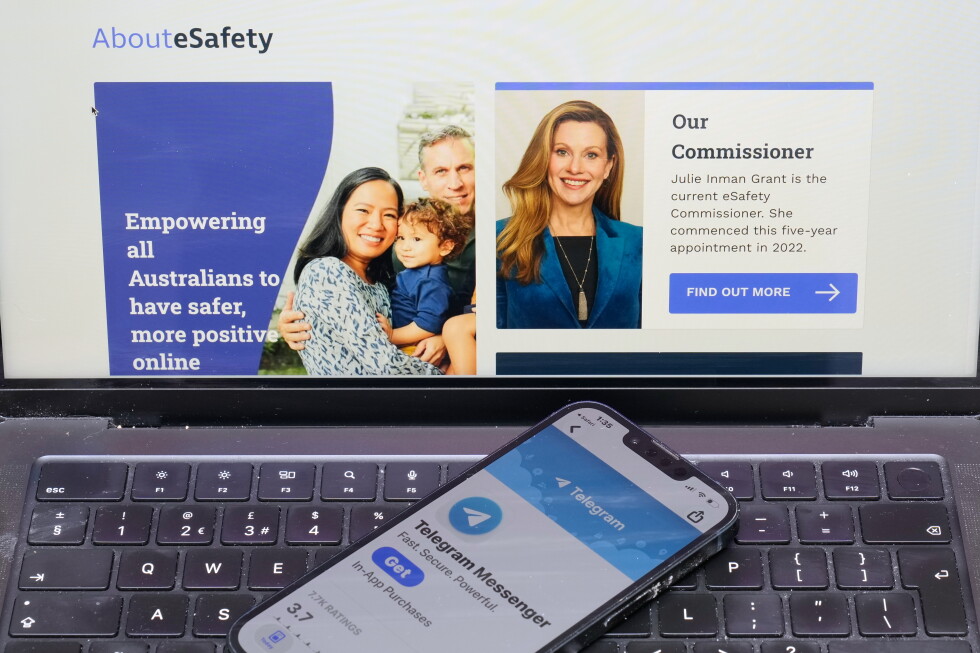
The United Arab Emirates-based app, which reports having 1 billion users worldwide, faces a fine of up to 54.6 million Australian dollars ($38 million) if convicted in the Australian Federal Court for “alleged failure to detect and remove pro-terror material,” eSafety Commissioner Julie Inman Grant said Thursday.
The civil action is a test of Australia’s 2021 law requiring tech platforms to work to keep illegal and pro-terrorism material off their networks.
Telegram denied the claims. “We reject these allegations and will contest them in court,” a spokesperson said in a written statement sent on Telegram.
Advertisement
Regulator says app must take responsibility
The platform is one of the world’s most popular messaging apps. The Australian regulator is taking issue with what’s shared in group chats of up to 200 people and channels with unlimited reach.
“This case concerns content linked to some of the most notorious acts of known extremist violence in recent history, including material associated with the Christchurch and Buffalo terror attacks,” Inman Grant said in a statement.
Advertisement
“We allege that this content remained accessible on the service long after Telegram had been put on notice,” she said.
Advertisement
The crimes cited by Inman Grant were ideologically-driven massacres performed for online audiences. Years later, digital artifacts of the massacres are still confounding regulators, who fear the power of videos and so-called manifestos to radicalize others.
In Buffalo in 2022, an American white supremacist livestreamed on Twitch part of a shooting at a supermarket in which he killed 10 Black people. He cited among his motivations the crimes of an Australian white supremacist who in 2019 livestreamed on Facebook a shooting at two Christchurch mosques, where he murdered 51 Muslim worshippers.
Telegram channels established after these and other hate-fueled crimes were populated by users who endorsed the killers and shared videos and other content from the massacres. The Australian watchdog’s claim, filed to the federal court Wednesday, said the unlimited broadcast size of Telegram channels meant the app must take responsibility for culling harmful material.
Telegram says it blocks ‘terrorist-related communities’
The messaging app’s statement said that the platform’s “extensive anti-terrorism efforts are well-documented,” adding a link to its published figures recording blocked content and channels. More than 150,000 “terrorist-related communities” have been blocked from the platform this year, according to the figures.
Advertisement
Sign up for Morning Wire:
Our flagship newsletter breaks down the biggest headlines of the day.
Advertisement
Inman Grant said eSafety began urging Telegram to comply with its own policies in March 2024, but the platform had been “non-responsive” for months.
The Australian official said that changed after France arrested Telegram’s Russian billionaire founder and CEO Pavel Durov in August 2024 over allegations that his platform was being used for illegal activity, including drug trafficking and the distribution of images of child sexual abuse. He was released after four days of questioning on bail of 5 million euros ($5.7 million).
Advertisement
Telegram had “become more compliant initially with us and with other regulators after France took action against the company,” Inman Grant said.
“They’ve still kept a permissive hosting environment for terrorist content,” she added.
The Australian court case also related to IS beheadings and other “horrific material used for propaganda and for radicalization,” she said.
“When platforms are alerted to terrorist content, they must act,” Inman Grant said.
Advertisement
On Wednesday, Russia’s Federal Security Service accused Durov of aiding what it called terrorist activities. The service also said it was adding Durov’s name to international wanted lists.
Telegram said in its statement supplied to The Associated Press on Thursday that it is committed to protecting user privacy and human rights such as freedom of speech and assembly. It said it had played a prominent role in pro-democracy movements around the world, including in Iran, Russia, Belarus, Myanmar and Hong Kong.
___
Graham-McLay reported from Wellington, New Zealand.
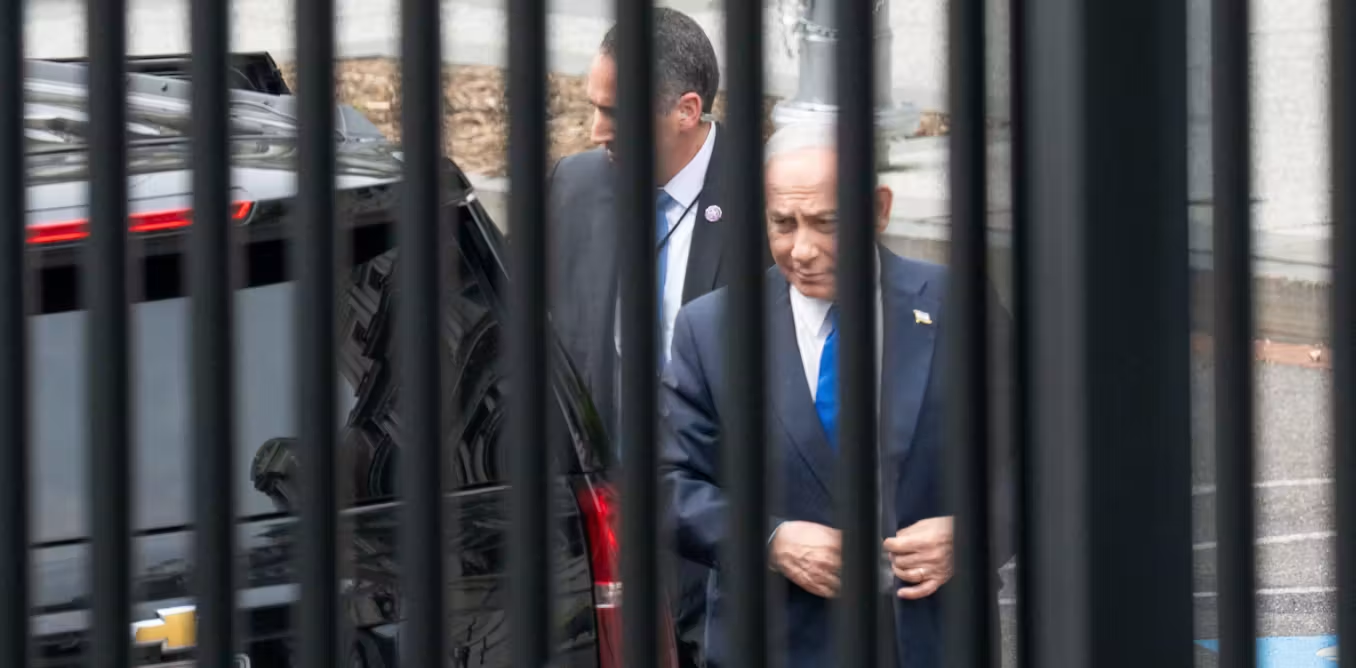
Appearing increasingly isolated and weakened, Israeli prime minister Benjamin Netanyahu travelled to Washington this week, where he had a face-to-face meeting with Donald Trump – his eighth of the US president’s second term. Netanyahu is desperate to revive his image as the closest ally of the most powerful man in the world, but his star has fallen dramatically in Washington since his last trip.
The US president has problems of his own, so he clearly had little appetite for a photo opportunity with a deeply unpopular Israeli leader widely blamed for convincing him to launch an unwinnable war against a state few Americans saw as a serious threat.
After months seeking an invitation, Netanyahu got his opportunity while in Washington for the funeral of Senator Lindsey Graham, one of Israel’s staunchest supporters in Congress.
Advertisement
But even before the Israeli entourage departed for Washington, Trump was plainly irritated by Israeli briefings that Netanyahu intended to present him with intelligence concerning Iran’s deeply buried “Pickaxe Mountain” nuclear facility. In an interview with Fox News, Trump dismissed the idea that Netanyahu could tell him anything new and appeared to lend credence to the view that Israel was trying to push him towards a prolonged campaign in Iran.
Trump also brushed aside Israeli concerns about his intention to sell F-35 fighter jets to Turkey, warning Netanyahu not to try to influence his decision. He then lavished praise on Turkish president, Recep Tayyip Erdoğan and – in a dig at Netanyahu’s international isolation – added that “Turkey’s not a big fan of Israel, not a great fan of Bibi. But they’ve been great for me.”
The lack of fanfare surrounding this meeting underscores Trump’s frustration that he cannot extricate himself from their disastrous joint military enterprise in Iran. After being quietly ushered into the White House through a side entrance, there was no question-and-answer session with journalists – unlike many previous Trump-Netanyahu meetings. Only minimal information has been released by the White House, and Trump has been conspicuously discreet about what was discussed.
Netanyahu under pressure
With an election looming at the end of October, Netanyahu is trailing in the polls behind rival contender, Daid Eisenkot. So his immediate attempt to put a positive spin on the meeting suggested how desperate he is for Trump’s political endorsement.
Advertisement
Shortly after the talks concluded, Netanyahu released a video message declaring, without explanation, that: “This was one of the best conversations I have had with our friend, US President Donald Trump.”
Trump and his war may be unpopular in America, but the opposite is true in Israel. Trump remains extremely popular there. So Netanyahu’s association with him, and the sense of protection this symbolises in Israel, is a significant political asset.
The war is unpopular in the US because few Americans see Iran as a serious threat. Consequently, few care how the war ends so long as a ceasefire or peace deal brings prices down. In contrast, the criticism Netanyahu faces from his own voters is that Israel has not finished the job and that he been forced to agree to a ceasefire which his critics argue has only emboldened Iran.
Iran has become increasingly assertive in recent weeks. EPA/Abedin Taherkenareh
As recently as last week, Netanyahu’s team would have been buoyed that Trump appeared to be on the cusp of resuming major military operations against Iran. But the day before the meeting, Trump abruptly decided to halt military operations.
Advertisement
He appears to have done so for three reasons. Omani-mediated talks over the Strait of Hormuz, have reportedly been making progress. Meanwhile senior US military commanders have warned the US president that the bombing campaign had reached the limits of its effectiveness and America’s stock of air defence interceptors were becoming dangerously depleted. And the expansion of the conflict into the Red Sea, where attacks from Iran-backed Houthi rebels on Saudi shipping pushed oil prices back above US$100 (£75) a barrel.
Israel’s wishlist
Before he had even arrived at the White House, therefore, Netanyahu had been warned against trying to push Trump towards resuming major operations in Iran. But the Israeli prime minister still has other items on his wishlist. This includes persuading Trump to support Israel’s refusal to withdraw its troops from Lebanon until Hezbollah’s military infrastructure has been completely dismantled.
But the leaked recording of Trump’s expletive-laden rebuke of Netanyahu at the beginning of June for refusing to heed his advice to de-escalate Israeli operations in Lebanon, suggests that this might also be a tough sell for the Israeli leader.
Netanyahu was once able to exploit Trump’s unpredictability and appeal to his instincts for self-aggrandisement. Now, he is a much-diminished figure in Washington, and his political interests seem to best served by actions that Trump has identified as threats to his own.
Advertisement
He is now the one buffeted by Trump’s erratic decision-making and tendency to blame anyone but himself for failure. Shutting Israel out of negotiations with Iran, selling F-35s to Turkey and raising the prospect of a nuclear deal with Saudi Arabia all run counter to Israeli interests.
But Iran’s increasing boldness may yet play in Netanyahu’s favour. Tehran’s has rejected Oman’s proposal to share management of the Strait of Hormuz. It then launched strikes against a US military base in Jordan, despite Trump’s decision to halt military operations. The US and Saudi Arabia responded by attacking Iran-based militias in Iraq.
Iran’s refusal to abandon its core strategic objectives, and its apparent interpretation of Trump’s restraint as weakness, may ultimately give Netanyahu the renewed US involvement in the conflict he has been seeking.
The new loyalty scheme gives customers more ways to collect points when shopping for groceries for delivery, but Sainsbury’s is reminding users that they must enter their full Nectar card number at checkout.
Customers can now collect one Nectar point for every £1 spent on eligible Sainsbury’s products ordered via the Uber Eats app or website.
Katie Hunter, Uber Eats general manager for grocery and retail in the UK, said: “We know how much Uber Eats customers love Nectar, so bringing points directly to their Sainsbury’s orders was a no-brainer.
Advertisement
“Now, they can collect Nectar points on all their Sainsbury’s essentials as well as spending them across the entire Uber app.
“It’s all about delivering flexibility, convenience and value for customers right alongside their favourite groceries.”
The scheme is available at more than 1,300 Sainsbury’s stores across the UK that are signed up to Uber Eats.
It covers orders for fresh food, household items, and other eligible products.
Advertisement
A minimum spend of £1 is required to earn points, and customers must enter their full Nectar card number at checkout.
Points cannot be added retrospectively.
Nectar points earned through Uber Eats grocery orders will be credited to customer accounts within 28 days.
Some items are excluded from the scheme, including gift vouchers, baby milk, lottery tickets, tobacco, vapes, nicotine products, proprietary medicines, spirits, and liqueurs.
Advertisement
Additional restrictions apply to alcohol orders in Scotland, Wales, and Northern Ireland.
The move builds on the existing partnership between Nectar and Uber, which currently allows Nectar members to redeem points for vouchers covering Uber journeys and Uber Eats orders.
Customers can now earn points on Sainsbury’s orders placed via Uber Eats and later use those points for Uber or Uber Eats vouchers.
Mark Given, Sainsbury’s chief technology, marketing and data officer, said: “Nectar members can already turn their points into Uber rides or Uber Eats treats – and now they can collect points when ordering Sainsbury’s groceries through Uber Eats too.
Advertisement
“It’s another way we’re helping customers get more from Nectar, whether they’re stocking up on essentials, planning dinner or making everyday life that little bit easier.”
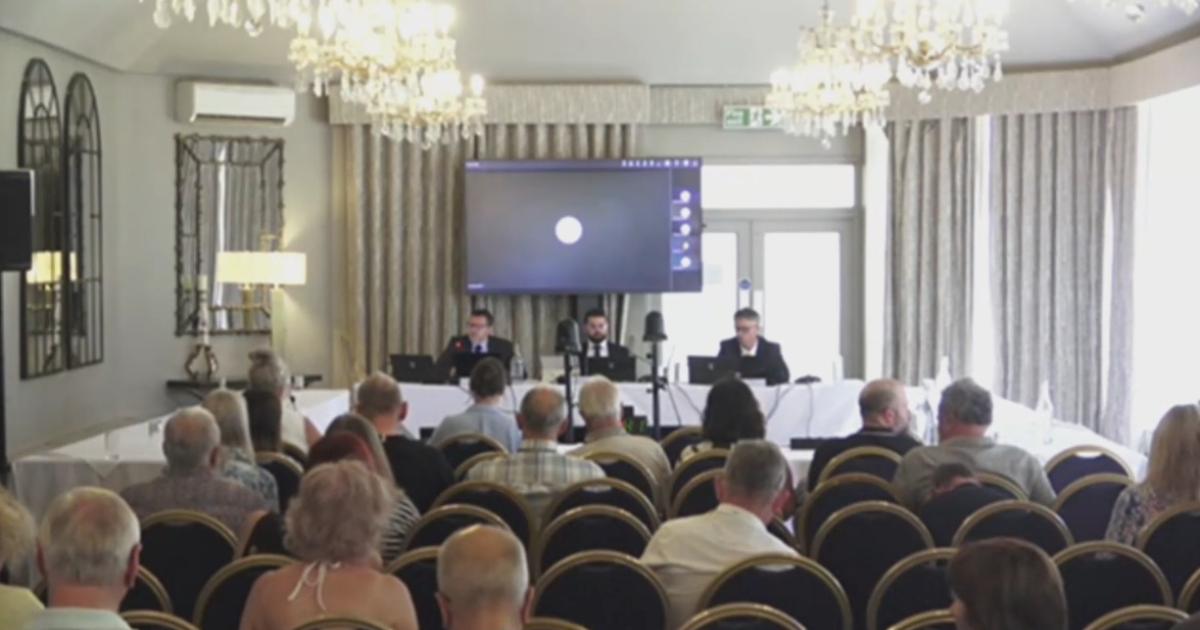
Objectors today (Wednesday, July 29) gave evidence at a public hearing held by the Planning Inspectorate, which will decide whether to allow the 500MW Light Valley Solar Scheme.
Island Green Power UK Ltd is seeking a development consent order application for a network of seven solar farms on 1,020 hectares of land between the villages of Escrick, Monk Fryston, Hambleton, Chapel Haddlesey and South Milford, between York and Selby.
A local plan for the proposed solar scheme. Image: Light Valley Solar.
A 500MW battery energy storage system (BESS) is proposed as part of the development, as well as underground cabling to connect the sites to the national grid at Monk Fryston substation.
Hearings are taking place at The Parsonage Hotel and Spa, at Escrick, this week as the Planning Inspectorate’s examination of the plans gets underway.
Advertisement
The panel of three planning inspectors heard from some of the residents, parish councils and campaign groups which have raised concerns about the scheme.
Councillor Ceri Carter, from South Milford Parish Council, who also represented 13 other parish councils, told the hearing: “While we support the transition to renewable energy and understand the need for the country’s energy security, we ask the examining authority to recognise the disproportionate burden this scheme places on our communities.”
Describing the design of the scheme as “fragmented”, Cllr Carter added: “It is our opinion that this project could have been better designed to significantly reduce the amount of land sacrificed, thereby lessening the impact on communities.”
Councillor Shaun Hughes, from Monk Fryston Parish Council, said: “The primary objection for us is that it’s such a large, encompassing installation that almost every view into and out from the parish will be affected by this proposed development.
Advertisement
“This proposal, when combined with other consented schemes, will significantly alter the character and the landscape that surrounds our settlement such that it can no longer be regarded as a rural location.”
Resident Clare Hodgekiss said her home would be completely surrounded by the development.
She said: “At what cost to my physical and mental health is my family home surrounded by solar panels on all sides?
“Whatever I see from my house — the back, the middle, the front — I will just see solar panels and nothing else. This will have a monumental impact on the rest of my life if it goes ahead. How can surrounding a property on all sides be considered proportional, just and fair?”
Advertisement
Louise Billingham, from the campaign group Rooftops Not Countryside, told the panel that the scheme “would industrialise the area for generations to come”.
Louise Billingham, from Rooftops Not Countryside, speaks at the hearing.
She added: “The benefits of the development are presented at a national level, but the harms are concentrated locally: increased construction traffic on rural roads and country lanes, permanent changes to the character of our rural villages and countryside, loss of open green space and tranquillity, disruption to walking, cycling and riding routes, and the psychological impact of living beside, or within, large-scale electrical infrastructure.”
Matthew Fox, from law firm Pinsent Masons, spoke on behalf of the applicant.
He said they recognised the strength of feeling from local residents, adding: ” I want to just emphasise that there were points made around the applicant making sure they consider the human impact.
Advertisement
“I know views differ on this, but I wanted to emphasise that the applicant has thought to consider those aspects.”
The proposed solar scheme will provide enough renewable electricity to power the equivalent of approximately 115,000 homes annually, the applicants say.
Ben Affleck landed the rare $1,000,000 prize during his celebrity guest appearance on Who Wants To Be A Millionaire this week.
The 53-year-old Oscar winner, whose mother Chris Anne recently passed away after a battle with pancreatic cancer, joined forces with Jeopardy! champion Jamie Ding to take home the big winnings for charity.
The money will go to the Hollywood actor’s Eastern Congo Initiative which he co-founded back in 2010.
Affleck and Ding faced the final $1 million question during Wednesday’s episode of the ABC game show, with Jimmy Kimmel hosting.
Advertisement
The duo were given the question which read, ‘In an annual Thanksgiving tradition, all but which of these have been the names of turkeys pardoned by a U.S. president?’
The answers included: Peanut Butter & Jelly, Tater & Tot, Mac & Cheese, and Spaghetti & Meatball.
Ben Affleck, 53, landed the rare $1,000,000 prize during his celebrity guest appearance on Who Wants To Be A Millionaire
Advertisement
The Oscar winner joined forces with Jeopardy! champion Jamie Ding to take home the big winnings for charity
Affleck and Ding decided to use the Phone-A-Friend lifeline to call Ding’s longtime trivia partner Stephen Morrison.
Kimmel explained to the duo that they also still had the Ask-The-Host lifeline, which prompted the actor to jokingly say to ring up Ding’s pal.
‘No. We might as well have Jimmy help,’ the Hollywood star then expressed.
Advertisement
The late night talk show host playfully quipped, ‘Alright, I don’t have to give you any of my f***ing thoughts, if you don’t want.’
But Affleck replied, ‘Actually, you’re very good with cooking and food, current events, too. Actually, you might know this.’
Kimmel eventually suggested that the answer could be D: Spaghetti & Meatball.
‘I could see me adding a big bowl in Donald Trump’s hands and him slurping up the spaghetti and meatballs,’ he then joked, before adding, ‘That one sounds like it wasn’t the one to me.’
Advertisement
Affleck shared that the host was ‘probably the best person in the world to ask this question to.’
Affleck and Ding faced the final $1 million question during Wednesday’s episode of the ABC game show, with Jimmy Kimmel hosting
Kimmel explained to the duo that they still had Ask-The-Host lifeline, which prompted the actor to jokingly say to ring up Ding’s pal
Affleck and Ding decided to trust Kimmel’s guess and also locked in with Spaghetti & Meatball
Advertisement
After a few lingering seconds, it was revealed that the pair had guessed correctly and won the $1 million prize
‘If I’m wrong, I’m so sorry,’ Kimmel said before locking in Spaghetti & Meatball as his own final answer.
To be extra safe, Affleck and Ding decided to still call up Morrison.
‘Jimmy, you might like this friend of mine. I mean, Harvard-educated, father, we’re two years apart,’ Ding began.
Advertisement
‘But we’ve been through a lot of trials and tribulations together. Just like Ben and Matt.’
With a deadpan expression, Kimmel then joked, ‘Are you looking for trouble?’
Ding then quickly fired back to go along with the joke by asking, ‘Are you looking for trouble?’ which caused the live audience to laugh.
After calling Morrison, however, he was unable to guess the correct answer.
Advertisement
‘But listen, you know what? He’s smart because if you don’t know it, you don’t know it, right?’ Kimmel said of Morrison.
The money will be donated to Affleck’s Eastern Congo Initiative which he co-founded with Whitney Williams in 2010; seen in May in Beverly Hills
Affleck and Ding decided to trust Kimmel’s guess and also locked in with Spaghetti & Meatball.
After a few lingering seconds, it was revealed that the pair had guessed correctly and won the $1 million prize.
Advertisement
The pair jumped to their feet and excitedly hugged each other as confetti fell down onto the stage.
Daily Mail has reached out to reps for Affleck for comment, but has yet to hear back.
The money will be donated to Affleck’s Eastern Congo Initiative which he co-founded with Whitney Williams in 2010.
The nonprofit organization helps ‘support locally led organizations to expand access to essential services, strengthen economic opportunities, and promote justice.
Advertisement
‘Our work is designed to create scalable, sustainable impact across eastern Congo,’ per the official website.
The year prior, Affleck’s close friend and collaborator Matt Damon also scored the same million-dollar prize on the game show; seen in April in San Francisco
‘But when I told him, he seemed surprised and delighted. I think he was prepared to do it on his own. He’s very smart, that Ben Affleck,’ Kimmel said of Affleck
The year prior, Affleck’s close friend and collaborator Matt Damon also scored the same million-dollar prize on the game show.
Advertisement
At the time, The Odyssey star had been paired with Ken Jennings. The winnings went to Damon’s clean-water nonprofit Water.org.
‘I’m not sure Ben knew that he was paired with a champion when he agreed to do the show,’ Kimmel told Variety earlier this month.
‘But when I told him, he seemed surprised and delighted. I think he was prepared to do it on his own. He’s very smart, that Ben Affleck.’
Most parents have heard a variation on the phrase “Oooh, terrible twos!” uttered with eyebrows raised and a knowing look at their toddler.
In fact, such is the bad rap two-year-olds have that before my eldest had even reached her toddler years, I was extremely nervous about what the age would hold for us. I genuinely thought she was going to morph into some nightmarish, uber-emotional hellbat on her second birthday.
But, two kids later (and having met my fair share of two-year-olds in the process), I have to say: two is perhaps my favourite age.
So, I’m here to bang the drum for a rebrand of ‘terrible twos’ to ‘terrific twos’.
Advertisement
Why are they called the ‘terrible twos’, anyway?
The ‘terrible twos’ descriptor largely stems from the fact previously-compliant babies grow up and become louder, more mobile and in need of independence – but they’re obviously still very little, so can’t have full autonomy over every little thing.
“Around this age, children are beginning to realise they are their own person with their own thoughts, preferences and opinions,” Dr Sasha Hall, a senior educational and child psychologist, told me. “It becomes the ‘me do it’ stage. They want to put on their own shoes, choose their own clothes and do things for themselves.
“That growing autonomy is exactly what we want to see, but it often arrives before they have the emotional regulation skills to cope when things do not go to plan.”
Advertisement
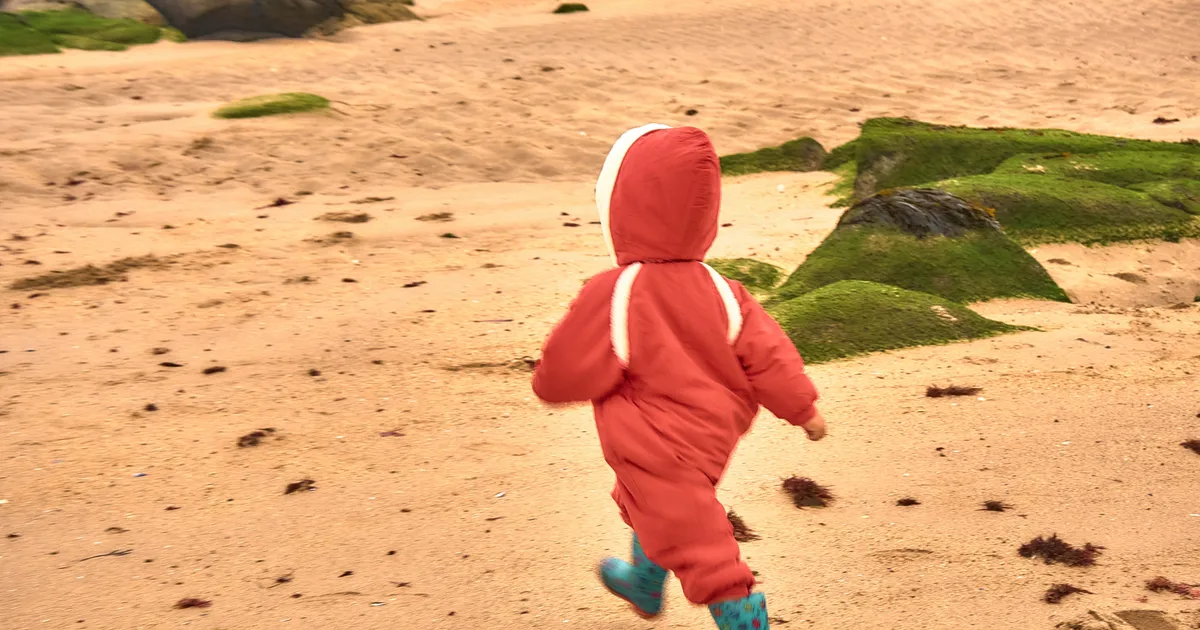
Yes, two is when the pushback begins. You might hear more of the word ‘no’. You might also be on the receiving end of some pretty irrational requests. And Dr Hall noted these moments often happen at moments of high stress, like when you’re trying to get out of the door in the morning – “they’re insisting their sandals are on the right feet when they are not, or they want to wear wellies in the middle of a heatwave,” she said. “Those everyday moments can really test our own patience and emotional regulation.”
If they can’t make their own choices, or feel like the choice has been taken out of their tiny hands, this can certainly spark a big old tantrum – hitting, kicking, biting, screeching – as they still don’t have the ability to manage their emotions very well. (They’re only two after all – most adults I know still haven’t quite mastered that either, but nobody’s going around calling them ‘terrible’.)
Why two is actually a brilliant age
I want to share a bit of reassurance for other parents approaching the toddler years that, aside from the meltdowns, which can obviously be tough to handle (especially in public), two is a marvellous age.
Advertisement
You see, your child is learning so much – songs, stories, words, how to navigate relationships with others. There’s nothing like having an unhinged dinnertime conversation with a two-year-old or trying to decode what they’re saying (the other day my youngest said we were going “to the zoom, then the flaps, then the books”). Another time she abruptly told me “no, you can’t” but didn’t quite pronounce the last word correctly. (I’ll let you determine how that actually came out.)
Two is the age of them not quite nailing long words, like blupperply (butterfly) and squealing with excitement when an ant runs past. It’s a time of potty training pride (“look Mummy, my got pants on!”), phallic art work, and being extra-willing to help you with any household chore. (Ask a toddler to help you hang up washing on a clothes horse, or empty the dishwasher, and it’s like you’ve just promised them a lifetime supply of ice cream.)
There’s mischief and mayhem, for sure, but there are also so many exciting firsts, and their personality begins to really shine through. You begin to see yourself – or your partner – reflected back in the mannerisms of a tiny person, or watch as they develop their own interests. Right now we’re loving cooking and playing in the pretend kitchen – and nothing brings my toddler joy quite like making me a ‘coffee and a croissant’ or simply a plate of ‘couscous’.
Perhaps the most wonderful thing about two-year-olds, though, is the sheer amount of love they have to give those around them.
Advertisement
There is something so special about going into my two-year-old’s room each morning and seeing her beaming at me from her cot. I’ll pick her up and she’ll lean in close for a cuddle, like she’s not seen me for weeks on end. She’ll gently tell me she loves me and has figured out how to make a heart shape with her fingers. Honestly, there’s nothing cuter.
If I’m not well (I was recently bedridden with a horrendous stomach bug) she’ll come and lie with me, wide-eyed but still sucking her thumb, asking “you OK, mummy?” before tenderly stroking my face. Then she’ll rush off somewhere in a hurry, shouting back: “I get you teddy.” Granted that teddy might end up bouncing off my face in the next 30 seconds, but it’s the thought that counts.
I guess all of this is to say: if you’re a new parent, or your child’s approaching toddlerhood, and someone warns you about the “terrible twos”, let it wash over you like water off a duck’s back.
Because yes, there will be meltdowns. But there will also be laughter until your stomach hurts, fierce cuddles, endless curiosity and the privilege of watching a tiny person discover who they are.
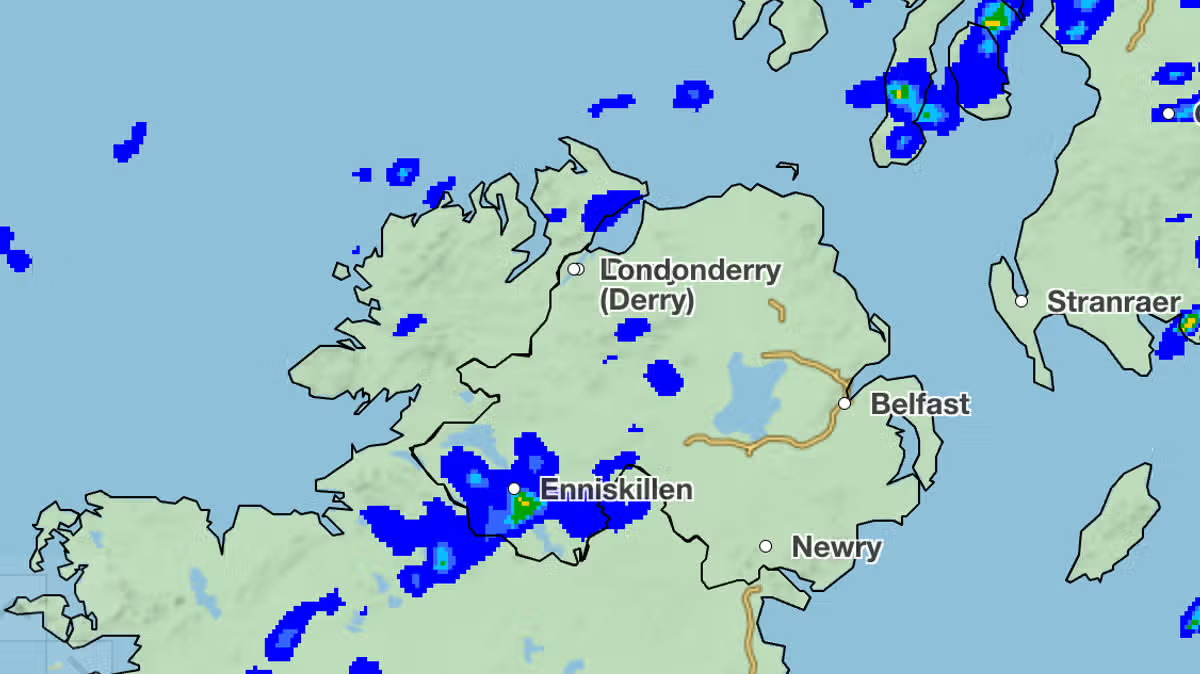
It’s also likely to rain in Derry/Londonderry and Newry, weather maps show.
“A band of thicker cloud will continue to sink south on Thursday, introducing fresher conditions for all. However, outbreaks of rain, locally heavy at times, will affect northern Scotland,” forecasters said on Wednesday evening.
While rain is also forecast to hit north-east and south-west England, and Scotland, some will bask in a heatwave. South-east England will enjoy a high-20-degree heatwave, with London at 26C and Rochester, Kent, reaching 28C.
That is likely to to worsen the drought which was declared for millions of people in England. On Wednesday, the government said half of England is now living in a drought.
Helen Wakeham, Director of Water at the Environment Agency and Chair of the National Drought Group, said: “The hot and dry weather means we are currently using water faster than nature can replenish it.
“A second consecutive summer drought is an exceptionally serious situation and one that will have long-lasting impacts on our environment, wildlife, and the economy.
“We want everyone to stay safe and hydrated during the hot weather but every drop we can save is a drop more for nature and agriculture.”
Advertisement
The seven drought regions include East Anglia, Hertfordshire and the whole of London, Thames Valley, Hampshire & the Isle of Wight, Devon and Cornwall, West Midlands, and Wessex (covering Dorset, Somerset, Wiltshire, and south Gloucestershire).
Drought is not expected to come to Northern Ireland this summer, as it is not categorised in ‘prolong dry weather’ by the Environment Agency. That is the phase required before drought can be declared.
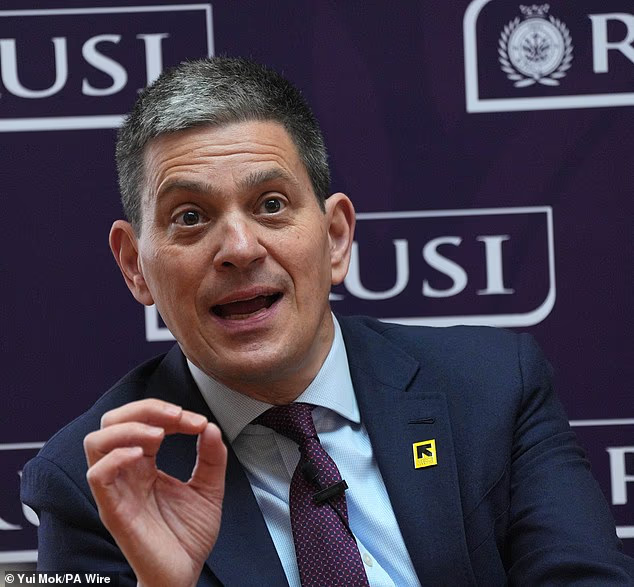
David Miliband was offered the post of Education Secretary in Andy Burnham‘s reshuffle, the Daily Mail can reveal.
The brother of Ed Miliband was widely tipped to return to British politics once Mr Burnham entered No 10.
In the run-up to the new PM’s reshuffle last week, he was touted as a potential Foreign Secretary, having previously served in the role under Gordon Brown from 2007 to 2010.
The job ended up being given to his brother – and arch political rival – Ed, a major promotion from his previous position as Energy and Net Zero Secretary.
Advertisement
A Labour source has now told the Daily Mail that David was offered the more junior job of Education Secretary, before it was given to Labour and Greater Manchester MP Lucy Powell – a close ally of Mr Burnham.
It is claimed that Mr Miliband declined the job because it was more junior to the role offered to his brother and because he is friends with the then-incumbent Bridget Phillipson and did not want to humiliate her.
Mr Miliband, who has served as president of the International Rescue Committee since 2013 on a salary of more than £1 million a year, appeared in a number of photos and videos backing Ms Phillipson during the 2019 general election.
While he failed to make a return to British politics last week, it is now rumoured he is eyeing up Sir Keir Starmer’s London constituency should the ousted prime minister quit Parliament and spark a by-election.
Advertisement
David Miliband (pictured on May 20, 2020) was offered the post of Education Secretary in Andy Burnham’s reshuffle
Ed Miliband’s brother was touted as a potential Foreign Secretary in the run-up of Burnham’s (pictured on July 29, 2026) reshuffle last week
Ms Phillipson was demoted by Mr Burnham to Equalities Secretary, though she was given the additional job of Labour Party chair following outrage among Labour MPs at her reduced role.
Advertisement
It is understood that Ms Powell is furious at Mr Burnham over her new role as Education Secretary, as she was publicly snubbed when he denied her the title of Deputy Prime Minister, as had been expected ahead of the reshuffle.
Ms Powell fought hard to secure Mr Burnham’s return to Parliament and bring about the eventual coup against Sir Keir. Yesterday, a source close to Ms Powell said she was ‘hurt and angry’ after the new Prime Minister declined to give her the title.
Allies of Ms Powell revealed ‘she thought she was getting Deputy Prime Minister until she walked in the [No 10] door’, adding that Mr Burnham’s team had been ‘briefing it all weekend’.
Instead, Mr Burnham has declined to use the Deputy Prime Minister position at all, with the responsibilities landing with Chancellor of the Duchy of Lancaster Louise Haigh, who received the added title of First Secretary of State.
Advertisement
Sources claimed Ms Powell lost out in an internal power battle with the new Chief Whip Anneliese Midgley, who ‘hates’ her.
A party source branded Ms Haigh and Ms Midgley ‘political thugs’ who had behaved like ‘factional Mafioso’ with a ‘punishment beating’ reshuffle.
Downing Street and David Miliband were approached for comment.
Advertisement
Share or comment on this article:
David Miliband said no when asked to be Education Secretary… and Lucy Powell’s angry at Deputy PM snub
Up to 32mm of rain – more than an inch – could fall in one remote part of the country
05:46, 30 Jul 2026Updated 05:57, 30 Jul 2026
Scotland will be soaked by heavy rain on Thursday while parts of the UK enjoy a high-20 degree heatwave.
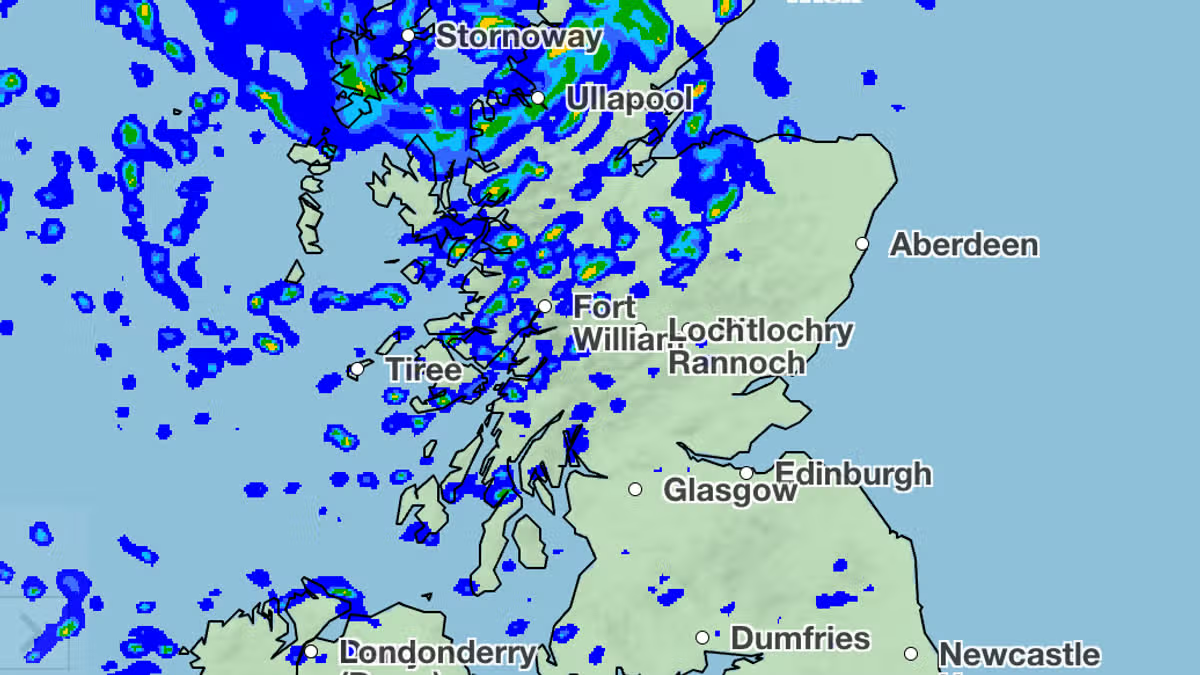
The Met Office has forecast some red rain cells, which could bring 16-32mm of rain in an hour, to hit the Orkney Islands in the mid-afternoon.
Mainland Scotland will also see heavy rain, as orange cells, bringing 8-16mm of rain in an hour, are forecast to deluge the Highlands near Loch Glascarnoch around the same time. It will also pour down in Glasgow, Aberdeen, and Fort William later in the afternoon.
Advertisement
Eastern Scotland will have the better weather, with Edinburgh and Dundee looking likely to stay dry. Top temperatures will be in the mid-to-high teens, at 17C in Edinburgh, 18C in Dundee, 19C in Aberdeen, and 16C in Glasgow
“A band of thicker cloud will continue to sink south on Thursday, introducing fresher conditions for all. However, outbreaks of rain, locally heavy at times, will affect northern Scotland,” forecasters said on Wednesday evening.
While rain is also forecast to hit north-east and south-west England, and Northern Ireland, Scots are predicted to see the heaviest rain in the UK.
Advertisement
The forecast comes a day after millions of Brits were told they are now living in a drought, as the Environment Agency declared half of England is in drought.
The seven drought regions include East Anglia, Hertfordshire and the whole of London, Thames Valley, Hampshire & the Isle of Wight, Devon and Cornwall, West Midlands, and Wessex (covering Dorset, Somerset, Wiltshire, and south Gloucestershire).
Drought will continue in those areas on Thursday, as south-east England will enjoy a high-20-degree heatwave, with London at 26C and Rochester, Kent, reaching 28C.















































You must be logged in to post a comment Login