Connect with us

NewsBeat

The tourists who admit they’re obsessed with ticking off as many countries as they can – so, how many have you been to, and does it even count if you don’t leave the airport?

Published

on

How many pins on your atlas? Country counts are becoming an increasing source of obsession

Across the globe, there are generally considered to be around 200 different countries, from well-trodden tourist destinations such as Spain and France to a number of much lesser known nations (Tuvalu, anyone? It’s in Polynesia in case you were wondering…).

As international travel has become easier – driven by the advent of cheaper flights, many of us are lucky enough to have ventured to a myriad of European countries and plenty of places beyond, from Japan and Australia to South America. 

While the average Brit has visited seven countries, according to one study by electrical retail giant Currys, there’s a growing number of tourists whose biggest passion has become ticking off as many countries as they can in their lifetime – with many setting their sights on the golden number of 100.

Nomad Media, a website dedicated to travellers fixated on seeing as much of the world as possible, has a leaderboard showing those who’ve racked up the most hits. 

Advertisement

How many pins on your atlas? Country counts are becoming an increasing source of obsession

Does an airport layover count as a visit to a country? The verdict appears to be a hard no

Does an airport layover count as a visit to a country? The verdict appears to be a hard no

A ‘master ranking’ even reveals some who’ve managed to set foot in all 193 UN countries, which is apparently the absolute ‘holy grail’ of travel bucket lists.

Advertisement

Last year, 82 people claimed to have achieved the feat, with four who say they’ve done it twice. 

What counts as a visit though can be controversial. 

A poll by the website in 2022 showed 94 per cent of travellers believe an airport stopover without leaving the premises does not count – while the majority don’t count leaving the airport for a sandwich, either. 

Meanwhile, 24 per cent said a railway stopover does count – and getting off a cruise ship is required in order to count as a visit. 

Advertisement

Cassie de Pecol, who has two Guinness World Records for the fastest time to visit all sovereign countries, told Conde Nast Traveller that often those attempting to put as many pins in the atlas as possible are travel influencers, who need a USP. 

She explained: ‘In today’s day and age – where the more followers you have, the more branding deals and thus, the more financial security – there’s a real fight for survival within the travel community to be the most interesting traveller.’

Others though, have very different motivations. 

Neil Hughes, a Welshman who lives in Essex, is not your typical travel blogger – the 61-year-old retiree runs his Do Not Go Gently Travel Blog, paying homage to his late wife.

Advertisement
Welshman Neil Hughes, 61, who lives in Kent, lost his wife Carol 18 months ago and says she urged him to keep enjoying travelling. He told the Daily Mail: 'I'm hellbent on fulfilling my promise to her, one country at a time'

Welshman Neil Hughes, 61, who lives in Kent, lost his wife Carol 18 months ago and says she urged him to keep enjoying travelling. He told the Daily Mail: ‘I’m hellbent on fulfilling my promise to her, one country at a time’

Neil says he's now firmly on the competitive travel bandwagon (Pictured on a recent trip to Japan)

Neil says he’s now firmly on the competitive travel bandwagon (Pictured on a recent trip to Japan)

Neil meeting sumo wrestlers in Tokyo – he says he's become obsessed with adding more countries to his list

Neil meeting sumo wrestlers in Tokyo – he says he’s become obsessed with adding more countries to his list

He lost his wife Carol to cancer 18 months ago. When she was diagnosed, she asked Neil what he was going to do when she was gone – and ‘sitting at home drinking wine wasn’t the right answer’, he says.

Advertisement

Travel had always been important to the pair – and since he lost his wife, ‘it’s become an obsession’, he says: ‘I’m hellbent on fulfilling my promise to her, one country at a time.’

At the time of her funeral in April 2025, he had visited 49 countries, many following the Wales and England rugby teams – and just over a year later, that number is already up to 58. 

Neil, speaking to the Daily Mail from Argentina, where he has just landed for a two-month trip where he will also visit Chile and Easter Island, said: ‘I’m insanely competitive anyway, and ticking off countries is a way of keeping score.

Neil says he wants to hit 60 countries by 2027. He's keen to show that you don't have to be a gap year student to enjoy travelling

Neil says he wants to hit 60 countries by 2027. He’s keen to show that you don’t have to be a gap year student to enjoy travelling

Advertisement

‘I wanted to make sure I hit 60 countries this year, so I chose Tanzania for my next trip. The way I do it with business class flights, I look for where the deals are cheap – 60 countries are great, but there’s 200 of them, so I’ve still got a long way to go. 

‘I did Japan at the start of the year, three weeks travelling on my own, and three weeks on a wildlife track. I went to Hiroshima, and Kyoto, Okinawa, and Hokkaido.’

One of his highlights was Mongolia, and he has Bhutan and Nepal on his bucket list too.

Instead of a gap-year style trip, Neil likes to travel for around two months at a time, with a one-month break in between. 

Advertisement

He says he loves a real local ambience – citing, for instance, Jardine in Colombia: ‘I was sitting in this beautiful square, colonial buildings, everything pastel colours. The entire town was sat out in the square having coffee, having drinks, cowboys and horses walking around.’

Neil says: ‘Ticking off the number of countries, that is very much my thing. A lot of people ask, how long are you going to be doing this for, then? 

‘The basic answer is until I don’t want to, or until I can’t. And even then, you know, I might segue to a different style of travel. I might not be climbing volcanoes, I might be doing cruise ships.

‘Cruise ships don’t do it for me [right now]. Because if I want to tick off the numbers, I want to actually see a place too.’

Advertisement
Notching them up! Ashleigh Lawrence, who lives on Australia's Gold Coast, told the Daily Mail she's currently on 83

Notching them up! Ashleigh Lawrence, who lives on Australia’s Gold Coast, told the Daily Mail she’s currently on 83

Ashleigh Lawrence, 37, who is British-Australian and lives on the Gold Coast, is another such traveller.

The World Poker Tour presenter, who came second on the Amazing Race Australia globe-trotting TV show and is on Instagram as @ashi_9, is currently on 83 countries – and counting. 

‘When I actually started this, I wanted to do 30 countries before I turned 30,’ Ashleigh tells the Daily Mail. 

Advertisement

‘And then I hit that and thought, okay, I need to get to 50 before I turn 30. It’s just  continued on from there. Now I don’t even do it consciously. I just think, “oh, it’s time to go on holiday. Where am I going next?”‘

Highlights of her travels include Vietnam – with ‘amazing’ food, ‘lovely’ people, great prices and diverse scenery – as well as Japan, Colombia and Mexico. She has her sights set on visiting Palau and the Rock Islands in Oceania too.

So what has inspired the intrepid explorer?

Ashleigh, 37, is British-Australian and has visited a total of 83 countries (pictured in Kazakhstan, her 50th country)

Ashleigh, 37, is British-Australian and has visited a total of 83 countries (pictured in Kazakhstan, her 50th country)

Advertisement

‘I think it was just a good excuse at the time to go travelling, because I love it – and once I hit 30, I thought I had better keep going. 

‘I spent six months travelling around Central and South America, and in that time I ticked off a whole bunch more places that I hadn’t been to.’

The serial tourist says she went through one phase of really trying to tick places off, especially in Europe, saying: ‘It was a really cool way to see new places and experience places I probably wouldn’t have gone to.’

Ashleigh explains: ‘I’m definitely competitive, and I would love to visit every single country. That’s the dream. I’m a way off that, but I’m on my way. In my head, my next goal is 100 countries.’

Advertisement

Another way she covers more ground is by combining trips: ‘If I’m going back to somewhere that I’ve already been that I love, I’ll try and tack on another trip, to go and see a new place at the same time.’

When visiting Taiwan again, for example, she added a trip to Japan – and she also combined trips to India and Sri Lanka. 

But at the end of the day, she explains: ‘I definitely favour experiences over just ticking somewhere off (although the more places and fun experiences I can have, the better!).’ 

The presenter loves to combine trips, for instance Sri Lanka (pictured) with India

The presenter loves to combine trips, for instance Sri Lanka (pictured) with India

Advertisement
Guatemala was one standout trip for the intrepid traveller

Guatemala was one standout trip for the intrepid traveller

Alex Andreichuk, CEO of Altezza Travel, shared his take on the trend

Alex Andreichuk, CEO of Altezza Travel, shared his take on the trend

Why have modern travellers become so addicted to turning travel into a game?

Alex Andreichuk, CEO at Altezza Travel, told the Daily Mail: ‘People love gamifying everything, and country counting is no exception. The moment someone shares the number of countries they’ve visited, you’re almost compelled to compare. 

Advertisement

‘That’s when many people get hooked and begin viewing countries as a checklist to complete. The higher the number grows, the more it becomes a badge of honour and the stronger the desire to “win the game”.’ 

Dr Tracy King, a private practice clinical psychologist, echoed this, explaining the motivation for many travellers: ‘Although some might think that counting countries is just a way to brag, it is actually a lot more than that. It changes their lives in ways that aren’t related to travel because it lets them say, “I really lived, I’ve seen things and been places”.

‘It’s not that different from the collecting we did as kids. Pokémon cards, erasers, stickers, shells, soccer cards, badges, stamps. The object was never just the object. It was the thrill of finding it, of trading it, of owning it, of completing a set, of showing somebody, and of feeling that tiny bit of pride.’ 

But for many, Alex adds, ‘there is no winning this game’. 

Advertisement

He said: ‘Somewhere along the way, people forget that it’s the experiences that matter, not an imaginary country checklist. Most countries are large enough that you couldn’t fully experience them in a single trip. 

‘Yet country counting encourages people to squeeze as many destinations as possible into one itinerary. That’s when quantity replaces quality.

‘On the map, visiting neighbouring countries looks perfectly reasonable. Why not visit Switzerland if you’re already in northern Italy? But the amount of time you spend on the road rarely justifies the added value of that decision. The end result is more time in transit and less time actually experiencing the destination. That’s how fast tourism is born. 

‘You become a passerby who gets to say you’ve been there but has little idea what the place is really about. 

Advertisement

‘How does it feel? What does everyday local life actually look like? In authentic travel, you should be able to answer these questions. If you can’t, you’ve become a victim of fast tourism.’

Tracy concludes: ‘I think it is important to remind people that just because they have visited 80 countries they may not be more interesting than someone who has visited five but has really connected with those five places.

‘For me, the useful question is: am I counting this country as I think of the next one or am I actually truly being present where I am? 

‘If the number adds fun, drive and a sense of adventure, that’s great. But if the number becomes the whole point, it may be worth slowing down and asking what you really need from your next trip.’

Advertisement

Source link

Continue Reading
Click to comment

You must be logged in to post a comment Login

Leave a Reply

NewsBeat

what cricket cheating scandal reveals about the nebulous ‘spirit’ of the game

Published

on

what cricket cheating scandal reveals about the nebulous ‘spirit’ of the game

Cricket, by some metrics the world’s second most popular sport, has a penchant for producing rather peculiar scandals. UK-Australian relations were put under significant strain over the way that Harold Larwood, a coal miner from Nottinghamshire who could hurl cricket balls at batters very quickly, bowled at Don Bradman and the rest of his team in the 1932-33 “Bodyline” series. The tactic even resulted in a severe fractured skull for wicket-keeper Bert Oldfield. Nearly a century has passed, but cricketing aficionados still argue over it today.

Then there were the three Pakistani cricketers who were convicted for arranging to bowl no-balls in a 2010 match between England and Pakistan. The overall effect on the outcome of the match itself was minimal, but the scandal received a significant amount of global press coverage.

Plus, and in no particular order, we have had “sandpapergate”, a ball-tampering scandal ending with Australia’s then-captain, Steve Smith, tearfully apologising on television; the 1979 Dennis Lillee-inspired furore of whether it was right to use an aluminium cricket bat rather than a traditional wooden one; and the then-England captain Mike Atherton’s 1994 “dirt in the pocket” scandal concerning alleged attempts to make a cricket ball swing. That’s not even touching on the many other betting scandals that cricket has suffered.

But the recent “Clicky Ponting” affair, set in the North Yorkshire and South Durham Cricket League, seems to be something else entirely. In July 2026, video footage emerged of Brian Devine, standing at first slip, apparently clicking his fingers to mimic the sound a cricket ball makes when hitting the edge of the bat.

Advertisement

Devine, it would appear, has allegedly been pulling off this trick (and duping umpires along the way) for quite some time. And Saltburn CC have been merrily getting batsmen out as a result. Devine has now been suspended by the club for the “foreseeable future”. Other punishments may follow.

No one has openly argued that the Saltburn players – you’d wonder whether at least some of Devine’s teammates must have been aware of this particular act – weren’t crossing a line. But it’s what this does (or doesn’t) say about cricket more broadly that’s the interesting part.

The spirit of cricket (in theory)

Cricket makes a real play of espousing something called the “spirit of cricket”. In the 1990s, two former international players, Ted Dexter and Colin Cowdrey, pushed for cricket to recognise that the game is always played within the correct “spirit”.

Advertisement

By 2000, a preamble to the laws (cricket is far too serious for there just to be rules) of the game argued that cricket should be played “not only within its Laws, but also within the Spirit of the Game”.

Cricket, in other words, sees itself as having a unique appeal. And that appeal rests firmly on the basis that the sport is somehow different to (read, better than) other sports. But the reality of how the game is actually played often doesn’t seem to mirror this.

Devine’s alleged behaviour is clearly not within the “spirit of the game”. But similar forms of cheating – punching the ball over a goalkeeper in a World Cup quarter-final, say, or pretending that you’ve been bloodied in a rugby union game to facilitate the use of a substitution you wouldn’t otherwise have been allowed to make – exist across all sports. I analyse these types of things in much more detail in my own work on the (lack of) integrity in modern football.

Yet those other sports don’t begin from the self-righteous starting position that their game is somehow different. The fact that cricketing umpires have no way of disciplining individuals on the field of play speaks to this. Umpires have neither yellow nor red cards (or any variant thereof) at their disposal. In a game where playing within the “spirit” is taken as a given, they just aren’t deemed necessary.

Advertisement

The spirit of cricket (in practice)

The one thing that debates around the spirit of cricket consistently reveal is a lack of consensus around what the “spirit” actually is. The principles are no doubt honourable, but legitimate practice on the field is shaped by the 42 laws of the game, which are interpreted by the umpires. They exercise judgement based on how they think the laws should apply in a given situation.

The only logical way of invoking something as nebulous as the spirit of cricket is to work out whether an act is taking place within the laws. If you don’t like the act in question, even though it’s deemed legal, you need to find a way of convincing those who oversee such things to change the laws. That doesn’t mean that there is no such thing as a spirit of cricket. But it cannot (and does not) exist independently of the laws of the game.

The thing that arguably irks most is that many within the cricketing community assume that cricket is unique in that regard. Sport is not played in a moral vacuum. Respect for your opponents and respect for the game is clearly evident across all sports. Take the badminton or tennis player who raises a hand in apology when a net cord goes their way. Or a rugby player who knocks their opponent flying, then offers a hand in getting them back on their feet. The playing of any sport requires – or should require – the combatants to treat each other with a bit of respect. That’s the basis of a better society all round.

Brian Devine’s alleged behaviour in Clickgate will be frowned upon by more or less everyone who follows sport. And rightly so. It also one more example of cricket players at all levels indulging in sharp practice and inappropriate behaviour. Yet cricket still seems to think it’s unique in being played differently. It isn’t. And it’s time cricket woke up and realised that.

Advertisement

Source link

Continue Reading

NewsBeat

Huge fire breaks out on industrial estate in Newport – live updates

Published

on

Wales Online

A huge fire has broken out on an industrial estate. Crews were deployed at 2.42am to the scene at Star Trading Estate, Caerleon, Newport.

The site has been evacuated and all people have been accounted for.

Members of the public are urged to avoid the area and locals are advised to keep windows and doors closed.

Advertisement

South Wales Fire and Rescue Service is working alongside Gwent Police to ensure public safety.

For live updates, follow our blog below.

Get daily breaking news updates on your phone by joining our WhatsApp community here. We occasionally treat members to special offers, promotions and ads from us and our partners. See our Privacy Notice

Source link

Advertisement
Continue Reading

NewsBeat

Residents evacuated after ‘explosion’ at flats with man, 18, arrested | News UK

Published

on

Residents evacuated after 'explosion' at flats with man, 18, arrested | News UK
Police were called to Princes Street in Ipswich shortly before 9pm last night after people called in to report several windows being blown out (Picture: Google Maps)

A man has been arrested after a ‘suspected explosion’ that saw residents forced to evacuate a block of flats.

Police were called to Princes Street in Ipswich shortly before 9pm last night after people called in to report several windows being blown out.

Residents in the building were told to leave their homes, and the road was closed for safety reasons.

An 18-year-old man was arrested soon after on suspicion of ‘arson/criminal damage with intent to endanger life’, Suffolk Police said.

Advertisement

He was taken to Martlesham Police Investigation Centre for questioning.

Sign up for all of the latest stories

Start your day informed with Metro’s News Updates newsletter or get Breaking News alerts the moment it happens.

Advertisement

Suffolk Fire and Rescue and the East of England Ambulance Service were also called to the scene.

No injuries were reported in the incident.

A police spokesperson said: ‘A man has been arrested following an incident in Ipswich.

‘Police were called to Princes Street just before 8.45pm on Friday, July 31, following reports of a suspected explosion at a block of flats, which caused damage to several windows.

Advertisement

‘At approximately 9.05pm, an 18-year-old man was arrested on suspicion of arson/criminal damage with intent to endanger life.

‘Enquiries continue to establish the circumstances of the incident, however no injuries have been reported.

‘Motorists are advised that a diversion is currently in place, as Princes Street is expected to remain closed overnight.

‘Anyone with information relating to the incident is asked to contact police.’

Advertisement

Get in touch with our news team by emailing us at webnews@metro.co.uk.

For more stories like this, check our news page.

Advertisement
Advertisement

Source link

Continue Reading

NewsBeat

Which is the better recovery method?

Published

on

Which is the better recovery method?

Looking after your body is no longer just about getting a good workout in; it’s ensuring that you’re properly recuperating afterwards, too. Luckily, in 2026, there is a huge range of products designed to aid recovery.

In fact, the recovery tech boom is playing a big role in the growth of the sports technology market overall. Estimates show it’s projected to grow from $39.6 billion in 2026 to $192.3 billion by 2034.

Two of the most popular products in this category are massage guns and compression boots. Both claim to ease muscle soreness and help you bounce back to training sooner, but they sit at very different price points. You can pick up a basic gun from around £40, whereas the cheapest boots we tested were £300. But which method is actually better for improving workout recovery?

Advertisement

Massage guns can help to improve flexibility in older muscles

Massage guns work by delivering repeated percussion and vibration to one specific area, which helps improve the mobility and flexibility of a specific muscle. In turn, this can make your muscles feel less tense and stiff. These gadgets can be used before and after workout sessions.

While useful for all ages, massage guns can be helpful for anyone looking to improve range of movement, ease muscle stiffness and boost blood flow – whether exercising or not.

“It will help temporarily improve your mobility so that you feel like you’ve got a bit more flexibility in that muscle,” explains Jonathan Wreaves, clinical physiologist at preventative health clinic Viavi.

But how do they actually work?

Most massage guns offer a revolutions per minute (RPM) range, which refers to how many times the massage head moves back and forth every minute. This tends to be somewhere between 1200 and 3500. The lower range is ideal for gentle massage and warming up, while a higher RPM is better for targeting bigger muscle groups and more intense tightness.

Advertisement

Source link

Continue Reading

NewsBeat

Cambridge South station sees more than 110k journeys in first month

Published

on

Cambridgeshire Live

The station is also the first fully Great British Railways branded station

Thousands of passengers have passed through Cambridge South station’s ticket gates since it opened in June. The £250 million station, backed by government funding, supports new train services by Greater Anglia, Great Northern, Thameslink, and CrossCountry.

Advertisement

It is the first fully Great British Railways branded station, bringing together Network Rail track and infrastructure with train operators’ passenger services under a nationalised GBR Anglia organisation.

A spokesperson for Network Rail said: “With thousands of people now choosing to commute by rail, the new station is delivering on its promise to provide an alternative, greener option to access Cambridge Biomedical Campus, reducing reliance on vehicle use and reducing carbon emissions while helping to ease levels of congestion in the city of Cambridge.”

Jamie Burles, managing director for GBR Anglia said: “It is fantastic to see so many people using the new station in just the first month since it opened and I’m sure this is only just the beginning of the story for Cambridge South.

“Having seen over 110,000 journeys in the first month alone demonstrates that the demand was there, waiting for us to build this new facility, and open a new gateway to this very important biomedical campus.

Advertisement

“It really does go to show how investment in the railway can transform people’s lives for the better, by building connectivity and providing easier ways to get to where people most need to be.”

Source link

Continue Reading

NewsBeat

Tesco discount fuel offer for Bradford shoppers – how to claim

Published

on

Tesco discount fuel offer for Bradford shoppers - how to claim

Customers who spend £60 or more in-store will receive a coupon for 5 per cent off fuel, which could mean a saving of up to 8p per litre.

The coupon can be used at Tesco petrol stations across the UK on petrol or diesel, and the offer is valid until Sunday, August 23.

The promotion is valid for in-store purchases made until Sunday, August 16.

Advertisement

5 Tips to make your fuel last longer


A Tesco spokesperson said: “Tesco operates more than 500 filling stations across the UK and offering a discount on the price of fuel is just one way in which Tesco is helping its customers this summer.

“The supermarket recently launched Freebie Thursdays, giving away millions of coupons for free products to Clubcard members, alongside extending its Kids Eat Free offer at The Café at Tesco.”

To redeem the offer, customers must present a printed coupon at the kiosk.

It cannot be used at pay at pump locations, unmanned stations, Tesco Express sites that sell Esso fuel, or in Northern Ireland and the Isle of Man.

Advertisement

A minimum of £1 must be spent on fuel to use the coupon, with a maximum discount of £10.

The offer comes alongside other summer promotions, including Freebie Thursdays, which gives Clubcard members free product coupons, and extending its Kids Eat Free offer at The Café at Tesco.

Earlier this year, Tesco expanded its Aldi Price Match to more than 2,000 Tesco Express stores.

Advertisement

Source link

Continue Reading

NewsBeat

Man who raped women and girls to ‘teach them a lesson for being out late at night’ could be freed from jail

Published

on

Sunny Islam was handed an indefinite prison sentence for attacking four women in a three-month reign of terror in 2010

A man who raped women and a teenage girl to ‘teach them a lesson’ for being out late at night could be freed from prison next month.

Sunny Islam, who told the jury he was a practising Muslim, was handed an indefinite prison sentence for attacking three women and the teenager in a three-month reign of terror in 2010.

But he could now be released in September pending the decision of a parole hearing – which, despite an application from one of his victims, will not be held in public because the thought of it had given him ‘anxiety’.

Islam dragged his victims, which included a 15-year-old girl, off the street at knifepoint, then bound and assaulted them. Police fear he may have attacked many more who have not come forward.

Advertisement

New parole board documents show one of his victims applied for his upcoming hearing to be held in public.

The application was denied, with one of the reasons given as Islam’s claims he had become unwell after hearing of the possibility of facing the public.

His solicitor said: ‘Since learning that an application has been made for the oral hearing to be held in public, the prisoner has reported a dramatic increase in his anxiety, including sleep disturbance. This could be a potentially de-stabilising effect.

‘He is in the process of seeking medical advice in relation to those difficulties.’

Advertisement

Sunny Islam was handed an indefinite prison sentence for attacking four women in a three-month reign of terror in 2010

No medical documentation was provided to support this and Islam claimed, via his solicitor, that his current health problems could impact his ability to give ‘best evidence’ if the hearing was not in private.

In denying the victim’s application, His Honour Jeremy Roberts KC, on behalf of the Chair of the Parole Board, said: ‘His offences are of a particularly repugnant type and the atmosphere in a public hearing is likely to be hostile.

Advertisement

‘Although there is no medical evidence I can see no reason to doubt the prisoner’s statement to his legal representative of a significant increase in his anxiety when he learned that an application had been made for a public hearing.’

He added that discussions about the sensitive nature of the offences in public may be ‘very difficult for the prisoner’.

Islam, who grew up in a strict Muslim family, was sentenced in 2012 to a minimum of 11 years in prison. With time already served, this minimum term expired in 2021.

He had been traced through the number plate of his girlfriend’s car after he kidnapped and raped the 15-year-old in September 2010.

Advertisement

Islam had grabbed her from behind as she walked home with a friend and bundled her into the car at knifepoint before driving to a secluded spot where he raped her twice – despite her claiming she was only 11 years old.

Judge Patricia Lees said at the time: ‘You told her you were going to “teach her a lesson”, and similar things were said to the other women.

‘Those words are a chilling indictment of your very troubling attitude towards all of these victims.

‘You seem to observe women out at night as not deserving respect or protection.

Advertisement

‘I have no doubt that you were out that night looking for a victim, as you were on each of these occasions.’

After his arrest, Islam’s DNA was linked with three other attacks near his home in Barking, east London.

Woolwich Crown Court heard that on July 8, 2010 he subjected a 20-year-old sex worker to ‘his trademark double rape’.

During her ordeal he tied her up and when she fought back he repeatedly punched her in the face and stole her wallet.

Advertisement

She said: ‘He treated me like an animal and made me feel worthless – I thought I was going to die.’

A week later he struck again in Forest Gate, this time dragging a 28-year-old woman into his car and forcing her to commit a sex act.

She managed to kick out the back window of his car and tried to flag down a passing vehicle as Islam strangled her. The woman eventually managed to escape and rejoin friends, who phoned the police.

His fourth victim, also attacked in September, did not come forward until police found the 31-year-old’s blood in the back of the car along with a knife he used to threaten his victims and plastic ties he bound them with.

Advertisement

She was repeatedly punched in the face until she was bleeding and then tied up and raped twice.

Islam, who was 21 at the time of the attacks, was convicted of seven charges of rape, one of sexual assault and one of kidnap.

At the time of his sentencing, his teenage victim said in a statement: ‘No one will ever understand the flashbacks – they are so real. At night, I lay in my bed and it is like I am there.

‘It is like a screen in my mind forcing me to relive that night again and again.

Advertisement

‘People will say time will heal, but I think time has helped me accept the truth – that I will never escape what has happened to me.’

Judge Lees said at the time: ‘The harm you have done to your victims is incalculable.

‘The nature and extent of these offences drives me to the conclusion that you represent an extreme and continuing danger to women, particularly those out at night.’

The newly released parole board documents show that one of his victims wanted the hearing to take place in public because Islam had ‘hurt other members of the public (all women or children from different backgrounds) to teach them a lesson’.

Advertisement

She added: ‘He took advantage of them on the street and he could hurt other women or children.

‘I think it is in the public’s interest and right to know how the justice system has dealt with this and how they will continue to deal with this case and other cases in the future’.

As well as his concerns about Islam’s supposed anxiety, Judge Roberts decided the hearing should be held in private because of the distress a public hearing could cause to the three victims, whose views on the process were unknown.

He added in his conclusion: ‘This decision will obviously disappoint the applicant but it will be open to her, if she now wishes, to apply to the Panel Chair for permission to attend a private hearing and/or to apply to see a summary of the panel’s decision.’

Advertisement

Source link

Continue Reading

NewsBeat

Channel 4 confirms new series of Educating Yorkshire

Published

on

Channel 4 confirms new series of Educating Yorkshire

Channel 4 has confirmed the return of Educating Yorkshire with a new eight-part series set once again at Thornhill Community Academy.

The series first aired in 2013 and was a huge hit, before a second series was aired last year.

Produced by Twofour, the documentary will continue to follow students and staff as they navigate the challenges of school life.

Advertisement

Channel 4 confirms new series of Educating Yorkshire

Channel 4 first aired the Educating… British documentary reality television series in 2011, beginning with Educating Essex.

Educating Yorkshire was the second to air two years later, with Cardiff and Manchester also featured.

The show uses a fly-on-the-wall format to show the everyday lives of the staff and pupils of secondary schools.

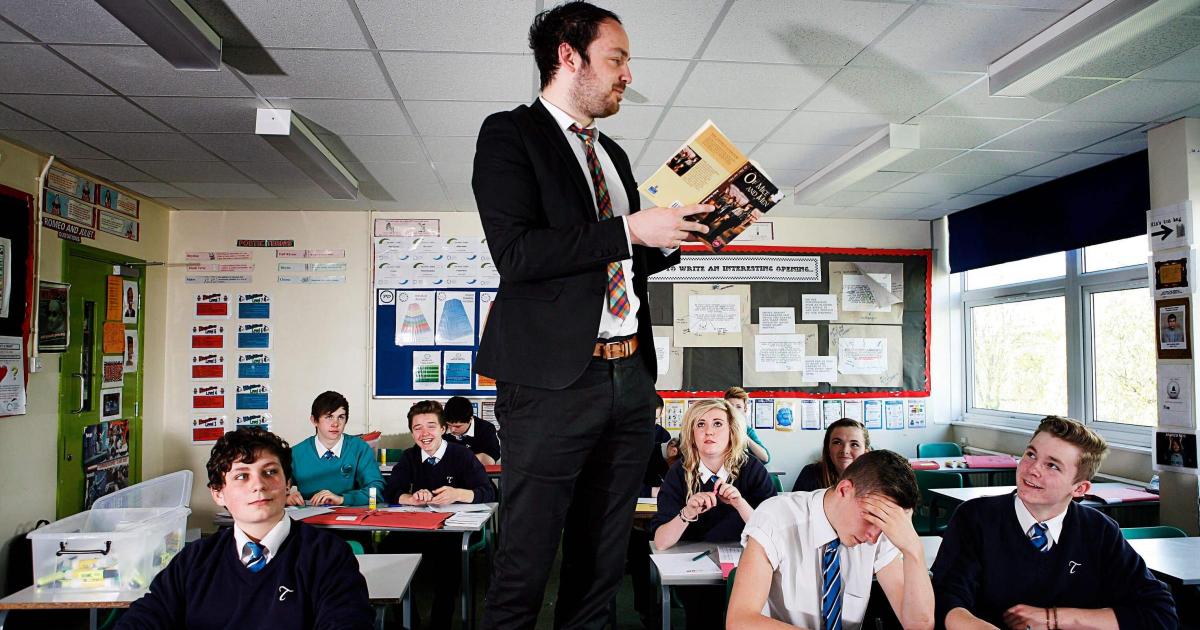
Educating Yorkshire’s first series was watched by millions, with its most famous scenes showing English teacher Mr Burton helping year 11 student Musharaf overcome his stammer.

On Educating Yorkshire returning for a third series, Matthew Burton, headteacher at Thornhill Community Academy, said: “I’m really pleased to welcome Twofour back to Thornhill, to highlight more of the important work that goes on in schools up and down the country, day in, day out.

Advertisement

“As many people will have seen last year, our students and staff are so inspiring, and to have the chance, again, to show the extent of the quiet, life-changing work that happens day by day is a real privilege.

“Our priority at TCA will always be sharply focusing on the safety, wellbeing and education of our students.

“We look forward to working hard and being nice with Twofour and Channel 4 to develop an important series over the next year.”

Educating Yorkshire reached 8.7 million viewers across linear and streaming last year and was Bafta-nominated in 2026.

Advertisement

Rita Daniels, commissioning editor at Channel 4, said: “Last year’s return to Thornhill Community Academy was both insightful and emotional, providing the perfect snapshot of today’s high school experience.

“The Thornhill kids were brave and brilliant when opening up about the modern challenges of teenage life.

“We know that there will be kids across the country dealing with similar issues and we hope they will continue to see themselves in a new series of this exceptional show.”

What is your favourite series of Educating…? Let us know in the comments.

Advertisement

Source link

Continue Reading

NewsBeat

Northern Perspectives’ view of the National Glass Centre, Sunderland

Published

on

Northern Perspectives' view of the National Glass Centre, Sunderland

The National Glass Centre, Sunderland, by Northern Perspectives

Glass was introduced to this country in 674AD when Benedict Biscop, a Northumbrian abbot, returned from a pilgrimage to Rome and began building St Peter’s Monastery at Monkwearmouth, using stonemasons and glaziers from Gaul and Rome. This was the first time glass had been seen in Britain, and the foreigners passed on the tricks of the trade to the locals.

As an industry, glassmaking really took off in the 18th Century. Sunderland had access to cheap coal, from the North East coalfield, and sand aplenty from the beaches – Seaham sand, with a high silica content, was found to be especially good. However, as Durham coal was sold further afield, the colliers, rather than return empty, came back with foreign sand for ballast, with high quality Baltic sand being popular among the glassmakers.

The National Glass Centre, Sunderland, when it opened in 1998, by Ian Weir

The National Glass Centre, built on the site of one of Sunderland’s last shipyards as that industry died, was officially opened in 1998 by Prince Charles. It was intended to celebrate this history and to keep the artistic skills alive – the 158-piece Londonderry Glass Table Service of engraved and cut glass, made in 1823-24 by the Wear Flint Glass Works for the marquess in Seaham Hall, is regarded as one of the finest ever made.

HRH The Prince Of Wales tries his hands at glass blowing at the National Glass Centre in Sunderland today (Friday) under the supervision of Barry Clark, Studio Manager. Photo by Owen Humphreys/EDI WPA POOL/PA

However, yesterday all that came to an end as the university controversially shut the glass centre, citing huge maintenance bills, with the intention of demolishing it.

Advertisement

As the last glassmaking factory in Sunderland closed in 2007, when the parent company of Pyrex withdrew to the continent, it does represent the end of the line.

Northern Perspectives

So Northern Perspectives has recorded it. He is a Durham-based photographer who uses the latest drone-based technology to cast new light on our beautiful and historic landscapes. To see more of his prolific output, including his aerial videos, search “Northern Perspectives” on Facebook.

SEE MORE: NORTHERN PERSPECTIVES’ VIEW OF A CONCRETE SHIP IN THE WEAR!

Advertisement

Source link

Continue Reading

NewsBeat

‘Masterpiece’ BBC period drama that rivals Downton Abbey

Published

on

Daily Mirror

Charles Dickens would “heartily approve” of this much-loved BBC period drama adaptation.

Downton Abbey fans are urged to watch this “extraordinary” BBC period drama that’s been hailed the “best film ever”.

Charles Dickens is famed for writing some of the greatest stories in history from Great Expectations and Oliver Twist to A Christmas Carol.

Advertisement

Some that viewers may not be as familiar with though is Bleak House, a Victorian bestseller about a lifelong lawsuit, a hidden family secret and an orphan girl.

The 19th Century novel has been adapted for the small screen on a few occasions but it’s the 2005 version that’s often brought up by Downton Abbey fans as an alternative watch. And what’s even better is that the “excellent” 15-part period drama Bleak House is ready to stream for free on BBC iPlayer.

While a multi-generational inheritance case continues to drag on, orphan Esther Summerson and wards Ada Clare and Richard Carstone, go to live with their generous cousin John Jarndyce at his home, Bleak House.

Advertisement

Elsewhere, aristocrat Lady Dedlock raises suspicions with a lawyer as she suddenly shows an anxious interest in a court document from years ago.

What makes Bleak House stand out even more though is its star-studded cast, led by Motherland and Line of Duty star Anna Maxwell Martin as Esther Summerson.

She is joined by The Fall and Sex Education actress Gillian Anderson as Lady Dedlock, Netflix’s Beef actress Carey Mulligan and The Crown icon Charles Dance as Mr Tulkinghorn.

“This multi-hour TV drama is a masterpiece from beginning to end”, someone praised on IMdB. Another said: “I can’t think of a greater Dickens film adaptation. This version of ‘Bleak House’ is simply one of the best films ever made.”

Someone else hailed it the “best film I’ve ever seen”, with a fourth writing: “It took me totally by surprise.

“I recommend that any lover of great literature and British period pieces make this a must see.”

As a further fan stated: “I rather think that Charles Dickens if he were still around would heartily approve.”

Advertisement

Bleak House is available to watch on BBC iPlayer.

Source link

Continue Reading

Trending

Copyright © 2025