Connect with us
DAPA Banner
DAPA Coin
DAPA
COIN PAYMENT ASSET
PRIVACY · BLOCKDAG · HOMOMORPHIC ENCRYPTION · RUST
ElGamal Encrypted MINE DAPA
🚫 GENESIS SOLD OUT
DAPAPAY COMING

NewsBeat

TOM LEONARD: Are all these controversial decisions proof there IS a conspiracy for Argentina to win the Cup – and please Trump?

Published

on

Donald Trump holds the World Cup trophy next to FIFA president Gianni Infantino

World Cup fans who head to social media sites like X in search of fresh insight into the tournament are instead greeted by an endless stream of memes featuring two of this year’s stand-out characters: Argentina captain Lionel Messi and Gianni Infantino, the Swiss president of FIFA. 

In one, Infantino pushes a baby faced Messi around in a pram. In others, he tenderly holds his hand or cradles him in his arms. 

Elsewhere, he wears an Argentina shirt or, stripped to the waist, dances a celebratory waltz with the striker in the Argentine dressing room. 

The implication could hardly be clearer: FIFA, the scandal-plagued governing body of world football, wants the team playing England in today’s semi-final in Atlanta to win the trophy for what will be the fourth time. 

Advertisement

Some will say that FIFA and its president have only themselves to blame for such damning suspicions. 

After all, having cravenly presented President Donald Trump with a new award called the FIFA Peace Prize last December, FIFA then reversed a red card which would have banned the US team’s star goal-scorer, Folarin Balogun, from playing in a crucial game in this tournament – after Infantino was phoned by the President. 

For many fans, that has fuelled the belief that nothing is beyond FIFA – including flouting its supposed neutrality to tilt the tournament in favour of the team that best serves its commercial and political interests. 

Advertisement

Donald Trump holds the World Cup trophy next to FIFA president Gianni Infantino

An Argentina fan holds Messi cardboard face masks in a crowd of Argentines ahead of their World Cup fixture against Switzerland

An Argentina fan holds Messi cardboard face masks in a crowd of Argentines ahead of their World Cup fixture against Switzerland

Despite protests from FIFA officials that allegations of bias could endanger referees, totting up the ways Argentina has supposedly benefited has become one of the most popular parlour games of the 2026 World Cup. 

It’s even spawned a new word – ‘VARgentina’ – which alludes to the seemingly uncanny way so many decisions by the Video Assistant Referee (VAR) system have fallen in Argentina’s favour.

Advertisement

Why favour Argentina?

Claims FIFA is biased towards Argentina are nothing new. Similar accusations surfaced at the 2022 World Cup in Qatar where Lionel Messi finally lifted the trophy after his team defeated France in a dramatic final. 

At the time, conspiracy theorists argued Messi, already the biggest star in world football, had somehow reached the twilight of his career without winning the World Cup. At 35, they said, Qatar was his last chance to do it.

 Latin America is one of foot ball’s most valuable markets and the notoriously venal FIFA – so ran the theory – stood to profit far more commercially from an Argentina win than from a second consecutive victory for France. And if Messi – a huge global brand – could score, so much the better for an organisation that has a long and well-documented history of corruption and self-enrichment. 

A new theory has emerged during this year’s tournament: that another Argentina triumph would also suit Trump. In March, Trump welcomed Messi and his club, Inter Miami, to the White House following their victory in America’s top domestic cup competition, revealing his son, Barron, is an admirer of the striker.  

Advertisement

It has been mooted that Trump, who is due to present the World Cup trophy alongside Infantino, would much rather hand it to Messi, who never talks publicly about politics, than to someone like French captain Kylian Mbappe, who has spoken out about France’s Far Right and might, some speculate, decide to make a Trump-flavoured statement if they win. 

Two Argentina fans wear T-shirts printed with the country's footballing legends Diego Maradona and Messi at the World Cup

Two Argentina fans wear T-shirts printed with the country’s footballing legends Diego Maradona and Messi at the World Cup

Trump holds up a red card during a meeting with Infantino in the Oval Office at the White House

Trump holds up a red card during a meeting with Infantino in the Oval Office at the White House

Messi start

Messi managed to stir up controversy in Argentina’s very first game in this tournament, against Algeria. In the 30th minute, he tackled opposing captain Aissa Mandi. Messi caught Mandi on his right calf and achilles tendon with his studs up. 

Advertisement

As Mandi writhed in agony, the Polish referee awarded a free-kick but produced no card. Some refereeing experts argued that, had he been sent to the pitch-side monitor for a second look, Messi could have been sent off. 

Instead, he remained on the pitch to complete a hat-trick, leading Argentina to a victory. The Algerian FA later filed a complaint with FIFA over the incident and two other refereeing decisions in the game. 

In their next match, against Austria, Argentina also got off lightly when midfielder Alexis Mac Allister brought down Austrian Xaver Schlager from behind. The referee didn’t penalise the blatant foul, nor did VAR review it. Argentina went on to win 2-0, with Messi scoring both goals, becoming the all-time top scorer in World Cup history. 

More controversy came in the next round versus Cape Verde when Messi tried to take a free kick when the opposing goalie was still organising his defensive wall.

Advertisement

The referee, Drew Fischer, also came under fire after forcing Cape Verde to wait to take a corner until an injured Argentine defender, Nicolas Tagliafico, had returned to the pitch following medical treatment. 

Riddle of the sphinx 

Few refereeing decisions have provoked more outrage during this World Cup than the one that denied Egypt a second goal in their round-of-16 clash against, yes, Argentina. With Egypt leading 1-0, VAR intervened to check for a foul (that amounted to one player stepping on another’s foot well before the ball reached the penalty area) which had been missed by on-field officials. 

The game ended in a 3-2 Argentine victory and prompted fury from the Egyptians, who not only questioned the foul but insisted they should have been awarded a penalty before Argentina’s third and winning goal. 

‘There seems to have been pressure on the Argentinian side on the referee that has brought about this outcome,’ said Egypt coach Hossam Hassan. ‘Perhaps they wanted to keep the world champions in the competition? Perhaps they wanted Messi to stay in the running?’ 

Advertisement

Swiss missed

There was another row over a pro-Argentina VAR intervention when the team advanced to the semi-final by beating Switzerland in extra time.

It involved VAR intervening to overturn a yellow card the Portuguese referee had given Argentine player Leandro Paredes for tripping Swiss Breel Embolo. 

Few disagreed with the VAR’s judgment that Embolo had gone to ground too easily. But the yellow card for Embolo meant that, because he had already incurred an earlier one, he was sent off, leaving Switzerland with 10 men. 

The punishment was in keeping with FIFA rules, which had been changed just before the competition, but critics questioned whether it was applied too harshly in such a pivotal match. 

Advertisement

Suspicious hat-trick 

For conspiracy theorists, these curious decisions are nothing new. They point out that each of Argentina’s three previous World Cup triumphs has been accompanied by accusations of foul play. 

The first came in 1978, when Argentina hosted the tournament under the country’s military dictatorship. Needing to beat Brazil’s goal difference to reach the final, Argentina thrashed Peru 6-0. 

Oddly, the general commanding Argentina’s ruling junta visited the Peru dressing room (accompanied by former US Secretary of State and football fan Henry Kissinger) before the game. 

Unproven allegations later emerged that a deal was made whereby Argentina shipped 35,000 tons of grain and weapons to Peru, as well as releasing $50 million of frozen Peruvian assets, in return for a Peruvian defeat.

Advertisement

Argentina’s second World Cup victory in 1986 was, of course, overshadowed by Diego Maradona’s blatant hand-assisted goal – ignored by officials – in the quarter-final against England. 

Its third triumph in 2022 came after Argentina was awarded a record five penalties in seven matches. During a match against the Netherlands, Messi avoided a booking after blocking a pass with his hand. Argentina’s Leandro Paredes also committed a reckless foul and then deliberately kicked the ball at people on the sideline – yet only earned a single yellow card. 

Ill omens? 

There are other, smaller details, that some believe have also worked in Argentina’s favour. Argentina have enjoyed a relatively easy route to the semi-finals, never playing a team ranked higher than 19th. 

They also avoided some of the more physically demanding venues, while England had to endure the altitude of Mexico City. 

Advertisement

Cynics further note that the referee for today’s England-Argentina epic face-off is a Moroccan-American, Ismail Elfath, who has earned a reputation as a ‘good-luck charm’ for Messi, having never officiated at a match in which his team has lost. But there’s a first time for everything – and the England players will hope no one will be crying for them after their epic battle with the heirs of Diego Maradona and his ‘hand of God’. 

But there’s a first time for everything – and the England players will hope no one will be crying for them after their epic battle with the heirs of Diego Maradona and his ‘hand of God’. 
Source link

Advertisement
Continue Reading
Click to comment

You must be logged in to post a comment Login

Leave a Reply

NewsBeat

Woman ‘who bought dream Spanish home on A Place In The Sun’ is feared to be among seven Brits who are confirmed to have died in wildfire

Published

on

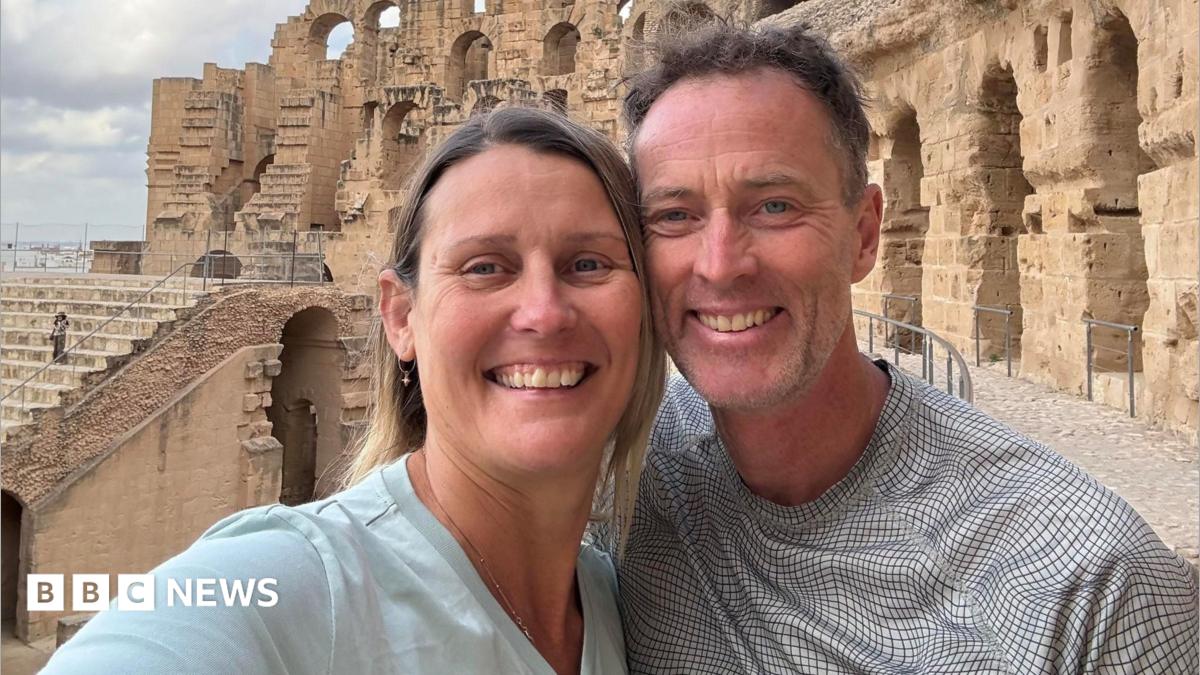
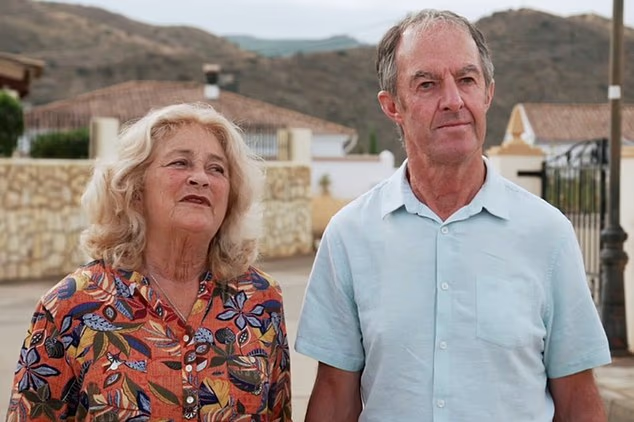
Malcolm Timbrell, 70, with his wife Annette Kilgore, 69, who is feared to be among the seven British victims of the wildfire in southern Spain

Seven Brits have been confirmed to have died in the deadly wildfire that swept through Andalusia in southern Spain, with one victim feared to be a woman who bought her home on ‘A Place In The Sun‘.

Twelve of the 13 victims of the blaze were foreign nationals, the authorities said on Tuesday after completing post-mortem examinations.

In a statement, officials said seven were from the United Kingdom, three from Belgium, and one each from France and the United States. The last victim was a Spanish citizen.

Annette Kilgore, who appeared on the Channel 4 reality show, is feared to be among the Brits who died after she became separated from her husband amid the inferno.

Advertisement

The 69-year-old lived in the village of Bédar with her husband Malcolm Timbrell, 70, after the couple moved there from Cornwall following their appearance on the hit series in 2023. 

Bédar, a municipality of the Almería province in the south, was ravaged by flames last Thursday in one of Spain’s deadliest fires in recent years.

Timbrell recounted how he had become separated from his wife and seven of their friends and neighbours as the flames raced towards their idyllic home. 

‘We have had an amazing life together and now it’s stopped,’ the heartbroken husband told the BBC. 

Advertisement

The couple have been together for 17 years.

Malcolm Timbrell, 70, with his wife Annette Kilgore, 69, who is feared to be among the seven British victims of the wildfire in southern Spain

Harrowing photographs show how British wildfire victims ran out of road while fleeing down dirt tracks to escape a deadly blaze in Spain

Harrowing photographs show how British wildfire victims ran out of road while fleeing down dirt tracks to escape a deadly blaze in Spain 

Advertisement
Firefighters of the Infoca (Andalusia Wildfire Service) work to extinguish fire in the area of a wildfire that killed at least 13 near Bedar, in Los Gallardos district, in Almeria Province, July 10

Firefighters of the Infoca (Andalusia Wildfire Service) work to extinguish fire in the area of a wildfire that killed at least 13 near Bedar, in Los Gallardos district, in Almeria Province, July 10

‘If we had done the sensible thing and gone the other way and let our cats die, we both would be alive. But when you’ve got animals, you don’t think like that,’ he added.

‘We are just waiting now for DNA clarification. And after that, I will probably just fall apart,’ he said.

The couple had decided to flee the scene by car, but Timbrell went back to their home to save their two beloved cats, Charlie and Misty.

Advertisement

When he attempted to catch up to his wife and their friends, he realised they had ditched the cars and were trying to escape the flames on foot.

‘My wife and our other seven friends and neighbours – against me screaming at them not to – decided the only safe way was to walk out in front of the firewall.

‘I’ve subsequently heard that the firewall was moving at 20 kilometres an hour [12mph] plus. They had no chance.’

He and one of the cats hid in one of the vehicles as the blaze raged on.

Advertisement

‘Of the six cars, four of them instantly combusted and as each one started to go, I moved back one car,’ he said.

‘For some reason of fate, the last two cars, although very, very badly singed and paint bubbled and burnt, survived. And I survived inside the last one with a cat.’ 

‘You’d never imagine it could happen,’ he said. ‘And when it does, and you’re the only survivor, then you’re left in a situation of: “What can I do?”‘

‘A Place in the Sun’ presenter Leah Charles-King helped the couple buy their dream home in Spain three years ago, with Kilgore telling the host at the beginning of their episode that she wanted to ease into the Spanish way of life after retiring from many years working in mental health.

Advertisement

‘We’ve started kayaking, which is great fun. I haven’t fallen in. I now know that I don’t panic when I fall in, so that’s a good thing,’ she said back in 2023.

Describing why they picked Almeria, Kilgore said: ‘It’s not as commercialised, it’s a smaller area of villages, so it just seemed the perfect place.’

She continued: ‘So, to sit and have a glass of wine in our own property that we’ve thought about for so long and just have that lovely feeling: “This is ours, we’ve done it.”‘

‘It will extend our adventure,’ Timbrell added.

Advertisement

While the stone cottage was on the market for £215,746 at the time of filming, the couple ended up purchasing it for £200,000.

After confirming the sale, Timbrell said: ‘I couldn’t be happier at the moment.’

His wife added: ‘We’ve just bought that Spanish beautiful stone cottage up on the top of a mountain. And that isn’t what we came for? It’s what we’ve bought, because it’s what we fell in love with.’

'We have had an amazing life together and now it's stopped,' heartbroken Malcolm Timbrell told the BBC

‘We have had an amazing life together and now it’s stopped,’ heartbroken Malcolm Timbrell told the BBC 

Advertisement
Firefighters working on the wildfire, which has ravaged homes and claimed several lives

Firefighters working on the wildfire, which has ravaged homes and claimed several lives

The wild fire is one of Spain's deadliest, with extreme heat causing them to become more frequent in recent years

The wild fire is one of Spain’s deadliest, with extreme heat causing them to become more frequent in recent years 

Fran Gillam, who lived in Bédar, was among the 13 people killed, her daughter confirmed

Fran Gillam, who lived in Bédar, was among the 13 people killed, her daughter confirmed

Fran's husband, Pete, was also killed in the deadly blaze that swept through southern Spain

Fran’s husband, Pete, was also killed in the deadly blaze that swept through southern Spain

Advertisement

‘The 13 people who died are eight women and five men, all adults,’ the public body responsible for identifying the victims added.

The picturesque southeastern province of Almeria is home to many foreign residents near the Mediterranean coast.

Pete and Fran Gillam, who also lived in Bédar, were among the 13 people killed in the blaze, the couple’s daughter confirmed in a social media post.

The couple disappeared on Thursday, after Fran texted her daughter Danielle Gillam-Kirton to confirm they were evacuating. 

Advertisement

That text, sent at about 7pm Thursday, was the last time Danielle would hear from her parents before communication was cut off, with frantic messages and calls to them failing to connect.

In a heartbreaking update shared on social media, Ms Gillam-Kirton confirmed the devastating news: ‘We are heartbroken to share that we have received confirmation from the police that Mum and Dad did not survive the fire. 

‘Thank you for all your love, support and prayers over the past few days. They have meant more to us than we can ever express.’

Flames fanned by high winds ripped through forests and scrubland made tinderbox dry by extreme high temperatures, turning picturesque rural settlements into ghost towns.

Advertisement

Emergency services initially recovered 12 bodies that were so badly burned that DNA samples were needed to identify them.

The fire, one of Spain’s deadliest in recent years and caused by an electrical cable falling on a road, devastated some 7,000 hectares (more than 17,000 acres) of land.

The fire has since been brought under control and residents have been able to return to their homes since Sunday.

Spain has in recent years experienced increasingly long and frequent heatwaves, with temperatures exceeding 40C, creating perfect conditions for wildfires.

Advertisement

In 2025, more than 393,000 hectares were destroyed by fire, according to the European Forest Fire Information System – the most in Spain’s recent history.

Source link

Continue Reading

NewsBeat

Demand for accommodation in Atlanta rises ahead of England v Argentina semi-final

Published

on

Demand for accommodation in Atlanta rises ahead of England v Argentina semi-final

Demand for accommodation in Atlanta has surged ahead of the England v Argentina World Cup match tonight.

After England beat Norway 2-1 during extra time on Saturday, the team will now meet Argentina’s squad in the southern US city for the semi-final.

Booking.com said that between 9 and 11 July, searches by UK travellers for Atlanta rose by 1,902 per cent for stays taking place between 14 and 16 July.

Searches do not necessarily indicate booking patterns, but they give a good outline of how eager English travellers are to look into booking a place to stay in Atlanta ahead of the match.

Advertisement

Argentina fans have also caused a surge in travel. Bhanu Chopra, founder of RateGain Travel Technologies and creator of the FIFA World Cup 2026 Market Pulse Index, told CNBC that flight bookings from Argentina to Atlanta more than doubled since the tournament kicked off, rising nearly 108 per cent.

This semi-final will be the first time the teams have faced each other since 2005 and the first competitive match between the sides since the 2002 World Cup, meaning Lionel Messi has never faced the Three Lions until now.

Historical tensions are also at play between the two countries, with the Falklands War still considered a politically sensitive topic.

Atlanta Police are aware of the tensions between the countries and have confirmed that security will be increased ahead of the match at Atlanta Stadium.

Advertisement

Demand for accommodation in other host cities has also surged amid football fans following their teams around the World Cup stages.

In Miami, ahead of England v Norway’s quarter final, Booking.com said that searches by UK travellers were up 403 per cent.

Comparison site Expedia.co.uk reported similar figures, saying that lodging searches between 5 and 8 July have increased by 300 per cent compared to the same period last year.

Read more: Demand surges for Miami hotels ahead of England v Norway World Cup match

Advertisement

Source link

Continue Reading

NewsBeat

Portrack electric vehicle charging hub plans approved by council

Published

on

Portrack electric vehicle charging hub plans approved by council

The scheme, submitted by E.ON Drive Infrastructure UK and Apsley Galliard Conn, will see a canopy-covered hub installed at Portrack Retail Park in Stockton.

It will feature 12 ultra-rapid charging bays, a substation, fencing and a kiosk.

The number of parking spaces on the site will reduce from 51 to 32, though the green areas will not be affected.

Advertisement

A second phase of the development could add a further four drive-through bays, bringing the total to 16.

A planning statement submitted on behalf of the applicants said: “The site is well positioned to provide convenient EV charging for both local residents and through traffic.”

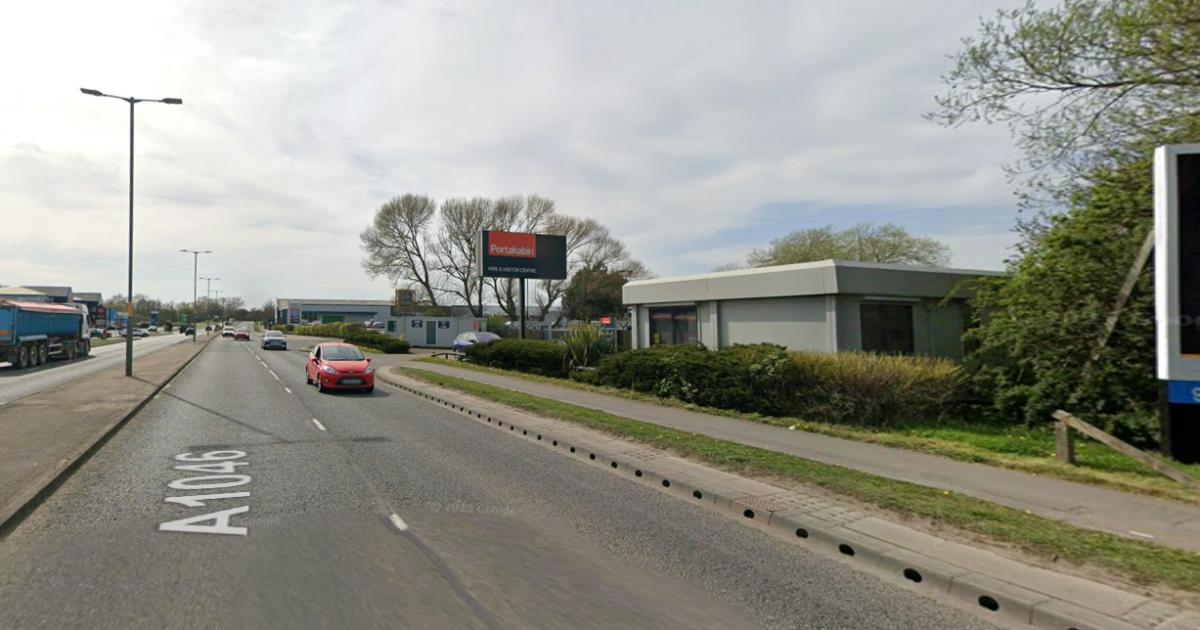
The hub sits just off the A19/A1046 junction, making it easily accessible for both local drivers and those passing through the area.

The statement added: “While the proposals will increase the number of vehicles which access the site, a substantial proportion of those may simply be extensions or diversions of existing trips.”

Advertisement

The existing site entrance will be used, with no changes planned for the surrounding road network.

Apsley said the hub would “strengthen local provision and support the continued shift towards low-emission transport,” with the scheme aligning with the Tees Valley Strategic Transport Plan and wider regional goals to reduce carbon emissions.

Stockton Council approved the application subject to conditions.

Advertisement

Source link

Continue Reading

NewsBeat

Briton’s Iran jail sentence extended by two years, family says

Published

on

Artwork depicting an armour-suited character patrolling through a post-apocalyptic desert scene, with a German shepherd trotting alongside them. A dramatic sunset fills the landscape behind them, which is dotted with the ruins of buildings.

A British man jailed in Iran after being accused of spying has had two years added to his decade-long sentence, according to family members.

Craig Foreman was arrested with his wife, Lindsay, in January last year while passing through Iran on a motorcycle journey from Europe to Australia. Both adamantly deny espionage.

In February they were each sentenced to 10 years in jail, but relatives of Craig Foreman said he had been told his punishment is being extended for talking to the media from his cell in Tehran’s Evin prison.

The Foreign, Commonwealth & Development Office (FCDO) said the department was “urgently following up with the Iranian authorities about the reported increased sentence”.

Advertisement

“We understand he was told he was being taken to see his lawyer but was instead brought before a judge and informed of the additional sentence,” said Joe Bennett, Lindsay Foreman’s son and a spokesperson for the family.

Bennett, of Folkestone, Kent, added that, despite requests, his step-father “was allowed no lawyer, no translator and no opportunity to defend himself”.

“We didn’t think we could be any more shocked at their appalling treatment, but in this case we are absolutely flabbergasted,” he added.

Craig and Lindsay Foreman, from East Sussex, have both been on hunger strike since May, when prison authorities prevented them from calling their families.

Advertisement

The family, who are growing increasingly concerned for their health, are now appealing to the Iranian authorities to show mercy, and set them free.

Source link

Continue Reading

NewsBeat

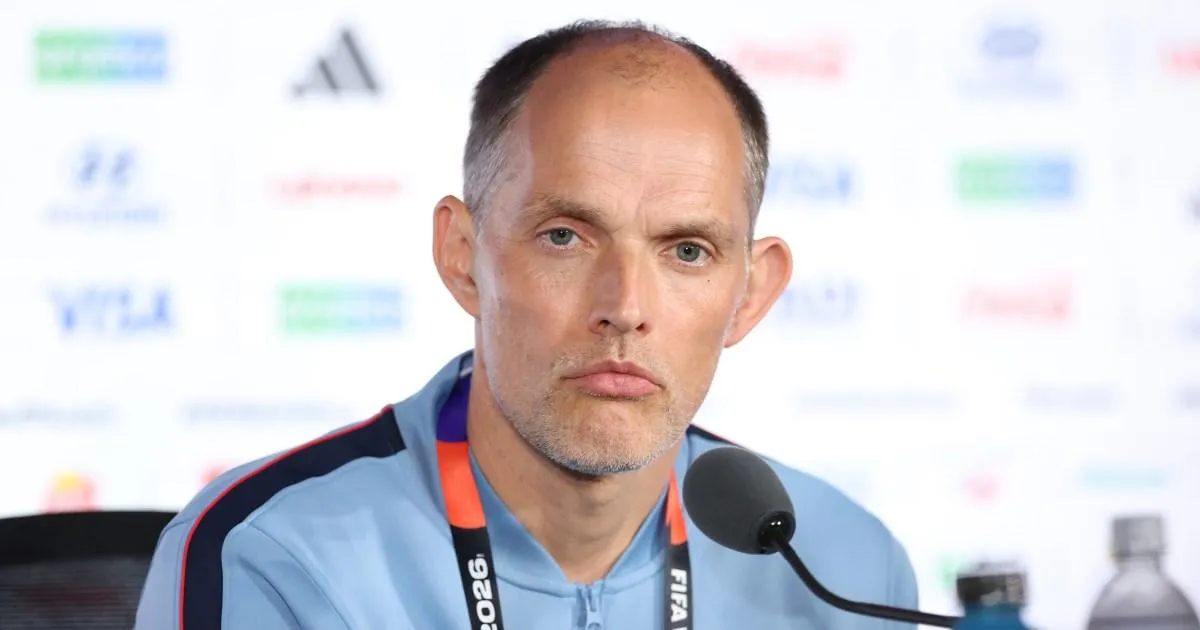
Thomas Tuchel reacts after FIFA approve Argentina ‘special request’ for England clash | Football

Published

on

Thomas Tuchel reacts after FIFA approve Argentina 'special request' for England clash | Football

Close Overlay

In The Mixer’s World Cup special

Everything you need to know about the World Cup – England updates, the games to watch and stories you missed – in five minutes, at 1pm, every day.

Source link

Advertisement
Continue Reading

NewsBeat

24 Hours in Police Custody returns to Channel 4 with ‘best ever’ episode

Published

on

Wales Online

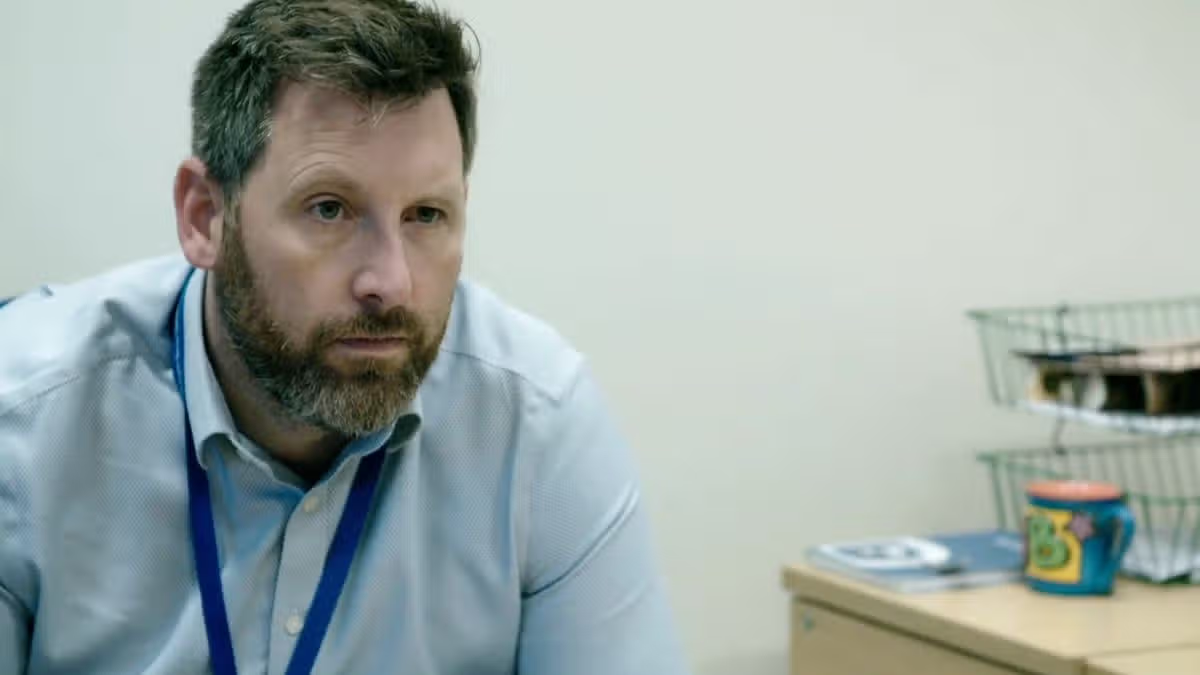
The Channel 4 documentary will return with a repeat episodes that fans have branded the “best ever”

Channel 4 viewers do not want to miss another episode of 24 Hours in Police Custody which will air tonight (Wednesday, July 15).

The landmark documentary has been a hit with fans wince it first aired on Channel 4 back in 2014. It plunges viewers into real life investigations after a serious crime rocked a community.

From the minute a chilling 999 call is made, viewers are given unprecedented access into a criminal investigation as detectives work around the clock to bring justice. Often, horrific truths are uncovered along the way as viewers witness everything right up to a potential sentencing.

Advertisement

With new episodes aired earlier this year, each exploring its own horrific case, Channel 4 has aired repeat instalments over the last few weeks, with another set to air tonight.

Last week (July 9), The Home Country Cartel Part 1 aired, taking viewers into a covert police take down of a £58million drug smuggling ring – making it one of the largest in the history of the area. Tonight at 9pm, Part 2 will broadcast, having first been seen on screens back in 2020.

A Channel 4 synopsis reads: “The covert police operation tracking a major drug smuggling operation closes in on the ringleaders in a nerve-shredding conclusion.”

Advertisement

Previously, The Home Country Cartel was branded as fans’ favourite instalment as one person wrote on Reddit: “I think my favourite was when a crook was caught out by his own dashcam.

“He didn’t realise it was recording, and when the evidence was presented to him, you could see the blood drain from his face.”

On Facebook, another commented: “The best of the lot this 2 parter.” Another echoed: “One of the best episodes they ever did.”

It hears from investigators as surveillance operative ‘Coops’ made a heartbreaking admission: “It’s a demanding job for the hours that you put in. We’re at the beck and call of what the criminals are doing or whatever the job is that we’re doing and what we’re covering at the time.

Advertisement

“Your home life is affected. You’d be at home for five minutes and that call could come in so then you’re back into work just as dinner’s going on the table. Missed birthdays, Christmases have gone out the window but it’s not something you don’t enjoy.”

With the episode already being made available to stream online, another warning had been issued which warns against “strong language” in the instalment, adding: “This programme isn’t suitable for younger viewers.”

Despite airing repeat episodes, 24 Hours in Police Custody remains a firm favourite amongst viewers. One person previously wrote on social media: “This is my fave TV programme. l still watch them if they are repeats.”

Advertisement

Another said: “24 hours in police custody is the best thing to happen to TV.” A third penned: “Without doubt the best programme on TV > #24hoursinpolicecustody.”

A fourth added: “Without doubt the best Tv program being made anywhere, by anyone! #24hoursinpolicecustody watched all 100 episodes.”

A fifth admitted: “I watched the repeats of these programmes, so many times, I am starting to feel I should be recognised as part of the investigation team!”

Tonight’s instalment, titled The Downfall of Jaguar Palace, will continue the police investigation into the drug cartel and how their covert investigation came together.

Advertisement

24 Hours in Police Custody airs tonight at 9pm on Channel 4. Episodes are also available to stream online.

Source link

Continue Reading

NewsBeat

Review of MP security needed after Widdecombe death, Burnham says

Published

on

Artwork depicting an armour-suited character patrolling through a post-apocalyptic desert scene, with a German shepherd trotting alongside them. A dramatic sunset fills the landscape behind them, which is dotted with the ruins of buildings.

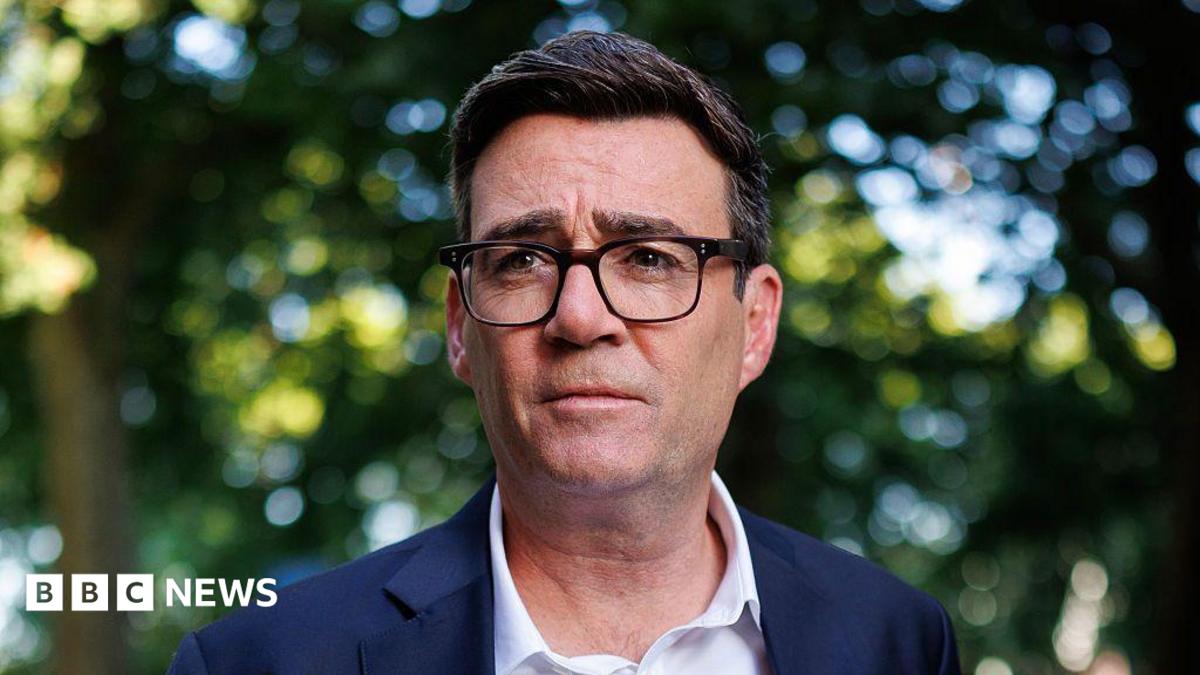
A serious review of MPs’ security is needed following the death of Ann Widdecombe, Andy Burnham has said.

The former Greater Manchester mayor, who is expected to become prime minister next Monday, said politics had “darkened” in the decade he had been away from Westminster.

He said he was “shocked to see how much security now has to be in place”, but added that it may need to be increased further still.

The killing of Widdecombe – a Reform UK spokeswoman and former Conservative MP – is now being investigated by counter-terrorism police, and has prompted renewed debate over the security offered to politicians.

Advertisement

A 28-year-old white British man from Rotherham, South Yorkshire, was arrested on suspicion of murder on Saturday, before being re-arrested on Monday on suspicion of the commission, preparation or instigation of acts of terrorism.

A leading figure on the right of British politics, the former minister was found dead at her home in Haytor, Devon on Thursday.

Asked why he thought frontline politics had become so dangerous, Burnham said: “It’s easy to blame social media, but it feels like it’s having some impact in just building that kind of toxicity that’s around the political debate.”

He added: “It’s obviously appalling what happened to Ann.

Advertisement

“I knew Ann over many years in the House – we got along and everybody got along, but it feels like something has changed.”

Earlier on Tuesday, Reform’s Robert Jenrick accused the government of a “dereliction of duty” over Nigel Farage’s taxpayer-funded security, claiming it had previously been “downgraded”.

Jenrick said his party leader had not been offered the security he needed, after it emerged Reform turned down an offer of government-funded security last year.

The Home Office said Jenrick’s comments were “categorically untrue”, with a spokesperson adding that ministers were not involved in deciding MPs’ security.

Advertisement

Before he entered Parliament at the 2024 general election, any state-funded security for Farage would have been provided by the Royal and VIP Executive Committee (Ravec), a team of officials from across government.

Once he became an MP responsibility then switched to the Parliamentary Security Department.

Reform sources say Farage was offered an enhanced security package by parliamentary authorities in July 2024, amounting to two rotating teams of eight security officials.

They say that in September 2025 parliamentary authorities reviewed the threat to the Reform leader and offered a downgraded security package consisting of a car, driver and one close protection officer.

Advertisement

Reform rejected this offer of state-funded support and chose instead to privately fund Farage’s security.

Parliament’s second offer to Farage was still much bigger than the support offered to most MPs.

One MP who also receives enhanced security is understood to have had a driver and one security guard only at certain specific events when the threat to them was deemed sufficiently high.

House of Commons authorities would not confirm or deny whether Farage’s security had been downgraded, but said security was “fundamental to our democracy” and “all MPs are offered appropriate” measures.

Advertisement

A spokesperson added: “Any assessment of an individual MPs’ security arrangements or advice is subject to a rigorous risk-based assessment, conducted by security professionals and with input from the police and a range of professional authorities.

“These are naturally kept under continuous review.”

Farage is not currently an MP after he resigned and triggered a by-election earlier this month, meaning any state-funded security would now be provided by Ravec, rather than Parliament.

The safety of politicians has been a prominent issue in recent years, with the murders of Conservative MP Sir David Amess in 2021 and Labour MP Jo Cox in 2016.

Advertisement

The Conservative government announced a £31m package to increase security for MPs in May 2024.

A 2022 review following Sir David’s murder also led to tailored security advice being given to MPs based on individual circumstances, rather than a standardised set of measures.

Neil Basu, a former head of counter-terrorism policing, said some MPs would be “very well protected” while others “will continually to be struggling to get the Parliamentary security budget to open its coffers and give them the kind of protection they want”.

He later added that providing the highest level of protection to all 650 MPs would require “thousands more armed police officers”.

Advertisement

“It is just not a practical proposition, so you have to prioritise them in some way, shape or form.”

Source link

Continue Reading

NewsBeat

Argentina’s media name the two England stars who must be targeted in World Cup semi-final – and it’s NOT Harry Kane and Jude Bellingham

Published

on

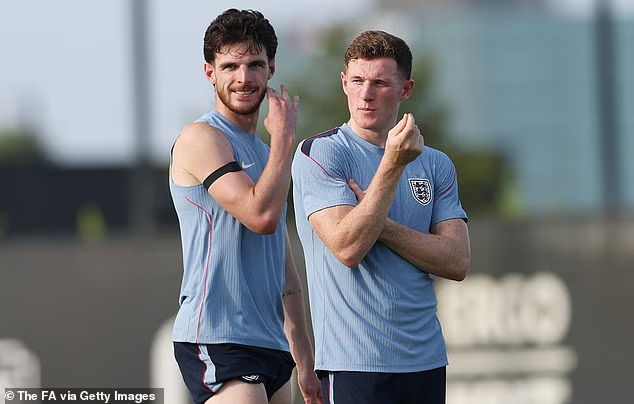
Declan Rice (left) and Elliot Anderson have been earmarked as two key players Argentina must stop if they are to beat England in the World Cup semi-final by the Argentine press
  • How much is David Beckham set to pocket from his World Cup brand deals? Take on our quiz in our newsletter HERE
  • See more Daily Mail on Google – save us as a Preferred Source

Jude Bellingham and Harry Kane have deservedly got the majority of acclaim for England‘s World Cup campaign so far, but the Argentine press have warned their squad of two other key players to watch out for.

Advertisement

England and Argentina go head-to-head in the second semi-final on Wednesday in Atlanta (8pm, BST) with Spain awaiting the winner in Sunday’s showpiece.

Bellingham and Kane have spearheaded England so far with the pair having scored 12 of their 13 goals – including the former’s brace in a 2-1 after extra-time quarter-final win over Norway on Saturday.

And while their prowess has been rightfully acknowledged, Argentine media are wary of other threats posed from Thomas Tuchel‘s side.

While praising Bellingham and Kane, outlet Clarin has earmarked Declan Rice as one player the reigning world champions must stop.

Advertisement

Writing about the Arsenal star, they put: ‘Rice is the balance. He protects the centre backs, covers the full backs’ runs forward, and gives direction to the build-up play.’

Declan Rice (left) and Elliot Anderson have been earmarked as two key players Argentina must stop if they are to beat England in the World Cup semi-final by the Argentine press

Argentina's Clarin warn that their side must stop the midfield duo recieving the bal forwards

Argentina’s Clarin warn that their side must stop the midfield duo recieving the bal forwards 

Advertisement
Alexis Mac Allister (centre left) has been urged to press the England midfielders on Wednesday

Alexis Mac Allister (centre left) has been urged to press the England midfielders on Wednesday

The other player Clarin note? Elliot Anderson.

‘Anderson is the thread that connects the pieces,’ they detail about Manchester City’s summer signing. ‘He makes himself available, receives the ball, turns, and makes himself available again.’

The publication doesn’t just stop there about Tuchel’s midfield base, as they explain what Lionel Scaloni’s side must do if they are to reach a second-straight World Cup final.

Advertisement

‘This could be one of the keys for Argentina. Scaloni will have to pressure not only the centre backs, but also Rice and Anderson. The objective will be to prevent them from receiving the ball facing forward.

‘Julian Alvarez can orchestrate the build-up play. [Rodrigo] De Paul, Enzo Fernandez, or [Alexis] Mac Allister will have to press the midfielders. [Lionel] Messi, from a freer position, can block the back pass or wait for the right moment to receive the ball behind the double pivot.

‘Argentina will also have to reduce turnovers in midfield. England is very dangerous when they win the ball back near Rice and Anderson and can quickly launch attacks to their wingers.

‘A lost ball in the centre can turn into a run by [Anthony] Gordon, a diagonal run by [Bukayo] Saka, or a dribble by Bellingham. The best way to neutralise England will be to force them to attack from a static position, close down the central spaces, and push them towards long crosses.’

Advertisement

Time will tell if Rice and Anderson receive such a detailed gameplan against them.

How much is David Beckham set to pocket from his World Cup brand deals? Take on our quiz in our newsletter HERE

Advertisement

Source link

Advertisement
Continue Reading

NewsBeat

Britons to get game-changing Alzheimer’s blood test that predicts if you’ll get the disease years before symptoms hit – but would you take it?

Published

on

Alzheimer's Disease is the most common form of dementia

GPs will be offer a new blood test to people suspected of having Alzheimer’s disease as part of a landmark trial in Scotland – with hopes it could later be rolled out across the UK. 

More than 50 GPs in central and northern Scotland are taking part in the study, which is called Bringing Alzheimer’s Disease Biomarkers to General Practice (BriDGe).

The aim is for up to 500 patients to be referred for a test, making it the largest UK study of Alzheimer’s blood tests in general practice. 

The project will explore how blood tests could speed up diagnosis, help GPs decide on the best care for patients, and give people earlier access to support and treatments.

Advertisement

There are an estimated one million people in the UK living with dementia – and by 2040 that figure is expected to climb to 1.4 million. 

Around 90,000 people in Scotland are living with the degenerative brain disease, and 3,000 are younger than 65. 

Scientists have spent decades looking for a cure, but there is mounting evidence that prevention may be the best form of defence for now.

A major consensus earlier this year by world-leading experts, building on The Lancet Commission on Dementia, concluded that almost half of all cases globally could be prevented, or at least delayed for several years if action was taken to address 14 risk factors. 

Advertisement

Alzheimer’s Disease is the most common form of dementia

These range from smoking and excess alcohol consumption, to loneliness and a sedentary lifestyle to obesity, blood pressure and hearing loss. 

Identifying people at risk of the dementia allows doctors to encourage patients to make lifestyle changes that could delay the onset of the disease and also opens up more treatment options. 

Advertisement

The blood tests used in the Scottish research are looking for two particular proteins that are linked to the condition, p-tau181 and p-tau217.

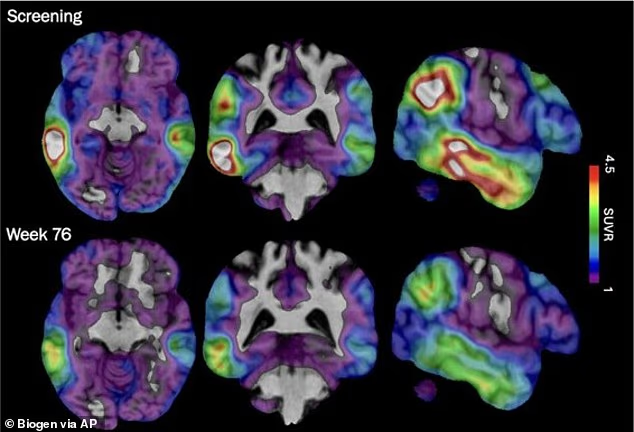
 When found in the blood, these proteins reflect changes in the brain associated with Alzheimer’s, with international research showing they may detect or rule out the condition earlier and more accurately than many existing memory tests or scans.

 The study aims to build GP experience and confidence in using the new tests, and to assess their value at the earliest stages of disease progression – where quicker, more accurate information could make the greatest difference for patients and their families.

Dr Sheelagh Harwell, senior associate GP at GP-Plus in Edinburgh, is one of the medics participating in the study.

Advertisement

She said: ‘The BriDGe study heralds an exciting time in general practice as new diagnostic blood tests become available.

‘Consultations are shifting from physicians discussing dementia risk with patients, to discussing brain health.

Chris Hemsworth found out he has the 'dementia gene' in 2022

Chris Hemsworth found out he has the ‘dementia gene’ in 2022 

‘An earlier diagnosis of Alzheimer’s can aid patients with lifestyle modifications, allow them to access support sooner, and plan ahead.’

Advertisement

At present, the most accurate way to find out if you are at risk of dementia is through genetic testing – which is prohibitively expensive. 

Australian actor Chris Hemsworth took a hiatus in 2022 after learning that he had inherited two copies of APOE4, dubbed ‘the Alzheimer’s gene’, from his parents. 

Studies show that having both copies increases the risk by 10 to 15 times. Having one copy can double a person’s risk. 

The Hollywood star, 42, received the shock diagnosis after taking a genetic test on the National Geographic documentary series Limitless with Chris Hemsworth. 

Advertisement

‘You’re constantly thinking you’re going to live forever, especially as a young individual. Then to be told that this might be the thing that might take you out was like, whoa –  it kinda floored me,’ Hemsworth said on the show.

Following the test, Chris made changes to his already extensive workout routines and now focuses more on his brain health.

In an interview with Men’s Health, he said he was ‘incorporating more solitude into his life’ as well as focusing on cardio exercise rather than lifting heavy weights. 

He said: ‘I’ve always been pretty consistent with my exercise commitments, but lately I’ve really felt the importance of taking time for yourself without any outside voice or stimulation and making time for stillness.’ 

Advertisement

The Scottish initiative comes as new research into the potential of dementia-predicting blood tests was presented at the Alzheimer’s Association International Conference 2026 in London and published simultaneously in JAMA. 

Advertisement

A team from Mass General Brigham and Harvard Medical School found that measuring levels of p-tau217 could help identify people at risk of Alzheimer’s-related cognitive decline up to a decade before symptoms appear.

Advertisement

They followed nearly 2,700 adults – with an average age of 70 – who were cognitively healthy at the start of the study for almost five years on average, with some tracked for more than a decade.

Those with very high levels of the biomarker had an estimated 38 per cent chance of developing cognitive impairment within five years and a 78 per cent risk within ten years. People with moderately raised levels still faced a 15 per cent risk over five years and a 45 per cent risk over ten.

The blood test also provided useful predictive information beyond brain scans and genetic testing, raising hopes it could eventually be used to identify symptom-free patients for prevention trials and guide earlier monitoring or treatment. 

Researchers said the findings offer some of the clearest evidence yet that Alzheimer’s risk may be detectable years before memory problems begin.

Advertisement

However, the experts stressed that p-tau217 cannot predict an individual’s future on its own, and that age, genetics, kidney function, obesity and ethnic background can all influence biomarker levels and dementia risk.

Also presented at the conference was the announcement of a new trial into the potential of trontinemab, a revolutionary drug which scientists believe could ‘reverse’ Alzheimer’s. 

The study, known as PrevenTRON, will recruit cognitively healthy volunteers in countries across the world, including the UK, aged between 55 and 80. 

The drug, which is administered as a monthly infusion, will be offered to about 1,600 people with no current memory problems but who are at high risk of the disease, having been found to have high levels of p-tau217 in the blood.

Advertisement

Source link

Continue Reading

NewsBeat

French newspaper L’Equipe brutally rate Premier League star 2/10 after France’s World Cup humbling by Spain – with Didier Deschamps’ flops sent packing after one-sided contest in Dallas

Published

on

French newspaper L'Equipe issued brutal ratings following France's World Cup exit

France’s World Cup stars were not spared by L’Equipe after their World Cup campaign came to an underwhelming end with a 2-0 defeat by Spain in the semi-finals.

Didier Deschamps’ side had headed into the tournament as favourites to win the World Cup, with the view having only grown with free-flowing attacking performances through to the semi-finals.

France, however, came unstuck with a Mikel Oyarzabal penalty and Pedro Porro strike preventing them from reaching a third successive World Cup final.

Spain succeeded in keeping France’s stellar attack, which had scored 16 goals at the tournament, at arm’s length throughout the match in Dallas.

Advertisement

French newspaper L’Equipe were damning in their assessment of the performance as Deschamps’ side were beaten in the semi-finals of a third straight tournament by Spain. 

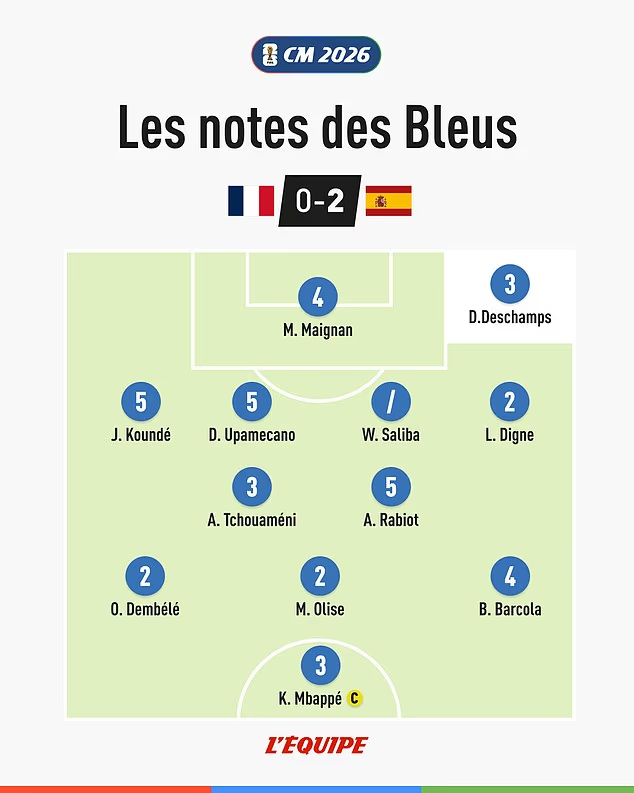
Lucas Digne was particularly criticised by L’Equipe, with the Aston Villa full back having clumsily given away the penalty after kicking Lamine Yamal as he went to clear the ball, unaware that the Spain star was closing him down.

French newspaper L’Equipe issued brutal ratings following France’s World Cup exit

Advertisement
Kylian Mbappe was given a 3/10 rating by L'Equipe after France lost 2-0 to Spain in the World Cup semi-finals

Kylian Mbappe was given a 3/10 rating by L’Equipe after France lost 2-0 to Spain in the World Cup semi-finals

Lucas Digne was given a 2/10 rating after giving away the penalty that led to Spain's opening goal

Lucas Digne was given a 2/10 rating after giving away the penalty that led to Spain’s opening goal

Ousmane Dembele was also marked at 2/10 after he did 'almost everything wrong'

Ousmane Dembele was also marked at 2/10 after he did ‘almost everything wrong’

Between his uncontrolled header and his foul on Lamine Yamal, he made two mistakes that resulted in a penalty,’ L’Equipe wrote, while giving Digne a 2/10 rating.

Advertisement

‘He seemed to have got back into the game before the break but his second half was marked by repeated losses of the ball and his replacement by Theo Hernandez.’

Digne was one of three players in the French team to be given a 2/10 mark, with two of their brightest stars Michael Olise and reigning Ballon d’Or Ousmane Dembele also critiqued.

‘Initially on the right, then moved centrally after half an hour, nothing helped: the Ballon d’Or winner did almost everything wrong,’ L’Equipe said of Dembele’s display. 

‘As the minutes ticked by, he gradually faded until he became almost invisible. A huge disappointment.’

Advertisement

The newspaper stated that after Olise had ‘risen so high in previous matches, he fell very low this time’.

Olise’s lack of precision with several failed passes and dribbles had meant he was unable to do any harm to the Spanish defence.

Captain Kylian Mbappe received a 3/10 rating for his performance, with the outlet noting that he ‘often seemed very isolated’ and ‘tried to do everything himself, without success’.

Advertisement
Didier Deschamps received a 3/10 score after his France side came up short against Spain

Didier Deschamps received a 3/10 score after his France side came up short against Spain

Dani Olmo received an 8/10 rating with the Spain star deemed to be the player of the match

Dani Olmo received an 8/10 rating with the Spain star deemed to be the player of the match

No French player received a rating above the 5/10, which was given to Jules Kounde, Dayot Upamecano and Adrien Rabiot.

Rabiot was noted as having shown ‘personality and a huge impact off the ball’, despite the midfielder having to be substituted at half-time due to being booked in the first half.

Advertisement

The defeat meant Didier Deschamps’ long reign as France head coach will come to an end in the third place play-off.

Deschamps, who led France to World Cup glory in 2018 and the final in 2022, was given a 3/10 rating for his management of the semi-final.

‘It’s hard to understand how his team could have missed the mark so completely in terms of their approach, arriving with so much confidence,’ L’Equipe stated. 

‘The decision to replace [Desire] Doue with [Bradley] Barcola didn’t pay off, and the coaching was too deferential to the established order.’

Advertisement

By contrast, L’Equipe highlighted several Spanish players and their head coach Luis de la Fuente for praise. 

Porro and Dani Olmo were the top scoring players with 8/10 ratings, with the latter named as their player of the match.

The mark also given to De la Fuente, with the newspaper stating his team ‘displayed complete control of the match’ and ‘never looked threatened’.

How much is David Beckham set to pocket from his World Cup brand deals? Take on our quiz in our newsletter HERE

Advertisement

Source link

Continue Reading

Trending

Copyright © 2025