The images show some of the books people will soon be able to browse in the new Topping & Company store, on the corner of Blake Street and Museum Street.
Director Saskia Topping said they could not wait to fling open the doors and reveal a space so big that a map has been produced to help people get around.
It comes ahead of the store’s opening later this week, with the day soon to be confirmed.
RECOMMENDED READING:
Advertisement
The opening follows works to transform the building which has stood empty for around four years after the Visit York tourism body moved out.
York councillors approved the company’s plans to convert the 19th Century building in July 2025.
Company founder Robert Topping told councillors it would be the largest independent bookshop to open anywhere in the country in living memory.
Topping & Company was founded in 2002 when it opened its first shop in Ely, Cambridgeshire.
Advertisement
Shelves with science fiction and fantasy books in the Topping & Company bookshop, in Museum Street, York (Image: Topping & Company)
It now has stores in Bath, Edinburgh and St Andrews, along with the store which is soon to open in York.
Scaffolding previously on the side of the York building has now come down and hanging signs bearing the company’s blue and yellow branding have been installed.
Several events with authors have been held elsewhere in York in the previous months and more are planned once the store opens.
Company director Ms Topping told the Local Democracy Reporting Service (LDRS) moving their stock of books into the York store alone had taken four weeks.
Advertisement
She added people could expect to find a wide collection range of books available to browse and buy.
The director said: “We can’t wait to welcome everyone in to the bookshop towards the end of this week.
Shelves with romance books in the Topping & Company bookshop, in Museum Street, York (Image: Topping & Company)
“We’ve had lots of friendly faces peering in the windows whilst we’ve been getting the books on the shelves – it will be wonderful to fling open the doors and show everyone the space at long last.
“It’s taken us four weeks to get all the books on the shelves, and hopefully in the right order.
Advertisement
“It’s such a big, labyrinthine space that one of our booksellers has drawn a map to help everyone find the right sections.
“We consider ourselves to be range booksellers – for us, there’s great joy in browsing a bookshop and not just finding the popular new titles, but a whole range of brilliant books that have been published in decades past, alongside those from smaller publishers that you might not find elsewhere.
“We want our bookshops to be spaces of discovery, in which you can spend hours browsing the shelves.”
It sits high above Pickering, inside the national park, and feels like a place that is lived in year‑round but doubles as a handy base for people who want moorland walks and big skies on the doorstep.
Where Newton-on-Rawcliffe sits
Newton-on-Rawcliffe is a small village and civil parish a few miles north of Pickering, up on the moorland plateau rather than down in the Vale.
It’s part of the North York Moors National Park, so the countryside around it is protected and heavily used for walking, riding and cycling.
Advertisement
Roads from the village drop back down towards Pickering for shops, schools and services, while minor lanes and tracks lead out into forestry and open moor.
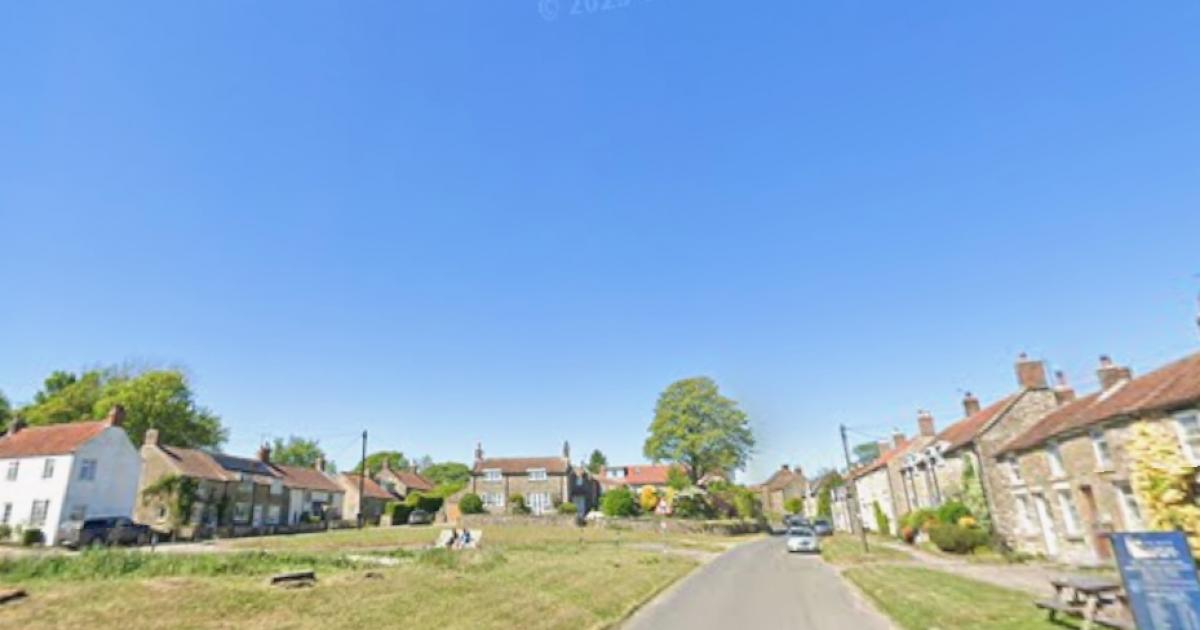
At the centre is that well‑known village green and pond, with stone houses and farm buildings facing onto it.
From there, a handful of lanes and short streets run out between properties, but Newton never sprawls; it stays compact, with a clear edge where the last houses give way to fields.
Advertisement
What the village looks and feels like
Most of Newton-on-Rawcliffe is made up of traditional two‑storey stone cottages and farmhouses, many with pantile roofs and long gardens.
A few newer homes and barn conversions have been slotted in over time, but the village still reads as an older, stone‑built place rather than a modern estate.
Around the green and pond you get the “postcard” view – ducks on the water, grass, trees and stone frontages – but step a little further back and you see working yards, sheds and the signs of a lived‑in rural community.
Everyday life and community
Village life runs through a mix of long‑standing farms, residential homes and holiday accommodation.
There’s a modernised village hall with a decent‑sized main room, kitchen and parking, used for local groups, regular classes, coffee mornings and private events.
Advertisement
Many residents head down to Pickering or further afield for work, school and shopping, then come back to a much quieter setting at the end of the day.
That pattern means Newton is not busy in the town‑centre sense, but it isn’t empty either; there’s a steady flow of cars, dog walkers and people going to and from the hall or pub, on top of the usual movement of farm traffic in and out of the yards.
Between green, moor and forest
Location is one of Newton-on-Rawcliffe’s main selling points. Step out of the village and you are quickly into open country: fields, forestry tracks and moorland paths that link into the wider North York Moors network.
Popular spots like the Hole of Horcum, Levisham Moor and Dalby Forest are within easy reach, and there are plenty of shorter loops starting almost from the green for evening walks or weekend strolls.
Advertisement
Down the hill, Pickering provides everyday services: supermarkets, schools, doctors, independent shops and the North Yorkshire Moors Railway.
Further out, you can reach places like Helmsley, Malton and the Yorkshire coast for bigger trips, but Newton itself remains very clearly a village rather than a small town.
Pub, food and short‑break appeal
The village pub, the Horseshoe Inn, gives Newton upon Rawcliffe a clear social centre as well as somewhere to eat and stay.
It trades on a classic country‑inn mix of bar, dining room and comfortable rooms, with a menu built around straightforward, well‑cooked food.
Advertisement
For campers, walkers and people booking nearby cottages, it’s often the default place for an evening meal without having to drive back down to town.
Around the village, farms and cottages have been turned into small guest houses, holiday lets and campsites, so Newton sees a regular flow of visitors, especially in walking season and school holidays.
Overall picture
Put simply, Newton upon Rawcliffe is a pretty, stone‑built village wrapped around a green and duck pond, sitting high above Pickering on the edge of the moors.
It offers year‑round village life – farms, hall, pub, resident community – alongside an obvious pull for walkers and short‑break visitors who want quick access to trails, forests and big views.
The Conversation’s Curious Kids podcast is back for a second season to answer some of the fantastic questions sent in by listeners around the world!
Each episode, a curious kid joins host Eloise to ask a top researcher their burning question, such as: why do your fingers and toes go wrinkly in the bath? Why does our taste in food change as we get older? And how high can volcanoes actually send molten lava up into the air?
Advertisement
While we’ve been off air, The Conversation’s Curious Kids podcast was named Best Kids podcast at the British Podcast Awards 2025.
Follow us wherever you get your podcasts, or listen on the Yoto Player via the Discover section on the Yoto interactive audio platform for kids.
New episodes every Tuesday from June 9, or listen back to season one here. You can also read lots of answers to questions sent in by children around the world in our Curious Kids series.
Got a question? Pop it in an email, or record it and send us the audio to curiouskids@theconversation.com.
Advertisement
This season of The Conversation’s Curious Kids is supported by the University of Southampton in the UK, a world-leading research-intensive university with a global network of international students and campuses in Malaysia and Delhi.
The Department for Work and Pensions has published guidance on new Eligibility Verification powers that allow banks to run automated checks on accounts receiving Universal Credit, Pension Credit and ESA — here is what the rules mean for claimants and what banks can and cannot share.
Linda Howard Money and Consumer Writer and Ashlea Hickin Content editor
20:17, 02 Jun 2026
The Department for Work and Pensions (DWP) has released guidance detailing what banks and financial institutions may be required to monitor under new benefit Eligibility Verification powers.
The new framework forms part of the UK Government’s broader offensive against fraud and error within the welfare system, and will initially cover those claiming Universal Credit, Pension Credit and Employment and Support Allowance (ESA).
Under the Eligibility Verification Measure (EVM), banks may be obliged to scrutinise accounts receiving certain DWP benefits and identify instances where accounts meet specific “eligibility indicators” tied to benefit regulations.
Advertisement
The DWP stated the checks are intended to help detect incorrect payments arising from fraud, claimant error or official error, while also preventing claimants from accumulating substantial overpayments that must subsequently be repaid.
According to the new Code of Practice on Eligibility Verification Notices, banks could be required to flag accounts where savings surpass benefit thresholds, reports the Daily Record.
For Universal Credit, this could encompass accounts holding more than £16,000, which represents the upper capital limit for the benefit.
The guidance further states the DWP may seek information relating to signs that a claimant has spent more time overseas than benefit rules ordinarily permit.
Advertisement
However, the DWP confirmed there are stringent legal restrictions governing what banks are permitted to share. The Code stipulates that financial institutions are forbidden from disclosing transaction details, which means the DWP is unable to access information about what people are purchasing, where they shop, or their individual spending patterns.
Banks are also barred from sharing “special category data”, encompassing details relating to political opinions, religious beliefs, ethnicity, or health information.
The guidance states: “DWP is prohibited by law from sharing personal data with financial institutions under this power, and from requesting transaction information and special category data.”
What banks cannot share
The document further clarifies that the DWP is not permitted to ask banks to search for named benefit claimants.
Advertisement
The code repeatedly emphasises that strict limitations apply to the information banks are able to provide.
DWP said financial institutions are prohibited by law from sharing:
Transaction histories
Spending information
Financial statements
Special category data such as political opinions, religion or ethnicity
Rather, financial institutions would apply eligibility criteria across their own systems, returning only limited information where accounts match the indicators outlined in an Eligibility Verification Notice (EVN).
The information that may be passed on to the DWP includes account details, names and dates of birth linked to accounts, and specifics demonstrating how an account met the eligibility indicator.
Examples might include confirmation that savings surpassed a certain threshold, or evidence that an account had been routinely used outside the UK.
Advertisement
The DWP emphasised that information returned by banks does not automatically indicate that an individual has acted improperly. The Code states: “No decisions about benefit entitlement will be made automatically on this information alone.”
Instead, the DWP is required to examine the information alongside existing evidence already held within a claim before determining whether further investigation is warranted.
The guidance further confirms that a “Test and Learn” rollout phase will take place, initially involving a limited number of financial institutions prior to any wider expansion.
Throughout this period, the DWP has stated it will evaluate the effectiveness of the system, the accuracy of the data provided, and whether the safeguards in place are functioning as intended before proceeding with broader implementation.
Advertisement
The DWP estimates benefit fraud and error resulted in £9.6 billion of overpayments during the 2025/26 financial year.
Redcar and Cleveland Council is due to begin a formal procurement process this month which will run until the end of July.
Answering a question from Councillor Karen King at a full meeting of the council, deputy leader Carrie Richardson in delivering an update also said she was “absolutely confident” that a new operator would be secured.
The Local Democracy Reporting Service previously revealed how catering, hospitality and facilities services firm Elior has exercised a break clause available under existing contract terms with the council to relinquish its management of the site from the end of August.
Advertisement
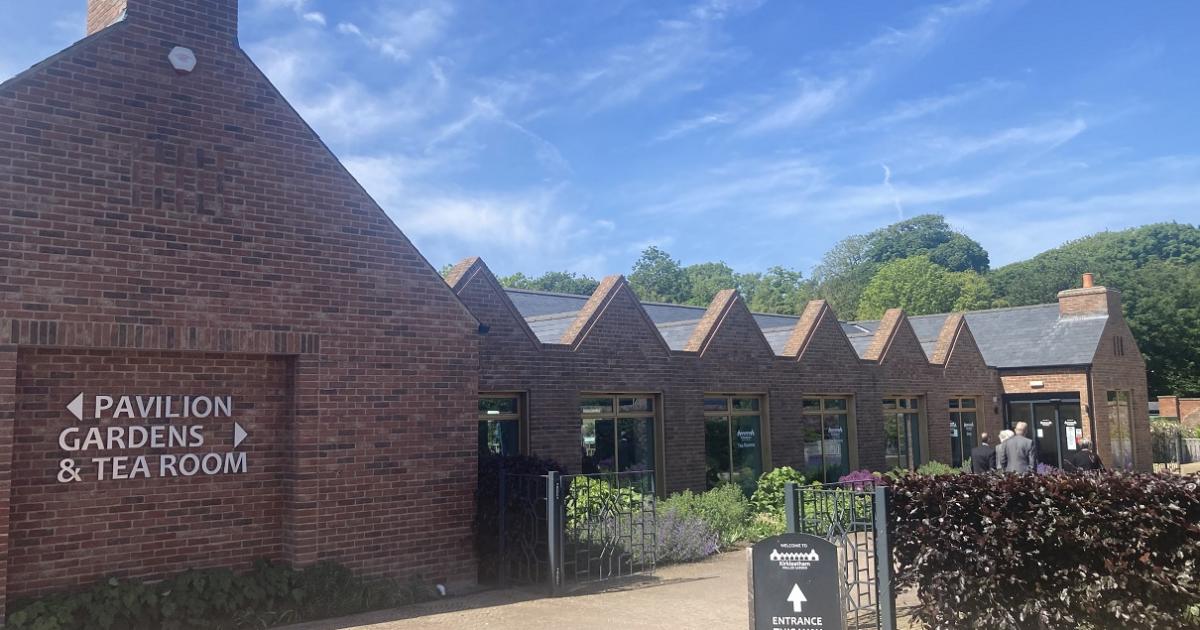
The walled garden, situated off the A174 on the outskirts of Redcar and part of the historic Kirkleatham estate, re-opened to the public in 2021 after a £10m restoration project.
As well as the gardens themselves, which are largely maintained by volunteers, the complex contains a café and events pavilion which regularly hosts weddings and other social functions.
Elior previously said it had contacted members of the public with bookings from September onwards and is understood to have offered full refunds to those affected.
Councillor Mary Ovens said it was the catering element that caused her most concern.
Advertisement
She said: “The biggest complaint I have had from residents and visitors to the gardens is that sometimes they will say the food was fabulous and other times it leaves a lot to be desired.
“It’s very important that we get the catering side right because it is a fabulous facility.”
Elior’s pull-out means the council will take over the remaining lease, but Cllr Richardson has already said the local authority lacks the skills and capacity to run the venue on a permanent basis.
In a statement last month, the council said Elior’s decision to withdraw as operator had caused “great upset” for those who had booked events and it would look to appoint a replacement as soon as possible.
Advertisement
It said it was a “much much‑loved and beautiful venue, valued by residents and visitors alike, and remains an important asset to the borough”.
Elior was handed a so-called concession contract by the council lasting up to ten years to operate the venue.
This meant that, while some initial direct costs were covered by the council, the local authority would not be paying Elior for its services.
Instead the arrangement allowed the council to receive ‘turnover rent’ from the company, subject to adjustments.
Advertisement
The unfolding situation at the walled gardens comes amidst a masterplan being drawn up by council officers to maximise the potential of the historic Kirkleatham estate, which has several listed building features.
It was also confirmed earlier this year that the Festival of Thrift will return in July after a three year absence.
He was sentenced to life imprisonment with a minimum term of 28 years
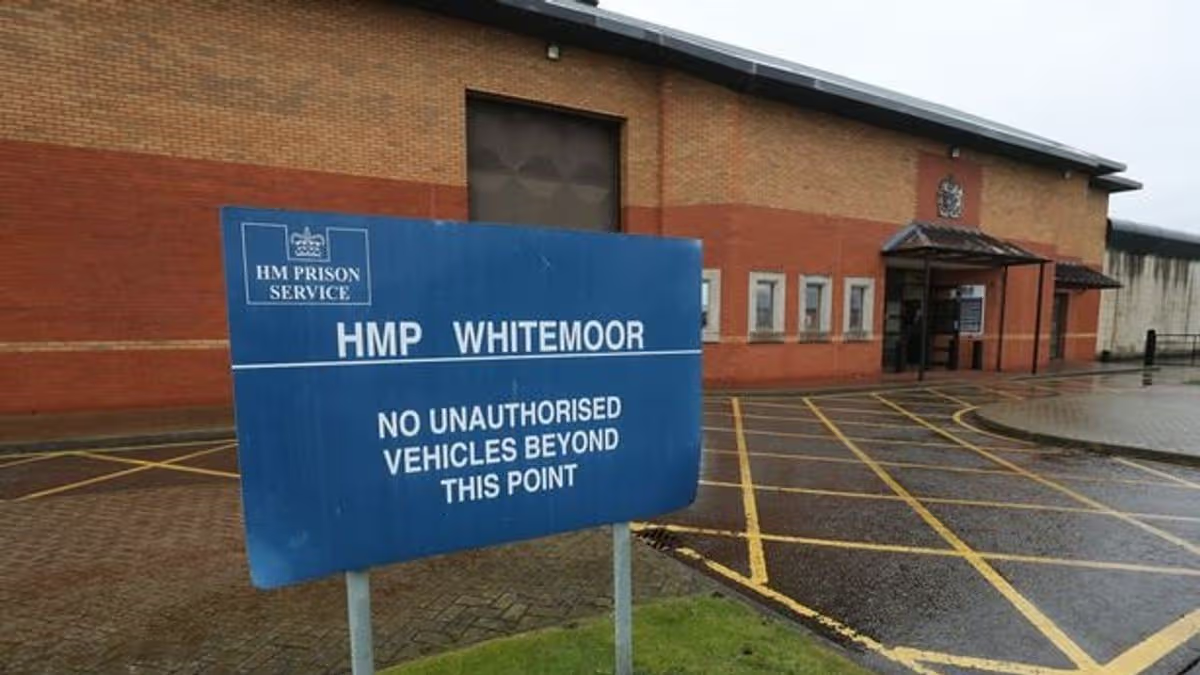
A convicted murderer took his own life at a Cambridgeshire prison, a report has revealed. In August 2015, Jason Thaxter was remanded into custody and charged with murder.
Advertisement
In December 2016, Mr Thaxter was convicted and sentenced to life imprisonment with minimum term of 28 years. He was later sent to HMP Whitemoor in March in September 2020.
On August 15, 2023, officers arrived at Thaxter’s cell to give him his lunch when he was found to be unconscious or having breathing difficulties. Thaxter, aged 46, had taken his own life.
A report, recently published by the Prisons and Probation Ombudsman looked into Thaxter’s death. The report claimed that in July 2023, around a month before Thaxter died, the prison received information that the 46-year-old was frustrated with the cleanliness of the wing and the current restricted regime.
The report concluded that “Mr Thaxter gave no obvious indication to staff that he was at risk of suicide”. It added: “However, in the months leading up to his death, Mr Thaxter spent frequent periods of the day confined to his cell due to the restricted regime in place at Whitemoor.
Advertisement
“Both illicit drugs and medication, which had not been prescribed to him, were found in Mr Thaxter’s system after he died.”
The report found that although “Whitemoor was unable to deliver a consistent regime due to staff shortages” and that “prisoners had limited access to purposeful activity” the clinical care Mr Thaxter received was “of satisfactory standard” and no recommendations were made by the clinical reviewer.
The inquest into the 46-year-old’s death finished on November 5, 2025 and it was concluded that Thaxter died as a result of suicide.
Electricity and gas price rises have recently been announced
A number of electricity and gas providers across Northern Ireland have announced price rises that are due to take effect next month, or which have already taken effect.
Advertisement
It comes as the latest Consumer Council Northern Ireland Household Expenditure Tracker, covering October to December 2025, shows the lowest earning households spent just under half (44%) of their basic spending on food, rent, energy, and transport.
After this essential spending, the lowest-earning households were left with less than £53 per week on average. Households in the next income bracket have less than £108 on average per week and have seen their spending power decline the most since the Tracker began in 2021.
What energy price rises have been announced?
Power NI has confirmed it will be increasing its electricity rates by 6.2% from July 1. The energy supplier said the move, which has been approved by the Utility Regulator, follows a review of its residential unit price amid sustained increases in global gas prices, alongside higher network and market charges.
Firmus Energy supply – one of Northern Ireland’s largest suppliers of natural gas – has also announced a tariff increase of 15.65% for its Ten Towns customers from July 1. They say this is due to higher wholesale gas costs on global energy markets, with ongoing Middle East tensions contributing significantly to recent increases.
Advertisement
The Ten Towns network includes Antrim, Armagh, Ballymena, Ballymoney, Banbridge, Coleraine, Craigavon (including Lurgan and Portadown), Limavady, Derry, Newry and more than 25 other towns and villages in the surrounding areas.
Meanwhile, from April 1, Click Energy increased its electricity tariff by 9.5%, and Share Energy increased its electricity tariff by 26.4%.
What do these changes mean for your bills?
The electricity price rise from Power NI means the average household bill will increase by around £5 per month. A typical Power NI customer with a credit meter will see their bill rise by around £64 per year, while customers with a keypad (PAYG) meter will see a yearly increase of about £62.
This means over 500,000 homes in Northern Ireland will see their annual electricity cost increase to around £1,093 for a typical credit customer and increase to around £1,065 a year for a typical keypad customer.
Advertisement
For firmus energy customers in the Ten Towers area, the gas price rise will add an extra £2.47 per week for the average household. The increase means the annual gas bill of a typical household with a credit meter will rise by around £132.
Customers with a prepayment gas meter (PAYG) will see their typical costs increase by around £129 per year. The increase will impact around 76,000 domestic and small business firmus energy gas customers. There has been no announcement regarding the Greater Belfast Network area.
The Click Energy electricity price rise, which came into effect on April 1, means a typical credit or prepayment customer will see their annual electricity costs rise by around £108 per year.
Meanwhile, Share Energy’s price rise, which also came into effect on April 1, means the typical credit or prepayment customer will see their annual electricity costs rise by around £213 per year.
Advertisement
Support for dealing with high energy bills
The Consumer Council’s website has advice and information on how to save money by being more energy efficient at home, and information on organisations that can help if you are struggling to keep on top of energy bills; visit www.consumercouncil.org.uk.
For consumers who do not have internet access or would like additional support in checking energy tariffs, call our team on 0800 121 6022 or email contact@consumercouncil.org.uk.
More than five years after the murder of George Floyd forced institutions to confront racial injustice, it is worth asking what has actually changed. As an associate professor of forensic psychology, I’ve been considering this question in relation to research – in particular, how universities produce knowledge about the communities that are affected by racial disparities in the UK.
And while universities across the UK have made visible efforts to decolonise knowledge production, diversify research samples and recruit more researchers from minoritised backgrounds, many of the core questions that shape psychological research remain largely unchanged.
Who defines what counts as distress? Is anger framed as pathology rather than a response to racism? Who decides which communities are “hard to reach”? Who determines what meaningful impact looks like? And what importance do we place on the lived experience of researchers?
Advertisement
Whose reality is believed?
Lived experience of a mental health issue can be devalued in favour of clinical, academic and professional knowledge, so that when people describe their distress, these accounts tend to be reframed through clinical interpretation rather than recognised as valid experiences in their own right.
Philospher Miranda Fricker coined the term “epistemic injustice” to describe how certain groups are systematically discredited as knowers.
In psychology, this can mean lived experience being dismissed as anecdotal, while clinical or academic interpretations are treated as objective. When such bias goes unchecked, research questions recycle eurocentric ideas that once pathologised racialised people as “mad”.
Research hierarchies do not just shape evidence; they decide whose realities are believed. Quantitative designs that reduce people to numbers are often positioned as more rigorous, while narrative or participatory approaches are treated as secondary by the research establishment. These hierarchies do not simply reflect preference; they drive funding, shape policy and determine whose realities are treated as credible.
Advertisement
In this context, service users may be invited to contribute to a study or help answer a research question. But if that question has already been defined within institutional and governmental priorities, it probably won’t make any difference. The power that shapes research agendas operates long before anyone is asked to take a seat at the table.
The same dynamics shape the expectations of researchers. Trainees in the Beyond Academia initiative I was recently involved in described tension between bringing their lived experience into their work and conforming to norms of neutrality and detachment. This reflects a broader assumption within psychology that objectivity requires distance, which quietly preserves existing hierarchies.
From the margins to the centre
Beyond Academia was designed to move underrepresented voices from the margins of research to its centre, and to challenge how future practitioners from the global majority approach mental health research in racially minoritised communities – including how to navigate their own lived experiences.
We encouraged them to question dominant psychological frameworks which can, for example, interpret distress as individual dysfunction, rather than as a response to racism, inequality or experience. The aim was to create space to question and rethink whose knowledge is treated as authoritative.
One trainee researching black men in prison described rethinking their approach. Instead of asking why services were not being accessed, they began to question how those services were experienced, and how their research could increase access.
Confronting this legacy means examining how privilege and historical ideas still shape what psychology recognises as legitimate knowledge, and whether researchers reproduce existing hierarchies or challenge them.
This kind of approach sits within a broader shift in mental health research, which aims to incorporate the lived experience of service users – so-called co-production models, where researchers and communities are expected to work together more collaboratively.
But while research that surfaces previously unheard voices of racially marginalised people is welcome, it does not necessarily translate into shared power over setting agendas, building theories or deciding what counts as impact.
Advertisement
All research is shaped by perspective, and theories are developed within cultural contexts. Far from undermining rigour of the trainees in our initiative, acknowledging the political and emotional dimensions of their work strengthened their ethical practice in systems defined by surveillance, coercion and harm.
Community-rooted knowledge
There is now a clear need for psychological research to move beyond representation toward power. One starting point is to rethink what counts as legitimate evidence. This means collective first-hand narratives of distress and experiential knowledge should shape mainstream psychological research, not sit at its edges.
This is not secondary science – it is rigorous science. When researchers are honest about their perspective and work with people who see the world differently, the research is stronger and more useful.
If psychology is to remain relevant in diverse societies, it must move beyond viewing certain communities primarily as subjects of study, to being partners in knowledge creation.
Advertisement
Diversifying who enters academic spaces matters. So does diversifying who participates in studies. But unless the discipline confronts who shapes research agendas and whose knowledge is treated as authoritative, inequality will simply be reproduced in subtler forms.
Psychology already has the tools to examine power, bias and social context. The question is whether it is willing to use them.
A joint inquest into the deaths of ‘besotted’ couple John and Marilyn Saxon was held this week
19:32, 02 Jun 2026Updated 19:42, 02 Jun 2026
The ‘baffling’ case of an elderly couple who died after their car inexplicably ended up in a reservoir may never be solved. John and Marilyn Saxon, both 78, were pulled from the Crook Gate Reservoir in Denshaw, Oldham, last March.
A joint inquest into their deaths was held this week. Rochdale Coroners’ Court heard the ‘besotted’ couple – ‘childhood sweethearts’, married for 58 years – drove the short distance from The Junction Inn pub to their home off Ripponden Road on March 14.
Their Land Rover, driven by Mr Saxon, briefly stopped outside the electric gates at the couple’s home. The car then accelerated through the gates before hitting a water feature and driving over a small wall. The vehicle, the court heard, then went through an adjacent field and into the reservoir.
Advertisement
Click here to hear the latest from Manchester’s courts in our newsletter
Recording an open conclusion, deputy chief coroner Joanne Kearsley said: “Having heard all of the evidence today, I can say it is nothing short of baffling.”
The inquest earlier heard former property manager Mrs Saxon, known as Mal, was diagnosed with dementia in 2021. Her mobility and ability to hold a conversation gradually became increasingly impaired.
Mr Saxon, who earlier worked as a chartered surveyor, discussed moving his wife into a care home with their daughter Joelle Hardman, though he was concerned about her being alone. The couple were supported by three carers, the court heard.
Advertisement
A week before the tragedy they went on holiday to Cornwall with carer and friend Tracey McCabe. Daughter Mrs Hardman said spoke to her parents on their return and said they were in good spirits. A family meal had been arranged for Sunday, March 16, she added.
Ms McCabe visited the couple on the morning of March 14, the court heard. She said: “I helped [Mrs Saxon] have a shower; get her breakfast; and get dressed. She was going to have her hair done that afternoon. John would take her for her appointment.”
Ms McCabe said she had heard of occasional incidents of dementia-related aggression, though had not witnessed any herself. Mr Saxon, she said, called her for additional assistance when required and would help calm his wife down. Ms McCabe said there were no issues on the morning of March 14.
Advertisement
The court heard the couple went to The Junction Inn at around 5.30pm, as they usually did. Friend Ben Briscall said: “John bought a round. They were drinking wine at the bar and chatting about their holiday. They were in a good mood, he wanted to get a round for everybody.”
The couple were seen on CCTV getting in their car at 7.23pm. Mr Saxon appeared to help his wife into the back seat. Mrs Hardman said her mum sometimes got in the back if she was agitated or thought she was getting into a taxi.
Around nine minutes later they arrived at the gates of their home. Forensic collision investigator Jonathan McColl said tyre tracks and scratches to the car and gates indicated the Land Rover forced the gates open. The motor arms of the gates were dislodged, Mr McColl said.
Driving data revealed the accelerator was pushed from 20 per cent to 100pc around five seconds before the vehicle hit a water feature. “The brake was not pressed,” Mr McColl added.
Advertisement
The car, he said, then went over wall before going into a field and into the reservoir. Mr McColl said the car travelled 180m into the reservoir having hit the water feature. The couple’s bodies and the Land Rover were recovered from the water the next day.
Detective Sergeant Phillip Collingwood told the court police worked through a number of lines of enquiry – including that it was deliberate; that the car had a mechanical fault; that there was a medical episode; that there was confusion over pedals; and that there was an incident involving Mrs Saxon in the car.
He said police were only able to rule out that the vehicle did not suffer a mechanical fault. DS Collingwood said neither Mr or Mrs Saxon were wearing a seatbelt.
Advertisement
Police were unable to gain access to Mr Saxon’s phone. A financial investigator was tasked with looking into Mr Saxon’s accounts, the court heard. A missing payment on a loan in June 2024 was discovered, it was said.
Forensic pathologist Charles Wilson recorded cause of death in both cases as drowning. He said Mr Saxon had cuts and bruising to his nose and mouth and that he was one-and-a-half time the drink drive limit. As he was a regular drinker, it was not possible to determine the level of impairment at the time of the incident, the court heard.
‘Baffling’
Coroner Ms Kearsley said: “It is unusual for family members to lose both parents at the same time in the same incident.
“Having heard all of the evidence, I can say it is nothing short of baffling – the fact they stopped the Land Rover; the fact it accelerated through two swinging electric gates to cause damage to the property. It continues forward, accelerating forward into the water feature and stuck a wall, it continues with no attempt to brake until it goes into the reservoir, resulting in their deaths.”
Advertisement
Ms Kearsley said the injuries to Mr Saxon’s face were ‘in keeping with contact with the steering wheel’. She said a medical episode could not be ruled out. Evidence neither were wearing a seatbelt did not help determine what happened, she added.
“There is no evidence to support that it was deliberate on the balance of probabilities and I cannot find it is appropriate to return a conclusion of ‘accidental’,” Ms Kearsley added.
Recording an open conclusion, she told the court: “On March 14, 2025, the deceased were driver and rear passenger in a Land Rover/ Range Rover. On arrival at their home address, and captured on CCTV, they accelerated through the gates, over a small wall and continued 180 metres into Crook Gate reservoir. Despite a police investigation, it cannot be ascertained why the vehicle proceeded in this manner.”
Advertisement
‘Besotted’
The couple’s daughter Mrs Hardman, giving evidence, earlier paid tribute to her parents, saying they had ‘hearts of gold. “Dad was a real gentleman,” she added.
“They were always holding hands. He would buy her flowers every week. They had been married for 58 years, but had been together since they were 16. They were a perfect match and a brilliant team.
“They were besotted with each other. They worked tirelessly to make sure me and my brother had everything. They worked incredibly hard to give us the upbringing we had.”
Advertisement
Describing them as ‘doting grandparents’, she added: “I can’t remember a family Christmas without them. Sunday dinner was a highlight of our week. They valued our time with them and we valued their time with us.”
Following the hearing, Mrs Hardman added: “We are totally devastated about the loss of both Mum and Dad in such a tragic accident. Mum and Dad were both loving, generous, thoughtful, kind and hardworking.
“They were married for nearly 58 years and were childhood sweethearts. They were the perfect match for each other and made a great team.
“Mum and Dad came from humble beginnings, worked tirelessly all of their lives and were very family orientated. Their resilience and determination was inspirational.
Advertisement
“They were supportive parents and doting grandparents and they are sorely missed every day. The world is not the same without them. They’ve left a huge hole behind.
“They had lived in Saddleworth for 45 years. They were loved by many and were charitable and supported many local causes. They would help anyone and touched countless people with their warmth and kindness. We thank everyone for their support and shared memories of them. We’ve been incredibly comforted by how admired, respected and deeply loved they were.
“We miss them beyond words but their love, kindness and generosity will live on in our family and among all those who knew and loved them. We would like to express our thanks to the police and coroners’ office for their investigations, professionalism and support. The family ask for privacy at this time.”
These are the places readers turn to when they are stocking a holiday cottage, sorting a family barbecue or just looking for an excuse to get out for a drive while the sun is shining.
Brocksbushes Farm Shop, near Corbridge
Brocksbushes is one of those farm shops that feels like a day out in its own right.
Just off the A69 near Corbridge, it combines a big farm shop and tea room with seasonal pick‑your‑own fields and play areas for children.
Advertisement
In summer the focus is on soft fruit, with rows of strawberries and raspberries ready to be picked, plus shelves of jams, chutneys and bakes made using what has grown on site.
Visitors talk about it as somewhere that works for the whole family: you can pick fruit, grab lunch in the café, and still have time to browse for pies, cheeses and treats to take home.
It is the kind of place that ends up on the yearly “we must go back” list once you have been once, especially if you are based in the Tyne Valley or heading along Hadrian’s Wall.
Moorhouse Farm Shop, just outside Morpeth, is built firmly around its own livestock.
Advertisement
The farm rears beef, pork and lamb for the butchery counter, which has become a go‑to for people planning summer barbecues and Sunday lunches. Counters are lined with sausages, burgers, kebabs and roasting joints, backed up by pies, ready meals and plenty of local store‑cupboard staples.
Alongside the shop is a busy coffee shop serving breakfasts, lunches and home‑baked cakes, with outdoor seating that comes into its own on warmer days.
For anyone breaking a journey on the A1 or heading to a coastal cottage, it works as both a refuelling stop and a place to stock the fridge with Northumberland meat and dairy.
Blagdon Farm Shop, Blagdon
Blagdon Farm Shop is the one many people automatically aim for when they want “something decent” rather than a supermarket detour off the A1.
Set in the stone courtyard at the Milkhope Centre, it focuses on local meat, deli produce and a solid range of regional suppliers.
Advertisement
Fridges and counters are full of North East beef, pork and lamb, alongside sausages, pies, cheeses and salads that lend themselves perfectly to summer gatherings.
It has the feel of a place that takes its sourcing seriously without being precious about it.
Regulars pull in to pick up specific sausages or a joint for a special occasion; others call in for a general browse and leave with more than they planned.
With a café and other independent shops on the same site, it is easy to turn a quick top‑up into a longer potter when the weather is good.
Advertisement
Smaller stops and summer favourites
Beyond the bigger names, there are plenty of smaller Northumberland farm shops and producers that come into their own once the days lengthen.
Some are little more than a well‑stocked shed and an honesty box at the end of a lane; others combine a compact shop with a tearoom looking out over fields. Many add ice cream, picnic boxes or simple children’s activities during the school holidays.
These quieter spots are often where you find the most direct link between field and counter: trays of eggs from the hens you can see from the car park, salads and veg that were lifted that morning, and cakes baked in the kitchen next door.
For readers who like to build their own food trail, stringing a couple of these together with a walk or a beach stop can turn an ordinary Saturday into something that feels a bit more like a mini‑break.
Making the most of farm shops this summer
If you are planning a staycation, a week in a holiday cottage or just a run up the Northumberland coast, it is worth plotting a farm shop into the route.
Advertisement
Calling in at the start of a break to pick up meat, fruit, bread and cheese means the fridge is full of local food from day one, and topping up later in the week is a good excuse to get back out for another drive.
Most farm shops keep their websites and social channels updated with opening hours, pick‑your‑own dates and any special summer events, from tasting days to children’s trails.
It is worth checking before you set off so you can time your visit around the best of the season – whether that is the first proper strawberries, new‑season lamb or simply a slice of cake eaten in the sunshine while you decide what to put on the grill that night.



















![The Crypto Dump Is Just Beginning! Prepare For Mega Buying Opportunities [ETH & SOL Targets]](https://wordupnews.com/wp-content/uploads/2026/06/1780429707_maxresdefault-80x80.jpg)






























You must be logged in to post a comment Login