



Connect with us
DAPA Banner
DAPA Coin
DAPA
COIN PAYMENT ASSET
PRIVACY · BLOCKDAG · HOMOMORPHIC ENCRYPTION · RUST
ElGamal Encrypted MINE DAPA
🚫 GENESIS SOLD OUT
DAPAPAY COMING

NewsBeat

Transfer news LIVE: Arsenal in Rogers bid; Man Utd learn Fernandes update; Chelsea, Liverpool latest

Published

on

Transfer news LIVE: Arsenal in Rogers bid; Man Utd learn Fernandes update; Chelsea, Liverpool latest

The transfer window is stepping up a gear as Arsenal, Chelsea, Manchester United, Liverpool and Tottenham all work on completing huge deals in what is set to a huge summer. The Gunners are closing in on the signing of Morgan Rogers in a deal worth at least £80million, and continue to be linked with an audacious swap deal for Julian Alvarez. A fee has been agreed for wonderkid Jeremy Monga, and remain interested in Ayyoub Bouaddi, Bradley Barcola, Eli Junior Kroupi, Christos Tzolis and Andria Bartishvili.

Source link

Continue Reading
Click to comment

You must be logged in to post a comment Login

Leave a Reply

NewsBeat

Florida governor announces closure of ‘Alligator Alcatraz’

Published

on

Florida governor announces closure of 'Alligator Alcatraz'

The immigration detention center in the Florida swamps known as “Alligator Alcatraz” is closing after nearly a year, Gov. Ron DeSantis said Thursday.

DeSantis said the center was always supposed to be temporary and now federal officials have enough ability to handle detention and deportation in more permanent facilities.

“It served its purpose for the time,” the Republican governor said.

Officials announced a temporary closure of the facility earlier in June, saying hurricane season made it unsafe to keep the detainees in the Florida Everglades. All the of people kept at the isolated airstrip had been sent to other facilities.

Advertisement

Immigration advocates said the tents were never safe or humane to hold people. Detainees at the facility have talked about their difficulty accessing lawyers, and have described poor physical conditions, including worms in the food, toilets that don’t flush, flooding floors with fecal waste, and mosquitoes and other insects everywhere.

The detention center was built by DeSantis’ administration in a matter of days in 2025 and President Trump came to visit site.

DeSantis and Trump said the detention center was critical to Republican efforts to return people in the country illegally back to their home countries. The Republican governor said 21,000 people were deported through the facility.

Advertisement

Source link

Continue Reading

NewsBeat

Ryan Thomas mistakes Keir Starmer for cannibal serial killer Jeffrey Dahmer

Published

on

Ryan Thomas mistakes Keir Starmer for cannibal serial killer Jeffrey Dahmer
Ryan Thomas isn’t quite sure who Keir Starmer is (Picture: TikTok/Getty)

Sir Keir Starmer has had a rough run of things recently, having to step down as Labour leader and now being mistaken for an actual serial killer.

In a mortifying mix-up, former Coronation Street star Ryan Thomas got the outgoing Prime Minister confused with cannibal Jeffrey Dahmer.

While on the podcast with his brothers, Adam and Scott, the trio were discussing horror movies, including a ‘true horror’ like ‘Keir Starmer’.

‘I just don’t really like horror movies,’ Scott told his brothers, with Ryan chiming in that he likes true crime, prompting the name confusion.

Advertisement

‘Like, you know, Keir Starmer or whatever it is,’ he continued, prompting a baffled look from Adam as Scott laughed: ‘That’s the prime minister’.

It seems the Love Islander missed the big Downing Street update and Ryan’s slip-up left his brothers in stitches.

‘What’s he called?’ the Celebrity Big Brother star asked as Adam joked: ‘I mean, he is pretty much a horror story!’

Encouraging his brothers, he said it was ‘something Starmer’, prompting them to come up with ‘Jeffrey Llama’.

Advertisement

Their production team burst out laughing and corrected the confused trio with the name of cannibal Jeffrey Dahmer.

Also known as the Milwaukee Cannibal or the Milwaukee Monster, Dahmer was an American serial killer and sex offender who killed and dismembered 17 men and boys between 1978 and 1991.

He was sentenced to jail for 16 terms of life imprisonment in 91 but was beaten to death by another inmate in 1994.

American serial killer and sex offender Jeffrey Dahmer, aka The Butcher of Milwaukee, is indicted on 17 murder charges, men and boys of African or Asian descent, between 1978 and 1991. (Photo by Marny Malin/Sygma via Getty Images)
Jeffrey Dahmer killed 17 men and boys between 1978 and 1991 (Picture: Marny Malin/Sygma via Getty Images)

Adam shared he had to switch off a film about Dahmer ’10 minutes in’ then went back to watch it again later.

Scott then reminded Ryan he had, in fact, met Sir Keir, to which he confessed: ‘I didn’t even know he was the prime minister at the time’.

Advertisement

Unfortunately for the former Labour leader, Ryan not knowing he resided at 10 Downing Street turned out to be slightly prophetic.

Sir Keir faced the dreaded lectern outside No 10 earlier this week but has confirmed he will stay on as an MP as his successor steps up to the plate.

That successor will almost certainly be Andy Burnham, dubbed the King in the North, who has made his move from Manchester’s mayor to MP over the last few weeks.

Maybe the Thomas household has been too busy watching scary movies to pay attention to the political shambles happening in Westminster – and we can’t blame them for that.

Advertisement
Advertisement

Source link

Continue Reading

NewsBeat

What happens to your blood when you’re stressed? We put it to the test

Published

on

What happens to your blood when you’re stressed? We put it to the test

We have all heard it: “It’s just in your head.”

When work deadlines pile up, financial worries linger or an unexpected public speaking obligation looms, we often treat anxiety as a purely psychological challenge – something to be overcome with a bit of willpower.

But our bodies don’t separate the psychological from the physical. Your brain is not an island, and anxiety does not stay trapped between your ears. It triggers a rapid cascade of biochemical changes that travel through the bloodstream and affect the body in measurable ways.

New research from my colleagues and I captured this mind-body connection in real time. By putting healthy volunteers through a laboratory stress test, we discovered that acute mental stress acts as a direct chemical catalyst. Within minutes, it increases the production of highly reactive molecules known as free radicals. These molecules then alter the way blood clots form.

Advertisement

In other words, psychological stress can physically remodel your blood, making it more prone to clotting.

Scientists have known for decades that chronic stress is bad for the heart. Large population studies have repeatedly identified emotional stress as a risk factor for cardiovascular disease. What has been less clear is exactly how an emotion translates into a biological change that could increase cardiovascular risk.

When we experience psychological stress, the body’s finely balanced haemostasis – the system which keeps blood flowing normally while remaining ready to prevent bleeding when needed – becomes disrupted. The blood moves into what scientists call a hypercoagulable state, meaning it becomes more likely to clot.

But the mechanism behind this process has remained a subject of scientific debate.

Advertisement

Some experts suggested that stress activates the immune system, causing widespread inflammation. Others proposed that stress causes blood to become more concentrated as blood pressure rises. That’s an idea known as the haemoconcentration hypothesis.

My colleagues and I suspected something different, that the true instigator was oxidative stress. This is an explosion of free radicals triggered by the body’s fundamental stress response acting as an upstream master switch that directly changes the blood’s structural properties.

Putting stress to the test

To investigate this idea, we conducted a randomised controlled crossover study involving eight healthy young men between the ages of 18 and 30. That may seem like a surprisingly small group, but experiments that examine biological changes in real people under tightly controlled laboratory conditions are complex, labour-intensive and expensive. Rather than looking for broad population trends, studies like this are designed to uncover the underlying mechanisms at work inside the body.

Each participant visited our laboratory twice, one week apart. During one visit they sat quietly and rested. During the other, they completed the Trier social stress test, the gold standard in research for inducing acute psychological stress. The order in which they did the visits was completely random.

Advertisement

The test is deliberately uncomfortable because it mirrors everyday social pressures. Participants were given five minutes to prepare a speech before delivering it to a camera and a panel of expressionless judges. Just before they began speaking, their notes were taken away.

Immediately afterwards, they were asked to complete a mental arithmetic challenge, counting backwards from 2003 in intervals of 17. Whenever they made a mistake, they had to start again.

We collected blood samples immediately before and after both sessions. To measure free radicals, we used a highly sensitive technique called electron paramagnetic resonance spectroscopy. We also analysed the structure of blood clots as they formed, allowing us to examine how stress was affecting blood at a microscopic level.

Your brain is not an island, and anxiety does not stay trapped between your ears.
PeopleImages/Shutterstock

Biological changes

The results were stark. During the quiet resting session, participants’ blood chemistry remained stable. After the stress test, however, two things happened at the same time: free radical levels increased and the structure of blood clots completely transformed.

Advertisement

We observed a rise in the ascorbate free radical, our marker of oxidative stress, indicating that emotional stress rapidly increased oxidative stress within the body. At the same time, the forming blood clots became larger, denser and more tightly packed with fibrin, which are the protein fibres that provide a clot’s structural framework. We also found evidence that stress activated part of the body’s coagulation system known as the intrinsic pathway.

Perhaps just as importantly, we found no evidence that stress changed blood viscosity or thickness. This challenges the idea that stress primarily works by concentrating the blood.

Instead, our findings suggest that stress alters the quality and architecture of the clot itself. This provides new evidence that even brief periods of psychological stress can trigger rapid biological changes associated with increased clotting potential.

Of course, our study does not mean that a stressful presentation or difficult day at work will immediately cause a heart attack or stroke. Cardiovascular disease is far more complex than that.

Advertisement


À lire aussi :
We fed people a milkshake with 130g of fat to see what it did to their brains – here’s what we learned


Our findings provide important clues about how psychological stress affects the body, but they should be interpreted with appropriate caution. Because the study involved only eight healthy young men, larger studies involving women, older adults and people with cardiovascular disease will be needed to determine how widely the findings apply.

The findings may also point towards new approaches for reducing cardiovascular risk. Rather than focusing solely on the psychological experience of stress, future research could explore whether targeting the underlying biochemical pathways can help protect the cardiovascular system from some of stress’s physical effects.

Advertisement

Source link

Continue Reading

NewsBeat

Co Antrim man who ‘has a serious problem with temper’ jailed over bowling club attack

Published

on

Belfast Live

In a statement he made, the injured party set out the extensive surgeries he has undergone, the continued difficulties he faces and that he may have to have his knee replaced.

Advertisement

A Co Antrim man who “clearly has a serious problem with temper” was jailed for 16 months today for assaulting another man in Carrickfergus Bowling Club.

David Hilditch will spend an additional 16 months on a supervised licence when he is released from custody.

From West Street in Carrick, the 43-year old admitted a charge of inflicting grievous bodily harm on the injured party and was sentenced at Belfast Crown Court by Judge Patrick Lynch KC.

The charge arising from an incident in Carrick Bowling Club on January 15, 2023 where both Hilditch and the injured party were socialising.

Advertisement

The two men did not know each other and during the course of the evening Hilditch approached the other male, who was sitting with his son.

Words were exchanged between the injured party and Hilditch, who walked away.

Hilditch then returned to where the father and son were sitting and after further words were exchanged, the injured party stood up and grabbed Hilditch.

Hilditch responded by punching the injured party in this face, which caused him to fall backwards into his seat and resulted in a fracture injury to his right leg which required multiple surgeries.

Advertisement

The incident was captured on the Club’s CCTV and Hilditch was identified from the footage.

During a police interview, whilst he gave a largely ‘no comment’ response he did confirm it was him on the footage.

The father-of-two said he had been drinking and claimed he struck out after being grabbed as he was in fear for his life, but did not intend to cause the injury to the other man.

Advertisement

In a statement he made, the injured party set out the extensive surgeries he has undergone, the continued difficulties he faces and that he may have to have his knee replaced.

Branding the injury sustained as “long-lasting”, Judge Lynch said it was “particularly poignant” that the injured party’s wife passed away whilst he was undergoing rehabilitation.

Regarding Hilditch, Judge Lynch noted he was in full-time employment with a self-reported history of depression and social drinking.

The Judge added that whilst Hilditch is now taking steps to deal with his “alcohol difficulties”, he has accepted he becomes “unpredictable when intoxicated.”

Advertisement

Defence submissions by barrister Luke Curran set out that his client’s plea spared the injured party the ordeal of coming to court and giving evidence.

Mr Curran also pointed out this was a ‘single punch’ case as opposed to a sustained assault and that the nature of the leg injury was unforeseen.

Also noted by the Judge was Hilditch’s criminal record, “which does not speak well for him,” and which includes prior serious assaults that resulted in prison sentences.

Judge Lynch said Hilditch was the “instigator of the whole unfortunate situation” in the bowling club.

Advertisement

The Judge added: “The defendant clearly has a serious problem with temper and this is particularly exacerbated by the use of alcohol.

“He has failed to learn his lesson from three serious assault charges for which he was convicted and for which he served sentences of imprisonment of varying lengths.”

Following this, the 32-month sentence was imposed.

For all the latest news, visit the Belfast Live homepage here and sign up to our daily newsletter

Advertisement

Source link

Continue Reading

NewsBeat

The flaws at the heart of Donald Trump’s Iran ceasefire deal

Published

on

The flaws at the heart of Donald Trump’s Iran ceasefire deal

The world sighed in relief when Donald Trump agreed to a memorandum of understanding (MoU) to finally end the conflict with Iran on June 17. But there is now a palpable feeling that hostilities are far from over. The agreement between Washington and Tehran, signed at Versailles on June 18, is better understood as a deferred crisis – one whose contradictions are already visible.

Iran’s closure of the waterway since February has caused one of the largest supply disruptions in the history of global energy markets, driving inflation across the western world and aggravating American motorists at the gas station. It was this economic stranglehold that brought Trump to the table.

The payoff for the US is unclear. As former US president Barack Obama recently said, it is “doubtful that any agreement that arises is going to be significantly different, or represent a significant improvement from the deal” that Obama himself oversaw in 2015.

Iran’s closure of the strait gave it the leverage to secure concessions from Trump – potentially exceeding the Obama-era nuclear deal – without offering more on the nuclear question than it had tabled in Geneva days before the war began in February. Even senior Republicans such as Senator Bill Cassidy have lamented the deal for its financial incentives to the Iranian regime.

Advertisement

Within 72 hours of the MoU, Iran’s military command claimed to have closed the Strait of Hormuz once again. This was no surprise. It is indicative of an emboldened Iran that is flexing its leverage – leverage Trump’s deal has inadvertently produced.

Iran has absorbed enormous punishment, survived and is now dictating the terms of the ceasefire by dangling the constant threat of economic misery in front of Trump’s face. This is not a foundation for a stable settlement. In fact, it signals a serious loss of control for both the US and Israel.

Iran’s justification – Israeli strikes against Hezbollah – for wreaking economic havoc and holding global energy markets hostage illustrates the structural flaw at the heart of Trump’s approach to deal-making. Iranian officials have explicitly said that the “most important item” on their agenda is preventing further Israeli strikes in Lebanon.

Iran’s strategic logic is unambiguous. Every time Israel retaliates against Hezbollah, which it is both legally entitled and politically compelled to do, Iran holds the global economy hostage via the Strait of Hormuz.

Advertisement
Iranian parliamentary speaker, Mohammad Bagher Ghalibaf, foreign minister Abbas Araghchi and members of Iran’s negotiating team arriving for talks in Zurich, Switzerland, June 21.
Sipa US/Alamy Live News

This places Israel in an impossible position. It cannot permanently suspend its right to self-defence as a condition of a US diplomatic agreement. It is hard to see Israel’s security cabinet accepting a framework in which Iranian-backed forces in Lebanon can attack their territory with impunity, because the consequences of retaliation lead to increased pressure on global oil markets and American inflation figures.

As Israel’s minister of national security, Itamar Ben-Gvir put it: “Israel is not subject to the United States, and we are an independent and sovereign nation.”

This is not a viable and sustainable strategy of deterrence. It is brass-necked coercion dressed up as diplomacy.

For Trump, the domestic arithmetic is equally unstable. While he insists that his deal has delivered everything it set out to achieve, by his own admission, he also stated at the recent G7 summit in France that he “didn’t want to see an economic catastrophe”. It would certainly not improve his party’s prospects in the upcoming midterm elections in November.

Advertisement
A woman in a football shirt walks away from a gasoline pump displaying high prices.
High gasoline prices in the US have made the war in Iran very unpopular.
Abaca Press/Alamy Live News

It is a frank acknowledgement that his decision-making was driven by the perception that continued military pressure was producing diminishing returns. The decision to stop fighting had ceased to be a strategic choice. It was the result of an American president who no longer believed he could act with complete control.

The problem is that the deal does not restore that agency in a meaningful way. Iran has now demonstrated to itself, to its regional partners, and to the world that it can act belligerently and still negotiate from a position of strength.

Vicious cycle

What is currently happening can be best described as a cycle: Israeli military action in Lebanon, Iranian threats to close the strait, US pressure on Israel to stand down, and Israeli resistance to doing so. Each iteration of this cycle will intensify the narrative that restraint is no longer a viable course of action – for Israel, for Trump’s domestic base, and for the Gulf states who have felt the brunt of Iranian drone attacks.

Despite the destruction of most of Iran’s military capabilities, infrastructure and political leadership, Iran remains determined to change the order of things in its region. Its foreign policy behaviour is driven by a combination of revolutionary ideology, a deep mistrust of the US, and a religiously guided identity as a self-appointed protector of the Shia Islamic world.

Nothing in the last four months has given Tehran reason to revise that worldview. Quite the contrary.

Advertisement

Lebanon has become the fault line on which this deal will either hold or break. Israel has understood this from the start. Trump is catching up. His threat to “blow the shit out of them” if Iran does not comply suggests a president whose patience with his own agreement is already fraying.

The memorandum of understanding is a ceasefire with a built-in detonator. When political actors come to believe that restraint no longer allows them to act meaningfully – as both Trump and Israel increasingly do – escalation ceases to be a choice. It may come to be the only available logic.

Source link

Advertisement
Continue Reading

NewsBeat

When is Wimbledon 2026 draw? Start time and how to watch as top stars learn first-round fate

Published

on

When is Wimbledon 2026 draw? Start time and how to watch as top stars learn first-round fate

Wimbledon is almost upon us once more, and that means that is time for tennis’ top stars to find out who they will be facing in round one.

The draw at the All England Club is always a spectacle, with fans, players and coaches alike watching with great intrigue to find out who they – or their favourite players – will take on in their opening match.

Source link

Continue Reading

NewsBeat

Airlines may introduce new in flight overhead lockers rules

Published

on

Airlines may introduce new in flight overhead lockers rules

The International Air Transport Association (IATA) has warned that “draconian” measures, including locking overhead bins, may be necessary to prevent travellers from retrieving luggage during evacuations.

Efforts to collect bags during emergencies can delay evacuations and risk passenger safety, the organisation said.

Aircraft must be capable of being evacuated within 90 seconds, according to IATA.

Advertisement

IATA has launched a campaign called “Save A Life, Not A Bag” urging travellers to leave belongings behind during evacuations.

The campaign was created in response to an increasing number of incidents where passengers attempted to retrieve bags during emergencies, or even stopped to take photos.

Nick Careen, senior vice president of operations, safety, and security at IATA, said: “If we do not see the type of behaviour changes that we’re expecting, then we will have to be a little more draconian which could be penalties and could be something as simple as a hard locking mechanism on the overhead bin.

“Penalties are somewhat effective but unless they are implemented on a consistent basis then they lose their effectiveness.”

Advertisement

IATA’s campaign is supported by safety bodies including the European Union Aviation Safety Agency (EASA) and the Federal Aviation Administration (FAA).

The group also commissioned a survey of passengers in the UK, US, UAE and Singapore, which found that while 80% believed they knew what to do in an emergency evacuation, only 61% correctly identified that they should leave all personal items behind.

The issue has real and potentially deadly consequences, said IATA’s director general Willie Walsh.

Mr Walsh said: “Taking bags during an evacuation is not a minor issue.

Advertisement

“Every second matters.

“Even taking one bag can affect the safe evacuation of everyone onboard.

“Crew instructions are clear and simple: leave everything behind and move quickly.

“‘Save A Life, Not A Bag’, is a message that passengers need to understand and act upon.”

Advertisement

EASA’s executive director Florian Guillermet explained why rapid, unobstructed evacuation is essential.

Mr Guillermet said: “Rapid evacuation in an emergency situation saves lives.

“Aircraft are certified to stringent evacuation standards and crews are trained extensively for emergency situations, to make sure every single passenger has the best possible chance of survival in an acute situation.

“For this to work in a real emergency, all passengers must play their part too.

Advertisement

“And it is very simple: follow crew instructions, leave all baggage behind and move quickly to the nearest usable exit.

“Not only will this save your life, but you will have done your very best to allow everyone to get out of danger.”

FAA administrator Bryan Bedford highlighted the rise in non-compliance during emergencies.

Mr Bedford said: “We’re seeing an increasing number of passengers not following flight crew instructions during emergencies.

Advertisement

“In those moments, compliance is critical.

“Passengers must act quickly, follow instructions without hesitation, and leave all belongings behind.

“Safety is a shared responsibility, and informed, attentive passengers help ensure a faster, safer evacuation for everyone on board.”

Mr Careen believes that while most people have some understanding of evacuation protocol, it is often incomplete.

Advertisement

He said: “The majority of passengers know what to do in an accident.

“There is, however, a significant gap in knowledge among some travellers that could result in disaster.

“Even just a passenger or two taking a few extra seconds to gather personal items can endanger lives.

“That is why it’s essential to build good habits for all travellers, like paying attention to safety demonstrations each time and keeping essential items, such as passport, money, and medication on person.

Advertisement

“It is also important that passengers understand the consequences of not listening to the crew.

“‘Save A Life, Not A Bag’, is meant to be a blunt reminder of what is at stake for everyone in the rare event of an evacuation.”

Source link

Advertisement
Continue Reading

NewsBeat

Police stop 31 vehicles in Bolton traffic crackdown

Published

on

Police stop 31 vehicles in Bolton traffic crackdown

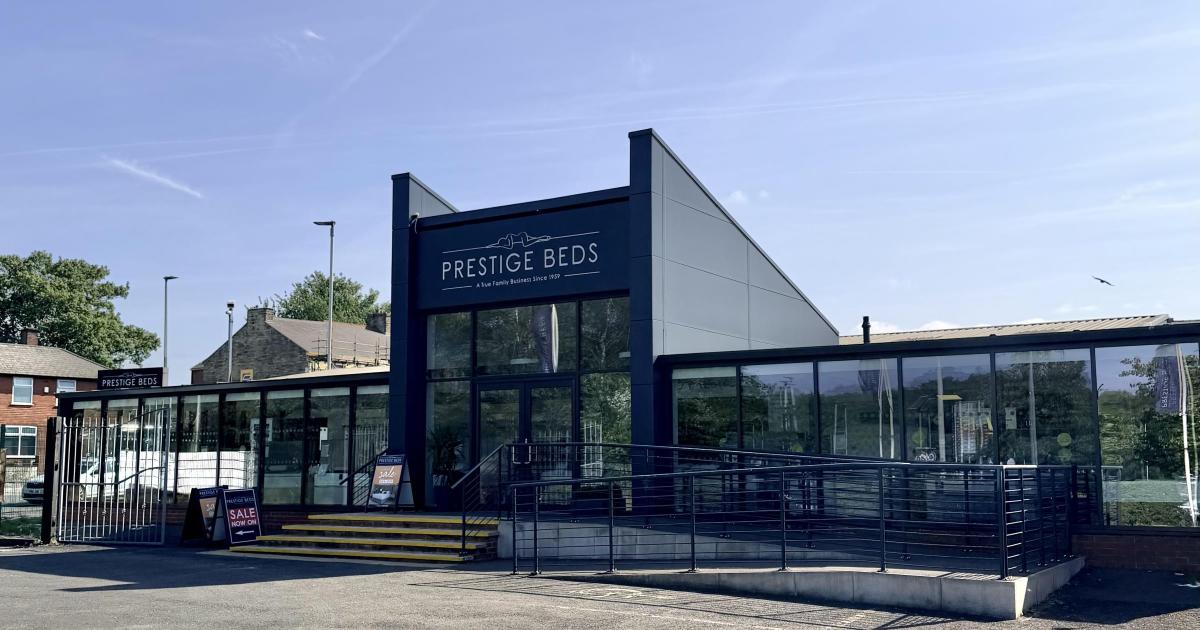
Neighbourhood police officers in Bolton carried out the hour-long operation on Trinity Street in response to concerns from residents and businesses about road safety.

Of the 31 vehicles stopped, one was seized for having no insurance, three drivers were summonsed to court for driving offences, and one traffic offence report was issued.

Advice was also given to several motorists during the checks.

Advertisement

The operation was run by the Bolton Town Centre Neighbourhood Team and took place within a single hour on Trinity Street.

A spokesperson for Bolton Police said: “The vast majority of road users were driving safely and legally, but we are committed to making our roads safer.”

Officers said the operation was organised in direct response to community feedback and encouraged residents to continue raising concerns.

This can be done through monthly neighbourhood drop-in sessions or by contacting their local policing team.

Advertisement

They can also use the Bee In The Loop community messaging service.

Greater Manchester Police said it will continue to carry out similar proactive operations across Bolton to improve road safety and tackle driving offences.

Source link

Advertisement
Continue Reading

NewsBeat

Cheaper prices at Alton Towers and McDonald’s in VAT cut

Published

on

Parents urged to claim HMRC freebie worth £2,000 per child

The Government-backed scheme, dubbed “Great British Summer Savings”, launches on Thursday, June 25 and promises lower prices on everything from theme park tickets and children’s meals to family cinema trips.

Major attractions, including Alton Towers, Legoland and Peppa Pig World, are among those taking part, while restaurant giants including McDonald’s, Wetherspoons and Nando’s are also passing on savings to customers.

Which attractions are offering discounts?

Some of Britain’s best-known family attractions have already cut prices.

Advertisement

Merlin Entertainments, which owns attractions including Alton Towers and Legoland, has introduced “summer VAT savings” on tickets.

Advance tickets for both parks now start from £29.75, down from £34.

Longleat Safari Park has also reduced prices, with a family of four now able to buy advance tickets for £122.30, representing a saving of £17.50.

Cinema tickets are getting cheaper too

Families planning a trip to the cinema this summer could also see savings.

Advertisement

Major chains including Odeon, Vue and Cineworld have signed up to the scheme.

Odeon says a family ticket for two adults and two children will fall from £32 to £28.50 while the discount is in place.

Children’s meals slashed at major restaurant chains

The VAT cut is also being passed on by some of Britain’s biggest restaurant and pub groups.

Among those taking part are:

Advertisement
  • McDonald’s
  • Wetherspoons
  • Nando’s
  • Greene King pubs

Nando’s has reduced the price of its children’s “Nandino” meals from £6.95 to £6.08.

At Wetherspoons, a children’s meal costing £5.75 has fallen to £5.03.

Meanwhile, McDonald’s says a typical Happy Meal will cost £2.99, representing a reduction of around 27%.

Who qualifies?

The scheme applies across England, Scotland, Wales and Northern Ireland and runs until September 1.

There is no legal requirement for businesses to participate, meaning discounts may vary between venues and locations.

Advertisement

Not every ticket qualifies, either.

Season passes and annual passes are generally excluded, meaning popular Merlin annual passes are not included in the savings programme.

Why is the Government doing this?

Chancellor Rachel Reeves announced the package as part of measures designed to ease pressure on household finances.

Prime Minister Sir Keir Starmer said many families have found everyday treats increasingly difficult to afford.

He said trips to the seaside, attractions and family days out should not feel out of reach for ordinary households.

Advertisement

The Treasury estimates the package will cost around £300 million. Alongside discounted attractions and meals, the initiative will also provide free bus travel for children aged five to 15 in England during August, potentially delivering further savings for families.


Recommended reading:


How much could families save?

The exact savings depend on where families choose to visit.

However, households combining discounted attraction tickets, cheaper children’s meals and reduced cinema prices could save tens of pounds over a single day out.

Advertisement

For families planning multiple outings during the six-week summer holiday, the savings could quickly add up.

With millions preparing for the school break, the scheme offers a rare piece of good news for parents looking to keep children entertained without breaking the bank.

Will you be making the most of the cut? Tell us in the comments below.

Advertisement

Source link

Continue Reading

NewsBeat

Carabao Cup round one draw LIVE: Fixtures released as clubs learn their fate

Published

on

Daily Mirror

While they do not enter the competition just yet, Manchester City will be aiming to retain their title with the extra incentive of having nobody with more League Cup wins.

They have won the competition nine times, one short of Liverpool’s record 10 titles. Manchester United have six wins, and Chelsea and Aston Villa have five.

(Image: Getty)

Source link

Advertisement
Continue Reading

Trending

Copyright © 2025