Explosions continue to ring out in the popular holiday destination of Dubai, with reports that the U.S. consulate building is ablaze after being targeted by Iranian drone strikes.
Advertisement
Iran has carried out strikes against several neighbouring Gulf nations, including the UAE, Oman and Saudi Arabia, as well as retaliatory strikes against Israel. Joint Israeli and U.S. bombardments killed Iran’s Supreme Leader Ali Khamenei on Saturday (February 28).
On Tuesday evening, pictures appear to show the U.S. consulate building on fire. Earlier that day, the U.S. Embassy in Riyadh, Saudi Arabia, was also struck by Iranian fire as it hit back at industrial and diplomatic targets across the Middle East.
During a press conference alongside German Chancellor Friedrich Merz, President Donald Trump claimed ‘everything’s been knocked out in Iran’ and criticised the UK for its delay in allowing the U.S. to use their bases in the region to conduct bombing campaigns.
Advertisement
Referring to the UK’s Chagos Islands deal, which he has publicly backed and rejected multiple times, Trump said: “That island that you read about, the lease, for whatever reason, he made a lease of the island, somebody came and took it away from him.
“And it’s taken three, four days for us to work out where we can land, it would have been much more convenient landing there as opposed to flying many extra hours.
“So we are very surprised. This is not Winston Churchill that we’re dealing with,” he said of UK Prime Minister Keir Starmer.
NEW YORK (AP) — Oil prices rose in early trading Sunday as a standoff between Iran and the U.S. prevented tankers from using the Strait of Hormuz, the Persian Gulf waterway that is crucial to global energy supplies.
The price of U.S. crude oil increased 6.4% to $87.88 per barrel after trading resumed on the Chicago Mercantile Exchange. The price of Brent crude, the international standard, climbed 6.5% to $96.25 per barrel.
The market reaction followed more than two days of growing hopes and dashed expectations involving the strait. Iran, which effectively controls the passage, said Friday that it would fully reopen the passage off its coast to commercial traffic. Crude prices plunged more than 9% on the news.
Tehran reversed its decision on Saturday, after President Donald Trump said a U.S. Navy blockade of Iranian ports would remain in effect. Over the weekend, Iran’s Revolutionary Guard fired on several vessels. Trump reported the forcible seizure of an Iranian-flagged cargo ship that tried to get around the blockade.
Advertisement
The US-Israeli war against Iran, now in its eighth week, has created one of the worst global energy crises in decades. Countries in Asia and Europe that import much of their oil from the Middle East have felt the most impact of halted supplies and production cuts, although rapidly rising gasoline, diesel and jet fuel prices are affecting businesses and consumers worldwide.
Asked when he thought U.S. motorists would again see gas cost less than $3 a gallon on average, Energy Secretary Chris Wright said prices at the pump might not go down that much until next year.
“But prices have likely peaked, and they’ll start going down,” Wright told CNN’s “State of the Union” on Sunday.
The price of crude oil — the main ingredient in gasoline — has fluctated dramatically since the U.S. and Israel attacked Iran on Feb. 28, and as Iran retaliated with airstrikes on other Gulf states. Crude traded at roughly $70 a barrel before the conflict, spiked to more than $119 at times, and previously closed Friday at $82.59 for U.S. oil and $90.38 for Brent.
Advertisement
Industry analysts have repeatedly warned that the longer the strait is closed, the worse prices could get.
A fragile, two-week ceasefire between the U.S. and Iran is set to expire Wednesday, while escalating tensions in the Strait of Hormuz puts the fate of new talks to end the war into question.
Even if a lasting deal to reopen the Strait of Hormuz emerges, analysts say it could take months for oil shipments to return to normal levels and for fuel prices to go down. Backed-up tanker traffic, shipowners concerned about another sudden escalation, and energy infrastructure damaged during the war are factors that could impede production and shipment volumes from returning to pre-war levels.
A gallon of regular gas cost an average of nearly $4.05 a gallon in the U.S. on Sunday, according to motor club federation AAA. That’s about 8 cents lower than a week ago, but far higher than $2.98 before the war.
To mark the 20th anniversary of Alan Shearer’s final appearance for Newcastle United FC, one Tyneside brewery is paying tribute with a special edition can of its best-selling Shearer’s Beer.
Heaton-based Anarchy Brewery has released the Shearer’s Foundation Brew 260 Special Edition can, with 50p from every can sold going to the Alan Shearer Centre in Newcastle.
The centre offers free use of sensory spaces and specialist leisure facilities for families living with disabilities.
Advertisement
The launch of the special edition can also coincides with a 12-month fundraising campaign, The Million Pound Mission, which was launched by the Foundation to raise £1m to build a second hydrotherapy pool at the Alan Shearer Centre.
With memberships reaching 10,000, the hydrotherapy pool has become oversubscribed, leaving some families waiting or missing out on access for consistent sessions.
A second pool would alleviate this by increasing capacity and decreasing wait times to continue to support families.
The sales of Shearer’s Beer, a 4.2% pale ale, have already raised more than £6,000 to help the centre support families in need.
Advertisement
Manager of Anarchy Brewery, Phil Beaty, said he hopes beer and football fans will love and support the new Limited Edition can.
“As a brewery rooted in the North East, this release is more than just a beer,” he said.
“It is a tribute to one of the region’s greatest ever sporting icons. A player whose loyalty, leadership and legacy continue to define Newcastle and inspire generations.”
Shearer’s Beer is available at bars and retail outlets across the North East, including The Strawberry, Fenwick, STACK St James, The One Eyed Stag in Whickham, The Blackbird in Ponteland, Enjoy Beer, at Morpeth and the Northumberland Arms at Felton and many more across the region.
During Sunday’s (April 19) episode, millionaire hotel owners Gez and Rosy Chetal swapped their lavish lifestyle with the Bloor family.
In Norfolk, John and his wife Ann live with their three children in a three-bedroom rented terraced house. Following essential household expenses, they have merely £79 per week to cover everything else, from groceries and transport to leisure activities.
Mother Ann is employed as a cook in a mental health care facility, while husband John puts in lengthy shifts as a bus driver, though both share a love of cooking.
Despite working tirelessly, the couple find it difficult to balance the books and have previously declared bankruptcy for £36,000, yet they aspire to operate a music café of their own someday.
Advertisement
Discovering how the wealthiest 1% exist, they swapped homes for a week with hotel proprietors Gez and Rosy Chetal, who resided in their opulent £1.7 million 11-bedroom bespoke hotel with their 19 year old daughter Saanchi.
Given his hectic schedule as an entrepreneur, the couple wished to use the exchange as an opportunity to enjoy some quality time together.
They exchanged their hotel — complete with a wine cellar, a spacious dining room and a private chef — for a week-long stay in the Bloor family’s home.
While Gez and Rosy were required to manage on a weekly budget of £79, John, his wife Ann and their children were given a taste of the high life with £1,800 to spend.
Advertisement
However, it soon became apparent that the Bloor family struggled to adapt to their unfamiliar surroundings in the hotel, as Ann admitted: “My kids are not comfortable.”
Following a restless night, Ann was visibly emotional as she told husband John: “The children are really uncomfortable. They can’t be in their pyjamas because it’s a hotel, they can’t just go and get a drink, they can’t just go and get a sandwich.” John interjected, adding: “It’s not a home is it?”
Turning to John, Ann explained: “It’s nothing about the hotel. If it was just me and you.. I’d absolutely love it but actually to me we can’t really stay in the hotel.”
Advertisement
The couple then took the bold step of abandoning the hotel and using their remaining budget to book a luxury Airbnb, at a considerable cost of £1,200.
When the two families were finally reunited at the conclusion of their swap, Ann went on to say: “We loved the hotel, unfortunately the children didn’t. They felt very separated from us.” Gez added: “It’s just a big house really, with 11 rooms.”
Rich House, Poor House airs Sunday night from 9pm on Channel 5.
More in Common’s first MRP poll of the Senedd election suggests who will be the largest party after Election Day on May 7 and the deal they may have to strike
Plaid Cymru may be compelled to enter into a power-sharing arrangement with Labour in Wales, according to new polling data.
Advertisement
The survey, conducted by More in Common, places Plaid Cymru marginally ahead of Reform as the largest party in the Welsh Parliament following the election on May 7.
Nevertheless, it is not projected to achieve an outright majority, and the latest polling indicates the party may be required to negotiate an agreement with Welsh Labour – which has governed Wales for over two decades – in order to form an administration.
More in Common’s inaugural MRP poll for this Senedd election, which surveyed over 2,500 people throughout Wales, has projected Plaid Cymru will secure 30 seats, Reform 28, and Welsh Labour 24. Stay in the know by making sure you’re receiving our daily newsletter
The Welsh Greens, projected to claim four seats, and the Welsh Liberal Democrats, projected to win three, have both signalled their willingness to enter discussions with Plaid Cymru, should it emerge as the largest party in the Senedd.
Advertisement
However, More in Common’s polling suggests a pact between Plaid Cymru and Labour may represent the only feasible path to government, given that 49 seats are required for a majority.
The two parties have previously formed a coalition, with Plaid also having collaborated with the Welsh Labour government on numerous policy matters in the past.
Yet Plaid Cymru ended its most recent partnership in 2024 and has built its campaign around delivering “new leadership” for Wales and its determination to “replace” Labour in government.
The More in Common survey indicates Reform is poised to secure substantial gains across the entire country, with some of its most impressive showings expected in the south Wales Valleys.
Advertisement
In stark contrast, the Welsh Conservatives, who served as the official opposition following the previous Senedd election, are forecast to slip to fourth place, capturing just seven seats.
Luke Tryl, executive director of More in Common UK, said: “Looking at Wales today, it’s hard to believe that the 2024 general election was less than two years ago – the political map has changed so dramatically since Labour won decisively in Wales.
“Having governed in Wales for 28 years, Labour is set to be pushed into third place – and for the first time we could see Wales led by a non-Labour first minister.
“Plaid Cymru are the clear beneficiaries of a country ready for change, and could be on course to lead a Welsh government for the first time.
Advertisement
“But it may be a tricky start – potentially requiring sharing power with a weakened Labour Party that, despite its losses, could still wield considerable influence over the shape of any coalition.
“The other story of this election is Reform’s breakthrough,” he added.
“Their support spans the whole country – beyond the valleys to Cardiff and the north east – they have firmly displaced the Conservatives as the party of the Welsh right.”
The More in Common poll questioned 2,519 eligible voters in Wales during the period from January through to April.
What’s in store for you today? (Picture: Metro.co.uk)
The Sun moves into Taurus, making space for commitment, certainty and a clear path ahead. You know what you want, so go and get it.
Gemini, Libra and Aquarius, this placement encourages you to slow down and give energy consistently. Don’t be tempted by short, sharp bursts.
Tune into your deepest wishes, and life will become abundant. This placement marks a new cosmic chapter so let go of what doesn’t serve you.
Ahead, you’ll find all star signs’ horoscopes for today: Monday April 20, 2026
Advertisement
Like checking your horoscope every morning?You can now sign up to our free daily newsletter to get a personalised reading for your star sign delivered straight to your inbox.
The pace of life slows from a sprint to a steady march as the Sun enters Taurus. After weeks of fresh starts, attention turns to resources, stability and the art of building something that’s tangible and lasting. This is an excellent time to review finances, strengthen plans and invest energy where results can grow over time. Enjoy earthy but simple pleasures such as good food.
With the Sun entering your sign, energy climbs as your personal season begins. Life can feel more grounded, purposeful and powerful. This is your annual reset as the spotlight returns to goals, your wellbeing and the pace that suits you best. Develop strands that reflect what really counts rather than what might look impressive. You will see yourself be more single minded.
You’re invited to slow life’s mental carousel and catch your breath Gemini as the Sun eases into your sector of review. This offers a time of reflection, and one that’s perfect for tying up loose ends and finishing outstanding tasks. Allow yourself some well-deserved peace and the chance to unwind. In a few days, livelier and unplanned opportunities can though emerge.
As the Sun enters your social world, it can truly blossom and friendship and group activities can bring warmth and inspiration for the next month. It’s a lovely time to connect with people who lift your spirits and share your vision. A casual invitation could lead to a meaningful partnership or fun-filled evenings. Look to nurture ties that truly support and cheer you on.
Over the next four weeks the spotlight moves towards ambitions and long-term goals. Seek to review your career direction and decide what success means for you personally. The Sun in Taurus is ideal for steady progress, so focus on building something long-lasting rather than focused just on status. Instead, take pride in work that gives you a chance to personally shine.
Your horizons can widen in satisfying ways over the coming month. Curiosity stirs, inviting you to learn something new, explore a different perspective or plan trips that refresh your outlook. It’s time to step beyond common routines and feed your mind with inspiring ideas. Conversations with wise or interesting people could spark ideas that prove truly fascinating.
Cosmic messages for Cosmic messages for Virgo today
Libra
September 24 to October 23
Your attention turns to deeper matters of trust, shared resources and emotional honesty. You are entering a thoughtful period, ideal for reviewing finances, joint commitments or investments of time or energy. The Sun in Taurus urges prudent decisions and patience. However, key conversations can deepen understanding between you and someone influential.
As the Sun steps into Taurus, this can be a very good month for deepening bonds and clarifying commitments. Notice who consistently supports your growth and who may be more superficial. Single? The next four weeks can be a time of increased possibility when it comes to sparking a new, meaningful bond. However, you can also firm up your boundaries.
The Sun’s move into your lifestyle zone encourages consistency over heroic bursts of effort. Life gently redirects your adventurous spirit towards practical matters. Work routines, health habits and daily responsibilities are now in focus. It’s a chance to refine systems so they support rather than drain you. Small improvements now create bigger benefits in time.
Look to rediscover pleasure and creativity alongside your worldly hopes. The coming weeks bring a refreshing shift from duty to delight. Artistic projects, romance, hobbies or new adventures can draw your attention. You’re reminded that relaxing is not a distraction from success but can fuel it. Allow yourself to feel enjoyment and you’ll enhance your resilience.
You are encouraged to slow down and cherish the comfort of familiar surroundings. This is an ideal time to refresh your living space, reconnect with family or enjoy peaceful moments. Relish stability and gentle pleasures over constant motion. Being a more logical zodiac sign, the next four weeks can also see you get more attuned to your inner, more emotional realm.
Your ideas and thinking can become more grounded in the coming weeks. This is a wonderful time to share ideas, learn something practical or reconnect with friends, siblings and or where you can have sparkling exchanges. Conversations can still have a purpose, so whatever you discuss can be converted into something more tangible and lasting.
Your daily Metro.co.uk horoscope is here every morning, seven days a week (yes, including weekends!). To check your forecast, head to our dedicated horoscopes page.
As a loyal Metro reader, we want to make sure you never miss our stories when searching for your news. Whether it is the latest politics news explained, live football coverage or a showbiz scoop.
Click the button below and tick Metro.co.uk to ensure you see stories from us first in Google Search.
Megan, as viewers know, groomed Will Driscoll (Lucas Hodgson-Swale) for months, with his nearest and dearest having no idea what the abuser was up to until it all came to light last month.
The teacher’s actions were uncovered after Sam Blakeman (Jude Riordan), who had been tormented by the abuser into keeping shtum, ended up in hospital.
When questioned by worried Leanne Battersby (Jane Danson) on why he’d been taking drugs, Sam revealed the truth about Megan to Leanne, who relayed the news to the Driscoll clan, who were left reeling to learn that Will had been targeted and groomed by someone they knew so well.
With Megan pregnant, Eva Price (Catherine Tyldesley) suggested the baby to be all the proof they need to confirm that she abused Will. Maggie, meanwhile, tracked Megan down and threatened her.
Advertisement
Ever the manipulator, Megan turned the tables and claimed that she’d suffered a miscarriage as a result of an alleged altercation with Maggie when in reality she had a termination.
Just how far will Eva go? (Picture: ITV)
Upcoming scenes will see the Driscolls devastated to learn that the police are dropping the investigation into Megan due to a lack of evidence.
Ben (Aaron McCusker) doesn’t take the news too well and blames Ollie (Raphael Akuwudike) for not keeping his brother safe from Megan. Eva leaps to Ollie’s defence, which leads to words being exchanged with Ben.
In the above clip, taken from Monday’s (April 20) edition of the ITV soap, sees Ben return to the Rovers, where more heated words are shared with Eva.
Advertisement
Maggie, meanwhile, eavesdrops on the conversation and, feeling like something needs to be done about Megan, she urges Eva to take action.
Eve is not quite sure what Maggie means but perhaps the silence in her response is all the subtext she needs.
Let’s not forget that Maggie is no stranger to having taken a life, as confirmed in a flashback episode from last year.
Megan, meanwhile, is one of several characters in danger of losing their life after Corrie aired a flashforward episode earlier this year, with confirmation of a dead body come late April.
Advertisement
Don’t miss a Soaps scoop! Add us as a Preferred Source
As a loyal Metro Soaps reader, we want to make sure you never miss our articles when searching for stories. We have all the latest soaps news, spoilers, videos, and interviews, with a vibrant community of highly engaged readers.
Click the button below and tick Metro.co.uk to ensure you see stories from us first in Google Search.
The devoted Bluebirds supporter has been remembered as “a big character” who was known to everyone at the club
Well-known Cardiff City fan Dai Hunt, who supported the Bluebirds for over 60 years, has died.
Advertisement
Mr Hunt, who is believed to have been in his mid-to-late sixties, passed away at home in Cardiff. Known to players, coaches and fans alike, the lifelong Bluebirds supporter has been remembered as a colourful character who lived and breathed the club and wanted nothing more than to see them succeed.
The tragic news broke on Sunday, less than 24 hours after Brian Barry-Murphy’s side sealed promotion back to the Championship at the first time of asking following their 3-1 win over Reading and Exeter City’s dramatic 3-3 draw with Stockport.
Mr Hunt’s colourful nature and passionate support for Cardiff saw him hit headlines over the years, from the time he approached then-manager Paul Trollope in the stadium car park and waved a list of prospective striker targets at him, to the moment he was invited into the Bluebirds dressing room to deliver a half-time team talk during Kevin McNaughton’s testimonial match in 2018.
Cardiff City’s Supporters’ Liaison Officer Paul Corkery told WalesOnline that it was a “sad day” for the club.
Advertisement
“Dai was a big character,” he said. “He was the most-known person in and around Cardiff City. Everybody knows who Dai Hunt is. I’ve been quite overwhelmed today looking at the messages of support and tributes to him.
“He was very loud and extroverted, and he was always chasing the players telling them what to do! I’ve known him since he was nine years old and he was shouting the players even then.
“We’re gutted that he’s passed and it’s a sad day for the football club,” Mr Corkery added. “He was probably our biggest supporter.
“If we had a 3pm kick-off, he’d be there at 10.30am, and if it was a night match he’d be there at 3pm!
Advertisement
“Players past and present all know who he is, and he must have had thousands of autographs in his house. He will be much missed.”
Tributes are set to be paid to Mr Hunt at Wednesday evening’s clash between Cardiff and Port Vale at Cardiff City Stadium.
Further tributes have been made to the Bluebirds fan on social media, with one fellow supporter writing: “Sad news about Dai Hunt, whether you had the pleasure to meet him or not.
“He had a passion for this club like no other. Always vocal, always had an opinion, always a character. RIP to the Man, Myth and legend that was Dai Hunt.”
Advertisement
Another added: “Sad to hear about Dai Hunt’s passing. A true Cardiff City fan through and through. Will never forget his team talk at the Kevin McNaughton testimonial game.”
A third wrote: “RIP Dai Hunt, bloke adored Cardiff unlike anyone I’ve ever met. Had the privilege of speaking to him many times and he never wanted anything more than to see Cardiff succeed. This promotion is for you.”
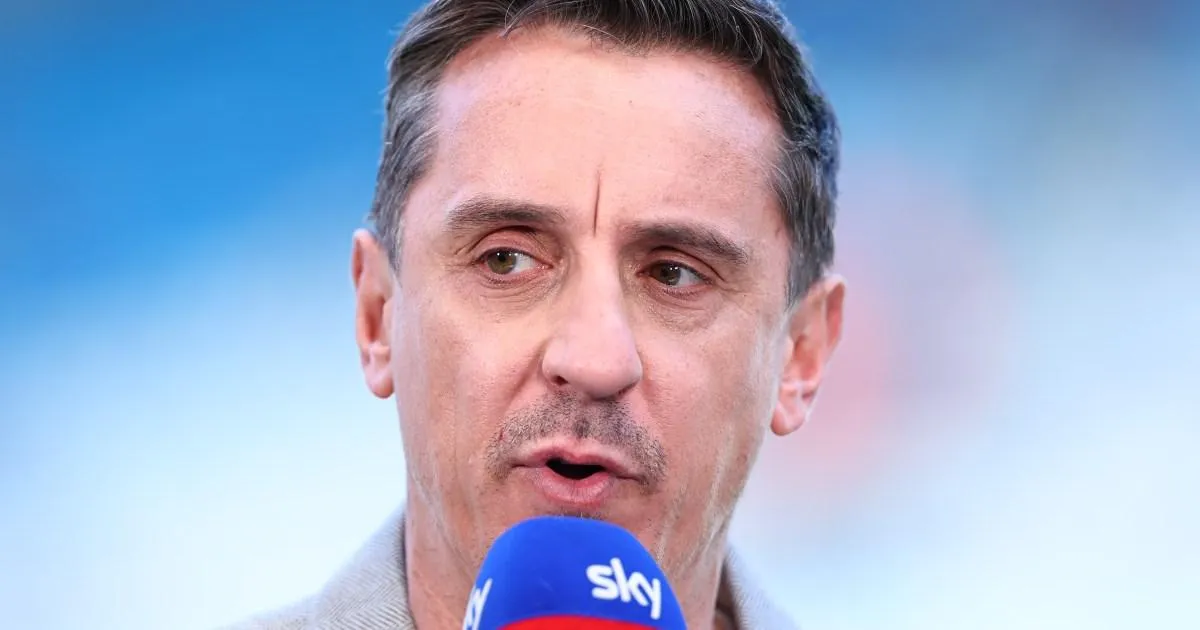
Arsenal were ‘enormously hampered’ by Piero Hincapie and Cristhian Mosquera, says Gary Neville (Picture: Getty)
Gary Neville felt Jurrien Timber was badly missed against Manchester City and Arsenal were ‘hampered enormously’ by Piero Hincapie and Cristhian Mosquera’s apparent shortcomings going forward.
Kai Havertz’s leveller – gifted to Arsenal by Gianluigi Donnarumma – had given the visitors hope of a statement victory away from home, with the forward’s effort cancelling out Rayan Cherki’s sublime opener just moment earlier.
Mikel Arteta’s men were punished for their wastefulness in front of goal in the second half, though, ensuring hosts City closed the gap at the summit to just three points.
Advertisement
Pep Guardiola’s side, who have a game in hand over Arsenal, will claim top spot should they get the better of struggling Burnley at Turf Moor on Wednesday night.
‘I believe today, I believe on Wednesday, I believed a week ago because I see them every day and I know the level that we have,’ Arteta told reporters shortly after Arsenal’s setback.
‘But today, if they need to be more convinced, I think they are now more convinced. We are talking about it in the dressing room.
Haaland scored the winner to close the gap at the top to just three points (Picture: Getty)
Arteta cut a frustrated fixture on the touchline at the Etihad (Picture: Getty)
‘It’s a new league now. We have three points of advantage, they have the game in hand.
‘Everything is still to play for. We know how much we want it and we are not going to stop!’
Advertisement
Arsenal will be eager to get their title charge back on track when they return to action at home to an out-of-form Newcastle side next weekend.
Silva went ‘above and beyond’ for City, says Neville (Picture: Getty)
Dissecting Sunday’s top-of-the-table clash on his Sky Sports podcast, ex-Manchester United and England full-back Neville made sure to single out Bernardo Silva for special praise after an ‘above-and-beyond’ display.
‘Bernardo Silva in the second half, what a performance that is just to grip a game,’ Neville said.
‘I think people sometimes become surprised when I’ve talked about Paul Scholes, in the last five or six years of his Manchester United career, gripping a football match by the scruff of the neck, controlling it and dominating the speed of it.
‘What we’ve just seen there from Bernardo Silva is absolutely above and beyond.
Advertisement
Guardiola’s men will go top with victory at Burnley on Wednesday (Picture: Getty)
‘He just beat Viktor Gyokeres on a header at the back post, he’s then pressing two minutes later, and he epitomises what Manchester City are: that experience, that know-how but also that energy, that professionalism.
‘I thought he was absolutely sensational in the second half and he just lifted it a gear.
‘In some ways, Arsenal had some good chances. Eberechi Eze hitting the post, Kai Havertz’s header at the head, what a moment that is.
‘But City just edged it with the victory but also just edged it in performance levels in the second half.’
Neville won eight league titles with Manchester United (Picture: Getty)
Neville, who backed Arsenal to win the title at the start of the season, was encouraged by the Gunners’ performance in the context of their recent performances.
But the eight-time Premier League winner is confident City have now wrestled the ‘momentum’ firmly in their favour ahead of their trip to struggling Burnley in midweek.
Advertisement
‘My takeaway for Arsenal today is that’s the best way that they could have lost,’ Neville went on.
‘I know the big talk before the match was the bottling, the freezing, the anxiety, the nervousness, the pressure… I actually think they handled the occasion very well and that’s positive.
Hincapie ‘stuck to the task’ but is limited going forward, according to Neville (Picture: Getty)
‘They didn’t come here today and not play, they didn’t come here today and have no idea. I thought they played a good game of football, one of the best performances I’ve seen here from an away team to be fair.
‘So for Arsenal, it’s as good as it can get. But you’re up against a juggernaut and that juggernaut is Pep Guardiola.
‘Manchester City have won title after title in these last seven or eight years and they’ve just stole ahead at the right time, they’ve got that momentum, and they will go in front on Wednesday. They’ll beat Burnley at Burnley.
Advertisement
‘There’s still a way to go, it’s going to be difficult now for Arsenal, but how they psychologically recover from this is going to be really important.’
Timber has been sidelined for the last month with a muscle injury (Picture: Getty)
Neville picked out Havertz for special praise, while applauding Hincapie and Mosquera for ‘sticking to the task’ and frustrating City from a defensive perspective.
But according to Neville, the full-backs’ deficiencies going forward meant Arsenal were ‘blocked off’ when it came to building attacks from the left and right flanks.
‘Arsenal were hampered enormously by their full-backs,’ he explained.
‘I thought actually they did a good job, Hincapie and Mosquera, they really stuck to their task, but they’re limited on the ball.
Advertisement
‘So if you think about Matheus Nunes and Nico O’Reilly for City, or how Jurrien Timber or Riccardo Calafiori or others are for Arsenal, they were just blocked off.
Arsenal will look to bounce back when they entertain Newcastle next weekend (Picture: Getty)
‘You haven’t got that subtlety on that ball or that ability, that safe, consistentand reliable ability, to feed the ball in, good touches and passes and getting it into your front players and midfield players because they’re centre-backs effectively, they’re not full-backs.
‘So I thought they stuck to the task really well, the two full-backs for Arsenal, but you lose a lot when you lose Timber, you lose a lot. He’s a bit of a powerhouse going forward, he links really well.
‘I’m not mentioning Bukayo Saka because every player can get an injury so Noni Madueke is there, Gabriel Martinelli is there, you can’t whinge about Saka.
‘But I think losing both of their full-backs would have cost them today in terms of on the ball and being able to get forward.’
Advertisement
Who will win the Premier League title?
Arsenal came close to equalising for a second time at the death as Havertz missed a golden chance to head home and cancel out Haaland’s earlier strike.
Neville was impressed by Havertz’s all-round performance but has no doubts the German will be ruing his missed opportunity at the death over the coming days.
‘I thought Arsenal lost the game because you can lose here. You can play well, do okay in the game and still lose here,’ he continued.
‘I’m sure Mikel Arteta will point towards chances, Eberechi Eze’s one where he hits the post, Havertz’s chance at the end… they had really good moments and they’ve not taken them.
‘The Havertz chance towards the end is a big moment.’
Simon Rose said the public had ‘unrealistic expectations’ of support and services available from local authorities
A senior Welsh council official has suggested that members of the public can have unrealistic expectations about the support and services local authorities are able to provide. Simon Rose, the housing and prevention manager at Torfaen Borough Council, used demands for social housing and the expectation of immediate GP appointments as examples of what he deemed unreasonable assumptions.
Advertisement
The council official was speaking to councillors about an early intervention and prevention strategy the authority has implemented to help manage demand, ease pressure on frontline services and improve signposting to support.
Mr Rose explained that as part of this initiative, the council – which doesn’t directly provide housing but has a statutory obligation to help those presenting as homeless – is visiting schools in an attempt to manage future demand for social housing. Always keep on top of the latest Welsh news with our newsletter.
Social housing is delivered through housing associations in Torfaen and throughout much of Gwent.
He said: “We are engaging with young people in education and very much trying to get into the mindset of young people having their own home is not easy, having a parental home with mum and dad and leaving is not easy.”
Advertisement
The council official said efforts are required around “what people can expect and what can they do for themselves.”
He explained the assumption that properties are readily available doesn’t reflect reality: “There is an expectation accommodation is available and there is a plethora of it across the borough, that’s simply not the case.
“Land is scare and affordable housing is limited.”
Mr Rose addressed the council’s adults and community scrutiny committee. He said: “In health we all expect to see a GP when we want to see one on the day, do we? Probably not. All of us probably understand that better than people in the community.
Advertisement
“I’ve sat in many doctor’s waiting rooms and seen examples of that. We’ve got to get better as public bodies to help people’s expectations and they need to be managed in a different way.”
The authority launched its Early Intervention and Prevention model in June 2025. The programme is designed to connect people with support from voluntary organisations and external services alongside the council’s own services.
It accepts referrals from the NHS, other local authority departments and schools, while the council’s customer services team can also direct individuals towards it.
Drivers who are members of The Rail, Maritime and Transport union (RMT) will walk out for 24 hours from midday on Tuesday and Thursday.
They are the first walkouts in a series of six 24-hour strikes by drivers on the Tube.
But why are the drivers striking, when are they and how much disruption can passengers expect? Here is all you need to know.
When are the Tube strikes?
Advertisement
As it stands, members of the RMT union will strike at the following times (all BST)
21–22 April (12pm Tuesday – 11:59am Wednesday)
23–24 April (12pm Thursday – 11:59am Friday)
19–20 May (12pm Tuesday – 11:59am Wednesday)
21–22 May (12pm Thursday – 11:59am Friday)
16–17 June (12pm Tuesday – 11:59am Wednesday)
18–19 June (12pm Thursday – 11:59am Friday)
Why is the strike taking place on the Tube?
Transport for London (TfL) are offering Tube drivers the chance to work a four-day week, but the RMT has rejected the offer.
Under the plans the majority of drivers would see their working week reduced from 36 hours to 35 hours – but they would work longer shifts on days they work.
But the RMT argues the working day would be too long under the proposals, risking driver fatigue and potentially compromising safety.
Advertisement
The union instead wants to negotiate a 32-hour week over four days for drivers, meaning they would work three fewer hours each week for the same salary.
TfL is currently rejecting the RMT proposals, saying drivers do not need to take up the four day week offer and could remain on a five-day week if they want.
Members of the Aslef union have also already voted to accept TFL’s four day week offer.
How much disruption is expected?
Advertisement
All London Underground lines will be affected by the Tube strikes between April 21 and 24, TfL has said.
No service is expected at all on the Piccadilly and Circle lines during the strikes.
A reduced service will run across other lines but “significant disruption” is expected.
Any services that do run will be less frequent, very busy, and you may not be able to board the first train, TfL is warning.
Advertisement
No service is expected on the Metropolitan line between Baker Street and Aldgate
No service is expected on the Central line between White City and Liverpool Street
Outside of the specific strike times disruption is also expected.
While normal services will be expected until mid-morning on the Tuesday and Thursday, services will then begin to ramp-down before the 24-hour strikes.
Advertisement
Tube services that do run on Tuesday and Thursday will finish early – you should aim to have completed your journey by 8pm, TfL has said.
On the Wednesday and Friday, significant disruption will take place on all lines until midday.
Tube services that do run will start later than normal with no service expected before 7.30am on Wednesday and Friday.
In the afternoon on those days some disruption is expected until the evenings.




















































You must be logged in to post a comment Login