The disappearance of Nancy Guthrie, mother of “Today” show host Savannah Guthrie, three weeks ago has prompted volunteers to launch their own searches in the dense desert near her home, hoping to uncover clues.
Ms Guthrie, 84, was last seen at her residence just outside Tucson on 31 January and was reported missing the following day. Authorities believe she was kidnapped, abducted, or otherwise taken against her will, with drops of her blood found on the front porch. However, little other evidence has been publicly disclosed.
The Pima County Sheriff’s Department has acknowledged the public’s concern but has urged volunteers to allow investigators to conduct their work. “We all want to find Nancy, but this work is best left to professionals,” the agency stated over the weekend.
Despite the sheriff’s request, volunteers have persisted in their efforts. A small group reported finding a black backpack on Sunday, though it did not match the brand of one identified in surveillance video released by the FBI, which showed a masked man at Ms Guthrie’s home on the night she vanished.
Advertisement
A sheriffs’ spokesperson told Tucson television station KOLD that the bag and its contents didn’t appear to be viable leads. The Associated Press reached out to the sheriff’s department for comment on Monday.
Guthrie, the 84-year-old mother of Today show star Savannah Guthrie, vanished from her Arizona home more than three weeks ago (NBC/Today via Reuters)
Two women from the group Madres Buscadoras de Sonora, or “Searching Mothers of Sonora,” who were carrying digging tools Sunday outside of Guthrie’s home, said they, too, would join the search. They posted fliers on Guthrie’s mailbox with her picture and their contact information.
Tony Estrada, the former long-time sheriff in neighboring Santa Cruz County, said volunteer searchers have good intentions in wanting to help and can serve as a force multiplier, but it’s crucial that their efforts be coordinated with law enforcement.
Advertisement
“You can’t have people all over the place looking for something and not reporting to anybody or letting them know that they’re going to be in that area,” Estrada said. “They may be trampling into things that may come out to be helpful in the future.”
Nearly all search operations for U.S. law enforcement agencies are staffed with volunteers, said Chris Boyer, executive director of the National Association for Search and Rescue.
Untrained volunteers who show up to help in a search may mean well, but experts say they could end up contaminating a crime scene.
“It’s painful for law enforcement when that happens,” Boyer said.
Advertisement
Volunteers should undergo background checks, be trained in things like administering first aid and preserving crime scenes, and work under the direction of law enforcement authorities, said Boyer, whose group provides education, certification and advocacy for search and rescue efforts across the United States and other countries.
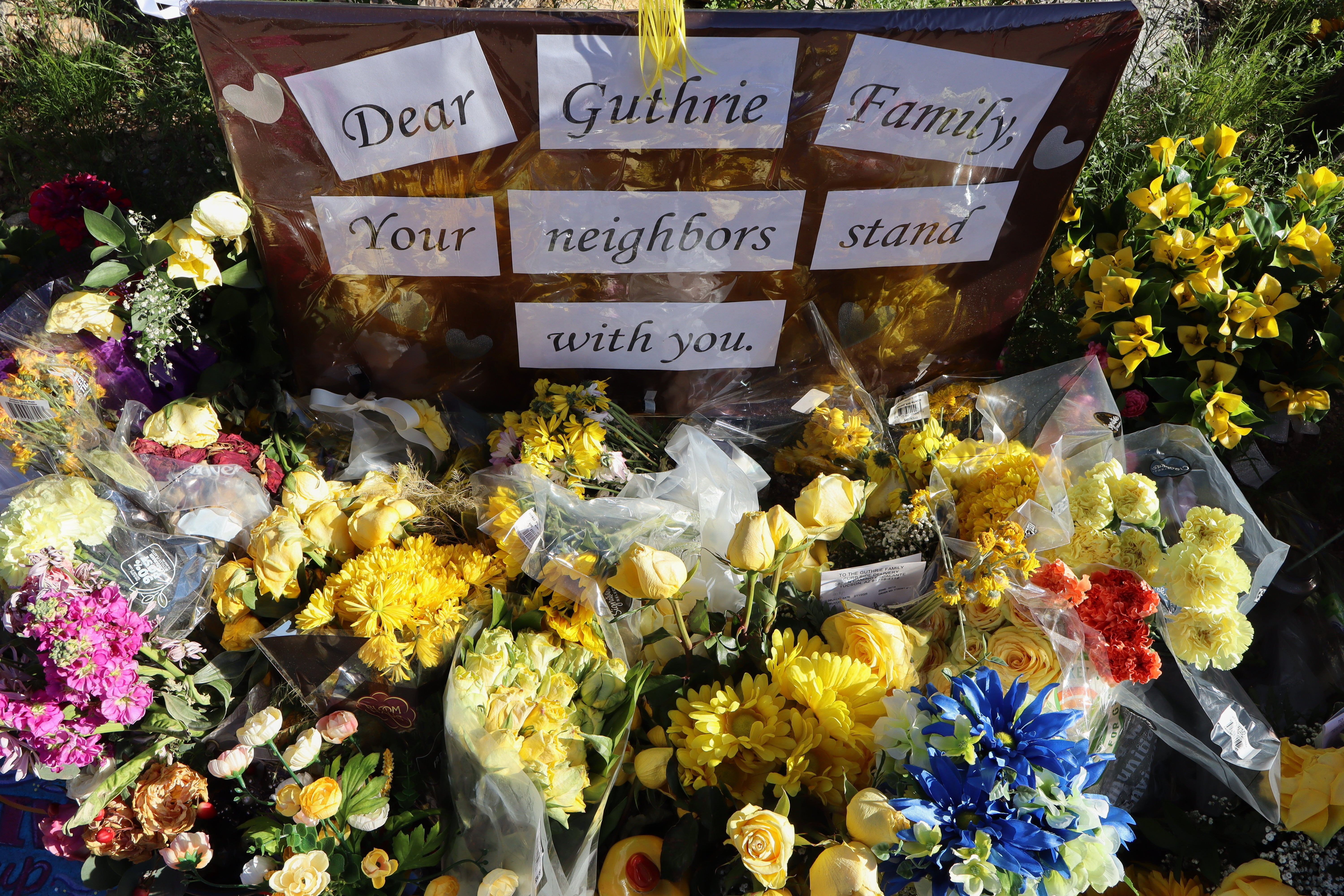
A memorial grows outside the home of Nancy Guthrie, the missing mother of “Today” show host Savannah Guthrie, Sunday, Feb. 22, 2026, in Tucson, Ariz. (AP Photo/Felicia Fonseca) (Felicia Fonseca/AP)
Several hundred people are working the Guthrie investigation, and more than 20,000 tips have been received, the sheriff’s office has said. The FBI and other agencies are assisting.
The sheriff’s office has watched around the clock lately at Guthrie’s house. It also enacted a temporary one-way flow on the road so that emergency vehicles and trash collection trucks could get through. The constant presence of news crews, bloggers and curious onlookers has drawn mixed reaction from neighbors.
Advertisement
Some appreciated the attention the case has been getting. Others have placed traffic cones and signs on their properties to keep people off.
Meanwhile, the tribute to Nancy Guthrie outside her home keeps growing, with flowers, yellow ribbons, crosses, prayers and patron saints for older adults and in desperate situations.
Aran Aleamoni and his daughter Ariana picked out a bouquet of red, pink and white flowers and placed them at the edge of Guthrie’s yard, alongside a sign that read “Let Nancy Come Home” and a statuette of an angel.
“My heart goes out to the entire family,” said Aran Aleamoni, who has known the Guthrie family for a long time. “We are all pulling for you. We’re with you in your corner.”
In the crowded air fryer market, is there truly space left to innovate?
Apparently so. The original air fryer purveyors, Ninja, recently launched an upgraded version of their popular Ninja Crispi product – intended, in case that ‘i’ didn’t make clear, to crisp your products up faster than it takes to make a cup of tea.
The first Crispi felt revolutionary when it launched in 2025, offering users the chance to watch their food cook through an all-glass container. This next-gen model feels similarly high-end, and boasts a whole selection of fun new settings, including ones for baking, dehydrating, crisping and roasting.
In fact, there are seven of them, which makes this one of the most advanced models on the market. All that, plus two non-toxic glass containers that look (according to the promotional pics) big enough to roast a whole chicken in, plus trimmings.
Advertisement
Ninja Crispi Pro Key Specs
Weight: 5.17kg
Dimensions: 29.97 cm L x 30.99 cm W x 27.94 cm H
Capacity: 5.7L
List of programmes: Max Crisp, Air Fry, Bake, Prove, Roast, Dehydrate & Re-crisp.
Range of temperature: up to 240 degrees
Vicky Jessop
First things first: the Crispi Pro is heavy. At 5.17kg, the hardest part of the set-up is levering it out of the box – probably unsurprising, given that the design prioritises heavyweight glass containers over the lightweight plastic ones you’d find in other air fryers.
In terms of design, it looks decidedly futuristic. The air fryer boasts a different design to most others on the market, in that there are two glass canisters of different sizes: a big 5.7L one, and a smaller 2.3L one (a medium size can also be bought separately, or transferred from your old Ninja Crispi).
They slot into the air fryer, and there’s a metal base beneath that can be raised or lowered to support the container when it’s hanging off the top. When standing by itself, that top looks rather like a UFO has been beamed down for the purposes of cooking sausages and frying chips.
Advertisement
That said, it’s easy to set up. The two glass containers come with the metal racks that go inside them (the better to let hot air circulate underneath): they need to be washed.
But once the logistics have been worked out, the rest is easy. The power button turns the machine on and off, the ‘temp’ button and dial adjust the temperature, the ‘time’ button and dial adjust the time, and the ‘mode’ button lets you cycle through the different modes. Simply press the dial in to start the cycle, and Bob’s your uncle.
Vicky Jessop
With all those different settings to try out, we got to work attempting to cycle through them all. The starting challenge? Cook ten sausages.
I popped them on top of the metal rack inside the glass container, without oil, and set the timer to ten minutes at ‘Max Crisp’, which felt pleasingly rock’n’roll as far as settings went.
Advertisement
The air fryer handled that with no sweat, cooking the sausages to perfection. ‘Flipping’ the items halfway through did prove slightly harder work than the generic air fryer models (which boast little pull-out drawers) – to flip the sausages, I had to manually pull my glass container out of the air fryer (it has little handles for just this purpose, as well as plastic ‘feet’ to protect your countertop), manually turn the sausages over and reinsert the container.
One big bonus to the all-glass container, though, is being able to see the food cook in real time, which was oddly mesmerising. And it’s also helpful when it comes to cleaning – there’s nowhere for the dirt to hide, and the most stubborn of stains can usually be lifted with a warm water soak.
When the time came to store the sausages, the containers also came with lids, allowing me to put them in the fridge without even transferring them to another box.
So, sausages worked fine, but the air fryer promo pics had promised me a full roast dinner. Would it manage to pull off one of those? I bought a whole chicken, a lot of roast potatoes and some veggies and set to work.
Advertisement
The chicken was cooked to perfection. I set it at ‘roast’ for 40 minutes, at 200°C, and the result was beautifully roasted, and just the right amount of tender. The potatoes went in after twenty minutes (with an additional five-minute ‘Max Crisp’ blast at the end) and again, ended up gorgeously light and fluffy on the inside, while crisp on the outside.
The vegetables? Well, they ended up being a bit more of a mixed bag. The string beans were plated crispy and delicious, but the broccoli was charred, and the carrots were raw. Next time, they might be one to boil.
One surprise winner? Reheated pizza. The Crispi Pro managed to revive my sad slice in a fraction of the time it would take an oven, while the hot air meant the stale sogginess that often permeates resurrected pizza slices didn’t even factor in here. A win.
The health food store will be closing at the end of April
A major high street brand will be closing a store in a Cambridgeshire town. Holland & Barrett has confirmed it will be closing its location on Broad Street in March on Wednesday, April 22.
Advertisement
The health food store will be closing as part of an ongoing £70 million investment to “transform” the brand’s stores. The investment will include opening and renovating over 200 new locations across the UK. The Holland & Barrett store in March will remain open as usual until April 22.
A spokesperson for Holland and Barrett said: “The Holland & Barrett store in March will close on the 22nd April. This is part of an ongoing £70 million investment into transforming our stores, which includes opening and renovating more than 200 new locations nationwide.
“In the meantime, the store is open as usual, bringing expert-led advice alongside our range of science-backed products and services to our customers. Opening hours are available on our website, which also offers our full range of wellness solutions, plus links to health and wellbeing advice, and free 15-minute one-to-one appointments with our Body Qualified Experts.”
To get more news and top stories delivered directly to your phone, join our new WhatsApp community.Click this linkto receive your daily dose of CambridgeshireLive content.
Advertisement
We also treat our community members to special offers, promotions, and adverts from us and our partners. If you don’t like our community, you can check out any time you like. If you’re curious, you can read ourPrivacy Notice.
Just because the warm weather hits, that doesn’t stop people from getting their exercise. Running has emerged in recent years as one of London’s biggest sports, with Gen Z out in front pounding the pavements on a regular basis. That’s not forgetting those prepared to go the extra mile (or 20-odd): over 1.1 million people applied to take part in the 2026 London Marathon, and there are now plans to make it a two-day event in 2027.
So it’s clear, we’re a city of runners. However, as this week brings the warmest day of the year so far, there’s a real danger of those same runners overheating during as they try and get their kilometres in.
Fortunately, with a bit of prep, it can be avoided. We chatted to ultra-runner and co-founder of Black Trail Runners, Sabrina Pace-Humphreys, and Tom Bishop, a seasoned runner who broke the record for the ironman triathlon in 2024 (previously held by Alistair Brownlee), on how to beat the heat.
More than 1.1 million applicants put their names down for the 2026 London Marathon
PA Wire
Advertisement
For Bishop, keeping cool before a run or race is key. “Starting with your core temperature as low as you can will give your body more chance to run in hot conditions, rather than starting hot and flustered,” he says.
“Try to relax, find shade and keep your warmup minimal. Of course warming up is still important, but in the heat, you don’t need to push it as much.” To lower the body temperature even further, consider sipping on an icy drink, or slushie, before you go for a run or do a race.
The most efficient way to hydrate, especially before a run, is by sipping fluids regularly during the day, rather than in one go. According to Pace-Humphreys, it’s “far more effective than panicking and overloading because you forgot. Little and often keeps your body balanced – downing huge amounts in one go won’t provide the same benefits.”
If you want, you can tuck some fabric into the back of your sunhat to form a protective barrier for your beck and shoulders. Don’t forget sun cream too: skincare brand Dussl has a good selection of factor 50 sun creams that also double up as moisturisers, block pollution, and will stay on through the sweat of a hot run.
Advertisement
A person runs across the Millennium Bridge in London
Jonathan Brady/PA Wire
One of the biggest dangers during a hot run is – you guessed it – overheating, which comes with symptoms like dizziness, sickness and a rapid heart rate. In hot weather, it’s important not to push yourself: instead, listen to your body.
“Your body will tell you what it needs but only if you have the patience to listen,” Pace-Humphreys says. “Whether it’s watching your heart rate zones creep into the red, or just sensing that things feel harder than they should, tune in. Slow down to a jog or alternate walking and running – there’s no shame in preserving energy to avoid burnout.”
It’s also important to know what to do when you are overheating. “If you feel your body temperature rising, pull it back and breathe through it,” she says. “Give box breathing a go – inhaling for 4 seconds, holding for 4 and exhaling for 4. This can help calm your mind, reduce anxiety and lower your heart rate.”
Advertisement
In the heat, appetite can dip – which makes staying hydrated and properly fuelled tricky, too.
“Liquid carbs can be a real help. Whether they’re shop-bought or even just half juice, half water, having a liquid option can help keep your energy up when solid food isn’t appealing,” Pace-Humphreys says.
Plus, do invest in some electrolytes, which will replace the essential minerals and salts that your body is sweating out. Don’t overdo it, though: “overdoing electrolytes can cause frequent toilet stops, nausea and diarrhoea – I’ve been there! If that happens, ease off, dilute with water, and give your body time to recalibrate.”
Make time to cool down afterwards
Advertisement
Once you’ve finished the run, that’s not it. Give the body time to cool down. Sit, or stretch it out, in the shade, and let the breath return to normal. And use the cooldown as a chance to get some water in you – hydrating little and often, of course.
Passengers, regardless of airline, may need to be prepared for some changes
Passengers set to fly soon with easyJet have been urged to stay prepared ahead of changes to travel. On an update on its website on April 1 of this year, easyJet notes that in an “important update”, there are “new border checks may affect queue times.”
Advertisement
It explains: “Airports across Europe may experience longer queues at passport control whilst the new European Entry/Exit System (EES) border checks are being completed. This will mean you may need to have your biometrics taken including your face and fingerprints scanned.”
With this in mind, it is wise for passengers to be patient as the new system is rolled out.
The budget airline suggests:
Plan your travel to and through the airport, as you may experience longer queues
If you need to go to Bag Drop, go there as soon as it opens
Make your way through security as early as possible
There may be additional checks at passport control before your gate
Head to the gate or boarding area as soon as it’s announced
Make sure you have the correct documents to travel
You may experience longer queues in your arrival airport
What is EES and why is it being introduced?
An EES-dedicated website says: “The new Entry/Exit System (EES) started to be operational on 12 October 2025. European countries using the EES are introducing the system gradually at their external borders. This means that data collection will be gradually introduced at border crossing points with full implementation by 10 April 2026.”
Advertisement
It is being introduced as the EES:
Modernises border checks and gradually reduces waiting times at the borders.
Easily identifies non-EU nationals who do not fulfil the conditions of entry and stay or those who stay longer than permitted in the Schengen area.
Enhances the security of Europe’s borders.
Which European countries use the EES?
Austria
Belgium
Bulgaria
Croatia,
Czechia
Denmark
Estonia
Finland
France
Germany
Greece
Hungary
Iceland
Italy
Latvia
Liechtenstein
Lithuania
Luxembourg
Malta
the Netherlands
Norway
Poland
Portugal
Romania
Slovakia
Slovenia
Spain
Sweden
Switzerland
You can find out more information about EES here. You can also read about it online via the GOV.UK website.
What horse racing fans can expect when they want refreshment at the Grand National meeting
15:01, 08 Apr 2026Updated 15:01, 08 Apr 2026
The Randox Grand National Festival is about to get underway. From Thursday, April 9 to Saturday, April 11, thousands of racing enthusiasts will flock to Aintree Racecourse for three days of top-class horse racing, culminating in the main event.
As the finishing touches are put to the venue, we can reveal some of the beverage prices for the festival. There are numerous bars throughout the racecourse, so drink prices may differ depending on your choice of refreshment.
Below, we’ve outlined the typical prices for draught, bottled and canned drinks, wines, champagne and spirits. Some outlets vary by approximately 50p…
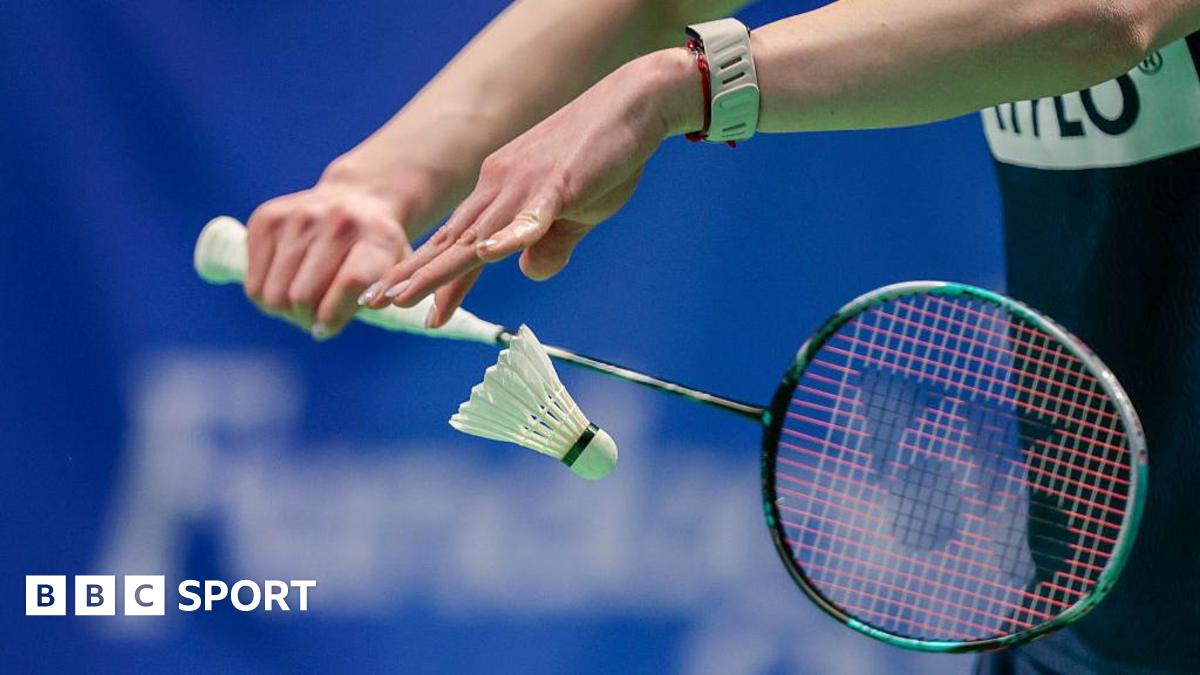
Traditional shuttlecocks are made of 16 duck or goose feathers – each taken from the same wing to give the correct flight and spin as feathers from different wings curve differently.
China is the leading producer of shuttlecocks, but poultry production in the country has decreased in recent years because of outbreaks of bird flu and as people return to eating pork following an outbreak of African swine fever in 2018.
The sport has also grown in popularity in China, leading to increased demand.
Last year, the BWF played down its concerns about the shuttlecock market, while explaining its strategy to explore alternatives.
Advertisement
“We are aware of the global supply chain challenges and subsequent increases in feathered shuttlecock prices impacting badminton communities around the world,” BWF secretary general Thomas Lund said in a statement at the time.
“Our testing and trialling programmes for the production and introduction of competition and social-use synthetic shuttlecocks in collaboration with the manufacturers remains in place and is firmly part of our sustainability strategies for the future.”
QVC, owned by the QVC Group, was founded in 1986 in the US and has since grown into a multinational corporation, specialising in televised home shopping.
Launching in the UK in October 1993, QVC became the UK’s first full-time home shopping channel.
Now, the channel is on the brink of collapse, with it now in discussions with creditors after reports suggest it missed a regulatory filing deadline.
Advertisement
What is the QVC channel?
QVC UK was originally 20% owned by Sky, before it became a wholly owned subsidiary of the US broadcaster in 2004.
In its early years, it turned over a net profit of more than £12 million and has sold various products from cooking supplies to clothing.
In 2008, QVC UK launched a multiscreen video service with three video streams available to Sky viewers via the red button:
QVC Live
QVC+1
Today’s Special Value presentation
QVC UK also operates three channels made up mostly of rerun segments from the live channel, QVC Beauty, QVC Extra and QVC Style.
The main channel broadcasts live 364 days a year from 9am to 1am, with rerun segments from the live channel shown during other hours and Christmas Day.
Shopping channel QVC at risk of collapse after 32 years
QVC Group is reportedly late with a regulatory filing deadline and is in discussions to voluntarily restructure its debt, according to Bloomberg.
Advertisement
In a filing with the US Securities and Exchange Commission, the parent company of QVC and HSN said it was unable to submit its annual financial report on time “without unreasonable effort or expense”.
QVC Group CFO Bill Wafford has confirmed that uncertainty linked to those negotiations has delayed the preparation of its financial statements.
The company has also warned about a “substantial doubt” about its ability to continue operating.
Advertisement
The QVC Group previously highlighted $2.9 billion (£2.2 billion) in debt due in October.
QVC Group intends to file its delayed results within 15 days, Broadband TV News reports.
Recommended reading:
It has also been rumoured that any potential bankruptcy filing is expected to be a Chapter 11 protection.
Advertisement
This would allow the company to restructure its debt while continuing operations, rather than liquidation.
Newsquest has contacted The QVC Group for comment.
Are you a fan of shopping channels like QVC? Let us know in the comments.
The council said the plans would provide ‘poor standards’ of homes for future occupiers
Plans to build four new homes have been refused due to “cramped living” conditions. Fern Homes proposed to build the homes at Gaul Tree Farm in High Road, Guyhirn, Wisbech.
Advertisement
The developers said the plans would provide “four good-sized dwellings for private use within the village assisting in community cohesion”. Off-road parking was also proposed, as well as landscaping.
Fenland District Council has refused the plans. FDC planning officers said it went against a development requirement to “deliver high quality environments by promoting high levels of residential amenity”.
It said the homes would provide a “poor standard of accommodation for future occupiers”. The council added: “The internal layout and floorspace of the dwellings would result in a cramped living arrangement, and the level of private amenity space provided is inadequate.
“These deficiencies would result in a substandard living environment, harmful to the residential amenity of future occupants.” The council also said the developers failed to provide a specific flood risk assessment.
Advertisement
The planning officer added the application “fails to demonstrate, through a robust and site-specific flood risk assessment and breach analysis, that the development would be safe for its lifetime, without increasing flood risk elsewhere.”
Without a report, the officer said it didn’t demonstrate that future occupiers would be “safe from flood hazards”. Plans have previously been refused on the same site.
In 2024, plans were submitted to build seven homes on the site. The council refused on the basis it would provide a “poor outlook” for future homeowners, proposed gardens weren’t big enough, and there would be “potential noise and disturbance given the lack of separation” between the homes.
Dogs Trust Darlington has issued a warning that even mild temperatures pose a danger to dogs, with around 75 per cent of heatstroke cases linked to exercise and around two-thirds occurring after everyday walks.
Charlie Dobson, senior veterinary surgeon at Dogs Trust, said: “For many of us across the country, the arrival of warmer weather is a welcome change, but it is important to remember that this weather can bring real dangers for our dogs.
“Even the springtime sunshine expected over the next few weeks can cause serious issues, especially for flat-faced breeds or dogs with underlying health conditions.
Advertisement
“The best thing we can do for our pets is to avoid walking them during the hottest parts of the day, provide plenty of fresh water and shade, and always monitor them closely for early symptoms of heatstroke, even during indoor play when it’s warm outside.
“If you notice your dog is overheating, cooling first aid before transporting them to the vet can be lifesaving.
“Warmer weather can be wonderful for us and our four-legged friends, as long as we stay aware and take the right care to keep everyone safe.”
Dogs Trust warns that heatstroke can affect dogs at any time of year, not just during extreme summer heat.
Advertisement
Symptoms include heavy panting, lethargy, excessive drooling, uncoordinated movement, and vomiting or diarrhoea.
Certain breeds, especially flat-faced dogs like Pugs and French Bulldogs, are at greater risk, along with older dogs, overweight dogs, and those with thick coats or underlying health conditions.
If you suspect a dog is suffering from heatstroke, Dogs Trust advises stopping activity, moving the dog to a cool area, offering drinking water, and beginning urgent cooling with cold water before transporting to a vet.
Owners are also reminded never to leave dogs alone in cars, as temperatures can rise rapidly and become fatal.
Advertisement
On a 22°C day, the temperature inside a car could rise by 11°C in just 10 minutes.
If you see a dog in distress inside a vehicle, call 999 immediately.






















































You must be logged in to post a comment Login