Plans have been granted by Peterborough City Council that will see commercial buildings in New England demolished to make way for 11 new residential flats.
Advertisement
Surjit Singh Developments Ltd’s planning application request to remove the warehouses which currently occupy much of the site at 74-80 Crown Street and replace them with six one-bedroom flats to the rear of the land. Permission was granted on April 22.
The development will also see No. 80 Crown Street, which is a Non Designated Heritage Asset, internally renovated to accommodate three one-bedroom flats.
At the front of the site will be a new building, designed in keeping with the architectural character of No. 80, which will provide an additional two flats.
PiP Architects, who presented a design and access statement on behalf of the applicant, said: “The new proposal respects the existing, whilst enhancing the local architecture by providing new high-quality, safe and sustainable homes to the neighbourhood.”
Advertisement
Along with presenting an “opportunity to establish a more harmonious relationship with the surrounding dwellings,” they suggested the development would also aid in “minimising the likelihood of noise, disruption, and environmental impact.”
The exterior of the property will be landscaped and offer 11 on-site parking bays for residents and three additional bays for visitors. Existing hard-paved areas will be transformed into communal green spaces to “enhance the urban environment and promote sustainable living.”
Green roofs will also feature to further support biodiversity and help manage rainwater sustainably.
Private Eye mocked Donald Trump with its biting new cover, riffing on two big headlines.
The satirical magazine’s latest front page referenced both the shooting at the White House Correspondents’ Dinner and King Charles III’s ongoing visit to the United States.
Its headline read: “Royal Visit Goes Ahead Despite Shooting.”
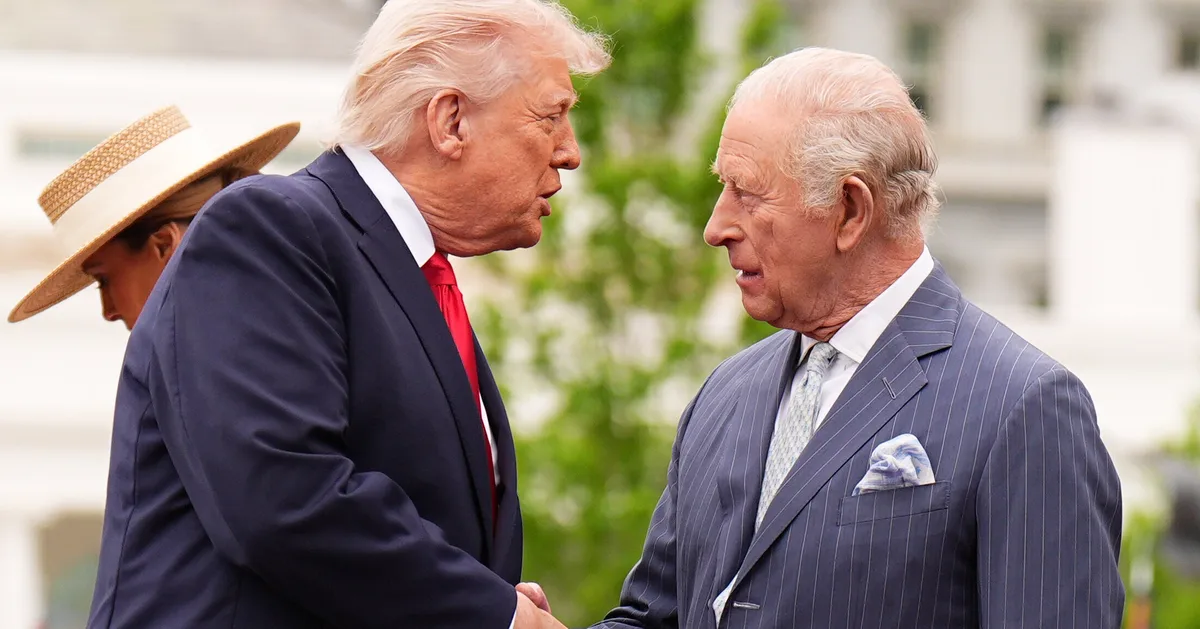
Beneath it, an image of Trump shaking hands with the British monarch featured a speech bubble from the president saying: “I had a narrow escape from a madman.”
Donald Trump, left, shakes the hand of King Charles III after speaking during the ceremonial welcome on the South Lawn of the White House on day two of the State Visit of King Charles III and Queen Camilla.
The magazine has, for years, used its cover to mock and criticise Trump and his administration. Most recently, it has noted Vice President JD Vance’s failure to sway the Hungarian election and slammed the president’s war on Iran.
The 36-year-old has taken three weeks off after sensationally defending his Masters title at Augusta National earlier this month
17:10, 29 Apr 2026Updated 17:14, 29 Apr 2026
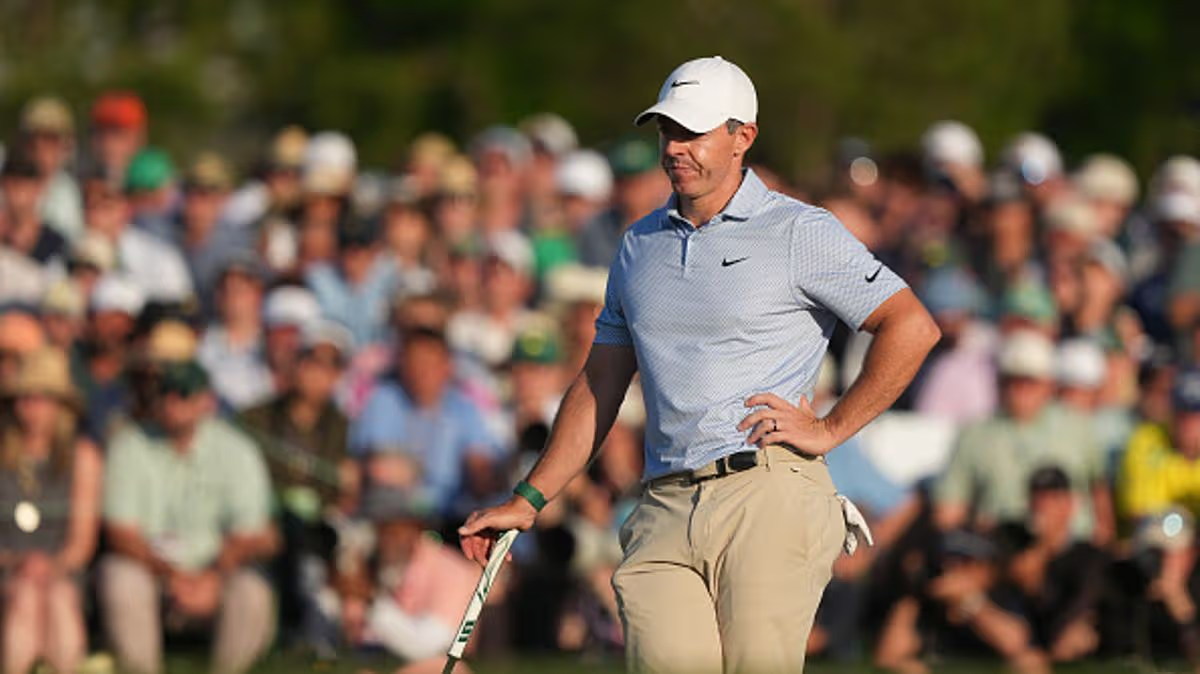
Rory McIlroy will make his long-awaited return to competitive golf at next week’s Truist Championship at Quail Hollow.
The 36-year-old has taken three weeks off after sensationally defending his Masters title at Augusta National earlier this month.
There had been growing speculation that he might not tee it up again until next month’s PGA Championship – the season’s second major – following his decision to give this week’s Cadillac Championship a miss.
Advertisement
But it has been confirmed that the Holywood man will tee it up at Quail Hollow in North Carolina, a course McIlroy has won on four times previously, including his first ever PGA Tour title in 2010.
It will be a chance for McIlroy to shake off any rust before the PGA Championship which will get under way the following week at Aronimink Golf Club in Philadelphia.
It comes as US President Donald Trump paused his address during a White House state banquet to single out McIlroy, commending the golfer for his “unconquerable courage”.
The president was delivering remarks during a state visit by the King and Queen when he stopped mid-speech to acknowledge McIlroy, who was amongst the guests at the dinner.
Advertisement
Trump declared: “The entire world has been uplifted by this distinct and special character we share. This unstoppable daring, this unconquerable courage. It really is, it’s unconquerable.
“Speaking of that, where’s Rory McIlroy? Can you stand up Rory, will you, please?”, reports Belfast Live.
“That was unconquerable courage. That was very good Rory. I don’t know if that helps him talking about how wonderful the speech… but I had to interrupt my speech because I watched that man win a tournament that was a tough one.
It came after a high-speed pursuit, which started in Harrogate and continued into Ripon, shortly after 9.15pm on Tuesday (April 28).
A 37-year-old man was arrested on suspicion of theft of a motor vehicle, failing to stop, driving whilst disqualified and without insurance, dangerous driving, theft and driving under the influence of drugs.
Recommended reading:
Advertisement
He remains in custody for questioning.
A spokesperson for North Yorkshire Police said: “We received information that a suspected stolen vehicle from Harrogate had been spotted in the area, and officers were quickly deployed.
“The car was swiftly sighted by one of our Roads Policing Units, but failed to stop, leading to a pursuit.
“With support from our “eyes in the sky” at the National Police Air Service (NPAS), officers maintained the pursuit despite the driver’s attempts to get away.
Advertisement
“It continued into Ripon, where a stinger was successfully deployed, bringing the vehicle to a stop.
“The driver made off on foot, but a 37-year-old man was detained a short time later.”
The decision by the United Arab Emirates to leave the oil producers’ cartel Opec after 59 years is more than a symbolic break. It highlights a growing divide among major oil producers over how to respond to a changing energy landscape, and will weaken the group’s ability to manage global supply.
In the short term, the impact of the UAE’s exit will be limited. The world still needs every available barrel of oil, and the UAE accounts for some 3-4% of global production. But the forces behind the decision are more significant than the move itself. They are both economic and political – and the war in Iran helped the two align.
For years, the UAE has been investing heavily to expand its oil production capacity, spending around US$150 billion (£111 billion) to push its potential daily output close to 5 million barrels. But Opec quotas have prevented it from fully exploiting that capacity. Actual production has remained well below its potential at about 3.5 million barrels a day (mbd), with some 5 mbd capacity, constrained by the Opec quota system designed to restrict supply and support prices, generally shaped by the de facto leader, Saudi Arabia.
This has created a tension. Why invest to produce more oil if you are not allowed to sell it?
Abu Dhabi’s answer reflects a different economic model. The UAE can balance its budget at much lower oil prices than Saudi Arabia (just below $50 v Saudi $90 a barrel or more), giving it less incentive to restrict output. Instead, it has prioritised maximising its oil exports.
That strategy is also shaped by expectations about the future. As countries such as China accelerate the electrification of transport, the hitherto steady and reliable demand for oil is slowing and becoming less reliable. Over time, it is likely to plateau. UAE is also well ahead of the Saudis in energy transition – and maintain their net zero target as 2050, compared to the Saudi 2060.
From the UAE’s perspective, the bigger risk is not falling prices, but leaving oil in the ground that may never be sold.
Advertisement
Shifting geopolitics
The timing of the exit is not just about economics. It also reflects shifting political and security calculations, particularly after the UAE came under heavy, sustained attack during the war in Iran.
In Abu Dhabi, there is a growing sense that regional institutions and partnerships, such as the Gulf Cooperation Council (GCC) offered limited support during that period. Anwar Gargash, a senior presidential adviser, told reporters that: “The GCC’s stance was the weakest historically, considering the nature of the attack and the threat it posed to everyone,” adding that he “expected such a weak stance from the Arab League … But I don’t expect it from the GCC, and I am surprised by it.”
That experience has reinforced a more independent foreign policy. The UAE has strengthened ties with the US and Israel, building on the agreement it signed as part of the 2020 Abraham accords. The relationship with Israel is seen not just an economic and security partnership, but as a channel for influence inside the White House.
At the same time, relations with Saudi Arabia have become more strained, with differences over regional conflicts in Somalia and Yemen and economic strategy increasingly visible. Leaving Opec is both an economic decision and a geopolitical signal.
Advertisement
The UAE’s departure also raises questions about the future of Opec itself. The group once controlled more than half of global oil production. Today, its share is much smaller (no more than 35%), and internal divisions over production quotas are more pronounced. Quotas, long the core of its strategy, are increasingly seen as uneven constraints rather than shared commitments.
UAE energy minister, Suhail Al Mazrouei, explains the decision to leave Opec.
Saudi Arabia remains the only member with significant spare capacity, giving it outsized influence. The result is an organisation that still matters, but is less cohesive than it once was.
Not necessarily a win for the US
Some have hailed the UAE’s exit as a victory for Donald Trump, who has repeatedly criticised Opec for keeping oil prices high. A weaker OPEC would indeed lead to higher output and lower prices at the pump.
Advertisement
But sustained lower prices would also put pressure on higher-cost producers, including the US oil patch, which has been one of Opec’s main competitors in recent years. It benefited from the cartel’s restraint when it came to capping oil production. So what now looks like a geopolitical win could, over time, become an economic challenge.
For now, I believe that the UAE’s exit will not dramatically reshape oil markets. Demand remains strong enough to absorb additional supply, particularly as countries rebuild their inventories when Iran reopens the Strait of Hormuz. But the deeper significance lies in what the decision reveals.
Oil producers are no longer aligned around a single strategy. Some are trying to manage scarcity and keep prices high. Others are racing to monetise their resources before demand peaks and they end up with stranded assets. That divergence is likely to grow – and may ultimately prove more consequential than any single country leaving the cartel.
We may be entering a new age where oil is going to play a much lesser role in our lives.
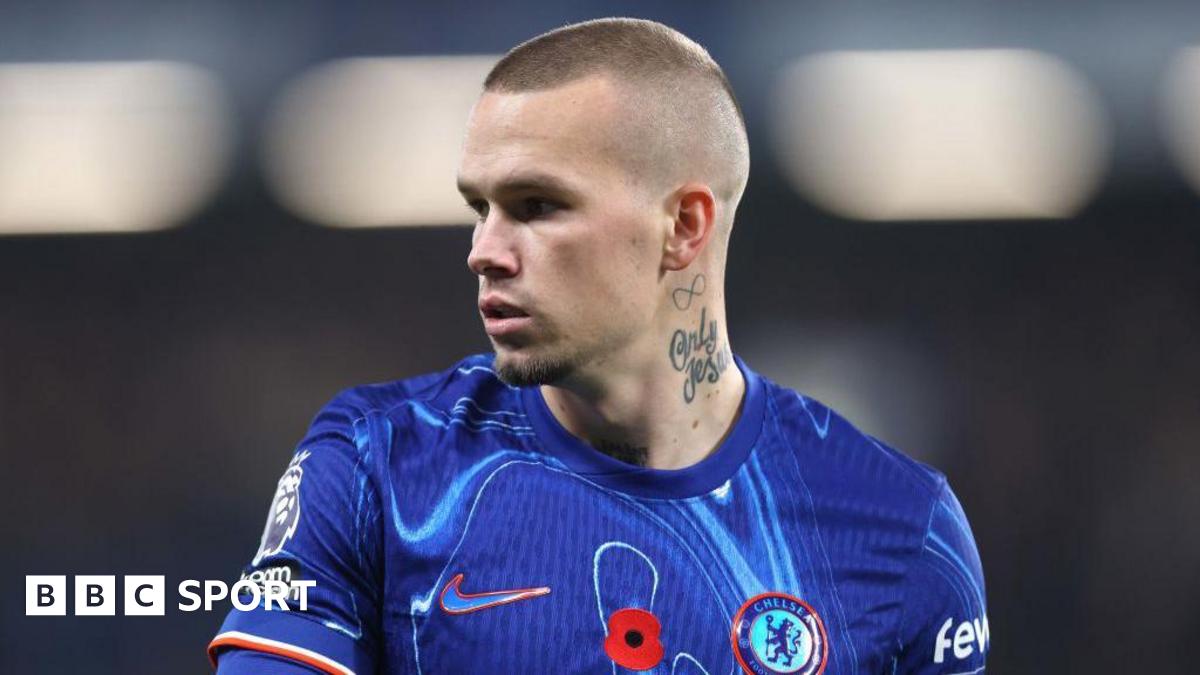
Chelsea winger Mykhailo Mudryk has lodged an appeal with the Court of Arbitration for Sport against a four‑year drugs ban imposed by the Football Association.
The Ukraine international, 25, has been sidelined for nearly 18 months after an “adverse finding in a routine urine test” led to a provisional suspension in December 2024.
Charged in June 2025, Mudryk was subsequently handed the maximum four‑year ban by the FA, according to a spokesperson for the Court of Arbitration for Sport, the highest legal authority in sport.
The FA has never disclosed details of the case.
Advertisement
In such cases, bans are typically backdated to the start of the provisional suspension, meaning his current return date would be around December 2028.
However, an appeal has now been lodged with the Court of Arbitration for Sport (Cas) in Switzerland, with sources close to the player hopeful he could return to action as early as next season.
In a statement to BBC Sport, Cas said: “Cas confirms it has received an appeal by Mykhailo Mudryk against the FA, filed on 25 February 2026. The Parties are currently exchanging written submissions, and a hearing is yet to be scheduled.”
The BBC understands Mudryk came into contact with the cardiovascular medication meldonium, which can increase respiratory capacity and stamina, while on duty with the Ukraine national team in October 2024.
In his only public statement when his provisional suspension began, Mudryk described his “complete shock” and said he had “never knowingly used any banned substances or broken any rules”.
Mudryk is being defended by Morgan Sports Law, the firm who worked with former Manchester United midfielder Paul Pogba during his doping case while playing for Juventus, as well as boxer Tyson Fury and cyclist Chris Froome during their respective investigations.
He is understood to want to return to playing football this year and is keeping fit by training at non-league Uxbridge FC with a private coach and having hired goalkeepers to work with.
Advertisement
Chelsea declined to comment as they wait for the process to take its full course and the FA said it is unable to comment on an ongoing case. Mudryk’s legal team has also been contacted for comment.
<a href='https://news.sky.com/story/ukraine-war-latest-eu-formally-approves-ukraine-loan-teenagers-hired-for-school-terror-attacks-by-russia-detained-12541713?postid=11607478#liveblog-body'>Ukraine 'clearly has the Kremlin rattled'</a>
<a href='https://news.sky.com/story/ukraine-war-latest-eu-formally-approves-ukraine-loan-teenagers-hired-for-school-terror-attacks-by-russia-detained-12541713?postid=11607478#liveblog-body'>Ukraine 'clearly has the Kremlin rattled'</a>
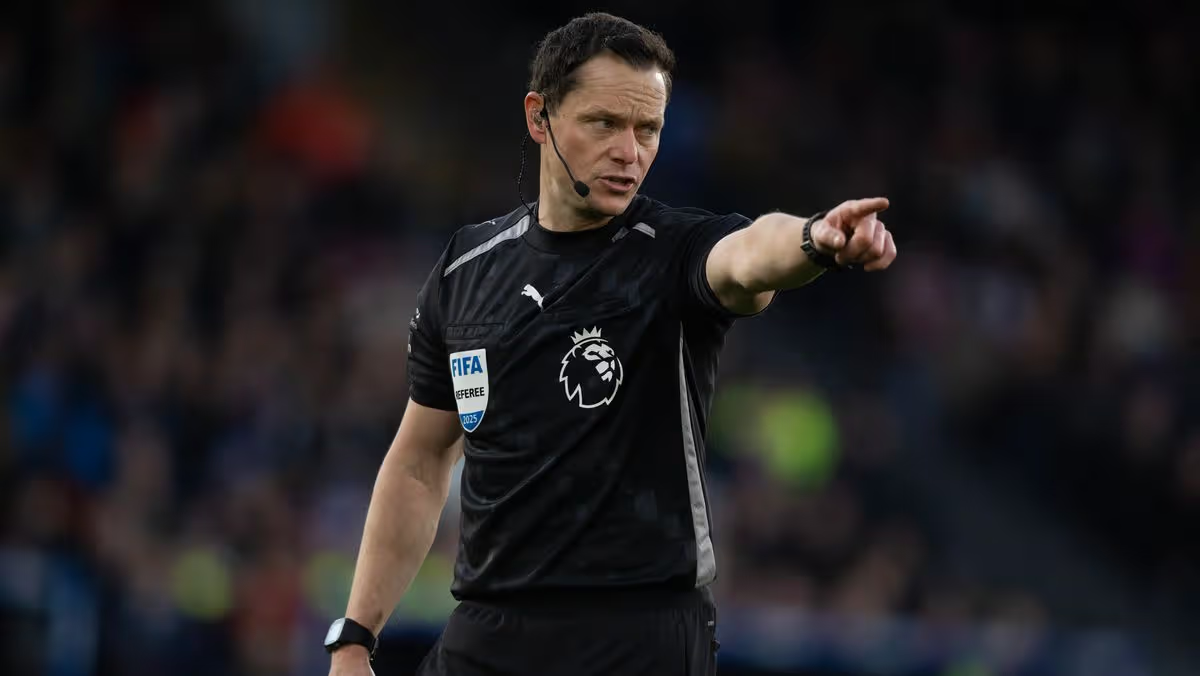
The referee for the FA Cup final next month has been announced with Darren England taking charge of the Wembley showpiece for the first time whilst his assistant will make history
Darren England has been announced as the referee for the FA Cup final – taking charge of the game for the first time ever – whilst his assistant will make history at Wembley.
Advertisement
Last weekend played host to the two semi-finals leaving Manchester City and Chelsea to fight out the final having seen off Southampton and Leeds respectively.
The officials for the clash on May 16 have now been confirmed with England leading them. Tim Wood and Akil Howson will serve as his assistant referees, with the latter becoming the first black official to feature in an FA Cup final. The fourth official will be Sam Barrott.
Potentially having a major role will be VAR and Peter Bankes has been handed that role with Nick Hopton his assistant. Last season a VAR decision to not send off Crystal Palace goalkeeper Dean Henderson proved to be a massive call.
City were beaten by the Eagles, edging them out 1-0, but Pep Guardiola was left fuming and confronted Henderson at the full-time whistle. He did not want to discuss the incident afterwards, saying only: “I’m not the referee.”
England has refereed losses for both Chelsea and City this term. He was the man in the middle when Guardiola’s side were beaten at Brighton early in the season, but they have won two of the four games he’s officiated. The Blues meanwhile had England referee their losses at Leeds and Arsenal.
It was in the loss at the Gunners that England sent-off Pedro Neto – one of ten red cards received by Chelsea this season. He’s brandished eight yellows to Blues’ players in his four games.
Guardiola has led City into a fourth successive FA Cup final. Since their victory in 2023 they’ve twice been beaten finalists – losing to Manchester United and Palace. Chelsea meanwhile have not claimed FA Cup glory since 2018. Their last final appearance was five years ago.
Victory for the Manchester outfit could yet form part of an iconic domestic treble. They’ve already claimed the Carabao Cup and are looking to edge out Arsenal in the Premier League title race. Guardiola previously won the domestic treble back in 2019.
Join our new WhatsApp community and receive your daily dose of MirrorFootball content. We also treat our community members to special offers, promotions, and adverts from us and our partners. If you don’t like our community, you can check out any time you like. If you’re curious, you can read our Privacy Notice.
Sky Sports, HBO Max, Netflix and Disney+ with Ultimate TV package
Advertisement
This article contains affiliate links, we will receive a commission on any sales we generate from it. Learn more
Sky has upgraded its Ultimate TV and Sky Sports bundle to now include HBO Max, Netflix, Disney+, discovery+ and Hayu, as well as 135 channels and full Sky coverage of the Premier League and EFL.
Sky broadcasts more than 1,400 live matches across the Premier League, EFL and more with at least 215 live from the top flight alongside Formula 1, darts and golf.
Every once in a while, I see a post on social media that makes me realise I know nothing about the world.
Last week, that question came from a Redditor who wanted to know why new builds sometimes have bricked-up windows (turns out it’s a mixture of manufactured charm and, sometimes, council rules).
And now, another, equally mind-melting X post has come to my attention: “What is the purpose of this part of a towel?” software engineer Nate McGrady asked, sharing a circled photo of the non-fluffy stripes on the bathroom textile.
This, I thought, is what my press privileges exist for. So, I reached out to Courtney Cole, an interior designer at TileCloud, about what’s really going on here.
Advertisement
They’re called “dobby borders”
“This part of the towel is actually called a ‘dobby border’ – which so many people don’t know,” Cole explained (I certainly didn’t).
King Towel describes a “dobby border” as a strip or band on the towel which has no loops or pile on it – in other words, the non-fluffy bit.
“Because it’s woven more closely than the rest of the towel, it will help with fraying and will keep the edges from curling over time,” Cole continued.
Advertisement
“This means that the towel with the dobby border will likely last longer than those that don’t have it.”
There’s also a branding-friendly reason for the addition, the interior designer told HuffPost UK.
“It also gives manufacturers a structured area for branding and embroidery, which is why you’ll see logos and monograms there with hotels and other places like spas,” she said.
And lastly, there’s the matter of storing them to consider. The interior designer suggested towels without this border don’t stack as well, “which anyone who’s ever tried to make their linen closet look perfect knows all too well”.
Advertisement
So basically, it’s down to structural integrity, branding, and better stacking.
X users had other theories…
Responding to the original post, X users shared their – erm – questionable theories.
“The purpose of it is to annoy me and to make me feel grateful for the other side of the towel that actually dries your hands all the way,” another commenter wrote.
Sencos – special educational needs coordinators – play a vital role in maintained mainstream English schools, nursery schools and sixth forms. If you are a parent, you may encounter them if you have concerns about your child’s progress or the support available, or during review meetings. Children may meet them through assessments, pupil interviews or informal check-ins.
They are teachers who take on additional leadership responsibility for special educational needs and disabilities across the school. In many cases, they continue to teach classes, but in larger schools the role is increasingly non-class based due to its scale and demands.
Despite its importance, the Senco role is often hampered by excessive workload, inconsistent status – many Sencos are still not part of school leadership teams as this is not a requirement in legislation – and a limited understanding of its scope. These factors affect both effectiveness and retention.
The government’s recent policy proposals for special educational needs and disabilities support make frequent mention of Sencos and the role they play in schools. As a former Senco, and as someone who has worked in Senco professional development for almost twenty years, I have scoured the proposals to understand what they mean for the profession.
Advertisement
Statutory support
The reforms – still under consultation and not yet law – formalise much of what Sencos already do. However, they also signal a profound shift. The role is set to become more data-driven and more central to whole-school development than before.
Sencos oversee Sen Support – internal school provision for learners with special educational needs. They also oversee support for children with education, health and care plans (EHCPs). EHCPs are legal documents issued and funded by local authorities for children with more complex needs. They outline a child’s needs, required provision and targeted outcomes across education, health and care.
Sencos often are not part of a school’s senior leadership team. fizkes/Shutterstock
The recent policy proposal sets out a system of school-based individual support plans for every child and young person identified with special educational needs. These digital plans would be statutory, monitored and reviewed annually at minimum.
Sencos would therefore be responsible for ensuring that each individual support plan accurately identifies any barriers to learning (such as sensory needs or a specific learning difference), and records support and reasonable adjustments (such as adapted materials or additional processing time). While the terminology may be new, this practice is not. Individual support plans largely formalise what Sencos already do for learners at Sen Support.
Advertisement
However, the statutory nature of individual support plans represents an expansion of legal accountability, borrowing from policy implemented in recent years in Wales. Whereas EHCPs apply to a small proportion of pupils in schools, statutory individual support plans could apply to a greater percentage of the school population.
This risks creating a compliance-heavy model of inclusion. Sencos may spend increasing amounts of time on producing evidence rather than working directly with teachers and families.
EHCPs will remain for a smaller number of children – those with the most complex needs – who will receive specialist support packages. The definition of complex needs has not yet been defined in the policy proposals, which may be an area for contention.
By tightening access to EHCPs while expanding individual support plans, the reforms shift the pressure point from local authorities to schools. Sencos may become the public face of a rationed system. They will need to mediate between school resources, parental expectations and local authorities, as well as colleagues working in health and care.
Advertisement
There is the risk that trust in Sencos may decline unless schools are given the capacity to deliver the promised support. At the same time, Sencos will have to navigate families’ worries about tighter access to EHCPs.
Overseeing mainstream support
A central message of the policy proposals is that mainstream education must be strengthened in terms of its ability to include pupils with special educational needs and disabilities. This is a laudable aim, but it requires significant investment in teacher expertise, curriculum flexibility and environmental adaptation.
For Sencos, it will mean leading whole-school early identification and targeted support. They will need to build teacher confidence in adaptive and inclusive education and provide more robust evidence when specialist placements are requested. They will lead in helping families school provision. This shift may increase contested decisions and appeals, with Sencos becoming the key point of contact for families navigating changing legal boundaries.
One of the government’s most ambitious proposals is the Experts at Hand service. This is designed to give schools quicker access to educational psychologists, speech and language therapists and other specialists. It’s likely to place the Senco at the centre of multi-agency work, coordinating referrals, implementing specialist advice and contributing to wider planning.
Advertisement
What’s more, every member of school staff will complete a national special educational needs training programme. It’s likely that Sencos will take a lead in delivering much of this professional development. This will elevate the Senco as a driver of whole-school pedagogy.
The proposals amount to a significant widening of the Senco remit. Their success hinges on whether the Senco role is finally given the leadership status, time and support it requires. Without structural changes such as protected leadership time, a place on leadership teams, administrative support and clear career pathways, the reforms risk accelerating burnout. However, with the right support and sufficient resourcing, Sencos can be leaders shaping the cultures, systems and partnerships that help every child to learn and flourish.
90 trauma cases and 700 planned surgical procedures that happened during the time Ms Stohr was employed by the Trust have been examined
An investigation into a suspended Addenbrooke’s surgeon has been extended. Kuldeep Stohr, an orthopaedic surgeon, was suspended by Cambridge University Hospitals Foundation Trust (CUH) after a review identified the “outcomes of treatment provided to a small number of patients were below the standard” the Trust said it would expect.
Advertisement
The independent review of surgical operations carried out on children by Ms Stohr was commissioned last year and has been extended to cover additional emergency procedures. This follows after the review team was asked to examine an initial 90 trauma cases to assess the standard of treatment, alongside 700 planned surgical procedures during the time Ms Stohr had been employed by the Trust.
In letters to patients, signed by Chief Medical Officer Sue Broster, the Trust says the decision to extend the review was taken “following careful consideration by the independent clinical experts.”
It reassures parents that cases are being selected for review “to understand whether the treatment provided met the outcomes we could expect”. According to Hudgell Solicitors, the letter says that each case will be considered individually, and that some patients may need to undergo a clinical review.
A number of families affected by the ongoing investigations are being represented including some who have reportedly now had confirmation from the Trust that their child was harmed.
Advertisement
Solicitors Elizabeth Maliakal said: “This is a significant development, given it comes 14 months after the initial review was commissioned by the Trust into the surgeries Ms Stohr had conducted in her time there.”
The focus will now be on the final independent report findings, which the Trust has said will be shared publicly on conclusion in the Autumn.
In a report last year, CUH Trust was found to have failed to act appropriately after an initial investigation into Ms Stohr’s practice in 2015. That investigation found “a series of shortcomings” in her surgeries and proposed remedial steps to address them.
However, an external review of the Trust’s response last year said it had done “nothing substantial” to address concerns over her practice, meaning “any deficiencies in Ms Stohr’s practice were allowed to persist for the next seven to eight years”, missing 32 opportunities to act.
Advertisement
Mrs Stohr went on a period of leave in March 2024 which led to colleagues raising concerns about patient outcomes and aspects of her decision-making. This resulted in an initial review of 55 cases which found nine where treatment provided was below the standard expected and Ms Stohr’s was consequently suspended.










































You must be logged in to post a comment Login