Connect with us
DAPA Banner
DAPA Coin
DAPA
COIN PAYMENT ASSET
PRIVACY · BLOCKDAG · HOMOMORPHIC ENCRYPTION · RUST
ElGamal Encrypted MINE DAPA
🚫 GENESIS SOLD OUT
DAPAPAY COMING

NewsBeat

What to know about the New World screwworm fly, now in US

Published

on

What to know about the New World screwworm fly, now in US

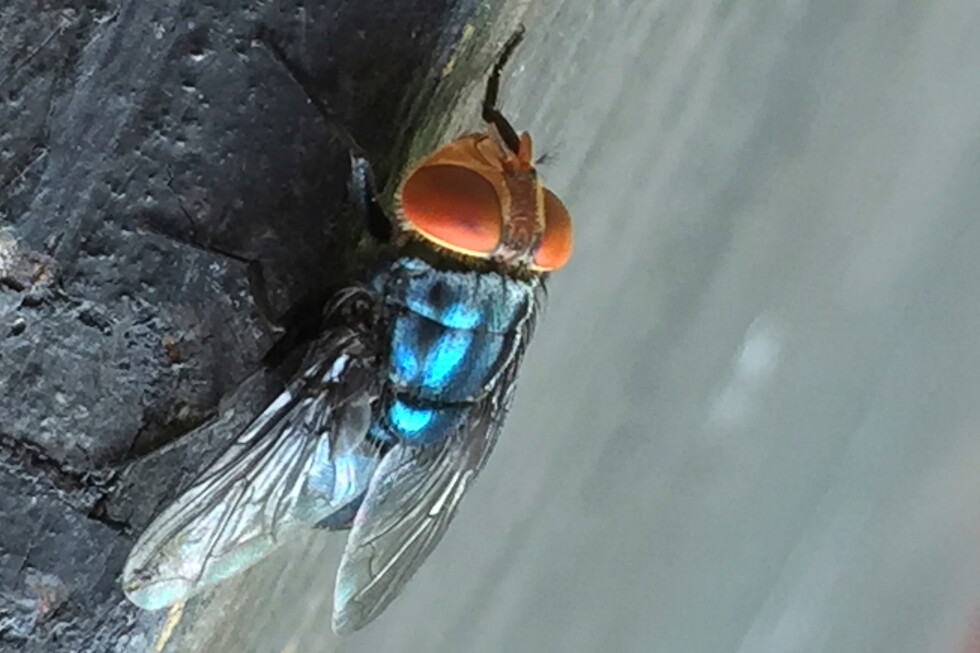
The New World screwworm fly is threatening the $113 billion U.S. cattle industry for the first time in more than a half century, with an infestation from its flesh-eating larvae confirmed in south Texas.

The infestation was discovered in a single 3-week-old calf in La Pryor, Texas, about 100 miles (161 kilometers) southwest of San Antonio and 50 miles (80 kilometers) from the U.S.-Mexico border. Federal and state officials had been working to keep the parasite from reaching Texas, home to $17 billion worth of the nation’s cattle, making it the industry’s No. 1 state.

The deadly flies were detected in Mexico late in 2024, after years of being contained at the southern end of Panama.

The fly was an annual warm-weather scourge of cattle ranchers from at least the 1930s through the 1960s, until the U.S. eradicated the pest by breeding sterile male flies and dropping swarms of them from planes to mate with wild females. The USDA said the most recent case was the first in Texas since 1966.

Advertisement

Here is what to know about the fly, the threat it poses and the response:

Being unusual makes the flies a threat

The New World screwworm fly in the Western Hemisphere and its Old World cousin in Africa and Asia are unusual among flies because their larvae, or maggots, eat live flesh and fluids instead of dead material. Females lay their eggs in open wounds and mucous membranes after mating only once in their monthslong lives.

Any warm-blooded animal, including wildlife, pets and occasionally even humans, can be infested.

Livestock are vulnerable because of how they’re handled, Lee Haines, an associate research professor of biological sciences at the University of Notre Dame, said in an email Thursday. Standard practices with cattle can break the skin, including shearing and de-horning, or even moving them in and out of corrals can cause scrapes and cuts. Birth would also make a mother and calf vulnerable, she said.

Advertisement

Stephen Diebel, a Texas rancher and president of the Texas & Southwestern Cattle Raisers Association, added that even wounds “as small as a tick bite,” can put cattle at risk.

Death can result if an infestation is not treated, though a dozen treatments have been approved for use in a variety of species. In decades past, ranchers had tens of millions of dollars in losses — potentially billions in today’s dollars.

But agriculture officials were quick to note that the fly does not infest food, and U.S. Agriculture Secretary Brooke Rollins said it’s unlikely to damage beef production — welcome news given that consumers are already facing record prices.

Advertisement

Officials sounded alarms for nearly 2 years

Federal and state officials and cattle industry leaders have been sounding public alarms about the fly’s movement through Mexico and toward the U.S. since a case was confirmed in southern Mexico in November 2024.

Officials had considered the pest eradicated from Central and North America nearly two decades before an outbreak in Panana prompted a state of emergency there early in 2023, according to the joint U.S.-Panama program established in 1994 to stop the parasite. Cases jumped to Costa Rica and Nicaragua later that year.

Edward Burgess, a University of Florida entomologist who studies the fly, said it reproduces quickly and is carried across wide areas by its hosts, namely wild animals such as deer. Outside of Panama, he said, programs that produced and released sterile flies have largely shut down.

“It’s hard to stay ahead of it because of how fast that fly is able to move and regenerate,” Burgess said.

Advertisement

Outside the US, thousands of animals and hundreds of humans sickened

As of June 2, the parasite had sickened more than 171,700 animals and 2,000 people across Central America and Mexico, according to the U.S. Centers for Disease Control and Prevention. There have been 10 human deaths, the CDC says.

Starting in May 2025, Rollins closed border entries to livestock and on Thursday she credited that move with delaying the fly’s arrival in Texas by a year.

Rollins has argued that the Mexican government has not done enough to control animals moving within the country, a suggestion Mexican authorities have rejected.

But Haines said climate change is a key element in the spread of a tropical species that thrives in warm weather. Warmer temperatures are expanding the fly’s habitat and cold snaps that killed them off each year in marginal habitats are becoming less frequent and less severe, she said.

Advertisement

Officials quarantine a swath of Texas

Texas State Veterinarian Bud Dinges imposed a 12-mile (20-kilometer) quarantine zone covering much of Zavala County, home to La Pryor, and a small part of neighboring Uvalde County. Animals cannot leave that zone without being inspected.

Local ranchers are concerned that the fly will spread among wildlife, particularly deer, as a small, short-lived outbreak did in the Florida Keys in 2016. That was the last time a U.S. case was confirmed among animals, though the CDC confirmed a case last year in a Maryland man who had traveled to El Salvador and recovered.

Zavalas County Sheriff Eusevio Salinas said Thursday that state officials were setting up several road checkpoints in the county to enforce the quarantine.

“They said they were going to do that for three to four days, and hopefully after that it’s already under control,” Salinas said.

Advertisement

In Texas, shots and fly drops

Diebel, whose family ranch is about 200 miles (322 kilometers) east of the quarantine zone, said ranchers are proactively giving injections that prevent screwworm infestation. They’re also taking extra care to treat wounds from ear tagging and other practices and keeping a close eye for signs of illness.

The USDA has been dropping sterile flies in south Texas since February, when it opened a center for dispersing them in south Texas. It is now dropping them twice a week, for a total of 4 million flies, and it’s also putting 4 million more a week in the ground as pupae, flies in the stage between larvae and adult, said Rear Admiral Michael Schmoyer, a member of the USDA’s response team.

Releasing sterile files is both time-tested and highly effective. While males are “promiscuous,” in the scientific sense, females are not, and if their one mating hookup is with a sterile male, no eggs from that female will hatch.

Once sterile males are prevalent enough, the fly’s population declines and then dies out.

Advertisement

But with sites outside Panama shut down for years, the USDA didn’t think sterile flies were being bred fast enough. It invested $21 million in a new fly-breeding facility in southern Mexico that is expected to start operations next month.

The USDA also is spending $750 million to build a fly factory in southern Texas that can produce up to 300 million sterile flies a week. It is expected to begin operating next fall.

Advertisement

Source link

Continue Reading
Click to comment

You must be logged in to post a comment Login

Leave a Reply

NewsBeat

What went right this week: life-changing inventions, plus more

Published

on

What went right this week: life-changing inventions, plus more
England unveiled its first Dutch-style cycle street

England’s first Dutch-style “cycle street”, which gives cyclists and pedestrians priority over motorists, has opened in Cambridge.

Adams Road, a key route into the city, is painted to look like a bike lane, and treats motorists as “guests”. It is already being used by around 3,000 cyclists a day, officials say – a figure likely to rise as people feel more confident about cycling into the city. 

Common in Belgium and the Netherlands, where they are known as a fietsstraats, the roads have started appearing in Germany, Canada and even the US.

Advertisement

While the intervention was welcomed by many in Cambridge, some have scoffed at the £2m price tag, which, councillors pointed out, also covered the construction of rainwater gardens to mitigate flooding.

Anna Williams, head of campaigns at Camcycle, a local charity, said she hoped the cycle street will be “the first of many in the city”.  

“Providing more space for people walking, wheeling and cycling will improve safety, encourage more people to choose active travel for their everyday journeys and create a nicer street for everyone who uses it,” she added.

Image: Greater Cambridge Partnership
Main image: European Inventor Award

Advertisement

Source link

Continue Reading

NewsBeat

French Open 2026: Zverev, Mensik, Cobolli and Arnaldi reach Grand Slam semi-finals

Published

on

Alexander Zverev celebrates at the 2026 French Open

Heavy favourite Jannik Sinner’s shock loss in the second round meant what was expected to be a one-horse race became a free for all.

German second seed Zverev took over as the clear front-runner to claim the Coupe des Mousquetaires – but he has scar tissue from three previous Grand Slam final defeats.

The 28-year-old missed a golden opportunity in the 2020 US Open final when he blew a two-set lead against Austria’s Dominic Thiem.

In the 2024 French Open final, he came up against a better opponent in Carlos Alcaraz – whose emergence alongside Sinner meant many thought Zverev had missed his chance to land a major.

Advertisement

Zverev was also undone in last year’s Australian Open final by Sinner, who produced a merciless performance which led to the German saying he felt mentally “empty” a few months later.

With Alcaraz, Sinner and 24-time major champion Novak Djokovic out of the way, Zverev will arguably never have a better opportunity to land the Grand Slam he has long been predicted to win.

Will Zverev keep his composure? He claims he “doesn’t care” he is considered the favourite.

“I focus on the next match and on the opponent as they cross the net, and that’s the only thing that I can control,” he said.

Advertisement

“If I win those matches, then that’s great.”

Source link

Continue Reading

NewsBeat

Transfer news LIVE: Liverpool’s Yan Diomande talks, Arsenal get Kroupi boost, Man Utd statement

Published

on

Daily Mirror

Manchester United CEO Omar Berrada says the Reds will look to replicate last summer’s transfer business and they have a clear plan for the window after securing a return to the Champions League.

He said: “I think the template for what we did last summer will be replicated in many ways. You always go into a window, you don’t know how you’re going to come out of it, but you have to be really prepared.

“You have to have a clear plan. You have to know exactly what positions you’re looking to strengthen. And you also have to be prepared for any eventuality, there could be exits that we’re not expecting, there could be opportunities in the market that perhaps weren’t there at the beginning of the window. So, we have to be ready.

“We have to be agile and flexible, but we have a clear plan. Jason Wilcox and his team are very well set up to to execute that plan. And I do think that what we saw last season is a good way forward for us, which is we want a mix of experience and youth.

Advertisement

We want a mix of players that have demonstrated they can perform in the Premier League and perhaps also with players that are doing very well outside the Premier League. But we will always do it within our terms and ensuring that whatever decision we take is not just for the short term but also for the long term.”

Manchester United CEO Omar Berrada(Image: Getty Images)

Source link

Advertisement
Continue Reading

NewsBeat

Who can carry a kirpan in the UK? Religion, law and the question of risk

Published

on

Who can carry a kirpan in the UK? Religion, law and the question of risk

The murder of 18-year-old Henry Nowak by Vickrum Digwa in Southampton in December 2025 is a profound tragedy that has left a family grieving and deeply affected the wider community. Any discussion that follows must keep that loss clearly in view.

Following Digwa’s conviction and sentencing, Nowak’s father said the family did not want his death “to be used to create further division, hatred or tension. We want his story to help make our streets safer for everyone.”

Local and national Sikh organisations expressed deep sorrow and offered condolences, while unequivocally condemning the killing and stating that Digwa’s actions were “in direct contradiction to Sikh teachings and values” and wholly unrepresentative of Sikhs.

In court, the judge noted that Digwa was carrying a kirpan – a ceremonial blade that is typically worn in a small, discreet form – as well as a larger bladed weapon, which was used in the attack.

Advertisement

Wider questions have since been raised about religious exemptions. Should Sikhs be allowed to carry kirpans in public? And, given this horrific case, are existing legal protections for religious bladed instruments still justified?

What is the kirpan and who carries it?

The kirpan is a blade worn as part of the Five Ks – the five markers of identity adopted at initiation into the Khalsa (the community of initiated Sikhs).

These are kesh (uncut hair), kangha (a wooden comb), kara (an iron or steel bangle), kachera (specific undergarments) and kirpan. The term kirpan combines kirpa, meaning compassion, and aan, meaning honour or dignity.

There is a widespread misunderstanding, reinforced in some media reporting, that all Sikhs wear a kirpan. In practice, only Amritdhari Sikhs, those formally initiated into the Khalsa and committed to its teachings, are required to do so. They represent a small proportion of the global Sikh population.

Advertisement

UK law treats the kirpan through a “good reason” provision, allowing it to be carried for religious purposes in a specific context – typically as part of an ongoing commitment to the Five Ks – rather than as a standalone item.

Within Sikh tradition, the kirpan is understood as a gift from the Guru and is linked to a duty to protect the vulnerable, resist injustice and stand against oppression. It is carried as a reflection of the ideal of the “saint soldier”, combining spiritual discipline with societal responsibility and a commitment to protect others.

What does the law say?

In UK law, carrying a knife or bladed article in public is an offence under the Criminal Justice Act. But the law allows the carrying of a bladed article where there is a good reason to do so, including religious practice and national dress – as in the case of a sgian dubh, worn as part of traditional Scottish Highland dress.

Crucially, the law distinguishes between carrying and use. The “good reason” justification applies only to possession. If a blade is used to harm others, any justification falls away and it is treated as a weapon. This means the law permits the carrying of the kirpan as a religious article, but never its use for harm.

Advertisement

Unlike most religious exemptions, which do not involve objects associated with risk in public space, the kirpan also sits within criminal weapons law that aims to address knife crime. Because knife laws focus on potential harm rather than intention, the kirpan occupies an unusual position: both a religious obligation and an object associated with risk. The law does not remove this tension, but manages it.

Different legal systems respond to the kirpan in different ways. Where Sikh communities are long established, accommodation is more common. Where they are smaller or less visible, the kirpan is more likely to be understood primarily as a risk.

In Canada, courts have emphasised accommodation, allowing kirpans in schools while accepting proportionate safeguards to manage risk. In Italy, courts have taken a stricter approach, treating the kirpan under general weapons law regardless of its religious meaning.

In Australia, a school incident prompted a temporary ban that was later reversed after consultation with Sikh organisations. Elsewhere, the kirpan is managed through broader frameworks of public order or justified possession.

Advertisement

India’s constitution explicitly recognises the kirpan as part of Sikh religious practice.

There is little evidence that blanket bans reduce harm. Instead, most legal systems manage the issue through safeguards and negotiation. The challenge lies in balancing religious freedom with perceptions of risk, rather than attempting to resolve that tension entirely.

Balancing religion and risk

Courts generally recognise the kirpan as a genuine religious obligation while also acknowledging its potential for harm. Within Sikh tradition, the kirpan is linked to the duty to protect others. In law, however, this does not create a right to use force.

Advertisement

Any use of a kirpan as a weapon falls outside legal protection, even in defence of others. The law manages this tension by allowing possession in defined circumstances while maintaining clear limits on harm.

Henry Nowak’s murder raises a difficult question: would restricting possession of the kirpan prevent incidents of this kind? The short answer is no. Violence using a blade is already illegal.

Restricting the exemption would affect who can carry a kirpan, not the legality of violence itself. It would place Amritdhari Sikhs in conflict with the law, without addressing the underlying causes of violent acts.

A more productive approach would be to clarify the terms of the exemption. Shared expectations already exist within Sikh communities about how the kirpan is to be worn in everyday contexts, reflecting longstanding practices. These are increasingly developed and clarified through engagement with schools, employers and policymakers.

Advertisement

Initiation into the Khalsa is intended to establish how the kirpan should be worn and the responsibilities it entails. But these expectations are not always clearly understood outside Sikh communities, or consistently applied.

As Mark Nowak, Henry’s father, has said, the aim should be to make change for the better, not to create further division. The challenge is how to respond to violence in ways that improve safety without deepening misunderstanding.

Source link

Advertisement
Continue Reading

NewsBeat

‘Brilliant’ BBC spy thriller fans say is ‘far better than The Night Manager’

Published

on

Wales Online

The Cold War-era BBC series has been called a ‘masterpiece’ by critics and fans — and viewers are saying it may be the best spy thriller series out there.

Few things prove more thrilling to binge-watch than a superbly crafted spy series, and for years, ‘The Night Manager’ has remained the gold standard.

Advertisement

The small-screen adaptation of John le Carré’s 1993 novel features Tom Hiddleston delivering an equally charming and enigmatic lead performance – captivating audiences from the opening scene.

However, another espionage thriller is now being lauded as a genuine contender to ‘The Night Manager’, with some viewers even claiming it surpasses its rival.

‘The Game’ is a six-episode spy thriller created for television by Toby Whithouse, who penned the screenplay alongside Sarah Dollard and Debbie O’Malley.

The ‘outstanding’ programme stars Tom Hughes in the main role, supported by a formidable ensemble cast including Brian Cox, Paul Ritter, Shaun Dooley, Chloe Pirrie, Victoria Hamilton, and Jonathan Aris, reports the Express.

Advertisement

The series first aired in 2014 to considerable critical praise, though disappointment followed in 2015 when it was confirmed there would be no second season – leaving fans deeply frustrated.

Filmed across Birmingham, London, and Wales during August 2013, audiences continue to be captivated by this relatively under-the-radar spy thriller.

The official synopsis reads: “Tensions are high in 1972 London when the Soviets devise Operation Glass, a plot to bring down Britain, while the world’s superpowers engage in a war fought mainly by spies. A defecting KGB officer contacts MI5 with details of the plan. In response, MI5’s leader assembles a secret team, including enigmatic agent Joe Lambe, to investigate and stop the threat to Britain and the rest of the world.”

Advertisement

Boasting an impressive 95% score on Rotten Tomatoes, The Game has been lauded as a ‘masterpiece’ by enthusiasts of the genre, with acclaim flooding in from numerous sources.

One critic said: “The Game is wonderfully atmospheric, stylish, and sexy.”

Another reviewer added: “The drama excels in the realms of atmosphere, tension and mood, and these are the vital things that a spy drama can’t get wrong.”

A third critic said: “The Game is next-level entertainment, courtesy of smart scripts and a cast of finely drawn characters.”

While one reviewer wrote: “Plenty of twisty plotting, grim atmosphere and MI5 staff with a rich variety of psychological afflictions, in six parts.”

Viewers are similarly captivated by the series, with one fan saying: “Amazing! the best cold war thriller i have seen in ages.”

Meanwhile, another viewer said: “Another BBC masterpiece, with thrilling plot and solid ensemble cast.”

Advertisement

One IMDB user review said: “Superb BBC Quality. The Game is an absolutely first rate Cold War mini-series from the BBC set in the 1970’s. The plot is complex and intelligent with lots of twists and turns and will appeal to Le Carré fans. The acting is absolutely superb all round.”

While another viewer voiced their frustration over the series’ axing: “Left me speechless. Brilliant series. What a welcome return to television for this genre, cold war spy thriller, so popular back in the 1980’s and for many years criminally absent.

“The Game was an awesome five part series, incredibly written and scripted, it was dark, pacey, loaded with intrigue and thoroughly engaging. Utterly devastating that a second series wasn’t commissioned, the BBC missed a golden opportunity with both this and Banished. Nevertheless, The Game was a magnificent piece of drama, 10/10”

The Game is available to stream without charge on BBC iPlayer and UKTV.

Advertisement

Source link

Continue Reading

NewsBeat

Senate works overnight as Republicans debate limits on Trump settlement

Published

on

Senate works overnight as Republicans debate limits on Trump settlement

WASHINGTON (AP) — The Senate is working overnight to pass legislation that would fund President Donald Trump’s immigration enforcement agencies as Democrats and some Republicans have tried to add language to permanently block Trump from creating a $1.776 billion settlement fund.

Earlier in the day, Republicans turned back a Democratic effort to block the fund, which would compensate the president’s allies who say they have been politically persecuted. But there were potentially more amendments to come overnight as Republican Sen. Bill Cassidy of Louisiana has said he will try again to block the settlement.

The amendments were a test of party unity and a threat to the immigration spending bill, as some Republicans have repeatedly voted to block the fund. The first vote on the settlement was held open for around three hours as several GOP senators decided whether to support it.

“I feel optimistic that we’ll get there in the end,” Senate Majority Leader John Thune, R-S.D., said Thursday evening, while acknowledging he was not sure how the votes would turn out.

Advertisement

Thune has been pushing GOP senators for weeks to keep the bill focused on the funding for Immigration and Customs Enforcement and Border Patrol, which Democrats have blocked since early this year, and to avoid adding new provisions that could complicate its passage.

If an amendment limiting the settlement were to pass, Thune said, it would be “problematic” when they send the bill to the House. It could also mean a White House veto of the immigration spending bill, which has otherwise unified Trump and Republicans.

The last time the Senate abruptly changed a Homeland Security funding package, in March, the House simply refused to accept it and left town.

Settlement fund roils Senate GOP conference

Trump’s judgment fund, which was part of a settlement that resolves his lawsuit against the IRS over the leak of his tax returns, has angered many Republican senators.

Advertisement

Acting Attorney General Todd Blanche said this week that the fund would not move forward. But Trump, who has been at odds with Senate Republicans in recent weeks, raised new doubts about the settlement’s future Wednesday afternoon — just after the Senate had voted to start debate on the immigration bill — when he told reporters that the settlement is “very important” and said “I don’t know” whether it is dead or on hold.

“I’d have to ask the lawyers,” he said.

The Senate rejected a second amendment from Republican Sen. Thom Tillis of North Carolina on Thursday that would also have banned the settlement fund but would have moved the money to a separate anti-fraud fund at the Department of Justice. Most Democrats voted against the amendment, guaranteeing its defeat, but more than 10 Republicans supported it.

Tillis said the settlement fund, some of which could potentially go to Trump supporters who beat police and attacked the Capitol on Jan. 6, 2021, is a political liability for the party.

Advertisement

“If Blanche says this is largely inoperative, why not use this moment to codify that?” Tillis said. “Otherwise, you’re exposing every one of our members who are in cycle to having to deal with this between today and Election Day, and that makes no sense for something that the DOJ says they’re not moving forward with.”

Amendments will be offered late into the night

It was unclear how Republicans would vote on additional amendments.

Cassidy, who lost re-election last month after Trump endorsed his primary opponent, said he still planned to offer an amendment to ban payouts from the settlement. He told reporters he may also offer an amendment to block a separate part of the settlement that would grant Trump and his family immunity from IRS audits.

Several Republican senators said they supported the idea but would have to see the final language before they decide. Sen. John Cornyn, who also lost reelection last month after Trump endorsed his opponent, said he agrees with the “thrust of it” but would wait to see the amendment. Republican Sen. John Curtis of Utah said the same.

Advertisement

Thune said he believes the final bill should pass without language to prohibit the settlement.

“This is about border funding,” Thune said. “It’s about law enforcement, it’s about ICE and CBP. So I’m trying to, you know, keep it about the main thing.”

Democrats continued to offer amendments through the night, including on Trump’s tariffs, his war with Iran and his immigration enforcement campaign.

“Amendment after amendment, vote after vote, Republicans are going to have to answer to the American people,” Senate Democratic leader Chuck Schumer said at the beginning of the day.

Advertisement

ICE and Border Patrol money has been delayed for months

Passage of the roughly $70 billion bill to fund ICE and the Border Patrol would end the blockade by Democrats who demanded policy changes after the fatal shootings of two protesters by federal agents in January. The bill would fund the agencies for three years, through the end of Trump’s term.

Senate Republicans are using a complicated procedural maneuver to get around the filibuster and pass the budget legislation with no Democratic votes. But it has taken weeks to get the bill to the Senate floor as Republicans navigated various obstacles to passage created by Trump and the White House — including a $1 billion proposal for White House security and Trump’s ballroom that they eventually scrapped and the fierce bipartisan backlash to the settlement fund.

Democrats say any funding bill for the Homeland Security Department should place restraints on federal immigration authorities, including better identification for federal officers and more use of judicial warrants, among other asks.

After federal agents shot Renee Good and Alex Pretti in Minneapolis, Trump agreed to a Democratic request that the Homeland Security bill be separated from a larger spending measure that became law. But bipartisan negotiations went nowhere, and the department funding lapsed in mid-February with no agreement on changes to the Trump administration’s immigration enforcement tactics.

Advertisement

Congress eventually funded the rest of the Homeland Security Department at the end of April with Democratic support, but ICE and Border Patrol remained without regular funding.

___

Associated Press writers Kevin Freking and Lisa Mascaro contributed to this report.

Advertisement

Source link

Continue Reading

NewsBeat

‘Unbeatable’ BBC iPlayer crime drama series is ‘better than Breaking Bad’

Published

on

Wales Online

Critically acclaimed FX series Snowfall – streaming free on BBC iPlayer – could be the gripping crime drama you’ve been searching for, as many viewers have argued it beats Netflix’s Breaking Bad.

I was among the millions of viewers completely captivated by Netflix‘s Breaking Bad, which chronicles chemistry teacher Walter White (played by Bryan Cranston) and his venture into the crystal meth business. Since the programme reached its dramatic finale in 2013, I’d been searching for a crime drama equally engrossing and worthy of a binge-watching session.

Advertisement

Thankfully, a friend recommended Snowfall. It wasn’t long before I was hooked. It seems I wasn’t alone, as many viewers have taken to Reddit to praise the series, with one admitting: “Snowfall had me staying up watching episodes til 5 am”, while another, who insisted “Snowfall is better” than Breaking Bad, added: “The real life story that Snowfall tells is unbeatable”.

The riveting series, which initially aired on FX in 2017 with its concluding episode broadcast in 2023, is now available for streaming on both BBC iPlayer and Disney+. It features Nigerian-British actor Damson Idris as Franklin Saint, a teenage entrepreneur chasing wealth and power in 1980s Los Angeles.

The critically acclaimed programme boasts a 92% overall Rotten Tomatoes score, with four separate seasons securing a perfect 100%. While Breaking Bad and Snowfall have both succeeded in mesmerising audiences globally, there are numerous reasons why I consider the latter to be the better watch.

Historical elements

Unlike Breaking Bad, which can feel somewhat unrealistic given Walter’s sudden and dramatic descent into criminality, Snowfall is more relatable. The first season immediately gripped me with its gritty storyline rooted in real-world events, lending it considerably more credibility.

The show centres on a CIA operative seeking to fund the Contras through profits derived from Franklin and his family’s street-level narcotics enterprise. This draws on genuine controversy surrounding allegations that the CIA facilitated Nicaragua’s drug trafficking for geopolitical gain.

Snowfall is also poignantly set during the early stages of the crack cocaine epidemic, which ravaged real American neighbourhoods — most notably South Central Los Angeles — throughout the 1980s.

Over six seasons, Franklin grapples with the life-changing fortune he can gain from producing and selling the drug, even as it simultaneously destroys his community and tears apart his closest relationships.

Advertisement

A compelling ensemble of supporting characters

For me personally, having genuine emotional investment in every character is essential, and Snowfall’s exceptional ensemble truly drives the story forward, whereas Breaking Bad relies too heavily on Walter and his former student-turned-accomplice Jesse Pinkman (played by Aaron Paul). Damson Idris, who recently starred opposite Brad Pitt in 2025’s blockbuster F1, brings the extraordinary emotional range needed to convincingly depict Franklin’s journey from a naive, family-oriented teenager into a ruthless drug lord.

While Damson certainly dominates the screen as the lead, his compelling performance as Franklin wouldn’t succeed without the show’s ensemble cast. The main antagonist, Teddy McDonald, a CIA agent with hidden agendas (superbly played by Carter Hudson), together with Franklin’s loyal uncle Jerome Saint (Amin Joseph), a fan favourite overseeing his nephew’s ground-level dealings alongside his partner Louie (Angela Lewis), all play vital roles in Franklin’s character development.

Gail Bean offers another outstanding turn as Wanda Bell, a troubled crack cocaine user whose moving path towards recovery, supported by Franklin’s best mate Leon Simmons (played by Isaiah John), gives the show emotional weight while exposing the catastrophic consequences of the lead character’s actions.

Advertisement

In comparison, Breaking Bad’s ensemble, including some members of Walter’s extended family, feels less memorable, sometimes becoming tedious to watch as subplots struggle to rival the power of the central story.

No dull episodes

Breaking Bad occasionally loses its way, most notably in the third series’ infamous Fly episode, in which Walter and Jesse spend an entire instalment attempting to rid their lab of a single insect — a far cry from the gripping drama that fans had come to expect from the show.

While Snowfall’s debut series takes a handful of episodes to properly bed in its characters, each one serves a vital role without ever derailing the story’s momentum.

Advertisement

Every subplot, including the Villanueva Cartel’s deepening involvement in Franklin’s drugs operation, contributes to the show’s relentless pace and keeps viewers thoroughly entertained.

Relationships and crime family dynamic

The relationship between Walter and Jesse remains one of the most intricate and compelling partnerships ever seen on television, yet Snowfall’s portrayal of Franklin and Teddy’s alliance — which swiftly unravels with devastating consequences — proves even more engrossing.

Their fractious partnership directly accelerates the Saint family’s downfall, acting as the catalyst for their rapid transformation from a small-scale cannabis operation into a crack cocaine empire.

Advertisement

The fraught yet deeply co-dependent mother-son relationship between Franklin and Cissy Saint (Michael Hyatt) provides an equally compelling central storyline, building towards a dramatic conclusion that is certain to leave any Snowfall viewer utterly stunned.

If, like me, Breaking Bad left you yearning for more plot twists within a story that stays with you long after the credits roll, Snowfall will exceed all expectations.

Source link

Advertisement
Continue Reading

NewsBeat

What went right this week: the good news that matters

Published

on

What went right this week: the good news that matters
A record number of dams were removed in Europe

In a victory for nature, more than 2,300 miles of waterways were reconnected in Europe last year, as a record number of dams were removed across the continent.  

A new report by Dam Removal Europe, an environmental group, found that 603 river barriers were taken down across the continent last year – up significantly on the 542 removed in 2024. Sweden led the way, with 173 removals, followed by Finland (143) and Spain (109). Iceland and Macedonia, meanwhile, pulled down their first river barriers.

According to the report, the record breaking year saw Europe’s dam busters reconnect around 2,300 miles of waterways in 2025, improving river habitats and reopening migratory routes for fish. 

Advertisement

Biodiversity gains have already been reported in some places, including along the River Lee in north Wales (pictured), where sightings of sea lamprey nests have surged since Eribstock Weir was removed. 

“Seeing these [nests] is genuinely exciting,” said Joel Rees-Jones, who led the project. “By reconnecting habitats and removing barriers like Erbistock Weir, we’re giving iconic species such as lamprey and Atlantic salmon a fighting chance to thrive.”  

However, obstacles remain. “With more than 150,000 obsolete barriers fragmenting European rivers, there is still a lot of work to be done,” said Dam Removal Europe. “But momentum is really building.” 

Image: Christian Björling

Advertisement

Source link

Continue Reading

NewsBeat

Charles Hanson hosts antiques valuation day in Helmsley

Published

on

Charles Hanson hosts antiques valuation day in Helmsley

Charles Hanson, star of Bargain Hunt, Flog It! and Antiques Road Trip, is coming to Helmsley as part of his UK-wide valuation day tours.

The 48-year-old is based at Hansons Auctioneers’ HQ at Etwall, near Derby – one of 11 salerooms across the country.

He also the host of the new TV show called Secrets of the Auction House, which sees Charles and his team unearth forgotten antiques around the UK.

Advertisement

Charles said he believed the historic Ryedale area – famed for its country houses, farming heritage and generations of family ownership – could produce some fascinating discoveries.

He said: “Helmsley is exactly the sort of place where exciting antiques can still emerge. Across North Yorkshire you find wonderful country house pieces, traditional oak and pine furniture, silver, clocks, militaria and agricultural bygones tucked away in family homes.

“With beautiful historic estates nearby and such a strong heritage culture in the area, I wouldn’t be surprised if we uncover one or two real surprises.”

Charles added: “But we’re not just looking for local antiques. With the price of gold the highest it has been since the 1970s, jewellery tucked away in trinket boxes is currently making huge amounts.

Advertisement

“When people bring in what they think are worthless bits of costume jewellery their jaws drop when I tell them that it could be worth thousands. “I always say every house has one great valuable squirrelled away and nothing gives me more pleasure than unearthing them.”

Charles said: “No appointment is necessary, just turn up with your hidden treasures and, who knows, you could discover you are sitting on a goldmine.”

” At one walk-in valuation in Birmingham a blue and white Chinese pot, known to the family simply as “Aunt Beryl’s vase”, went on to sell for £800,000.”

Members of the public are invited to take their treasures for expert advice and free auction valuations to Helmsley Arts Centre on June 16, from 11am to 1pm.

Advertisement

Visitors will also have the opportunity to consign items for future Hanson’s auctions.

Source link

Advertisement
Continue Reading

NewsBeat

Wales breaking news plus weather and traffic updates (Friday, June 5)

Published

on

Wales Online

Hello, and welcome to WalesOnline’s live blog for Friday, June 5. We’ll be bringing you all of the latest news from across Wales – whether you’re on the move, at home or at work – as well as the latest traffic and travel.

We’ll also be keeping you informed of major news stories from the UK and overseas.

Contribute to the live blog by posting your comments below, or tweet us @WalesOnline to share the news that’s breaking in your area. Read the biggest stories in Wales first by signing up to our daily newsletter here.

Advertisement

Source link

Continue Reading

Trending

Copyright © 2025