The environment usually takes a backseat in times of conflict. But in Ukraine a rewilding project is sowing seeds for a greener, more peaceful future
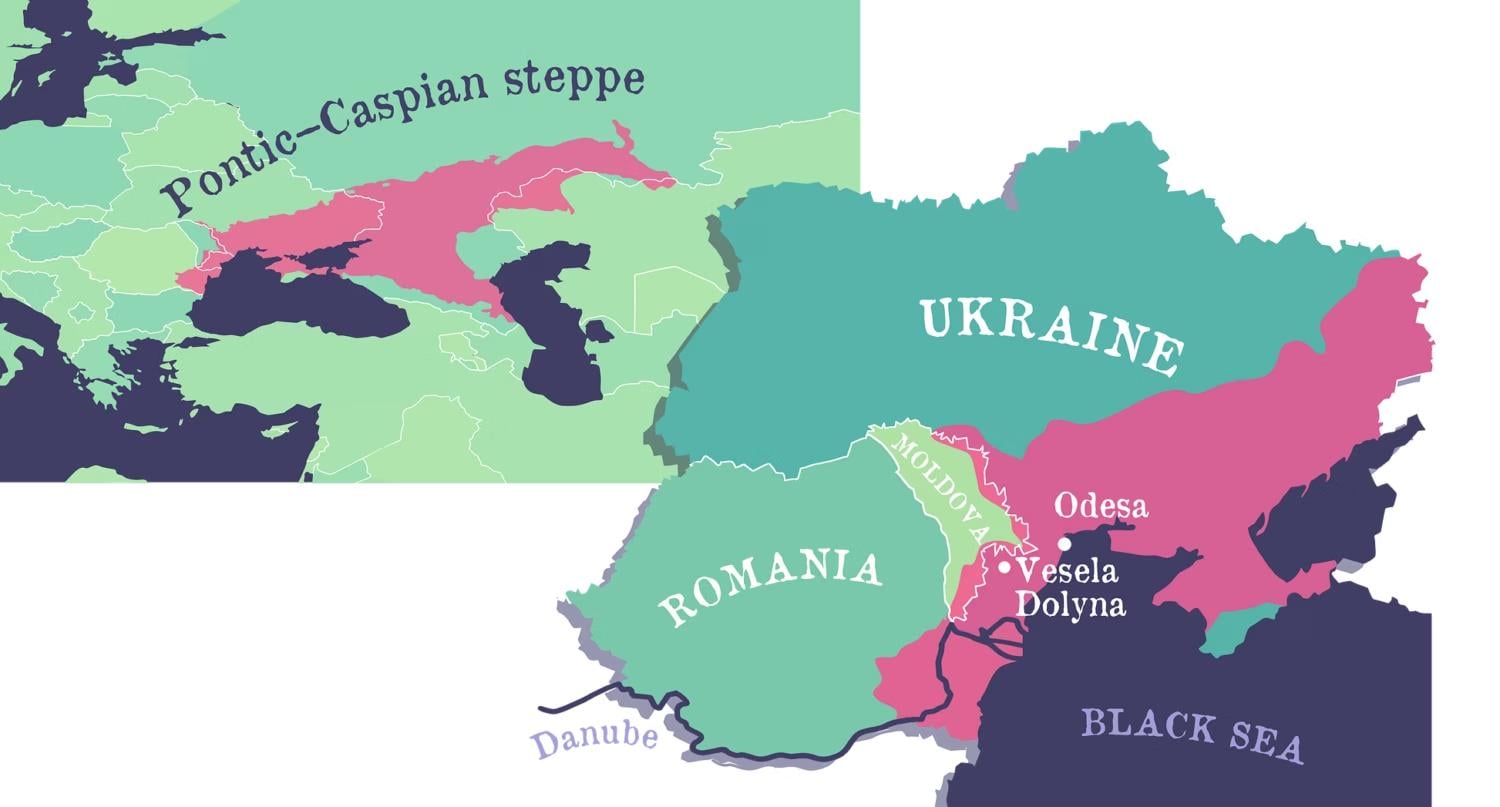
Vesela Dolyna translates from Ukrainian as ‘happy valley’. In the heart of the semi-arid Pontic-Caspian steppe system in southwestern Odesa Oblast, this village of 1,206 souls has, sadly, seen happier eras than today. Today, Vesela Dolyna’s residents are as likely to hear the violent cracks of exploding mines, or the high-pitched screams of the Russian missile strikes targeting the nearby Black Sea coast, as the bucolic rhythms of harvesting, or the craw of the native Eurasian magpie circling the village’s thatched, brightly painted homes.
Take a walk into the grasslands of the Tarutino Steppe with local resident Petro Hramatik, however, and you might yet hear another, strange and ancient, sound: a high, keening bray which, to locals like Hramatik, is a sign of hope amid the misery of war.
Advertisement
A former Vesela Dolyna village head, Hramatik is a local volunteer for Rewilding Ukraine, a conservation organization that is restoring 600 hectares of formerly ploughed grassland in the Tarutino Steppe through the reintroduction of native species.
Advertisement
Donkeys trampling fireproof landscapes
The project began in 2017 and has led to the release of 63 Konik horses; 20 red deer; 30 fallow deer; 20 water buffalo; and ten Hucul horses, the latter a native breed from the Carpathian mountains, back into the wild. Their star reintroduction however is a keystone species that Hramatik monitors on his frequent visits into the steppe: 35 characterful and voluble kulan, or wild donkeys. With their stout legs and high-pitched bray, these wild equines once ranged across a great swathe of central Europe from Ukraine and Russia in the west to Mongolia and China in the east.
“I genuinely love nature and I feel deeply connected to this landscape,” Hramatik told Perspective Daily. Hramatik took part in some of the animal releases to the steppe and now visits the territory to monitor plant and animal health, most frequently in the summer and spring when the Steppe is accessible due to better weather. “The natural grazing of kulan is having very positive effects on the steppe,” he said, “They reduce excessive dry vegetation, create more diverse plant structures and open up space for different species to return.”
Before human settlement, the Tarutino Steppe was an ecosystem of dry temperate grassland on fertile soils called ‘chernozem’ (black earth). These steppes supported diverse, drought tolerant grasses and flowering plants and were ranged over by large grazers such as the kulan and abundant small mammals and rodents. From the 19th century, with German Bessarabian settlement, and later Soviet factory-scale farming, the Steppe was converted to cereal and sunflower farming, sheep grazing and vineyards. Abandoned by the Soviet tractors after 1990, and with an ageing local population unable to tend the land, the Tarutino Steppe deteriorated into an unloved landscape that was dangerously prone to wildfires.
Advertisement
Image: Wikimedia Commons
With climate change and now the scourge of exploding mines (planted by both Ukrainian and Russian forces), wildfires can ignite daily in the heat of summer, Hramatik says. “That’s why the kulan are so important,” Hramatik adds, “they manage vegetation and reduce fire risk.” Kulan help to manage fire risk through natural grazing and movement, which reduces the amount and continuity of flammable vegetation. Their droppings also add organic matter to the soil, which improves soil structure over time: healthier soils hold water better, resist compaction, and absorb rainfall more efficiently rather than shedding it as run-off, also lowering fire risk.
Preparing for the tourism of tomorrow
The reintroduction of ancient grazers, as well as rodents such as marmots and the black-bellied European hamster, has also improved the Steppe’s soil fertility and, in turn, its carbon sequestration, says Mykhailo Nesterenko, who heads Rewilding Ukraine. Nesterenko and his family initially fled Ukraine for Romania on the outbreak of war, before moving to the Netherlands, though he returned to resume work on the projects in 2023.
Advertisement
“Nature restoration is important for communities too,” he adds. “Wetlands help communities adapt to climate and a healthy ecosystem also opens up the possibility of nature-based businesses, such as tourism.”
Rewilding Ukraine’s umbrella organization Rewilding Europe works on rewilding projects downstream at the Danube Delta, a connected habitat 50 km southeast at the mouth of the Black Sea that is partly in Ukraine and partly in Romania and is part of the Danube Delta Biosphere. Here it is restoring waterways from a ‘managed’ Soviet-style hydraulic system back into a self-sustaining, wild wetland, by removing 10 obsolete dams and re-establishing fish spawning grounds. Designated a UNESCO World Heritage Site (1991) and Biosphere Reserve, the 4000 km² Delta hosts over 5,500 plant and animal species, and is so dense and varied that locals and biologists call it ‘Europe’s Amazon’.
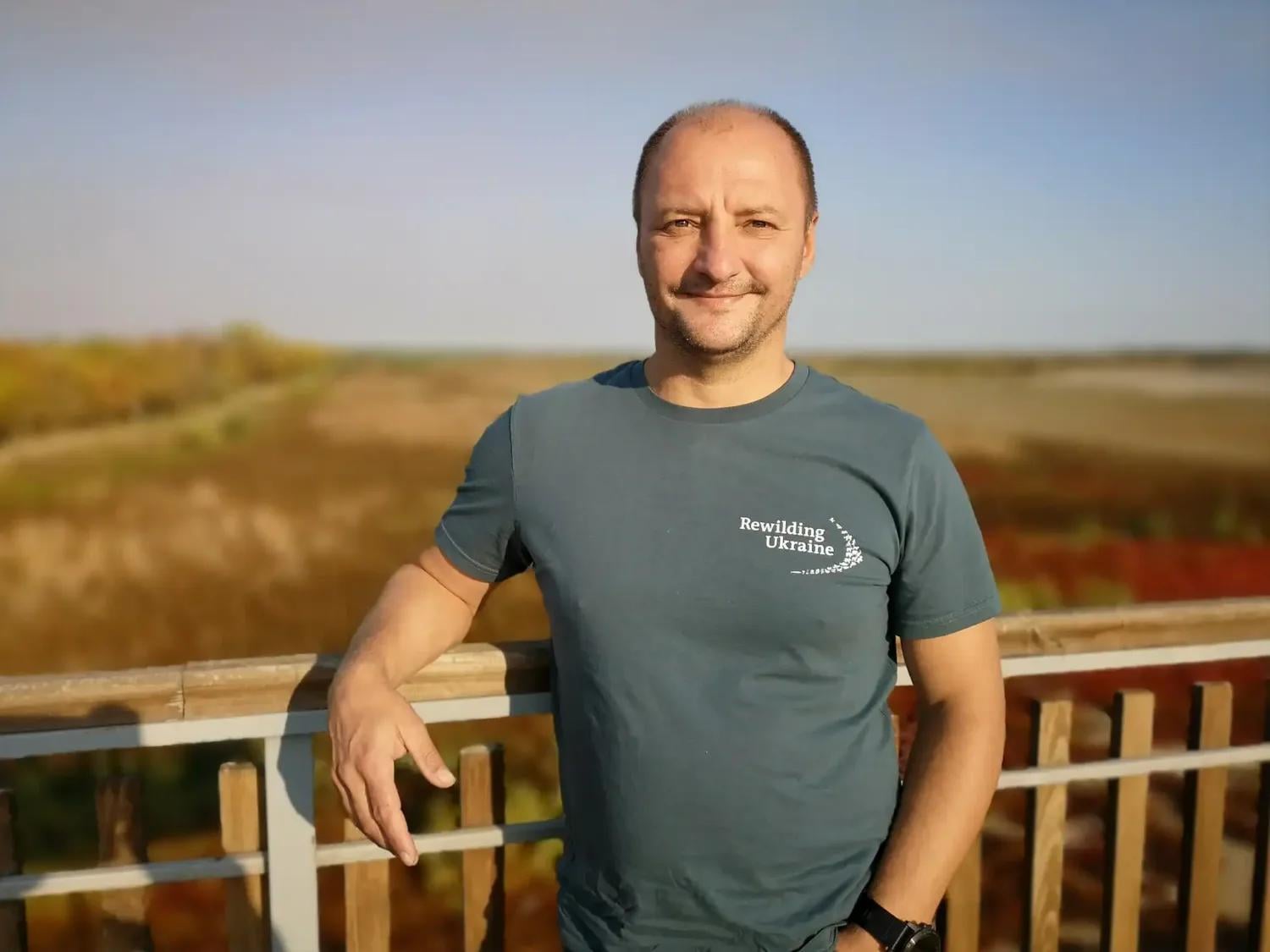
Mykhailo Nesterenko, head of Rewilding Ukraine. Credit: Privat
Advertisement
Loss of tourist income is one of the social and financial tolls on rural Ukrainian communities from Russia’s war. Average monthly wages in Bolhrad Raion, of which Vesela Dolyna is a part, are 7,000–9,000 UAH a month (€ 190–230) compared to the national average wage (2023): 15,000–16,000 UAH a month (€ 400–450). Regional ethno tourism attractions such as Vynohradivka (Kurçu), a traditional wine-growing village, were shuttered with the outbreak of hostilities and UNESCO and the World Bank estimate that Ukraine’s culture and tourism sectors have accumulated over $ 19.6 billion in lost revenue since February 2022.
Now Rewilding Ukraine is establishing the infrastructure to be able to »press go« when tourists return, Nesterenko explains. They include Eco-park Tarutino: a dedicated area featuring excursion routes and guided tours to see the reintroduced animals with wildlife watching towers and observation hides.
Ukraine’s nature is as resilient as the Ukrainian people
Rewilding Europe and Rewilding Ukraine are supported by the Endangered Landscapes & Seascapes Programme (ELSP) at the Cambridge Conservation Initiative, part of the University of Cambridge. Its Director, David Thomas, told Perspective Daily that although monitoring of impacts of the Delta projects is hampered by the war, ELSP is seeing ‘cascading effects’ from the reintroduction of large herbivores, such as increased fish populations and diverse bird communities.
Advertisement
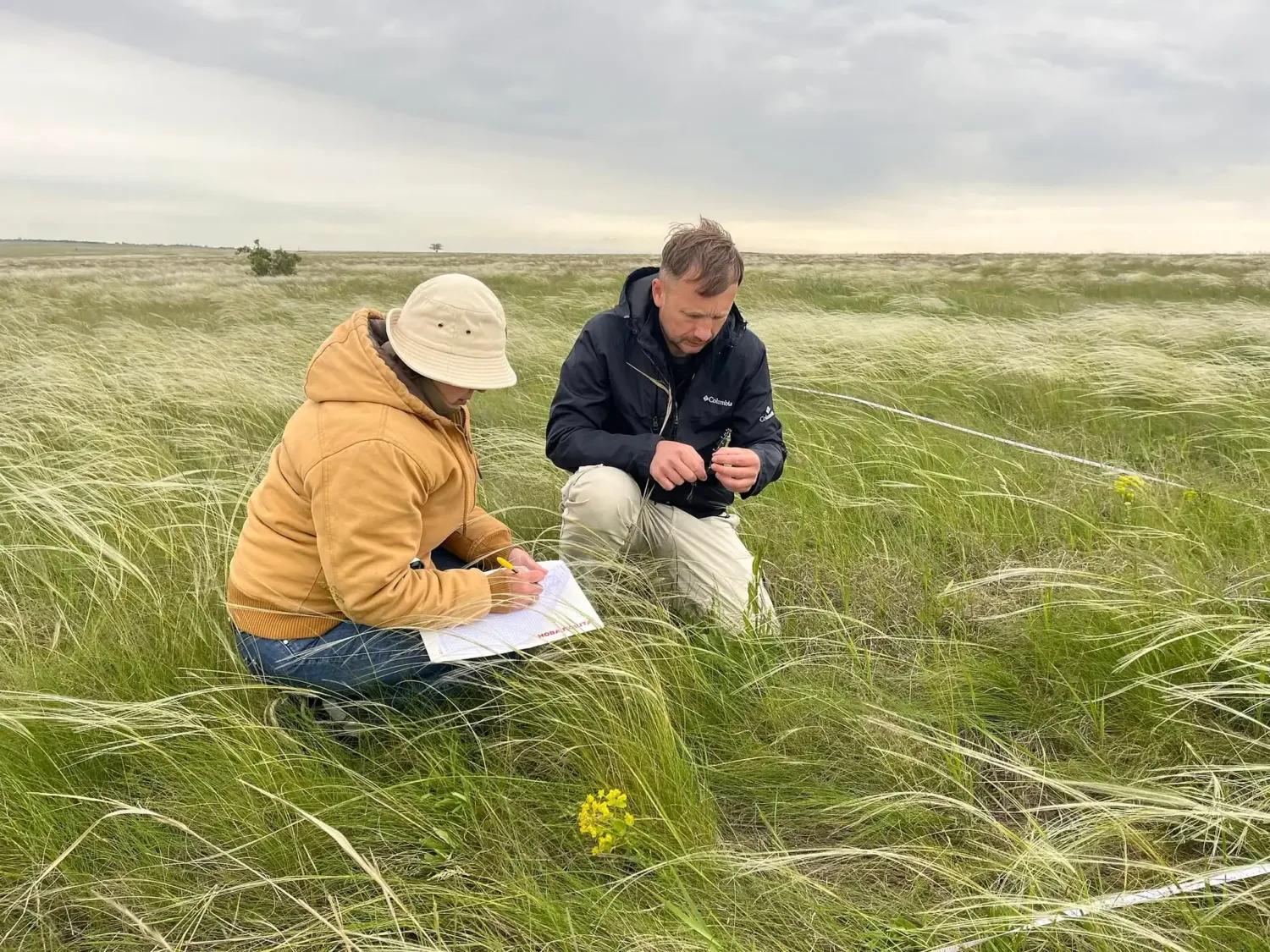
Researchers in the steppe. Image: Victor Shapoval
ELSP’s satellite images show that reintroducing water buffalo and Konik horses across the outer Delta has reduced dense vegetation as it has boosted plant diversity. They have also found that grasslands with large and diverse grazing species like donkeys, horses, and buffalo deposit twice as much carbon compared to areas where no large grazers are present.
Advertisement
“I think the hope and expectation is that [Rewilding Europe’s work] will provide a road map, a blueprint for restoration of the area and development of the local economy,” Thomas says of his hopes for Ukraine when peace comes. “There are great prospects for a nature-based economy around the Danube.”
Tourists aside, Rewilding Ukraine’s work is as much about the people who call the Delta habitats home. Rewilding Ukraine runs initiatives through which war veterans and their families are brought into rewilding landscapes as part of PTSD recovery; and in July 2025, a five day Junior Rewilders Camp brought together around 30 secondary school students from Ukraine and Romania to the Romanian Delta for birdwatching, teamwork sessions and creative activities designed to deepen children’s connection with the delta and rewilding concepts.
Our rewilding efforts in the Danube Delta show that Ukraine’s nature is as resilient as the Ukrainian people, and the two depend on each other. I am confident that both will recover when the war ends
Nature refuses to stand still
Outcomes in the long road to peace in Ukraine in 2026 depend on Russia’s willingness to negotiate with the frameworks toward ending the war that were established at Paris »Coalition of the Willing« summit on January 6. There are risks for the Delta and its peoples that the war will grind on, and the hoped-for tourism revenue will not come.
For all their efforts, Nesterenko admits that war hinders work on the rewilding projects. Some project sites are cut off, which means that the project’s rangers cannot monitor their rewilded herds or release more as planned, as civilian travel into the Delta is severely restricted. In the meantime, however, nature itself refuses to stand still.
Advertisement
In the spring of 2022, a tiny kulan foal was born on the Tarutino Steppe after a punishingly cold winter. With his gangly legs, large eyes and downy coat, he was the first kulan to be born in the wild in 200 years, making history as he stumbled to his feet. He’s a sign the Steppe, and the happy valley, will see happier days.
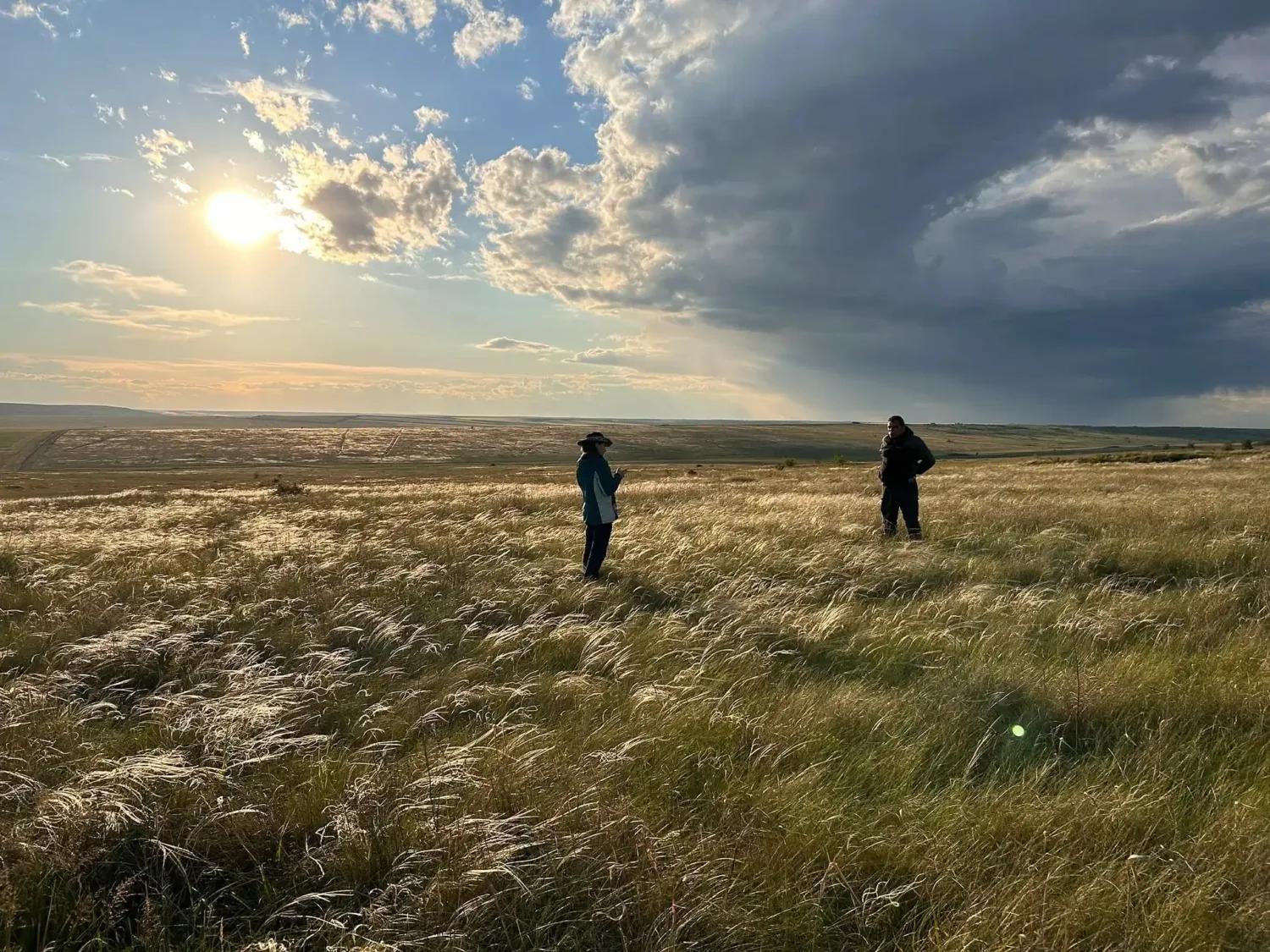
The steppe ecosystem is home to a variety of drought-resistant grasses and flowering plants. Image: Victor Shapoval
Advertisement
A blueprint: bringing back bison in Romania
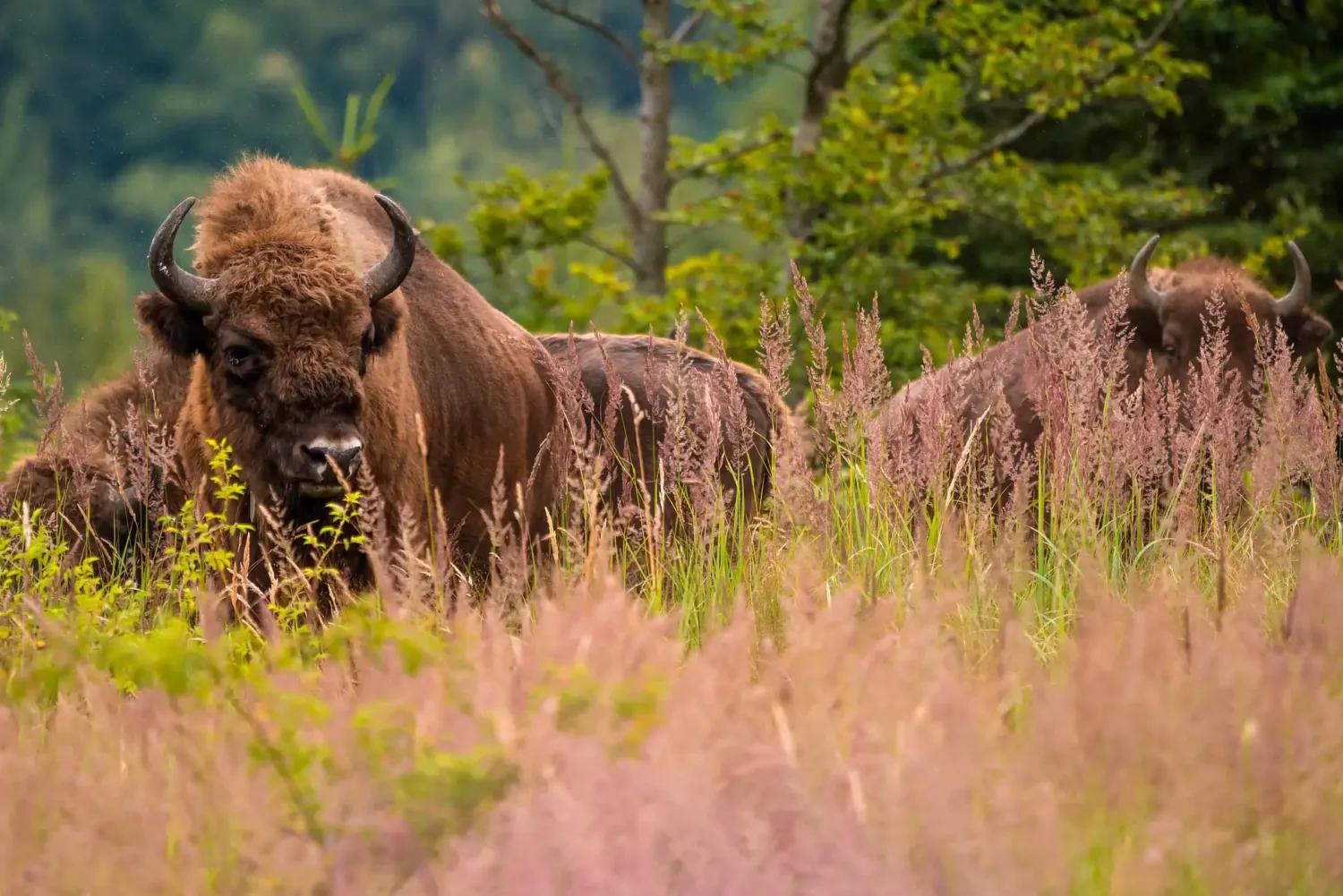
Across the border in Romania, successes with bison rewilding offer a blueprint for the future of nature-based livelihoods in Ukraine. Here, bison were not dropped into an empty wilderness but carefully reintroduced into a working landscape, with locals involved from day one: building enclosures, managing encounters, and learning how to live alongside a species that hadn’t roamed these mountains for centuries. The animals, in turn, are quietly doing what they do best: grazing young trees to keep meadows open, trampling fire corridors through forests, dispersing seeds and nutrients, and helping soils store more carbon.
Rewilding Romania supports conservation through ‘bison-smart’ communities of locals who actively accept and promote rewilding in their midst. Hotlines to report animal encounters, ranger patrols with trained dogs, and small economic incentives – from bison tracking experiences for tourists, to products made from ‘co-existence’ orchards – now support dozens of local businesses.
Mihai Miculescu, who owns the bustling Dospita bakery in Armenis, is one of them. In 2012, when the first herd of bison was reintroduced in the mountains behind his home, his son and he helped build the enclosure for the relocated animals. Today, the freshly baked malai, a Romanian cornbread made with his family’s secret recipe, seems to be selling faster than he can bake it, and he credits the success of his business to the increased business from the increase in tourist arrivals thanks to the bison rewilding project.
Advertisement
Bison have been successfully reintroduced into the wild in the Southern Carpathians in Romania. Image: Daniel Mirlea/Rewilding Europe
In 2025, Rewilding Romania trained 96 residents to run restaurants that offer homestyle food, and helped another resident to access loans to start a guesthouse in the Southern Carpathians. They have also trained several locals to offer services as wildlife guides and rangers (four of whom are employed full-time by the project).
Today, the local bison population stands at over 250, of which 105 were reintroduced and the remaining have been born in the wild. “We are living in times when it is no longer enough to protect what is left of nature; it is also necessary to help nature regain the power to heal,” says Marina Druga, Executive Director Rewilding Romania. And by surviving, thriving and reproducing after being rewilded in the Southern Carpathians, the bison are functioning as natural architects that will help improve the health of their ecosystem.
Advertisement
Main image: A herd of kulans in an enclosure where they are being prepared for being released into the wild. Credit: Oleksandr Gaidash
This article was originally published by Perspective Daily
Be part of the solution
At Positive News, we’re not chasing clicks or profits for media moguls – we’re here to serve you and have a positive social impact. We can’t do this unless enough people like you choose to support our journalism.
Advertisement
Give once from just £1, or join 1,800+ others who contribute an average of £3 or more per month. Together, we can build a healthier form of media – one that focuses on solutions, progress and possibilities, and empowers people to create positive change.
Alexis Green-Harding will become principal at Vale of York Academy, in Clifton, in September.
Mr Green-Harding previously worked at Archbishop Holgate’s CE School, in Badger Hill, where he served as head and deputy head of the school.
Mr Green-Harding said it is an “honour and a privilege to be joining Vale of York Academy as principal”.
Advertisement
“I am really looking forward to getting to know the pupils, families, staff and wider community, and to working together to build on all that makes the academy special.
“Vale has a strong sense of community, where people are known, valued and supported, and that is something I am committed to protecting and strengthening.
“I am excited about what we can achieve together and ensuring that Vale continues to be a school we are all proud of.
“Most importantly, I want every student to feel happy, safe and successful here, and to leave fully prepared for their next steps.”
Advertisement
Recommended reading:
Vale of York Academy is part of the Heartwood Learning Trust, formerly the Hope Sentamu Learning Trust, which also runs Manor CE Academy in Poppleton.
A trust spokesperson said Vale of York Academy has seen “steady improvements in their results in recent years and Mr Green-Harding is committed to continuing this upward trend”.
“He is keen to ensure that the school continues to focus on providing high quality teaching alongside strong pastoral support for students,” they added.
Advertisement
Trust ‘excited about new chapter’ for school, says CEO
Helen Winn, CEO of the Heartwood Learning Trust, noted Vale of York Academy’s Ofsted inspection last year, which found it had maintained the standards of its previous ‘good’ rating, and said: “We are excited about the next chapter for Vale of York Academy and look forward to seeing the school continue to go from strength to strength under Mr Green-Harding’s leadership.”
She said the trust is “delighted to welcome Mr Green-Harding to Vale of York Academy”.
“He brings a wealth of leadership experience, a deep commitment to improving outcomes for young people and a genuine passion for creating school communities where every child can thrive.
“When Ofsted visited last year they noted that staff are proud to work at the school and that pupils develop positive relationships with staff. These comments reflect the strong culture that exists within the school and provide an excellent foundation for the future.”
Brazil squad: Alisson Becker, Ederson, Weverton, Marquinhos, Gabriel Magalhaes, Gleison Bremer, Leo Pereira, Roger Ibanez, Danilo, Alex Sandro, Douglas Santos, Casemiro, Bruno Guimaraes, Ederson, Fabinho, Danilo, Lucas Paqueta, Vinicius Jr, Raphinha, Matheus Cunha, Luiz Henrique, Gabriel Martinelli, Neymar, Endrick, Rayan, Igor Thiago
The farm shop was forced to remain closed for several hours after the break-in
A Cambridgeshire farm shop and café has been broken into. Cambridgeshire Police were called at about 8.30am on Sunday, June 28, with reports of a burglary at an address on Brockley Road, Elsworth.
Advertisement
The incident happened at Frank’s Farm and a crime has been raised for business burglary. Paul Sanderson, one of the co-founders and directors at Frank’s Farm, said he heard about the break in via a phone call.
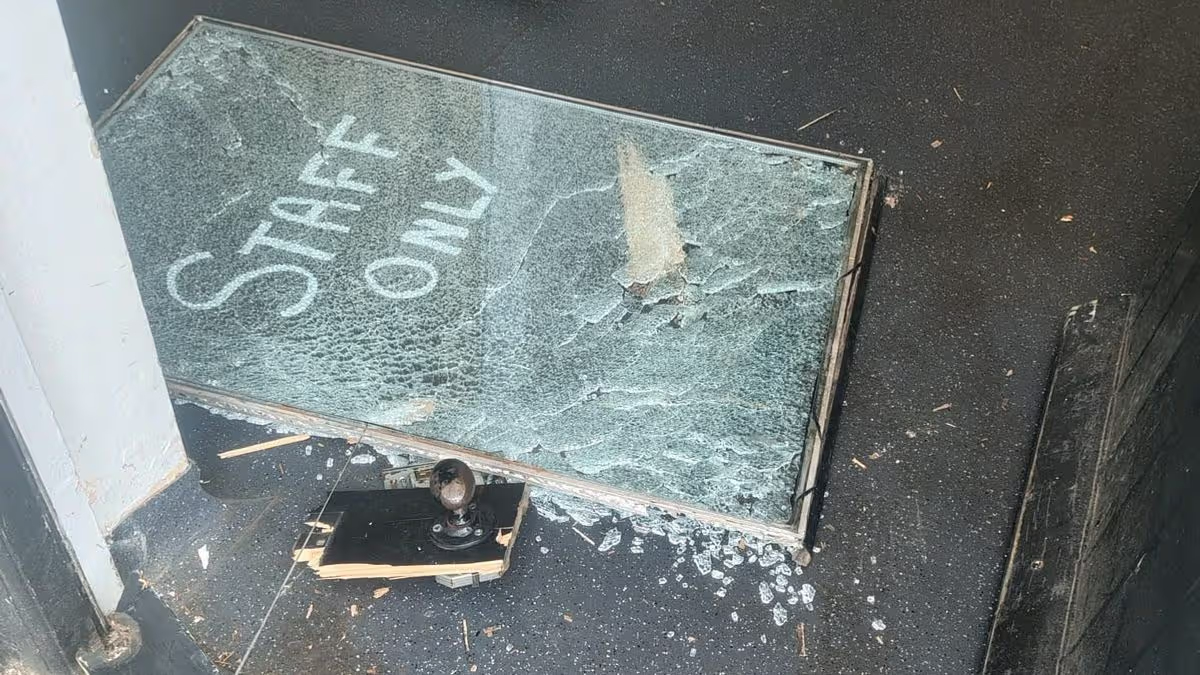
He arrived to find “two of the doors taken off their hinges” with “one of them completely destroyed” and “glass all over the floor of one of the units”.
He added: “We are going to have to replace both of the doors, the locks and it was obviously the knock on to the business yesterday because we were unable to open on time. We had lots of people coming down for breakfast and we just weren’t able to open because of the damage and the clear up.”
He said a lot of people were “disappointed” on Sunday (June 28) as they were unable to have their coffee and breakfast. Mr Sanderson emphasised that “it is just one of those business disruptions you just don’t need”.
Advertisement
He continued: “The team pulled together really well. We had a lot of support from those who weren’t [scheduled] to be on to say ‘can we come in and help?’ It was a case of everyone pulls together and we crack on for the customers.”
Mr Sanderson said he has supplied police with CCTV footage. Investigations are ongoing. The force has urged anyone with information to contact police online or via 101 quoting reference: 35/48397/26.
The new £250 million station is based next to the Cambridge Biomedical Campus. Commuters filled the station on Monday morning (June 29), as they headed for trains on the station’s first busy day.
Those travelling through the new station have shared their thoughts on the opening. Trudy Day said the opening has “taken its time” but it’s “been worth the wait”.
Advertisement
She added: “It’s going to make my life so much easier and I’m sure it will be for others as well. It looks so busy already as well so clearly a lot of people needed it.
“I do find it crazy that Cambridge now has three stations, but it’s such a big city and looking at how many people are here, it’s clearly needed.”
Ashah Shashank, who lives in Trumpington, said the station is “easier to walk to”. He added: “It’s much closer. I would have liked it to open in January but it’s pretty good.
Advertisement
“What this station does is it gives people an opportunity to go into the city and come back into this area. It’s great being next to the hospitals as well.”
Another person who lives in Trumpington, who wished to remain anonymous, said it also makes her commuting journey a “lot easier”. She said: “I don’t have to get the park and ride anymore, which takes a bit longer and they are not always on time. And then it takes longer to get the train from the city centre.”
The woman added that it’s easier as she can walk to the station from her home. “It would have been good for it to be open sooner, but I’m glad it’s opened,” she added.
Roberta, who asked to use only her first name, said the new station was “needed” and it’s “very helpful”. She added: “It’s good and the station is great. I think it’s good because it’s going to take people more central.”
Advertisement
Cambridge South is expected to serve around 1.8 million passengers a year, with up to nine trains an hour travelling through the station. It is the first station under new public sector body Great British Railways.
The June temperature record that had stood since 1976 was repeatedly broken during last week’s heatwave, as exceptionally hot and humid conditions led the Met Office to issue a rare red warning for extreme heat for some areas – the first time it has issued such a warning for three days in a row.
England football legend David Beckham was in the Royal Box on Day One of Wimbledon along with his mother, Sandra, and the former England captain had a request for a certain celebrity
15:21, 29 Jun 2026Updated 15:21, 29 Jun 2026
It appears that even Sir David Beckham occasionally gets a little starstruck.
Because even English footballing royalty and one of the most well-known men on the planet sometimes can’t resist being a fanboy. And on the opening day of Wimbledon, while sitting in the Royal box alongside his mother, for Becks, that meant taking a selfie with Dame Mary Berry.
Both were in attendance at SW19 on the first day of the 2026 Championships to watch reigning champion Jannik Sinner in his opening round match.
Advertisement
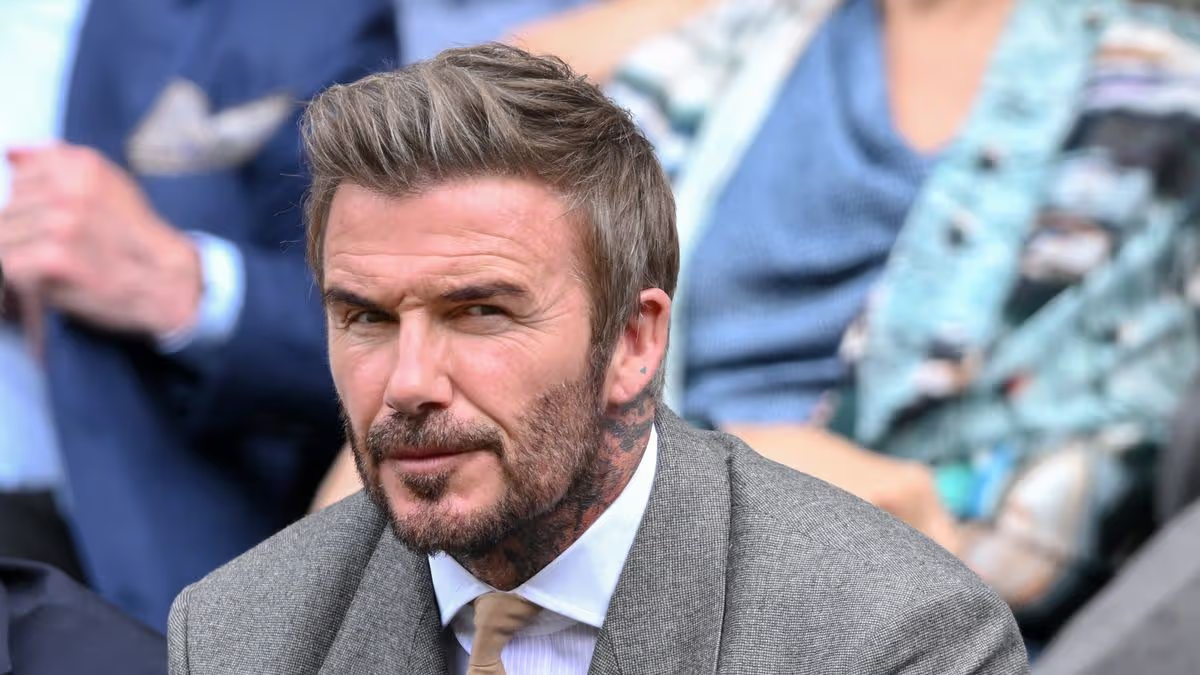
And looking dapper as ever in a sleek grey suit, 51 year-old Beckham was seen requesting a photo with the TV chef, famous for her role as a beloved judge on The Great British Bake Off.
Firstly he stood up to grab a picture of himself with his mother, Sandra. Then he requested a group picture with Berry and Deborah Jevans, the chair of the All England Lawn Tennis & Croquet Club.
Beckham, who presently manages his time in both the UK and USA, where he co-owns MLS club Inter Miami, is a regular attendee at the Wimbledon and was sitting front row in the Royal Box to watch Sinner open up his title defence against Serbia’s Miomir Kecmanovic.
Alexander Armstrong, the TV star and former host of BBC show Pointless, actor Mark Rylance, and Katherine Jenkins were among the star-studded names in attendance on Monday, all sat in the row behind.
Advertisement
And he wasn’t the only Beckham at SW19, with son Romeo also spotted within the grounds, with his girlfriend, Kim Turnbull. It seems the invite into the VIP seats hadn’t been extended to his second eldest son.
Celebrities from all fields are spotted in the prestigious box every year, but being a high-profile figure does not guarantee a seat. Guests must be invited by the former champion and chair, Jevans, who takes into account suggestions from the AELTC’s management committee, the Lawn Tennis Association, and other tennis bodies and prominent figures.
Advertisement
A Royal Box invite also comes with plenty of rules to adhere to, including a strict dress code, with Lewis Hamilton famously falling foul of this back in 2015, when he was subsequently turned away from taking up a seat in the box.
Beckham and the Centre Court crowd welcomed top seed Sinner with a raucous reception as he made his way out. The Italian is the firm favourite this year with Carlos Alcaraz out due to a wrist injury.
Buy Wimbledon 2026 VIP tickets from Seat Unique
This article contains affiliate links, we will receive a commission on any sales we generate from it. Learn more
The former world no1 is taking two bites of the cherry after being handed spots in both the singles and doubles competitions.
Williams has seven Wimbledon singles titles to her name plus six in the doubles, and last won both a decade ago in 2016.
But she’s back to to sprinkle some stardust across SW19, and fans will not have to wait long to her in action.
Serena Williams will make her grand return to Wimbledon
Advertisement
PA
When is Serena Williams playing at Wimbledon?
Serena Williams was handed a wildcard to play the singles competition, and kicks off her tilt at the title against unseeded Australian Maya Joint.
The pair will face off on Tuesday, June 30, which is day two of the 2016 championships.
Advertisement
No3 seed Iga Swiatek is first up, starting the defence of her Wimbledon crown against the unseeded Taylor Townsend. Jack Draper was then set to play no6 seed Taylor Fritz, but Williams and Joint will likely to moved up.
An estimated start time for Williams vs Joint is 2.30pm BST, but that is subject to change.
Venus Williams is also back at Wimbledon
PA
Serena Williams will also be in doubles action this week, as she reunited with sister Venus Williams.
Advertisement
The pair won all six of their doubles titles together, and will return to SW19 on Thursday, July 2, which is day four of the 2026 championships.
Their opponents will be South American duo Solana Sierra and Camila Osorio, who are competing together in the main draw at Wimbledon for the first time.
A start time for the match is yet to be confirmed.
Comments made by the officer were found to be “derogatory and of a misogynistic nature”
A Cambridgeshire Police officer shared “intimate images” of a detained woman, a misconduct hearing heard. PC Josh Williams faced a misconduct hearing accused of sharing images of a detained female and making “derogatory” comments to another officer.
Advertisement
PC Williams was accused of sharing messages and images, relating to a female who had been detained for criminal offences, to another officer without authority.
According to the hearing outcome, these images contained “intimate images of the detained female” and the comments made by PC Williams were “derogatory and of a misogynistic nature”. The hearing heard they were “unprofessional to say the least”.
Following an investigation, a summons was issued for two offences: misconduct in a public office and doing an act tending and intended to pervert the course of justice.
In May 2025, PC Williams entered a guilty plea in relation to misconduct in a public office. However, PC Williams entered a not guilty plea with regards to the allegation of perverting the course of justice. He was due to stand trial in June 2026.
Advertisement
The accelerated hearing only related to the former offence to which a guilty plea had been entered. The actions of the officer were found to breach the professional standards in discreditable conduct.
The Chief Constable of Cambridgeshire Police concluded that PC Williams’ conduct was “so serious that dismissal would be justified”. He therefore found that the conduct amounted to gross misconduct.
PC Williams did not attend the hearing. His case centres on an investigation that stemmed from another case which led to him being investigated for misconduct in a public office.
The initial download of the detainee’s phone was authorised. However, the downloading and sharing of the specific images and comments that were not authorised.
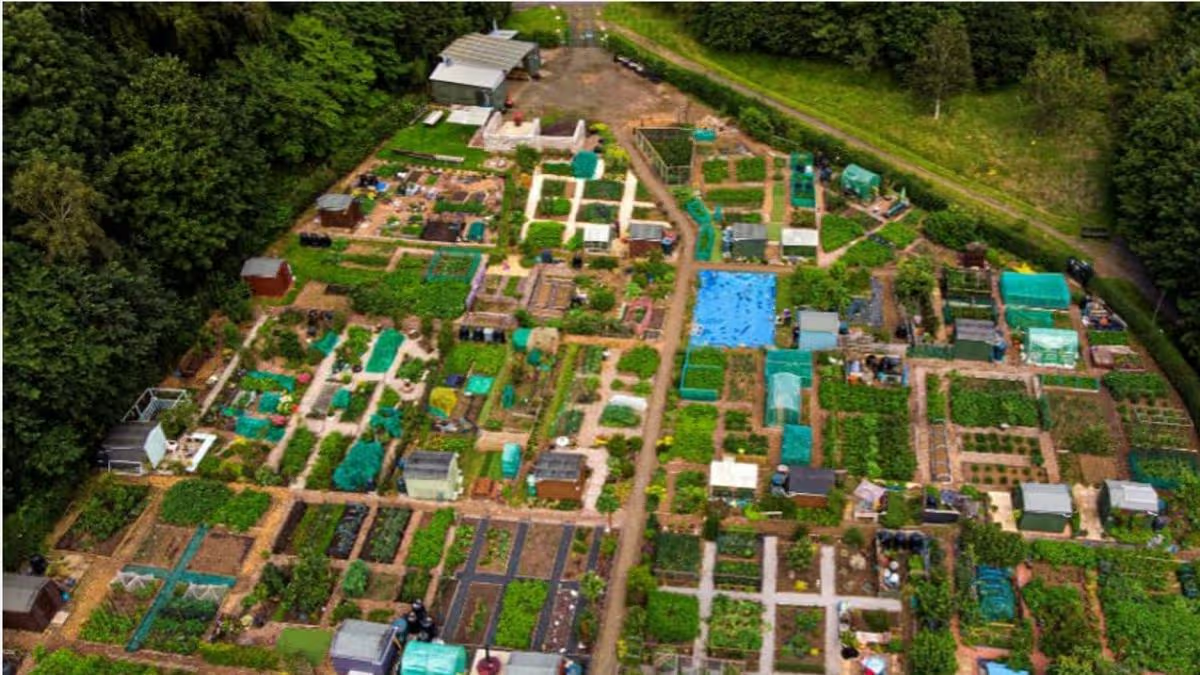
There are more than 70 allotments in Livingston and plans for a third site, in Boghall, Bathgate are being developed.
The Good Life has never been more attractive to the green-fingered in West Lothian and demand for allotment space is growing.
Advertisement
While the TV show is more than 50 years old the “grow your own” idea which first took root in the 1970s has bloomed.
There are more than 70 allotments in Livingston and plans for a third site, in Boghall, Bathgate are being developed.
The Council has continued to work with Bathgate Community Development Trust (BCDT) to develop an allotment site adjacent to Boghall Primary school. In the reporting period BCDT worked towards plans for an allotment of mixed plot sizes which could be managed by an independent allotment association.
BCDT are responsible for securing funding to enable the delivery of the new allotment. Funding from WLC was utilised for an initial ground investigation and report to ascertain the land was suitable for food growing. Currently BCDT is preparing to submit proposals for planning.
Advertisement
A council officer told the meeting that plans for the Boghall allotment had been submitted to the council and if approved the allotments could be operational by early next year.
A 2015 Holyrood Act requires the council to promote community food growing and the council supports local groups identifying sites.
A meeting of the Environment and Sustainability PDSP heard that there are currently 74 allotments on council sites at Killandean and Deansmeadow in Livingston.
Both allotment sites on council-owned land are leased to independent associations and were established prior to the introduction of the Act. These associations have maintained and administered their own waiting lists since their inception.
Advertisement
Killandean Community Allotment Association has 54 plots and reported 43 applicants on its waiting list. Turnover of plots remains limited.
Deansmeadow Allotments Association has reported to have 22 plots with 12 applicants on the waiting list.
Both groups are fully self-managing, with no direct involvement from the council in the day-to-day operation of sites or the administration of waiting lists. The council does not play a direct role in the development or construction of allotments.
The 2015 Community Empowerment Act requires local authorities to take reasonable steps to ensure that the number of applicants on waiting lists for Council-leased allotments does not exceed 50% of the total number of available plots.
Advertisement
When the council receives requests for allotment plots, applicants are directed in the first instance to Killandean Community Allotment Association and Deansmeadow Allotments Association. Applications for individual plots may be made by one or more individuals jointly; however, each application is recorded as a single request for the purposes of calculating waiting list numbers.
The council itself currently holds one applicant on its waiting list. At present, there is no dedicated level of investment to support the construction or direct management of allotments, and the waiting list is maintained primarily to ensure compliance with legislative requirements.
Should either Killandean or Deansmeadow Allotments Associations have no applicants on their waiting lists and a plot becomes available, the council may assist in allocating a plot from its own waiting list.
The council can support the allocation of plots where new allotment sites are developed by independent community groups.
Advertisement
Don’t miss the latest news from the West Lothian Courier. Sign up to our free newsletter
The award celebrates the team’s outstanding work in making golf more accessible and creating opportunities for people of all ages and abilities across North Lanarkshire.
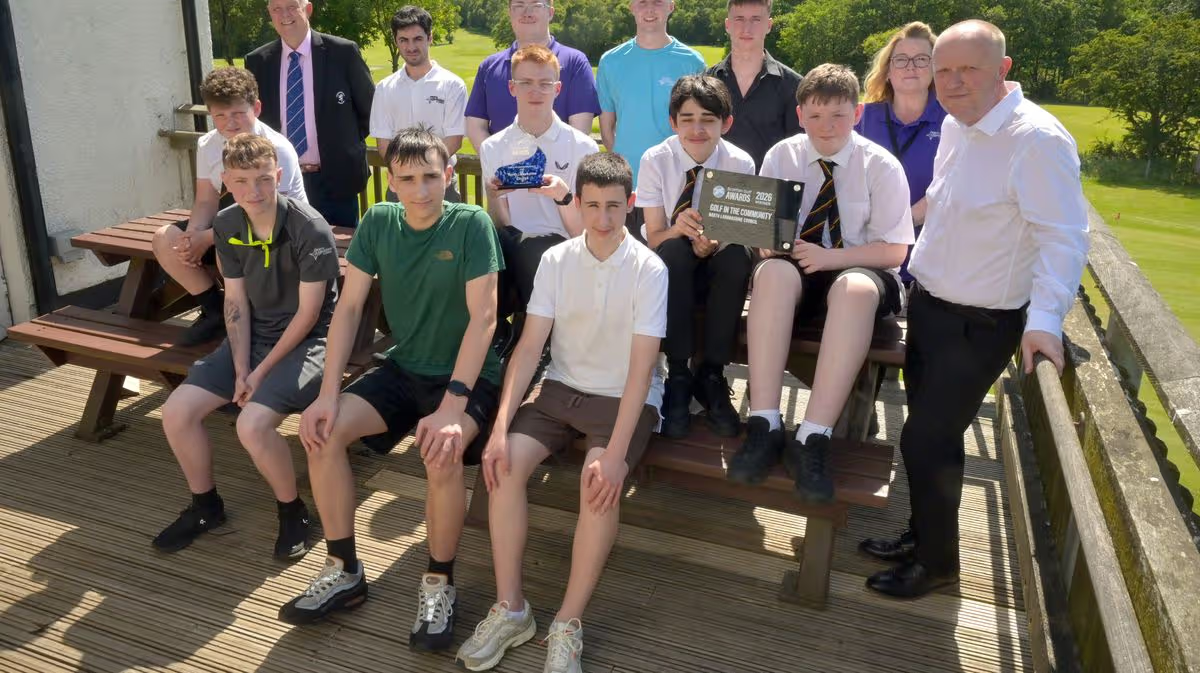
Active NL’s Golf Team has been recognised on the national stage after winning Community Team of the Year at the Scottish Golf Union (SGU) Golf Awards.
Advertisement
The award celebrates the team’s outstanding work in making golf more accessible and creating opportunities for people of all ages and abilities across North Lanarkshire.
A special event was held at Lochview Golf Course to celebrate the achievement, bringing together staff, partners and volunteers who have helped make the programme such a success.
Over the past year, Active NL’s Golf Team has continued to grow participation across local communities while focusing on inclusion, development and creating positive experiences through sport.
The team has worked closely with ASN schools to introduce golf to pupils with a wide range of additional support needs, helping young people build confidence, develop skills and enjoy being active in a welcoming environment.
Advertisement
Links with mainstream schools have also strengthened, with local pupils invited to access Lochview free of charge on Friday afternoons.
The initiative has helped introduce more young people to golf and has contributed positively within the local community.
Programmes designed specifically for women and girls continue to thrive, with 75 girls taking part in the popular Girls’ Hub programme last year.
More than 100 children also regularly attend Lochview Academy as they begin their journey in the sport.
Advertisement
John Kelly, Golf Operations Manager with North Lanarkshire Council, said: “This recognition belongs to the whole team, our staff, coaches, volunteers, grounds team, partners and participants.
“What makes this especially rewarding is seeing the difference golf can make beyond the game itself. We’ve seen young people grow in confidence, families get involved together and people discover opportunities they may never have thought were available to them.”
Councillor Geraldine Woods, Convener of NLC’s Communities Committee, said: “This award is a fantastic achievement and a real reflection of the commitment and passion shown by everyone involved in delivering golf opportunities across North Lanarkshire.
“The team has created something that goes well beyond sport. They’ve opened doors for people, supported communities and made golf accessible and welcoming to more residents.”
Advertisement
*Don’t miss the latest headlines from around Lanarkshire. Sign up to our newsletters here.
And did you know Lanarkshire Live had its own app? Download yours for free here.













































You must be logged in to post a comment Login