Connect with us

NewsBeat

Why visitors love Robertshaw’s Farm Shop in Skipton

Published

on

Why visitors love Robertshaw’s Farm Shop in Skipton

Robertshaw’s Farm Shop, on Gargrave Road, combines a large food hall with an on-site butcher’s, deli, and café serving breakfast and lunch.

The Skipton store only opened in March 2025, taking over the former Keelham Farm Shop site, but the Robertshaw family’s farming and food business stretches back almost a century.

The family began selling fresh farm produce and vegetables from the roadside in 1929, and fourth-generation farmers and butchers now run the business.

Owner James Robertshaw acquired the Gargrave Road site as part of the company’s expansion, describing the move at the time as a significant milestone for the family-run business.

Advertisement

Robertshaw’s Farm Shop (Image: TRIPADVISOR)

Robertshaw’s says it is passionate about providing good-quality local produce at affordable prices, while supporting hundreds of farmers and producers.

The business works with more than 400 local farmers, with James also a regular visitor to Skipton Auction Mart.

Its Skipton shop has quickly proved popular with customers and currently has a 4.5-star Google and TripAdvisor rating from more than 4,000 reviews.

Visitors have particularly praised the quality and variety of food available.

Advertisement

The farm shop includes an extensive butcher’s counter and deli, while Robertshaw’s makes many of its own sausages, burgers, and pies.

The family business also operates a large bakery to produce its range of cakes and other baked goods.

Recent customers have highlighted everything from meat and vegetables to Yorkshire puddings, cakes, and breakfasts.

One regular visitor said staff were “friendly and helpful” and praised the choice of products as well as the cleanliness of the store.

Advertisement

They bought topside and pork loin for a Sunday dinner and described both as “great”, adding that the Yorkshire puddings, cakes, and vegetables also impressed.

After later returning for breakfast, they said the staff were once again helpful and the food was “very good”.

Another recent customer praised the “great service” and said their food arrived soon after ordering.

Advertisement

They added that the drinks were “piping hot too”.

Food quality is repeatedly mentioned by visitors, with one reviewer simply describing it as “excellent”.

Breakfast is one of the biggest draws.

One customer said the shop remained similar to the former Keelham Farm Shop and recommended it as somewhere to stop for breakfast or lunch before picking up groceries at the same time.

Advertisement

They said: “Not the cheapest of places – but you do get what you pay for.”

Cakes have also proved particularly tempting.

One customer who called in on a busy Sunday lunchtime specifically to pick up cake admitted there had been a wait to pay but concluded: “Cake was goooood!”

The farm shop itself is a major attraction, with customers praising the scale and variety of its food and drink selection.

Advertisement

One reviewer described it as a “lovely big farm shop selling a massive selection of food and drink”, adding that they would “definitely go again”.

Another called it an “excellent large farm shop with cafe just outside Skipton”.

Fresh produce, meat, and deli products are frequently highlighted in reviews.

One customer described everything sold at Robertshaw’s as “top class quality” and said it was “a pleasure to go here”.

Advertisement

As fourth-generation farmers and butchers, the Robertshaw family says that background is reflected in both the quality of its products and the awards it has received over the years.

Its butchers and deli produce sausages, burgers, and pies in-house, while the company’s bakery allows it to make baked goods on a much larger scale.

The Skipton opening marked a major expansion for a business which had already been operating for generations.

When plans for the store were announced, Robertshaw’s said its commitment to “exceptional products” and customer service would remain at the heart of the new venture.

Advertisement

Source link

Continue Reading
Click to comment

You must be logged in to post a comment Login

Leave a Reply

NewsBeat

Woman charged after ‘unknown substance’ found on Edinburgh lamppost

Published

on

Daily Record

A road closure was put in place while emergency services attended and tests were carried out on the substance.

A woman has been arrested and charged after an unknown substance was discovered on a lamppost in Edinburgh.

Advertisement

The incident was reported on Thursday evening, August 20, after officers were alerted to “items being placed on a lamppost” on Morningside Road.

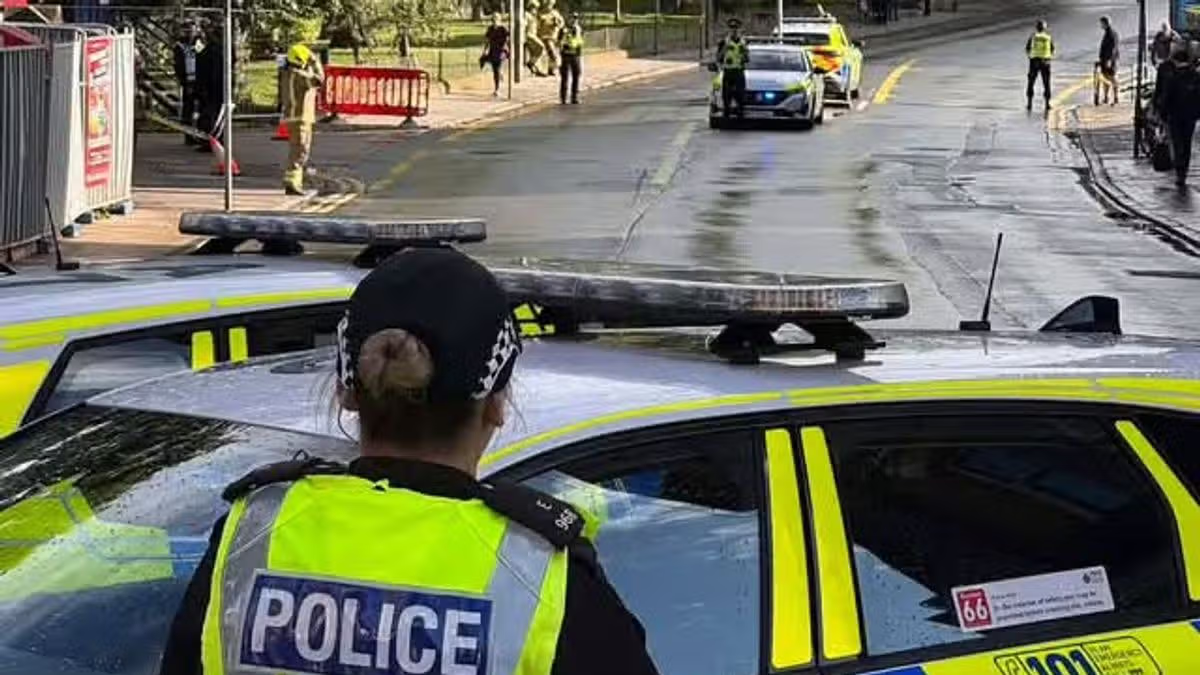
A road closure was put in place while emergency services attended and the substance was removed. Police and firefighters were at the scene, while public transport services in the area were disrupted and a cordon was erected around the lamppost.

It remains unclear what the substance was, however it was tested and found to pose no threat to the public.

A 30-year-old woman has now been arrested and charged in connection with culpable and reckless conduct, reports Edinburgh Live. She is due to appear at Edinburgh Sheriff Court at a later date.

Advertisement

A Police Scotland spokesperson said: “On the evening of Thursday, 20 August, 2026, a further report was made about items being placed on a lamppost in the Morningside Road area of Edinburgh.

Advertisement

“A short closure was put in place while this was removed and further tests are being carried out on the substance to establish exactly what has been used. However, it was found to pose no further threat to the public.

“A 30-year-old woman has been arrested and charged in connection with culpable and reckless conduct.

“She is due to appear at Edinburgh Sheriff Court at a later date.”

Get more Daily Record exclusives by signing up for free to Google’s preferred sources. Click HERE.

Advertisement

Source link

Continue Reading

NewsBeat

Trump’s border czar Tom Homan says he’s ‘an equal opportunity deporter’ as he denies ICE racial profiling claims

Published

on

Trump’s border czar Tom Homan says he’s ‘an equal opportunity deporter’ as he denies ICE racial profiling claims

President Donald Trump’s border czar offered a stunning denial Saturday to the claim that immigration officials engage in racial profiling — by calling himself “an equal opportunity deporter.”

Tom Homan made the boast while responding to a suggestion by progressive Democratic Senate candidate Angie Nixon of Florida that Immigration and Customs Enforcement officers would “shoot and kill” Black Americans after mistaking them for immigrants “from Jamaica or Nigeria.”

“It was a ridiculous statement. Look, we don’t racially profile,” Homan told Fox News’ Saturday in America. “We don’t arrest people based on the color of their skin.”

Homan then said, “I’m actually an equal opportunity deporter.”

Advertisement

“I deported people to 180 countries last year, so I don’t care if you’re from Asia, you’re from Europe, or you’re from other countries. If you’re in the country illegally, you’ll be deported, regardless of the color of your skin,” he added.

Border czar Tom Homan says, ‘If you're in the country illegally, you'll be deported, regardless of the color of your skin’
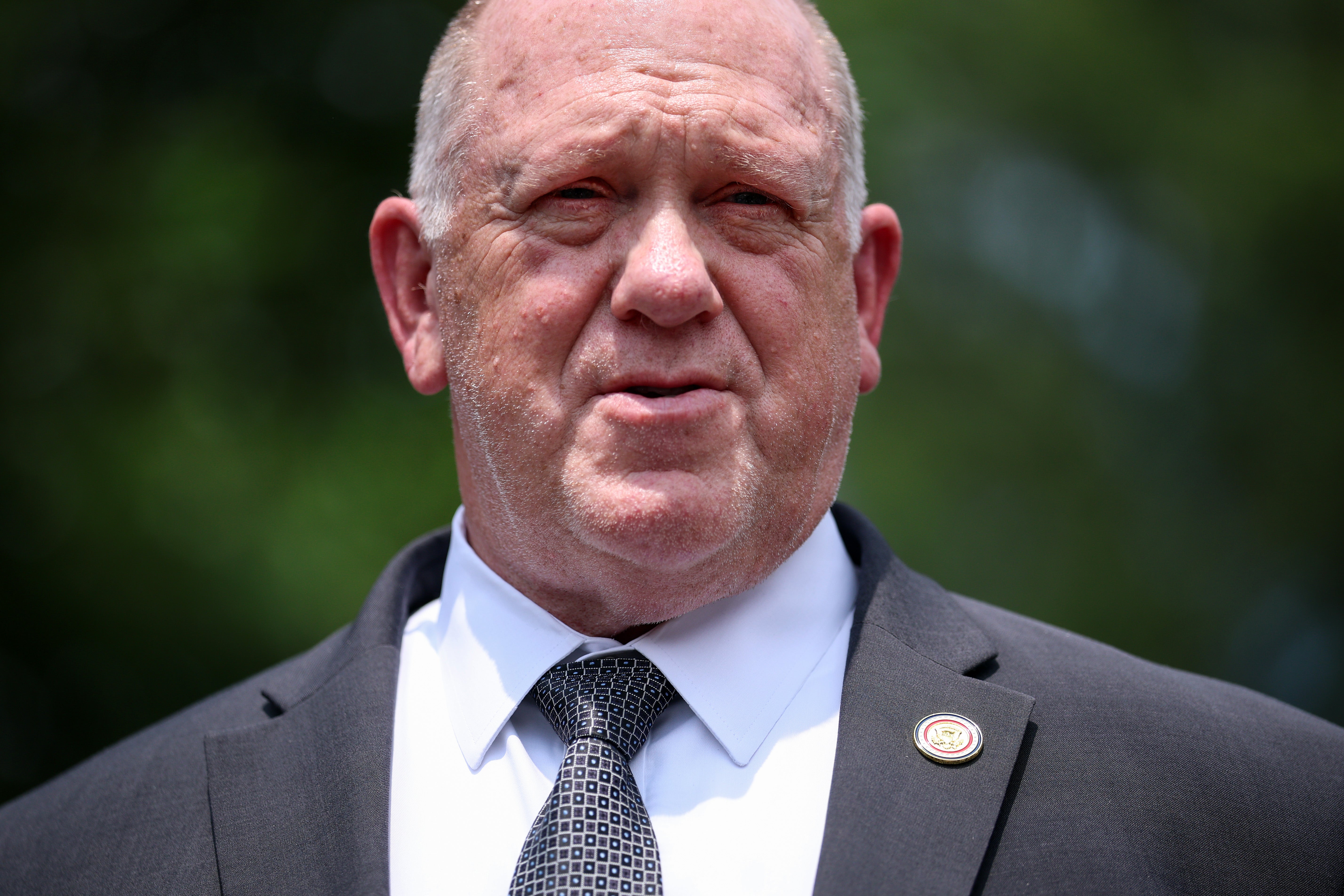
Border czar Tom Homan says, ‘If you’re in the country illegally, you’ll be deported, regardless of the color of your skin’ (Getty)

Trump has repeatedly pledged to carry out the largest mass deportation operation in U.S. history, and more than 356,000 people have been deported during fiscal 2026, which ends September 30, ABC News reported last month, citing ICE data.

But the White House has set a goal of 1 million a year, which Mullin is unlikely to meet despite vowing to increase the number achieved by predecessor Kristi Noem, Politico reported early this month.

Homan’s Saturday remarks came after host Kayleigh McEnany played a video clip of Nixon, who is Black, recently telling the South Dade NAACP’s The Empowerment Zone Podcast that ICE was “gonna profile us, too.”

“They can’t tell the difference between an African-American or, you know, a Black American that is a descendant of slaves here in this country, or someone from Jamaica or Nigeria,” she said. “Like, they are going to racially profile us, and they are going to escalate things, and they are going to shoot and kill us.”

Advertisement

Federal law-enforcement officers have been involved in a series of fatal shootings during immigration crackdowns across the country, including the January killings of protesters Renee Good and Alex Pretti in Minneapolis.

Progressive Democratic Senate candidate Angie Nixon of Florida says ICE officers will ‘shoot and kill’ Black Americans after mistaking them for immigrants ‘from Jamaica or Nigeria’
Progressive Democratic Senate candidate Angie Nixon of Florida says ICE officers will ‘shoot and kill’ Black Americans after mistaking them for immigrants ‘from Jamaica or Nigeria’ (Getty)

More recently, ICE officers killed Mexican national Lorenzo Salgado Araujo in Houston and Colombian national Johan Sebastián Durán Guerrero in Biddeford, Maine, on July 7 and July 13, respectively.

Both men were shot during traffic stops, but neither was the target of an investigation.

Their slayings led Mullin to order a temporary halt to vehicle stops by ICE, but his directive was immediately criticized by President Donald Trump, leading Mullin to countermand it the following day.

On Tuesday, Nixon scored an upset victory over Alexander Vindman, a retired Army lieutenant colonel, in Florida’s special Democratic primary to challenge Republican Senator Ashley Moody.

Advertisement

Outgoing Florida Governor Ron DeSantis appointed Moody, then the state’s attorney general, to fill the Senate seat vacated by Marco Rubio after he was confirmed as Trump’s secretary of state in January 2025.

Nixon’s landslide, 56-44 win over Vindman came despite her raising less than $1 million, compared to the $16 million war chest he amassed as of July, according to the Miami Herald.

The Herald credited Nixon’s victory to her campaign platform, which calls for universal Medicare, free childcare, a national rent freeze and a $25 minimum hourly wage.

Vindman, who was a key witness in Trump’s first impeachment trial, ended his primary campaign with more than $7 million on hand, and the state’s Democratic Party said he was donating $400,000 to “support General Election candidates up and down the ballot,” the Florida Politics website reported Thursday.

Advertisement

Source link

Continue Reading

NewsBeat

Damaged rotor blade may be to blame for Greek helicopter crash that killed British newlyweds

Published

on

Alexander Cromie and Marie Ebert,were taking a ride in a private air taxi before it was suspected to have suffered a mechanical failure and crashed near a heliport in Sifnos, Greece

Advertisement

A damaged rotor blade from an earlier incident may have caused the helicopter crash that killed a British couple on honeymoon in Greece last week.

The Bell 206 helicopter was carrying Alexander Cromie, 31, and Marie Ebert, 30, when the pilot apparently lost control while coming in to land on the island of Sifnos on Monday.

Witnesses saw the helicopter spinning out of control, suggesting it had a tail rotor failure, before it crashed, killing the newlyweds and the Greek pilot.

Investigators are said to be looking at whether the crash was linked to a scare involving the helicopter 11 weeks earlier.

Advertisement

Restraining straps were put in place after the aircraft landed on Paros on June 1 to immobilise the tail blades so they would not move in high winds.

But the pilot failed to ensure the straps had been removed before starting the engine again to fly passengers off the island, according to a report filed with Greece’s Civil Aviation Authority.

Experts are said to be assessing whether the straps could have caused any strain or damage to the tail assembly.

The investigation will be hampered by the intense fire that destroyed much of the helicopter.

Advertisement

Alexander Cromie and Marie Ebert,were taking a ride in a private air taxi before it was suspected to have suffered a mechanical failure and crashed near a heliport in Sifnos, Greece 

Footage showed the helicopter immediately engulfed in a fireball, with smoke seen billowing into the sky from the blackened wreckage

 Footage showed the helicopter immediately engulfed in a fireball, with smoke seen billowing into the sky from the blackened wreckage

Pictured: Aerial view of the area where a Bell 206 helicopter crashed on the island of Sifnos

Pictured: Aerial view of the area where a Bell 206 helicopter crashed on the island of Sifnos

Advertisement

Flight tracker records suggest the helicopter remained in Paros for three weeks after the June 1 incident. It later received an air-worthiness certificate, on July 2.

The civil aviation authority has ruled that ‘visual and functional checks’ be carried out on the tail rotors of all Bell 206 helicopters before every flight in Greece as a precaution following the crash.

Mr Cromie, a vice-president in private wealth solutions for asset management company Blackstone, and Ms Ebert are thought to have booked an 80-mile flight to Sifnos costing £1,300 as a honeymoon treat.

A spokesman for Blackstone said Mr Cromie was ‘beloved by everyone who worked with him’.

Advertisement

Management consultant Bain & Company, which employed Ms Ebert as a senior specialist, described her as a ‘much-loved and deeply respected’ member of its London team.

Relatives of Mr Cromie and Ms Ebert are reported to have flown to Athens to formally identify their bodies.

Advertisement

Source link

Advertisement
Continue Reading

NewsBeat

Peru steps up fight against illegal gold mining as it spreads into protected Amazon reserve

Published

on

Peru steps up fight against illegal gold mining as it spreads into protected Amazon reserve

PUERTO MALDONADO, Peru (AP) — Eight Peruvian navy personnel jumped from a helicopter into a clearing carved out of the Amazon rainforest by illegal gold miners along the Malinowski River in Peru’s Madre de Dios region, sending sand and dust swirling as they ran toward the mining site.

The forest gave way to giant holes gouged into the earth and filled with opaque, muddy water, gasoline and other chemicals glistening on the surface. Makeshift wooden mining platforms straddled the pools, surrounded by pumps and thick plastic tubes used to suck up and sift through sediment for tiny particles of gold.

As the troops closed in, several miners stood watching from a distance. The officer leading the patrol fired a warning shot into the air. Within seconds, they vanished into the forest.

The raid over several days this week was part of an intensified government campaign against illegal gold mining in Madre de Dios, one of Peru’s most biodiverse regions, as authorities try to stop the activity from advancing into protected areas of the Amazon. Mining has stripped away vast areas of rainforest, leaving behind a scarred landscape of contaminated pools and altered rivers in the hunt for lucrative gold. Mercury used to separate gold from sediment has contaminated waterways, wildlife and people, including Indigenous communities that depend heavily on fish.

Advertisement

Behind them was a camp abandoned in haste. Crushed beer cans and empty liquor bottles littered the ground alongside mattresses, clothes and tools. That day’s lunch — rice and plantain — still sat in plastic containers. Freezers and fuel containers dotted the camp, alongside live chickens and guinea pigs kept for food.

Advertisement

The troops were one of eight patrols, flown by helicopter to separate points along the Malinowski River. The aircraft touched down only long enough to drop each group before lifting off and moving to the next site.

Illegal mining is advancing toward protected areas of the Amazon

Edy Reynaldo Dariquebe, an official with FENAMAD, an Indigenous federation representing communities in Peru’s Madre de Dios region, said criminal groups linked to illegal mining have been operating near or inside protected Indigenous communities. He said mining is destroying forests and contaminating rivers with mercury that accumulates in fish, spreading the impact to communities far from the mining sites.

Ronald Flores Yáñez, a deputy prosecutor for Peru’s Office of the Attorney General, said illegal mining has advanced close to military monitoring points and into protected areas.

“We can attest today that they have already entered the Tambopata National Reserve,” Flores told The Associated Press. “We are inside the reserve and around us we see dredges numbering in the hundreds.”

Illegal mining declined in parts of Madre de Dios after Peru launched a major military and police crackdown known as Operation Mercury in 2019. But miners have since moved back toward protected areas, prompting authorities to intensify operations.

Global Conservation, a U.S.-based nonprofit working with Peruvian authorities, said ongoing operations will combine satellite monitoring, aerial reconnaissance and law enforcement raids over the coming year to identify and dismantle illegal gold mining camps and equipment.

Destroying the motors hits miners where it hurts most

Before setting out Tuesday, Navy Lt. Cmdr. Renato Miranda told troops at a briefing that the mission’s objective was to “neutralize and dismantle” illegal mining activities. Once on the ground, that meant searching for anything that allowed the mines to function: pumps, batteries, fuel, dredging equipment and makeshift infrastructure.

“The most important thing is to destroy the main machinery,” Miranda said. “And the main machinery is the motors.”

Advertisement

The powerful engines are among the most valuable pieces of equipment at a mining site and a key economic pressure point for authorities trying to make it more expensive for miners to restart operations. Miranda said larger engines can cost around $30,000 to $45,000. He estimated that motors targeted in the raids can extract 30 to 50 grams of gold a day. At current gold prices, that would be worth about $4,000 to $7,000.

Miranda told AP the three-day operation destroyed 56 motors, 78 mining rafts and 13,751 gallons (52,050 liters) of fuel, with the destroyed material valued at more than 15 million soles ($4 million). On the ground, soldiers said they had destroyed around 115 motors over the previous three months during operations carried out nearly every week.

Advertisement

The remote sites give miners time to hear approaching boats or helicopters and flee, often hiding motors in sand, behind trees or in muddy pools to recover later. Specialized navy divers search the murky pools for submerged engines, entering water where mercury and other chemicals may be present. When they find one, they attach explosive charges and destroy it.

At one site, as troops prepared to leave, a soldier spotted disturbed sand and began digging. He uncovered a motor, threw it onto a pile with a mattress and chainsaw, doused it with gasoline and set it alight. A dog abandoned at the site fared better: soldiers took a liking to it, bringing it along for the rest of the day’s mission and eventually back to their military base.

Elsewhere, troops used dynamite-like explosives to destroy equipment and burned structures and supplies that could be used to keep the mining camps running.

A 10-minute boat ride away, another, larger camp offered a glimpse of daily life at the mining sites. A chest freezer was packed with meat, while wooden shelves held plates and coffee mugs. Several separate sleeping areas were strewn with personal belongings: a ledger filled with lists of needed supplies, freshly washed underwear hanging from string to dry, bottles of vitamins and even pills marketed as increasing penis size and sexual endurance. All was set alight by the troops. Before moving on, some of the soldiers cooked and ate food they found in the abandoned camp.

The expensive machinery and valuable gold contrasts with the precarious conditions of many living and working in the camps.

During the operation, another patrol encountered a woman with her 1-year-old child at a mining site. Flores told AP she had come to Madre de Dios from Cusco after failing to gain admission to university and, after being left by the father of her child, needed work. She responded to an advertisement seeking a cook and ended up preparing food for illegal miners.

Advertisement

Authorities say raids alone will not stop the mining

The destruction of machinery is intended to hit miners where it hurts most: the cost of restarting. But authorities themselves acknowledge that raids alone are not enough.

Advertisement

Miranda said that with gold prices high and mining highly profitable, operators can acquire another engine, rebuild their equipment and return to the same location or move elsewhere.

“Every day they are advancing more and more and more, and we are being very slow,” said Flores, adding that their strategy needs to change.

Prosecutors, he said, are now pursuing two fronts: continuing operations against dredges, motors and other equipment while also following the money behind the mines — identifying the financiers who provide the capital for expensive machinery and tracing the profits generated by the gold.

That approach could be critical to breaking the cycle visible along the Malinowski River: authorities destroy equipment, leave and miners find the money and machinery to start again.

“These operations have to be permanent,” Flores said.

Advertisement

___
The Associated Press’ climate and environmental coverage receives financial support from multiple private foundations. AP is solely responsible for all content. Find AP’s
standards for working with philanthropies, a list of supporters and funded coverage areas at AP.org.

Advertisement

Source link

Advertisement
Continue Reading

NewsBeat

Meghan Markle will ‘struggle’ with one part of UK return with Prince Harry, says expert

Published

on

Daily Record

Prince Harry and Meghan Markle are reportedly set to return to the UK with their children, however, royal biographer Andrew Lownie believes Meghan may struggle with one part of life in Britain

Prince Harry and Meghan Markle sent shockwaves around the globe when they revealed plans to return to the UK.

Advertisement

The former working royals are anticipated back in Britain later this month, with their children, Archie and Lilibet, set to begin at British schools for the upcoming academic year, which commences in September.

However, one leading royal commentator believes there’s a particular challenge Meghan will find especially difficult to cope with as the couple readjust following more than six years living in California.

Considerable speculation has surrounded where Harry and Meghan will settle when they arrive back. As private individuals no longer within the Royal Family, their exact location is unlikely to be made public.

It’s anticipated they’ll reside on a private estate away from London, with two areas being widely discussed, reports the Express.

Advertisement

One possibility is Northamptonshire, close to the ancestral home of Harry’s late mother, Princess Diana. The alternative is the Cotswolds, an area already populated by celebrities and the ultra-wealthy.

According to royal biographer Andrew Lownie, there’s one aspect Meghan might not have fully considered – Britain’s notorious weather.

While the country has experienced (or suffered through) successive heatwaves over the past three months, conditions are set to deteriorate as winter draws near.

Advertisement

Andrew told The Daily T podcast: “I can’t see Meghan enjoying a Cotswolds winter with the rain coming down, and her mother a long way away. So I just can’t see this working.”

The writer has penned several volumes about the Royal Family, most recently Entitled: The Rise and Fall of the House of York, which examines the Andrew Mountbatten-Windsor controversy.

Throughout the podcast, he also discussed what Harry and Meghan’s apparently abrupt choice to abandon their American lifestyle and return to the UK reveals about the evolving balance in their marriage. The move was so unexpected that it reportedly caught Harry’s father, King Charles, off guard.

He explained: “I think it’s a really interesting dynamic because we’ve always thought that Harry was under the thumb of Meghan, and that there wasn’t much give or take there.. And now there seems to be an understanding that he wants to have children with a British education, he wants to come back to his friends, I think he’s felt very isolated in California.”

In other developments, a property specialist suggested the family’s new residence might not be the most impressive for one significant reason.

Cal Graham, from We Buy Any Home, reckons this will be true if privacy and security are their primary priorities.

To prevent people from identifying their whereabouts, Cal suggests a “shielded” property would be the ideal choice, which doesn’t automatically mean a luxurious one.

Advertisement

Cal told us: “If the reports are correct, the most suitable property would probably be one that looks relatively unremarkable from the public road but offers considerable privacy once inside.

“A modern home on a privately managed estate, set well back from the road and shielded by mature landscaping, would attract far less attention than an instantly recognisable country mansion.”

Source link

Advertisement
Continue Reading

NewsBeat

The Darlington and County Durham lost and abandoned villages

Published

on

The Darlington and County Durham lost and abandoned villages

Across the countryside are fields, earthworks and ruined buildings marking places where communities once lived, worked and farmed before their settlements shrank or disappeared altogether.

Some were abandoned during the later Middle Ages, when England was affected by population decline, disease and changes in farming. Others gradually dwindled over several centuries.

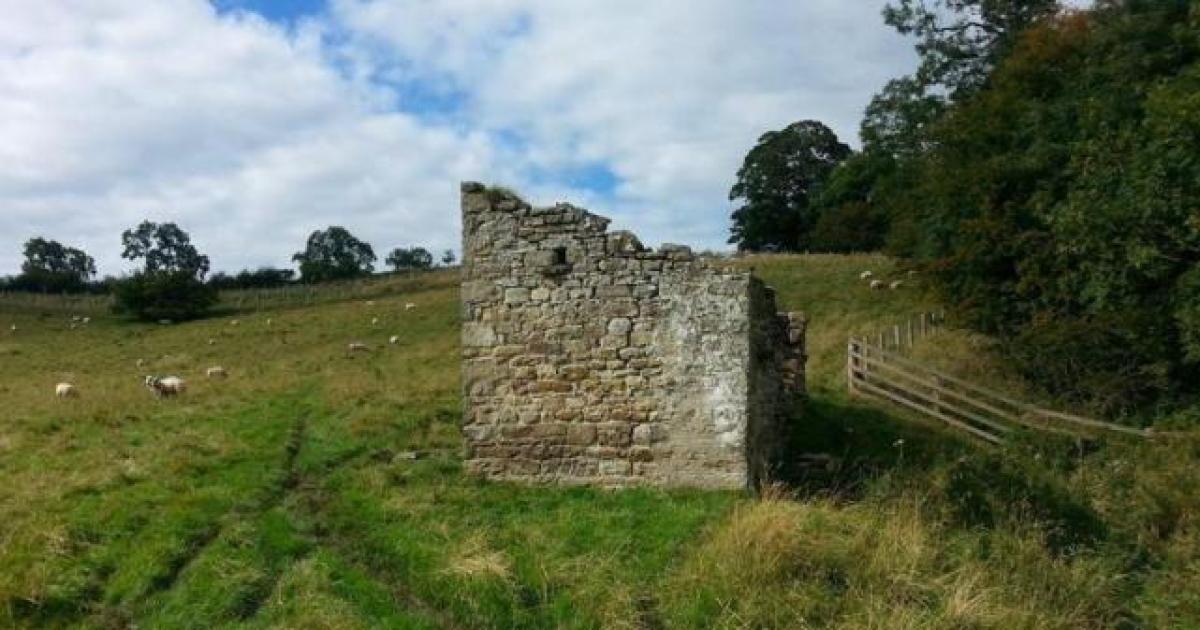
The abandoned villages of County Durham and Darlington (Image: ARCHIVE)

Historic England says more than 2,000 deserted medieval villages have been recorded nationally, with abandonment particularly common during the 14th and 15th centuries. Causes could include changes in land use, enclosure, economic decline and population losses associated with epidemics such as the Black Death.

Here are some of the lost, deserted and dramatically shrunken settlements that can be found in and around Darlington and County Durham.

Advertisement

Barforth, sometimes known as “Old Richmond”

Near Gainford, beside the River Tees, lie the remains of the medieval settlement of Barforth.

The site has long appeared under the intriguing name Old Richmond, although Historic England’s research records say the name is probably misleading.

Barforth was recorded in the Domesday Book and again in medieval documents between 1301 and 1334. Depopulation may have been reported there in 1517.

Historic records describe the settlement as having included streets and crofts, while surviving remains in the area include St Lawrence’s Chapel and a medieval dovecote. Barforth Hall survives nearby.

Advertisement

The alternative name Old Richmond may have developed because a de Roaldo de Richmond was recorded as holding Berford or Berforth in 1287, rather than because the settlement was an earlier version of Richmond itself.

Ulnaby

One of the best-preserved deserted medieval villages around Darlington can be found at Ulnaby, near High Coniscliffe.

The site is now a Scheduled Monument and contains extensive earthworks surrounding Ulnaby Hall.

Archaeological investigation found the remains of a planned two-row village arranged around a green. Rectangular plots represent medieval tofts and crofts, house plots with their associated yards and gardens, while a manorial enclosure included a fishpond and dovecote.

Advertisement

The abandoned villages of County Durham and DarlingtonThe abandoned villages of County Durham and Darlington (Image: ARCHIVE)

The settlement expanded and contracted over the centuries before gradually becoming smaller.

Historic England’s research indicates that Ulnaby Hall was established by the early 17th century on land previously occupied by village plots. Three cottages were still documented in 1629, while the last surviving medieval building disappeared sometime between 1855 and 1896.

Today the earthworks make Ulnaby an unusually clear archaeological example of how a medieval County Durham village was laid out.

Whessoe

The medieval village of Whessoe once stood on what became the northern side of Darlington, close to Whessoe Grange.

Advertisement

Unlike Ulnaby, much of the physical evidence for Whessoe has disappeared.

Historic England’s research records state that the deserted medieval village survived as visible earthworks until the early 1950s.

The remains in a field historically known as Village Field were subsequently bulldozed and ploughed. Large stones were reportedly encountered during the work, while only limited earthwork evidence remained afterwards.

The name survived even after the settlement itself had vanished, providing another reminder that modern Darlington has expanded across what was once a much more rural medieval landscape.

Advertisement

West Hartburn

Another important lost village lies near Middleton St George.

West Hartburn is recorded as a deserted medieval settlement and was first documented around 1200.

Remarkably, two rows of cottages with a central well were reportedly still standing as late as 1823, showing that the disappearance of a medieval settlement did not always happen suddenly.

Archaeological excavations uncovered longhouses and other buildings, together with a paved causeway.

Advertisement

Finds ranged from medieval pottery and a 14th-century dagger to coins and later objects showing occupation continuing beyond the Middle Ages. Surviving earthworks include house plots, crofts and a hollow way marking the route through the settlement.

Some features north-west of the hollow way have since been levelled, but earthworks on the opposite side were still identifiable in 2018 lidar data.

Archdeacon Newton

Just outside Darlington lies Archdeacon Newton, described in Historic England’s records as a shrunken medieval village.

It was associated with a manor belonging to the Archdeacon of Durham and its surviving archaeological remains include banks and ditches forming former enclosures, along with evidence connected with a manorial complex.

Advertisement

Surveys have recorded medieval settlement earthworks, ridge-and-furrow cultivation and evidence of a moated manor-house complex.

Unlike a completely deserted settlement, Archdeacon Newton never vanished entirely. Instead, the settlement contracted dramatically, leaving surviving buildings and farms surrounded by archaeological evidence of the community that once existed there.

Garmondsway

Farther north in County Durham, near Kelloe, is one of the county’s most impressive deserted medieval village sites.

Garmondsway is a Scheduled Monument containing both the abandoned village and part of its medieval field system.

Advertisement

Historic England describes the settlement as extensive and exceptionally well preserved.

At least 13 rectangular enclosures survive as earthworks, with some containing gardens, yards and foundations belonging to medieval longhouses. Two hollow ways, sunken routes worn through repeated use, also help reveal the former shape of the settlement.

Part of the surrounding ridge-and-furrow field system survives alongside it, meaning the site preserves evidence not just of where villagers lived but also of the farmland on which their community depended.

Old Wingate

Near modern Wingate and Wheatley Hill are the remains of another largely abandoned medieval community.

Advertisement

Old Wingate is recorded as a deserted medieval village with its associated open-field system.

Earthworks show former house plots and crofts arranged around a central village green. In places, stone foundations belonging to buildings can still be identified.

The surviving archaeology also includes ridge-and-furrow cultivation and other earthworks associated with the medieval agricultural landscape.

Modern farms occupy part of the area, so Old Wingate is another example of a medieval settlement whose footprint is considerably larger than the community surviving there today.

Advertisement

Source link

Continue Reading

NewsBeat

UK power plant ‘shut down for four days’ after major Iran-linked cyber attack

Published

on

Daily Mirror

The incident took place in July, at the same time as a series of attacks on US water infrastructure which sparked worry in the White House and affected 12 states

A power plant in Great Britain was forced to close for four days after a cyber attack by Iran-linked hackers, it has been revealed.

Advertisement

According to reports, the facility was disabled “while staff fought to bring it back online” after the attack last month – the exact location of the site has not been revealed due to security reasons.

It is, however, understood that the plant affected was not one of the biggest sites in the country, according to the Telegraph. Due to the relatively small nature of the plant, the outage had no impact on the UK’s wider power supply or energy generation. This has been confirmed by the Government, which has described the UK’s energy system as ‘highly resilient.

The incident took place in July, at the same time as a series of attacks on US water infrastructure – those attacks affected 12 states and caused concern in the White House.

In response, the Government briefed the chief executives of power companies and wrote to businesses with advice, direction and next steps.

A Government source told the Telegraph: “We have thresholds for important generators to legally notify us of cyber activity, and this site is nowhere near. It’s a very small scale site, less than a rounding error compared to grid capacity.”

A Government spokesman said: “The UK has a highly resilient energy system. We work closely with the energy sector to protect infrastructure and ensure the highest security standards.

“This story refers to an incident impacting a small-scale energy generator, and at no point was there a risk to the wider energy system.”

Advertisement

Source link

Continue Reading

NewsBeat

Tributes paid to two ‘brave’ police officers killed in A66 crash

Published

on

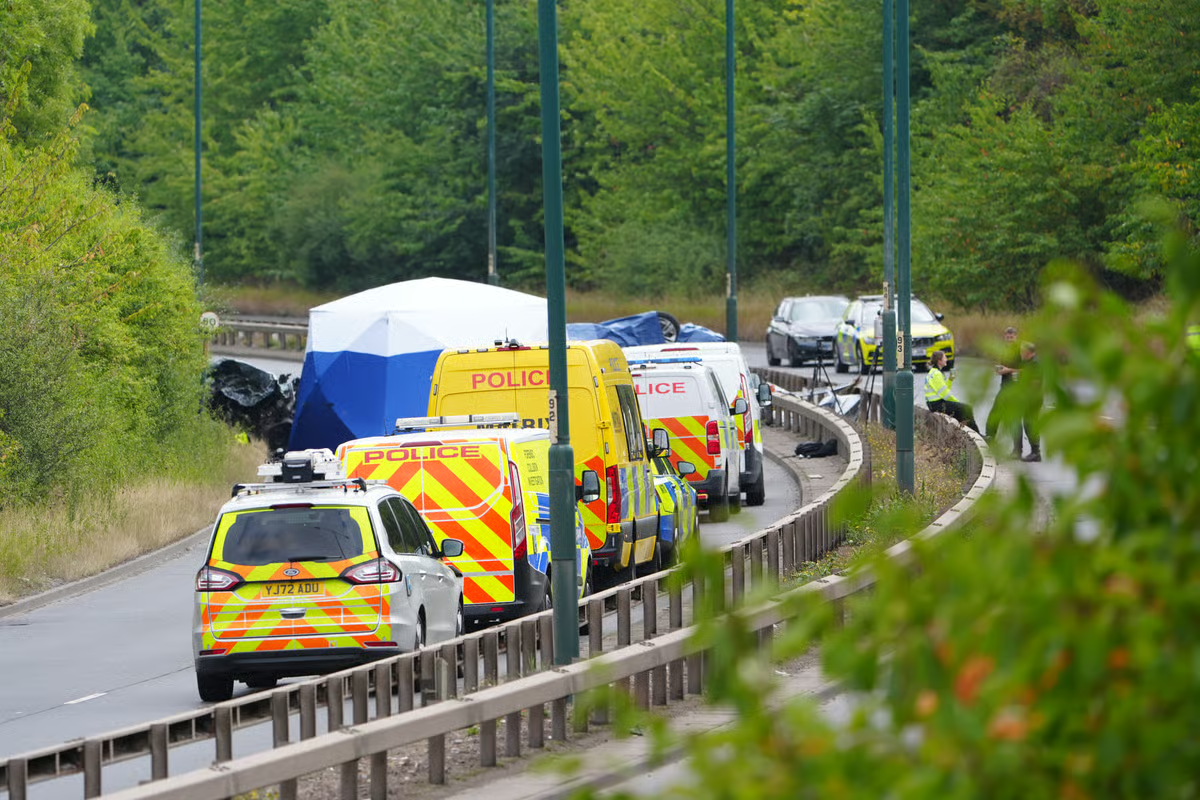
Tributes paid to two ‘brave’ police officers killed in A66 crash

The tragedy prompted other police forces to send their condolences with Assistant Chief Constable Melanie Jones, of the Police Service of Northern Ireland, saying: “The loss of two dedicated officers in the line of duty is felt profoundly across the entire policing family and I have personally reached out to Chief Constable Victoria Fuller today, to extend our sincere sympathies.

Source link

Continue Reading

NewsBeat

Bills offer condolences, support to DT Ed Oliver following the death of his 2-year-old son

Published

on

Bills offer condolences, support to DT Ed Oliver following the death of his 2-year-old son

CLEVELAND (AP) — The Buffalo Bills are giving defensive tackle Ed Oliver support and space following the accidental death of his 2-year-old son.

Oliver has been grieving throughout training camp and many of his teammates only learned of the tragic accident on Friday. Following Saturday’s 31-7 preseason win over the Browns, Bills quarterback Josh Allen said the team is standing with Oliver.

“Obviously, very unfortunate what happened and as a teammate of him, as someone in this locker room, all we can do is love on him,” Allen said. “There’s nothing that you can say to make the situation any better except being there in whatever ways he needs.

“That’s what we’re going to continue to do. That’s what teammates do. You love up on each other when we’re down, and I can’t imagine what he’s going through. But the way that he’s dealt with it has been unbelievable.”

Advertisement

Oliver has asked for privacy and prayers while still mourning his son, who was also named Ed. The toddler was pronounced dead after being found unresponsive in a residential pool in Harris County, Texas, on June 28, a person briefed on what happened told The Associated Press. The person spoke to the AP on the condition of anonymity because the team and player have not revealed that information.

Without providing many details including names or ages, the Harris County Sheriff’s department posted a note on its Facebook account that evening regarding the drowning of a toddler in a neighborhood community north of Houston.

“This is a tragic incident and our thoughts are with the toddler’s family during this incredibly difficult time. The investigation is ongoing,” the post read.

A sheriff’s official told The Associated Press on Saturday that a report was not immediately available.

Advertisement

Before Saturday’s game, Bills general manager Brandon Beane issued a statement expressing his and the organization’s condolences.

“It’s an unthinkable tragedy for any parent. We will continue to support Ed and his family as we grieve this tragic loss,” Beane said.

Bills first-year coach Joe Brady was equally compassionate toward Oliver, who is in his eighth season with Buffalo.

“Ever since I found out the news, I can’t fathom what he’s going through,” Brady said. “As a coach and a father, there really aren’t words to describe it. It’s all about us loving him and giving him the privacy that he deserves.

Advertisement

“It’s hard when I see him. I don’t have the words, but all I can do is support him in whatever way he needs.”

The 28-year-old Oliver was selected by the Bills in the first round of the 2019 draft out of Houston.

Oliver reported for training camp on time last month and appeared with the starters in the Bills’ preseason-opening 29-14 win over Carolina last weekend. He has not practiced this week because of an undisclosed injury.

___

Advertisement

Wawrow reported from Buffalo, New York.

___

See AP’s full NFL coverage here

Advertisement

Source link

Continue Reading

NewsBeat

Karmelo Anthony’s bid for new trial is denied by judge in murder case of high school track star

Published

on

Evening Headlines

A Texas judge denied a new trial for Karmelo Anthony on Saturday in the stabbing death of a 17-year-old athlete at a high school track meet, a killing that drew national attention and led to harassment of the families.

Anthony, 19, was convicted of murder in June and sentenced to 35 years in prison for the April 2025 killing of Austin Metcalf, 17.

Judge Michael Chitty denied the retrial motion in a half-page order following a two-day hearing this week near Dallas, citing a review of the evidence and arguments. He did not elaborate.

Russell Wilson, Anthony’s attorney, said the defense would appeal.

Advertisement

“Our commitment to our client has not changed,” Wilson said. “We will continue to advocate vigorously on his behalf through every lawful avenue available.”

A Texas judge denied a new trial for Karmelo Anthony on Saturday in the stabbing death of a 17-year-old athlete at a high school track meet, a killing that drew national attention and led to harassment of the families
A Texas judge denied a new trial for Karmelo Anthony on Saturday in the stabbing death of a 17-year-old athlete at a high school track meet, a killing that drew national attention and led to harassment of the families (Texas Department of Criminal Justice)

Prosecutor Bill Wirskye defended the trial as fair this week.

“We respect, and expected, the court’s decision denying the motion for a new trial,” Collin County District Attorney Greg Willis said after the denial was announced. “The jury’s guilty verdict stands, and we remain confident in the process. Every defendant has the right to appeal, and our thoughts and prayers remain with the Metcalf family in the painful wake of last week’s hearing.”

Anthony’s attorneys also demanded a retrial because they said trial judge John Roach’s courtroom rules were so strict that they limited the public’s access to the proceedings. And in asking for Roach’s recusal, they noted that he gave a posttrial interview with a Dallas TV station in which he said the jury “got it right.”

Roach said his rules were necessary for a fair trial, and prosecutors insisted he did nothing wrong.

Advertisement

The case attracted widespread attention in part because of a flood of social media posts that amplified the killing in racial terms. Anthony is Black; Metcalf was white. Lawyers on both sides, however, told jurors that the case had nothing to do with race.

Jurors rejected Anthony’s claims that he was defending himself during a confrontation with Metcalf in the bleachers of the track meet.

Source link

Advertisement
Continue Reading

Trending

Copyright © 2025