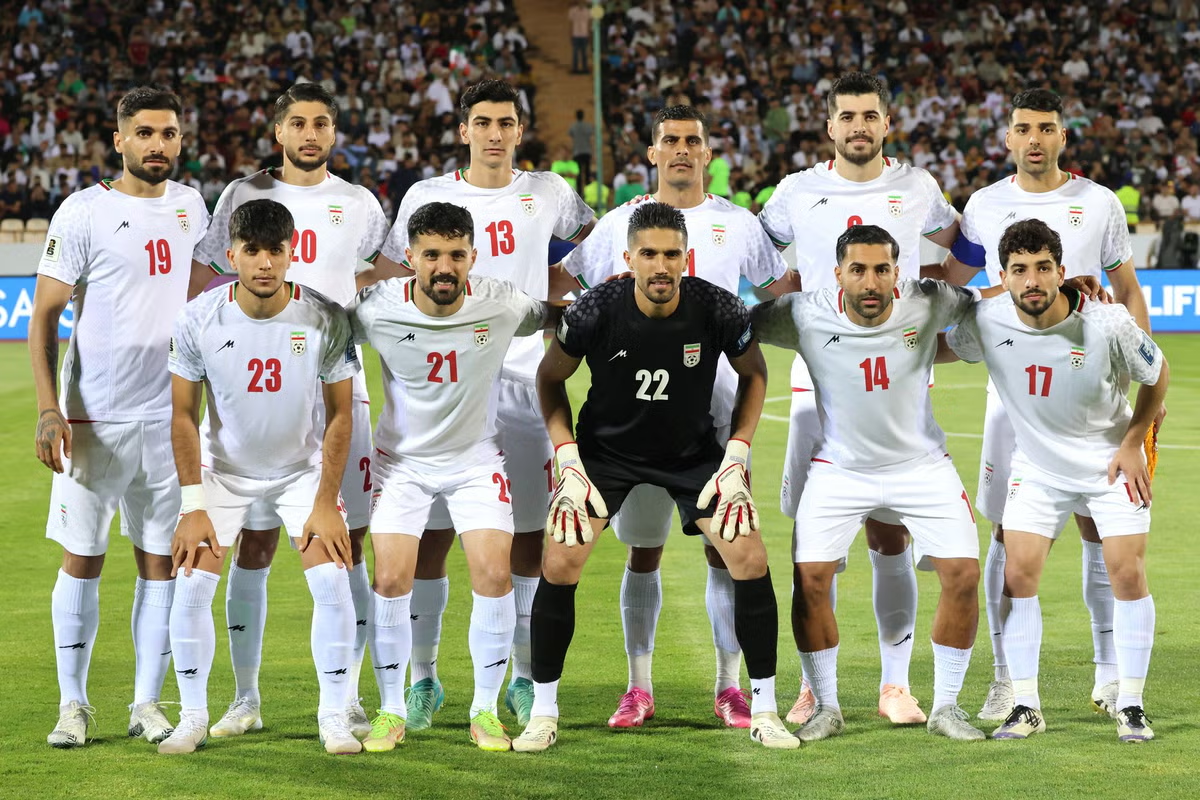
After the president of Iran’s football federation suggested the country could boycott the World Cup following the US and Israeli strikes on the country, Donald Trump has said he “really doesn’t care” if Iran play in the tournament.
According to multiple outlets, including the Associated Press, Iran’s top football official Mehdi Taj told sports news portal Varzesh3: “What is certain is that after these attacks, it’s hard to look at the World Cup with hope.”
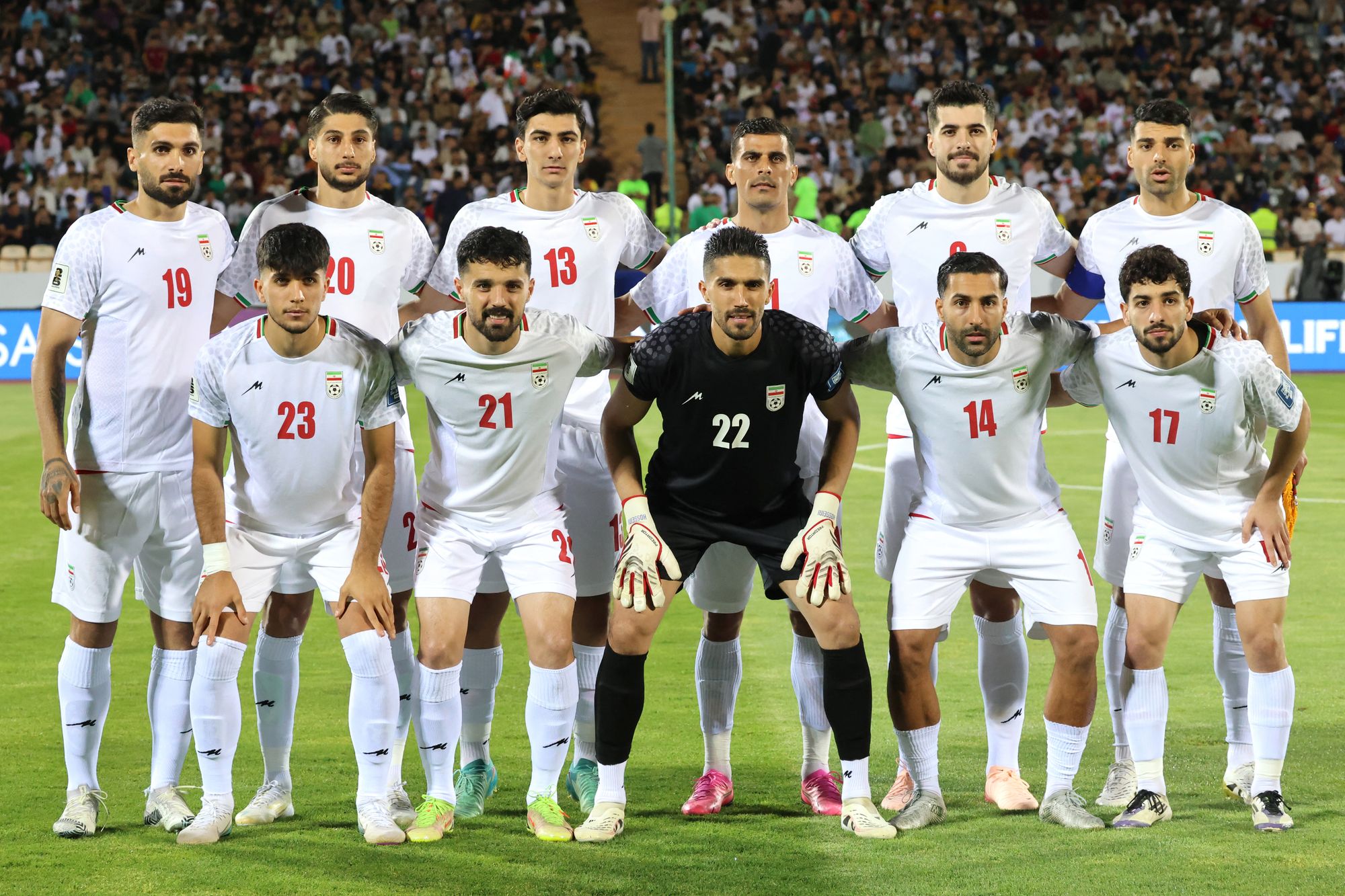
Iran qualified directly for the World Cup and are scheduled to play three games in the United States in June (AFP via Getty Images)
The tournament takes place across multiple cities in the United States, Mexico and Canada this summer. Iran’s group games are scheduled to be played in the US, between Los Angeles and Seattle.
Advertisement
“It’s not possible to say exactly, but there will certainly be a response,” Taj also said, according to Reuters. “This will surely be studied by the country’s high-ranking sports officials and there will be a decision on what’s going to happen.”
Fifa continue to monitor the situation. Secretary general Mattias Grafstrom said on Saturday: “It’s too early to comment, but we will monitor developments around the world that could affect the tournament.”
Iran were the only nation to be missing from a World Cup planning event participating teams, held this week in Atlanta. Trump told Politico on Tuesday: “I really don’t care. I think Iran is a very badly defeated country. They’re running on fumes.”
Could Iran boycott the World Cup?
Advertisement
Iran are scheduled to play two World Cup games in Los Angeles and another in Seattle. They will face New Zealand and Belgium in LA on June 15 and June 21, followed by the match against Egypt in Seattle on June 26.
But little is known about how Iran could respond to the US and Israeli strikes in a sporting context. Iran’s supreme leader Ayatollah Khamenei has been killed – while Trump has said the strikes could continue for the next four weeks. Iranian officials have ruled out negotiating with the US, as well.
There has never been a boycott of the World Cup on political grounds and the last World Cup boycott was 60 years ago, when African teams refused to play in protest of receiving just one-third of a qualifying berth.
There has never before been a situation where a World Cup host has attacked a qualified team so close to the start of the tournament, with just four months to go before the opening game.
Even before the strikes, there was political tension over Iran’s involvement in the tournament due to visa restrictions. The country’s football federation followed through on a threat to boycott Novembers’s World Cup draw in Washington DC.
At the time, Iranian Football Federation spokesman Amir Mehdi Alavi said the US had granted visas to four members of the Iranian delegation, including head coach Amir Ghalenoei, but had not issued one to its football president Mehdi Taj.
The boycott of the World Cup draw, Alavi said, followed “unsportsmanlike actions” by one of the host countries.
Advertisement
And the situation has only escalated since then. Athletes, teams members and family members were previously excluded from Trump’s travel ban but the US government could also decide to restrict Iran from competing at all if they cited security risks.
(Trump said he ‘doesn’t really care’ if Iran play or if they boycott, in what would be an unprecedented situation)
What could happen if Iran don’t play?
In Fifa’s World Cup regulations, published last year and before the qualifying stage of the tournament was complete, it states: “If any Participating Member Association withdraws and/or is excluded from the Fifa World Cup 26, Fifa shall decide on the matter at its sole discretion and take whatever action is deemed necessary. Fifa may decide to replace the Participating Member Association in question with another association.”
Advertisement
Iran qualified automatically for the World Cup, with the United Arab Emirates losing out on an automatic qualification spot and subsequently going out in the play-off rounds. In the event of Iran not playing in the World Cup, they would be the closest replacement. Iraq could only be an option, if they do not come through their intercontinental play-off against either Bolivia or Suriname in Mexico later this month.
But the uncertainty in the Gulf as a result of the US strikes means that replacing Iran with either the UAE or Iraq could be far from straight-forward, and Fifa’s regulations indicate that they could do whatever they would like, anyway.
There is some precedent from last summer when Mexican side Club Leon were kicked out of the Club World Cup due to multi-club ownership rules. Fifa then announced a play-off between Los Angeles Football Club (LAFC) and Mexican team Club America which was won by LAFC, granting them access to the tournament.
Fifa’s World Cup regulations also state: “Fifa has the right to cancel, reschedule or relocate one or more matches (or the entire FIFA World Cup 26) for any reason at its sole discretion, including as a result of force majeure or due to health, safety or security concerns.”
Advertisement
Seemingly, there is therefore the possibility that Iran’s games could be moved from the US; but there is also the possibility that the US and Iran could play each other at the tournament. This would happen if both teams were runners-up in Group D and Group G respectively, with that fixture scheduled to be played in Arlington, Texas.
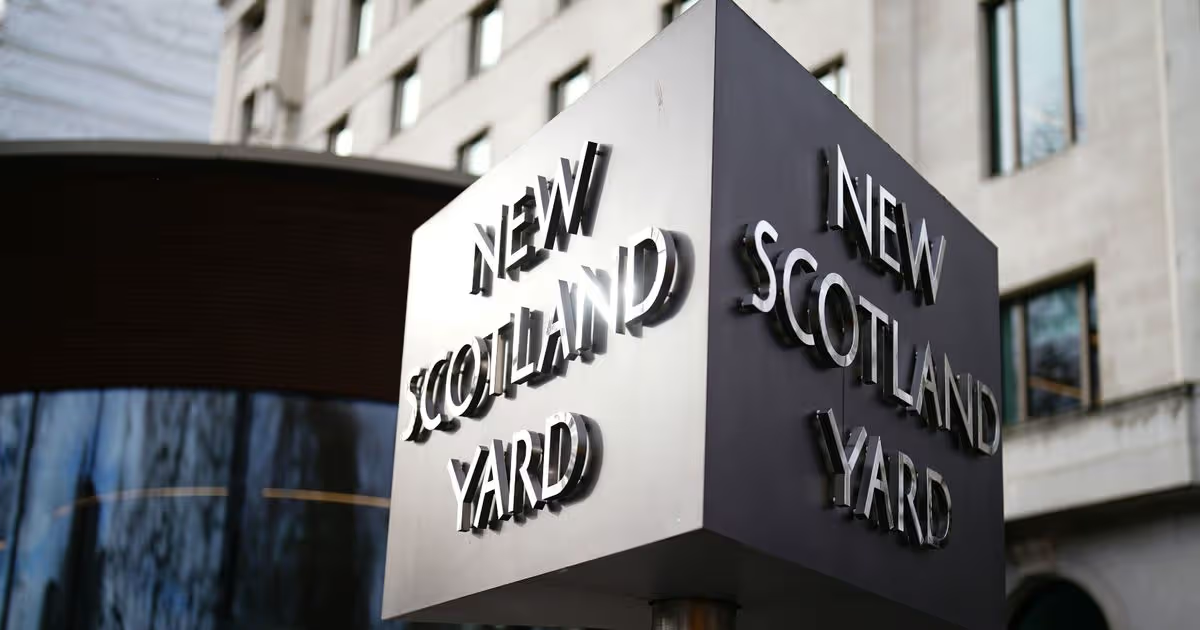
The Metropolitan Police carried out searches in Scotland as part of an investigation into national security.
Counter-terrorism police searched a home in East Kilbride amid a probe into spying for Chinese intelligence services.
Advertisement
The address was one of a number of properties including London and Cardiff that were searched on Wednesday.
Officers from Metropolitan Police arrested three men on suspicion of spying for China. The suspects – aged 39, 43 and 68 – were all cuffed south of the border in London and Wales.
They were detained on suspicion of offences under section three of the National Security Act 2023.
Commander Helen Flanagan, head of Counter Terrorism Policing London, said: “We have seen a significant increase in our casework relating to national security in recent years and we continue to work extremely closely with our partners to help keep the country safe and take action to disrupt malign activity where we suspect it.
Advertisement
“Today’s arrests are part of a proactive investigation and while these are serious matters, we do not believe there to be any imminent or direct threat to the public relating to this. Our investigation continues and we thank the public for their ongoing support.”
During the winter months, when days are short and cold and nights are long and dark, creating a warm and cosy indoor atmosphere can feel especially important.
Where I live in Denmark, around 75% of the population burns candles two or more times a week, and 34% use them daily during the winter months.
These particles are so small that they are invisible to the human eye, and more than a thousand times thinner than a human hair. They can remain airborne for long periods, and when candles are blown out, the concentration of these particles (including soot) increases even further.
Candles vs cooking
In our experiments conducted in exposure chambers (where the climate is controlled) at Aarhus University, we examined how indoor air is affected both by burning candles and cooking pork in an oven.
Cooking – and especially frying – is known to emit high concentrations of particles due to combustion (the process of burning something). Particles from combustion processes are among the most harmful to human health – but less is known about the role that particles emitted from candles plays when it comes to indoor air pollution.
Our research found that while both candles and cooking emit high levels of particles, the number of particles from candles was much higher. Even more significant was the difference in particle size: cooking produced particles about 80 nanometers wide, whereas candles generated particles around seven-to=eight nanometers in size – much smaller and much easier for our lungs to inhale.
Advertisement
We also measured chemical compounds in the air, and found that burning candles produced not only soot particles but gases such as nitrogen dioxide and polycyclic aromatic hydrocarbons (PAHs) – a group of chemicals associated with inflammation and even cancer.
The particles we breathe
Ultrafine particles are of particular concern from a health perspective. They are easily inhaled into our lungs, but research has found they are excreted from the body very slowly.
Indeed, the particles formed when candles are burning are remarkably similar to those found in diesel exhausts in size and composition. These particles have been linked to increased mortality rates from lung and cardiovascular diseases.
Advertisement
Ultrafine particles from burning candles are invisible to the eye, but harmful to your lungs. pexels/skylar kang, CC BY
In our study, we also investigated how candle burning affects young adults with mild asthma. We found subtle but measurable biological changes following exposure to candle emissions.
You might be thinking: all this from just a candle? But it’s worth remembering that people with chronic conditions like asthma or chronic obstructive pulmonary disease are far more sensitive to particulate air pollution.
Because people with these conditions already have chronically inflamed airways, even relatively low levels of pollution — including particles released by burning candles — can be enough to trigger symptoms.
Advertisement
Children, older adults and people with chronic illnesses are also particularly vulnerable to air pollution, due to immaturity of their lungs or weakened immune systems.
Indeed, for anyone with asthma or other respiratory conditions, the quality of indoor air is not a minor detail, but a key factor in day-to-day symptom control and long-term respiratory health.
Blow out all the candles?
But that’s not to say those without lung disease or asthma aren’t affected. As research shows, burning candles affects not only the indoor environment but potentially everyone’s health. Fortunately, a few simple steps can help maintain a healthier indoor climate.
Try using LED candles, for example, or light only a few candles at once. You should also place candles away from drafts to avoid a flickering flame, which can produce more soot and smoke. Trim your candles’ wicks to reduce soot formation, too. And candles should never be burned near (or by) people with respiratory disease.
Advertisement
Most importantly, air out the room afterwards by opening your windows. Such measures can help reduce the number of particles significantly, and make all the difference when it comes to keeping your cosy or hygge-time healthy.
The UK government has announced its first charter flights for British nationals stranded in the Middle East as the US-Israeli attack on Iran and Tehran’s retaliatory strikes enter their fifth day.
It comes as an estimated 300,000 Britons are believed to be in affected regions of the Middle East.
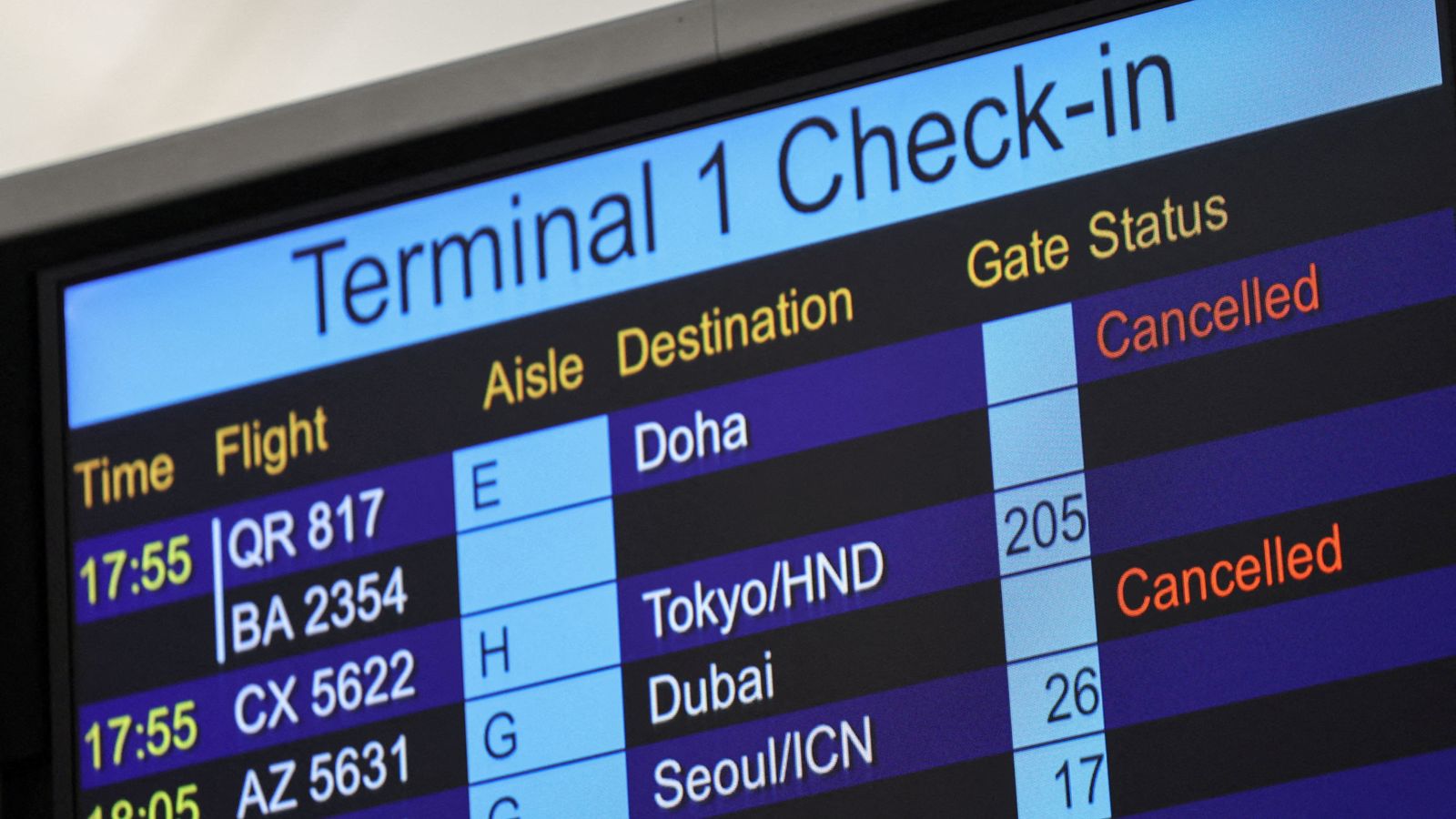
Thousands of flights have been cancelled since the joint US-Israeli operation was launched against Iran on Saturday, but some airlines are now operating out of the region again.
Advertisement
Here’s all you need to know.
What’s the latest travel advice for affected areas – and what flights are happening?
The Foreign Office advises against all but essential travel to Bahrain, Kuwait, Qatar and UAE, and against any travel whatsoever to and from Israel and Palestine.
You can find out the latest travel advice for all Middle East countries by visiting the government’s website.
Advertisement
After days of cancellations, airlines appear to be boosting the number of flights out of the Middle East to Britain.
On Wednesday, Emirates was expected to operate seven flights from Dubai to the UK while Etihad planned two Abu Dhabi departures.
Virgin Atlantic said it would operate a flight from Dubai to London Heathrow.
British Airways said it would be operating a flight from Muscat International Airport in Oman in the early hours of Thursday local time and would be assigning seats on “a first-come, first-served basis”.
Advertisement
In a statement to Sky News, BA confirmed it has scheduled further flights from Muscat to London Heathrow departing on 6 and 7 March for customers with an existing booking who are in Oman or the UAE.
Those wanting to make one of these flights should call BA on its dedicated phone line on +44 203 467 3854.
X
This content is provided by X, which may be using cookies and other technologies.
To show you this content, we need your permission to use cookies.
You can use the buttons below to amend your preferences to enable X cookies or to allow those cookies just once.
You can change your settings at any time via the Privacy Options.
Unfortunately we have been unable to verify if you have consented to X cookies.
To view this content you can use the button below to allow X cookies for this session only.
The Foreign Office said its first charter flight would depart from Muscat International Airport in Oman at 11pm local time (7pm UK time) on Wednesday night, with priority given to the most vulnerable people.
Reuters news agency has reported that another chartered flight will depart from the same destination early on Thursday morning.
The flights are available for British nationals, their partners and children under 18 with a valid travel document. Dependents who are not British nationals will require a valid visa or permission to enter or remain granted for more than three months.
Advertisement
People have been asked not to travel to the airport unless they’ve been contacted by officials.
Ms Cooper said: “We have unprecedented numbers of British nationals in the region, and I will continue to update members and affected British nationals as the situation evolves.”
Cruises in region also affected
There are also reports of thousands of cruise passengers stranded in Dubai and Doha as at least six cruises have been unable to leave.
Advertisement
The cruises have reportedly been ordered to stay put in areas deemed safe until new shipping routes can be determined, according to travel portal Hosteltur.
The cruise liners affected are reportedly MSC Cruises, TUI Cruises and Celestyal Cruises.
‘I just want to get home’
Who needs to register their presence abroad?
Advertisement
As US President Donald Trump said the attacks will likely last between four to five weeks, the Foreign Office is urging British nationals in Middle Eastern countries to register their presence as the conflict with Iran deepens.
According to Foreign Secretary Yvette Cooper, 130,000 British nationals have registered their presence in the Middle East with the Foreign Office, as officials work on contingency plans, including a potential mass evacuation.
Here’s a list of countries where you should register your presence:
• Bahrain • Israel • Kuwait • Palestine • Qatar • United Arab Emirates
Advertisement
You can let the government know you are in these countries via its website.
Could there be a mass evacuation?
Sky News understands UK officials have been working on plans for potential routes for the evacuation of tens of thousands of people should airspace in the Gulf remain off-limits.
Responding to a question on contingency plans for UK nationals in parliament on Monday, Sir Keir said the government was “working at speed with our partners in the region to take whatever measures we can to ensure that our people can return as safely and as swiftly as possible, and we will continue to do so”.
Urban Coningham, a research fellow and course lead at the Royal United Services Institute (RUSI), told Sky News that if the UK government were to go ahead with a full evacuation, it “would be the biggest evacuation since the Second World War”.
Advertisement
He said because of the “sheer scale of the numbers involved, it is very unlikely the UK government would choose to begin this process unless there was no other option”.
Local experts from Fortus, Brittons and Cundalls are coming together to support farmers and rural enterprises at Financial clarity for rural businesses, a free event designed to give practical financial advice to those at the heart of the rural economy.
The event on Tuesday March 17 at 6.30pm will focus on helping rural business owners better understand their finances, improve cash flow, and make more confident decisions at a time when many farmers and rural enterprises are facing increasing financial and personal pressures.
Organisers say the event is about collaboration and community, with local professionals volunteering their time to ensure farmers and rural entrepreneurs can access clear, practical guidance tailored to their circumstances.
RECOMMENDED READING:
Advertisement
Simon Britton, an agricultural consultant who is collaborating with Fortus on the event, said: “Farming and rural businesses are the backbone of our local economy.
“This event is about local businesses coming together to support farmers and rural entrepreneurs, giving them the financial clarity they need to protect their livelihoods and plan for the future.”
Matty Lewis of the Fortus Foundation will also be attending the event (Image: David Harrison)
Attendees will receive free, accessible advice on understanding where money is really being made or lost, improving resilience and long-term profitability, managing cash flow and financial uncertainty, plus asking the right questions of advisers and lenders
Among those attending the event at Malton and Norton RUFC, Old Malton Road will be Matty Lewis from the Fortus Foundation, who will be supporting the event following the Foundation’s recent funding of a local rural economy project. The foundation has been working HelloHope, delivering suicide prevention workshops and engagement within the farming community.
Advertisement
Organisers say the inclusion of the Fortus Foundation highlights the importance of addressing both the financial and personal wellbeing challenges faced by farmers and rural business owners.
The session is aimed at farmers, land-based businesses, rural SMEs and sole traders from across York, Malton, Scarborough and surrounding rural areas.
Fortus director and farmer Paul Dixon said: “Many rural business owners are experts at what they do, but don’t always have time to step back and analyse their finances.
“This event creates a supportive space where they can get practical help and share experiences with others facing similar challenges.”
Advertisement
The event is free to attend but advance booking is required through Eventbrite or by directly contacting Damian Lythgoe: damian.lythgoe@fortus.co.uk or 07407828496
Worries over the war, which U.S. President Donald Trump has suggested could last a month or longer, have hammered world markets, spooking investors who fear more spikes for oil prices may grind down the global economy and sap corporate profits.
Advertisement
“I think the Iran situation is getting out of hand, and I think that U.S. President Donald Trump miscalculated enormously,” said Francis Lun, CEO of Venturesmart Asia. “The situation is very grim.”
Still, sentiment appeared to steady early Wednesday in Europe, where Germany’s DAX edged 0.2% higher to 23,851.86. In Paris, the CAC 40 was nearly unchanged at 8,105.25. Britain’s FTSE 100 edged 0.1% lower to 10,470.00.
In Asia, South Korea’s Kospi led the regional losses as energy security concerns eclipsed optimism over the boost computer chipmakers like Samsung Electronics and SK Hynix have been getting from expanding use of artificial intelligence.
The Kospi sank 12.1% to 5,093.54. Samsung’s shares dropped 11.7%, while SK Hynix gave back 9.6%.
Advertisement
The Korea Exchange temporarily halted trading for the Kospi index, while a circuit breaker was also triggered on the tech-oriented Kosdaq after it fell by more than 8%. It later dropped nearly 14%.
South Korea’s stock market has been one of the world’s best performers this year, but its economy depends heavily on trade and fuel imports, that are threatened with disruptions to traffic through the Strait of Hormuz, the narrow gateway to the Persian Gulf through which roughly a fifth of globally traded oil passes.
Trump announced Tuesday that he had ordered the U.S. Development Finance Corp. to provide political risk insurance and guarantees for financial security of all maritime trade.
“If necessary, the United States Navy will begin escorting tankers through the Strait of Hormuz, as soon as possible,” Trump said in a message posted by the White House on X.
Advertisement
Still, the price of U.S. benchmark crude oil climbed more than 3.5%, to $77.18 per barrel. Brent crude, the international standard, gained 3.7% to $84.38 per barrel. Its price has jumped about 15% since the war began.
“Trump’s assurances of the US underwrite shipping insurance against Middle East conflict risks and even U.S. naval escorts only mitigate, but do not eliminate, enduring upside risks to oil prices,” Mizuho Bank said in a commentary.
The increased insurance costs filtering through to shipping would ultimately cost an extra $5 to $15 a barrel, it said, adding that the “‘war premium’ remains firmly intact.”
In Tokyo, the Nikkei 225 shed 3.6% to 54,245.54. Like South Korea and Taiwan, Japan depends heavily on imports of oil and natural gas from the Persian Gulf.
Advertisement
Elsewhere in Asia, the Hang Seng in Hong Kong fell 2% to 25,249.48 and the Shanghai Composite index shed 1% to 4,082.47.
In Australia, the S&P/ASX 200 declined 1.9% to 8,901.20.
Taiwan’s Taiex lost 4.4% and shares in Bangkok sank 6%.
On Tuesday, the S&P 500 finished with a loss of 0.9% after dropping as much as 2.5% on concerns over the war’s damage to the economy. The Dow Jones Industrial Average pared its loss to 0.8% and the Nasdaq composite fell 1%.
Advertisement
Some analysts say stocks could rebound if the war ends soon. If it drags on, higher inflation partly due to rising energy prices could tie the Federal Reserve’s hands and keep it from cutting interest rates.
For now, one of the most evident impacts on the economy has been a surge in gasoline prices.
While drivers in Europe and some Asian cities waited in line to fill their tanks with fuel, as a net oil exporter the U.S. does not face a shortage. But prices are still influenced by global market trends.
In the U.S., a gallon of regular was selling for $3.11 on average, up 11 cents, according to motor club AAA, surprising some drivers at the pump. Gasoline prices were already rising before the U.S. launched strikes on Iran as refiners were switching over to summer blends of fuel.
Advertisement
In other dealings early Wednesday, the dollar fell to 157.46 Japanese yen from 157.74 yen. The euro slipped to $1.1604 from $1.1612.
The price of gold rose 1.2%, while silver gained 2.6%.
___
Associated Press writer Kim Tong-hyung in Seoul, South Korea, contributed.
Jessie Buckley and Paul Mescal are under fire for their cat opinions (Picture: Josh Horowitz/Youtube)
Jessie Buckley and Paul Mescal have sparked outrage for their anti-cat declarations in a resurfaced interview.
The pair have come under fire for saying ‘f**k cats’, unprovoked, and no, we don’t mean that infamous 2019 film.
While promoting Hamnet on the Happy Sad Confused podcast in November, the duo slipped in the confession that they are distinctly not cat people.
‘I don’t like cats,’ Jessie, 36, admitted rather sheepishly before Paul, 30, said ‘F**k cats’ with his whole chest.
Advertisement
Host Josh Horowitz warned the stars that such a bold declaration could be career-ruining, but The Bride! actress doubled down.
She laughed and revealed: ‘My husband, when I started dating him, he had two cats. This is bad so I’m going to get cancelled. But one of the cats was like, a pedigree model b***h.
The pair declared they hated cats (Picture: Rich Polk/Shutterstock for The Actor Awards)
‘And she staged like a coup against me. I’d come home and there’d just be like, poo on the pillow. And I was like, “It’s me or the cats.”‘
Jessie apparently ‘won’ that battle, but her and Paul’s feline discrimination has not gone down well.
Advertisement
‘Well, Hamnet’s not winning anything at the Oscars FOR SURE now,’ declared the Reddit poster LawrenceBrolivier, with a hint of sarcasm.
Glimmhilde wrote: ‘Getting rid of your pets for someone is crazy. Asking someone to do that is even crazier.’
‘So vile making someone getting rid of their pets. and her husband is a loser for doing so,’ agreed Kate4everBae.
On X, fans voiced that disliking cats was one thing, but forcing your partner to rehome their pets was a ‘red flag’.
Advertisement
Jessie even got her husband to get rid of their cats when she moved in (Picture: Gareth Cattermole/Getty Images)
‘F**k them’ (Picture: Josh Horowitz/Youtube)
‘I like Jessie Buckley a lot as an actress, but her gleefully retelling the story of giving her husband the ultimatum of rehoming his cats when they got together… not to be dramatic, but that genuinely makes me think less of her,’ texasrozanov said.
MissLSW added: ‘Jessie Buckley admitted in an interview that she hates cats so much she made her husband get rid of his when they met. And laughed about it like it’s funny. Knew there was a reason I couldn’t warm to her.’
However, Paul and Jessie aren’t the only ones taking aim at cats recently, with American rapper Doechii clashing with fans over her feline faux pas.
‘People act like it’s a crime to dislike cats when they genuinely aren’t friendly animals,’ she boldly claimed on Threads.
Explaining her position the Alter Ego singer said: ‘They don’t wanna be domestic, just leave em alone! Like it’s not organic, I’m sorrryyy be fr it’s rare that cats are immediately lovey without years of pain and work put in.
Advertisement
Doechii also voiced dislike for cats, then doubled down (Picture: Threads)
‘Y’all be scratched and beat tf up by your own animals, I can’t lmaoooo’.
Fans pointed out that cats not wanting to be around humans is largely a misconception; it’s just that they’re not as human-focused as dogs.
One research paper found that cats are ‘quite concerned about their owners’, monitoring their actions and anticipating our next moves.
Dr Carlo Siracusa told The Guardian: ‘Cats can’t make long-term plans. Some people think that [when] they leave the house, and their cat poops on the couch, it is so that when I return I have a nasty experience.
‘But cats do not have the ability to plan ahead in this way.’
Advertisement
‘People act like it’s a crime to dislike cats’ (Picture: Kevin Mazur/Getty Images for The Recording Academy)
He insisted that cats do get attached to humans but we’re just not great at understanding their behaviour, as our kisses and cuddles are not their way of interacting.
‘Cats don’t do anything like that. They are much more elegant,’ he explained. ‘They approach us. They bump their heads. Then they have some contact with us and walk away.’
Doechii ended up fighting with cat owners in her comments, telling them they were ‘too worked up’ over her comments.
She teased that the ‘feeling is mutual’ when told maybe cats don’t like her, refusing to back down except to tell one fan their cat has ‘pretty eyes’.
Looks like bizarre celebrity question this month might be their feelings on cats, someone better call Taylor Swift immediately for balance.
Advertisement
Got a story?
If you’ve got a celebrity story, video or pictures get in touch with the Metro.co.uk entertainment team by emailing us celebtips@metro.co.uk, calling 020 3615 2145 or by visiting our Submit Stuff page – we’d love to hear from you.
The UK Government has issued an update on the lifespan of Freeview as it moves to digital broadcasting.
The future of Freeview has been determined by the UK Government as many Brits are worrying that terrestrial television will be “switched off” in the not too distant future. While the benefits of internet-only TV are being investigated, fear has sparked for those who struggle to connect to or afford broadband.
Advertisement
While many people across the UK already use the internet to watch their favorite TV shows, there is a large portion of Brits worried about the impact axing Freeview will have on the more vulnerable in society. In fact, over recent weeks a Change.Org petition has acquired over 110,000 signatures.
This fear sparked following recent research from Sky that called upon the government to discontinue traditional broadcasting and “move fully to internet-based TV in the 2030s”. This call led to the Secretary of State for Culture, Media and Sport, Lisa Nandy, being asked what impact turning off Freeview would have on poor broadband areas.
At the moment, the shutdown on Freeview is actively being considered in the UK, reports Chronicle Live. As the government investigates how to transition into digital-only TV, terrestrial broadcasting will potentially be turned off by 2034.
It is reported that 94 per cent of UK households currently have access to the internet. This means that if changes aren’t made, hundreds of thousands of households could be left without TV, which will most likely be the more vulnerable members of society.
Advertisement
As support has risen for both sides, Minister of State for State for Media, Tourism and Creative Industries Ian Murray has issued a statement from the government.
He said: “Digital inclusion and ensuring that all households across the country have access to high-quality, reliable broadband is a priority for the Government.
“The Department for Culture, Media and Sport is working closely with the Department for Science, Innovation and Technology to ensure that all aspects of digital inclusion are considered as part of any decisions we make on the future of digital terrestrial television.”
Advertisement
He added: “The Department is leading a project to assess the future of TV distribution and we are committed to maintaining access for all. Digital Terrestrial Television (DTT) is protected until at least 2034, safeguarding access for millions of households.
“Before any decision is made close consideration will be given to how any changes would impact audiences, especially those who rely on DTT as their primary means of watching television.”
The Change.Org petition, which was started by Dennis Reed, reads: “Terrestrial television, received through an aerial, often known as Freeview, is under serious threat of being scrapped. Within months the Government will decide whether to turn off terrestrial signals and rely solely on internet-based TV (IPTV) in the future.
“This would mean that every household would be forced to take out an expensive fixed broadband contract if they wished to continue watching their favourite TV programmes. Radio reception and signals for emergency services could also be put at risk.
Advertisement
“Millions of older and disabled people, and those on low and modest incomes, would lose their essential access to TV to keep them in touch with the world and to prevent isolation and loneliness.”
Freeview currently serves 16million homes across the UK, making it the primary television platform for 40 per cent of households with a TV and the nation’s largest TV service.
Using traditional aerials to provide access to your everyday TV channels, some MPs have emphasised that these homes need to be safeguarded from losing the service they rely on.
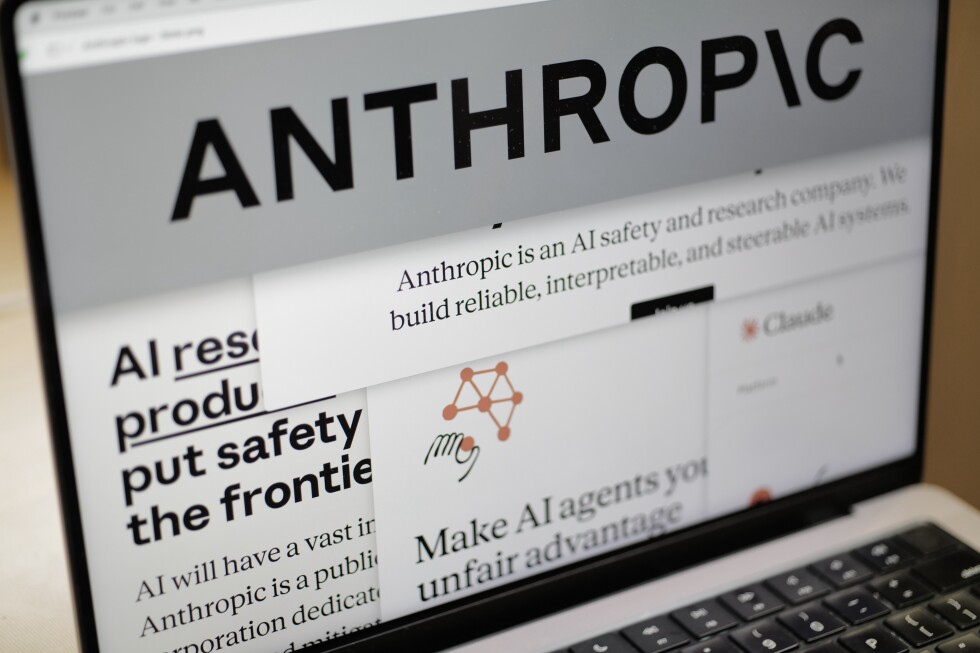
Anthropic’s moral stand on U.S. military use of artificial intelligence is reshaping the competition between leading AI companies but also exposing a growing awareness that maybe chatbots just aren’t capable enough for acts of war.
Anthropic’s chatbot Claude, for the first time, outpaced rival ChatGPT in phone app downloads in the United States this week, a signal of growing interest from consumers siding with Anthropic in its standoff with the Pentagon, according to market research firm Sensor Tower.
The Trump administration on Friday ordered government agencies to stop using Claude and designated it a supply chain risk after Anthropic CEO Dario Amodei refused to bend his company’s ethical safeguards preventing the technology from being applied to autonomous weapons and domestic mass surveillance. Anthropic has said it will challenge the Pentagon in court once it receives formal notice of the penalties.
And while many military and human rights experts have applauded Amodei for standing up for ethical principles, some are also frustrated by years of AI industry marketing that persuaded the government to apply the technology to high-stakes tasks.
Advertisement
“He caused this mess,” said Missy Cummings, a former Navy fighter pilot who now directs the robotics and automation center at George Mason University. “They were the No. 1 company to push ridiculous hype over the capabilities of these technologies. And now, all of a sudden, they want to be for real. They want to tell people, ‘Oh, wait a minute. We really shouldn’t be using these technologies in weapons.’”
Anthropic didn’t immediately respond to a request for comment. The Defense Department declined to comment on whether it is still using Claude, including in the Iran war, citing operational security.
Cummings published a paper at a top AI conference in December arguing that government agencies should prohibit the use of generative AI “to control, direct, guide or govern any weapon.” Not because AI is so smart that it could go rogue, but because the large language models behind chatbots like Claude make too many mistakes — called hallucinations or confabulations — and are “inherently unreliable and not appropriate in environments that could result in the loss of life.”
“You’re going to kill noncombatants,” Cummings said in an interview Tuesday with The Associated Press. “You’re going to kill your own troops. I’m not clear whether the military truly understands the limitations.”
Advertisement
Amodei sought to emphasize those limitations in defending Anthropic’s ethical stance last week, arguing that “frontier AI systems are simply not reliable enough to power fully autonomous weapons. We will not knowingly provide a product that puts America’s warfighters and civilians at risk.”
Anthropic, until recently, was the only one of its peers to have approval for use in classified military systems, where it has partnered with data analysis company Palantir and other defense contractors. President Donald Trump said Friday, around the same time he was approving Saturday’s military strikes on Iran, that the Pentagon would have six months to phase out Anthropic’s military applications.
Cummings, a former Palantir adviser, said it’s possible that Claude has already been used in military strike planning.
“I just fundamentally hope that there were humans in the loop,” she said. “A human has to babysit these technologies very closely. You can use them to do these things, but you need to verify, verify, verify.”
Advertisement
She said that’s a contrast to the messaging from AI companies that have suggested that their technology is evolving to the point where it is “almost sentient.”
“If there’s culpability here, I’d say half is Anthropic’s for driving the hype and half is the Department of War’s fault for firing all the people that would have otherwise advised them against stupid uses of technology,” Cummings said.
One social media commentator this week described Anthropic’s government problems as a “Hype Tax” — a message that was reposted by President Donald Trump’s top AI adviser, David Sacks, a frequent critic of the company.
And while it has caused legal hassles that could jeopardize Anthropic’s business partnerships with other military contractors, it has also bolstered its reputation as a safety-minded AI developer.
Advertisement
“It’s applaudable that a company stood up to the government in order to maintain what it felt were its ethics and were its business choices, even in the face of these potentially crippling policy responses,” said Jennifer Huddleston, a senior fellow at the libertarian-leaning Cato Institute.
Consumers have already spoken, leading to a surge of Claude downloads that made it the most popular iPhone app starting on Saturday and for all phone systems in the U.S. on Monday, according to Sensor Tower. That’s come at the expense of OpenAI’s ChatGPT, which saw its consumer reputation damaged when it announced a Friday deal with the Pentagon to effectively replace Anthropic with ChatGPT in classified environments.
In the Apple store, the number of 1-star reviews — the worst rating — of ChatGPT grew by 775% on Saturday and continued to grow early this week, reflecting a backlash that forced OpenAI to do damage control.
“We shouldn’t have rushed to get this out on Friday,” OpenAI CEO Sam Altman said in a social media post Monday. “The issues are super complex, and demand clear communication. We were genuinely trying to de-escalate things and avoid a much worse outcome, but I think it just looked opportunistic and sloppy.”
Advertisement
Altman gathered employees for an “all-hands” meeting on Tuesday to discuss next steps.
“There are many things the technology just isn’t ready for, and many areas we don’t yet understand the tradeoffs required for safety,” Altman said on X. “We will work through these, slowly, with the (Pentagon), with technical safeguards and other methods.”
Things will be different this time, I reckon. First of all, I’ll start slower (more Jeffing, I reckon).
And secondly, I’ll keep an eye on my iron intake. Years ago, while training for a marathon, a blood test showed I was anaemic: facts I thought were unrelated.
But it turns out they might not have been. Some research suggests that endurance athletes, especially women, might experience something called “exercise-induced anaemia”.
Experts think it could be down to a range of factors. One of them is haemolysis, or the destruction of red blood cells through high-impact sports (like pounding your feet on the ground through running).
Another is blood loss through tiny tears in your gastrointestinal and urinary tract, which the BJGP said could happen because of the decrease in blood in the area when you’re really pushing yourself.
Advertisement
Even the inflammatory response brought on by intense exercise could affect how much iron your body absorbs.
Then, there’s the fact that in general, women are more likely than men to experience iron deficiency anaemia. That’s mostly thanks to menstruation.
But working with iron supplement brand Active Iron, Andy Shepherd, performance nutrition lead at Loughborough University, found 75% of women say that they had no idea that high training volume can leave you with inadequate iron.
What are the signs of exercise-induced anaemia?
Advertisement
This has all the signs of iron-deficiency anaemia, which can include:
tiredness
heart palpitations
headaches
being paler than usual
shortness of breath.
Shepherd said that people with anaemia “usually have some challenges with staying well too, so they might pick up sniffles and coughs and colds much more often.”
And runners with iron deficiency anaemia, exercise-induced or not, can struggle to improve in their sport, he added.
“With moderately low iron, you might be able to train, you might not know you’re low, you might feel fine and not sleepy-tired, but you might not ever be able to push your body to a point where you can adapt and get better.”
The only definite way to diagnose iron deficiency anaemia, however, is with a blood test. This can be done through your GP.
Advertisement
“Our advice is always that you should speak to a doctor or Sports and Exercise Nutrition Register (SENR) qualified nutritionist or dietician if you are concerned,” Shepherd said.
Robin Swann said that the airport needs to compete with the likes of Dublin
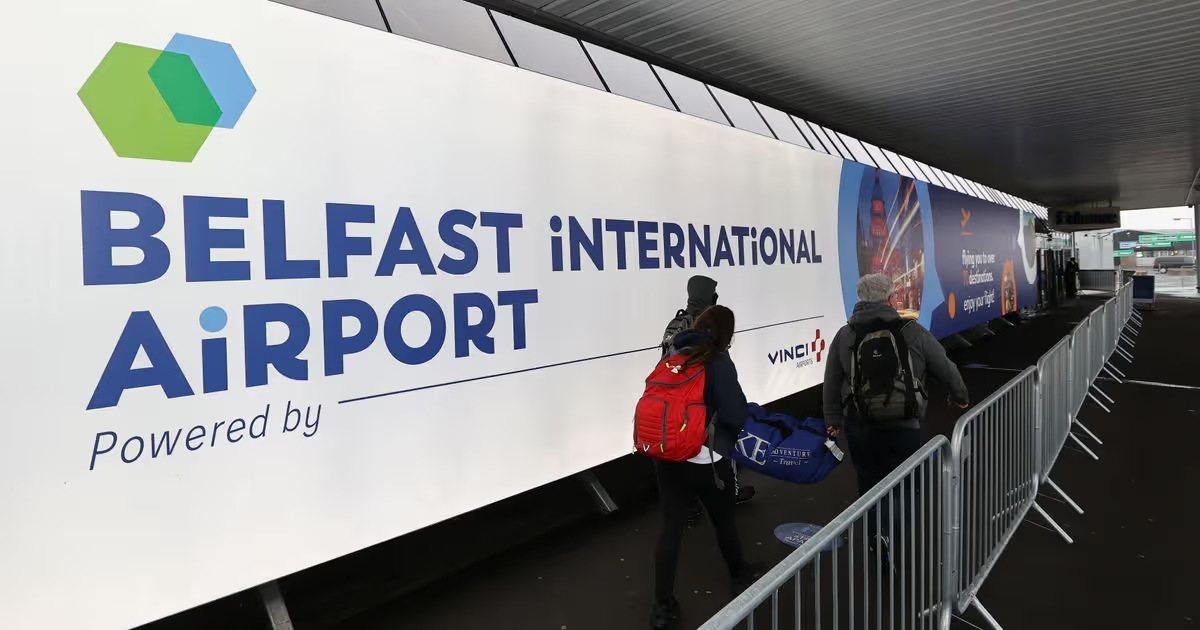
South Antrim MP Robin Swann has said that the decision by Belfast International Airport to increase its drop-off charge is “regrettable.”
Advertisement
On Tuesday, Belfast International Airport confirmed that the cost of using their drop-off zone will increase from £3 to £5 from Monday, 9th March.
A spokesperson for the airport said the increase was due to “significant cost pressures” and that other drop-off options are available.
Ulster Unionist Party MP, Robin Swann, said: “This announcement reinforces my call for further and creative investment in increased public transport options, like reopening the Knockmore Railway Line, which would run from Antrim-Lisburn via Belfast International.
“This would mitigate much of the need for drop-off and short-stay parking and help save holidaymakers and commuters money.
Advertisement
“This is a regrettable decision as the aim should be for Belfast International Airport to be as attractive an offer as possible to help it compete with the likes of Dublin Airport. This price increase will not help make that case.”
“From Monday, 9th March, the tariff in our drop-off zone will increase from £3 to £5. The new pricing reflects significant cost pressures that many businesses across Northern Ireland are currently facing.
“Passengers are reminded that there is a free drop-off area within the long-stay car park. Those requiring additional time should use the short-stay car park, where blue badge holders will continue to receive 30 minutes free.
“We remain committed to transforming the airport and are progressing with our £100million investment programme that has already delivered a new terminal extension, security hall and enhanced duty-free experience.
Advertisement
“Further improvements to the exterior forecourt layout will commence shortly to support traffic flow and public transport access.”
Want to see more of the stories you love from Belfast Live? Making us your preferred source on Googlemeans you’ll get more of our exclusives, top stories and must-read content straight away. To add Belfast Live as a preferred source, simply click here.