Connect with us

NewsBeat

William and Kate attend King’s ‘Sussex summit’ at Balmoral: Waleses ‘have no interest in engaging’ with Harry and Meghan after they announced return to UK

Published

on

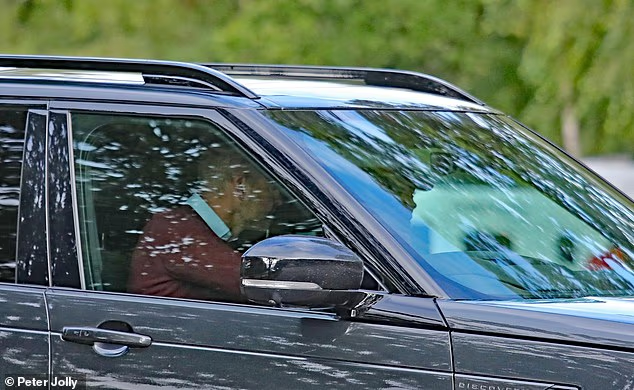
Prince William and Kate are spotted outside Balmoral in a Land Rover Discovery this morning

Prince William was spotted on his Balmoral summer holiday with Kate today as they come to terms with Prince Harry and Meghan’s surprise return to Britain.

The Prince of Wales and the King have held a ‘Sussex summit’ during their stay in Aberdeenshire as the royal family discuss Wednesday’s shock announcement.

Photographs taken this morning outside the estate showed a convoy of royals driving out, including William and Kate who were together in a Land Rover Discovery.

Princess Anne was behind the wheel in another car, while Zara and Mike Tindall were spotted in a further vehicle and Prince Edward was driven by his son James.

Advertisement

A source told the Daily Mail that the royal family are believed to have gone grouse shooting in the area of Corgarff Castle, which is about a half-hour drive away. 

William remains estranged from his brother after Harry unleashed a barrage of accusations about him, his family and other royals in the wake of Megxit in 2020.

This situation is unlikely to change for now, with a source telling the Mail that William ‘has no desire whatsoever to reconcile will his brother, as it stands’. The Waleses are also said to ‘have no interest in engaging with anything Harry and Meghan do or say’. 

Kate and William have not reacted publicly to Harry’s return while they are on holiday at Balmoral with their children Prince George, Princess Charlotte and Prince Louis.

Advertisement

They are joining Charles and Camilla and a series of other royals for the annual trip to the Highlands, following the monarch’s arrival on Tuesday for his summer break.

Earlier that day, Zara and Mike were spotted walking to Balmoral’s gates with Peter Phillips and his new wife Harriet Sperling to watch the official welcoming ceremony.

The Tindalls’ children Lena and Mia were also seen, along with Peter’s children Isla and Savannah from his marriage to Autumn Kelly; and Harriet’s daughter Georgina.

The royals were at Balmoral when news broke publicly on Wednesday night that the Duke and Duchess of Sussex were moving back to Britain after six years in the US.

Advertisement

Prince William and Kate are spotted outside Balmoral in a Land Rover Discovery this morning

Another view of the Prince and Princess of Wales this morning in their car outside Balmoral

Another view of the Prince and Princess of Wales this morning in their car outside Balmoral

Princess Anne drives herself in another vehicle outside Balmoral today amid a convoy of royals

Princess Anne drives herself in another vehicle outside Balmoral today amid a convoy of royals

Advertisement
Mike Tindall and his wife Zara leave Balmoral this morning as their summer holiday continues

Mike Tindall and his wife Zara leave Balmoral this morning as their summer holiday continues

Prince Edward is driven by his son James, Earl of Wessex outside Balmoral this morning

Prince Edward is driven by his son James, Earl of Wessex outside Balmoral this morning

The King was told of his youngest son’s return just three days earlier on Sunday, while Harry’s brother William was also informed in advance of the announcement. 

But the news will have been a shock, given sources insist the topic was not raised or discussed when Charles and Camilla hosted the Sussexes at Highgrove in early July.

Advertisement

Other members of the inner royal circle would have also been surprised, given they are all said to have been unaware that the couple had been planning a return.

One point to discuss will be questions over who will pay for the Sussexes’ security in the UK, given the family are set to live in a non-royal residence outside of London.

Decisions about whether taxpayers will foot the bill for their security still remain unanswered, as does the exact reason for the couple’s decision to relocate.

They have already enrolled Prince Archie and Princess Lilibet in British schools, and the children will likely need a form of security given their high-profile nature.

Advertisement

But Harry has faced a protracted legal battle with the Home Office over the security arrangements for him and his family while in the UK, after his level of protection changed when he stepped down as a working royal and moved to the US.

In January 2020, the duke and duchess announced they intended to step back as ‘senior’ members of the royal family, become financially independent, still support Elizabeth II, but split their time between the UK and North America.

The late Queen ruled at the famous ‘Sandringham Summit’, which was convened in Norfolk to resolve the crisis, that the couple could not be half in and half out.

By March 2020, Harry and Meghan had set up a permanent home in California, officially stepped down as senior royals and stopped using their HRH styles.

Advertisement

Now, Harry’s return to the UK could cost taxpayers up to £5million a year – with Dai Davies, the Metropolitan Police’s former head of royalty protection, describing it today as an ‘incredible expensive scenario’.

A welcoming ceremony for King Charles III as he arrives at the Balmoral estate on Tuesday

A welcoming ceremony for King Charles III as he arrives at the Balmoral estate on Tuesday

King Charles III meets well-wishers following the Balmoral welcoming ceremony on Tuesday

King Charles III meets well-wishers following the Balmoral welcoming ceremony on Tuesday

Zara and Mike Tindall at Balmoral on Tuesday with Peter Phillips and his wife Harriet Sperling to watch the ceremony. The Tindalls' children Lena and Mia were seen, along with Peter's two children Savannah and Isla from his first wife Autumn Kelly ; and Harriet's daughter Georgina

Zara and Mike Tindall at Balmoral on Tuesday with Peter Phillips and his wife Harriet Sperling to watch the ceremony. The Tindalls’ children Lena and Mia were seen, along with Peter’s two children Savannah and Isla from his first wife Autumn Kelly ; and Harriet’s daughter Georgina

Advertisement
The Tindall and Phillips families are seen leaving after the ceremony at Balmoral on Tuesday

The Tindall and Phillips families are seen leaving after the ceremony at Balmoral on Tuesday

He told ITV’s Good Morning Britain: ‘The only way I can see it now happening if the security intelligence and the threat assessment both from terrorism and from fixated individuals would warrant you and I paying what will be an incredible expensive scenario for protecting him, his wife, his children, their schooling and all his adventures when he’s going out making money for himself.’

Prime Minister Andy Burnham would not be drawn on Harry and Meghan’s security arrangements in the UK, saying the funding for it was a ‘private matter’.

At the end of June, Harry was still waiting for a review by the Risk Management Board, part of the process by which the Executive Committee for the Protection of Royalty and Public Figures (Ravec) rules on his security requirements – and he and his security detail were working to try to ensure his July visit could take place safely.

Advertisement

Individual decisions on protective security for key public figures, including members of the royal family, are made by Ravec, which includes the Home Office, Metropolitan Police and Royal Household, which advises an independent chairperson. 

But an ex-cabinet minister told the Daily Mail it would be difficult for the public to swallow if the burden fell on taxpayers.

The former minister said: ‘The hard-pressed British taxpayer has been forced to watch an unedifying circus and spectacle around Harry for far too long. It was first and foremost a family fall-out but, secondly, it has been a display of flagrant entitlement.’

They predicted that Ravec would eventually be required to look again at the Sussexes’ case, adding: ‘It is right that Ravec will, most likely, go through all the due diligence.

Advertisement

‘His Majesty will be quite extensively consulted, I have no doubt. Ravec will be under some pressure here… they will consider what liabilities there may be if something were to go wrong. They will not want anything coming back on them.’

A security source said round-the-clock protection for a family of four ‘could easily run to millions a year, perhaps between £3million and £5million’.

Advertisement

Royal observers will also be keenly watching whether William makes any public statement about the Sussexes’ return, given he remains estranged from his brother.

A source close to Harry told Sussex-friendly publication People last night that his return will provide the ‘best opportunity’ for a reconciliation.

Advertisement

The source added: ‘It would never happen with him in America. This gives them opportunity to try and mend that bridge.’

Confirming there had been ‘no contact’ between the brothers, the source also said: ‘Catherine may step into that breach and try to help, too, because she knows how important family is and how important Harry is to William.

‘She would want to see that healed, as any wife would. This gives them opportunity to try and mend that bridge.’

The Sussexes decamped to California more than six years ago amid the turbulent Megxit crisis, which was followed by ongoing family fallouts and a barrage of accusations fired at the Prince and Princess of Wales and the King and Queen.

Advertisement

Charles is believed to be glad to be able to spend more time with the Sussex family, but remains adamant they will not be working royals, and there is no half-in, half-out option.

The source close to Harry also said: ‘He will want to see his sons together over time. This is the best opportunity we have seen in recent years.’

Archie and Lilibet are expected to start at their new schools in early September.

The Duke of Sussex in Washington on Wednesday for discussions about supporting veterans

The Duke of Sussex in Washington on Wednesday for discussions about supporting veterans

Advertisement
Prince Harry and Meghan Markle visit the Royal Children's Hospital in Melbourne in April

Prince Harry and Meghan Markle visit the Royal Children’s Hospital in Melbourne in April

King Charles is understood to have found out about his son's impending move back to Britain on Sunday (the pair are seen together in 2022)

King Charles with Harry at Windsor Castle after Queen Elizabeth II’s death in September 2022

The Princess of Wales, the Prince of Wales and the Duke and Duchess of Sussex walk to meet members of the public at Windsor Castle following the death of Queen Elizabeth II in 2022

The Princess of Wales, the Prince of Wales and the Duke and Duchess of Sussex walk to meet members of the public at Windsor Castle following the death of Queen Elizabeth II in 2022

There will be no photographs of the children when they start school and on their birthdays as for working royals, it is understood.

Advertisement

The duchess will continue to run her lifestyle brand, As Ever, from their new base – and the Sussexes are keeping their homes in California and Portugal.

The departure from the US had raised questions over what will happen to their nine-bedroom Montecito mansion, which they purchased for $14.75million (£10.8million) from Russian tycoon Sergey Grishin on June 18, 2020.

But the Daily Mail understands that despite the huge cost of maintaining the Montecito property and its grounds, Harry and Meghan have no plans to sell up.

The 14,563-square-foot home, known as ‘The Chateau’, sits on 5.4 acres of land and boasts a swimming pool, a tennis court and immaculate gardens.

Advertisement

They also own a £6.3million villa on Portugal’s idyllic Melides coast, and are set to keep this too.

Meanwhile only 21 per cent of Britons are in favour of Prince Harry and Meghan returning to the UK.

That was the damning result of a YouGov poll of 5,810 adults yesterday, with 45 per cent unsure whether they wanted the couple back.

Another poll taken last month showed both Harry and his wife are viewed unfavourably by the public.

Advertisement

Only 22 per cent of Britons view Meghan positively, while 65 per cent hold an unfavourable view. Prince Harry performed slightly better – with 33 per cent seeing him positively and 58 per cent negatively.

Opinion towards the duke has improved over the last year, with his positive rating up six points and his negative rating down five points since May 2025.

The only royal less popular than Meghan is Andrew MountbattenWindsor, at just 2 per cent positive and 92 per cent negative.

The Prince of Wales is the most popular royal on 76 per cent, followed by his wife Catherine on 74 per cent. King Charles is on 62 per cent.


Advertisement

Source link

Continue Reading
Click to comment

You must be logged in to post a comment Login

Leave a Reply

NewsBeat

From Rare Parts to Dream Cars: Beaulieu’s International Autojumble Returns

Published

on

From Rare Parts to Dream Cars: Beaulieu’s International Autojumble Returns

Everyone’s favourite motoring treasure hunt is just around the corner, as Beaulieu prepares to welcome enthusiasts from around the world to its International Autojumble on 12th and 13th September. With advance ticket prices ending soon, visitors have until 11.59pm on 4th September to secure their tickets at the discounted rate.

Source link

Continue Reading

NewsBeat

Three admit arson attack at Persian media offices in Park Royal

Published

on

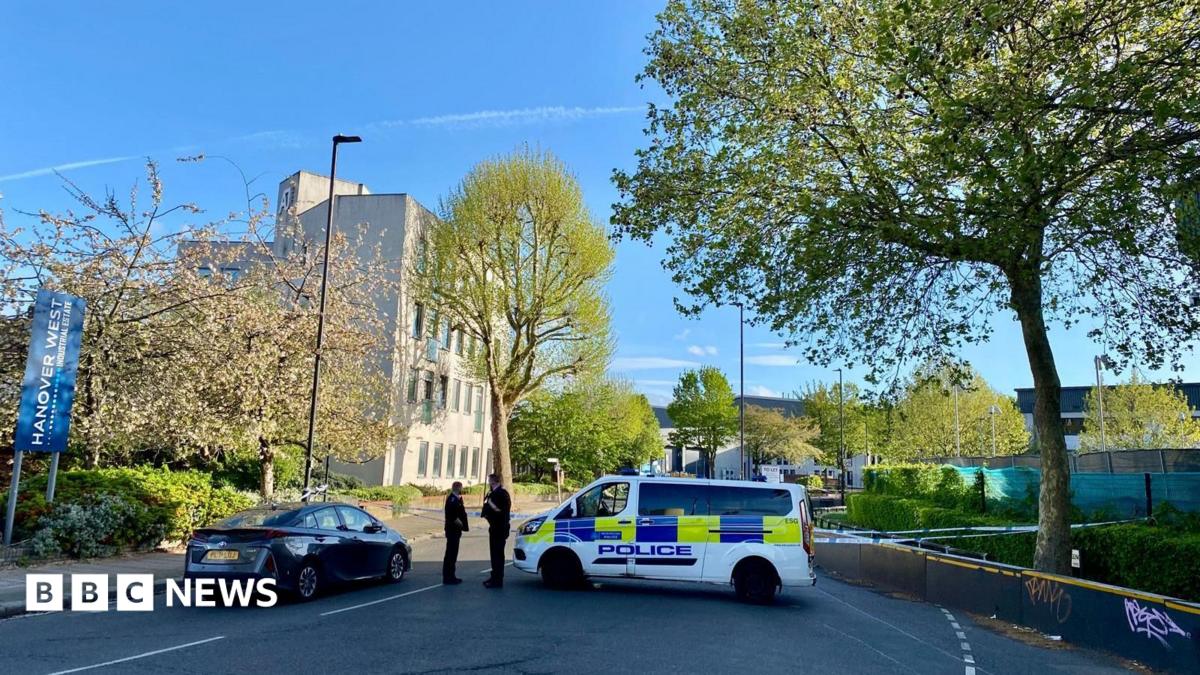
Police tape closes off the road. Two officers can be seen standing next to a police vehicle. The area is leafy with a pale building in the background.

Three people have admitted being involved in an arson attack at the offices of a Persian media organisation in north-west London.

On 15 April, police were called to the offices of Volant Media in Park Royal, the parent company of Persian news channel Iran International, after an “ignited container” was thrown towards the site.

Appearing at the Old Bailey, Nathan Dunn, 19, pleaded guilty to arson being “reckless as to whether life is endangered”, while a 17-year-old boy denied that same charge but admitted the lesser alternative offence of arson. This was not accepted by the prosecution, and he will stand trial on 1 February 2027.

Oisin McGuinness, 21, previously pleaded guilty to arson.

Advertisement

He also admitted dangerous driving and possession of the Class A drug cocaine, with those pleas being accepted by the court.

No-one was injured in the attack, with the fire immediately going out after the container landed in a car park.

McGuinness and Dunn, both from Watford, Hertfordshire, were remanded in custody.

The 17-year-old boy, who cannot be identified for legal reasons, was remanded into local authority care.

Advertisement

Listen to the best of BBC Radio London on Sounds and follow BBC London on Facebook, external, X, external and Instagram, external. Send your story ideas to hello.bbclondon@bbc.co.uk, external

Source link

Advertisement
Continue Reading

NewsBeat

Car smashes into wall near Dolais shop before driver flees

Published

on

Wales Online

An investigation is ongoing

A car crashed into a wall near a shop before the driver made off. The incident happened just before midnight on Tuesday at Bryn Carwyn, Dowlais.

Advertisement

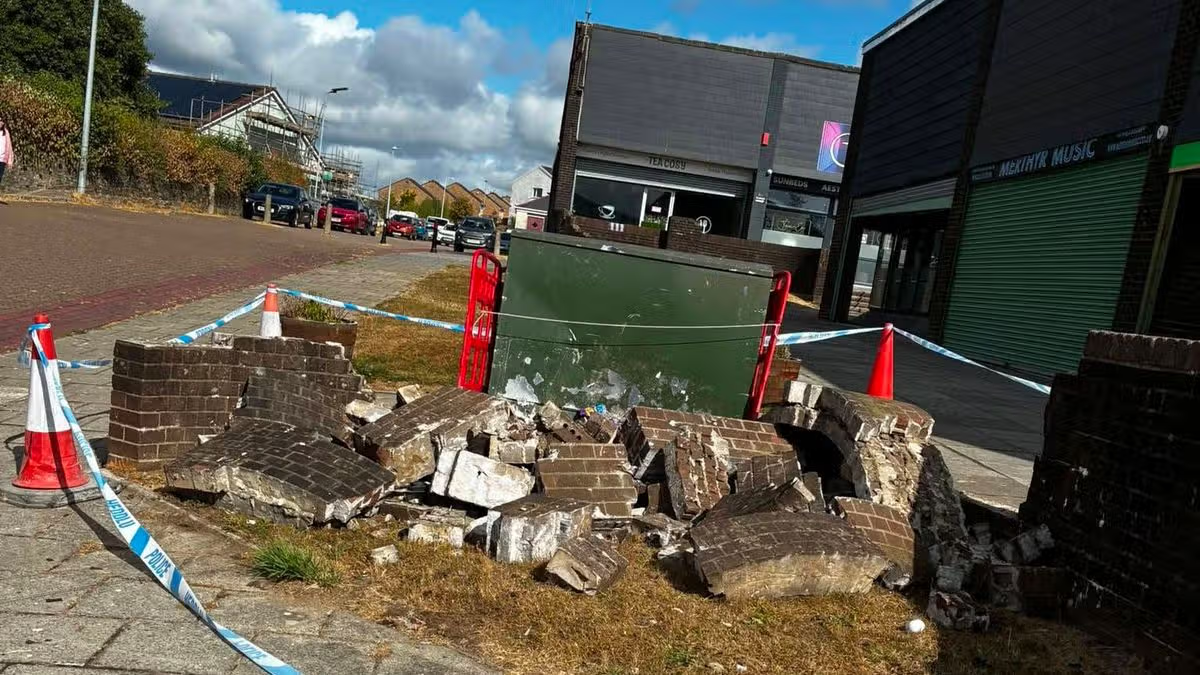
Councillor Dean Barrett for the Pant and Dowlais ward of Merthyr Tydfil shared a picture of the aftermath of the crash. The picture shows a wall near the Londis shop badly damaged and crumbling.

Cllr Barrett told WalesOnline he is amazed at how the incident happened. He said: “How it happened amazes us to be honest because they must have been coming up there at some speed to cause that much damage. There’s not even a long length of road leading up to it. And then they’ve abandoned the car.”

Cllr Barrett said the police tape was still in situ as of Friday morning. Always keep on top of the latest Welsh news with our newsletter

A spokesman for South Wales Police said: “South Wales Police was called at 11:50pm on Tuesday, August 18 to a car having driven into a wall on Bryn Carwyn in Dowlais.

Advertisement

“The driver of the car had fled the scene before officers arrived. Investigations into the incident are ongoing.”

Source link

Continue Reading

NewsBeat

‘I don’t want to leave my girls’ – Mum’s tragic diary entries after horrific NHS error

Published

on

Daily Mirror

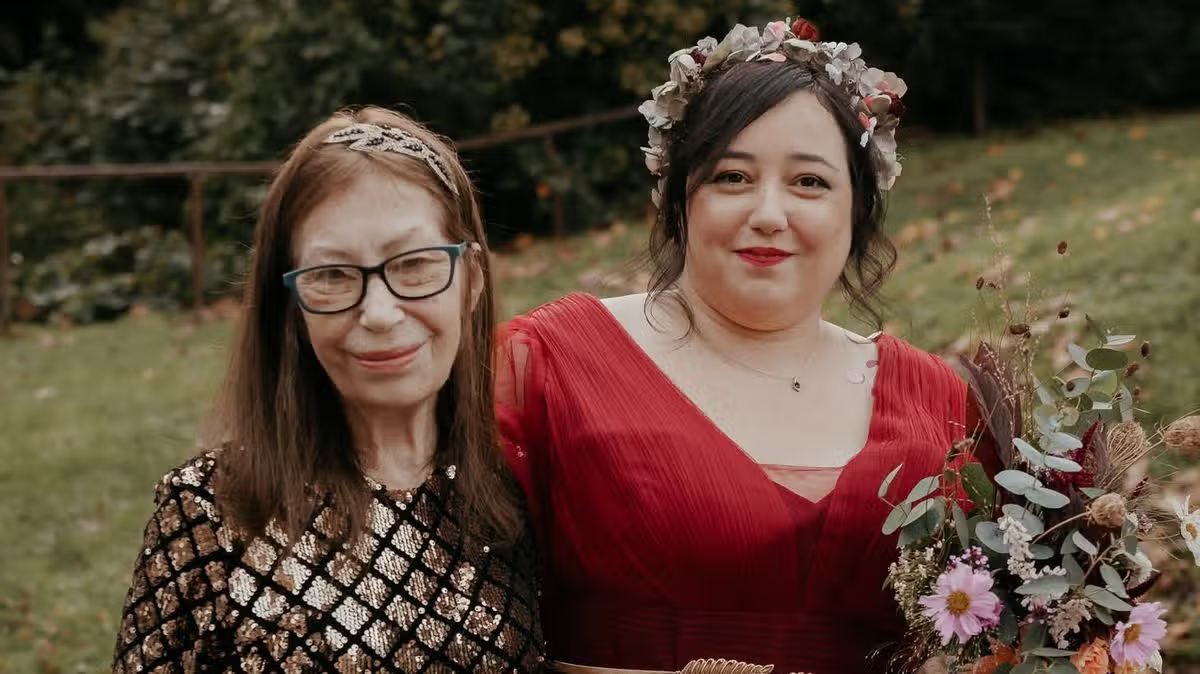
EXCLUSIVE: The daughter of a terminal cancer patient has revealed her mum’s heartbreaking final diaries after a catastrophic NHS error left her crying in pain for five days

In the final months of her life, 67-year-old Tracy Cliff wrote candidly about her determination to squeeze every drop of joy out of her remaining time – amidst her despair at leaving her daughters behind.

Following a rectal cancer diagnosis, Tracy underwent surgery at Royal Devon & Exeter Hospital in March 2022 to fit a colostomy bag. But surgeons mistakenly stapled the wrong end of her bowel closed, causing a complete obstruction that went undetected for five days.

Writing in her diary during her final months, Tracy, a mother-of-three from Tiverton, Devon, channeled her inner strength, alongside admitting her deepest fears: “I’m dying, and as I can’t change that, I am going to have as much fun as possible doing it!”

Advertisement

In another entry, she confessed: “I am getting more and more anxious as each day goes by. I don’t want to leave this world; I don’t want to leave my girls.”

The error left Tracy in excruciating pain and forced her to undergo a second major operation, later described by expert evidence as “entirely avoidable”.

Her recovery was further blighted by hospital-acquired pneumonia, a nasogastric tube and further tests. She died from terminal rectal cancer 16 months later, on 18 July 2023 – her 67th birthday.

Her daughter, Jade Farrow, pursued a successful legal claim following her mum’s death. Recalling the horrific aftermath of the initial surgery, Jade told the Daily Mirror: “What upset me the most was how long she was left in pain before they identified what had happened.

“I had her calling me in tears because she was in so much pain, but I read her notes and they recorded her at pain level two. That just didn’t match what I was hearing from her.

“I’m not a medical professional, but the first time I spoke to her I knew something was very wrong. I still struggle to understand how a whole team of medical professionals didn’t.”

Advertisement

The case was recently settled for £10,000 after Royal Devon & Exeter NHS Foundation Trust admitted negligence over the operation, though it disputed that the error affected Tracy’s overall cancer prognosis.

For Jade, however, it’s never been about the money; it was about securing accountability for her caring, quick-witted mum, who kept her “wicked” sense of humour to the end.

Advertisement

Jade said: “She insisted on playing ‘Girl on Fire’ by Alicia Keys for her cremation. It was tasteless as hell and I think she did it to embarrass me, but she insisted on it.”

When December rolled around, knowing it would be her last Christmas, Tracy transformed her home into a grotto, “decorating the hell out of it and burying the Christmas tree in presents.”

Reading her mum’s diaries after death brought fresh waves of heartbreak, as Jade discovered her mum regretted choosing radiotherapy alone over a combined chemotherapy and radiotherapy regime.

Following the pain she endured caused by the surgical error, an exhausted Tracy felt unable to cope with the added side effects of chemotherapy. By the time she sought to change her mind, she had already received her maximum lifetime dose of radiotherapy.

“I read the diary the same night she died, when I came home from the hospice,” Jade said. “It absolutely broke my heart that she regretted it. She had previously believed there was only a 5% chance with combined treatment. I only found out through the legal case that it was 60%.”

Jade says fighting the negligence claim took a heavy toll, describing the three years since her mum’s death as “an emotional power cut.”

Advertisement

She said: “It won’t ever get easier, but I’m slowly getting myself back. I wasn’t depressed, it was more like I was just absent. There was nothing going on. I was just roleplaying my life. “

“You [end up] thinking: ‘Okay, this is me now. My life is essentially over, because I’m dead inside.’”

But her mum’s entries gave her the emotional strength to carry on, said Jade: “Over and over again, she was writing about ‘My girls, I’m so proud of my girls’ and saying how much she would see us and how grateful she was.

Advertisement

“If the only thing she’s sad about is having left her girls, it just proves she wasn’t not self-pitying.”

One entry said: “I have all I want and need, I see my girls loads and I’m mostly happy and in a fantastic, upbeat mood. I think I will go smiling.”

Amina Ali, Partner and Head of Clinical Negligence at Veritas Solicitors, said: “By the time Tracy’s surgical error was identified, five days had passed and she needed another major operation which expert evidence found was entirely avoidable. For someone already facing treatment for terminal cancer, that was an enormous amount to go through.

Advertisement

“Tracy still had major decisions to make about her cancer treatment after leaving hospital. Jade has always believed that what her mum went through played a part in the choices she made afterwards. Although the Trust did not accept that, it was an important part of the case and something we felt needed to be properly investigated.

“The admission of negligence answered one part of the case, but Jade still wanted to understand why the error wasn’t identified for five days and what followed from it. A settlement brings the legal case to an end, but it shouldn’t mean those questions are forgotten.”

Advertisement

Since the case was settled, Jade feels like she can finally move on with her life. “I’ve spent three years unrecognisable to my friends and I think that’s because there wasn’t any closure”

A spokesperson for the Royal Devon University Healthcare NHS Foundation Trust said: “The legal claim in this case has been settled, and an admission of sub-standard care was made, and an apology provided, as part of the Trust’s response to the allegations.

“We recognise that on this occasion our care was not as expected, and we are very sorry for the distress that this caused Ms Cliff and her family.”

Source link

Advertisement
Continue Reading

NewsBeat

Rangers thugs handed football ban over Scottish Cup Old Firm disorder

Published

on

Daily Record

Football hooligans Mackenzie Graham and John Smith were caught on camera during the shameful scenes which erupted after Celtic’s Scottish Cup win in March.

Two Rangers fans banned from every football ground in UK after Old Firm disorder

Two Rangers thugs have been banned from every football stadium in the UK for their part in the shameful disorder which marred the Scottish Cup Old Firm clash at Ibrox.

Mackenzie Graham and John Smith were separately caught on camera during the chaotic scenes which erupted after Celtic knocked Rangers out of the competition on penalties in March.

Advertisement

Graham, 21, from Glasgow, was filmed jumping over a fence and leading a group of supporters onto the pitch, repeatedly encouraging others to join him.

He can seen in footage wearing all black and leading other Ultras on to the grass, while stewards chase them.

Smith, 19, from Peterhead, was captured throwing a bottle into the Celtic support before he was apprehended by police officers in the stands.

The disorder came as both sets of supporters stormed onto the pitch at the end of the quarter-final, with police, stewards and players assaulted and flares thrown.

Other fans, including children and disabled supporters, had to be ushered to safety during the violence as officers battled to regain control.

Advertisement

The scenes were later described in an independent review as involving a period of “life-threatening violence”, with concerns raised that somebody could have been killed.

Police Scotland has so far made more than 37 arrests in connection with the disorder under Operation Moonglint.

Both men admitted the charges against them previously at Glasgow Sheriff Court.

Advertisement

Graham and Smith have now both been handed five-year Football Banning Orders, preventing them from entering any football ground in the UK or travelling to matches to support a team.

Graham was also given a two-year Community Payback Order along with an Electronic Monitoring Order, while Smith was sentenced to a 12-month Community Payback Order and a four-month Restriction of Liberty Order.

Fraser Gibson, Procurator Fiscal for Glasgow and Strathkelvin, said: “The behaviour of these two men contributed to mayhem at a major sporting event.

Advertisement

“It caused fear and distress amongst football fans and members of the public.

“Peaceful supporters, children and disabled people were caught up in the chaos and had to be shepherded to safety.

“Football-related crime is a blight on Scotland’s communities. It will not be tolerated.

Advertisement

“It should be understood that anyone who chooses to contribute to football-related disorder can expect to be held accountable by COPFS, Police Scotland and the courts.”

Get more Daily Record exclusives by signing up for free to Google’s preferred sources. Click HERE.

Source link

Advertisement
Continue Reading

NewsBeat

New dementia study challenges assumption that ‘every move counts’ for brain health

Published

on

New dementia study challenges assumption that ‘every move counts’ for brain health

A new study challenges the conception that “every move counts” for brain health after researchers found that the context of physical activity makes a difference in lowering the risk of dementia.

The new USC research suggests that it’s not just the amount of physical activity but also whether it’s for work or leisure.

A meta-analysis of more than 4.2 million people revealed that recreational exercise—such as walking, cycling, running, swimming, or playing sports—is linked to a substantially lower risk of dementia. Physical activity performed as part of employment appears to be associated with a higher risk of developing the condition.

Published in The Lancet Public Health, the findings are the first to systematically investigate whether the so-called “physical activity paradox” applies to dementia. The paradox, previously documented in cardiovascular research, describes the unexpected observation that physically demanding jobs fail to deliver the same health benefits as voluntary exercise and may even heighten disease risk.

Advertisement

“The findings challenge the long-held assumption that ‘every move counts’ for brain health,” said Natan Feter, the study’s first author, postdoctoral fellow in Raichlen’s Evolutionary Biology of Physical Activity Lab at USC and researcher in the Graduate Program of Epidemiology at Universidade Federal do Rio Grande do Sul in Brazil.

Occupational physical activity was associated with a 20% higher dementia risk, while active commuting showed a modest increase in risk, though those findings were based on just two studies
Occupational physical activity was associated with a 20% higher dementia risk, while active commuting showed a modest increase in risk, though those findings were based on just two studies (Getty Images)

The research team was led by David Raichlen, professor of biological sciences and anthropology at the USC Dornsife College of Letters, Arts and Sciences. Investigators analyzed data from 74 cohort and case-control studies involving more than 4.2 million participants aged 45 to 93 years across 30 countries. Participants were monitored for a median of 10 years, during which researchers tracked diagnoses of all-cause dementia, Alzheimer’s disease and vascular dementia.

Overall, individuals engaging in higher levels of leisure-time physical activity had a 24% lower risk of dementia compared with the least active participants. Household physical activity also showed potential benefits, though evidence was limited to a single study. In contrast, occupational physical activity was linked to a 20% higher dementia risk, while active commuting was associated with a modest increase in risk based on two studies.

Researchers explained that leisure exercise is typically self-directed, set at an enjoyable intensity, and often paired with social interaction or stress reduction. In contrast, physically demanding jobs frequently involve repetitive tasks, prolonged standing, heavy lifting, restricted recovery time, and exposure to workplace hazards.

The authors suggest that the negative health impacts tied to occupational activity are unlikely to stem from physical movement itself. Instead, they may stem from the broader social and environmental conditions that often accompany manual labor.

Advertisement

“Improving access to safe parks, walking trails and recreational facilities, ensuring people have adequate leisure time for exercise, and reducing harmful workplace exposures may ultimately prove as important as promoting physical activity itself,” Raichlen said.

With reporting by City News Service

Source link

Advertisement
Continue Reading

NewsBeat

Achievement & Ambition at GCSE

Published

on

Achievement & Ambition at GCSE

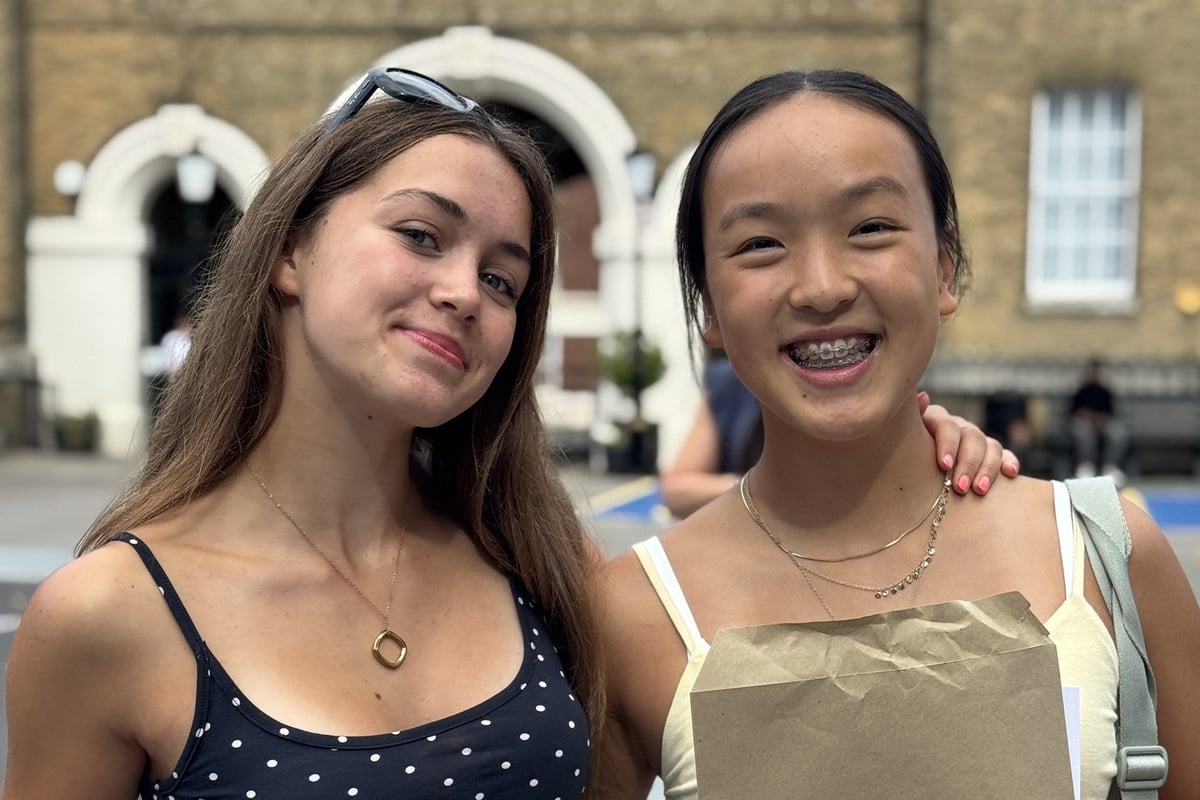
After last week’s historic A Level results, which saw pupils achieve the highest percentage of A* grades in the history of the school, pupils at The Portsmouth Grammar School were once again celebrating today as they received their GCSE results. Pupils achieved success across a broad range of academic subjects underlining the strength of achievement and ambition throughout the PGS community. 

Source link

Continue Reading

NewsBeat

One photo shows the human and environmental dimensions of artisanal mining in Congo

Published

on

One photo shows the human and environmental dimensions of artisanal mining in Congo

IGA-BARRIÈRE, Congo (AP) — Dieudonne Dirole is based in eastern Congo, where he started working for The Associated Press this year as the region recorded an Ebola outbreak that is spreading at unprecedented speed with no sign of slowing. He made this photo while on assignment with colleagues reporting on mobile gold miners whose movements and remote locations complicate efforts to track and slow the virus.

Here’s what he had to say about this extraordinary photo.

Why this photo?

In this photo of the mine, I wanted to show the true scale of artisanal mining and the impressive number of people who depend on this activity. I didn’t just want to photograph an individual scene, but instead I wanted to give the viewer a broader view of what is really happening on the ground. The presence of child miners, women, and men in the mud, the polluted water used for washing, and the transformed hillside all demonstrate the human, economic, and environmental dimensions of mining.

Advertisement

How I made this photo

They absolutely refused to accept because they know they are exploiting children and women in the mine, even though it is prohibited by the law protecting children. Ultimately, he said he’s going to have one of his agents accompany us everywhere I want to film, but under his supervision.

Why this photo works

I think this photo is successful because it tells a story without needing a long explanation. At first glance, you immediately understand that it is an extremely active mining site; then your gaze discovers the different individual stories: the people who dig, those who transport, those who wash the ore, the women and men who work in the water and mud. And what makes this image powerful is the contrast between the very intense human activity in the foreground and the natural landscape in the background. The photo simultaneously shows the people, the work, and the impact of this activity on the environment.

Advertisement

For more extraordinary AP photography, click here.

Advertisement

Source link

Continue Reading

NewsBeat

Tottington High School celebrated superb GCSE Results Day

Published

on

Tottington High School celebrated superb GCSE Results Day

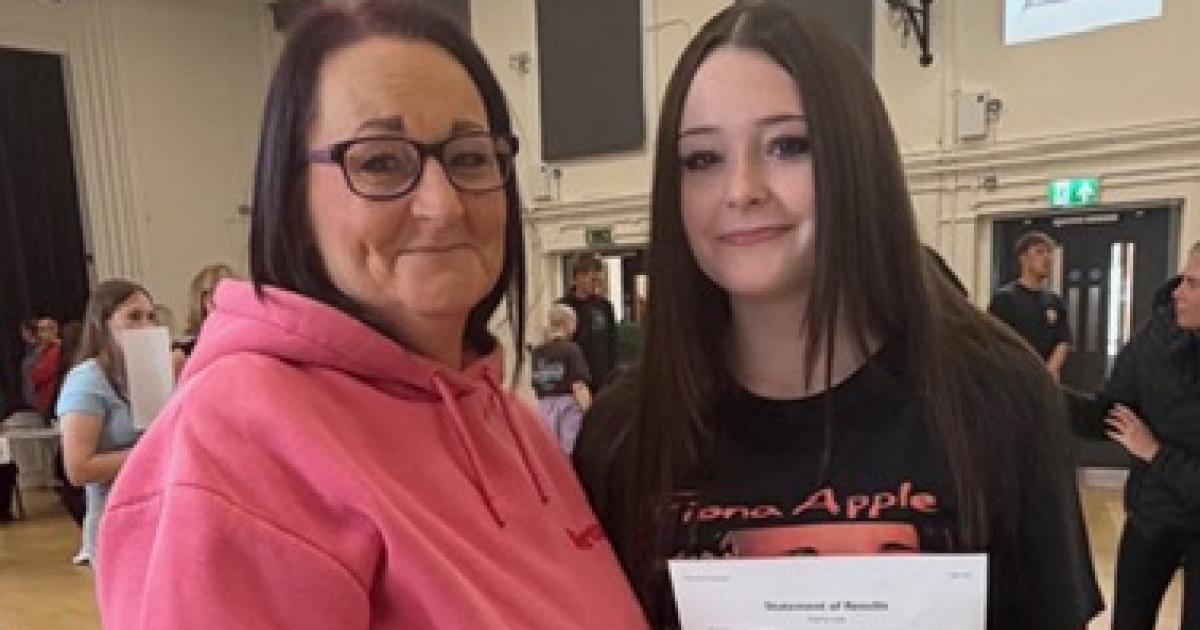
The school saw a significant improvement in GCSE results compared with last year, something staff and pupils are extremely proud of.

Among those to secure exceptional results was Francis Cheung, who got a clean sweep of Grade 8s and Grade 9s.

Francis Cheung achieved a clean sweep of Grade 8s and Grade 9s. (Image: Tottington High School)

Meanwhile, Lucy Morris gained six Grade 9s, three Grade 8s and an L2 Distinction*.

Interim Tottington High Headteacher Louise Jaunbocus-Cooper said: “These results are a clear reflection of the progress our school is making and the positive impact of the hard work, commitment and high expectations shared across our whole school community.

Advertisement

“We are particularly proud of the substantial improvement in outcomes for our SEND and Pupil Premium students compared with last year.

“This is a significant achievement and one that reflects our ongoing commitment to ensuring every student can succeed.

“We could not be prouder of all our students.

“Your hard work and commitment have truly paid off.

Advertisement

“We know you will go out into the world and make a difference!”

Source link

Advertisement
Continue Reading

NewsBeat

Football ticket crackdowns and price hikes are excluding traditional fans

Published

on

Football ticket crackdowns and price hikes are excluding traditional fans

The new season of the English Premier League is almost ready to kick off, and with it another annual cycle of the national game. Each August brings hope and expectation for supporters with an opportunity to start anew. But, rather than excited anticipation, frustration, anger and anxiety are the overriding emotions of many fans currently.

This summer some of the English clubs with the richest history – including Arsenal, Manchester United and Liverpool – have caused controversy for revoking the season tickets and issuing lifetime bans to thousands of supporters.

Our latest research has examined how the increasing commercialism of English football, which has accelerated since the return to play following the COVID lockdowns, threatens the future existence of football stadiums as an inter-generational space.

Despite significant changes in the finances, infrastructure and scale of the national sport over the past four decades, English football stadiums remain a key focal point for fan communities and distinct spaces of connection and bonding between the generations.

Advertisement

The intergenerational nature of football fandom is largely taken for granted, despite the growing realisation of the importance such shared spaces for the transmission of cultural values across generations. These latest initiatives may exacerbate the risk to this communal experience by digitally excluding fans.

Crackdown on ticket touts

Ostensibly the action taken by the clubs is part of an anti-touting crackdown, as ever-rising demand has created a lucrative secondary market for touts to resell tickets at hugely inflated prices. Ticket touting – the act of buying tickets for live events and reselling them at highly-inflated prices – has been illegal in English football since the introduction of the Criminal Justice and Public Order Act 1994. While frowned upon in other sports and entertainment sectors – such as live music – it is only criminalised in football.

A serious attempt by clubs to clampdown on such activity is long overdue. The advent of digital tickets has witnessed the rise of online touting on an industrial scale, with bots used to harvest hundreds of tickets to be resold to supporters across the globe. There are also signs that such actions are proving effective – it has been reported that the actions taken by Liverpool FC, in conjunction with Merseyside Police, have led to the seizure of £1.2 million in assets related to organised ticket touts.

Many Manchester United season ticket holders are upset about the way the club has handled ticket touts.
Luthfi Syahwal

However, there is also evidence that ordinary fans are being caught up in this crackdown. There has been outrage among Manchester United supporters, as thousands of season ticket accounts were restricted or threatened with closure after been flagged due to vague claims of “sustained activity”.

Advertisement

In many instances this appears to be caused by supporters helping friends or family members, less familiar with online ticketing systems, manage their accounts. Several fans have voiced their concerns about the blunt use of automated software and AI to identify their accounts and the lack of proper redress, highlighting the club’s disregard for its most loyal supporters.

Some fans are more conspiratorial. They view this as the latest attempt to exclude longstanding season ticket holders. As one Manchester United fan said: “I feel angry about it – they just want us gone”. Such a view is not without credence.

All three clubs have defended their actions and point to successes in combating the illegal re-selling of tickets. Manchester United admitted some mistakes and promised to refine its processes.

Price hikes

In the last couple of years there seems to have been a step-change in the approach of Premier League clubs to maximise revenue at the expense of maintaining a core group of local, inter-generational support. Whether through price increases or the reduction in concessions for young and older fans, clubs have already taken active steps to curtail the proportion of season ticket holders.

Advertisement

At the start of the 2024–25 season, amid a wider cost of living crisis, 19 out of the 20 Premier League clubs raised ticket prices. At some clubs, the increases jumped as high as 28% and included one reported case of a 111% price increase for a child’s season ticket. These price hikes represent an acceleration of a long-term trend, with the cost of tickets rocketing by 800% between 1990 and 2025.

There was a feeling that clubs were actively seeking to undermine the season ticket model through prohibitive pricing to free up seats for more lucrative overseas “tourist fans” more willing to pay higher prices and spend more money on merchandise. Fans across rival teams united in protest, calling on clubs to “Stop Exploiting Loyalty” and reverse ticketing policies that undermine long-standing community ties and make football less accessible to future generations.

In our research interviews, fan activists expressed general suspicion that clubs were colluding to adopt similar ticketing policies to minimise reputational damage. This suspicion was reinforced by the decision by some clubs to diminish the established concessionary prices for younger (such as under-18s and students) and senior (over-65) supporters.

Along with hyper-inflated ticket prices, these new measures may irrevocably alter the composition of the matchday crowd by pricing older and younger fans out.

Advertisement

The irony here is that these clubs seem to be motivated by the same rationale as the touts – displace the season ticket holders and maximise revenue by reselling to overseas fans.

In the wake of the most expensive World Cup ever held and Fifa President Gianni Infantino’s ill-fated plan to sell a 20% stake in the competition, a growing proportion of English football fans feel alienated and actively excluded by the increasing commercial interests in the game.

Voicing his opposition to Infantino’s World Cup sell-off, new Prime Minister Andy Burham (a lifelong Everton fan), said that: “Football does not belong to investors … Football belongs to the fans. It always has, and it always will”.

Football’s strength has always come from the commitment of generations of supporters who pass their club loyalties from parent to child. If rising prices and digital barriers continue to push local fans to the margins, the game risks losing the very communities, traditions and atmosphere that made it the world’s most popular sport.

Advertisement

Source link

Continue Reading

Trending

Copyright © 2025