Connect with us
DAPA Banner
DAPA Coin
DAPA
COIN PAYMENT ASSET
PRIVACY · BLOCKDAG · HOMOMORPHIC ENCRYPTION · RUST
ElGamal Encrypted MINE DAPA
🚫 GENESIS SOLD OUT
DAPAPAY COMING

NewsBeat

Woman ‘terrified’ as man forced her into car and drove her to petrol station

Published

on

Wales Online

At the petrol station she was able to get help and the police arrived

A jealous thug assaulted his partner after she messaged her former husband about their child. He would obsessively check her phone and threatened to “cut the brakes” on her car.

Advertisement

Sean Hood, 42, of Newport, had been in a relationship with the victim for six months and she described him as “normal” at the beginning but he quickly became “toxic” in his behaviour. He would demand to see his partner’s mobile phone, made her delete male friends on Facebook and made threats against her.

A sentencing hearing at Cardiff Crown Court on Tuesday heard the defendant would frequently accuse his partner of infidelity and limited the amount of time she could spend on her phone. Make sure you never miss Wales’ biggest updates by getting our daily newsletter.

The victim said she used to go out with friends but this stopped during her relationship with Hood, who frequently threatened her.

Prosecutor Jac Brown said one occasion the defendant threatened to “cut the brakes” on the victim’s car and then mocked her for believing him.

Advertisement

On February 14, Hood was “angry” towards the victim and she attempted to de-escalate his behaviour. He left the property and the victim locked the door, but he tried to gain access and threatened her. She said she felt she had no choice but to let him back in and he threw a set of keys at a vase, causing it to smash.

On February 15, the victim was on her phone and placed it down the arm of the sofa. The defendant accused her of trying to hide the phone and demanded to inspect it.

He went upstairs and found messages between the victim and her ex-husband about their child. Hood became angry and accusatory and called the victim a liar. He threw her phone at her and hit her in the leg.

The defendant barged into the victim and caused her to hit her back against a board. Hood began to hit himself by punching his head and punched a door out of anger. He then threatened the victim, saying: “If you don’t get in the car I’ll drag you to it.”

Advertisement

The victim was terrified and anxious about what might happen to her, as the defendant drove her to a Tesco petrol station, telling her: “You’ll see exactly what I am like.”

When they got to the petrol station, the victim was able to get help from a member of staff as Hood repeatedly tried to phone her.

The police were then called and the defendant was arrested, and in his interview he accused the victim of fabricating the allegations. He then breached his bail conditions by attempting to contact her and turning up at her workplace.

Hood, of Broadmead Park, later pleaded guilty to controlling/coercive behaviour, assault by beating and damaging property. The court heard he has two previous convictions dating back more than 20 years.

Advertisement

In a victim personal statement read to the court the victim said: “I have been suffering as a result of the actions of Sean Hood and what he has put me through. In our relationship of just over six months I became disengaged and disassociated. I emotionally shut down. I have become isolated and stopped speaking to my friends because he didn’t like them.

“I feel like I am in fight or flight mode. He would constantly spam my phone with no caller ID. My confidence has been knocked massively. I feel I have become introverted. I used to be bubbly but I have become depressed and very anxious.

“I feel I am living with this trauma every day and I can’t see an end to it. I am suffering with panic attacks which make me feel drained and I feel hypersensitive to dangers.”

In mitigation, Kevin Seal said his client has already served the equivalent of a four-month sentence while on remand. The defence barrister said the defendant has lost his job and has been unable to see his children.

Advertisement

Sentencing, Recorder Greg Bull KC said: “Your behaviour was totally unacceptable and resulted in an assault.”

Hood was sentenced to an 18 month community order. The defendant was ordered to carry out 26 sessions of the Building Better Choices programme, a three-month GPS trail monitoring requirement, and 150 hours of unpaid work. He must also pay a £50 fine and was given a five-year restraining order to protect his victim.

Get daily breaking news updates on your phone by joining our WhatsApp community here. We occasionally treat members to special offers, promotions and ads from us and our partners. See our Privacy Notice.

Source link

Advertisement
Continue Reading
Click to comment

You must be logged in to post a comment Login

Leave a Reply

NewsBeat

I love wildlife but I’m fighting against No Mow May

Published

on

I love wildlife but I'm fighting against No Mow May

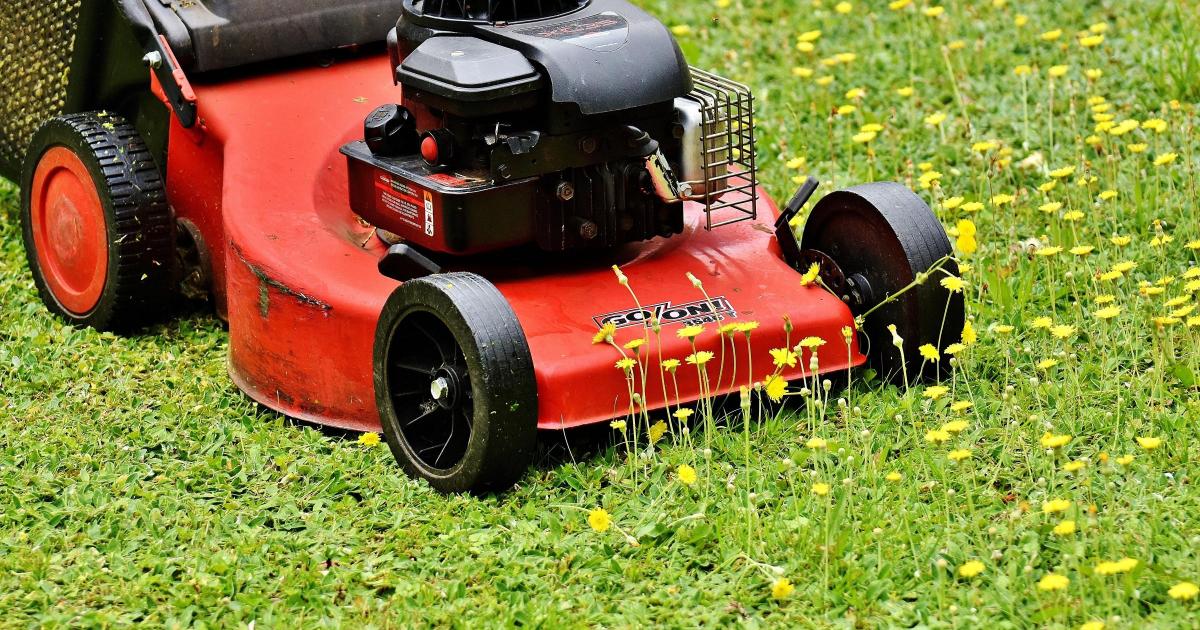
It was Saturday morning on May 2 when he mowed the lawn. Nothing unusual there – except it’s May – the month when we are not supposed to mow at all.

The annual No Mow May campaign, led by wildlife charity Plantlife, urges people to leave their mowers in the shed during May to allow grasses and wildflowers to flourish. I’m all for that – I will do almost anything to encourage nature. We’ve got wild areas all around the garden, birds nesting under our roof tiles, squirrels with their own feeding station, a wildlife pond, insect houses – you name it. But the lawn is another matter.

I like lawn to be lawn. Lush and green, preferably with stripes. Watching the Masters golf tournament at Augusta last month I stared longingly at the pristine, vibrant green acres. “Why can’t we have grass like that?” I asked my husband, before spending at least an hour Googling ‘lawn care’.

That resulted in a trip to Screwfix where I bought a raker and scarifier at a bargain price, with good reviews all round. After the mow it was put to use, de-mossing and raking. Then, on bank holiday Monday, we spiked it and scattered sharp sand before re-seeding.

Advertisement

I stare enviously at golf courses. (Image: Pixabay)

I worried for my sanity, after getting excited in shops, when faced with boxes covered in pictures of perfect lawns, accompanied by words such as ‘superior’, ‘thicker’ and ‘stunning’. Did I need Miracle-Gro? Of course. What about Speedy Speed? Definitely. Or Pure Green? By the time we left I felt quite light-headed.

Twenty years ago, before we moved to a house with a garden, I would have scoffed had anyone said I would become a lawn-obsessive. It’s something I have long associated with older men. My dad used to have conversations with passers-by about what setting he had the lawn mower on to keep his grass looking good. Now I am having similar chats with my neighbours.

One chap who lives nearby recently led me round the back of his house to reveal the most beautiful swathe of verdant grass. My jaw dropped. “What do you do to get this?” I asked, to be told it’s in the hands of professionals. I couldn’t wait to tell my husband. “Do you think we should get people in?” I asked him. He didn’t reply.

He isn’t on the same page as me regarding our lawn. He would be perfectly happy letting moss take over. “I like moss, and it’s a natural process,” he says. That’s all well and good, but I don’t want a moist, spongy, squelchy surface underfoot every time I walk across the grass, and aside from that, I genuinely like grass. I like the feel of it, it’s the perfect base on which to spread a rug or set up a picnic table. Moss isn’t.

Advertisement

So lawn it is, and it needed a cut. It’s not that I have completely disregarded No Mow May. Last year, against my wishes, we embraced it. We left the lawn unmown until June. When we finally got the mower out, it resembled the Serengeti. We needed a scythe. I also fretted about frogs and toads being hidden in the longer grass and mown over. With short grass at least we can see small creatures.

With its scarified patches, our lawn doesn’t look great at the moment, but I am sure it will be worth the effort and become the showpiece garden I dream of. I do worry for my sanity, however.

Source link

Advertisement
Continue Reading

NewsBeat

US prosecutors seek death penalty for suspect in killing of Israeli embassy staff

Published

on

US prosecutors seek death penalty for suspect in killing of Israeli embassy staff

Lischinsky and Milgrim were leaving when the suspect fired 20 shots, killing them both, prosecutors allege. They were in a relationship and Lichinsky had bought an engagement ring, planning to propose to Milgrim on an upcoming trip to Israel, according to CBS News, the BBC’s media partner.

Source link

Continue Reading

NewsBeat

London’s Charring Cross station to close this summer – here’s how to avoid the disruption | News UK

Published

on

London's Charring Cross station to close this summer - here's how to avoid the disruption | News UK
Summer, sun, and rail disruption await in London (Picture: In Pictures via Getty Images)

The capital’s key railway stations will close for three weeks this summer, spelling trickier travel through central London.

The UK’s massive and ageing rail network needs almost constant TLC, and most of it coincides with holiday seasons to avoid the brunt of disruption on commuters.

Upcoming major works will shut Charing Cross and Waterloo East stations next month for a chunk of 22 days.

Let’s take a look at what’s coming up and how you could best avoid the mayhem.

Advertisement

When are Charing Cross and Waterloo East closed?

Passengers on a platform at Waterloo Railway Station in London Waterloo East Railway Station, London, UK - 25 Feb 2026
The planned works will affect Waterloo East as the pedestrian bridge to Waterloo and other crossings will be upgraded (Picture: Maureen McLean/Shutterstock)

The stations will be closed from Sunday, July 26 until Sunday, August 16, along with some weekends on either side, Network Rail said.

The closure has been planned during the summer holidays to minimise disruption.

Why are Charring Cross and Waterloo East closing over the summer?

The closure is part of £20 million railway upgrades being carried out by the South Eastern Railway.

Engineers will have to replace around 1.2 miles of tracks on the 36-year-old track, which sees heavy usage, and this can be done only without trains running.

How busy are the London stations?

London Charing Cross recorded around 19.7 million journeys through its barriers in 2024/25, up from 17.7 million passengers the previous year.

Advertisement

Much smaller Waterloo East saw 6.8 million entries and exits in 2024/25.

They both pale in comparison to the UK’s busiest station, London Liverpool Street, which had 98 million journeys, followed by Waterloo with 70.4 million according to the latest figures.

Advertisement

They will also revamp sections of platforms at Charing Cross, and do structural repairs on the pedestrian bridge between Waterloo East and Waterloo stations.

Latest London news

To get the latest news from the capital, visit Metro’s London news hub.

Advertisement

Where are trains diverted to?

There will be no trains going to or departing from Charing Cross or Waterloo East, so passengers should plan ahead.

Rail passengers wait with their luggage, following train disruptions at Victoria Station in London, Britain December 9, 2024.
Trains will be diverted to other nearby stations, including London Victoria, during the closure (Picture: Reuters)

Southeastern services will be diverted to London Victoria, Cannon Street, and Blackfriars.

Scott Brightwell, the train services director on the South Eastern Railway, said: ‘By consolidating the work into 22‑day closure, supported by preparation and follow‑up weekends, we can complete the work more quickly and with less disruption overall than the alternative options of 60 weekend closures or four to five 9-day closures.  

‘We have planned the closure for the summer, when passenger numbers are around 20 per cent lower and schools are closed, to help manage the impact on customers.  

People exit the platform at South Kensington station during a reduced service caused by tube strike represented by the RMT union in dispute with TFL over working patterns, in London, Britain, April 24, 2026.
There are also Tube strikes in the pipeline, but they won’t coincide with the planned railway upgrades (Picture: Reuters)

Is there other travel disruption in London this summer?

A sweeping Tube drivers’ strike is set to go ahead next week between Tuesday, May 19 and Friday, May 22.

Another strike by Tube drivers who are members of the RMT is planned between June 16 and June 19.

Advertisement

Get in touch with our news team by emailing us at webnews@metro.co.uk.

For more stories like this, check our news page.

Advertisement

Source link

Continue Reading

NewsBeat

Referee John Beaton put under police surveillance after penalty controversy in Celtic win over Motherwell, say SFA

Published

on

Aberdeen fans

The Scottish FA says referee John Beaton and his family “spent last night at home under police surveillance following a leak of personal details online”.

The association says that it is calling for “tolerance and perspective to prevent any further, unthinkable escalation”.

Beaton has faced criticism following the award of a late penalty, which was converted, in Celtic’s 3-2 win at Motherwell on Wednesday.

The incident at Fir Park, which involved VAR, was the latest in a series of controversial refereeing decisions as the Scottish Premiership title race reaches its conclusion.

Advertisement

Celtic’s win kept them within a point of leaders Hearts. Those two sides meet at Celtic Park in Saturday’s final top-six fixtures.

“The Scottish FA condemns in the strongest possible terms attempts to compromise the safety of match officials,” said the SFA, which organises refereeing in the SPFL.

“Such vigilantism, motivated by decisions perceived to be right or wrong on a field of play, is a scourge on our national game and we are grateful to Police Scotland for their swift intervention.

“As we approach what should be an exciting finale to the season, we ask those who have personalised and hyperbolised their opinions, those who have sought the easy way out by attributing defeats to perceived refereeing errors, and those who have approved incendiary statements and posts to reflect on their contribution to creating an environment of intimidation, fear and alarm.”

Advertisement

Source link

Continue Reading

NewsBeat

Why has PCOS been given a new name?

Published

on

Why has PCOS been given a new name?

For more than two decades, I have studied a condition that shapes the lives of about 10-13% of women. This condition causes complex, wide-ranging symptoms such as irregular periods, excessive hair growth, weight gain, acne and difficulty getting pregnant.

Until a few days ago, I called it polycystic ovary syndrome, or PCOS. But from now on, I – along with my colleagues, doctors and patients – will call it something different: polyendocrine metabolic ovarian syndrome, or PMOS.

The renaming was announced in a consensus paper just published in The Lancet. It is the result of a process that has taken over ten years, involved more than 22,000 people across six continents, and brought together 56 patients and professional organisations.

Some readers will see “PMOS” and wonder why scientists have spent so much energy on changing just three letters. As one of the researchers involved, I want to explain why this small change is, in fact, a very big one – and why we hope it will lead to better care for patients.

Advertisement

A name that didn’t fit

The old name was a historical accident.

When the doctors who first studied the condition examined affected ovaries under the microscope – and later by ultrasound – they saw clusters of small, fluid-filled sacs they thought were cysts. So the label “polycystic” stuck.

But those structures are not actually cysts. They’re immature egg follicles that have stalled at an early stage of development. Crucially, many people who are diagnosed with PCOS (now PMOS) do not even exhibit these abnormalities in their ovaries.

The name “PCOS” focused attention on a part of the body that, for many patients, is the least of their problems. And it implied the condition was solely a gynaecological issue. In reality, it’s a complex hormonal and metabolic disorder that begins early in life and lasts a lifetime.

Advertisement

Decades of research, including work done in my laboratory at Karolinska Institutet, has shown that the condition involves a range of interacting disturbances.

Levels of male hormones (androgens) are often elevated in those with the condition. The brain’s signalling to the ovaries is altered. The body’s response to insulin is blunted as well, which is why people with the condition have higher rates of type 2 diabetes, obesity, fatty liver and cardiovascular disease. There is also an increased risk of depression, anxiety, sleep apnoea and endometrial cancer.

That is why the new name has three parts.

“Polyendocrine” reflects the multiple hormonal systems involved. “Metabolic” recognises the lifelong risk of diabetes and heart disease. “Ovarian” maintains the link to ovulation problems and infertility, which remain core features.

Advertisement
It’s hoped the name change will lead to better care for patients.
Studio Romantic/ Shutterstock

The consensus process behind the change was unusually rigorous. Patients and doctors from every world region were surveyed in successive rounds, with their answers shaping the options offered in the next round’s survey. More than 14,000 people, over half of them living with the condition themselves, voted on candidate names. The final agreement was reached in February this year.

Why a name matters for care

A name is not just a name. It tells doctors where to look, tells researchers what to study, and tells people with PMOS what to expect.

Under the old label, many women were told their symptoms were a fertility issue or a weight issue. Diagnosis took, on average, more than two years – and up to 70% of patients reported initially being dismissed or misdiagnosed before finally getting a diagnosis.

Few were warned about their lifelong increased risk of metabolic disease. In many parts of the world, care was fragmented among gynaecologists, endocrinologists, dermatologists and mental-health professionals, with no one taking responsibility for the whole patient.

Advertisement

With PMOS, the multi-system nature of the condition is now recognised in the name. I hope this means general practitioners will check insulin, blood sugar, blood pressure and mental wellbeing when examining and diagnosing patients – not only looking at their menstrual periods.

I hope as well that the condition’s name change means teenage girls, who often show the earliest signs, will be identified and supported sooner. And that researchers find it easier to secure funding to study the metabolic, cardiovascular and neurological aspects of the disorder.

The name change may also empower women living with PMOS in seeking a diagnosis or treatment.

The diagnostic criteria for PMOS remain the same. If you already have a PCOS diagnosis, it will now be referred to as PMOS. You won’t need to undergo any new tests or attend new appointments.

Advertisement

The transition will be phased in over the next three years through updated clinical guidelines, medical education and international disease-coding systems.

We have not solved this condition. There is still no cure, and the first-line treatment is still lifestyle change – supported when needed by medications such as hormonal contraceptives, metformin (which can help control blood sugar) and, more recently, GLP-1 receptor agonists (which can help with managing blood sugar and may also lead to weight loss).

But getting the name right is the foundation that everything else rests on. After almost a century of mislabelling, we finally have a name that matches the science. I hope this name that will help the 170 million women living with this condition get the care they have always deserved.

Advertisement

Source link

Continue Reading

NewsBeat

Air ambulance attends accident on A171 near Scaling Dam

Published

on

Air ambulance attends accident on A171 near Scaling Dam

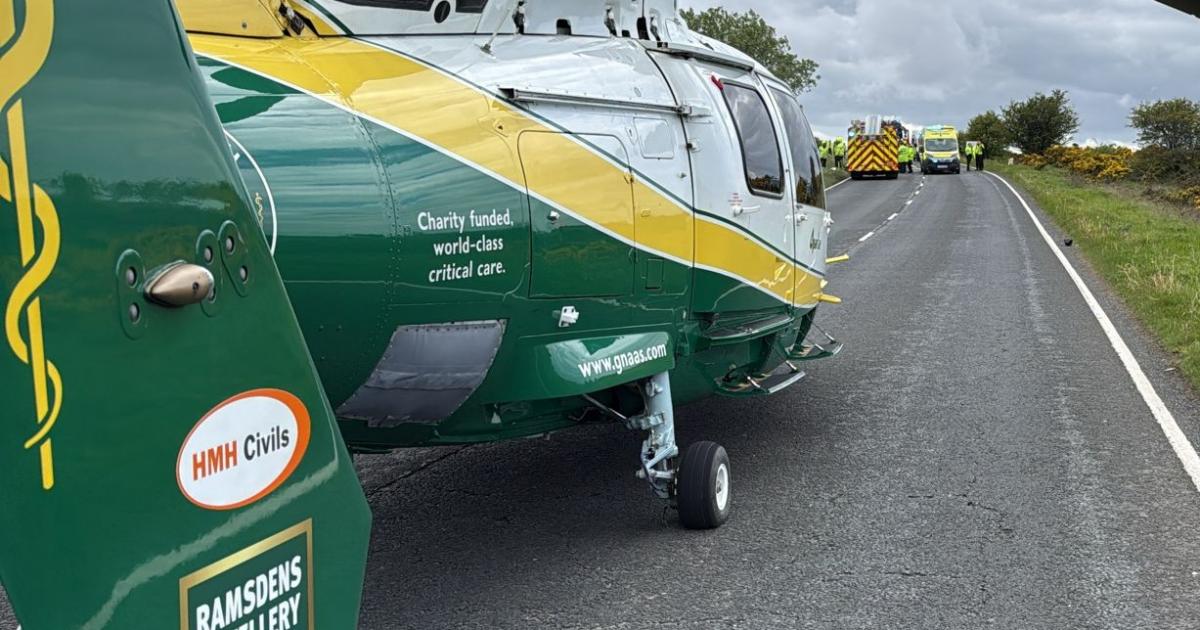
The Teesside based team were activated at 2:48pm and arrived on scene in just 10 minutes.

The GNAAS critical care team, consisting of two paramedics and a doctor, worked alongside North East Ambulance Service to assess and treat a patient. They were taken to hospital by road, accompanied by the GNAAS team.

RECOMMENDED READING:

Advertisement

A spokesperson for GNAAS said: “Our critical care team was activated at 2.48pm to reports of a road traffic collision on the A171 near Scaling Dam.

“We had two paramedics and a doctor on board our aircraft and they arrived on scene at 2.58pm.

“Our team worked alongside the North East Ambulance Service (NEAS) to assess and treat a patient.

“The patient was taken to hospital by a NEAS road crew, accompanied by our team.”

Advertisement

The charity recently launched ‘Written in the Sky’, giving the general public the chance to have their name – or the name of someone special to them – displayed on one of their new helicopters. To find out more visit: https://gna.as/written2026

Source link

Advertisement
Continue Reading

NewsBeat

Unite the Kingdom and Nakba 78 London marches: Tube, rail and bus services affected and road closures

Published

on

Unite the Kingdom and Nakba 78 London marches: Tube, rail and bus services affected and road closures

The Tube, rail stations, bus routes and roads in central London are set to be impacted by two marches on Saturday.

Around 50,000 people are expected by the Metropolitan Police to attend a Unite the Kingdom protest, and 30,000 a pro-Palestinian Nakba 78 demonstration.

Source link

Advertisement
Continue Reading

NewsBeat

Beer demand across the US is plunging – and the Iran war could be to blame

Published

on

Beer demand across the US is plunging - and the Iran war could be to blame

Higher gas prices, which have surged by about 52 percent since the start of the Iranwar, are draining demand for beer as American consumers continue to tighten discretionary spending, according to new data.

Beer, malt beverage and cider sales volumes fell 6.3 percent in the four weeks ending May 2, Nielsen reports. The steepest declines came from convenience stores and gas stations such as 7-Eleven, Wawa, Shell, and Exxon, where volumes are down about 9 percent year over year for the two weeks since April 26.

This is a clear step down from earlier in the year, when declines were only around 3 percent between November and mid-April, according to the data, as fuel costs weigh on impulse purchases.

“We find a negative correlation between the absolute price of gas in a given state today and the sequential change in beer/FMB/volume growth,” Bernstein analyst Nadine Sarwat told CNBC.

Advertisement

California saw the biggest drop in beer sales in the country, with volumes falling 16 percent, according to Nielsen. The decline lines up with the state’s persistently high gas prices, which average about $6.147 per gallon, driven by higher taxes and stricter fuel rules requiring a special cleaner-burning blend.

Beer sales fell 6.3 percent in the four weeks ending May 2, with the steepest declines at convenience stores and gas stations, where volumes are down about 9 percent year over year since late April
Beer sales fell 6.3 percent in the four weeks ending May 2, with the steepest declines at convenience stores and gas stations, where volumes are down about 9 percent year over year since late April (Getty Images)

Outside of California, Arizona and Texas also saw notable declines in beer sales, down about 10 percent and nearly 7 percent, respectively, over the same period.

At the same time, the Midwest is taking the brunt of soaring gas prices in the country amid the Iran-related oil shock, with Ohio leading the increase at roughly 72 percent since the conflict began 10 weeks ago, about double California’s rise, according to Bloomberg. Indiana, Illinois, Michigan and Wisconsin are also seeing steep jumps as fuel inflation spreads across the region.

Analysts say convenience stores are especially affected because they depend on commuter traffic and impulse purchases, both of which are slowing as average U.S. gas prices hover around $4.52 per gallon and have risen around 52 percent since the start of the Iran war, according to AAA data.

The surge in gas prices also comes at a time when younger generations are consuming less alcohol than their elders. A Gallup survey from August found only about 50 percent of adults ages 18 to 34 drink, down from 59 percent in 2023.

Advertisement

That decline is helping push the national drinking rate to a record-low 54 percent, with many respondents pointing to health concerns as a key reason for cutting back or avoiding alcohol.

For the first time in Gallup’s data, a majority of Americans, 53 percent, said moderate drinking is bad for health, up from 45 percent a year ago and 28 percent in 2018. Just 6 percent say it’s beneficial, while 37 percent say it makes no difference.

Source link

Advertisement
Continue Reading

NewsBeat

Four dead after medical plane crashed in mountainous New Mexico region igniting wildfire

Published

on

Four dead after medical plane crashed in mountainous New Mexico region igniting wildfire

A small medical plane crashed in a mountainous region outside Ruidoso, New Mexico, before dawn on Thursday, killing all four individuals aboard and igniting a wildfire in the surrounding forest, officials confirmed.

The blaze quickly expanded to 35 acres amid dry, windy conditions by midday, according to Lincoln County Manager Jason Burns.

Burns expressed significant concern about the fire, noting that local agencies were collaborating with the U.S. Forest Service to contain it.

The cause of the crash remains unknown.

Advertisement

The aircraft was located between 8 a.m. and 9 a.m. Thursday in steep, rocky terrain within the Capitan Mountains, a site so challenging to access that crews had to hike the final half-mile to reach it, Burns stated.

The victims were identified as flight crew and medical personnel, though their names have not yet been released.

“Our hearts and prayers go out to the families, loved ones, friends and colleagues of those who lost their lives in this tragic incident,” Burns said at a news conference.

The flight, operated by Trans Aero MedEvac, had departed from Roswell Air Center and was en route to Sierra Blanca Regional Airport.

Advertisement

The company reported the plane overdue after communications and radar contact were lost during its medical transportation mission.

The Federal Aviation Administration (FAA) and the National Transportation Safety Board (NTSB) will investigate the incident.

Trans Aero MedEvac has been operating in southeastern New Mexico and west Texas since 1966.

Ruidoso, a mountain town with a year-round population under 8,000, is situated at the base of south-central New Mexico’s Sierra Blanca range.

Advertisement

The surrounding area, including Lincoln National Forest, is heavily forested and rural. This incident echoes a previous tragedy in 2007, when five people died after a medical plane crashed in the Devil’s Canyon area of Lincoln National Forest shortly after departing Ruidoso Regional Airport for Albuquerque.

Nationally, NTSB records indicate 25 fatal medical plane crashes over the past 25 years, resulting in nearly 70 deaths.

Recent incidents include a jet crash in a Philadelphia neighborhood in January 2025, which killed eight people, and an August crash on the Navajo Nation in northern Arizona that claimed four lives.

In December, a Mexican Navy plane carrying a young patient and seven others crashed off the Texas coast in the Gulf.

Advertisement

Despite these incidents, aviation safety expert Jeff Guzzetti, a former NTSB and FAA crash investigator, asserts that medical evacuation plane flights are generally no more dangerous than other flights, as they operate between airports like any commercial aircraft.

He distinguishes this from medical helicopter flights, which he notes are more hazardous due to frequent landings on roads or improvised sites to quickly transport injured individuals.

A study covering a 20-year period ending in 2020 found that over 70% of air medical fatalities occurred on helicopters.

“Typically when an air medical air plane accident occurs, the reasons are usually the same as any other airplane accident. There’s not unique issues with the air medical mission,” Guzzetti explained.

Advertisement

Source link

Continue Reading

NewsBeat

Cowardly killer dragged father’s body around after punching him outside pub

Published

on

Wales Online

Kyle O’Callagan slapped Marcus Carpenter while dragging his lifeless body around in what was described by a judge as a ‘vain hope of reviving him’

Advertisement

A killer dragged a man’s body and slapped him to the face after knocking him unconscious with a punch and causing him a catastrophic brain injury that would cause his death. The shocking attack was caught on camera after the victim was asked to “have a “word” outside by his killer, before he was punched in the face.

Kyle O’Callaghan, 30, punched Marcus Carpenter, 37, outside the Picture House pub in Ebbw Vale on February 21, after he had asked his victim to ‘Do you want to come outside and have a word with me a minute?’. Both men walked to an alleyway outside the pub, where O’Callaghan punched Mr Carpenter to the face.

A sentencing hearing at Newport Crown Court heard they continued talking for a couple of minutes before Mr Carpenter tried to walk away, but the defendant grabbed his fleece and punched him a second time, causing him to snap his head back onto railings. Make sure you never miss Wales’ biggest updates by getting our daily newsletter.

In his sentencing remarks to the court, Judge Williams described the lead up to the fatal attack, and O’Callaghan’s callous actions after delivering the blow.

Advertisement

The judge said: “Marcus Carpenter went out on Friday, February 20, to the Picture House Wetherspoons in Ebbw Vale. You (Callaghan) came into the pub later that evening, you headed to the table where Mr Carpenter and his friends were. You recognised one of his friends from him working at a pub in Tredegar.

“You then approached Mr Carpenter and asked who he was, he told you his name and you said ‘Do you want to come outside and have a word with me a minute’.

“You say in your pre sentence report you had heard Mr Carpenter had been saying things about you to other people. You’re very quick to think you have been wronged by others, whatever the truth of the situation.

Advertisement

“Mr Carpenter went outside with you. There didn’t appear to be any bad feeling between the two of you.

“What happened outside the pub was caught on CCTV, you were spoiling for a fight, you felt disrespected.”

Judge Williams continued: “Shortly after leaving the pub you punched Mr Carpenter, it was needless. You continued to behave in an overbearing, aggressive, and animated way towards Mr Carpenter, who at no stage was physical, let alone aggressive, towards you but you were determined to harm Mr Carpenter whatever he did and however uninterested he was in engaging with you.

“Mr Carpenter had his arms to his side when you delivered the final sickening blow, which caused his head to snap backwards, striking the railing. It caused blood vessels to tear which led to bleeding within the brain and ultimately to Mr Carpenter’s death.

“You tried to get Mr Carpenter up, you treated his lifeless body without an ounce of care, concern, or dignity. You dragged him about and slapped him in the vain hope of reviving him.

“Your panic was driven, and driven only, by self preservation. Your selfishness seems limitless.

“When others made proper attempts to help Mr Carpenter, you were long gone.”

Advertisement

The court heard O’Callaghan returned to the pub and told Mr Carpenter’s friend Gethin Williams “I can’t wake him up, he’s not moving. Get him up for me.”

When Mr Williams confronted the defendant and asked him what he had done, the defendant fled the area.

Security staff attempted to provide medical treatment to Mr Carpenter.

The emergency services were called and paramedics arrived at 12.22am on February 21.

Advertisement

Mr Carpenter was taken by Air Ambulance to the University Hospital of Wales in Cardiff where he received urgent medical attention in an attempt to save his life.

Moments before Kyle O’Callaghan kills Marcus Carpenter with a fatal punch outside Wetherspoons in Ebbw Vale.

Mr Carpenter was found to have suffered an “extensive and devastating” brain injury.

Some days later, it was established that Mr Carpenter displayed no signs of brain activity and he was declared dead on February 24.

A cause of death was given as hypoxic brain injury through lack of oxygen, an out of hospital cardiac arrest and traumatic subarachnoid haemorrhage.

Advertisement

O’Callaghan was identified and arrested on February 24 at an address in Rhymney.

He attempted to escape but was detained on window sill.

During his police interview, he claimed Mr Carpenter became aggressive and reacted by striking him once to the face.

Advertisement

He said he was acting in self defence, and struck him in order to protect himself and create space.

The defendant told officers he was “shocked and distressed” to learn of Mr Carpenter’s death.

O’Callaghan has been sentenced to 10 years and six months imprisonment, with an extended licence period of four years.

Get daily breaking news updates on your phone by joining our WhatsApp community here. We occasionally treat members to special offers, promotions and ads from us and our partners. See our Privacy Notice.

Advertisement

Source link

Continue Reading

Trending

Copyright © 2025